Latest Articles

Undead Allure: Why the Zombie Babe Reigns Supreme on Halloween

Dave

Halloween has always been about the collision of opposites—life and death, fear and fun, beauty and horror. Few costumes embody that fusion as perfectly as the Zombie Babe, a look that combines the sultry with the sinister, the glamorous with the grotesque. Dressed in ripped fishnets that cling like remnants of a former life, blood effects smeared across skin like crimson art, and makeup that blends smoky eyes with a deathly pallor, the Zombie Babe doesn’t just walk into a Halloween party—she lurches in, owning the room with equal parts menace and magnetism. She is proof that even the undead can be irresistible, that horror and hotness can share the same coffin, and that Halloween thrives on the thrill of contradictions.

What makes the Zombie Babe such a viral powerhouse is the way she subverts expectations. Zombies are usually depicted as mindless, shambling corpses, all rot and ruin. But the Zombie Babe flips that stereotype on its head. She’s undead, yes, but she’s confident. She’s bloodied, but she’s beautiful. She embodies survival and sensuality all at once, her costume a testament to both destruction and desire. That contradiction catches attention instantly because it forces people to reconcile two things they don’t normally imagine together. It shocks, it intrigues, and it seduces, all at once. And in the age of social media, those are the exact ingredients for virality.

Visually, the Zombie Babe is stunning because she thrives on extremes. The ripped fishnets scream rebellion, their jagged edges framing legs like art torn from the apocalypse. The fake blood—dripping, smudged, or splattered—adds chaos, a sense of carnage written directly on the body. And the makeup? That’s where the real magic happens. Dark eyes, exaggerated lashes, smeared lipstick like a kiss gone wrong, and pale foundation that makes every contour pop. Add in cuts painted on with stage makeup, or even prosthetic scars, and the look transcends mere costume into cinematic spectacle. Under the flashing lights of a party, the blood glows red, the fishnets catch shadows, and every movement looks like a scene from a horror-thriller infused with glamour.

But the Zombie Babe isn’t just about looks—it’s about performance. She doesn’t just pose—she acts. She staggers dramatically, then breaks into a sultry strut. She bares her teeth in a mock snarl, then winks with smoky eyes. She drips menace, but also laughter. That interplay of horror and humor makes her magnetic. People at parties flock to her because she’s fun, she’s interactive, she’s larger than life. And online, videos of Zombie Babes dancing, snarling, or “attacking” friends rack up views because they’re both creepy and hilarious. The duality creates entertainment, and entertainment creates shares, likes, and virality.

Adaptability also explains why the Zombie Babe remains evergreen. Some play her straight horror, with decayed makeup, dangling wounds, and grisly prosthetics that push the gore factor sky-high. Others lean more playful, adding glitter to blood, rhinestones around scars, or neon contacts that glow under blacklight. Some keep it simple—just ripped fishnets, pale skin, and a smear of red lipstick angled into a grin that says, I may be dead, but I still slay. The point is, no matter how she’s styled, she’s always recognizable, always engaging, and always unforgettable.

The human element makes the Zombie Babe even more powerful. At her core, she’s not just about gore or sex appeal—she’s about resilience. She’s the image of someone who refuses to fade away, who takes destruction and turns it into performance. She’s a reminder that even in chaos, beauty can thrive, even in horror, charisma survives. That emotional resonance connects people to her, whether they realize it or not. She’s scary, yes, but she’s also oddly empowering. She proves that you can take ruin and own it, wear it proudly, make it unforgettable.

And in the age of social media, the Zombie Babe costume is pure gold. On TikTok, she dominates transformation videos—normal one moment, covered in blood and ripped fishnets the next, music thrumming with bass as the camera zooms in on sultry eyes. On Instagram, her aesthetic is perfectly tailored for carousels: close-ups of makeup artistry, full-body shots of fishnet chaos, candids of her laughing with blood streaked across her cheeks. On X, she trends because she’s the perfect mix of scary and sexy, sparking debates, admiration, and endless retweets. She isn’t just a costume—she’s a content machine, designed for virality.

Halloween is about reinvention, and the Zombie Babe delivers that in spades. She takes the idea of decay and transforms it into style, turning wounds into art and ruin into allure. She doesn’t just join the party—she owns it, leaving a trail of bloody footprints and unforgettable moments in her wake. And when the night is over and the costumes are put away, hers is the one people talk about, the one they post about, the one that lingers in memory like a haunting melody.

So when you see her this October 31st, standing under the strobe lights with fishnets ripped, makeup smeared, and a grin that’s equal parts hunger and charm, don’t be surprised when the crowd gravitates toward her. Don’t be surprised when phones rise to capture her every move. And don’t be surprised when, the next morning, her image floods your feed with captions like: Brains never looked this good. That’s the Zombie Babe. That’s the queen of the undead. And that’s why she doesn’t just survive Halloween—she defines it.
Related Posts

Beware the Shadows: The Eternal Terror of El Cuco

Dave

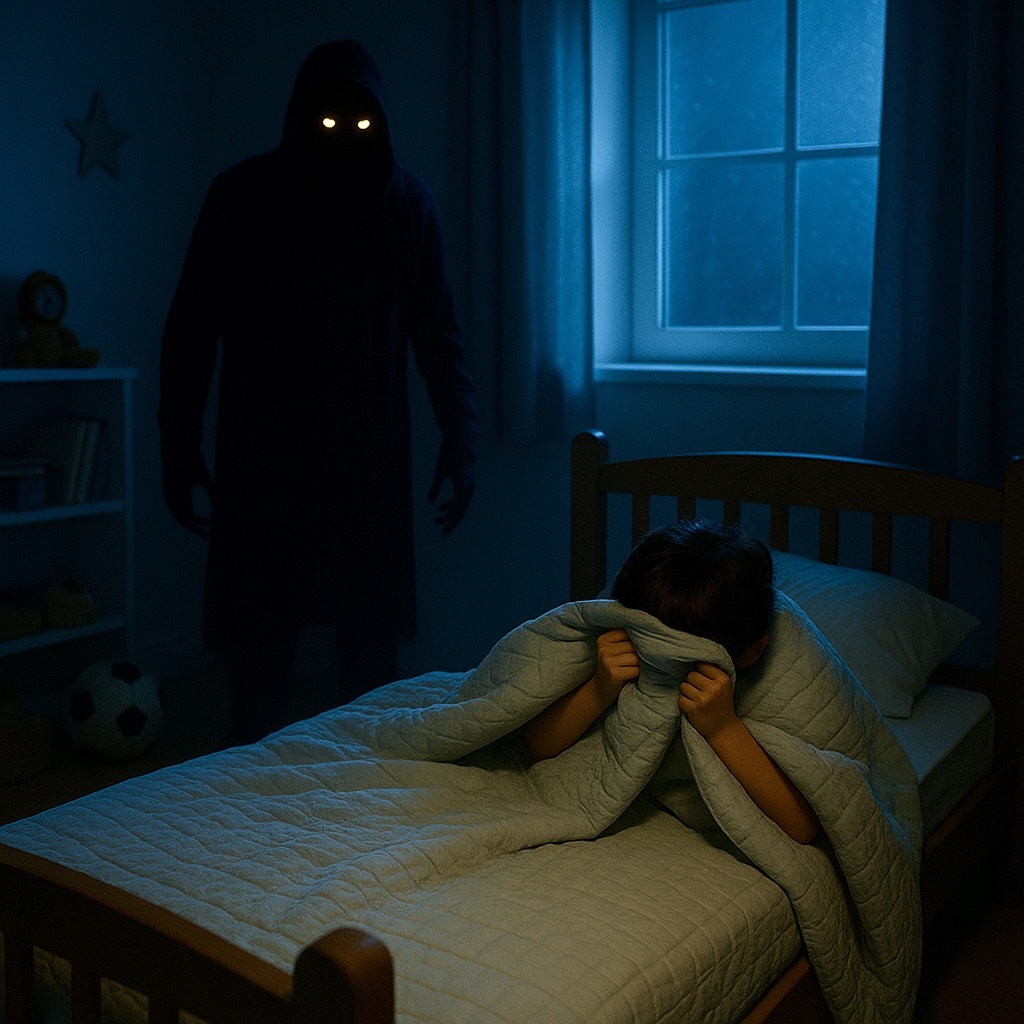
Every culture has a monster whispered into the ears of children at night, a shadowy figure who lurks just beyond the candlelight, ready to snatch them away if they disobey. In English-speaking lands, it’s the Boogeyman. In Spain and across Latin America, it is something older, darker, and far more personal: El Cuco. Known also as El Coco in Spain and El Cucuy in Mexico, he is the shapeless terror who comes when children refuse to listen. His form is vague — sometimes a shadow, sometimes a skeletal figure, sometimes a faceless man hiding in the closet — but his threat is always the same: if you misbehave, if you defy your parents, El Cuco will come. He will steal you away. He will never return you. On October 20, when his legend is remembered, we are reminded that sometimes the greatest fears are not the monsters with claws and fangs, but the ones we invent to make children obey.

El Cuco is not bound by a single description. In fact, his power comes from his ambiguity. He has no fixed appearance, which makes him infinitely adaptable to the imagination. To some, he is a dark shadow, a formless figure that hovers in the corner of the room. To others, he is a haggard man with hollow eyes, or a grotesque beast lurking under the bed. Parents rarely describe him in detail, because his vagueness allows children to fill in the blanks with their own fears. In this way, El Cuco is less a monster than a mirror — reflecting whatever frightens the child most. He is a shapeless embodiment of dread, always fitting the space he is invoked in.

The origins of El Cuco trace back to Spain, where El Coco was known as a child-snatching monster. The word “coco” itself refers to a hollowed-out gourd, often carved into a grotesque face. These gourds were used to frighten children, and over time, the name became attached to the idea of a lurking boogeyman. When Spanish colonization spread to Latin America, the figure of El Cuco traveled with it, taking on local variations and blending with indigenous myths. In Mexico, he became El Cucuy, more demonic in appearance, sometimes with glowing red eyes. In the Caribbean, he lingered as a shapeless phantom. No matter where he went, he kept the same purpose: to terrify children into obedience.

Parents used El Cuco as a tool of discipline. “Go to sleep, or El Cuco will come.” “Don’t wander into the dark, or El Cucuy will take you.” He became the perfect parental weapon because he required no proof. Children didn’t need to see him; the threat was enough. Unlike physical punishments, which could be resisted or explained, El Cuco was absolute. He was the terror that lived in shadows, the punishment that could strike anywhere. He wasn’t just feared — he was believed, because he filled the gaps of imagination with horror.

But El Cuco was more than just a bedtime threat. He reflected deeper cultural anxieties about childhood, obedience, and survival. In societies where danger was real — where children wandering into forests, rivers, or streets could meet deadly ends — El Cuco embodied those dangers in a single, unforgettable figure. He wasn’t only about discipline; he was about protection. By making children fear the shadows, parents kept them safe from the real dangers that lurked there. In this way, El Cuco was both cruel and necessary, a monster invented to guard children from the world by scaring them into caution.

The legend of El Cuco also highlights the power of storytelling in shaping behavior. Children who feared him went to bed on time, stayed close to home, and obeyed rules. But the cost of that obedience was fear — fear that lingered long after childhood. Many adults in Spain and Latin America still recall lying awake as children, eyes wide open, convinced they saw El Cuco lurking in the corner. His legacy is not just in keeping kids safe but in embedding a primal unease that shadows them even as adults.

What makes El Cuco particularly terrifying is his ambiguity of motive. Unlike other monsters who kill for hunger or rage, El Cuco’s goal is simple: to take children. Where he takes them is never clear. Some say he eats them. Others say he drags them to his lair, where they vanish forever. Still others claim he keeps them in cages, feeding on their fear. The lack of resolution makes him more horrifying. Death is final, but El Cuco’s fate is uncertain. He represents not just punishment but disappearance, the fear of being lost, of being forgotten, of never returning home.

El Cuco has endured for centuries because he adapts with time. In modern Latin America, he appears in films, songs, and even memes, but the fear he carries is unchanged. Parents still invoke his name, though often with a smile, half-serious, half-playful. Children still whisper about him at night, daring each other to summon him. His legend has crossed into the global imagination, with references appearing in horror films and literature outside the Hispanic world. The Boogeyman may be universal, but El Cuco is unique — sharper, older, and culturally richer, tied to both Spanish roots and Latin American reinvention.

His power lies in the fact that he is not a monster children seek out. Vampires, werewolves, and witches often draw fascination as well as fear. But El Cuco is pure dread, devoid of allure. No one wants to see him, and yet everyone feels his presence. He is the ghost of the parent’s warning, the echo of fear in the dark, the thing that moves just outside the corner of your vision. His story is less about him and more about us — about the way humans use fear to teach, protect, and control.

So on October 20, when the story of El Cuco is told, we are not just telling a tale about a monster. We are telling a story about childhood, about obedience, about the fears we inherit and pass on. El Cuco is not just a figure of terror but a cultural memory, one that binds families, communities, and generations together through shared fear. And maybe, just maybe, when you hear a bump in the night, or feel that strange certainty that something is watching, you’ll remember what your parents once told you: be good, or El Cuco will come.

Related Posts

The Gamble That Doubled a Nation: The Louisiana Purchase Ratified

Elias Rowen

On October 20, 1803, the U.S. Senate cast a vote that would forever reshape the destiny of a young republic. With the ratification of the Louisiana Purchase treaty, America suddenly doubled in size, acquiring over 828,000 square miles of land from France at a cost of $15 million—just four cents an acre. At the time, it was seen by some as reckless, unconstitutional, and wildly impractical. Yet history would prove it to be one of the most brilliant gambles ever taken by the United States. The Louisiana Purchase was not just a land deal—it was a declaration of vision, ambition, and faith in the future.

The stage was set in a world still reeling from revolution and war. France, under Napoleon Bonaparte, controlled the Louisiana Territory, an expanse stretching from the Mississippi River to the Rocky Mountains. For Napoleon, Louisiana was supposed to be the breadbasket of a revived French empire in the Americas. But ambitions withered in the tropical heat of Haiti, where enslaved Africans led by Toussaint Louverture rose in revolt, defeating French forces and securing independence. Without Haiti as a colonial anchor, Louisiana lost its strategic purpose. At the same time, France faced renewed conflict with Britain and needed money more than distant land.

Meanwhile, across the Atlantic, President Thomas Jefferson was preoccupied with New Orleans. For the United States, control of the Mississippi River was vital. Farmers in the Ohio Valley depended on it to move goods to market, and any foreign power controlling New Orleans threatened the lifeline of western commerce. Jefferson, a strict constitutionalist who once doubted the wisdom of expansive federal power, suddenly found himself tempted by a deal that could secure not just New Orleans, but an empire of liberty stretching beyond imagination.

The negotiations unfolded with unexpected drama. Jefferson initially sought only the purchase of New Orleans. To his astonishment, Napoleon’s ministers offered the entire Louisiana Territory. In a stroke of pen and vision, the United States acquired land stretching from present-day Louisiana to Montana, from the Mississippi River to the Rockies. It was a deal so vast it staggered the imagination. Critics called it rash, questioning how the nation could govern such a wilderness. But Jefferson, ever the visionary, framed it as an opportunity to preserve the republic’s future. In his mind, America needed space to grow, to ensure liberty for generations to come.

Yet not everyone saw it so clearly. Federalists opposed the purchase, fearing it would dilute their political power by flooding the Union with agrarian states. Some questioned its constitutionality—where, they asked, did the Constitution give the president power to buy land? Jefferson, normally a strict interpreter, bent his principles, arguing that the treaty-making power sufficed. He understood that history’s moments of opportunity rarely wait for legal technicalities.

On October 20, 1803, the Senate voted 24 to 7 to ratify the treaty. With that vote, the deal was sealed. The Louisiana Purchase was not only the largest territorial acquisition in U.S. history—it was a leap of faith in the idea of a continental nation. The young republic, barely three decades old, had just transformed into a continental power in embryo.

The human dimensions of the purchase were profound. For Native American nations, it marked the beginning of intensified pressure on their lands, lives, and futures. The Louisiana Territory was not empty; it was home to diverse indigenous peoples who would soon face the relentless push of settlers. For enslaved African Americans, the expansion deepened both peril and possibility—expanding the terrain of slavery while also creating new frontiers where freedom might be sought. For ordinary farmers, it meant opportunity: fertile soil, new horizons, and the promise of independence on one’s own land.

Jefferson wasted no time in sending explorers to map the new frontier. The Lewis and Clark Expedition, launched in 1804, became the embodiment of curiosity and ambition, trekking across rivers, mountains, and plains to chart the unknown. Their journey not only mapped geography but also cemented the Louisiana Purchase in the American imagination as a symbol of possibility, wonder, and destiny.

In hindsight, the Louisiana Purchase was absurdly cheap. Fifteen million dollars for land that would one day hold vast wheat fields, cattle ranches, oil reserves, and cities like St. Louis, Denver, and New Orleans. It was an investment not just in land, but in the future prosperity of a nation that dreamed bigger than its borders. It was proof that sometimes history hinges on boldness—the willingness to seize opportunity when it comes, no matter how risky it seems.

The ratification of the Louisiana Purchase reminds us that the United States was never simply a collection of states along the Atlantic coast. It was always a nation in motion, defined by expansion, ambition, and the restless belief that tomorrow could always be larger than today. October 20, 1803, was the day that belief became geography, the day America doubled in size, and the day a young nation announced to the world: we are here to stay, and we are here to grow.

Related Posts

Heaven and Hell in One: Why the Angel & Devil Combo Owns Halloween

Dave

Halloween is a holiday built on duality—trick and treat, fear and fun, light and darkness. No costume captures that balance better than the Angel & Devil combo. Imagine a split look: one half glowing white with feathers, halos, and innocence; the other blazing red with horns, pitchforks, and fiery temptation. It’s a walking contradiction, a bold mashup of good and evil stitched into one unforgettable outfit. The Angel & Devil Combo isn’t just a costume—it’s a statement about the human experience, the eternal tug-of-war between purity and mischief, restraint and indulgence, order and chaos. And perhaps that’s why this costume goes viral every single year. It isn’t just visually striking—it’s psychologically magnetic. Everyone can relate to it, because everyone has both sides inside them.

From the first glance, the Angel & Devil Combo makes people stop and stare. It’s rare for a costume to tell such a clear story without words, but this one does it instantly. One side is radiant: white dress or bodysuit, soft feathered wings, glowing halo perched above the head. The other side is sizzling: red fabric hugging curves, horns jutting playfully from the hair, a pitchfork angled like a weapon of flirtation. The seam where the two meet is a bold line of contrast, a reminder that this isn’t just a person in costume—it’s an embodiment of the inner battle between virtue and sin. That visual contradiction photographs like a dream, dominating Instagram feeds, TikTok transitions, and X posts with ease. The moment someone poses in this costume, the duality leaps off the screen, practically begging to be shared.

But beyond the visuals, what makes the Angel & Devil Combo so powerful is the roleplay it inspires. Costumes are performances, and this one doubles the script. Wearers can play the sweet angel one moment—gentle smiles, hands folded, wings spread like protection—and then flip into devil mode the next—arched brows, sly smirks, hips cocked with temptation. Every gesture becomes a game of switching sides, of blurring lines, of reminding the world that good and evil aren’t separate—they’re intertwined. And the person in the costume? They aren’t just playing a character—they’re revealing the parts of themselves that usually stay hidden. Because let’s be honest: we all have a halo we polish for the world, and we all have horns we tuck away until the moment calls for them.

The versatility of the Angel & Devil Combo is another reason for its viral staying power. Some go minimalist, with one split dress or jumpsuit, wings on one side, horns on the other. Others go elaborate, hand-sewing sequins into patterns that shimmer differently depending on which half catches the light. Some wear it as a duo costume—one person in all angel, the other in all devil—creating a living yin-yang dynamic at the party. And others play it up for comedy, exaggerating the contrast with oversized halos and cartoonish pitchforks. No matter how it’s styled, it always works, because the concept is so strong it doesn’t need explanation.

What humanizes this costume is its relatability. We don’t wear it just to look good—we wear it because it resonates. Everyone has felt the pull between doing the “right” thing and giving in to mischief. Everyone knows what it’s like to want to appear angelic but feel devilish, or to embrace chaos while keeping a halo tucked away for later. The Angel & Devil Combo is a mirror for that shared humanity, which is why it connects so powerfully. When people see it, they laugh, they nod, they get it. It isn’t just sexy or creative—it’s personal. That’s what makes it linger in memory long after the night ends.

And of course, it thrives on social media. The split design is perfect for TikTok transitions—turning left to show the devil side, turning right to reveal the angel, each set to music that amplifies the vibe. On Instagram, it’s a carousel-worthy costume: first photo angelic, second photo devilish, third photo split down the middle. On X, it sparks debates: “Are you more angel or devil?”—engagement bait that ensures shares and replies. It’s interactive, dynamic, and participatory, which is exactly what makes content spread. Costumes that invite people to play along are the ones that don’t just trend—they explode.

Halloween is about transformation, and the Angel & Devil Combo nails that theme like no other. It allows us to embody two extremes at once, to acknowledge our contradictions, to laugh at them, and to flaunt them. It turns morality into fashion, psychology into performance, philosophy into fun. And maybe that’s why it feels so powerful. Because when you slip into that half-white, half-red costume, you aren’t just dressing up—you’re embodying the truth that humans are messy, contradictory, and complicated. You’re giving permission for both your sides—the halo-polished and the horn-sharp—to exist at once.

So when the party lights flash and the music surges, watch who owns the room. It’ll be the one shimmering in feathers and sequins, smiling with one eye and smirking with the other, halo tilted over horns, wings brushing against a pitchfork. That’s the Angel & Devil Combo. That’s Halloween’s eternal contradiction. And that’s why, year after year, she remains one of the most viral, magnetic, and unforgettable icons of October 31st.

Related Posts

Crawling Through Fear: The Haunting Legend of Teke Teke

Dave

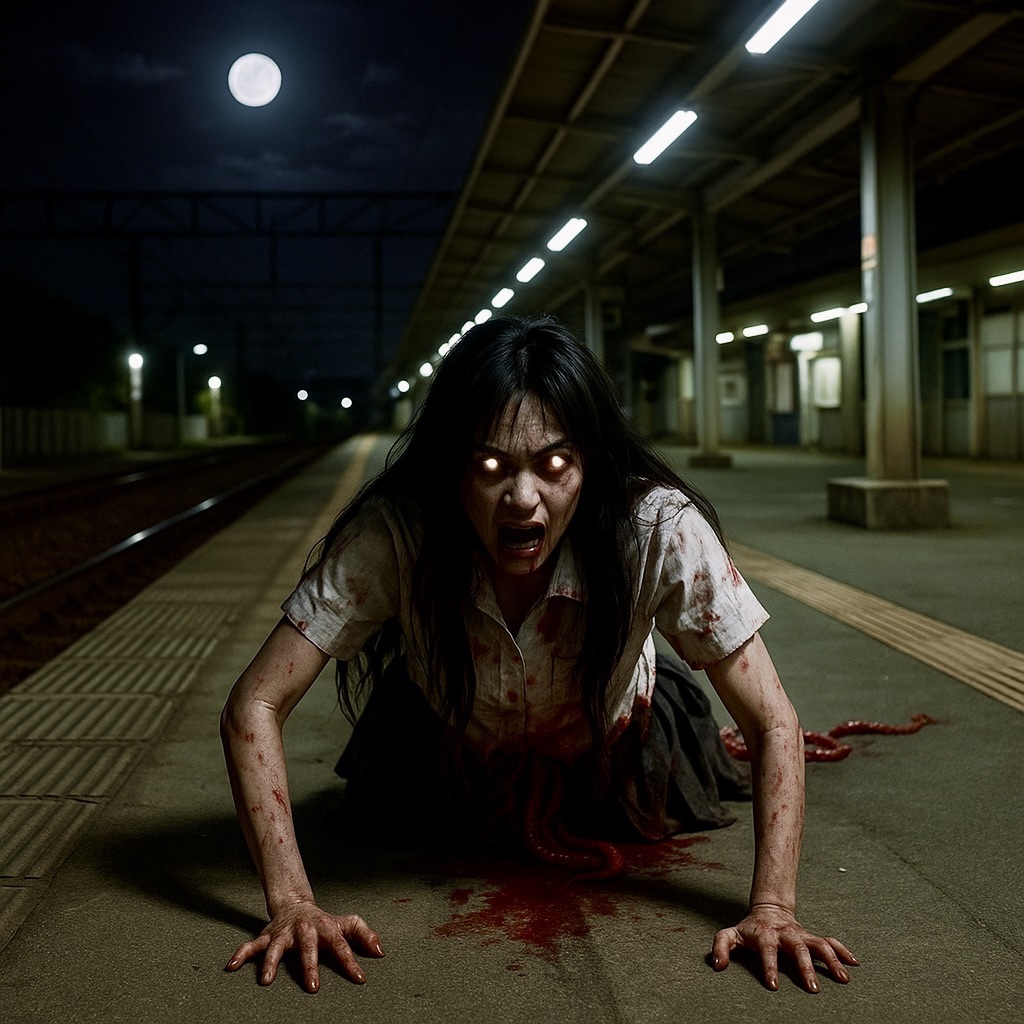
Some ghosts glide silently across the floor, white gowns trailing like mist. Others whisper from behind you, unseen but felt. But there is one ghost in Japanese urban legend that does not float gracefully or linger in shadows — she crawls. She drags herself across the ground with bloodied hands, her torso scraping against pavement, her eyes burning with rage, her mouth open in a scream or a grin that chills the soul. This is Teke Teke — the ghost of a woman cut in half, forever hunting the living, her presence announced by the horrifying sound that gives her name: teke…teke…teke. On October 19, when her legend is recalled, we are reminded that some fears are not about the supernatural alone but about the violence we do to one another and the cruelty of fate that can leave scars so deep they follow us beyond the grave.

Teke Teke’s story is modern, unlike ancient folkloric figures born centuries ago. She belongs to the world of urban legends, the whispered stories traded between students, the cautionary tales passed along to make spines shiver on late walks home. But her modernity does not diminish her horror; it makes it sharper. She is not cloaked in the distant mists of myth but rooted in the very real dangers of modern life. She is the ghost of the train tracks, a reminder of how technology and urban sprawl bring not only progress but tragedy.

The tale goes like this: Teke Teke was once a woman, or in some versions a schoolgirl, who suffered a gruesome accident. She fell onto train tracks and was struck by an oncoming train, her body severed in half. The pain, the shock, and the violence of her death were so intense that her spirit could not rest. Now she wanders as a ghostly torso, dragging herself along with her hands, her nails and elbows scraping pavement, her body moving in a sickening rhythm that produces the sound teke teke. To hear that sound is to know she is coming. To see her is to know you may not survive.

What makes her terrifying is not just her appearance but her relentlessness. Unlike other ghosts who haunt places or linger in specific locations, Teke Teke is a hunter. She chases those who cross her path, moving unnaturally fast despite her lack of legs. Her hands slam against the ground, dragging her forward with horrifying speed, closing the distance between her and her victim in seconds. The idea of a crawling ghost is unsettling enough; the idea of one that can outrun you while dragging itself is nightmare fuel.

Her vengeance is as brutal as her death. When she catches her victims, she slices them in half, mimicking the fate that befell her. In some versions of the legend, she carries a scythe or sickle to do the deed. In others, her ghostly strength alone is enough to rip bodies apart. Either way, her attack is both personal and symbolic: she repeats her trauma on others, spreading her pain in a cycle of horror.

Like many urban legends, Teke Teke’s story has countless variations. Some say she appears at train stations late at night, waiting for solitary travelers. Others claim she haunts school bathrooms, whispering from stalls before dragging herself out. In some tales, she even calls victims on the phone, her voice distant and echoing, asking if they know where her legs are. If the person answers incorrectly, she comes for them. The diversity of her appearances makes her even more terrifying, because she could be anywhere: the tracks you cross on your way home, the bathroom at school, the phone ringing in the dark.

The cultural impact of Teke Teke is profound. In Japan, she joins a pantheon of urban legends like Kuchisake-onna (the slit-mouthed woman) and Hanako-san (the ghost in the bathroom). Each of these figures reflects specific anxieties of modern life — school pressures, urban isolation, the violence lurking in public spaces. Teke Teke, in particular, embodies the fear of accidents, of lives cut short by the machinery of modernity. Trains are symbols of progress, but they are also merciless machines, and accidents on tracks are horrifyingly real. By turning such a death into a ghost story, the legend gives voice to communal fears about safety, vulnerability, and the fragility of life.

But Teke Teke is not only about trains. She is also about the cruelty of people. In some versions of the story, she was pushed onto the tracks as a prank gone wrong. In others, she leapt in despair after being bullied or shamed. These versions add layers of tragedy and social commentary, showing how neglect, cruelty, or violence from others can create ghosts as much as accidents can. Teke Teke’s rage is not only against the train that killed her but against the world that failed her.

Her imagery is unforgettable: long black hair, bloodstained school uniform, hollow eyes burning with anger, her body severed at the waist, entrails trailing as she crawls. The sound of her hands slapping pavement is as terrifying as the sight itself, because it is anticipatory — you hear her before you see her. Fear grows in the gap between sound and sight, in the knowledge that something is coming and you cannot stop it.

Yet, as with many legends, there are supposed ways to survive her. Some say you can escape if you run fast enough, though few succeed. Others say she asks a riddle, and answering correctly can save your life. In one version, she demands to know where her legs are, and only by answering “Meishin Expressway” — the supposed site where they were buried — can you escape. These details make her more than just a monster; they make her an interactive story, one that requires listeners to imagine themselves in her path, to test their own wits and courage against her rage.

The endurance of Teke Teke as a story shows the power of urban legends in shaping behavior. Children warned each other about walking home alone, about crossing train tracks carelessly, about bullying others. Fear became a tool of caution, a way to encode survival lessons in the language of horror. Just as old folklore warned against wandering into forests or disrespecting spirits, modern urban legends like Teke Teke warn against the dangers of city life — in forms that chill the blood enough to stick.

Teke Teke also resonates because she is both terrifying and tragic. She is a victim as much as a villain, a ghost born from trauma and injustice. Her violence is monstrous, but it is also the echo of her own suffering. In this way, she mirrors a universal theme in ghost stories: the restless dead often want what they were denied in life — justice, recognition, peace. But in their rage, they destroy instead of heal. Teke Teke terrifies us not only because she can kill us but because she reminds us of the pain we inflict on one another, and how it lingers beyond death.

So on October 19, when the story of Teke Teke is told, it is more than just a ghost story. It is a reminder of how fragile life is, how easily cruelty and accident can cut it short, and how the dead might carry their pain with them. She crawls not only through train stations and bathrooms but through our imagination, dragging herself hand over hand, reminding us that what is broken does not always stay buried.

And maybe, when you hear a strange sound at night — a scraping, a tapping, a teke teke — you’ll feel a chill run down your spine. You’ll look around, knowing she could be anywhere, knowing she doesn’t stop once she starts. Because Teke Teke doesn’t glide like other ghosts. She hunts. She crawls. And she never forgets the sound of your fear.

Related Posts