Latest Articles

The One-Eyed Terror of the Amazon: The Endless Mystery of the Mapinguari

Dave

The Amazon rainforest is a cathedral of life — a place where the canopy towers like stained glass, where the air hums with insects, and where every tree seems to conceal secrets older than civilization itself. It is vast, humid, and teeming with creatures that look prehistoric because, in many ways, they are. But within this realm of vibrant biodiversity, legends whisper of something darker. Something bigger. Something almost impossible. Deep in the tangled jungles of Brazil, tribes and travelers alike speak of the Mapinguari — a one-eyed, giant, sloth-like monster, its body cloaked in thick, matted fur, its claws sharp as machetes, and its breath foul enough to knock a man unconscious. On October 22, when its legend is remembered, the rainforest feels just a little more dangerous, as if its shadows still might hide a beast science has yet to name.

The Mapinguari is no ordinary myth. Its origins lie in the oral traditions of the Amazonian peoples, where it is described as a towering, lumbering figure, often reaching over seven feet tall, with a single, cyclopean eye in the center of its head. Some accounts add a bizarre, stomach-like mouth on its belly, lined with jagged teeth, so that it could devour prey with horrifying ease. Its body is covered in red or brown fur, shaggy and rank, giving it the stench of rot and death. Its roar is said to echo through the jungle like thunder, chilling the blood of anyone who hears it. Unlike ghosts or spirits, the Mapinguari is flesh and blood — a monster of muscle, fang, and claw, a predator that leaves behind crushed foliage and eerie silence.

Descriptions of the creature often highlight its sloth-like qualities. Some researchers and folklorists have theorized that the Mapinguari legend may be tied to ancient memories of the giant ground sloths, massive creatures that once roamed South America but were thought to have gone extinct over 10,000 years ago. Could stories of encounters with strange, hulking animals be cultural echoes of real creatures that once shared the land with humans? Or could a few have survived in the most inaccessible corners of the rainforest, hiding in the shadows of time, giving birth to centuries of sightings? The Amazon, after all, is a place where new species are discovered every year, and where vast swaths of jungle remain unexplored.

To the Indigenous peoples of Brazil, however, the Mapinguari is not a dusty fossil or scientific puzzle. It is a real, living threat — a guardian of the forest, sent to punish those who disrespect nature. Hunters who take more than they need, loggers who cut too deeply, and outsiders who desecrate the land are said to attract the wrath of the beast. The Mapinguari emerges from the jungle’s depths, its fetid breath overwhelming, its claws tearing through anything in its path. In this sense, the creature is more than just a monster; it is an enforcer of ecological balance, a myth that encodes respect for the forest into fear. To believe in the Mapinguari is to believe that the jungle itself has defenses, that it will fight back when threatened.

The legend often includes its grotesque breath, described as so foul it can incapacitate a man from several meters away. Hunters claim that the stench arrives before the creature itself — a suffocating odor of decay, like rotting carcasses baking under the sun. Then comes the sound, the crashing of trees, the guttural roars, the sense that something massive is lumbering closer. Those who survive say the Mapinguari cannot be killed with bullets; its hide is too thick, impervious to ordinary weapons. Some even claim arrows and spears bounce off its fur as though it were armor. To face the Mapinguari is to face inevitability: either flee, or be torn apart.

Yet despite its monstrous features, the Mapinguari is not entirely villainous. Some traditions describe it as a protector of the rainforest, a beast that ensures balance, punishing greed and overreach. In this view, the Mapinguari is not evil but necessary, embodying the forest’s wrath against those who seek to exploit it. In an age when deforestation ravages the Amazon, the idea of a monstrous guardian resonates powerfully. The Mapinguari becomes not just a creature of fear but a symbol of resistance, a reminder that nature has teeth, and it bites back.

Modern cryptozoologists have taken great interest in the Mapinguari, seeing in it possible evidence of surviving megafauna. Expeditions have sought signs of giant sloths or other undiscovered species deep in the rainforest. Eyewitness accounts from hunters, villagers, and rubber tappers add fuel to the fire, each describing remarkably similar beasts. Skeptics argue that the Mapinguari is simply a cultural myth, a story exaggerated from encounters with known animals like tapirs, bears, or even large anteaters. But believers hold that too many details align, too many reports span too many centuries, to dismiss it so easily. The rainforest hides secrets. Why not the Mapinguari?

Pop culture has embraced the legend, portraying the Mapinguari in books, documentaries, and cryptid lore alongside Bigfoot and the Yeti. But unlike those cold-climate cousins, the Mapinguari carries the heat of the jungle, the stench of decay, the thick humidity of the Amazon. Its horror is rooted not just in its size or grotesque features, but in its environment — an environment already mysterious and intimidating to outsiders. To imagine it lurking in the undergrowth is to imagine the jungle itself rising up in monstrous form.

The endurance of the Mapinguari legend reveals the human need to personify the dangers of nature. The rainforest is beautiful but deadly: its snakes can kill, its insects spread disease, its rivers swallow whole. Yet it is the unseen that terrifies most. The rustle in the dark, the crash of unseen branches, the foul odor carried on the wind — these are the details that feed belief in monsters. The Mapinguari gives shape to those fears, embodying all that is unknown and threatening in the vast Amazon.

So on October 22, when we tell the story of the Mapinguari, we are not only telling a tale of a giant, one-eyed monster. We are telling the story of the Amazon itself, of the people who live in its embrace, of their respect and fear for the forest’s power. We are telling the story of survival, of the balance between humanity and nature, of the monsters we create to remind us of boundaries. The Mapinguari is not just a beast of fur and fang. It is a warning: take too much, and the jungle will take you.

And maybe, just maybe, when you find yourself deep in the rainforest, the canopy blotting out the sun, the air thick with heat and silence, you’ll hear it — the heavy thud of footsteps too large for man, the breaking of branches, the roar that freezes your blood. You’ll smell the stench before you see it. And when you do, you’ll know that the Mapinguari has found you.

Related Posts

Thirteen Days on the Edge: The Peak of the Cuban Missile Crisis

Elias Rowen

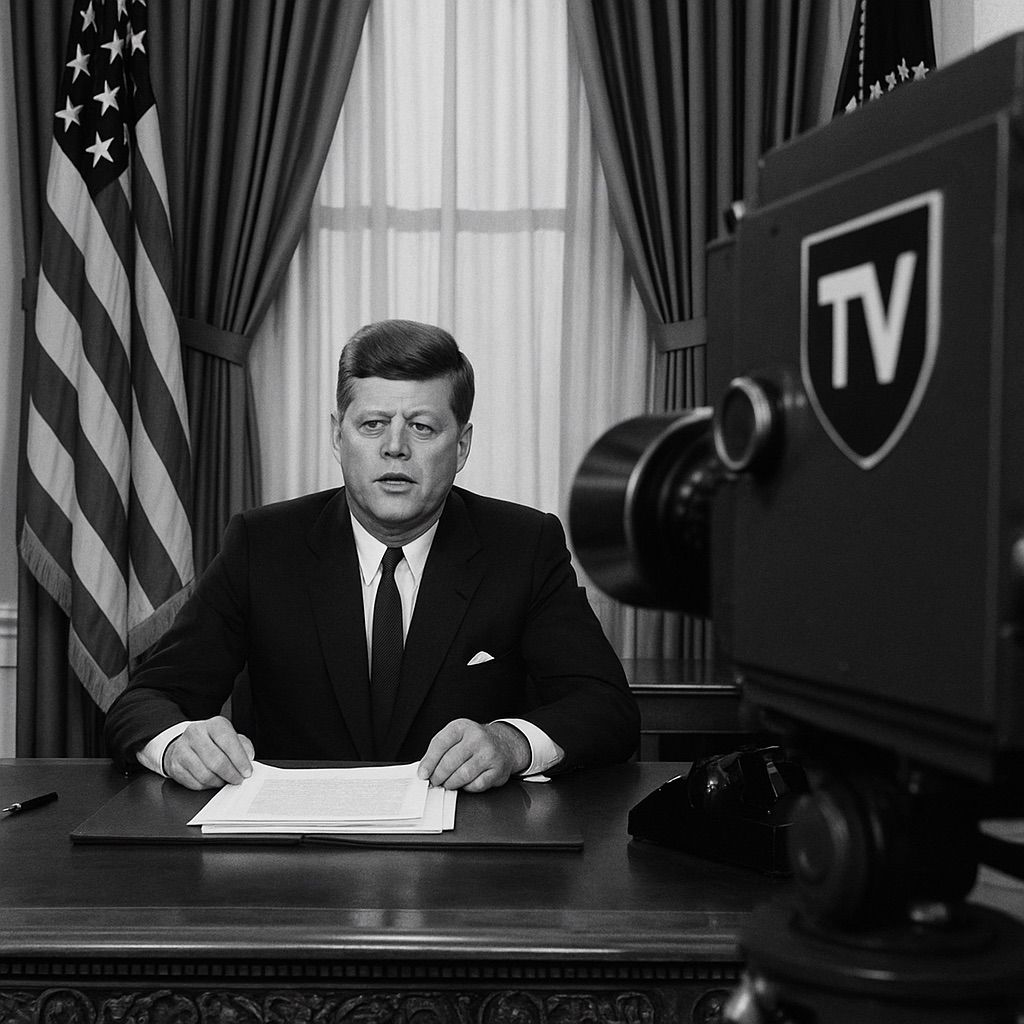
On October 22, 1962, the world stood closer to nuclear war than ever before in history. For thirteen days in October, humanity stared into the abyss of annihilation, as the United States and the Soviet Union engaged in a deadly game of brinkmanship over Soviet nuclear missiles in Cuba. On that evening, President John F. Kennedy went on television to inform the American people—and by extension, the world—that offensive nuclear weapons had been discovered just ninety miles from Florida. His announcement was firm, measured, and terrifying: a naval quarantine would surround Cuba, and any launch of nuclear missiles from the island would be met with a full retaliatory response. It was the moment when Cold War tension crystallized into existential dread, when children rehearsed duck-and-cover drills, when parents wondered if they’d live to see morning, and when the fate of the world seemed to balance on the decisions of two men.

The roots of the crisis stretched back through years of mistrust and hostility. After Fidel Castro’s revolution in 1959, Cuba became a communist ally of the Soviet Union, alarming the United States. The failed Bay of Pigs invasion in 1961, in which U.S.-backed exiles attempted to overthrow Castro, convinced him that Washington would never tolerate his regime. Meanwhile, Soviet Premier Nikita Khrushchev sought to level the playing field. The United States had surrounded the Soviet Union with nuclear missiles in Turkey and Italy, capable of striking Moscow within minutes. Khrushchev’s gamble was simple and audacious: place nuclear missiles in Cuba to deter American aggression, strengthen his hand globally, and redress the imbalance of power.

In October 1962, U-2 reconnaissance flights over Cuba revealed what many had feared: medium-range ballistic missile sites under construction, capable of delivering nuclear warheads to Washington, New York, and beyond. When Kennedy saw the photographs, he knew the world had entered uncharted territory. His advisors—divided between hawks who urged immediate airstrikes and doves who sought negotiation—debated in endless meetings. Kennedy, cautious yet resolute, chose a middle path: a naval blockade (rebranded as a “quarantine” to avoid the language of war) to prevent further missiles from arriving, coupled with demands that the existing sites be dismantled.

October 22 marked the climax of uncertainty. Kennedy’s address was broadcast to millions, his calm voice masking the enormity of the danger. Across America, families huddled around television sets, absorbing the reality that nuclear war was no longer abstract—it was imminent. Lines formed at supermarkets, fallout shelters were stocked, and churches filled with anxious congregants. The sense of dread was palpable; every hour felt like the last. In Moscow, Khrushchev bristled at Kennedy’s ultimatum, while in Havana, Castro prepared for invasion, convinced that Cuba would be obliterated.

The following days tested the world’s sanity. Soviet ships, laden with cargo, steamed toward the quarantine line. Would they stop, or would the U.S. Navy be forced to fire the first shots of World War III? On October 24, the answer came: the ships slowed, then turned back. It was a breath of relief, but the crisis was far from over. Missile sites in Cuba were still being constructed, and the U.S. military prepared for invasion. Strategic Air Command moved to DEFCON 2, one step below nuclear war. B-52 bombers circled the skies, armed with hydrogen bombs. Submarines prowled the oceans. The planet seemed primed for destruction at the press of a button.

Behind the scenes, diplomacy struggled to keep pace with the urgency of events. Khrushchev sent letters to Kennedy—one emotional and conciliatory, the next harsher and more demanding. In the first, he offered to withdraw missiles in exchange for a U.S. pledge not to invade Cuba. In the second, he insisted that U.S. missiles in Turkey also be removed. Kennedy and his advisors faced an agonizing choice: respond to both, or focus only on the first? Choosing wisely, Kennedy publicly accepted the first letter while privately agreeing to withdraw missiles from Turkey within months. It was a delicate dance, one that preserved both leaders’ dignity while de-escalating the crisis.

Amid the tension, accidents and near-misses nearly tipped the balance. A U-2 plane was shot down over Cuba, killing its pilot, Major Rudolf Anderson Jr. Another U-2 strayed into Soviet airspace, triggering panic on both sides. In one of the most chilling moments, a Soviet submarine near the blockade, harassed by U.S. depth charges, came within a heartbeat of launching a nuclear torpedo. Only the restraint of its commander, Vasili Arkhipov, prevented catastrophe. The world’s survival hinged not just on presidents and premiers, but on the judgment of individuals under unimaginable pressure.

Finally, on October 28, Khrushchev agreed to remove the missiles. The world exhaled. The thirteen days of terror ended not with a mushroom cloud, but with compromise and relief. Yet the crisis left scars. It had revealed the fragility of peace, the dangers of miscalculation, and the sheer insanity of nuclear brinkmanship. For Kennedy, it was a triumph of firmness and diplomacy, though he confided later how close disaster had loomed. For Khrushchev, it was a humiliation, weakening his standing at home and abroad. For Castro, it was betrayal, proof that Cuba was a pawn in a larger chess game.

Humanizing the Cuban Missile Crisis means remembering the ordinary people who lived in its shadow. The schoolchildren crouching under desks, teachers whispering comfort they did not feel. The farmer in Kansas staring at the sky, wondering if Soviet warheads were already inbound. The Muscovite hearing rumors of war, fearing the bombs that might rain down in retaliation. The families in Havana digging trenches and bracing for invasion, convinced they were about to become ground zero. The world’s leaders carried the weight of history, but it was the millions of ordinary lives hanging in the balance that made those days so terrifying.

The peak tension of October 22, 1962, remains one of history’s starkest reminders of how fragile civilization can be. One misstep, one miscalculation, could have ended it all. And yet, in the end, restraint prevailed. Kennedy and Khrushchev stepped back from the brink, choosing negotiation over destruction. Their decision gave the world another chance, another sunrise.

Looking back, the Cuban Missile Crisis is not just a story of power politics or Cold War rivalry. It is a story of fear, of courage, of the terrifying weight of human decisions. It reminds us that peace is not guaranteed, that survival depends on wisdom as much as strength, and that even in the darkest hours, dialogue can save us from destruction. On October 22, 1962, the world held its breath—and learned just how precious that breath was.

Related Posts

Electric Allure: Why the Sexy Bride of Frankenstein Is Halloween’s Timeless Temptress

Dave

When the lightning cracks across the October sky and the world leans into the eerie thrill of Halloween, certain figures crawl, slither, and storm their way into parties, streets, and social feeds. Among the vampires with blood-red lips, the witches in pointy hats, and the zombies smeared in gore, one particular icon continues to hold her electrifying grip on Halloween culture: the Sexy Bride of Frankenstein. She isn’t just stitched together from fabric and imagination—she is stitched into the DNA of Halloween itself. With her corset dress hugging every curve, her teased black-and-white hair rising like a storm cloud, and her aura radiating both gothic glamour and irresistible temptation, the Sexy Bride of Frankenstein is more than a costume. She’s a phenomenon, a timeless blend of classic horror and modern allure that keeps going viral year after year.

Why does she endure? Why does she continue to be one of the most recognizable and coveted Halloween looks, long after her 1935 cinematic debut in Bride of Frankenstein? The answer lies in her perfect contradiction. The Bride of Frankenstein was born out of horror, a patchwork creation, a woman brought to life by science and stitched with destiny. Yet over the decades, she has transcended that narrative, transforming from monster bride to a symbol of gothic femininity, power, and sensual rebellion. The Sexy Bride of Frankenstein costume takes that foundation and reimagines it for today’s audiences, blending corsets, lace, fishnets, and teased hair into a look that is both terrifying and tantalizing. She is the storm made flesh, the lightning given curves, the monster turned muse.

Visually, the Sexy Bride of Frankenstein thrives because she owns the drama. The teased hair is her crown, bold and unmistakable with its streaks of white slicing through black like jagged bolts of lightning. That silhouette alone is iconic, instantly recognizable even across a crowded Halloween bash. The corset dress is her weapon of seduction, cinching the waist, flaunting the figure, turning horror into haute couture. Add in gothic makeup—dark lips, smoky eyes, and pale skin kissed by dramatic contour—and she transforms into a goddess of both horror and desire. The stitched details, whether painted across the skin or sewn into the fabric, serve as reminders of her origin, grounding the sex appeal in the story of her birth. The result is magnetic: every photograph becomes a poster, every glance becomes a spark, every step radiates with the energy of a thunderstorm.

But beyond the visuals, the Sexy Bride of Frankenstein captures imaginations because she tells a story. Costumes that go viral aren’t just looks—they’re narratives. The Bride’s story is one of creation, rebellion, and identity. She wasn’t born naturally—she was made. She didn’t choose her role—she was forced into it. Yet she radiates independence, rejecting her creator and forging her own path. That defiance resonates deeply with modern audiences. When someone dons the corset and teases their hair into an electrified crown, they aren’t just playing dress-up—they’re embodying that rebellion. They’re saying: I am stitched together, I am flawed, I am fierce, and I am still unforgettable. That energy doesn’t just captivate a room—it dominates it.

The Sexy Bride of Frankenstein also thrives because she’s endlessly adaptable. Some interpretations lean toward classic horror, keeping the makeup pale and severe, with stitches drawn boldly across the skin. Others glam her up with sequins, rhinestones, and lace, turning her into a gothic runway queen. Some mix in humor, exaggerating her hair into cartoonish heights or pairing the corset with over-the-top props. Others lean sultry, with fishnet stockings, thigh-high boots, and lace gloves that make her more siren than monster. Each variation still screams “Bride of Frankenstein,” but each one adds a personal twist, keeping her fresh, relevant, and viral in every generation.

On social media, the Sexy Bride of Frankenstein is a content goldmine. TikTok adores her for transformation videos—one moment a normal girl in sweats, the next moment a storm-struck goddess with teased hair, corset cinched, and lightning effects flashing across the screen. Instagram thrives on her aesthetic—moody portraits in graveyards, glittering selfies at parties, bold makeup tutorials that teach fans how to recreate the stitched look. On X, she trends as a cultural staple, with people debating their favorite takes, sharing viral memes, or reposting jaw-dropping photos from parties and red carpets. She isn’t just a costume—she’s a platform for creativity, a muse for performance, and a catalyst for content that spreads like wildfire every October.

What makes her human, though, is her relatability. The Sexy Bride of Frankenstein is, at her core, about imperfection turned into power. She’s stitched together, flawed, and born of chaos—but she makes it work. That resonates with anyone who has ever felt messy, complicated, or pieced together by circumstance. Wearing her costume isn’t just about flaunting beauty—it’s about embracing imperfection and owning it with confidence. That’s why she inspires not just admiration, but connection. People see her and think, that’s me: imperfect, chaotic, but still electric. That relatability is what elevates her beyond mere sex appeal into something truly viral.

And then there’s the empowerment. The Sexy Bride of Frankenstein costume isn’t just about being looked at—it’s about taking control of the gaze. The woman who wears it commands attention, not as a passive object, but as a force of nature. She isn’t waiting to be chosen or defined—she defines herself. That empowerment is intoxicating, both for the wearer and for everyone around her. She doesn’t apologize for being dramatic, bold, or sexy—she revels in it. And that revelry becomes contagious, electrifying the entire room like the crackle of a storm.

Halloween is about transformation, and no costume captures transformation quite like the Bride of Frankenstein. She was transformed by lightning, transformed by science, transformed by story. And every Halloween, she is transformed again—by the women who choose to embody her, to reinterpret her, to breathe life into her legacy. She is proof that some monsters never fade, that some icons are eternal, that some figures will always rise again, electrified by the season.

So when the Halloween party is in full swing, when the lights flash like lightning and the bass rumbles like thunder, watch who commands the room. It will be the woman in the corset dress, hair teased sky-high, lips painted dark, with stitches snaking across her skin and a smirk that says she knows exactly how much power she wields. That’s the Sexy Bride of Frankenstein. That’s Halloween’s electrifying queen. And that’s why, year after year, she doesn’t just survive—she thrives, stitched into our collective imagination, as timeless as the storm itself.

Related Posts

The Beautiful Blizzard: The Deadly Allure of Japan’s Yuki-onna

Dave

Some monsters frighten us with grotesque shapes, with claws and teeth, with blood dripping from their jaws. Others terrify in subtler ways, cloaked not in horror but in beauty, their danger hidden behind grace. In Japanese folklore, one such figure floats silently through the snow: Yuki-onna, the snow woman. She is described as breathtakingly beautiful, pale as moonlight, her hair dark against the whiteness of winter, her lips red as fresh blood on snow. But her beauty is a trap, for behind her calm, graceful face lies death. She lures travelers in blizzards, freezes men with her icy breath, and drifts away without footprints. On October 21, when her story is remembered, we are reminded that sometimes the most beautiful things in the world are also the most lethal.

Yuki-onna’s legend stretches back centuries, appearing in various regions of Japan with subtle differences. In some stories, she is a ruthless killer who delights in freezing men to death. In others, she is more complex, torn between her inhuman nature and human emotions, capable of mercy but unable to escape her deadly essence. What remains consistent is her connection to snowstorms, her haunting beauty, and her role as both a spirit of winter and a warning about desire, trust, and survival.

She is always pale, her skin translucent as if carved from ice itself. Her kimono is white, blending seamlessly with snowdrifts, making her appear as part of the storm. Her hair is long and black, contrasting sharply with her pale skin, and her eyes are said to shine like frozen stars. Some describe her with no feet, floating ghostlike over the snow, leaving no trace of her passing. To encounter her in a blizzard is to see death personified, wrapped in beauty so sharp it burns.

The origins of Yuki-onna are tied deeply to the environment. Japan’s winters, especially in mountainous regions, are harsh and unforgiving. Snowstorms could arrive suddenly, blinding travelers, freezing them before they could reach shelter. In a world without modern heating, protective gear, or reliable roads, winter itself was a killer. The Yuki-onna became a way to personify this danger — to give it a face, a story, a reason for why people vanished in the snow. In her, the cruelty of winter became a spirit, the blizzard a woman with icy breath.

Her motives vary in different tales. In some, she is pure predator. She seduces men with her beauty, lures them into the snow, then exhales a freezing breath that stills their hearts. Sometimes she drinks their life force, leaving them pale and lifeless. In other tales, she appears at the doors of houses, begging for warmth, and when admitted, she kills the family within. She is merciless, and her beauty only makes her more terrifying, because it hides the truth until it is too late.

But in other stories, Yuki-onna reveals a more tragic side. One famous tale tells of a woodcutter who encounters her in a blizzard. She spares his life, warning him never to speak of her. Later, he meets a beautiful woman, marries her, and has children. Years pass, and one night, he tells her the story of his encounter with Yuki-onna. His wife grows pale, revealing herself to be the very spirit who spared him. In some versions, she vanishes, leaving him heartbroken. In others, she stays for the sake of their children, but her true nature is forever revealed. This duality makes Yuki-onna more than just a monster. She is also a symbol of love, mercy, and the fragility of secrets.

Yuki-onna’s beauty and danger make her a fascinating figure. She embodies the idea that appearances deceive, that beauty can be lethal, that desire can lead to destruction. She reflects cultural anxieties about women, power, and sexuality. To some, she is the ultimate femme fatale — beautiful but deadly, alluring but fatal. To others, she is a tragic figure, caught between her nature as a spirit and her longing for human connection. Either way, she is unforgettable.

Her legend also speaks to broader themes in Japanese folklore, where nature and humanity are deeply entwined. Spirits like Yuki-onna remind us that natural forces are not just physical but spiritual. Winter is not only cold; it has intention, personality, danger. In this sense, Yuki-onna is not only a ghost but also a goddess of winter, a being who commands respect because she personifies the harshness of the natural world.

In modern culture, Yuki-onna has endured as one of Japan’s most iconic spirits. She appears in films, anime, manga, and literature. Sometimes she is portrayed as a horror figure, haunting snow-covered villages, her eyes glowing in the storm. Other times she is reimagined as a romantic figure, a tragic woman bound by her icy nature. Her flexibility ensures her survival in cultural memory, adapting to new forms while retaining her core: beauty wrapped in death.

Why does she resonate so deeply? Because she touches on universal fears and desires. We all know the allure of beauty, and we all fear its betrayal. We all understand the danger of nature, the way a storm can mesmerize and kill. We all fear coldness — not just of weather but of the human heart. Yuki-onna embodies all these fears, making her timeless.

So on October 21, when her story is told, it is not just about a snow woman who kills. It is about the dangers of desire, the fragility of secrets, the cruelty of winter, and the way beauty can hide death. She is both warning and wonder, terror and tragedy, a figure who drifts endlessly across snow-covered fields, her breath icy, her gaze eternal.

And maybe, when the first snow of winter falls, you’ll think of her. Maybe you’ll glance at the drifting white, and for a moment, imagine a woman in the distance, her kimono blending with the snow, her eyes fixed on you. And maybe you’ll wonder: is she watching? Is she waiting? And will she spare you, or will she breathe her icy breath until you sleep forever in the snow?

Related Posts

Trafalgar: The Day Nelson Redefined the Seas

Elias Rowen

On October 21, 1805, off the southern coast of Spain near Cape Trafalgar, the world’s oceans became a stage for one of the most decisive naval battles in history. The British Royal Navy, under the command of Vice Admiral Horatio Nelson, faced the combined fleets of France and Spain in a struggle that would determine control of the seas and the fate of empires. By the end of the day, Nelson was dead, but Britain stood victorious. The Battle of Trafalgar ensured British naval supremacy for a century, altered the course of the Napoleonic Wars, and transformed Nelson from a brilliant strategist into an immortal legend.

The early 19th century was a world of shifting empires and relentless ambition. Napoleon Bonaparte sought to extend French dominance across Europe, but his dreams of invasion required mastery of the seas. Britain, an island nation dependent on maritime trade, was his greatest obstacle. For years, the Royal Navy blockaded French ports, strangling commerce and frustrating Napoleon’s designs. When the French, joined by their Spanish allies, finally sailed to break the British chokehold, Nelson and his fleet were waiting.

Nelson’s genius lay not in overwhelming numbers but in daring innovation. His fleet of 27 ships faced 33 Franco-Spanish vessels, yet he saw opportunity in audacity. Rather than engage in traditional parallel lines of battle, Nelson devised a tactic to cut through the enemy’s formation, splitting their line into segments and creating chaos. His famous signal, hoisted aloft before the battle began, would echo through history: “England expects that every man will do his duty.” For sailors bracing themselves amid the roar of cannons and the stench of gunpowder, it was both command and benediction.

The battle unfolded in fire and thunder. British ships bore down on the enemy line in two columns, enduring punishing broadsides as they closed in. Then, like blades slicing through armor, they smashed into the Franco-Spanish formation. The HMS Victory, Nelson’s flagship, led the charge, raking enemy decks with devastating cannon fire. Smoke choked the air, masts splintered, men screamed and fell, and the sea churned red with battle. Amid the chaos, British discipline and training proved decisive. Ship by ship, the enemy faltered.

But triumph came at a cost. As the Victory pressed forward, Nelson himself was struck by a musket ball, fired from the rigging of a French sharpshooter aboard the Redoutable. The shot tore through his shoulder and lodged in his spine. Carried below deck, the admiral knew his wound was mortal. Yet even in his final hours, his thoughts remained on victory. When news reached him that the enemy fleet was shattered, Nelson’s final words were said to be: “Thank God I have done my duty.” At 47, he died at the pinnacle of triumph, his sacrifice sealing his immortality.

By the end of the day, the Franco-Spanish fleet was annihilated. Twenty-two enemy ships were captured or destroyed, while not a single British vessel was lost. Trafalgar was more than a battle—it was a turning point. Napoleon’s dream of invading Britain was crushed forever, his fleets crippled beyond repair. From that moment on, Britain commanded the seas, projecting power across the globe, building an empire that stretched from India to the Americas, and ushering in what would be remembered as the “Pax Britannica.”

Yet Trafalgar was not just about empires. It was about men. Picture the sailor clinging to the rigging as shot whistled past, the powder boy racing barrels of gunpowder to cannons amid fire and chaos, the surgeon working feverishly below decks as the wounded cried out, the young midshipman seeing his first battle, caught between terror and pride. It was a human drama of courage and endurance, lived out on wooden decks under cannon fire, where every broadside was a gamble between life and death.

Nelson himself became more than an admiral—he became a symbol. His daring, his willingness to defy convention, his charisma, and ultimately, his heroic death turned him into a national myth. London mourned him with a funeral of unmatched grandeur, and his body, preserved in a cask of brandy for the voyage home, was laid to rest in St. Paul’s Cathedral. His column now rises over Trafalgar Square, a reminder that one man’s vision can change the fate of nations.

The Battle of Trafalgar’s legacy extends far beyond 1805. It shaped the balance of power in Europe, ensuring that Napoleon would be forced to fight on land, where Britain’s allies would ultimately grind him down. It ushered in an age of British naval dominance that lasted until the 20th century. And it etched into history the idea that courage, ingenuity, and sacrifice can tilt the scales even when odds appear daunting.

To humanize Trafalgar is to remember both glory and grief. It was a day of victory, but also of loss—thousands of sailors on all sides perished, their bodies claimed by the sea. For their families, Trafalgar was not triumph but tragedy. For Britain, it was both pride and sorrow, the exultation of victory shadowed by the death of its greatest admiral.

October 21, 1805, was the day Britain secured its command of the seas, the day Napoleon’s maritime ambitions sank beneath the waves, and the day Nelson passed into legend. Trafalgar was not just a battle; it was a crossroads of history, a testament to courage, and a reminder that even in death, greatness can echo for centuries.

Related Posts