
Latest Articles

The White-Clad Terror: Pontianak, the Haunting Cry of Malaysia and Indonesia

Dave

There is a sound that chills the tropics as much as any icy wind: the faint, eerie cry of a woman in the night, carried through the palm groves and banana plantations of Malaysia and Indonesia. Locals know not to answer. They know not to follow. For centuries, generations have whispered the same warning—that the cry belongs to the Pontianak, the vengeful spirit of a woman who died in childbirth, cursed to roam the earth forever. She is said to appear as a beautiful woman with pale skin, long black hair, and a white dress stained with death, her beauty so alluring it masks the violence she carries within. To men especially, she is deadly. Lured by her charm, they soon find themselves prey, their bodies ripped open, their blood drained, their lives snatched by the ghost who embodies both sorrow and rage. The Pontianak is not just a ghost story—it is one of Southeast Asia’s most enduring legends, woven into daily life, whispered into the fabric of fear itself.

Her story is born from tragedy, from the liminal space between life and death, creation and destruction. Childbirth has always been one of humanity’s greatest risks, especially in times before modern medicine, when women faced dangers that often proved fatal. The Pontianak represents that ultimate injustice—the woman who should have given life but instead lost her own, denied the chance to be mother, denied even a peaceful afterlife. Her pain twists into vengeance, her grief into hunger, her spirit into something that terrifies villages and cities alike. Death in childbirth is already heartbreak enough, but the Pontianak myth transforms it into a force of terror, reminding everyone of the fragility of life and the anger of the silenced.

Descriptions of the Pontianak vary slightly from region to region, but her key traits remain constant. She is a vision of striking beauty, often described with flawless skin and flowing black hair, her figure graceful and inviting. From afar, she appears as the perfect woman, sometimes even carrying the scent of frangipani flowers, a sweetness that deceives the senses. But once her victim comes close, the horror reveals itself. Her nails grow into talons, her teeth sharpen, her eyes glow red, and her once-beautiful face twists into a mask of rage. What was alluring becomes monstrous, and what seemed like salvation becomes doom. It is this duality—the mix of desire and death—that makes her one of the most terrifying and fascinating figures of folklore.

Her cry is her signature. Much like the banshee of Ireland, the Pontianak’s wail signals her presence. The sound is said to shift depending on her distance. If you hear her scream piercing and loud, she may be far away. But if you hear it faintly, almost whisper-like, she is near—perhaps even right behind you. This inversion of expectation deepens the horror, ensuring that fear is never far, no matter how loud or soft the cry may be. The scream cuts through night air, unearthly and unforgettable, a sound that grips both imagination and spine. Many who claim to have heard it describe the way it lingers long after, echoing in their bones as much as their ears.

Legends of the Pontianak are not confined to fireside tales—they are lived experiences, recounted by those who swear they have seen her. Drivers along rural roads at night report encountering a lone woman in white standing beneath a tree, her hair covering her face. Villagers tell of shadows moving in banana groves, of cries that woke them from sleep, of scratches and bruises appearing mysteriously after encounters they cannot explain. These stories are not told lightly; they are woven into daily caution, guiding behavior even today. Avoid traveling alone at night. Do not walk beneath certain trees. Do not ignore the strange cry of a woman in the distance. The Pontianak is not just myth—it is a living fear.

At the core of her legend is vengeance, often directed at men. Some stories say she targets unfaithful lovers, punishing betrayal. Others claim she preys indiscriminately, driven by a hunger that cannot be satisfied. In some versions, she rips open the stomachs of her victims, consuming their organs, leaving behind only mutilation. In others, she seduces before striking, draining life through intimacy turned violent. To women, she is a reminder of injustice and danger; to men, she is both a fantasy and a nightmare, embodying desire that destroys. The Pontianak is as much about gendered fear as it is about death, a figure shaped by cultural anxieties around love, betrayal, and the untamed power of womanhood cut short.

Yet, despite her horror, there is tragedy woven into her story. The Pontianak was once a woman, with dreams, with life ahead of her. She died in childbirth—a death that is not only painful but unjust, a theft of both life and possibility. Her transformation into a ghost is not random—it is punishment for a world that failed her, for a death that should not have happened. Some traditions even suggest that she cries not only for vengeance, but for the child she never held, mourning eternally for what was taken from her. To humanize the Pontianak is to see not just the monster, but the grief beneath her rage.

The Pontianak’s enduring presence in culture speaks to her resonance. She appears in films, horror stories, and television across Malaysia and Indonesia, often terrifying new generations with her blood-curdling scream and haunting presence. She is the subject of countless ghost-hunting tales, her story retold in modern settings, from highways to urban apartments. Even in the digital age, she adapts, appearing in social media ghost lore and viral videos, proving her ability to evolve while keeping her essence intact. This adaptability keeps her alive not only as a figure of folklore but as a living legend, feared as much now as she was centuries ago.

But why does she endure so powerfully? Perhaps because the Pontianak embodies a fear that is universal, even as it is local. She is about loss—loss of life, loss of motherhood, loss of justice. She is about vengeance, the way grief can twist into rage when unacknowledged. She is about the danger of appearances, about how beauty can mask horror. And she is about the thin line between love and destruction, desire and death. These themes transcend time and place, making her story resonate far beyond the villages of Malaysia and Indonesia.

To hear her cry in the night, to see her pale figure by the roadside, to feel the air grow cold around you—these are not just superstitions, but experiences that connect communities to their past, their fears, their unspoken truths. The Pontianak is not merely a ghost, but a reminder: that death is never fair, that grief never dies, and that the cries of women silenced too soon will always find a way to be heard, even from beyond the grave.

So, if you ever travel through the tropics of Southeast Asia on a moonlit night, and you hear a woman’s cry echoing from the trees, resist the urge to look closer. Do not follow. Do not answer. For it may not be a woman at all, but the Pontianak, her beauty hiding her hunger, her grief turned to vengeance. And if you do not heed the warning, you may find yourself entangled in a story older than memory, one that never ends well for those who ignore the sound of sorrow in the night.


Related Posts

Heaven in Disguise: Why the Angel Gone Wild Rules Halloween Nights

Dave

There’s something unforgettable about a Halloween costume that plays with expectations, something magnetic about flipping innocence into intrigue. Every October, amidst the swirling cauldron of witches, vampires, and monsters, there’s always one look that stands out because it doesn’t scream with gore or rely on fear—it teases with contradiction. That costume is the Angel Gone Wild: white lingerie that barely covers, stockings and heels that command attention, a delicate halo perched just above a mischievous smile, and feathered wings that gleam under the glow of party lights. It’s the kind of costume that makes people double-take, the kind that blurs the line between sweet and sinful, the kind that makes a room collectively lean in because suddenly the most heavenly figure has just gone deliciously off-script.

What makes the Angel Gone Wild so endlessly viral isn’t just the lingerie or the way the wings frame the body—it’s the concept. Angels in cultural imagination are pure, untouchable, serene. They are symbols of perfection, guardians of innocence. But the moment you twist that purity with a sultry spin, you unleash something that feels daring, rebellious, and wickedly fun. The halo no longer signals virtue—it becomes an ironic crown, a playful hint that this angel isn’t following the rules. The wings are no longer symbols of divine duty—they’re fashion accessories amplifying the allure. And the lingerie? That’s the statement. This isn’t heaven’s messenger. This is heaven’s secret after dark.

There’s a boldness in the costume that resonates. The Angel Gone Wild isn’t trying to blend into the background or pretend she’s just another part of the party. She’s there to be seen. She’s there to take the stereotype of innocence and flip it into power, to laugh at the idea of being judged and instead invite the attention head-on. That’s what gives her the edge. She’s not just sexy—she’s defiant. She’s claiming the freedom to embody both sides of the coin at once: the soft glow of white fabric and feathers mixed with the sharp thrill of lingerie and sultry confidence.

It’s also one of the most versatile sexy costumes out there. Some women play it flirty and fun, all smiles and glitter, wings bouncing behind them as they dance through the night. Others go more seductive and mysterious, pairing the look with smoky makeup, bold lipstick, and eyes that smolder as much as the candles around the room. Some add a playful prop—a cocktail glass instead of a harp, a halo that glows neon instead of gold, a wink that says this angel fell from heaven on purpose. The Angel Gone Wild can be adapted to fit every personality, from the giggly extrovert to the sultry siren, and that’s part of why it never loses traction.

And let’s be honest—the aesthetic is built for cameras. White lingerie against the dark Halloween backdrop glows like a spotlight. Wings add dimension and drama to photos, catching light and creating striking silhouettes. The halo frames the face, making every smirk, pout, or playful grin picture-perfect. On Instagram, TikTok, or X, the Angel Gone Wild doesn’t just appear in a feed—she owns it. She brings balance to the lineup of darker costumes, becoming the bright but wicked highlight that people scroll back to again and again.

But what really humanizes this costume, what makes it not just viral but beloved, is the story it tells. Every person who steps into that lingerie and straps on those wings isn’t just wearing a costume—they’re embodying a fantasy. For one night, they get to break the mold of being “good,” to revel in mischief while dressed as something pure. It’s a playful rebellion, the kind of cheeky self-expression that says: I don’t have to be what you expect. I can be both divine and daring, innocent and outrageous. That duality speaks to something deep in us, because aren’t we all a little bit of both?

It’s also empowering. The Angel Gone Wild costume demands confidence—it invites you to show skin, to command attention, to step into the party like you know the room was waiting for you. And when you feel that confidence radiating through the fabric, it changes you. The costume becomes a catalyst for unleashing the boldest, brightest, wildest version of yourself. That’s what makes it so viral—not just how it looks, but how it makes the wearer feel. And that feeling translates. People can sense it in the photos, in the way she moves, in the way she laughs without apology. It’s contagious, and it spreads.

Of course, critics will always grumble about the sexualization of costumes, but that misses the point. Halloween is about fantasy, freedom, transformation. The Angel Gone Wild isn’t about living up to anyone else’s idea of virtue or restraint. She’s about embracing the fun, the flirty, the outrageous. She’s about tapping into the parts of yourself that don’t get to shine in the daylight, the parts that want to wink at tradition and walk boldly into the night with feathers swaying and heels clicking. And that’s not shameful—it’s celebratory.

That’s why she endures. Trends shift, new pop culture icons rise and fall, but the Angel Gone Wild keeps flying high. Every year, she’s there in the mix, lighting up parties, dominating feeds, making people laugh, gasp, and swoon. Because deep down, we all understand the appeal. We all love the contradiction of it, the playful rebellion, the thrill of seeing heaven’s symbol take a walk on the wild side. It’s the kind of costume that doesn’t just mark a holiday—it defines it.

So when you see her this Halloween, glowing in white lace, halo tilted just slightly askew, wings brushing the shoulders of everyone she passes, remember that you’re not just looking at another sexy costume. You’re looking at an icon of Halloween itself. You’re looking at confidence, fun, rebellion, and allure wrapped into one unforgettable package. You’re looking at why the Angel Gone Wild isn’t just a costume—it’s a cultural phenomenon.

And the best part? Every woman who wears it makes it her own. Every feather, every smirk, every flick of the halo tells a slightly different story. But they all carry the same message: that heaven and hell aren’t so far apart when you’re brave enough to blur the lines. That’s why the Angel Gone Wild rules the night, every night, every year, forever.

Related Posts

The Day the World Lost Its Apple: Remembering Steve Jobs

Elias Rowen

On October 5, 2011, the world seemed to pause. Screens dimmed, voices hushed, and millions of people across the globe sat in stunned silence as the news broke: Steve Jobs, the co-founder of Apple, the visionary behind the iPhone, iPod, iMac, and iPad, had passed away at the age of 56. His death was not just the loss of a man—it was the closing of a chapter in the story of modern innovation. For decades, Jobs had stood at the intersection of art and technology, creating tools that didn’t just work but felt magical. When he was gone, it was as though the magician had left the stage, leaving the world staring at the curtain, wondering how much of the wonder could continue without him.

Steve Jobs’ story has been told so often it feels mythical, but what makes it remarkable is not just what he achieved, but how deeply his work touched ordinary lives. Born in San Francisco in 1955 and adopted shortly after birth, Jobs was not destined for wealth or power. He was a restless soul, dropping out of Reed College after only one semester. Yet, even as he sat in calligraphy classes or crashed on friends’ floors, Jobs carried with him a vision that education couldn’t contain: the belief that technology could be beautiful, intuitive, and deeply personal.

In 1976, Jobs, alongside Steve Wozniak, built Apple Computer in his parents’ garage. The Apple II and Macintosh were not just machines—they were statements. Jobs insisted that design mattered as much as function. He envisioned a future where computers weren’t the cold, intimidating domain of experts but friendly companions that anyone could use. He was ridiculed for it at first. He was called eccentric, demanding, even impossible. Yet, slowly, the world began to realize that Jobs wasn’t just building products—he was reshaping how humans interacted with technology.

His path wasn’t linear. In 1985, Jobs was ousted from Apple, the very company he had founded. Lesser men might have faded into obscurity. Jobs instead founded NeXT and purchased Pixar, a then-struggling animation studio. Pixar would revolutionize storytelling with films like Toy Story, blending technology with heart in a way only Jobs could envision. By the time Apple bought NeXT in 1997, bringing Jobs back as CEO, the prodigal founder returned with scars, wisdom, and a determination that would transform Apple into the most valuable company in the world.

The products that followed weren’t just successful—they were cultural phenomena. The iMac reintroduced design elegance. The iPod put “a thousand songs in your pocket” and changed music forever. The iPhone redefined communication, collapsing phone, internet, and camera into a single sleek device. The iPad challenged our notions of what computers could be. Jobs’ gift wasn’t just creating technology—it was anticipating what people wanted before they even knew it themselves. He didn’t ask consumers what they needed; he showed them what they couldn’t live without.

But what made Jobs truly iconic wasn’t just the gadgets—it was his philosophy. He believed technology was about more than circuits and code. It was about humanity. His obsession with simplicity, elegance, and user experience wasn’t a fetish—it was a conviction that technology should feel like an extension of our own creativity. He once said, “Technology alone is not enough. It’s technology married with liberal arts, married with the humanities, that yields us the results that make our hearts sing.”

Jobs was far from perfect. He was known for being mercurial, exacting, sometimes cruel in his pursuit of excellence. Colleagues described the infamous “reality distortion field” that bent those around him to his vision, for better or worse. Yet, even his flaws became part of his legend. Jobs demanded brilliance not because he wanted to be feared but because he believed the world deserved nothing less. He was not satisfied with “good enough.” For him, products had to be revolutionary, transformative, unforgettable.

When Jobs succumbed to pancreatic cancer, the grief was global. Outside Apple stores, people left flowers, Post-it notes, and half-bitten apples in tribute. Leaders around the world—from Barack Obama to Bill Gates—acknowledged that Jobs had changed not just technology, but culture. His death was mourned not like that of a CEO but like that of an artist, a cultural icon whose canvas was the future itself.

Yet, perhaps the most humanizing detail is this: at the end of his life, Jobs reflected not on his products but on mortality. He reminded us that even visionaries cannot outsmart death. In his 2005 Stanford commencement address, he said, “Remembering that you are going to die is the best way I know to avoid the trap of thinking you have something to lose. You are already naked. There is no reason not to follow your heart.” Those words now echo louder than ever, a message from a man who knew his time was limited but refused to waste it.

Jobs’ legacy lives on every time someone slides their finger across a screen, listens to music through white earbuds, or FaceTimes a loved one oceans away. His DNA is embedded in the devices that define our era. More importantly, his spirit—the relentless push to innovate, to dream, to marry beauty with function—continues to inspire creators, designers, and entrepreneurs around the globe.

October 5, 2011, was the day the world lost Steve Jobs. But it was also the day we realized how much of him remains with us. Every glowing screen, every seamless design, every device that feels like magic is a whisper of his vision. Jobs didn’t just build Apple; he built a world where technology is no longer cold, but human. In death, as in life, he reminds us to stay hungry, stay foolish, and never stop pushing the world forward.

Related Posts

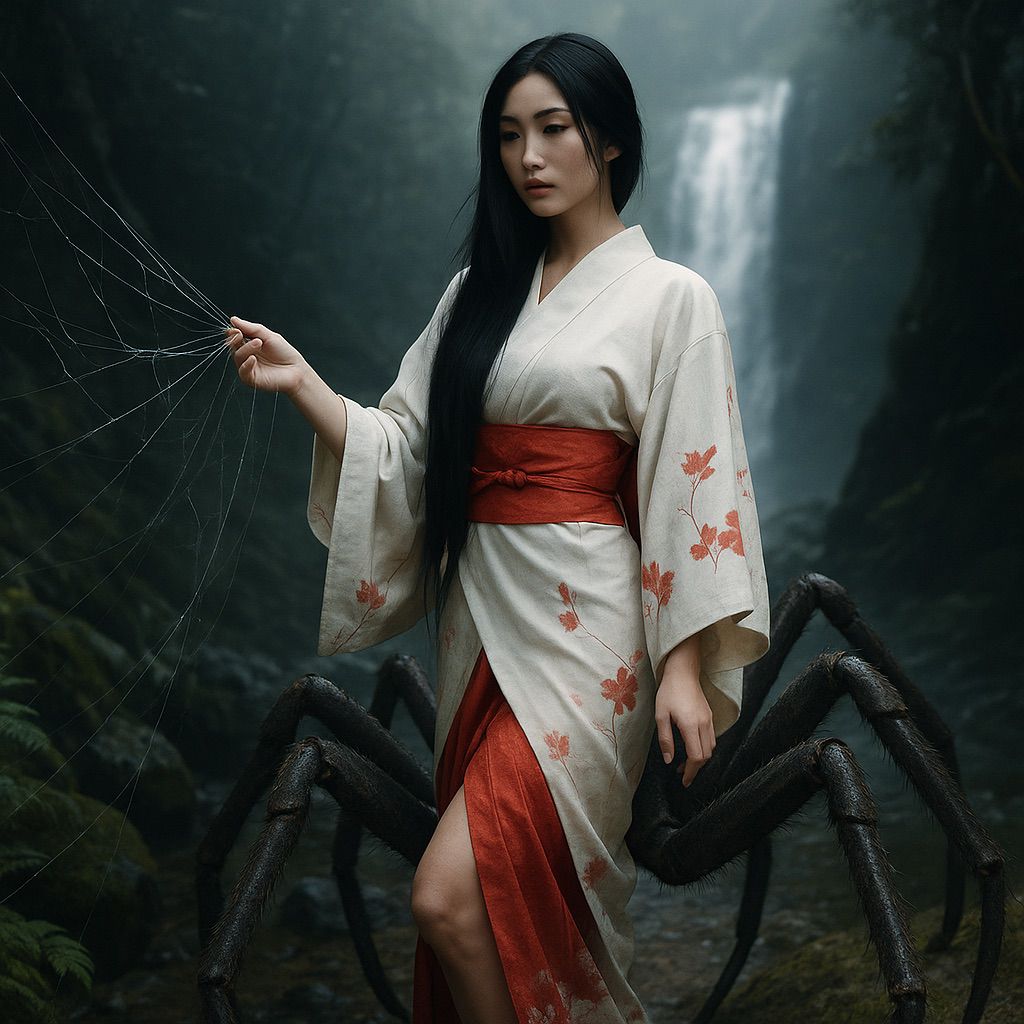
Silken Death: The Lure of Japan’s Spider-Woman, Jorōgumo

Dave

In the hushed forests of Japan, where mist clings to cedar trunks and streams wind through shadowed valleys, there are tales whispered that warn of beauty too dangerous to trust. These are not stories of gentle maidens or noble spirits, but of creatures wearing disguises more beguiling than any human charm. Among the most chilling of these is the Jorōgumo, the spider-woman of Japanese folklore, a yōkai who spins silk not just to catch prey, but to ensnare the hearts of men. She appears first as breathtakingly beautiful, her skin like porcelain, her hair long and flowing, her voice soft as falling rain. Travelers, entranced, are drawn close. But beneath the delicate exterior is a monster, a giant spider cloaked in illusion, waiting for the right moment to drop her mask and reveal her fangs. With strands of silk finer than any net, she binds her victims and drains them, leaving only husks behind. Her story is more than a ghost tale—it is a reflection of fear, desire, and the timeless warning that not all beauty is to be trusted.

The name Jorōgumo translates loosely to “entangling bride” or “prostitute spider,” and both meanings are fitting. Her myth sits at the intersection of allure and dread, reminding us how attraction can lead to destruction. In some versions, she is said to live near waterfalls or streams, weaving silk webs across hidden paths. In others, she resides in abandoned houses, waiting for weary wanderers. Always, her weapon is seduction. Unlike demons that rely on brute force, Jorōgumo hunts with deception, wrapping danger in beauty until escape becomes impossible. The closer you look, the more her legend reveals itself as a story not only of supernatural horror, but of human vulnerability—the way our longings can blind us, the way desire can become a trap of its own making.

Japan’s folklore is rich with yōkai, supernatural creatures that embody natural fears, cultural anxieties, and moral lessons. Among them, the Jorōgumo is especially potent because she merges two primal human terrors: the fear of spiders and the fear of seduction gone wrong. Spiders themselves have always provoked unease, with their patience, their silent weaving, and their venomous precision. But to combine that image with the face of a beautiful woman magnifies the terror, because it takes what should be safe—intimacy, connection, attraction—and turns it into a lethal snare. Her beauty is her web, her charm the toxin. The horror lies not just in the moment of being devoured, but in realizing too late that you walked willingly into her trap.

Legends of the Jorōgumo often begin with a chance encounter. A man, perhaps a traveling samurai or a wandering merchant, comes across a woman in need. She might be washing clothes by a stream, combing her hair beneath a waterfall, or sitting gracefully with a shamisen, playing haunting melodies. He is struck by her beauty, her poise, her quiet vulnerability. Drawn to her, he accepts her invitation, whether to follow her home, to share a drink, or to sit beside her and listen. But once he enters her lair, the illusion unravels. Threads of silk glisten in the corners, binding him before he even notices. Her body contorts, limbs elongating, the elegance dissolving into arachnid horror. What was once a woman is now a monstrous spider, her many legs encircling him as her fangs pierce. In an instant, intimacy becomes doom, tenderness becomes predation.

The Jorōgumo’s story is not simply a tale of horror, though—it is layered with symbolism. In feudal Japan, where these tales circulated, women were often both desired and feared. The myth reflects anxieties around female sexuality, portraying it as dangerous, even deadly, when untethered by control. A woman who lures men, who uses beauty as a weapon, becomes monstrous in the eyes of the society that told her story. At the same time, the Jorōgumo is also a figure of power, embodying female autonomy in a culture that often restricted it. She chooses her victims, controls her encounters, and dominates men who underestimate her. Her legend, therefore, is both a cautionary tale and a hidden acknowledgment of feminine strength—feared, demonized, but undeniable.

Stories of Jorōgumo vary across regions of Japan, but one of the most famous comes from Kashikobuchi in Ibaraki Prefecture. It is said that a young warrior once rested near a waterfall, where he saw a beautiful woman playing a shamisen. Enchanted, he sat with her, but soon felt faint as invisible threads wrapped around him. Realizing too late that he was ensnared, he tried to flee, but the silk tightened. Only with great effort and the help of his comrades was he dragged away, his body covered in fine strands of spider silk. Others were not so lucky—many who encountered her vanished entirely, their bodies never found, their disappearance attributed to the spider-woman’s unrelenting hunger.

Another tale speaks of Jorōgumo’s cunning. In some versions, she disguises herself not only as a woman, but as a mother carrying a baby. When kind travelers offer assistance, she lures them closer. But the baby is no child at all—it is a bundle of spider eggs or a decoy, a grotesque trick to disarm her prey. In others, she pretends to be injured, only to ensnare the well-meaning man who tries to help. These variations highlight her adaptability; like a spider, she tailors her trap to the situation, patient and inventive in the pursuit of survival.

But for all her horror, the Jorōgumo is not entirely without tragedy. Some stories portray her as once human, transformed into a spider through curse or fate. In these tales, her monstrous hunger is not a choice but a doom, her beauty preserved even as her soul is twisted. This angle humanizes her, blurring the line between victim and predator. She is both feared and pitied, a creature who must feed but who also carries the memory of being human, trapped between two forms forever.

Humanizing Jorōgumo is what makes her legend endure. She is not just a monster to fear, but a reflection of ourselves—the way beauty can hide danger, the way desire can lead us astray, the way power can be both intoxicating and destructive. In every culture, there are myths warning of seduction’s peril: sirens of Greece, succubi of Europe, fairies of Celtic lands. Jorōgumo is Japan’s answer, weaving her story in silk that glistens with both terror and allure. She embodies the eternal tension between attraction and annihilation, reminding us that the things we long for most can sometimes be the things that destroy us.

Even today, the image of Jorōgumo resonates in popular culture. She appears in anime, horror films, and video games, often depicted as a beautiful woman whose transformation into a spider is both horrifying and mesmerizing. Artists revel in the juxtaposition—the elegance of the human form against the grotesque power of the arachnid. Writers and filmmakers draw on her legend because it speaks to something timeless: the fear of losing control, of being consumed by forces we thought we could master. And audiences respond, because beneath the fantasy lies a truth we all know—that desire is dangerous, that trust can be betrayed, that predators often wear masks of beauty.

Imagine yourself walking alone in a Japanese forest, the sound of water echoing through the trees. You see a woman, radiant in her stillness, her dark hair cascading like ink, her eyes drawing you in. She beckons, soft and kind. You step closer, heart quickening. Only too late do you notice the glint of silk in the branches, the shimmer of threads in the moonlight. Her smile widens. The air thickens. And you realize the story is not just myth—it is a warning, one you should have heeded before desire led you here. That is the power of Jorōgumo: to make you second-guess every alluring face in the dark, to remind you that the most dangerous predators are not always the ones that roar, but the ones that smile.

Her legend lingers not because of spiders, but because of what she represents. The Jorōgumo is about entanglement—physical, emotional, psychological. She is about the dangers of illusions, the webs we walk into willingly, and the truth that sometimes the most beautiful things are also the deadliest. To fear her is to fear ourselves, our weaknesses, our desires. That is why, centuries after the first tale was told, her story still shivers through the air like silk in the night.

Related Posts

Hellfire Glam: Why the Devil Temptress Steals the Show Every Halloween

Dave

There are costumes that sparkle for a season and vanish by the next, tied to fleeting pop culture trends, but then there are the icons—the looks that never fade, never lose their hold, never stop dominating the night. Among these eternal legends of Halloween stands the Devil Temptress, dressed in a sizzling red bodysuit, horns perched proudly on her head, pitchfork in hand, and a wicked grin that promises mischief you probably shouldn’t want but absolutely do. She isn’t just another sexy costume—she is the unapologetic embodiment of temptation itself, the kind of look that turns heads, drops jaws, and burns her image into your memory long after the candles of the jack-o’-lanterns have gone dark. The Devil Temptress is more than fire and fabric—she is confidence personified, and that is why she has ruled the costumed night for decades and will continue to do so for centuries to come.

Halloween has always been about bending rules, about stepping outside yourself, about dancing on the edge of light and shadow. But nothing plays with that edge quite like the devil archetype. From the earliest religious warnings to the countless retellings of folklore, the devil has always been the ultimate symbol of temptation, rebellion, and indulgence. Add a feminine twist, and suddenly the abstract idea of sin takes on a physical form that is equal parts dangerous and magnetic. The Devil Temptress isn’t coy. She isn’t subtle. She doesn’t hide behind layers of irony or complexity. She walks into the party and declares herself with every bold inch of red. Her horns signal mischief, her pitchfork is a playful weapon, and her bodysuit hugs every curve with the kind of audacity that makes her impossible to ignore.

It’s not just about sex appeal—it’s about power. The Devil Temptress costume radiates dominance, the kind of confidence that says, “I don’t just own this look, I own this room.” And in a way, that’s the true essence of why people can’t look away. It’s not just that the outfit is hot—it’s that the woman wearing it is declaring herself unapologetically. Red is a color that commands attention. It’s the color of fire, of passion, of blood, of warning signs. Pair it with the sleek lines of a bodysuit, the playful menace of horns, and the theatrical flourish of a pitchfork, and suddenly you’ve got the perfect storm of danger and delight. It’s not just a costume, it’s a performance, a chance to embody the role of seductress, trickster, queen of the underworld for one wild night.

There’s also something universally appealing about how flexible the Devil Temptress can be. Some women lean into pure elegance—a satin bodysuit, thigh-high boots, flowing cape, horns shaped with sleek precision, makeup contoured to look like fire itself kissed their cheekbones. Others lean into playfulness—glittery red sequins, oversized cartoonish horns, pitchforks that double as cheeky props for selfies. Some go dark and gothic, pairing their costume with black lace, smokey eyes, and blood-red lipstick. And then there are those who strip it down to the bare essentials, turning the Devil Temptress into minimal fabric and maximum impact, the kind of boldness that has made this costume a mainstay of both parties and Instagram feeds for years. The devil is in the details, literally, and that is why no two Devil Temptresses ever look exactly alike.

What really makes the costume go viral, though, is the reaction it stirs. Walk into a party dressed as a cat, and you’ll blend into the crowd. Walk in as a witch, and you might be one of several. But walk in as the Devil Temptress, blazing in red, and the atmosphere shifts. People notice. They laugh, they cheer, they want a photo, they want to join the fun. It’s a costume that doesn’t just sit quietly—it amplifies the energy of the entire room. In a world where attention is the most valuable currency, the Devil Temptress costume is gold.

And of course, let’s not ignore the viral engine that drives our modern age: social media. Costumes that photograph well go further, spread faster, and live longer. The Devil Temptress doesn’t just photograph well—she’s a dream for the camera. The vivid red pops against any backdrop, whether it’s the moody candlelight of a house party or the neon flashes of a nightclub. The horns add instant silhouette recognition, the pitchfork creates dynamic poses, and the bodysuit’s shine catches every angle. Post a Devil Temptress picture on Instagram, TikTok, or X, and watch the likes climb. It’s the kind of costume that doesn’t just exist in the moment—it keeps living, reposted and reshared, days after the party is over.

But maybe what makes the Devil Temptress so enduring is something deeper, something more human. At its core, the costume is about embracing the parts of yourself that don’t always get to shine in everyday life. It’s about giving in to boldness, about leaning into your confidence, about playing with power in a way that’s safe, fun, and entirely your own. For one night, you get to embody temptation without consequence, to live in the fantasy of being the woman everyone is warned about but everyone secretly desires. That freedom, that joy, that audacity—it’s intoxicating. And when people feel that energy radiating off you, they can’t help but be drawn in.

The truth is, Halloween has always been about storytelling. Every costume tells a story, whether it’s about who we are, who we wish we could be, or who we want others to believe we are. The Devil Temptress tells a story that is equal parts dangerous and empowering. She says: I am not afraid of my desires. I am not afraid to be seen. I am not afraid to take up space. That’s why she owns the night. That’s why she keeps showing up, year after year, in clubs, bars, house parties, and feeds. She is both a joke and a statement, both playful parody and powerful archetype. She is Halloween distilled into one figure: scary, sexy, and unforgettable.

So if you’re deciding on your look this year and you want something that guarantees attention, admiration, and a little bit of trouble, you already know the answer. Grab that red bodysuit, slide on those horns, pick up that pitchfork, and let yourself revel in the fire. Halloween is about transformation, and nothing transforms you faster than stepping into the role of temptation itself. The Devil Temptress doesn’t ask for permission, doesn’t worry about approval—she knows she’s the star. And when you wear her costume, you’ll know it too.

Because when the music is pounding, the lights are flashing, and the night is alive with magic, there is no competition. The Devil Temptress doesn’t just enter the room—she owns it. And everyone else is just playing catch-up.

Related Posts