Latest Articles

The Eternal Hunger: Chasing the Wendigo Across North America’s Frozen Shadows

Dave

There are monsters that lurk in the forests, waiting in silence, and then there are monsters that lurk within us, whispering in our veins, gnawing at the edges of our souls. The Wendigo, that infamous cannibalistic spirit of Algonquian lore, is both. It is a creature made of frost and famine, but also of greed and insatiable desire. To speak of the Wendigo is to speak not just of a beast in the woods, but of the human capacity for hunger without end — the hunger that devours everything and leaves nothing behind. On October 7, when whispers of this chilling legend rise, we find ourselves staring at more than just a myth; we are staring at the shadow in the mirror.

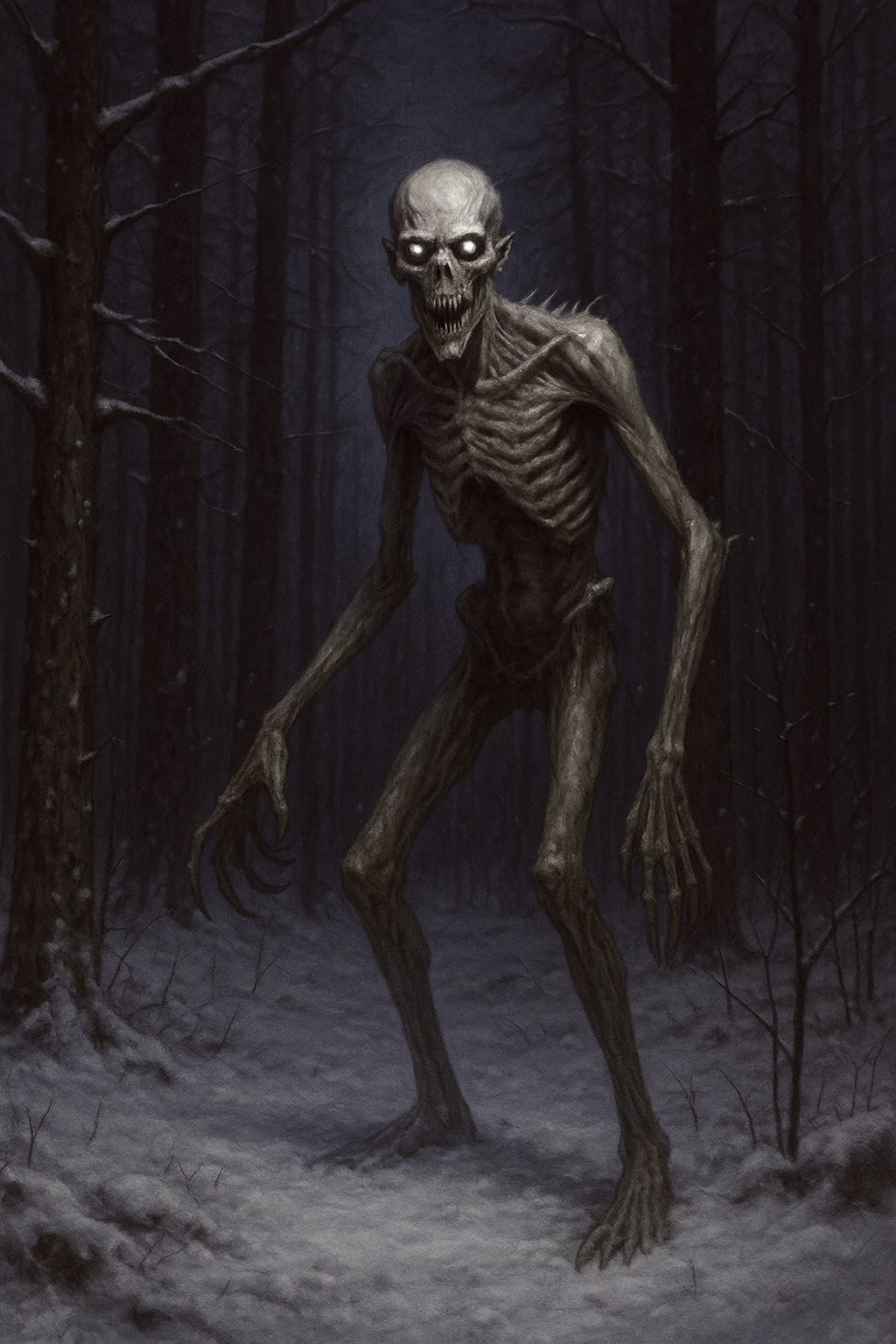
The story begins in the snowy landscapes of North America, where winters were not merely inconvenient but life-threatening. To the Algonquian-speaking peoples of the Great Lakes and boreal forests, survival hinged on community, balance, and respect for the land. Yet when food grew scarce and the cold became merciless, desperate choices haunted human hearts. Out of this crucible of survival and moral boundaries emerged the Wendigo: a skeletal, emaciated figure with skin stretched tight over bones, lips chewed away, eyes sunken but burning with an icy fire. It was said to be taller than the tallest pine, gaunt as death itself, yet impossibly strong, a being forged of starvation and sin. It craved flesh, but more than that — it craved endlessly, forever hollow.

The Wendigo legend carried with it a moral gravity. It wasn’t just a campfire story told to frighten children. It was a warning, a cultural safeguard. In times of hunger, when snow buried the land and the deer had vanished, people were tempted by the unthinkable: cannibalism. The Wendigo myth served as a shield against such impulses. To eat human flesh was not simply taboo; it was to invite possession by the Wendigo spirit, to transform into a ravenous beast doomed to wander the wilderness in eternal hunger. It was a way of saying: “Even when the world grows cruel, there are lines we do not cross.” The myth turned survival into a moral battleground, one where the human soul was at stake.

But the Wendigo is more than folklore; it is a mirror held up to human greed. Stories tell us that even those who already had enough could fall prey to its curse. A hunter who hoarded food while others starved might attract its shadow. A leader who demanded more than his share could become Wendigo. Thus, the legend expanded beyond hunger into a commentary on greed itself — greed that consumes community, greed that turns abundance into famine. The Wendigo was not just about eating flesh; it was about the insatiable appetite for more, no matter the cost. In this way, it remains a legend frighteningly relevant to the modern world.

Imagine the scene: a small Algonquian village buried beneath drifts of snow, families huddled in bark-covered lodges, fires sputtering against the biting cold. Outside, the trees groan with frost, and the night air carries a silence so profound it presses against your chest. Then, far off, a scream — not animal, not human, but something stretched thin between the two. Elders whisper the word no one wants to hear: Wendigo. The children draw closer to their mothers. Hunters clutch their spears. Somewhere in the darkness, something impossibly tall shifts between the pines. Its hunger is a palpable force, a storm rolling in. That imagery alone explains why the Wendigo survives as one of the most terrifying figures in North American folklore.

European colonists who heard the stories were quick to fold the Wendigo into their own catalog of demons and devils, but to the indigenous peoples, it was never so simple. This was not just a monster of the forest — it was a spiritual condition, a sickness of imbalance. Anthropologists later coined the term “Wendigo psychosis” to describe cases in which individuals, often during periods of famine, became obsessed with cannibalistic thoughts or claimed to be transforming into Wendigos. While the diagnosis itself is controversial and largely dismissed today, the fact remains that the legend had power not only as metaphor but as lived psychological reality. People truly believed in its ability to possess. Fear itself became flesh.

The Wendigo’s physical description varies, yet the essence is constant: hunger incarnate. Some tales paint it as a giant towering over trees, with heart made of ice, lips frozen to its teeth, breath steaming with death. Others envision it gaunt, corpse-like, its bones pressing through skin, its joints twisted by starvation. Always, it is hollow, a walking famine. Its voice is said to echo with the howling wind, its step cracking ice with every stride. And worst of all: when it eats, it never grows full. Its belly stretches, but its hunger grows deeper. The Wendigo is a paradox of endless consumption. It is capitalism before capitalism, addiction before drugs, a timeless allegory for the dangers of wanting more than enough.

Consider the modern parallels. Our world today is overflowing with abundance, yet starvation and greed walk side by side. We consume oceans of resources, forests, oil, animals, and each other’s time, all while the hunger for more never ceases. If the Wendigo was once a spirit warning against cannibalism during famine, it now feels like a metaphor warning against our collective consumption. We devour, and devour, and devour, yet satisfaction never comes. In this light, the Wendigo is not just a North American monster. It is a global truth.

But let us return to the woods, because folklore thrives not in abstraction but in story. In one tale, a hunter returns to his village after weeks in the snow. He is gaunt, but his eyes are bright, too bright. He carries meat, plenty of it, yet he does not say from where it came. Soon, the people notice his lips are torn, as though chewed. They hear him whisper at night of voices in the wind. And when children disappear, there is no doubt. He has become Wendigo. The villagers burn him, but even as the flames consume his flesh, a shriek escapes, rising into the storm, carrying the hunger forward. In another story, travelers lost in a blizzard hear footsteps behind them. They look back and see nothing but whiteness. Yet the snow is stamped with massive prints, each step twice the size of a man’s. By morning, one of their party is gone, taken silently in the night. These stories endure because they capture primal fear: the fear of cold, hunger, and betrayal from within.

The Wendigo also embodies transformation, a theme deeply resonant in human myth. To become Wendigo is to cross the threshold between human and monster, to let hunger erase humanity. This is not unlike werewolf tales in Europe or vampire legends elsewhere, but the Wendigo’s transformation is more brutal. It is not a curse delivered by bite or magic. It is born of choice — the choice to consume flesh, to surrender to greed. That makes it terrifyingly intimate. Any person, given the wrong conditions, could fall.

In contemporary culture, the Wendigo has leapt from oral tradition into film, literature, and video games. It appears in horror movies, from low-budget Canadian slashers to Hollywood thrillers. It haunts episodes of shows like Supernatural and Hannibal, and it lurks in games like Until Dawn. Yet something curious happens in these retellings: the Wendigo often becomes just another monster, stripped of its moral depth. Its connection to greed, to famine, to cultural survival is reduced to jump scares. This dilution risks robbing the legend of its richness. But for those willing to dig deeper, the Wendigo remains as meaningful as ever — a reminder that horror is never just about fear, but about what we fear in ourselves.

Perhaps that is why the Wendigo endures. Because it speaks to the dark corners of our own appetites. It is easy to laugh at tales of giants with icy hearts, but harder to deny the metaphor. Who among us has not wanted more than we need? Who has not felt hunger — for food, for wealth, for recognition — that gnawed even when satisfied? The Wendigo lives in that gnawing. It is the whisper that nothing is ever enough.

So on October 7, when its legend is remembered, let us pause. Let us see the Wendigo not just as a monster in the woods, but as a cautionary tale that belongs to us all. It is the voice that warns against devouring one another, against letting greed hollow us out until we are but skin stretched over bone, wandering through life without end or purpose. The Wendigo is the frozen shadow at the edge of campfire light, the hunger that will not be fed. And maybe — just maybe — it is waiting for us to finally listen.

Because the Wendigo is not just a creature of Algonquian lore. It is a reflection of humanity’s deepest fear: that we will consume ourselves into extinction, and that our hunger will follow us, eternal and unsatisfied, into the cold.

Related Posts

The War That Wouldn’t End: America’s Invasion of Afghanistan and the Long Shadow of October 7, 2001

Elias Rowen

On October 7, 2001, less than a month after the Twin Towers crumbled and the Pentagon burned, the United States launched airstrikes on Afghanistan. It was the beginning of what would become the longest war in American history—a war that promised justice, but instead dragged the world into two decades of blood, politics, shifting alliances, and haunting questions. The invasion began with a simple objective: dismantle al-Qaeda and topple the Taliban regime that sheltered it. But as bombs fell and soldiers deployed, the war grew into something far more complex, reshaping not only Afghanistan but also America itself and the global order for a generation.

The images of that day were both chilling and strangely familiar: fireballs erupting over Kabul, tracer rounds slicing the night, and the confident words of President George W. Bush declaring, “We will not waver, we will not tire, we will not falter, and we will not fail.” For Americans still reeling from the horror of September 11, there was a raw desire for action, for vengeance, for some assurance that the United States would strike back against those who dared to attack it. The invasion felt like justice delivered. For Afghans, though, it was the start of yet another chapter in a cycle of war stretching back through decades of conflict with the Soviets, civil war, and Taliban rule.

Afghanistan, long called the “graveyard of empires,” is a land of mountains, deserts, and tribal complexities. No foreign power had ever fully subdued it. Not the British in the 19th century, not the Soviets in the 20th. Yet America entered with confidence, believing its superior technology and firepower could achieve what others had failed to do. The Taliban were quickly driven from power; Kabul fell, Kandahar followed, and Hamid Karzai was installed as the new president. In those early months, it seemed victory was certain, swift, and permanent.

But history rarely bows to certainty. The Taliban melted away, not defeated but waiting, regrouping in rural villages and across the Pakistani border. U.S. forces remained, first to stabilize, then to rebuild, then to “nation-build.” What was meant to be a short, targeted campaign turned into an open-ended occupation. Billions of dollars flowed into Afghanistan, funding infrastructure, schools, and security forces. Yet much of it disappeared into corruption, inefficiency, and the pockets of warlords who played both sides. For every school built, a bomb cratered another. For every village secured, another slipped into insurgent hands.

Meanwhile, the war exacted a staggering human toll. Tens of thousands of Afghan civilians died—farmers, children, families caught in crossfire or targeted in bombings gone wrong. Entire generations grew up knowing nothing but war. American and allied soldiers faced ambushes, IEDs, and the unbearable strain of endless deployments. Over 2,400 U.S. service members lost their lives in Afghanistan, and countless more returned home with invisible wounds—PTSD, moral injury, and a gnawing sense of futility.

The war reshaped global politics too. NATO allies followed America into Afghanistan, marking the alliance’s first mission outside Europe. Pakistan played a double game, taking U.S. aid while harboring Taliban elements. Iran watched carefully, sometimes aiding, sometimes undermining U.S. efforts. China and Russia calculated their moves in the shadow of America’s quagmire. And back home, the war fueled debates about terrorism, security, and civil liberties. The Patriot Act, surveillance programs, and airport security became part of everyday life, altering the relationship between citizens and their government.

Perhaps most telling was the way the war faded into the background of American life. Unlike Vietnam, it lacked daily television coverage of body bags and jungle firefights. Unlike World War II, it lacked national mobilization. For many Americans, Afghanistan was a distant hum—known, acknowledged, but rarely felt directly. The burden fell on soldiers and their families, a small fraction of the population bearing the weight of a nation’s vengeance.

And then came the long ending. Presidents changed—Bush, Obama, Trump, Biden—each inheriting a war they promised to conclude, yet passing it on to the next. Obama surged troops in, then pulled some back, declaring victories that never materialized. Trump negotiated with the Taliban in Doha, acknowledging reality: the war could not be won militarily. Finally, in 2021, twenty years after the first bombs fell, the United States withdrew. The world watched as Kabul fell again, eerily quickly, to the Taliban. Helicopters lifted Americans from rooftops. Afghan allies clung to departing planes. It was an ending that looked more like defeat than closure.

And yet, in the chaos of that ending, one truth became undeniable: Afghanistan was never just a war about Afghanistan. It was about grief, anger, fear, ambition, hubris, and the human tendency to believe that wars can remake the world when, in fact, they often remake nothing but graves.

But behind the politics and strategy, there were human stories. The U.S. Marine who built a school in a village only to watch it burn. The Afghan girl who attended classes in secret, clutching books forbidden by the Taliban. The American mother who sent her son to war and then wept at his grave, asking what it had all meant. The Taliban fighter, hardened by decades of conflict, who believed he was defending his land from yet another occupier. These are not statistics. They are lives, hopes, and heartbreaks woven into the tapestry of a war too vast to comprehend fully.

October 7, 2001, was the day America stepped into Afghanistan. It was the day the world changed course, not just for Afghans and Americans, but for all who lived in an era where terrorism, war, and surveillance became global fixtures. Two decades later, the war’s echoes remain—shaping geopolitics, haunting veterans, and lingering in the eyes of Afghan children who wonder if peace will ever arrive.

The U.S. invasion of Afghanistan will be remembered not only for its beginning but for its ending, and for the questions it leaves behind. Did the world become safer? Did the sacrifices mean progress? Or was it all, as some fear, a tragic cycle destined to repeat?

On October 7, we remember not just the day bombs fell, but the day humanity once again proved how fragile peace can be, how costly vengeance becomes, and how the longest wars rarely end in victory—they simply end.

Related Posts

The Goat-Sucker’s Shadow: Chupacabra and the Birth of a Modern Monster

Dave

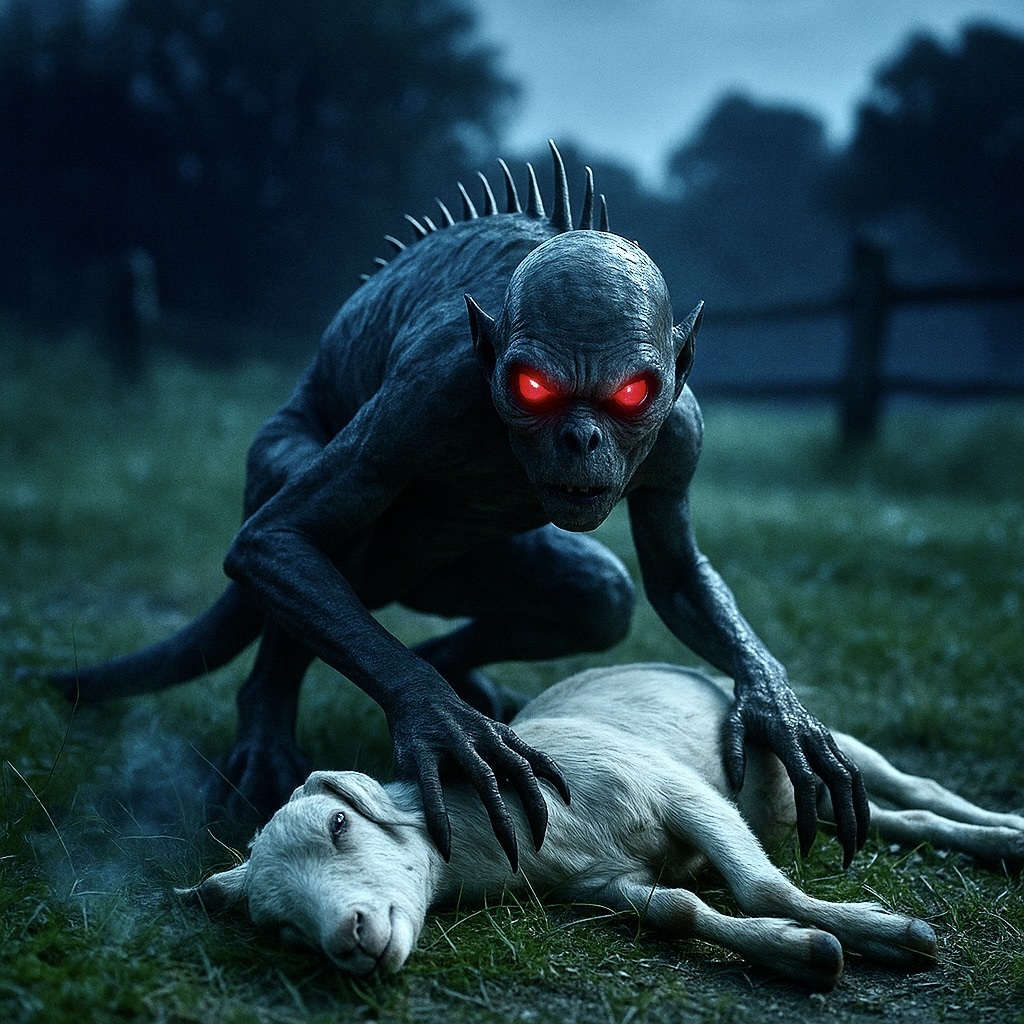
It began, as many legends do, with blood. In the mid-1990s, in the rural hills of Puerto Rico, farmers awoke to find their animals dead in the night. Goats, chickens, rabbits—drained, it seemed, of their blood. There were no torn hides, no scattered carcasses, just puncture marks on necks and lifeless bodies left behind. Whispers spread faster than the news, and soon a name was whispered too: el chupacabra—the goat-sucker. Within months, it had grown from rumor to global phenomenon, a monster that felt at once new and ancient, strange and familiar. Unlike the vampires of Europe or the spirits of Asia, this was a monster of the modern age—sighted in suburbs, catalogued by tabloids, chased by ufologists. The Chupacabra became not just Puerto Rico’s monster, but the world’s, born in the crucible of media, paranoia, and imagination.

At first, the descriptions of the creature were unlike anything the world had seen before. Witnesses spoke of a small humanoid figure, three to four feet tall, with spines or quills running down its back, glowing red eyes, and leathery gray-green skin. Some said it hopped like a kangaroo, others that it slinked like a reptile. In every account, it was otherworldly, more alien than animal. Its victims were not just killed but exsanguinated, their bodies eerily intact save for two or three puncture wounds. Farmers swore it was no dog, no coyote, no predator they had ever known. And in that void of explanation, the myth took root. The Chupacabra was born not from centuries of folklore but from the immediacy of mystery, a monster created in real time.

The timing of the Chupacabra’s emergence was no accident. The 1990s were a decade steeped in alien abduction stories, conspiracy theories, and a new global media landscape that spread tales faster than ever before. Shows like The X-Files dominated, tabloids filled their pages with UFOs and government cover-ups, and rural fear met urban fascination in a perfect storm. The Chupacabra slid neatly into this space, part cryptid, part extraterrestrial, part government experiment gone wrong. Its image spread from Puerto Rico to Latin America, then into the southern United States, and from there across the globe. The monster was new, but the story—something lurking just outside the safety of night—was as old as humanity itself.

But what made the Chupacabra different from other creatures of legend was the speed with which it evolved. Within just a few years, its appearance shifted. By the early 2000s, many sightings described not a spiny alien-like being but a hairless, mangy dog-like creature, with gaunt features, glowing eyes, and vicious teeth. Dead specimens were occasionally found, almost always coyotes suffering from mange, their fur gone, their skin sickly and tight, their bodies emaciated. Scientists explained the phenomenon as misidentification, pointing out that mange made ordinary animals appear monstrous. But by then, the legend had already outgrown explanation. The Chupacabra had become a symbol, a modern boogeyman whose truth mattered less than its story.

Puerto Rico holds the heart of that story. The island’s rich cultural tapestry of folklore already included tales of witches, demons, and spirits, blending Indigenous, African, and Spanish influences. The Chupacabra was something new, but it resonated with something deep, a sense that the land still held mysteries beyond human control. For farmers whose livelihoods were shaken by the sudden deaths of livestock, the creature was more than a story—it was an answer. In this way, the Chupacabra reflects a universal human pattern: when faced with the unexplained, we give it shape, give it a name, and through story, try to contain it.

There is something profoundly human in the way the Chupacabra spread. It was born in fear, fed by rumor, and raised by media. Each retelling made it larger, stranger, more terrifying. Children whispered about it in schools, reporters breathlessly covered each sighting, and skeptics and believers clashed in endless debate. The monster became a mirror, reflecting whatever fears a culture projected. In Puerto Rico, it was linked to economic hardship, colonial tension, and the anxieties of modern life. In the U.S., it became entangled with fears of border security and invasive threats. In each place it landed, the Chupacabra took on new meaning, its image molded by the hands of those who told its story.

And yet, for all the skepticism, the legend endures. Ask someone who has lost animals to mysterious attacks, and they will tell you it was no coyote. Listen to a witness describe what they saw, and you will hear conviction, not fabrication. Myths do not survive because they are factually true—they survive because they capture a truth deeper than fact. The Chupacabra embodies fear of the unseen predator, the sense that nature—or something beyond nature—can still surprise us, still terrify us. It is the fear of losing control, of being powerless to protect, of realizing that even in a world of satellites and science, monsters may still lurk in the dark.

To humanize the Chupacabra legend is to see the people who shaped it. The farmer in Puerto Rico who awoke to find his goats dead, the children who huddled around each other at night, the journalists chasing a story that felt alive—these are the heartbeat of the monster. The Chupacabra is not just a cryptid; it is a cultural creation, one that speaks to collective anxieties. It is what happens when fear meets imagination, when the unexplained demands explanation, and when storytelling becomes a survival tool. In this sense, the Chupacabra is less about claws and fangs, and more about us.

Even now, decades after the first reports, the Chupacabra has not faded. It appears in documentaries, horror films, urban legends, even memes. Children still whisper about it in the dark, and farmers still eye the night warily when livestock die unexpectedly. It is part of the folklore of not just Puerto Rico but the world, a monster created in the age of the internet but one that feels timeless. And as long as people fear the unexplained, the Chupacabra will remain alive in shadow, just out of sight.

Perhaps that is the most unsettling truth of all: the Chupacabra may never need to exist in flesh and blood, because it already exists in the one place monsters can never die—in human imagination. Its cry is not in the night air, but in our stories, our fears, our need to give shape to the shadows. It is, in that way, eternal.

Related Posts

Midnight Prowl: Why the Seductive Catwoman Is the Ultimate Halloween Fantasy

Dave

There are few costumes as instantly recognizable, as endlessly magnetic, and as irresistibly timeless as Catwoman. From the moment she first leapt from comic book panels into pop culture history, she has been the embodiment of sleek danger and sultry power. Halloween, of course, is her natural hunting ground. Every October 31st, while witches stir cauldrons and vampires bare their fangs, there will always be at least one Catwoman prowling the party. And not just any Catwoman—the Seductive Catwoman, in a skin-tight black catsuit that clings like a second skin, a mask that hides just enough to intrigue, and a whip coiled at her side that promises mischief. This isn’t just a costume. It’s a declaration of confidence, a statement that says: tonight, the shadows belong to me.

What makes Catwoman such a perennial favorite is the perfect marriage of danger and allure. She’s not simply a hero or a villain—she’s both, depending on her mood. That ambiguity makes her endlessly fascinating. When someone steps into the sleek black catsuit for Halloween, they aren’t just dressing as a character—they’re stepping into a persona that balances temptation and power, charm and chaos. And let’s be honest: the catsuit is practically built for going viral. The glossy material, the way it hugs every curve, the silhouette of the mask and cat ears—this is a look designed to command attention. It’s not just sexy—it’s iconic.

The whip is more than just a prop—it’s a symbol of dominance, of control, of playful danger. At a Halloween party, it becomes an accessory that adds an extra layer of intrigue. Every flick, every pose, every photo opportunity with it turns the costume from an outfit into a performance. The whip isn’t just about intimidation—it’s about storytelling, about embodying the sly trickster who always stays one step ahead. And when paired with the confidence of the person holding it, it’s the difference between being “someone in a Catwoman costume” and being the Seductive Catwoman.

But Catwoman’s appeal goes far beyond the shiny exterior. She represents freedom and independence. Unlike many female characters in pop culture, she isn’t waiting to be saved. She’s the one calling the shots, bending the rules, making the choices that suit her and no one else. That independence translates perfectly into Halloween night, when people feel the freedom to step into roles that reflect hidden sides of themselves. The Seductive Catwoman costume allows the wearer to channel that fearless independence, to embrace the spotlight without apology, to flirt with power in a way that feels both fun and empowering.

And the truth is, this costume photographs like a dream. Social media eats it up. The contrast of black leather against colorful party lights, the glint of the mask under neon strobes, the flash of red lipstick against the shadows—it’s cinematic. On Instagram, TikTok, or X, a Seductive Catwoman doesn’t just get posted, she gets shared, saved, and remembered. Every pose can look like a movie poster. Every candid laugh looks like a behind-the-scenes moment of Gotham’s most famous thief crashing your Halloween. That’s part of why she’s viral—she fits seamlessly into the aesthetics of the digital age, designed to dominate feeds as much as she dominates the dance floor.

What really makes her endure, though, is the humanity behind the claws. Catwoman has always been relatable because she is complicated. She isn’t pure evil or perfect good. She’s a mess of contradictions—caring and selfish, loyal and reckless, fierce and vulnerable. The Seductive Catwoman costume channels all of that into one intoxicating package. It’s not about being flawless—it’s about being fascinating. And that makes the costume feel less like putting on a mask and more like unleashing a side of yourself that’s already there, just waiting for a reason to come out.

Halloween is all about transformation, about permission to play roles we wouldn’t normally dare to embody. Slip into that catsuit, lace up those boots, fasten that mask, and suddenly you’re not just someone in a costume—you’re prowling the night, owning the room, letting every glance linger a second longer than it should. It’s intoxicating, not just for those who see you, but for the person wearing it. The Seductive Catwoman isn’t just sexy for others—she’s empowering for the one who wears her. And that’s why she continues to dominate, year after year.

Of course, there’s always competition on Halloween night. There will be witches and devils and angels and vampires. But Catwoman doesn’t compete—she prowls above the rest. She doesn’t need to shout for attention. She doesn’t need gimmicks. She walks in, and the room adjusts to her. That’s the power of the archetype, and it’s why the Seductive Catwoman will always be a highlight. She’s not chasing the party—the party is chasing her.

And maybe that’s the real magic of it all. The Seductive Catwoman costume reminds us that sometimes the most unforgettable Halloween looks aren’t the scariest or the flashiest—they’re the ones that embody confidence, mystery, and control. They’re the ones that let us play with danger while wrapped in allure. They’re the ones that turn a simple outfit into a story, and a night into a legend.

So this Halloween, when the music is pounding, the lights are flashing, and the air is buzzing with energy, watch the crowd. Notice who people are turning to. Notice who people can’t stop looking at. Chances are, it’s the one in the catsuit, mask, and whip, smirking like she knows exactly what you’re thinking—and daring you to say it out loud. That’s Catwoman. That’s the queen of Halloween. And that’s why, year after year, she never loses her claws.

Related Posts

The Day of Atonement Turned to Fire: The Yom Kippur War of 1973

Elias Rowen

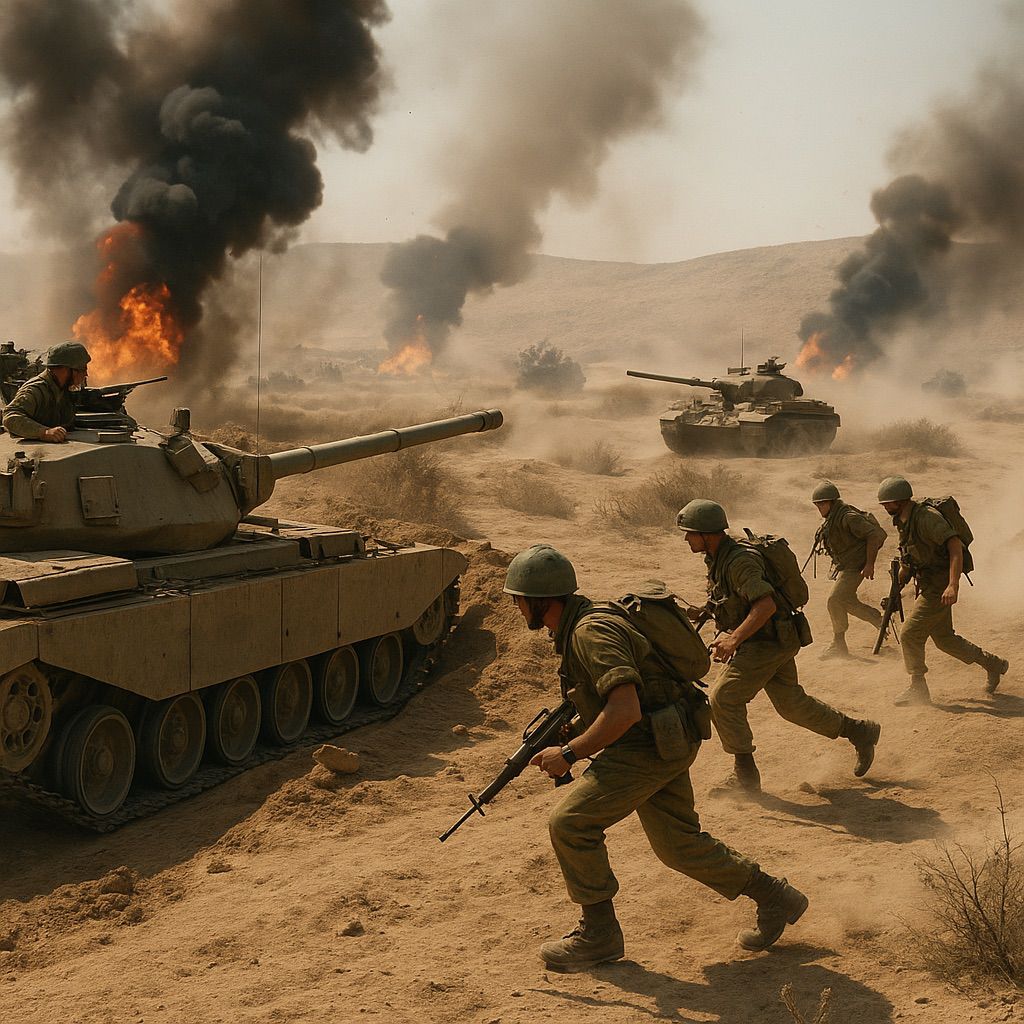
On October 6, 1973, while much of Israel stood in solemn silence for Yom Kippur—the holiest day in the Jewish calendar—the sound of shofars in synagogues was drowned out by the roar of jet engines, tank treads, and artillery fire. It was a day that began in fasting and prayer but descended into chaos and terror. The armies of Egypt and Syria, backed by allies across the Arab world, launched a coordinated surprise attack on Israel. For three weeks, the Middle East burned in one of the most brutal and consequential conflicts of the 20th century. The war would redraw not just battle lines but political realities, leaving scars that remain visible today.

The Yom Kippur War—known as the Ramadan War in the Arab world, as it coincided with the holy month of fasting—was unlike anything Israel had faced before. The timing was as devastating as the force. Yom Kippur is a day when the streets of Israel fall still, shops close, and people reflect inwardly on their faith and mortality. Military readiness was minimal; soldiers were home with families, generals at prayer. The Arab coalition, led by Egyptian President Anwar Sadat and Syrian President Hafez al-Assad, knew the symbolism of striking at such a vulnerable moment. It wasn’t just strategy—it was psychological warfare.

For Israel, the first hours were catastrophic. Egyptian forces stormed across the Suez Canal, overwhelming the thin Israeli defenses along the Bar Lev Line, a sand-and-concrete barrier that had seemed invincible. On the Golan Heights, Syrian tanks rolled across the plateau, threatening to break through and pour into northern Israel. For a nation only 25 years old, surrounded by hostile neighbors and haunted by the memory of the Holocaust, it felt as though the very existence of the state was on the brink.

The war was fueled by the ghosts of the Six-Day War of 1967, when Israel had stunned the Arab world by defeating multiple armies in less than a week, seizing Sinai, Gaza, the Golan Heights, and the West Bank. That humiliation burned in Arab memory. Egypt, in particular, longed to reclaim Sinai, and Sadat was determined to restore Arab pride, even if it meant gambling everything. Assad, ruling Syria with an iron hand, saw his chance to avenge the loss of the Golan. Together, they plotted carefully, coordinating with Soviet support in weapons and training, while the United States, Israel’s ally, watched warily from afar.

In those opening days, the world saw an Israel that bled, staggered, and nearly broke. Soldiers rushed from synagogues to battlefields, often without proper equipment or preparation. Casualties mounted at a terrifying pace. Families sat glued to radios, waiting for word of sons and daughters at the front. For the first time since its founding, Israel faced the terrifying prospect of defeat.

Yet Israel’s response was as fierce as it was desperate. Within days, its forces regrouped. On the Golan Heights, vastly outnumbered Israeli tank crews fought with tenacity, holding off wave after wave of Syrian armor in what became known as the “Valley of Tears.” At the Suez, after initial failures, Israeli counterattacks began to claw back territory. The war turned into a brutal stalemate, with both sides suffering immense losses.

It was also a war fought in the shadow of superpowers. The Soviet Union supplied Egypt and Syria, while the United States launched a massive resupply airlift to Israel. The two global titans teetered dangerously close to direct confrontation. Nuclear alerts were raised. For a terrifying moment, the Middle East threatened to drag the entire world into catastrophe.

As the days wore on, the war shifted. Israeli forces, under the command of General Ariel Sharon, crossed the Suez Canal in a daring maneuver, encircling Egypt’s Third Army and threatening Cairo. On the northern front, Israeli troops pushed Syrians back beyond the pre-war lines. By late October, a ceasefire brokered by the United Nations came into effect, leaving both triumph and tragedy in its wake.

The cost was staggering. Israel lost over 2,600 soldiers—an unbearable toll for such a small nation. Egypt and Syria’s losses were even greater, with tens of thousands dead and wounded. Civilians across the region bore the trauma of bombings, shortages, and fear. Yet amid the ashes, something remarkable emerged. Sadat, though unable to fully defeat Israel, proved his point: Egypt could fight and regain dignity. This opened the door to diplomacy, culminating in the historic Camp David Accords of 1978, where Egypt became the first Arab nation to make peace with Israel.

The Yom Kippur War was thus not just a clash of armies—it was a crucible of change. It reshaped alliances, humbled leaders, and showed that the Middle East could never be the same again. For Israelis, it was a painful reminder that survival was never guaranteed, that vigilance and resilience were as essential as prayer. For Arabs, it was proof that humiliation could be redeemed, that even in loss, dignity could be reclaimed. For the world, it was a sobering lesson in how quickly local conflicts could escalate into global crises.

And beyond politics and strategy lay the human heart of the war. Imagine a young Israeli soldier clutching his rifle on the Golan Heights, exhausted but refusing to yield. Picture an Egyptian crossing the Suez on makeshift bridges, carrying not just a weapon but decades of national humiliation. Picture families on both sides mourning sons lost to a war neither started nor truly understood. Behind the headlines, behind the maps and speeches, it was a war of human beings—ordinary men and women caught in the firestorm of history.

October 6, 1973, remains etched in memory as a day when faith met fire, when prayer was shattered by gunfire, and when the fragility of peace was laid bare for all to see. The Yom Kippur War was a tragedy, a turning point, and a paradox—born of hate, but eventually opening a path, however narrow, toward peace.

Related Posts