Latest Articles

When Liberty Took the Stage: The Birth of American Independence

Elias Rowen

It was a warm July morning in Philadelphia, the air thick with summer and suspense. By midday, the streets near Chestnut Street hummed with activity—horses clopping on cobblestones, whispers passing between shopkeepers, and the crack of printing presses at work inside dimly lit rooms. But something much larger than daily commerce was stirring inside the State House. In a room cloaked in debate, candle smoke, and the strain of political risk, men with powdered wigs and ink-stained fingers were about to deliver a thunderclap heard around the world. On July 4, 1776, the Declaration of Independence was formally adopted, transforming thirteen scattered colonies into the embryo of a new nation. It wasn’t just an act of governance—it was an act of defiance, of vision, and of extraordinary hope.

To understand the gravity of what happened that day, we need to step back and consider the world the Founders inhabited. The American colonies, while distinct in culture and economy, were united in their growing frustration with British rule. The seeds of revolution had been planted long before 1776—perhaps as early as the Stamp Act in 1765, or even earlier, when colonists began to see themselves as something separate from their mother country. For years, they endured taxation without representation, trade restrictions that stifled prosperity, and a king who dismissed their pleas as little more than rebellious noise. Tensions escalated with each British law, with each red-coated soldier marching through colonial streets, and with each silenced voice that dared to challenge imperial authority.

Imagine the ordinary people of that era: a blacksmith in Massachusetts whose tools were taxed into scarcity; a Virginia farmer forced to sell his tobacco under strict British tariffs; a young woman in Pennsylvania, writing in her diary about the whispers of war and freedom. These people weren’t theoretical actors—they were real, living, breathing humans grappling with injustice. And among them rose individuals who would soon craft a declaration that would promise them more than survival. It would promise them meaning.

The task of putting these promises to paper fell to Thomas Jefferson, a lanky 33-year-old lawyer from Virginia. Though relatively young, Jefferson was chosen by the drafting committee because of his clarity of thought and eloquence of prose. Working in relative isolation, Jefferson wrote by candlelight in a modest boarding house, his quill scratching against parchment as he wrestled with words that would one day shape global political philosophy. His words, once written, were audacious and soaring. “We hold these truths to be self-evident,” he began, as if such truths were written in the very fabric of the universe. The rights to life, liberty, and the pursuit of happiness were not gifts from a king but inherent and inalienable. This was not just literature. This was a political manifesto, a spiritual creed, and a battle cry rolled into one.

Jefferson didn’t work alone, of course. The draft went through rounds of edits and fiery debate. John Adams and Benjamin Franklin were instrumental in refining its content, adjusting the tone, and making it palatable to a broader range of delegates. There were debates about how harshly to criticize the British monarchy, how to frame slavery, and how to structure the philosophical underpinnings. Some passages were removed entirely, including a powerful denunciation of the slave trade—an omission that left a moral stain on an otherwise righteous document. But the result, once finalized, was a miracle of collaborative courage. It was a unanimous assertion from men of different regions, religions, and rivalries that they would stand together as Americans, even if it meant risking their lives.

By July 2, Congress had voted in favor of Richard Henry Lee’s resolution declaring the colonies free and independent states. That day, John Adams wrote to his wife, Abigail, predicting that July 2 would be celebrated by future generations as a great anniversary. But the final text of the Declaration wasn’t adopted until July 4. That was the day the delegates agreed on Jefferson’s wording, and that’s the date that would grace the top of the printed copies—copies that would be rushed to cities, towns, and military encampments across the continent.

Imagine holding one of those broadsheets, the ink still fresh, your hands trembling as you read the words aloud to your neighbors under the shade of an elm tree. For some, those words meant validation. For others, they meant danger. For Loyalists—those who still supported the British crown—the Declaration was treasonous. It marked the beginning of a civil war. But for Patriots, it was an invitation to reimagine society. For enslaved people, it was a complicated paradox. The document’s lofty ideals spoke of equality, even as millions were excluded from its protections. Still, its words carried power—power that would fuel future fights for justice.

The men who signed the Declaration did so with full knowledge of what it could cost them. Signing your name to a document that declared war against the most powerful empire on Earth was an act of astonishing bravery. They were essentially signing their own death warrants if the revolution failed. These weren’t just political elites; they were fathers, husbands, merchants, and farmers. They had homes and families, dreams and fears. They were men like Elbridge Gerry of Massachusetts, who lost many friends in the war, and Thomas Nelson Jr. of Virginia, who ordered cannons to fire on his own house when British officers took shelter there.

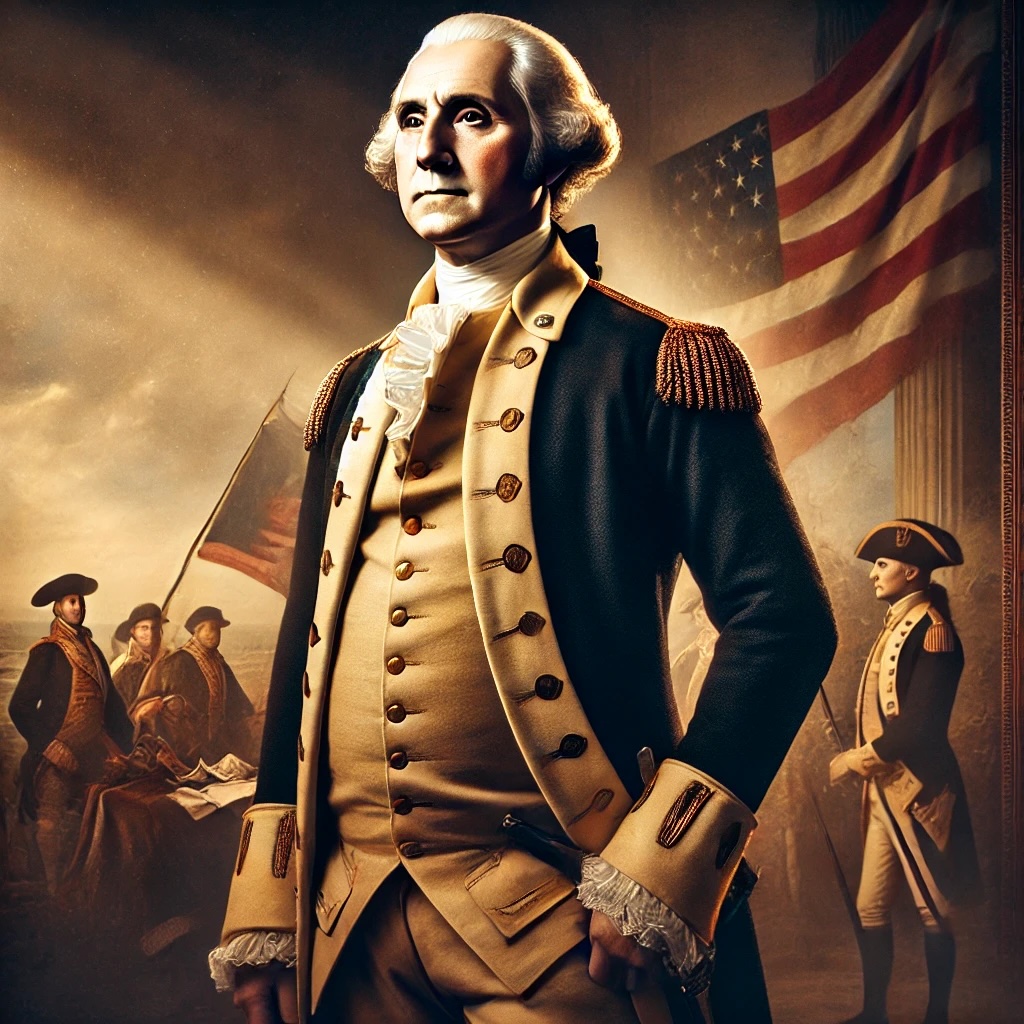
And while the ink dried in Philadelphia, the real work of independence was just beginning. Across the colonies, soldiers prepared for war under increasingly desperate conditions. Supplies were scarce. Morale was fragile. George Washington led his troops with a combination of resolve and exhaustion, knowing that the path ahead would be long and uncertain. Yet the Declaration gave his army something to fight for—not just revenge, not just escape, but the promise of a new nation grounded in ideals rather than aristocracy.

The effects of the Declaration were not confined to the thirteen colonies. Around the world, people took notice. In France, intellectuals and revolutionaries studied Jefferson’s words with admiration, drawing inspiration for their own uprising just thirteen years later. In Haiti, revolutionaries would echo the Declaration’s promise of liberty as they fought for emancipation. And in Latin America, the wave of independence movements that swept through the 19th century bore the fingerprints of 1776. The idea that government derived its power from the consent of the governed was like an ember, spreading far beyond American shores.

Back at home, the Declaration remained a living document. Long after the war ended and the United States had formed a government, its words were revisited, reinterpreted, and reimagined. Abraham Lincoln, in the Gettysburg Address, would declare that the nation was “conceived in liberty” and “dedicated to the proposition that all men are created equal,” directly invoking Jefferson’s vision. Women’s suffrage leaders, including Elizabeth Cady Stanton, modeled their 1848 Seneca Falls Declaration of Sentiments after the original Declaration, substituting the word “men” with “men and women.” During the Civil Rights Movement, Martin Luther King Jr. referenced the Declaration as a promissory note that America had yet to cash.

And still, it endures. The words written in 1776 are etched not only in stone at the National Archives, but in the consciousness of generations. Schoolchildren memorize them. Immigrants study them. Activists invoke them. At every pivotal moment in U.S. history, the Declaration has resurfaced, reminding Americans of the nation they aspire to be.

Of course, the Declaration was never perfect. It was written by flawed men in a time when liberty was narrowly defined. It ignored women, Indigenous peoples, and the enslaved. But perfection was never the point. The Declaration was not a conclusion. It was an invitation—a set of principles meant to guide a nation toward greater justice. And in many ways, it has succeeded. The arc of American history is the story of people struggling to bring the reality of the country closer to the vision laid out on that hot July day.

Even today, in a world saturated with cynicism and division, the Declaration remains an antidote. It asserts that certain truths are self-evident, even when they aren’t convenient. It insists that people have rights, even when those rights are under siege. And it proclaims that governments exist to serve the governed—not the other way around. Those are not old ideas. They are timeless.

So what really happened on July 4, 1776? A group of ordinary men, filled with extraordinary courage, chose to stand together and declare that they were something new—Americans. They rejected kings and chose accountability. They dismissed inherited status and chose merit. They refused oppression and chose liberty. That decision, and the document that announced it, did not end injustice. But it lit a fire that has never gone out.

That fire burns in every protest march, in every court ruling that expands freedom, in every child who reads the words and dreams of a better world. The Declaration of Independence is not just a relic of history. It is a mirror, a map, and a promise. And as long as those 1,337 words exist, they will remind us that liberty isn’t a gift—it’s a responsibility. It asks something of us, just as it did of those who first signed it. It asks us to believe, to act, and to keep striving. For in the story of July 4, we find not only the birth of a nation, but the continual rebirth of its ideals.

Related Posts

Ink That Changed a Nation

Elias Rowen

The afternoon sun beamed down on Washington, D.C., on July 3rd, 1964, as history hung thick in the air. Inside the White House, President Lyndon B. Johnson prepared to sign one of the most transformative pieces of legislation the United States had ever seen. The Civil Rights Act of 1964 wasn’t just a document—it was a long-overdue reckoning, a formal declaration that the country would no longer legally tolerate racial segregation and discrimination in public spaces, employment, and education. It was the culmination of decades of struggle, sacrifice, and suffering by countless Americans who refused to give up on the promise of liberty and equality.

But the road to that moment was bloodstained and full of resistance. It wasn’t just policy—it was personal. For the Black Americans who had endured Jim Crow laws, voter suppression, economic exclusion, and social invisibility, this act was more than ink on paper. It was a glimmer of dignity finally given its place in the rule of law.

To understand the significance of that day, you have to go back. Long before the Civil Rights Act was even imagined, the seeds were planted by people like Frederick Douglass, W.E.B. Du Bois, and Ida B. Wells. Their writings and activism exposed the brutal inequalities woven into the American fabric. In the mid-20th century, figures like Thurgood Marshall fought in courtrooms, Rosa Parks resisted in silence on a Montgomery bus, and Martin Luther King Jr. marched with words that shook the very conscience of the country.

By the early 1960s, the pressure for change could no longer be ignored. Televised images of peaceful protesters being beaten by police dogs, fire hoses turned on children, and Black citizens being arrested for ordering food at “whites only” lunch counters stirred the hearts of millions—forcing America to see what it had long tried to deny. The Birmingham Campaign, the Freedom Rides, and the March on Washington in 1963 weren’t just events—they were a mirror held up to the soul of a nation.

President John F. Kennedy had initially proposed the civil rights bill, but his assassination in November 1963 left the effort hanging in the balance. When Johnson took office, many doubted he’d have the political courage—or will—to push it through. But Johnson, a Southerner with a deep understanding of congressional maneuvering, surprised everyone. Driven by his own belief that “no memorial oration or eulogy could more eloquently honor President Kennedy’s memory than the earliest possible passage of the civil rights bill,” he made it a priority.

Even so, it wasn’t easy. Southern senators launched a record-setting filibuster to try and kill the bill. For 60 days, they fought tooth and nail against what they called an overreach of federal authority. But the tide had turned. With the help of both Republicans and Democrats, including Senate Minority Leader Everett Dirksen, the bill finally passed the Senate on June 19th, 1964, and was signed into law two weeks later.

When Johnson picked up the pen to sign the bill on July 2nd (commemorated nationwide by many on July 3rd), he reportedly used more than 75 pens, handing them out to civil rights leaders, including King, as mementos of the occasion. The moment was historic—but also deeply symbolic. With one stroke, Johnson dismantled the legal infrastructure that had supported segregation for nearly a century.

But let’s not romanticize it. The Civil Rights Act didn’t magically fix racism. It didn’t erase centuries of oppression, nor did it ensure that people of color would suddenly be treated fairly. What it did do, however, was give citizens the legal tools to fight back. Employers could now be held accountable for discrimination. Schools had to open their doors equally. Public accommodations—restaurants, hotels, movie theaters—could no longer bar entry based on race, religion, or national origin.

Perhaps one of the most impactful elements of the Civil Rights Act was Title VII, which prohibited employment discrimination. It laid the foundation for future legislation that would protect workers, including women, people with disabilities, and LGBTQ+ individuals. In fact, many of the rights we take for granted today have their roots in the civil rights framework laid out in 1964.

The ripple effect was global. Countries around the world watched as America, struggling with its own contradictions, attempted to course-correct. The act inspired other human rights movements, and civil rights leaders became global figures. The U.S. began to grapple more openly with issues of equity, though the journey would remain bumpy.

Even now, 60 years later, echoes of that day resonate. Debates over voting rights, police brutality, economic inequality, and systemic racism continue to fill our headlines and fuel our protests. The promise of the Civil Rights Act remains unfinished—but its passage was a critical milestone.

It’s easy to take such a moment for granted. To skim over it in history books. To view it as a checkmark on a timeline. But behind that bill were people. Real people with real stories. A Black father working three jobs so his children could attend integrated schools. A young woman fired for organizing a sit-in. A teenager arrested for marching with a handmade sign that simply read “I Am a Man.” Their voices—once silenced—were now, at least legally, protected.

And while laws can’t change hearts, they can change behaviors. They can pave the way for a more just society. They can give the marginalized a fighting chance in systems that were never built with them in mind.

On July 3rd, 1964, America didn’t become perfect. But it took a necessary, courageous step forward. And that’s worth remembering—not just as a historical fact, but as an ongoing responsibility. Because every generation inherits the struggle. And every generation must decide whether to move forward or fall back.

We honor that ink. Not because it fixed everything, but because it proved that change—real, meaningful change—is possible.

Related Posts

The Day the Farmer Became a General: Washington Takes Command

Elias Rowen

The early morning sun rose reluctantly over the rolling landscape of Cambridge, Massachusetts, casting long shadows across a patchwork of tents, half-built fortifications, and the damp green fields that held the fledgling hopes of a new nation. The year was 1775. The American colonies were caught in the widening jaws of war with Great Britain, a superpower whose armies and fleets stretched from the British Isles to the West Indies. At the heart of the colonial resistance was a ragtag band of farmers, fishermen, artisans, and frontiersmen. They were courageous, but not cohesive; committed, but not coordinated. These were men who believed in the cause of liberty, but lacked the leadership, discipline, and experience that turning rebellion into revolution would demand. And then, on July 3rd, a man from Virginia arrived to take command.

George Washington’s journey to this moment had been long, winding, and deeply shaped by a sense of responsibility to something greater than himself. Born in 1732 to a middling gentry family in Virginia, Washington had come of age on the edge of the wilderness. He learned the harsh lessons of command in the French and Indian War, where he tasted both triumph and humiliation. While he had not been formally educated like many of his contemporaries, he was a man of quiet intellect, insatiable curiosity, and rigid self-discipline. Over time, he became a prosperous planter at Mount Vernon, a member of the Virginia House of Burgesses, and a recognized leader among the colonial elite. But politics and position were not what had brought him north to Cambridge. It was conviction.

When the Continental Congress met in the summer of 1775, war had already begun. Blood had been spilled at Lexington and Concord, and the Battle of Bunker Hill had proven that colonial forces could, with great cost, stand up to British regulars. But they needed a leader. The Congress knew that if the colonies were to unify, the army must represent more than just New England’s cause—it had to embody the hope of all thirteen colonies. Washington, standing tall in his buff-and-blue military uniform during congressional sessions, cut a striking figure. His mere presence suggested order, professionalism, and determination. But he did not campaign for the role. In fact, Washington expressed reluctance, quietly confessing to colleagues that he did not feel equal to the task. That humility, of course, only made him more suitable.

When Congress unanimously appointed Washington commander-in-chief on June 15, he accepted not with enthusiasm but with solemnity. He pledged to serve without pay, asking only for his expenses to be covered. He understood the gravity of the role. He was not just taking control of an army; he was assuming symbolic leadership of a nation that did not yet exist. On July 3, 1775, Washington officially took command of the Continental Army in a modest ceremony under an elm tree on the Cambridge Common. There were no grand speeches, no fanfare, no fireworks. Just a man with a mission, and an army in desperate need of direction.

What Washington saw when he surveyed the camp was sobering. The so-called army was a disorganized collection of militias from different colonies, each with its own commanders, uniforms, rules, and regional rivalries. Supplies were scarce. Weapons were mismatched. Some men had no shoes; others brought their own hunting rifles and had no military training whatsoever. Enlistments were short-term, discipline lax, and sanitation almost nonexistent. Smallpox and dysentery spread easily. Desertion was common. The British forces in Boston, by contrast, were well-fed, well-equipped, and dug in. They held the city and the harbor. The Americans held the surrounding hills but lacked the firepower to drive the Redcoats out.

Washington wasted no time. He began imposing order, organization, and a sense of national unity. He restructured the army into divisions and brigades, established a chain of command, introduced standardized drills, and tried to foster a single identity among the disparate regiments. It was no easy task. Local loyalties ran deep, and many soldiers resisted the idea of taking orders from men outside their colony. Washington’s demeanor—formal, reserved, and often distant—intimidated some but earned the respect of most. He was not a charismatic firebrand, but his resolve was unwavering. He rose early, worked late, and led by example. His personal discipline became the standard to which others were expected to rise.

One of his first great tests came not on the battlefield but through managing morale and supply. There was simply not enough gunpowder to fight a sustained campaign. Washington realized, much to his horror, that the army had less than ten rounds of ammunition per man. Had the British attacked during this period, the Americans would have had no real means to defend themselves. Desperate for supplies, Washington wrote impassioned letters to Congress, urging immediate action. In the meantime, he maintained the illusion of readiness, ordering drills and troop movements that suggested strength where there was weakness. It was a bluff—but a necessary one.

As the siege of Boston dragged on through the summer and into the brutal New England winter, Washington faced a test of endurance. Supplies trickled in, but barely enough. Congress, itself struggling to define its role and responsibilities, offered inconsistent support. Still, Washington never wavered. He emphasized sanitation and order in the camps, believing—correctly—that disease would kill more men than the British if left unchecked. He sought the counsel of local leaders but remained firm in his decisions. He insisted on dignity, order, and perseverance. And slowly, the army began to transform.

One of the turning points in the Boston campaign came in early 1776, when artillery captured at Fort Ticonderoga by Henry Knox—dragged over hundreds of miles of snow and ice—arrived outside Boston. With this new firepower, Washington ordered the fortification of Dorchester Heights, overlooking the city and the harbor. When the British awoke to find cannons aimed at their fleet, they knew they had to withdraw. On March 17, 1776, the British evacuated Boston. It was Washington’s first great strategic victory, won not by force of arms, but through logistics, ingenuity, and unshakable resolve. It vindicated his command and proved that the Continental Army, under his leadership, could achieve real success.

But July 3, 1775, remained the pivotal moment when all of that began. Washington’s assumption of command was a quiet revolution in itself. Until that point, colonial resistance had been a collection of local uprisings. With Washington at the helm, it became a coordinated effort. He gave the rebellion a face and a voice. He was the Southern planter leading Northern troops. The elite officer willing to sleep in the mud beside his men. The man who would not only fight battles but embody the values of the cause: duty, sacrifice, humility, and courage.

Washington’s leadership was not without flaw. He made mistakes—plenty of them. He underestimated the British in some campaigns, overestimated his own forces in others. He struggled with Congress, sometimes bristled at civilian oversight, and occasionally held onto command decisions that should have been delegated. But what made Washington singular was not perfection—it was persistence. He refused to quit. He adapted, he learned, and he kept the army together through the darkest winters and most crushing defeats.

The story of July 3 is often overshadowed by flashier moments in American history: the signing of the Declaration, the crossing of the Delaware, the victory at Yorktown. But that hot morning in Cambridge deserves reverence. It was the moment a nation placed its hope in one man. And he did not let them down.

In the years that followed, Washington would become the indispensable man of the Revolution. When soldiers’ pay failed to arrive, it was his word that kept them from mutiny. When the army was on the brink of collapse at Valley Forge, it was his presence that held them together. When victory finally came, he returned power to the people and stepped down from command, a move so rare in human history that even Britain’s King George III remarked that if Washington gave up power, “he would be the greatest man in the world.”

That greatness began in earnest on July 3, 1775—not because Washington declared it, but because he lived it. In assuming command, he accepted not just military authority, but moral leadership of a revolution that would change the world. His posture on that day—calm, resolute, dignified—became the blueprint for what America aspired to be: bold but humble, powerful but principled, born of farmers and thinkers, soldiers and statesmen.

Today, we often forget that revolutions are not born in explosions of violence but in quiet moments of choice. Washington’s decision to take up command was one of those moments. He could have remained at Mount Vernon, secure in wealth and prestige. Instead, he rode north, placed himself at the mercy of events beyond his control, and became the steward of a dream still in its infancy.

Looking back, that elm tree in Cambridge is more than a historical footnote. It is a symbol of beginnings—not just for Washington’s military command, but for the long, arduous birth of a new nation. It was the place where a man became more than just a Virginian planter. He became the beating heart of the Revolution. And in doing so, he showed that sometimes, the future of a country rests not on thunderous declarations, but on a quiet man, on a summer morning, saying simply, “I accept the command.”

Related Posts

Shades of You: What Your Swimwear Color Says About Your Soul

Dave

Color is everywhere. It speaks to us before we even realize it. It sparks emotions, triggers memories, and often says more about our personalities than words ever could. When it comes to swimwear, the color you choose is far more than a style decision—it’s a whisper from your subconscious, a flash of your inner self brought to the surface. The psychology of color runs deep, and nowhere is it more visible than on a beach where people’s most carefree, confident, and unguarded selves are on full display. What does your favorite swimwear color say about you? It turns out, quite a bit.

We don’t always think about it consciously, but the hues we gravitate toward can tell compelling stories. Some of us reach instinctively for black, a classic, slimming shade that suggests sophistication and strength. Others are drawn to white, the color of clarity, calm, and freshness. Then there are the bold ones—fiery reds, electric blues, tropical greens, and neon yellows—who walk the shoreline like living palettes of passion, playfulness, and individuality. Swimwear isn’t just about fit and function. The color we choose to wrap our bodies in at the beach says something powerful about how we feel inside—and how we want the world to see us.

Let’s start with black, the forever favorite. If you love slipping into a black swimsuit, there’s a good chance you value elegance, minimalism, and timeless style. Black says, “I know who I am, and I don’t need to shout about it.” It’s mysterious and chic, commanding respect while remaining understated. People who favor black often have strong personalities. They’re seen as confident, composed, and possibly a little guarded. On the beach, they might not be the loudest voice or the first to dive in, but they carry an air of quiet power. Their aesthetic is clean, classic, and effortlessly cool. And despite being a “neutral,” black can be incredibly expressive—suggesting depth, intelligence, and a preference for substance over flash.

On the flip side, white is the color of purity and peace. It reflects light and often turns heads for its crisp, fresh vibe. Wearing white at the beach isn’t just a fashion choice; it’s a statement of confidence. You’re not afraid of standing out—white can be unforgiving, but also striking in its simplicity. It evokes innocence, cleanliness, and sometimes a desire for renewal. You might be the person who seeks serenity by the sea, who takes long walks alone with your thoughts, or who prefers meaningful one-on-one conversations over loud group antics. White wearers often appreciate minimalism, clarity, and balance. They may also be perfectionists or dreamers, craving an uncluttered life and clear emotional skies.

Now enter the showstoppers—the ones who love red. Red is the color of fire, passion, and energy. If your go-to swimwear is red, you’re likely a person who enjoys attention, thrives on energy, and lives life with intensity. Red lovers are bold, spontaneous, and fearless. They exude a kind of magnetic confidence that draws people in. On the beach, they’re likely leading the volleyball game, dancing in the surf, or cracking jokes that have everyone laughing. But red isn’t just about extroversion—it’s also about heart. Red wearers can be intensely loyal, loving deeply and with full commitment. They’re not afraid to take risks, and they rarely shy away from challenges. They wear their emotions on their sleeve, or rather, on their swimsuit.

Blue, especially deep or electric blue, tells a different story. If you gravitate toward blue swimwear, you might be calm, reliable, and emotionally grounded. Blue is associated with tranquility, depth, and trust. Blue wearers are often the anchors of their friend groups—the ones others turn to for advice, comfort, or a steady presence. They might not seek the spotlight, but they radiate a kind of serene confidence that puts others at ease. Light blues suggest openness and youthfulness, while darker shades hint at introspection and intelligence. On the beach, you’re just as happy reading under an umbrella as you are swimming laps in the ocean. You appreciate peace, meaningful conversation, and genuine connection.

If green is your color, you’re likely a lover of life. Green swimwear wearers often exude vitality, freshness, and a sense of harmony. They’re grounded yet adventurous, attuned to nature, and often deeply compassionate. Green symbolizes balance, health, and growth, and those who choose it tend to be kind-hearted, open-minded, and resilient. On the beach, they’re the ones who connect easily with others, who love long swims and beach hikes, and who might bring a reusable water bottle and sunscreen made from natural ingredients. They care—not just about how they look, but about how they live. Green wearers are often seen as nurturing and inclusive, bringing calm energy to chaotic spaces.

Yellow is joy. If you find yourself reaching for a yellow swimsuit, chances are you’re optimistic, fun-loving, and full of energy. Yellow is the color of sunshine, of laughter, of spontaneous adventures. Yellow wearers light up a space—not necessarily because they’re loud, but because they radiate positive energy. They’re the kind of people who notice seashells others miss, who start beach games with strangers, who make everyone feel included. Yellow reflects a childlike curiosity, a sense of playfulness, and a bold confidence that doesn’t take itself too seriously. It’s also the color most associated with creativity. If you love yellow, you probably think outside the box, live in the moment, and have a contagious enthusiasm for life.

Pink speaks to tenderness, romance, and compassion. If your swimsuit drawer is stocked with pink, you likely have a warm heart and an affectionate spirit. Pink wearers can be playful or polished, sweet or sophisticated, depending on the shade. Soft pinks suggest nurturing, while bold fuchsias indicate a confident personality that blends femininity with fire. Pink lovers are often empathetic and emotionally expressive, bringing love and kindness to their surroundings. At the beach, they might be the ones helping someone with sunscreen, snapping cute selfies with friends, or organizing the perfect sunset picnic. They wear their hearts close and care deeply, often putting others’ comfort above their own.

Purple, often seen in swimsuits as lavender or plum, indicates a creative and unique soul. If you wear purple, you’re probably not afraid to stand out. You see the world through a different lens, and your swimwear choice reflects that artistic spark. Purple suggests mystery, spirituality, and depth. It’s a favorite of dreamers, thinkers, and those who dance to their own rhythm. You might be a poet, a night owl, or a deep conversationalist who would rather talk about the meaning of life than small talk about the weather. Purple wearers at the beach might be meditating by the tide, drawing in the sand, or listening to music on oversized headphones.

For those who prefer orange, there’s a high chance you’re vibrant, extroverted, and full of life. Orange is energetic, youthful, and adventurous. Orange lovers tend to be social butterflies, extroverts who crave experience and connection. They’re the ones making new friends at the beach bar, organizing impromptu bonfires, or leading a game of beach soccer. Orange reflects a zest for life and a readiness to explore, laugh, and try new things. It’s the color of enthusiasm and warmth—people who wear it tend to be emotionally open and contagiously energetic.

And let’s not forget the prints and patterns—those who don’t stick to one solid color. If you’re a fan of florals, animal prints, tropical designs, or geometric patterns, it likely means you embrace complexity and variety. You don’t want to be defined by one color because you contain multitudes. You enjoy expressing different sides of your personality and might have a playful, spontaneous spirit. Pattern wearers are often storytellers, people who see life as a series of vivid moments. They love surprises, creativity, and embracing whatever mood strikes them. Their swimwear isn’t just fashion—it’s moodwear.

Interestingly, your swimwear color choice might change over time. You might have worn neon colors in your twenties and now gravitate toward muted earth tones. This isn’t random. It’s a reflection of your evolving self—your experiences, maturity, and emotional state. Color preference is fluid. One summer, you might feel bold and fiery, choosing red or orange. Another year, you may long for simplicity and peace, finding solace in whites or blues. Each shift tells a story of who you are in that moment.

Color also interacts with culture. In some societies, red symbolizes luck and celebration. In others, white is worn at funerals, while black is considered elegant and appropriate for all formal occasions. Our personal associations with color are shaped by culture, upbringing, and even pop culture. Maybe your love of purple comes from childhood cartoons. Maybe your preference for blue is tied to your astrological sign. Or maybe yellow reminds you of a cherished memory under the sun.

Swimwear, as intimate as it is visible, becomes a canvas for those colors. And the color you choose can influence how others see you, too. Studies in color psychology show that people often perceive red wearers as more confident, blue wearers as more trustworthy, and black wearers as more authoritative. This means your swimsuit can subtly shift the energy of your beach interactions—how others approach you, how conversations unfold, and how you’re remembered.

Ultimately, though, the most important perception is your own. When you put on a swimsuit in your favorite color and look in the mirror, how does it make you feel? Energized? Beautiful? Strong? The answer to that question is what truly matters. Swimwear color psychology isn’t about boxing you into a category—it’s about helping you understand your inner landscape and how you express it to the world. It’s about confidence, authenticity, and the joy of showing up as yourself.

Next time you shop for a swimsuit or pack for a beach trip, pause for a moment. Think about the color that calls to you. Ask yourself why. Do you need peace? Passion? Playfulness? Do you want to blend in, stand out, or explore a new side of yourself? Let your answer guide you. Let your color be your compass.

Because on the beach, under the sun, with the waves kissing the shore and the sky stretching endlessly above you, there’s no better time to be fully, unapologetically you.

Related Posts

The Day Justice Took the Pen: How the Civil Rights Act of 1964 Changed America Forever

Elias Rowen

It was a warm summer evening in Washington, D.C., when President Lyndon B. Johnson sat behind a desk in the White House and signed a document that had been years in the making — a document that would shift the course of American history forever. On July 2, 1964, the Civil Rights Act became law. With the stroke of a pen, segregation was outlawed in public places, employment discrimination was prohibited, and the federal government had new tools to fight racism and injustice across the nation. It was a moment that echoed the voices of millions who had marched, protested, and bled for the promise of equality.

But this wasn’t a victory that came easily. It had taken decades of struggle, courage, and relentless advocacy. From the shadows of slavery to the marches of Montgomery, America’s journey toward civil rights had been a long and painful one, marked by powerful movements, towering figures, and countless everyday heroes who refused to be silent.

To understand the gravity of July 2, 1964, we have to look back. The seeds of the Civil Rights Act were planted in the Reconstruction era, after the Civil War. Amendments were passed — the 13th abolished slavery, the 14th guaranteed equal protection, and the 15th gave Black men the right to vote. But these promises were quickly undermined by Jim Crow laws in the South, which codified segregation and racism into every aspect of public life. Water fountains, schools, buses, lunch counters — all became battlegrounds of inequality.

For much of the 20th century, Black Americans lived in a country that spoke of freedom and equality but delivered neither. Systemic racism barred them from opportunities, rights, and basic dignity. But resistance grew. The NAACP, formed in 1909, began a long campaign of legal challenges. In 1954, Brown v. Board of Education dealt a blow to school segregation. Yet the ruling was met with massive resistance, and enforcement was slow.

Then came the modern Civil Rights Movement — a tidal wave of action that no longer asked, but demanded change. The Montgomery Bus Boycott in 1955, sparked by Rosa Parks’ quiet defiance, launched Martin Luther King Jr. into national prominence. Sit-ins, Freedom Rides, and voter registration drives spread through the South like wildfire. These efforts were often met with violence — fire hoses, police dogs, beatings, and bombings. But the images, broadcast on national television, shocked the conscience of the nation.

By the early 1960s, President John F. Kennedy had begun to call for civil rights legislation. His assassination in November 1963 brought Lyndon B. Johnson — a Texan with a deep understanding of Congress — to the presidency. Though many were skeptical that Johnson, a white Southerner, would champion civil rights, he surprised everyone. In a televised address to Congress on June 19, 1964, Johnson declared, “We shall overcome,” borrowing the anthem of the civil rights movement and making it a presidential promise.

The Civil Rights Act faced enormous opposition in Congress. Southern senators launched a filibuster that lasted for 60 days — the longest in Senate history at that time. But public pressure was mounting, and Johnson used every bit of his political skill to win over enough votes. When the bill finally passed the Senate on June 19, it marked a legislative triumph decades in the making.

On July 2, in front of television cameras and a crowd that included civil rights leaders like Martin Luther King Jr., Johnson signed the bill into law. As he put his name to the page, he turned to an aide and reportedly said, “We have lost the South for a generation.” He knew the political cost, but he did it anyway. It was a moment of rare courage in American politics.

So what did the Civil Rights Act actually do? Title II outlawed segregation in public places like restaurants, hotels, and theaters. Title VI allowed federal funds to be withheld from programs that discriminated. Title VII banned employment discrimination and established the Equal Employment Opportunity Commission. These weren’t symbolic gestures — they were enforceable laws that gave civil rights teeth.

For many, the law was a long-overdue recognition of their humanity. African Americans could now walk into places that once turned them away. They could apply for jobs without being rejected simply because of their skin color. And while the road ahead was still full of obstacles — including housing discrimination, police brutality, and voter suppression — the Civil Rights Act was a turning point. It said, clearly and unequivocally, that discrimination was not just wrong — it was illegal.

The impact rippled beyond race. Later interpretations of the Civil Rights Act would be used to combat gender discrimination, help LGBTQ+ Americans in legal battles, and support people with disabilities. It became a cornerstone of equality law in the United States.

And yet, the fight for civil rights didn’t end in 1964. The Voting Rights Act came in 1965, protecting access to the ballot box. The Fair Housing Act followed in 1968. Each new victory built on the foundation laid on that hot July day in 1964.

Today, the Civil Rights Act is still a vital tool. In recent years, it’s been cited in court decisions about workplace protections for LGBTQ+ employees and challenges to systemic racism. Its language continues to be invoked by activists, lawyers, and citizens demanding fairness.

But laws alone don’t change hearts. The Civil Rights Act gave America a new legal framework, but the work of dismantling prejudice — in our institutions and in ourselves — remains an ongoing challenge. The past decade has shown us that racism, inequality, and injustice are far from relics of history. From Ferguson to Minneapolis, the calls for justice echo the cries of Birmingham and Selma. The movement lives on, because the dream has not yet been fully realized.

July 2 should be remembered not just as a historic date, but as a call to action — a reminder of what’s possible when people organize, protest, and refuse to accept injustice. It honors the courage of those who marched across bridges, sat at lunch counters, rode buses through hostile towns, and endured beatings and arrests, all so that the next generation might live in a freer world.

The pen that signed the Civil Rights Act of 1964 did more than pass a law. It affirmed a principle: that in America, dignity and equality are not privileges reserved for the few, but rights guaranteed to all.

Related Posts