Latest Articles

Faith Under Fire: The Day the Pope Was Shot

Elias Rowen

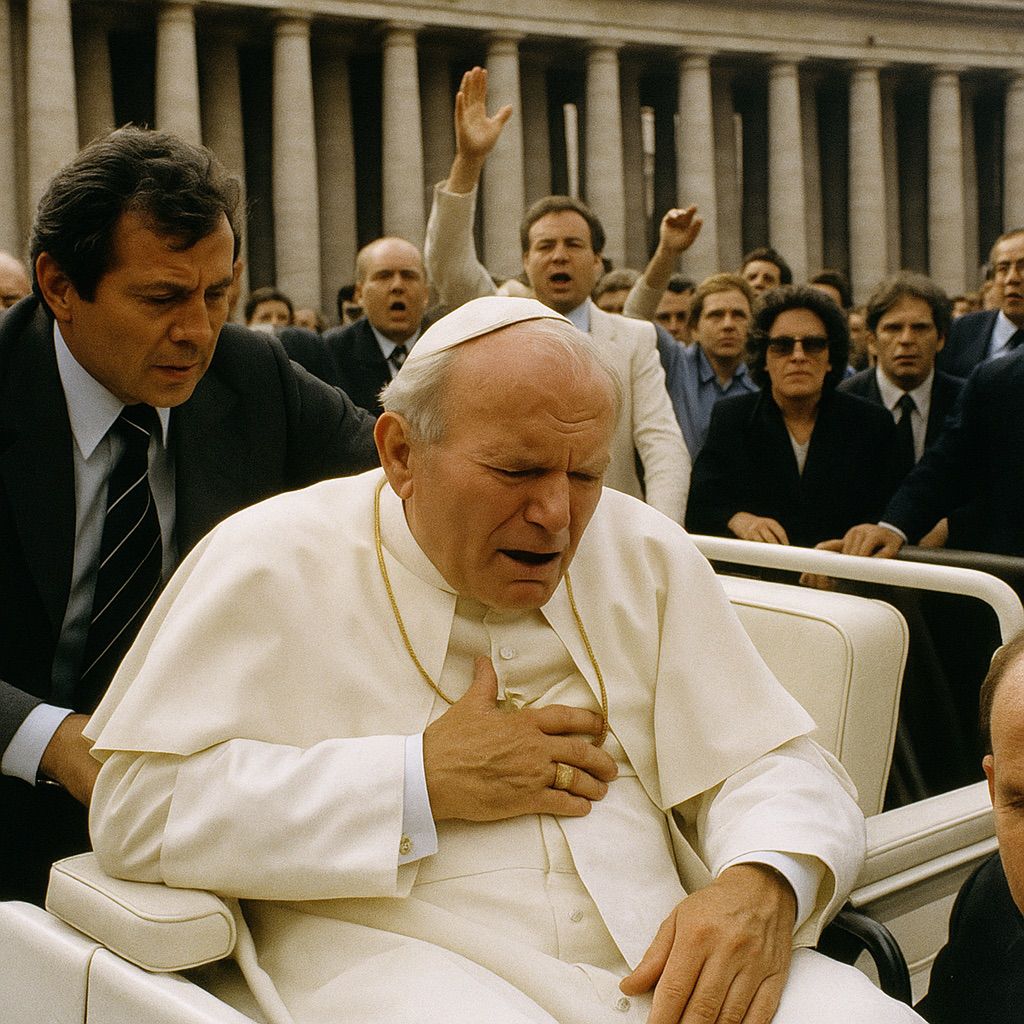
May 13, 1981. St. Peter’s Square in Vatican City was bathed in light, the air buzzing with anticipation as Pope John Paul II moved through the crowd in his open vehicle, smiling and blessing. Then—gunshots. In an instant, the serenity shattered. The Pope slumped into his seat, wounded by four bullets fired at close range. Shock rippled across the world. The shepherd of over a billion Catholics had been struck down in broad daylight.

But he survived.

And in surviving, he transcended the role of spiritual leader—becoming a symbol of human resilience, forgiveness, and political complexity.

The attempt on Pope John Paul II’s life was more than an act of violence; it was a mirror reflecting the turbulence of a divided world. The early 1980s were thick with Cold War tensions. The Pope, born in Poland and openly critical of Soviet totalitarianism, was seen by many as a geopolitical threat cloaked in white robes. His support of the Solidarity movement in Poland was particularly provocative to the Eastern Bloc. Though the motives of the would-be assassin, Mehmet Ali Ağca, remain murky, theories of foreign involvement—from Bulgarian intelligence to the KGB—have endured.

Yet, what followed was perhaps even more powerful than the crime itself. In 1983, the Pope visited Ağca in prison and forgave him. Not through a press release, but face to face, with clasped hands and soft words. It was an act of radical grace—an echo of the gospel he lived by.

The assassination attempt tested not only the Pope’s body, but the Church’s place in a volatile world. And through his pain and mercy, John Paul II reminded us that power need not come from weapons or ideologies—it can come from faith, compassion, and the simple act of not returning hate with hate.
Related Posts

The Lady with the Lamp: How Florence Nightingale Revolutionized Care

Elias Rowen

When Florence Nightingale was born on May 12, 1820, few could have imagined that a woman of her social class would one day be synonymous with the transformation of modern healthcare. Yet Nightingale—armed not with weapons, but with notebooks and a fierce will—marched into battlefields and hospital wards to change the very way we care for the sick.

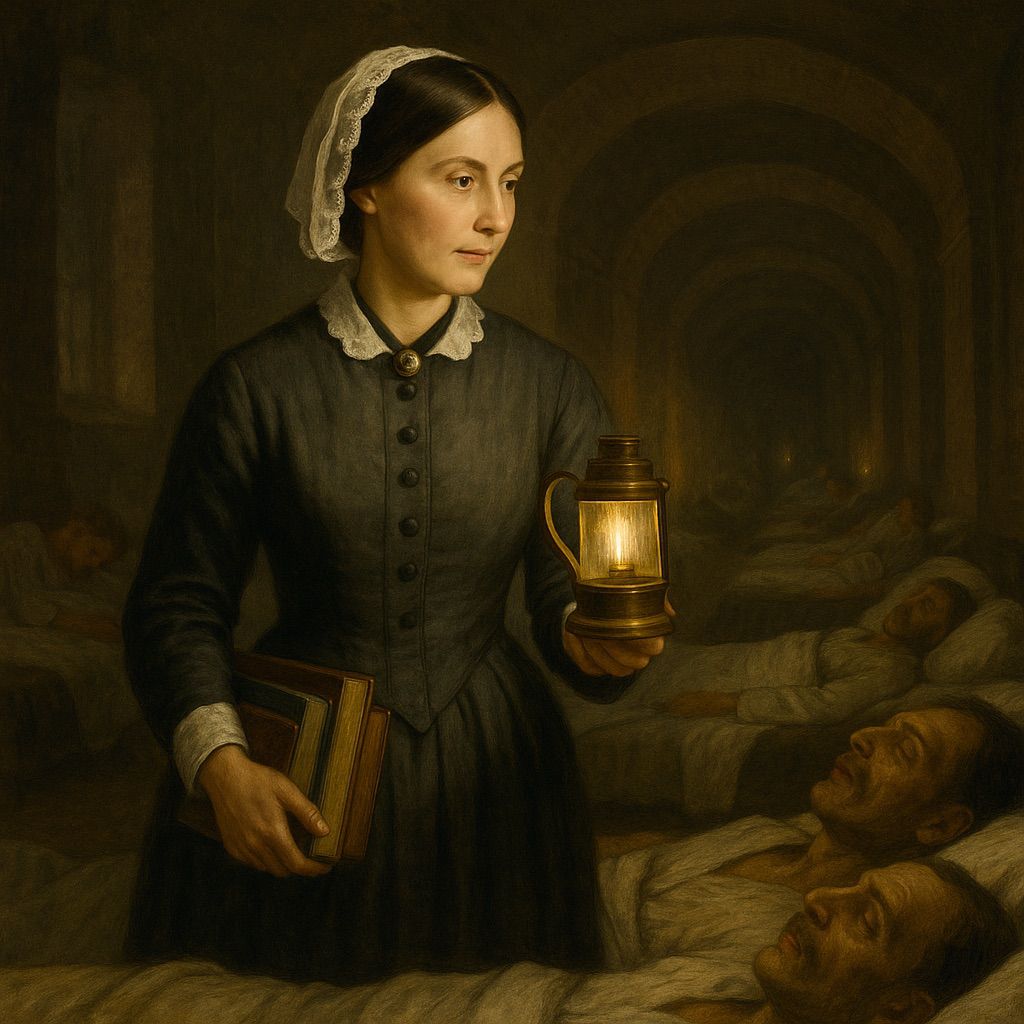
During the Crimean War, Nightingale famously walked the halls of military hospitals at night, tending to wounded soldiers with such devotion that she became known simply as “The Lady with the Lamp.” But her greatest legacy wasn’t in compassion alone—it was in calculation. She collected data, identified systemic failures, and used statistics to fight for reforms. Cleanliness, proper ventilation, and trained nursing staff became her weapons against disease.

Her work laid the foundation for nursing as a profession—not merely an act of charity, but a vital, skilled discipline. In the 19th century, when women’s roles were restricted and their voices often dismissed, Nightingale’s insistence on professional standards and evidence-based practices broke through the barriers of patriarchy and tradition.

Beyond nursing, Nightingale championed public health reforms across British colonies and urban centers. She understood that illness didn’t just live in the body—it thrived in poverty, in poor sanitation, in ignorance. Her impact reached far beyond warzones; it reached into the very structure of society.

Every hospital today that upholds hygiene protocols, every nurse trained in holistic patient care, and every healthcare policy rooted in data owes something to Florence Nightingale. Her birthday, now celebrated as International Nurses Day, is a timely reminder that true care is both heart and science—and that one determined woman can light a path for millions.

Related Posts

Smiling Buddha and the Fallout of Power: India’s Nuclear Debut

Elias Rowen

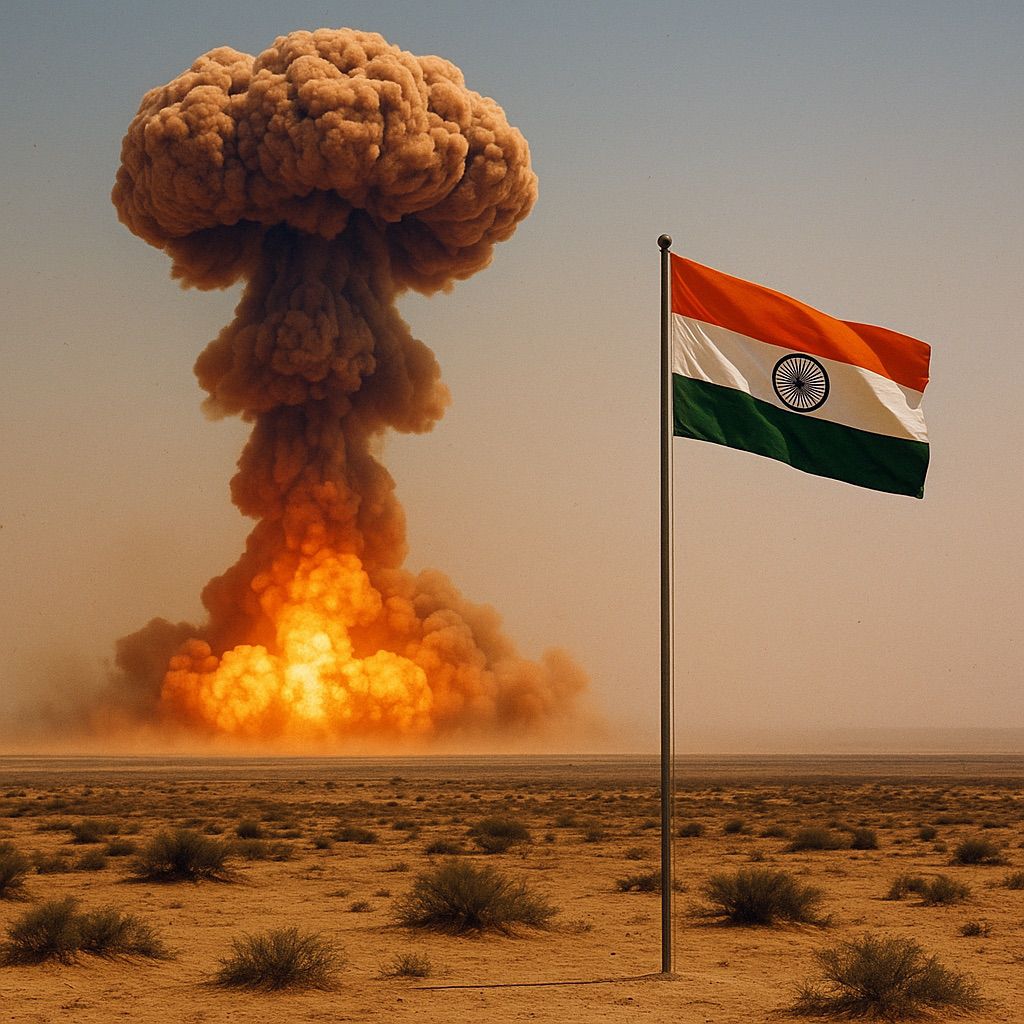
In the arid heat of Rajasthan’s Pokhran desert, a seismic shift occurred beneath the surface—both literally and geopolitically. On May 11, 1974, India detonated its first nuclear device under the codename “Smiling Buddha,” marking its dramatic entry into the nuclear club. It was a moment of national pride, strategic assertion, and global unease.

For India, the test was framed not as an act of aggression, but as one of self-reliance and security. The country had endured centuries of colonial subjugation and, more recently, volatile border tensions with neighbors like China and Pakistan. To many Indians, the nuclear test wasn’t about warfare—it was about dignity, deterrence, and technological competence.

But the international reaction was far from celebratory. The test disrupted the carefully managed equilibrium of Cold War-era nuclear diplomacy. Western powers, particularly the United States and Canada, viewed India’s move with deep concern. Sanctions followed. Trust eroded. And yet, India stood its ground, arguing for a nuanced distinction: a peaceful nuclear explosion, not a weaponization initiative—at least not at first.

The broader implication of May 11, 1974, lies in its lesson about power—who holds it, who gets to define its use, and who is permitted to claim it. Nuclear capability remains a double-edged sword: a symbol of national strength on one side, and a lingering shadow over humanity on the other.

India’s test was not merely a scientific feat; it was a statement to the world: “We will not be left behind.” And in that assertion, the global nuclear landscape was irreversibly altered.

Related Posts

From Prisoner to President: The Day South Africa Changed Forever

Elias Rowen

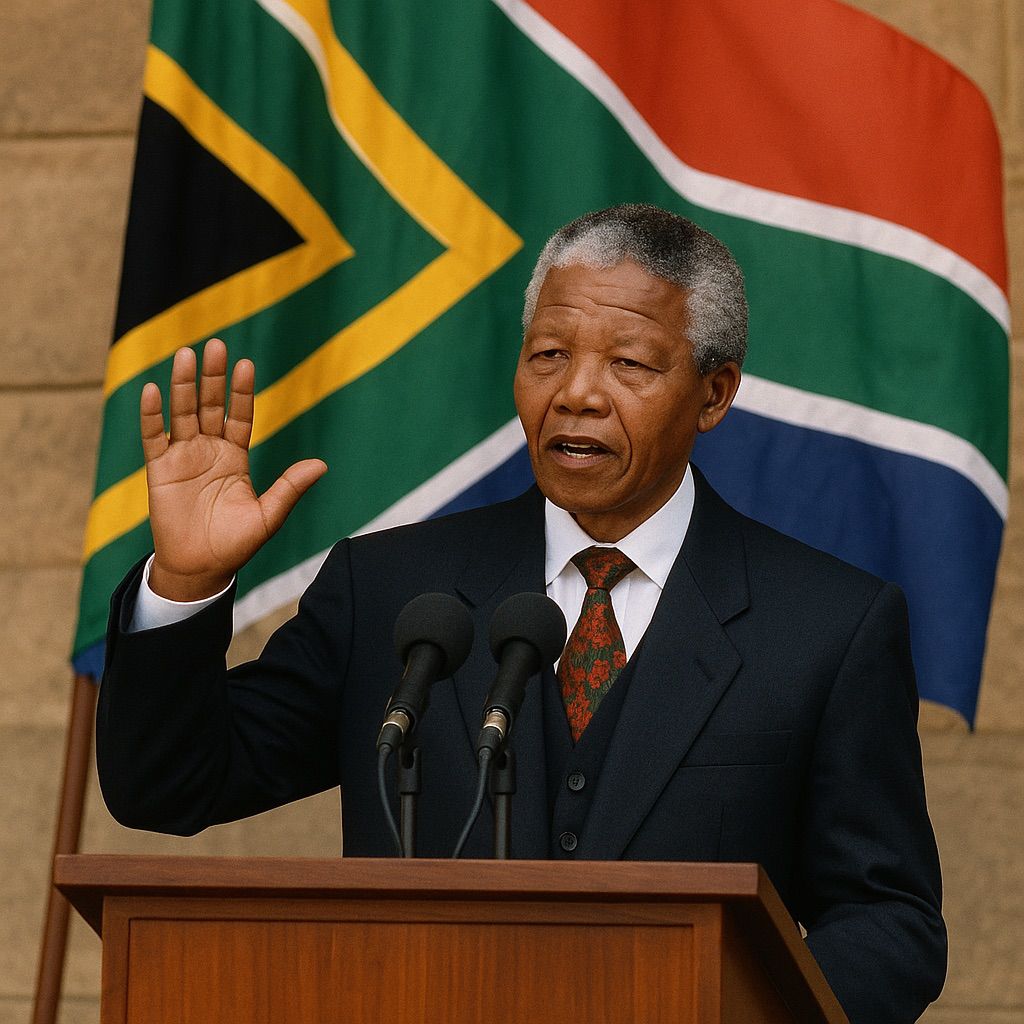
On May 10, 1994, the world witnessed a moment that felt more like a dream than a headline: Nelson Mandela, a man who had been imprisoned for 27 years, stood tall and resolute as the first Black president of South Africa. It was more than an inauguration—it was a symbol of an entire nation turning the page on a brutal, decades-long chapter of systemic racism and apartheid.

Mandela’s journey from Robben Island to the Union Buildings in Pretoria wasn’t just a political transformation—it was deeply personal, profoundly human. He emerged from prison not with bitterness, but with a powerful message of reconciliation. Many feared vengeance; Mandela offered unity. He didn’t just win an election—he won the trust of a fractured people.

Apartheid was a system that tried to break the spirit of millions through laws, violence, and silence. But Mandela’s inauguration represented the refusal of that spirit to stay broken. His leadership didn’t erase the scars, but it showed the world what grace under pressure looked like. His presidency became a masterclass in forgiveness, proving that peace can follow pain when dignity and justice lead the way.

As we remember this day, we’re reminded that change often begins with resilience—and that one man’s courage can echo across generations.

Related Posts

From War to Unity: How the Schuman Declaration Sparked the European Dream

Elias Rowen

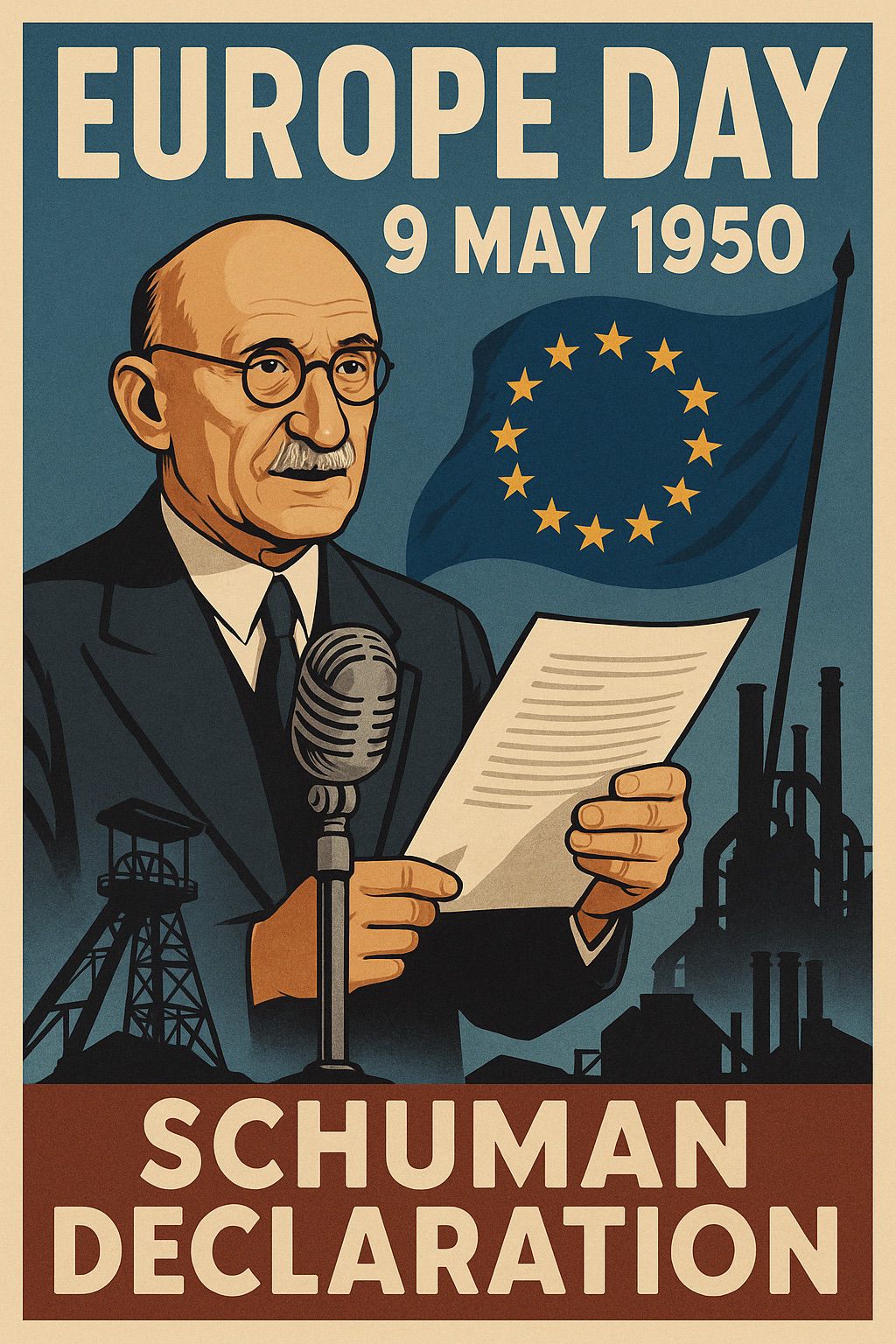
On May 9, 1950, just five years after the end of World War II, French Foreign Minister Robert Schuman stepped forward with a bold and visionary proposal: to unite the coal and steel industries of France and West Germany under a single authority. This act, known as the Schuman Declaration, wasn’t merely an economic initiative—it was a daring political move aimed at making war between European nations “not merely unthinkable, but materially impossible.” The wounds of the war were still raw, but Schuman understood that real peace required more than treaties. It needed cooperation, trust, and shared prosperity. His declaration laid the groundwork for the European Coal and Steel Community, the forerunner to what we now know as the European Union.

The brilliance of Schuman’s plan was in its simplicity and humanity. By pooling coal and steel—the core materials of warfare—Europe could shift its energy from conflict to collaboration. It brought former enemies to the same table, not only to trade but to govern together. This was the first brick in a foundation that would grow to include economic integration, free movement of people, and eventually a shared political voice. What began as a practical step toward peace has, over the decades, evolved into one of the most ambitious international partnerships in history. The EU has weathered crises, debates, and division, but it still stands today as a testament to the power of unity over division.

For millions of Europeans, May 9—now celebrated as Europe Day—is more than a historical milestone. It’s a reminder that peace is never accidental. It’s built, carefully and persistently, by people who dare to imagine a better future. In a time when nationalism and division are again on the rise, the Schuman Declaration remains a powerful symbol of what’s possible when nations choose cooperation over conflict, and hope over fear.

Related Posts