Latest Articles

A Day of Triumph and Remembrance: VE Day, May 8, 1945

Elias Rowen

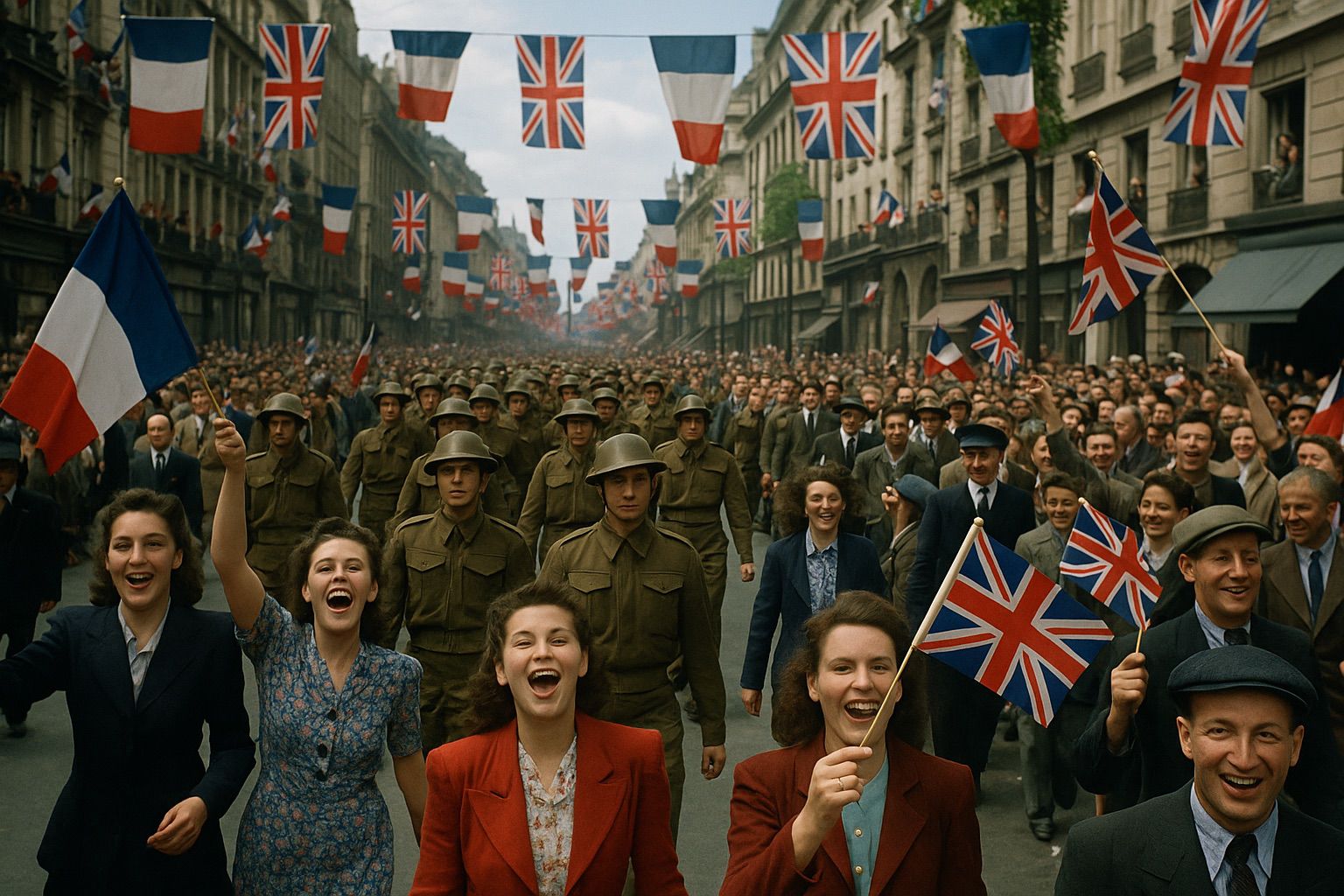
May 8, 1945, stands as one of the most significant days in modern history—Victory in Europe (VE) Day. On this day, the Allied forces officially celebrated the surrender of Nazi Germany, marking the end of World War II in Europe. For millions of people across the continent, VE Day was a moment of sheer relief, triumph, and profound grief. After years of unrelenting conflict, unimaginable loss, and devastation, the war had finally ended. The streets were filled with jubilant crowds, waving flags, singing, and dancing in celebration. In London, the crowds gathered in Trafalgar Square, while in Paris, the people poured into the streets to mark the victory over the Nazis. But VE Day was not just a celebration of military success; it was also a solemn day of reflection. The war had taken a terrible toll on Europe—millions had lost their lives, countless families had been torn apart, and entire cities had been reduced to rubble. VE Day was a time for people to remember the sacrifices made by soldiers, civilians, and resistance fighters alike. It also marked the beginning of the difficult work of rebuilding and reconciling after the horrors of war. As people rejoiced in the streets, the road ahead would be filled with the challenges of recovery, healing, and the creation of a lasting peace.
Related Posts

Victory and Peace: The End of WWII in Europe

Elias Rowen

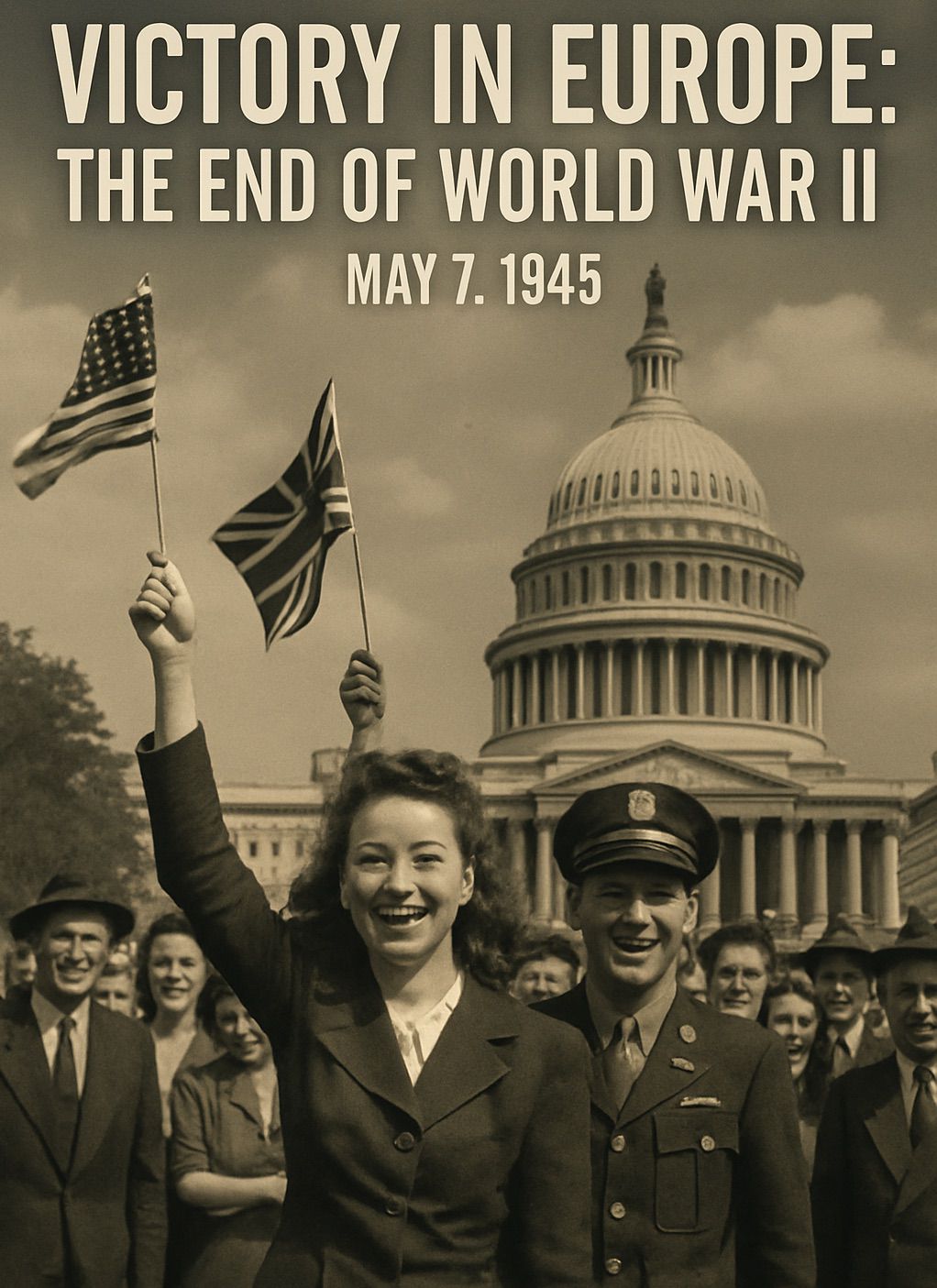
May 7, 1945, marks a pivotal moment in history—the official surrender of Nazi Germany in World War II. After years of intense conflict that devastated entire continents, the unconditional surrender was a symbolic and literal end to the war in Europe. As Adolf Hitler’s regime crumbled, Europe breathed a collective sigh of relief, but the toll of the war left an indelible mark. Cities lay in ruins, millions of lives were lost, and the political landscape had been forever reshaped. The German surrender was the culmination of a relentless effort by the Allied forces, including the United States, the United Kingdom, and the Soviet Union. The events leading up to that fateful day had been characterized by a series of crushing defeats for Germany, from the D-Day landings to the Soviet encirclement of Berlin. When German representatives signed the surrender documents in Reims, France, it was a testament to the resilience and sacrifice of those who fought for freedom. The war in Europe was officially over, but the post-war era would bring new challenges, including the division of Germany, the onset of the Cold War, and the creation of a new world order. The surrender did not just mark the end of a brutal conflict; it also signaled the beginning of a healing process, as Europe set its sights on rebuilding and reconciling from the ashes of war.

Related Posts

Giants of the Sky: The Rise and Fall of Airships

Elias Rowen

In the early 20th century, airships were symbols of futuristic elegance and national pride—massive floating palaces that promised to change the way humanity traveled the world. These lighter-than-air behemoths, particularly the German-made Zeppelins, soared gracefully through the skies, offering an unparalleled view of the Earth below. They represented the pinnacle of innovation in an age enamored with the possibilities of flight. The golden age of airships peaked in the 1920s and 1930s, with transatlantic voyages by the likes of the Graf Zeppelin, which ferried passengers from Europe to the Americas in serene, luxurious comfort. Yet, this dream of the skies would soon be shattered by tragedy.

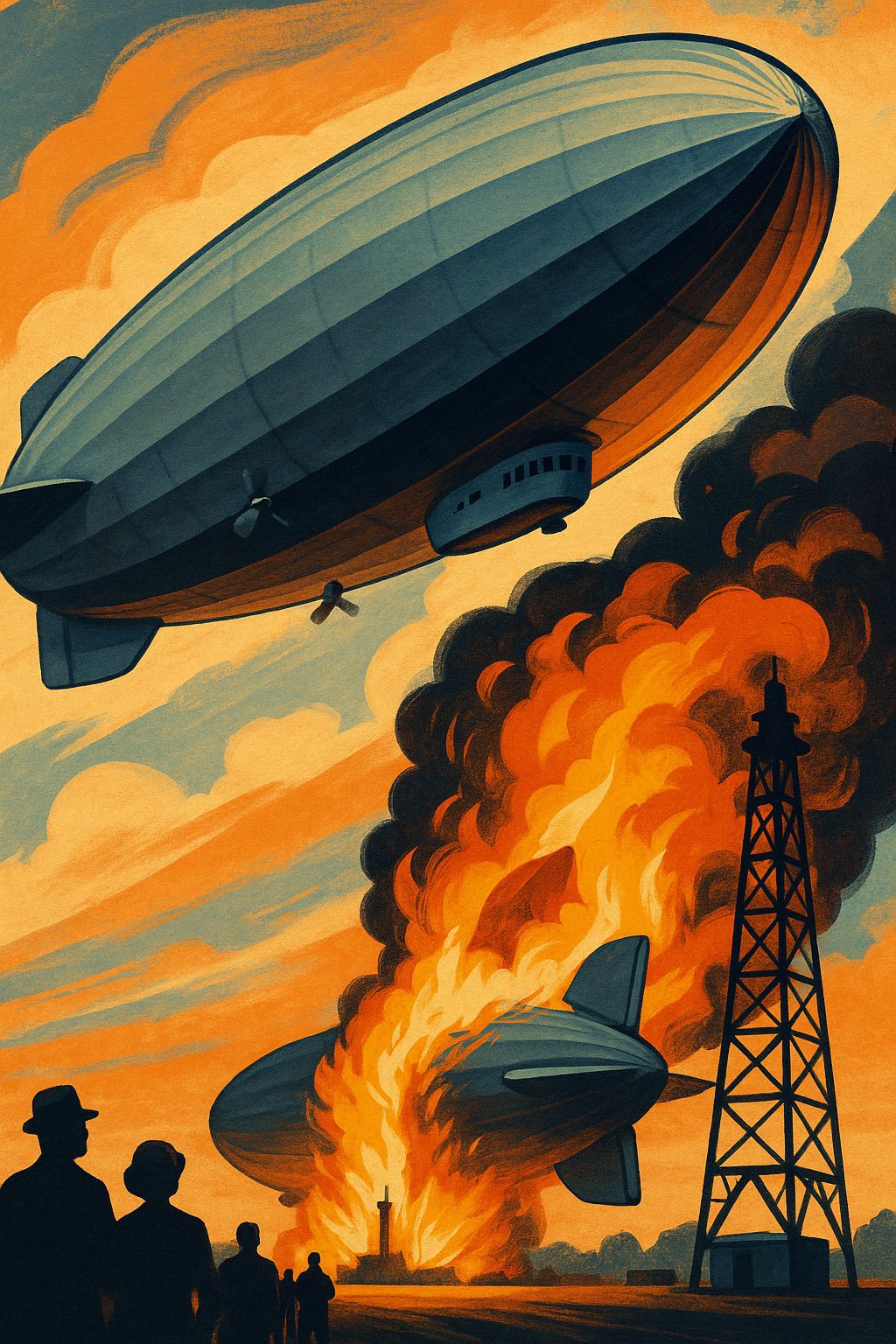
On May 6, 1937, the German airship Hindenburg burst into flames while attempting to land in Lakehurst, New Jersey. In mere seconds, the hydrogen-filled craft was engulfed in fire, killing 36 people and horrifying the world. The disaster, captured live on radio and in vivid newsreel footage, became one of the most iconic catastrophes of the 20th century. It didn’t just end lives—it ended an era. Public confidence in airships plummeted overnight. Though the Hindenburg wasn’t the only airship to suffer disaster, its fiery end was the most public and psychologically devastating. The rise of faster, safer fixed-wing airplanes only hastened the airship’s descent into obsolescence.

Today, the image of airships lingers in nostalgic memories and retrofuturistic art, a symbol of ambition and human ingenuity—marred by fragility and hubris. While some modern blimps and hybrid airships are making a quiet comeback for advertising, tourism, and cargo transport, they’ll never again hold the mystique they once did. The story of airships is not just about flight—it’s a cautionary tale of how quickly dreams can ignite and fall from the sky.

Related Posts

Cinco de Mayo: A Legacy of Resistance and Cultural Pride

Elias Rowen

Cinco de Mayo is more than just a day for festive parades, vibrant decorations, and spicy cuisine — it is a powerful symbol of resistance and the enduring strength of Mexican cultural heritage. On May 5, 1862, a vastly outnumbered and under-equipped Mexican army achieved a stunning victory over the French forces at the Battle of Puebla. This triumph, while not a major strategic win in the overall Franco-Mexican War, became a rallying point for national pride and determination. It showcased Mexico’s resilience and refusal to surrender to foreign domination, inspiring future generations to preserve their sovereignty and identity.

Today, Cinco de Mayo is celebrated more in the United States than in many parts of Mexico, where it serves as a vibrant tribute to Mexican-American culture. For many, the holiday is an opportunity to honor the deep roots, struggles, and contributions of the Mexican people. Music, folkloric dance, and traditional foods aren’t just for show — they represent centuries of cultural continuity and community strength. From indigenous traditions to mestizo influences, Mexico’s heritage is a living, evolving testament to its people’s spirit. In a world where cultural identities can often be diluted, Cinco de Mayo is a bold reminder to embrace, celebrate, and protect the unique stories that shape us.

Related Posts

Echoes of Dissent: The Kent State Shootings and the Price of Protest

Elias Rowen

On May 4, 1970, a campus protest at Kent State University in Ohio turned deadly when the Ohio National Guard opened fire on unarmed students, killing four and wounding nine. The students had gathered to protest the U.S. invasion of Cambodia, an escalation of the already controversial Vietnam War. Tensions had been simmering across the country for years, as young Americans grew increasingly frustrated with the war, the draft, and the lack of transparency from their government. The Kent State shootings became a flashpoint in this nationwide protest movement, symbolizing the dangerous intersection between civil disobedience and government response.

The tragedy forced a national reckoning. How could peaceful protesters—many of them teenagers—be met with deadly force on a university campus in the heart of America? Public outrage swept across the country, igniting further demonstrations and deepening the generational divide. The government, caught off guard by the scale and passion of the protests, found itself walking a fine line between maintaining order and suppressing dissent. For many, Kent State epitomized the fear that the state might prioritize control over conscience, even at the cost of innocent lives.

More than fifty years later, the Kent State shootings remain a powerful reminder of the stakes involved in protest movements. They serve as a cautionary tale about the state’s potential to overreach in moments of unrest and the importance of safeguarding the right to peaceful assembly. The event is not just history—it echoes in every modern protest, every act of resistance, and every cry for justice. It asks us to remember the cost of silence and the courage it takes to stand up, even when the risk is high.

Related Posts