Latest Articles

Term Limits and Democracy: The 22nd Amendment

Elias Rowen

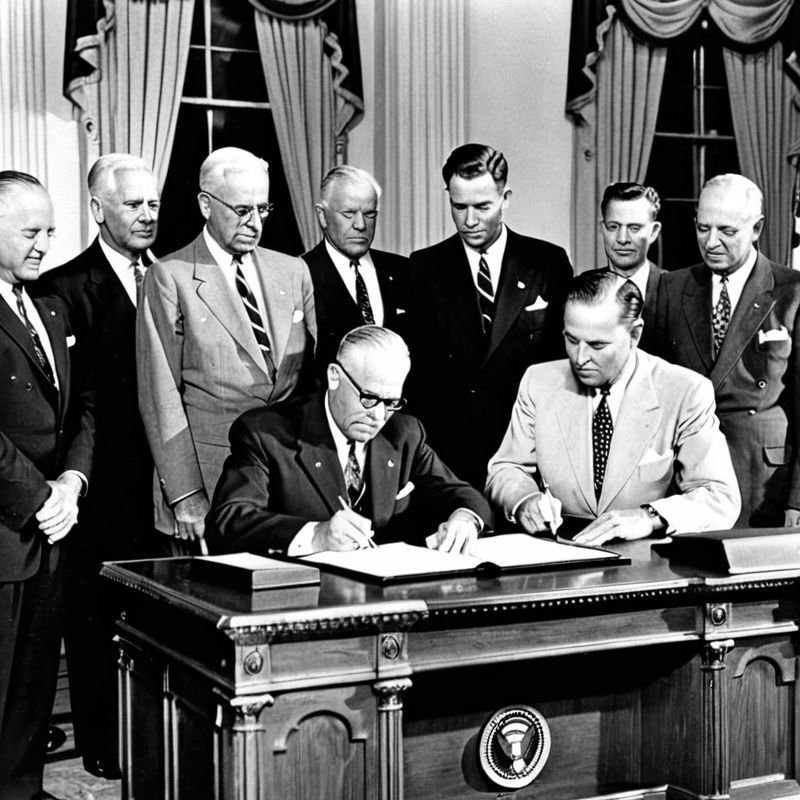
On February 27, 1951, the United States formally ratified the 22nd Amendment to the Constitution, forever shaping the nation’s highest office. This amendment set a two-term limit for U.S. presidents, ensuring that no individual could hold the presidency for more than eight years. The decision stemmed largely from Franklin D. Roosevelt’s unprecedented four-term presidency, which raised concerns about the concentration of power in a single leader’s hands. By enshrining term limits into law, the amendment reinforced the principle of democratic leadership and the peaceful transition of power.

The Founding Fathers originally did not impose term limits, believing that tradition and voter choice would prevent any president from staying in office indefinitely. George Washington set an informal precedent by stepping down after two terms, a tradition followed by nearly every president until Roosevelt’s era. However, in the wake of World War II and Roosevelt’s extended presidency, lawmakers feared that unlimited terms could lead to authoritarian rule. The 22nd Amendment was their response—a safeguard against the potential dangers of prolonged executive power.

While some argue that term limits prevent experienced leaders from continuing effective policies, others view them as essential to preventing political stagnation and fostering fresh ideas. The amendment has since shaped modern American politics, forcing leaders to make their mark within a finite period and ensuring that new voices have a chance to rise to the presidency. It remains a crucial component of the checks and balances system, reminding Americans that no single leader is above democracy itself.

Over seventy years later, the 22nd Amendment continues to spark debate, especially during times of political division. Some have even called for its repeal, while others see it as a necessary protection against the risks of power consolidation. Regardless of opinion, its impact on American governance is undeniable, standing as a testament to the nation’s commitment to democratic principles and the peaceful transition of power.


Related Posts

The 1993 World Trade Center Bombing: A Dark Warning

Elias Rowen

On February 26, 1993, a devastating explosion rocked the World Trade Center in New York City, marking the first major terrorist attack on American soil. A truck bomb, packed with over 1,200 pounds of explosives, detonated in the underground parking garage beneath the North Tower, killing six people and injuring over a thousand others. The blast left a crater several stories deep and sent thick smoke billowing through the iconic twin towers. This horrifying attack was a chilling precursor to the events of September 11, 2001, and underscored the growing threat of terrorism against the United States.

The bombing was orchestrated by a group of radical extremists who sought to bring down the towers by detonating the bomb at a strategic location. Their goal was to cause one tower to collapse onto the other, leading to massive casualties and destruction. While the structural integrity of the buildings remained intact, the attack exposed vulnerabilities in national security and signaled the need for increased counterterrorism efforts. The investigation quickly led to the arrest and conviction of several conspirators, highlighting the reach of international terrorist networks.

In the aftermath, security measures at the World Trade Center and across the country were significantly enhanced. However, many at the time did not fully grasp the long-term implications of the attack. It was a wake-up call that foreshadowed a new era of global terrorism, one that would culminate in the tragic events of 9/11. The 1993 bombing serves as a stark reminder of the importance of vigilance, intelligence gathering, and proactive security policies to prevent future attacks.

Thirty years later, the memory of that day remains a solemn chapter in American history. The victims are honored, and the lessons learned continue to shape security strategies worldwide. The resilience of New York City and its people in the face of such adversity stands as a testament to the enduring strength of a nation that refuses to be intimidated by acts of terror.

Related Posts

The Timeless Majesty: Grand Canyon Becomes a National Treasure

Elias Rowen

1919 marked a historic moment in American conservation when Grand Canyon National Park was officially established. This awe-inspiring natural wonder, with its vast expanse of layered rock formations and breathtaking vistas, became a protected sanctuary for future generations to explore and admire. The Grand Canyon had long been recognized for its unique geological features and cultural significance, but it wasn’t until President Woodrow Wilson signed the legislation that it gained national park status, ensuring its preservation.

For centuries, the Grand Canyon was home to Indigenous peoples who held deep spiritual and cultural connections to the land. When explorers and settlers arrived, they marveled at the canyon’s immense scale and intricate beauty. However, as tourism increased in the late 19th and early 20th centuries, concerns arose about the impact of human activity on the fragile ecosystem. The push for federal protection gained momentum, largely influenced by figures like President Theodore Roosevelt, who famously described the Grand Canyon as a place that should remain untouched for the enjoyment of all.

Becoming a national park was a turning point in the Grand Canyon’s history, as it shielded the landscape from overdevelopment and commercial exploitation. Today, millions of visitors from around the world trek to this geological masterpiece, hiking its trails, rafting through the Colorado River, and gazing in wonder at the ever-changing hues of its rock walls. Beyond its stunning vistas, the park serves as a haven for diverse wildlife, from bighorn sheep to rare condors, thriving within its protected lands.

Over a century later, Grand Canyon National Park stands as a symbol of the nation’s commitment to preserving natural beauty. It reminds us of the importance of conservation efforts and our responsibility to protect these irreplaceable landscapes. As one of the most iconic landmarks in the world, the Grand Canyon continues to inspire and captivate those who witness its grandeur.

Related Posts

Pioneering Steps in the Senate: The Dawn of a New Era with Hiram Revels

Elias Rowen

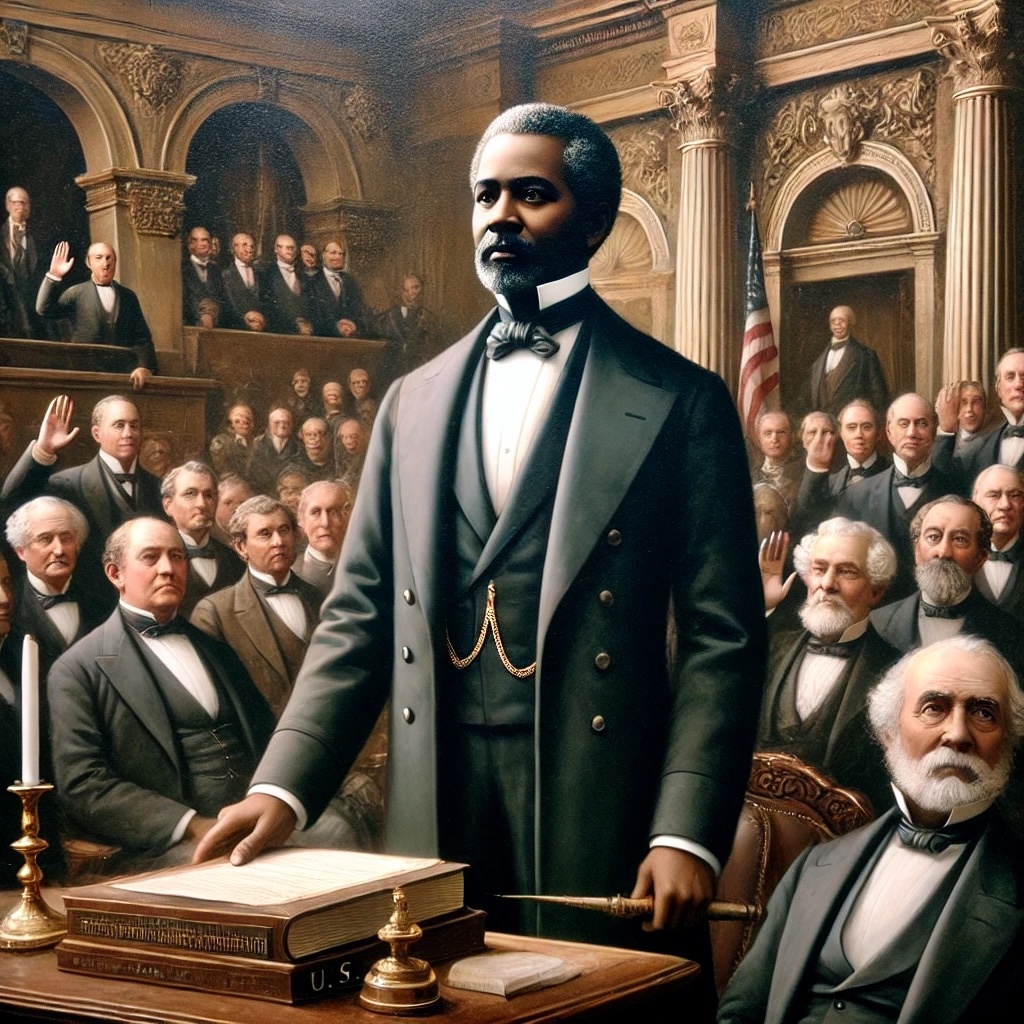
In 1870, Hiram Rhodes Revels made history by becoming the first African American to serve in the United States Senate. His appointment marked a significant milestone in the Reconstruction era, a time when the nation was grappling with the aftermath of the Civil War and the newly gained freedoms of formerly enslaved individuals. Representing the state of Mississippi, Revels took his seat on February 25, 1870, symbolizing a new chapter in American politics and racial progress.

Revels, a freeborn African American from North Carolina, had a background in education and ministry. During the Civil War, he worked as a chaplain for the Union Army, helping to recruit Black soldiers and advocating for their rights. His leadership and eloquence caught the attention of political figures, leading to his election by the Mississippi state legislature to fill a vacant Senate seat. Despite opposition from some Southern Democrats, who argued against his eligibility, Revels was ultimately sworn into office, proving that African Americans could hold high-ranking political positions in the United States.

As a senator, Revels championed civil rights and equality, advocating for the fair treatment of Black citizens and pushing for policies that would help integrate African Americans into American society. Though his term was short—lasting just over a year—his impact was profound. He set a precedent for future Black politicians and inspired generations to engage in the political process.

Revels’ legacy remains a testament to resilience and progress. His groundbreaking achievement challenged the status quo and paved the way for more inclusive representation in government. While the fight for racial equality continues to this day, his historic service in the U.S. Senate serves as a reminder that barriers can be broken, and change is always possible.

Related Posts

The Fight that Changed Boxing Forever: Cassius Clay Defeats Sonny Liston

Elias Rowen

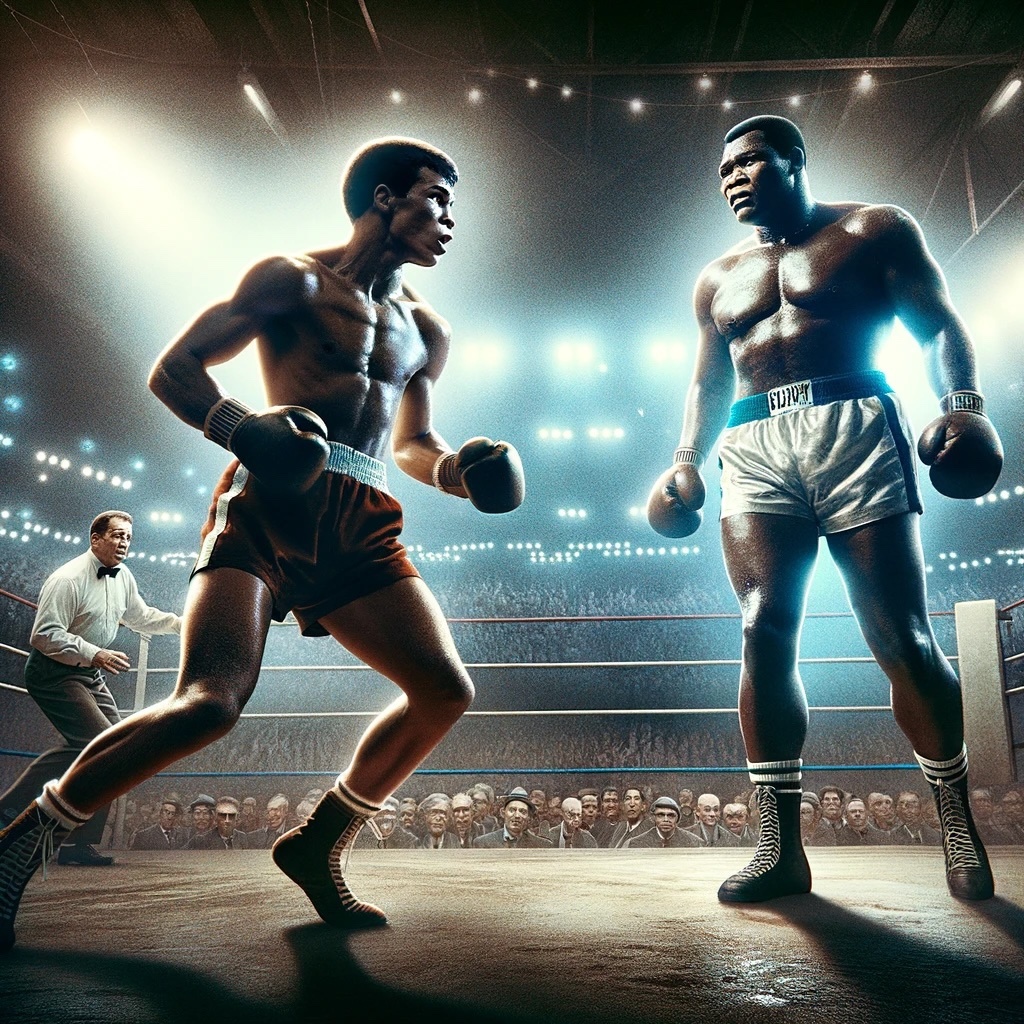
In 1964, a defining moment in sports history unfolded as Cassius Clay, who would later become known as Muhammad Ali, stepped into the ring to challenge Sonny Liston for the heavyweight title. At just 22 years old, Clay was an underdog against Liston, who was considered a formidable champion with an intimidating reputation. The world watched as Clay, brimming with confidence and flair, prepared to face Liston, whose raw power had earned him the respect of fans and critics alike.

From the start of the fight, it was clear that Clay’s speed, agility, and brashness were not what Liston had expected. Clay’s lightning-fast footwork and sharp jabs left Liston struggling to keep up. Despite taking a beating in the first few rounds, Clay’s belief in his own greatness never wavered. As the fight progressed, Liston began to show signs of fatigue and frustration. In the sixth round, with Liston unable to continue due to an injury, Clay was declared the winner, taking home the heavyweight championship title.

The victory was more than just a sports achievement; it marked the rise of a new legend in boxing. Cassius Clay’s victory over Sonny Liston would set the stage for his transformation into Muhammad Ali, a fighter who would go on to redefine the sport and become a global icon for his charisma, skill, and activism. That night in 1964, a new era of boxing began, with a brash, bold champion who was unafraid to speak his mind and fight for what he believed in.

As the years passed, Ali would go on to become not only a champion in the ring but also a symbol of resistance and courage. His fight against Liston was the first of many battles where he defied expectations and proved that, with unwavering self-belief and an unrelenting spirit, anything is possible.

Related Posts