Latest Articles

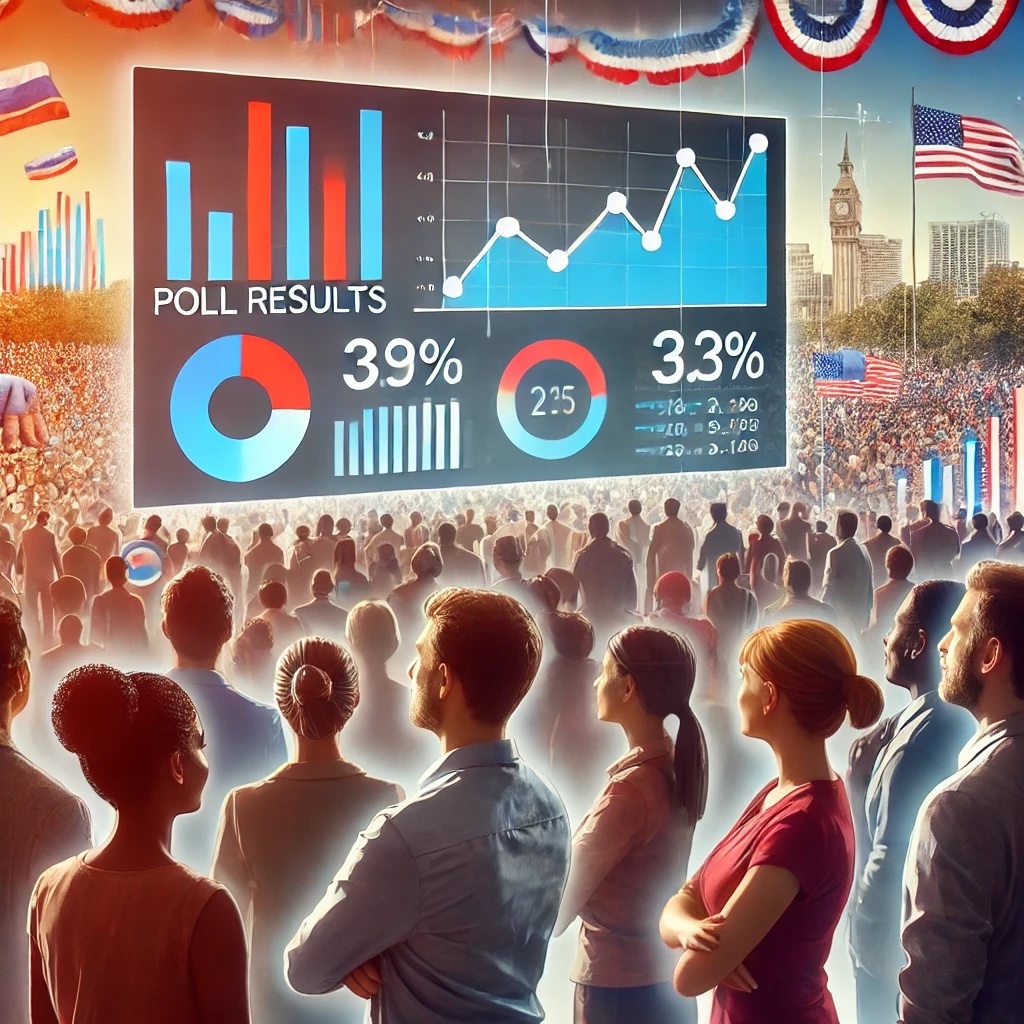
Polls, Predictions, and Public Opinion: The Powerful Influence of Political Polling

Dave

In an election season, one of the most talked-about topics is often the polls. These snapshots of public opinion, collected from samples of voters, attempt to predict election outcomes and gauge support for candidates and issues. Political polling has become a central feature of campaigns and media coverage, shaping public perception, influencing strategies, and even affecting voter turnout. Yet, while polls can provide valuable insights, they’re also complex tools with limitations that can sometimes mislead or create unintended consequences. Let’s explore the profound influence that polling has on modern politics, how predictions sway voters, and why understanding polls is essential to navigating today’s political landscape.

Political polling doesn’t just report public opinion; it also shapes it. Polls can create a bandwagon effect, where people are more likely to support the candidate who appears to be winning. Conversely, they can create an underdog effect, where a candidate’s low numbers motivate their base to rally. For undecided voters, poll results can influence which candidates seem viable, persuading them to lean toward those with momentum.

For example, if a candidate is shown as leading significantly, some voters may feel that casting a ballot for the opposing candidate would be “wasting” their vote. On the other hand, if a race is predicted to be close, voters may feel more compelled to turn out, believing their vote could make a difference. Polls, therefore, play a psychological role in elections, affecting voter morale and shaping the public’s perception of what’s achievable.

Campaigns closely monitor polling data, tailoring their strategies based on the insights these numbers provide. By analyzing demographic support, campaigns can adjust their messaging to address issues most important to specific voter segments. If polls reveal a lack of support among young voters, for instance, a candidate might focus more on topics that resonate with younger audiences, like climate change or student debt relief. Similarly, if polling indicates strong support among certain groups, campaigns might invest additional resources in turnout efforts within those demographics.

Polling also guides decisions on where candidates should campaign. If certain states or regions show tight races, campaigns will focus their resources there, often leading to targeted advertisements, local events, and even increased efforts to reach voters through digital and social media. The insights gleaned from polls can be a game-changer, allowing campaigns to focus on areas with the greatest potential impact.

Polling can either encourage or discourage voter turnout. Some voters, seeing a candidate far ahead, may believe their vote isn’t necessary and stay home, assuming the result is a foregone conclusion. This phenomenon, known as the “discouragement effect,” can potentially lower turnout, especially in races projected to be landslides. Conversely, close polls can boost turnout, motivating voters to participate, believing their vote could be decisive.

However, polling inaccuracies can have real-world consequences. For instance, in the 2016 U.S. presidential election, polling showed a strong lead for one candidate, leading some voters to feel complacent. When results differed from predictions, many questioned polling reliability and methodology. Such cases highlight the complexities of polling and the potential effects on both campaign dynamics and voter participation.

Polls are not foolproof, and their accuracy depends on factors like sample size, sampling method, and question phrasing. Achieving a truly representative sample can be challenging, especially as fewer people participate in traditional polling methods. Factors like phone polls or online surveys can skew results based on who is most likely to respond. Further, with more people having “cut the cord” and moved away from landlines, polling companies must adapt to reach diverse audiences through mobile and online platforms.

Another critical challenge is question design. How questions are worded can influence responses, intentionally or unintentionally. For example, asking about support for a candidate “despite their controversies” versus “because of their policies” might produce dramatically different results. Pollsters also face the difficulty of accounting for undecided voters, who often make up a significant portion of the electorate, especially in close races. These factors, while subtle, can create wide variations in polling results and have profound implications for how polls are interpreted.

With advancements in technology, polling has entered a new era, providing real-time insights that were previously impossible. Social media platforms have become valuable sources of public opinion data, allowing for “sentiment analysis” based on users’ reactions to political events, speeches, or debates. This data provides an instant look at public sentiment and helps campaigns adjust strategies in real time.

The digital age also means that polling data spreads faster than ever, often being reported and re-shared instantly on news sites and social media. This accessibility can lead to “poll fatigue” among the public and even poll-driven anxiety among voters and candidates alike. However, the digital landscape has also given rise to new tools and methodologies, with data scientists constantly innovating to create more reliable models.

Polling, while an invaluable tool in politics, is a double-edged sword. It influences public perception, shapes campaign strategies, and can significantly impact voter turnout. Yet, it’s essential to remember that polls are snapshots, not certainties. Understanding polling methodology, sample diversity, and the potential for bias is crucial for interpreting results thoughtfully.

For voters, approaching polls with a healthy skepticism and understanding their limitations can prevent the undue influence of these numbers on personal decisions. Ultimately, while polls are a powerful element of modern elections, they are only part of the larger political picture. In the end, individual votes—not polling predictions—determine the outcome, making every ballot count, regardless of what the numbers say.
Related Posts

Trailblazers in Power: How Women Are Shaping the Political Future

Dave

In recent decades, women have transformed political landscapes around the world, both as candidates and as powerful voices in the electorate. From breaking new ground by winning office to using their influence as voters, women have proven that they are not only vital to democracy but are also redefining what leadership looks like. While they have achieved remarkable milestones, women in politics continue to face unique challenges, from gender biases to structural barriers. This article highlights the impressive achievements and the ongoing journey for women in politics, celebrating how far they’ve come and exploring the road that lies ahead.

The path to political office for women has been marked by both triumph and adversity. Women like Margaret Thatcher, Angela Merkel, and Ellen Johnson Sirleaf paved the way in the global arena, serving as heads of state and changing the narrative of political power. In the United States, trailblazers like Shirley Chisholm, the first Black woman elected to Congress, and Geraldine Ferraro, the first female vice-presidential candidate from a major party, broke new ground for women in politics.

In recent years, women’s political representation has reached new heights. Kamala Harris, elected as the first female Vice President of the United States, and Jacinda Ardern, known for her empathetic and decisive leadership in New Zealand, exemplify how women are redefining global political leadership. These achievements are more than individual successes; they are part of a larger wave of change, where women leaders are increasingly seen as catalysts for addressing issues from social equality to healthcare reform.

Despite these milestones, women still face significant challenges in the political arena. Gender stereotypes and biases remain prevalent, with women often subjected to harsher scrutiny and unrealistic expectations about their appearance, family roles, and emotional expression. Female politicians are also more likely to face harassment, both online and offline, which can deter many from entering public office. Moreover, issues such as campaign funding and networking support—often essential for success—can pose additional barriers for women, as political structures were historically designed by and for men.

For women of color, LGBTQ+ women, and women from marginalized communities, the path is often even steeper. Intersectionality brings its own set of challenges, as these women encounter discrimination not only for their gender but also for their race, ethnicity, or sexuality. However, this diversity in representation is precisely what makes their voices so powerful; women from all walks of life bring fresh perspectives that enrich the democratic process and offer more inclusive solutions to societal issues.

Women are not only influential candidates but also powerful voters who have swayed elections and shaped policies. In many countries, women vote at higher rates than men, using their ballots to support issues like healthcare, education, and family leave policies that directly impact families and communities. In the U.S., women were instrumental in the 2020 presidential election, with particularly high turnout among young women and women of color. This voter base is now recognized as a critical force, pushing candidates to address issues that directly affect women, such as reproductive rights, wage equality, and social justice.

The political landscape is beginning to reflect the issues that matter most to women voters, and their collective voice continues to push for policies that create fairer societies. Political leaders are increasingly aware of the importance of women’s votes, knowing that their support can be the key to winning or losing an election.

From gaining the right to vote to breaking into the highest offices, women’s political progress has been both swift and transformative. The suffragette movement of the early 20th century marked a turning point in women’s rights, eventually leading to voting rights in many countries. By the 21st century, women have ascended to leadership positions once considered unattainable. More women than ever before are serving in parliaments, congresses, and cabinets around the world, contributing diverse viewpoints and championing causes that directly impact society.

Looking forward, the momentum is only growing. Young women are now leading movements for climate change, social justice, and gender equality, determined to make politics more inclusive and responsive. Organizations dedicated to supporting women in politics, such as EMILY’s List in the U.S., are working tirelessly to recruit and train female candidates who are ready to make an impact. In a world facing complex issues, women’s involvement at all levels of government is essential to achieving a more balanced and equitable society.

Women’s participation in politics is more than a milestone; it’s a movement that strengthens democracy and reshapes society. When women lead, they bring diverse perspectives and empathetic solutions, fostering a political environment that is more representative and just. The challenges are real, but so is the determination of women who continue to break barriers and inspire future generations. As more women step into roles of influence, they carry with them the legacy of those who fought for a voice and a vision for an equitable future. Every election, every vote, and every woman who runs for office brings us closer to a world where equality isn’t just an ideal, but a reality.

Related Posts

Unpacking the Durham Report: What It Reveals About FBI Investigations and Political Integrity

Dave

In May 2023, after years of speculation and investigation, Special Counsel John Durham released a report that aimed to shed light on the FBI’s controversial 2016 probe into alleged ties between the Trump campaign and Russian interference. Known formally as the Report on Matters Related to Intelligence Activities and Investigations Arising Out of the 2016 Presidential Campaigns, this document—commonly referred to as the Durham Report—examined whether the FBI acted properly and impartially in its investigation.

While the report didn’t bring forth major new revelations, it scrutinized the integrity of the intelligence community, highlighted significant issues within the FBI’s approach, and raised concerns about potential political bias in one of the most pivotal investigations of the last decade. Here, we break down what the Durham Report revealed and what it might mean for the future of political investigations and election integrity.

The Durham investigation focused heavily on the FBI’s handling of “Crossfire Hurricane,” the code name for the probe into connections between Trump associates and Russian agents. According to Durham, the FBI relied on weak and unverified intelligence—particularly the Steele dossier, a collection of allegations against Trump, which Durham claims lacked proper vetting. This overreliance on unvetted information, according to the report, may have led the FBI to initiate and pursue an investigation without sufficient justification.

Durham’s report also criticized what he described as a “double standard” in the way the FBI handled intelligence. While the FBI quickly opened the Trump investigation based on limited evidence, it appeared to exercise more caution when dealing with potential intelligence concerns related to Hillary Clinton’s campaign. This perceived discrepancy fueled concerns that political bias, whether implicit or explicit, may have influenced investigative decisions.

Despite a thorough investigation and years of inquiry, the Durham Report did not lead to widespread criminal charges against top FBI officials. The notable exception was the case of FBI attorney Kevin Clinesmith, who was found to have altered an email related to the application for a surveillance warrant. This incident was used as an example of procedural misconduct that may have compromised the integrity of the broader investigation. However, the absence of large-scale criminal indictments led some critics to question the overall impact of Durham’s findings.

For many, the lack of broader criminal charges was a sign that, while mistakes and lapses in judgment may have occurred, there wasn’t a grand conspiracy within the FBI to target the Trump campaign. Others, however, interpreted Durham’s findings as evidence that biases within the intelligence community must be addressed to ensure fair treatment in future investigations.

The report suggested a number of reforms aimed at preventing similar issues in politically sensitive investigations. Key among these recommendations was a stronger internal oversight mechanism within the FBI to ensure that investigations are based on verified evidence rather than unsubstantiated claims. Durham also recommended additional transparency in the FBI’s operations and the adoption of stricter protocols for handling politically sensitive cases.

One of the most debated aspects of the report centers on the need to safeguard political investigations from any appearance of bias. Reform advocates argue that these changes are essential for maintaining public trust in the FBI and intelligence community, particularly as the digital age continues to blur lines between public perception and factual reporting. Ensuring that investigative practices are transparent and neutral, they argue, is necessary to sustain the credibility of future election-related investigations.

The Durham Report spurred strong reactions across the political spectrum. Supporters of Donald Trump viewed the report as evidence that the FBI’s investigation into his 2016 campaign was unjustified and politically motivated, while critics argued that the report largely reiterated findings already covered by the Department of Justice’s Inspector General in prior investigations. The release of the Durham Report has also revived debates around political investigations in general, with many questioning the role of the FBI in the political landscape and calling for more checks on intelligence practices.

Looking ahead, the Durham Report’s findings are expected to contribute to ongoing discussions about how best to reform intelligence practices and maintain public trust in democratic processes. As the country heads into future election cycles, transparency, fairness, and accountability will remain central themes for both voters and policymakers.

By examining the details of the Durham Report, we gain a clearer view of the challenges inherent in balancing national security with political impartiality. As reforms take shape, the hope is that they will ultimately strengthen the democratic foundation on which the country relies, ensuring that the intelligence community serves all citizens without bias.

Related Posts

Voices Rising: How Young People Are Shaping the Future of Politics

Dave

In recent years, youth engagement in politics has moved from a quiet murmur to a powerful force that is shaping elections, setting agendas, and calling leaders to account. Young people are stepping into the political arena like never before, bringing fresh perspectives, passionate convictions, and an unparalleled ability to harness digital tools. But what’s driving this surge of interest among young voters, and what impact are they really having on the political landscape?

Unlike the traditional political issues that often dominate headlines, young voters are interested in a broader spectrum of concerns. For many of them, climate change isn’t just a talking point—it’s a matter of survival. They’re vocal about the need for substantial environmental policies, from renewable energy investments to protecting biodiversity. Racial justice, gender equality, mental health, and affordable education are also high on their list, as they seek a world that is inclusive, sustainable, and just.

Young people today have also grown up in a more globally interconnected world, giving them a unique perspective on international issues. They’re not only voting with local policies in mind but are looking at how national decisions impact communities worldwide. This worldview makes them formidable advocates for causes that transcend borders.

While previous generations campaigned door-to-door or through phone banks, young people are leveraging digital platforms in ways that are redefining political engagement. From viral social media posts to well-organized hashtag campaigns, they use every tool in the digital toolbox. Platforms like TikTok, Instagram, and Twitter aren’t just for entertainment anymore—they’re central spaces for political discourse and organizing.

During elections, young people’s ability to spread messages at the speed of light has proven to be a game-changer. Grassroots organizations are connecting with youth through these platforms, making it easier than ever to register to vote, stay informed on key issues, and mobilize friends and family. In many cases, the results are extraordinary. Record-breaking voter turnout in recent elections can, in part, be attributed to these digital efforts that energize young voices and transform individual concerns into collective action.

Beyond voting, young people are stepping into leadership roles within political campaigns, advocacy groups, and even as candidates. Many have recognized that real change requires not only showing up at the polls but also running for office. By putting themselves in positions of influence, they aim to make policies that directly address the issues they are passionate about, from student debt to healthcare reform.

As this generation matures, they’re slowly changing the traditional face of politics. Their approach is not only less partisan but also more inclusive, collaborative, and solutions-driven. For example, they’re often seen working with diverse allies and employing creative, nontraditional approaches to bridge divides and enact change.

The rising engagement of young people in politics is not just a temporary trend; it signals a transformation that will shape elections, policies, and the political landscape for years to come. With each election, they’re refining their strategies, learning from experiences, and growing even more adept at rallying their peers. And as they continue to engage, their influence will likely encourage more transparency, equity, and responsiveness from the political system itself.

The future of politics is being crafted, bit by bit, by these young, energetic voices. They’re showing us all that democracy is not a spectator sport and that, with passion and persistence, change is always within reach.

Related Posts

Money Talks: The Power and Perils of Campaign Finance in Democracy

Dave

Democracy is meant to be the voice of the people, where each vote has an equal say. However, the growing influence of money in politics is shifting the balance of power, making campaign finance a deeply contentious issue. As billions pour into political campaigns every election season, questions arise: Whose voices are really being heard, and what does this mean for the future of democracy? From the role of Political Action Committees (PACs) to the push for reform, understanding campaign finance is crucial to ensuring that democracy remains fair and representative.

Running a campaign is an expensive undertaking, from paying for television ads and digital outreach to organizing events and staffing a team. But over the years, the cost of winning an election has skyrocketed. In recent election cycles, the money spent on presidential, congressional, and state elections has reached record-breaking heights. This raises a key question: Is the growing cost of campaigns leading politicians to prioritize wealthy donors over ordinary voters?

Campaign funds often come from a mix of sources—small individual donations, large donations from wealthy individuals, and funds from PACs and Super PACs. For many politicians, donations from major contributors are essential to staying competitive, which can create a strong incentive to consider the interests of these donors when making policy decisions. Unfortunately, this dynamic can leave everyday voters feeling overlooked or even sidelined.

Political Action Committees (PACs) have been around since the 1940s, but they took on a new dimension with the rise of Super PACs following the Supreme Court’s 2010 Citizens United decision. While traditional PACs have limits on how much they can receive from donors and give to campaigns, Super PACs can raise unlimited funds and spend them independently to support or oppose candidates. This means that a single Super PAC with enough money can dominate the conversation around an election, spending millions to influence public opinion.

Though these groups cannot coordinate directly with candidates, their impact is undeniable. By pouring money into targeted advertising and social media campaigns, Super PACs can shape voters’ views on candidates and issues, sometimes without clear disclosure of who’s funding the messages. This lack of transparency can make it challenging for voters to understand whose interests are being promoted and why.

In response to the growing influence of money in politics, many advocates are calling for campaign finance reform. Proposals range from setting stricter limits on donations to increasing transparency requirements. Some argue for public financing of campaigns, which would reduce reliance on private donors altogether, allowing candidates to focus on issues rather than fundraising. However, reform efforts face significant challenges, particularly given the powerful interests that benefit from the current system.

One of the biggest hurdles to reform is the legal framework. Campaign contributions are often considered a form of free speech, making it difficult to limit them without facing constitutional challenges. Yet advocates argue that without reform, the very principle of “one person, one vote” is at risk, as big money continues to influence who gets elected and which policies get prioritized.

As campaign finance debates continue, voters are increasingly aware of the issue and are demanding change. Grassroots organizations, civic groups, and concerned citizens are raising awareness and pushing for reforms that would make politics more transparent and less reliant on big money. In some areas, cities and states are experimenting with new models, like publicly funded vouchers that let voters direct public funds to the candidates of their choice. These local experiments could provide valuable lessons on how to create a more balanced and representative system.

Ultimately, preserving the integrity of democracy requires finding ways to make sure that elected officials are accountable to all citizens, not just those with the deepest pockets. While the challenge is complex, every step toward a fairer campaign finance system is a step toward a healthier, more inclusive democracy.

Related Posts