Latest Articles

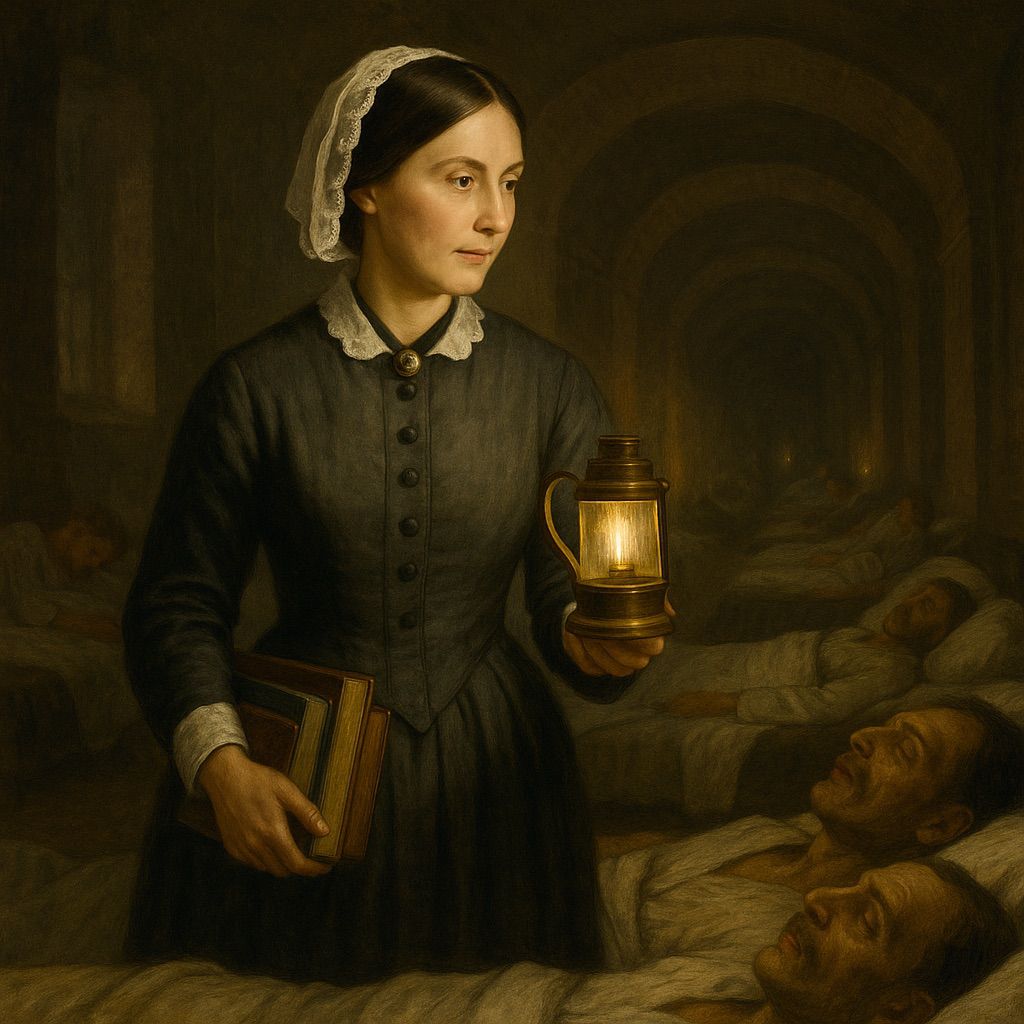
The Lady with the Lamp: How Florence Nightingale Revolutionized Care

Elias Rowen

When Florence Nightingale was born on May 12, 1820, few could have imagined that a woman of her social class would one day be synonymous with the transformation of modern healthcare. Yet Nightingale—armed not with weapons, but with notebooks and a fierce will—marched into battlefields and hospital wards to change the very way we care for the sick.

During the Crimean War, Nightingale famously walked the halls of military hospitals at night, tending to wounded soldiers with such devotion that she became known simply as “The Lady with the Lamp.” But her greatest legacy wasn’t in compassion alone—it was in calculation. She collected data, identified systemic failures, and used statistics to fight for reforms. Cleanliness, proper ventilation, and trained nursing staff became her weapons against disease.

Her work laid the foundation for nursing as a profession—not merely an act of charity, but a vital, skilled discipline. In the 19th century, when women’s roles were restricted and their voices often dismissed, Nightingale’s insistence on professional standards and evidence-based practices broke through the barriers of patriarchy and tradition.

Beyond nursing, Nightingale championed public health reforms across British colonies and urban centers. She understood that illness didn’t just live in the body—it thrived in poverty, in poor sanitation, in ignorance. Her impact reached far beyond warzones; it reached into the very structure of society.

Every hospital today that upholds hygiene protocols, every nurse trained in holistic patient care, and every healthcare policy rooted in data owes something to Florence Nightingale. Her birthday, now celebrated as International Nurses Day, is a timely reminder that true care is both heart and science—and that one determined woman can light a path for millions.
Related Posts

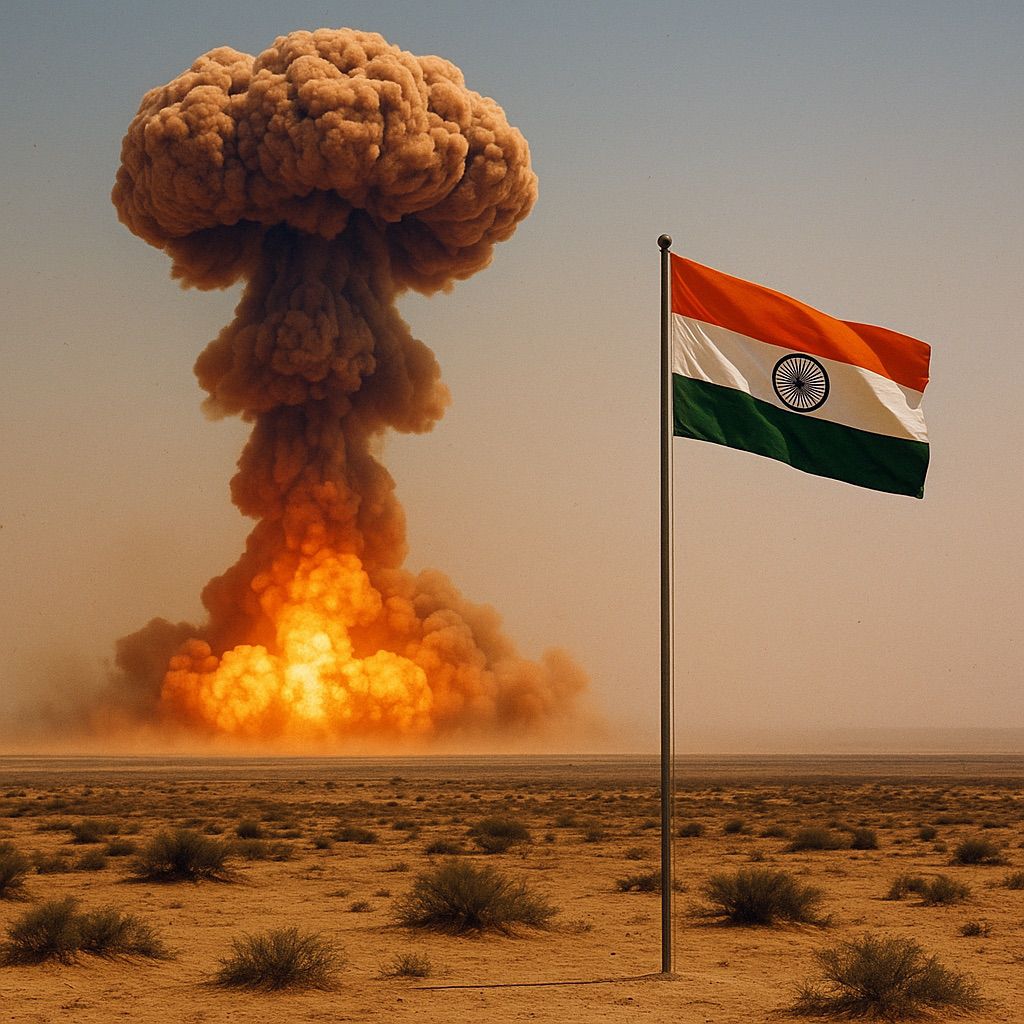
Smiling Buddha and the Fallout of Power: India’s Nuclear Debut

Elias Rowen

In the arid heat of Rajasthan’s Pokhran desert, a seismic shift occurred beneath the surface—both literally and geopolitically. On May 11, 1974, India detonated its first nuclear device under the codename “Smiling Buddha,” marking its dramatic entry into the nuclear club. It was a moment of national pride, strategic assertion, and global unease.

For India, the test was framed not as an act of aggression, but as one of self-reliance and security. The country had endured centuries of colonial subjugation and, more recently, volatile border tensions with neighbors like China and Pakistan. To many Indians, the nuclear test wasn’t about warfare—it was about dignity, deterrence, and technological competence.

But the international reaction was far from celebratory. The test disrupted the carefully managed equilibrium of Cold War-era nuclear diplomacy. Western powers, particularly the United States and Canada, viewed India’s move with deep concern. Sanctions followed. Trust eroded. And yet, India stood its ground, arguing for a nuanced distinction: a peaceful nuclear explosion, not a weaponization initiative—at least not at first.

The broader implication of May 11, 1974, lies in its lesson about power—who holds it, who gets to define its use, and who is permitted to claim it. Nuclear capability remains a double-edged sword: a symbol of national strength on one side, and a lingering shadow over humanity on the other.

India’s test was not merely a scientific feat; it was a statement to the world: “We will not be left behind.” And in that assertion, the global nuclear landscape was irreversibly altered.

Related Posts

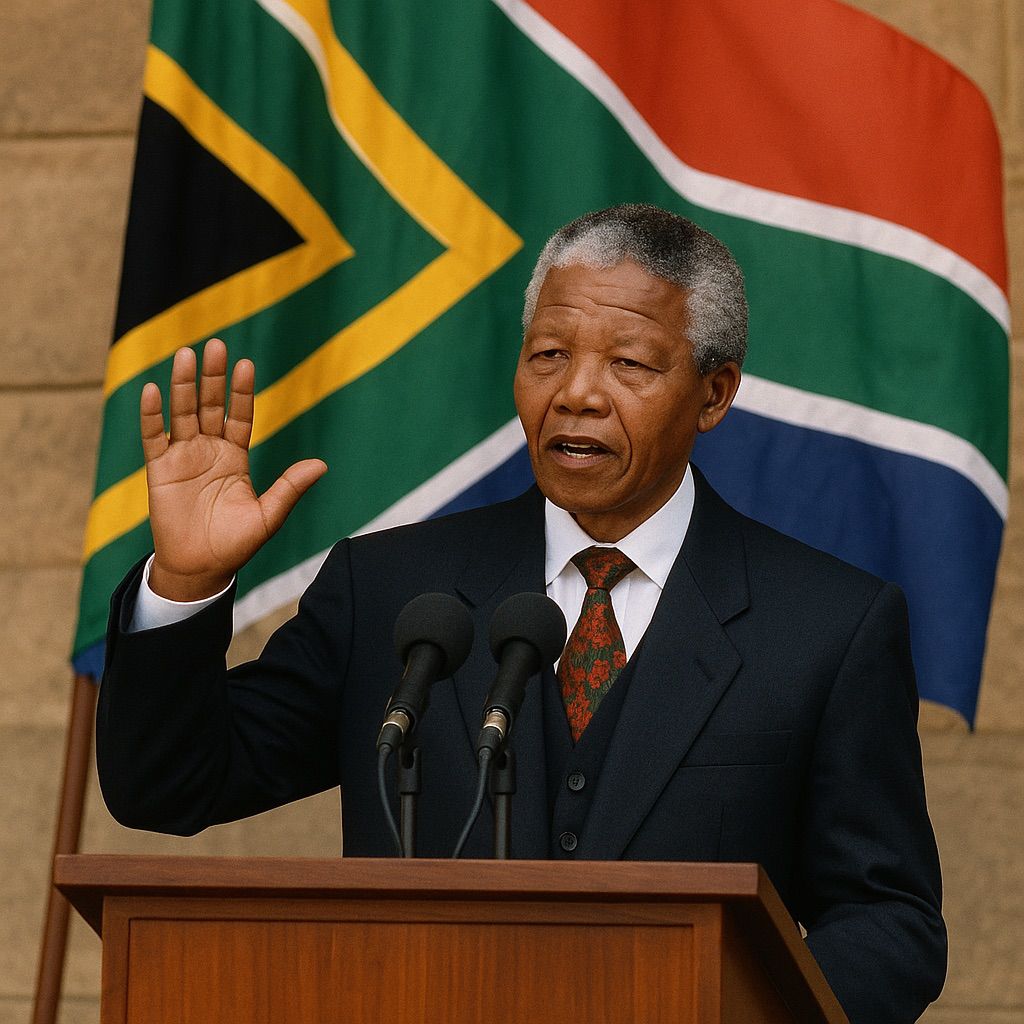
From Prisoner to President: The Day South Africa Changed Forever

Elias Rowen

On May 10, 1994, the world witnessed a moment that felt more like a dream than a headline: Nelson Mandela, a man who had been imprisoned for 27 years, stood tall and resolute as the first Black president of South Africa. It was more than an inauguration—it was a symbol of an entire nation turning the page on a brutal, decades-long chapter of systemic racism and apartheid.

Mandela’s journey from Robben Island to the Union Buildings in Pretoria wasn’t just a political transformation—it was deeply personal, profoundly human. He emerged from prison not with bitterness, but with a powerful message of reconciliation. Many feared vengeance; Mandela offered unity. He didn’t just win an election—he won the trust of a fractured people.

Apartheid was a system that tried to break the spirit of millions through laws, violence, and silence. But Mandela’s inauguration represented the refusal of that spirit to stay broken. His leadership didn’t erase the scars, but it showed the world what grace under pressure looked like. His presidency became a masterclass in forgiveness, proving that peace can follow pain when dignity and justice lead the way.

As we remember this day, we’re reminded that change often begins with resilience—and that one man’s courage can echo across generations.

Related Posts

From War to Unity: How the Schuman Declaration Sparked the European Dream

Elias Rowen

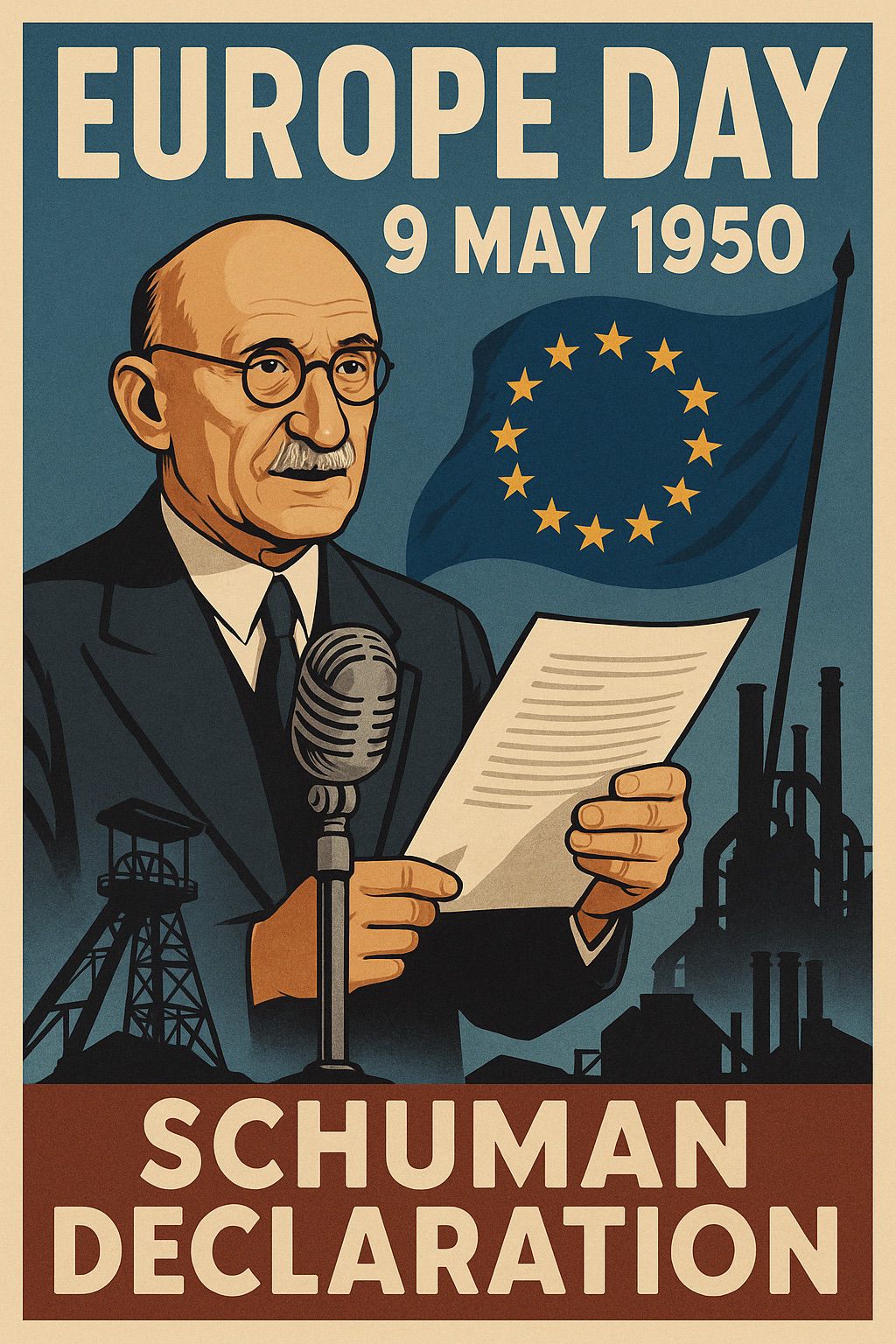
On May 9, 1950, just five years after the end of World War II, French Foreign Minister Robert Schuman stepped forward with a bold and visionary proposal: to unite the coal and steel industries of France and West Germany under a single authority. This act, known as the Schuman Declaration, wasn’t merely an economic initiative—it was a daring political move aimed at making war between European nations “not merely unthinkable, but materially impossible.” The wounds of the war were still raw, but Schuman understood that real peace required more than treaties. It needed cooperation, trust, and shared prosperity. His declaration laid the groundwork for the European Coal and Steel Community, the forerunner to what we now know as the European Union.

The brilliance of Schuman’s plan was in its simplicity and humanity. By pooling coal and steel—the core materials of warfare—Europe could shift its energy from conflict to collaboration. It brought former enemies to the same table, not only to trade but to govern together. This was the first brick in a foundation that would grow to include economic integration, free movement of people, and eventually a shared political voice. What began as a practical step toward peace has, over the decades, evolved into one of the most ambitious international partnerships in history. The EU has weathered crises, debates, and division, but it still stands today as a testament to the power of unity over division.

For millions of Europeans, May 9—now celebrated as Europe Day—is more than a historical milestone. It’s a reminder that peace is never accidental. It’s built, carefully and persistently, by people who dare to imagine a better future. In a time when nationalism and division are again on the rise, the Schuman Declaration remains a powerful symbol of what’s possible when nations choose cooperation over conflict, and hope over fear.

Related Posts

A Day of Triumph and Remembrance: VE Day, May 8, 1945

Elias Rowen

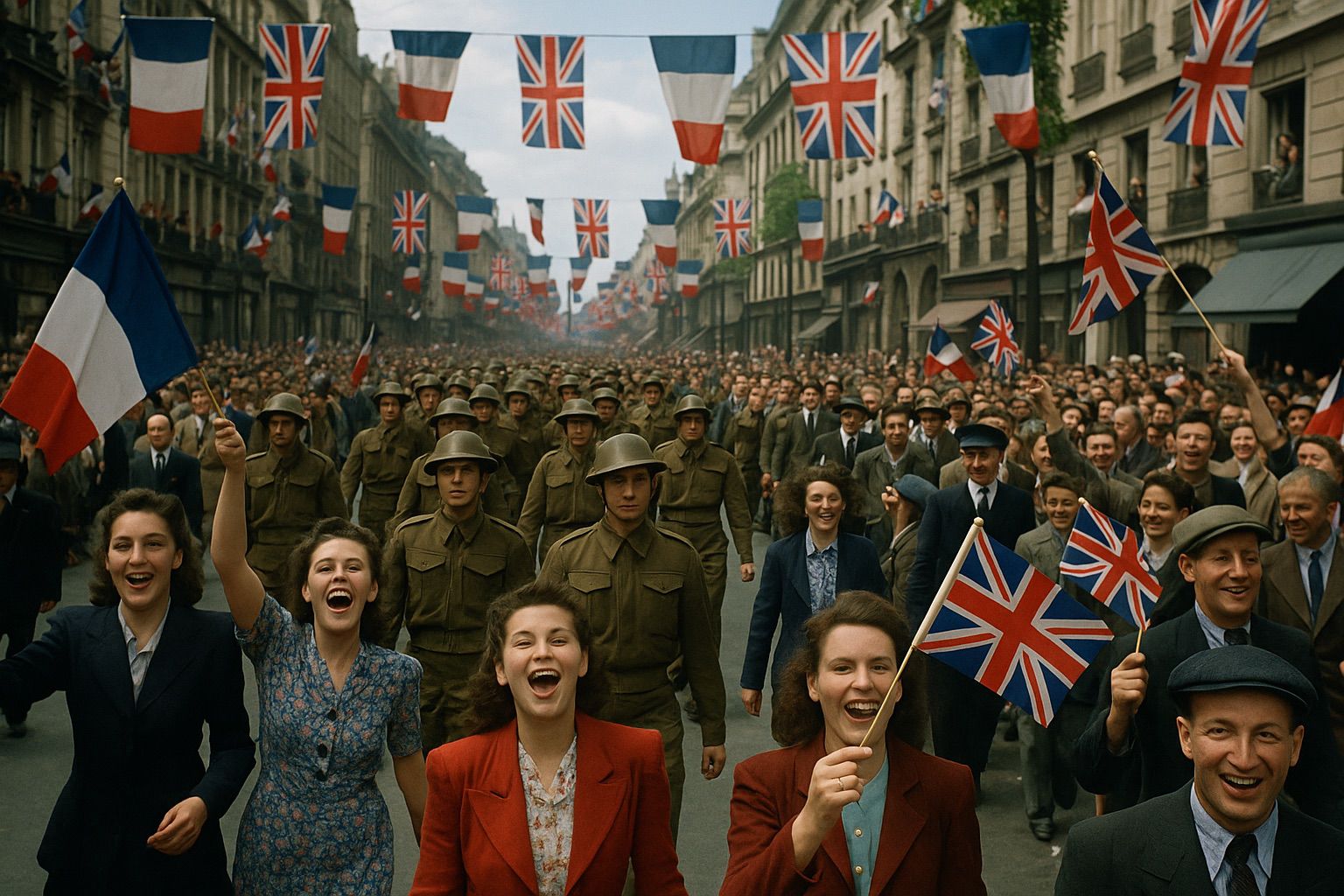
May 8, 1945, stands as one of the most significant days in modern history—Victory in Europe (VE) Day. On this day, the Allied forces officially celebrated the surrender of Nazi Germany, marking the end of World War II in Europe. For millions of people across the continent, VE Day was a moment of sheer relief, triumph, and profound grief. After years of unrelenting conflict, unimaginable loss, and devastation, the war had finally ended. The streets were filled with jubilant crowds, waving flags, singing, and dancing in celebration. In London, the crowds gathered in Trafalgar Square, while in Paris, the people poured into the streets to mark the victory over the Nazis. But VE Day was not just a celebration of military success; it was also a solemn day of reflection. The war had taken a terrible toll on Europe—millions had lost their lives, countless families had been torn apart, and entire cities had been reduced to rubble. VE Day was a time for people to remember the sacrifices made by soldiers, civilians, and resistance fighters alike. It also marked the beginning of the difficult work of rebuilding and reconciling after the horrors of war. As people rejoiced in the streets, the road ahead would be filled with the challenges of recovery, healing, and the creation of a lasting peace.

Related Posts

Victory and Peace: The End of WWII in Europe

Elias Rowen

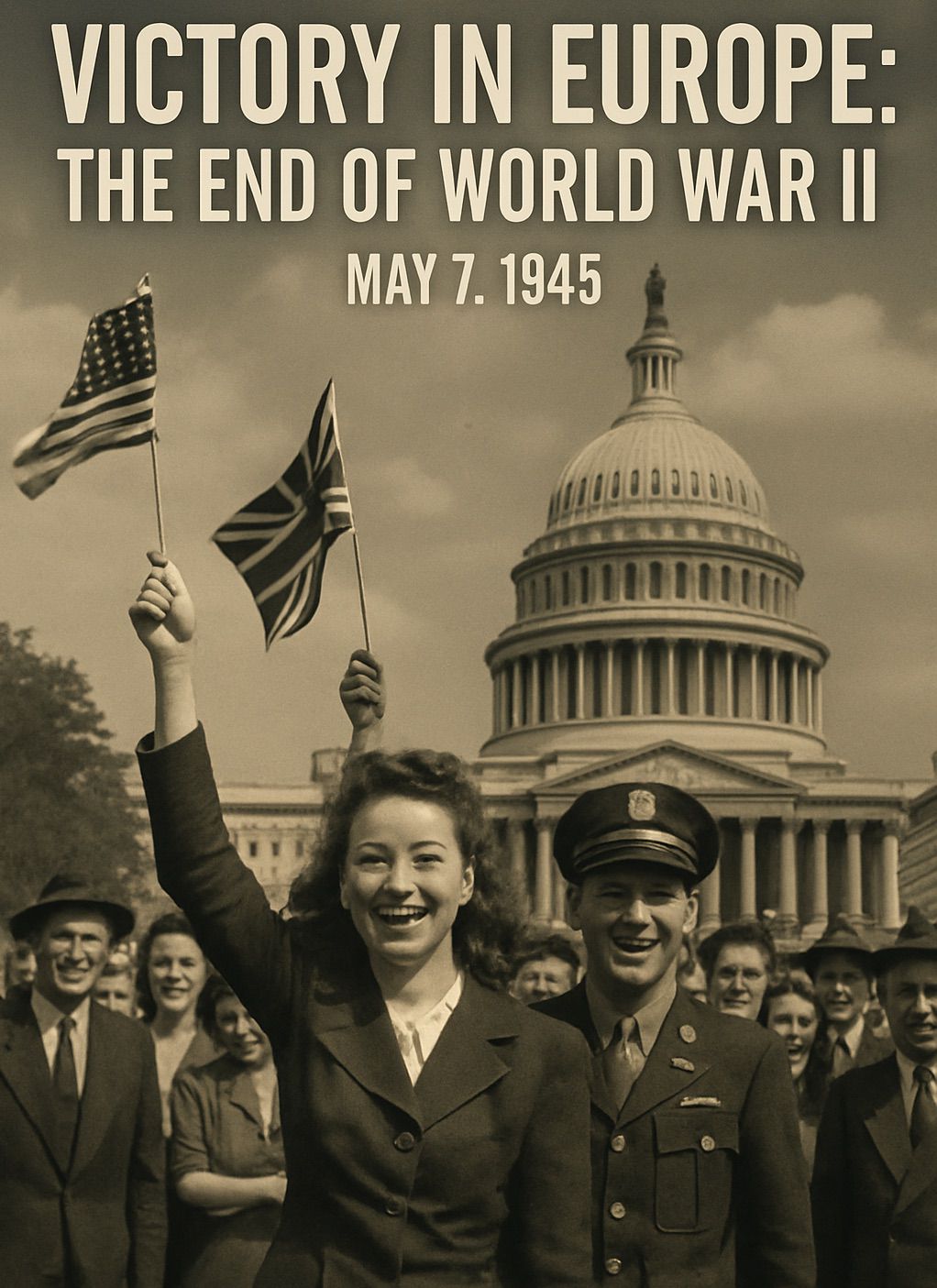
May 7, 1945, marks a pivotal moment in history—the official surrender of Nazi Germany in World War II. After years of intense conflict that devastated entire continents, the unconditional surrender was a symbolic and literal end to the war in Europe. As Adolf Hitler’s regime crumbled, Europe breathed a collective sigh of relief, but the toll of the war left an indelible mark. Cities lay in ruins, millions of lives were lost, and the political landscape had been forever reshaped. The German surrender was the culmination of a relentless effort by the Allied forces, including the United States, the United Kingdom, and the Soviet Union. The events leading up to that fateful day had been characterized by a series of crushing defeats for Germany, from the D-Day landings to the Soviet encirclement of Berlin. When German representatives signed the surrender documents in Reims, France, it was a testament to the resilience and sacrifice of those who fought for freedom. The war in Europe was officially over, but the post-war era would bring new challenges, including the division of Germany, the onset of the Cold War, and the creation of a new world order. The surrender did not just mark the end of a brutal conflict; it also signaled the beginning of a healing process, as Europe set its sights on rebuilding and reconciling from the ashes of war.

Related Posts

Giants of the Sky: The Rise and Fall of Airships

Elias Rowen

In the early 20th century, airships were symbols of futuristic elegance and national pride—massive floating palaces that promised to change the way humanity traveled the world. These lighter-than-air behemoths, particularly the German-made Zeppelins, soared gracefully through the skies, offering an unparalleled view of the Earth below. They represented the pinnacle of innovation in an age enamored with the possibilities of flight. The golden age of airships peaked in the 1920s and 1930s, with transatlantic voyages by the likes of the Graf Zeppelin, which ferried passengers from Europe to the Americas in serene, luxurious comfort. Yet, this dream of the skies would soon be shattered by tragedy.

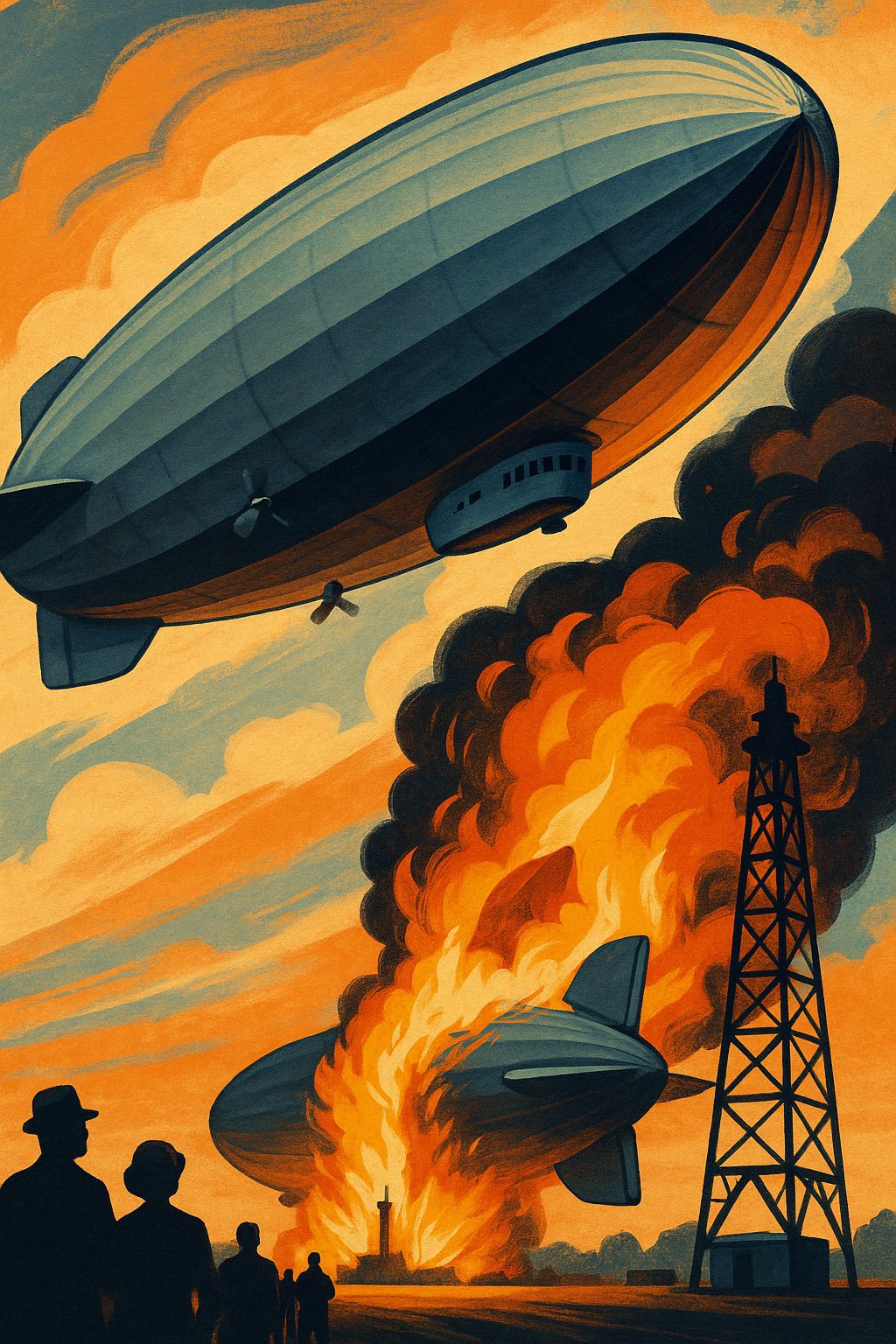
On May 6, 1937, the German airship Hindenburg burst into flames while attempting to land in Lakehurst, New Jersey. In mere seconds, the hydrogen-filled craft was engulfed in fire, killing 36 people and horrifying the world. The disaster, captured live on radio and in vivid newsreel footage, became one of the most iconic catastrophes of the 20th century. It didn’t just end lives—it ended an era. Public confidence in airships plummeted overnight. Though the Hindenburg wasn’t the only airship to suffer disaster, its fiery end was the most public and psychologically devastating. The rise of faster, safer fixed-wing airplanes only hastened the airship’s descent into obsolescence.

Today, the image of airships lingers in nostalgic memories and retrofuturistic art, a symbol of ambition and human ingenuity—marred by fragility and hubris. While some modern blimps and hybrid airships are making a quiet comeback for advertising, tourism, and cargo transport, they’ll never again hold the mystique they once did. The story of airships is not just about flight—it’s a cautionary tale of how quickly dreams can ignite and fall from the sky.

Related Posts

Cinco de Mayo: A Legacy of Resistance and Cultural Pride

Elias Rowen

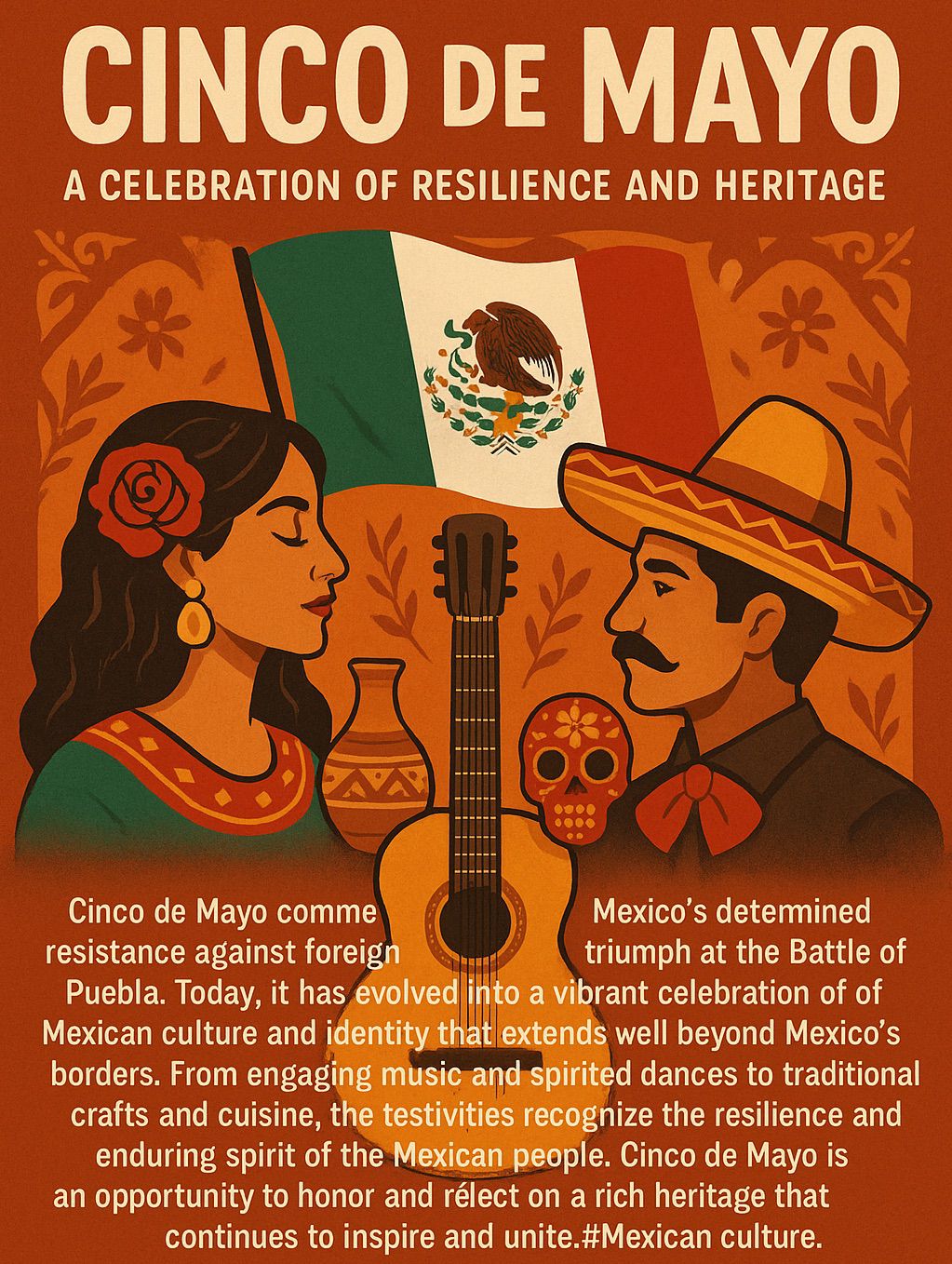
Cinco de Mayo is more than just a day for festive parades, vibrant decorations, and spicy cuisine — it is a powerful symbol of resistance and the enduring strength of Mexican cultural heritage. On May 5, 1862, a vastly outnumbered and under-equipped Mexican army achieved a stunning victory over the French forces at the Battle of Puebla. This triumph, while not a major strategic win in the overall Franco-Mexican War, became a rallying point for national pride and determination. It showcased Mexico’s resilience and refusal to surrender to foreign domination, inspiring future generations to preserve their sovereignty and identity.

Today, Cinco de Mayo is celebrated more in the United States than in many parts of Mexico, where it serves as a vibrant tribute to Mexican-American culture. For many, the holiday is an opportunity to honor the deep roots, struggles, and contributions of the Mexican people. Music, folkloric dance, and traditional foods aren’t just for show — they represent centuries of cultural continuity and community strength. From indigenous traditions to mestizo influences, Mexico’s heritage is a living, evolving testament to its people’s spirit. In a world where cultural identities can often be diluted, Cinco de Mayo is a bold reminder to embrace, celebrate, and protect the unique stories that shape us.

Related Posts

Echoes of Dissent: The Kent State Shootings and the Price of Protest

Elias Rowen

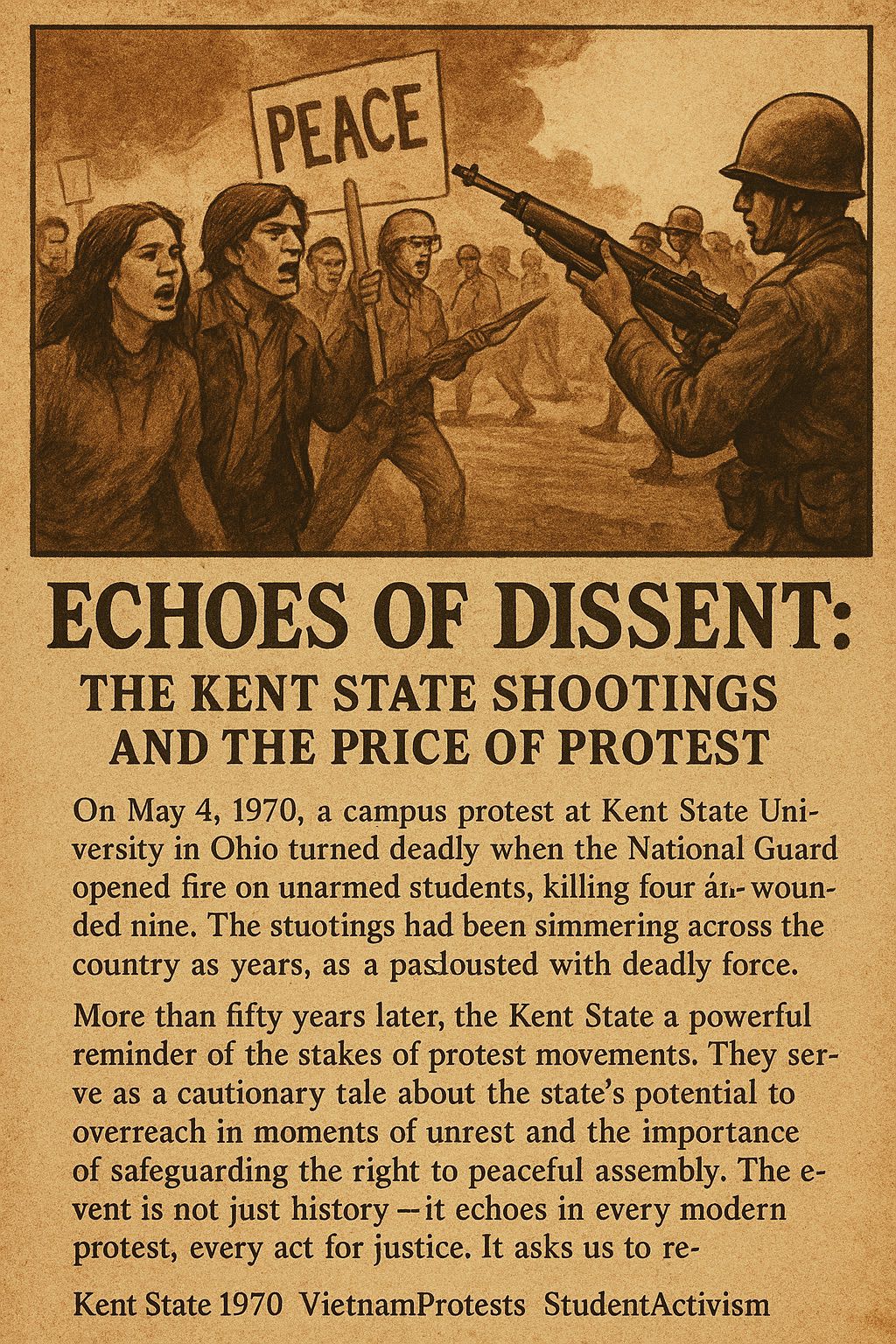
On May 4, 1970, a campus protest at Kent State University in Ohio turned deadly when the Ohio National Guard opened fire on unarmed students, killing four and wounding nine. The students had gathered to protest the U.S. invasion of Cambodia, an escalation of the already controversial Vietnam War. Tensions had been simmering across the country for years, as young Americans grew increasingly frustrated with the war, the draft, and the lack of transparency from their government. The Kent State shootings became a flashpoint in this nationwide protest movement, symbolizing the dangerous intersection between civil disobedience and government response.

The tragedy forced a national reckoning. How could peaceful protesters—many of them teenagers—be met with deadly force on a university campus in the heart of America? Public outrage swept across the country, igniting further demonstrations and deepening the generational divide. The government, caught off guard by the scale and passion of the protests, found itself walking a fine line between maintaining order and suppressing dissent. For many, Kent State epitomized the fear that the state might prioritize control over conscience, even at the cost of innocent lives.

More than fifty years later, the Kent State shootings remain a powerful reminder of the stakes involved in protest movements. They serve as a cautionary tale about the state’s potential to overreach in moments of unrest and the importance of safeguarding the right to peaceful assembly. The event is not just history—it echoes in every modern protest, every act of resistance, and every cry for justice. It asks us to remember the cost of silence and the courage it takes to stand up, even when the risk is high.

Related Posts

The Voice of the People: Why a Free Press is Democracy’s Lifeline

Elias Rowen

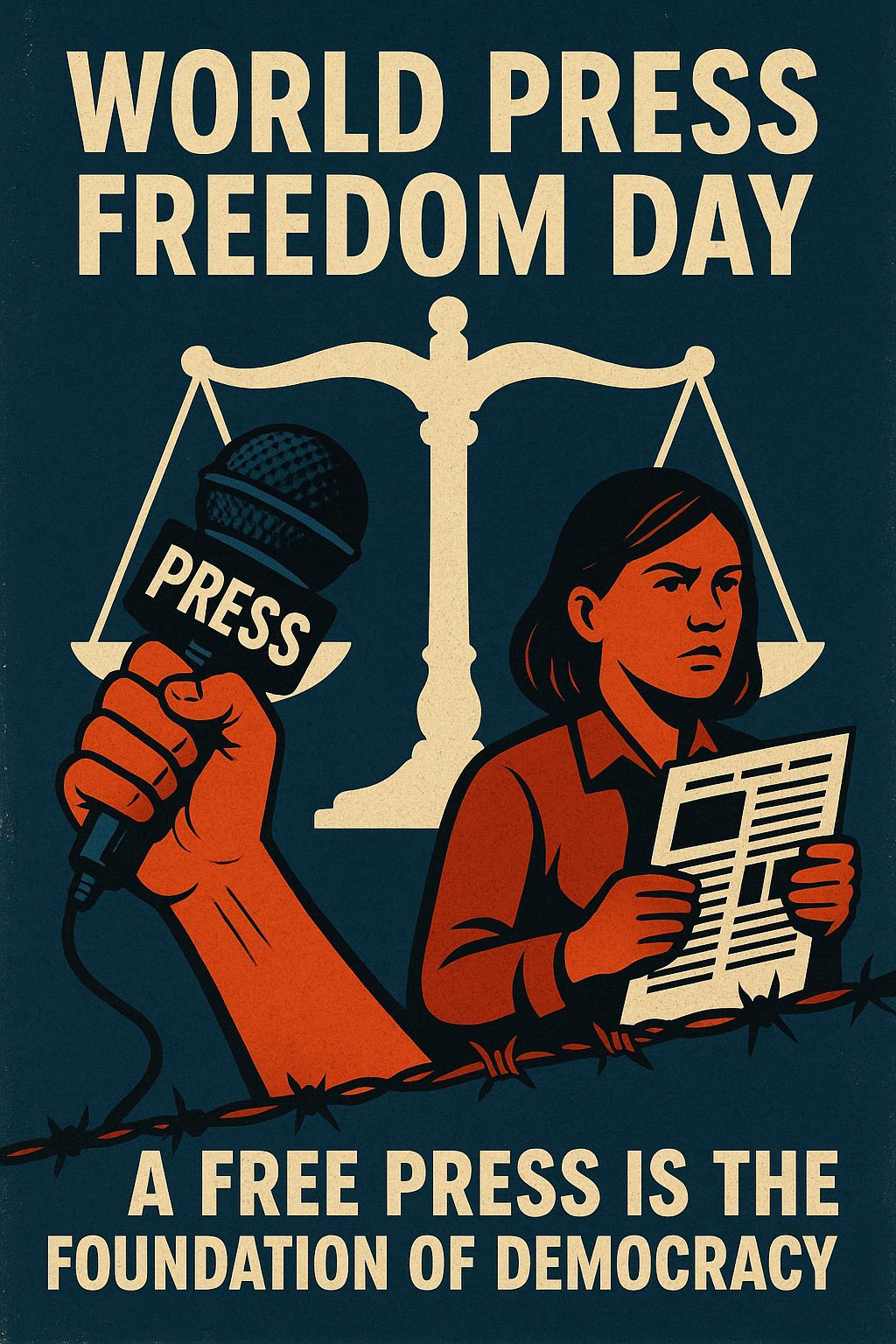
A free press is not just a luxury of democracy—it is its very foundation. On World Press Freedom Day, we are reminded that the ability to speak truth to power, to uncover injustice, and to hold leaders accountable is what keeps democracies vibrant and alive. Without journalists asking hard questions, corruption festers. Without storytellers giving a voice to the marginalized, injustices are swept under the rug. In a world where misinformation spreads at the speed of a click, a strong, independent press acts as a lighthouse, guiding societies through storms of confusion and deceit.

However, the fight for press freedom is far from over. Around the globe, journalists are imprisoned, censored, or even killed simply for doing their jobs. Governments increasingly brand legitimate reporting as “fake news” when it challenges their narratives. Meanwhile, media outlets battle corporate consolidation, which threatens to turn information into mere entertainment. True democracy demands more—it requires fearless reporting, diverse voices, and spaces where truth, not convenience, reigns supreme.

The faces behind the headlines—the local reporter exposing city hall corruption, the foreign correspondent risking their life to cover a war zone, the independent journalist battling online harassment—are the quiet heroes of democracy. Their work ensures that power remains in the hands of the people, not behind closed doors. On this day, and every day, supporting press freedom means defending our right to know, to question, and ultimately, to shape our own futures.

Related Posts

The End of a Hunt: Bin Laden’s Death and the New Face of Global Security

Elias Rowen

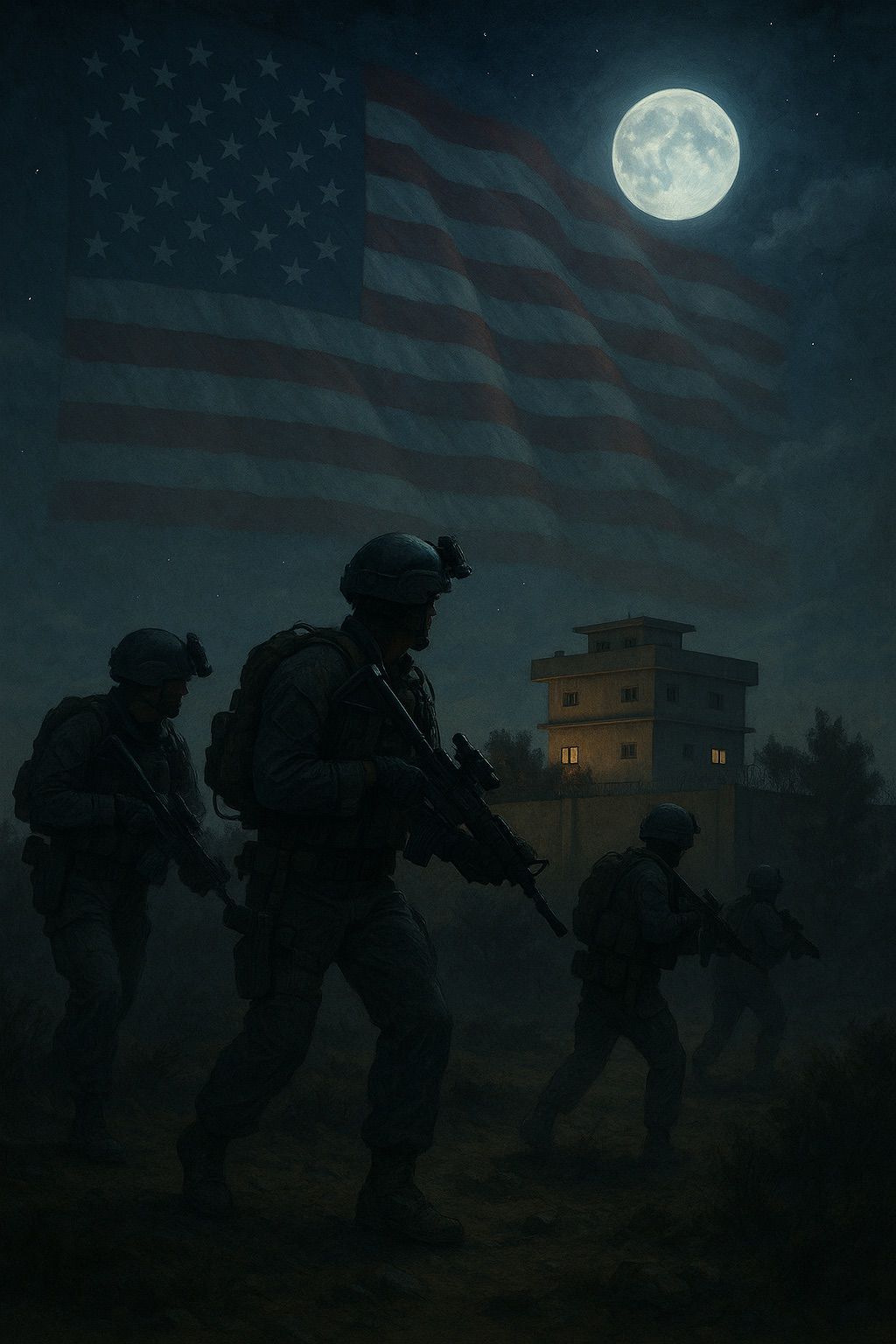
On May 2, 2011, the world woke up to news that seemed almost surreal: Osama bin Laden, the mastermind behind the 9/11 attacks, had been killed by U.S. Navy SEALs in Pakistan. For nearly a decade, bin Laden had been the most wanted man on the planet, a ghostly symbol of terror and fear. His death marked a pivotal moment in the War on Terror—a symbolic victory for the United States and its allies, and a piece of long-awaited closure for the families of 9/11 victims. Crowds gathered outside the White House waving flags, cheering a rare and profound moment of national unity. Yet, while the man was gone, the world he had changed remained more complicated than ever.

Bin Laden’s death did not mark the end of terrorism or even the War on Terror. Instead, it revealed how much the battlefield had evolved. New groups like ISIS soon emerged, thriving in the instability left behind by long wars. Global security efforts had to shift from hunting one man to countering decentralized, digital threats that could strike from anywhere. Mass surveillance programs expanded, drone warfare grew, and cybersecurity became a frontline issue. While bin Laden’s removal was a major psychological blow to extremists, it also forced governments to realize that terrorism was no longer something with a face—it was a constantly shifting, global phenomenon.

The mission that killed bin Laden taught us that victory in the War on Terror isn’t always clear-cut. It’s a marathon, not a sprint, demanding resilience, adaptability, and constant vigilance. It reminds us that while singular figures can be brought down, the deeper issues—extremism, inequality, injustice—must be addressed if real peace is ever to take hold.

Related Posts

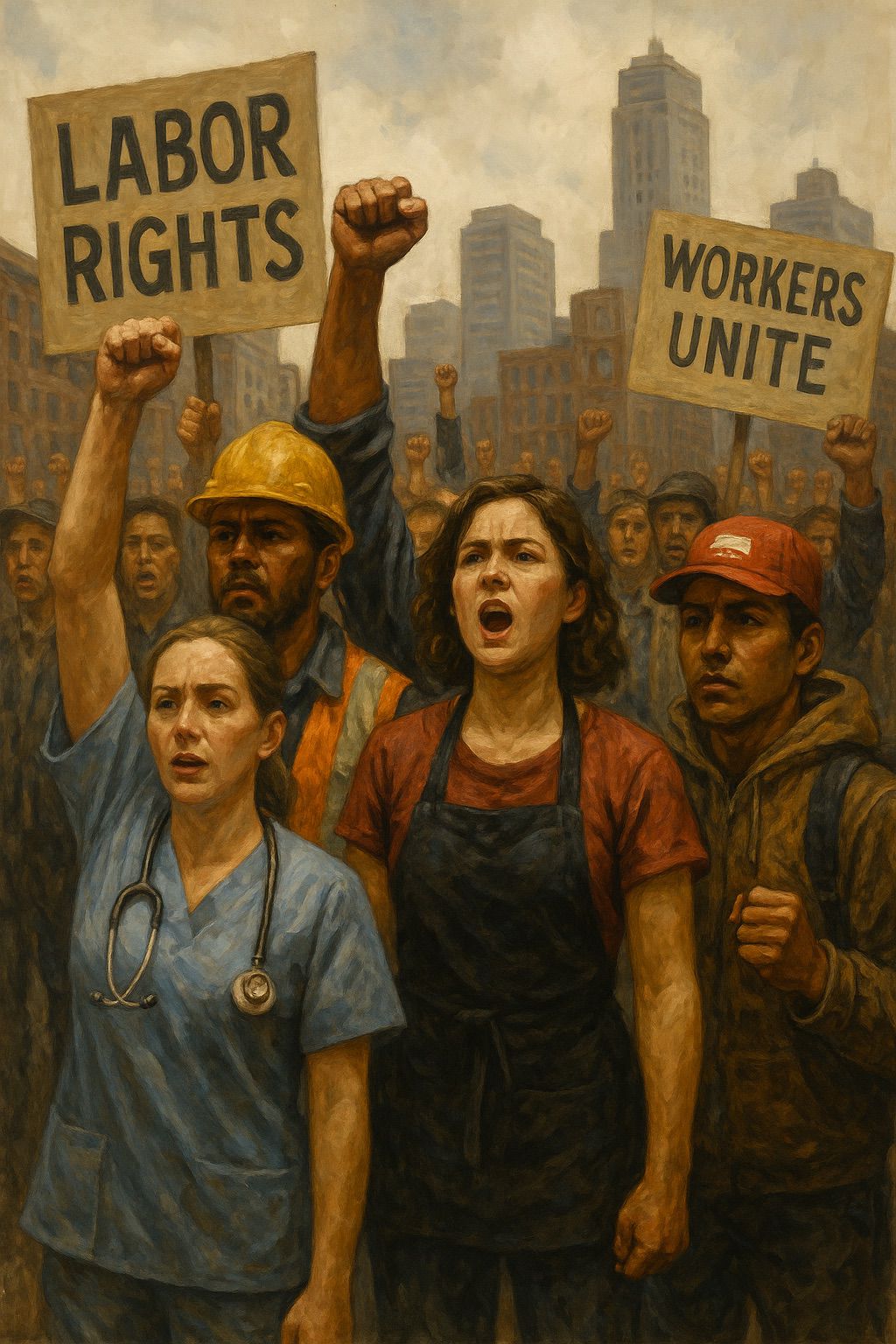
Power to the People: The Ongoing Fight for Workers’ Rights

Elias Rowen

For centuries, workers have stood shoulder to shoulder, demanding dignity, fair pay, and safe conditions—principles that form the backbone of any just society. From the early factory strikes of the Industrial Revolution to the global observance of International Workers’ Day on May 1st, labor movements have been a force of transformation. These collective efforts have reshaped laws, redefined norms, and reminded the world that the engine of every economy runs on the labor of everyday people. Despite the progress, the fight is far from over.

Today, the challenges may look different—gig work without benefits, stagnant wages despite inflation, unsafe working conditions in developing countries—but the underlying battle remains the same: the right to be treated fairly. The rise of union-busting tactics, automation threatening jobs, and an ever-growing wealth gap shows how much is still at stake. Workers from Amazon warehouses to Starbucks counters have reignited the fire of unionization, proving that solidarity is not outdated—it’s essential.

Human stories fuel this movement. The nurse pulling double shifts without adequate protection. The delivery driver navigating city streets for sub-minimum wages. The teacher crowdfunding for classroom supplies. These are not isolated incidents—they’re signals of a system under strain. Labor rights aren’t just about better pay; they’re about respect, equity, and giving workers a voice in the systems that profit from their sweat.

The labor movement is not a relic of the past—it’s a call to action today. As long as injustice exists in the workplace, so too will the courage of those who stand up against it. Because when workers unite, history listens.

Related Posts

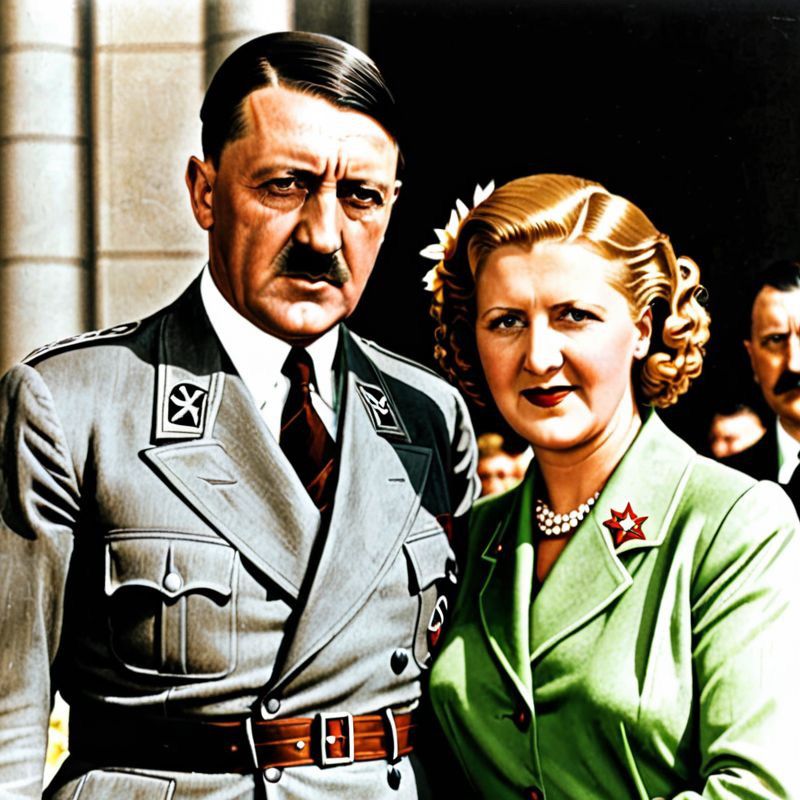
The Final Choice: Adolf Hitler and Eva Braun’s Tragic End

Elias Rowen

As the Soviet forces closed in on Berlin in April 1945, Adolf Hitler and Eva Braun made the ultimate decision to take their own lives in the face of defeat. The once-powerful dictator, who had ruled Nazi Germany with an iron fist, was now cornered in his underground bunker, with the end of the war in sight. Hitler, whose ambitions had led to the devastation of much of Europe, faced the collapse of his empire. Eva Braun, who had been by his side for over a decade, followed him into this tragic end, forever bound to the Führer in both life and death.

The two chose suicide as the only way to avoid capture by the advancing Soviet forces. Hitler, knowing the inevitability of his downfall, ingested cyanide and shot himself in the head. Eva Braun, his loyal companion throughout the war, consumed cyanide, ending her life beside him. Their deaths occurred on April 30, 1945, marking the symbolic end of Nazi Germany. The couple’s decision to die together in the final moments of their lives reflects the despair of a regime that had once been the epitome of power but had crumbled under the weight of its own atrocities.

Their suicides were not just the deaths of two individuals, but the end of an era that had brought untold suffering to millions. As the war neared its end, many saw Hitler’s death as a necessary step toward peace, though it came at a staggering human cost. For Eva Braun, her relationship with Hitler had been marked by a desire for recognition and an enduring loyalty to a man whose very name would forever be associated with hate and destruction. The tragic final act of their lives left a dark mark on history, reminding the world of the dangers of unchecked power and the human toll of war.

Related Posts

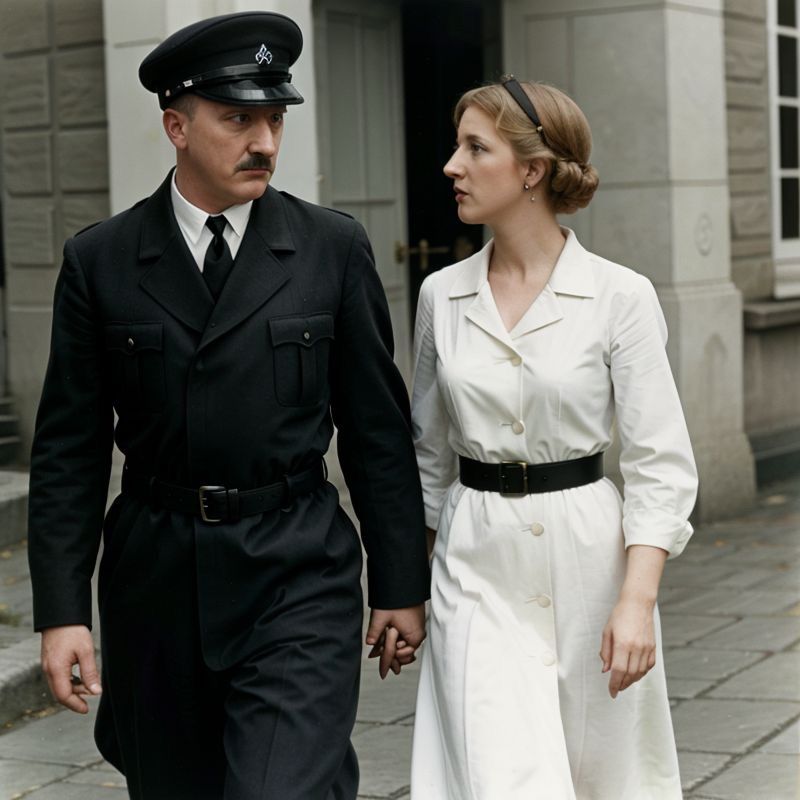
A Final Act of Defiance: The Last Moments of Adolf Hitler and Eva Braun

Elias Rowen

On April 29, 1945, in the depths of the Berlin bunker, Adolf Hitler, the Führer of Nazi Germany, married his long-time companion, Eva Braun, in a fleeting and tragic moment. This was just one day before their deaths, as the crumbling Third Reich faced its inevitable defeat. Hitler, who had spent years avoiding personal commitments and keeping his relationship with Eva a carefully guarded secret, chose this final act of marriage as a defiance against the looming end of his empire. For Eva Braun, this was the culmination of a decades-long devotion to a man who had consistently kept her at arm’s length, despite her unrelenting loyalty.

Their marriage was not a grand affair; it took place in the bunker, where the couple was holed up, surrounded by the growing chaos of a city under siege. Hitler, having long acknowledged that his regime was collapsing, seemed to have finally let go of the grandiose ambitions that had once defined him. For Eva, the marriage represented a tragic, final acknowledgment of her devotion, yet it was steeped in the knowledge that the end was near. The very next day, the two would take their own lives—Hitler by cyanide and a gunshot, Braun by cyanide—choosing death over capture by the advancing Soviet forces. Their deaths marked the symbolic end of the Nazi regime and the conclusion of a tyrannical era that had wreaked havoc on the world.

In these final moments, the couple’s marriage was not just a personal gesture but a tragic symbol of the collapse of a regime and the fleeting nature of human life. Hitler and Braun’s decision to marry before their deaths echoes the ultimate futility of their lives and the desolation of their choices. The Berlin bunker, once a stronghold of power, became the stage for a dark and eerie conclusion to one of history’s most destructive figures. The fleeting, tragic marriage remains a potent reminder of the human capacity for loyalty, the desire for recognition, and the devastating effects of unchecked power.

Related Posts

The Fall of Mussolini: The End of Italy’s Fascist Regime

Elias Rowen

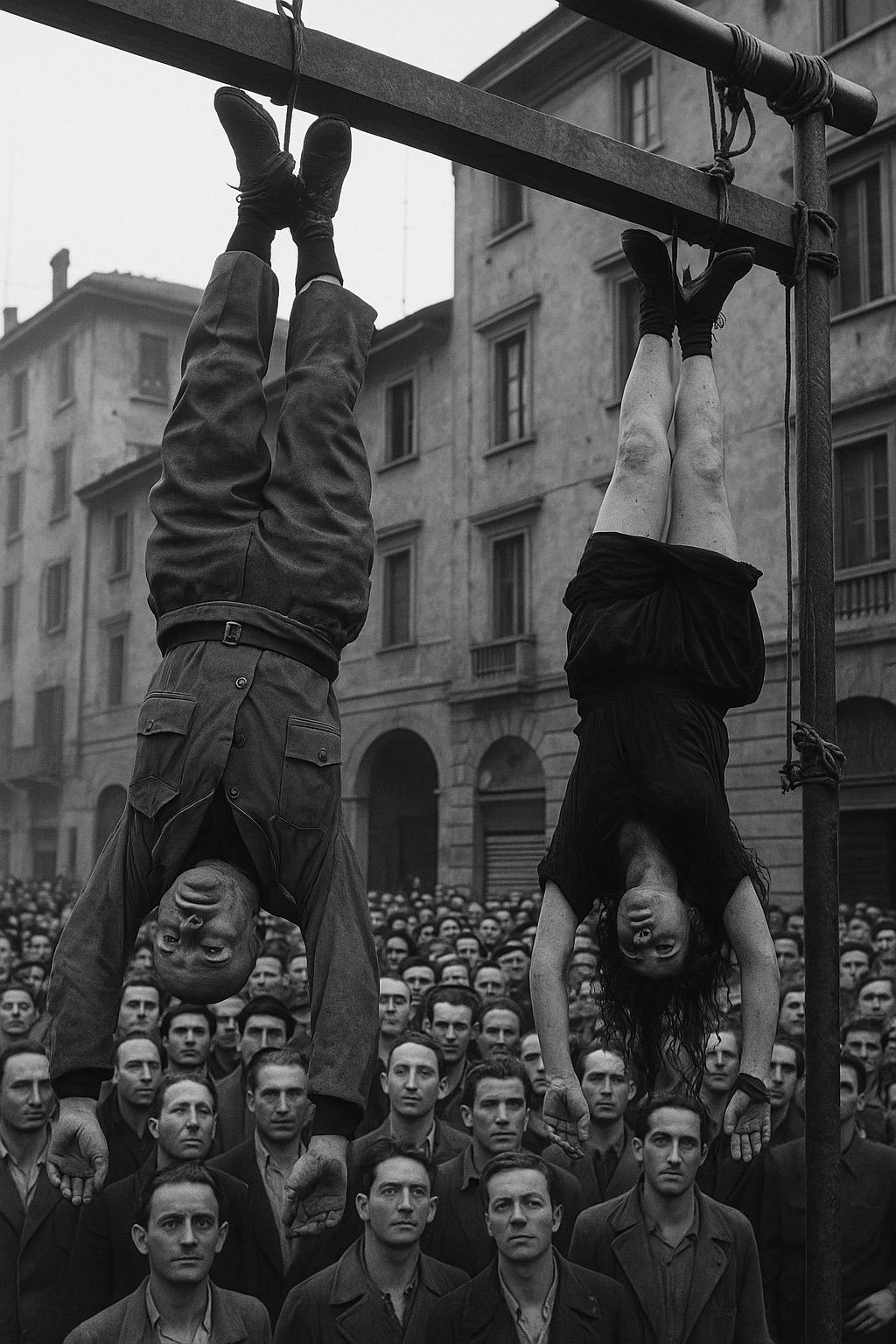
On April 28, 1945, Benito Mussolini, the dictator who had once ruled Italy with an iron fist, met a brutal and decisive end. After more than two decades in power, Mussolini’s fascist regime crumbled under the weight of war, betrayal, and public outrage. Captured by Italian partisans while attempting to flee to Switzerland, Mussolini and his mistress, Clara Petacci, were executed by firing squad. Their bodies were later displayed in Milan, a stark symbol of Italy’s rejection of fascism and a powerful moment in the closing days of World War II.

Mussolini’s rise to power had been swift. In 1922, he marched on Rome and took control of the Italian government, establishing a fascist dictatorship that crushed opposition, controlled the press, and promoted aggressive nationalism. Aligning himself with Adolf Hitler during World War II, Mussolini dragged Italy into a conflict it was ill-prepared to fight. As the war turned against the Axis powers, Italian citizens grew disillusioned, and even Mussolini’s own government turned on him. By 1943, he was ousted and arrested, only to be rescued by German forces and installed as a puppet leader in northern Italy.

But by April 1945, Nazi Germany was collapsing, and Mussolini’s fate was sealed. Disguised as a German soldier, he attempted to escape with his remaining loyalists but was recognized and captured by partisans in the village of Dongo. Just a day later, he was executed without trial, a swift and final punishment for years of dictatorship and war crimes. His body was taken to Milan and hung upside down in Piazzale Loreto, where angry crowds gathered to desecrate his corpse—a grim reflection of the hatred he had inspired.

Mussolini’s death marked the definitive end of fascist rule in Italy and served as a warning to other totalitarian leaders. The man who once dreamed of reviving the Roman Empire was now nothing more than a cautionary tale of unchecked power and political downfall. Today, his legacy remains controversial—while some still romanticize his rule, history remembers Mussolini as a dictator whose ambition led Italy to ruin. His fall stands as a reminder that no tyranny lasts forever and that the will of the people can ultimately bring down even the most powerful regimes.

Related Posts

A New Dawn: South Africa’s First Democratic Elections

Elias Rowen

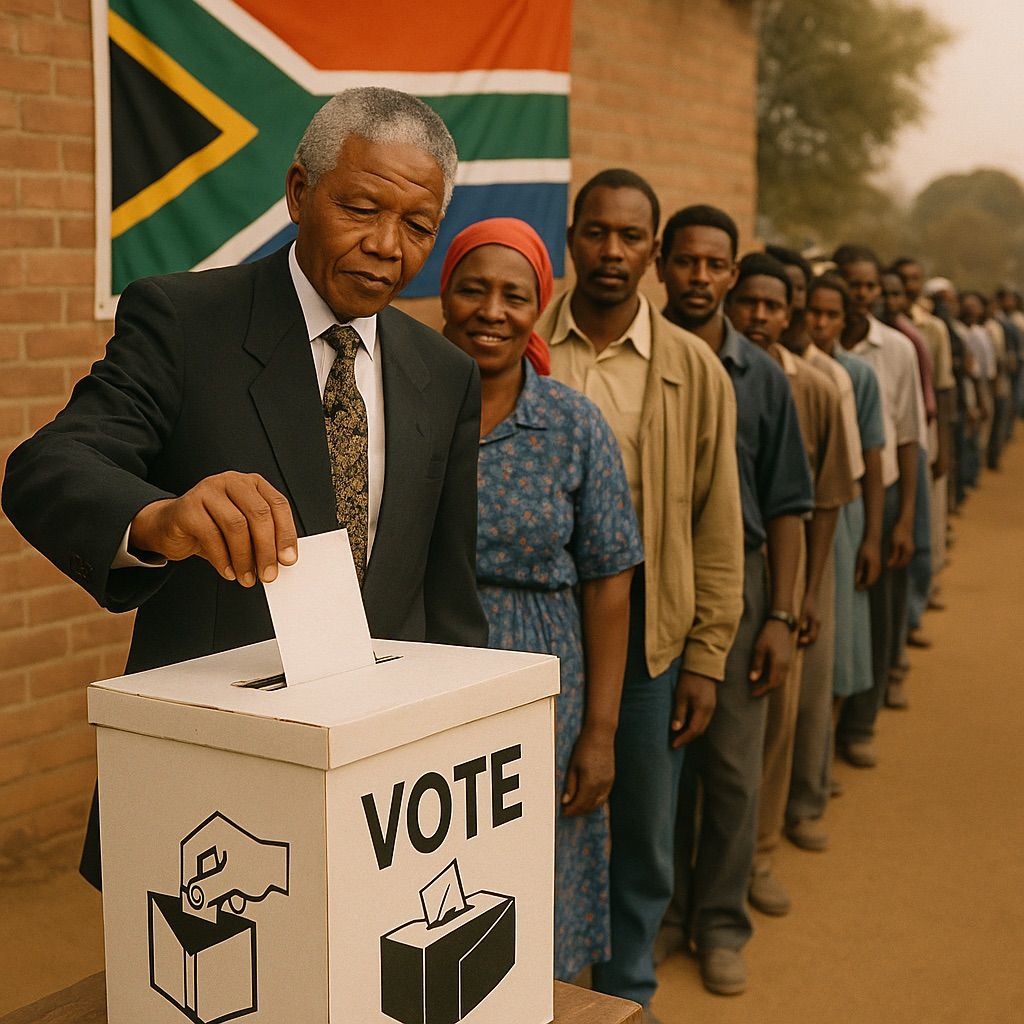
On April 27, 1994, South Africa took a historic step toward freedom, equality, and democracy. After decades of institutionalized racism under the brutal apartheid system, millions of South Africans of all races cast their votes in the country’s first fully democratic elections. It was a moment of triumph, hope, and reconciliation, marking the official end of apartheid and the beginning of a new era under the leadership of Nelson Mandela, South Africa’s first Black president.

For nearly half a century, apartheid had divided South Africa, enforcing a system of racial segregation that stripped Black citizens of their rights, confined them to impoverished townships, and subjected them to systemic oppression. Despite years of resistance, activism, and international condemnation, the oppressive regime held firm—until the early 1990s, when global pressure and internal uprisings forced change. After intense negotiations, apartheid laws were repealed, and South Africa prepared for its first free elections, allowing all citizens—regardless of race—to vote for the first time.

The election itself was a powerful display of democracy in action. Long lines stretched for miles as people patiently waited, some for hours or even days, to cast their ballots. Many elderly South Africans voted for the first time in their lives, their voices finally counted in a system that had long silenced them. The overwhelming support for the African National Congress (ANC) and Nelson Mandela signaled a new beginning—one built on unity, forgiveness, and hope for the future. On May 10, 1994, Mandela was inaugurated as president, delivering a speech that resonated across the world: “Never, never, and never again shall it be that this beautiful land will again experience the oppression of one by another.”

The impact of that election is still felt today. South Africa’s transition from apartheid to democracy was not without its struggles, and the nation continues to grapple with economic and social challenges. Yet, April 27—now celebrated annually as Freedom Day—remains a powerful reminder of the resilience of the human spirit and the ability of a nation to heal. The first democratic elections of South Africa stand as a testament to the power of democracy and the courage of those who fought for it, proving that even in the darkest of times, justice and equality can prevail.

Related Posts

Chernobyl: The Disaster That Shook the World

Elias Rowen

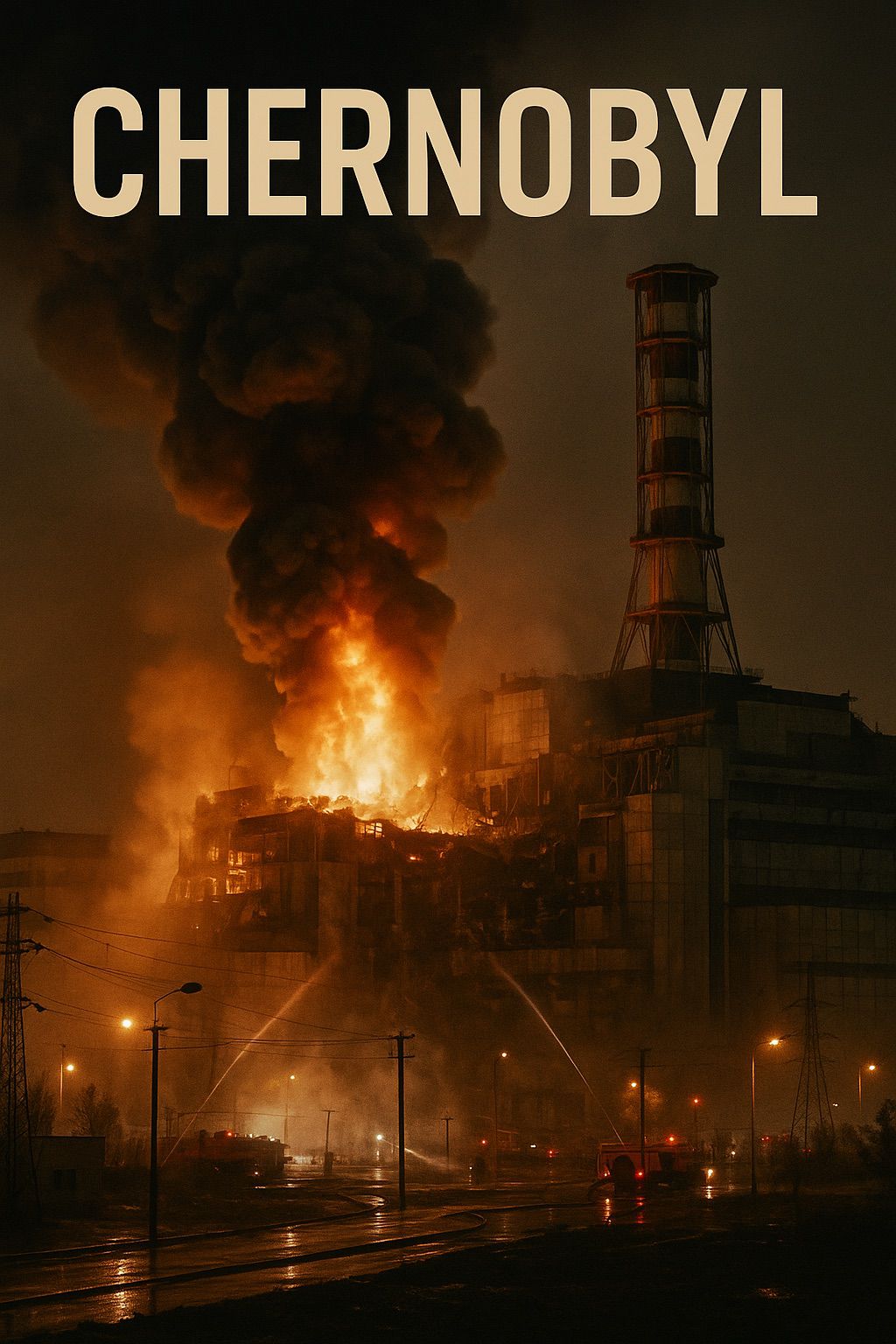
On April 26, 1986, the world witnessed one of the most catastrophic nuclear accidents in history—the explosion of Reactor No. 4 at the Chernobyl Nuclear Power Plant in Soviet Ukraine. What started as a late-night safety test quickly spiraled into an uncontrolled nuclear reaction, leading to a massive explosion that released deadly radiation across Europe. The Chernobyl disaster exposed millions of people to high levels of radiation, forced entire communities to flee their homes, and left behind a haunting legacy of destruction, illness, and environmental contamination.

In the early hours of that fateful day, a series of critical mistakes by plant operators, combined with flaws in the reactor’s design, led to an uncontrollable power surge. The explosion that followed ripped through the reactor, sending radioactive debris high into the atmosphere. Firefighters rushed to the scene, battling flames without knowing the true extent of the danger. Many of them, along with plant workers and emergency responders, suffered severe radiation poisoning and died in the following weeks. Their bravery saved countless lives, but at an unimaginable cost.

The Soviet government initially downplayed the disaster, failing to warn its citizens about the radiation spreading across the region. It wasn’t until radiation alarms went off in Sweden—nearly 1,000 miles away—that the world realized something had gone terribly wrong. Eventually, over 100,000 people were evacuated from Pripyat and surrounding areas, leaving behind a ghost town frozen in time. The infamous Chernobyl Exclusion Zone remains one of the most radioactive places on Earth, a stark reminder of the dangers of nuclear energy when mismanaged.

In the decades since the disaster, the long-term effects of Chernobyl have become painfully clear. Cancer rates skyrocketed, birth defects increased, and entire generations have lived with the fear of radiation exposure. Yet, Chernobyl also serves as a powerful lesson in safety, transparency, and the risks associated with nuclear power. The damaged reactor was eventually sealed under a massive steel sarcophagus, but the scars of Chernobyl remain—both in the land and in the memory of those affected.

Today, Chernobyl is both a warning and a symbol of resilience. Scientists continue to study its impact, wildlife has begun reclaiming the abandoned land, and tourists visit the eerie remains of Pripyat to witness history firsthand. The disaster may have happened decades ago, but its lessons are more relevant than ever, reminding the world of the devastating consequences of human error and the importance of responsible energy use.

Related Posts

Unlocking Life’s Code: The Discovery of DNA’s Structure

Elias Rowen

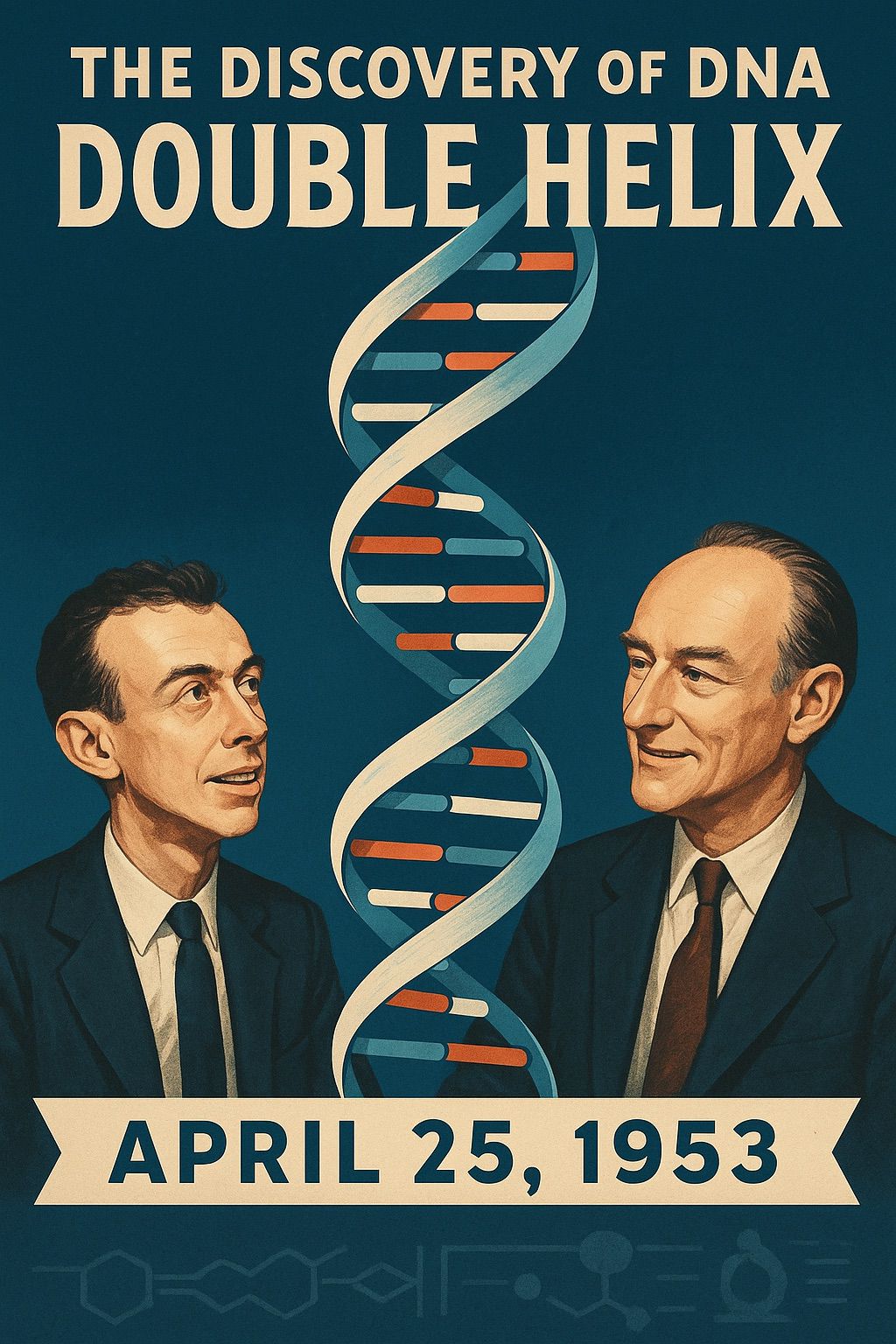
On April 25, 1953, James Watson and Francis Crick unveiled one of the most groundbreaking discoveries in the history of science—the double-helix structure of DNA. This revelation unlocked the secret of how genetic information is stored and passed from one generation to the next, forever changing the fields of biology, medicine, and genetics. Their work laid the foundation for modern molecular biology and has since led to advances in genetic engineering, forensic science, and disease research.

The journey to discovering DNA’s structure was a collaborative effort, building on the work of scientists before them. In particular, Rosalind Franklin’s X-ray diffraction images were crucial in revealing the helical nature of DNA. Using her data—without her direct permission—Watson and Crick pieced together the now-famous double-helix model. Their discovery explained how DNA replicates and carries genetic instructions, solving one of biology’s greatest mysteries. However, for decades, Franklin’s contributions were largely overlooked, sparking debates about scientific recognition and ethics.

The impact of their discovery was immediate and profound. Understanding DNA’s structure paved the way for decoding the human genome, cloning, gene therapy, and countless medical breakthroughs. Today, DNA technology is used in everything from diagnosing genetic disorders to solving crimes and tracing ancestry. The study of genetics continues to evolve, offering new possibilities in personalized medicine, agriculture, and even space exploration.

Watson and Crick’s discovery was more than just a scientific milestone—it was a turning point in human understanding of life itself. As research in genetics advances, the double helix remains an enduring symbol of scientific curiosity and innovation. The structure of DNA may have been discovered in a single moment, but its impact will continue shaping the future of science for generations to come.

Related Posts

The Armenian Genocide: A Dark Chapter in History

Elias Rowen

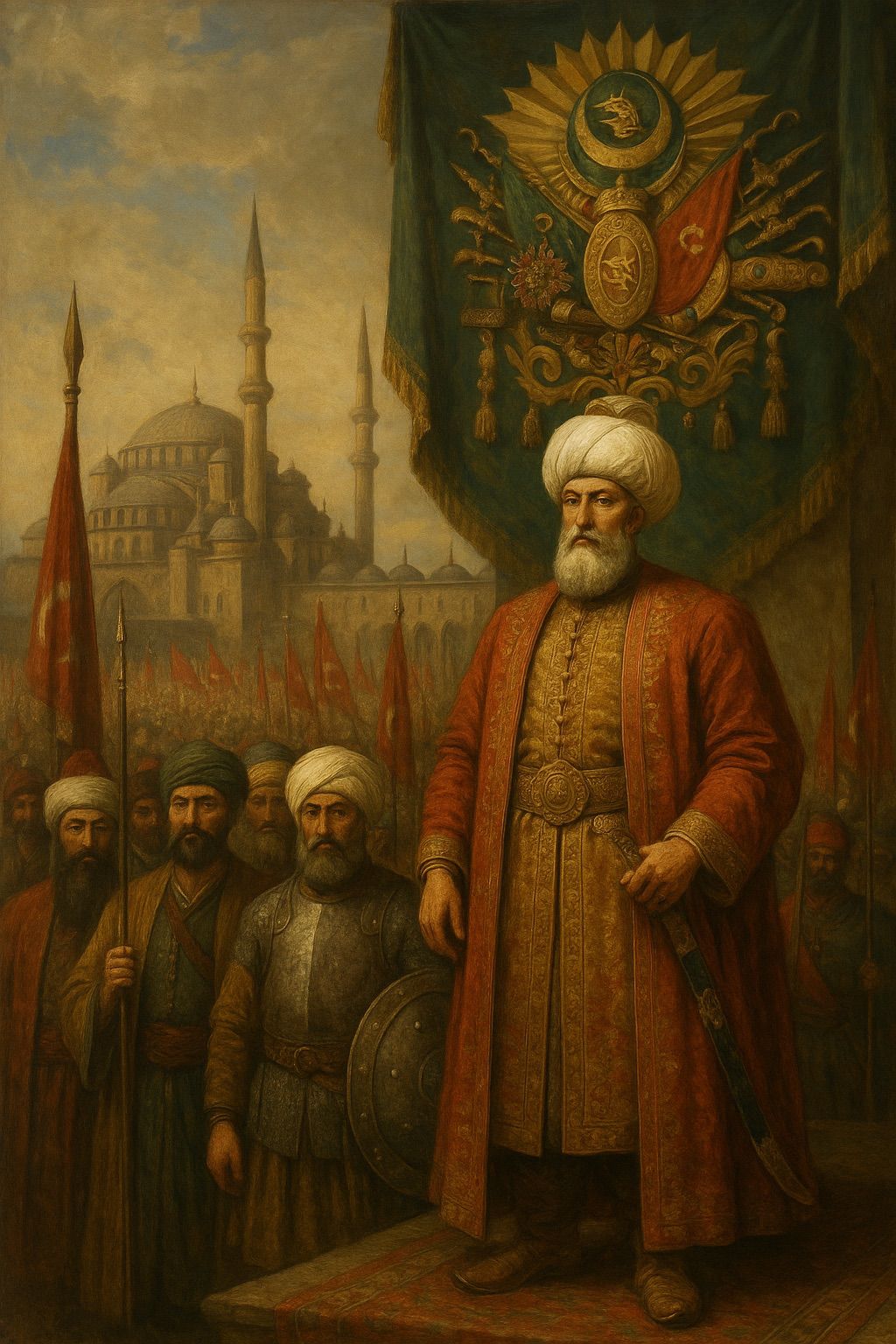
In 1915, amid the chaos of World War I, the Ottoman Empire began a brutal campaign against its Armenian population—an event that would later be recognized as one of the first modern genocides. Over the course of several years, an estimated 1.5 million Armenians were systematically killed through mass executions, forced death marches, and starvation. The Armenian Genocide was not merely a byproduct of war but a calculated effort to erase an entire people. Despite overwhelming historical evidence, the tragedy remains a subject of political controversy and denial, making remembrance and recognition more crucial than ever.

The persecution of Armenians had been building for decades, but on April 24, 1915, the genocide officially began when hundreds of Armenian intellectuals and community leaders were arrested and executed in Constantinople (modern-day Istanbul). This marked the start of widespread deportations and massacres, as Armenians were driven from their homes and sent on grueling marches across the Syrian desert. Many perished from exhaustion, starvation, or outright murder at the hands of Ottoman forces and paramilitary groups. Women and children were often subjected to unspeakable atrocities, further deepening the horror of this dark period.

While the Ottoman government justified its actions as a response to potential Armenian uprisings, the scale and intent of the violence revealed a deliberate attempt at extermination. Survivors who managed to escape fled to countries around the world, forming a vast Armenian diaspora that continues to honor the memory of those lost. Despite the undeniable evidence—including eyewitness accounts, diplomatic reports, and photographic documentation—some governments and political groups have resisted labeling the events as “genocide,” fearing diplomatic fallout with Turkey, the successor state of the Ottoman Empire.

Recognizing the Armenian Genocide is not just about acknowledging history—it’s about ensuring that such atrocities are never repeated. The world has witnessed other genocides in the 20th and 21st centuries, proving that the lessons of the past have not always been heeded. By remembering and educating future generations, we reaffirm our commitment to justice and human rights. The Armenian Genocide remains a painful reminder of what can happen when hatred and intolerance go unchecked, and it calls upon all of us to stand against denial and indifference.

Related Posts

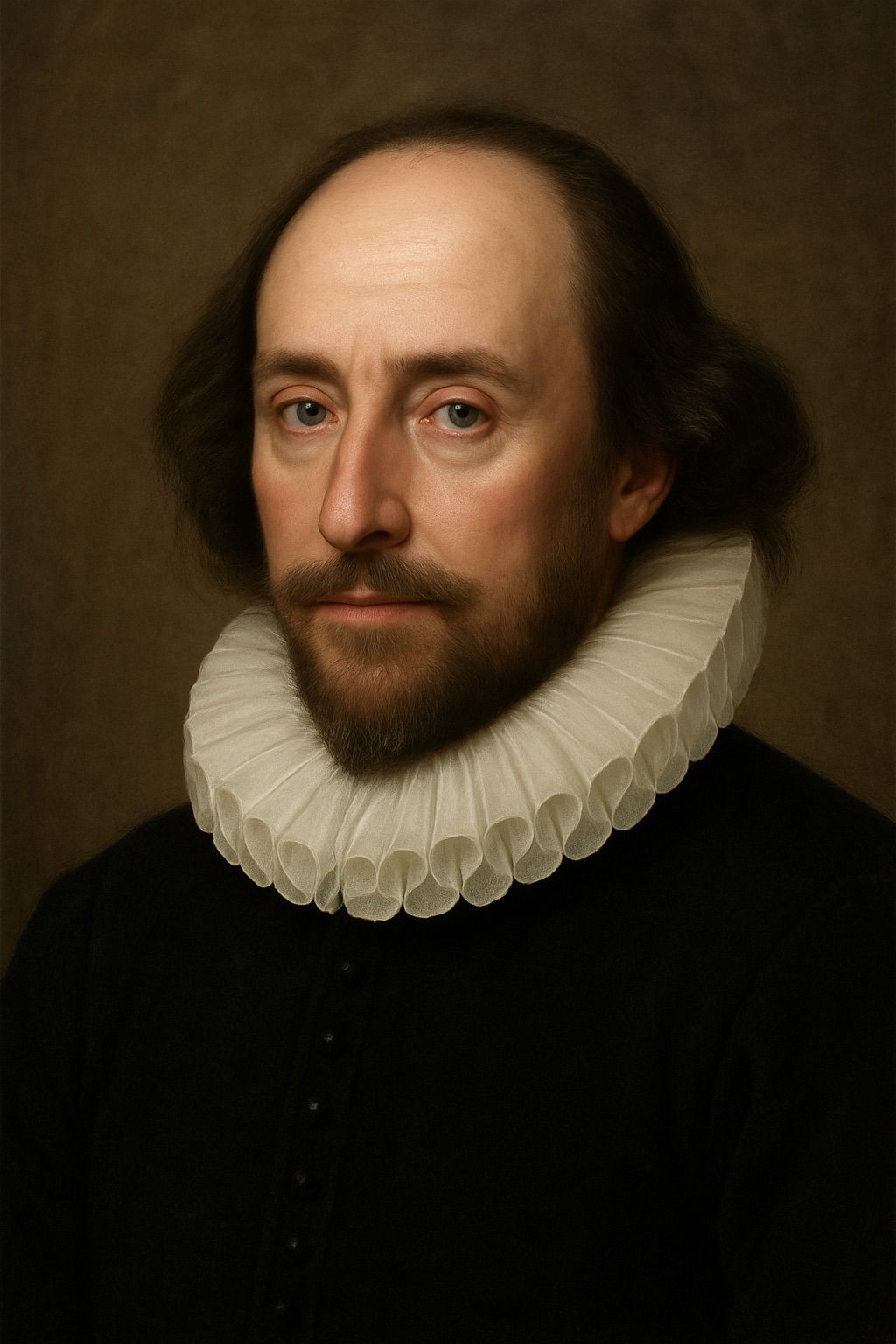
William Shakespeare: The Bard’s Enduring Legacy

Elias Rowen

On April 23, 1616, the world lost one of its greatest literary figures—William Shakespeare. Though centuries have passed since his death, his influence on literature, theater, and the English language remains unmatched. From timeless tragedies like Hamlet and Macbeth to enchanting comedies like A Midsummer Night’s Dream, Shakespeare’s works continue to be studied, performed, and cherished worldwide. His ability to capture the complexities of human nature, love, ambition, and fate ensures that his words remain as relevant today as they were in the Elizabethan era.

Born in Stratford-upon-Avon in 1564, Shakespeare’s journey from a modest upbringing to becoming England’s most celebrated playwright is remarkable. Writing during the golden age of English drama, he revolutionized storytelling with his mastery of poetic language, deep character development, and intricate plots. His works introduced new words and phrases into the English lexicon—many of which we still use today, such as “wild-goose chase,” “break the ice,” and “heart of gold.” Beyond his linguistic contributions, Shakespeare’s plays explored universal themes that continue to resonate across cultures and generations.

By the time of his death, Shakespeare had written 39 plays, 154 sonnets, and two long narrative poems, leaving behind a body of work that would define literature for centuries to come. His influence extended far beyond the stage, shaping how we understand drama, storytelling, and even human psychology. Today, his plays are performed in countless languages, adapted into films, and referenced in popular culture, proving that his genius knows no boundaries.

Even in death, Shakespeare’s legacy remains immortal. His works serve as a bridge between the past and present, reminding us of the power of words to inspire, challenge, and move us. Every time an actor steps onto the stage to recite To be or not to be, every time a student reads Romeo and Juliet, and every time a writer finds inspiration in his verses, Shakespeare lives on. The Bard may have left the world over 400 years ago, but his influence is eternal.

Related Posts