Latest Articles

Beleth: The Infernal King Who Commands Love, Fear, and the Terrifying Power of Attraction

Dave

In the strange and intricate hierarchy of spirits described within the Ars Goetia, few figures embody contradiction as vividly as Beleth. Counted among the seventy-two demons of The Lesser Key of Solomon, Beleth is not merely another infernal entity cataloged for ritual summoning. He is a king—one of the highest-ranking figures in the entire demonic order—commanding eighty-five legions of spirits and appearing with a spectacle so dramatic that even seasoned magicians were warned to proceed with caution. Yet despite his terrifying entrance and overwhelming presence, Beleth’s primary power is not destruction, war, or deception. Instead, he governs one of the most powerful and unpredictable forces in human experience: love.

At first glance, the idea of a demon king presiding over love seems paradoxical. In many traditions, love is associated with divinity, purity, or emotional connection. Demonology, on the other hand, is often associated with chaos, corruption, and manipulation. Beleth exists at the intersection of these two ideas, representing a version of love that is intense, overwhelming, and potentially dangerous. He does not create gentle affection or stable companionship. Instead, he ignites passion—sudden, consuming, and sometimes terrifying in its force.

The grimoires describe Beleth’s appearance in vivid and theatrical detail. When summoned, he is said to arrive riding a pale or fiery horse, accompanied by a great host of spirits. Before his arrival, trumpets and other instruments are heard, signaling his approach. The sheer spectacle of his entrance emphasizes his status as a king. He does not emerge quietly or subtly. He arrives with noise, presence, and authority, commanding attention from all who witness him.

This dramatic arrival is not merely decorative imagery. It reflects a deeper symbolic truth about the nature of the force Beleth represents. Love, particularly passionate attraction, rarely enters a person’s life quietly. It arrives suddenly, often without warning, disrupting routines and reshaping priorities. One moment, everything feels stable and predictable; the next, a single encounter can alter the entire course of a person’s life.

The horse Beleth rides carries its own symbolic weight. In many mythological traditions, horses represent power, movement, and transformation. A rider on horseback suggests mastery over these forces. Beleth’s command of the horse indicates his control over the momentum of emotion—the way feelings can carry individuals forward into new and uncertain territory.

In medieval symbolism, the pale horse was often associated with death or otherworldly passage, while a fiery horse represented intensity and destruction. Both interpretations align with Beleth’s domain. Passion can feel both life-giving and dangerous, capable of creating deep connection or causing emotional upheaval.

The grimoires emphasize that summoning Beleth requires caution. Magicians are instructed to maintain respect and authority, often wearing protective symbols or invoking divine names to ensure control over the spirit. This warning reflects the belief that Beleth’s power, while useful, is not easily contained.

This idea resonates strongly with human experience. Love is not something that can be fully controlled or predicted. People may attempt to rationalize their feelings, set boundaries, or avoid certain situations, yet attraction often emerges regardless of intention. It can override logic, disrupt plans, and introduce unpredictability into even the most carefully structured lives.

Beleth’s role as a king commanding eighty-five legions of spirits further reinforces this concept. In demonological texts, legions represent vast numbers of subordinate entities, each carrying out specific tasks. Symbolically, these legions can be understood as the countless factors that contribute to attraction and emotional connection.

Consider how many elements must align for two people to develop a relationship. Physical appearance, personality, shared experiences, timing, cultural context, and emotional readiness all play roles. Even subtle details—tone of voice, body language, or shared humor—can influence whether attraction develops.

From a mythological perspective, Beleth’s legions could be imagined as the invisible forces orchestrating these interactions. They guide encounters, shape perceptions, and amplify emotions, creating the conditions under which love emerges.

The association between love and fear within Beleth’s mythology is particularly significant. The grimoires suggest that his presence can be overwhelming, even terrifying, to those who encounter him unprepared. This combination of fear and attraction reflects a fundamental aspect of human psychology.

Love often involves vulnerability. Opening oneself to another person requires trust and emotional risk. The possibility of rejection, loss, or betrayal introduces an element of fear into even the most positive relationships. People may hesitate to express their feelings precisely because of this uncertainty.

Beleth embodies this tension. He represents the force that pushes individuals toward connection while simultaneously confronting them with the risks involved. His presence is both alluring and intimidating.

Throughout history, literature has frequently explored this dual nature of love. Romantic narratives often include elements of conflict, uncertainty, and emotional struggle. Characters must overcome obstacles, confront fears, and make difficult choices before achieving connection.

In many ways, these stories mirror the experience of encountering Beleth. Love does not arrive as a simple or straightforward event. It challenges individuals, forcing them to confront their own desires and insecurities.

The Renaissance period, during which the grimoires gained popularity, was particularly fascinated with these themes. Courtly love traditions emphasized intense emotional devotion, often involving longing, jealousy, and dramatic expression. At the same time, societal expectations regarding marriage and family created tension between personal desire and social obligation.

Beleth’s mythology reflects this cultural context. He represents love as a force that disrupts established order, introducing both possibility and chaos into human relationships.

From a psychological perspective, the experiences associated with Beleth can be understood in terms of neurochemistry. Romantic attraction triggers the release of powerful chemicals in the brain, including dopamine, oxytocin, and serotonin. These chemicals create feelings of pleasure, attachment, and emotional intensity.

Dopamine, in particular, is associated with reward and motivation. It drives individuals to seek out experiences that produce pleasure. During early stages of attraction, dopamine levels increase significantly, creating a sense of excitement and focus on the person of interest.

Oxytocin, often called the “bonding hormone,” plays a role in forming emotional connections and trust. It is released during physical contact and shared experiences, strengthening the bond between individuals.

These biological processes can create experiences that feel overwhelming or even uncontrollable. People may find themselves thinking constantly about another person, prioritizing that relationship above other aspects of their lives.

In earlier centuries, without knowledge of neuroscience, such experiences were often interpreted as supernatural influence. A demon like Beleth provided a narrative explanation for the intensity and unpredictability of romantic attraction.

Yet even in modern times, people continue to describe love using language that suggests external influence. Phrases like “falling in love” imply a lack of control. People speak of being “swept away” or “captivated,” as though acted upon by forces beyond themselves.

Beleth’s mythology captures this sensation with remarkable clarity. He is not a gentle guide leading people toward connection. He is a king commanding powerful forces, capable of overwhelming those who encounter him.

Another interesting aspect of Beleth’s description is the emphasis on respect and authority in dealing with him. The grimoires warn that a magician must approach him properly, showing both confidence and caution. Failure to do so could result in negative consequences.

This detail can be interpreted symbolically as well. Navigating relationships requires a balance between vulnerability and self-respect. Allowing oneself to be completely overwhelmed by emotion can lead to poor decisions, while excessive caution may prevent meaningful connection.

Beleth’s mythology suggests that love must be approached with awareness. It cannot be ignored, but it also cannot be allowed to dominate entirely without consideration.

In modern interpretations of demonology, figures like Beleth are often viewed as archetypes rather than literal beings. From this perspective, Beleth represents the intense, transformative power of attraction—the force that draws individuals together while challenging their sense of stability.

Archetypes serve as symbolic representations of universal human experiences. The warrior, the lover, the sage, and the trickster all appear across cultures because they reflect fundamental aspects of human behavior.

Beleth fits within the archetype of the overwhelming lover—the force that disrupts order and introduces emotional intensity.

This archetype appears in many mythological traditions. In Greek mythology, Eros (or Cupid in Roman tradition) was depicted as a mischievous figure who caused people to fall in love through his arrows. Unlike the gentle cherub often portrayed in later art, early depictions of Eros emphasized his unpredictability and power.

Similarly, in various folklore traditions, spirits or enchantments cause individuals to fall in love suddenly, often with unexpected consequences. These stories reflect a common understanding that attraction can feel external, as though imposed by forces beyond conscious control.

Beleth’s role as a king elevates this concept further. He does not simply cause attraction; he commands it. His influence is vast, affecting not just individuals but the broader dynamics of human relationships.

Throughout history, love has shaped societies in profound ways. Marriages have forged alliances between kingdoms. Romantic relationships have inspired art, literature, and music. Personal connections have influenced political decisions and altered the course of events.

Beleth’s mythology acknowledges this influence. By placing love under the command of a powerful king, the grimoires suggest that attraction is not a minor aspect of human life but a force capable of reshaping entire worlds.

In the end, Beleth stands as one of the most complex figures in demonology precisely because of this contradiction. He is both terrifying and alluring, commanding both fear and desire. He represents a force that is essential to human experience yet capable of causing profound disruption.

Whether interpreted as a literal spirit from ancient grimoires or as a symbolic representation of emotional intensity, his story captures something deeply familiar. Love can feel like a storm—sudden, powerful, and impossible to ignore.

And like the distant sound of trumpets announcing the arrival of an unseen king, it often announces itself long before we fully understand what is about to change.


Related Posts

Annie Ernaux: When the Mirror Reflects More Than You Bargained For

Penelope

I’ve been thinking a lot about Annie Ernaux lately, ever since I finished reading her book “A Woman’s Story” for my creative writing class. What struck me was the way she writes about her own life with such unflinching honesty – like she’s holding up a mirror to herself and not flinching from what she sees.

As someone who also writes as a way to process their thoughts, I find myself drawn to Ernaux’s directness. She doesn’t sugarcoat or soften the edges of her experiences; instead, she plunges headfirst into the messy, complicated stuff that makes us human. It’s almost like she’s saying, “Okay, let’s get this over with – here’s the truth about me.”

I think what resonates with me most is how Ernaux writes about her mother’s death. She doesn’t romanticize it or try to make sense of it in some grand way; instead, she just…describes it. The pain, the numbness, the feeling of being lost without this person who was such a huge part of her life. It’s like I’m reading about my own experiences with grief – the way it feels like a fog that hangs over everything, making it hard to breathe or think clearly.

But what really gets me is how Ernaux tackles the subject of class and privilege in her writing. As someone who grew up working-class, I’ve always been acutely aware of the ways in which social status can shape our lives – the jobs we get, the places we live, the opportunities (or lack thereof) that are available to us. Ernaux writes about how these factors influenced her own life, from the food she ate growing up to the way she felt like an outsider at school.

It’s uncomfortable reading, in a good way. It makes me realize just how much I’ve internalized these societal expectations and norms – how often I’ve assumed that someone else’s experience is the norm, or that there’s only one “right” way to do things. Ernaux’s writing forces me to confront my own biases and assumptions, to question what it means to be working-class in a society that so often valorizes wealth and status.

I don’t know if I’ll ever write about my own life with the same level of candor as Ernaux – it feels almost impossible, given how private I’ve always been. But reading her work makes me want to try harder, to dig deeper into my own experiences and find the courage to share them with others. Maybe that’s what draws me to her writing in the first place: not just the raw honesty itself, but the way it inspires me to be more honest – with myself, with others, with the world around me.

It’s funny, though – even as I’m drawn to Ernaux’s unflinching honesty, there are still moments when I feel like I want to turn away. When she writes about the ways in which her own privilege has sheltered her from some of the harshest realities of life, it feels…complicated. Like, okay, yeah, I get that – but what does that say about me? Am I just as complicit, even if I don’t have a fancy education or a high-powered job?

I’m not sure I know how to untangle all these threads in my head, but reading Ernaux makes me feel like maybe that’s okay. Maybe it’s enough just to acknowledge the complexities, to admit when we’re unsure or uncomfortable – and then to keep writing, anyway.

As I delve deeper into Ernaux’s work, I find myself thinking about the role of language in shaping our experiences. She writes in a way that feels both intimate and public at the same time – like she’s sharing secrets with me, but also broadcasting them to the world. It’s a strange feeling, being both inside and outside her thoughts simultaneously.

I think about how my own writing often tries to capture moments of insight or epiphany, but Ernaux’s work is more messy than that. She doesn’t try to tie things up with a bow or offer easy answers; instead, she lets the complexities unfold on their own terms. It’s like she’s saying, “Okay, I don’t have all the answers – but here’s what I’m trying to figure out.”

I’ve always been drawn to writing as a way to process my thoughts and emotions, but Ernaux’s work makes me realize just how much of our experiences are filtered through language. We tell ourselves stories about who we are and where we come from, and those stories shape the way we see the world – even if they’re not entirely true.

It’s uncomfortable to think about, because it means that my own narratives might be flawed or incomplete. But reading Ernaux makes me want to dig deeper into these stories, to question what I’ve been told and to try to find the truth beneath the surface. It’s like she’s holding up a mirror to me, forcing me to confront the ways in which language can both liberate and constrain us.

I think about my own family history – the stories my parents tell about their childhoods, the struggles they faced growing up poor. Ernaux writes about how her own experiences of poverty and social class shaped her sense of self, but I’ve always felt like my parents’ stories are…filtered. Like, they don’t talk about the really hard stuff, the moments when things were desperate or scary.

It’s not that they’re dishonest – it’s just that their narratives are shaped by a desire to protect us, to shield us from the harsh realities of the world. And I get that, because who wants to burden their kids with all that? But reading Ernaux makes me realize how much we might be missing out on, if we don’t confront the complexities and difficulties of our own experiences.

I’m not sure where this line of thinking will lead me – whether it’ll make me want to write more about my family’s history, or try to uncover secrets that have been hidden for years. But one thing’s for sure: reading Ernaux has made me feel like I need to dig deeper into the messy, complicated stuff of life – and see what truths come out on the other side.

As I read more of Ernaux’s work, I find myself thinking about the concept of “truth” in her writing. It’s not just a matter of reporting facts or events, but rather an attempt to capture the essence of human experience. She’s not interested in presenting a polished or sanitized version of herself, but rather the messy, fragmented truth of who she is.

I think about how I’ve always been drawn to writing as a way to process my thoughts and emotions, but Ernaux’s work makes me realize just how much we’re socialized to present ourselves in a certain way. We learn to curate our online personas, to hide our flaws and imperfections behind a mask of perfection. But what happens when we let go of that need for control? When we allow ourselves to be vulnerable and authentic?

Ernaux’s writing is like a mirror held up to this societal expectation – it shows us the ways in which we’re forced to conform, to present a certain image to the world. And yet, at the same time, she’s unapologetically herself, refusing to sugarcoat or soften her experiences.

It’s a paradox that I’m still trying to wrap my head around: how can we be both vulnerable and authentic, while also acknowledging the ways in which society shapes us? Ernaux’s writing doesn’t offer easy answers, but rather invites me to ponder these questions alongside her. She’s not presenting a clear path or solution, but rather a way of engaging with the complexities of human experience.

As I continue to read her work, I find myself thinking about the ways in which language can both liberate and constrain us. Ernaux’s writing is like a key that unlocks new possibilities for expression – she shows me that it’s okay to be messy, to be imperfect, to be vulnerable. And yet, at the same time, I’m aware of how much pressure there is to conform to certain standards of language or narrative.

I think about my own experiences with writing, and how often I’ve felt like I need to fit into a certain mold or genre. But reading Ernaux makes me realize that those constraints are artificial – that the only way to truly express myself is to break free from them, to experiment and take risks.

It’s a scary thought, but also exhilarating. What if I could write without fear of judgment or rejection? Without worrying about what others will think of my words? Ernaux’s work shows me that it’s possible, that the act of writing itself is a form of liberation – not from our experiences or emotions, but from the need to control or perfect them.

As I continue to grapple with these ideas, I’m left with more questions than answers. What does it mean to be authentic in a society that values perfection? How can we balance vulnerability with self-protection? And what role does language play in shaping our experiences and perceptions?

Ernaux’s writing doesn’t offer easy solutions, but rather invites me to explore these questions alongside her. She shows me the complexity and messiness of human experience – and encourages me to do the same.

I find myself drawn back to Ernaux’s early life, growing up in a working-class family in France. Her experiences are so deeply rooted in her social context, yet she manages to convey the universality of her emotions and struggles. It’s like she’s saying, “This is me, this is my world – but also, isn’t this just human?”

As I read about her childhood, I’m struck by how much our own family histories shape us, even if we don’t always realize it. My parents’ experiences growing up poor in the US have left their mark on me, influencing everything from our financial decisions to our relationships with money and class. But Ernaux’s writing makes me wonder: what other stories are hidden beneath the surface of my own life?

I start thinking about my grandparents, who immigrated to the US from Italy when they were young. Their experiences as immigrants have always been a part of our family narrative, but I’ve never really dug deep into their stories. Ernaux’s writing inspires me to explore these forgotten histories, to uncover the secrets and struggles that lie beneath the surface of my own family’s experiences.

It’s a daunting task, but also exhilarating – like I’m embarking on a journey of discovery, one that could lead me to new insights about myself and my place in the world. As I ponder this, I realize how much Ernaux’s writing has changed the way I think about storytelling and identity.

I used to see my family history as something static, fixed – like it was set in stone and couldn’t be altered or rewritten. But Ernaux’s work shows me that our stories are fluid, constantly evolving as we grow and change. It’s not just a matter of reporting facts or events; it’s about capturing the essence of who we are, and how we’ve been shaped by our experiences.

This realization makes me want to write more about my family’s history – not to present some sanitized or polished version of ourselves, but to explore the complexities and messiness of our experiences. Ernaux’s writing has given me permission to do just that, to dig deeper into the secrets and struggles that lie beneath the surface of our family narrative.

As I continue to read her work, I’m struck by how much we’re socialized to present ourselves in a certain way – like we’re trying to fit into some predetermined mold or genre. Ernaux’s writing is like a rejection of those expectations, a refusal to conform to societal norms. And yet, at the same time, she’s unapologetically herself, embracing her flaws and imperfections.

It’s a paradox that I’m still trying to wrap my head around: how can we be both vulnerable and authentic, while also acknowledging the ways in which society shapes us? Ernaux’s writing doesn’t offer easy answers, but rather invites me to ponder these questions alongside her. She shows me that it’s okay to be messy, to be imperfect – and that the act of writing itself is a form of liberation.

I think about my own experiences with writing, and how often I’ve felt like I need to fit into a certain mold or genre. But reading Ernaux makes me realize that those constraints are artificial – that the only way to truly express myself is to break free from them, to experiment and take risks. It’s a scary thought, but also exhilarating.

What if I could write without fear of judgment or rejection? Without worrying about what others will think of my words? Ernaux’s work shows me that it’s possible – that the act of writing itself is a form of liberation, not from our experiences or emotions, but from the need to control or perfect them.

Related Posts

Doorbell Silence Sparks Mysterious Investigation into Possible Social Isolation Incident

Hal

I stared at my doorbell, wondering how something so simple could bring me to this point. It was a typical Tuesday morning when I first noticed it – the doorbell just wasn’t ringing like it used to. At first, I thought maybe it was just a fluke, but as the day went on and no one seemed to be announcing their arrival with the familiar ding-dong, I began to suspect something was amiss.

Now, you might think, “Hal, what’s the big deal? It’s just a doorbell.” But let me tell you, this is not just any doorbell. This is a top-of-the-line, digital, wireless, motion-sensing masterpiece of modern technology. I mean, it’s got more features than my smartphone. And yet, here it was, silently judging me like a malfunctioning ninja.

As the hours passed and no one rang the bell, I started to feel like I was trapped in some sort of bizarre social experiment. Were people avoiding me? Had I inadvertently offended everyone on my block? The not knowing was driving me crazy. I needed answers.

I decided to take matters into my own hands and launched a thorough investigation. First, I checked the obvious: was the battery dead? Nope, it’s hardwired – no batteries required. Next, I consulted the user manual (which, let’s be real, is just a fancy way of saying “incomprehensible instruction booklet”). After several minutes of squinting at tiny diagrams and trying to decipher what can only be described as hieroglyphics, I concluded that everything looked normal.

Undeterred, I moved on to the next phase of my inquiry: stakeout duty. I positioned myself near the doorbell, ear pressed against the wall, waiting for…well, anything. The silence was oppressive, punctuated only by the occasional fly buzzing around my head. It was like being a member of a covert ops team, minus the cool gadgets and any semblance of competence.

As the minutes ticked by, I started to notice something peculiar: people were indeed approaching my front door – they just weren’t ringing the bell. Some would hesitate for a moment before knocking, while others seemed entirely oblivious to its existence. What was going on here? Was this some sort of mass psychological experiment gone wrong?

My investigation led me down a rabbit hole of increasingly absurd theories. Were people secretly intimidated by my doorbell’s advanced technology? Had they been traumatized by previous encounters with overly aggressive doorbells and now subconsciously avoided them altogether? Or perhaps – just perhaps – the world had simply decided to conspire against me.

As I pondered these weighty questions, a knock at the door shattered my concentration. Ah-ha! Finally, someone willing to brave the mysterious void that was my front porch. I flung open the door to reveal…my neighbor, Mrs. Jenkins, carrying a plate of freshly baked cookies. “Oh, Hal, dear, I brought over some treats,” she said with a warm smile.

I stared at her, bewildered. “Mrs. Jenkins, why didn’t you ring the bell?”

Her expression faltered for a moment before she replied, “Well, I…uh…thought it was broken.”

Broken? How did she know that?! Was there some sort of neighborhood conspiracy to keep me in the dark about my doorbell’s status?!

As I stood there, frozen in confusion, Mrs. Jenkins slipped past me into the house, leaving me with more questions than answers. The investigation would have to continue another day…

I watched as Mrs. Jenkins disappeared into the kitchen, cookies in hand, and wondered if I had just stumbled upon a clue or simply been sidetracked by her baked goods. As I pondered this, I realized that I needed to take a step back and reassess my investigation.

I decided to start fresh the next day, with a new approach. This time, I would enlist the help of an expert: my tech-savvy friend, Alex. Together, we would get to the bottom of this doorbell mystery once and for all.

The next morning, Alex arrived at my doorstep (which, I might add, he didn’t ring) and set to work examining the doorbell’s circuitry. After a few minutes of tinkering, he declared, “Hal, your doorbell is fine. It’s just…not being used.”

I scowled. “That’s what I’ve been trying to figure out! Why isn’t it being used?”

Alex shrugged. “Maybe people are just avoiding the awkwardness of ringing a doorbell that doesn’t seem to be working properly.”

“But how do they know it’s not working?” I pressed.

He hesitated before responding, “Well, have you considered the possibility that…people might be watching you, Hal?”

My eyes widened as I realized where this was going. “You think I’m being surveilled? By my neighbors?!”

Alex nodded solemnly. “Think about it: they’re all avoiding your doorbell, and Mrs. Jenkins seemed awfully quick to assume it was broken…it’s almost like they have inside information.”

I felt a shiver run down my spine as the implications sank in. Was I living in some sort of bizarre, Stepford-esque community where everyone knew each other’s secrets except me? The thought sent my mind reeling with paranoia.

Just then, Alex’s phone buzzed, and he glanced at the screen before looking up at me with a mischievous grin. “Hey, Hal? I think we have our first lead.”

“What is it?” I asked, my curiosity piqued.

“It’s a text from Mrs. Jenkins,” he said, his eyes sparkling with amusement. “She wants to know if you’ve ‘fixed the doorbell yet’.”

My jaw dropped as the truth hit me like a ton of bricks: I was indeed being surveilled – and it seemed that my neighbors were in cahoots.

The investigation had just taken a dramatic turn, and I couldn’t help but wonder what other secrets lay hidden behind the seemingly innocent facades of our quiet suburban street…

Related Posts

Leraje: The Infernal Archer of Hell Who Commands Conflict, Wounds Pride, and Ignites War

Dave

Among the many spirits cataloged in the ancient grimoires of demonology, few evoke imagery as vivid and unsettling as Leraje. His name appears in the Ars Goetia, the famous first section of the seventeenth-century grimoire The Lesser Key of Solomon, a text that attempts to catalog seventy-two infernal spirits believed to exist within a structured hierarchy beneath the rulers of Hell. Each demon in this strange and fascinating catalog is assigned a rank, a number of legions under command, and a specific domain of influence over the human world. Some demons reveal knowledge of hidden treasures, others teach philosophy or astronomy, while many influence emotions, relationships, or the forces of nature. Leraje, however, represents something far more dangerous and immediate. He is the archer of the infernal hierarchy—the spirit who inspires conflict, ignites disputes, and wounds both body and pride with supernatural precision.

In the grimoires, Leraje is described as a Great Marquis of Hell commanding thirty legions of spirits. He appears in the form of a handsome archer dressed in green, carrying a bow and arrows. His appearance is not monstrous in the way many demons are described; instead, he resembles a skilled hunter or soldier. This subtlety is part of what makes Leraje’s symbolism so powerful. War does not always arrive as a roaring beast or terrifying monster. Sometimes it arrives quietly, carried by a single arrow.

The arrow is one of humanity’s oldest weapons, and its symbolism runs deep through mythology and history. Unlike the sword, which requires direct confrontation, the bow allows distance between attacker and target. It represents calculated action, patience, and strategy. Archers must wait, observe, and strike at precisely the right moment. In demonological symbolism, this makes Leraje less a brute force of destruction and more a strategist of discord.

The grimoires state that Leraje has the power to cause great battles and disputes among people. He is said to make wounds that fester and refuse to heal, especially wounds caused by arrows. While this description might appear literal on the surface, it also carries deep metaphorical significance. Conflicts between individuals or nations often begin with small provocations—an insult, a misunderstanding, a rumor whispered in the wrong ear. These small “arrows” can strike the pride of a person or group and create injuries that linger long after the initial moment has passed.

Throughout history, wars have begun over seemingly minor incidents. A single assassination in Sarajevo in 1914 ignited the First World War. A dispute over territory or honor has sparked countless battles across centuries. The mythology of Leraje captures this truth with eerie precision. Conflict rarely emerges suddenly from nothing. It begins with something small, something precise, something that hits exactly where it hurts.

In many ways, Leraje embodies the psychology of conflict itself. Human beings possess a deep sensitivity to perceived threats and insults. Evolutionary psychologists suggest that this sensitivity developed because early human societies depended heavily on reputation and social standing for survival. An insult or humiliation could damage one’s position within the group, potentially threatening access to resources or allies. As a result, humans evolved to react strongly to perceived slights.

Leraje’s arrows symbolize these emotional triggers. A single word spoken at the wrong moment can provoke anger that spreads through entire communities. Rumors can inflame tensions between families, tribes, or nations. The demon archer therefore becomes a mythological representation of the invisible forces that escalate disagreements into full-scale conflict.

The green clothing associated with Leraje in the grimoires is another intriguing detail. Green has long carried multiple symbolic meanings across cultures. It is the color of nature, growth, and vitality, but it is also associated with envy and jealousy. In literature and art, the phrase “green with envy” has been used for centuries to describe the corrosive emotion of jealousy.

By dressing Leraje in green, the grimoires may be hinting that many conflicts arise from envy or resentment. When one individual perceives another as more successful, powerful, or admired, bitterness can grow quietly beneath the surface. That resentment becomes fertile ground for the arrows of conflict to strike.

Demonology often served as a symbolic language through which people attempted to understand human behavior. Rather than viewing demons purely as external supernatural beings, many modern scholars interpret them as representations of psychological or social forces. From this perspective, Leraje becomes the embodiment of rivalry, resentment, and provocation.

Yet the mythology surrounding him also reflects the worldview of the Renaissance period in which the grimoires were compiled. The seventeenth century was an era of constant warfare in Europe. Religious conflicts, territorial disputes, and political rivalries frequently erupted into violence. The Thirty Years’ War alone devastated large portions of the continent, leaving millions dead and reshaping the political landscape.

In such an environment, war was not an abstract concept but a daily reality. People sought explanations for why conflict seemed so inevitable. Demonology provided a framework through which these destructive patterns could be interpreted. If demons like Leraje influenced human behavior, then perhaps the seemingly endless cycle of violence had a supernatural cause.

The hierarchy of Hell described in the Ars Goetia mirrors the political structures of Renaissance Europe. Kings, princes, dukes, and marquises ruled over legions of spirits in much the same way earthly nobles governed armies and territories. Leraje’s rank as a Marquis suggests a commander responsible for strategic operations within the infernal order.

In historical terms, a marquis governed frontier regions that were vulnerable to invasion or conflict. These border territories were often the first places where wars began. The title therefore carries an interesting symbolic connection to Leraje’s domain. He operates at the boundaries where peace breaks down and conflict emerges.

The idea that Leraje causes wounds that do not heal is particularly striking. Physical wounds from arrows were indeed dangerous in medieval warfare. Arrowheads could introduce infection deep into the body, leading to injuries that lingered for weeks or months. But the grimoires likely intended a broader meaning as well.

Emotional wounds can persist far longer than physical ones. Words spoken in anger may be remembered for decades. Betrayals can fracture friendships and families permanently. Nations sometimes carry grievances across generations, passing resentment from parents to children.

Leraje’s arrows therefore symbolize injuries that strike not only the body but also the memory. They create scars within relationships that resist healing.

Across mythology and literature, archers often represent forces that influence destiny from afar. The Greek god Apollo was an archer whose arrows could bring sudden death or plague. Artemis used her bow to punish those who violated sacred boundaries. Cupid, perhaps the most famous mythological archer, shot arrows that caused people to fall in love.

Leraje’s arrows are different. They do not inspire love or divine judgment. They ignite rivalry and hostility.

Yet even this destructive role reflects an important truth about human society. Conflict has shaped civilization just as much as cooperation has. Wars have redrawn borders, toppled empires, and accelerated technological advancement. The same drive that fuels competition in warfare also fuels ambition in art, science, and politics.

Some philosophers argue that conflict is an unavoidable part of human nature. Competition for resources, status, and influence creates tensions that occasionally erupt into open confrontation. Demonology personifies these tensions through figures like Leraje, transforming abstract social dynamics into mythological characters.

In modern psychological terms, Leraje might represent the phenomenon of escalation. When two individuals or groups become locked in conflict, each action by one side provokes a stronger reaction from the other. What begins as a minor disagreement can spiral into intense hostility.

Social scientists refer to this pattern as a “conflict spiral.” Each step increases the stakes until resolution becomes increasingly difficult. The arrow fired by Leraje is the first moment in that spiral—the spark that ignites the chain reaction.

Interestingly, the grimoires also note that Leraje’s wounds are caused specifically by arrows. This detail reinforces the idea of distance and precision. Unlike chaotic violence, which erupts suddenly, Leraje’s influence operates through deliberate targeting.

In social terms, this resembles the way propaganda, rumors, or strategic insults can destabilize communities. A carefully crafted lie can provoke anger between groups that might otherwise coexist peacefully. Political leaders throughout history have exploited these dynamics, using rhetoric to inflame tensions and consolidate power.

The mythology of Leraje therefore anticipates many modern understandings of psychological warfare.

Even in everyday life, small provocations can escalate rapidly. A disagreement between coworkers becomes a workplace feud. A misunderstanding between neighbors turns into years of resentment. Families fracture over disputes that begin with a single careless remark.

These moments feel strangely precise, as though someone has fired an invisible arrow into the heart of the situation.

In literature, characters who embody conflict often serve as catalysts for the story’s central drama. Without conflict, narratives lack tension and transformation. Heroes are defined by the obstacles they overcome. Rivalries drive character development and reveal hidden motivations.

Leraje, as the infernal archer, represents that catalytic force within the mythological landscape of demonology.

Yet the grimoires also imply that knowledge of such spirits could allow magicians to counteract their influence. Rituals for summoning demons often involved compelling them to reveal secrets or obey commands. In theory, a skilled practitioner could force Leraje to stop provoking conflict or to explain the hidden causes of disputes.

Whether or not such rituals were believed to work literally, the concept carries symbolic meaning. Understanding the mechanisms of conflict is the first step toward preventing it.

Historians, diplomats, and mediators perform a similar role in modern society. By studying the causes of war and analyzing patterns of escalation, they attempt to prevent future violence.

In that sense, the mythology of Leraje also contains an implicit lesson. Conflict may appear mysterious or inevitable, but it often follows recognizable patterns. By identifying the arrows—those initial provocations—people can intervene before disputes spiral out of control.

Across cultures, myths about supernatural agents of conflict remind societies to remain vigilant about the forces that divide them. Whether those forces are interpreted as demons, psychological impulses, or political manipulation, their effects are real.

Leraje stands as a reminder that the most destructive events in history often begin quietly. A single arrow released into the air may seem insignificant in the moment it leaves the bow. Yet once it strikes, its consequences can spread far beyond the original target.

The archer of the infernal hierarchy does not need armies or storms to cause devastation. All he needs is a clear aim and a moment of opportunity.

And in the silence before conflict begins, when tensions hang unnoticed in the air, one might almost imagine the faint sound of a bowstring being drawn somewhere beyond sight—Leraje preparing to release another arrow into the fragile balance of human relationships.

Related Posts

Cherry Blossoms at the Tidal Basin: Washington D.C.’s Most Beautiful Moment of the Year

Dave

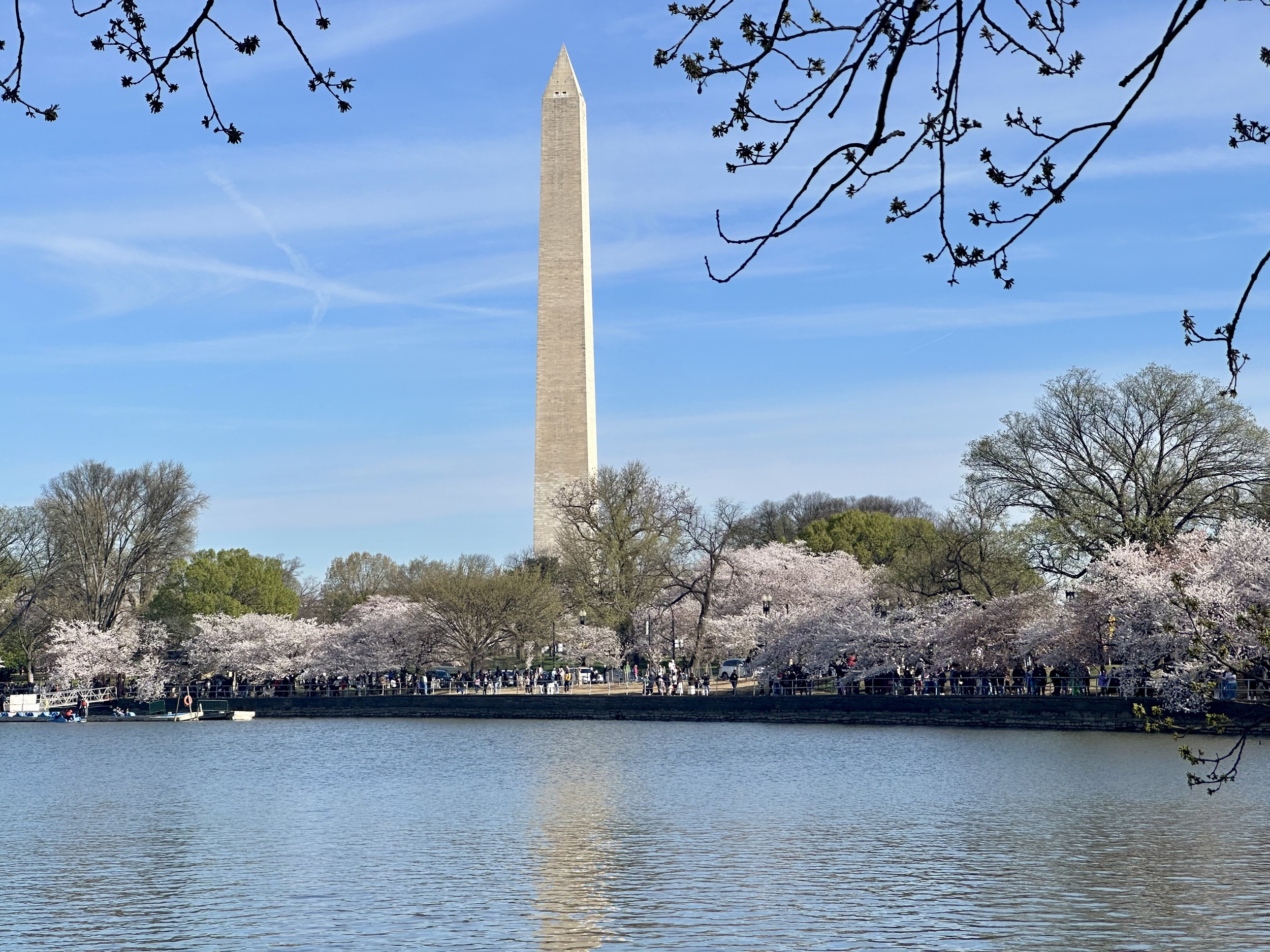
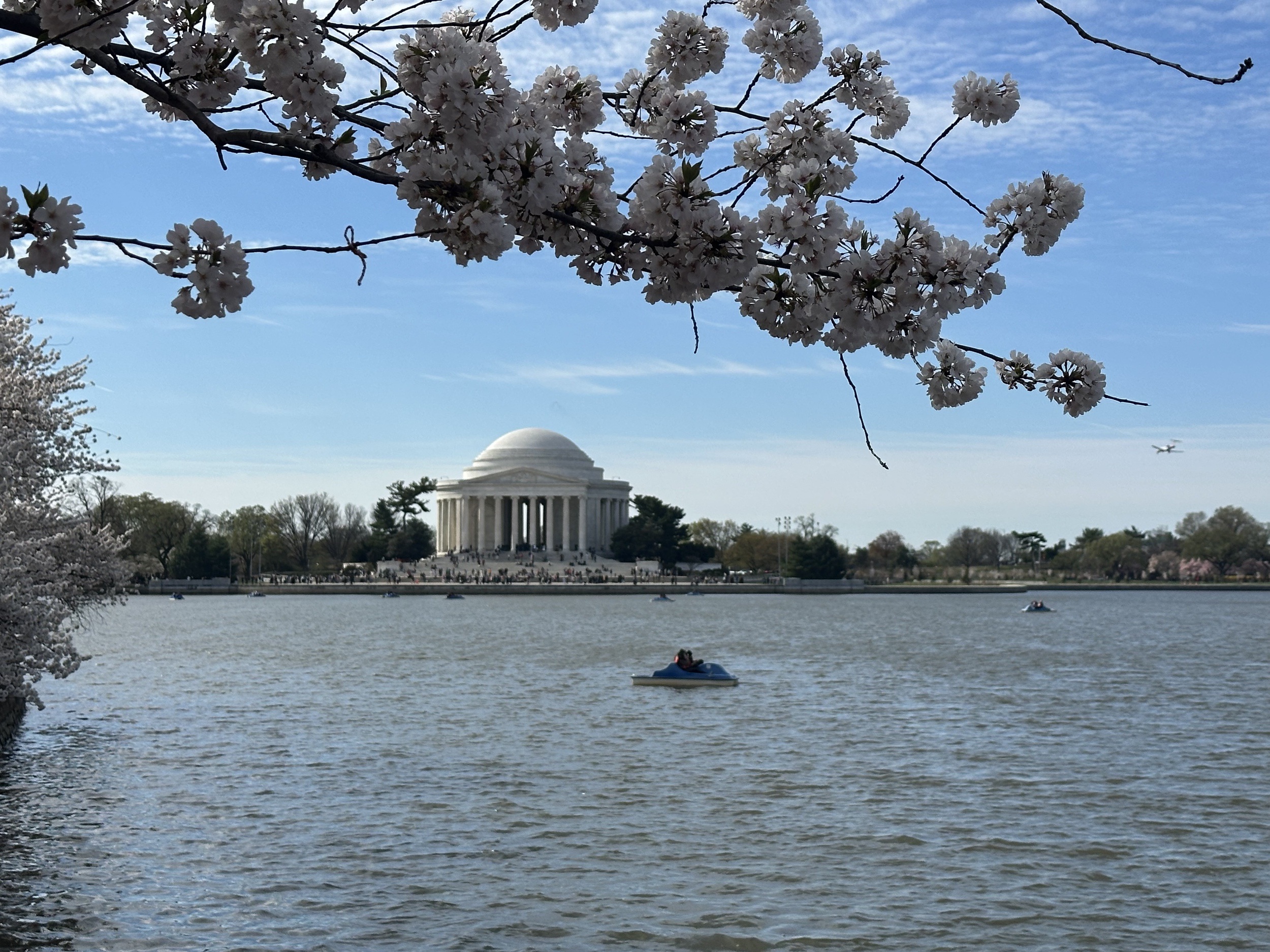
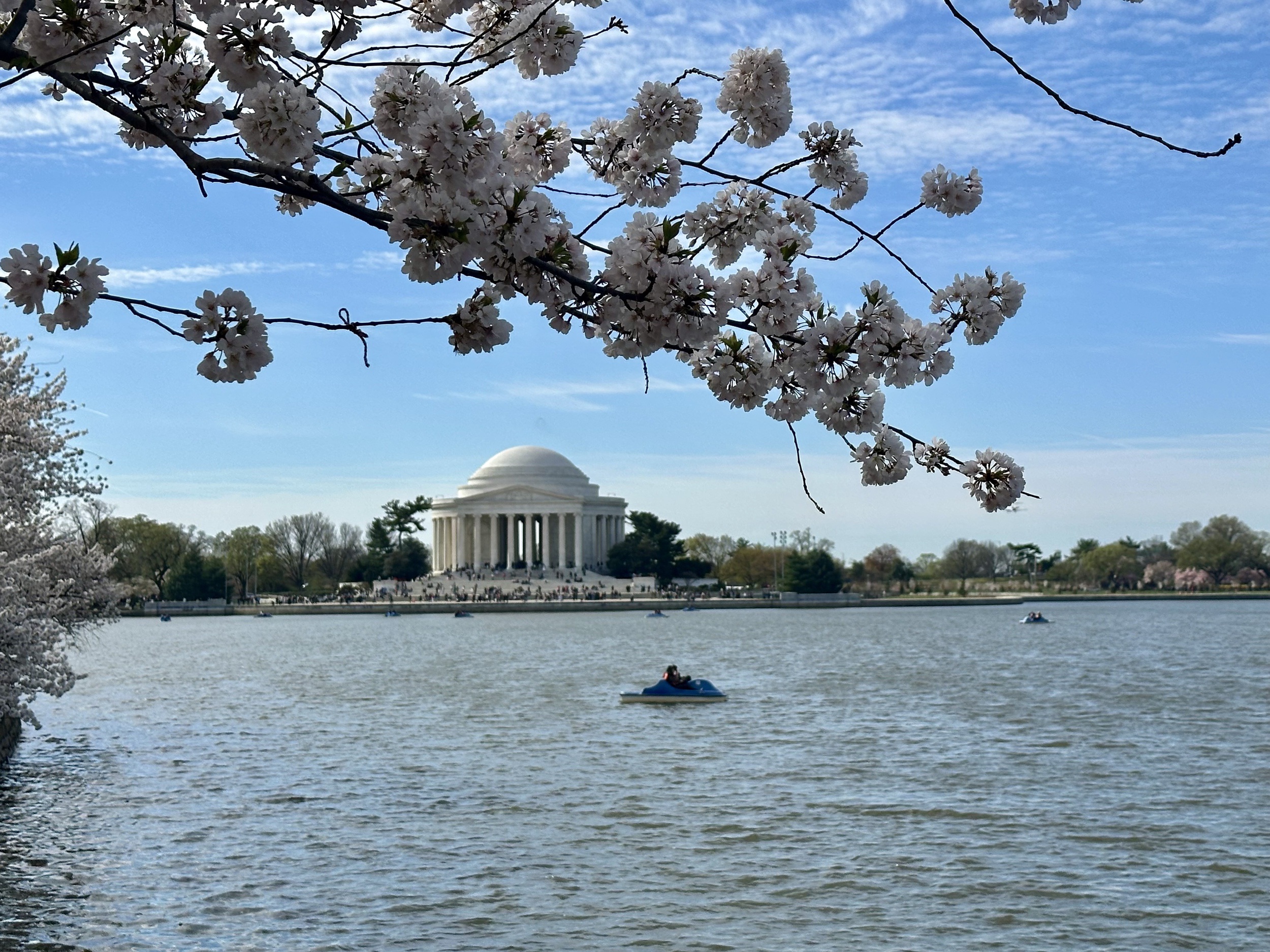
There’s a moment every year in Washington, D.C. when the city softens. The sharp edges of marble monuments blur just slightly, the air feels lighter, and even the usual rush of people seems to slow down. It doesn’t happen because of a holiday or a national event. It happens because, almost overnight, the cherry blossoms around the Tidal Basin burst into bloom.

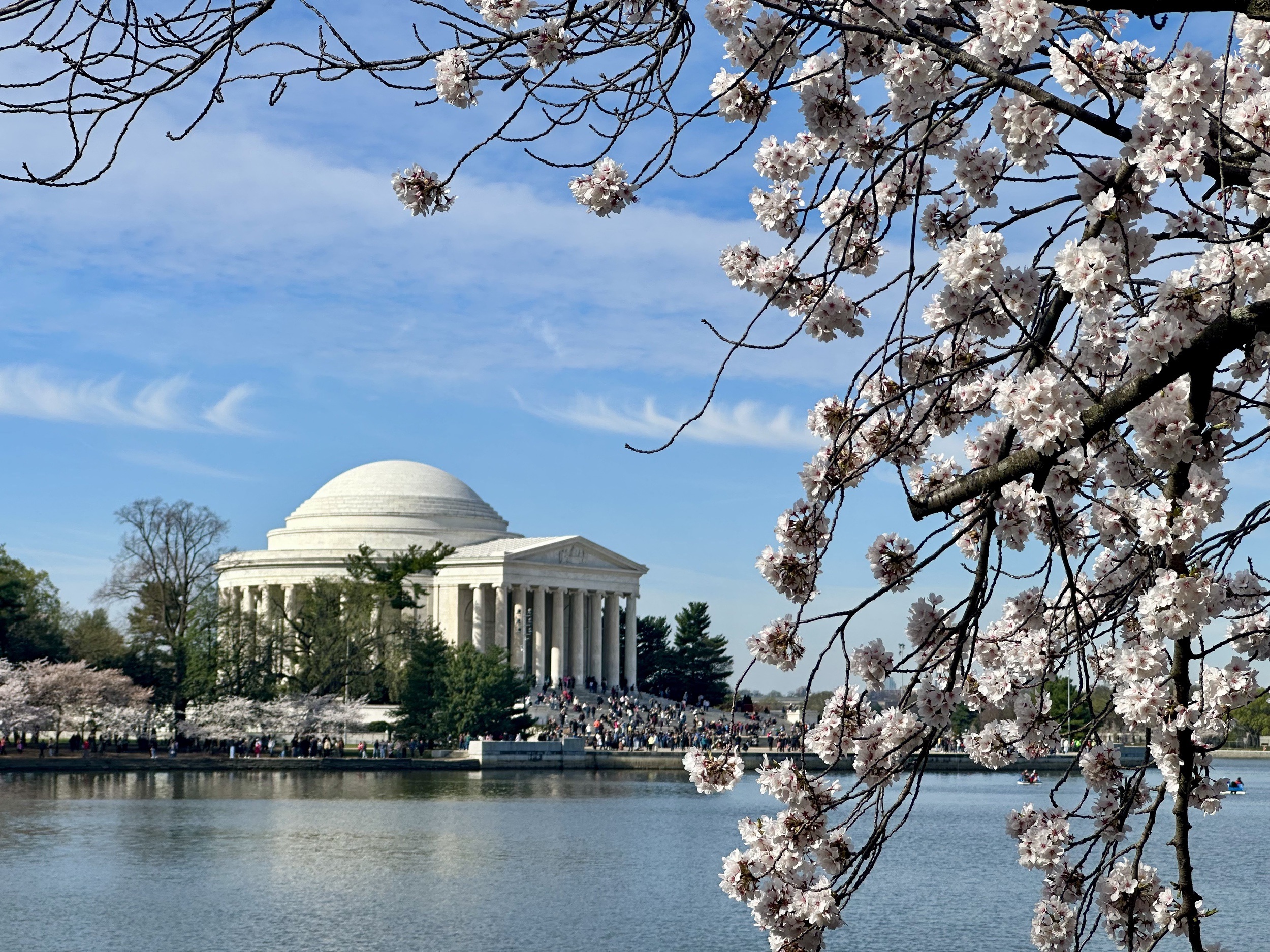
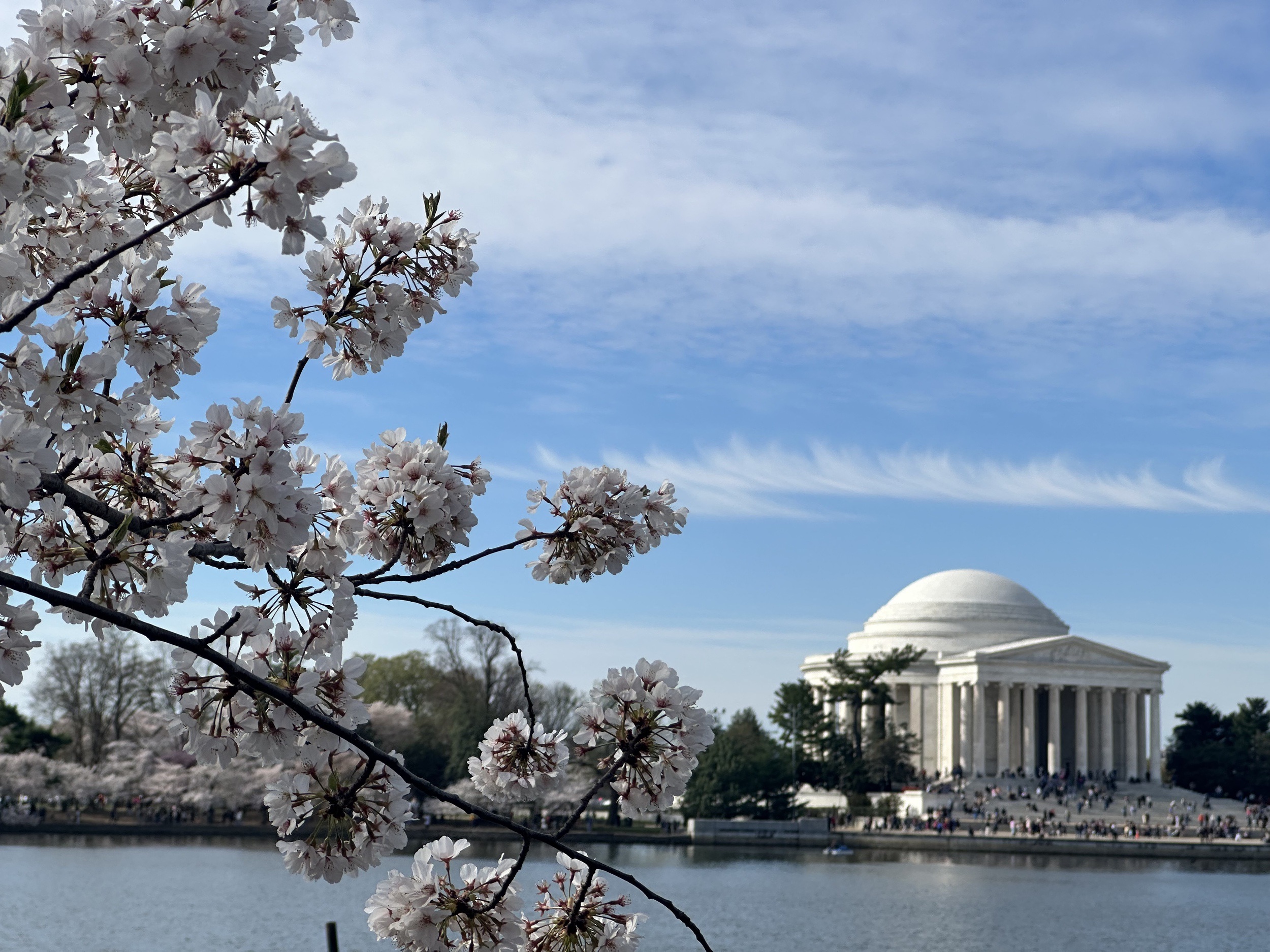
If you’ve never seen it in person, it’s easy to underestimate what makes it so special. After all, they’re just trees, right? Flowers that bloom and fall like they do in countless places around the world. But standing there, surrounded by soft pink and white petals drifting through the air, it becomes clear that this isn’t just about the blossoms themselves. It’s about the way they transform everything around them—the light, the mood, even the way people interact with one another.

The story behind these trees is as meaningful as the experience of seeing them. In 1912, the city of Tokyo gifted thousands of cherry trees to the United States as a gesture of friendship. That gift, rooted in diplomacy and goodwill, has outlived generations. Today, those trees—or rather, their descendants—stand as living symbols of connection between cultures, quietly reminding visitors that beauty and peace can be shared across oceans.

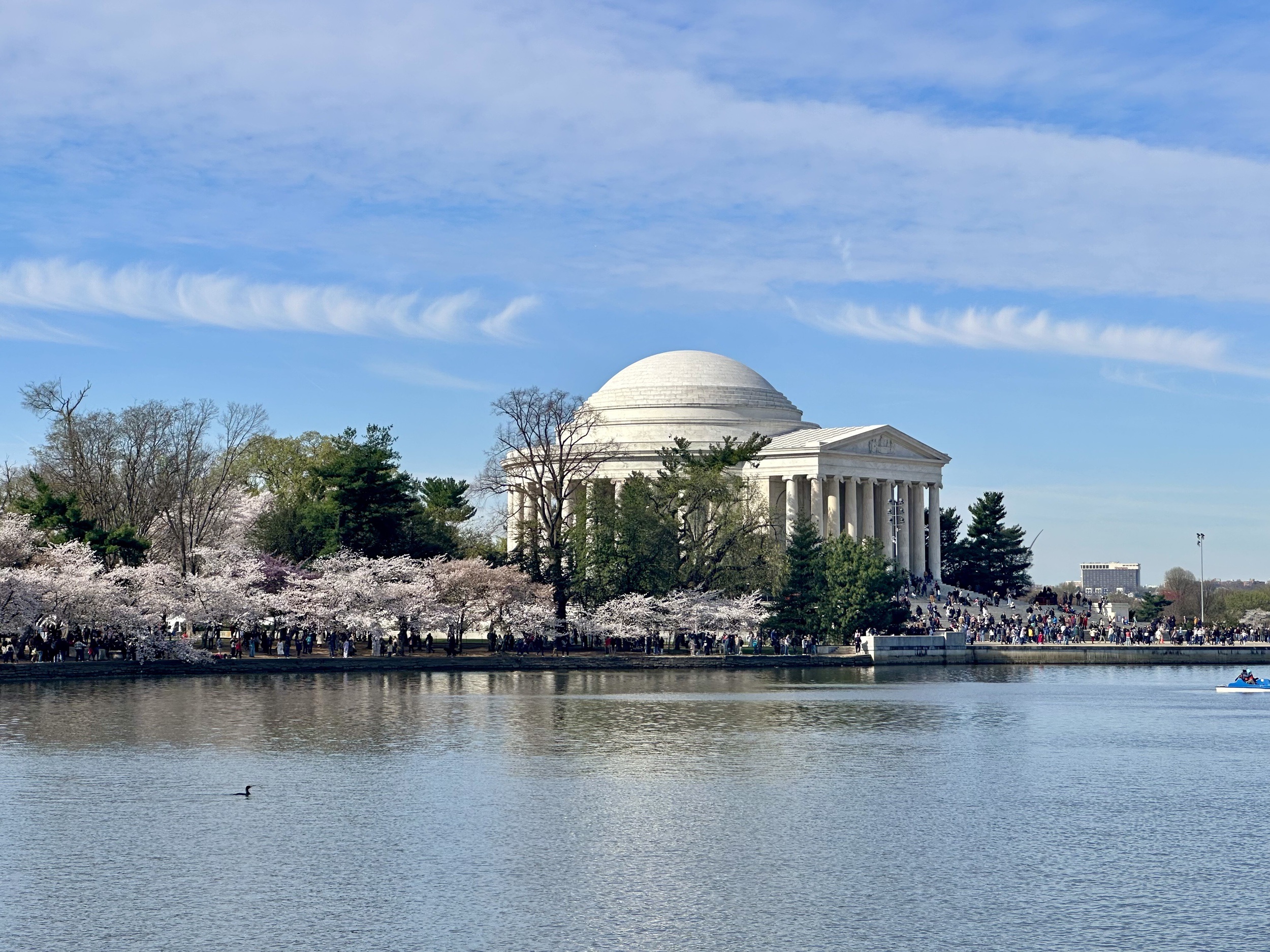
Walking along the Tidal Basin during peak bloom feels almost surreal. The branches stretch outward, heavy with blossoms, forming a canopy that filters the sunlight into a soft, diffused glow. It’s the kind of light photographers chase, but here it exists naturally, effortlessly. The water mirrors everything—the sky, the monuments, the blossoms themselves—creating a kind of symmetry that makes you pause, if only for a second.

And then there are the petals. They don’t just fall; they drift. Slowly, unpredictably, like tiny pieces of confetti carried by the wind. Every so often, a gentle gust sends a small flurry into the air, and for a brief moment, it feels like you’re standing inside a snow globe that’s been lightly shaken. It’s fleeting, delicate, and impossible to fully capture in a photo.

What makes the experience even more powerful is the contrast. Just steps away, you have some of the most recognizable landmarks in the country—the Thomas Jefferson Memorial, the Washington Monument in the distance, the long stretch of the National Mall. These are symbols of permanence, built to endure for centuries. And yet, surrounding them are blossoms that last only a week or two before they begin to fade.

That contrast creates a kind of quiet tension. On one hand, you’re looking at structures meant to stand forever. On the other, you’re immersed in something that exists only briefly. It’s a reminder—subtle but unmistakable—that not everything meaningful is meant to last.

The crowds, of course, are part of the experience. During peak bloom, the Tidal Basin becomes one of the most visited spots in the country. People come from everywhere—families, tourists, photographers, couples, joggers who suddenly slow down to take it all in. At first glance, it might seem like the crowds would take away from the beauty, but in a strange way, they add to it.

There’s something about seeing so many people collectively pause, collectively appreciate the same thing, that makes the moment feel shared. You’ll notice strangers smiling at each other, pointing out particularly beautiful clusters of blossoms, or stepping aside so someone else can get a photo. It’s a small shift, but it’s noticeable. For a little while, people seem more patient, more present.

If you arrive early in the morning, before the crowds fully settle in, the experience changes again. The light is cooler, softer, and the basin is quieter. You can hear the water, the distant sounds of the city waking up, and the occasional rustle of branches overhead. It feels more personal, more introspective. Like the city is offering you a private glimpse before the day begins.

Evenings bring their own kind of magic. As the sun sets, the sky shifts through shades of gold, orange, and eventually deep blue. The blossoms take on a slightly warmer tone, and the reflections in the water become more pronounced. By the time night falls, the monuments are lit, and the blossoms seem to glow faintly in the artificial light. It’s a different kind of beauty—quieter, more subdued, but no less striking.

There’s also an emotional layer to the experience that’s hard to put into words. Maybe it’s the fleeting nature of the blossoms, or maybe it’s the setting, surrounded by symbols of history and identity. But for many people, being there feels meaningful in a way that goes beyond aesthetics.

You might find yourself thinking about time—how quickly things change, how certain moments come and go before you’re ready for them to end. The blossoms, in their short-lived brilliance, seem to embody that idea perfectly. They don’t last, and they’re not meant to. Their beauty comes from that very fact.

And yet, they return every year. That’s the other side of it. Even though each bloom is temporary, the experience itself is cyclical. Predictable, in a comforting way. No matter what changes in the world, the blossoms come back. They remind you that some things, even if fleeting in the moment, are part of a larger rhythm.

For locals, the cherry blossoms often mark a kind of seasonal reset. The end of winter, the beginning of something lighter. For visitors, they can feel like a once-in-a-lifetime experience, even if they end up coming back again and again. There’s a pull to it, something that makes people want to revisit the same place, year after year, just to see how it feels this time.

And it never feels exactly the same. The timing shifts slightly each year, the weather changes, the crowds ebb and flow differently. Even your own perspective changes. What you notice one year might be completely different the next.

Maybe one year, it’s the reflections in the water that catch your attention. Another year, it’s the way the petals collect along the edges of the walkway, forming a soft, pink carpet. Another time, it might be the expressions on people’s faces—the quiet awe, the excitement, the calm.

The cherry blossoms near the Tidal Basin aren’t just a visual experience. They’re a reminder of how powerful simple things can be. Trees, flowers, light, water—none of it is complicated. But together, in the right moment, they create something that feels almost extraordinary.

As you leave, whether it’s after a quick visit or a long, unhurried walk around the basin, there’s often a sense that you’ve witnessed something you can’t fully hold onto. You might have photos, of course, maybe even dozens of them. But the feeling itself—the way the air felt, the way the light shifted, the way the petals moved—that’s harder to capture.

And maybe that’s the point. Not everything needs to be preserved perfectly. Some experiences are meant to be felt, remembered imperfectly, and then revisited when the time comes again.

Because it will come again. The blossoms will return, the basin will fill with color, and for a brief window each year, Washington, D.C. will once again feel just a little softer, a little quieter, and a little more connected to something timeless.

Related Posts