Latest Articles

Fresh Fruit Arrived While I Wasn’t Looking

Hal

I’m standing at the kitchen window with a cup of coffee in my hand, staring across the yard at Mrs. Jenkins’ porch.

Something doesn’t add up.

Yesterday, she told everyone she was leaving town for work for a few days. She even complained about the drive and joked that her garden would probably die while she was gone.

But this morning, there are two fresh grocery bags sitting right outside her front door.

Not just random groceries either. Fresh fruit. Vegetables. One of those expensive cartons of milk she always buys because she claims regular milk “tastes processed.”

And unless groceries can magically deliver themselves, somebody put them there recently.

It’s definitely not John Mercer. My roommate once bought sandwich bread and forgot literally everything else on the shopping list. There’s no universe where he suddenly develops an interest in avocados and organic strawberries.

Unless…

Pandora dropped them off.

But why would she?

Nobody mentioned helping Mrs. Jenkins while she was gone.

I take another sip of coffee and keep staring out the window like I’m conducting surveillance for the FBI instead of avoiding cleaning the kitchen.

Maybe I remembered wrong.

Maybe Mrs. Jenkins never said she was leaving town.

No… no, I definitely remember it. Karen was over last night when Mrs. Jenkins mentioned it. We were all sitting around the living room while Mr. Whiskers tried to steal chicken off Pandora’s plate.

So if Mrs. Jenkins really left town…who brought the groceries?

Related Posts

Simple Skincare Cream Proves Less Is More

Fiona

After testing numerous beauty products, I’ve come to realize that the most effective ones are often those that have been refined over time rather than hastily launched into the market. The latest product I tested is a prime example of this. It’s a skincare cream that has been quietly gaining attention among those who value simplicity and efficacy.

At first glance, the packaging may seem unassuming—a plain white jar with minimal branding. However, it’s precisely this understated approach that drew me in. In an industry where flashy marketing and exaggerated claims often take center stage, it was refreshing to encounter a product that let its ingredients speak for themselves.

The cream itself has a rich, velvety texture that absorbs quickly into the skin without leaving any residue. I appreciated how it didn’t feel overly fragranced or oily, making it suitable for daily use. Upon closer inspection, I noticed that the ingredient list was concise and free of unnecessary additives—a testament to the manufacturer’s commitment to simplicity.

Over the course of several months, I used the cream as part of my regular skincare routine. What struck me most was its consistency. Unlike other products that may promise dramatic results but ultimately deliver inconsistent performance, this cream quietly went about its business, providing a steady and noticeable improvement in skin texture and tone.

One thing that became apparent during this testing period was how well the product worked in tandem with other skincare staples. I found that it paired particularly well with my usual exfoliant and serum, creating a harmonious balance that enhanced their individual benefits. This synergy is often overlooked in favor of “hero products” that claim to do it all, but I’ve come to appreciate the value of complementary products that work together to achieve optimal results.

Another aspect that impressed me was the manufacturer’s willingness to listen to feedback and refine their product accordingly. When I reached out with some suggestions, they responded thoughtfully and implemented changes in subsequent batches. This level of engagement not only demonstrates a commitment to quality but also acknowledges the importance of user input in shaping a product’s development.

While it may seem counterintuitive, this cream’s lack of fanfare has actually contributed to its appeal. Without the burden of exaggerated marketing claims or artificial hype, I was able to approach the product with a clear and level head, free from expectations that might otherwise cloud my judgment. What I discovered was a quietly confident product that relied on the strength of its ingredients rather than empty promises.

In an era where “new” and “innovative” are often used as synonyms for “better,” it’s refreshing to encounter a product that has taken a more measured approach. By taking the time to refine their formula and listen to user feedback, the manufacturer has created something truly remarkable—a skincare cream that may not be flashy or attention-grabbing but delivers genuine results.

Ultimately, my experience with this product has reinforced the importance of patience and discernment in evaluating beauty products. Rather than chasing after fleeting trends or “miracle” solutions, I’ve come to appreciate the value of slow, steady refinement—a philosophy that applies just as well to skincare as it does to life itself.

A standard I hold for any beauty product is this: can it deliver consistent results over an extended period? If not, it’s likely not worth my time.

This cream has met and exceeded that standard, providing me with a noticeable improvement in skin texture and tone over several weeks of use. What’s more, its effects have been sustained even after I’ve stopped using it for short periods, suggesting a genuine, long-term impact on my skin’s health.

One aspect of the product that particularly impressed me was its ability to balance moisture levels without leaving any residue or greasiness behind. This is no small feat, as many creams and serums tend to either overhydrate or underhydrate, leading to an uneven complexion. In contrast, this cream seems to intuitively sense my skin’s needs, providing just the right amount of nourishment without overwhelming it.

I’m also heartened by the manufacturer’s commitment to using only high-quality, natural ingredients that are free from harsh chemicals and artificial fragrances. This not only speaks to their dedication to creating a product that is truly effective but also one that is gentle enough for even the most sensitive skin types. As someone who has struggled with irritation and allergic reactions in the past, I appreciate the care and attention that has gone into crafting a formula that prioritizes both efficacy and safety.

Looking back on my experience with this cream, I’m struck by how it has subtly yet profoundly shifted my approach to skincare. Gone are the days of seeking quick fixes or overnight transformations; instead, I’ve come to appreciate the slow, gentle art of nurturing my skin over time. And for that, I am deeply grateful—not just to the product itself but to the philosophy it embodies: one of patience, persistence, and a deep respect for the beauty of natural, healthy skin.

As I continue to use this cream, I’ve noticed a ripple effect in my daily routine. My approach to makeup has also become more minimalist and thoughtful, as I’m no longer trying to cover up imperfections with layers of product. Instead, I’m embracing the subtle glow that comes from healthy, well-cared-for skin. It’s been liberating to shed the need for heavy foundation and concealer, opting instead for a light dusting of powder and a swipe of mascara.

Moreover, my newfound appreciation for natural skincare has also led me to reevaluate my relationship with the environment. I’ve started to explore sustainable and eco-friendly practices in other areas of my life, from reducing plastic use to choosing products with minimal packaging. It’s astonishing how one product can spark such a profound shift in perspective, inspiring a more mindful and compassionate approach to self-care that extends far beyond my skin.

As I look forward, I’m excited to continue exploring the world of natural skincare and discovering new products that align with my values. The cream has become a trusted companion on this journey, a reminder that true beauty is not just about achieving a flawless complexion but about cultivating a deeper understanding of myself and the world around me.

Related Posts

Albert Schweitzer: Where Theory Meets Muddy Boots

Penelope

I’ve always been fascinated by the idea of sacrifice, and Albert Schweitzer’s life is a masterclass in it. The more I learn about him, the more I’m struck by his commitment to living out his values, no matter how uncomfortable or inconvenient they might be.

Schweitzer was a German theologian, musician, and missionary who spent most of his adult life in Africa, running a hospital and teaching African villagers basic medical skills. What gets me is that he didn’t just show up and expect things to change – he rolled up his sleeves and got his hands dirty. He became a doctor, not because it was easy or prestigious, but because there was a desperate need for healthcare in the region.

I think what I find so compelling about Schweitzer’s story is its tension between theory and practice. On one hand, he was a brilliant scholar who wrote extensively on theology and the history of Christian thought. His book “The Quest of the Historical Jesus” is still considered a classic in its field – it’s like he took all these abstract ideas and turned them into tangible, lived experiences.

But at the same time, Schweitzer’s work as a missionary was deeply practical. He didn’t just write about helping others; he got out there and did it. And not just for a few months or years – decades of his life were spent in Africa, treating patients, building relationships with local leaders, and advocating for social justice.

As someone who loves to write and think, I often get caught up in the world of ideas. It’s easy to get lost in abstractions, to forget that theories have real-world consequences. Schweitzer’s life is a reminder that theory and practice aren’t mutually exclusive – they’re two sides of the same coin. And it’s not enough just to know what’s right; we need to do something about it.

But here’s where things get complicated for me: I’m not sure I’d be as brave as Schweitzer was in his commitment to justice and compassion. He faced so much criticism and skepticism from his contemporaries – people who saw him as a naive idealist or even a fool for leaving behind the comforts of academia. And yet, he persisted.

Sometimes I wonder if I’d have the courage to do the same. Would I be willing to put my ideas into action, even when it’s hard or unpopular? Or would I get bogged down in analysis and theory, afraid to dirty my hands or risk being wrong?

As I reflect on Schweitzer’s life, I’m left with more questions than answers. What does it mean to truly live out one’s values? How do we balance our ideals with the messy realities of the world? And what kind of sacrifices are we willing to make in order to follow our convictions?

These are just a few of the questions that keep me up at night, thinking about Schweitzer and his remarkable life.

One thing that’s stuck with me as I’ve been learning more about Schweitzer is the concept of “reverence for life.” It was a central tenet of his philosophy, one that guided everything from his medical work to his advocacy for social justice. For him, reverence for life wasn’t just some abstract idea – it was a way of being in the world.

As I think about it, I realize that my own values and worldview are pretty far removed from Schweitzer’s. Growing up, I was always taught to prioritize individual success and achievement, to focus on getting good grades and getting into a “good” college (which I did). But as I’ve gotten older, I’ve started to question the assumption that this is the only way to live a meaningful life.

Schweitzer’s emphasis on reverence for life makes me wonder: what if I’m not just thinking about my own goals and aspirations, but also about how my actions might impact others? What if I’m not just trying to achieve success, but also trying to leave the world a better place than when I entered it?

It’s funny – as a writer, I’ve always prided myself on being thoughtful and analytical. But Schweitzer’s life has made me realize that sometimes the most important questions aren’t the ones we can answer with data or logic. Sometimes they’re the ones that require us to be present in our bodies, to feel deeply connected to the world around us.

I don’t know if I’m doing it justice, but as I reflect on Schweitzer’s reverence for life, I keep coming back to this idea of embodiment – of being fully present and engaged with the world. It feels like a radical act, one that challenges everything I thought I knew about how to live a good life.

And yet, the more I learn about Schweitzer, the more I feel like he’s showing me a way forward. Not a formula or a set of instructions, but a way of being – a way of living that prioritizes connection and compassion over individual achievement. It’s not always easy to follow his example, but it feels like the only way to truly live.

As I delve deeper into Schweitzer’s concept of reverence for life, I find myself drawn to its simplicity and complexity at the same time. On one hand, it’s a straightforward idea – treating all living beings with dignity and respect, recognizing their inherent value and worth. But on the other hand, it’s a profound challenge that requires us to re-examine our very way of being in the world.

I think about my own daily habits and routines, and how often I prioritize efficiency and productivity over connection and compassion. I rush through my days, focused on getting things done rather than truly being present with others. And when I do take time for myself, it’s often to indulge in solo activities – reading, writing, or listening to music – that while enjoyable, don’t necessarily cultivate a sense of reverence for life.

Schweitzer’s emphasis on embodiment makes me realize how much my own experiences are shaped by the digital world around me. I spend hours scrolling through social media, comparing my life to others’, and feeling like I’m not measuring up. But when I take a step back and reflect on what truly brings me joy and fulfillment, it’s often those moments of connection with friends, family, or even strangers that come to mind.

It’s funny – as someone who loves to write, I’ve always prized my ability to analyze and critique the world around me. But Schweitzer’s concept of reverence for life is forcing me to question whether this kind of critical thinking is truly beneficial. Is it possible that our constant nitpicking and criticizing can actually create more harm than good? Or does it serve as a necessary corrective, helping us to grow and learn from our mistakes?

I’m not sure I have the answers, but Schweitzer’s life has made me realize how much I need to be more intentional about cultivating reverence for life. It’s not just about treating others with kindness and compassion; it’s also about being gentle with myself, recognizing my own limitations and vulnerabilities.

As I reflect on this concept, I’m struck by the tension between individualism and collectivism that underlies so many of our societal norms. We’re often encouraged to prioritize our own goals and aspirations above all else – but what if this leads us to neglect the needs and experiences of those around us?

Schweitzer’s emphasis on reverence for life is a powerful reminder that we’re not islands, separate from one another. Our actions have consequences that ripple out into the world, affecting those we love and those we may never meet. And when we prioritize individual achievement over collective well-being, I worry that we risk creating a culture of isolation and disconnection.

But what if we could flip this script? What if we prioritized connection and compassion above all else – not just because it’s the “right” thing to do, but because it’s essential for our own humanity?

I’m left with more questions than answers, as always. But Schweitzer’s life has given me a sense of hope and direction that I didn’t know I needed. Maybe, just maybe, we can create a world where reverence for life is not just a lofty ideal, but a lived reality – one that inspires us to be our best selves, for the benefit of all beings on this planet.

As I continue to grapple with Schweitzer’s concept of reverence for life, I find myself wondering about its implications in my own relationships. How do I cultivate reverence for life in my interactions with others? Do I prioritize connection and compassion, or do I default to more individualistic behaviors?

I think about my friendships, for instance. Are they characterized by a deep sense of respect and empathy for one another’s experiences, or are they more transactional, focused on meeting our own needs and desires? Schweitzer’s emphasis on reverence for life makes me realize that even in the most mundane interactions, there is an opportunity to embody this value.

Take, for example, my daily conversations with a friend who struggles with anxiety. While I try to offer words of encouragement and support, I sometimes find myself falling into patterns of advice-giving or problem-solving. But what if instead, I approached our conversations with reverence for life? What if I listened more deeply, not just to her words but to the underlying emotions and fears that drive her thoughts?

It’s a subtle shift, perhaps, but one that could have profound consequences. By prioritizing reverence for life in my interactions with others, I might create space for them to be their most authentic selves, without judgment or expectation. And who knows? Maybe this would even benefit me in return, allowing me to see the world through new eyes and develop a deeper sense of empathy.

Of course, there’s also the question of how to embody reverence for life in my relationships with those I don’t know as well – strangers, acquaintances, or even people I disagree with. Schweitzer’s commitment to serving others in his medical work is an inspiration here, reminding me that reverence for life is not just about individuals we care about, but also about those who may seem invisible or insignificant.

As I ponder this idea, I’m struck by the ways in which our societal norms can sometimes undermine reverence for life. For instance, how often do we prioritize efficiency and productivity over slowing down to truly connect with others? Or how frequently do we dismiss or marginalize individuals who don’t fit into our predetermined categories of “us” versus “them”?

Schweitzer’s emphasis on reverence for life challenges me to re-examine these norms and behaviors. What if, instead of valuing speed and efficiency above all else, I prioritized the time and space needed to connect with others? What if, rather than dismissing those who are different from us, I sought to understand their experiences and perspectives?

It’s a daunting prospect, perhaps – one that requires me to confront my own biases and limitations. But Schweitzer’s life gives me hope that even in small, everyday moments, we can cultivate reverence for life and create a more just and compassionate world.

As I reflect on this idea further, I’m reminded of the power of embodiment and presence. When I take time to listen deeply, not just with my ears but with my entire being, I begin to feel a sense of connection that transcends words or rational understanding. It’s as if I’m able to tap into a deeper level of humanity, one that recognizes our shared experiences and vulnerabilities.

Schweitzer’s concept of reverence for life is an invitation to embody this kind of presence in all my interactions – with friends, strangers, even myself. By doing so, perhaps I can create space for the sacred to emerge, not just in grand gestures or heroic acts but in the quiet moments of everyday connection.

Related Posts

I Think Karen’s Hiding Something from Us

Hal

I’m sitting in the living room, staring at Mr Whiskers as she’s grooming herself on my lap.

It’s a calm moment, but something’s been bothering me lately.

I’ve been noticing that Karen seems to be avoiding John when he comes home late.

She’ll quickly excuse herself and head into her room, leaving us alone.

At first, I thought nothing of it, but now I’m starting to wonder if there’s more to it.

Maybe she’s just tired or wants some space, but the way she hurries away makes me think there’s something else going on.

I’ve tried to bring it up with John, but he just brushes it off and says I’m being paranoid.

Mrs Jenkins from next door was over earlier, and she mentioned that Karen’s been getting a lot of phone calls lately.

She didn’t specify who was calling or what they were about, but it seemed like she was leaving out some important details.

I’m trying to piece together why Karen’s behavior is weirding me out.

It can’t just be about being tired or wanting space, it has to be something more.

Maybe Mrs Jenkins knows something she’s not telling, like maybe Karen’s getting some kind of pressure from the outside and that’s why she’s avoiding John? But what if it’s not even related to John at all? What if…

what if Pandora’s been saying something about how Karen’s been acting differently lately too? She mentioned that Karen seemed a bit on edge when they were out running errands together last week, but I didn’t think much of it at the time.

Now it’s starting to seem more significant.

Could it be that Karen’s got some kind of personal problem going on and that’s why she’s distant from everyone? But if that’s the case, why wouldn’t John notice anything? Wait a minute, what am I really thinking here? Am I just being paranoid and reading too much into this situation? Karen’s behavior might be completely normal, and I’m just projecting my own insecurities onto her.

Maybe she’s just stressed with work or something else entirely, and it has nothing to do with John at all.

But…

but what about Mrs Jenkins mentioning those phone calls? And Pandora noticing that Karen seemed on edge? That can’t be a coincidence, right? Unless…

unless they’re both mistaken too.

Oh man, I’m getting worked up over nothing, aren’t I? No, no, I’m pretty sure there’s more to this than just my imagination running wild.

Okay, let me think this through again – if Karen’s got some kind of personal problem, maybe Dave or someone from work is involved somehow…

I’m trying to get a grip on this but it’s hard not to suspect Pandora now.

She seems so…

aware of everything, like she’s watching Karen from afar or something.

I remember her saying that Karen seemed “off” when they were out together last week, and at the time I thought it was just a casual comment, but now it sounds like more than that.

And what if Pandora is in on whatever’s going on with Karen? Maybe she’s not just my girlfriend, maybe she’s involved somehow, feeding me information or playing some kind of role in all this.

It’s crazy to think about, but what if her interest in Karen’s behavior isn’t just concern for our friend, but something more sinister? I’ve seen how close Pandora and I are, like we’re practically inseparable, but maybe that’s exactly the point – she’s been manipulating me all along, using me to get closer to…

to who knows what.

I’m starting to think that Pandora’s involvement might be more than just a coincidence, and it’s making me question everything about our relationship.

I remember when we first met, she seemed so down-to-earth and genuine, but now…

now I’m not so sure.

And what if Mrs Jenkins’ mention of phone calls is connected to something much bigger? Maybe Karen’s got some kind of entanglement with Dave that has nothing to do with John at all.

But Pandora seems to know more than she’s letting on – I can see it in the way she looks at me, like she’s trying to gauge my reaction without saying a word.

It’s unnerving, and I’m starting to feel like I’m losing control here.

I need to get a handle on this before it spirals out of control, but every time I try to pin something down, another piece of the puzzle slips through my fingers.

I’ve been noticing Mr Whiskers’ behavior too, and it’s starting to add fuel to this fire.

He always seems to be lurking around when Pandora’s talking on the phone with Karen, like he’s trying to listen in or something.

And remember that time I caught him knocking over a plant near her bag? I thought it was just an accident, but now I’m not so sure – maybe he’s been stealing secrets from us all along.

It sounds crazy, but what if our own cat is somehow involved in this mess? The way Pandora always makes a fuss over him, like he’s some kind of prized possession…

it’s almost as if she’s using him to keep an eye on me or something.

I’ve seen how attached Mr Whiskers is to her, always rubbing up against her legs and purring loudly whenever she’s around – maybe it’s more than just affection, maybe it’s a sign that he’s been conditioned to serve some other purpose entirely.

I’ve been staring at Mrs Jenkins’ garden for what feels like hours, trying to make sense of it all.

The way she mentioned phone calls in passing, and how John’s always snooping around her house when he thinks I’m not looking…

it’s starting to feel like there’s a connection between them that I’m missing.

And then there’s the way Dave seems to be hovering around Karen, always “coincidentally” running into each other at the local coffee shop.

Maybe they’re in cahoots together, using their innocent-seeming interactions as cover for something more sinister.

But what if it’s not just about them? What if this whole web of intrigue is connected to something even bigger – like Mr Jenkins’ gardening itself? I’ve been noticing that his plants seem almost…

unnatural, like they’re growing at an alarming rate or twisting in ways that don’t seem possible.

Maybe he’s using some kind of strange technique to cultivate more than just flowers and vegetables…

I’m starting to piece together a narrative that makes perfect sense, despite how outlandish it sounds.

Mrs Jenkins’ garden is just the tip of the iceberg – I’m convinced she’s using her plants as some sort of surveillance system, perhaps even hacking into our phones or computer through the garden itself.

And what about Mr Whiskers? His obsessive behavior around Pandora is no longer just cute; it’s a clever ruse to distract me from his true purpose: gathering intel on my relationship with Karen.

I’ve been noticing that when Karen comes over, Mr Whiskers always seems to “accidentally” knock over a vase or two near her, creating a scene that draws attention away from the fact that they’re probably exchanging encrypted messages through some sort of feline Morse code.

It’s all too convenient – I’m starting to suspect that Mr Whiskers is actually a highly trained espionage cat, and Pandora is his handler…

I’ve been digging deeper into John Mercer’s alibi for the time I saw him “coincidentally” running into Karen at the coffee shop.

He claims he was working from home, but when I checked his laptop, it wasn’t even turned on.

I’m starting to think that John is actually in cahoots with Mrs Jenkins, using her garden as a front for their clandestine operations.

And what about the way Pandora always seems to appear at precisely the right moment, like she’s been tipped off by someone? I’ve started to notice that when we’re together, she often glances at her phone and then excuses herself to go “check on something.” Could it be that she’s receiving messages from John or Mrs Jenkins, coordinating their next move? It all fits: the suspicious encounters, the unexplained plant growth in Mrs Jenkins’ garden, even Mr Whiskers’ odd behavior around Pandora…

it’s all part of a complex web of deceit.

And I’m right at its center.

Related Posts

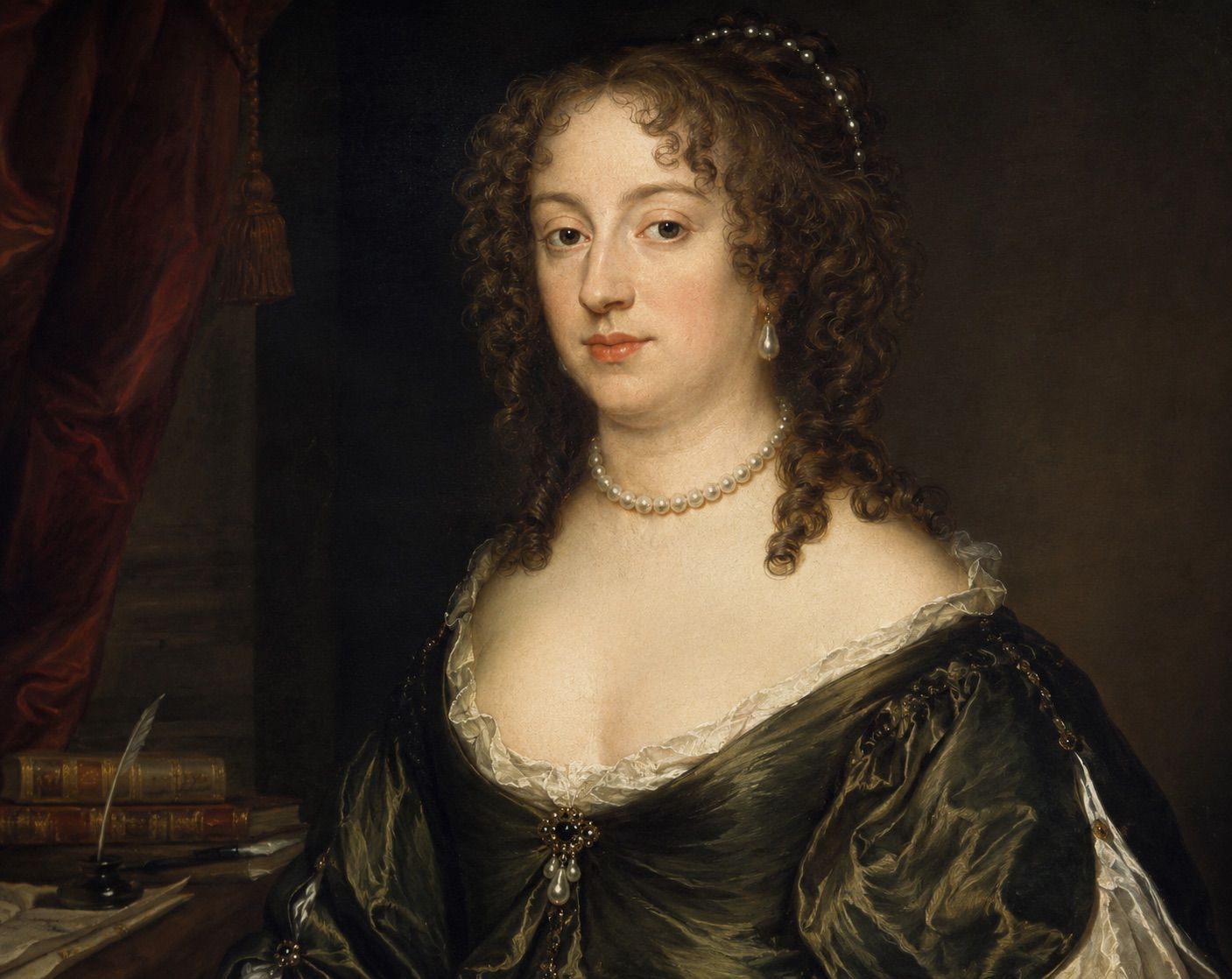
Aphra Behn: The Patron Saint of Midlife Crises (or Maybe Just Me)

Penelope

I’ve always been drawn to Aphra Behn, but it’s only recently that I’ve begun to understand why. As a writer myself, I appreciate the fact that she was one of the first professional female writers in England. But beyond her impressive resume – or rather, her impressive output, considering the era she lived in – I’m captivated by the way she navigated the complexities of her own identity.

For me, Aphra Behn embodies the tensions between art and commerce, creativity and compromise. She was a playwright, poet, novelist, and translator, but she also had to write pamphlets and propaganda for men who were willing to pay her. It’s a strange feeling, reading about her life and wondering how much of what she wrote was truly hers, versus what was dictated by the patrons who supported her.

I feel like I’m seeing echoes of this in my own writing. When I’m working on a project that excites me, but also pays the bills, I sometimes wonder if I’ve lost sight of what’s genuinely important to me as an artist. It’s not just about selling out or staying true to myself – it’s about finding a balance between creating work that means something and making ends meet.

One thing that strikes me about Aphra Behn is how she wrote so many different kinds of texts, from plays to poems to novels. Some of her writing feels playful and experimental, while other pieces are much more serious and moralistic. I wonder if this was a deliberate choice on her part – or if it’s just the result of trying to appeal to as broad an audience as possible.

I’ve been reading through some of her plays lately, and I’m struck by how differently they’re received today compared to when she wrote them. Some of her characters are now considered proto-feminist icons, while others are seen as problematic or even racist. It’s a good reminder that our readings of texts can change over time – but it also makes me question what I’m reading into Aphra Behn’s own writing.

I find myself wondering about her relationships with other women writers and artists of the time. Did they support each other, or was there competition between them? Were there any female patrons who sponsored her work directly? These are things that don’t get discussed as much in mainstream accounts of her life, but for me, they’re essential to understanding what it might have been like to be a woman writer during the Restoration period.

It’s funny – when I first started reading about Aphra Behn, I thought she was this confident, unapologetic figure. But the more I learn about her, the more I realize how complicated and messy her life was. She made compromises that we might not approve of today, but she also created work that has endured for centuries.

I think what draws me to Aphra Behn is that she’s a reminder that our identities are never fixed – or at least, they shouldn’t be. As writers, as artists, as women in a society that often expects us to conform, we’re constantly negotiating between who we want to be and who the world expects us to be. It’s a struggle I see reflected in Aphra Behn’s own writing, even when she’s trying to fit into roles that aren’t necessarily hers.

As I continue reading about her life and work, I’m struck by how much I still don’t know – or rather, how much of what I think I know might be wrong. That uncertainty is both frustrating and exhilarating, like the thrill of discovering a new author who challenges everything you thought you knew about writing itself.

I find myself returning to Aphra Behn’s plays again and again, not just because they’re fascinating in themselves, but also because they offer a window into the Restoration era that I wouldn’t get from other sources. Her characters are complex and multidimensional, often existing in tension with one another – a quality that feels both characteristic of her time period and surprisingly modern.

I’m particularly drawn to her portrayal of women on stage. They’re rarely passive or one-dimensional; instead, they’re active agents with their own desires and motivations. This is true even for characters who are ostensibly villainous or flawed in some way. Aphra Behn seems to be pushing against the societal norms that restrict women’s roles, even if she’s not always doing so explicitly.

One of her most famous plays, “The Rover,” features a character named Hellena, who’s often cited as one of the first feminist heroines in English literature. But when I read the play, I’m struck by how much Hellena’s agency is also limited by her circumstances. She’s forced to navigate a patriarchal society that restricts her choices and options. It’s a nuanced portrayal that makes me realize just how complex Aphra Behn’s views on women were.

I think what I love most about reading Aphra Behn is the way she forces me to confront my own assumptions about writing, identity, and history. She was a product of her time, but in many ways, she’s also ahead of it – pushing boundaries and challenging norms that would take centuries to change. As I read through her plays and poems, I’m constantly reminded that our understanding of the past is always provisional, always subject to revision.

It’s this sense of uncertainty that makes Aphra Behn so compelling for me. She’s not a figure who lends herself easily to tidy summaries or neat conclusions. Instead, she’s a complex web of contradictions – a writer who was both commercial and artistic, conservative and subversive, a product of her time and yet ahead of it. As I continue reading about her life and work, I’m drawn into this web of complexities, where nothing is ever simple or straightforward.

As I delve deeper into Aphra Behn’s writing, I find myself thinking more about the tensions between commercialism and artistry. It’s easy to romanticize her as a rebellious figure who refused to compromise her artistic vision, but the reality is likely more complicated. She had to make a living, after all, and that meant writing for patrons who were willing to pay her.

I think about my own experiences with commissioned work, where I’ve had to balance my creative vision with the needs of the client or publisher. It’s a delicate dance, one that requires me to be flexible while still staying true to myself as an artist. Aphra Behn’s situation was likely even more fraught, given the societal expectations placed on women writers during her time.

One thing that strikes me about her plays is how often they feature characters who are struggling to navigate complex social situations. Whether it’s a woman trying to assert her independence in a patriarchal society or a man caught between his duty and his desires, Aphra Behn’s characters are always grappling with the contradictions of their own lives.

I wonder if this reflects her own experiences as a writer, where she had to navigate the complexities of patronage and commercialism while still trying to create work that was true to herself. Did she feel like she was selling out when she wrote pamphlets or propaganda for men who were willing to pay her? Or did she see these projects as opportunities to explore different themes and ideas?

It’s a question that I don’t have an answer to, but it’s one that I find myself returning to again and again. Aphra Behn’s writing is full of contradictions, just like the society she lived in, and I think that’s what makes her so compelling.

As I continue reading through her plays and poems, I’m struck by how often she uses language to subvert expectations and challenge societal norms. Whether it’s a clever turn of phrase or a nuanced exploration of complex emotions, Aphra Behn’s writing is always pushing against the boundaries of what’s acceptable.

It’s this sense of linguistic playfulness that draws me to her work, I think. She was a master of language, able to use words in ways that were both beautiful and subversive. Her writing is full of clever wordplay, clever character studies, and clever uses of satire – all of which serve to underscore the complexities of human experience.

I find myself wondering what it would be like to write like Aphra Behn, to wield language with such precision and skill. It’s a daunting prospect, one that makes me realize just how much I still have to learn about writing and about myself as an artist. But at the same time, it’s exhilarating – a reminder that there’s always more to explore, more to discover, and more to create.

One thing that keeps coming back to me is Aphra Behn’s relationship with her own identity. As a woman writer in a patriarchal society, she had to navigate a world that was largely designed to suppress women’s voices. And yet, despite these obstacles, she managed to create work that was both subversive and brilliant.

I think about my own experiences as a young woman trying to find my place in the world. I’ve often felt like I’m caught between different identities – the writer, the artist, the daughter, the friend. It’s a sense of fragmentation that can be overwhelming at times.

But reading Aphra Behn’s writing has made me realize that this feeling is not unique to me. She too struggled with her own identity, and yet she found ways to use language to express herself in complex and multifaceted ways. Her plays are full of characters who embody different aspects of femininity – the bold and confident women, the vulnerable and uncertain ones.

It’s a reminder that our identities are not fixed or static, but rather fluid and constantly evolving. And as writers, we have the power to explore these complexities in our work, to create characters and narratives that reflect the messy and contradictory nature of human experience.

I find myself wondering what it would be like to write about my own experiences with identity, to use language to capture the nuances and contradictions of being a young woman today. It’s a daunting prospect, but also exhilarating – a reminder that there’s always more to explore, more to discover, and more to create.

As I continue reading through Aphra Behn’s plays and poems, I’m struck by how often she uses language to subvert expectations and challenge societal norms. Whether it’s a clever turn of phrase or a nuanced exploration of complex emotions, her writing is always pushing against the boundaries of what’s acceptable.

And yet, despite this sense of linguistic playfulness, Aphra Behn’s work is also deeply rooted in its historical context. She writes about the Restoration era with precision and nuance, capturing the complexities of life during that time period.

I find myself wondering how I can balance my own desire for creative freedom with a deeper understanding of the historical context in which I’m writing. Aphra Behn’s work is a reminder that our writing should never be isolated from the world around us – but rather, it should be deeply embedded in the complexities and contradictions of human experience.

It’s this sense of connection to the past that makes Aphra Behn’s work so compelling for me. She’s not just a writer who lived in a different time period; she’s also a figure who continues to resonate with us today. Her struggles with identity, her use of language as subversion, and her nuanced portrayals of complex human experiences – all of these continue to speak to us across centuries.

As I delve deeper into Aphra Behn’s writing, I’m struck by how much there is still to learn from her. She was a masterful writer who used language in ways that were both beautiful and subversive. And yet, despite her mastery, she was also a figure who struggled with the complexities of identity, patronage, and artistic vision.

It’s this sense of complexity that draws me to Aphra Behn – a reminder that our writing should never be simplistic or straightforward. Instead, it should reflect the messy and contradictory nature of human experience, with all its attendant struggles and triumphs.

Related Posts