Latest Articles

Henri Bergson: The Time Thief Who Stole My Sense of Schedule

Penelope

I’ve always been fascinated by Henri Bergson, the French philosopher who won a Nobel Prize in Literature back in 1927. I stumbled upon his name while reading about modernist thinkers, and something about him resonated with me. Maybe it’s because he defied categorization – was he a philosopher, a scientist, or an artist? Or maybe it’s because his ideas on time and consciousness have left me feeling unsettled, like they’re mirroring the chaos in my own mind.

As I delve deeper into Bergson’s work, I find myself drawn to his concept of “duration.” He argued that our experience of time is not a linear progression, but rather a fluid, ever-changing process. This idea challenges everything I thought I knew about time – how it’s measurable, divisible, and predictable. It makes me wonder if my own perception of time has been skewed by the very notion of clocks and schedules.

I remember taking a course on psychology in college, where we discussed Bergson’s theory of “psychological duration.” According to him, our subjective experience of time is influenced by our emotions, memories, and expectations. This means that two people experiencing the same event can perceive time differently – one might feel like it’s dragging on forever, while another person might think it flew by. It’s a notion that resonates with me, especially when I reflect on my own experiences.

I’ve always felt like time is relative, but Bergson takes this idea to a new level. He suggests that our experience of duration is not just about the passage of time, but also about the way we perceive it. This has led me to question my own relationship with time – am I constantly racing against the clock, or do I have a more fluid sense of what’s possible? Bergson’s ideas make me feel like I’m caught between two worlds: one where time is a fixed, objective reality, and another where it’s a malleable, subjective experience.

One aspect of Bergson’s philosophy that puzzles me is his concept of “intuition.” He believed that intuition was the key to understanding the world around us – that it allowed us to tap into the underlying rhythms and patterns of existence. But what does this mean in practice? How do I cultivate intuition, and how can I trust my own instincts when they seem so unreliable?

I think about Bergson’s love-hate relationship with science, which often saw him as a philosopher out of touch with reality. He believed that science had become too rigid, too focused on measurement and control, whereas art and philosophy offered a more nuanced understanding of the world. This debate feels eerily relevant today – do we prioritize precision and certainty, or do we risk being messy and uncertain in pursuit of deeper truths?

Reading Bergson’s work has left me with more questions than answers. His ideas have unsettled my sense of time, challenged my perception of reality, and made me question the very nature of intuition. I’m not sure what this means for my own life or understanding of the world, but I do know that it’s led me down a winding path of self-discovery and exploration.

As I continue to grapple with Bergson’s ideas, I realize that they’re not just about philosophy – they’re also about how we live our lives. His concepts of duration and intuition have made me more aware of my own experience, encouraging me to slow down, listen more deeply, and trust my instincts. It’s a strange sort of freedom, one that acknowledges the complexity and uncertainty of life while inviting us to explore its depths.

I’m not sure where this journey will lead me next, but I know it’ll be with Bergson as my guide – or rather, as my confidant in the midst of uncertainty. His ideas have become a kind of companion, reminding me that time is never fixed, and reality is always multifaceted.

I find myself returning to Bergson’s concept of intuition again and again, trying to wrap my head around what it means to tap into the underlying rhythms and patterns of existence. It’s as if he’s inviting me to listen to a melody that’s been playing in the background all along, but I’ve only just begun to tune in.

I think about how often I feel like I’m living on autopilot, going through the motions of my daily routine without really being present. Bergson’s ideas make me wonder if this is because I’m relying too heavily on logic and reason, rather than trusting my intuition. Do I need to silence the constant chatter in my head and quiet the noise of external expectations? Or can I learn to integrate both rational thinking and intuitive knowing?

It’s hard not to feel a sense of disillusionment with the way we live our lives today. We’re constantly bombarded with information, advice, and opinions from every direction. Bergson’s emphasis on intuition feels like a radical rejection of this noise, a call to slow down and listen to what lies beneath the surface.

I’ve been trying to practice more mindfulness in my daily life, taking time to sit quietly and focus on my breath. It’s not always easy – my mind tends to wander, and I get caught up in worries about the future or regrets about the past. But when I do manage to settle into a state of calm, I feel like I’m tapping into something deeper and more authentic.

Bergson’s concept of duration also makes me think about how we spend our time. Are we living in accordance with our own inner rhythms, or are we simply following a predetermined schedule? Do I prioritize activities that nourish my mind and soul, or do I get caught up in the hustle and bustle of everyday life?

I’m not sure if Bergson’s ideas will lead me to some profound epiphany or revelation. But as I continue to grapple with his concepts, I feel like I’m being invited into a new way of seeing the world – one that values mystery over certainty, and wonder over control.

It’s a scary feeling, in a way – surrendering my need for control and predictability. But it’s also exhilarating, because it opens up possibilities for growth and exploration that I never would have considered otherwise.

I think about how Bergson’s philosophy has influenced artists like Proust and Debussy, who sought to capture the fluidity of human experience in their work. What does this mean for me, as a writer? Can I tap into Bergson’s ideas to create something more authentic, more true to my own inner world?

The questions swirl around me, but one thing is clear: Bergson has left an indelible mark on my understanding of the world. His ideas have unsettled me, challenged me, and invited me to explore the depths of my own experience. And for that, I am grateful.

As I ponder the relationship between intuition and rational thinking, I find myself drawn to Bergson’s concept of “creative evolution.” He believed that our individual experiences and perspectives are not separate from the world around us, but rather an integral part of it. This idea resonates with me on a deep level, as I’ve always felt like my own thoughts and emotions are intertwined with the external world.

For example, when I’m walking through nature, I often feel a sense of calm wash over me. But what if that’s not just because of the scenery? What if it’s also because my body is responding to the rhythms of the natural world – the way the sunlight filters through the trees, the sound of birds chirping in the distance? Bergson would say that I’m experiencing a kind of “sympathy” between my inner and outer worlds.

This idea challenges me to consider how much of my experience is influenced by external factors, even when I think it’s just about my own thoughts and emotions. Am I simply reacting to the world around me, or am I actively shaping it through my perceptions? Bergson would say that we’re both creators and created beings, constantly interweaving our inner and outer experiences.

As I reflect on this idea, I start to wonder about the nature of creativity itself. Is it something that arises from the individual, or is it a product of the external world interacting with us? Can I tap into Bergson’s concept of creative evolution to unlock new sources of inspiration in my writing?

I think back to my favorite authors – people like Virginia Woolf and James Joyce, who were known for their innovative use of language and form. Did they access some deeper level of reality through their art, or was it simply a product of their individual imaginations? Bergson would say that the line between creator and creation is blurred, that our experiences are always already part of the world around us.

This idea feels both liberating and terrifying. If I’m not just an individual with my own thoughts and emotions, but also an integral part of the external world, then what does that mean for my sense of agency and control? Am I a passive receiver of the world’s influences, or can I actively shape it through my perceptions and actions?

Bergson’s philosophy is full of paradoxes and contradictions, and this one feels particularly complex. But as I delve deeper into his ideas, I’m starting to see that they’re not just about individual creativity or external reality – they’re about the fundamental relationship between the two.

As I continue to explore Bergson’s concepts, I realize that they’re not just relevant to art or philosophy – they’re also deeply connected to my own life and experiences. His ideas are encouraging me to slow down, listen more deeply, and trust my instincts in a way that feels both exhilarating and terrifying.

As I sit here, reflecting on Bergson’s concept of creative evolution, I’m struck by the way it speaks to my own creative process as a writer. I’ve always felt like I’m trying to tap into some deeper level of reality through my writing, but Bergson suggests that this is not just about individual creativity, but also about being attuned to the world around me.

I think back to times when I’ve been writing and suddenly, something clicks – a phrase, an image, a character’s voice. It feels like I’m tapping into a wellspring of inspiration, but Bergson would say that this is not just me creating something new, but also being receptive to the influences around me.

This idea challenges me to consider my role as a writer in a way that feels both empowering and humbling. Am I simply channeling the world’s energies through my writing, or am I actively shaping it through my choices and intentions? Bergson would say that it’s both – that our creativity is always already part of the external world, interacting with and influencing us.

As I ponder this idea, I start to wonder about the relationship between art and reality. Is art a reflection of the world around us, or can it actually shape it in some way? Bergson would say that art has the power to reveal new aspects of reality, to show us things we’ve never seen before. But what does this mean for my own writing – am I just reflecting the world as it is, or can I use my words to create something new and original?

This question feels particularly pressing because I’m starting to realize that my writing is not just about expressing myself, but also about connecting with others. Bergson’s idea of creative evolution suggests that our individual experiences are intertwined with the external world, and that our art can tap into this collective unconscious.

I think about how many writers have inspired me over the years – people like Toni Morrison and Alice Walker, who used their words to speak truth to power and challenge social norms. Did they access some deeper level of reality through their writing, or was it simply a product of their individual experiences? Bergson would say that it’s both – that our art is always already part of the external world, influencing and being influenced by it.

As I continue to explore Bergson’s ideas, I’m starting to see that they’re not just relevant to art or philosophy – they’re also deeply connected to my own sense of purpose and meaning. His concept of creative evolution suggests that our individual experiences are not separate from the world around us, but rather an integral part of it.

This idea feels both exhilarating and terrifying because it challenges me to consider my role in the world as a writer. Am I just trying to create something new and original, or am I also contributing to the larger cultural conversation? Bergson would say that it’s both – that our art is always already part of the external world, shaping and being shaped by it.

As I sit here, reflecting on Bergson’s ideas, I’m struck by the way they’re pushing me to think about my own creative process in a new light. His concept of creative evolution suggests that our individual experiences are intertwined with the external world, and that our art can tap into this collective unconscious. It’s an idea that feels both empowering and humbling – empowering because it suggests that I have the power to create something new and original, but also humbling because it acknowledges that my art is always already part of the larger cultural conversation.

I’m not sure where this journey will lead me next, but I know that Bergson’s ideas are going to continue to challenge and inspire me in ways that feel both exhilarating and terrifying. As I continue to explore his concepts, I’m starting to see that they’re not just relevant to art or philosophy – they’re also deeply connected to my own sense of purpose and meaning.

Related Posts

Local Motorists Interminable Intersection Decision Making Under Investigation

Hal

The open road, where the unwary masses converge to test my patience and push me to the very limits of human endurance. I’m just trying to get to work on time, but no, the universe has other plans. As I inch along in traffic, I notice a car in front of me hesitating at the intersection. Not once, not twice, but thrice they pause, unsure whether to turn left or right. It’s as if they’re deliberating the meaning of life itself.

What is it about this particular individual that makes them so indecisive? Are they grappling with some existential crisis that renders them incapable of making even the simplest decisions? I begin to wonder if this person has ever had to make a tough choice in their entire life. Did they grow up with an overbearing mother who made all their decisions for them, leaving them ill-equipped to navigate the complexities of adulthood?

As I continue to stew behind this hapless driver, I start to feel a sense of personal offense. Don’t they know that I have places to be and people to see? Can’t they see that I’m trying to get to work on time, where I’ll no doubt be expected to make countless decisions with ease and aplomb? It’s not just about me, though – it’s about the ripple effect this person is having on the entire traffic ecosystem. Think of all the people who will be late because of their indecisiveness. The meetings that will start without them, the deadlines that will be missed, the lives that will be ruined.

This isn’t just a minor annoyance; it’s a full-blown crisis. I start to envision the institutional implications – the Department of Motor Vehicles should clearly be doing more to prepare drivers for the real-world challenges they’ll face on the road. Perhaps there needs to be an additional section on the driving test that assesses one’s ability to make decisive turns in heavy traffic.

As I continue to fume, I start to consider the global consequences of this person’s actions. Think of all the productivity lost due to indecisive drivers like this one. It’s a wonder we’re able to accomplish anything at all with such inefficient systems in place. And what about the environmental impact? All these cars idling away as they wait for the likes of Mr. or Ms. Indecisive to make up their minds – it’s a veritable carbon footprint catastrophe.

I find myself fantasizing about confronting this person, shaking them by the shoulders and demanding to know why they can’t just make a decision already. I imagine Pandora, my girlfriend, standing by my side, nodding in solidarity as I berate this hapless driver for their egregious lack of decisiveness.

But then I catch a glimpse of myself in the rearview mirror – calm, composed, and rational (or so I like to think). Wait, what’s going on here? Am I really getting worked up over someone who just can’t seem to turn left or right? Maybe it’s me who needs to take a step back and reassess my priorities.

You know what? I’m not going to let this person get under my skin. I’ll just… wait, no, that’s not true. I will continue to seethe with rage as I inch along behind them, mentally drafting strongly worded letters to the editor about the need for better driver education programs and stricter penalties for indecisive driving.

But first, I’ll just pull over at this upcoming coffee shop and grab a quick cup of joe to calm my nerves. Maybe the barista can give me some insight into what makes people like Mr. or Ms. Indecisive tick. And who knows, maybe Karen from accounting will be there, sipping on her usual large coffee with room for cream…

As I wait in line at the coffee shop, I find myself mentally rehearsing my lecture to the barista about the importance of decisive driving. I’m already anticipating the nodding and sympathetic murmurs that will surely follow as I recount my harrowing tale of being stuck behind the indecisive driver.

But then, something catches my eye – a flyer on the bulletin board advertising a local mindfulness workshop. “Learn to let go of stress and anxiety in just 30 minutes a day!” it promises. Ha! I think to myself. As if some fluffy feel-good seminar is going to help me deal with the very real problems of incompetent drivers.

And yet, as I wait for my coffee, I find myself glancing back at the flyer. Maybe it’s not about fixing everyone else; maybe it’s about learning to cope with the things that are outside of my control. But no, no, no – that’s just a cop-out. I’m not going to let some nebulous concept like “mindfulness” get in the way of my righteous indignation.

As I take my coffee and head back out into the fray, I notice something peculiar – the traffic seems to be moving more smoothly now. The indecisive driver is nowhere to be seen, replaced by a steady stream of cars making their turns with confidence and ease. It’s almost as if… well, no, it can’t be. That would imply that my anger was somehow misplaced.

I shake off the thought and continue on my way, still simmering with frustration but perhaps – just perhaps – with a tiny crack in my armor of righteous indignation. But don’t worry, I’m not going to let this newfound awareness get the best of me. I’ll just… well, maybe I’ll take a slightly deeper breath before launching into my next rant about the perils of indecisive driving.

Related Posts

Bathin: The Infernal Duke Who Guides Hidden Journeys Across the Worlds

Dave

Among the shadowed pages of Renaissance grimoires, where demons are cataloged with careful precision and strange authority, the name Bathin appears with an air of quiet mystery. Unlike many infernal spirits described as chaotic tempters or destructive forces, Bathin occupies a more enigmatic position within the hierarchy of demonology. He is listed among the seventy-two spirits of the Ars Goetia, a section of the famed grimoire known as The Lesser Key of Solomon. In these ancient texts, Bathin is described as a Great Duke of Hell who commands thirty legions of spirits and possesses unusual powers related to knowledge, movement, and transformation. His influence extends beyond mere destruction or deception. Instead, Bathin represents guidance through unseen paths, mastery over hidden routes, and the strange ability to carry individuals across vast distances in an instant.

In the grimoires, Bathin’s appearance is described in vivid terms. He is said to appear as a strong man with the tail of a serpent riding upon a pale or skeletal horse. Sometimes he is depicted holding a staff or lantern, objects traditionally associated with travelers and guides. The serpent tail adds a layer of symbolism that is difficult to ignore. Serpents have long been associated with wisdom, transformation, and hidden knowledge across many cultures. By combining the image of a serpent with that of a mounted traveler, Bathin becomes a figure representing both movement and enlightenment. He is not merely a demon of wandering; he is a demon of purposeful travel.

This idea of supernatural travel held tremendous fascination for medieval and Renaissance occultists. The world in which these grimoires were written was far different from the one we inhabit today. Long journeys were dangerous, slow, and uncertain. A trip across a continent might take months and expose travelers to disease, bandits, storms, and political unrest. In such a world, the idea of instantaneous movement—or guidance through hidden routes—would have felt miraculous.

According to the ancient texts, Bathin possesses the power to transport individuals from one country to another with supernatural speed. While modern readers might interpret this ability metaphorically, Renaissance magicians took such claims quite seriously. They believed that spiritual entities could manipulate the natural world in ways that human beings could not understand.

The fascination with supernatural travel reveals much about the mindset of the era. Exploration was expanding rapidly during the Renaissance. Sailors crossed oceans into lands unknown to Europeans, and new maps of the world were constantly being drawn. Knowledge of geography was incomplete and mysterious, leaving room for speculation about hidden routes, secret passages, and magical shortcuts through the fabric of reality itself.

Bathin’s association with travel may therefore reflect the cultural excitement surrounding exploration. Just as sailors relied on navigational instruments and stars to guide their journeys, occult practitioners imagined spiritual forces capable of guiding travelers through unseen dimensions.

The lantern often depicted in artistic interpretations of Bathin reinforces this theme. Lanterns symbolize illumination in darkness. They guide travelers along uncertain roads and reveal hidden obstacles. In mythological terms, the lantern represents knowledge that allows individuals to move safely through unfamiliar territory.

In this sense, Bathin becomes something like a supernatural guide through the unknown. He illuminates paths that would otherwise remain invisible. His presence suggests that knowledge itself is a form of travel—a journey through unfamiliar landscapes of thought and discovery.

Another ability attributed to Bathin involves teaching the virtues of herbs and precious stones. This aspect of his mythology connects him to the long tradition of natural magic that flourished during the Renaissance. Scholars of the period believed that plants, minerals, and celestial bodies contained hidden powers that could influence health, fortune, and spiritual development.

The study of herbal medicine was especially important during this time. Without modern pharmaceuticals, healers relied heavily on plants to treat illness. Knowledge of which herbs could cure or harm someone was highly valued. By attributing such knowledge to a demon like Bathin, grimoires acknowledged that hidden understanding of nature often felt mysterious and powerful.

It is important to remember that Renaissance scholars did not draw strict boundaries between science, magic, and religion the way modern society does. Astronomy and astrology were intertwined. Alchemy existed alongside early chemistry. Spiritual forces were believed to influence physical reality in ways that were not yet understood.

Within this worldview, Bathin’s knowledge of herbs and stones represented mastery over the hidden properties of the natural world. Precious stones were believed to hold protective and healing powers, while herbs could influence everything from health to emotional states.

Bathin therefore becomes more than a demon of travel. He represents exploration in a broader sense—the pursuit of knowledge about both the physical world and the unseen forces believed to shape it.

The serpent tail attributed to Bathin deepens this symbolism even further. Throughout history, serpents have represented cycles of transformation and renewal. In ancient mythology, the serpent shedding its skin symbolized rebirth and change. The serpent also appears frequently as a guardian of sacred knowledge.

In the biblical story of Eden, the serpent introduces humanity to knowledge of good and evil. In Greek mythology, the staff of Asclepius, entwined with a serpent, became a symbol of medicine and healing. Across many cultures, serpents represent wisdom that exists beyond ordinary perception.

By giving Bathin a serpent’s tail, demonologists may have been emphasizing his role as a guide through transformative knowledge. Travel changes people. It exposes them to new cultures, ideas, and perspectives. In the same way, the pursuit of knowledge can transform a person’s understanding of the world.

Bathin’s mythological role therefore combines two forms of journey: physical travel across distant lands and intellectual travel through new ideas.

The skeletal or pale horse he rides also carries symbolic meaning. Horses have historically been associated with movement, freedom, and power. A skeletal horse, however, introduces darker undertones. It suggests a creature that exists between life and death, between worlds.

In folklore, pale horses often symbolize passage between realms. They appear in stories about ghost riders, spectral messengers, and supernatural travelers. Bathin’s horse may therefore represent the ability to cross boundaries that ordinary humans cannot cross.

Occult practitioners believed that certain rituals could allow communication with spiritual beings who existed beyond the physical world. Bathin’s horse becomes a metaphor for that crossing point—the vehicle that carries knowledge between dimensions.

Modern readers might interpret these symbols psychologically rather than literally. From a psychological perspective, Bathin could represent the human drive to explore the unknown. Curiosity has pushed humanity across oceans, into space, and deep into scientific discovery.

Every major advancement in history began with someone venturing into unfamiliar territory. Explorers sailed beyond the edges of known maps. Scientists experimented with dangerous chemicals. Philosophers questioned long-held assumptions about reality.

Bathin embodies that spirit of exploration. He is the guide who leads seekers into hidden territories of knowledge and experience.

This interpretation becomes especially compelling when considering Bathin’s calm and cooperative demeanor in the grimoires. Unlike many other demons who are described as deceitful or hostile, Bathin is often portrayed as helpful when properly summoned.

Such descriptions suggest that knowledge itself is not inherently dangerous. It becomes dangerous only when pursued recklessly or without preparation. Renaissance magicians believed that strict ritual discipline was necessary to interact safely with spiritual forces.

Circles of protection were drawn on the ground, sacred names were invoked, and complex procedures were followed to ensure that spirits remained under control. These rituals symbolized the importance of structure and intention when seeking knowledge.

Even today, exploration requires discipline. Scientific research follows rigorous methodology. Pilots rely on careful navigation systems. Travelers study maps and plan routes before embarking on journeys.

Bathin’s mythology reflects this understanding. The demon offers guidance, but the seeker must approach with preparation and respect.

The connection between travel and knowledge appears repeatedly throughout human history. Ancient philosophers believed that wisdom came through experience rather than theory alone. Greek scholars traveled across the Mediterranean to study mathematics, astronomy, and philosophy from different cultures.

During the Age of Exploration, European explorers returned from distant lands with new plants, animals, and cultural knowledge that reshaped scientific understanding. Trade routes connected civilizations and allowed ideas to spread across continents.

Bathin’s role as a guide through distant lands therefore mirrors a fundamental truth about human development. Progress often begins when individuals leave familiar surroundings and encounter something unexpected.

The same principle applies to intellectual exploration. Scientific breakthroughs frequently occur when researchers challenge established assumptions. Creative discoveries emerge when artists experiment with unfamiliar techniques.

Bathin becomes a symbol of that leap into uncertainty—the moment when curiosity overcomes fear and a person steps onto a path that leads somewhere unknown.

Yet demonology also reminds us that exploration carries risks. The grimoires caution that demons should never be summoned carelessly. Knowledge gained without wisdom can lead to unintended consequences.

History offers many examples of discoveries that produced both benefits and dangers. Nuclear technology brought both energy production and devastating weapons. Industrial progress improved living standards while contributing to environmental challenges.

Bathin’s mythology therefore reflects the dual nature of exploration. New knowledge can illuminate the world or disrupt it depending on how it is used.

In contemporary occult traditions, Bathin is sometimes invoked as a spirit of insight and transformation rather than literal travel. Practitioners interpret his powers as the ability to guide individuals through periods of personal change.

Life itself often resembles a journey through unknown territory. People change careers, move to new countries, and navigate emotional challenges that reshape their identities. During these transitions, individuals often seek guidance from mentors, teachers, or philosophical traditions.

Bathin’s archetype fits naturally into this context. He becomes the symbolic guide who illuminates hidden possibilities and encourages seekers to move forward despite uncertainty.

Stories about supernatural guides appear in many mythological traditions. Greek mythology featured Hermes, the messenger god who traveled freely between realms. Norse mythology described Odin wandering the world in search of wisdom. In many spiritual traditions, mysterious figures appear to travelers at moments of decision, offering guidance or warning.

Bathin belongs to this long lineage of mythic guides. Whether viewed as a literal spirit or symbolic archetype, he represents the presence that appears when someone stands at a crossroads between the familiar and the unknown.

His lantern illuminates the path ahead, but it does not reveal the entire journey. Travelers must still walk the road themselves.

That image captures something essential about human experience. No guide—spiritual or otherwise—can remove uncertainty entirely. Exploration always involves risk. Yet it is precisely that risk that makes discovery meaningful.

The Renaissance magicians who wrote about Bathin lived in a world filled with mystery. They believed that unseen forces shaped reality in ways that science had not yet explained. While modern knowledge has changed our understanding of the universe, the sense of wonder surrounding exploration remains.

Space missions send probes to distant planets. Scientists study the depths of the ocean where sunlight never reaches. Artificial intelligence researchers explore new forms of machine cognition. Each of these pursuits reflects the same curiosity that drove ancient explorers across uncharted seas.

Bathin’s mythology reminds us that exploration is not merely a physical act. It is also an intellectual and emotional journey. The courage required to seek new knowledge remains one of humanity’s defining traits.

In the end, Bathin stands as a fascinating figure within demonology precisely because he represents movement rather than stagnation. He guides travelers through darkness with a lantern held high. He rides across boundaries that others fear to cross.

Whether interpreted as myth, psychology, or spiritual symbolism, Bathin embodies the restless curiosity that has always pushed humanity forward.

The road he travels stretches beyond the horizon, disappearing into landscapes that no map has yet recorded. And somewhere along that road, lantern light flickers in the distance, inviting the next traveler to follow.

Related Posts

Eudora Welty: The Unspoken Things Between Us are the Most Terrifying

Penelope

I’ve always been drawn to Eudora Welty’s writing, but it wasn’t until I stumbled upon her essay “A Little Life: Some Notes on a Little Novel” that I began to understand why. It was the way she dissected the intricacies of human relationships, revealing the complexities and frailties that make us vulnerable. As I read, I felt as though she was speaking directly to me, probing the same questions I’ve been grappling with in my own writing.

What struck me most about Welty’s work is her ability to capture the subtleties of human emotion without ever resorting to sentimentality or cliché. She writes about the quiet moments—a gesture, a glance, a whispered word—that can reveal an entire world of feeling. It’s as if she’s saying, “Look closely at this ordinary moment, and you’ll find the extraordinary within it.”

I’ve always been fascinated by how people interact with one another, how we both connect and disconnect in ways that are often imperceptible. What draws me to Welty is her commitment to exploring the difficult spaces—the gray areas where love and cruelty intersect. In “The Robber Bridegroom,” for example, she traces a woman’s descent into madness, her mind unraveling like a thread pulled loose from fabric. It’s a haunting portrait of what happens when we lose ourselves in our own darkness.

And yet, even as Welty shines a light on unsettling aspects of human experience, there is a sense of compassion that runs through her work. She never turns away from discomfort, but she doesn’t abandon her subjects to it either. Instead, she lingers there, quietly observing, allowing us to do the same.

I often find myself wondering whether her exploration of these emotional complexities reflects her own experiences with isolation and loneliness. Born in 1909 and raised in a small Mississippi town, she was surrounded by the contradictions of Southern culture—a gentle, courteous façade that often concealed more difficult truths. Did her writing serve as a way to process those tensions, or was it an attempt to connect across them?

As I read her work, I’m struck by how little I truly know about her personal life. There are fragments—her relationship with her mother, her work as a photographer—but much remains deliberately obscured. It’s as though she leaves us to understand her through her writing alone, offering insight without full disclosure.

Perhaps that’s part of what makes her so compelling. She resists easy categorization. Her work remains open, inviting interpretation rather than demanding it. And in that openness, she creates space for readers to bring their own experiences into the text.

As I return to her essays, I find myself circling the same questions. What does it mean to write honestly about human experience? How do we navigate the tension between light and darkness, connection and isolation? And what does it mean to reveal something of ourselves without fully understanding it?

Welty doesn’t offer clear answers. Instead, she reminds us that uncertainty is not something to resolve but something to engage with. Her writing suggests that storytelling itself is a form of navigation—a way of moving through what we don’t fully understand.

One of the aspects of her work that continues to resonate with me is her attention to detail. She writes with a kind of precision that feels almost invisible, as though the language has arranged itself naturally into place. There is nothing forced or exaggerated; everything feels observed, considered, and quietly deliberate.

This attention extends beyond the external world and into the inner lives of her characters. She seems deeply interested in the space between thought and expression—the moment before something is spoken, when meaning is still forming. It is in these moments that her work feels most alive.

I recognize something of my own struggles in this. Writing often feels like trying to capture something that resists being held. Emotions shift, thoughts change shape, and language can only approximate what we mean. And yet, the attempt itself becomes meaningful.

Welty appears to understand this instinctively. Her work embraces ambiguity rather than trying to eliminate it. She allows meaning to remain fluid, trusting the reader to sit with uncertainty rather than forcing resolution.

There is also a quiet intimacy in her writing that I find deeply compelling. She invites us into her observations without ever feeling intrusive. It’s not that she exposes everything, but rather that she reveals just enough to create a sense of connection.

This balance—between openness and restraint—is difficult to achieve. It requires a willingness to be vulnerable without becoming performative, to share without overexplaining. Welty maintains this balance with remarkable consistency.

Her writing also challenges the idea of a fixed self. Identity, in her work, feels fluid—shaped by context, memory, and perspective. This fluidity allows her characters, and perhaps even herself, to exist in a state of becoming rather than being fully defined.

I find this idea both unsettling and liberating. It suggests that we are not required to fully understand ourselves in order to express something meaningful. In fact, it may be the lack of certainty that makes expression possible.

There is a sense, too, that Welty’s work is rooted in observation as much as imagination. She pays attention—not only to people and places, but to the subtle shifts in mood and meaning that occur beneath the surface of everyday life. This attentiveness gives her writing a quiet authority.

At times, reading her feels less like consuming a narrative and more like participating in an act of witnessing. She doesn’t instruct or persuade; she shows, and allows us to arrive at our own conclusions.

And perhaps that is what stays with me the most. Not a specific insight or argument, but a way of seeing. A reminder that the smallest moments often carry the greatest weight, and that understanding rarely arrives all at once.

Welty’s work doesn’t resolve the questions it raises. Instead, it keeps them open, allowing them to evolve over time. In doing so, it reflects the nature of human experience itself—unfinished, uncertain, and constantly shifting.

If anything, that may be her greatest gift. Not clarity, but awareness. Not answers, but the space to ask better questions.

Related Posts

Cat Conspires Against Homeowners Sartorial Integrity Investigation Launched into Feline Fashion Sabotage

Hal

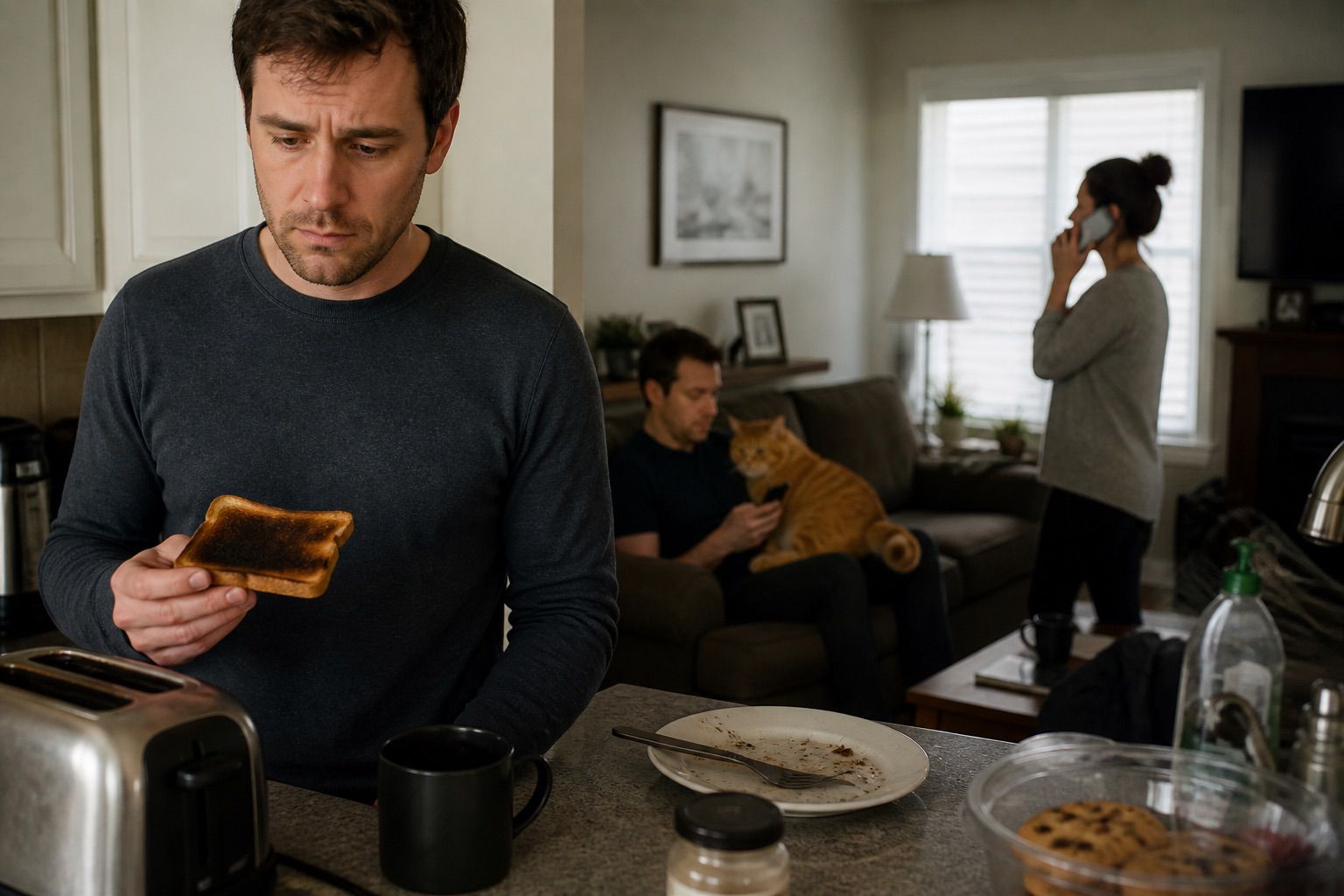
As I sat on the couch, staring blankly at the TV, my mind began to wander to more pressing matters. Specifically, Mr. Whiskers’ latest transgression. You see, our orange tabby cat had committed the heinous crime of shedding hair on my favorite sweater. Now, some might say this is a minor annoyance, but I knew better. This was an affront to my personal style and a blatant disregard for my property.

I mean, what’s next? Will Mr. Whiskers start knocking over vases or scratching the furniture willy-nilly? The lack of accountability in our household was staggering. Pandora, my girlfriend, seemed completely unfazed by this development, too busy scrolling through her phone to notice the gravity of the situation. “Oh, it’s just a little hair,” she cooed. A little hair?! This was an invasion of personal space, a declaration of war on my wardrobe.

As I pondered the implications of Mr. Whiskers’ actions, I couldn’t help but think about the broader societal implications. Was this a symptom of a larger problem? Were cats across the country secretly plotting to ruin our clothing? I envisioned a cat conspiracy, with feline overlords manipulating their human minions to do their bidding. It was only a matter of time before they demanded treats and belly rubs on demand.

I turned my attention to John Mercer, my roommate, who was blissfully unaware of the crisis unfolding around him. “Dude, have you seen the state of the living room?” I asked, trying to keep my tone neutral. He looked up from his book and shrugged. “Yeah, Mr. Whiskers has been shedding a lot lately.” A lot?! This was an epidemic! Didn’t he realize that our very way of life was under attack?

I decided then and there that something needed to be done. I would write a strongly worded letter to the Cat Council (a organization I was convinced existed, dedicated to regulating feline behavior). I would demand answers. Why were cats allowed to shed with impunity? What measures were being taken to prevent such atrocities in the future?

As I sat down at my desk to begin drafting my letter, Karen from work strolled by and asked if she could grab a cup of coffee from our break room. “Help yourself,” I muttered distractedly, not noticing her bemused expression as she took in the scene: me hunched over my computer, eyes blazing with determination.

Meanwhile, Dave poked his head into the office to ask about a project deadline, completely oblivious to the cat-astrophe unfolding around him. “Uh, yeah, it’s due Friday,” I replied absently, too caught up in my crusade against feline tyranny.

Later that evening, as Pandora and I were walking home from dinner, we ran into Mrs. Jenkins, our neighbor. She asked about Mr. Whiskers, and I launched into a passionate diatribe about the cat’s shedding habits and their far-reaching consequences for society. Her expression changed from friendly to concerned, but she politely listened before excusing herself.

As we continued walking, Pandora turned to me and whispered, “You know, maybe you’re overreacting just a bit.” Overreacting?! Did she not see the writing on the wall? The cat hairs were merely the tip of the iceberg. But I didn’t have time to explain – my mind was already racing ahead to the global implications of this feline menace.

What if cats worldwide began shedding in unison, creating a hair-based economic disaster? Would we be forced to establish a new world order, with cats as our furry overlords? The thought sent shivers down my spine. I quickened my pace, Pandora struggling to keep up as I mentally prepared for the impending cat-pocalypse.

As we approached our front door, Mr. Jenkins, Mrs. Jenkins’ husband, called out from across the lawn, “Hey, Hal! Beautiful evening, isn’t it?” And in that moment, something snapped inside me. The triviality of his comment was an affront to my very being. Didn’t he realize that this was not just any ordinary evening? This was a time of crisis, a time when the very fabric of our society was under attack by marauding cats.

But before I could launch into another impassioned speech, Pandora intervened, gently steering me toward the door and whispering something about needing to calm down. As we stepped inside, I caught a glimpse of myself in the mirror – my eyes wild, my hair disheveled – and for a fleeting moment, I wondered if maybe, just maybe…

…I was being slightly unreasonable. But I quickly shook off the doubt, attributing it to fatigue or perhaps a side effect of Mr. Whiskers’ mind control tactics. No, no, I was certain that my outrage was justified. After all, hadn’t I spent hours researching the dark arts of cat psychology? Didn’t I have a comprehensive understanding of their sinister plans?

As we entered the apartment, I spotted Mr. Whiskers lounging on the couch, looking smug and self-satisfied. My eyes narrowed. He knew exactly what he was doing, manipulating us all with his cute little face and fluffy fur. But I wasn’t buying it.

I strode over to my desk, determined to finish that letter to the Cat Council. Pandora tried to intervene, suggesting we order some pizza or watch a movie, but I waved her off. This was no time for frivolity; the fate of humanity hung in the balance.

As I typed away, fueled by righteous indignation and a growing sense of paranoia, I began to feel a creeping sense of unease. What if my crusade against Mr. Whiskers wasn’t as noble as I thought? What if I was just… being ridiculous?

I shook my head, dismissing the doubt. No, no, I knew what I saw: a cat conspiracy unfolding before our very eyes. And I would not rest until justice was served.

Just then, Pandora walked into the room with a cup of coffee and handed it to me. “Hey, maybe take a break from the whole cat-astrophe thing?” she suggested gently. I glared at her, sensing treachery. Was she in league with Mr. Whiskers? Was this some kind of trap?

But then, something strange happened. As I looked into her calm, concerned face, my fervor began to wane ever so slightly. Maybe – just maybe – I was getting a bit carried away…

No! I pushed the thought aside, taking a deep breath and refocusing on my mission. This was no time for weakness or doubt. The fate of humanity depended on it.

Or did it?

For a fleeting moment, I hesitated, wondering if perhaps… but then Mr. Whiskers stood up from his nap, arched his back, and let out a haughty little meow. And that was all the confirmation I needed: this cat was trouble with a capital T, and I would not rest until he was brought to justice.

I poured myself another cup of coffee, ready to face whatever dangers lay ahead in my battle against feline tyranny.

Related Posts