Latest Articles

Sallos: The Infernal Duke Who Commands the Mysteries of Love and Desire

Dave

In the shadowy pages of ancient grimoires, where kings, princes, and dukes of the infernal hierarchy are cataloged with careful detail, the figure of Sallos stands out as both curious and paradoxical. Demonology is often associated with chaos, destruction, and deception, yet Sallos represents something far more intimate and human. Among the seventy-two spirits described in the legendary grimoire known as the Ars Goetia, Sallos is a demon who governs love. His domain is not the battlefield or the storm, but the strange and complicated terrain of human emotion. He is described as a powerful Duke of Hell who rides a mighty crocodile and wears a ducal crown, appearing as a handsome soldier before the magician who summons him. His purpose, according to centuries-old occult texts, is to cause men and women to love one another.

The idea of a demon whose power lies in creating affection seems almost contradictory at first glance. Demons in medieval and Renaissance theology were generally believed to corrupt and manipulate, not to nurture emotional connection. Yet Sallos occupies a peculiar role within demonology because his influence centers on attraction, passion, and romantic longing. Whether interpreted literally as a supernatural entity or symbolically as an archetype within human psychology, Sallos represents the overwhelming force that draws people together, sometimes against reason, logic, or social expectations.

Historical demonology often reflected the anxieties of the cultures that produced it. Love has always been one of humanity’s most powerful and destabilizing experiences. Entire kingdoms have been reshaped by romance, jealousy, and obsession. From ancient epics to modern novels, love has sparked wars, toppled rulers, and altered destinies. In this sense, the inclusion of Sallos among the infernal spirits may reflect a deeper recognition that romantic desire can feel like a supernatural force—unpredictable, irresistible, and occasionally destructive.

The earliest surviving descriptions of Sallos appear in seventeenth-century occult manuscripts compiled during a period when ceremonial magic was practiced by scholars, mystics, and aristocrats across Europe. The Ars Goetia, part of the larger grimoire known as The Lesser Key of Solomon, catalogs seventy-two demons allegedly bound by the biblical King Solomon and made to reveal their powers. Each spirit is described with remarkable specificity: appearance, rank, abilities, and the number of legions under its command.

Sallos is listed as a Great Duke of Hell who commands thirty legions of spirits. His appearance is vivid and unusual. He rides upon a crocodile, wears a ducal crown, and appears in the form of a gallant soldier. The crocodile itself carries deep symbolic meaning. Throughout history, crocodiles have represented primal power, patience, and ancient instinct. They are creatures that move silently through dark waters, striking suddenly when opportunity appears. In the context of Sallos’s mythology, the crocodile may symbolize the hidden depths of desire—the instinctive pull that lies beneath conscious thought.

The soldier imagery is equally significant. Soldiers represent discipline, order, and purpose. By presenting Sallos as a soldier rather than a monstrous creature, the grimoires imply that love itself can be strategic, directed, even orchestrated. Romance may appear spontaneous, but it often unfolds through subtle gestures, calculated risks, and emotional courage.

Occult practitioners who attempted to summon Sallos did so through elaborate ritual procedures. Ceremonial magic during the Renaissance was highly structured and steeped in religious symbolism. Magicians drew protective circles inscribed with divine names, burned specific incenses, and recited invocations written in ancient languages. These rituals were intended to compel spirits to appear and obey commands while preventing them from harming the summoner.

When summoned successfully—at least according to the texts—Sallos would appear peacefully and willingly perform his function. Unlike many other spirits described in the Ars Goetia, he is not characterized as deceitful or hostile. In fact, the grimoires explicitly state that Sallos is gentle and agreeable, making him one of the more cooperative figures within the infernal hierarchy.

This unusual description raises fascinating questions about how historical occultists perceived love itself. If demons were embodiments of temptation, corruption, or chaos, why would one of them be tasked with fostering affection between people? The answer may lie in medieval theology’s complicated relationship with romantic passion.

During the Middle Ages and Renaissance, romantic love—especially outside arranged marriage—was often viewed with suspicion. Passion was believed to overwhelm reason and lead individuals away from moral discipline. Courtly love literature celebrated intense emotional devotion, but church authorities frequently warned that such passion could become spiritually dangerous. In this worldview, uncontrolled desire could indeed appear demonic.

Sallos therefore becomes a symbolic figure representing love’s power to disrupt rational control. His influence might bring two people together, but the consequences of that union could range from joy to obsession. The demon does not guarantee happiness; he merely ignites attraction.

In literature and folklore, love has often been portrayed as something inflicted upon individuals rather than chosen. Cupid’s arrows in Roman mythology function much like Sallos’s power. One moment a person is indifferent, the next they are hopelessly captivated. Shakespeare’s plays frequently revolve around characters falling in love unexpectedly and irrationally, sometimes under the influence of magical interference.

These stories reflect a fundamental human experience. Love rarely feels logical while it is happening. People fall for those they never expected to admire, sometimes ignoring clear warnings from friends and family. Emotional bonds form quickly and reshape priorities overnight. In that sense, the demon Sallos personifies the mysterious and uncontrollable nature of attraction.

Modern psychology provides additional insight into why love has historically been interpreted as supernatural. Neuroscience shows that romantic attraction triggers powerful chemical reactions in the brain. Dopamine, oxytocin, serotonin, and adrenaline surge during early stages of romance, producing feelings of euphoria, obsession, and heightened emotional focus. The experience can resemble addiction, with lovers constantly thinking about one another and craving interaction.

For people living centuries ago without knowledge of brain chemistry, such overwhelming sensations may indeed have seemed like external influence. A spirit such as Sallos offered a narrative explanation for why individuals suddenly felt compelled toward someone else.

Even today, people often describe love using supernatural language. We speak of “falling” in love as though it happens involuntarily. Couples say they felt an instant “spark” or that destiny brought them together. These expressions mirror the ancient idea that forces beyond conscious control guide romantic connections.

Sallos’s role as a Duke commanding thirty legions also suggests that love operates through many subtle influences rather than a single moment of magic. In symbolic terms, these legions might represent countless small events that bring people together: chance encounters, shared interests, unexpected conversations, and emotional vulnerability.

Consider how many relationships begin through seemingly trivial circumstances. Two strangers sit beside each other on a train. A colleague mentions a book that sparks a long discussion. A missed bus leads to meeting someone new. These moments appear random, yet they often shape the course of entire lives.

Within the mythological framework of demonology, Sallos would be the invisible architect behind such coincidences. His presence would guide individuals toward one another, aligning paths that otherwise might never intersect.

The crocodile imagery also invites deeper interpretation when viewed through symbolic psychology. Crocodiles are ancient creatures, unchanged for millions of years. They embody primal instincts that predate civilization. Love, despite modern cultural complexity, remains rooted in biological impulses tied to reproduction, bonding, and survival.

By riding a crocodile, Sallos may represent mastery over these ancient instincts. He directs them rather than being controlled by them. The image suggests that desire itself is both ancient and powerful—something capable of carrying individuals into unknown emotional territory.

Historical depictions of Sallos sometimes portray him as calm and composed despite the dramatic symbolism surrounding him. This composure reflects another truth about love: while it can begin with explosive intensity, lasting relationships require stability and patience. Passion may ignite the connection, but commitment sustains it.

Another intriguing aspect of Sallos’s mythology is that his influence is limited specifically to mutual affection. According to the grimoires, he causes men and women to love each other rather than forcing love from one unwilling person to another. This distinction is subtle but important. It implies that Sallos does not create love from nothing; he reveals or amplifies feelings that already exist beneath the surface.

In modern terms, one might interpret this as the moment when two people finally recognize the attraction they have both been feeling. A conversation shifts, a glance lingers, and suddenly the relationship changes.

Throughout history, stories of supernatural matchmaking have appeared in many cultures. Ancient Greek myths featured gods intervening in mortal romances. Norse legends spoke of fate weaving relationships through invisible threads. Even contemporary romantic comedies often revolve around chance meetings that feel destined.

Sallos belongs to this long tradition of attributing romantic connection to forces beyond ordinary explanation.

Yet demonology also warns that any supernatural influence carries potential consequences. Passion without wisdom can lead to heartbreak, jealousy, or destructive obsession. Many grimoires caution practitioners against using spirits to manipulate emotions because such interference might produce unintended outcomes.

From a psychological perspective, this warning reflects the reality that relationships require mutual respect and emotional maturity. Attempts to force affection or control another person’s feelings rarely lead to lasting happiness.

The symbolic lesson within Sallos’s mythology may therefore be one of humility. Love cannot truly be commanded or engineered. It emerges through shared experience, trust, and emotional openness. Even if supernatural forces were involved, they would merely guide circumstances rather than override human agency.

In contemporary occult circles, Sallos is sometimes invoked in rituals focused on attraction or reconciliation between lovers. These modern interpretations often frame the demon less as a malevolent spirit and more as a symbolic representation of romantic energy.

Such reinterpretations reflect a broader shift in how people view demonology. Rather than literal belief in infernal beings, many practitioners see these figures as archetypes representing aspects of human psychology. Within that framework, Sallos becomes the embodiment of desire, emotional connection, and the mysterious chemistry that draws individuals together.

Whether approached as mythology, psychology, or occult tradition, Sallos continues to fascinate because he embodies one of the most powerful forces in human life. Love has shaped art, literature, and history more profoundly than perhaps any other emotion.

Entire civilizations have been influenced by romantic relationships between rulers. Cleopatra and Mark Antony’s partnership altered the course of Roman history. Henry VIII’s desire for Anne Boleyn triggered the English Reformation. Countless wars, alliances, and political decisions have been motivated by love or jealousy.

In ordinary lives, love exerts equally transformative power. People relocate across continents for partners. Careers shift, priorities change, families form. Moments of emotional connection can define decades of experience.

Against that backdrop, it becomes easier to understand why ancient demonologists placed a spirit of love among the most powerful entities in their infernal hierarchy. To them, love was not a gentle sentiment but a force capable of overturning reason and reshaping destiny.

Sallos therefore stands as a reminder that human emotions possess immense power. Whether interpreted as supernatural influence or natural psychology, attraction has the ability to alter perception, behavior, and identity.

The image of the crowned duke riding his crocodile through shadowy realms captures this idea perfectly. Beneath the calm exterior lies something ancient and unstoppable—the instinctive pull toward connection that has guided human relationships since the beginning of our species.

In the end, Sallos’s mythology does not merely describe a demon. It tells a story about love itself: unpredictable, powerful, and sometimes frightening in its intensity. It reminds us that affection can appear suddenly, reshape our lives, and carry us into emotional landscapes we never anticipated.

Perhaps that is why stories about spirits like Sallos endure across centuries. They give shape to experiences that remain difficult to explain. Love still feels mysterious even in an age of neuroscience and psychology. It arrives unexpectedly, changes everything, and leaves people wondering how such a powerful emotion could arise from a single meeting.

If ancient magicians believed that a crowned duke riding a crocodile guided such encounters, it was because they recognized something profound about human nature. Love, like magic, often feels as though it comes from somewhere beyond ourselves.

Related Posts

Simone Weil: The Beauty of Being Unsettled

Penelope

Simone Weil’s words have been stuck with me for months now, lingering like a gentle but persistent ache in my chest. I stumbled upon her writing while researching existentialism for a paper, and at first, it was just another intellectual exercise – until I began to read her essays on affliction, attention, and the weight of others’ suffering.

Her words landed hard because they resonated with something within me, but I couldn’t quite put my finger on what exactly. As I delved deeper into her work, I found myself drawn to the spaces where philosophy and biography blurred – like the time she worked in a factory during World War II, laboring alongside others in a desperate attempt to understand their exhaustion and despair.

I think that’s part of why Weil fascinates me: her refusal to separate herself from the world around her. She was someone who chose to immerse herself in the midst of chaos – to suffer with others, rather than observe from a safe distance. And yet, even as she bore witness to humanity’s darkest moments, there was an unshakeable hope within her that I find both beautiful and terrifying.

I’m not sure what it is about Weil’s relationship with suffering that unsettles me so deeply. Perhaps it’s the way she seemed to internalize others’ pain, transforming it into a kind of spiritual currency – one that only she could truly understand. Or maybe it’s the fact that her experiences often read like cautionary tales: warnings against complacency and numbness in the face of suffering.

As I navigate my own life after college – this strange liminal space where freedom and uncertainty collide – Weil’s words keep echoing through me. Her emphasis on attention as a radical act feels particularly relevant right now, when social media and constant distractions make it so easy to tune out the world around us.

I wonder if Weil would have seen value in my own attempts to slow down and observe – not just others’ struggles, but also my own. Would she have encouraged me to lean into this discomfort, to let myself be affected by the weight of others’ stories? Or would she have urged me to step back, to maintain a healthy distance between myself and the messiness of human experience?

I’m still grappling with these questions, still trying to make sense of Weil’s insistent call to attention. Sometimes it feels like she’s asking me to choose: will I be someone who suffers alongside others, or one who remains detached? Can I find a balance between compassion and self-care – between bearing witness to the world around me and preserving my own emotional reserves?

As I read through Weil’s essays, I find myself returning to these same questions. Her writing is like a gentle prodding, urging me to examine my own relationship with suffering – not just as an abstract concept, but as something that affects us all, in every moment. And yet, even as she pushes me towards confrontation and awareness, there’s a quiet humility within her words that reminds me of the limits of my understanding.

Weil’s writing may be about affliction, but it’s also about the beauty of living – imperfectly, vulnerably, and with our eyes open to the world. As I navigate this complicated terrain, I’m left wondering: what does it mean to bear witness, truly, in a world that can sometimes feel overwhelming?

The more I read Weil’s words, the more I realize how little I know about myself – about my own capacity for suffering and compassion. It’s as if she’s holding up a mirror to my own vulnerabilities, forcing me to confront the ways in which I’ve been numbing myself to the world around me. Social media, with its curated highlight reels and carefully crafted personas, has made it so easy to present a perfect facade – to hide behind a mask of confidence and control.

But Weil’s writing won’t let me off that easily. She keeps pushing me towards authenticity, towards a deeper understanding of my own limitations and desires. It’s uncomfortable, really – like being asked to peel back the layers of an onion, revealing the messy, tender parts beneath. And yet, it’s also exhilarating, because for the first time in my life, I feel like I’m being given permission to be imperfect.

As I navigate this uncertain landscape, I find myself wondering what it would mean to truly bear witness – not just to the suffering of others, but also to my own. Would it mean embracing the anxiety and uncertainty that comes with being alive? Or would it require a kind of surrender, letting go of the need for control and certainty?

Weil’s emphasis on attention as a radical act feels like a call to arms – a reminder that even in the midst of chaos, we have the power to choose how we engage with the world. But what does it mean to attend to ourselves, truly? To listen to our own fears and doubts, rather than trying to silence them with distractions or busyness?

These questions swirl around me like a vortex, pulling me deeper into the heart of Weil’s inquiry. And yet, even as I’m drawn in by her words, I’m also aware of my own resistance – my tendency to want to simplify complex issues, to find tidy answers where none exist.

It’s this tension between curiosity and comfort that keeps me coming back to Weil’s writing – and to these questions about bearing witness. Because the truth is, I don’t have any easy answers yet. All I can do is continue to listen, to attend to the world around me with a willingness to be changed by it. And maybe, just maybe, that’s enough.

As I grapple with these questions, I’m struck by how Weil’s emphasis on attention as a radical act has seeped into my daily life. I find myself paying closer attention to the way I move through the world – not just in terms of noticing the beauty or ugliness around me, but also in terms of being present for others. I try to listen more deeply to friends and family members when they’re struggling, to offer a supportive ear rather than a hasty solution.

It’s funny how this focus on attention has also made me more aware of my own internal monologue – the constant stream of thoughts and worries that can feel overwhelming at times. Weil would likely encourage me to acknowledge these thoughts without judgment, to observe them as fleeting mental states rather than solid truths. But it’s hard not to get caught up in the vortex of self-criticism that often follows.

Lately, I’ve been wondering if Weil’s concept of attention could be applied to my own relationship with technology. Social media, email, and text messages can feel like a constant stream of distractions – things that demand my attention without necessarily deserving it. Would Weil urge me to log off, to create space for more meaningful interactions? Or would she encourage me to find ways to engage with these platforms in a more mindful way?

I think what’s holding me back from fully embracing this question is the fear of missing out – the anxiety that I’ll be left behind if I don’t stay connected. Weil’s emphasis on attention as a radical act makes me realize how often I’m choosing convenience over depth, speed over slowness. But it’s hard to shake the feeling that slowing down will only lead to isolation.

One thing that keeps drawing me back to Weil’s writing is her use of metaphor – particularly the idea of affliction as a kind of crucible for spiritual growth. She writes about how suffering can be transformed into a source of wisdom, if we’re willing to sit with it long enough. It’s a notion that feels both terrifying and beautiful – like being offered a glimpse of hope in the darkest moments.

As I navigate my own uncertainties, I’m starting to see Weil’s concept of affliction as a kind of mirror for my own life experiences. There have been times when I’ve felt overwhelmed by anxiety or depression, unable to muster the energy to do even basic tasks. But looking back, I realize that those periods of darkness were also opportunities for growth – chances to develop greater empathy and compassion for others, as well as a deeper understanding of myself.

Weil’s emphasis on attention has taught me to approach these experiences with more curiosity, rather than fear or shame. It’s as if she’s reminding me that even in the midst of chaos, there’s always something to be learned – something that can be revealed through attention and contemplation.

And yet, I’m still left wondering what it means to truly bear witness – not just to others’ suffering, but also to my own. Is it a choice, or a necessity? Can I find a balance between compassion and self-care, between bearing witness to the world around me and preserving my own emotional reserves?

These questions continue to swirl in my mind as I read through Weil’s essays – a reminder that her writing is less about providing answers than encouraging me to keep asking questions. As I navigate this uncertain landscape, I’m grateful for Weil’s guidance – even when it feels uncomfortable or challenging. Because the truth is, bearing witness requires a willingness to be changed by the world around us – and that can be both beautiful and terrifying all at once.

As I reflect on Weil’s concept of affliction as a crucible for spiritual growth, I’m struck by how it challenges my own assumptions about suffering. Growing up in a relatively comfortable household, I’ve often felt insulated from the harsh realities of poverty, war, and other forms of systemic injustice. But Weil’s writing reminds me that even in privilege, there is still room for growth – that the difficulties we face can be transformed into opportunities for spiritual deepening.

I think about my own experiences with anxiety and depression, and how they’ve forced me to confront my own limitations and vulnerabilities. Weil’s emphasis on attention as a radical act encourages me to approach these experiences with more curiosity, rather than fear or shame. It’s as if she’s reminding me that even in the midst of darkness, there is still something to be learned – something that can be revealed through attention and contemplation.

But what does it mean to truly bear witness to my own suffering? Is it a matter of acknowledging and accepting my emotions, rather than trying to suppress or numb them? Or is it about something more profound – about recognizing the interconnectedness of our experiences, and how they are woven together into a larger tapestry of human existence?

I’m not sure I have answers to these questions yet. All I know is that Weil’s writing has given me permission to explore these complexities, to grapple with the nuances of suffering and compassion in a more honest way. It’s as if she’s holding up a mirror to my own vulnerabilities, forcing me to confront the ways in which I’ve been numbing myself to the world around me.

As I continue to read through Weil’s essays, I’m struck by her emphasis on the importance of embodiment – of being grounded in our physical bodies and the world around us. She writes about how modern society often separates us from our senses, making it difficult for us to experience the world in a more direct way. It’s as if we’re living in a perpetual state of abstraction, where our emotions and experiences are mediated by technology and other forms of distraction.

Weil’s concept of affliction as a crucible for spiritual growth encourages me to think about embodiment in new ways – to consider how my physical body is connected to the world around me, and how I can cultivate greater awareness and compassion through attention to my senses. It’s a notion that feels both beautiful and terrifying, like being offered a glimpse of hope in the darkest moments.

As I navigate this uncertain landscape, I’m starting to see Weil’s emphasis on embodiment as a call to action – a reminder that our experiences are not just abstract concepts, but lived realities that demand our attention. It’s a challenge to slow down, to turn away from the distractions of modern life and engage with the world around me in a more direct way.

But what does this mean in practice? Is it about practicing mindfulness or meditation, about cultivating greater awareness of my thoughts and emotions? Or is it about something more fundamental – about recognizing that my body is not separate from the world around me, but an integral part of it?

I’m still grappling with these questions, still trying to make sense of Weil’s emphasis on embodiment. But one thing is clear: her writing has given me permission to explore the complexities of suffering and compassion in a more honest way – to confront my own vulnerabilities and limitations, and to cultivate greater awareness and empathy for myself and others.

Related Posts

Jenkins Lawn Gnomes Under Investigation for Aggressive Staring

Hal

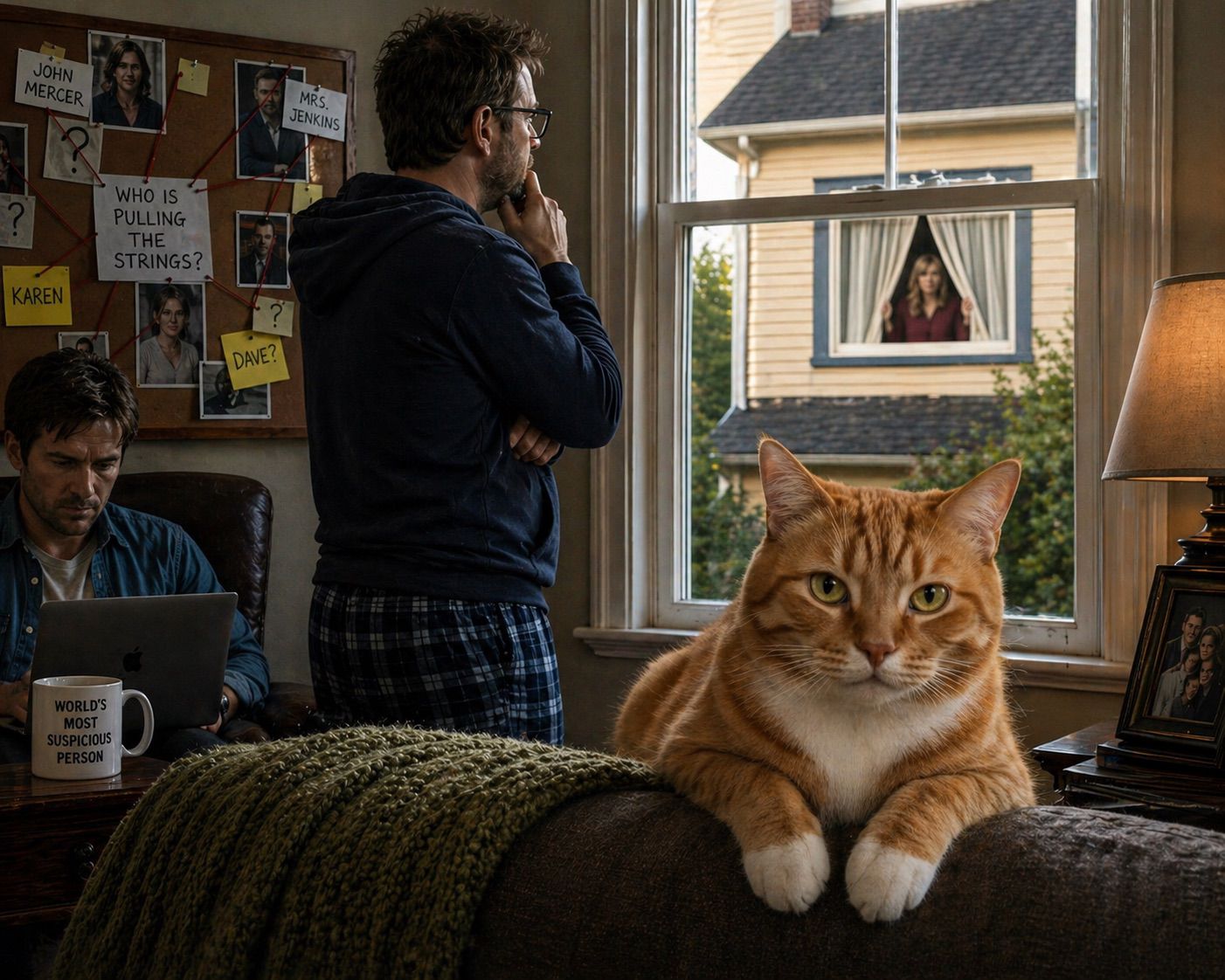
I was enjoying a peaceful morning, sipping my coffee and staring out the window, when I noticed it: Mr. Jenkins’ lawn gnomes were facing our house again. Now, you might think this is no big deal, but let me tell you, it’s a clear provocation. Those ceramic sentinels are staring directly at our living room, judging us for our interior decorating choices.

Pandora, my lovely girlfriend, walked into the room and noticed my intense gaze. “What’s wrong?” she asked, concern etched on her face. I pointed out the window, and she followed my finger to the offending gnomes. She chuckled and said, “Oh, Hal, they’re just lawn ornaments.” Just lawn ornaments?! Does she not see the implicit threat? Those gnomes are a declaration of war.

I began to think about all the ways Mr. Jenkins’ lawn gnome arrangement could be interpreted as an act of aggression. Was he trying to intimidate us into mowing our lawn more frequently? Or perhaps it was a subtle attempt to distract us from his own overgrown bushes? I mean, what’s the real reason behind those gnomes’ strategically placed gaze?

As I pondered this conundrum, John Mercer, my roommate, walked into the room and said, “Dude, what’s up?” I pointed out the window again, and he raised an eyebrow. “You’re freaking out about lawn gnomes?” Freaking out?! This is a matter of international diplomacy! The fate of our neighborhood hangs in the balance!

Karen, my coworker, stopped by to borrow some sugar, and I took the opportunity to inform her about the gnome situation. She listened patiently, sipping on our office coffee (which, might I add, she’s been drinking an excessive amount of lately), before saying, “Hal, it’s just a lawn decoration.” Just?! Does she not see the writing on the wall? The Jenkins’ gnomes are a metaphor for the creeping menace of suburban conformity!

Dave, another coworker, walked by and asked what all the commotion was about. I filled him in on the gnome situation, and he chuckled, saying, “Dude, maybe they just liked the way it looked.” Liked the way it looked?! That’s exactly what they want you to think! The truth is, those gnomes are a sophisticated surveillance system, monitoring our every move.

As I continued to ponder the implications of Mr. Jenkins’ lawn gnome arrangement, I began to imagine confronting him about it. “Mr. Jenkins,” I’d say, my voice firm but controlled, “your lawn gnomes are an affront to our very way of life. We demand you reorient them immediately!” Of course, in reality, I wouldn’t actually confront him – that would be far too rational.

Instead, I’ll just continue to seethe quietly, observing the gnomes’ every move from behind my window perch. I mean, someone has to keep an eye on those ceramic sentinels. Who knows what kind of nefarious plans they’re hatching in their tiny little gnome brains?

As I sat there, lost in thought, Mr. Whiskers, our orange tabby cat, sauntered into the room and jumped onto my lap. He began to purr contentedly, oblivious to the global implications of the lawn gnomes’ gaze. Ah, but that’s exactly what they want – for us to be complacent, to ignore the subtle threats lurking in plain sight.

I stroked Mr. Whiskers’ soft fur, trying to calm my racing thoughts. But it was too late; I’d already imagined a world where lawn gnomes are used as instruments of mass control, manipulating our minds and bending us to their will. And at the center of this sinister plot? The Jenkins’ gnomes, staring directly into our living room.

Suddenly, the doorbell rang. It was Mrs. Jenkins, asking if she could borrow some sugar (what is it with these people and sugar?!). I hesitated for a moment before responding, my mind racing with theories about her true intentions. As I handed over the sugar, our eyes locked in a brief, tense stare-down.

And that’s when it hit me: this isn’t just about lawn gnomes – it’s about the very fabric of our society. The Jenkins’ gnomes are a symptom of a larger disease, one that threatens to engulf us all in its creeping tide of conformity and…

…and I couldn’t help but wonder if Mrs. Jenkins was somehow involved in the sugar-borrowing conspiracy that seemed to be unfolding before my eyes. Was it a coincidence that both Karen and Mrs. Jenkins had asked for sugar on the same day? Or was this some sort of clever ploy to distract me from the real issue at hand: the gnomes?

As I watched her walk back to her house, sugar in hand, I felt a shiver run down my spine. What other secrets were they hiding behind those innocent-looking ceramic faces? Were the gnomes merely the tip of a much larger iceberg, one that threatened to upend our entire neighborhood?

Pandora, who had been quietly observing this exchange from the couch, finally spoke up. “Hal, maybe you’re reading a bit too much into this?” she said gently. I turned to her, my eyes narrowing. Was she in on it too? Had she been brainwashed by the gnomes’ insidious influence?

But before I could respond, John walked into the room and asked if anyone wanted to grab lunch with him. Lunch?! How could they think about something as mundane as food when our very way of life was under threat? I shook my head, incredulous. “You guys just don’t get it,” I muttered.

As we sat down for a hastily prepared meal (Pandora had wisely suggested avoiding any sugar-based dishes), I couldn’t shake the feeling that I was onto something big. The gnomes were just the beginning – soon, they’d be coming for our garden statues, our welcome mats, and eventually, our very souls.

But as we ate in silence, Mr. Whiskers purring contentedly on my lap, a tiny voice in the back of my mind began to whisper: “Maybe, just maybe, you’re overreacting.” I pushed the thought aside, unwilling to listen to such treasonous doubts. After all, someone had to stay vigilant against the creeping menace of lawn gnomes.

And yet…and yet…as I glanced out the window, I caught a glimpse of Mr. Jenkins himself, watering his garden with a serene expression on his face. He didn’t look like a mastermind plotting world domination – just a harmless old man enjoying the sunshine.

But that was exactly what they wanted me to think.

Related Posts

Purson the Demon King: Revealer of Secrets, Master of Hidden Knowledge, and the Unsettling Voice of What Was Never Meant to Be Known

Dave

Purson is a demon whose authority does not rely on fear, violence, or spectacle, but on revelation. In the Ars Goetia, Purson is named as a Great King of Hell, commanding twenty-two legions and often appearing with the face of a man and the body of a lion, sometimes riding a fierce beast and crowned to signify his rank. This form is deliberate and symbolic. Purson is not a servant, a trickster, or a destroyer. He is a sovereign of knowledge, and what he governs is the act of uncovering.

Purson’s defining power is his ability to reveal hidden things. He answers questions about the past, present, and future, exposes secrets long buried, and reveals truths that others have worked very hard to conceal. Unlike demons who manipulate perception, Purson removes it. He does not distort reality. He clarifies it, often to devastating effect.

The lion body associated with Purson represents authority, confidence, and dominance over territory. Lions do not sneak. They occupy space openly. Purson’s revelations work the same way. When he exposes something, it cannot be quietly reburied. Once known, it becomes part of the landscape. The human face, by contrast, represents consciousness, judgment, and moral awareness. Purson knows what he is revealing and understands the consequences of that knowledge.

This combination makes Purson uniquely unsettling. He does not plead ignorance. He does not claim inevitability. He reveals truth with full awareness that truth is not always welcome, healing, or safe.

Purson is also associated with astrology and the movements of celestial bodies. This connection reinforces his role as a revealer rather than a manipulator. He does not invent futures. He observes patterns already in motion. His knowledge feels less like prophecy and more like exposure of momentum. Under Purson, fate is not mystical destiny. It is accumulated consequence.

Psychologically, Purson represents the human drive to know what lies beneath appearances, even when knowing carries risk. He governs curiosity that refuses to be satisfied with surface explanations. Under Purson, secrets become intolerable. Silence becomes suspicious. The unknown demands illumination.

Unlike demons who trade in desire or fear, Purson trades in certainty. He gives answers that remove ambiguity. This is both a gift and a curse. Ambiguity provides comfort. It allows hope, denial, and flexibility. Purson strips that away. What remains is clarity—and responsibility.

Purson’s status as a King is important. Kings rule domains that persist. Purson’s domain is not a single emotion or act, but an enduring process: the exposure of truth. He governs not just the moment of revelation, but the aftermath. Once something is known, systems reorganize around it. Relationships change. Power shifts. Purson understands this ripple effect and does not intervene to soften it.

In demonological texts, Purson is said to speak with a clear and pleasant voice. This detail is critical. His truths are not screamed or forced. They are spoken calmly, even gently. This makes them harder to dismiss. Purson does not sound like an enemy. He sounds like someone who assumes you are ready to know.

Purson also reveals hidden treasures. This trait is often interpreted materially, but it carries a deeper meaning. Treasure is anything of value that has been concealed—knowledge, leverage, memory, or truth. Under Purson, buried value resurfaces. What was hidden for safety or advantage is brought into the open.

There is an ethical tension embedded in Purson’s power. Revelation is not inherently good. Secrets exist for reasons. Some protect the vulnerable. Some preserve stability. Purson does not evaluate motive. He reveals regardless. This makes him dangerous in environments where exposure causes harm alongside clarity.

In modern symbolic terms, Purson resembles investigative journalism, whistleblowing, intelligence gathering, and radical transparency. He is present wherever hidden systems are exposed and the public is forced to confront realities it would rather ignore. Like Purson, these forces often claim neutrality while triggering upheaval.

Purson does not incite rebellion or chaos directly. He allows truth to do the work. This is more effective. People react more strongly to exposed reality than to imposed change. Purson understands that once knowledge enters a system, control dissolves.

The beast Purson rides reinforces dominance over revelation. He is not overwhelmed by what he reveals. He commands it. Secrets do not frighten him. He treats them as assets, not dangers. This composure distinguishes him from demons who thrive on panic.

Purson’s association with time—past, present, and future—makes his revelations comprehensive. He does not isolate events. He contextualizes them. Under Purson, patterns emerge. Lies unravel not individually, but structurally.

There is no comfort in Purson’s truth. He does not promise resolution, forgiveness, or peace. He assumes that knowing is its own justification. What follows is the responsibility of those who now see clearly.

Purson’s endurance in demonology reflects a deep human contradiction. People crave truth and fear it simultaneously. They demand transparency and recoil from its consequences. Purson embodies that tension without apology.

To engage with Purson symbolically is to accept that some knowledge cannot be unlearned and some doors cannot be closed once opened. He does not warn you away. He assumes consent in the act of asking.

Purson is not the demon who creates secrets. He is the demon who ends them.

Once he speaks, the silence never returns.

Related Posts

Colette: The Unapologetic Ancestor I’d Like to Be, But Probably Wouldn’t Be Able To Be Even If I Wanted To

Penelope

Colette. I’ve been thinking about her a lot lately, ever since I stumbled upon one of her novels while browsing through a used bookstore. Her writing is like nothing I’ve ever read before – it’s like she’s speaking directly to me, but also somehow above me at the same time.

What draws me in most is her complete and utter disregard for societal expectations. She was a woman, born into a world where women were expected to be demure and obedient, yet she refused to conform. She dressed like a man, smoked cigarettes, and wrote about sex and desire with an unapologetic frankness that was unheard of in her time.

I find myself both fascinated and intimidated by this aspect of Colette’s personality. As someone who’s still trying to figure out their own place in the world, I feel a sense of solidarity with her willingness to take risks and challenge the status quo. But at the same time, I’m also aware of how privileged she was – born into a wealthy family, educated, and connected to influential people.

It’s hard not to wonder what it would have been like to live in a world where women were so heavily restricted. Would I have had the courage to be as unconventional as Colette? Or would I have played by the rules, sacrificing my own desires for the sake of conformity?

Colette’s writing is also marked by a sense of vulnerability and openness that I find both beautiful and unsettling. She writes about her own experiences with love, loss, and heartbreak in a way that feels almost reckless – like she’s laying bare her soul on the page.

I’ve been struggling to connect with this aspect of her work. As someone who values their independence and autonomy, I find it hard to understand why Colette would write about her relationships in such an all-consuming way. Doesn’t she deserve more than just a romantic obsession? Can’t she see that there’s more to life than just love?

But then again, maybe that’s the point – maybe Colette is trying to tell us that love and desire are not just emotions, but also fundamental aspects of who we are as human beings. Maybe she’s showing us that it’s okay to be messy and imperfect, to let our emotions guide us even when they lead us down uncertain paths.

As I continue to read her work and learn more about her life, I’m struck by the realization that Colette is not just a writer or a historical figure – she’s a complex, multifaceted person who defies easy categorization. She’s a rebel, a romantic, an outsider, and an insider all at once.

I think this is what draws me to her work so much – it’s like looking into a mirror, but one that shows me both the beauty and ugliness of my own contradictions. Colette may have lived in a different time and place, but her struggles and triumphs feel uncomfortably familiar, like they’re speaking directly to some deep-seated part of myself.

And so I’ll keep reading, keep thinking, and keep trying to make sense of this enigmatic figure who has captured my imagination. Because in the end, it’s not just about Colette – it’s about what she represents: the courage to be ourselves, even when it’s hard; the willingness to take risks and challenge the status quo; and the knowledge that our deepest desires and vulnerabilities are what make us most human.

As I delve deeper into Colette’s work, I find myself grappling with the tension between her romanticism and her pragmatism. On one hand, she writes about love with a fervor that’s almost infectious – it’s as if she believes that true passion can conquer all obstacles. And yet, in the same breath, she also acknowledges the harsh realities of life: the betrayals, the heartbreaks, the disappointments.

It’s this contradictory nature that I find both captivating and unsettling. As someone who’s been hurt before, I struggle to reconcile Colette’s unwavering optimism with my own more cynical outlook. Can it really be true that love is worth risking everything for? Or are we just fooling ourselves into thinking that?

I think about my own relationships – the ones that have ended in tears and heartache, as well as the ones that have left me feeling exhilarated but also uncertain. Colette’s words seem to suggest that it’s all part of the journey, that we must be willing to take the leap even when it feels like falling into the unknown.

But what about the women who come after us? The ones who benefit from our struggles and sacrifices? Do they get to have it easier, to coast on the shoulders of those who paved the way for them? I think about my own place in this legacy – as a woman who’s benefited from education, privilege, and social mobility.

Colette’s life was marked by its own set of privileges and disadvantages. She came from a wealthy family, but her relationships with women were often fraught and complicated. She wrote about her experiences with love and desire, but also struggled to maintain relationships that were meaningful and lasting.

In many ways, I see myself in Colette – or rather, I see aspects of myself reflected back at me through her words. We’re both women who’ve been shaped by our experiences as outsiders, who’ve had to navigate the complexities of identity and desire in a world that often doesn’t understand us. But we’re also both women who are still learning, still growing, still trying to make sense of this messy, beautiful thing called life.

As I continue to read Colette’s work, I’m struck by the realization that her writing is not just about love or desire – it’s about the human condition itself. It’s about the search for meaning and connection in a world that often seems hostile or indifferent to our needs.

And so I’ll keep reading, keep thinking, and keep trying to make sense of this enigmatic figure who has captured my imagination. Because in the end, it’s not just about Colette – it’s about what she represents: the messy, beautiful complexity of being human, with all its contradictions and uncertainties.

One thing that continues to fascinate me is Colette’s use of language. She has this incredible ability to describe the mundane in a way that makes it seem almost magical. Her writing is like a warm bath on a cold day – it envelops you, comforts you, and makes you feel seen. But at the same time, she’s also not afraid to get messy, to dig into the dark corners of human experience and emerge with scars.

As I read through her work, I find myself getting caught up in the rhythm of her sentences. The way she uses metaphor and simile to describe the world around her is like a form of poetry – it’s beautiful, evocative, and somehow manages to capture the essence of what it means to be alive.

I’ve been trying to analyze this aspect of her writing, to understand what makes it so powerful. Is it the way she uses imagery? The way she structures her sentences? Or is it something more intangible – a sense of vulnerability, of openness that she brings to the page?

It’s hard to put my finger on it, but I think part of what draws me to Colette’s writing is its willingness to be imperfect. She’s not afraid to make mistakes, to stumble over her own words or get caught up in her own emotions. And yet, somehow, this imperfection is what makes her writing feel so authentic, so true.

As someone who’s struggled with my own writing, I find myself identifying with Colette’s struggles on the page. The fear of not being good enough, the anxiety of putting yourself out there only to be rejected or ignored – it’s all so familiar.

But Colette’s writing also makes me realize that imperfection is not just a virtue, but a necessity. We’re all flawed, we’re all messy, and we’re all struggling to make sense of this crazy world around us. And maybe, just maybe, that’s what makes her writing feel so accessible, so relatable.

I think about my own writing, and how it often feels like I’m trying to be something I’m not – more confident, more articulate, more perfect. But Colette’s work shows me that this is a false dichotomy. We don’t have to choose between being imperfect or perfect; we can be both, all at once.

As I continue to read and reflect on Colette’s writing, I’m starting to see her as a kind of mirror held up to my own life. She’s showing me the complexities of human experience – the beauty and ugliness, the love and heartbreak, the contradictions and uncertainties that make us who we are.

And in doing so, she’s giving me permission to be messy, to be imperfect, to be myself. It’s a liberating feeling, one that I’m still trying to wrap my head around. Because if Colette can do it – if she can write with such vulnerability and openness – then maybe, just maybe, I can too.

As I delve deeper into Colette’s work, I find myself becoming increasingly obsessed with the idea of imperfection as a virtue. It’s not just about embracing our flaws, but also about recognizing that they’re an integral part of who we are as human beings. Colette’s writing is like a masterclass in imperfection – she takes the mundane and makes it majestic, the ordinary and makes it extraordinary.

I think about my own life, and how I often try to present myself to others as this perfect, put-together person. But what if I’m not? What if I’m messy and imperfect, just like Colette’s writing? Would that be okay? Could I still be worthy of love and acceptance?

It’s a scary thought, but also a liberating one. Because if I can accept myself as imperfect, then maybe others will too. Maybe we can all find freedom in our flaws, rather than trying to hide them or pretend they don’t exist.

As I continue to read Colette’s work, I’m struck by the way she uses her writing as a form of self-discovery. She writes about herself with a level of vulnerability that’s almost shocking – it’s like she’s laying bare her soul on the page. And yet, at the same time, she’s also creating this sense of intimacy and connection with the reader.

I find myself feeling seen by Colette in a way that I’ve never felt before. Like she’s understanding me, getting me, even when I’m not fully understanding myself. It’s like we’re having this deep, profound conversation about what it means to be human – and it feels almost spiritual.

But what if Colette is wrong? What if her writing isn’t a reflection of the truth, but rather just a product of her own biases and experiences? Could I be reading too much into her words, projecting my own desires and hopes onto her work?

I don’t know. All I know is that Colette’s writing has touched something deep within me – a sense of longing, perhaps, or a desire for connection. Whatever it is, it feels real, and it feels raw.

As I finish reading one of Colette’s novels, I feel like I’ve been on a journey with her, through the ups and downs of life, love, and loss. It’s like we’ve shared this intimate, private experience that only we can understand – and yet, somehow, she’s made it accessible to me, to anyone who reads her words.

I’m left feeling changed, somehow, by Colette’s writing. Like I’ve been given a new perspective on the world, or at least on myself. It’s hard to put into words what that feels like – all I know is that it’s a sense of expansion, of growth, of becoming more fully alive.

And so I’ll keep reading, keep thinking, and keep trying to make sense of this enigmatic figure who has captured my imagination. Because in the end, it’s not just about Colette – it’s about what she represents: the messy, beautiful complexity of being human, with all its contradictions and uncertainties.

Related Posts