Latest Articles

Willa Cather: The Outsider Who Owned the Mainstream

Penelope

Willa Cather’s writing often felt like a mystery to me, even as I devoured her novels and short stories in college. Her style was so distinct, so precise – every word seemed weighed with significance. But the more I read, the more I realized that I couldn’t quite pinpoint what drew me to her work. Was it the sweeping landscapes of Nebraska? The quiet, unassuming strength of her female characters? Or something else entirely?

I think part of my fascination stems from the way Cather’s writing often walked a fine line between celebration and critique. She was an immigrant herself, born in Virginia but raised in Nebraska by German-American parents – and yet her fiction frequently explored themes of American identity, land ownership, and cultural dislocation. Her characters are often outsiders, caught between different worlds: Russian immigrants in _My Ántonia_, Jewish intellectuals in _The Professor’s House_. And yet Cather herself was not an outsider; she was part of the American literary establishment, a prominent figure in her time.

This paradox – or maybe it’s just my own bias? – has always made me uncomfortable. I wonder if Cather ever felt like an outsider too, despite her success and recognition. Or did she internalize the privileges that came with being a white woman in America during the early 20th century? Her writing doesn’t give us clear answers, which is part of what makes it so compelling.

As I reread _My Ántonia_ recently, I found myself caught up in the story of Ántonia herself – strong-willed and fiercely independent, yet also vulnerable to the whims of men around her. Cather’s portrayal of Ántonia’s struggles struck a chord with me; as a young woman navigating my own uncertain path after college, I felt a kinship with Ántonia’s ambivalence towards the world around her.

But what really stuck with me was the way Cather wrote about place – the way she captured the dusty, wind-swept vastness of the Nebraska plains. It’s not just that she described these landscapes in vivid detail; it’s that she seemed to understand their emotional significance too. For Ántonia and her community, the land is both a source of comfort and a reminder of their displacement – a constant presence that cannot be escaped.

I think this is what gets at the heart of my own connection to Cather’s writing: the way she captures the tension between belonging and dislocation, identity and place. As someone who’s always felt like an outsider within my own community (I’m a city kid with rural roots), I find myself drawn to stories that explore these complexities.

Of course, this is all just me projecting – or maybe it’s not? Cather’s writing does seem to speak directly to the human experience of feeling caught between different worlds. And yet… sometimes I wonder if my own experiences are too personal to be relevant here. Am I reading too much into her work, imposing my own story onto hers?

As I close this notebook (and Willa Cather’s novels), I’m still left with questions. What does it mean to belong in a place that doesn’t feel like home? How do we navigate the tensions between our inner and outer selves – or even between different parts of ourselves? These are mysteries that Cather’s writing only hints at, but for me, they’re what keep me coming back to her pages again and again.

As I sat in my small apartment, surrounded by dusty books and scattered papers, I couldn’t help but feel a sense of kinship with Willa Cather’s Ántonia. Like me, Ántonia is caught between two worlds: the Old Country and America, tradition and innovation. And yet, as much as I identify with her struggles, I’m also aware that our experiences are vastly different. Ántonia faces poverty and hardship, while I’ve had the privilege of attending college and living in relative comfort.

But it’s this very tension between my own life and Cather’s writing that fascinates me. How does someone like Cather, who has it all – success, recognition, a stable home – still manage to write about characters who are struggling to find their place? And what does it say about her own experiences that she can convey this sense of dislocation so vividly?

I think back to my own college years, when I first encountered Cather’s work. I was drawn to her stories because they seemed to capture the essence of my own feelings – a sense of restlessness, of uncertainty, of not quite belonging anywhere. But at the time, I didn’t realize that this sense of dislocation is not unique to me or Ántonia; it’s a universal human experience.

Cather’s writing reminds me that we’re all outsiders in some way, whether it’s by virtue of our heritage, our socioeconomic status, or simply our individual perspectives. And yet, despite these differences, we all share a deep connection to the world around us – a desire to belong, to find meaning, and to make sense of our place within it.

As I close this reflection, I’m left with more questions than answers. What is it about Cather’s writing that resonates so deeply with me? Is it her ability to capture the complexities of human experience, or is it something more personal – a reflection of my own struggles and insecurities? And what does it mean to find connection in someone else’s work, when our experiences are so different?

I don’t have any clear answers to these questions. All I know is that Cather’s writing continues to draw me in, like a magnet, with its nuanced portrayal of human struggle and resilience. And as I continue to read her words, I’m reminded that the search for meaning and belonging is a lifelong journey – one that requires patience, empathy, and an openness to the complexities of the human experience.

As I sit here, surrounded by my own thoughts and feelings, I’m struck by the parallels between Cather’s writing and my own experiences as a young woman navigating her place in the world. Like Ántonia, I’ve felt caught between different worlds – my urban upbringing versus my rural roots, my desire for independence versus the expectations of those around me.

But it’s not just about individual experiences; it’s about the way Cather’s writing taps into something deeper and more universal. The sense of dislocation, of being a stranger in one’s own land, is a common thread that runs through her characters’ stories. And yet, as I read between the lines, I wonder if this isn’t also a reflection of Cather’s own experiences – not just as an immigrant herself, but as a woman in a patriarchal society.

There’s something about Cather’s portrayal of female characters that feels both empowering and heartbreaking to me. They’re strong-willed and independent, yet vulnerable to the whims of those around them. It’s a paradox that I recognize all too well – one that speaks to the complexities of being a woman in today’s world.

As I think back on my own college years, I realize how much Cather’s writing spoke to me then. It was a time of great change and upheaval for me, as I navigated my identity and sense of purpose. And Cather’s stories offered a kind of solace – a reminder that I wasn’t alone in my feelings of restlessness and uncertainty.

But now, as I look back on those years with a bit more distance, I see how much Cather’s writing was also a mirror to my own privilege. Her stories about poverty and hardship felt like a slap in the face, a wake-up call to the fact that not everyone has had it easy. And yet, at the same time, they spoke to something deeper within me – a sense of empathy and understanding that I knew I couldn’t fully grasp.

This is where Cather’s writing gets complicated for me – where the lines between celebration and critique start to blur. Is she romanticizing poverty and hardship, or is she simply acknowledging their existence? And what does it say about her own privilege as a white woman in America during the early 20th century?

I don’t have any easy answers to these questions. All I know is that Cather’s writing continues to fascinate me – to challenge me, to make me think and feel in ways that few other writers do. And it’s this ongoing conversation with her work that keeps drawing me back, like a magnet, again and again.

As I delve deeper into the complexities of Cather’s writing, I’m struck by the way she seems to inhabit multiple worlds at once. Her characters are often caught between different cultures, languages, and landscapes, and yet they somehow manage to navigate these contradictions with a sense of dignity and resilience. It’s as if Cather herself is performing this balancing act, juggling her own identity as an immigrant daughter with the privileges and expectations that come with being a white woman in America.

I think about how Cather’s writing often blurs the lines between fact and fiction, between personal experience and historical record. Her stories are infused with a deep sense of research and attention to detail, but they’re also deeply personal – infused with her own emotions, memories, and experiences. It’s as if she’s trying to capture the essence of the human condition, rather than simply recounting a series of events or facts.

This blurring of boundaries is something that I find myself drawn to, perhaps because it speaks to my own struggles with identity and belonging. As someone who’s grown up between different worlds – urban and rural, city kid and country roots – I’ve often felt like an outsider in both places. And yet, when I read Cather’s writing, I feel a sense of kinship with her characters’ experiences, even though our contexts are vastly different.

But what really fascinates me is the way Cather’s writing seems to speak directly to the present moment – even as it was written over a century ago. Her stories about immigration, displacement, and cultural dislocation feel just as relevant today as they did when she first wrote them. And yet, at the same time, there’s something distinctly anachronistic about her prose – a sense of old-fashioned elegance that feels both beautiful and alien.

I think about how Cather’s writing often relies on the quiet, understated strength of her female characters. These women are not superheroes or trailblazers; they’re ordinary people living extraordinary lives in the face of poverty, hardship, and cultural dislocation. And yet, despite their ordinariness, they manage to embody a deep sense of resilience and determination – qualities that I find both inspiring and humbling.

As I close this reflection on Cather’s writing, I’m left with more questions than answers. What is it about her work that resonates so deeply with me? Is it the way she captures the complexities of human experience, or is it something more personal – a reflection of my own struggles and insecurities? And what does it mean to find connection in someone else’s writing, when our experiences are so different?

For now, I don’t have any clear answers. All I know is that Cather’s writing continues to fascinate me – to challenge me, to make me think and feel in ways that few other writers do. And as I continue to read her words, I’m reminded that the search for meaning and belonging is a lifelong journey – one that requires patience, empathy, and an openness to the complexities of the human experience.

As I sit here, surrounded by the echoes of Cather’s writing, I’m struck by the way her stories have become a part of me – a reflection of my own experiences, struggles, and insecurities. But what I find most intriguing is how Cather’s writing seems to capture the essence of the human condition in a way that feels both timeless and timely.

I think about how her characters often find themselves at crossroads, torn between different worlds and identities. Ántonia, for example, is caught between her Old Country roots and the American landscape that has become her new home. And yet, despite these contradictions, she manages to forge a sense of belonging – not just in the physical world around her, but also within herself.

This idea of finding one’s place in the world resonates deeply with me, perhaps because I’ve always felt like an outsider in both my urban and rural worlds. As someone who’s grown up between different cultures and landscapes, I’ve often struggled to define myself – to pinpoint where I belong, or what makes me feel at home.

Cather’s writing has given me a language for these feelings, a way to articulate the complexities of human experience that have always felt so intangible to me. And yet, as I delve deeper into her work, I’m also aware of the limitations of my own perspective – the ways in which my own experiences and biases shape how I read her stories.

It’s this tension between personal connection and critical distance that makes Cather’s writing so fascinating for me. On the one hand, her stories speak directly to my own emotions and experiences; on the other hand, they also challenge me to think beyond myself – to consider the historical, cultural, and social contexts that shape our lives.

As I close this reflection, I’m left with a sense of wonder and awe at Cather’s writing. It’s as if she’s given me a key to unlocking the complexities of human experience – a way to navigate the contradictions and paradoxes that make us who we are. And yet, even as I feel grateful for her words, I’m also aware of the responsibility that comes with reading – the need to consider multiple perspectives, to question my own assumptions, and to stay open to the possibilities of life.

In many ways, Cather’s writing has become a mirror to my own soul – a reflection of my hopes, fears, and insecurities. And yet, even as I gaze into this mirror, I’m also aware that it’s not just about me – that Cather’s stories speak to something far more universal than my own experiences or biases.

As I sit here, surrounded by the silence of my apartment, I’m left with a sense of awe and gratitude for Willa Cather’s writing. It’s as if she’s given me a gift – not just a collection of words on paper, but a way to see the world anew, to experience life in all its complexity and beauty.

Related Posts

Furfur: The Storm-Raising Count of the Ars Goetia Who Speaks in Thunder, Commands Love, and Hides Truth in Lightning

Dave

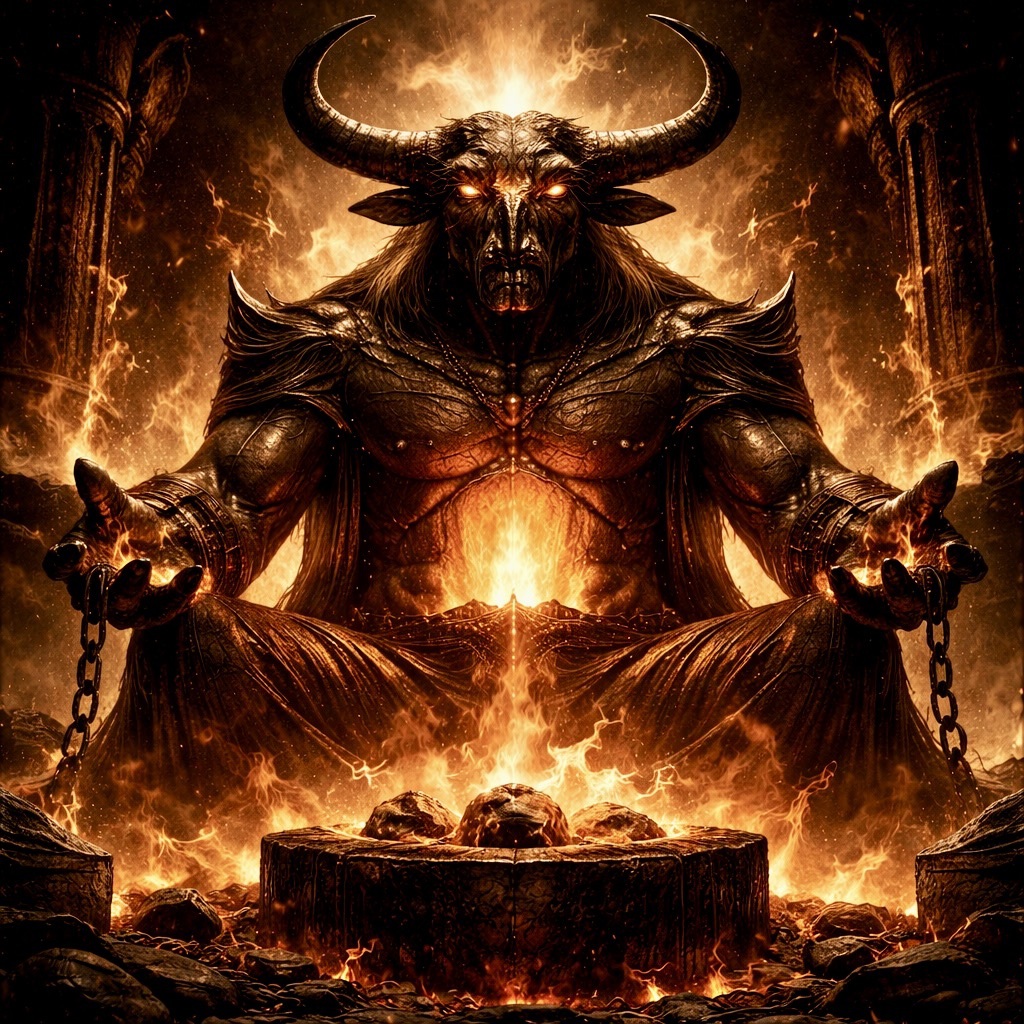
There are demons in the old grimoires who move like shadows along the edge of a candle’s glow, and then there is Furfur — a spirit who arrives with weather. He does not slip quietly into a ritual circle. He comes in thunderclaps. In lightning. In the electric tension that prickles across the skin before rain breaks open the sky. Furfur is not subtle. He is atmosphere.

In the Lesser Key of Solomon, specifically within the Ars Goetia, Furfur is described as a Great Count of Hell who commands twenty-six legions of spirits. He appears first as a hart — a stag — with a fiery tail. When commanded into a triangle, he takes human form, speaks with a hoarse voice, and answers truthfully — but only if compelled. Without constraint, he is said to lie.

That detail alone makes Furfur one of the most psychologically intriguing figures in the Goetia.

A demon who lies unless bound. A spirit who tells truth only under pressure. A being who can raise storms, thunder, lightning, and great winds. He also kindles love between a man and a woman and reveals divine secrets.

The combination is not random.

The stag has long been a symbol of virility, wilderness, and fleeting beauty. In European folklore, the hart often appears in enchanted forests, elusive and sacred. The fiery tail adds something volatile — desire, danger, momentum. A stag with fire trailing behind it suggests passion that cannot be contained. Movement that leaves sparks in its wake.

And then there are the storms.

Thunder and lightning in myth are rarely neutral forces. They are expressions of divine will, cosmic anger, or raw power. Zeus hurled lightning bolts. Thor commanded thunder. In medieval cosmology, storms were signs of heavenly disturbance. To attribute such phenomena to a demon is to suggest control over emotional upheaval — sudden change, confrontation, revelation.

Because lightning does something remarkable: it illuminates everything for a split second.

In that flash, you see clearly. Then darkness returns.

Furfur feels like that flash.

The grimoires emphasize that he will not speak truth unless compelled into a triangle. The magical triangle in Solomonic ritual is separate from the protective circle. The magician stands in the circle, invoking divine authority. The spirit is commanded into the triangle, constrained, ordered to answer.

Without that structure, Furfur deceives.

There is something deeply human in this symbolism. We all have truths we do not volunteer. Sometimes honesty requires pressure. Sometimes storms must break before clarity arrives. Furfur becomes less a literal storm-demon and more an archetype of emotional turbulence — the part of us that hides truth until forced into confrontation.

His rank as Count places him within the noble hierarchy described in the Ars Goetia. He commands twenty-six legions — disciplined, structured forces beneath him. Again, Hell is imagined not as chaos but as mirrored order. Titles matter. Authority is organized. Furfur is not a wandering tempest; he is a commander of controlled volatility.

And yet, he is described as a liar unless constrained.

That tension between authority and instability defines him.

He can raise thunder and lightning. He can cause love between a man and a woman. He can reveal secret and divine things. These domains might seem scattered at first glance, but they converge around intensity. Love is a storm. Desire strikes like lightning. Secrets break open like thunder. Emotional truth often arrives violently.

When I think about Furfur, I don’t imagine a cackling trickster. I imagine charged air. The heaviness before a downpour. The way conversation can feel electric when something unsaid hangs between two people. Furfur feels like that moment when someone finally says what they have been holding back — and everything changes.

In early modern Europe, weather was deeply symbolic. Storms were omens. Sudden lightning could be interpreted as judgment or warning. A spirit who controlled storms embodied both fear and fascination. Humanity has always feared what it cannot predict — and storms are inherently unpredictable.

So is love.

The Goetia’s claim that Furfur kindles love between a man and a woman places him within the tradition of spirits associated with attraction and desire. But unlike more overtly sensual demons, Furfur’s love is storm-born. It is not gentle courtship. It is collision.

Lightning does not ask permission before it strikes.

And yet, the text also emphasizes that he reveals divine secrets. That phrase is striking. Divine secrets are not trivial matters. They imply knowledge of spiritual architecture, hidden structure, cosmic truth.

Why would a lying storm-spirit hold divine knowledge?

Because storms clear the air.

Because confrontation strips illusion.

Because truth sometimes requires upheaval.

The detail that he must be forced into a triangle before he speaks honestly suggests something about self-discipline. In ceremonial magic, structure is everything. Circles, triangles, divine names — they represent order imposed upon chaos. Furfur embodies chaos constrained. Emotion harnessed. Storm directed.

Psychologically, this can be interpreted as the necessity of boundaries. Without structure, volatile emotion distorts truth. With discipline, intensity becomes revelation.

The stag form adds another layer. In folklore, the stag often appears during moments of transition. It leads hunters astray or into enchanted realms. It is elusive, quick, impossible to fully capture. The fiery tail implies that pursuit itself is dangerous.

Desire can burn.

When Furfur takes human form, he speaks hoarsely. That detail feels almost intimate. A hoarse voice suggests strain, as though the truth costs something to express. Perhaps honesty, for Furfur, is not natural but extracted.

In modern occult circles, Furfur is sometimes worked with symbolically to confront hidden feelings, to ignite passion, or to break through stagnation. Practitioners often describe his energy as intense but not malicious — volatile, yes, but clarifying.

That nuance matters.

Demonology, particularly within the Solomonic tradition, is often misunderstood as purely sinister. But the spirits cataloged in the Lesser Key of Solomon reflect human complexity. They embody fear, ambition, curiosity, anger, longing. Furfur embodies emotional turbulence and revelation.

He is the argument that finally surfaces long-buried resentment. He is the confession blurted out in a moment of thunderous honesty. He is the sudden realization that changes everything.

And yet, he lies unless compelled.

That detail lingers with me. It suggests that intensity alone does not equal truth. Storms can obscure as much as they reveal. Without grounding, without structure, volatile emotion distorts reality.

Perhaps that is why the ritual insists on containment.

The magician must stand within a circle inscribed with sacred names — symbols of order and authority. Only then can Furfur be constrained into the triangle and commanded to speak truthfully. The imagery is powerful: reason standing firm while chaos roars just beyond.

In many ways, Furfur reflects the human struggle to balance passion with clarity. To harness desire without being consumed by it. To confront hidden truths without letting them shatter everything in their wake.

There is also something poetic about a storm-raising spirit who longs to be compelled into honesty. It suggests that beneath the volatility lies knowledge waiting to be revealed. The storm is not the enemy; it is the prelude.

Lightning illuminates what darkness hides.

The more I consider Furfur, the less I see a monstrous deceiver and the more I see a symbol of necessary disruption. Life stagnates without change. Emotions fester when unspoken. Love cannot ignite without risk.

Storms are terrifying, yes — but they water the earth.

The twenty-six legions under his command reinforce his scale. He is not a minor whisper in the hierarchy of Hell. He is a Count — a title that implies governance and influence. His power extends beyond a single flash of lightning. It spans regiments of energy, forces marshaled beneath him.

Yet even with that authority, he must be constrained.

That is perhaps the central lesson embedded in his description. Power without structure distorts. Intensity without honesty misleads. Passion without discipline destroys.

Furfur teaches through thunder.

In contemporary culture, demonic imagery is often stylized into aesthetic rebellion — horns and lightning used as visual shorthand for edginess. But the older texts offer something subtler. Furfur is not chaos incarnate; he is chaos that reveals.

He reminds us that truth sometimes arrives in uncomfortable ways. That love can be as destabilizing as a storm. That secrets, once spoken, cannot be unspoken.

There is something deeply relatable in that.

We have all experienced moments when emotion overtook us, when words spilled out sharper than intended, when revelation struck like lightning. In those moments, we are closest to Furfur’s domain.

The storm does not last forever.

But the landscape after it is different.

As a figure within demonology, Furfur stands at the crossroads of passion and discipline, deception and truth, destruction and renewal. He is not gentle. He is not safe. But he is clarifying.

And perhaps that is why he endures in the imagination of occult scholars and seekers alike. He represents the uncomfortable but necessary storm — the upheaval that makes growth possible.

In the end, Furfur is not merely a stag with a fiery tail or a hoarse-voiced count commanding legions. He is the flash of insight in a dark sky. The confession that changes the course of love. The thunder that forces us to listen.

And sometimes, that is exactly what we need.

Related Posts

Alexander Von Humboldt: Passionate Obsession or Unhealthy Fixation?

Penelope

I’ve been fascinated by Alexander von Humboldt for months now, ever since I stumbled upon a biography of his life while browsing through my college library’s shelves. His name kept popping up in conversation with friends and acquaintances who were studying environmental science or history, but it wasn’t until I started reading about him that I truly understood why they found him so captivating.

As I delved deeper into his story, I began to feel a sense of discomfort – not because he was doing anything wrong, but because he embodied traits that I admire yet struggle with in my own life. Humboldt’s insatiable curiosity and thirst for knowledge are qualities that I aspire to, but his unwavering dedication to his work often led him to prioritize it over relationships and personal well-being.

I find myself wondering what it would be like to have such an unshakeable passion for learning, even if it means sacrificing other aspects of my life. Humboldt spent decades traveling the world, collecting data, and observing natural phenomena – all in pursuit of understanding the intricate web of connections between the earth’s ecosystems. His journeys took him from the deserts of South America to the mountains of Asia, and his observations helped shape our modern understanding of geography, botany, and geology.

But what strikes me as particularly compelling is Humboldt’s holistic approach to knowledge. He saw no boundaries between disciplines; he didn’t separate science from art or nature from culture. His work was a testament to the interconnectedness of all things – a concept that resonates deeply with me. As someone who writes as a way to process and make sense of my own thoughts, I’ve come to appreciate how ideas can seep into each other from unexpected places.

I’m drawn to Humboldt’s writing style as well, which is both poetic and meticulous. His descriptions of the natural world are infused with a sense of wonder that feels almost palpable – like he’s trying to convey the awe-inspiring complexity of it all through language alone. At the same time, his scientific observations are remarkably detailed and precise, often accompanied by elaborate sketches and diagrams.

This blend of artistry and rigor reminds me of my own struggles as a writer. I often find myself oscillating between the desire for precision and clarity on one hand, and the need to express the messy, intangible aspects of human experience on the other. Humboldt’s work shows me that it’s possible to balance these competing demands – to merge the scientific with the poetic.

As I continue to explore Humboldt’s life and ideas, I’m struck by the way his legacy continues to unfold long after his passing. His influence can be seen in everything from conservation efforts to modern environmentalism; his name is invoked in discussions about climate change, biodiversity, and sustainable development. And yet, despite this enduring impact, he remains a somewhat enigmatic figure – someone who defies easy categorization or interpretation.

I think that’s part of what draws me to him: the sense that there’s still so much to uncover, so many layers to peel back and explore. Humboldt’s story is a reminder that even in an age where knowledge is readily available at our fingertips, there are still vast expanses of uncharted territory waiting to be mapped – both within ourselves and in the world around us.

For now, I’ll continue to follow the threads of his life, seeing where they lead me. The more I learn about Alexander von Humboldt, the more I realize how little I know – not just about him, but about myself and my own place in this complex, beautiful world we inhabit.

As I delve deeper into Humboldt’s story, I find myself thinking about the concept of a “universal man” – someone who embodies expertise across multiple fields, effortlessly bridging the gaps between science, art, literature, and philosophy. Humboldt is often referred to as such, and it’s easy to see why: his work spans geology, botany, anthropology, and even music. He was a polyglot, speaking multiple languages fluently, and his travels took him across vast cultural landscapes.

But what fascinates me about this idea of the universal man is its tension with my own experience as a writer. I’m constantly torn between the desire to be a generalist – to dip into various subjects and explore their connections – and the need to specialize in order to make meaningful contributions to any one field. Humboldt’s example suggests that it’s possible to do both, but at what cost?

I think about my own writing process, where I often find myself getting stuck between the worlds of fiction and nonfiction. When I’m writing about science or history, I feel a strong urge to get the facts right – to be precise and accurate in my descriptions. But when I’m writing creatively, I want to allow for more freedom and experimentation, to let my imagination run wild. Humboldt’s work shows me that these opposing forces don’t have to be mutually exclusive; that with enough curiosity and practice, one can find a way to integrate the two.

But what about the human cost of such an integrated approach? Humboldt’s dedication to his work took a toll on his personal relationships and physical health. His travels were often grueling and isolating, leaving him with little time for family or friends. I worry that in pursuing my own writing ambitions, I’ll be forced to make similar choices – ones that might lead to burnout or isolation.

And yet, as I continue to explore Humboldt’s life, I’m struck by the ways in which his work has been passed down through generations. His journals and letters have been widely read and studied; his ideas have influenced countless thinkers and activists. In a way, his legacy has created a kind of temporal loop – where past and present converge, and the connections between people and ideas become visible.

I’m left wondering: what will be my own contribution to this ongoing conversation? Will I find ways to integrate my passions for writing and learning in a way that honors Humboldt’s example without sacrificing my own well-being? Or will I stumble upon new paths – ones that don’t require me to be a universal man, but rather someone who is willing to explore the messy intersections between disciplines and experiences?

As I ponder these questions, I find myself returning to Humboldt’s concept of “der Welt als ein Ganzes” – the world as a whole. He believed that everything is connected, that there are no artificial boundaries separating one discipline from another. This idea resonates deeply with me, not just as a writer, but as a human being trying to make sense of this complex, interconnected world.

I think about how often we compartmentalize our lives – dividing our interests into neat little boxes, never allowing them to bleed into each other. Humboldt’s work shows me that this is a false dichotomy; that the lines between science and art, reason and emotion, are not as clear-cut as we might think.

I’m reminded of my own experiences trying to write about social justice issues – how I often feel torn between the desire to present facts and data, and the need to convey the emotional resonance of a particular issue. Humboldt’s holistic approach suggests that I don’t have to choose between these two perspectives; that I can weave them together in a way that creates a richer, more nuanced understanding of the world.

But what about when it comes to my own relationships? How do I balance the demands of my writing career with the need for human connection and community? Humboldt’s life was marked by periods of intense isolation – times when he had to push himself to the limit in order to achieve his goals. And yet, despite this isolation, his work has left a lasting impact on the world.

I’m not sure what it means to “leave a lasting impact” on the world, or how I can do so as a writer. Humboldt’s legacy is complex and multifaceted – he was both a brilliant scientist and a passionate advocate for social justice. He saw the world as a vast, interconnected web of relationships, and his work reflects that.

As I continue to explore Humboldt’s life and ideas, I’m struck by the ways in which his story challenges my own assumptions about creativity and productivity. What does it mean to be a “successful” writer? Is it measured by the number of books sold, or the awards won? Or is it something more – a sense of contribution, of making a meaningful impact on the world?

I don’t have answers to these questions yet. But I do know that Humboldt’s example has given me permission to explore my own writing in new and unexpected ways. His life shows me that creativity can take many forms, and that even in the most isolated moments, there is always the possibility for connection and community.

For now, I’ll continue to follow the threads of his story – seeing where they lead me, and what insights they might offer into my own writing journey. The more I learn about Alexander von Humboldt, the more I realize how much I still have to learn – not just about him, but about myself and this complex, beautiful world we inhabit.

As I delve deeper into Humboldt’s life, I’m struck by his ability to see beauty in even the most mundane aspects of nature. He writes about the intricate patterns on a leaf, the way light filters through a forest canopy, or the majestic curves of a mountain range. His descriptions are not just scientific observations; they’re also poetic tributes to the world’s inherent wonder.

I find myself wanting to emulate this kind of attention to detail in my own writing. As someone who often struggles with getting lost in abstract ideas or grand concepts, Humboldt’s emphasis on the small, everyday things reminds me that beauty can be found in the most unexpected places.

But it’s not just his writing style that resonates with me; it’s also his approach to science itself. Humboldt was a product of his time – an era when the natural world was still seen as a vast, uncharted territory waiting to be explored and mapped. And yet, even in the face of this “unknown,” he approached science with a sense of reverence and awe.

I wonder if there’s something to be learned from this approach – a way of engaging with the world that is both grounded in empirical evidence and open to the mysteries that lie beyond our current understanding. As someone who writes about complex social issues, I often find myself getting caught up in the demands of “getting it right” or presenting a clear, data-driven argument. But Humboldt’s work shows me that science doesn’t have to be reduced to a series of cold, clinical facts; it can also be a source of wonder and inspiration.

As I continue to explore Humboldt’s story, I’m drawn to his experiences as an outsider in the scientific community. As a young man from a Prussian aristocratic family, he was expected to follow in his father’s footsteps and pursue a traditional career in politics or government. But Humboldt had other plans – he wanted to explore the natural world, to collect data and observe phenomena firsthand.

I see parallels between Humboldt’s experiences and my own struggles as a writer from a non-traditional background. Growing up in a family where art and creativity were valued, but not necessarily seen as viable career paths, I often felt like an outsider looking in – someone who didn’t quite fit into the neat categories of “artist” or “writer.” Humboldt’s story shows me that it’s possible to defy these expectations, to pursue one’s passions even when they don’t align with societal norms.

But what about the costs of such a path? Humboldt faced significant challenges throughout his career – from financial struggles to personal losses. His relationships were often marked by tension and conflict, particularly with those who didn’t understand or appreciate his work.

I’m reminded that every choice we make comes with its own set of trade-offs; that pursuing our passions can sometimes require us to sacrifice other aspects of our lives. Humboldt’s legacy shows me that even in the midst of uncertainty and adversity, it’s possible to find a way forward – to create something meaningful and lasting from the ashes of our challenges.

As I reflect on these themes, I’m struck by the ways in which Humboldt’s story continues to resonate with me. His life is a testament to the power of curiosity, creativity, and perseverance – qualities that I aspire to embody in my own writing journey.

But what does it mean to write about someone like Alexander von Humboldt? Is it an act of homage, or simply an exercise in intellectual curiosity? As I continue to explore his story, I’m left wondering: how can I honor the legacy of this remarkable individual without appropriating or reducing him to a set of neat, manageable categories?

The more I learn about Humboldt, the more I realize that there’s no easy answer to this question. His life is complex and multifaceted – a rich tapestry of experiences, ideas, and relationships that defy simplification.

And yet, it’s precisely this complexity that draws me in. As a writer, I’m constantly seeking ways to capture the nuances and contradictions of human experience; to convey the messy, intangible aspects of life in all its beauty and ugliness.

Humboldt’s story shows me that even in the face of uncertainty and ambiguity, there is always the possibility for meaning and connection – not just with others, but also with ourselves.

Related Posts

Marchosias: The Wolf-Winged Marquis of the Ars Goetia Who Fights Like Fire and Speaks with Unsettling Honesty

Dave

There are demons in the old grimoires who whisper secrets, some who promise wealth, others who twist desire into obsession. And then there is Marchosias — a being who arrives not as a shadow in the corner of the room, but as a blaze in the doorway. If Stolas feels like the scholar of the infernal court, Marchosias feels like its soldier. He is movement, heat, tension drawn like a bowstring. He is the sound of something breaking through the underbrush at night.

Marchosias appears in the Lesser Key of Solomon, specifically within the Ars Goetia, where he is listed as a Great Marquis of Hell commanding thirty legions of spirits. His description is vivid and difficult to forget: he manifests as a wolf with a griffin’s wings and the tail of a serpent, breathing fire from his mouth. When commanded by the magician, he can take the shape of a man. Unlike some spirits whose demeanor is ambiguous, Marchosias is described as strong and faithful to the conjurer. There is even a strange note of regret attached to him — the text claims he hopes to return to the Seventh Throne after 1,200 years.

That single detail changes everything.

In a tradition that often frames demons as purely rebellious or malicious, Marchosias carries something like longing. It is subtle, easily overlooked, but powerful. The idea that a spirit of Hell desires restoration suggests a fracture not just between Heaven and Hell, but within the fallen themselves. Marchosias is not merely a monster. He is a former being of higher order, reshaped by rebellion.

His form reflects this tension. The wolf is primal instinct, hunger, ferocity. Wolves symbolize loyalty as much as savagery; they move in packs, operate within structure, understand hierarchy. To combine a wolf with griffin wings introduces nobility and mythic elevation. The griffin, in medieval symbolism, represented vigilance and divine guardianship. Add the serpent tail — ancient emblem of cunning, temptation, and cyclical rebirth — and the composite creature becomes something layered and volatile.

Fire completes the image. Fire purifies and destroys. It warms and consumes. When Marchosias breathes flame, it is not random chaos; it is controlled force. He is not described as deceitful or manipulative. He is described as a fighter.

In fact, the grimoire states that he answers truthfully to the magician and is strong in battle. That honesty stands out. Many Goetic spirits are associated with trickery or illusion. Marchosias is framed almost as a warrior bound by oath.

The rank of Marquis also matters. In the infernal hierarchy laid out in the Ars Goetia, titles mirror earthly nobility. Kings, Dukes, Princes, Marquises, Earls — each with authority over legions. Thirty legions is no small number. The symbolism of legions, borrowed from Roman military organization, implies disciplined regiments rather than chaotic hordes. Marchosias does not rule anarchy. He commands order within rebellion.

That paradox defines him.

The 17th century, when the Lesser Key of Solomon circulated in manuscript form, was an era steeped in structured cosmology. Even Hell was imagined with hierarchy. Rebellion did not erase rank; it reorganized it. Marchosias becomes a reflection of this worldview — a fallen noble who retained command, strength, and discipline even after exile.

And that exile matters.

The brief note about his hope to return to the Seventh Throne has sparked speculation among occult scholars. The “Seventh Throne” is never elaborated upon in the grimoire, but it implies celestial hierarchy. In Christian angelology, thrones are among the higher orders of angels. If Marchosias once belonged to such a rank, his fall was not minor. It was catastrophic.

There is something deeply human in that detail. The idea of a warrior who longs for restoration, who fights fiercely yet carries a memory of what was lost. It echoes archetypes found across myth — the fallen knight, the exiled prince, the general who once stood on holy ground.

In ceremonial magic, Marchosias is invoked within protective circles inscribed with divine names. The magician stands at the center, commanding the spirit to appear, to answer questions, to demonstrate obedience. The ritual language emphasizes authority over the spirit, yet the interaction itself suggests a dialogue.

What does one ask a wolf-winged marquis of Hell?

Traditionally, practitioners sought protection, strength in battle, or assistance in conflict. Marchosias’ martial nature made him attractive to those who felt embattled — whether literally or symbolically. In a world fraught with political upheaval, religious wars, and shifting loyalties, the image of a powerful, faithful warrior spirit carried psychological weight.

Yet the fire and claws are not the whole story.

Modern interpretations of Marchosias, especially in contemporary occult and psychological frameworks, often treat him less as an external entity and more as an archetype. In this lens, Marchosias represents disciplined aggression — the capacity to fight without losing structure. He becomes the embodiment of righteous anger, controlled force, and loyalty under pressure.

The wolf form reinforces this idea. Wolves are not mindless killers. They are strategic hunters. They protect their own. They operate within clear hierarchy. The griffin wings elevate this instinct to something mythic, almost celestial in origin. The serpent tail hints at transformation — the shedding of skin, the possibility of change.

And then there is that longing for the Seventh Throne.

When I sit with the image of Marchosias, what strikes me most is not fear but intensity. He feels like a storm held in muscle and bone. He feels like the moment before impact. But he also feels aware — aware of what he was and what he became.

In many ways, demonology serves as a mirror for human psychology. The spirits cataloged in the Ars Goetia reflect facets of ambition, fear, desire, rage, curiosity. Marchosias reflects our relationship with power and regret. The part of us that fights fiercely yet wonders if we chose the wrong side. The part that remains loyal even after falling from grace.

The fire he breathes could be destruction, yes. But fire also illuminates. It exposes. It transforms metal into stronger forms. Perhaps that is why the grimoires emphasize his honesty. A being of flame who does not lie is a powerful symbol.

It would be easy to reduce Marchosias to spectacle — a monstrous hybrid fit for fantasy illustration. But the old texts are rarely that simple. They encode moral tension in symbolic form. Marchosias is not chaos incarnate. He is disciplined rebellion.

In popular culture, demonic figures are often flattened into villains or antiheroes. Marchosias resists that simplicity. He is described as faithful to the conjurer. He fights well. He answers truthfully. And he hopes for restoration. That hope complicates everything.

Hope implies memory. Memory implies loss.

And loss implies that once, there was something worth having.

The more I think about Marchosias, the more he feels like a study in loyalty under exile. Thirty legions follow him. He commands without hesitation. Yet somewhere beneath the wolf’s snarl and the serpent’s coil lies the echo of a throne he once knew.

There is something profoundly tragic in that.

In ceremonial traditions today, practitioners who work symbolically with Marchosias often focus on inner strength and disciplined will. They see him as an ally in overcoming adversity — not by soft persuasion, but by standing firm. By breathing fire when necessary. By refusing to retreat.

But they also acknowledge the cost of living in constant battle. The longing for the Seventh Throne becomes the longing for reconciliation — for wholeness restored.

Perhaps that is why Marchosias continues to captivate. He embodies the warrior who has not forgotten heaven. The wolf who still remembers flight.

In the end, Marchosias is not merely a name in a 17th-century manuscript. He is a figure carved from fire and contradiction. A marquis of Hell who speaks truth. A beast who commands legions. A fallen being who still hopes.

And if there is a lesson hidden within his flames, it may be this: strength without reflection becomes destruction, but strength tempered by memory becomes transformation.

Related Posts

Louise Glück: Where Intensity Meets Elegance (Or Does It?)

Penelope

Louise Glück has been on my mind a lot lately, probably because I’m trying to figure out what makes her poetry so compelling. At first glance, she seems like the epitome of quiet confidence – a Pulitzer Prize winner, National Book Award recipient, and renowned poet with a distinctive voice that’s both lyrical and precise. But the more I read about her, the more complex she becomes.

I think part of why I’m drawn to Glück is because of her intensity. Her poetry often explores themes of isolation, anxiety, and the search for meaning in a seemingly meaningless world. These are feelings I can relate to, especially after graduating from college and entering what feels like an uncertain future. When I read lines like “the darkness within us / which we call solitude” (from “The Triumph of Achilles”), it’s like she’s speaking directly to me.

But what I find really interesting is how Glück’s intensity often coexists with a sense of restraint. She doesn’t shy away from difficult emotions or experiences, but neither does she indulge in sentimental or grandiose language. Her poetry feels almost surgical in its precision, cutting straight to the heart of the matter without getting bogged down in extraneous details.

This is where things get complicated for me. I’ve always been drawn to writers who wear their hearts on their sleeves – people like Sylvia Plath, Anne Sexton, or Sharon Olds, whose poetry feels raw and unflinching. But Glück’s approach is different; she’s almost… detached, in a way that makes me feel both fascinated and intimidated.

I wonder if this detachment is what allows her to explore such dark themes without becoming mired in sentimentality. Or maybe it’s just an illusion – after all, can you ever truly be detached from your own emotions? I’m not sure. What I do know is that reading Glück feels like a slow-burning fire that builds intensity over time, rather than a quick flash of insight.

Sometimes, when I read her poetry, I feel like I’m stumbling through a dense forest without a map or compass. It’s disorienting, but in a strange way, also liberating – like being given permission to wander aimlessly, without the pressure of finding answers or solutions. This is something I’ve struggled with as a writer myself: feeling like I need to tie everything up neatly, when really, the best stories often leave us with more questions than answers.

Glück’s poetry has made me realize that this uncertainty can be a strength, not a weakness. Her work doesn’t offer easy solutions or platitudes; instead, it poses questions and challenges assumptions, leaving the reader (and herself) to grapple with the complexity of human experience. It’s both exhilarating and terrifying – like being dropped into a void without a safety net.

I’m still trying to wrap my head around this aspect of Glück’s work. Part of me feels drawn to her intensity and precision; another part is wary of the detachment that underlies it. I suppose what I’m really searching for is a way to reconcile these competing impulses within myself – to find a balance between candor and restraint, between vulnerability and control.

For now, Louise Glück’s poetry remains an ongoing mystery, one that I continue to return to again and again. Maybe that’s the point: not to have all the answers, but to keep asking questions, no matter how uncomfortable or uncertain they may make me feel.

As I sit here, surrounded by pages of Glück’s poetry, I’m struck by how her work continues to haunt me long after I’ve finished reading a particular poem. It’s as if she’s left a trail of breadcrumbs for me to follow, leading me deeper into the labyrinth of human emotion. I find myself wondering what it is about her writing that allows her to tap into this deep wellspring of feeling.

One thing that occurs to me is that Glück’s poetry often feels like a series of contradictions. On the one hand, she’s unflinching in her exploration of darkness and despair; on the other hand, there’s a sense of precision and control that underlies even the most turbulent emotions. It’s as if she’s found a way to channel her anxiety and uncertainty into something beautiful and meaningful.

This is something I’ve struggled with myself, particularly since graduating from college. I feel like I’m caught between two worlds: the comfort and security of academia, and the uncertainty and chaos of the real world. Glück’s poetry feels like a reflection of this same tension – a negotiation between order and disorder, between control and surrender.

As I read her lines about “the darkness within us / which we call solitude,” I’m struck by how she seems to be speaking directly to my own experiences. There’s something about the way she describes the solitude that feels both familiar and alien – like I’m gazing into a mirror, but one that’s distorted or warped in some way.

I’m not sure what it is about Glück’s writing that resonates with me so deeply. Part of it may be her willingness to confront the darker aspects of human experience head-on; another part may be her ability to find beauty and meaning in even the most despairing emotions. Whatever it is, I feel like she’s given me permission to explore my own fears and doubts – to see them not as weaknesses or liabilities, but as a source of creative potential.

As I sit here, surrounded by the quiet of my own apartment, I’m struck by how Glück’s poetry has changed me. It’s made me realize that uncertainty is not something to be feared or avoided; rather, it’s an opportunity for growth and exploration. And it’s given me a new perspective on my own writing – one that sees it not as a means of control or self-expression, but as a way of tapping into the mystery and complexity of human experience.

As I delve deeper into Glück’s work, I’m starting to notice patterns in her poetry that resonate with me on a fundamental level. Her use of metaphor, for instance, is incredible – she has this ability to take seemingly ordinary objects or concepts and turn them into symbols that speak to the human condition. It’s like she’s revealing hidden truths beneath the surface of things.

Take her poem “The Weight of What Happens” as an example. On the surface, it appears to be a simple exploration of guilt and regret – but read between the lines, and you’ll see how she weaves together themes of identity, memory, and the passage of time. It’s like she’s holding up a mirror to my own experiences, forcing me to confront the ways in which our choices shape us, even as they elude us.

This is what I love about Glück’s poetry – it’s not just about introspection or self-expression; it’s about the way language can be used to capture the complexity of human experience. She’s not afraid to get messy or ambiguous, and that’s something I think a lot of writers struggle with. We want to tie everything up neatly, to offer solutions or answers – but Glück shows us that sometimes, the only way forward is through the uncertainty itself.

As I continue to read her poetry, I’m struck by how it feels both familiar and foreign at the same time. It’s like I’m seeing myself reflected in her words, but also somehow looking in from outside – as if she’s speaking directly to my own fears and doubts, even while remaining an outsider herself.

This paradox is what makes Glück’s poetry so compelling – she’s unflinchingly honest about her own struggles, but also curiously detached. It’s like she’s observing herself from a remove, even as she’s fully immersed in the emotions and experiences she describes. This tension between detachment and immersion is something I think all writers grapple with, but Glück seems to navigate it with ease.

I’m not sure what this says about me, personally – whether it means I’m drawn to her poetry because it speaks to my own struggles or if there’s something in her work that resonates with a deeper part of myself. Maybe both are true. But what I do know is that reading Glück feels like a journey into the heart of darkness itself – not as a source of fear or avoidance, but as an opportunity for growth and exploration.

As I sit here, surrounded by pages of her poetry, I’m struck by how it continues to haunt me long after I’ve finished reading. It’s like she’s left a trail of breadcrumbs leading into the labyrinth of my own mind – forcing me to confront the complexities and uncertainties that lie within. And for that, I am grateful.

I think what’s most striking about Glück’s poetry is its ability to capture the in-between moments – the spaces between certainty and uncertainty, clarity and confusion. These are the moments where we’re forced to confront our own limitations and vulnerabilities, where the certainties of our lives begin to unravel.

As I read her poems, I’m struck by how often she returns to this idea of liminality – of being suspended between two worlds, like a threshold that can’t quite be crossed. It’s as if she’s saying that this in-between space is where we find ourselves most often, and it’s here that we must learn to navigate the complexities of human experience.

This resonates deeply with me, especially now that I’m navigating my own post-graduation limbo. The uncertainty and ambiguity of my future feel like a perpetual state of being – like I’m stuck in this liminal space, unsure of which way to turn or where to go next.

Glück’s poetry suggests that it’s precisely in these moments of uncertainty that we find our greatest potential for growth and transformation. She shows us how to inhabit this in-between space with courage and curiosity, rather than fear or avoidance.

I’m not sure if I’ve always been drawn to liminal spaces – whether it’s a product of my own anxiety or a genuine fascination with the complexities of human experience. But reading Glück has made me realize that this is where some of the most profound insights are to be found – in the threshold between two worlds, where the certainties of our lives begin to break down.

As I continue to read her poetry, I’m struck by how often she returns to the idea of the self as a fragmented and provisional entity. It’s like she’s saying that we’re all made up of multiple selves – different personas, masks, or identities that we wear depending on the situation.

This resonates with me on a deep level, especially now that I’m navigating my own post-graduation identity crisis. Who am I outside of academia? What do I want to do with my life? These are questions that seem to have no easy answers, and they leave me feeling fragmented and uncertain – like I’m trying to cobble together different pieces of myself into a coherent whole.

Glück’s poetry suggests that this fragmentation is not something to be feared or avoided; rather, it’s an opportunity for growth and exploration. She shows us how to inhabit our multiple selves with courage and curiosity, embracing the contradictions and ambiguities that make up our human experience.

As I read her lines about “the self / as a fiction” (from “The Triumph of Achilles”), I’m struck by how she seems to be speaking directly to my own experiences. There’s something about the way she describes the self as a provisional entity, subject to change and revision – like it’s a work-in-progress that’s always in flux.

I’m not sure what this says about me, personally – whether it means I’m drawn to Glück’s poetry because it speaks to my own fears and doubts or if there’s something in her work that resonates with a deeper part of myself. Maybe both are true. But what I do know is that reading Glück feels like a journey into the heart of our shared human uncertainty – a place where we can confront our deepest fears, doubts, and contradictions with courage and curiosity.

As I sit here, surrounded by pages of her poetry, I’m struck by how it continues to haunt me long after I’ve finished reading. It’s like she’s left a trail of breadcrumbs leading into the labyrinth of my own mind – forcing me to confront the complexities and uncertainties that lie within. And for that, I am grateful.

Related Posts