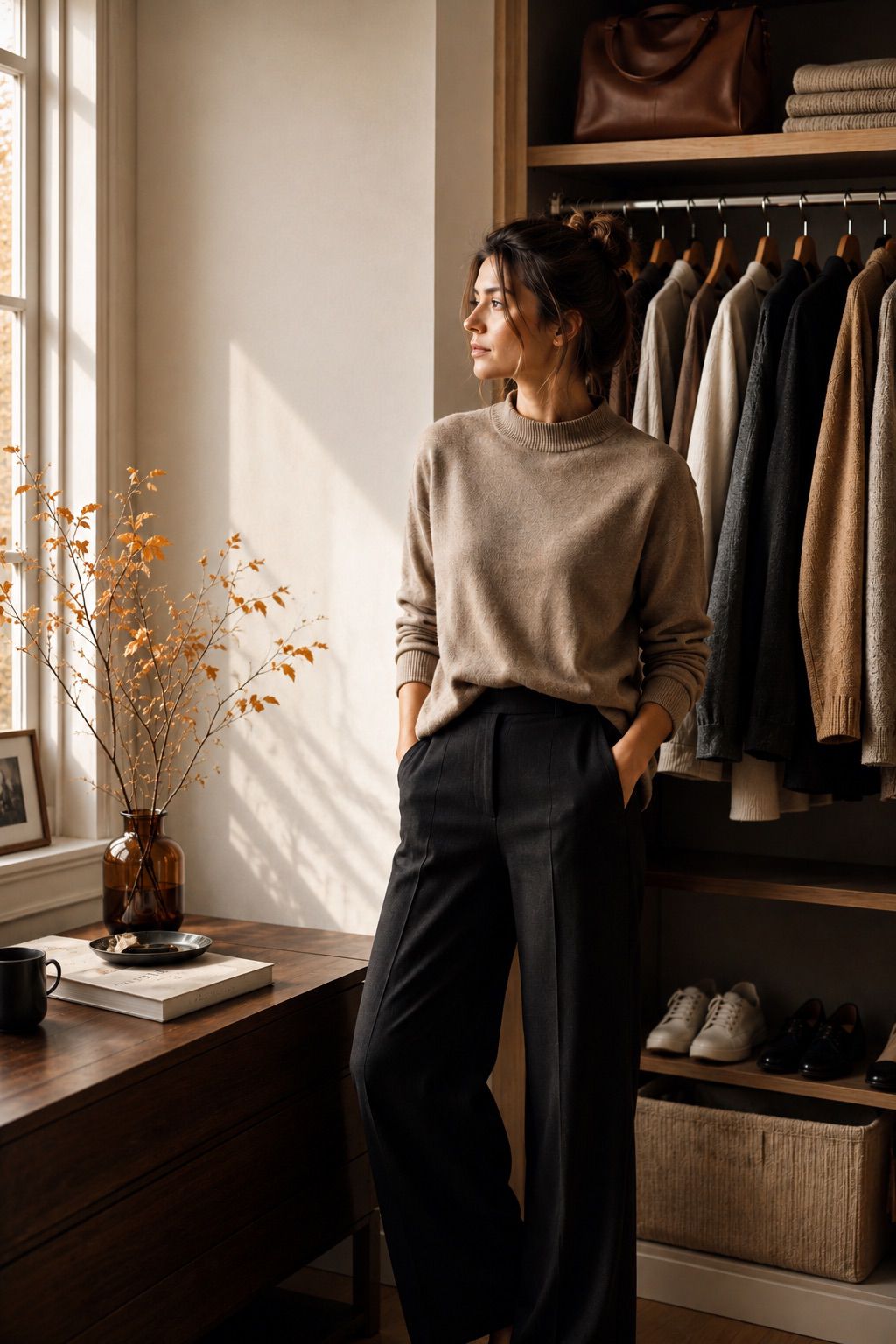
The freedom to wear clothes that require no explanation is a profound luxury that allows individuals to prioritize personal taste and comfort over external validation. This judgment replaces the inadequate standard that fashionable or stylish clothing must always make a statement or spark conversation. The notion that one’s attire must be attention-seeking or trendy in order to be considered stylish is a misguided assumption that can lead to unnecessary stress and self-doubt.
In reality, the true luxury of fashion lies in finding pieces that effortlessly blend into daily life, freeing the wearer from explanation or justification. This freedom is not about being invisible or lacking personal style, but rather about being confident and at ease in one’s own skin. By wearing clothes that require no explanation, individuals can focus on what truly matters to them, rather than seeking approval from others. This approach to fashion prioritizes comfort and practicality, allowing for a more authentic expression of personal style and a sense of ease that comes with not having to justify one’s choices.
To truly understand the value of wearing clothes that require no explanation, it’s essential to consider the role of materials, construction, and maintenance in determining the quality and comfort of a garment. The fabric quality and texture, for instance, play a significant part in how a piece of clothing will behave over time. A well-made garment constructed from high-quality materials will not only provide durability but also ensure that the wearer remains comfortable throughout the day. This attention to detail is crucial because it directly impacts the wearer’s ability to move freely and confidently, without the burden of explaining or justifying their attire.
The importance of fit cannot be overstated in this context either. A garment that fits well, neither too tight nor too loose, contributes significantly to the wearer’s ease and confidence. It allows for a full range of motion and does not draw unnecessary attention due to poor construction or ill-fitting design. Furthermore, regular maintenance and care of clothing items extend their longevity and ensure they continue to provide comfort and satisfaction over time. By prioritizing these aspects—materials, construction, fit, and maintenance—individuals can curate a wardrobe that embodies the freedom and confidence that comes with wearing clothes that require no explanation. This approach to fashion is not merely about aesthetics but about creating a harmonious relationship between the wearer, the garment, and the environment in which it is worn.
The distinction between genuine quality and its imitation in clothing lies in the subtlety of detail that prioritizes comfort over display. A garment that requires no explanation is not one that lacks visual appeal, but rather one that has been crafted with a deep understanding of how materials, construction, and fit intersect to create a sense of ease and confidence for the wearer. For instance, a well-tailored pair of trousers made from a high-quality wool blend will drape elegantly on the body, neither clinging too tightly nor hanging too loosely, thereby eliminating the need for constant adjustment or explanation.
In contrast, clothing that relies on flashy logos, bold patterns, or trendy cuts to make a statement often falls into the category of display over comfort. Such garments may initially garner attention and admiration, but they frequently come at the cost of practicality and personal expression. The wearer may find themselves constrained by the need to explain or justify their choice of attire, rather than simply enjoying the freedom to move and live without self-consciousness. By focusing on the intrinsic qualities of a garment, such as its texture, weight, and drape, individuals can cultivate a wardrobe that embodies the understated freedom of wearing clothes that require no explanation, and in doing so, they can express their personal style with confidence and authenticity.
To apply the standard of wearing clothes that require no explanation across different conditions, it’s essential to consider the social and professional contexts in which certain attire may be necessary. For instance, in a formal work setting, a suit and tie or a professional dress may be required, limiting the freedom to wear clothes that require no explanation. However, even within these constraints, individuals can prioritize comfort and practicality by choosing high-quality materials, paying attention to fit, and selecting timeless designs over trendy ones.
In more casual settings, such as weekends or social gatherings, the standard of wearing clothes that require no explanation can be applied more freely. Here, individuals can focus on curating a wardrobe that embodies ease and confidence, without the need for external validation. This might involve investing in a few well-made, versatile pieces that can be mixed and matched to create a variety of outfits, rather than relying on flashy or attention-seeking clothing. By doing so, individuals can cultivate a sense of personal style that is authentic and confident, allowing them to move through their daily lives with greater ease and freedom. The key is to recognize that the standard of wearing clothes that require no explanation is not about being invisible, but about being at ease in one’s own skin, regardless of the context.
The standard of wearing clothes that require no explanation can be sharpened by considering the role of proportion in garment construction. Proportion refers to the relationship between the various components of a piece of clothing, such as the balance between sleeve length and body length, or the ratio of waist width to hip width. A garment with well-considered proportions will create a sense of harmony and ease on the body, allowing the wearer to move freely without drawing unnecessary attention to themselves. This is because proportion affects not only the aesthetic appeal of a garment but also its functionality and comfort. For example, a jacket with sleeves that are too long can restrict arm movement, while one with sleeves that are too short can leave the wrists exposed, both of which can compromise the wearer’s ease and confidence. By prioritizing proportion in clothing design, individuals can create a wardrobe that embodies the freedom and authenticity of wearing clothes that require no explanation, without relying on external validation or trendy statements.