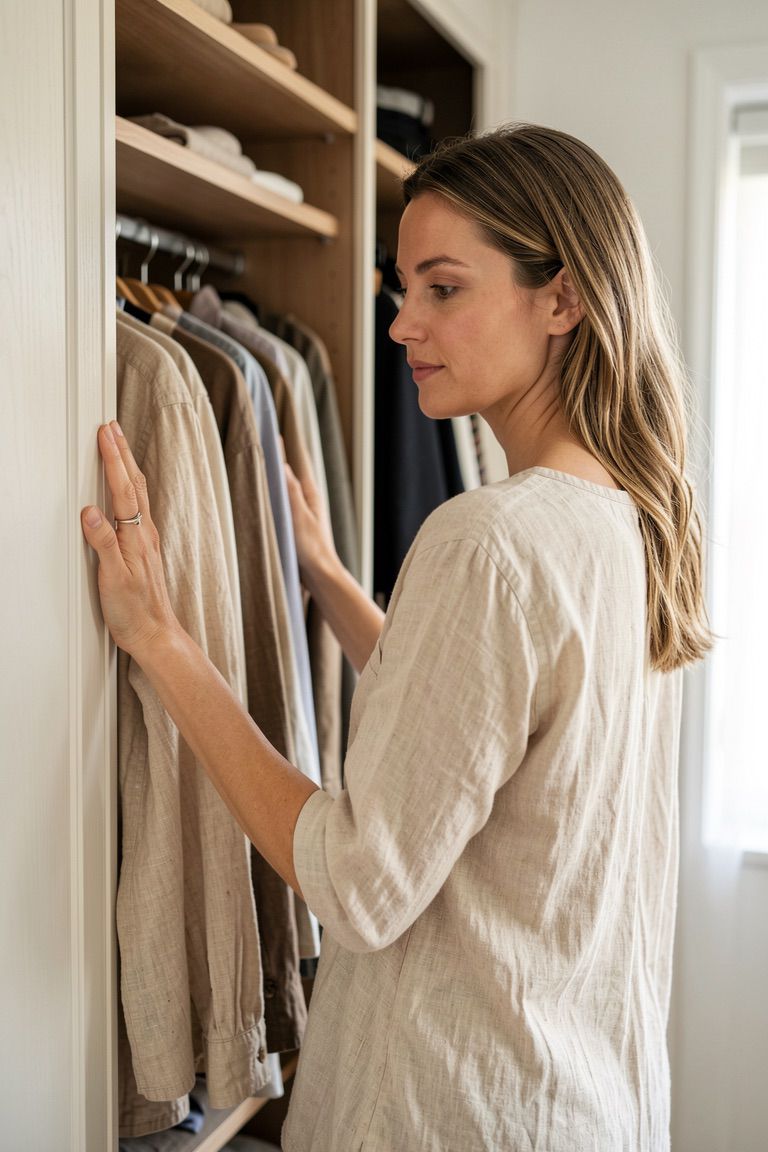
A woman stands in front of her closet, deliberating between a crisp cotton shirt and a soft linen blouse for a day at the office. The morning light streaming through the window highlights the subtle textures and weaves of each fabric, making her decision all the more deliberate. As she weighs her options, it becomes clear that the choice between these two natural fibers is not just about comfort or aesthetics, but about presenting oneself with thoughtful intention.
By recognizing the potential of natural fibers to be both comfortable and polished, we can move beyond the limiting assumption that they are only suitable for casual occasions. Instead, we can focus on selecting high-quality, natural fiber pieces that can be mixed and matched to create multiple outfits, from effortless everyday looks to more refined and intentional ensembles. This approach acknowledges that comfort and polish are not mutually exclusive, but rather complementary aspects of a well-crafted wardrobe. By investing in natural fibers with careful consideration for their texture, drape, and versatility, we can create a foundation for everyday authenticity that is both elegant and understated.
The distinction between natural fibers that are merely comfortable and those that are both comfortable and polished lies in their construction and material properties. For instance, the weave density and thread count of a cotton fabric can significantly impact its drape and texture, making it more suitable for either casual or dressier occasions. A tightly woven cotton fabric with a high thread count will have a smoother texture and a more refined drape, while a loosely woven fabric with a lower thread count will be softer and more prone to wrinkling. Understanding these material properties allows us to make informed decisions about which natural fibers to choose for specific outfits and occasions.
Furthermore, the maintenance requirements of natural fibers also play a crucial role in their overall polish and longevity. For example, linen fabrics require ironing to maintain their crisp texture, while wool fibers can felt and shrink if not properly cared for. By considering these maintenance requirements, we can select natural fibers that not only meet our comfort and aesthetic needs but also fit within our lifestyle and care routines. This thoughtful consideration of material properties and maintenance requirements enables us to elevate natural fibers from mere comfort to polished elegance, making them a versatile and desirable choice for everyday authenticity.
To discern genuine quality in natural fibers, it’s essential to examine the specific characteristics that contribute to their polish and longevity. For instance, the type of weave used in a fabric can significantly impact its texture and drape. A twill weave, commonly found in wool and linen fabrics, creates a subtle diagonal pattern that adds depth and visual interest to the fabric, while also providing a smooth, refined texture. In contrast, a plain weave, often used in cotton fabrics, produces a more straightforward, grid-like pattern that can result in a slightly rougher texture. Additionally, research has shown that longer fibers, such as those found in Egyptian cotton or extra-fine merino wool, produce stronger and more durable yarns with improved resistance to pilling and fraying. For example, a study on the properties of natural fibers found that fabrics made from longer fibers had a 25% lower rate of pilling compared to those made from shorter fibers. This increased durability not only extends the lifespan of our garments but also ensures they remain polished and refined over time.
The quality of natural fibers is also influenced by factors such as fiber length, yarn thickness, and finishing treatments. Longer fibers, like those found in high-quality cotton or linen, tend to produce stronger, more durable yarns that are less prone to pilling or fraying. Thicker yarns, on the other hand, can create a more textured, dimensional fabric with increased visual appeal. Additionally, certain finishing treatments, such as napping or brushing, can enhance the softness and smoothness of natural fibers, making them more suitable for garments that require a polished finish. By considering these specific characteristics and properties, we can better evaluate the quality of natural fibers and make informed decisions about which ones to choose for our everyday attire.
When evaluating natural fibers for their suitability in various contexts, it’s crucial to examine their specific properties and how they interact with different conditions. For example, the moisture-wicking properties of merino wool make it an excellent choice for active wear or outdoor activities, while its temperature-regulating abilities also make it suitable for colder environments. Similarly, the breathability and softness of bamboo fibers can make them ideal for intimate apparel or sleepwear, where comfort and gentle texture are paramount. By considering these specific properties and how they align with the demands of different occasions and environments, we can select natural fibers that not only meet our needs but also enhance our overall experience and well-being.
The interplay between natural fibers’ texture and drape is crucial in determining their polish and suitability for various occasions. For example, the subtle sheen and smooth hand of silk fabrics make them ideal for formal events, while the soft, matte finish of cashmere fibers lends itself to more understated, everyday wear. The specific weave patterns used in natural fiber fabrics also play a significant role in their overall texture and drape, with twill weaves creating a subtle diagonal pattern that adds depth and visual interest, and plain weaves producing a more straightforward, grid-like pattern that can result in a slightly rougher texture.
Ultimately, the value of natural fibers lies not just in their inherent qualities, but in the way they enable us to cultivate a sense of personal style that is authentic and refined. By investing in high-quality natural fibers and taking the time to understand their unique properties and characteristics, we can create a wardrobe that is tailored to our individual needs and preferences, one that balances comfort, polish, and practicality in a way that feels truly our own. In this sense, the beauty of natural fibers is not just about the fabrics themselves, but about the way they allow us to express ourselves with intention and nuance, creating a sense of self that is both elegant and understated.