Author: Elias Rowen

I enjoy writing about events that happened on specific days of the year. There’s something fascinating to me about the idea that every date carries its own story—moments when history quietly turned a corner or suddenly exploded into something unforgettable. I don’t focus on famous people as much as I focus on the moments themselves. I like digging into what was happening on that particular day, what led up to it, and what followed after. When I write, I try to bring readers into the moment, to capture what it might have felt like as events were unfolding in real time, before anyone knew how things would turn out. For me, history isn’t just a list of dates and facts. It’s a collection of lived moments that still ripple into the present. My goal is to turn calendar dates into stories that feel real, relatable, and worth remembering.

The Gamble That Doubled a Nation: The Louisiana Purchase Ratified

Elias Rowen

On October 20, 1803, the U.S. Senate cast a vote that would forever reshape the destiny of a young republic. With the ratification of the Louisiana Purchase treaty, America suddenly doubled in size, acquiring over 828,000 square miles of land from France at a cost of $15 million—just four cents an acre. At the time, it was seen by some as reckless, unconstitutional, and wildly impractical. Yet history would prove it to be one of the most brilliant gambles ever taken by the United States. The Louisiana Purchase was not just a land deal—it was a declaration of vision, ambition, and faith in the future.

The stage was set in a world still reeling from revolution and war. France, under Napoleon Bonaparte, controlled the Louisiana Territory, an expanse stretching from the Mississippi River to the Rocky Mountains. For Napoleon, Louisiana was supposed to be the breadbasket of a revived French empire in the Americas. But ambitions withered in the tropical heat of Haiti, where enslaved Africans led by Toussaint Louverture rose in revolt, defeating French forces and securing independence. Without Haiti as a colonial anchor, Louisiana lost its strategic purpose. At the same time, France faced renewed conflict with Britain and needed money more than distant land.

Meanwhile, across the Atlantic, President Thomas Jefferson was preoccupied with New Orleans. For the United States, control of the Mississippi River was vital. Farmers in the Ohio Valley depended on it to move goods to market, and any foreign power controlling New Orleans threatened the lifeline of western commerce. Jefferson, a strict constitutionalist who once doubted the wisdom of expansive federal power, suddenly found himself tempted by a deal that could secure not just New Orleans, but an empire of liberty stretching beyond imagination.

The negotiations unfolded with unexpected drama. Jefferson initially sought only the purchase of New Orleans. To his astonishment, Napoleon’s ministers offered the entire Louisiana Territory. In a stroke of pen and vision, the United States acquired land stretching from present-day Louisiana to Montana, from the Mississippi River to the Rockies. It was a deal so vast it staggered the imagination. Critics called it rash, questioning how the nation could govern such a wilderness. But Jefferson, ever the visionary, framed it as an opportunity to preserve the republic’s future. In his mind, America needed space to grow, to ensure liberty for generations to come.

Yet not everyone saw it so clearly. Federalists opposed the purchase, fearing it would dilute their political power by flooding the Union with agrarian states. Some questioned its constitutionality—where, they asked, did the Constitution give the president power to buy land? Jefferson, normally a strict interpreter, bent his principles, arguing that the treaty-making power sufficed. He understood that history’s moments of opportunity rarely wait for legal technicalities.

On October 20, 1803, the Senate voted 24 to 7 to ratify the treaty. With that vote, the deal was sealed. The Louisiana Purchase was not only the largest territorial acquisition in U.S. history—it was a leap of faith in the idea of a continental nation. The young republic, barely three decades old, had just transformed into a continental power in embryo.

The human dimensions of the purchase were profound. For Native American nations, it marked the beginning of intensified pressure on their lands, lives, and futures. The Louisiana Territory was not empty; it was home to diverse indigenous peoples who would soon face the relentless push of settlers. For enslaved African Americans, the expansion deepened both peril and possibility—expanding the terrain of slavery while also creating new frontiers where freedom might be sought. For ordinary farmers, it meant opportunity: fertile soil, new horizons, and the promise of independence on one’s own land.

Jefferson wasted no time in sending explorers to map the new frontier. The Lewis and Clark Expedition, launched in 1804, became the embodiment of curiosity and ambition, trekking across rivers, mountains, and plains to chart the unknown. Their journey not only mapped geography but also cemented the Louisiana Purchase in the American imagination as a symbol of possibility, wonder, and destiny.

In hindsight, the Louisiana Purchase was absurdly cheap. Fifteen million dollars for land that would one day hold vast wheat fields, cattle ranches, oil reserves, and cities like St. Louis, Denver, and New Orleans. It was an investment not just in land, but in the future prosperity of a nation that dreamed bigger than its borders. It was proof that sometimes history hinges on boldness—the willingness to seize opportunity when it comes, no matter how risky it seems.

The ratification of the Louisiana Purchase reminds us that the United States was never simply a collection of states along the Atlantic coast. It was always a nation in motion, defined by expansion, ambition, and the restless belief that tomorrow could always be larger than today. October 20, 1803, was the day that belief became geography, the day America doubled in size, and the day a young nation announced to the world: we are here to stay, and we are here to grow.

Related Posts

The Day an Empire Fell: Yorktown and the Birth of a Nation

Elias Rowen

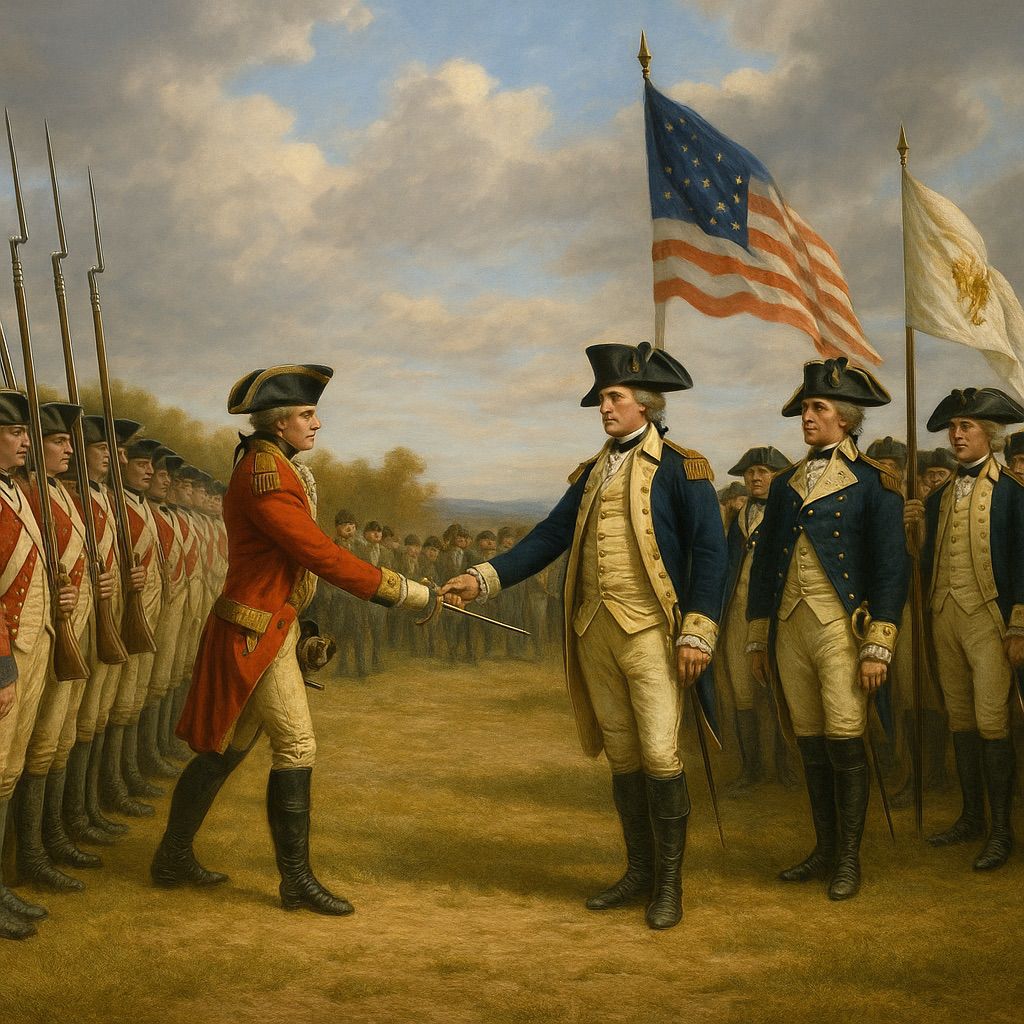
On October 19, 1781, in a quiet Virginia field, the mightiest empire in the world bent its knee to a ragtag army of farmers, tradesmen, and dreamers. The British surrender at Yorktown was more than just a military defeat—it was the moment the American Revolution transformed from rebellion into reality, from fragile hope into tangible independence. Cannons thundered no more; muskets fell silent; and as British General Charles Cornwallis’s forces marched out to lay down their arms, the world bore witness to the collapse of British authority in America and the rise of a new nation that would, in time, reshape the globe.

The path to Yorktown was paved with desperation, grit, and unlikely alliances. By 1781, the American Revolution had dragged on for six long years. Washington’s army had endured winters of starvation, defeats that seemed insurmountable, and dwindling supplies. Britain had assumed the rebellion would fizzle out, that colonists armed with passion but little else could never sustain a war against red-coated veterans. But the colonists had something Britain did not: unshakable resolve, a vast and unforgiving land, and eventually, the support of France. The alliance with France—born from diplomacy, nurtured by shared hatred of Britain—tipped the scales. French ships, French soldiers, French gold: all flowed into the American cause, breathing life into the faltering revolution.

Cornwallis, commanding British forces in the South, found himself trapped by his own choices. Ordered to secure Virginia, he fortified Yorktown, a small port town on the Chesapeake Bay, assuming British naval supremacy would protect him. But fate turned against him. The French fleet, under Admiral de Grasse, shattered British naval power at the Battle of the Chesapeake, sealing off escape by sea. On land, Washington, Rochambeau, and Lafayette moved swiftly, encircling Yorktown with combined Franco-American forces. Cannons were dragged into position, trenches dug, and a siege unlike any seen in the New World began.

For weeks, American and French artillery rained fire on British positions. Red-hot cannonballs set supply depots ablaze. Soldiers crouched in trenches, hearts pounding with each thunderous blast. Cornwallis’s men, once confident, grew weary, starving, and desperate. By mid-October, escape was impossible, reinforcements nonexistent, and supplies dwindling. On October 17, Cornwallis requested a ceasefire to negotiate surrender. Two days later, October 19, 1781, the deal was sealed.

The surrender ceremony was both somber and monumental. British troops marched between ranks of American and French soldiers, drums beating a dirge, muskets reversed, flags furled in shame. Tradition dictated that Cornwallis himself surrender, but claiming illness, he sent General Charles O’Hara in his stead. O’Hara first offered his sword to Rochambeau, who refused, directing him to Washington. Washington, embodying dignity and restraint, also refused, sending O’Hara to his subordinate, General Benjamin Lincoln—the very man forced to surrender to the British at Charleston the year before. It was a gesture rich in symbolism: America, once humiliated, now held the upper hand.

For the soldiers on the field, it was more than ceremony. It was the end of years of hunger, fear, and sacrifice. Picture the barefoot soldier at Valley Forge, remembering frozen nights with no shoes, now watching redcoats surrender. Picture the farmer who left his plow, the blacksmith who left his forge, the printer who left his press—all now vindicated in their struggle. Picture the French allies, proud to see their gamble pay off, their muskets gleaming beside American rifles. For them, Yorktown was not just a victory. It was redemption.

The news spread like wildfire. Bells rang in Philadelphia, crowds celebrated in Boston, and in Paris, champagne flowed. In London, the reaction was grim. The war was not formally over—treaties would take years—but Yorktown shattered Britain’s will to continue. Parliament debated, voices rose, and finally, Prime Minister Lord North uttered the words that echoed through history: “Oh God, it’s all over.”

Yet Yorktown was not merely the end of a war. It was the birth of an idea: that ordinary people, united in cause and conviction, could overthrow empire and create a republic built on liberty. The United States would not be perfect. It would struggle, fracture, and fall short of its ideals. But on October 19, the seed was planted, and the world took notice. Revolutions in France, in Latin America, in Europe, would follow in its footsteps, inspired by the sight of farmers defeating kings.

Humanizing Yorktown means remembering not just Washington, Cornwallis, or Rochambeau, but the individuals who made the impossible possible. The young drummer boy who beat time as British troops surrendered, not fully grasping history but feeling its weight. The enslaved men who fought on both sides, hoping for freedom in exchange for service, many betrayed, but some realizing liberty through revolution. The women who sewed uniforms, nursed the wounded, and kept farms alive while husbands fought. Their hands, their sweat, their tears, all marched at Yorktown too.

The surrender at Yorktown is a reminder that history is never inevitable. Victory was not guaranteed, independence not assured. It was won through grit, sacrifice, and the audacity to believe that a people could govern themselves. October 19, 1781, was the day the dream became real, the day empire faltered, and the day a new nation rose, fragile but determined.

The world would never be the same.

Related Posts

From Russia with Ice: How Alaska Became America’s Last Frontier

Elias Rowen

On October 18, 1867, in the foggy port town of Sitka, a small crowd gathered as the Russian flag was lowered and the Stars and Stripes were raised over a vast wilderness that few Americans had ever seen. The transfer was quiet, ceremonial, almost anticlimactic. Yet the moment marked the birth of a geopolitical gamble that would eventually prove one of the most transformative acquisitions in U.S. history. Alaska—7.2 million dollars’ worth of glaciers, forests, tundra, and untapped riches—became American territory. Critics mocked it as “Seward’s Folly” or “Seward’s Icebox,” sneering at what they believed was a frozen wasteland purchased at an absurd price. But history would have the last laugh. That day, October 18, 1867, the United States gained not just land but a frontier of possibility, a treasure chest of resources, and a stage for future global influence.

The story begins with empire in decline. By the mid-19th century, Russia was struggling to maintain its far-flung colonies. Alaska, though rich in fur and fish, was remote, expensive to defend, and vulnerable to British expansion from nearby Canada. The Crimean War had drained Russian coffers, and Tsar Alexander II feared losing Alaska without compensation in some future conflict. Better, he reasoned, to sell it—especially to the United States, whose growing power offered a counterweight to Britain. For Russia, the sale was pragmatic; for America, it was opportunity.

Enter William H. Seward, U.S. Secretary of State under President Andrew Johnson. A visionary expansionist, Seward believed that America’s destiny was to span oceans, to command trade and influence in both hemispheres. When Russian diplomats approached him in 1867, he seized the chance. After late-night negotiations, the deal was struck: 7.2 million dollars—about two cents an acre—for 586,000 square miles of wilderness. In today’s terms, it was a bargain beyond imagination.

But Americans were not impressed. Newspapers ridiculed the purchase. “What are we to do with this worthless icebox?” they jeered. “Nothing but polar bears and glaciers!” The name “Seward’s Folly” stuck, a reminder of skepticism that saw the acquisition as folly rather than foresight. Few could envision Alaska’s potential. The Civil War had just ended, the nation was weary, and the idea of expanding into icy wastelands seemed absurd when there were already so many challenges at home.

The transfer itself was simple but symbolic. On October 18, Russian and American officials met in Sitka. Cannons fired salutes, flags were lowered and raised, and the land that had once belonged to the Russian Empire was now American. For the indigenous peoples of Alaska—the Tlingit, Haida, Yup’ik, Aleut, and many others—there was no celebration. Their lands had been bartered over without consent, their futures altered in ways they could not yet foresee. For them, the transfer marked another chapter in centuries of displacement and adaptation.

In the years that followed, Alaska was largely neglected. The federal government treated it as a distant outpost, governed more as a possession than as a partner. But beneath the snow and silence, Alaska held secrets that would redefine its value. Gold was discovered in the 1890s, sparking the Klondike and Nome rushes that lured thousands north. Later came timber, fisheries, and eventually, oil—black gold that would transform Alaska into a cornerstone of America’s energy supply. Far from folly, Seward’s Icebox proved a treasure chest.

Yet Alaska’s importance was not only economic. Its strategic position between North America and Asia made it a vital outpost in World War II and the Cold War. Bases were built, defenses strengthened, and the territory became a linchpin of American security. The Aleutian Islands campaign during World War II showed just how critical the region was. Later, during the nuclear standoff of the Cold War, Alaska was the frontline of early-warning systems against Soviet attack.

Through it all, Alaska also became myth and muse. Writers, artists, and adventurers cast it as America’s last frontier—a land of wild beauty, unforgiving landscapes, and rugged individualism. From Jack London’s stories of survival to the mystique of Denali, Alaska captured the imagination as a place where nature ruled and humanity struggled to find its place.

The path from territory to statehood was long. For decades, Alaskans pushed for greater recognition, frustrated by distant governance. Finally, in 1959, Alaska became the 49th state of the Union. It was a moment of pride for those who had endured the hardships of frontier life, a validation of Seward’s vision, and a recognition of the land’s enduring value.

But perhaps the most human story of Alaska’s transfer lies in the way it was misunderstood. For the critics of 1867, it was folly. For Seward, it was foresight. For indigenous peoples, it was dispossession. For gold seekers, it was opportunity. For America, it was destiny. History rarely wears just one face, and Alaska is a reminder of how perspective changes over time.

On October 18, 1867, the world barely noticed when a flag changed over a foggy harbor in Sitka. Yet that moment altered the map forever. Alaska, once dismissed as frozen wasteland, became one of the most valuable acquisitions in history—a land of resources, beauty, and strategic power. It was not folly, but foresight. It was not an icebox, but a frontier. And it remains, to this day, a place where America’s past, present, and future converge.

Related Posts

When the Oil Stopped: The 1973 OPEC Embargo and the Crisis That Shook the World

Elias Rowen

On October 17, 1973, a group of nations pulled a lever that would send shockwaves around the globe. The Organization of Arab Petroleum Exporting Countries (OAPEC), led by Saudi Arabia, announced an oil embargo against nations perceived as supporting Israel during the Yom Kippur War. What seemed like a regional dispute exploded into a global energy crisis that rattled economies, reshaped international relations, and forever altered how nations thought about power—not just military might, but energy. Gasoline stations ran dry, lines stretched for miles, inflation soared, and governments scrambled in panic. For the first time, the modern world realized that its lifeblood—oil—could be turned into a weapon more powerful than bombs.

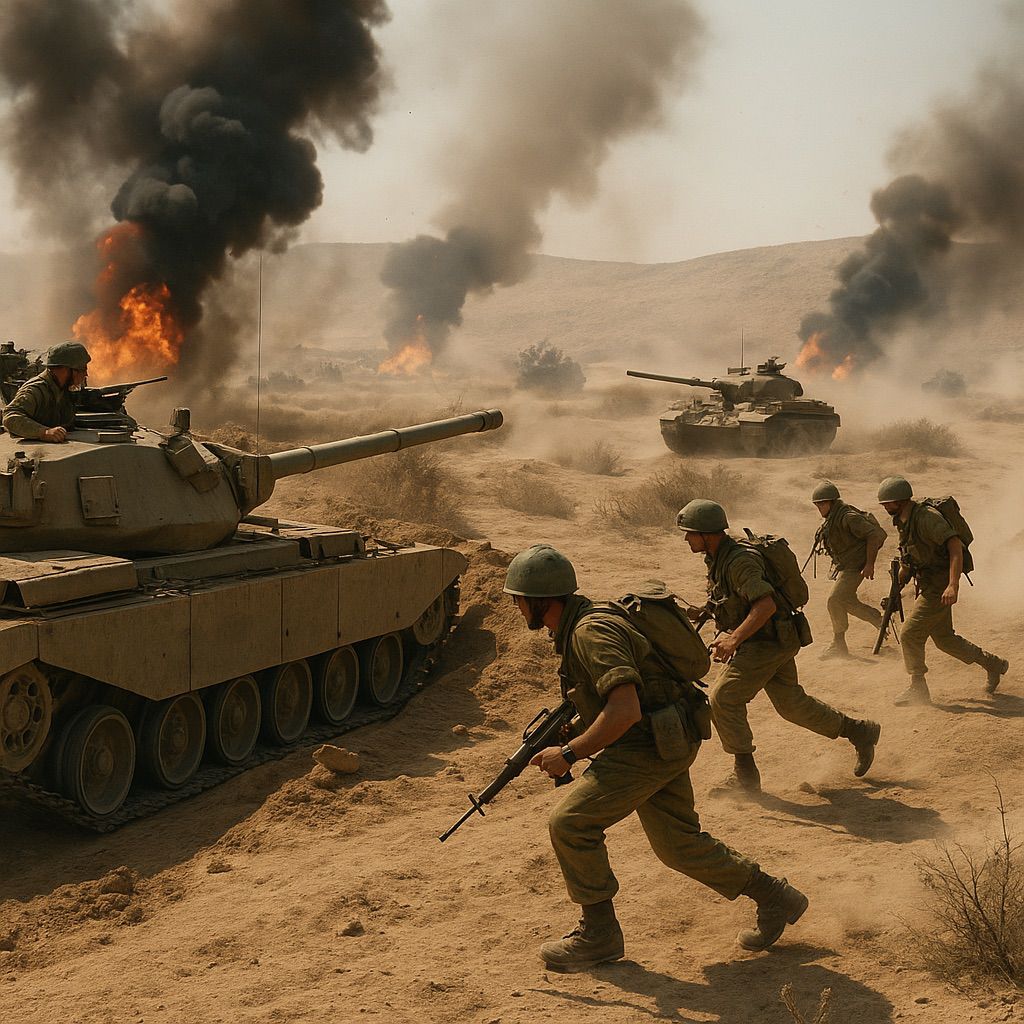
The story begins with war. On October 6, 1973, Egyptian and Syrian forces launched a surprise attack on Israel during Yom Kippur, the holiest day in the Jewish calendar. The conflict quickly escalated, with the United States resupplying Israel and the Soviet Union aiding Arab states. In response, OAPEC nations wielded their most potent tool: oil. They announced they would no longer sell to the United States, the Netherlands, and other supporters of Israel, while simultaneously cutting overall production. Overnight, the world’s oil supply shrank, and prices skyrocketed.

For decades, oil had flowed cheaply and abundantly, fueling the growth of industry, suburban sprawl, and the automobile culture of the West. Americans, in particular, had come to take cheap gas for granted, driving massive cars that guzzled fuel with abandon. The embargo shattered that illusion. By early 1974, oil prices had quadrupled, and the effects rippled far beyond the pump. Inflation surged, unemployment rose, and stock markets faltered. Factories slowed or shut down as energy costs soared. In the United States, motorists sat in endless lines outside gas stations, sometimes for hours, only to find pumps empty. “Sorry, No Gas Today” signs became emblems of a new reality.

It was not just an economic crisis—it was a psychological shock. The West, accustomed to seeing itself as master of global resources, was forced to confront its vulnerability. The embargo revealed how deeply dependent industrialized nations were on oil from the Middle East. For Arab states, it was a moment of unprecedented leverage, proving that oil could be used not only to build wealth but also to shape geopolitics. For the first time, the balance of power tilted away from Washington, London, and Paris, toward Riyadh, Kuwait City, and other oil capitals.

In the U.S., President Richard Nixon addressed the nation, calling for conservation and unveiling Project Independence, a plan to free America from reliance on foreign oil by the 1980s. Measures included daylight saving time extensions, lowered highway speed limits to 55 mph, and investments in alternative energy research. Americans were urged to carpool, insulate their homes, and turn down thermostats. For a nation that had grown accustomed to abundance, the sudden call for sacrifice felt like cultural whiplash.

Elsewhere, the crisis reshaped policies and economies. Japan, which imported nearly all its oil, scrambled to diversify its energy sources and accelerate efficiency. European nations pursued new alliances, wary of being caught in the middle of future conflicts. Oil-exporting countries, flush with newfound wealth from higher prices, invested in massive development projects, building skyscrapers, highways, and universities seemingly overnight. The petrodollar era was born, intertwining oil revenues with global finance in ways that persist to this day.

But perhaps the greatest legacy of the 1973 embargo was how it changed the way nations thought about energy itself. Governments realized that oil was not just a commodity—it was a strategic resource, as vital as food or weapons. Energy security became a cornerstone of foreign policy. The U.S. created the Strategic Petroleum Reserve to guard against future shocks. Nations began stockpiling fuel, diversifying suppliers, and investing in nuclear power and renewables. The crisis was a rude awakening that forced societies to confront the fragility of modern life.

And yet, the embargo also exposed contradictions. While OAPEC nations wielded oil as a weapon to influence the outcome of the Yom Kippur War, the embargo eventually fractured under pressure. By March 1974, the restrictions were lifted, partly because of economic damage to Arab economies themselves. Still, the world had been permanently transformed. Oil would never again be taken for granted.

To humanize the crisis, picture the ordinary people caught in its grip: the truck driver sleeping in his cab overnight to secure fuel for delivery, the suburban mother anxiously watching her gas gauge as she idled in a line stretching for blocks, the factory worker laid off when production slowed, the student walking past gas station signs that read “Closed” in bold, angry letters. For millions, the embargo was not a geopolitical abstraction—it was a daily struggle, a reminder of how global decisions trickle down to local lives.

The OPEC embargo of 1973 was more than an energy crisis. It was a turning point in global history, a moment when the balance of power shifted, when the illusion of endless abundance shattered, and when nations learned that in the modern world, power was not just about armies or ideologies—it was about energy. October 17 was the day oil became a weapon, and the world has never been the same since.

Related Posts

The Last Queen: Marie Antoinette and the Fall of a Dynasty

Elias Rowen

On October 16, 1793, the blade of the guillotine fell in Paris, severing not only the head of Marie Antoinette but also the last vestiges of France’s ancien régime. The queen who had once dazzled Europe with her beauty, extravagance, and seeming detachment from the struggles of her people became, in death, a symbol of a world collapsing under the weight of inequality and revolution. Her life, often caricatured as frivolous and heartless, was in truth far more complex: a story of a young woman thrust into unimaginable power, trapped by circumstance, vilified by propaganda, and ultimately consumed by the tide of history.

Marie Antoinette was born in 1755, the fifteenth child of Empress Maria Theresa of Austria. At just 14, she was married off to Louis-Auguste, heir to the French throne, as a diplomatic pawn meant to cement an alliance between Austria and France. The girl who left Vienna for Versailles was playful, charming, and ill-prepared for the rigid protocols of the French court. Her new husband—awkward, shy, and disinterested—did little to ease her transition. In the suffocating world of Versailles, where every movement was scrutinized and politics were a constant undercurrent, the young dauphine struggled to find her place.

When Louis XVI ascended to the throne in 1774, Marie Antoinette became queen at just 19. But her youthful exuberance soon clashed with the growing resentment of a people crushed by taxes, famine, and inequality. She spent lavishly on fashion, gambling, and entertainments, earning the scornful nickname “Madame Déficit.” Her elaborate hairstyles and extravagant gowns became symbols of aristocratic indifference. Most damning was the infamous (though apocryphal) phrase attributed to her—“Let them eat cake”—a line that captured the fury of the revolutionaries even though she likely never uttered it.

Yet to reduce her to excess alone is to miss the human beneath the myth. Marie Antoinette was also a devoted mother to her children, a woman trapped in a loveless marriage, and a queen who, in her later years, attempted to act with more seriousness and dignity. She was caught in an impossible position: despised by the people for her Austrian origins, blamed for France’s financial crises, and isolated within a collapsing monarchy. Propaganda painted her as everything from a reckless spendthrift to a sexual deviant, fueling hatred that far exceeded her actual deeds.

The French Revolution erupted in 1789, and Marie Antoinette became its most hated target. While Louis vacillated and wavered, the queen was accused of plotting with Austria, of conspiring to crush the revolution, of being the enemy within. In 1791, she and Louis attempted to flee Paris in the failed Flight to Varennes, cementing the image of betrayal. By 1792, the monarchy was abolished, and the royal family imprisoned. Louis XVI was executed in January 1793. Marie Antoinette’s turn came soon after.

Her trial before the Revolutionary Tribunal was swift, brutal, and stacked against her. She was accused of conspiring with foreign powers, of draining the treasury, even of incest with her own son—an accusation so monstrous it shocked her into tears in the courtroom. None of it mattered; her fate was already sealed. The Revolution needed blood, and her execution was both justice and spectacle.

On the morning of October 16, 1793, Marie Antoinette was led from her prison in the Conciergerie. Her once-golden hair had turned white from stress. Dressed in a plain white gown, her hands bound, she was taken by cart through the jeering crowds of Paris. Unlike her husband, who had maintained composure on his way to death, Marie Antoinette stumbled, exhausted, yet carried herself with remarkable dignity. Witnesses recalled her calmness, her refusal to plead, her acceptance of what was to come.

At the Place de la Révolution, where her husband had died months earlier, she climbed the scaffold. Turning to her executioner after accidentally stepping on his foot, she is said to have whispered, “Pardon me, sir, I did not do it on purpose.” Moments later, the blade fell, and the crowd erupted in cheers.

Her death marked more than the fall of a queen—it marked the end of an era. The monarchy that had ruled France for centuries was gone, replaced by the radical tumult of the Revolution. Yet her legacy would live on, transformed by time from villain to tragic figure. Some see her as a shallow symbol of aristocratic decadence, others as a scapegoat who bore the fury of a people’s suffering. Still others remember her as a mother, a woman caught in history’s whirlwind, who met her end with grace.

The story of Marie Antoinette is one of myth and memory as much as fact. She was larger than life in both her excess and her downfall. Her name became shorthand for the arrogance of the elite, yet her humanity shines through the cracks of propaganda and caricature. She remains a reminder of how quickly power can crumble, how mercilessly history judges, and how individuals can become symbols far beyond themselves.

October 16, 1793, was the day the queen of France died. But it was also the day Marie Antoinette became immortal—forever the queen whose downfall embodied the fall of a dynasty, forever the woman whose story reminds us that behind every myth lies a beating human heart.

Related Posts

Mata Hari: The Dancer Who Died a Spy

Elias Rowen

On October 15, 1917, in the chill of a Parisian morning, a woman stood before a firing squad at the Vincennes barracks. She did not plead, she did not cry, and according to witnesses, she refused a blindfold. Her name was Margaretha Geertruida Zelle, but the world knew her by a stage name that shimmered with exotic mystery: Mata Hari. To some, she was a seductress who played with fire and betrayed nations during the deadliest war Europe had ever seen. To others, she was a scapegoat—an entertainer caught in the crosshairs of paranoia, condemned more for who she was than for what she actually did. Her execution made her a legend, her life an eternal dance between myth and truth.

Born in 1876 in Leeuwarden, the Netherlands, Margaretha’s early life offered little hint of the infamous figure she would become. She was the daughter of a hat maker, a girl who endured her parents’ divorce, her mother’s death, and her father’s financial ruin. At 18, in search of escape and stability, she married a Dutch colonial officer, Rudolf MacLeod, and moved with him to the Dutch East Indies (present-day Indonesia). Their marriage was toxic, marked by infidelity and violence. They had two children, one of whom died tragically from poisoning, a loss that deepened the cracks in their relationship. By the time Margaretha returned to Europe, divorced and disillusioned, she was ready to reinvent herself.

And reinvent she did. In Paris, she emerged not as Margaretha Zelle, but as Mata Hari—a name meaning “Eye of the Day” in Malay. Draped in silks and jewels, she captivated audiences with her sensual, exotic dances, blending fragments of Eastern styles with Western fantasies. She wasn’t just performing; she was embodying mystery, becoming an object of fascination to the elite of Europe. Men were enthralled, women were intrigued, and newspapers made her a sensation. She courted ambassadors, officers, and industrialists, moving through salons and hotels with an air of dangerous glamour.

But behind the veils and jewels, her life was far less enchanted. She was a woman past her youth in a society obsessed with it, an entertainer whose fame was fading as the Great War erupted in 1914. With Europe plunged into chaos, borders hardened and money grew scarce. Mata Hari’s network of lovers—many of them officers or politicians—suddenly made her both valuable and vulnerable. She traveled between countries, courted powerful men, and sought financial stability. In wartime, such movements drew suspicion like blood draws sharks.

Accusations soon surfaced: that she was a German spy, passing secrets gleaned from her lovers to the enemy. The Germans claimed her as Agent H-21, a prized asset. The French, desperate to show vigilance after a string of military failures, accused her of espionage that cost thousands of lives. Yet the evidence was thin—based more on rumor and circumstantial connections than concrete proof. Still, the image of Mata Hari, the exotic temptress who seduced men into spilling secrets, fit neatly into wartime paranoia.

Her trial in 1917 was as much spectacle as justice. Prosecutors painted her not just as a spy but as a dangerous woman, an embodiment of female sexuality weaponized against the nation. In a France demoralized by years of war, she became a convenient scapegoat, a way to channel anger and fear into a single body. Despite her denials, despite the lack of clear evidence, she was sentenced to death.

On the morning of her execution, Mata Hari’s final performance unfolded not on a stage, but in a courtyard. She dressed elegantly, as if for an audience. She refused a blindfold, stared directly at the rifles aimed at her, and according to legend, blew a kiss at her executioners. At 41, her body crumpled to the ground, but her myth soared.

The story of Mata Hari is more than espionage—it is about how societies project their fears and fantasies onto women. She was condemned less for what she did and more for what she represented: the independent woman, the sexual woman, the woman who crossed borders and defied norms. In a time of war, that made her dangerous. Whether or not she truly spied for Germany remains debated by historians. Some argue she was a double agent, others that she was little more than a dabbler in secrets, a courtesan who became collateral in a paranoid age.

What makes her story resonate even today is its humanity. Imagine the loneliness of Margaretha Zelle, reinventing herself as Mata Hari to escape a life of disappointment. Picture the thrill of her performances, the silks swirling, the crowd gasping, the illusion of control even as her real life slipped further from it. Picture her standing unflinching before rifles, knowing that in death she would at last command the world’s gaze one final time.

In the century since her death, Mata Hari has become legend: part femme fatale, part tragic heroine. Novels, films, and plays have woven her life into archetype. She is remembered not simply as a spy or a dancer, but as a symbol of how women who wield power outside the traditional roles are often punished for it. Her execution tells us less about her guilt and more about the fears of the men who judged her.

October 15, 1917, is remembered as the day Mata Hari died. But in truth, it was the day she became immortal. The bullets silenced her body, but her story—layered with myth, scandal, and fascination—continues to dance through history, reminding us that sometimes the most dangerous thing a woman can do is refuse to be ordinary.

Related Posts

Faster Than Fear: Chuck Yeager and the Day Humanity Broke the Sound Barrier

Elias Rowen

On October 14, 1947, high above the Mojave Desert, a man strapped himself into a bright orange rocket plane, took a deep breath, and pushed beyond what many believed was impossible. His name was Chuck Yeager, a World War II fighter ace with nerves of steel and the heart of a daredevil. That day, in the experimental Bell X-1 aircraft nicknamed Glamorous Glennis after his wife, Yeager became the first human to break the sound barrier in controlled, level flight. The sonic boom that echoed across the desert wasn’t just the sound of a plane—it was the sound of human ambition cracking through the ceiling of fear. It was the birth of a new age, where the sky was no longer the limit.

The journey to that moment was one of obsession and danger. For decades, pilots and scientists whispered about the “sound barrier” as if it were a wall in the sky. As planes approached the speed of sound—around 761 miles per hour at sea level—strange and terrifying things happened. Controls froze, planes shook violently, shockwaves formed, and wings ripped apart. Many pilots lost their lives in high-speed dives, their planes disintegrating before they could recover. The barrier seemed more myth than science, a cursed threshold where man was never meant to go.

But Yeager was not a man easily intimidated by myth. Born in rural West Virginia in 1923, he was a boy who grew up hunting, fixing engines, and learning to rely on his instincts. In World War II, he became a decorated fighter pilot, shooting down German planes with uncanny precision. He was known not just for his skill but for his calm under pressure. After the war, when the U.S. Air Force and NACA (precursor to NASA) sought test pilots willing to risk their lives for progress, Yeager was an obvious choice. He wasn’t a scientist, he wasn’t a theorist—he was a man who knew planes as extensions of his body, a man unshaken by fear.

The Bell X-1 was unlike any aircraft before it. Shaped like a bullet, powered by a liquid-fueled rocket engine, and designed to withstand forces that had destroyed so many other planes, it was built for one purpose: to pierce the sound barrier. Yet even with its design, no one truly knew what would happen when it crossed Mach 1. Would the controls fail completely? Would the plane disintegrate? Would Yeager’s body survive the violent transition? These weren’t just questions of engineering—they were questions of mortality.

To make matters worse, Yeager had secretly broken two ribs just days before the flight after being thrown from a horse. Too afraid of being grounded, he told almost no one. With the help of a friend, he rigged a makeshift broom handle to close the cockpit hatch, hiding his injury from officials. It was a reckless gamble, but then again, so was flying the X-1. On October 14, he climbed into Glamorous Glennis, his chest bound in pain, his mind steady as ever.

At 25,000 feet, the X-1 was released from the belly of a B-29 bomber. Yeager fired the rocket engines, feeling the plane surge forward with raw power. The needle on his instruments crept higher—Mach 0.85, 0.9, 0.95. The plane began to buffet, shuddering violently as shockwaves formed around its wings. At Mach 0.99, chaos threatened to overwhelm him. Then, in an instant, the turbulence vanished. The ride smoothed out, serene, almost tranquil. Yeager looked at the gauge: Mach 1.06. He had done it. The sound barrier was broken. Below, the desert echoed with a thunderous boom—the sound of a frontier falling.

News of the achievement was kept classified for months, but when it finally broke, Yeager became a living legend. To many, he embodied the spirit of courage that defined the postwar era: the belief that no barrier was beyond human reach, that fear was only another challenge to be conquered. He didn’t see himself as a hero, though. Yeager always said he was just doing his job, flying the plane, trusting the machine, and pushing forward because that was what needed to be done.

The legacy of October 14, 1947, cannot be overstated. Yeager’s flight shattered not only the sound barrier but also the psychological barrier that held humanity back. It paved the way for supersonic jets, space exploration, and the daring feats of the aerospace age. The Apollo missions, the Space Shuttle, even today’s experimental hypersonic craft—all trace their lineage back to Yeager’s boom over the desert.

But beyond technology, the story is profoundly human. Imagine Yeager gripping the controls with cracked ribs, knowing the odds but refusing to yield. Imagine the engineers on the ground, holding their breath as the X-1 climbed higher, praying it wouldn’t end in a fiery crash. Imagine the boom rolling across the Mojave, signaling to a weary world still recovering from war that humanity’s future lay not in limits, but in breaking them.

Yeager lived to old age, passing away in 2020 at 97, but his story feels timeless. He was a man of grit, humor, and humility, who faced fear with a grin and a drawl. He proved that courage is not the absence of fear, but the mastery of it. His sonic boom was not just a sound—it was a declaration. On October 14, 1947, humanity learned that the only true barriers are the ones we accept. Yeager refused to accept them, and because of that, we all fly higher.

Related Posts

The Miracle in the Andes: Survival Beyond Imagination

Elias Rowen

On October 13, 1972, the Andes Mountains bore witness to one of the most harrowing survival stories in human history. Uruguayan Air Force Flight 571, carrying 45 people—including a rugby team, their friends, and family—vanished into the snowy peaks between Chile and Argentina. The crash itself was horrific, but it was only the beginning. For 72 days, stranded at nearly 12,000 feet above sea level in subzero temperatures with no food, no shelter beyond the wreckage, and no rescue in sight, the survivors faced choices that would test the very definition of humanity. What happened in those mountains became both a tragedy and a testament—a chilling reminder of human fragility, but also a staggering story of endurance, courage, and the will to live.

The passengers of Flight 571 were ordinary people bound together by camaraderie and sport. The Old Christians Club rugby team of Montevideo had charted the plane to reach Santiago for a friendly match. Spirits were high, jokes and songs filled the cabin, and none could have imagined how quickly joy would turn to horror. As the plane approached the Andes, the weather deteriorated. The pilots, miscalculating their position, began to descend too early. Then came the sickening jolt—turbulence, a deafening crash, metal tearing against stone. The fuselage ripped apart, wings sheared off, and bodies were thrown against snow and steel. When silence fell, 33 remained alive.

Survival in those first hours was a cruel balance of shock and instinct. The mountains were merciless—jagged peaks, blinding snow, temperatures plunging below freezing. The survivors huddled in the shattered fuselage, using seats and wreckage for shelter. Injuries were severe: broken bones, lacerations, internal trauma. Yet even as they tended to the wounded, they faced the starkest reality: there was almost nothing to eat. They rationed chocolate bars, a few bottles of wine, scraps of food. Within days, the supplies were gone.

The Andes are called “the spine of South America,” and they lived up to the name with cruel precision. Search planes flew overhead, but the white wreckage was invisible against the snow. After eight days, the survivors heard on a small transistor radio that the search had been called off. The outside world believed them dead. Alone, cut off, freezing, they realized salvation would not come from above—it had to come from within.

It was then that they faced the unthinkable. With no vegetation, no animals, and no food left, their only option was to consume the bodies of their dead friends. The decision was not made lightly; it was agonizing, filled with moral and spiritual torment. Some resisted, clinging to faith. Others argued that to survive was to honor the dead. In the end, hunger made the decision inevitable. They prayed, wept, and began the grim act of survival that would later shock the world.

But this was not just a story of cannibalism—it was a story of resilience, organization, and leadership. The survivors formed a community amid chaos. They melted snow for water. They crafted sunglasses from plastic to prevent snow blindness. They used luggage as walls against the wind. When an avalanche buried the fuselage, killing more, they dug themselves free with bare hands. Each day was a battle against despair, yet each day they woke and fought on.

After weeks of waiting, they knew escape was their only hope. Several expeditions were attempted, but the mountains defeated them. Finally, in December, three of the strongest—Fernando Parrado, Roberto Canessa, and Antonio Vizintín—set out with scraps of food, makeshift sleeping bags, and sheer will. They walked for ten days through impossible terrain, scaling peaks that seemed insurmountable. Parrado, who had lost his mother and sister in the crash, carried grief like a stone but used it as fuel. He refused to let their deaths be meaningless.

On December 20, after 72 days of suffering, Parrado and Canessa stumbled into the presence of Chilean herdsmen. Their bearded, skeletal faces told a story beyond words. Help was summoned, and rescue helicopters finally reached the wreckage. Of the 45 aboard Flight 571, 16 had survived. They emerged gaunt, frostbitten, but alive—a miracle carved from nightmare.

The world’s reaction was a mixture of awe and horror. Headlines screamed of cannibalism, sensationalizing what had been a reluctant act of survival. Yet as the survivors told their story, people saw not monsters but men and women pushed beyond human limits, who had chosen life in the face of certain death. Books, documentaries, and the film Alive would later capture their ordeal, but none could fully convey the raw reality of those 72 days on the mountain.

The story of Flight 571 is not just about death—it is about life. It is about young men who discovered strength they didn’t know they had, about friendships forged in fire and frost, about the human spirit’s refusal to bow to despair. It is about faith, sacrifice, and the haunting choices survival demands. It is a reminder that courage is not the absence of fear but the will to keep walking, step after impossible step, even when the path is buried in snow.

October 13, 1972, was the day the Andes claimed a plane. But it was also the day 16 souls began a journey that would inspire the world. Their survival is not just history—it is a beacon, a reminder that even in the darkest, coldest valleys of life, the human spirit can endure, and even triumph.

Related Posts

When the Old World Met the New: Columbus and the Arrival in the Americas

Elias Rowen

On October 12, 1492, a cry rang out from the deck of the Pinta: “Tierra! Tierra!” After more than two months at sea, after storms, mutiny threats, and dwindling hope, Christopher Columbus and his small fleet had sighted land. What unfolded in the days and centuries after that sighting would alter the course of human history forever. Columbus’s arrival in the Americas is remembered both as the dawn of a new age of exploration and as the beginning of centuries of conquest, colonization, and tragedy for indigenous peoples. It is a moment wrapped in myth and controversy, celebrated by some, mourned by others, but undeniable in its impact.

Columbus was not the first European to reach the shores of the Americas—Norse explorers like Leif Erikson had set foot in Vinland centuries earlier. But Columbus’s voyages, funded by Spain’s monarchs Ferdinand and Isabella, carried with them something different: permanence. His landing on the island he named San Salvador (known to its indigenous Lucayan people as Guanahani) marked the opening of a door that would never again close. Through that door would come explorers, settlers, conquerors, missionaries, and merchants, reshaping both the Old World and the New.

The man himself was a complex figure. Born in Genoa around 1451, Columbus was a dreamer with an unshakable belief in reaching Asia by sailing west. At a time when most trade routes were dominated by land and sea paths around Africa, his idea seemed daring, even reckless. After years of rejection, he finally convinced the Spanish crown to gamble on his plan. He set sail in August 1492 with three ships—the Niña, the Pinta, and the Santa María—and about 90 men. For weeks, the vast Atlantic seemed endless, the horizon mocking their hopes. When land finally appeared, it felt less like discovery and more like salvation.

The encounter between Columbus and the indigenous peoples of the Caribbean was, at first, marked by curiosity and cautious generosity. The Taíno, as they were known, greeted the newcomers with gifts, food, and openness. Columbus marveled at their kindness, their craftsmanship, and their lack of weapons. In his journal, he described them as gentle, willing to trade, and ripe for conversion to Christianity. Yet beneath his words lay a shadow—the sense that these people could be used, exploited, dominated. The seeds of conquest were already sown in the first exchanges of gifts and gestures.

The legacy of October 12 cannot be told without confronting its duality. For Europe, Columbus’s voyage sparked an age of exploration that brought riches, knowledge, and global interconnection. It was the beginning of the Columbian Exchange, the massive transfer of crops, animals, technologies, and diseases between the hemispheres. Potatoes, tomatoes, maize, and cacao crossed oceans to transform European diets, while horses, cattle, and wheat reshaped the Americas. Yet along with goods came smallpox, measles, and influenza—diseases that devastated indigenous populations who had no immunity. The death toll was catastrophic, wiping out entire communities and cultures.

For the peoples of the Americas, Columbus’s arrival marked the beginning of centuries of colonization, displacement, and suffering. The Taíno who welcomed him would soon face enslavement, forced labor, and violence under Spanish rule. Columbus himself initiated practices of exploitation, demanding gold, enslaving men and women, and brutally punishing resistance. Within decades, entire societies were shattered. What had begun with a cry of “Land!” would spiral into centuries of conquest that reshaped continents.

Yet, history is rarely simple. To reduce Columbus to either hero or villain is to miss the profound complexity of the moment. He was a man of his time, driven by ambition, faith, and a hunger for recognition. His voyages were acts of daring navigation, feats of endurance that changed the map of the world. But they also unleashed consequences he could not control and did not fully comprehend. His landing in the Bahamas was not the discovery of a “new world”—for millions already lived there—but it was the collision of two worlds that had long been separated.

The human stories behind this collision are what make October 12 resonate across centuries. Imagine the awe of Columbus’s sailors, staring at palm-lined shores after endless days of ocean. Picture the Taíno villagers, watching strange ships glide toward their beaches, filled with men clothed in metal and carrying weapons they had never seen. For both sides, it was a moment of wonder and fear, hope and uncertainty. None of them could have known that their meeting would set in motion a chain of events that would shape empires, redraw maps, and decide the fates of generations.

Today, Columbus’s arrival is remembered in very different ways. In some places, it is celebrated as Columbus Day—a holiday honoring exploration and the birth of the modern world. In others, it is observed as Indigenous Peoples’ Day, a somber reflection on the suffering that followed and the resilience of native cultures. The debate itself speaks to the enduring weight of October 12, 1492. It is not just a date—it is a mirror, reflecting how we choose to understand history, power, and humanity.

Perhaps the greatest lesson of Columbus’s arrival is that history is not fixed in stone—it is lived, contested, remembered, and reinterpreted. Columbus did not discover an empty land, nor did he set out to create the devastation that followed. But his voyage opened the floodgates of encounter, exchange, and conquest that forever changed the course of human history. It reminds us that great moments are rarely purely noble or purely cruel—they are human, with all the contradictions that entails.

October 12, 1492, was the day the Atlantic ceased to divide worlds and began to connect them. It was the day two hemispheres collided, for better and worse. Out of that collision came suffering and resilience, destruction and rebirth, tragedy and triumph. It was the day the world became one—not united, but entangled, forever.

Related Posts

Fire on the Veld: The Second Boer War and the Empire’s Reckoning

Elias Rowen

On October 11, 1899, a war erupted on the sun-scorched plains of southern Africa that would test the might of the British Empire, redefine guerrilla warfare, and foreshadow the bloody conflicts of the twentieth century. It was the beginning of the Second Boer War, a clash between the world’s greatest imperial power and two small but defiant republics—the South African Republic (Transvaal) and the Orange Free State. To the British, it was a campaign to assert authority over the resource-rich territories of the region. To the Boers, it was a desperate fight to preserve their independence, their farms, and their way of life. What followed was not the quick victory Britain expected, but a brutal, drawn-out struggle marked by sieges, scorched earth, concentration camps, and extraordinary resilience.

At the end of the 19th century, the map of Africa was colored by European empires. Britain’s possessions stretched from the Cape to Cairo, and its pride was its dominance of trade and industry. Yet nestled within southern Africa lay the Boer republics, established by Dutch-descended settlers who had trekked away from British rule decades earlier. These republics might have remained marginal—small farming communities resisting modernity—were it not for the discovery of gold and diamonds in their soil. Suddenly, the Transvaal and Orange Free State became prizes of immense value. Britain, unwilling to let independent states sit atop such wealth, turned its eyes to conquest.

The Boers, however, were not passive. Hardened by generations of frontier life, skilled in marksmanship, and fiercely independent, they were prepared to defend their republics. Led by men such as Paul Kruger, they saw the British as invaders threatening not just their land but their identity. By October 1899, after years of tension, ultimatums, and failed negotiations, the fuse was lit. When the Boers launched preemptive strikes into British territory, the war began.

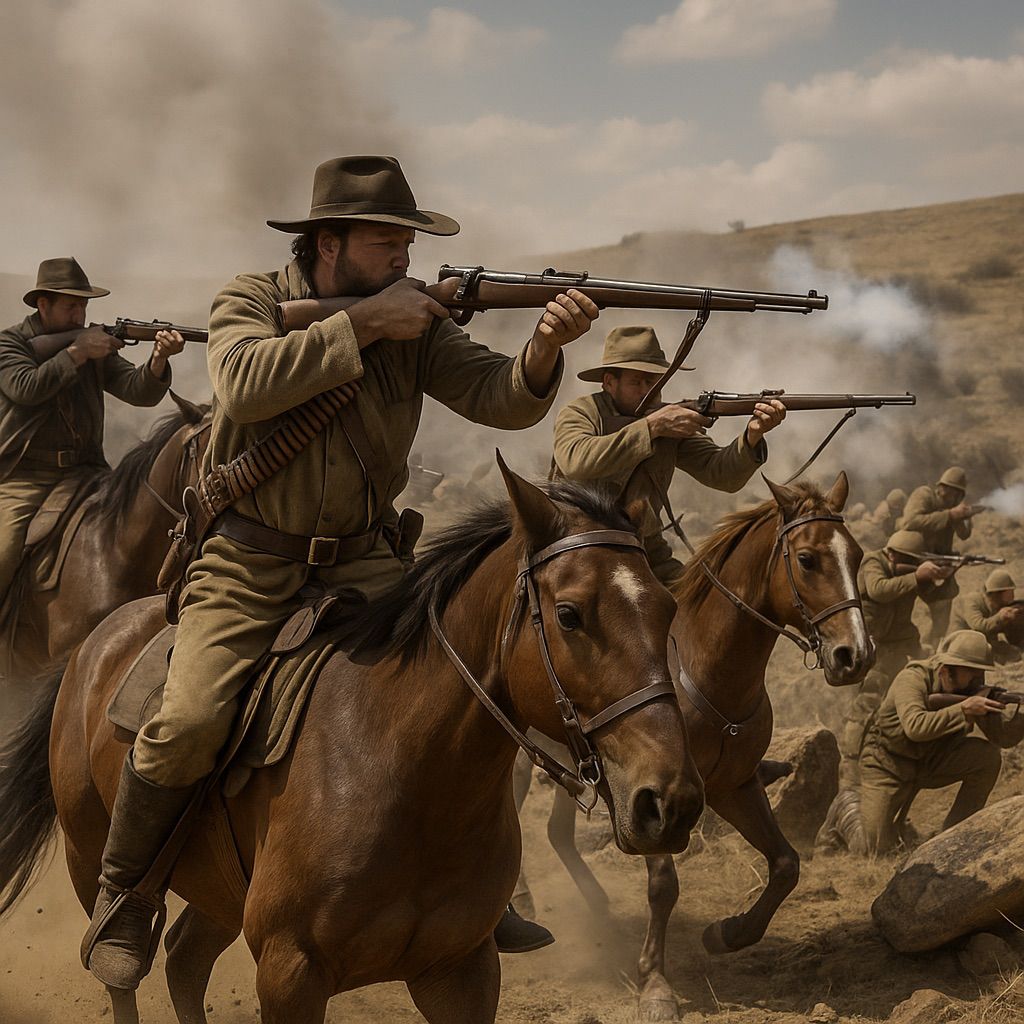
The early months shocked Britain. Boer commandos, mounted on sturdy ponies and armed with modern Mauser rifles, proved deadly opponents. They laid siege to British garrisons in Ladysmith, Mafeking, and Kimberley, cutting off supplies and communications. Their knowledge of the land, their mobility, and their guerrilla tactics outmatched the slow, rigid British forces. International observers mocked the empire: how could the greatest power in the world be humbled by farmers?

The sieges became symbols of endurance. In Mafeking, Colonel Robert Baden-Powell (later founder of the Boy Scouts) held out for over 200 days, using ingenuity and bluff to keep Boer forces at bay. In Ladysmith, citizens endured shelling, hunger, and disease. Relief efforts became desperate races against time, and when British forces finally broke the sieges in 1900, the empire celebrated—but the war was far from over.

Britain responded with overwhelming force. Reinforcements poured in, and generals like Lord Roberts and Lord Kitchener led massive campaigns. The British captured the Boer capitals—Bloemfontein, Pretoria, Johannesburg—and declared the republics annexed. London cheered victory. But in the veld, the war was only beginning.

The Boers adapted. No longer fighting in formal battles, they dissolved into small, mobile commando units. They struck railways, ambushed supply lines, and vanished into the vast countryside before British troops could respond. They became shadows in the grasslands, impossible to pin down. Britain, frustrated, escalated its tactics.

This escalation was brutal. Kitchener launched a scorched-earth campaign, burning farms, slaughtering livestock, and salting the earth to deny the Boers food and shelter. Families of suspected fighters were rounded up and placed in concentration camps—the first of their kind in modern warfare. Conditions were horrific: disease, hunger, and exposure claimed the lives of over 26,000 Boer women and children, along with thousands of Black Africans who were also imprisoned. The camps shocked the conscience of the world, sparking outrage and tarnishing Britain’s reputation as a “civilized” empire.

And yet, despite suffering and loss, the Boers fought on. Their resilience was legendary. In villages, women carried messages, smuggled supplies, and held families together. Fighters slept under the stars, carried rifles across endless plains, and fought battles that seemed unwinnable. Their struggle turned them into symbols of defiance against imperial power.

By 1902, however, exhaustion and devastation forced a reckoning. With their land destroyed, their families suffering in camps, and resources depleted, the Boer leaders sued for peace. On May 31, 1902, the Treaty of Vereeniging was signed. The Boer republics were annexed into the British Empire, but Britain promised eventual self-government and granted funds for rebuilding. Though defeated, the Boers had earned concessions that ensured their survival as a people.

The Second Boer War was more than a colonial conflict—it was a harbinger of the modern age of warfare. It showed how guerrilla tactics could frustrate even the mightiest armies. It introduced concentration camps as tools of war. It demonstrated that public opinion, stirred by journalism and outrage, could shape international perception. And it left deep scars in South Africa, sowing tensions that would influence the nation’s politics for generations.

But beyond strategy and politics lies the human story. Imagine the Boer farmer watching his homestead burn, clutching his rifle, knowing his family is being marched to a camp. Picture the British soldier, shipped from Manchester or Glasgow, bewildered by the endless veld, terrified of ambushes in the night. Picture the children in the camps, their hollow eyes staring at a world they did not understand, paying the price for battles fought by men. These are the ghosts of the war—ordinary lives consumed by the fire of empire and resistance.

October 11, 1899, was the day the war began. It was a war born of pride, greed, and survival. It was the war that reminded the British Empire of its limits and revealed the Boers’ indomitable spirit. And it was a war that forces us, even today, to ask hard questions about power, resistance, and the cost of conquest.

Related Posts

Deeds, Not Words: The Birth of the Women’s Social and Political Union

Elias Rowen

On October 10, 1903, in a modest house in Manchester, England, Emmeline Pankhurst gathered a small group of women around her kitchen table. The meeting was unassuming in size but seismic in consequence. That day, the Women’s Social and Political Union (WSPU) was born—a movement that would rattle the foundations of British society, storm the corridors of power, and rewrite the role of women in history. It was the birth of a crusade that traded patience for urgency, persuasion for defiance, and quiet petitions for radical deeds. The world would come to know them not just as suffragists, but as suffragettes.

At the dawn of the 20th century, women’s voices were muffled in nearly every sphere of life. They could not vote. They had limited access to education and professions. Marriage often reduced them to legal dependents of their husbands. The polite campaigns of earlier reformers had made little headway. Laws were debated, commissions held, promises made—and yet, year after year, women were excluded from the democratic rights men took for granted. Emmeline Pankhurst, a widow raising five children, had grown weary of waiting. For her, the time had come to shock society into listening.

“Deeds, not words,” became the rallying cry of the WSPU. It was more than a slogan; it was a declaration of war against indifference. The women of the WSPU chained themselves to railings outside Parliament, smashed shop windows, disrupted political meetings, and even endured hunger strikes in prison. They courted arrest not out of recklessness but as strategy, forcing newspapers to cover their plight and politicians to reckon with their defiance. These were not the polite ladies of tea-room debates—they were warriors in skirts, fearless and unapologetic.

Society reacted with outrage, fascination, and fear. To many, the suffragettes were dangerous extremists, threatening the social order. To others, they were heroes. Their militancy divided the suffrage movement itself, with more moderate campaigners fearing that such tactics might alienate supporters. But Emmeline Pankhurst was unshaken. She understood that power yields nothing without pressure, and pressure requires sacrifice. Every arrest, every jeer, every bruise was a step closer to equality.

The suffragettes’ most powerful weapon was their own bodies. When imprisoned, many refused to eat, demanding recognition as political prisoners. The government responded with brutal force-feeding, shoving tubes down throats or noses, leaving women bloodied, vomiting, and broken—but not defeated. These horrors sparked public sympathy and turned the WSPU into a moral force too large to ignore. Their defiance forced the nation to confront the question it had avoided for centuries: why should women not vote?

Emmeline Pankhurst herself became the face of the movement. Elegant, articulate, and utterly relentless, she embodied the paradox of the suffragette: dignified yet radical, respectable yet rebellious. She traveled the country delivering fiery speeches, often facing hecklers, threats, and violence. She was arrested repeatedly but emerged from each ordeal more determined, inspiring legions of women to take up the cause.

The WSPU’s fight was not only about the ballot. It was about dignity, autonomy, and the right to shape society’s future. Women fought not only for themselves but for their daughters, their sisters, and generations unborn. Their struggle transcended politics; it was existential. To be denied the vote was to be denied personhood, to be told that half of humanity had no voice in its own destiny.

By the time World War I erupted in 1914, the suffragettes faced a choice: continue their militant campaign or turn their energies toward the war effort. Emmeline Pankhurst and the WSPU chose patriotism, suspending their activism to support Britain’s fight. Women worked in factories, served as nurses, and took on roles long denied to them. When the war ended, their contributions could no longer be dismissed. In 1918, the Representation of the People Act granted voting rights to women over 30 who met property qualifications. It was not full equality, but it was a breakthrough. By 1928, all British women gained the right to vote on equal terms with men.

Looking back, the foundation of the WSPU on October 10, 1903, was a spark that lit a fire impossible to extinguish. It was proof that courage can turn the tide of history, that the voices of the marginalized can shatter the silence of centuries. The suffragettes taught the world that change is not granted—it is demanded, fought for, and often suffered for. Their struggle continues to echo in every fight for equality today, from women’s rights to civil rights to the voices of those still excluded from power.

But beyond politics, their story is profoundly human. Imagine the suffragette mother, saying goodbye to her children as police dragged her to prison. Picture the young woman, her hands bloodied from smashing glass, exhilarated and terrified at once. Picture Emmeline Pankhurst herself, exhausted but unbroken, staring at her reflection after another arrest, whispering to herself that someday, somehow, the world would change.

And it did. Because of them, millions of women cast ballots today. Because of them, democracy is more inclusive, society more just, and humanity a little closer to living up to its ideals. The Women’s Social and Political Union was not just a movement. It was a revolution—born not in parliaments or palaces, but in the determination of women who refused to be ignored.

October 10, 1903, is not just a date in history. It is a reminder that the fight for equality is never finished, that progress is born of courage, and that sometimes, to change the world, you must be willing to set it alight with deeds, not words.

Related Posts

The Day the Revolution Lost Its Face: The Execution of Che Guevara

Elias Rowen

On October 9, 1967, in a dusty Bolivian schoolhouse in the small village of La Higuera, a man who had become more myth than flesh was executed by a firing squad. His name was Ernesto “Che” Guevara—doctor, guerrilla fighter, revolutionary icon. He died not on a battlefield, surrounded by the thunder of armies, but in a cramped room, his hands bound, his body battered, his legend already outpacing the life he was about to lose. His final words, according to the soldier who pulled the trigger, were, “Shoot, coward. You are only going to kill a man.” With those words, Che crossed into immortality, his face destined to be stamped on T-shirts, murals, and banners across the globe. His execution ended a life of restless rebellion, but it also cemented him as one of the most enduring—and divisive—symbols of revolution in modern history.

Che Guevara’s journey to that Bolivian schoolhouse was anything but ordinary. Born in Rosario, Argentina, in 1928, Ernesto was not the archetypal warrior. He was a frail, asthmatic child, often confined to bed. Yet from an early age, he devoured books on philosophy, politics, and history, feeding a mind that saw injustice not as an abstract concept but as a tangible enemy. His famous motorcycle journey across Latin America in 1952 transformed him. Confronting the poverty, exploitation, and inequality that scarred the continent, Guevara shed the skin of a medical student and began to see himself as a soldier in a global struggle.

It was in Mexico in the mid-1950s that destiny introduced him to Fidel Castro. The two men, vastly different in temperament but united in vision, forged a bond that would alter the course of history. Together, they joined the ragtag group of revolutionaries who sailed aboard the Granma to Cuba in 1956. Most were killed or captured soon after landing, but Che survived, fighting alongside Castro in the Sierra Maestra mountains. His bravery, discipline, and ruthlessness elevated him to command. By 1959, Batista’s dictatorship had fallen, and Cuba stood reborn as the world’s first successful Marxist revolution in the Western Hemisphere.

In Havana, Guevara became more than a fighter; he became a face of revolution itself. He served as minister, diplomat, and theorist, giving speeches that blended idealism with fiery conviction. Yet Che was restless. Bureaucracy bored him, and he despised the trappings of power. He was not content to see socialism thrive in Cuba alone. He believed revolution had to be exported, spread like fire across the globe, liberating the oppressed from imperialism. To Che, the world was one battlefield, and he was its eternal soldier.

That restlessness led him first to the Congo in 1965, where he attempted to ignite revolution in the heart of Africa. It failed—riven by chaos, disunity, and logistical nightmares. Still, Guevara did not retreat into comfort or safety. Instead, he turned his eyes to South America once again, convinced that the Andes could become the continent’s Sierra Maestra. Bolivia, with its poverty, oppression, and proximity to other vulnerable states, became his chosen spark.

But Bolivia was no Cuba. The peasants did not rally to Che’s banner; they distrusted outsiders. The terrain was unforgiving, supplies scarce, and communication with Cuba unreliable. The CIA and Bolivian military, aided by U.S. advisors, tracked his every move. By October 1967, his small band of guerrillas was surrounded, exhausted, and decimated. On October 8, Che was captured after a firefight in the Yuro ravine, wounded and unable to continue. He was taken to La Higuera, a prisoner of men who understood they held a legend in their hands.

For 24 hours, the world’s most famous revolutionary sat in that schoolhouse, bound and awaiting his fate. Witnesses recalled him defiant, refusing to beg, refusing to crumble. When Bolivian officials, under pressure from the CIA, decided to execute him rather than risk a trial that might inflame global opinion, Che met his death as he had lived—unflinching. The bullets ended his life, but not his myth.

News of his death spread rapidly, but it only amplified his legend. Photographs of his lifeless body, eerily Christ-like in repose, circulated worldwide, fueling both mourning and inspiration. For revolutionaries, Che became martyr and model, a reminder that ideals outlive the men who carry them. For his enemies, he became a cautionary tale of reckless idealism, a man consumed by his own ideology. Love him or hate him, no one could ignore him.

Che Guevara’s execution remains one of the defining moments of the Cold War era. It symbolized the lengths to which the United States and its allies would go to contain communism. But it also symbolized the power of a single life to inspire beyond its death. His face, immortalized in Alberto Korda’s iconic photograph, became perhaps the most reproduced image of the 20th century—painted on walls in Nicaragua, waved on banners in Vietnam, worn on T-shirts in Paris, and invoked in hip-hop lyrics decades later.

And yet, the human Che was far more complex than the legend. He was a man who read poetry between battles, who treated wounded comrades with the care of a physician, who wrote love letters to his wife even while in hiding. But he was also a man capable of brutality, overseeing executions in revolutionary Cuba, insisting that the struggle required blood. His contradictions—romantic and ruthless, healer and executioner, dreamer and fighter—are what make him enduringly fascinating.

October 9, 1967, was the day Che Guevara’s body fell, but his spirit did not. He became less a man and more a symbol—of rebellion, of defiance, of the belief that individuals can challenge empires. His legacy is contested, celebrated by some, condemned by others, but never forgotten. Che’s life reminds us that revolutionaries do not die quietly. Their echoes travel through time, igniting debates, dreams, and rebellions long after the gunfire has ceased.

Related Posts

When the City Burned: The Great Chicago Fire of 1871

Elias Rowen

On the night of October 8, 1871, the city of Chicago went to sleep under clear skies, unaware that within hours, flames would transform their lives, their homes, and their future forever. By dawn, the city would be a sea of fire, a hellscape of wood, wind, and despair. It became one of the most infamous urban disasters in American history—the Great Chicago Fire. Though historians still debate its exact origins—popular legend blames Mrs. O’Leary’s cow kicking over a lantern—the consequences are beyond dispute. In just two days, a thriving metropolis of nearly 300,000 people was reduced to ash and rubble. And yet, out of that devastation, Chicago would rise again, stronger, prouder, and more determined than ever to etch its name into history.

To understand the magnitude of the disaster, one must picture Chicago in the 1870s. It was a booming city, an industrial powerhouse and a vital hub connecting the Great Lakes to the Mississippi. The city was alive with the sound of trains, factories, and opportunity. Immigrants poured in, businesses thrived, and fortunes were made. But beneath the promise lay danger. Chicago was built largely of wood—houses, sidewalks, even streets. After months of drought, the city was a tinderbox. Add in strong winds off Lake Michigan, and the conditions were perfect for catastrophe.

The fire began in a barn on DeKoven Street, but within minutes, it leapt to neighboring buildings. Fueled by wooden structures and dry conditions, the flames grew into an unstoppable beast. Eyewitnesses described a sky turned orange, buildings exploding into sparks, and firestorms leaping across the river as if mocking attempts to contain them. The city’s fire department, though brave, was overwhelmed. Exhausted from battling another blaze the night before, they lacked both manpower and equipment. The flames moved faster than men, consuming block after block in minutes.

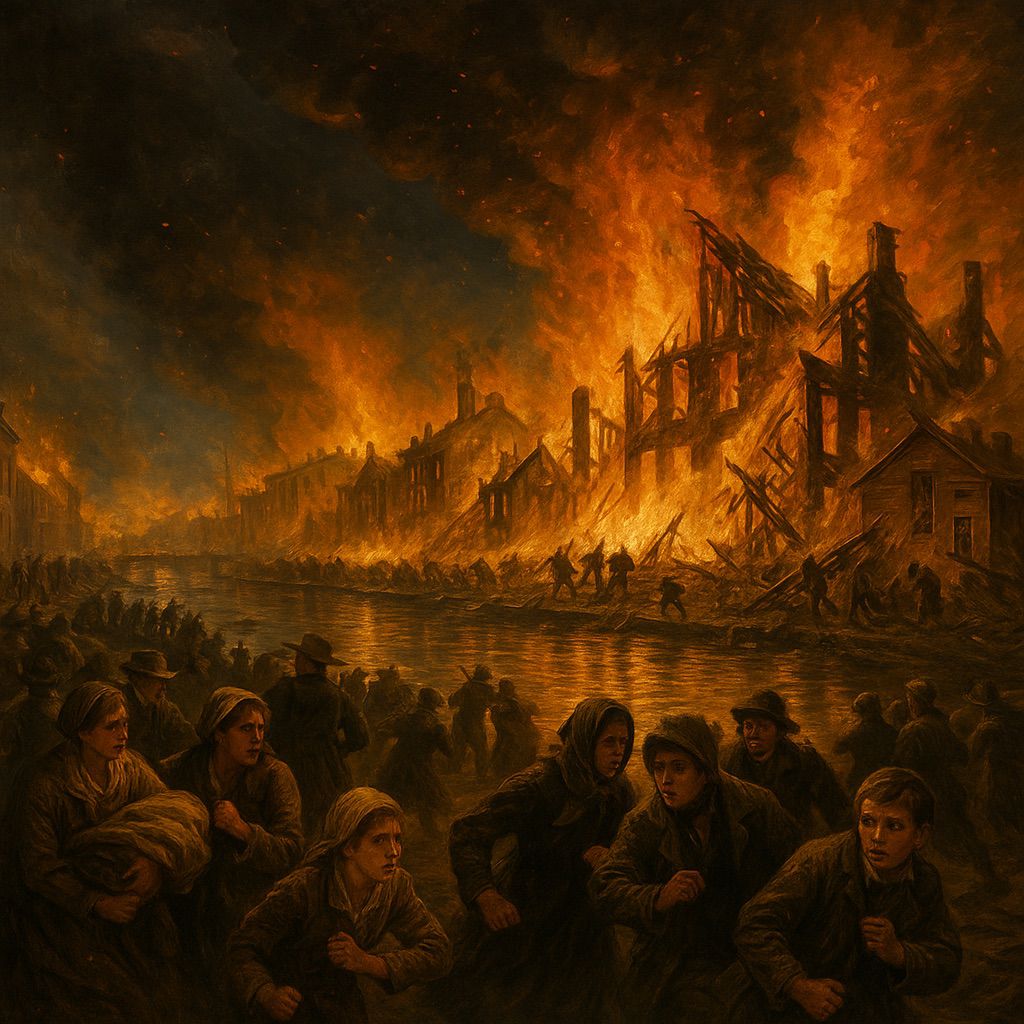
By midnight, the fire had crossed the South Branch of the Chicago River. By morning, it roared through the city’s heart, devouring banks, businesses, churches, and homes alike. The wind fanned embers into fiery whirlwinds, tossing sparks onto rooftops blocks away. People fled with whatever they could carry—children, pets, Bibles, photographs—anything that could be saved in a moment of panic. Horses stampeded through the streets, wagons overloaded with families and their possessions jammed the roads, and panicked crowds surged toward the river, some jumping into the water to escape the inferno.

The fire showed no mercy. It consumed the courthouse, the Palmer House Hotel, and even the Chicago Tribune building. It burned rich and poor alike, making no distinction between mansions and shanties. The heat was so intense that it melted iron, turned brick to powder, and warped the very earth. By the time rain finally helped douse the flames on October 10, over 17,000 buildings had been destroyed, 100,000 people left homeless, and nearly 300 lives lost. The city smoldered like a corpse, its skyline a jagged silhouette of chimneys and ruins.

But Chicago’s story did not end in ashes. In many ways, it began anew. Out of the ruins came resilience. Survivors set up makeshift shelters, churches opened their doors, and donations poured in from across the nation and the world. Relief trains arrived with food, blankets, and supplies. Even Queen Victoria of Britain sent aid. Out of tragedy, solidarity grew.

More importantly, the fire forced Chicago to rethink itself. The wooden city gave way to a city of stone, steel, and innovation. New building codes demanded safer, sturdier construction. Architects flocked to the city, eager to reimagine its skyline. In the decades that followed, Chicago became a laboratory of modern architecture, the birthplace of the skyscraper, and a symbol of what resilience could achieve. The city that once lay in ruins would later host the World’s Columbian Exposition of 1893, dazzling the globe with its rebirth.

And yet, behind the triumph lies the human heart of the fire. Imagine a mother clutching her children, running barefoot across burning streets. Picture families huddled along the lakefront, watching their city vanish in flames. Imagine the firemen, their faces blackened with soot, swinging axes against impossible odds. These were not just statistics—they were human lives, their pain and bravery written in fire and ash.

The Great Chicago Fire is not just a tale of destruction but of transformation. It reminds us that even in our darkest hours, the seeds of rebirth are sown. Chicago rose from the flames not diminished but renewed, proving that a city’s spirit is stronger than its structures. October 8, 1871, was the night Chicago burned. But it was also the night Chicago learned it could endure anything, even the fire itself.

Related Posts

The War That Wouldn’t End: America’s Invasion of Afghanistan and the Long Shadow of October 7, 2001

Elias Rowen

On October 7, 2001, less than a month after the Twin Towers crumbled and the Pentagon burned, the United States launched airstrikes on Afghanistan. It was the beginning of what would become the longest war in American history—a war that promised justice, but instead dragged the world into two decades of blood, politics, shifting alliances, and haunting questions. The invasion began with a simple objective: dismantle al-Qaeda and topple the Taliban regime that sheltered it. But as bombs fell and soldiers deployed, the war grew into something far more complex, reshaping not only Afghanistan but also America itself and the global order for a generation.

The images of that day were both chilling and strangely familiar: fireballs erupting over Kabul, tracer rounds slicing the night, and the confident words of President George W. Bush declaring, “We will not waver, we will not tire, we will not falter, and we will not fail.” For Americans still reeling from the horror of September 11, there was a raw desire for action, for vengeance, for some assurance that the United States would strike back against those who dared to attack it. The invasion felt like justice delivered. For Afghans, though, it was the start of yet another chapter in a cycle of war stretching back through decades of conflict with the Soviets, civil war, and Taliban rule.

Afghanistan, long called the “graveyard of empires,” is a land of mountains, deserts, and tribal complexities. No foreign power had ever fully subdued it. Not the British in the 19th century, not the Soviets in the 20th. Yet America entered with confidence, believing its superior technology and firepower could achieve what others had failed to do. The Taliban were quickly driven from power; Kabul fell, Kandahar followed, and Hamid Karzai was installed as the new president. In those early months, it seemed victory was certain, swift, and permanent.

But history rarely bows to certainty. The Taliban melted away, not defeated but waiting, regrouping in rural villages and across the Pakistani border. U.S. forces remained, first to stabilize, then to rebuild, then to “nation-build.” What was meant to be a short, targeted campaign turned into an open-ended occupation. Billions of dollars flowed into Afghanistan, funding infrastructure, schools, and security forces. Yet much of it disappeared into corruption, inefficiency, and the pockets of warlords who played both sides. For every school built, a bomb cratered another. For every village secured, another slipped into insurgent hands.

Meanwhile, the war exacted a staggering human toll. Tens of thousands of Afghan civilians died—farmers, children, families caught in crossfire or targeted in bombings gone wrong. Entire generations grew up knowing nothing but war. American and allied soldiers faced ambushes, IEDs, and the unbearable strain of endless deployments. Over 2,400 U.S. service members lost their lives in Afghanistan, and countless more returned home with invisible wounds—PTSD, moral injury, and a gnawing sense of futility.

The war reshaped global politics too. NATO allies followed America into Afghanistan, marking the alliance’s first mission outside Europe. Pakistan played a double game, taking U.S. aid while harboring Taliban elements. Iran watched carefully, sometimes aiding, sometimes undermining U.S. efforts. China and Russia calculated their moves in the shadow of America’s quagmire. And back home, the war fueled debates about terrorism, security, and civil liberties. The Patriot Act, surveillance programs, and airport security became part of everyday life, altering the relationship between citizens and their government.

Perhaps most telling was the way the war faded into the background of American life. Unlike Vietnam, it lacked daily television coverage of body bags and jungle firefights. Unlike World War II, it lacked national mobilization. For many Americans, Afghanistan was a distant hum—known, acknowledged, but rarely felt directly. The burden fell on soldiers and their families, a small fraction of the population bearing the weight of a nation’s vengeance.

And then came the long ending. Presidents changed—Bush, Obama, Trump, Biden—each inheriting a war they promised to conclude, yet passing it on to the next. Obama surged troops in, then pulled some back, declaring victories that never materialized. Trump negotiated with the Taliban in Doha, acknowledging reality: the war could not be won militarily. Finally, in 2021, twenty years after the first bombs fell, the United States withdrew. The world watched as Kabul fell again, eerily quickly, to the Taliban. Helicopters lifted Americans from rooftops. Afghan allies clung to departing planes. It was an ending that looked more like defeat than closure.

And yet, in the chaos of that ending, one truth became undeniable: Afghanistan was never just a war about Afghanistan. It was about grief, anger, fear, ambition, hubris, and the human tendency to believe that wars can remake the world when, in fact, they often remake nothing but graves.

But behind the politics and strategy, there were human stories. The U.S. Marine who built a school in a village only to watch it burn. The Afghan girl who attended classes in secret, clutching books forbidden by the Taliban. The American mother who sent her son to war and then wept at his grave, asking what it had all meant. The Taliban fighter, hardened by decades of conflict, who believed he was defending his land from yet another occupier. These are not statistics. They are lives, hopes, and heartbreaks woven into the tapestry of a war too vast to comprehend fully.

October 7, 2001, was the day America stepped into Afghanistan. It was the day the world changed course, not just for Afghans and Americans, but for all who lived in an era where terrorism, war, and surveillance became global fixtures. Two decades later, the war’s echoes remain—shaping geopolitics, haunting veterans, and lingering in the eyes of Afghan children who wonder if peace will ever arrive.

The U.S. invasion of Afghanistan will be remembered not only for its beginning but for its ending, and for the questions it leaves behind. Did the world become safer? Did the sacrifices mean progress? Or was it all, as some fear, a tragic cycle destined to repeat?

On October 7, we remember not just the day bombs fell, but the day humanity once again proved how fragile peace can be, how costly vengeance becomes, and how the longest wars rarely end in victory—they simply end.

Related Posts

The Day of Atonement Turned to Fire: The Yom Kippur War of 1973

Elias Rowen

On October 6, 1973, while much of Israel stood in solemn silence for Yom Kippur—the holiest day in the Jewish calendar—the sound of shofars in synagogues was drowned out by the roar of jet engines, tank treads, and artillery fire. It was a day that began in fasting and prayer but descended into chaos and terror. The armies of Egypt and Syria, backed by allies across the Arab world, launched a coordinated surprise attack on Israel. For three weeks, the Middle East burned in one of the most brutal and consequential conflicts of the 20th century. The war would redraw not just battle lines but political realities, leaving scars that remain visible today.

The Yom Kippur War—known as the Ramadan War in the Arab world, as it coincided with the holy month of fasting—was unlike anything Israel had faced before. The timing was as devastating as the force. Yom Kippur is a day when the streets of Israel fall still, shops close, and people reflect inwardly on their faith and mortality. Military readiness was minimal; soldiers were home with families, generals at prayer. The Arab coalition, led by Egyptian President Anwar Sadat and Syrian President Hafez al-Assad, knew the symbolism of striking at such a vulnerable moment. It wasn’t just strategy—it was psychological warfare.

For Israel, the first hours were catastrophic. Egyptian forces stormed across the Suez Canal, overwhelming the thin Israeli defenses along the Bar Lev Line, a sand-and-concrete barrier that had seemed invincible. On the Golan Heights, Syrian tanks rolled across the plateau, threatening to break through and pour into northern Israel. For a nation only 25 years old, surrounded by hostile neighbors and haunted by the memory of the Holocaust, it felt as though the very existence of the state was on the brink.

The war was fueled by the ghosts of the Six-Day War of 1967, when Israel had stunned the Arab world by defeating multiple armies in less than a week, seizing Sinai, Gaza, the Golan Heights, and the West Bank. That humiliation burned in Arab memory. Egypt, in particular, longed to reclaim Sinai, and Sadat was determined to restore Arab pride, even if it meant gambling everything. Assad, ruling Syria with an iron hand, saw his chance to avenge the loss of the Golan. Together, they plotted carefully, coordinating with Soviet support in weapons and training, while the United States, Israel’s ally, watched warily from afar.

In those opening days, the world saw an Israel that bled, staggered, and nearly broke. Soldiers rushed from synagogues to battlefields, often without proper equipment or preparation. Casualties mounted at a terrifying pace. Families sat glued to radios, waiting for word of sons and daughters at the front. For the first time since its founding, Israel faced the terrifying prospect of defeat.

Yet Israel’s response was as fierce as it was desperate. Within days, its forces regrouped. On the Golan Heights, vastly outnumbered Israeli tank crews fought with tenacity, holding off wave after wave of Syrian armor in what became known as the “Valley of Tears.” At the Suez, after initial failures, Israeli counterattacks began to claw back territory. The war turned into a brutal stalemate, with both sides suffering immense losses.

It was also a war fought in the shadow of superpowers. The Soviet Union supplied Egypt and Syria, while the United States launched a massive resupply airlift to Israel. The two global titans teetered dangerously close to direct confrontation. Nuclear alerts were raised. For a terrifying moment, the Middle East threatened to drag the entire world into catastrophe.

As the days wore on, the war shifted. Israeli forces, under the command of General Ariel Sharon, crossed the Suez Canal in a daring maneuver, encircling Egypt’s Third Army and threatening Cairo. On the northern front, Israeli troops pushed Syrians back beyond the pre-war lines. By late October, a ceasefire brokered by the United Nations came into effect, leaving both triumph and tragedy in its wake.

The cost was staggering. Israel lost over 2,600 soldiers—an unbearable toll for such a small nation. Egypt and Syria’s losses were even greater, with tens of thousands dead and wounded. Civilians across the region bore the trauma of bombings, shortages, and fear. Yet amid the ashes, something remarkable emerged. Sadat, though unable to fully defeat Israel, proved his point: Egypt could fight and regain dignity. This opened the door to diplomacy, culminating in the historic Camp David Accords of 1978, where Egypt became the first Arab nation to make peace with Israel.

The Yom Kippur War was thus not just a clash of armies—it was a crucible of change. It reshaped alliances, humbled leaders, and showed that the Middle East could never be the same again. For Israelis, it was a painful reminder that survival was never guaranteed, that vigilance and resilience were as essential as prayer. For Arabs, it was proof that humiliation could be redeemed, that even in loss, dignity could be reclaimed. For the world, it was a sobering lesson in how quickly local conflicts could escalate into global crises.

And beyond politics and strategy lay the human heart of the war. Imagine a young Israeli soldier clutching his rifle on the Golan Heights, exhausted but refusing to yield. Picture an Egyptian crossing the Suez on makeshift bridges, carrying not just a weapon but decades of national humiliation. Picture families on both sides mourning sons lost to a war neither started nor truly understood. Behind the headlines, behind the maps and speeches, it was a war of human beings—ordinary men and women caught in the firestorm of history.

October 6, 1973, remains etched in memory as a day when faith met fire, when prayer was shattered by gunfire, and when the fragility of peace was laid bare for all to see. The Yom Kippur War was a tragedy, a turning point, and a paradox—born of hate, but eventually opening a path, however narrow, toward peace.

Related Posts

The Day the World Lost Its Apple: Remembering Steve Jobs

Elias Rowen

On October 5, 2011, the world seemed to pause. Screens dimmed, voices hushed, and millions of people across the globe sat in stunned silence as the news broke: Steve Jobs, the co-founder of Apple, the visionary behind the iPhone, iPod, iMac, and iPad, had passed away at the age of 56. His death was not just the loss of a man—it was the closing of a chapter in the story of modern innovation. For decades, Jobs had stood at the intersection of art and technology, creating tools that didn’t just work but felt magical. When he was gone, it was as though the magician had left the stage, leaving the world staring at the curtain, wondering how much of the wonder could continue without him.

Steve Jobs’ story has been told so often it feels mythical, but what makes it remarkable is not just what he achieved, but how deeply his work touched ordinary lives. Born in San Francisco in 1955 and adopted shortly after birth, Jobs was not destined for wealth or power. He was a restless soul, dropping out of Reed College after only one semester. Yet, even as he sat in calligraphy classes or crashed on friends’ floors, Jobs carried with him a vision that education couldn’t contain: the belief that technology could be beautiful, intuitive, and deeply personal.

In 1976, Jobs, alongside Steve Wozniak, built Apple Computer in his parents’ garage. The Apple II and Macintosh were not just machines—they were statements. Jobs insisted that design mattered as much as function. He envisioned a future where computers weren’t the cold, intimidating domain of experts but friendly companions that anyone could use. He was ridiculed for it at first. He was called eccentric, demanding, even impossible. Yet, slowly, the world began to realize that Jobs wasn’t just building products—he was reshaping how humans interacted with technology.

His path wasn’t linear. In 1985, Jobs was ousted from Apple, the very company he had founded. Lesser men might have faded into obscurity. Jobs instead founded NeXT and purchased Pixar, a then-struggling animation studio. Pixar would revolutionize storytelling with films like Toy Story, blending technology with heart in a way only Jobs could envision. By the time Apple bought NeXT in 1997, bringing Jobs back as CEO, the prodigal founder returned with scars, wisdom, and a determination that would transform Apple into the most valuable company in the world.

The products that followed weren’t just successful—they were cultural phenomena. The iMac reintroduced design elegance. The iPod put “a thousand songs in your pocket” and changed music forever. The iPhone redefined communication, collapsing phone, internet, and camera into a single sleek device. The iPad challenged our notions of what computers could be. Jobs’ gift wasn’t just creating technology—it was anticipating what people wanted before they even knew it themselves. He didn’t ask consumers what they needed; he showed them what they couldn’t live without.

But what made Jobs truly iconic wasn’t just the gadgets—it was his philosophy. He believed technology was about more than circuits and code. It was about humanity. His obsession with simplicity, elegance, and user experience wasn’t a fetish—it was a conviction that technology should feel like an extension of our own creativity. He once said, “Technology alone is not enough. It’s technology married with liberal arts, married with the humanities, that yields us the results that make our hearts sing.”

Jobs was far from perfect. He was known for being mercurial, exacting, sometimes cruel in his pursuit of excellence. Colleagues described the infamous “reality distortion field” that bent those around him to his vision, for better or worse. Yet, even his flaws became part of his legend. Jobs demanded brilliance not because he wanted to be feared but because he believed the world deserved nothing less. He was not satisfied with “good enough.” For him, products had to be revolutionary, transformative, unforgettable.

When Jobs succumbed to pancreatic cancer, the grief was global. Outside Apple stores, people left flowers, Post-it notes, and half-bitten apples in tribute. Leaders around the world—from Barack Obama to Bill Gates—acknowledged that Jobs had changed not just technology, but culture. His death was mourned not like that of a CEO but like that of an artist, a cultural icon whose canvas was the future itself.

Yet, perhaps the most humanizing detail is this: at the end of his life, Jobs reflected not on his products but on mortality. He reminded us that even visionaries cannot outsmart death. In his 2005 Stanford commencement address, he said, “Remembering that you are going to die is the best way I know to avoid the trap of thinking you have something to lose. You are already naked. There is no reason not to follow your heart.” Those words now echo louder than ever, a message from a man who knew his time was limited but refused to waste it.

Jobs’ legacy lives on every time someone slides their finger across a screen, listens to music through white earbuds, or FaceTimes a loved one oceans away. His DNA is embedded in the devices that define our era. More importantly, his spirit—the relentless push to innovate, to dream, to marry beauty with function—continues to inspire creators, designers, and entrepreneurs around the globe.

October 5, 2011, was the day the world lost Steve Jobs. But it was also the day we realized how much of him remains with us. Every glowing screen, every seamless design, every device that feels like magic is a whisper of his vision. Jobs didn’t just build Apple; he built a world where technology is no longer cold, but human. In death, as in life, he reminds us to stay hungry, stay foolish, and never stop pushing the world forward.

Related Posts

The Beep That Changed the World: How Sputnik 1 Launched Humanity Into the Space Age

Elias Rowen

On the evening of October 4, 1957, a faint, rhythmic beep-beep-beep drifted down from the skies above Earth. It wasn’t the sound of a bird, a plane, or even the hum of earthly machines. It was the voice of a metal sphere, no larger than a beach ball, hurtling through the heavens. That voice belonged to Sputnik 1, the first artificial satellite launched by humankind. And those beeps, simple as they were, marked the birth of something far greater than anyone could have imagined: the Space Age.

That single act of launching a 184-pound sphere into orbit by the Soviet Union changed history in an instant. It wasn’t just science; it was psychology, politics, fear, and wonder. For the first time, humanity had broken free from Earth’s gravitational prison, proving that dreams whispered for centuries by poets and visionaries could be real. Yet, as the world tilted its head toward the night sky, it also trembled. Sputnik was more than a satellite—it was a spark that ignited competition, paranoia, and eventually, breathtaking achievements that would redefine what it means to be human.

To grasp why Sputnik shook the world, one must first appreciate the context. The 1950s were an era of tension and suspicion. The Cold War had divided the globe into two camps: the United States and the Soviet Union, each armed to the teeth, glaring at one another with ideological hostility. Technology was no longer neutral—it was a weapon, a stage, and a symbol of superiority. When the Soviets announced that they had launched the world’s first satellite, it wasn’t just a scientific triumph—it was a political earthquake.

Americans, in particular, were stunned. The United States had assumed technological dominance, yet here was the Soviet Union—a country often dismissed in the West as backward and inefficient—leaping ahead. The press dubbed it the “Sputnik Shock.” Parents peered at their children and wondered whether their schools were failing them. Politicians scrambled to explain why America had fallen behind. Defense strategists worried that if the Soviets could launch a satellite, they could also launch nuclear warheads across oceans. The night sky, once a place of calm and mystery, suddenly carried the shadow of fear.

And yet, beyond fear, Sputnik also ignited imagination. People looked up and realized they were not alone under the stars anymore. A human-made object was out there, circling Earth every 96 minutes. Children pressed their ears to radios to hear the satellite’s beeps. Astronomers tracked it through telescopes, its silvery body reflecting sunlight as it crossed overhead. For the first time, humanity had touched the realm of the gods, leaving behind not footprints but signals—beeps that said: We are here. We are reaching further.

Technically, Sputnik was modest. It carried no cameras, no instruments beyond its radio transmitter, and no passengers. But simplicity was its genius. Its launch was proof of concept. And proof of concept is often all it takes to change the world. Behind its beeps lay a truth: the sky was no longer the limit.

The ripple effects were immediate and profound. In the United States, Sputnik spurred sweeping reforms. The government poured money into science and engineering education. NASA was born in 1958, a direct child of Sputnik’s wake-up call. The arms race merged with the space race, each side pushing technology to unimaginable heights. Rockets became symbols of ideology: freedom versus communism, democracy versus dictatorship. But beneath those labels, what was really at stake was who could claim humanity’s future beyond Earth.

The Soviets capitalized on their momentum, launching Laika the dog aboard Sputnik 2 only a month later. Then came Yuri Gagarin, the first human in space in 1961. The Americans, spurred by fear and pride, responded with President John F. Kennedy’s audacious promise: to land a man on the Moon before the decade’s end. The Moon landing in 1969 would never have happened without Sputnik’s beeps echoing a dozen years earlier.

But Sputnik’s story is not just geopolitical; it is deeply human. Imagine the Soviet engineers, working with limited resources, battling failures, and facing immense pressure from their government. They were not simply building a machine—they were staking their careers, their reputations, and their nation’s pride on a hollow sphere that had to sing to Earth from space. Imagine the awe of a farmer in Kansas, gazing up and realizing that humanity had put a star in the sky. Imagine the mix of fear and exhilaration in a child who heard those beeps and decided to become a scientist.

Sputnik’s legacy reaches far beyond Cold War politics. It opened the door to satellites that today guide our GPS, power our communications, and monitor our climate. It paved the way for telescopes that peer into galaxies and probes that touch the edges of our solar system. It birthed the International Space Station, where Russians and Americans—once bitter rivals—now work side by side in orbit. Sputnik was a beginning, not an end.

And yet, its genius lies in its humility. It was not flashy. It did not roar triumphantly. It whispered. And in that whisper, the world heard a new possibility.

October 4, 1957, should remind us that revolutions are not always loud. Sometimes, they are a steady pulse, a rhythm in the background that changes how we see everything. Sputnik’s beeps were not merely radio signals—they were a heartbeat, the first thump of a species daring to step into the cosmos.

As we look today at billionaires launching rockets, at Mars rovers roaming distant worlds, at telescopes seeing light from the dawn of time, we should remember that it all began with a small silver sphere that didn’t do much except orbit and sing. But in that song, humanity recognized itself in the stars.

Sputnik’s lesson is timeless: progress often begins not with certainty, but with courage. A simple satellite launched by a rival power shook the world awake, spurred generations to dream bigger, and redefined humanity’s place in the universe. On October 4, 1957, the sky ceased to be a ceiling. It became a gateway.

Related Posts

The Night the Wall Fell Twice: How East and West Germany Became One

Elias Rowen

On October 3, 1990, fireworks lit up the Berlin sky, choirs sang, church bells rang, and tears flowed freely as Germany was officially reunified. It was not just the birth of a new nation—it was the healing of an old wound, a wound carved into stone and concrete for nearly three decades. That night, the world bore witness to something rare: history running in reverse. A wall built to divide crumbled into dust, and a people long separated by ideology, suspicion, and steel were free to call themselves one again. But to understand the weight of this day, one must trace back through decades of war, division, fear, hope, and the unyielding power of human will.

The story of German reunification begins not in 1990, but in 1945, when Europe was in ruins. World War II had left Germany shattered, its cities reduced to rubble, its people broken, its conscience scarred. The Allied powers—the United States, the United Kingdom, France, and the Soviet Union—divided the defeated nation into zones of occupation. At first, this was seen as temporary, a practical solution for a devastated land. But as the Cold War deepened, temporary lines hardened into permanent borders. Two Germanies emerged: the Federal Republic of Germany (West Germany), democratic and aligned with the West, and the German Democratic Republic (East Germany), socialist and under the iron grip of Moscow.

The division was not only political but visceral. Families were split overnight. Cities like Berlin were sliced down the middle. In 1961, to stem the flow of East Germans fleeing to the West, the East German regime built the Berlin Wall. It was more than a barrier of barbed wire and concrete; it was a scar across humanity’s conscience, a physical symbol of the Cold War’s cruelty. Soldiers guarded it, mines lined it, and orders were clear: shoot anyone who tried to escape. Thousands risked everything; hundreds died in desperate bids for freedom. The Wall became infamous, an icon of oppression that cut through the heart of a city and the soul of a people.

For years, it seemed immovable. Leaders came and went—Kennedy, Khrushchev, Reagan, Gorbachev—but the Wall remained, as though it was built of more than concrete, as though it was made of the very fear that defined the Cold War. And yet, beneath the surface, cracks were forming—not in the Wall, but in the system that sustained it. By the 1980s, the East German economy was faltering, its people restless. Across Eastern Europe, winds of change began to blow. Poland’s Solidarity movement, Hungary’s reforms, Czechoslovakia’s dissidents—all signaled that Soviet-style socialism was losing its grip.

The East German government tried to tighten control, but the tide of history is rarely held back for long. By 1989, protests swelled in East German cities. Ordinary men and women—teachers, workers, students, priests—marched for freedom, chanting “Wir sind das Volk” (“We are the people”). What began as whispers became a roar. And then, on November 9, 1989, the unthinkable happened. A confused announcement, a miscommunication, a flood of East Berliners surging to the checkpoints—and suddenly the Wall, that grim monument of division, was breached. Soldiers stood stunned as people climbed the concrete, danced atop it, and swung hammers to tear it down. That night, the Wall fell, not by decree of governments, but by the unstoppable will of a people hungry for freedom.

Yet, the fall of the Wall was not the end. It was the beginning of a new and uncertain chapter. Reunification was not inevitable. The economies of East and West Germany were vastly unequal, the cultures shaped by decades of divergent systems. Skeptics feared chaos, resentment, even collapse. But the momentum was unstoppable. West German Chancellor Helmut Kohl pushed forward with a bold plan for unification, supported by the United States, the Soviet Union, and European allies. Negotiations were tense, but the hunger for unity outweighed the obstacles.

On October 3, 1990, less than a year after the Wall’s fall, Germany was formally reunified. In Berlin, where just months earlier the Wall had stood, millions gathered to celebrate. Flags waved, champagne bottles popped, strangers embraced as long-lost family. The Brandenburg Gate, once locked and lifeless, became a gateway to the future. Germany was whole again.

But the human story of reunification is just as important as the political one. Imagine an East Berlin mother reuniting with a sister she had not seen in 30 years. Picture workers from the East walking through Western supermarkets for the first time, stunned by the abundance of goods. Picture children born after 1990, who would grow up in a Germany where the Wall existed only in history books. The joy was immense, but so too were the challenges. Rebuilding the East required massive investment, patience, and cultural reconciliation. Even decades later, the “Wall in the mind” lingered, a reminder that true unity takes more than signatures and parades.

And yet, October 3 remains a day of triumph—not just for Germany, but for humanity. It is proof that even the darkest divisions can heal, that walls, no matter how tall, eventually fall, and that freedom has a way of slipping through cracks until it becomes unstoppable. In a world still scarred by divisions—political, racial, cultural—the story of German reunification carries a timeless lesson: the human spirit craves unity, not division.

The night of October 3, 1990, was the night the Wall fell twice—once in concrete, and once in memory. Fireworks in Berlin lit not just the sky but the path forward for a reunited nation. The cheers were not just for Germany, but for the idea that history, however cruel, can sometimes be reversed.

Related Posts

The Quiet Force That Shook an Empire: The Story of Mahatma Gandhi

Elias Rowen

On October 2, 1869, in a quiet coastal town in Gujarat called Porbandar, a child was born who would one day unsettle the mightiest empire on earth not with cannons or armies, but with an idea—that truth and nonviolence could be stronger than bullets and bayonets. His name was Mohandas Karamchand Gandhi, but the world would come to know him as Mahatma—the great soul. And while Gandhi never sought that title, nor the power that people bestowed upon him, his life’s journey reminds us that sometimes the most unlikely figures become the torchbearers of history. His story is not just about India’s independence. It’s about the power of conscience, the weight of morality, and the extraordinary reach of ordinary humanity.

Gandhi was not born extraordinary. As a boy, he was shy, often timid, so much so that he avoided speaking in public. He loved stories from the Indian classics, tales of truth and devotion, but he also grew up in the complex weave of British-ruled India, a land where tradition met colonization. His father was a respected official, his mother deeply religious and steeped in the values of compassion and self-discipline. From her, young Mohandas absorbed the seeds of vegetarianism, fasting, and prayer—seeds that would grow into principles guiding millions.

When Gandhi traveled to London in his late teens to study law, he wasn’t yet a revolutionary. He was a young man grappling with identity—wearing Western suits, learning table manners, and wrestling with what it meant to be an Indian in a world ruled by others. But it was in South Africa, not India, that Gandhi’s transformation truly began. There, while practicing law, he faced open discrimination. The defining moment came when he was thrown off a train for refusing to leave the “whites-only” carriage, despite holding a valid ticket. That humiliation ignited a fire. Gandhi realized that injustice was not an abstract concept—it was personal, degrading, and inescapable unless resisted.

Yet Gandhi’s resistance would not be rooted in violence. Instead, he drew from ancient Indian philosophies, from Jain teachings of ahimsa (nonviolence), and from the moral courage of standing for truth—satyagraha. He believed that fighting oppression through hatred only multiplied hatred, but meeting cruelty with dignity disarmed the oppressor morally, if not immediately politically. To many, it seemed naive. To those who joined him, it felt like awakening to a higher calling.

When Gandhi returned to India in 1915, he brought with him more than legal experience—he brought a vision of liberation that went beyond politics. For Gandhi, freedom was not simply the removal of British rule; it was also the renewal of India’s soul. He encouraged spinning cloth on the humble charkha (spinning wheel) to resist British textiles, not only as economic defiance but as a symbol of self-reliance. He marched into salt flats to make salt, defying Britain’s monopoly, turning a simple grain into a weapon of mass mobilization. Each act, seemingly small, rippled into a tidal wave of defiance.

The British Empire was baffled. How could they confront a man who refused to fight on their terms? They could imprison Gandhi, beat his followers, ban his protests, but every time they struck, his movement grew. His fasting became a weapon sharper than any sword, as millions prayed for his health and resolved not to let his sacrifice be in vain. The frail man in a loincloth, often barefoot, became more dangerous to the empire than any armed rebellion.

And yet Gandhi was not without contradictions. He was revered, but also criticized. Some accused him of being too soft, of compromising too much. Others struggled with his moral rigidity—his insistence on chastity, his experiments with diet and self-restraint, his belief in personal purity as inseparable from political struggle. Gandhi was human, flawed, and imperfect. But perhaps it was precisely those imperfections that made his achievements so extraordinary. He was not a saint descending from the heavens; he was a man stumbling, striving, learning, and daring to lead by example.

When India finally gained independence in 1947, Gandhi did not celebrate with pomp. Instead, he mourned the partition that split India and Pakistan, lamenting the violence that engulfed Hindus, Muslims, and Sikhs alike. For him, true freedom was not simply the lowering of the Union Jack but the lifting of hatred from human hearts. In his final days, Gandhi was weary yet unyielding. On January 30, 1948, he was assassinated by a Hindu extremist who rejected his message of tolerance. Gandhi fell with the words “Hey Ram” on his lips, his life extinguished but his message immortal.

Today, Gandhi’s legacy is often reduced to a few quotes on posters or statues in city squares. But his impact runs deeper. He inspired Martin Luther King Jr. in America’s civil rights movement, Nelson Mandela in South Africa’s struggle against apartheid, and countless others who saw in his philosophy a universal weapon for the oppressed. Gandhi taught that the moral arc of history bends not through violence but through the steady pressure of justice, truth, and courage.

But let us not sanitize him into myth. Gandhi’s real lesson is that greatness can emerge from weakness, that change is forged not by perfect heroes but by flawed humans who refuse to surrender to cynicism. He was shy, he was awkward, he was often unsure. And yet, with nothing more than conviction and relentless will, he led millions to believe in their own power.

On October 2nd, as the world celebrates his birth, we should remember not just the Mahatma, but the man—the boy too timid to speak in class, the lawyer humiliated on a train, the dreamer spinning a wheel, the leader fasting for peace. Gandhi’s life is not a relic of the past. It is a reminder that in a world still scarred by division and violence, the quiet voice of conscience can still move mountains.

Related Posts

The Day the World Tilted: Alexander’s Triumph at Gaugamela

Elias Rowen

History is littered with moments that feel like the turning of a page in a book, but the Battle of Gaugamela was more than just a page—it was a whole new chapter. On October 1st, 331 BC, the fate of empires and the course of civilizations shifted in the dusty plains of northern Mesopotamia. The encounter between Alexander the Great and Darius III was not merely a clash of armies; it was the collision of two worlds, two visions of power, and two destinies written in blood, sweat, and ambition. To understand why this battle still resonates today, one must step into the chaos of that battlefield, breathe in the dust, hear the thunder of hooves, and feel the raw humanity of men standing on the edge of history.

The Persian Empire had stood for centuries as the colossus of the ancient world. From the Aegean Sea to the Indus River, it stretched across cultures, languages, and landscapes. Its rulers, the Achaemenid kings, commanded wealth and armies that seemed insurmountable. Yet by the 4th century BC, Persia faced an adversary it had not anticipated: a 25-year-old Macedonian king with unshakable confidence and a vision that the world could belong to him. Alexander was not just another ambitious monarch. He had been tutored by Aristotle, hardened by campaigns in Greece, and driven by an insatiable hunger for glory. He wasn’t content to rule Macedon—he wanted to redefine the boundaries of the known world.

When Darius III gathered his massive forces at Gaugamela, he believed sheer numbers would be enough. Ancient accounts claim he assembled perhaps 200,000 men, though historians debate the accuracy. The exact figure matters less than the psychological weight of it: a sea of soldiers, chariots with scythed wheels, and cavalry drawn from every corner of the empire. Against them, Alexander brought roughly 47,000 men—disciplined, battle-tested, and fiercely loyal to their king. They had followed him across mountains, rivers, and deserts, and they trusted that his audacity could turn even the bleakest odds into triumph.

The night before the battle tells us everything about the two leaders. Darius, restless and anxious, kept his men awake, moving, preparing, fearing what was to come. Alexander, in stark contrast, slept deeply. When his officers woke him at dawn, he appeared refreshed, almost casual, as if destiny itself had whispered into his dreams: Tomorrow, the empire is yours. That calm confidence would set the tone for the day.

As dawn broke, the plain near Gaugamela became an amphitheater of war. Dust shimmered in the early light, the sound of thousands of hooves and marching feet vibrating through the ground. Darius positioned himself at the center, elevated on a chariot, a visible symbol of royal majesty. Alexander, by contrast, placed himself at the right flank with his Companion Cavalry, ready to lead from the front. It wasn’t just strategy—it was theater. Both men understood that their presence would inspire or terrify their armies.

The Persians opened with a thunderous advance. Scythed chariots, designed to tear through enemy lines with their spinning blades, raced forward. Yet Alexander’s men, calm and disciplined, parted their ranks to let the chariots pass harmlessly, then cut down the drivers. What was meant to inspire terror became a spectacle of futility. Darius’ great advantage was blunted in a matter of moments.

But the true genius of Alexander lay not in defense but in audacious offense. He recognized the weakness in Darius’ position—the Persian king’s tendency to stay fixed at the center, relying on numbers to envelop his opponent. Alexander feigned retreat on his right flank, luring Persian cavalry into pursuit. At the precise moment, he pivoted and led a wedge formation directly toward the heart of the Persian line. With the ferocity of a thunderbolt, he charged toward Darius himself.

Imagine that moment: the dust choking the air, the clash of steel echoing, Alexander’s Companions slicing through the Persian ranks with terrifying precision. Darius, staring at the young Macedonian king barreling toward him, lost his nerve. He fled. The king of kings, ruler of the largest empire on earth, abandoned his army and his dignity in a single act of fear. The Persian lines, seeing their leader vanish, dissolved into chaos. What had begun as overwhelming might crumbled into disarray.

The battle did not end in minutes, but the result was sealed once Darius fled. Alexander’s forces pursued, cutting down stragglers, capturing treasures, and scattering the remnants of Persia’s proud army. In the aftermath, Alexander showed a mixture of pragmatism and cruelty. He proclaimed victory not only through conquest but also through narrative. To his men, he framed the triumph as destiny fulfilled. To the Persians, he presented himself not merely as a conqueror but as the legitimate heir to their empire. He even honored fallen Persian nobles, a shrewd gesture to win support among his new subjects.

The significance of Gaugamela cannot be overstated. This was not just another battlefield victory; it was the moment the ancient balance of power shifted forever. The Persian Empire, which had dominated for centuries, was effectively broken. Alexander’s star blazed brighter than ever, and his dream of a world united under his banner seemed within reach. He would march on Babylon, Susa, and Persepolis, each step fueled by the momentum born on that dusty plain in 331 BC.

Yet behind the grand narrative lies the human element. Imagine the fear of a Persian soldier, standing shoulder to shoulder with comrades, watching the invincible image of Darius dissolve into dust. Imagine the exhilaration of a Macedonian infantryman, weary from years of campaigning, realizing that in this moment, his sacrifices had carved out a new empire. Imagine Alexander himself, bloodied but unbowed, pausing amid the chaos, realizing that he had done what no Greek had dreamed possible: he had toppled the might of Persia.

The story of Gaugamela is not just about tactics or numbers. It’s about the power of vision, the force of will, and the fragile psychology of leadership. Darius had everything—numbers, resources, and tradition. Alexander had less of everything except one thing: unshakable belief in himself. That belief, magnified through the loyalty of his men, changed history.

And perhaps that is why Gaugamela still matters. It reminds us that history often pivots not on the many but on the few—the leaders who seize the moment, the soldiers who follow despite the odds, and the decisions made in the heartbeat of chaos. On October 1st, 331 BC, the dust of Mesopotamia bore witness to one of those moments. The echo of that clash still reverberates through time, reminding us that destiny often favors the bold.

Related Posts