Author: Elias Rowen

I enjoy writing about events that happened on specific days of the year. There’s something fascinating to me about the idea that every date carries its own story—moments when history quietly turned a corner or suddenly exploded into something unforgettable. I don’t focus on famous people as much as I focus on the moments themselves. I like digging into what was happening on that particular day, what led up to it, and what followed after. When I write, I try to bring readers into the moment, to capture what it might have felt like as events were unfolding in real time, before anyone knew how things would turn out. For me, history isn’t just a list of dates and facts. It’s a collection of lived moments that still ripple into the present. My goal is to turn calendar dates into stories that feel real, relatable, and worth remembering.

The Berlin Airlift Begins — A City Held Hostage and a Lifeline in the Cold War

Elias Rowen

The cold winds of political tension were blowing hard over post-war Europe in 1948. After the devastation of World War II, Germany was divided among the Allied powers, with Berlin itself split into sectors controlled by the U.S., Britain, France, and the Soviet Union. But tensions soon turned to confrontation, and on June 26, 1948, the Soviet Union cut off all ground access to West Berlin, hoping to squeeze the Allies out of the city. This blockade threatened the survival of nearly two million people in West Berlin, isolated deep inside Soviet-controlled East Germany. What followed was a remarkable operation that tested resolve, ingenuity, and human spirit — the Berlin Airlift.

Berlin was more than just a city; it was a symbol of freedom and democracy in the heart of a divided continent. After the war, the Soviet Union sought to exert control over all of Germany and was particularly keen on forcing the Allies out of Berlin. When negotiations failed, the Soviets blocked all rail, road, and canal routes into West Berlin, cutting off food, fuel, and other essential supplies. The blockade was a high-stakes gamble aimed at forcing the Western powers to abandon their presence in the city.

Faced with this crisis, the United States and its allies refused to back down. They launched an unprecedented airlift operation, flying thousands of tons of food, coal, medicine, and other necessities into West Berlin each day. Planes from the U.S. Air Force, the British Royal Air Force, and other allied forces flew round the clock, landing at Tempelhof Airport and other airfields under constant threat of Soviet interference.

The Berlin Airlift was a massive logistical challenge. At its peak, planes were landing every few minutes, delivering over 8,000 tons of supplies daily. Pilots faced difficult weather, tight schedules, and tense political circumstances. Yet the mission succeeded, not only keeping West Berlin alive but also demonstrating Western commitment to freedom and resistance to Soviet pressure.

For the citizens of West Berlin, the airlift was a lifeline. Families, children, and workers all endured hardship, rationing, and uncertainty, but the steady arrival of planes brought hope. They coined the phrase “Candy Bomber” for American pilot Gail Halvorsen, who dropped sweets to children from his plane, a small but powerful gesture of goodwill amid the cold conflict.

The airlift lasted for nearly a year, ending in May 1949 when the Soviets lifted the blockade. Its success was a major victory for the West, proving that determination and cooperation could overcome even the most intimidating acts of aggression. It also solidified the division of Germany and Berlin, setting the stage for decades of Cold War standoff, including the eventual construction of the Berlin Wall in 1961.

The Berlin Airlift remains a defining moment in Cold War history and a testament to human resilience and international cooperation. It showed how a city under siege could be saved by the courage and ingenuity of many, reminding us of the power of solidarity in the face of division.

Related Posts

The Korean War Begins — A Cold War Conflict Ignites

Elias Rowen

The morning of June 25, 1950, began like many others on the Korean Peninsula. In the humid summer stillness, farmers tended to rice paddies in the south, children prepared for church services, and families across the land clung to a fragile post-colonial hope of a better future. But within hours, the dreams of millions would be shattered. Without warning, columns of North Korean soldiers surged across the 38th parallel in a brutal blitzkrieg that heralded the start of one of the 20th century’s most devastating conflicts—the Korean War. It was the moment when political fault lines cracked open, and an entire nation was swallowed in fire.

To understand how this moment came to pass, one must rewind the clock to 1945, the end of World War II. Korea had endured 35 years under the iron grip of Japanese colonial rule. Its liberation in August 1945 should have marked a new beginning for the Korean people. But instead of unity and independence, liberation brought division. The Allies hastily divided Korea into two occupation zones along the 38th parallel: the Soviets in the north, the Americans in the south. What was intended as a temporary arrangement quickly calcified into a permanent fracture. The ideological divide between communism and democracy mirrored the Cold War tensions escalating globally. It wasn’t long before two Koreas emerged—North Korea, officially the Democratic People’s Republic of Korea under Kim Il-sung, and South Korea, the Republic of Korea under Syngman Rhee.

Each side claimed legitimacy over the entire peninsula. The leaders, once anti-colonial fighters in different ideological camps, now eyed each other not as countrymen but enemies. The 38th parallel became a tense border marked by occasional skirmishes and deepening distrust. Families were divided, cities split, and history poised to repeat its worst chapters.

Then came that hot June morning. The Korean People’s Army (KPA), armed with Soviet tanks and artillery, poured over the border in a coordinated invasion. Their objective was not merely military—it was existential. They sought to crush the South Korean government, unify the peninsula under communist rule, and cement Kim Il-sung’s place as the peninsula’s sole leader. The scale and speed of the invasion were staggering. Within three days, Seoul, the capital of South Korea, fell. South Korean forces, undertrained and underequipped, could not mount effective resistance. Chaos reigned. Entire towns emptied as civilians fled the advancing troops. Roads clogged with refugees—mothers clutching infants, elders shuffling beside carts filled with their last possessions. No one knew where safety lay.

In Washington, President Harry Truman convened urgent meetings. The shock of the invasion echoed through the halls of power not just because of Korea itself but because of what it represented. To Truman, this was not merely a regional squabble; it was the first test of American resolve in the new Cold War. Allowing North Korea to overrun the South risked a domino effect—if Korea fell, who would be next? Taiwan? Japan? Western Europe? The stakes transcended geography. Within 48 hours, the United States committed air and naval forces to support South Korea. More critically, Truman sought support from the fledgling United Nations.

In a historic moment, the UN Security Council—benefiting from the absence of the Soviet Union, which was boycotting the council at the time—passed Resolution 83, calling on member nations to assist South Korea. It was the first military action taken under the banner of the UN, and soon, troops from countries like the United Kingdom, Canada, Australia, Turkey, Ethiopia, and the Philippines joined the United States in forming a multinational coalition.

The initial months were bleak. The North’s momentum seemed unstoppable. By August, South Korean and UN forces were pushed into a corner around the southeastern port city of Pusan, forming what came to be known as the Pusan Perimeter. Supplies were scarce, morale was low, and the stench of defeat hung thick. But in the darkest moments, grit emerged. American and South Korean troops dug in, holding the line with grim determination. Supplies arrived by sea. Reinforcements trickled in. And in early September, General Douglas MacArthur—icon of World War II and head of UN forces—unleashed one of the most daring maneuvers in military history.

On September 15, 1950, under cover of darkness and fog, U.S. Marines stormed ashore at Inchon, a port city west of Seoul. The landing caught North Korean forces completely off guard. The risk had been enormous—the tides were unpredictable, the harbor heavily fortified—but it paid off. Inchon was recaptured, and within weeks, UN forces had cut off supply lines and retaken Seoul. The North Koreans, once triumphant, now retreated in disarray. By October, MacArthur ordered UN troops across the 38th parallel. For a brief, heady moment, the war seemed all but won.

But this triumph provoked a sleeping giant. China, led by Mao Zedong, had warned against UN forces approaching its border. When they did, China acted. In late October, waves of Chinese “volunteer” troops—hundreds of thousands—poured into Korea under the cover of night and mountain fog. What followed was a brutal reversal. UN troops, exhausted and unprepared for winter warfare, were pushed back in bitter battles. In November and December, the Chinese counter-offensive retook Pyongyang and even Seoul once more.

This back-and-forth slog defined the next two years of the war. Neither side could gain a decisive edge. The front lines stabilized near the 38th parallel, but the fighting remained intense. Battles like the Chosin Reservoir became legends of endurance. In that frigid hellscape, surrounded by Chinese forces, U.S. Marines fought their way through snow and bullets, carrying their dead and wounded with them, refusing to surrender. The term “frozen Chosin” became a badge of honor.

Conditions were horrific. Soldiers froze to death in their foxholes. Ammunition jammed from the cold. Letters from home arrived stained with tears. In the villages and towns caught in the crossfire, civilians paid the steepest price. Massacres, starvation, and displacement became common. Some were herded into prison camps. Others lived in makeshift shelters as war orphans or refugees. The Korean War did not have the sweeping front lines of WWII nor the political theatrics of Vietnam, but its human toll was enormous.

For the American home front, the Korean War was met with a mix of confusion and indifference. There was no grand declaration of war, only a “police action.” Most Americans had just emerged from the horrors of WWII and struggled to grasp why their sons were dying in a place they could barely find on a map. Yet tens of thousands did die. Nearly 37,000 American service members lost their lives. South Korea’s casualties were even more staggering, with over a million civilians killed or wounded.

As the war dragged into 1952 and then 1953, peace talks began. They moved slowly, hampered by disputes over prisoner repatriation and political recognition. On July 27, 1953, an armistice was signed at Panmunjom. The war was over, but the wounds remained raw. No peace treaty was ever signed, and technically, North and South Korea remain in a state of war to this day.

The Demilitarized Zone (DMZ) established by the armistice runs roughly along the original 38th parallel. It is a place of eerie quiet—a scar across the Korean Peninsula, lined with landmines, guard towers, and barbed wire. On either side, two nations evolved in radically different directions. South Korea emerged over the decades as a prosperous democracy, a global economic power, and a cultural exporter. North Korea, by contrast, became one of the world’s most repressive and isolated regimes, ruled by a dynastic dictatorship.

Yet for all the geopolitics and military analyses, the story of the Korean War is at its core a human story. It is the tale of a farmer in Daegu who lost his home to a bomb dropped by a plane he never saw. Of a Chinese soldier who trudged barefoot through snow to fight in a land not his own. Of a Black American GI who fought in one of the last segregated units, only to see the military integrate midway through the war. Of a South Korean nurse who treated children burned by napalm and never spoke of it again.

And for many veterans, the war never truly ended. It lived on in memories, in night terrors, in limbs left behind in minefields, in the quiet dignity of old men gathering each year to remember comrades lost on hills whose names the world forgot. For the Korean people, it lives on in stories told over dinner tables, in the silence of parents who never saw their children again, and in the national resolve to never again be so vulnerable.

June 25 is not a date etched in gold or celebrated with fireworks. It is a solemn reminder. It reminds us that peace, once fractured, is hard to restore. It reminds us of the fragility of international order, of how political calculations by distant powers can cascade into catastrophe for ordinary people. And it calls on future generations—not just Koreans, but all of us—to learn from the mistakes of the past, to cherish diplomacy, and to never forget those who paid the price when peace fell apart.

The Korean War may be labeled “forgotten,” but for those who lived through it, it is unforgettable. And perhaps the greatest tragedy would not be the war itself—but our failure to remember it.

Related Posts

The Battle of Bannockburn — A Defining Moment for Scottish Independence

Elias Rowen

The morning sun rose over the Scottish lowlands on June 24, 1314, casting long shadows over the dew-drenched grass of Bannockburn. For many who stood there, poised in crude armor with weary eyes and anxious hearts, it could have been their final sunrise. Yet what followed in those hours would not be a quiet march to defeat but a thunderous roar of defiance that would echo for centuries. The Battle of Bannockburn wasn’t just a conflict of two armies—it was a collision of ideals, of identity, of what it meant to be a free people versus subjects under the thumb of an empire. At the heart of it all was a man named Robert the Bruce, King of Scots, who had once been hunted, doubted, and betrayed—but who now stood ready to turn the tide of history.

To grasp the magnitude of what happened on those fields outside Stirling, one must step back nearly two decades to the chaos that unraveled after the death of King Alexander III in 1286. Scotland was thrust into uncertainty. When his granddaughter Margaret, the Maid of Norway, also died in 1290, it left the Scottish throne without a clear heir. The resulting power vacuum opened the door for England’s ambitious King Edward I—known by many as “Longshanks”—to assert overlordship over Scotland. He was not content to simply mediate the Scottish succession crisis. He intended to control it.

Edward’s maneuvering to install John Balliol as a puppet king, followed by Balliol’s predictable rebellion and swift deposition, ignited a flame of resistance in Scotland. It was during this period that William Wallace, a name now immortalized in legend and myth, rose to prominence, delivering a stunning defeat to English forces at the Battle of Stirling Bridge in 1297. But Wallace’s story, like that of so many rebels, ended in betrayal and brutal execution. It was a time of darkness and doubt.

Enter Robert the Bruce. Born into nobility, Bruce was initially a complex figure—ambitious, calculating, and at times contradictory. He had once sworn allegiance to Edward I, like many nobles seeking to preserve their lands. But something shifted in him. By 1306, he had taken the bold and bloody step of killing his rival, John Comyn, in a church—a sacrilegious act that shocked even his allies—and declared himself King of Scots. The act launched him into a desperate and dangerous war, both against English domination and internal Scottish divisions. In the years that followed, Bruce was excommunicated, forced into hiding, and lived as a fugitive. His early campaigns were disorganized, and he suffered humiliating defeats. But he endured.

What followed was a campaign unlike anything the English had anticipated. Bruce adopted guerrilla tactics, striking quickly, vanishing into the Highlands, rebuilding his strength, and forming bonds with loyal clans. Bit by bit, he began reclaiming castles, uniting the country, and inspiring hope. By 1314, Bruce had reasserted his control over most of Scotland—but Stirling Castle remained in English hands, a glaring symbol of resistance. Its governor, Philip Mowbray, had made a pact with the Scots: if not relieved by June 24, the castle would be surrendered. Edward II, now king after his father’s death, had no choice but to respond.

Edward II was not his father. Lacking the military acumen and unyielding will of Longshanks, Edward was frequently undermined by political infighting and personal indulgences. Still, he gathered a massive army—some estimates say over 20,000 men, including heavy cavalry and longbowmen, the elite of medieval warfare. He intended to march north, crush Bruce, and re-establish English dominance.

Bruce knew this confrontation was coming. He also knew he was outnumbered—his army was perhaps a quarter the size of Edward’s. But Bruce had something Edward lacked: unity, resolve, and the advantage of choosing the battlefield. He positioned his forces near Bannockburn, using the terrain as a natural ally. Marshy ground, narrow approaches, and thick woods would make it impossible for the English cavalry to deploy effectively. It was a bold gamble, one that would depend on discipline, timing, and the sheer willpower of his men.

The battle began on June 23, with a dramatic prelude. Henry de Bohun, a proud English knight and nephew of the Earl of Hereford, spotted Bruce across the field, lightly armored and riding a small horse. Seeing an opportunity for glory, de Bohun charged. The field held its breath as the knight thundered toward the Scottish king. But Bruce didn’t flinch. At the last moment, he maneuvered aside and struck de Bohun down with a single blow from his axe, splitting his helmet—and his skull. The act was more than personal bravery. It was a statement: the King of Scots was no mere symbol—he was a warrior, willing to fight and bleed for his people.

That night, Bruce’s men sang and prayed. Many were farmers, tradesmen, or commoners with little training. They stood side by side with hardened warriors, united by the desire for freedom. The next morning, under the rising sun, they prepared for battle in schiltrons—circular formations bristling with long spears. These human porcupines were designed to repel cavalry, and Bruce had drilled his men well.

Edward’s army, confident in its numbers, attempted to push through the Scottish lines. The result was chaos. The marshy ground trapped horses, the narrow field funneled soldiers into kill zones, and the English archers—so effective at Falkirk years earlier—were unable to maneuver. Scottish soldiers fought with ferocity, some barefoot to gain traction in the muck. The air was filled with the clash of steel, screams of the wounded, and the cries of commanders shouting over the din.

Bruce’s leadership was calm and deliberate. He moved among his men, encouraging them, organizing counterattacks, and reading the flow of battle. As English formations crumbled and their cavalry retreated, Bruce ordered a full charge. It was then that the so-called “small folk”—camp followers, servants, and militia—joined the fray, charging in from behind. Mistaking them for reinforcements, the English panicked. Disorder turned into a rout. Edward II, humiliated and shaken, fled the battlefield. Many of his nobles were captured or killed. The Scots, against all odds, had won.

The aftermath of Bannockburn sent shockwaves through Britain and Europe. For the Scots, it was more than a military victory—it was a validation of their cause, a source of immense pride, and a declaration to the world that they would not be subjugated. For Bruce, it solidified his reign and weakened any remaining opposition. Though the war for independence would continue for several more years, Bannockburn was the spiritual high point.

In 1328, the Treaty of Edinburgh-Northampton formally recognized Scotland’s independence and Robert the Bruce as its rightful king. Though temporary—English ambitions would reignite in later years—the treaty was a crowning achievement of Bruce’s life.

But Bannockburn’s legacy cannot be measured by treaties alone. It became part of Scotland’s national consciousness, a symbol of courage, resilience, and the unyielding desire to be free. Generations of poets, bards, and historians would recount the tale. Monuments were raised. Songs were written. For a nation often divided by clan, geography, or politics, Bannockburn became a unifying story.

Even in modern times, when political debates swirl around devolution and independence, Bannockburn is evoked not just as a historical event but as a reminder of what Scotland has endured and achieved. The battlefield, preserved as a national heritage site, draws visitors who walk the grounds and imagine the thunder of hooves, the clash of weapons, and the cries of men who risked everything for a dream of sovereignty.

Perhaps the most human element of Bannockburn is this: it was not fought by professional armies alone, nor decided by kings and nobles in courts. It was won by ordinary people—people who believed that they had a right to shape their destiny, to live without foreign rule, and to pass on a free land to their children. It is that belief, stubborn and unbreakable, that turned the tide that day.

In reflecting on Bannockburn, one does not just study history—they feel it. The mud beneath the boots, the fire in the belly, the fear in the chest. And above all, the hope. The hope that even in the darkest of times, even when the odds are grim, a united people can rise, resist, and triumph.

Related Posts

Title IX Enacted — Opening Doors for Gender Equality in Education and Sports

Elias Rowen

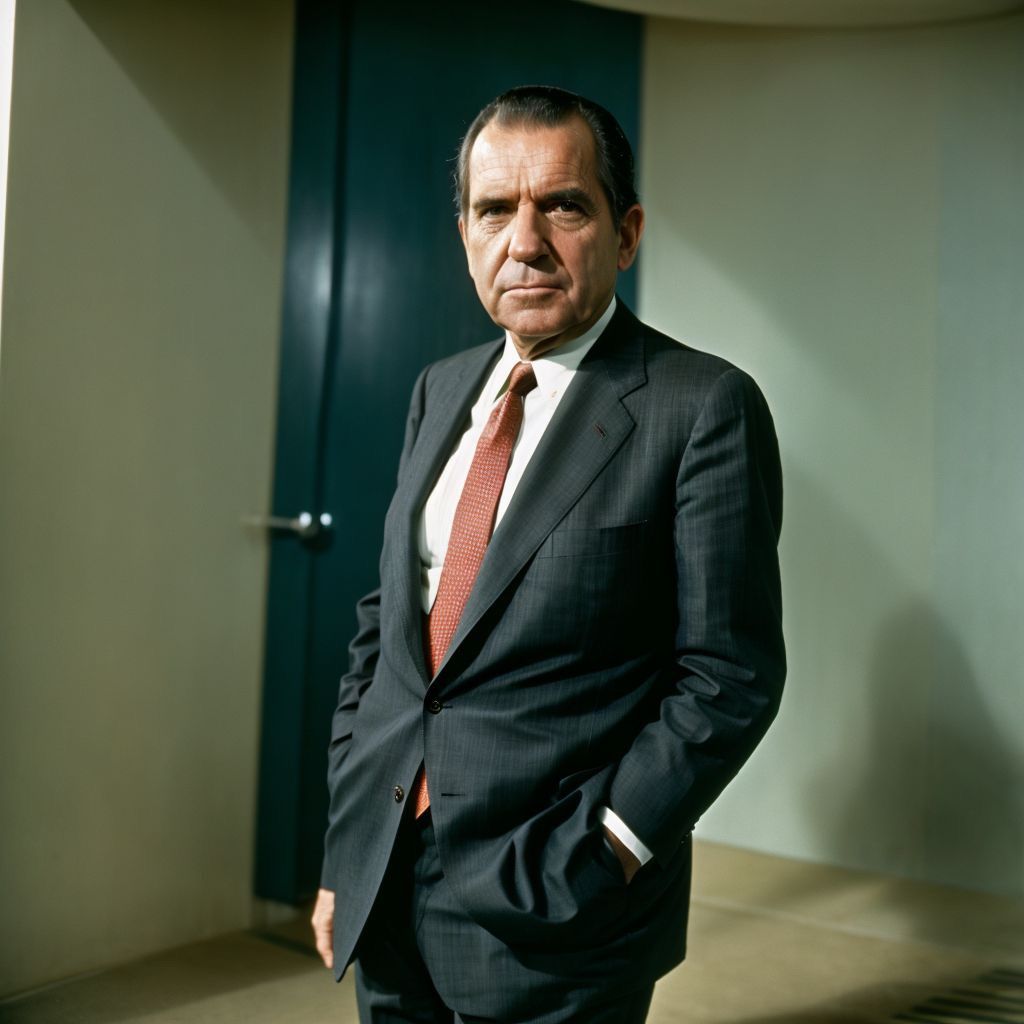
On a warm summer day in 1972, while much of the country was consumed by the mounting turmoil of the Vietnam War and the shadows of the Watergate scandal, something quieter—but no less revolutionary—was unfolding. It didn’t come with loud protests or front-page headlines. Instead, it arrived in the form of a signature on a federal bill that would quietly, yet powerfully, alter the course of American education, athletics, and gender equality for generations. On June 23, 1972, President Richard Nixon signed into law Title IX of the Education Amendments, a simple 37-word provision that would go on to empower millions of girls and women, redefine opportunity, and become one of the most transformative civil rights tools in American history.

The words themselves were deceptively plain: “No person in the United States shall, on the basis of sex, be excluded from participation in, be denied the benefits of, or be subjected to discrimination under any education program or activity receiving Federal financial assistance.” There was no mention of sports. No elaboration on the deep-seated inequities it sought to remedy. But its impact would be seismic.

To understand the roots of Title IX is to journey back into an era when being female often meant being sidelined—not just in sports, but in classrooms, laboratories, boardrooms, and corridors of power. It was a time when young women were routinely told what they couldn’t do, rather than encouraged to explore what they could. In the 1960s, only 7% of law degrees and fewer than 10% of medical degrees were awarded to women. Athletic scholarships for female students were virtually nonexistent. High school and college sports programs were overwhelmingly male-dominated, with paltry budgets—if any—for girls’ teams. And yet, the cultural winds were beginning to shift.

The feminist movement was gathering force. Women across the country were rising up to demand equality—in the workplace, at home, and in the halls of government. The Civil Rights Act of 1964 had laid a foundational path for combating racial discrimination, and women were beginning to press for their inclusion in those same protections. Amid this backdrop, a group of visionary leaders emerged—activists, legislators, educators—each carrying the weight of their personal experiences and the collective frustration of generations denied a fair shot.

One of the most influential figures behind Title IX was Congresswoman Patsy Mink of Hawaii. A Japanese-American trailblazer and the first woman of color elected to Congress, Mink had experienced discrimination firsthand. Rejected by dozens of medical schools because of her gender, she pivoted to law and politics, vowing to challenge the systems that had kept her out. Alongside Senator Birch Bayh of Indiana, who championed women’s rights in the Senate, Mink worked tirelessly to push Title IX through Congress. For them, and for so many women, this was about more than policy—it was about justice.

When Title IX passed, it was a moment of quiet triumph. There were no parades or instant revolutions. But seeds had been planted. In classrooms, gymnasiums, and campuses across the country, the change began to take root. Over time, what had been a vague clause in a legal document became a rallying cry for equal opportunity, reshaping the experiences of girls and women from kindergarten to college and beyond.

Perhaps nowhere has the effect of Title IX been more visible than in athletics. Before 1972, opportunities for girls to play organized sports were few and far between. High schools often had a handful of girls’ teams, if any, and colleges treated women’s athletics as an afterthought. There were no national championships, no scholarships, and little support. But as the law took hold, schools that received federal funding were required to offer equal opportunities—forcing administrators to reassess budgets, resources, and philosophies. The impact was profound.

In 1971, just before Title IX passed, about 295,000 girls participated in high school sports. Today, that number exceeds 3.4 million. College athletics have also seen a meteoric rise in female participation, with hundreds of thousands of young women receiving scholarships that help fund their education and launch athletic careers. Legends like Lisa Leslie, Serena and Venus Williams, Mia Hamm, and Katie Ledecky are part of a generation whose opportunities were shaped, directly or indirectly, by the doors Title IX helped open.

But the influence of Title IX extends well beyond the field. The law has also been a powerful tool in challenging sex-based discrimination in admissions, hiring, academic programs, and student services. It helped open the gates to STEM fields for young women and demanded that schools and universities create more inclusive environments. The law also evolved over time to address sexual harassment and assault on campus, requiring institutions to adopt clear policies and ensure safe educational spaces for all students, regardless of gender.

Yet, the journey has been anything but smooth. Compliance with Title IX was met with resistance from many schools, particularly in the realm of athletics. Lawsuits followed, as did decades of debate about how best to interpret and enforce the law. Critics claimed Title IX led to the elimination of some men’s sports, while advocates argued that equality does not mean diminishing opportunities—it means expanding them. The federal government has periodically revised and clarified the law, with each administration shaping its implementation through regulations and guidance.

The fight for Title IX’s full realization has often fallen to students and grassroots activists. Young women, often just teenagers, have led the charge, challenging their schools to meet the law’s standards and refusing to be sidelined. Their courage and resilience have kept the spirit of Title IX alive, even as legal and political landscapes shifted.

Title IX has also intersected with larger societal conversations about identity, inclusion, and equality. In recent years, debates have emerged around the participation of transgender athletes, with questions about fairness and rights being hotly contested in courts and legislatures. These discussions reveal the evolving nature of equality in America and the ongoing need for thoughtful, compassionate policymaking that honors both fairness and human dignity.

The legacy of Title IX is also deeply personal. It’s in the story of the girl who discovers her love for science and becomes the first in her family to attend medical school. It’s in the young athlete who earns a scholarship and leads her team to victory. It’s in the woman who speaks out against harassment and finds a community of support. It’s in every classroom, every lab, every court and field where girls and women are no longer told “you can’t,” but instead are encouraged to ask, “why not me?”

For those who lived through the world before Title IX, the contrast is stark. Billie Jean King, the tennis legend and outspoken advocate for gender equality, often speaks of how women had to fight for every inch of space in sports and society. She remembers being told that girls were too delicate to compete, too emotional to lead, and too distracting to be taken seriously. Title IX helped turn those myths on their heads. King herself was instrumental in challenging norms, from her historic “Battle of the Sexes” match in 1973 to her lifelong advocacy for women in sports.

And yet, King and others are the first to say: the work is not done. Inequities persist—in funding, media coverage, pay, and representation. Girls of color, LGBTQ+ students, and those from marginalized communities often face additional barriers. But the foundation that Title IX laid continues to support new generations of advocates, athletes, and leaders who are determined to build a more just world.

Each June 23, Title IX’s anniversary becomes more than a date on the calendar. It becomes a moment of reflection and recommitment. Schools host events. Athletes share stories. Lawmakers introduce resolutions. And countless people quietly honor the law that changed their lives. It’s a reminder that progress is possible, even when it comes slowly, and that the ideals of equality must be nurtured and defended.

Looking ahead, the question is not whether Title IX still matters. It’s how we will continue to live up to its promise. How will schools ensure equity in the digital age, where education increasingly happens online? How will we create inclusive sports environments that welcome all identities? How will we continue to break down the barriers—seen and unseen—that limit potential?

The answers will come from the same place they always have: from individuals who dare to imagine something better. From lawmakers who write courageous policy. From educators who foster inclusive classrooms. From students who demand fairness. And from every person who believes that opportunity should never be limited by gender.

Title IX was never just about rules or compliance. It was, and is, about justice. About giving every child—regardless of their sex—the chance to learn, grow, compete, and thrive. It’s about recognizing that talent, drive, and intelligence are not confined by gender. And it’s about celebrating the richness that comes when everyone is allowed to bring their full selves into the world.

On June 23, 1972, a law was signed. But what truly happened was that a door was opened. And through that door have walked millions of girls and women who refused to be told they weren’t enough. They ran faster, studied harder, spoke louder, and dreamed bigger. Because someone, somewhere, believed they should have the chance.

As we honor the anniversary of Title IX, let us not only remember what has been achieved but also commit to the work that remains. Let us ensure that the next generation of girls grows up in a world where their dreams are not restricted by outdated ideas or unequal systems. And let us always carry forward the spirit of those who made Title IX possible—those who believed, often against the odds, that equality isn’t just a goal, but a right.

Related Posts

Operation Barbarossa — The Deadly Surprise That Changed WWII

Elias Rowen

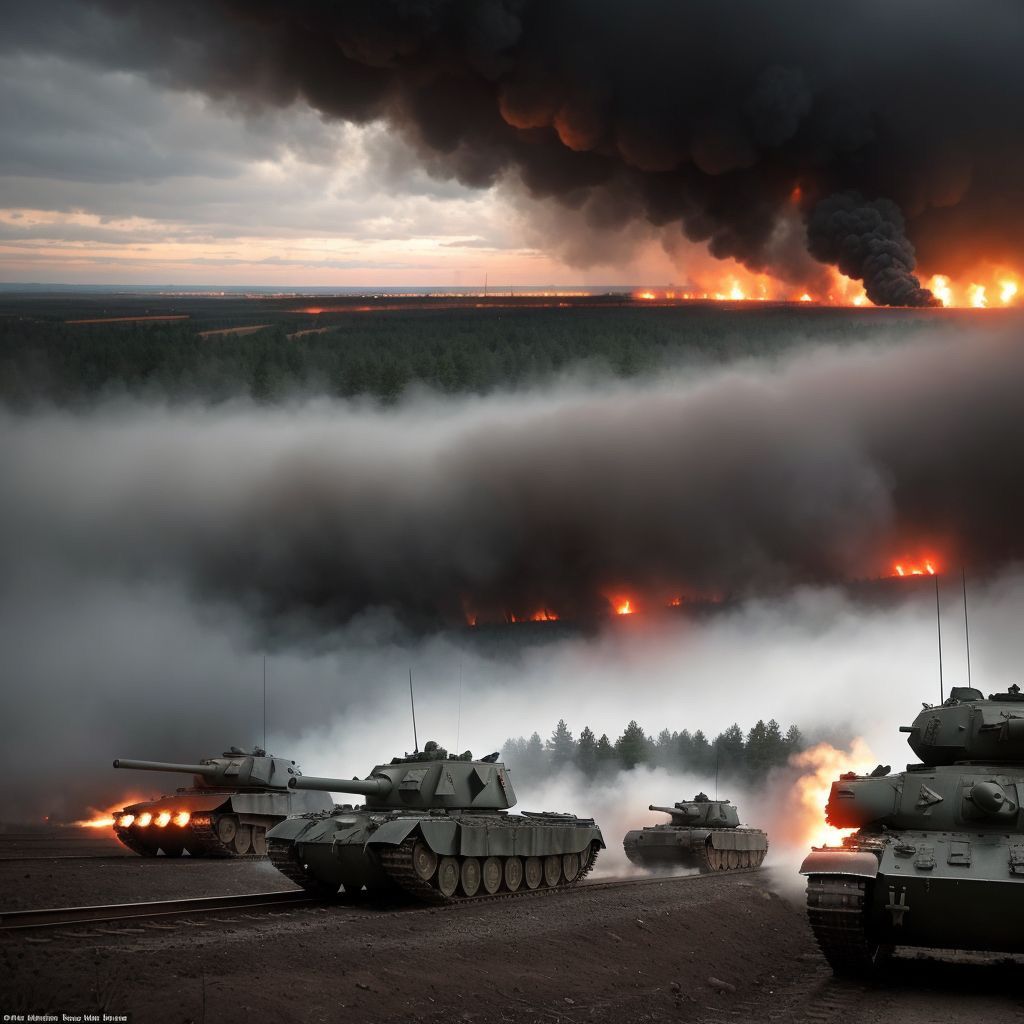
On June 22, 1941, the world was irrevocably changed as Nazi Germany launched Operation Barbarossa, a vast and devastating military invasion of the Soviet Union. This operation marked a pivotal moment in World War II, shattering a tenuous peace, igniting a brutal conflict that spanned thousands of miles, and ultimately altering the trajectory of global history. The scale, ambition, and sheer ferocity of Operation Barbarossa made it one of the most momentous military campaigns in modern history. It was a catastrophic event that reshaped the Eastern Front into the deadliest theater of the war and set the stage for some of the most horrific suffering and heroism ever recorded.

To understand the magnitude of June 22, 1941, it is essential to step back and examine the geopolitical context that led to this watershed moment. In August 1939, Germany and the Soviet Union stunned the world by signing the Molotov-Ribbentrop Pact, a non-aggression treaty that effectively divided Eastern Europe into spheres of influence. The secret protocols of this pact allowed both powers to expand their territories at the expense of Poland, Lithuania, Latvia, Estonia, and Finland without fear of mutual attack. For Adolf Hitler, this agreement was tactical—a temporary measure to secure his eastern flank and free his military to concentrate on the Western Front. Yet, beneath this uneasy truce simmered deep ideological antagonism. Hitler’s vision was rooted in the pursuit of “Lebensraum,” or living space, for the German people—a vision that necessitated conquest and colonization of the vast lands to the east, controlled by what he despised as “Judeo-Bolshevik” Soviet communism.

Operation Barbarossa was thus born from Hitler’s long-standing strategic and ideological goals. The plan was grandiose and unprecedented in scale: to unleash a blitzkrieg across the Soviet Union, destroy the Red Army, and seize the economic and natural resources of the Soviet territories. This included rich grain fields, oil supplies in the Caucasus, and industrial centers that would fuel the German war machine. Hitler believed that with a swift and decisive victory, Germany would dominate Europe, crush communism, and secure its future as a global power. The operation was meticulously prepared, involving nearly 3 million Axis troops, supported by thousands of tanks, artillery pieces, and aircraft, advancing along a front that stretched over 1,800 miles—from the frozen tundras of the Arctic Circle in the north to the sunny shores of the Black Sea in the south. It was the largest military operation ever attempted up to that point.

In the early morning hours of June 22, the German Wehrmacht crossed into Soviet territory with overwhelming force. The initial assault was a stunning success, catching the Soviet forces off guard despite numerous warnings and intelligence reports that suggested an attack was imminent. German armies rapidly penetrated deep into Soviet lands, encircling and destroying whole Soviet divisions, capturing millions of prisoners, and seizing vital towns and cities. The speed and efficiency of the German advance during those first weeks were extraordinary, rekindling the myth of German invincibility. Panzer divisions roared forward, leaving devastation in their wake, and the Luftwaffe dominated the skies.

However, the early triumphs masked the enormous challenges ahead. The vastness of the Soviet Union, combined with brutal terrain, immense distances, and a fiercely resilient enemy, soon slowed the German juggernaut. As the summer stretched into autumn, supply lines became dangerously overextended. Fuel, ammunition, and food could not be delivered quickly enough to the front lines. The Wehrmacht was ill-prepared for the harsh realities of a prolonged campaign on such a massive scale. Moreover, Soviet resistance stiffened dramatically. Despite catastrophic losses in the opening days, Soviet troops, bolstered by fierce patriotism and Stalin’s brutal discipline, began mounting effective counterattacks. The harsh weather and the infamous Russian winter, which German troops were not equipped for, compounded the difficulties.

One of the most harrowing episodes of Operation Barbarossa was the Siege of Leningrad. Beginning in September 1941, German and Finnish forces encircled the city, cutting off supplies and subjecting it to relentless bombardment and starvation. For nearly 900 days, the people of Leningrad endured unimaginable suffering. Civilians and soldiers alike faced hunger, cold, and disease, yet refused to surrender. The siege became a symbol of Soviet resilience and sacrifice. Meanwhile, elsewhere on the front, battles raged with equal ferocity. The city of Stalingrad would soon become synonymous with the brutal turning points of the war—fighting that consumed entire armies in deadly urban combat and marked the beginning of the German retreat.

Operation Barbarossa also irreversibly altered the relationship between the Soviet Union and the Western Allies. The invasion ended any hope of peaceful coexistence between Nazi Germany and the USSR and drove the Soviet Union firmly into the Allied camp. Though relations between Stalin and the Western powers remained uneasy, the enormity of the German threat necessitated cooperation. Lend-Lease aid from the United States and Britain began flowing into Soviet ports, helping to bolster Soviet resistance. The Eastern Front thus became the largest and bloodiest theater of the war, consuming the vast majority of German military resources and causing enormous casualties on both sides.

The human cost of Operation Barbarossa was staggering beyond imagination. The invasion unleashed not only military conflict but horrific policies of occupation. Nazi ideology regarded Slavs and communists as subhuman, leading to systematic atrocities, mass executions, and the expansion of the Holocaust into Soviet territories. Einsatzgruppen, mobile killing squads, followed the Wehrmacht to carry out mass murders of Jews, political commissars, and other perceived enemies. Civilians suffered under brutal occupation regimes characterized by forced labor, starvation, and terror. The campaign exemplified the darkest aspects of the war — the intertwining of ideological fanaticism, racism, and genocide with military conquest.

Despite these horrors, Operation Barbarossa ultimately failed in its primary objective: the rapid defeat of the Soviet Union. The German military was never able to deliver a knockout blow, and as winter set in late 1941, Soviet forces launched counteroffensives that began to push the invaders back. The battle lines stabilized into a grinding war of attrition marked by staggering loss of life and equipment. The failure to capture Moscow, the heart of Soviet power, was a significant blow to German morale. Over the next several years, the Eastern Front would see some of the most iconic and decisive battles of the war, including Kursk, which ended in a decisive Soviet victory and cemented the German retreat.

June 22, 1941, thus stands as a date etched deeply in the memory of history not only for the scale of the military operation but for what it represented: the collapse of any illusion of peace between Germany and the Soviet Union, the unleashing of unparalleled violence, and a grim testament to the destructive ambitions of the Nazi regime. It marked the beginning of a desperate struggle for survival and dominance that would decide the fate of millions and reshape the postwar world order.

Historians continue to analyze Operation Barbarossa from many angles. Intelligence failures on the Soviet side, such as Stalin’s refusal to believe warnings about an imminent invasion, played a role in the initial German successes. On the German side, strategic miscalculations—such as diverting forces to secondary objectives like Kiev, which delayed the push toward Moscow—allowed the Soviets time to regroup. Ideological fanaticism led Hitler to dismiss his generals’ practical advice, focusing on annihilating perceived enemies rather than seizing strategic objectives. The campaign exposed the limits of blitzkrieg tactics in such vast and complex terrain, illustrating the dangers of overambitious planning without adequate logistical support.

Today, memorials across Russia, Eastern Europe, and the former Soviet states stand as solemn reminders of the sacrifices made during the Eastern Front campaign. Museums, monuments, and annual commemorations preserve the memory of those who fought and died in the struggle that began on that fateful June day. The legacy of Operation Barbarossa is multifaceted: a cautionary tale about the perils of ideological hatred and military hubris, a tribute to the resilience of the human spirit under unimaginable adversity, and a stark reminder of the cost of war.

The events of June 22, 1941, remain profoundly relevant to this day. In an era marked by geopolitical tensions and the shadow of total war, the lessons of Operation Barbarossa resonate: unchecked aggression can plunge the world into devastating conflict; the human cost of war is immeasurable; and survival often depends on resilience, unity, and the will to endure. It is a chapter of history that demands reflection, remembrance, and the hope that such a tragedy never repeats.

When the sun rose over the vast Eastern Front on June 22, 1941, few could foresee the magnitude of destruction and human suffering that lay ahead. Yet, the legacy of Operation Barbarossa continues to shape our understanding of war, ideology, and the fragile nature of peace. It stands as a somber testament to the costs of conflict on a scale almost beyond comprehension, a reminder etched in time that echoes across generations.

Related Posts

The Longest Day — Celebrating the Summer Solstice and the First Day of Summer

Elias Rowen

Every year, as June rolls in and the days grow longer, a remarkable natural phenomenon quietly unfolds across the Northern Hemisphere — the Summer Solstice. This event, which typically falls on June 21, marks the official beginning of summer and brings with it the longest period of daylight of the entire year. More than just an astronomical occurrence, the summer solstice is a celebration of light and warmth, an emblem of nature’s eternal cycles, and a moment steeped in history, culture, and awe-inspiring phenomena that connect us to the cosmos and to our shared human past.

On that day, if you wake up early enough in many parts of the Northern Hemisphere, you will find the sun already high in the sky, casting golden light across fields, forests, and cities. The sunlight seems to stretch endlessly into the evening and beyond, sometimes barely dipping below the horizon in places far north, creating the ethereal glow known as “civil twilight.” This uninterrupted presence of the sun bathes the world in an abundance of warmth and light, transforming landscapes into vibrant scenes of growth and vitality. The phenomenon occurs because of the Earth’s axial tilt — about 23.5 degrees from the plane of its orbit around the sun — positioning the Northern Hemisphere closest to the sun during this period. This tilt causes the sun’s rays to strike this part of the planet at their most direct angle, and the day itself becomes the longest in terms of sunlight.

The summer solstice is far more than a simple astronomical event. Its meaning and significance stretch back thousands of years, deeply embedded in the cultures, rituals, and beliefs of ancient civilizations. From the mysterious stone circles of Stonehenge in England to the monumental pyramids of Egypt, from the intricate temples of the Maya and Aztec peoples in the Americas to the sacred sites in Asia and Scandinavia, the solstice was observed with reverence and wonder, its arrival marked with elaborate ceremonies and celebrations. These ancient peoples recognized the importance of the sun’s cycle — the source of life and the determinant of seasons — and aligned their monuments and festivals with its movements.

Stonehenge is one of the most iconic examples of this ancient reverence. Built over 4,000 years ago, this massive stone circle was carefully designed so that on the summer solstice, the sun rises directly over a particular stone known as the Heel Stone, casting its first rays into the heart of the monument. To the people who built it, this precise alignment was no accident; it was likely a powerful symbol of rebirth, fertility, and the cyclical nature of time itself. Even today, thousands of visitors and spiritual seekers gather at Stonehenge every June 21 to witness this alignment and to honor the connection between humanity and the greater cosmos. It remains a vivid reminder that even in prehistoric times, humans were attuned to the rhythms of the heavens and found meaning in the dance of light and shadow.

But Stonehenge is only one chapter in the vast story of solstice celebrations. In ancient Egypt, the summer solstice marked a time tied closely to the flooding of the Nile, a natural event that fertilized the land and allowed civilization to flourish. Temples were oriented to catch the solstice sun, and festivals celebrated the life-giving power of the sun god Ra, whose strength was believed to peak during this time. Similarly, in Mesoamerica, civilizations such as the Maya and Aztecs constructed temples and pyramids that aligned with the solstice sun. The Mayan pyramid at Chichen Itza, for example, casts a famous serpent-shaped shadow during the solstice, symbolizing the descent of Kukulkan, a feathered serpent deity associated with renewal and the cyclical flow of time.

Across Europe, the solstice has been celebrated for millennia as well. The ancient Romans observed “Litha” or “Midsummer,” a festival honoring Sol Invictus — the unconquered sun. It was a time to celebrate strength, vitality, and the peak of the sun’s power. Scandinavian countries continue to observe Midsummer festivals with bonfires, singing, dancing, and feasting — traditions that stretch back to pagan times and were later woven into Christian midsummer celebrations honoring saints like St. John. These festivals emphasize the joy of life, the abundance of nature, and the community’s connection to the changing seasons.

In Asia, the solstice also carries significance in traditional customs and ceremonies. In China, for example, the summer solstice is associated with the yin-yang balance of nature, emphasizing the harmony between the forces of light and darkness. It marks a time of abundance and growth, often celebrated with offerings and rituals aimed at ensuring a bountiful harvest. Japan, too, recognizes the solstice in cultural practices that honor the changing seasons and the natural world, highlighting the connection between human life and the rhythms of nature.

For those who live close to the land — farmers, gardeners, and outdoor enthusiasts — the summer solstice is a critical moment in the agricultural calendar. It signals the peak of the growing season, a time when crops are nourished by long, bright days and the warmth of the sun. Fields of wheat, corn, and other staples thrive under the intense sunlight, while fruit trees swell with ripening fruit. The solstice represents a culmination of spring’s growth and the promise of harvests to come. Even today, many traditional farmers and gardeners observe this day as a marker for tending crops, performing rituals for fertility, or simply appreciating the height of nature’s vitality.

Yet, beyond its practical importance, the summer solstice carries a deeper, almost mystical significance. It embodies the rhythm of life and the passage of time, reminding us of the cycles that govern our world and our place within the vast universe. The Earth’s tilt and orbit create this grand cosmic dance — a yearly turning point when light reaches its zenith before gradually retreating. This cycle mirrors many aspects of human experience: the heights of joy and vitality, the inevitability of change, and the hope for renewal that comes after every decline.

This duality — the sun’s light peaking, only to begin its slow fade — is a poignant metaphor. It speaks to the transient nature of existence and the eternal cycle of death and rebirth. Ancient cultures may not have had the scientific knowledge we do, but they understood this truth in their own way, crafting myths, ceremonies, and monuments that celebrated both the sun’s power and its eventual surrender to darkness. In many ways, the solstice serves as a universal reminder of our own cycles of growth, peak, decline, and renewal.

In the modern world, where artificial light and fast-paced living often obscure our connection to nature’s rhythms, the summer solstice offers a chance to slow down and reconnect. People across the globe mark the day with a variety of contemporary celebrations. From yoga retreats that greet the dawn with mindful meditation and gratitude, to music festivals that embody the spirit of light and community, the solstice remains a powerful symbol of hope, renewal, and human connection.

Many gather outdoors to watch the sunrise, savor the extended daylight, or light bonfires as a nod to ancient traditions. Some take the opportunity to practice gratitude, recognizing the sun as a source of life and energy. Others use the day to step back from daily routines and reflect on their own personal cycles — their achievements, struggles, and hopes for the future. In this way, the summer solstice transcends its astronomical roots and becomes a deeply personal and communal celebration.

Scientifically, the summer solstice is a specific point in the Earth’s orbit around the sun, when the sun reaches its highest position in the sky at noon. After this day, the Northern Hemisphere begins its gradual tilt away from the sun, and the days slowly shorten until the winter solstice. Yet, culturally, it is far more than a mere astronomical marker. It embodies the theme of transformation — the turning point when light begins to wane and darkness gradually returns. This balance between light and dark, growth and decline, is reflected in countless cultural expressions, myths, and rituals around the world.

For example, in Celtic tradition, the solstice was linked to the god Lugh, associated with light, craftsmanship, and kingship. Celebrations involved fire ceremonies to honor the sun and encourage fertility. In Baltic cultures, the festival of Joninės or Rasos celebrated the solstice with music, dance, and rituals to harness the sun’s power and ensure prosperity. Indigenous peoples of North America observed the solstice with various ceremonies, often involving sun dances or other rites aimed at harmony with the natural world.

The solstice also holds a strong presence in art, literature, and music. Poets have long been inspired by the longest day’s symbolism of light, life, and fleeting beauty. Artists depict the golden hues of solstice sunrises and sunsets, evoking feelings of warmth, hope, and connection. Musicians compose pieces that capture the energy and mystery of this day, blending ancient themes with modern sensibilities.

In a world increasingly dominated by technology and artificial light, the summer solstice invites us back to a more primal relationship with nature. It reminds us that despite all human achievements, we remain part of a larger cosmic order — one shaped by the sun’s light and the Earth’s movements. This connection to the natural world offers solace and inspiration, encouraging us to live in harmony with the seasons and appreciate the gifts of each day.

Imagine standing outside on a clear June morning, feeling the sun’s first rays warm your face as they spill over the horizon. The air is alive with the sounds of birds greeting the day, the gentle rustle of leaves stirred by a light breeze, and the distant hum of life awakening. As the sun climbs higher, its golden light transforms everything it touches — the grass glows vibrant green, flowers open their petals wide, and the world feels charged with energy and possibility.

As the day stretches on, the sun lingers in the sky, refusing to retreat. This endless daylight allows more time for outdoor gatherings, celebrations, and moments of quiet reflection. People picnic in parks, hike through forests, swim in lakes, and simply bask in the warm sunlight. Children play late into the evening, reluctant to end a day filled with light and joy. The solstice is a time when nature feels most alive, and we are invited to share in its abundance.

But as the sun finally sets — perhaps later than you ever remember — there is a gentle reminder that change is always near. The darkness returns, slowly but surely, and the cycle begins anew. This transition embodies the eternal dance between light and shadow, joy and sorrow, life and death. The summer solstice teaches us to embrace this flow, to honor the heights of our experience while preparing for the inevitable shifts ahead.

In essence, the summer solstice is a profound celebration of the human spirit and our enduring connection to the cosmos. It is a day to cherish light and life, to honor ancient wisdom, and to find meaning in the cycles that shape our existence. Whether observed through ancient rituals or modern festivities, the solstice remains a timeless reminder that we are part of a vast and beautiful universe — one in which every ray of sunlight tells a story of survival, renewal, and hope.

So on June 21, as the sun lingers longest in the sky, take a moment to step outside, breathe deeply, and look up. Feel the warmth of the sun on your skin and the timeless rhythm of the Earth beneath your feet. Remember the generations before you who celebrated this day with awe and gratitude. Join the millions who still honor this sacred moment of light, life, and cosmic connection. In the unbroken chain of human experience, the summer solstice shines as a beacon — a celebration of summer’s arrival, the power of the sun, and the enduring dance between Earth and sky.

Related Posts

A Mountain State Born from Divided Loyalties: How West Virginia Defied a Confederacy to Join the Union

Elias Rowen

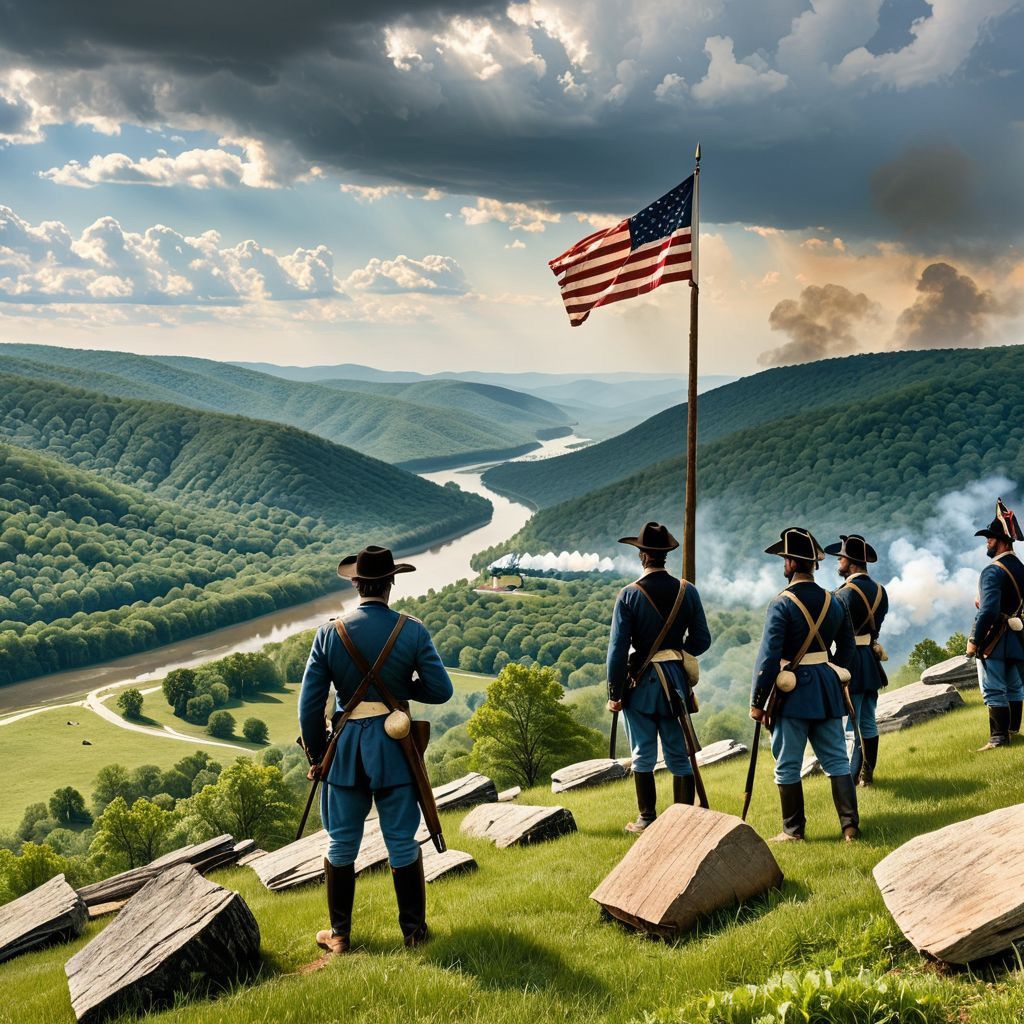
In the heart of America’s darkest hours during the Civil War, when brother was pitted against brother and the nation seemed irreparably torn apart, a remarkable and almost unheard-of event took place. On June 20, 1863, West Virginia officially became the 35th state of the United States—the only state to be formed by seceding from a Confederate state and siding with the Union. This moment didn’t just redraw the map of America; it told a complex story of identity, allegiance, and survival amid one of the most turbulent chapters in American history.

To understand the true gravity of West Virginia’s birth, one must revisit the early years of the 1860s and examine the deep fissures within Virginia itself. Contrary to popular notions of uniformity, Virginia was far from monolithic. It was a state divided by its geography, economy, and ideology. The eastern and southern regions, dominated by vast plantations and reliant on enslaved labor, strongly identified with the Southern cause. These areas were culturally and economically intertwined with the Confederacy, defending an aristocratic system anchored in slavery.

In stark contrast, the western counties of Virginia were shaped by the Appalachian Mountains’ rugged terrain, fostering a lifestyle of small-scale farming, self-sufficiency, and a comparatively lower dependence on slavery. Here, communities were more isolated, often harboring Unionist sympathies and favoring the economic policies of the North. The divide wasn’t simply economic or political—it was also cultural and spiritual. While eastern elites looked toward the grandeur of Richmond and Charleston, western Virginians were more closely aligned in temperament and tradition with Pennsylvania and Ohio.

When Virginia’s legislature voted to secede from the Union in April 1861, the decision sparked immediate outrage and resistance in the west. Unionist sentiment had long simmered, but now it erupted into action. For many western Virginians, the Confederacy represented not only a betrayal of national unity but also a dangerous venture that prioritized elite interests over the welfare of ordinary citizens. In some households, brothers argued over loyalties. In some towns, public opinion fractured overnight. The secession vote was not the beginning of a revolution but rather the culmination of years of underlying tension.

Physical geography compounded these divisions. The Appalachian barrier created logistical challenges that separated the western counties from Virginia’s centers of political power. Roads were scarce and poorly maintained; travel was arduous and time-consuming. This isolation bred a strong sense of regional identity and independence. Westerners felt neglected and unrepresented by the Virginia legislature, which they saw as serving plantation interests at their expense. The mountains didn’t just shape the land—they shaped the people.

Amid this rising unrest, the wheels of political revolution began to turn. In June 1861, delegates from the western counties convened in Wheeling for what would become the Wheeling Conventions. There, they laid the foundation for a new political entity: the Restored Government of Virginia. Declaring the Confederate regime in Richmond illegal, this new government pledged allegiance to the Union and sought to represent all Virginians who opposed secession. Their boldest move was a proposal to form a new state—one that would eventually become West Virginia.

Creating a new state was fraught with legal and constitutional hurdles. Article IV of the U.S. Constitution requires consent from a state’s legislature to carve out a new state within its borders. In this case, the Restored Government—recognized by President Lincoln and the U.S. Congress as the legitimate government of Virginia—provided the necessary consent, even though its authority was contested by the Confederate regime. Critics called it a legal fiction; supporters hailed it as a necessary adaptation to wartime reality. Ultimately, the exigencies of civil war outweighed constitutional purism.

As the proposal advanced through Congress, fierce debates ensued. Some lawmakers worried about setting a dangerous precedent. Others saw strategic advantage in reinforcing Union presence in the border states. President Lincoln himself grappled with the decision, but eventually signed the statehood bill into law in December 1862. After organizing a state constitution and fulfilling the requirements set by Congress, West Virginia officially entered the Union on June 20, 1863.

Yet this birth was far from peaceful. West Virginia entered the Union amid the roar of cannon fire and the clash of sabers. Though large-scale battles were rare due to the terrain, guerrilla warfare, raids, and skirmishes plagued the region. Confederate sympathizers harassed Union supply lines, while Union forces cracked down on suspected collaborators. The Baltimore & Ohio Railroad—a critical artery for the Union’s war machine—ran through West Virginia, making the area strategically vital and a frequent target for sabotage.

Families were torn apart. Communities splintered. A man might don a blue uniform while his cousin marched under the stars and bars. Women bore the brunt of the chaos, managing farms, raising children, and navigating the treacherous politics of divided towns. Violence was both personal and political.

In the wake of statehood, West Virginia had to confront the monumental task of governance. The new state had inherited not only a patchwork of counties but also a patchwork of loyalties. Reconciliation was difficult. Law enforcement struggled to maintain order, and resentment lingered long after the last gunshot of the war.

Economically, the state was bruised but not broken. Though the war disrupted agriculture and commerce, West Virginia’s natural wealth hinted at future prosperity. Coal, timber, and salt would drive post-war growth. Railroads expanded, towns grew, and new industries took root. Yet this boom came at a cost: labor exploitation, environmental degradation, and waves of social unrest that would mark the state’s industrial history.

Culturally, West Virginia forged a distinct Appalachian identity. Proud of its ruggedness and resilience, the state embraced its frontier spirit. Folk traditions, music, and storytelling became cornerstones of community life. The shared memory of sacrifice and struggle in the Civil War era left deep roots that would nourish the state’s sense of self for generations.

The individuals behind this story deserve recognition. Francis Pierpont, leader of the Restored Government and a steadfast Unionist, is often called the “Father of West Virginia.” His leadership during the Wheeling Conventions and subsequent governance set the tone for the state’s formation. Others—local sheriffs, pastors, teachers, and farmers—played their part in holding communities together and guiding them through uncharted waters.

West Virginia’s entry into the Union wasn’t merely a political act. It was a declaration of values, a choice made under fire that emphasized unity over division, self-determination over subjugation. In a war defined by lines drawn between North and South, West Virginia stood as a reminder that not all lines are so neatly drawn.

The legacy of that decision resonates even today. The mountains that once divided Virginia now symbolize the spirit of a people who chose a different path. West Virginia’s statehood reminds us that history is often made not by sweeping movements, but by communities standing firm in the face of chaos. On June 20, 1863, a new state was born—not out of conquest, but out of conviction. And in that moment, the American experiment expanded once more, shaped by the struggle, sacrifice, and stubborn hope of a region that dared to be different.

Related Posts

Juneteenth: The Long-Awaited Dawn of Freedom

Elias Rowen

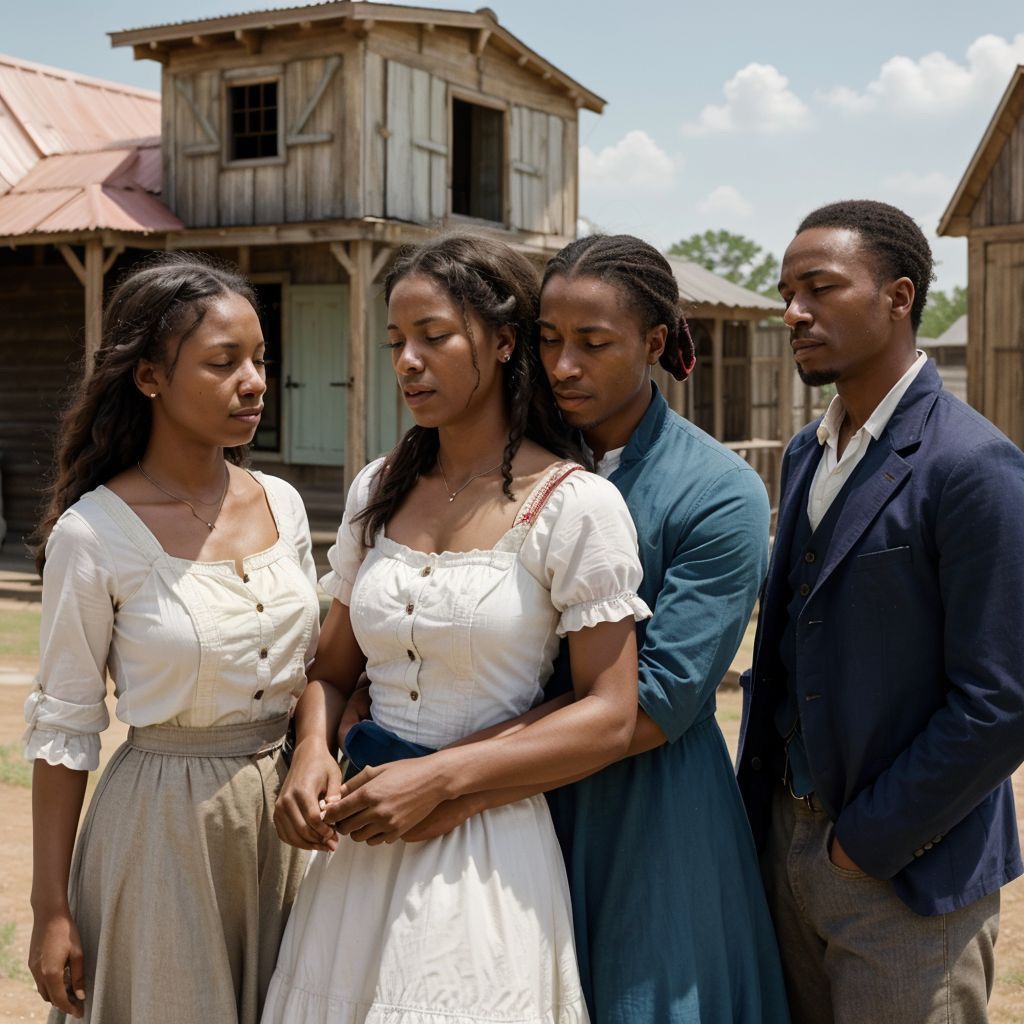
June 19, 1865, began like any other humid day in Galveston, Texas—sunrise casting golden light over the Gulf, fishermen preparing their nets, merchants opening up shop. Yet, for hundreds of thousands of enslaved African Americans across Texas, it was a day unlike any other. It was the day freedom finally arrived, years overdue but no less life-changing. This was Juneteenth, the day when news of the Emancipation Proclamation reached the last holdouts of slavery in the Confederacy. The day the final chains of chattel slavery began to fall away. The day the truth could no longer be denied.

To understand the magnitude of Juneteenth, one must first understand the slow, grinding arc of slavery in America and the civil war that fractured the nation. President Abraham Lincoln had issued the Emancipation Proclamation on January 1, 1863, declaring all enslaved people in Confederate-held territory to be free. But the Proclamation, while monumental in symbolism, was limited in immediate impact. It could not be enforced in areas still under Confederate control. Texas, vast and remote, remained largely untouched by Union forces throughout most of the Civil War, making it a final stronghold of slavery even after the Confederate surrender at Appomattox in April 1865.

In the months that followed the war’s end, Confederate soldiers trickled home, defeated, and uncertain. But for the hundreds of thousands of enslaved people in Texas, there had been no surrender, no clear victory—only more work, more suffering, and a cloud of rumors. Some had heard whispers of Lincoln’s Proclamation. Others dared to hope the end was near. But the plantation system continued churning, and white landowners had little incentive to release their labor force. So, the enslaved waited, praying for a word, a sign—freedom, it seemed, had gotten lost on the way to Texas.

That all changed on June 19, when Union Major General Gordon Granger arrived in Galveston with 2,000 federal troops. Their mission: to enforce the emancipation of all enslaved people and restore federal authority to the rebellious state. Granger didn’t waste time. Standing on the balcony of Ashton Villa, he issued General Order No. 3. The words were plain but thunderous: “The people of Texas are informed that, in accordance with a proclamation from the Executive of the United States, all slaves are free.” With that statement, the last vestige of legalized human bondage in America crumbled—at least in theory.

The reaction to the order was immediate, emotional, and complex. Imagine generations of trauma and toil giving way to a single breath of hope. Some wept. Some danced. Some ran to neighboring plantations to spread the news. Others remained cautious, even skeptical—after all, slavery had been law for over two centuries. For many enslavers, the announcement came as a shock, though some had known for months and deliberately withheld the information. In some areas, plantation owners postponed the announcement until after the harvest, clinging to their collapsing world a little longer.

Freedom, for all its glory, arrived unevenly. While the proclamation had legal weight, enforcement was patchy and dangerous. There were instances of violent retaliation against freed people. In some cases, Union soldiers had to physically intervene to prevent bloodshed or re-enslavement. The journey from legal emancipation to lived freedom was neither smooth nor immediate—it was hard-won, often at great cost.

But amid the chaos, a spark was lit. Black communities across Texas began to celebrate June 19th as a sacred milestone. The earliest Juneteenth gatherings were deeply spiritual—a combination of worship, remembrance, and jubilation. Families traveled great distances to reunite, share meals, sing spirituals, and retell stories of survival. These gatherings became a foundation of community identity, a way to claim space and joy in a world that often offered little of either.

Over time, these commemorations grew into an annual tradition. As formerly enslaved people migrated out of Texas, seeking better opportunities in the North and West, they carried Juneteenth with them, planting its roots in cities like Los Angeles, Chicago, and Oakland. Through food, music, dance, and prayer, the memory of June 19th, 1865 was preserved—not just as a celebration of freedom, but as an act of resistance and pride.

Yet the broader American public remained largely unaware—or indifferent. For much of the 20th century, Juneteenth was celebrated mostly within African American communities. Schools did not teach it. The media did not mention it. History textbooks focused on Lincoln’s Proclamation or the 13th Amendment, skipping over the long delay that kept enslaved people in bondage even after the legal end of slavery. Juneteenth was a story told at cookouts and church services, passed down like an heirloom among those who refused to let it be forgotten.

This relative obscurity began to change during the Civil Rights Movement of the 1950s and 60s. As Black Americans pushed for voting rights, desegregation, and full citizenship, the lessons of Juneteenth gained new urgency. The holiday reminded people that freedom was not simply granted—it had to be fought for, again and again. In 1968, after the assassination of Dr. Martin Luther King Jr., the Poor People’s Campaign held a Solidarity Day in Washington, D.C., and included Juneteenth in its call for racial and economic justice. The fight for equality was far from over, but Juneteenth served as a compass pointing toward that unfinished dream.

By 1980, Texas became the first state to officially recognize Juneteenth as a holiday. Other states slowly followed, with grassroots organizers and activists leading the charge. They saw in Juneteenth an opportunity to educate, to remember, and to reclaim a piece of history too often buried under myths of progress. In the decades that followed, Juneteenth celebrations became larger and more visible—featuring parades, historical reenactments, musical performances, and lectures on Black history and culture.

Still, the struggle for national recognition continued until the tragic events of 2020 brought it roaring into the spotlight. The killing of George Floyd by a Minneapolis police officer ignited a global movement for racial justice. Amid protests and reckonings, Americans began asking deeper questions about their past, present, and future. In this climate, Juneteenth emerged not only as a historical observance but as a call to action. Corporations acknowledged it, communities embraced it, and finally, lawmakers moved to recognize its significance.

On June 17, 2021, President Joe Biden signed legislation officially making Juneteenth a federal holiday. It was a moment of validation and visibility—a long-overdue acknowledgment of the importance of June 19th. For many, it felt like an affirmation of history, a national reckoning with a truth too long ignored. But even this step, while important, is not the end of the journey. Recognizing a holiday is one thing; living up to its meaning is another.

Juneteenth invites every American to reflect—not just on the joy of freedom, but on the cost of its delay. It reminds us that emancipation was staggered and incomplete, that freedom is more than a proclamation. It is safety, opportunity, dignity, and the right to exist without fear. For generations of Black Americans, true freedom remained elusive even after slavery ended. Jim Crow laws, redlining, mass incarceration, police violence—these are not distant echoes but ongoing realities.

And yet, Juneteenth remains a beacon of hope. It is a celebration not of what was handed down, but what was claimed and created through struggle. The resilience shown by formerly enslaved people in building schools, founding businesses, organizing churches, and raising families in the face of staggering odds is a triumph unmatched. Their legacy lives in every Juneteenth cookout, in every sermon, in every story told to the next generation.

Today, Juneteenth is more than a Black holiday—it’s an American holiday. It asks all of us to consider what freedom really means. It challenges us to confront the uncomfortable truths of our history and to find strength in the stories of those who endured and overcame. It urges us to celebrate Black joy not as a contrast to pain, but as its own radical form of resilience.

In Galveston, where the first Juneteenth began, visitors now gather at historical sites like the Reedy Chapel AME Church and the Emancipation Cultural Center. They walk the same streets where enslaved people first heard the news. They pause at monuments and read the weathered plaques. And they remember. Not only what was lost, but what was found—an unbreakable spirit, a legacy of resistance, and a date that forever changed the nation.

As we mark Juneteenth year after year, we’re reminded that history isn’t static—it lives in us. And we have the power, and the responsibility, to shape what comes next. To listen. To learn. To act.

Because the story of Juneteenth didn’t end in 1865. It began there.

Related Posts

The Day Europe’s Fate Was Sealed: Napoleon’s Final Stand at Waterloo

Elias Rowen

June 18, 1815, was a day etched forever in the annals of history—a day when the fate of Europe hung in the balance. The rolling fields near the small Belgian village of Waterloo became the stage for one of the most pivotal battles of all time, a clash that would mark the end of an era and reshape the continent forever. This was Napoleon Bonaparte’s last stand, a moment charged with tension, strategy, and the hopes of a desperate Europe.

Napoleon, once a revolutionary hero who had crowned himself Emperor of the French, had risen to dominate much of Europe through his brilliant military campaigns. But after escaping exile on Elba, he returned to power in what would be known as the Hundred Days, threatening the fragile balance of European nations determined to stop him. The Allied forces—primarily British, Dutch, Belgian, and Prussian troops—gathered to confront him in this decisive battle.

The morning of June 18 was tense. Thick clouds hung low over the battlefield, turning the muddy terrain treacherous for soldiers and horses alike. Napoleon, known for his bold tactics, faced an equally determined coalition led by the Duke of Wellington and Prussian Field Marshal Gebhard Leberecht von Blücher. The battle was fierce and chaotic, with attacks and counterattacks pushing men to the brink.

Despite his tactical genius, Napoleon was ultimately overwhelmed. The arrival of the Prussian army turned the tide against him, forcing a retreat. This defeat shattered his dream of European domination and ended the Napoleonic Wars once and for all. Napoleon was captured and sent into exile on the remote island of Saint Helena, where he would spend the rest of his days.

Waterloo’s impact was profound. It restored a fragile peace in Europe and ushered in a new era of diplomacy and balance among nations. The Congress of Vienna, which had sought to redraw Europe’s map after Napoleon’s earlier defeat, now had a lasting peace to enforce. The battle also marked the decline of French imperial ambition and the rise of Britain as a global power.

But beyond politics and strategy, Waterloo became a symbol of resilience and the costs of war. Thousands of soldiers lost their lives on that muddy field, their sacrifices shaping the future of the continent. The battle has since captured imaginations through literature, art, and memory—reminding us how a single day can alter the course of history.

The aftermath of Waterloo was marked by widespread mourning across Europe. The people who had suffered under Napoleon’s rule finally saw an end to his tyranny, but at what cost? The numbers are staggering: over 47,000 casualties, including more than 22,000 British and Prussian soldiers killed or wounded. The losses were immense, but the impact on European politics was equally significant.

Waterloo marked a turning point in international relations. The Congress of Vienna, which had been formed after Napoleon’s earlier defeat, now had a lasting peace to enforce. The battle also led to the rise of Britain as a global power, marking the end of French imperial ambitions and the beginning of a new era of balance among European nations.

Today, the site of Waterloo is a place of reflection and remembrance. Visitors walk the fields where nations collided and dreams were dashed, learning that history is not just about leaders and armies but about the human stories beneath the smoke and cannon fire. The Wellington Museum at Waterloo provides an intimate look into the lives of those who fought on June 18, offering insights into the strategic decisions made by leaders like Napoleon and Wellington.

The museum’s collections include uniforms, equipment, and personal belongings of soldiers from all sides, giving visitors a glimpse into the experiences of ordinary men caught up in extraordinary circumstances. The story of Waterloo is told through artifacts, documents, and interactive exhibits, highlighting the bravery and sacrifice of those who fought on that fateful day.

As visitors walk through the museum and the battlefield, they are reminded of the human cost of war. Thousands of soldiers lost their lives on that muddy field, their sacrifices shaping the future of Europe. The legacy of Waterloo extends far beyond the battle itself, serving as a reminder of the enduring impact of war on individuals and nations.

Beyond the museum, visitors can explore the battlefield itself, walking in the footsteps of those who fought and died there. The site is marked by monuments and memorials to the soldiers who lost their lives, including the imposing Lion’s Mound, which commemorates the bravery of the Prussian troops who played a crucial role in Napoleon’s defeat.

The Waterloo Battlefield Visitor Centre offers an immersive experience, with interactive exhibits and multimedia displays that bring the battle to life. Visitors can explore the battlefield on foot or by bike, following in the footsteps of the soldiers who fought there. The site also features a number of commemorative events throughout the year, including reenactments and ceremonies to mark key anniversaries.

As we reflect on the legacy of Waterloo, we are reminded of the enduring impact of war on individuals and nations. The battle marked a turning point in European history, ushering in a new era of diplomacy and balance among nations. It also serves as a powerful reminder of the human cost of conflict, highlighting the bravery and sacrifice of those who fought and died on that fateful day.

In conclusion, Waterloo was a pivotal moment in world history—a clash that would mark the end of an era and reshape Europe forever. The battle has left an indelible mark on our collective memory, serving as a reminder of the enduring impact of war on individuals and nations. As we walk the fields where nations collided and dreams were dashed, we are reminded of the human stories beneath the smoke and cannon fire.

Related Posts

When a Break-In Unraveled a Presidency: The Story of Watergate

Elias Rowen

June 17, 1972, was a warm, uneventful Saturday in Washington, D.C., the kind of summer day that hums with the usual rhythm of a capital city. People were going about their weekend routines, unaware that within the walls of a sleek, modern building known as the Watergate complex, a political earthquake was about to detonate. That night, five men were caught inside the headquarters of the Democratic National Committee (DNC), arrested for breaking in, tampering with wiretapping equipment, and attempting to photograph confidential documents. What at first appeared to be a bizarre but minor political burglary soon unraveled into one of the most explosive scandals in American history—a scandal that would ultimately force the resignation of President Richard Nixon and redefine the very limits of presidential power.

The building itself, located along the Potomac River, seemed an unlikely place for the staging ground of a constitutional crisis. With its sweeping curves and upscale apartments, the Watergate complex was a symbol of Washington’s elite. Yet, tucked away in one of its office towers was the DNC’s headquarters—targeted not by foreign agents, but by operatives linked to Nixon’s re-election campaign, known as the Committee to Re-Elect the President (derisively nicknamed “CREEP”).

The five burglars—Bernard Barker, Virgilio González, Eugenio Martínez, James W. McCord Jr., and Frank Sturgis—were no ordinary criminals. Some had ties to the CIA, and McCord was the security coordinator for CREEP. They were caught red-handed, carrying sophisticated wiretapping gear and thousands of dollars in cash traced to accounts controlled by Nixon’s campaign. They weren’t there to steal money or valuables. They were there to gather intelligence—surveillance equipment, wiretaps, and bugging devices intended to spy on political opponents during an election year.

When news of the break-in first surfaced, the White House attempted to dismiss it as a “third-rate burglary,” something beneath the dignity of serious attention. But a few reporters at The Washington Post weren’t so quick to look away. Two relatively unknown journalists at the time, Bob Woodward and Carl Bernstein, sensed something deeper. Their instincts, dogged investigative work, and refusal to be brushed off would prove essential in exposing a pattern of corruption that extended far beyond the confines of that June night.

As Woodward and Bernstein dug in, they discovered that the burglars had ties to top Republican officials, including individuals directly associated with Nixon’s campaign. Still, it was difficult to prove who ordered the break-in or why. Then came a mysterious source who would become legendary in journalistic circles—“Deep Throat.” Long shrouded in secrecy, this source was later revealed to be FBI Associate Director Mark Felt. He provided cryptic yet invaluable guidance, nudging the reporters in the right direction with the now-iconic phrase: “Follow the money.”

And follow it they did. What they uncovered was a labyrinthine network of illegal campaign activities, secret slush funds, political espionage, and cover-ups orchestrated by the highest levels of the Nixon administration. The original crime—the burglary—was just the tip of the iceberg. There were forged documents, misuse of government agencies like the FBI, CIA, and IRS to harass political enemies, and even plots to discredit key witnesses and obstruct justice.

As revelations trickled out, the White House clung to denial. Press secretary Ron Ziegler famously called previous denials “inoperative,” a term that would become synonymous with political evasion. Meanwhile, the Nixon administration worked feverishly behind the scenes to halt investigations, suppress media coverage, and portray the scandal as a partisan witch hunt. But the evidence kept growing, and the American public began to ask hard questions about the integrity of their leaders.

In 1973, the Senate launched a formal investigation into Watergate, broadcasting hearings live to the nation. Millions of Americans watched in disbelief as former aides and officials detailed the extent of the administration’s misdeeds. One name that emerged again and again was John Dean, the White House Counsel, who eventually testified that he had discussed the cover-up with Nixon himself. His testimony was riveting, painting a picture of a president who wasn’t merely aware of the cover-up—but actively directing it.

The coup de grâce came in the form of the now-infamous “Nixon tapes.” In a bid to document his presidency, Nixon had installed a secret voice-activated taping system in the Oval Office. When investigators learned of this, they demanded the tapes. Nixon refused, citing executive privilege. A legal battle ensued, eventually reaching the Supreme Court.

In a unanimous decision in July 1974, the Court ordered Nixon to release the tapes. What they revealed was damning. One recording, later dubbed the “smoking gun,” captured Nixon discussing plans to use the CIA to obstruct the FBI’s investigation just days after the break-in. It was the final straw. Facing near-certain impeachment by the House and likely conviction in the Senate, Nixon addressed the nation on August 8, 1974. With a grave demeanor, he announced his resignation, effective the following day.

“I have never been a quitter,” Nixon said. “To leave office before my term is completed is abhorrent to every instinct in my body. But… as President, I must put the interest of America first.”

Gerald Ford, Nixon’s vice president, assumed the presidency and, in a controversial move, granted Nixon a full pardon just weeks later. The decision divided the country—some praised it as a step toward healing, while others saw it as an escape from justice.

The aftermath of Watergate was far-reaching. It shattered public trust in government, ushered in an era of cynicism, and led to sweeping reforms. Congress passed laws aimed at improving campaign finance transparency, bolstering the independence of the judiciary, and curbing executive overreach. The Ethics in Government Act, the Foreign Intelligence Surveillance Act (FISA), and the Federal Election Campaign Act were all born in the shadow of Watergate.

But beyond legislation, Watergate changed the culture of politics and media. It emboldened investigative journalism and inspired a generation of reporters to hold the powerful accountable. It also made Americans acutely aware of the fragility of democratic institutions and the need for constant vigilance.

Richard Nixon left the White House in disgrace, but his story didn’t end there. In the years that followed, he sought to rehabilitate his image, writing books and engaging in foreign policy discussions. While history has reassessed aspects of his presidency—such as his opening to China and environmental initiatives—Watergate remains the defining chapter of his legacy.

Today, the term “Watergate” is more than a proper noun. It’s a suffix, attached to scandals from every corner of public life—“Deflategate,” “Bridgegate,” “Russiagate.” But the original Watergate stands apart because of its depth, its reach, and its implications for the future of American governance.

It showed that no leader, no matter how powerful, is above the law. It underscored the importance of a free press, the resilience of constitutional checks and balances, and the courage of individuals willing to speak the truth—even at great personal cost.

For all its darkness, the Watergate scandal illuminated the strength of democratic systems when they function properly. The process was messy, painful, and deeply polarizing—but it worked. The mechanisms of accountability, though strained, ultimately prevailed. A president who abused his office was removed not by violence or revolution, but through legal and constitutional means.

More than fifty years later, the lessons of Watergate remain as relevant as ever. In a world where disinformation can spread in seconds, where political divisions run deep, and where the temptation to bend the rules remains constant, the Watergate story serves as a beacon—and a warning.

It reminds us that democracy is not a static inheritance, but a living responsibility. It must be defended not only in grand gestures but in the quiet insistence on truth, transparency, and the rule of law. It must be protected by journalists who ask uncomfortable questions, by citizens who refuse to look away, and by institutions that hold firm in the face of power.

Watergate began as a crime in the shadows, carried out by operatives convinced they could get away with it. It ended in the blinding light of public scrutiny, as the truth overcame the lies, and accountability triumphed over arrogance.

That summer night in 1972 might have started like any other. But by morning, history had changed. A wiretap in an office led to the fall of a president and a reawakening of a nation’s conscience.

Truth, it turns out, doesn’t always whisper. Sometimes, it breaks in through the front door.

Related Posts

The Day South African Youth Rose Up: The Soweto Uprising and the Fight Against Apartheid

Elias Rowen

June 16, 1976, was a day etched deeply into the history of South Africa and the global struggle for justice. On this day, thousands of Black students in the township of Soweto took to the streets to protest the oppressive apartheid government’s decision to enforce education in Afrikaans—a language many saw as the tongue of their oppressors. This peaceful march quickly turned into a brutal confrontation, sparking a nationwide movement that would shake the foundations of apartheid.

Apartheid was more than just segregation; it was a system designed to control every aspect of life for Black South Africans, enforcing racial inequality through laws and violence. Education was a key battleground in this war of oppression. The government’s Bantu Education policy aimed to prepare Black children for lives as laborers and servants rather than thinkers or leaders. This meant that education was being used as a tool to perpetuate the status quo, denying Black South Africans access to equal opportunities and stifling their potential.

The decree that Afrikaans be used alongside English in schools was seen as a direct attack on students’ identity and future. Afrikaans was not just a language; it was a symbol of oppression, associated with the ruling National Party and its policies of apartheid. For many Black South Africans, learning Afrikaans was tantamount to accepting and internalizing the racist ideology that underpinned apartheid.

Imagine being a young student in Soweto on that day—walking together with friends, hopeful for change, but facing the harsh reality of a regime determined to silence your voice. The peaceful protest quickly met police brutality; tear gas and live ammunition were unleashed on the crowd. Among those killed was 12-year-old Hector Pieterson, whose image, captured in a haunting photograph of a dying boy carried by a fellow student, became a symbol of resistance and sacrifice.

The Soweto Uprising ignited a fire across South Africa. Students, families, and activists joined in protests and strikes, refusing to accept an education system built on injustice. They demonstrated their determination to challenge the status quo and fight for their rights as human beings. The courage of those young protesters showed the world that the fight against oppression was not just political—it was deeply personal and urgent.

In the years that followed, the Soweto Uprising became a defining moment in the anti-apartheid movement, inspiring leaders like Nelson Mandela and fueling efforts that eventually led to apartheid’s downfall in the early 1990s. The uprising galvanized international awareness and condemnation of apartheid, highlighting its inherent cruelty and injustice.

It reminds us that sometimes, the voices of youth have the power to awaken a nation and change history. The Soweto Uprising was not just an isolated event; it was a catalyst for a broader movement for justice and equality in South Africa. It showed that ordinary people could make extraordinary sacrifices for a common goal and that even the most seemingly insurmountable obstacles could be overcome through collective action.

The impact of the Soweto Uprising cannot be overstated. It marked a turning point in the anti-apartheid movement, inspiring new waves of protests and demonstrations across South Africa. The international community began to take notice, with many countries condemning apartheid and imposing economic sanctions on South Africa.

In the face of such widespread opposition, the apartheid government was forced to make concessions. In 1983, the government announced that Afrikaans would no longer be a compulsory subject in schools, but this move came too late for many students who had already been killed or injured during the Soweto Uprising.

Today, June 16 is celebrated as Youth Day in South Africa—a tribute to the bravery and resilience of the students who dared to stand up for their rights. Their story teaches us that education is not just about books or classrooms; it’s about dignity, freedom, and the right to shape one’s own destiny. It reminds us that education should empower individuals and communities, providing them with the knowledge, skills, and critical thinking needed to navigate a rapidly changing world.

The Soweto Uprising has left an indelible mark on South Africa’s history, serving as a powerful reminder of the importance of standing up against oppression and fighting for justice. It highlights the significance of youth activism in driving change and challenging the status quo. As we commemorate this momentous occasion, let us remember the sacrifice and courage of those young students who dared to dream of a better future.

In many ways, the Soweto Uprising has become an international symbol of resistance against oppression, inspiring movements for justice around the world. It serves as a testament to the power of collective action and nonviolent resistance in challenging unjust systems and policies.

The story of the Soweto Uprising also underscores the importance of remembering our history and learning from it. As we move forward into an uncertain future, we must acknowledge the lessons of the past and strive to build a more just and equitable world for all.

Moreover, the legacy of the Soweto Uprising continues to inspire new generations of activists and change-makers around the world. It reminds us that even in the darkest moments, there is always hope for a better future. The courage and resilience of those young students who stood up against apartheid serve as a powerful reminder that ordinary people can make extraordinary differences when they work together towards a common goal.

In conclusion, the Soweto Uprising was a pivotal moment in South African history, marking a turning point in the anti-apartheid movement and inspiring new waves of protests and demonstrations across the country. It reminds us that education is not just about books or classrooms; it’s about dignity, freedom, and the right to shape one’s own destiny.

As we commemorate this day, let us remember the sacrifice and courage of those young students who dared to dream of a better future. Let us honor their memory by continuing to strive for justice, equality, and human rights around the world.

Related Posts

How a Medieval Document Changed the Course of Democracy Forever

Elias Rowen

Imagine England in 1215—a land ruled by a king with nearly unchecked power, where nobles and common folk alike faced heavy taxes, arbitrary justice, and the whims of royal authority. This was the reality for many people living under King John’s rule, but one group of brave individuals dared to challenge his authority, leading to the signing of the Magna Carta, a document that would echo through history as a cornerstone of democracy and the rule of law.

King John was not a popular monarch. His military failures, including losing vast territories in France, combined with harsh taxation and ruthless governance, angered many. He had been king since 1199, following the death of his brother Richard I (also known as Richard the Lionheart), who had gone to fight in the Third Crusade. John’s reign was marked by a series of costly wars, including the disastrous conflict against King Philip II of France, which led to the loss of Normandy and other territories.

King John’s domestic policies were equally unpopular. He imposed heavy taxes on his subjects, often without their consent or representation. This practice, known as “scutage,” allowed him to bypass Parliament and raise funds for his military campaigns through arbitrary means. The king also showed little regard for the rights of his nobles, often disregarding traditional laws and customs in favor of his own whims.

As tensions between King John and his subjects continued to rise, a group of powerful barons grew weary of the king’s abuses. Led by Stephen Langton, the Archbishop of Canterbury, and Robert Fitzwalter, one of the most influential nobles in England, the barons began to plot against their monarch. In 1214, they drew up a document known as the “Articles of the Barons,” which outlined their grievances against King John. They demanded that he agree to certain concessions, including the establishment of a new council to oversee the government and the limitation of his power to impose taxes without consent.

In June 1215, the barons gathered at Runnymede, a meadow in Surrey near Windsor Castle, where King John was forced to agree to their terms. This dramatic confrontation, which has become known as “the Battle of Runnymede,” resulted in the sealing of the Magna Carta (literally “Great Charter” in Latin). The original document consisted of 63 clauses, many of which dealt with feudal rights and property issues specific to the nobility.

However, several key provisions had far-reaching implications for English law and governance. For example, Clause 39 prohibited the king from imprisoning any freeman without a formal accusation and due process. Similarly, Clauses 40-42 guaranteed the right to a fair trial, including protection against unjust imprisonment and the right to appeal. Moreover, the document established the principle that even the king was not above the law.

Despite its significance, the Magna Carta was not without controversy. In fact, it was annulled by Pope Innocent III just a few months after being signed. King John’s supporters in the Church argued that the document undermined papal authority and challenged the divine right of kings. However, this setback did not deter the barons. They continued to promote the charter as a symbol of their resistance against an abusive monarch.

Over time, the principles enshrined in the Magna Carta endured, shaping English law and governance for centuries to come. Though it was initially a practical solution to a political crisis, the document planted seeds for the idea that no one, not even a king, is above the law. It introduced concepts such as due process, fair taxation, and the right to a lawful trial—ideas that would eventually shape modern democracy.

The influence of the Magna Carta can be seen in many subsequent documents, including the English Bill of Rights (1689), which established the principle that even the monarch was subject to the law. The American Founding Fathers also drew inspiration from the Magna Carta when drafting their own constitution. Furthermore, the Universal Declaration of Human Rights (1948) enshrines principles similar to those found in the Magna Carta.

What makes the Magna Carta truly remarkable is how it transformed the relationship between rulers and the ruled. It was one of the first times that power was questioned and accountability demanded—not just by nobles, but ultimately by all citizens. This shift laid the groundwork for representative government and civil liberties.

The legacy of the Magna Carta reminds us that democracy is not a gift handed down from above, but a hard-won right achieved through courage, resistance, and vision. Every time we hear about justice, fairness, or constitutional rights, we’re hearing echoes of that medieval document signed on a summer day over 800 years ago.

Even today, the Magna Carta is celebrated as a symbol of liberty and the ongoing struggle to balance authority with freedom. It’s a powerful reminder that laws exist not to serve the powerful but to protect the rights and dignity of every individual.

As we reflect on this remarkable document, we are reminded of the importance of standing up for our rights and demanding accountability from those in power. The Magna Carta serves as a beacon of hope for future generations, inspiring us to continue striving for justice, equality, and human rights.

The story of the Magna Carta is one of courage, resistance, and vision. From its origins in 13th-century England to its global impact on constitutional law, this document has become an icon of democracy and a testament to the enduring power of the human spirit.

As we commemorate this milestone in history, let us remember that the principles enshrined in the Magna Carta are not just relics of the past but continue to shape our world today. They remind us that, as citizens, we have a duty to stand up for our rights and demand accountability from those in power.

In a world where power can sometimes seem overwhelming, the Magna Carta stands as a powerful reminder that even the most seemingly insurmountable obstacles can be overcome through collective action and determination.

Related Posts

From Revolution to Nation: The Birth of the U.S. Army and the Fight for Freedom

Elias Rowen

Picture the American colonies in the summer of 1775—tensions boiling over, hearts burning with the desire for freedom, and a fledgling group of patriots ready to stand against one of the world’s most powerful empires. It was on June 14 of that year that the Continental Congress took a bold, historic step: establishing the Continental Army, the very foundation of what would become the United States Army. This wasn’t just the creation of a military force; it was the birth of a symbol of American resilience, courage, and the enduring fight for independence.

Before the army was founded, the colonies were a patchwork of militias—local groups of volunteers who were more farmers, tradesmen, and townsfolk than professional soldiers. But as the British Crown tightened its grip and conflicts like the battles of Lexington and Concord erupted, it became clear that a more organized, unified fighting force was needed. The Continental Congress, meeting in Philadelphia, recognized this urgent need and responded by authorizing the creation of a continental army under a single command.

George Washington, a Virginia planter and experienced soldier from the French and Indian War, was appointed Commander-in-Chief. His leadership would become legendary, but in those early days, the future was uncertain. The army was a diverse mix of men from different colonies, backgrounds, and skills—many with little to no formal military training, but all bound by a common dream of liberty.

Imagine these early soldiers: farmers leaving their fields, shopkeepers closing their stores, and ordinary men stepping into the unknown with nothing but hope and determination. Supplies were scarce, uniforms were often homemade, and conditions were harsh. Yet, their spirit never wavered. They were fighting for more than land or titles—they were fighting for the very idea of freedom and self-governance.

The formation of the Continental Army was a turning point. It gave the revolutionary cause structure and strength. The army fought in crucial battles throughout the Revolutionary War, from the brutal winter at Valley Forge to the decisive victory at Yorktown. Washington’s leadership and the soldiers’ endurance would eventually secure American independence and lay the groundwork for the nation’s future.

Over the centuries, the U.S. Army evolved from those humble beginnings into one of the most powerful and respected military forces in the world. Yet, June 14 remains a day to remember the courage of those first soldiers who dared to dream of a new nation. It’s a reminder that every great institution starts with a bold step forward and a belief in something bigger than oneself.

Today, the U.S. Army celebrates June 14 as its official birthday, honoring the legacy of sacrifice, service, and dedication that continues to shape America’s story. From those early patriots to the soldiers of today, the Army stands as a testament to resilience and the enduring spirit of freedom.

Related Posts

The Day “You Have the Right to Remain Silent” Became a Shield for Justice

Elias Rowen

Have you ever watched a crime drama and heard the phrase, “You have the right to remain silent”? That line, so familiar now, didn’t always exist in American law. It became a fundamental part of police procedure thanks to a landmark Supreme Court ruling on June 13, 1966, in the case of Miranda v. Arizona. This ruling fundamentally transformed how law enforcement interacts with suspects, safeguarding individual rights and shaping the justice system we know today.

The story begins with Ernesto Miranda, a man arrested in Phoenix, Arizona, accused of kidnapping and rape. During police questioning, Miranda confessed to the crimes, but here’s the catch—he was never informed of his right to remain silent or to have a lawyer present. His confession became the primary evidence used against him at trial. Miranda was convicted, but his legal team appealed, arguing that his confession was obtained without informing him of his constitutional rights, thus violating the Fifth Amendment protection against self-incrimination.

Before this ruling, police interrogation techniques were often aggressive and sometimes coercive. Suspects could be pressured into confessing without understanding their rights, leading to wrongful convictions and injustices. The Supreme Court had to answer a crucial question: Should individuals be explicitly informed of their rights during police interrogations?

On June 13, 1966, the Court ruled in a 5-4 decision that suspects must be informed of their rights before custodial interrogation. This included the right to remain silent and the right to an attorney, whether appointed or privately retained. These warnings became known as “Miranda Rights,” and they created a clear, constitutional safeguard to protect suspects from self-incrimination and ensure fair police practices.

The impact was immediate and profound. Police departments across the country quickly adopted the requirement to read Miranda warnings, fundamentally changing law enforcement’s approach. The ruling acknowledged the power imbalance between police and suspects, recognizing that without proper warnings, confessions could be unreliable or coerced. It reinforced the principle that the justice system must protect individual freedoms, even when prosecuting serious crimes.

Miranda’s case also sparked widespread debate. Critics argued that the ruling tied law enforcement’s hands and made it harder to solve crimes, while supporters celebrated it as a crucial victory for civil liberties. Over time, Miranda Rights became an iconic symbol of the American justice system’s commitment to fairness and due process.

The phrase “You have the right to remain silent” has since entered the public consciousness, reminding everyone that the law respects individual dignity and protects against abuse of power. It highlights that the presumption of innocence is not just a legal concept but a lived reality that must be actively upheld.

Even today, the legacy of Miranda v. Arizona endures. It continues to influence police procedures, court rulings, and public understanding of justice. Knowing your rights has empowered countless individuals to navigate the legal system more fairly, ensuring that the path to justice respects both society’s safety and individual freedoms.

The establishment of Miranda Rights is a powerful reminder that laws evolve to protect people, especially those vulnerable to injustice. It underscores how one Supreme Court decision can ripple through generations, shaping not just legal practice but the very idea of justice itself.

Related Posts

Love Knows No Bounds: The Supreme Court’s Landmark Ruling on Interracial Marriage

Elias Rowen

Imagine living in a time when the simple act of marrying the person you love could land you in jail—just because of the color of their skin. This was the harsh reality for Richard and Mildred Loving, a couple whose love story would ultimately challenge and change the laws of an entire nation. On June 12, 1967, the U.S. Supreme Court made a landmark ruling in Loving v. Virginia that legalized interracial marriage across America, breaking down one of the most entrenched barriers of racial discrimination.

Richard Loving was a white man from Virginia, and Mildred Jeter was a Black and Native American woman. In 1958, after they married in Washington, D.C.—where interracial marriage was legal—they returned to their home state of Virginia. There, their marriage was illegal under the state’s anti-miscegenation laws, which banned interracial couples from marrying. Just weeks after their wedding, the Lovings were arrested in the middle of the night. Their crime? Simply being married. The law forced them to plead guilty and face a year in prison. But a judge gave them an unusual sentence: if they left Virginia and stayed away for 25 years, they could avoid jail time.

Imagine the weight of that sentence—exiled from your home and community simply because of who you chose to love. This painful reality sparked a quiet determination in the Lovings to fight back, setting in motion a legal battle that would reach the highest court in the land. Their case might have remained a personal tragedy if not for the efforts of the American Civil Liberties Union (ACLU), which took up their cause in 1963. The Lovings challenged the Virginia law, arguing that it violated their constitutional rights under the 14th Amendment, which guarantees equal protection under the law and due process.

For nearly a decade, their case worked its way through the courts. The central question: Could states deny couples the right to marry based solely on race? When the Supreme Court finally heard the case, the nation was already in the midst of sweeping social change. The civil rights movement was challenging segregation and discrimination in schools, public spaces, and voting rights. The Lovings’ case was part of this larger fight for equality and justice. On June 12, 1967, the Supreme Court ruled unanimously in favor of the Lovings. Chief Justice Earl Warren wrote the opinion declaring Virginia’s anti-miscegenation law unconstitutional. He stated plainly, “There is no legitimate overriding purpose independent of invidious racial discrimination which justifies this classification.” The ruling struck down all laws banning interracial marriage in the 16 states where such bans still existed. It was a powerful affirmation that marriage is a fundamental right, and that the government has no place in dictating whom people can or cannot love.

The Loving v. Virginia decision was far more than a legal win—it was a seismic cultural moment. It challenged deeply ingrained prejudices and social norms that had long upheld racial segregation. The ruling sent a message that love transcends race, and that equality under the law is not negotiable. But the story didn’t end there. The Lovings returned to Virginia and quietly resumed their lives, but their case ignited a wave of social change that would continue to influence generations. Interracial couples across the country could now marry without fear of legal persecution, and slowly but surely, the idea of love crossing racial boundaries became more accepted.

This ruling has also had a lasting impact far beyond just marriage laws. It laid the groundwork for future civil rights battles and showed that the Supreme Court could be a powerful agent for justice and social progress. It reminds us that laws are not just words on paper—they shape lives, communities, and the very fabric of society. The Lovings’ courage to fight for their right to love freely remains an inspiring example of how ordinary people can drive extraordinary change.

Today, the Loving v. Virginia case is often referenced in discussions about civil rights and marriage equality, including debates around same-sex marriage. It stands as a beacon of hope and progress, reminding us all that love is a universal human right that should never be denied or diminished.

In a world still grappling with division and inequality, the story of Richard and Mildred Loving is a powerful testament to the resilience of love and the ongoing fight for justice. Their legacy continues to teach us that change is possible when we stand up for what is right—even when the odds seem overwhelming.

Related Posts

The Schoolhouse Door: A Defiant Stand Against Desegregation

Elias Rowen

On June 11, 1963, the University of Alabama became a powerful symbol of America’s struggle with civil rights and racial equality. That day, Governor George Wallace made his infamous “Stand in the Schoolhouse Door,” physically blocking the entrance to prevent two African American students, Vivian Malone and James Hood, from enrolling. His bold act of defiance was a stark reminder of the deep resistance to desegregation in the South.

Wallace’s stand wasn’t just a personal protest—it was a calculated political statement against the federal government’s efforts to enforce civil rights laws. The University of Alabama had long been segregated, reflecting the widespread system of racial discrimination that permeated many aspects of American society. But in 1963, the civil rights movement was gaining momentum, demanding that public institutions open their doors to all citizens regardless of race.

When Wallace stood in the doorway, President John F. Kennedy responded decisively, federalizing the Alabama National Guard to ensure that Malone and Hood could register safely. This moment became a defining episode of the civil rights era, highlighting the tension between state resistance and federal authority.

The courage of Malone and Hood, coupled with the firm actions of the federal government, helped pave the way for the dismantling of segregation across schools in the South. The “Stand in the Schoolhouse Door” remains a powerful symbol of the battle for equality, reminding us that progress often requires confronting entrenched opposition head-on.

This event not only reshaped the University of Alabama but also sent a clear message nationwide—that the fight for civil rights was unstoppable.

Related Posts

From Despair to Hope: How Alcoholics Anonymous Changed the Face of Recovery

Elias Rowen

On June 10, 1935, a quiet yet profound shift took place in the way society approached addiction and recovery. It was on this day that Alcoholics Anonymous, widely known as AA, was founded by Bill Wilson and Dr. Bob Smith in Akron, Ohio. This marked a pivotal moment in the history of addiction recovery—one that would ripple across the globe and change countless lives.

Before AA’s founding, alcoholism was often seen as a moral failing or a lack of willpower rather than a disease. People struggling with alcohol addiction faced stigma, isolation, and little effective support. Treatment options were limited and frequently punitive. AA introduced a revolutionary concept: that alcoholism was a chronic illness that could be managed through mutual support, honesty, and spiritual growth. Their “12-Step” program offered a structured pathway to recovery, emphasizing personal responsibility, community, and humility.

What made AA unique was its peer-led approach. Instead of relying solely on medical professionals, AA meetings created a safe space where individuals could share their struggles, encourage one another, and maintain sobriety together. This community-based model fostered a sense of belonging and hope, breaking the isolation that so many alcoholics felt.

Over the decades, AA’s influence expanded far beyond the U.S., inspiring countless other support groups addressing various addictions and compulsive behaviors. The core idea—that healing comes through connection and shared experience—resonated deeply and remains central to many recovery programs today.

The founding of Alcoholics Anonymous on June 10, 1935, stands as a testament to the power of compassion, peer support, and the belief in the possibility of change. Its legacy continues to offer hope to millions, showing that recovery is possible, and no one has to face addiction alone.

Related Posts

Unstoppable: How Secretariat Redefined Greatness at the 1973 Belmont Stakes

Elias Rowen

It was June 9, 1973, a warm Saturday afternoon at Belmont Park in Elmont, New York. The grandstands were packed with nearly 70,000 fans, all brimming with anticipation. The air buzzed with electricity—not just because a Triple Crown was on the line, but because something more was in the wind. That “something” had a name: Secretariat.

No one could have predicted what was about to unfold. What happened that day wasn’t just a victory—it was a moment that transcended sport. It was a performance so dominant and so breathtaking that it stamped Secretariat’s name in the annals of history, not just as a great racehorse, but as a living symbol of excellence.

To truly appreciate what made that moment unforgettable, you have to rewind the tape. The Triple Crown—made up of the Kentucky Derby, the Preakness Stakes, and the Belmont Stakes—is one of the hardest feats in all of sports. Since 1948, no horse had managed to win all three. Many had tried. Many had come heartbreakingly close. None had sealed the deal.

Secretariat, affectionately nicknamed “Big Red” for his powerful chestnut frame, had already dazzled fans with his incredible burst of speed in the Kentucky Derby. He didn’t just win—he broke the 1¼ mile record with a time of 1:59⅖, a time that still stands. Just two weeks later at the Preakness, he went from dead last to first with an explosive mid-race move that left jaws on the floor. But the Belmont? The Belmont was different. It’s the longest of the three races at 1½ miles, and it has a reputation for breaking hearts. The distance alone can ruin even the strongest contenders. To win here, a horse doesn’t just need speed—it needs grit, stamina, and something extra you can’t measure.

As the gates flung open that afternoon, Secretariat and his fierce rival Sham lunged forward together, quickly pulling ahead of the rest. For a moment, it looked like it might be a duel. But then, something almost surreal began to happen. Secretariat didn’t just maintain his pace—he accelerated. With each thundering stride, he stretched the distance between himself and the field. By the time they hit the mile mark, Sham was fading and Secretariat was flying. His jockey, Ron Turcotte, didn’t urge him on—he didn’t have to. Secretariat was running like he knew history was watching.

As he rounded the final turn, Secretariat was so far ahead the camera had to zoom out just to keep him in the frame. Thirty-one lengths ahead. That number sounds fictional, like something out of a myth, but it happened. He crossed the finish line alone, in a time of 2:24 flat. That Belmont Stakes record still stands more than five decades later, untouched.

Some who watched that day say it was the greatest moment in horse racing history. Others go even further, calling it the most incredible athletic feat they’ve ever witnessed. And they might be right. Because Secretariat wasn’t just fast—he was transcendent. Watching him run was like witnessing the very idea of greatness in motion.

But what really made that race resonate wasn’t just the numbers. There was something emotional, almost spiritual, about it. You didn’t need to understand racing to be moved by what you saw. Across the country, people tuned in on CBS, and for two minutes and twenty-four seconds, the rest of the world seemed to pause. At a time when the nation was struggling with war, scandal, and economic uncertainty, Secretariat’s run was like a burst of pure, unfiltered joy.

Years later, Turcotte said he’d never experienced anything like it. Secretariat’s trainer, Lucien Laurin, called him “the greatest horse to ever look through a bridle.” And when that red colt thundered past the finish line, the roar from the crowd wasn’t just celebration—it was something closer to awe.

Secretariat’s Triple Crown win was the first in 25 years. But even after he retired from racing, the legend only grew. He became a household name, graced magazine covers, and eventually starred in his own Disney film. In 1989, when he passed away at the age of 19, an autopsy revealed that his heart weighed nearly 22 pounds—more than twice the average size. Some believe that enormous heart explained his incredible stamina and power. Others took it as something symbolic. Secretariat had heart in every sense of the word.

Today, his name is synonymous with greatness. His statue stands at Belmont Park, a permanent tribute to the day he rewrote the rules of what’s possible. Every June, as the Belmont Stakes approaches, fans and newcomers alike revisit that race, reliving the magic of a horse who ran not just to win, but to inspire.

And that’s why this story still matters. In an age dominated by data, stats, and highlights, Secretariat’s 1973 Belmont reminds us that some moments defy numbers. You didn’t need a betting slip or a racing form to understand what you were watching. It was the kind of performance that sticks with you, the kind you tell your kids about, the kind that turns sport into legend.

So today, June 9, take a moment to remember the day Secretariat didn’t just win a race. He galloped into immortality.

Related Posts

Breaking Barriers from the Dugout: Buck O’Neil’s Quiet Revolution

Elias Rowen

On June 8, 1962, Major League Baseball quietly stepped into a new era—not with the crack of a bat or the roar of a crowd, but with a powerful presence in the dugout. Buck O’Neil, a former Negro Leagues star and seasoned baseball mind, became the first African American coach in MLB history when he joined the Chicago Cubs’ coaching staff. While Jackie Robinson had broken the color barrier on the field fifteen years earlier, O’Neil’s appointment marked another crucial step toward equality in America’s pastime—one that was less publicized, but no less profound.

O’Neil was more than qualified. A standout player and manager with the Kansas City Monarchs, he had spent decades living and breathing baseball. His knowledge of the game was encyclopedic, his instincts razor-sharp, and his demeanor calm but commanding. Yet, for all his experience, Buck never got the chance to play in the majors himself. The doors had remained closed for too long. So when the Cubs hired him to be part of their coaching staff—handling instruction, scouting, and player development—it wasn’t just a promotion; it was long-overdue recognition.

What made Buck O’Neil remarkable wasn’t just his baseball acumen, but his grace and dignity in the face of injustice. He carried himself with a quiet confidence, never bitter, always optimistic. He became a mentor to young players of all backgrounds and a bridge between generations of the game. Though he didn’t always get the credit he deserved in his lifetime—he was famously snubbed by the Hall of Fame in 2006, the same year he passed away—his legacy has only grown. Today, he is rightly remembered not just as a pioneer, but as a statesman of baseball.

Buck O’Neil’s story reminds us that trailblazing doesn’t always look like protest or defiance. Sometimes, it’s showing up, doing the work, and proving that talent, integrity, and heart have no color. June 8, 1962, may not be marked by fireworks, but it lit a slow-burning torch that would help illuminate the future of baseball.

Related Posts

When the Sky Turned Purple: The Day Prince Changed Pop Forever

Elias Rowen

On June 7, 1984, the world of music and cinema was forever altered with the premiere of Purple Rain, the film and accompanying soundtrack that catapulted Prince from a rising star into a cultural icon. At a time when genres were rigid and the entertainment industry clung tightly to formulas, Prince broke the mold—mixing rock, R&B, funk, and a bold visual aesthetic into a singular, unforgettable experience. Purple Rain wasn’t just a movie; it was a manifesto of artistry, emotion, and defiance wrapped in lace, leather, and raw musical genius.

The film, loosely based on Prince’s own life, told the story of “The Kid,” a gifted but troubled musician navigating love, pain, and rivalry in the smoky clubs of Minneapolis. Though critics were divided on the acting and storyline, the music was universally acclaimed. Songs like “Let’s Go Crazy,” “When Doves Cry,” and the title track “Purple Rain” became instant classics—each one a sonic explosion of passion and innovation. With searing guitar solos, haunting lyrics, and a voice that could purr or howl, Prince delivered not just an album, but a soul-baring performance that transcended the screen.

What set Purple Rain apart wasn’t just the sound—it was the spirit. Prince made vulnerability look powerful. He danced with gender norms, pushed the boundaries of what Black artists were “supposed” to do, and demanded space in a white-dominated rock arena without apology. He showed that you could be sensual and spiritual, flamboyant and masculine, tortured and triumphant—all at once. And for countless fans who felt out of place in the mainstream, Purple Rain became more than a film; it was a lifeline, a revolution in purple sequins.

Forty years later, the legacy of Purple Rain still pulses through the music industry. It taught a generation that true artistry doesn’t just reflect the world—it reimagines it. On June 7, 1984, Prince didn’t just premiere a movie—he gave us permission to be extraordinary.

Related Posts