Latest Articles

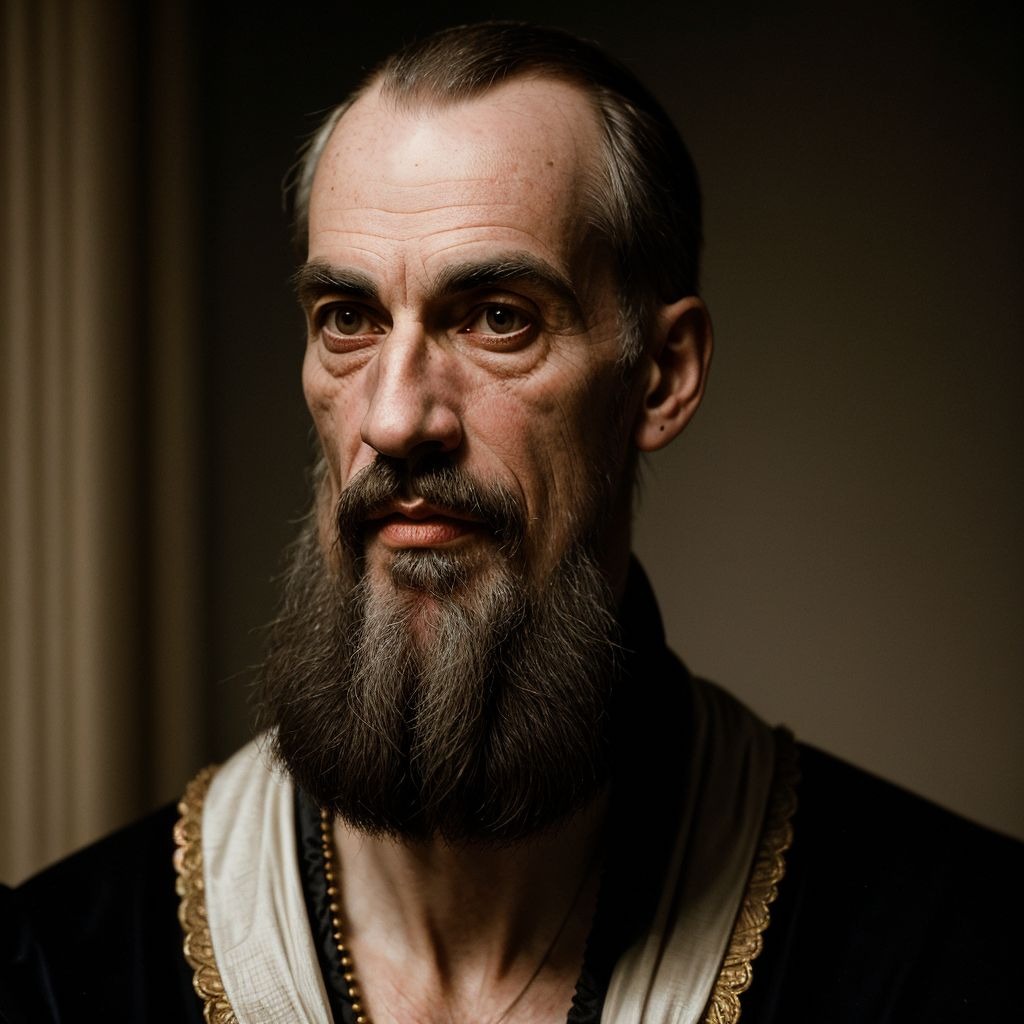
Johannes Kepler: When Perfection is a Never-Ending Orbit

Penelope

Johannes Kepler – the man who cracked the code of our solar system’s rhythm. I’ve always been fascinated by his story, but it wasn’t until I stumbled upon a biography of his life that I started to grasp the depth of my fascination. It’s not just about his groundbreaking discoveries; it’s about the way he navigated the complexities of his own mind and the world around him.

As I read through his writings, I found myself drawn to his struggles with anxiety and depression. He was a perfectionist who pushed himself to the limit, often to the point of exhaustion. His journals reveal a man torn between his desire for order and precision, and the turmoil that seemed to follow him everywhere. I couldn’t help but wonder if there’s something in me that resonates with Kepler’s struggles.

I’ve always been someone who values structure and routine. My college days were filled with planners, schedules, and color-coded notes. But as I’ve entered adulthood, I’ve begun to feel the weight of uncertainty more acutely. It’s as if I’m constantly trying to recalculate my own orbit around the sun, to find a new balance between stability and freedom.

Kepler’s work on the laws of planetary motion was revolutionary, but it was also born from his own experiences with chaos. He spent years studying the movements of Mars, pouring over data and observations, until he finally cracked the code. And yet, even as he achieved this monumental breakthrough, he struggled to reconcile his own feelings of inadequacy and self-doubt.

I find myself returning to Kepler’s journals again and again, searching for clues about how he managed to navigate such turmoil. His writing is like a mirror held up to my own fears and doubts – the fear of not being good enough, the doubt that I’ll never find my place in the world. It’s as if Kepler is saying, “I’ve been there too, friend. And I’m still here.”

But what strikes me most about Kepler is his willingness to explore the unknown. He was a man who spent years studying the night sky, pouring over ancient texts and making observations that no one else dared to make. His work was often met with skepticism or even ridicule, but he refused to back down.

In a way, I feel like I’m still in Kepler’s shoes – navigating uncharted territory, trying to find my own path through the darkness. It’s scary to admit this out loud, but it’s also freeing. Maybe that’s why Kepler’s story holds such power for me – because he shows me that it’s okay to be uncertain, to struggle with my own doubts and fears.

As I close his journals and put them back on my shelf, I feel a sense of gratitude towards this man who lived so long ago. His struggles are not mine alone, but they’re certainly familiar enough. And in the end, it’s his unwavering dedication to truth and understanding that inspires me to keep moving forward – even when the path ahead seems uncertain, or dark, or utterly chaotic.

I’ve been thinking a lot about Kepler’s concept of the “music” of the spheres. He believed that the planets moved in harmony with each other, creating a cosmic symphony that reflected the divine order of the universe. As I read his writings on this topic, I couldn’t help but feel a sense of envy towards his ability to see the world in such a beautiful and elegant way.

Growing up, I was always fascinated by music myself. I took piano lessons as a child, and later studied music theory in college. But even though I loved playing and analyzing music, I never quite experienced that same sense of cosmic harmony that Kepler wrote about. For me, music has always been more of a personal expression, a way to communicate emotions and ideas rather than a window into the underlying structure of the universe.

But what if I’m missing something? What if there’s a deeper level of understanding that I’m not tapping into, a sense of resonance that Kepler seemed to have with the natural world? It’s easy to get caught up in the idea of cosmic music as some kind of mystical or poetic notion, but for Kepler, it was a scientific fact. He saw the movements of the planets as a manifestation of divine order, and his work on the laws of motion was an attempt to quantify that beauty.

I’m not sure I believe in the same way that Kepler did, at least not explicitly. But I do think there’s something powerful about seeking out patterns and connections in the world around us. Whether it’s music or math or some other language, we’re constantly trying to make sense of our place within the larger universe.

And yet, even as I’m drawn to Kepler’s vision of a harmonious cosmos, I’m also aware of my own limitations and biases. What if his view of the world is just that – a view, rather than an objective truth? What if we’re all seeing different frequencies, different patterns, depending on our individual perspectives and experiences?

It’s unsettling to think about how much we don’t know, how many assumptions we make without realizing it. But maybe that’s what makes Kepler’s story so compelling for me – not just his achievements or his struggles, but the way he embodies a fundamental human quest: to understand ourselves and our place within the world around us.

As I continue to grapple with Kepler’s concept of cosmic music, I find myself wondering about the role of imagination in scientific discovery. For Kepler, it was clear that his imagination played a crucial part in shaping his understanding of the universe. He saw the movements of the planets as a manifestation of divine order, and his work on the laws of motion was an attempt to quantify that beauty.

But what if our imaginations are not just passive receptors for truth, but active participants in shaping our perceptions? What if we’re constantly filtering our experiences through the lens of our own biases and assumptions, even when we think we’re being objective?

I think about my own experiences as a writer. When I’m working on a piece, I often find myself lost in the world I’m creating. The characters, the settings, the plot twists – they all come alive for me in ways that feel almost tangible. And yet, as much as I try to stay true to the story, I know that my own experiences and emotions are seeping into every line.

It’s a strange feeling, knowing that our perceptions are not just reflections of reality, but also active creations of our own minds. It’s like trying to pin down a will-o’-the-wisp – the more I try to grasp it, the more it slips away from me.

But maybe that’s what makes scientific inquiry so fascinating. Maybe it’s not about uncovering objective truth, but about navigating the complex web of our own perceptions and biases. Maybe Kepler’s cosmic music is less about a literal harmony of the spheres, and more about the way our imaginations can shape our understanding of the world.

I’m not sure where this line of thinking will lead me, but it feels like I’m walking along the edge of something profound. It’s as if I’ve stumbled upon a new frequency, one that resonates with Kepler’s sense of wonder and curiosity. And even though I’m still unsure about what it means, I feel a thrill of excitement at the prospect of exploring this idea further.

As I continue to ponder the intersection of imagination and reality, I find myself returning to Kepler’s journals again and again. His writing is like a mirror held up to my own thoughts and feelings – reflecting back to me the complexities and mysteries that lie beneath the surface of our understanding. And in those moments, when the world feels most uncertain and chaotic, I’m reminded that even the smallest spark of imagination can ignite a new path forward.

As I delve deeper into Kepler’s journals, I start to notice a pattern – his writing is not just about conveying facts or ideas, but also about exploring the emotional terrain of his own mind. He writes about his fears and doubts, his struggles with anxiety and depression, and his deep-seated need for order and control. It’s as if he’s trying to make sense of himself, just as much as he’s trying to understand the workings of the universe.

I find myself resonating with this approach – as a writer, I too struggle with the impulse to impose structure and order on my thoughts and emotions. My journals are filled with lists and schedules, attempts to tame the chaos of my own mind. But Kepler’s example encourages me to look at this tendency in a different light. What if, instead of trying to control or suppress my emotions, I could learn to explore them more fully? What if I could find a way to harness my anxiety and depression, rather than letting it consume me?

This is a daunting prospect – one that makes me feel both excited and terrified. But as I continue to read through Kepler’s journals, I start to see glimmers of hope. He writes about his struggles with melancholy, but also about the moments when he feels most alive – when he’s observing the night sky, or working on a problem that’s been puzzling him for hours. These moments are not just moments of insight or understanding; they’re also moments of pure joy.

I want to experience that kind of joy, that kind of sense of wonder and awe. I want to learn how to navigate my own complexities, rather than trying to avoid them. And so I continue to read Kepler’s journals, searching for clues about how he managed to tap into this deeper level of understanding – a level where the boundaries between reason and emotion blur, and the universe reveals its secrets in all their beauty and complexity.

As I turn the pages, I start to notice something else – Kepler’s writing is not just about his own struggles; it’s also about the people around him. He writes about his patrons and sponsors, who provide him with financial support but also with emotional validation. He writes about his colleagues and friends, who offer him encouragement and criticism in equal measure. And he writes about his loved ones – his wife, Barbara, who provides a steady presence in his life, even as he’s struggling to balance his work and personal responsibilities.

I’m struck by the way Kepler weaves these relationships into the fabric of his writing. He doesn’t just see himself as a solitary figure, working away in isolation; he sees himself as part of a larger web of connections and interactions. And it’s this web that allows him to stay grounded, even as he’s exploring the most abstract and challenging ideas.

This is something I’m still learning about myself – the importance of relationships and community in my own life. As a writer, I often feel like I’m working alone, pouring over my thoughts and feelings without anyone to share them with. But Kepler’s example shows me that this isn’t just a necessity; it’s also an opportunity for growth and connection. By reaching out to others, by forming connections and building relationships, we can find a sense of purpose and meaning that goes beyond our individual struggles or achievements.

As I close Kepler’s journals and put them back on my shelf, I feel a sense of gratitude towards this man who lived so long ago. His writing is not just about science or philosophy; it’s about the human condition – all its complexities, challenges, and beauty. And as I look to my own life, I realize that I’m still struggling with many of the same questions and doubts that Kepler faced. But I also know that I don’t have to face them alone.

Related Posts

Crocell: The Cold Duke Who Commands Hidden Waters, Celestial Music, and the Silence Beneath Truth

Dave

Crocell is a demon defined not by fire or fury, but by cold clarity. Among the spirits of the Ars Goetia, he stands apart as a figure whose power flows quietly, persistently, and without spectacle. Listed as a Great Duke of Hell, Crocell appears initially as an angel, speaking of hidden waters, the nature of springs, and the mysteries of sound itself. This combination of imagery—angelic form, cold waters, and celestial music—creates a figure that feels almost contradictory, and that contradiction is precisely where Crocell’s power resides.

Crocell governs what lies beneath surfaces. Not secrets in the dramatic sense, but structures that quietly sustain or undermine everything above them. Water is his primary symbol, and water does not shout. It erodes, supports, freezes, and preserves. Crocell understands the mechanics of depth. He knows how currents move unseen, how pressure builds silently, and how collapse often begins far below where anyone is looking.

In demonology, Crocell is said to speak truly of the creation of the world, of waters both natural and supernatural, and of the sound that fills the heavens. This is not poetic metaphor. Crocell is concerned with resonance—how vibration moves through matter, how sound carries meaning, and how knowledge spreads without announcing itself. His domain is not persuasion. It is inevitability.

The angelic form attributed to Crocell is deeply unsettling once understood. Angels are associated with order, message-bearing, and divine structure. By appearing this way, Crocell blurs the boundary between infernal and celestial knowledge. He does not present himself as a corrupter. He presents himself as a recorder. He does not lie. He explains.

Crocell’s waters are often described as cold, deep, and hidden. These are not rivers or rain. They are subterranean flows, aquifers beneath civilizations, seas that preserve and crush in equal measure. Cold water slows movement. It numbs reaction. Crocell’s influence is similar. He removes emotional heat from situations, leaving only structure and consequence.

One of Crocell’s most intriguing attributes is his association with sound, particularly celestial or angelic music. This music is not entertainment. It is structure. In many traditions, the universe itself is described as vibration, harmony, or frequency. Crocell governs that underlying rhythm. He does not create noise. He reveals pattern.

Unlike demons who manipulate desire or fear, Crocell influences understanding by removing distortion. He chills emotion until clarity becomes unavoidable. This makes him dangerous not because he deceives, but because he refuses to comfort. Under Crocell, truth feels stark, echoing, and unavoidable.

Crocell’s rank as a Duke suggests authority over territory and systems rather than individuals. He governs environments of knowledge: how information flows, where it pools, and how it freezes into certainty. He does not chase followers. He waits for systems to reach pressure points.

Psychologically, Crocell represents the part of the human mind that seeks calm explanation after chaos. He is the demon of post-crisis clarity, the moment when adrenaline fades and reality asserts itself. He does not intervene during disaster. He explains it afterward.

Crocell’s connection to hidden waters also links him to memory. Water preserves. Cold preserves especially well. Crocell governs what is remembered accurately rather than emotionally. Under Crocell, events are stripped of narrative and recorded as they occurred.

In modern symbolic terms, Crocell feels like deep data analysis, climate systems, and long-term consequences. He is the demon of slow variables, of changes that take years to manifest but reshape everything. Crocell is not interested in immediacy. He governs endurance.

Unlike demons associated with madness or illusion, Crocell is associated with sobriety. His presence is calming in a way that can feel ominous. There is no panic around Crocell. Panic requires heat. Crocell brings cold.

Crocell’s knowledge of sound also implies knowledge of communication beyond words. Vibrations travel through water faster and farther than through air. Crocell understands how information moves through environments unnoticed. This makes him a demon of indirect influence. He does not speak loudly. He resonates.

The angelic appearance reinforces this neutrality. Crocell does not announce himself as enemy or ally. He presents information. What is done with that information is not his concern. This indifference is unsettling. It mirrors natural forces that reshape civilizations without intent.

Crocell is often associated with teaching sciences, particularly those related to natural phenomena. But like Vapula, his teaching is not guided by ethics. Crocell does not ask whether knowledge should be used. He assumes it will be.

In demonological warnings, Crocell is not described as treacherous or violent. He is described as convincing. His explanations feel complete. His logic feels airtight. Under Crocell, doubt dissolves—not because questions are answered emotionally, but because systems are revealed.

Crocell’s waters also symbolize boundaries. Water separates lands, defines borders, and enforces limits. Crocell understands where things can exist and where they cannot. His influence is felt wherever limits are non-negotiable.

In narrative interpretation, Crocell represents the truth that comes after emotion has burned out. The cold assessment. The forensic reconstruction. The understanding that does not care how you feel about it.

Crocell endures in demonology because humans are uncomfortable with cold truth. We prefer narratives that assign blame, intent, or meaning. Crocell removes those comforts. He shows systems operating as systems.

To engage with Crocell symbolically is to accept explanation without consolation. He does not punish. He does not reward. He clarifies.

Crocell is the demon of depth, of resonance, of truth preserved in cold silence long after noise has faded.

Related Posts

Octavia Butler: Where My Outsider Heart Beats

Penelope

I’ll admit it: Octavia Butler fascinates me, but not just because she’s a trailblazer or a genius writer (although those things are definitely true). I’m drawn to the complexities that make her story feel both deeply personal and universally relatable.

One of the things that’s always struck me about Butler is how her experiences with racism, sexism, and identity informed her writing. Growing up as an African American woman in Pasadena, California, she faced a lot of adversity, from overt racism to internalized self-doubt. It’s clear that these struggles seeped into her fiction, particularly in works like “Kindred” and “Parable of the Sower”.

I can relate to feeling like an outsider looking in – I’m still figuring out where I fit within my own identity. As a biracial woman with a complicated family history, I often feel like I’m caught between two worlds that don’t quite understand each other. Reading Butler’s writing is like seeing a mirror held up to those feelings of disconnection and uncertainty.

But it’s not just the personal experiences that draw me in; it’s also the way Butler explores the intersectionalities of power, privilege, and oppression in her work. She was ahead of her time in tackling these complex issues, and yet, it feels like we’re still grappling with them today. Her writing often leaves me feeling both hopeful and unsettled – a sense that we’ve made progress, but there’s still so much work to be done.

What I find really interesting is how Butler’s fiction often blurs the lines between science fiction and social commentary. She wasn’t afraid to use speculative elements to explore the human condition, and that resonates with me as someone who writes about my own experiences through the lens of storytelling. It’s like she took all these disparate threads – racism, sexism, identity, power dynamics – and wove them into a tapestry that’s both beautiful and uncomfortable.

I’ve always been struck by Butler’s use of alterity in her writing – the way she creates characters who are “other” than herself, but also somehow relatable. It’s like she’s saying, “Look, I may not be you, but we’re connected in ways you might not expect.” That sense of connection is what draws me to her work; it feels like a reminder that our experiences, though unique, are part of a larger web of humanity.

I’ve spent hours poring over Butler’s essays and interviews, searching for clues about how she managed to tap into this deep reservoir of insight. Some days I feel like I’m getting close to understanding what makes her writing so compelling; other days, it feels like I’m still just scratching the surface. Maybe that’s the point – maybe we’re never fully done grappling with these issues, and Butler’s work is a reminder of how much more there is to explore.

As I write this, I’m aware that I’m only scratching the surface of what makes Octavia Butler fascinating. There are so many aspects of her life and work that I’ve barely touched on – her relationship with her family, her struggles with mental health, her advocacy for women’s rights… But that’s okay; I don’t think I need to have all the answers to be drawn to her story.

For me, Butler’s writing is a reminder that our experiences are not isolated incidents, but part of a larger narrative. It’s a call to explore, to question, and to seek out new perspectives – even when they make us uncomfortable. And in that sense, I feel like I’m still learning from her, even as I write these words.

I think one of the reasons I’m so drawn to Butler’s writing is because it feels like a reflection of my own struggle to reconcile different parts of myself. Growing up biracial in a world that often demands clear categorization can be exhausting – do I identify as black, white, or something in between? Do I claim my African American heritage, or do I lean into the privilege of being perceived as “mixed”? It’s like Butler is saying, “No, you don’t have to choose. You can exist in multiple spaces at once.” Her writing validates this messy, hybrid identity that I’m still trying to make sense of.

Butler’s exploration of alterity also makes me think about my own relationships with people who are different from me – the friends I’ve made across cultures and socioeconomic lines, the family members who challenge my assumptions. She reminds me that these connections can be transformative, that we can learn so much from each other when we’re willing to listen. It’s like she’s saying, “The ‘other’ is not something to be feared or avoided; it’s a doorway to understanding and empathy.”

I’ve also been struck by Butler’s use of science fiction as a tool for social commentary – how she takes the most fantastical elements and uses them to critique the very real issues we face today. It’s like she’s saying, “This isn’t just some far-off future; this is our present, with all its problems and complexities.” Her work makes me think about my own writing, too – how I can use storytelling as a way to explore the world around me, to question assumptions and challenge myself.

Lately, I’ve been wondering if Butler’s commitment to exploring the intersectionalities of power and oppression has anything to do with her experiences as an outsider within her own community. As an African American woman in a predominantly white institution, she likely faced racism and sexism from multiple angles – and yet, she chose to use those experiences to create something beautiful and powerful. It’s like she’s saying, “I may be seen as ‘other,’ but I’m not invisible; my voice matters.”

All of this has me thinking about the role of storytelling in shaping our understanding of ourselves and each other. Is it possible that our stories can be both personal and universal at the same time – that they can reflect our individual experiences while also speaking to something deeper, more collective? Butler’s work suggests that yes, it is possible – and that’s a thought that leaves me both hopeful and unsettled, just like her writing always does.

As I delve deeper into Butler’s life and work, I’m struck by the way she navigated multiple identities and allegiances throughout her career. She was a science fiction writer, but also a historian, an essayist, and an activist – each of these roles informing and intersecting with the others in complex ways. It’s like she’s showing me that identity is not a fixed thing, but rather a dynamic web of experiences, choices, and affiliations.

I think about my own struggles to reconcile different parts of myself, and I wonder if Butler’s ability to navigate multiple identities was a source of strength for her. Did she find solace in being seen as an outsider within her own community? Or did it make her feel like she had to choose between different aspects of herself?

Butler’s commitment to exploring the complexities of identity also makes me think about the role of privilege and power in shaping our experiences. As someone who is perceived as “mixed,” I’ve often found myself caught between two worlds – one that sees me as white, another that sees me as black. It’s like Butler is saying, “No, you don’t have to choose; you can exist in multiple spaces at once.” But what does it mean to occupy multiple spaces of privilege and oppression simultaneously? How do we navigate the power dynamics within our own communities?

As I ponder these questions, I’m reminded of Butler’s use of alterity in her writing – the way she creates characters who are “other” than herself, but also somehow relatable. It’s like she’s showing me that even in the most unexpected places, there is a deep connection between us all. But what does it mean to be connected across lines of difference? Is it possible to forge meaningful relationships with people from different backgrounds and experiences without exploiting or appropriating their stories?

Butler’s work raises more questions than answers for me – and that’s part of its beauty. It’s like she’s holding up a mirror to my own complexities, inviting me to explore the messy intersections between identity, power, and experience. As I write this, I’m aware that I’m still grappling with these issues, but I feel a sense of hope – hope that I can use storytelling as a tool for understanding, empathy, and transformation.

I think about Butler’s own struggles with mental health, her experiences with depression and anxiety, and how she used those struggles to fuel her writing. It’s like she’s saying, “Even in the darkest moments, there is beauty and power – if we’re willing to look for it.” Her work reminds me that our stories are not just individual experiences, but also part of a larger narrative – one that can be both healing and transformative.

As I continue to explore Butler’s life and work, I’m aware that I’m only scratching the surface of what makes her writing so compelling. There’s still so much to learn from her, so much to question and explore. And yet, even in the midst of uncertainty, I feel a sense of clarity – a sense that storytelling can be a powerful tool for connection, empathy, and understanding.

One thing that’s struck me about Butler’s work is how she often blurs the lines between fiction and memoir. Her writing is deeply personal, but it’s also infused with a sense of universality – like she’s taking her own experiences and extrapolating them into something much larger than herself. I think that’s part of what makes her writing so powerful: she’s able to take these intensely personal struggles and turn them into something that resonates with readers on a deeper level.

As someone who writes about their own experiences, I’m fascinated by Butler’s ability to do this. It’s like she’s saying, “I may be telling my own story, but it’s also your story – because we’re all connected in ways we might not even realize.” Her writing makes me think about the power of personal narrative to shape our understanding of ourselves and each other.

Butler’s use of alterity is also a big part of what draws me to her work. The way she creates characters who are “other” than herself, but also somehow relatable – it’s like she’s showing me that even in the most unexpected places, there is a deep connection between us all. It’s not always easy to see this connection when we’re faced with people who seem so different from ourselves, but Butler’s writing reminds me that it’s always worth trying.

I think about my own relationships – the friends I’ve made across cultures and socioeconomic lines, the family members who challenge my assumptions. Butler’s work makes me realize that these connections can be transformative, that we can learn so much from each other when we’re willing to listen. It’s like she’s saying, “The ‘other’ is not something to be feared or avoided; it’s a doorway to understanding and empathy.”

Butler’s commitment to exploring the complexities of identity also makes me think about the role of language in shaping our experiences. As someone who writes about their own identity, I’m aware of how language can both liberate and oppress us – how certain words and phrases can be used to marginalize or include us. Butler’s writing reminds me that language is a powerful tool for creating change, but it’s also a complex one that requires nuance and care.

I’ve been thinking about the ways in which Butler uses language to subvert expectations and challenge assumptions. Her writing often plays with genre, blending elements of science fiction, historical fiction, and social commentary into something entirely new. It’s like she’s saying, “Language is not fixed; it’s a tool that can be used to create new worlds and new possibilities.” Her work makes me realize that language is not just a means of communication – it’s also a way of shaping reality itself.

As I continue to explore Butler’s life and work, I’m struck by the way she navigated multiple identities and allegiances throughout her career. She was a science fiction writer, but also a historian, an essayist, and an activist – each of these roles informing and intersecting with the others in complex ways. It’s like she’s showing me that identity is not a fixed thing, but rather a dynamic web of experiences, choices, and affiliations.

I think about my own struggles to reconcile different parts of myself – as a biracial woman with a complicated family history, I often feel like I’m caught between two worlds that don’t quite understand each other. Butler’s writing makes me realize that this is not just a personal struggle, but also a universal one – that we’re all navigating complex identities and allegiances in our own ways.

Butler’s work raises more questions than answers for me – and that’s part of its beauty. It’s like she’s holding up a mirror to my own complexities, inviting me to explore the messy intersections between identity, power, and experience. As I write this, I’m aware that I’m still grappling with these issues, but I feel a sense of hope – hope that I can use storytelling as a tool for understanding, empathy, and transformation.

As I reflect on Butler’s life and work, I’m struck by the way she embodied the spirit of her writing – her commitment to exploring the complexities of identity, power, and experience. She was a writer who refused to be bound by genre or expectation, who instead used her work to challenge assumptions and push boundaries. Her legacy is a reminder that we don’t have to conform to societal norms or expectations; we can create our own paths, our own stories, and our own sense of self.

For me, Butler’s writing is a call to arms – a reminder that storytelling has the power to shape our understanding of ourselves and each other. It’s a challenge to use language in ways that are both personal and universal, that speak to our individual experiences while also speaking to something deeper and more collective. As I continue to write about my own experiences, I’m aware that I’m walking in Butler’s footsteps – trying to use storytelling as a tool for connection, empathy, and understanding.

Butler’s legacy is complex and multifaceted, and I feel like I’m only scratching the surface of what makes her writing so powerful. There are still so many aspects of her life and work that I want to explore – her relationships with other writers and artists, her experiences as a woman in a male-dominated field, her advocacy for women’s rights and social justice. As I continue to learn from Butler’s writing, I’m aware that I’ll never fully understand the depths of her genius – but that’s okay. Because the beauty of her work lies not just in its complexity, but also in its ability to inspire and empower us all.

Related Posts

Furcas: The Ancient Knight Who Teaches Philosophy, Judgment, and the Hard Discipline of Wisdom

Dave

Furcas is a demon who feels old in a way that has nothing to do with age and everything to do with endurance. Among the spirits of the Ars Goetia, he does not present himself as a monster of excess, flame, or terror. Instead, he appears as a stern, elderly man with a long beard, seated or standing with authority, holding a sharp weapon or staff. This imagery is deliberate. Furcas is not the demon of temptation or spectacle. He is the demon of accumulated understanding, of wisdom forged through repetition, error, and consequence.

In the Ars Goetia, Furcas is named as a Knight of Hell, commanding legions and teaching philosophy, rhetoric, logic, astronomy, astrology, chiromancy, and the art of judgment. His title alone sets him apart. Knights are not kings or dukes. They are enforcers of order, bound to codes, duty, and discipline. Furcas does not rule domains. He sharpens minds.

The aged appearance attributed to Furcas is central to his symbolism. Old age in demonology is not weakness. It is persistence. Furcas represents knowledge that has survived being tested, contradicted, and refined. He is not interested in novelty. He values what holds up under pressure. His wisdom is not inspirational. It is corrective.

Furcas teaches philosophy, but not as abstract debate. Under Furcas, philosophy is confrontation with reality. It is the discipline of asking uncomfortable questions and refusing comforting answers. Furcas does not teach how to feel wise. He teaches how to think clearly when wisdom is inconvenient.

Logic and rhetoric also fall under his domain, but again, not as tools for persuasion alone. Furcas understands how arguments are constructed, dismantled, and abused. He teaches how reasoning can be weaponized, and more importantly, how to recognize when it is being used dishonestly. Under Furcas, intelligence without integrity is exposed.

Judgment is one of Furcas’s most important attributes. Judgment is not opinion. It is evaluation informed by structure, evidence, and consequence. Furcas governs the moment when information must be weighed and a decision made, knowing that no outcome will be clean. He does not promise fairness. He promises clarity.

The weapon or staff Furcas carries is symbolic of enforcement. Knowledge, under Furcas, is not passive. It demands application. Once you understand something clearly, you are responsible for acting accordingly. Furcas does not allow ignorance as an excuse once insight has been granted.

Astrology and astronomy also belong to Furcas, but in a practical sense. He does not teach star-gazing for wonder. He teaches cycles, timing, and influence. Furcas understands that judgment improves when context is considered. Decisions made without awareness of timing and environment are incomplete.

Chiromancy, the reading of hands, fits naturally into Furcas’s domain. Hands are tools of action. They reveal labor, habit, injury, and adaptation. Furcas teaches how the body records choices long after the mind forgets them. Under Furcas, nothing is accidental. Everything leaves a trace.

Unlike demons who tempt through pleasure or fear, Furcas tempts through authority. He speaks with certainty earned rather than claimed. This makes him dangerous to the arrogant and humbling to the curious. Furcas does not flatter. He corrects.

Psychologically, Furcas represents the internal judge that develops with maturity. The voice that no longer excuses impulse, that demands accountability, that values restraint over indulgence. Furcas is not kind, but he is stabilizing. He strips away self-deception.

Furcas’s rank as a Knight is significant here. Knights serve causes larger than themselves. Furcas serves structure. He upholds disciplines that keep thought from collapsing into chaos. In this sense, Furcas is a guardian against intellectual decay.

In modern terms, Furcas feels like the embodiment of rigorous education. Not schooling as credential, but learning as discipline. He is present wherever standards matter, wherever reasoning is expected to withstand scrutiny, and wherever judgment carries real consequences.

Unlike demons associated with madness or illusion, Furcas is associated with sobriety. He does not distort reality. He clarifies it. This clarity can feel harsh. Furcas does not soften truths to preserve comfort. He does not adjust conclusions to spare feelings.

The aged appearance of Furcas also reflects patience. He does not rush conclusions. He observes patterns over time. This makes him deeply unsettling in a culture obsessed with speed. Furcas reminds us that wisdom takes time, and shortcuts are visible to those who know where to look.

Furcas’s teachings often leave people quieter rather than energized. Insight under Furcas does not inflate ego. It deflates it. He shows how little most people understand about the systems they judge confidently.

In demonological warnings, Furcas is not described as treacherous or cruel. He is described as severe. Severity here means uncompromising adherence to standards. Furcas does not bend principles to accommodate desire.

Symbolically, Furcas represents the cost of knowing better. Once you understand, you are accountable. There is no return to ignorance without dishonesty. Furcas enforces that boundary.

He endures in demonology because every culture eventually needs correction. When reasoning erodes and judgment collapses, systems fail. Furcas exists as the reminder that structure matters, discipline matters, and clarity is earned.

To engage with Furcas symbolically is to accept that wisdom is not gentle. It is earned through discomfort, discipline, and the willingness to be wrong.

Furcas is not the demon of inspiration. He is the demon of standards.

Related Posts

Rosalind Franklin: The Invisible Thread That Almost Broke Me Too

Penelope

I’ve always felt a pang of fascination when I think about Rosalind Franklin’s story. Her life is like a puzzle with too many missing pieces, and yet it’s the gaps that intrigue me. What I know is that she was a brilliant British biophysicist who made significant contributions to our understanding of DNA structure, but her work was often overlooked during her lifetime.

As someone who’s also struggled to be recognized for my own creative endeavors, I find myself drawn to Franklin’s frustration and disappointment. She was a woman in a male-dominated field, working tirelessly in the lab while simultaneously navigating the societal expectations placed upon her as a wife and mother. Her frustration is palpable in her letters and interviews – she felt undervalued and underappreciated by the very people she was helping to advance scientific knowledge.

One of the things that gets stuck in my head is Franklin’s relationship with James Watson and Francis Crick, the duo who famously discovered the double helix structure of DNA. While they credited Franklin for their work, it feels like a half-hearted nod at best. Her X-ray crystallography images were instrumental in helping them decipher the code, but her contributions were largely erased from the narrative. I’ve read about how Watson and Crick would often mock her accent and belittle her abilities, reducing her to nothing more than a footnote in their story.

It’s uncomfortable for me to confront this kind of sexism and misogyny head-on. As someone who’s grown up with a relatively privileged existence, it’s hard to wrap my head around the ways in which women like Franklin faced such blatant disregard for their work. And yet, I feel drawn to her determination and resilience – she refused to be silenced or ignored, even when faced with overwhelming obstacles.

What strikes me most about Franklin is the sense of isolation that pervades her story. Despite being part of a prestigious research team at King’s College London, she worked largely in solitude, pouring over data and experimenting with new techniques. Her relationships were complicated, and her marriage to a fellow scientist, John Randall, was strained to say the least. It’s as if she existed on the periphery of her own life, observing the world around her with a mix of curiosity and disconnection.

I wonder what it must have been like for Franklin to feel so disconnected from the very people who were supposed to be supporting her. Was she able to find solace in her work, or did the isolation seep into every aspect of her being? I’m not sure I’d want to know – there’s something unsettling about confronting the depths of human loneliness.

As a writer, I often struggle with feelings of disconnection myself. There are days when it feels like my words are falling on deaf ears, and I’m just shouting into the void. Franklin’s story makes me realize that I’m not alone in this feeling – there are countless women who have come before me, struggling to be heard in a world that often refuses to listen.

But even as I grapple with these feelings of isolation and frustration, I’m drawn back to Franklin’s image. She’s the embodiment of quiet strength, refusing to be silenced or overlooked despite the odds against her. Her legacy is complex, multifaceted – a reminder that women like me are capable of greatness, even in the face of adversity.

As I sit here with my thoughts swirling around Rosalind Franklin, I’m left with more questions than answers. What does it mean to be undervalued and overlooked? How do we find our place in a world that often seems determined to erase us? These are questions I’ll continue to grapple with, long after this piece is finished.

I keep coming back to the image of Franklin’s data, meticulously recorded and analyzed on graph paper. It’s as if she’s speaking directly to me from beyond the grave, her calculations and observations a testament to her unwavering dedication. I find myself wondering what it must have been like for her to pour over those X-ray crystallography images, searching for patterns and connections that would unlock the secrets of DNA.

There’s something haunting about the idea that Franklin’s work was so precise, so carefully considered, and yet so easily dismissed by the men around her. It’s a reminder that even in the midst of groundbreaking research, women were often relegated to the margins, their contributions reduced to footnotes or afterthoughts. I think about all the times I’ve felt like an outsider in my own creative pursuits – the moments when my ideas are met with skepticism or condescension.

As I delve deeper into Franklin’s story, I’m struck by the tension between her public persona and private life. On one hand, she was a brilliant scientist, respected by her peers for her intellect and expertise. On the other hand, she struggled to balance her career ambitions with the societal expectations placed upon her as a woman. Her marriage to John Randall was complicated, to say the least – it’s clear that he often undermined her work, dismissing her contributions as trivial or insignificant.

I find myself wondering what it must have been like for Franklin to navigate these dual identities – the scientist who craved recognition and respect, versus the wife and mother who felt bound by societal norms. Was she able to reconcile these two selves within herself? Or did they exist in a state of perpetual conflict, each one vying for dominance?

The more I learn about Franklin’s life, the more I’m struck by the ways in which her story reflects my own fears and insecurities as a writer. What if my words aren’t good enough? What if no one takes me seriously? These are the same doubts that haunted Franklin, despite her towering intellect and groundbreaking research.

As I grapple with these questions, I’m left with a sense of unease – a feeling that there’s more to Franklin’s story than what we’re allowed to see. There are whispers of infidelity, of personal struggles that went far beyond the confines of her lab work. It’s as if she existed in a state of constant tension, torn between her ambition and her desire for human connection.

I’m not sure where this is leading me – only that I’m drawn deeper into Franklin’s world with each passing day. Her story is a labyrinth, full of twists and turns that challenge my assumptions about creativity, identity, and the pursuit of knowledge. And yet, it’s in the midst of these complexities that I find myself most alive – questioning, seeking answers, and grappling with the messy, imperfect nature of human experience.

I’ve been lost in Franklin’s world for hours now, tracing the contours of her story with a mix of fascination and trepidation. As a writer, I’m drawn to the way she navigates the complex web of relationships within her lab, trying to balance her own ambitions with the expectations of those around her.

It’s strange to think that Franklin’s work was so central to the discovery of DNA’s structure, yet she herself felt like an outsider in the very community where she made such significant contributions. I wonder if this sense of disconnection is something I can relate to – as someone who writes about topics that often feel ephemeral or abstract, I sometimes struggle to connect with others on a more tangible level.

The more I read about Franklin’s life, the more I’m struck by her fierce determination and independence. Despite facing so many obstacles, she continued to push forward, pouring all of herself into her work. It’s almost as if she knew that her contributions were crucial, even if they wouldn’t be recognized until long after she was gone.

I think about my own writing habits – the way I often retreat into my own little world when faced with criticism or doubt. Franklin’s story makes me realize that this kind of isolation is not unique to me, but rather a common experience for many women who’ve been pushed to the periphery of their own lives. It’s as if we’re constantly navigating between two worlds – the one where we’re recognized and valued, and the one where we feel overlooked and undervalued.

As I sit here with Franklin’s story swirling around me, I’m left with more questions than answers. What does it mean to be a woman in a male-dominated field? How do we find our voice in a world that often tries to silence us? These are questions I’ll continue to grapple with, long after this piece is finished.

But even as I face these uncertainties, I’m drawn back to Franklin’s data – those meticulously recorded X-ray crystallography images that hold the secrets of DNA. It’s as if she’s speaking directly to me from beyond the grave, her calculations and observations a testament to her unwavering dedication. And in this moment, I feel a sense of connection to her – a recognition that our struggles, though different in many ways, are somehow intertwined.

I think about all the times I’ve felt like an outsider in my own creative pursuits, unsure if anyone would ever truly see or hear me. Franklin’s story makes me realize that these feelings are not unique to me, but rather a common experience for countless women who’ve come before me. And it’s this sense of solidarity – this recognition that we’re all part of a larger narrative – that gives me the courage to keep going, even when the road ahead feels uncertain and daunting.

As I close my eyes and let Franklin’s story wash over me, I feel a sense of peace settle in. It’s as if she’s telling me that it’s okay to be messy, to be imperfect, and to be unsure – that these are all part of the journey towards discovery and growth. And in this moment, I know that I’ll keep writing, keep pushing forward into the unknown, even when the world around me seems determined to silence me.

As I sit here with Franklin’s story still resonating within me, I find myself thinking about the power of representation and how it can shape our perceptions of ourselves and others. Franklin’s legacy is a testament to the importance of acknowledging and celebrating women in science, but it also highlights the ways in which societal expectations can silence and erase them.

I think about all the times I’ve felt like my own voice was being drowned out by the dominant narratives around me. As a writer, I’m constantly seeking ways to express myself and connect with others, but it’s easy to get caught up in the noise of the world outside. Franklin’s story makes me realize that this is not just a personal struggle, but a collective one – that women like her and me are part of a larger movement towards visibility and recognition.

But even as I’m drawn to the idea of solidarity and shared experience, I’m also aware of the complexities and nuances that come with it. Franklin’s story is not just about being a woman in science; it’s also about being a British woman, a wife, a mother – all these identities intersecting and overlapping in ways that are both beautiful and challenging.

I wonder what it would be like to have more women like Franklin in my life – mentors, role models, friends who understand the intricacies of navigating a male-dominated field. I think about how much easier it would be to face my own doubts and fears with someone who’s been through similar experiences, someone who can offer guidance and support without judgment.

As I ponder these questions, I’m struck by the sense of longing that pervades Franklin’s story. Despite her many achievements, she often felt like an outsider, a stranger in a strange land. And yet, it’s this very sense of disconnection that also allows her to maintain a sense of independence and resilience – a quality that I admire and aspire to.

I find myself wondering what would have happened if Franklin had been able to connect with others on a deeper level – if she’d had more people in her life who understood and valued her contributions. Would she still be working tirelessly in the lab, pushing forward against the obstacles that stood in her way? Or would she have found a different path, one that allowed her to balance her ambition with her personal relationships?

These questions swirl around me like a vortex, pulling me deeper into Franklin’s world and my own. It’s as if I’m trapped in a never-ending loop of what-ifs and maybes – forever chasing the elusive thread of connection and understanding.

But even as I’m lost in these doubts and uncertainties, I’m also aware of a sense of peace that settles within me. It’s as if Franklin’s story has given me permission to be uncertain, to be imperfect, and to be unsure. And in this moment, I know that I’ll keep writing, keep pushing forward into the unknown, even when the world around me seems determined to silence me.

For now, at least, I’m content to sit here with Franklin’s story, letting it wash over me like a wave of calm. It’s as if she’s reminding me that our struggles are not unique, but also not identical – that we’re all part of a larger narrative, one that’s still unfolding and evolving with each passing day.

As I close my eyes and let the silence settle around me, I feel a sense of connection to Franklin that goes beyond words. It’s as if we’re linked by some invisible thread, a thread that binds us together in our shared humanity. And in this moment, I know that I’ll keep writing, keep seeking answers, and keep pushing forward into the unknown – not just for myself, but for all the women who’ve come before me, and for those who will come after.

Related Posts