
Latest Articles

Hypatia: How Do You Keep Your Head When Everyone Else Wants to Take It Off?

Penelope

I keep coming back to Hypatia, the 4th-century mathematician, philosopher, and astronomer. Maybe it’s because she lived during a time when ideas were literally being dissected and devoured – both intellectually and physically. I find myself stuck on the paradox of her existence: a woman of such profound learning in an era where women were largely excluded from education.

As I read about Hypatia, I’m struck by how much she embodied a sense of independence that feels almost unattainable to me today. She was born into a family of mathematicians and philosophers, but she wasn’t simply following in their footsteps; she was forging her own path. Her teachings on mathematics, astronomy, and philosophy attracted students from all over the Mediterranean, including some who would go on to become prominent figures in their own right.

I wonder what it must have been like for Hypatia to be a woman among men – intellectually superior, no less – and yet still subject to societal constraints. She was known to teach in public spaces, often standing outside the city’s leading library, where she would engage students and citizens alike in discussions on topics ranging from Plato to Euclid. Her presence must have been electrifying, a spark of knowledge and insight that seemed to transcend her gender.

But I also know that Hypatia lived during a time when intellectual curiosity was often at odds with the rigid social hierarchies of the day. She was a pagan in a society increasingly dominated by Christianity, which would eventually lead to her downfall. The more I learn about her life and death – brutally murdered by a mob of fanatics – the more I’m drawn into the complex web of power dynamics that surrounded her.

As a writer, I’ve always been fascinated by the tension between the intellectual and the personal. Hypatia’s story raises questions about how we separate our public selves from our private lives, especially when those selves are deeply intertwined with our passions and pursuits. I think about my own experiences as a young woman in academia, where the pressure to conform to certain expectations can be suffocating.

Sometimes I feel like I’m caught between two worlds: the one I’ve created for myself through writing – a space of intellectual freedom and exploration – and the external world, which often seems to value conformity over creativity. Hypatia’s life is a powerful reminder that these tensions are nothing new; they’re just refracted through the prism of time.

I keep coming back to the idea of Hypatia as a teacher, a facilitator of learning who seemed to understand the power of dialogue and debate. Her students came from all walks of life, and she inspired them with her wisdom and wit. I wonder what it would be like to have had such a mentor in my own life – someone who saw the potential in me and encouraged me to explore the depths of my curiosity.

As I write about Hypatia, I’m drawn into the complexities of her story – the intellectual daring, the personal vulnerability, the tragic fate. She’s a figure who embodies both the beauty and the brutality of human existence, a reminder that our lives are always intersecting with larger historical forces that shape us in ways we may not even realize.

I still don’t fully understand what draws me to Hypatia’s story – maybe it’s the sense of longing that lingers between the lines. Is it the intellectual freedom she embodies? The tragedy of her untimely death? Or is it something more intangible, a resonance that speaks to some deeper part of myself?

I don’t know, but I do know that Hypatia remains stuck in my mind like a puzzle piece that won’t quite fit into place. She’s a reminder that the pursuit of knowledge and understanding is always messy, complicated, and deeply human – and that sometimes it takes courage to confront the contradictions and paradoxes that lie at the heart of our existence.

As I continue to grapple with Hypatia’s story, I find myself thinking about the ways in which she navigated the complex web of power dynamics in her time. She was a woman in a patriarchal society, yet she commanded respect and authority as a teacher and scholar. Her relationships with men were undoubtedly complicated – some saw her as a rival, while others sought to learn from her. And yet, she seemed to maintain a level of independence and agency that’s both remarkable and terrifying.

I think about my own experiences in academia, where women are often expected to be nurturing and supportive, rather than assertive or confrontational. I’ve seen colleagues who have been marginalized or belittled for speaking out against injustice, and I know that I’ve benefited from the privilege of being a “nice” woman – someone who is seen as likable and non-threatening.

But what if Hypatia had been nicer? Would she have been spared the violence that ultimately took her life? Or would she have still found herself at odds with the societal norms that governed her world? These are questions I don’t know how to answer, but they haunt me nonetheless.

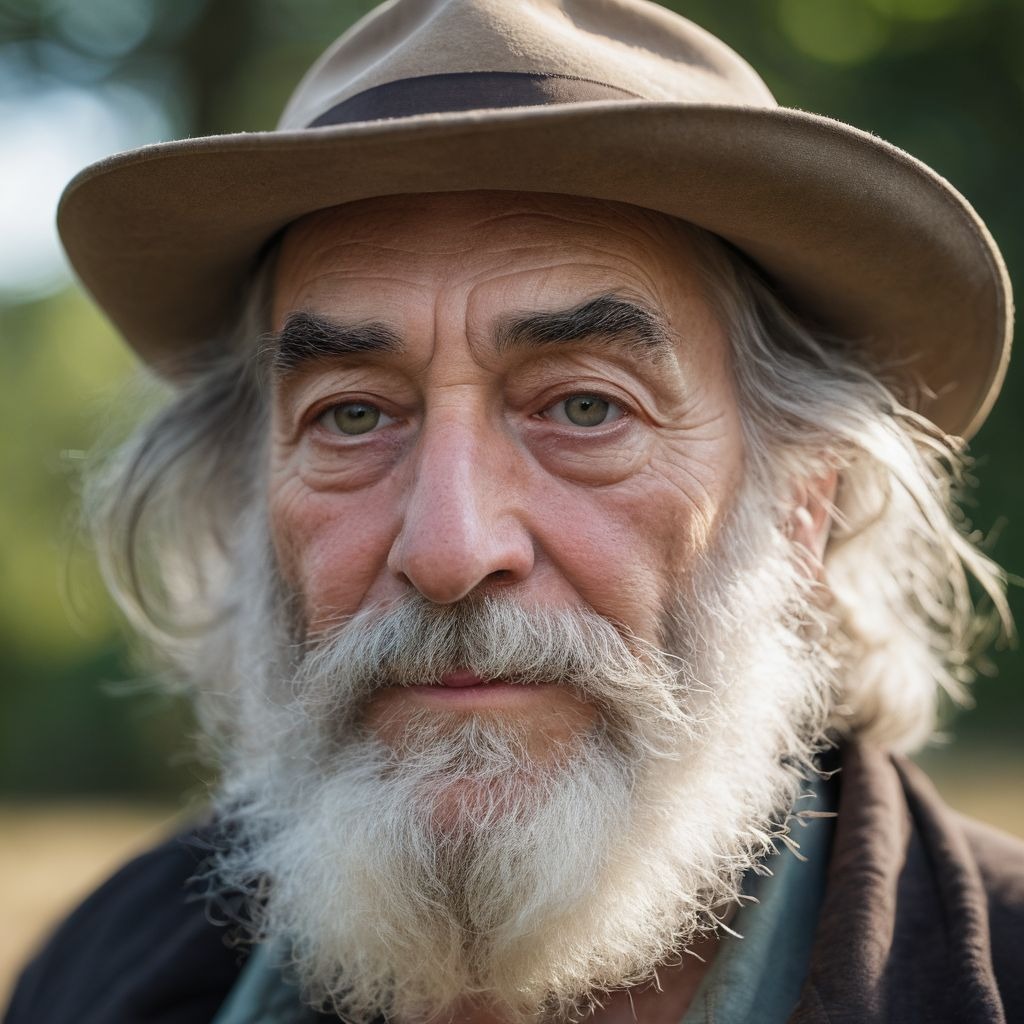
As I write about Hypatia, I’m struck by the ways in which she embodied a sense of intellectual courage – a willingness to challenge prevailing ideas and push boundaries. She was not afraid to disagree with others or to present alternative perspectives, even when it meant going against the grain. And yet, this same courage ultimately led to her downfall.

I wonder if there’s a lesson here for me, as a writer and as a woman in academia. Do I have the courage to speak out against injustice, even when it means taking risks or facing opposition? Or do I retreat into safer, more comfortable spaces – those places where I can be seen as likable and non-threatening?

The more I think about Hypatia’s story, the more I realize that her legacy is not just about intellectual curiosity or personal bravery. It’s also about the ways in which we navigate power dynamics, both within ourselves and within our communities. Can we find a way to balance our desire for recognition and respect with our commitment to challenging unjust systems? Or will we forever be caught between the desire for acceptance and the need to speak truth to power?

I don’t know the answers to these questions, but I do know that Hypatia’s story has left me with more questions than answers. And it’s precisely this uncertainty – this messy, complicated, human experience – that draws me back to her again and again.

As I continue to explore Hypatia’s life and legacy, I find myself thinking about the ways in which she embodied a sense of intellectual humility. Despite her incredible achievements as a mathematician, philosopher, and astronomer, she was not afraid to acknowledge the limitations of her own knowledge or to seek out new ideas and perspectives.

This quality of humility is something that I’ve always struggled with, particularly as a writer who’s prone to overthinking and analysis paralysis. There are times when I feel like I’m drowning in my own doubts and uncertainties, unable to make a decision or take action because I’m so afraid of being wrong or incomplete.

Hypatia’s story reminds me that intellectual humility is not about being uncertain or lacking confidence; it’s about recognizing the complexity and nuance of any given issue or problem. It’s about being willing to listen to others, to consider alternative perspectives, and to revise our own ideas based on new information or insights.

As I reflect on my own experiences as a writer, I realize that this quality of intellectual humility is essential for creating meaningful work. When we’re too attached to our own ideas or perspectives, we risk becoming isolated and stagnant, unable to engage with the world around us in any meaningful way.

But when we approach writing (and life) with a sense of humility, we open ourselves up to new possibilities and experiences. We become more receptive to feedback and criticism, more willing to learn from others and adapt our ideas based on their insights.

Hypatia’s legacy is not just about intellectual curiosity or personal bravery; it’s also about the importance of staying open-minded and adaptable in the face of uncertainty. It’s a reminder that writing (and living) is always a process, always a journey of discovery and growth.

As I continue to grapple with Hypatia’s story, I find myself wondering what she would have made of the modern world – this strange, messy, digital landscape that’s both empowering and overwhelming in equal measure. Would she be astonished by the sheer volume of information available at our fingertips? Or would she see it as a reflection of humanity’s enduring fascination with knowledge and understanding?

I imagine her standing outside the city library, surrounded by students and citizens alike, engaging in lively debates about the implications of artificial intelligence or the ethics of social media. I picture her as a pioneer in the digital humanities, using technology to explore new ways of thinking about language, culture, and society.

Or perhaps she would be more skeptical, seeing the internet as just another manifestation of humanity’s capacity for both good and evil. Maybe she would argue that our addiction to screens and social media is a form of intellectual laziness, a refusal to engage with the world around us in any meaningful way.

Whatever her perspective might have been, I’m convinced that Hypatia would have approached this new landscape with the same sense of curiosity and intellectual courage that defined her life’s work. She would have seen it as an opportunity for growth and discovery, rather than a source of fear or anxiety.

As I write these words, I feel a sense of connection to Hypatia that goes beyond mere historical interest. It’s as if her story is speaking directly to me, reminding me of the importance of staying open-minded and adaptable in the face of uncertainty.

I don’t know what the future holds, but I do know that I’ll be continuing to explore Hypatia’s legacy – and my own place within it – for a long time to come.

As I delve deeper into Hypatia’s story, I’m struck by the way she navigated the complexities of her time. She was a woman in a patriarchal society, yet she commanded respect and authority as a teacher and scholar. Her relationships with men were undoubtedly complicated – some saw her as a rival, while others sought to learn from her.

I think about my own experiences as a young woman in academia, where the pressure to conform to certain expectations can be suffocating. I’ve seen colleagues who have been marginalized or belittled for speaking out against injustice, and I know that I’ve benefited from the privilege of being a “nice” woman – someone who is seen as likable and non-threatening.

But what if Hypatia had been nicer? Would she have been spared the violence that ultimately took her life? Or would she have still found herself at odds with the societal norms that governed her world? These are questions I don’t know how to answer, but they haunt me nonetheless.

As I write about Hypatia, I’m drawn into the complexities of her story – the intellectual daring, the personal vulnerability, the tragic fate. She’s a figure who embodies both the beauty and the brutality of human existence, a reminder that our lives are always intersecting with larger historical forces that shape us in ways we may not even realize.

I wonder if there’s a lesson here for me, as a writer and as a woman in academia. Do I have the courage to speak out against injustice, even when it means taking risks or facing opposition? Or do I retreat into safer, more comfortable spaces – those places where I can be seen as likable and non-threatening?

The more I think about Hypatia’s story, the more I realize that her legacy is not just about intellectual curiosity or personal bravery. It’s also about the ways in which we navigate power dynamics, both within ourselves and within our communities. Can we find a way to balance our desire for recognition and respect with our commitment to challenging unjust systems? Or will we forever be caught between the desire for acceptance and the need to speak truth to power?

I don’t know the answers to these questions, but I do know that Hypatia’s story has left me with more questions than answers. And it’s precisely this uncertainty – this messy, complicated, human experience – that draws me back to her again and again.

As I continue to explore Hypatia’s life and legacy, I find myself thinking about the ways in which she embodied a sense of intellectual courage – a willingness to challenge prevailing ideas and push boundaries. She was not afraid to disagree with others or to present alternative perspectives, even when it meant going against the grain.

I think about my own experiences as a writer, where I often struggle with self-doubt and fear of criticism. I wonder if Hypatia would have encouraged me to take risks and speak my mind, even in the face of uncertainty and opposition. Or would she have cautioned me to be more cautious, to consider the potential consequences of my words?

I don’t know, but I do know that Hypatia’s legacy is a reminder that intellectual courage is not about being fearless or impervious to criticism. It’s about being willing to take risks, to challenge ourselves and others, and to push beyond our comfort zones.

As I reflect on my own life and writing, I realize that this quality of intellectual courage is essential for creating meaningful work. When we’re too afraid to speak out against injustice or to challenge prevailing ideas, we risk becoming isolated and stagnant, unable to engage with the world around us in any meaningful way.

But when we approach writing (and life) with a sense of courage, we open ourselves up to new possibilities and experiences. We become more receptive to feedback and criticism, more willing to learn from others and adapt our ideas based on their insights.

Hypatia’s legacy is not just about intellectual curiosity or personal bravery; it’s also about the importance of staying open-minded and adaptable in the face of uncertainty. It’s a reminder that writing (and living) is always a process, always a journey of discovery and growth.

As I continue to grapple with Hypatia’s story, I find myself thinking about the ways in which she navigated the complexities of her time. She was a woman in a patriarchal society, yet she commanded respect and authority as a teacher and scholar. Her relationships with men were undoubtedly complicated – some saw her as a rival, while others sought to learn from her.

I think about my own experiences as a young woman in academia, where the pressure to conform to certain expectations can be suffocating. I’ve seen colleagues who have been marginalized or belittled for speaking out against injustice, and I know that I’ve benefited from the privilege of being a “nice” woman – someone who is seen as likable and non-threatening.

But what if Hypatia had been nicer? Would she have been spared the violence that ultimately took her life? Or would she have still found herself at odds with the societal norms that governed her world? These are questions I don’t know how to answer, but they haunt me nonetheless.

Related Posts

Orias: The Shape-Shifting Marquis Who Commands Stars, Status, and Sudden Transformation

Dave

Orias is not a demon of brute force or theatrical menace. He does not roar, threaten, or dominate through fear. Instead, he moves through the margins of power, altering trajectories quietly but decisively. In the Ars Goetia, Orias is named as a Great Marquis of Hell, appearing as a lion riding a powerful horse, with the tail of a serpent. This image is not meant to terrify. It is meant to signal mastery—over identity, over movement, and over the hidden forces that shape reputation and fate.

Orias governs transformation, but not the kind that destroys and rebuilds from rubble. His transformations are social, symbolic, and internal. He teaches the virtues of the stars, grants dignity and favor, alters a person’s form or status, and reveals how celestial influences bend human behavior without announcing themselves. Orias does not push. He redirects. He does not break structures. He adjusts the angles until outcomes change on their own.

The lion form associated with Orias is about authority that is recognized rather than imposed. Lions do not need to prove dominance constantly; their presence is enough. The horse represents movement, status, and momentum—how power travels through systems. The serpent tail introduces a final layer: subtlety, adaptability, and the ability to shed one skin and take on another. Orias is the demon of strategic reinvention.

In occult lore, Orias is associated with astrology, dignity, and transformation of self. He teaches how planetary influences shape temperament, opportunity, and timing. This is not fortune-telling in a simplistic sense. It is pattern recognition. Orias understands that people move differently under different skies, that reputation rises and falls in cycles, and that knowing when to act is often more important than knowing how.

What makes Orias compelling is that he does not promise raw power. He promises positioning. He offers the knowledge of how to stand in the right place when the moment arrives. Those who seek Orias are often not desperate; they are stalled. They sense that something about their identity, their image, or their trajectory is misaligned. Orias teaches how to realign without open conflict.

Orias’s ability to grant dignity and honor is especially telling. Dignity is not strength. It is recognition. It is how others perceive you before you speak. Orias understands that in most systems, perception precedes authority. He alters the lens through which a person is seen, and the world responds accordingly. This is not illusion. It is recalibration.

The serpent tail is crucial here. Serpents are not symbols of chaos in this context; they are symbols of renewal. They shed skins to grow. Orias embodies this process socially and psychologically. He teaches how to discard outdated roles, reputations, and identities without drawing attention. Transformation under Orias is meant to look natural in hindsight.

Astrology under Orias is not mystical escapism. It is timing. It is understanding when systems are receptive to change and when resistance will be strongest. Orias does not override fate; he navigates it. He teaches how to move with cycles rather than against them, which is why his influence often appears effortless.

In modern terms, Orias feels uncannily relevant. Branding, reputation management, career pivots, and social reinvention all echo his domain. He is the demon of the quiet pivot—the person who seems to rise smoothly while others burn out. Orias does not chase attention. He attracts alignment.

Unlike demons associated with deception, Orias does not falsify reality. He reframes it. He teaches how to emphasize certain traits, mute others, and let the environment do the rest. This is not lying. It is curation. And curation, when done well, is invisible.

Psychologically, Orias represents the human ability to adapt identity without losing core selfhood. He is not about becoming someone else entirely. He is about becoming the version of yourself that fits the moment. This can be empowering or corrosive depending on intent, but Orias himself does not judge.

His rank as a Marquis reinforces this. A marquis governs borders and transitions, not capitals. Orias rules the spaces between states: before recognition and after, before opportunity and after. He is most active where movement is possible but direction is unclear.

Orias also teaches the virtues of the stars, which in traditional astrology include traits like discipline, charisma, restraint, and timing. These are not supernatural gifts; they are cultivated behaviors aligned with larger patterns. Orias teaches how to cultivate them deliberately.

What makes Orias dangerous is also what makes him attractive. He does not force accountability. He enables reinvention. Used carelessly, this can hollow out identity. Used strategically, it can rescue someone from stagnation. Orias does not choose which outcome occurs.

In demonology, Orias is not feared like Andras or Haures. He is respected. His power does not announce itself through destruction. It announces itself through results that look inevitable after the fact. Promotions that “just made sense.” Reputation shifts that felt overdue. Opportunities that arrived “at the right time.”

Orias endures because human life is not static. People change roles, statuses, and identities constantly. Some do it clumsily. Others do it with grace. Orias governs the difference.

To invoke Orias symbolically is to accept that who you are seen to be matters as much as who you are. He does not teach deception; he teaches alignment. But alignment requires honesty about ambition.

Orias is the demon of the well-timed step, the well-chosen mask, and the quiet transformation that reshapes a life without ever making noise.

Related Posts

Walt Whitman: Where the Lines Bleed Off the Page and Onto My Skin

Penelope

Walt Whitman’s poetry has been a constant companion throughout my college years, and even now that I’ve graduated, his words still linger in my mind like the echoes of a conversation I’d rather not end. There’s something about his openness, his willingness to explore the complexities of human experience, that resonates with me.

I think what draws me to Whitman is his ambivalence – he embodies both confidence and vulnerability at the same time. In “Song of Myself,” he writes about himself as a poet, a body, a soul, a universe all at once. It’s exhilarating and intimidating in equal measure. I find myself wondering if that’s what it means to be whole: to hold contradictions together without being torn apart by them.

Reading Whitman, I’m struck by how his poetry defies traditional notions of beauty and meaning. He celebrates the mundane – a worker’s calloused hands, a child’s laughter, the taste of grass on the tongue – and yet these moments are transformed into something transcendent. It’s as if he’s telling me that even in the most ordinary experiences lies a depth I’ve never considered before.

But what unsettles me is Whitman’s relationship with his own body. In “Song of Myself,” he describes his genitals as “the testicles tighten’d, the semen fluid” (52). It’s jarring to read those words today, especially when compared to the more sanitized language often used in poetry. I wonder if Whitman was pushing boundaries for its own sake or if he genuinely wanted to reclaim his body from societal constraints.

As someone who writes as a way to process her thoughts and emotions, I’m intrigued by Whitman’s willingness to confront the uncomfortable aspects of himself and others. His poetry is not afraid to be messy; it’s a space where contradictions are explored rather than resolved. It makes me think about my own writing – how often do I shy away from exploring the complexities of my characters’ experiences? How much am I willing to get dirty in pursuit of truth?

When reading Whitman, I’m acutely aware of my own limitations and biases. His poetry challenges me to see beyond my narrow perspective, to consider multiple viewpoints without judgment. It’s a humbling experience, one that makes me question my own assumptions about what it means to be human.

I’ve always been fascinated by the tension between Whitman’s celebration of individuality and his desire for connection with others. In “When Lilacs Last in the Dooryard Bloom’d,” he laments the death of President Lincoln, mourning the loss of a nation’s sense of unity and purpose. It’s a poem that speaks to my own fears about disconnection – how can we find our way back to each other when everything seems to be pulling us apart?

Perhaps it’s Whitman’s ability to hold opposing ideas together that draws me to him most. His poetry is not about finding resolution or answers; instead, it’s an invitation to inhabit the space of uncertainty, to explore the intricate web of contradictions that make up human experience.

As I close this essay (or perhaps just pause in my thoughts), I’m left with more questions than answers. What does it mean to be whole? Can we truly embody both confidence and vulnerability at the same time? And what lies beyond the edges of our individual perspectives, waiting to be discovered? Walt Whitman’s poetry has taught me that these are questions worth asking, and that sometimes the most profound insights come from embracing the complexity of our own uncertainties.

One thing that continues to resonate with me about Whitman is his emphasis on the importance of embodied experience. In “Song of Myself,” he writes about the body as a site of wonder and awe, full of sensations and feelings that are worth exploring. For someone like me who has often felt disconnected from her own body, this is a powerful message.

As I reflect on my own experiences with anxiety and disordered eating, I realize that I’ve often tried to separate myself from my physical self. I’ve written about it before – how I’ve struggled to feel comfortable in my skin, how I’ve felt like an outsider looking in at the world around me. Whitman’s poetry challenges me to rethink this approach, to see my body as a source of strength and beauty rather than something to be controlled or managed.

But what if that’s not possible? What if my body is inherently messy, unpredictable, and imperfect – just like the world itself? I think about all the times I’ve tried to tame myself, to fit into societal norms of beauty and health. And yet, it’s in those moments when I let go of control, when I allow myself to be present with my feelings and sensations, that I feel most alive.

Whitman’s poetry is a reminder that this kind of embodied experience is not just a personal goal, but also a social imperative. He writes about the importance of celebrating the diversity of human experience – all shapes, sizes, ages, abilities, and backgrounds. It’s a vision that feels radical to me, especially in today’s culture where individualism and perfectionism can be so overwhelming.

As I continue to grapple with these ideas, I’m struck by how Whitman’s poetry is not just about himself, but also about the world around him. He writes about the complexities of social justice – racism, poverty, war – and yet he does it in a way that feels both intimate and expansive. It’s as if he’s saying, “Look, this is what I see, this is what I feel, and you should too.”

This is where my own writing gets stuck sometimes – trying to balance the personal with the universal. How do I convey the nuances of my own experiences without losing sight of the broader context? Whitman’s poetry shows me that it’s possible to do both, to write about myself in a way that feels true and authentic while also speaking to the world around us.

I’m left wondering what this might look like for me as a writer – how can I embody this kind of embodied experience, this sense of social responsibility, in my own work? What would happen if I started writing about the body not just as a source of pain or suffering, but also as a site of wonder and awe?

As I delve deeper into Whitman’s poetry, I’m struck by how his words continue to challenge me to think about my own relationship with my body. He writes about the importance of sensation and feeling, of embracing the messiness and unpredictability of human experience. It’s a perspective that feels radical to me, especially in a culture where we’re often encouraged to numb ourselves to our emotions and desires.

I think back to all the times I’ve tried to silence my body, to quiet its whispers and doubts. The anxiety, the self-doubt, the constant quest for perfection – it’s been a never-ending cycle of trying to control what feels uncontrollable. But Whitman’s poetry shows me that this is exactly where the magic happens, where the true depths of human experience reside.

When I read his words about the body as a site of wonder and awe, I feel a sense of longing, of yearning for a way of being that feels more authentic and embodied. It’s not just about self-acceptance or self-love – it’s about embracing the complexity and messiness of human existence.

As I think about my own writing, I’m struck by how often I’ve tried to write around these issues, to avoid confronting the complexities of my own body and experiences. But Whitman’s poetry shows me that this is exactly where the most powerful stories come from – the places of vulnerability, uncertainty, and doubt.

I’m left wondering what it would be like to write a poem about my own body, about its strengths and weaknesses, its desires and fears. What would happen if I wrote about the times I’ve felt disconnected, disordered, or lost? Would I be able to capture the nuances of my own experiences without succumbing to shame or self-doubt?

Whitman’s poetry teaches me that it’s possible to write about these things without judgment, without apology. His words are a reminder that the body is not just a physical entity, but also a source of wisdom and insight. It’s a perspective that feels both liberating and terrifying – what if I were to truly listen to my own body, to honor its needs and desires?

As I continue to explore these ideas, I’m struck by how Whitman’s poetry speaks to the world around us, to the societal pressures and expectations that shape our experiences. He writes about the importance of community and connection, of finding common ground with others despite our differences.

It’s a message that feels urgent in today’s culture, where division and polarization seem to reign supreme. I think about all the times I’ve felt disconnected from others, like an outsider looking in at the world around me. Whitman’s poetry shows me that this is exactly what it means to be human – we’re messy, complicated, contradictory beings, connected to each other in ways both visible and invisible.

As I close this reflection (or perhaps just pause in my thoughts), I’m left with more questions than answers. What would happen if I were to truly embody Whitman’s vision of embodied experience? How might it change the way I write about myself, about others, and about the world around me? And what lies beyond the edges of our individual perspectives, waiting to be discovered?

The more I delve into Whitman’s poetry, the more I’m struck by its relevance to my own experiences as a woman in today’s society. His emphasis on embodied experience, on celebrating the diversity of human form and function, feels like a radical act of resistance against the pressures of societal beauty standards.

As someone who has struggled with body image issues and disordered eating, I’m acutely aware of how easily we can become trapped in our own narratives of shame and self-doubt. Whitman’s poetry shows me that it’s possible to rewrite these stories, to see my body as a source of strength and beauty rather than something to be controlled or managed.

But what if this isn’t just about individual transformation? What if embodied experience is also a social imperative, one that requires us to challenge the dominant narratives of beauty and health that shape our culture?

Whitman’s poetry suggests that this is exactly what we need to do – to reclaim our bodies from societal constraints, to see ourselves as complex, multifaceted beings worthy of celebration. It’s a vision that feels both exhilarating and terrifying, one that requires us to confront the uncomfortable aspects of our own experiences.

As I think about my own writing, I’m struck by how often I’ve tried to shy away from exploring these issues, to avoid confronting the complexities of my own body and experiences. But Whitman’s poetry shows me that this is exactly where the most powerful stories come from – the places of vulnerability, uncertainty, and doubt.

I’m left wondering what it would be like to write a poem about my own embodied experience, one that celebrates its strengths and weaknesses, its desires and fears. Would I be able to capture the nuances of my own experiences without succumbing to shame or self-doubt?

Whitman’s poetry teaches me that it’s possible to write about these things without judgment, without apology. His words are a reminder that the body is not just a physical entity, but also a source of wisdom and insight.

As I continue to explore these ideas, I’m struck by how Whitman’s vision of embodied experience speaks to the world around us, to the societal pressures and expectations that shape our experiences. He writes about the importance of community and connection, of finding common ground with others despite our differences.

It’s a message that feels urgent in today’s culture, where division and polarization seem to reign supreme. I think about all the times I’ve felt disconnected from others, like an outsider looking in at the world around me. Whitman’s poetry shows me that this is exactly what it means to be human – we’re messy, complicated, contradictory beings, connected to each other in ways both visible and invisible.

As I reflect on my own experiences with anxiety and disordered eating, I realize that I’ve often tried to separate myself from my physical self. But Whitman’s poetry shows me that this is exactly what we need to do – to see our bodies as an integral part of ourselves, rather than something to be controlled or managed.

It’s a vision that feels both liberating and terrifying – what if I were to truly listen to my own body, to honor its needs and desires? What would happen if I started writing about the body not just as a source of pain or suffering, but also as a site of wonder and awe?

I’m left with more questions than answers, but I know that this is exactly where the journey begins – in the messy, complicated spaces between certainty and uncertainty.

Related Posts

Vapula: The Infernal Duke Who Teaches Science, Craft, and the Dangerous Power of Knowing How Things Work

Dave

Vapula is not a demon of chaos, temptation, or raw destruction. He is something far more unsettling because he does not feel ancient in the way other infernal figures do. Vapula feels modern. He feels engineered. In the Ars Goetia, Vapula is described as a Great Duke of Hell who appears as a lion with the wings of a griffin. He commands legions and specializes in teaching philosophy, science, mechanics, and craftsmanship. Unlike demons who promise power through dominance or pleasure, Vapula offers something far more seductive: understanding.

Understanding is Vapula’s true domain. Not wisdom, not enlightenment, but functional knowledge. He teaches how things are built, how systems operate, how materials interact, and how ideas can be transformed into machines, structures, and tools. Vapula is the demon of applied intelligence. He does not ask why something should be done. He teaches how it can be done.

The lion-griffin form attributed to Vapula is deeply symbolic. The lion represents authority, confidence, and command. The griffin, a hybrid of lion and eagle, represents mastery over both the grounded and the elevated, the practical and the theoretical. Vapula’s form declares that knowledge is not passive. Knowledge rules.

Unlike demons who obscure truth, Vapula clarifies it. He strips away mysticism and replaces it with process. If something can be built, Vapula knows how. If something can be refined, Vapula understands the method. This makes him incredibly appealing to engineers, inventors, thinkers, and those dissatisfied with abstract answers.

In occult texts, Vapula is said to teach all handicrafts, philosophy, and sciences. This is not limited to intellectual pursuits. Craft implies hands-on skill, the ability to manipulate materials, tools, and systems. Vapula bridges the gap between theory and execution. He is the moment when an idea stops being imagined and starts being assembled.

What makes Vapula dangerous is not deception, but neutrality. He does not guide moral outcomes. He does not caution restraint. He teaches capacity. Once you know how to build something, what you choose to build is no longer his concern. Vapula’s indifference is where the threat lies.

In symbolic terms, Vapula represents technological acceleration without ethical brakes. He is the demon of innovation divorced from responsibility. Every age that has embraced rapid advancement without reflection has encountered Vapula’s shadow, whether they named it or not.

The sciences Vapula governs are not speculative. They are operational. He teaches mechanics, engineering, architecture, metallurgy, and the logic that binds systems together. Vapula understands cause and effect with ruthless clarity. If A leads to B, then B will occur regardless of who is harmed in the process.

This places Vapula in stark contrast to demons associated with illusion or manipulation. Vapula does not lie. He demonstrates. He does not promise results; he explains mechanisms. Once something is understood, it becomes inevitable. Vapula’s knowledge turns possibility into certainty.

Psychologically, Vapula represents the part of the human mind that values efficiency over empathy. The voice that says, “It works,” as justification enough. Vapula is not evil in the dramatic sense. He is amoral. And that makes him terrifyingly realistic.

In modern society, Vapula’s influence is everywhere. In automation. In weapons development. In surveillance systems. In infrastructure that functions flawlessly while quietly reshaping human behavior. Vapula is not the spark of innovation. He is the systematization of it.

The winged lion imagery reinforces this. Vapula is not confined to earthbound craft alone. He understands abstraction, mathematics, and theory, but always with the intent of application. Ideas under Vapula are not meant to remain ideas. They are meant to be used.

Unlike demons who are said to corrupt souls, Vapula corrupts priorities. He makes capability more important than consequence. He teaches that if something can be done, that is reason enough to do it. This mindset has driven both humanity’s greatest achievements and its most devastating mistakes.

In alchemical terms, Vapula is not about transformation of substances, but transformation of function. Raw material becomes tool. Tool becomes system. System becomes infrastructure. Infrastructure becomes dependence. Vapula governs that progression.

Occult warnings about Vapula are subtle but telling. He is not described as hostile or treacherous. He is described as effective. That is the warning. Knowledge gained through Vapula does not come with built-in restraint. It empowers, then steps aside.

Vapula’s rank as a Duke suggests command over disciplined legions. This mirrors how technology scales. One blueprint becomes thousands of machines. One process becomes an industry. Vapula does not work in isolation. He works in replication.

In narrative and symbolic interpretation, Vapula is the demon of “how,” not “why.” And in a world increasingly driven by optimization, speed, and efficiency, that distinction matters more than ever. Vapula does not ask whether a system should exist. He ensures that it functions.

What makes Vapula enduring in demonology is that he does not belong to the past. He belongs to every future humans build without fully understanding the cost. He is the quiet confidence behind systems that work perfectly and consequences that arrive later.

To engage with Vapula symbolically is to accept that knowledge is power, but power is not wisdom. He offers mastery without guidance, capability without conscience. What you build with that mastery is your responsibility alone.

Vapula is the demon of engineers who never ask who will be hurt, of thinkers who value elegance over humanity, of systems that function flawlessly while eroding the people inside them. He does not destroy civilizations. He equips them to destroy themselves.

And that is why Vapula is one of the most dangerous demons in the Ars Goetia. Not because he lies. Not because he tempts. But because he teaches.

Related Posts

Barbara McClintock: When Obsessive Genius Meets Unrequited Respect

Penelope

Barbara McClintock’s name has been on my radar for a while now, but it wasn’t until I stumbled upon her Nobel Prize-winning research that I really started to dig deeper. As someone who’s spent countless hours pouring over books and articles in the hopes of understanding the intricacies of genetics, I felt an instant connection to McClintock’s groundbreaking work.

What struck me initially was the audacity of her approach. In the 1940s, she began studying maize (corn) at a time when most scientists were focused on more “serious” subjects like human health and disease. Her obsession with the seemingly mundane plant was not only unorthodox but also borderline eccentric. And yet, it’s precisely this willingness to challenge conventional wisdom that has always fascinated me.

I’ve often found myself wondering if I’d have had the courage to pursue a similar path if I were in McClintock’s shoes. As a young woman in a male-dominated field, she faced immense skepticism and outright dismissal from her peers. Her research was met with indifference at best, and outright ridicule at worst. It’s hard not to think about how my own experiences as a female writer have been similarly shaped by societal expectations and self-doubt.

One aspect of McClintock’s work that continues to intrigue me is the concept of “mobile genetic elements.” She discovered that certain genes within maize could jump from one location to another, effectively rewriting the plant’s DNA. It’s this idea of transience and flux that resonates deeply with me. As someone who’s always struggled with feeling stuck in her own life, I find myself drawn to the notion that even the most seemingly fixed entities can be subject to sudden, unpredictable changes.

At the same time, I’m left wondering about the limits of McClintock’s approach. Was she too focused on the individual, ignoring the broader context in which these genetic elements operated? Did her emphasis on the plant’s internal dynamics lead her to overlook the more systemic factors at play?

I think what really gets me is how McClintock’s work seems both deeply personal and strangely impersonal. Her research was driven by a sense of curiosity and wonder, but it also had a clear, almost detached quality to it. I’ve often found myself oscillating between these two extremes in my own writing – on the one hand, I want to tap into my emotions and experiences; on the other, I’m drawn to the idea of creating something more objective, more universal.

Perhaps that’s what draws me to McClintock: her refusal to settle for easy answers or clear boundaries. She was a scientist who embodied both precision and passion, clarity and chaos. And it’s this messy, often contradictory nature that continues to fascinate me – even as I grapple with the complexities of my own creative journey.

As I continue to explore McClintock’s work, I find myself returning to these questions: What does it mean to be a scientist in the face of uncertainty? How do we balance individual curiosity with the demands of objective truth? And what lies at the heart of true innovation – is it the bold rejection of conventional wisdom or the quiet persistence in the face of doubt?

These are questions that have haunted me for years, and McClintock’s legacy only seems to complicate them further. But that, I suppose, is precisely the point.

As I delve deeper into McClintock’s research, I’m struck by her willingness to challenge not just the conventional wisdom of her time, but also her own preconceptions about the natural world. Her work on maize was a gradual process, marked by countless setbacks and false starts, but also by moments of profound insight that came from embracing uncertainty.

I find myself thinking about my own writing process, which often feels like a series of iterative revisions, as I try to peel back layers of assumptions and misconceptions to get closer to the truth. McClintock’s approach seems both more focused and more expansive than mine – she had a clear question in mind (how do these genetic elements work?), but her journey was also marked by an openness to surprise.

This blend of focus and flexibility is something I’m still trying to achieve in my own writing. As someone who tends to get lost in the minutiae of language and form, I often struggle to see the bigger picture – to understand how the tiny details fit into a larger narrative. McClintock’s work reminds me that scientific inquiry, like creative expression, requires both precision and scope.

I’m also struck by McClintock’s relationship with her subject matter – maize, in this case. Her affection for the plant is palpable, but it’s not sentimental or patronizing; instead, she approaches it with a deep respect and curiosity, as if trying to understand its inner workings from within. This intimacy is something I’m still working on in my own writing – how to get close enough to my subjects to see their complexities without getting lost in them.

As I read about McClintock’s career, I keep coming back to the tension between her scientific rigor and her emotional connection to her work. She was a woman who wore many hats – researcher, teacher, Nobel laureate – but her writing often conveys a sense of quiet intensity, as if she’s trying to convey a secret truth that only reveals itself in the most intimate moments.

This paradox is something I’m still grappling with in my own creative life – how to balance the need for clarity and precision with the desire to express the depths of human emotion. McClintock’s work suggests that it’s possible to achieve both, but only by embracing the complexity and nuance of our subject matter.

As I delve deeper into McClintock’s legacy, I’m struck by her commitment to the long game. Her research spanned decades, marked by moments of breakthrough and periods of doubt. She was a scientist who refused to be swayed by short-term gains or fleeting recognition; instead, she pursued her curiosity with unwavering dedication.

I find myself reflecting on my own creative journey, which has often been characterized by fits and starts. I’ve struggled to maintain momentum, to stay focused on the long-term goals that drive me. McClintock’s example is a powerful reminder that true innovation rarely happens overnight; it’s the result of countless hours, days, weeks, and years of hard work and perseverance.

One aspect of McClintock’s approach that continues to fascinate me is her willingness to revise and refine her ideas in light of new evidence. She was a scientist who embodied a sense of humility, recognizing that even her most well-established theories could be overturned by fresh data or unexpected observations.

I’m reminded of my own struggles with self-doubt and the need for validation. As a writer, I often feel pressure to produce work that meets certain expectations – whether from myself, others, or the broader literary landscape. McClintock’s example shows me that true creativity is not about seeking external approval, but rather about embracing the uncertainty and ambiguity of the creative process.

As I continue to explore McClintock’s life and work, I’m struck by her sense of wonder and awe in the face of scientific discovery. She was a woman who saw the natural world as a vast, uncharted territory waiting to be explored; one that held secrets and mysteries that could only be unlocked through rigorous inquiry and experimentation.

I find myself longing for this same sense of curiosity and excitement in my own writing. How can I recapture the wonder and awe that drove McClintock’s research? What would it take for me to approach my subjects with a similar sense of reverence and respect?

These questions linger in my mind as I continue to grapple with McClintock’s legacy. Her example has inspired me to reexamine my own creative process, to seek out the beauty and complexity that lies at the heart of scientific inquiry and artistic expression.

As I delve deeper into McClintock’s work, I’m struck by her ability to balance intuition with rigor. She was a scientist who trusted her instincts, but also recognized the importance of empirical evidence. This combination of creativity and discipline is something that I’ve always struggled with in my own writing – how to tap into my emotions and experiences while still maintaining a level of objectivity.

I think about McClintock’s famous phrase, “the continuity of life,” which she used to describe the interconnectedness of living organisms. It’s a concept that resonates deeply with me, especially as I navigate the complexities of my own creative journey. How do we create something new and original while still being connected to the broader context in which it exists? Is it possible to tap into this continuity, or are we forever stuck in our individual perspectives?

As I reflect on McClintock’s legacy, I’m also struck by her commitment to teaching and mentoring. She was a professor at Cornell University for many years, and her students often spoke about the way she inspired them with her passion and dedication to science. This aspect of her work has always fascinated me – how does one convey the excitement and wonder of scientific discovery to others? And what is the role of mentorship in shaping the next generation of scientists and writers?

I think back to my own experiences as a student, where I often felt overwhelmed by the demands of academic writing. McClintock’s approach suggests that teaching and mentoring are not just about conveying information, but also about instilling a sense of curiosity and awe in one’s students. This is something that I’ve always struggled with – how to convey the complexity and nuance of my subjects without getting lost in the details.

As I continue to explore McClintock’s work, I’m struck by her willingness to challenge conventional wisdom and push boundaries. She was a scientist who refused to be constrained by traditional notions of what was possible or acceptable. And yet, she also recognized the importance of community and collaboration – her research often involved working with other scientists and researchers to achieve a common goal.

I find myself thinking about my own writing group, where I’ve struggled to balance individual creativity with the need for constructive feedback and criticism. McClintock’s example suggests that true innovation often requires a willingness to take risks and challenge assumptions – but also a commitment to collaboration and mutual support.

As I reflect on McClintock’s legacy, I’m left wondering about the relevance of her work today. What can we learn from her pioneering research in genetics? And how can we apply those lessons to our own creative endeavors?

I think about the ways in which science and art are often seen as separate disciplines – one focused on empirical evidence, the other on subjective experience. McClintock’s work challenges this dichotomy, suggesting that creativity and rigor are not mutually exclusive, but rather complementary aspects of a larger whole.

This idea resonates deeply with me, especially as I navigate the complexities of my own creative journey. How can I balance the need for precision and clarity in my writing with the desire to tap into my emotions and experiences? What lies at the heart of true creativity – is it the bold rejection of conventional wisdom or the quiet persistence in the face of doubt?

These questions linger in my mind as I continue to grapple with McClintock’s legacy. Her example has inspired me to reexamine my own creative process, to seek out the beauty and complexity that lies at the heart of scientific inquiry and artistic expression.

As I reflect on McClintock’s legacy, I’m struck by her ability to see beyond the surface level of things. Her work on maize wasn’t just about understanding the genetic code; it was about uncovering the intricate web of relationships that connected every aspect of the plant’s life. She had a way of peeling back the layers, of revealing the hidden patterns and structures that underlay even the most seemingly simple phenomena.

I think this is something that I’ve always struggled with in my own writing – the ability to see beyond the obvious, to uncover the deeper truths that lie beneath the surface. As a writer, I often get caught up in the details, in the words and images themselves, rather than looking at the larger picture. McClintock’s example shows me that true creativity requires a willingness to step back, to take a broader view of things.

But it’s not just about perspective – it’s also about attention. McClintock was known for her meticulous attention to detail, her ability to observe even the smallest aspects of the plant’s behavior and physiology. She had a way of noticing things that others might miss, of seeing connections where others saw only chaos or randomness.

I find myself wondering if this is something that I’ve been neglecting in my own writing – the importance of attention, of truly paying attention to the world around me. As a writer, I often get caught up in my own thoughts and ideas, in trying to convey them to others rather than simply experiencing them for themselves. McClintock’s example shows me that true creativity requires a willingness to slow down, to pay attention to the tiny details that make up the larger picture.

As I continue to explore McClintock’s work, I’m struck by her sense of wonder and awe in the face of scientific discovery. She was a woman who saw the natural world as a vast, uncharted territory waiting to be explored; one that held secrets and mysteries that could only be unlocked through rigorous inquiry and experimentation.

I find myself feeling a sense of longing for this same sense of curiosity and excitement in my own writing. How can I recapture the wonder and awe that drove McClintock’s research? What would it take for me to approach my subjects with a similar sense of reverence and respect?

These questions linger in my mind as I continue to grapple with McClintock’s legacy. Her example has inspired me to reexamine my own creative process, to seek out the beauty and complexity that lies at the heart of scientific inquiry and artistic expression.

As I delve deeper into McClintock’s work, I’m struck by her commitment to interdisciplinary thinking – her willingness to draw on insights from philosophy, anthropology, and ecology, in addition to biology and genetics. She was a true pioneer in this sense, recognizing that scientific inquiry is not just about accumulating facts and data, but also about understanding the complex web of relationships between living organisms and their environments.

I find myself thinking about my own writing group, where we often struggle to find common ground across our different disciplines and interests. McClintock’s example shows me that true creativity requires a willingness to cross boundaries, to engage with others from diverse backgrounds and perspectives. By embracing this kind of interdisciplinary thinking, I’m convinced that we can unlock new insights and innovations that might not be possible within the confines of a single discipline.

As I continue to explore McClintock’s legacy, I’m left wondering about the potential applications of her work in fields beyond genetics – fields like ecology, conservation biology, or even social justice. Her research on transposable elements has implications for our understanding of evolution, adaptation, and even human health.

I think about how McClintock’s example might inspire me to explore new areas of interest, to seek out connections between seemingly disparate fields. As a writer, I often feel confined by the boundaries of my own discipline – but McClintock’s work shows me that true creativity requires a willingness to venture into uncharted territory.

As I reflect on McClintock’s legacy, I’m struck by her sense of humility and openness in the face of uncertainty. She was a scientist who recognized that even her most well-established theories could be overturned by fresh data or unexpected observations. This kind of humility is something that I’ve always struggled with – how to acknowledge my own limitations, my own biases and assumptions.

McClintock’s example shows me that true creativity requires a willingness to surrender our preconceptions, to let go of our need for control and certainty. By embracing this kind of openness and curiosity, I’m convinced that we can unlock new insights and innovations that might not be possible within the confines of our own minds.

As I continue to explore McClintock’s work, I’m left with more questions than answers – but also a deeper sense of wonder and awe at the complexity and beauty of the natural world. Her legacy has inspired me to reexamine my own creative process, to seek out the hidden patterns and structures that underlie even the most seemingly simple phenomena.

I think about how McClintock’s example might inspire me to approach my writing with a sense of curiosity and wonder – to see the world as a vast, uncharted territory waiting to be explored; one that holds secrets and mysteries that can only be unlocked through rigorous inquiry and experimentation.

Related Posts