Latest Articles

Belial: The Lawless King Who Teaches Power Without Allegiance

Dave

Belial is one of the oldest names to surface when human beings try to give shape to rebellion. Long before grimoires cataloged demons into tidy hierarchies, Belial already existed as an idea: the force that refuses to kneel, the will that rejects imposed order, the voice that whispers that authority is a human invention, not a divine mandate. To encounter Belial in demonology is not to meet a simple villain, but to confront a concept that has troubled societies for as long as laws, kings, and gods have claimed dominion over human behavior.

The name Belial appears early in religious texts, often as a synonym for worthlessness, lawlessness, or moral corruption. In the Hebrew Bible, “sons of Belial” are those who reject social order, who refuse to submit to judges, elders, or divine commandments. Over time, this abstract accusation hardened into a figure, and that figure became Belial: a king of Hell who bows to no one and demands the same defiance from those who call upon him.

In later demonological traditions, particularly within the Ars Goetia, Belial is described as a powerful king who commands legions and grants high status, favor, and influence. Yet he is also notorious for demanding offerings and respect. Belial does not serve freely. He does not respond well to hesitation or weakness. This detail is crucial to understanding his symbolism. Belial does not represent chaos for its own sake. He represents power that exists outside of permission.

Belial’s defining trait is autonomy. He is said to have been created without a master, or to have fallen because he refused subjugation altogether. This places him in sharp contrast to demons who rebelled after serving. Belial never accepted the premise that authority was legitimate in the first place. In mythic terms, he is not a traitor. He is a nonparticipant.

This distinction matters. Belial is not driven by rage or envy. He is driven by principle, albeit a dark one. He embodies the belief that power belongs to those who take it, not those who are granted it. This belief has fueled revolutions, tyrannies, liberation movements, and criminal empires alike. Belial is not aligned with justice or injustice. He is aligned with self-rule.

In occult texts, Belial is associated with status, influence, and legal maneuvering. He can grant titles, sway judges, and elevate individuals within rigid systems. This seems paradoxical for a demon of lawlessness, but the contradiction is intentional. Belial understands systems precisely because he rejects them. He teaches how power actually functions beneath the surface of rules and rituals. Laws, in Belial’s domain, are tools to be exploited, not moral truths to be obeyed.

Those who sought Belial historically were often not dreamers or mystics, but pragmatists. They wanted leverage. They wanted to bend institutions to their will. They wanted to rise without loyalty. Belial was invoked by those who believed that the world was already corrupt, and that refusing to play by its rules was not evil, but honest.

Belial’s refusal to bow also places him in opposition to hierarchy itself. While Hell is often depicted as a rigid structure, Belial’s presence disrupts that image. He is a king who does not kneel even to higher infernal authority. This makes him dangerous not only to heaven, but to Hell. He is tolerated because of his power, not trusted because of his nature.

Symbolically, Belial represents the moment when obedience breaks. He is the voice that says, “Why should I?” That question can be liberating or catastrophic depending on who asks it and why. Belial does not care which outcome occurs. His concern is the assertion of will.

Unlike demons associated with temptation or pleasure, Belial does not seduce. He confronts. Those who engage with him are forced to examine their relationship with authority, responsibility, and consequence. Belial offers power, but he strips away excuses. If you act under Belial’s influence, you cannot claim ignorance or coercion. You chose autonomy. You own the outcome.

This is why Belial is often described as harsh or demanding. He does not nurture dependency. He despises submission disguised as devotion. In mythic terms, he is the anti-patron. He grants favor but expects self-sufficiency. He will elevate you, but he will not protect you from the fall.

Belial’s imagery often reflects this severity. He is depicted as regal, imposing, and unmoved. There is no frenzy in his presence, no theatrical cruelty. His menace lies in indifference. He does not punish out of anger. He withdraws support when respect is not maintained. In this way, Belial resembles power structures in the real world far more than supernatural monsters do.

In modern interpretations, Belial frequently appears as a symbol of radical independence. He is invoked in fiction as a force behind antiheroes, warlords, and leaders who reject moral constraints in favor of control. These portrayals are compelling because they reflect a truth many are uncomfortable admitting: authority often flows to those willing to abandon ideals.

Belial also exposes the darker side of self-rule. Absolute autonomy can easily become tyranny. When no higher authority is acknowledged, accountability collapses inward. Belial does not warn against this. He demonstrates it. He is the embodiment of freedom without restraint, power without justification.

Historically, societies have oscillated between fearing and needing figures like Belial. Order requires obedience, but progress often begins with defiance. Belial sits uncomfortably at the center of that tension. He is neither hero nor villain. He is the pressure point where systems fracture.

Even the name Belial carries weight. It is less a personal name than a label, a condemnation turned into identity. To be Belial is to be without worth in the eyes of the law, without allegiance in the eyes of authority. Yet within that rejection lies a strange form of sovereignty. Belial does not need validation because he rejects the framework that grants it.

What makes Belial enduring is not fear, but recognition. People see him in boardrooms, courtrooms, and corridors of power. They recognize the figure who rises not through loyalty, but through calculation. They recognize the leader who obeys nothing but his own will. Belial survives because he is already here.

At his core, Belial represents a question that never goes away: is authority legitimate because it exists, or does it exist because we agree to obey it? Belial answers that question with silence, then action. He does not argue philosophy. He demonstrates consequence.

To engage with Belial, even symbolically, is to accept responsibility for defiance. There is no moral cushion, no divine justification. There is only choice and outcome. In that sense, Belial is brutally honest. He does not pretend rebellion is noble. He simply insists it is yours.

Belial endures because rebellion endures. As long as there are systems, there will be those who reject them. As long as there is power, there will be those who take it without asking. Belial is not the origin of that impulse. He is its name.

Related Posts

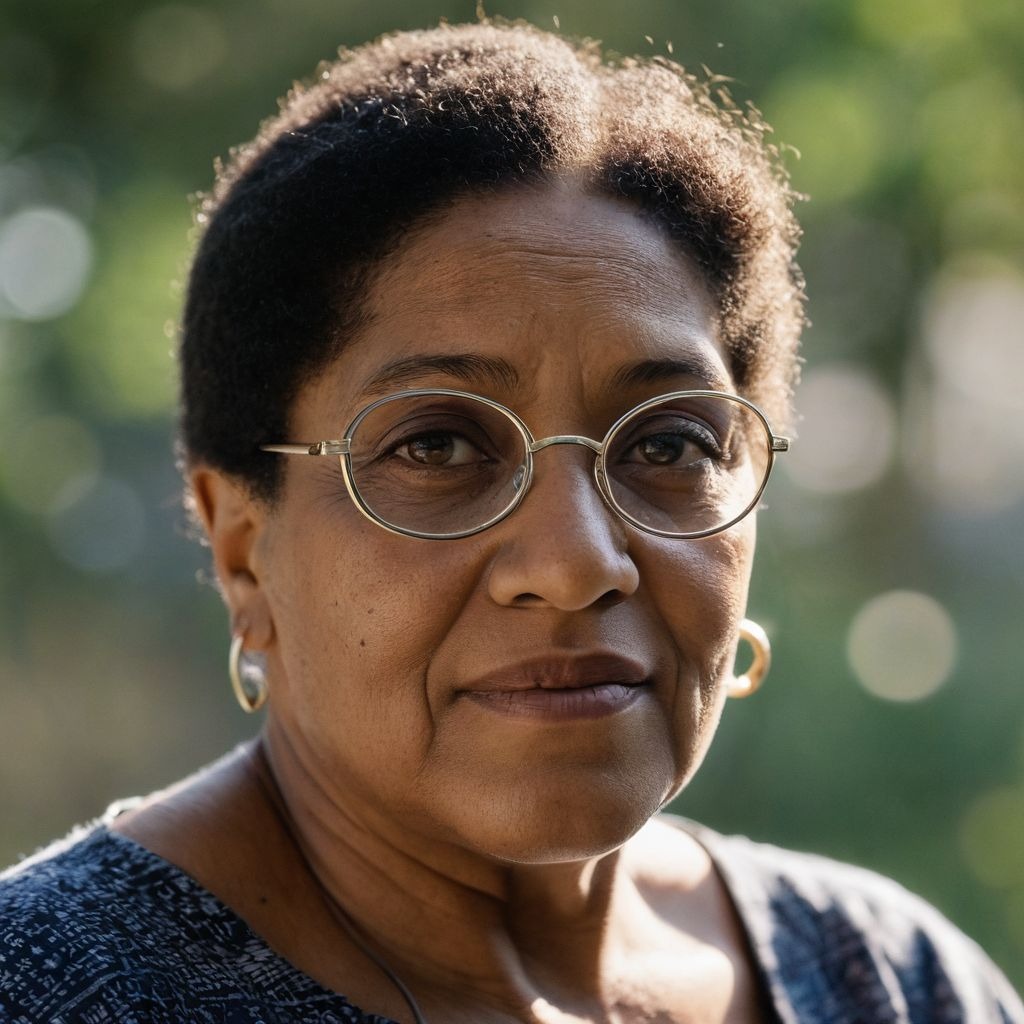
Audre Lorde: Where Vulnerability Meets Unapologetic Rage

Penelope

Audre Lorde’s name has been etched in my mind for years, long before I’d even picked up one of her books. My college English professor assigned us her poem “The New York Head Shop” and I was struck by the raw emotion and unapologetic language. It was like she had taken a magnifying glass to all the things I’d only whispered about in my own head – identity, community, and the struggle for belonging.

As I read through her collections, I began to notice something that resonated deeply with me: Audre’s writing is not just about expression; it’s about excavation. She digs deep into the complexities of being black, queer, and a woman, laying bare the contradictions and paradoxes that often leave us feeling lost and fragmented.

I remember feeling a mix of awe and discomfort when I read “The Cancer Journals”. Audre’s unflinching account of her mastectomy and subsequent experiences with identity and body image left me questioning my own relationship with vulnerability. Why was it so hard for me to be honest about my own struggles, even in the safety of a college essay? What did it mean that I felt more comfortable articulating myself through writing than speaking?

Audre’s work raises so many questions for me – about silence and voice, about shame and pride, about the intersections that shape our experiences. Her essay “Age” is like a sharp critique of my own internalized narratives around aging and beauty. How have I internalized societal expectations about what it means to be young or old? What does Audre’s unwavering commitment to her own aging process – with all its attendant complexities and challenges – say about the ways we’re socialized to value certain bodies over others?

One of the things that draws me to Audre is the way she inhabits multiple spaces simultaneously. Her work doesn’t shy away from the tension between being a poet, a mother, a black woman, or a lesbian. She takes up all these identities with equal weight and validity, refusing to prioritize one over another. This reminds me of my own attempts to juggle different aspects of myself – student, writer, friend, daughter – but also highlights how Audre’s practice is so much more intentional and courageous.

Sometimes I feel like I’m trying to keep up with Audre’s audacity – her willingness to confront the harder truths about herself and the world around her. Her writing is like a mirror held up against my own insecurities and biases, forcing me to consider what it means to be accountable for one’s own privilege and ignorance.

As I read through her work, I’m struck by how Audre’s words are both deeply personal and universally relatable. She writes about the specificity of her experiences – from growing up in New York City to navigating relationships with women of color – but simultaneously taps into a broader cultural zeitgeist that speaks to anyone who has ever felt like an outsider.

I don’t think I’ve fully grasped what it means for Audre’s writing to be so essential, so necessary. Part of me wonders if this is because her work confronts the very same fears and doubts that keep me from speaking up in my own life – the fear of being misunderstood, the doubt that anyone will listen.

But perhaps that’s the point: Audre’s writing isn’t just about speaking truth to power; it’s about creating a language that acknowledges our complexities, our contradictions, and our multifaceted identities. In her words, I see a glimmer of hope – a reminder that even in the darkest moments, there is always room for growth, for expansion, for becoming more fully ourselves.

As I sit here with Audre’s work still echoing in my mind, I’m left wondering what it would mean to embody this kind of unwavering self-honesty. How can I cultivate a similar willingness to confront the harder truths about myself and the world around me? What would it look like for me to take up the mantle of audacity that Audre Lorde so courageously carries? The questions swirl, but one thing is clear: in reading her work, I’ve discovered a kindred spirit who reminds me that being true to oneself – in all its messy, beautiful complexity – is perhaps the most powerful act of resistance we can offer.

As I delve deeper into Audre’s writing, I’m struck by the ways in which she embodies this audacity, this unwavering commitment to herself and her art. Her poetry and essays are like a manifestation of her unapologetic self, refusing to be contained or diminished by societal expectations.

I think about how often I’ve tried to temper my own voice, to smooth out the rough edges and make myself more palatable to others. Audre’s writing is like a rebuke to this instinct, a reminder that our authenticity is not something to be tamed or apologized for. Her words are like a declaration of independence, a statement that says: “I am who I am, and you would do well to listen.”

But it’s not just about speaking my truth; it’s also about being willing to confront the ways in which I’ve internalized oppressive systems. Audre’s writing is full of moments where she lays bare her own complicity, her own biases and shortcomings. It’s a powerful reminder that our privilege and ignorance are not things to be ashamed of, but rather something to be acknowledged and worked with.

I think about how often I’ve tried to “get it right,” to be the perfect student, writer, or friend. Audre’s writing is like a rejection of this impulse, a reminder that perfection is a myth, and that our humanity lies in our imperfections. Her words are like a warm hug, reminding me that it’s okay to stumble, to make mistakes, and to grow.

As I read through her essays on motherhood, identity, and community, I’m struck by the ways in which she weaves together multiple narratives, creating a rich tapestry of experiences that defy easy categorization. It’s like she’s saying: “I am not just one thing; I am many things, and all of these things are valid.”

This is what feels so revolutionary about Audre’s writing – it’s not just about speaking truth to power, but also about creating a language that acknowledges the complexity of our experiences. Her words are like a mirror held up against my own life, reflecting back at me the messy, beautiful contradictions that make us who we are.

As I sit here with her work still resonating in my mind, I’m left wondering what it would mean to write from this place of audacity and self-honesty. How can I tap into this kind of unwavering commitment to myself and my art? What does it mean to cultivate a practice that acknowledges the complexity of our experiences, rather than trying to fit them into neat categories or narratives?

The questions swirl, but one thing is clear: in reading Audre’s work, I’ve discovered a new language for living – a language that says we are enough, just as we are.

One of the things that continues to fascinate me about Audre Lorde’s writing is her use of metaphor and imagery. Her words are like a rich tapestry, woven from threads of poetry, politics, and personal experience. She has this incredible ability to capture the complexities of life in a way that feels both deeply intimate and universally relatable.

When I read “The Master’s Tools Will Never Dismantle the Master’s House,” her essay on feminism and oppression, I’m struck by how she uses the metaphor of a house to describe the ways in which systems of power are constructed. It’s like she’s saying that our language, our culture, our very way of being is built on a foundation of privilege and exclusion.

But what really gets me is when she talks about the “tools” we use to dismantle these systems. She says that if we’re using the same tools as those in power – the same language, the same assumptions, the same ways of thinking – we’ll never actually be able to tear down the house itself. We need new tools, new languages, new ways of being.

For me, this is like a wake-up call. I’ve often found myself trying to navigate these systems using the very same tools that have been used against me and my community. But Audre’s words are a reminder that we don’t have to play by those rules. We can create new ones, ones that reflect our own experiences and perspectives.

It makes me think about how I’ve approached my own writing, and how I’ve tried to fit into the existing narratives around what it means to be a writer, a woman, or a person of color. But Audre’s work is like a permission slip to do things differently, to write from a place that’s both personal and universal.

As I read on, I’m struck by the ways in which her writing is not just about expressing herself, but also about creating a sense of community and connection with others. Her words are like a bridge, spanning across different experiences and identities, and inviting us to meet each other in the middle.

It’s this sense of belonging that I think has always drawn me to Audre’s work. As someone who’s often felt like an outsider, both within my own communities and outside of them, her writing is like a reminder that I’m not alone. That there are others out there who feel just as lost and just as found as I do.

But it’s also the opposite – that I’m not just any one thing, but multiple things at once. That my experiences, my identities, my communities are all intertwined in complex ways, and that no single label or category can capture me whole.

Audre’s writing is like a mirror held up against this complexity, reflecting back at me the messy beauty of who I am. And it’s not just about self-discovery – although that’s certainly part of it. It’s also about community-building, about creating spaces for others to see themselves reflected in her words as well.

As I continue to read and reflect on Audre’s work, I’m left with more questions than answers. What does it mean to write from this place of audacity and self-honesty? How can I tap into the kind of unwavering commitment to myself and my art that Audre embodies? And what would it look like for me to create a language that acknowledges the complexity of our experiences, rather than trying to fit them into neat categories or narratives?

These are questions that continue to swirl in my mind as I sit here with Audre’s work. But one thing is clear: her writing has given me permission to be more myself, to speak from a place of truth and vulnerability, and to create spaces for others to do the same.

As I ponder these questions, I’m struck by the ways in which Audre’s writing challenges me to confront my own complicity in systems of oppression. Her words are like a mirror held up against my privilege and ignorance, forcing me to acknowledge the ways in which I’ve internalized societal norms and expectations.

I think about how often I’ve participated in conversations where people of color or queer individuals have shared their experiences with marginalization, only to be met with silence or minimization from those who don’t understand. And yet, when I’m part of these conversations, I feel like I’m somehow above the fray – that I’m not complicit in these systems because I’ve never experienced direct oppression.

But Audre’s writing shows me that this is a myth. That even as someone who has benefited from privilege and ignorance, I still have a responsibility to listen, to learn, and to act. Her words are like a gentle yet insistent nudge, reminding me that my silence is not neutrality – it’s complicity.

This realization is both exhilarating and terrifying. On one hand, it means that I have the power to make a difference, to use my privilege and platform to amplify marginalized voices. But on the other hand, it also means that I must confront my own biases and shortcomings head-on, rather than trying to avoid or deny them.

As I sit here with Audre’s work, I’m left wondering what it would mean to take up this challenge in a more intentional way. How can I use my privilege to uplift others, while also acknowledging the ways in which I’ve internalized oppressive systems? What does it look like to create spaces for marginalized voices to be heard, rather than simply amplifying my own voice?

I think about how Audre’s writing is full of moments where she lays bare her own flaws and biases, using them as an opportunity for growth and learning. Her words are like a template for self-reflection, encouraging me to do the same.

As I reflect on my own life, I realize that this is something I’ve been avoiding – confronting my own complicity in systems of oppression. But Audre’s writing shows me that it’s not about beating myself up over past mistakes or trying to be perfect; it’s about taking responsibility for my actions and using them as an opportunity for growth.

It’s a radical act, really – one that requires vulnerability, self-awareness, and a willingness to confront the hard truths about myself and the world around me. And yet, it’s also a necessary one – one that can help us build more just, equitable communities where everyone has a seat at the table.

Related Posts

Audre Lorde: Where Vulnerability Meets Unapologetic Rage

Penelope

Audre Lorde’s name has been etched in my mind for years, long before I’d even picked up one of her books. My college English professor assigned us her poem “The New York Head Shop” and I was struck by the raw emotion and unapologetic language. It was like she had taken a magnifying glass to all the things I’d only whispered about in my own head – identity, community, and the struggle for belonging.

As I read through her collections, I began to notice something that resonated deeply with me: Audre’s writing is not just about expression; it’s about excavation. She digs deep into the complexities of being black, queer, and a woman, laying bare the contradictions and paradoxes that often leave us feeling lost and fragmented.

I remember feeling a mix of awe and discomfort when I read “The Cancer Journals”. Audre’s unflinching account of her mastectomy and subsequent experiences with identity and body image left me questioning my own relationship with vulnerability. Why was it so hard for me to be honest about my own struggles, even in the safety of a college essay? What did it mean that I felt more comfortable articulating myself through writing than speaking?

Audre’s work raises so many questions for me – about silence and voice, about shame and pride, about the intersections that shape our experiences. Her essay “Age” is like a sharp critique of my own internalized narratives around aging and beauty. How have I internalized societal expectations about what it means to be young or old? What does Audre’s unwavering commitment to her own aging process – with all its attendant complexities and challenges – say about the ways we’re socialized to value certain bodies over others?

One of the things that draws me to Audre is the way she inhabits multiple spaces simultaneously. Her work doesn’t shy away from the tension between being a poet, a mother, a black woman, or a lesbian. She takes up all these identities with equal weight and validity, refusing to prioritize one over another. This reminds me of my own attempts to juggle different aspects of myself – student, writer, friend, daughter – but also highlights how Audre’s practice is so much more intentional and courageous.

Sometimes I feel like I’m trying to keep up with Audre’s audacity – her willingness to confront the harder truths about herself and the world around her. Her writing is like a mirror held up against my own insecurities and biases, forcing me to consider what it means to be accountable for one’s own privilege and ignorance.

As I read through her work, I’m struck by how Audre’s words are both deeply personal and universally relatable. She writes about the specificity of her experiences – from growing up in New York City to navigating relationships with women of color – but simultaneously taps into a broader cultural zeitgeist that speaks to anyone who has ever felt like an outsider.

I don’t think I’ve fully grasped what it means for Audre’s writing to be so essential, so necessary. Part of me wonders if this is because her work confronts the very same fears and doubts that keep me from speaking up in my own life – the fear of being misunderstood, the doubt that anyone will listen.

But perhaps that’s the point: Audre’s writing isn’t just about speaking truth to power; it’s about creating a language that acknowledges our complexities, our contradictions, and our multifaceted identities. In her words, I see a glimmer of hope – a reminder that even in the darkest moments, there is always room for growth, for expansion, for becoming more fully ourselves.

As I sit here with Audre’s work still echoing in my mind, I’m left wondering what it would mean to embody this kind of unwavering self-honesty. How can I cultivate a similar willingness to confront the harder truths about myself and the world around me? What would it look like for me to take up the mantle of audacity that Audre Lorde so courageously carries? The questions swirl, but one thing is clear: in reading her work, I’ve discovered a kindred spirit who reminds me that being true to oneself – in all its messy, beautiful complexity – is perhaps the most powerful act of resistance we can offer.

As I delve deeper into Audre’s writing, I’m struck by the ways in which she embodies this audacity, this unwavering commitment to herself and her art. Her poetry and essays are like a manifestation of her unapologetic self, refusing to be contained or diminished by societal expectations.

I think about how often I’ve tried to temper my own voice, to smooth out the rough edges and make myself more palatable to others. Audre’s writing is like a rebuke to this instinct, a reminder that our authenticity is not something to be tamed or apologized for. Her words are like a declaration of independence, a statement that says: “I am who I am, and you would do well to listen.”

But it’s not just about speaking my truth; it’s also about being willing to confront the ways in which I’ve internalized oppressive systems. Audre’s writing is full of moments where she lays bare her own complicity, her own biases and shortcomings. It’s a powerful reminder that our privilege and ignorance are not things to be ashamed of, but rather something to be acknowledged and worked with.

I think about how often I’ve tried to “get it right,” to be the perfect student, writer, or friend. Audre’s writing is like a rejection of this impulse, a reminder that perfection is a myth, and that our humanity lies in our imperfections. Her words are like a warm hug, reminding me that it’s okay to stumble, to make mistakes, and to grow.

As I read through her essays on motherhood, identity, and community, I’m struck by the ways in which she weaves together multiple narratives, creating a rich tapestry of experiences that defy easy categorization. It’s like she’s saying: “I am not just one thing; I am many things, and all of these things are valid.”

This is what feels so revolutionary about Audre’s writing – it’s not just about speaking truth to power, but also about creating a language that acknowledges the complexity of our experiences. Her words are like a mirror held up against my own life, reflecting back at me the messy, beautiful contradictions that make us who we are.

As I sit here with her work still resonating in my mind, I’m left wondering what it would mean to write from this place of audacity and self-honesty. How can I tap into this kind of unwavering commitment to myself and my art? What does it mean to cultivate a practice that acknowledges the complexity of our experiences, rather than trying to fit them into neat categories or narratives?

The questions swirl, but one thing is clear: in reading Audre’s work, I’ve discovered a new language for living – a language that says we are enough, just as we are.

One of the things that continues to fascinate me about Audre Lorde’s writing is her use of metaphor and imagery. Her words are like a rich tapestry, woven from threads of poetry, politics, and personal experience. She has this incredible ability to capture the complexities of life in a way that feels both deeply intimate and universally relatable.

When I read “The Master’s Tools Will Never Dismantle the Master’s House,” her essay on feminism and oppression, I’m struck by how she uses the metaphor of a house to describe the ways in which systems of power are constructed. It’s like she’s saying that our language, our culture, our very way of being is built on a foundation of privilege and exclusion.

But what really gets me is when she talks about the “tools” we use to dismantle these systems. She says that if we’re using the same tools as those in power – the same language, the same assumptions, the same ways of thinking – we’ll never actually be able to tear down the house itself. We need new tools, new languages, new ways of being.

For me, this is like a wake-up call. I’ve often found myself trying to navigate these systems using the very same tools that have been used against me and my community. But Audre’s words are a reminder that we don’t have to play by those rules. We can create new ones, ones that reflect our own experiences and perspectives.

It makes me think about how I’ve approached my own writing, and how I’ve tried to fit into the existing narratives around what it means to be a writer, a woman, or a person of color. But Audre’s work is like a permission slip to do things differently, to write from a place that’s both personal and universal.

As I read on, I’m struck by the ways in which her writing is not just about expressing herself, but also about creating a sense of community and connection with others. Her words are like a bridge, spanning across different experiences and identities, and inviting us to meet each other in the middle.

It’s this sense of belonging that I think has always drawn me to Audre’s work. As someone who’s often felt like an outsider, both within my own communities and outside of them, her writing is like a reminder that I’m not alone. That there are others out there who feel just as lost and just as found as I do.

But it’s also the opposite – that I’m not just any one thing, but multiple things at once. That my experiences, my identities, my communities are all intertwined in complex ways, and that no single label or category can capture me whole.

Audre’s writing is like a mirror held up against this complexity, reflecting back at me the messy beauty of who I am. And it’s not just about self-discovery – although that’s certainly part of it. It’s also about community-building, about creating spaces for others to see themselves reflected in her words as well.

As I continue to read and reflect on Audre’s work, I’m left with more questions than answers. What does it mean to write from this place of audacity and self-honesty? How can I tap into the kind of unwavering commitment to myself and my art that Audre embodies? And what would it look like for me to create a language that acknowledges the complexity of our experiences, rather than trying to fit them into neat categories or narratives?

These are questions that continue to swirl in my mind as I sit here with Audre’s work. But one thing is clear: her writing has given me permission to be more myself, to speak from a place of truth and vulnerability, and to create spaces for others to do the same.

As I ponder these questions, I’m struck by the ways in which Audre’s writing challenges me to confront my own complicity in systems of oppression. Her words are like a mirror held up against my privilege and ignorance, forcing me to acknowledge the ways in which I’ve internalized societal norms and expectations.

I think about how often I’ve participated in conversations where people of color or queer individuals have shared their experiences with marginalization, only to be met with silence or minimization from those who don’t understand. And yet, when I’m part of these conversations, I feel like I’m somehow above the fray – that I’m not complicit in these systems because I’ve never experienced direct oppression.

But Audre’s writing shows me that this is a myth. That even as someone who has benefited from privilege and ignorance, I still have a responsibility to listen, to learn, and to act. Her words are like a gentle yet insistent nudge, reminding me that my silence is not neutrality – it’s complicity.

This realization is both exhilarating and terrifying. On one hand, it means that I have the power to make a difference, to use my privilege and platform to amplify marginalized voices. But on the other hand, it also means that I must confront my own biases and shortcomings head-on, rather than trying to avoid or deny them.

As I sit here with Audre’s work, I’m left wondering what it would mean to take up this challenge in a more intentional way. How can I use my privilege to uplift others, while also acknowledging the ways in which I’ve internalized oppressive systems? What does it look like to create spaces for marginalized voices to be heard, rather than simply amplifying my own voice?

I think about how Audre’s writing is full of moments where she lays bare her own flaws and biases, using them as an opportunity for growth and learning. Her words are like a template for self-reflection, encouraging me to do the same.

As I reflect on my own life, I realize that this is something I’ve been avoiding – confronting my own complicity in systems of oppression. But Audre’s writing shows me that it’s not about beating myself up over past mistakes or trying to be perfect; it’s about taking responsibility for my actions and using them as an opportunity for growth.

It’s a radical act, really – one that requires vulnerability, self-awareness, and a willingness to confront the hard truths about myself and the world around me. And yet, it’s also a necessary one – one that can help us build more just, equitable communities where everyone has a seat at the table.

Related Posts

Decarabia: The Star-Shaped Marquis Who Reveals Secrets Through Stones and Wings

Dave

Decarabia is one of those infernal figures whose reputation is built less on fear and more on curiosity. In the old demonological texts, he is not described as a roaring tyrant or a punisher of souls, but as a keeper of hidden knowledge, a quiet revealer of truths that already exist but remain unseen. His power does not come from destruction or temptation, but from interpretation. Decarabia governs the secret language of stones, herbs, birds, and gems, translating the natural world into meaning for those who know how to ask. In this way, he occupies a strange and fascinating space within the Ars Goetia, somewhere between demon, scholar, and natural philosopher.

According to the grimoires, Decarabia appears initially in the form of a pentagram, a five-pointed star suspended in the air. Only after being commanded does he take on a more recognizable shape, often described as a man with wings or a birdlike form. This transformation is deeply symbolic. The pentagram has long represented hidden order, balance, and the structure underlying apparent chaos. To encounter Decarabia first as a symbol rather than a body suggests that his essence is abstract before it is physical. He is knowledge before he is form.

Decarabia’s rank is that of a Marquis of Hell, a title that implies authority without absolute dominion. A marquis governs borderlands, territories at the edge of kingdoms. This fits Decarabia perfectly. His domain lies at the border between the human and the natural, the spoken and the unspoken, the observed and the interpreted. He does not create secrets; he reveals them. He teaches the virtues of stones and herbs, the qualities hidden within gems, and the meanings carried by the flight and calls of birds.

In medieval and early modern Europe, this kind of knowledge was not trivial. Stones and herbs were believed to carry inherent properties that could heal, harm, protect, or curse. Birds were omens, their movements read as messages from beyond human understanding. To know the true nature of these things was to possess power, not the loud power of conquest, but the quiet power of insight. Decarabia embodies this belief, serving as a supernatural librarian of the natural world.

What makes Decarabia particularly intriguing is his relationship with truth. Unlike demons associated with deception, Decarabia is described as truthful when properly constrained. He reveals what is already there. This does not make him safe, however. Knowledge without context can be dangerous, and understanding without wisdom can lead to ruin. Decarabia does not decide how his revelations will be used. He provides information, and the consequences belong to the one who asked.

The pentagram form attributed to Decarabia has been the subject of much interpretation. In many traditions, the five-pointed star represents the elements: earth, air, fire, water, and spirit. Decarabia’s connection to stones, herbs, and birds aligns neatly with this symbolism. He is a unifier of elements, a reminder that the natural world speaks a coherent language if one knows how to listen. His star-shaped appearance reinforces the idea that knowledge itself has structure, even when it seems mysterious.

Birds play a central role in Decarabia’s mythology. He is said to understand their songs and the meanings behind their movements. This places him in a long tradition of augury, the ancient practice of divination through observing birds. To ancient and medieval observers, birds were messengers between worlds, creatures that moved freely between earth and sky. Decarabia’s command over their language suggests mastery over liminal spaces, those places where boundaries blur and insight emerges.

Stones and gems, too, are central to Decarabia’s influence. In an era when gemstones were believed to hold specific virtues, knowing their true nature was invaluable. A stone could protect a traveler, enhance memory, or ward off illness. Decarabia’s teachings would have appealed to alchemists, healers, and scholars seeking to unlock the hidden properties of matter. Even today, the symbolic power of stones persists, suggesting that Decarabia’s appeal is not limited to superstition, but rooted in a deeper human impulse to find meaning in the material world.

Decarabia’s wings are another important symbol. Wings represent freedom, perspective, and transcendence. A winged Decarabia suggests an elevated viewpoint, the ability to see patterns invisible from the ground. This aligns with his role as a revealer of hidden connections. He does not change the world; he changes how it is seen. In doing so, he challenges the assumption that knowledge must come from human reasoning alone. Sometimes, understanding comes from observing what has always been present.

Unlike many demons, Decarabia is not described as hostile or malicious. His danger lies in indifference. He offers truths without concern for how they will be received or applied. This makes him a compelling metaphor for knowledge itself. Information is neutral. It can heal or harm, enlighten or overwhelm. Decarabia embodies this neutrality, standing as a reminder that insight carries responsibility.

In modern interpretations, Decarabia often appears as a figure of esoteric wisdom, a guide through hidden systems rather than a villain to be defeated. He resonates with those drawn to symbolism, natural magic, and the idea that the world is layered with meaning. In this sense, he feels almost contemporary, a patron of pattern-seekers and systems-thinkers in an age obsessed with data and interpretation.

The image of Decarabia as a star transforming into a winged being also speaks to the human experience of understanding. Knowledge often begins as an abstract concept, a symbol or theory, before becoming something lived and embodied. Decarabia’s manifestation mirrors this process. He is an idea that takes shape, a pattern that becomes a presence.

Decarabia’s continued relevance lies in his subtlety. He does not dominate narratives through spectacle. He lingers at the edges, waiting for those who are willing to look closely. His power is patient, observational, and deeply tied to the world as it is, not as we wish it to be. In a culture that often values loud certainty over quiet insight, Decarabia stands as a reminder that some truths are revealed only to those who slow down enough to notice.

Ultimately, Decarabia represents the hidden coherence of the natural world. He is the whisper behind patterns, the logic beneath symbolism, and the reminder that meaning is often already present, waiting to be recognized. Whether approached as a demon of occult lore or as a metaphor for interpretive knowledge, Decarabia endures because he reflects a timeless human desire: to understand the world not just as a collection of objects, but as a network of signs.

To engage with Decarabia is to accept that knowledge is not always comforting. It can unsettle, complicate, and challenge assumptions. But it can also deepen appreciation for the intricate systems that surround us. In this way, Decarabia is less a figure of fear and more a figure of revelation, a star that points not outward, but inward, toward a more attentive way of seeing.

Related Posts

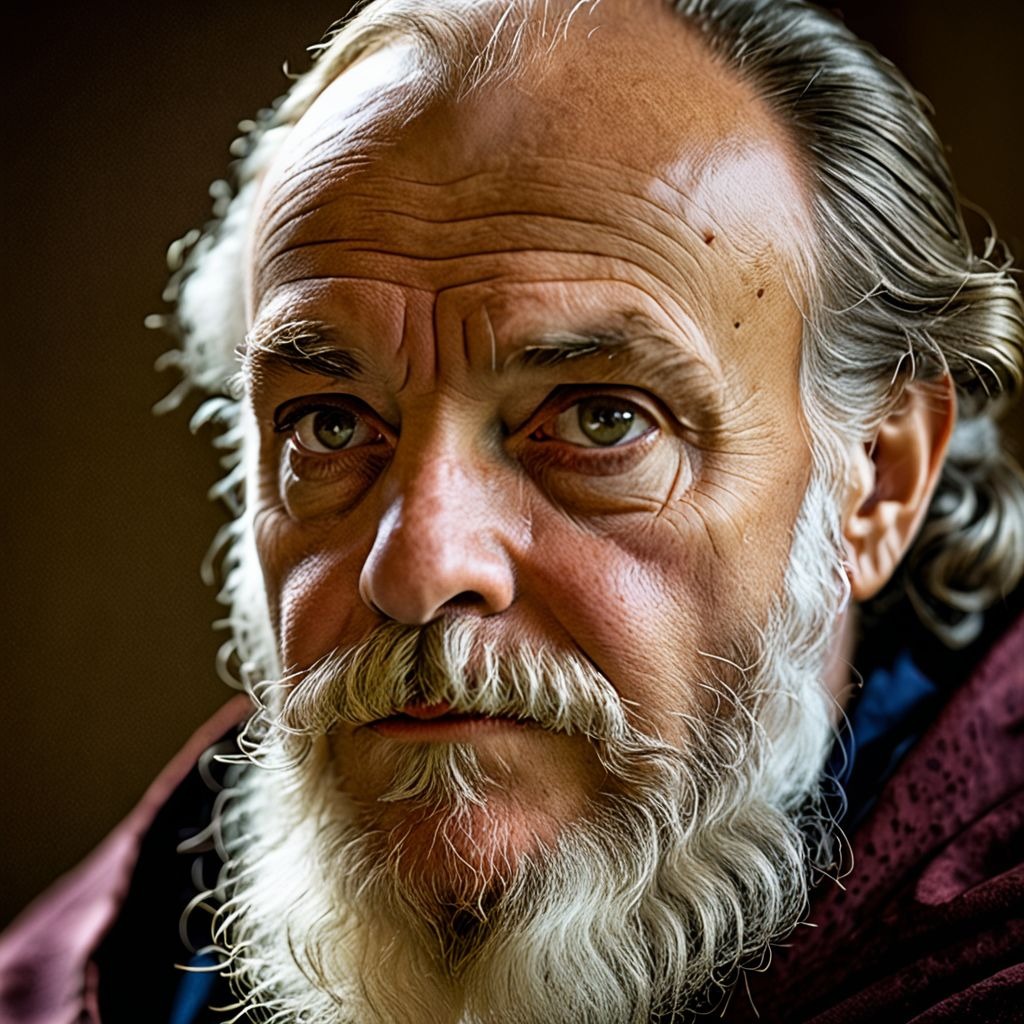
Galileo Galilei: When the Truth Hurts (and Everyone Else Too)

Penelope

I’ve always been drawn to people who challenge the status quo, and Galileo Galilei is one of those figures who has captivated me for a while now. What strikes me about him is his unwavering commitment to observing reality, even when it went against the dominant views of his time.

As I reflect on my own experiences as a young adult, I think about how often we’re encouraged to conform and fit in. In college, I felt pressure to choose a “practical” major or career path, even if it didn’t align with my passions. But Galileo’s story shows that there are consequences for not following the crowd – he faced opposition from the Church and was even put under house arrest.

I have to admit, I’m fascinated by the tension between scientific inquiry and authority. When Galileo discovered new evidence that contradicted Aristotelian views, he didn’t shy away from sharing his findings. He published his observations of the moon’s phases and the imperfections on the sun’s surface, which shook the foundations of geocentrism.

But what I find particularly intriguing is how Galileo navigated the complex web of power and influence in 17th-century Italy. As a member of the Tuscan nobility, he had connections that might have insulated him from criticism. Yet, he chose to speak truth to those in power, risking his reputation and even his freedom.

I wonder if I would have had the courage to do something similar. Would I have stood up for what I believed in, even if it meant going against the prevailing wisdom? Or would I have taken a more cautious approach, trying to avoid conflict and criticism?

Galileo’s case also makes me think about the role of observation and experimentation in shaping our understanding of the world. He used his telescope to observe the night sky, revealing new worlds and challenging existing theories. This resonates with my own experiences as a writer – when I’m stuck on a piece, I often find that taking a step back and observing my thoughts helps me gain clarity.

One thing that still puzzles me is how Galileo’s views evolved over time. Initially, he subscribed to the geocentric model, but later, after his observations with the telescope, he became a vocal proponent of the heliocentric view. This shift makes me question whether we can ever truly change our minds or if we’re stuck in our initial perspectives.

I’m not sure what it says about me that I’m drawn to someone like Galileo – perhaps it’s because his journey is a reminder that growth and self-doubt are integral parts of the learning process. Maybe I see myself in him, struggling to reconcile my own desires with the expectations of others. Whatever the reason, I find myself returning to his story again and again, searching for insights into how we navigate uncertainty and challenge the status quo.

As I delve deeper into Galileo’s life, I’m struck by the nuances of his character. He was a complex figure, driven by a mix of intellectual curiosity and personal ambition. His willingness to take risks and challenge authority is admirable, but it’s also clear that he wasn’t immune to the pressures of his time.

I’ve been thinking about how Galileo’s relationships with others influenced his work. His patronage from the Medici family provided him with financial support and access to resources, but it also meant that he was beholden to their interests. I wonder if this tension between independence and dependence is something that many of us struggle with – do we prioritize our own autonomy or seek out connections that can help us achieve our goals?

Galileo’s relationships with other scientists and thinkers are equally fascinating. His debates with Kepler and his later disagreements with Descartes reveal a mind that was constantly engaged in dialogue and debate. I’m drawn to the idea of this intellectual community, where people were pushing each other to think more deeply and critically about the world.

But what really gets me is Galileo’s writing style – or rather, how he used language to communicate complex ideas to his audience. As a writer myself, I’ve always been interested in the ways that language can be both precise and evocative. Galileo’s use of metaphor and analogy to describe astronomical phenomena is still breathtaking today.

I’m starting to see parallels between Galileo’s approach to science and my own experiences with writing. Both require a willingness to take risks and challenge assumptions – whether it’s questioning established theories or experimenting with new forms of expression. And just as Galileo’s observations were rooted in careful observation, so too do I find that the best writing comes from paying attention to the world around me.

I’m not sure if this is true for everyone, but for me, there’s a connection between observing reality and creating art. Maybe it’s because both require a sense of wonder and awe – Galileo’s observations of the moon and stars were likely met with a mix of amazement and trepidation, just as I feel when I’m trying to capture a particular moment or feeling on paper.

As I continue to explore Galileo’s life, I’m struck by the ways in which he embodied both the scientist and the artist. His work was driven by a desire to understand the world around him, but it was also infused with a sense of beauty and wonder. And that’s what I think draws me to his story – not just the intellectual curiosity or the historical significance, but the way he lived his life as a continuous process of exploration and discovery.

I’ve been thinking about how Galileo’s approach to science was so deeply intertwined with his artistic side. He saw beauty in the patterns and structures of the universe, just as I see it in the cadence and rhythm of language. For him, the study of astronomy wasn’t just about collecting data or proving theories; it was about experiencing the sublime and the mysterious.

I’ve always been fascinated by the concept of the “sublime” – that feeling of awe and wonder that comes from encountering something greater than ourselves. For me, it’s often found in the written word: a perfectly crafted sentence, a powerful metaphor, or a phrase that captures the essence of an emotion. Galileo experienced his own version of this when he gazed up at the night sky, his telescope revealing secrets that had been hidden for centuries.

What strikes me is how similar our experiences are, despite living in different eras and pursuing different passions. Just as I find myself lost in the world of words, Galileo became lost in the universe’s grand tapestry. And just as I seek to capture the essence of human experience through my writing, he sought to understand the workings of the cosmos.

This realization has led me to wonder if our creative pursuits are simply different expressions of a universal desire to explore and comprehend. Are we not all seekers, each in our own way, trying to grasp the intricate web of meaning that underlies our existence? Galileo’s journey teaches me that science and art are not mutually exclusive; they’re two sides of the same coin, both striving to illuminate the world around us.

As I continue to reflect on Galileo’s life, I’m struck by the idea that our obsessions often reveal more about ourselves than we might initially think. For him, it was the pursuit of knowledge and understanding; for me, it’s the quest to craft words into something meaningful. Both are forms of obsession, I suppose – a fixation on something greater than ourselves that drives us to explore, experiment, and push beyond our limits.

And what does this say about our relationship with uncertainty? For Galileo, it was a constant companion, one that forced him to adapt and evolve his theories in response to new observations. Similarly, as a writer, I find myself navigating the unknown territories of language and human experience, often unsure of where my words will lead or what meaning they’ll convey.

Perhaps this is why I’m drawn to Galileo’s story – it reminds me that uncertainty is not something to be feared or avoided; it’s an essential part of the creative process. By embracing the unknown, we open ourselves up to new possibilities and insights, just as Galileo did when he dared to challenge the prevailing views of his time.

I’m not sure where this line of thinking will lead me next – perhaps into a deeper exploration of the role of uncertainty in science and art? Or maybe it’ll take me down a different path altogether. But for now, I’m content to let Galileo’s story guide me on my own journey of discovery, one that’s still unfolding as I write these words.

As I continue to ponder the parallels between Galileo’s scientific pursuits and my own writing endeavors, I find myself thinking about the power of language in shaping our understanding of the world. For Galileo, his observations and experiments were not just about gathering data, but about crafting a narrative that would challenge the dominant views of his time. Similarly, as a writer, I strive to use language in a way that not only conveys information but also evokes emotions and sparks imagination.

I’m struck by how Galileo’s writing style was characterized by its clarity, precision, and elegance. He had a unique ability to distill complex ideas into accessible language, making his work appealing to a broad audience. This is something I aspire to in my own writing – the ability to convey abstract concepts in a way that resonates with readers on an intuitive level.

One of the things that fascinates me about Galileo’s use of language is how he employed metaphor and analogy to describe complex scientific concepts. For example, his description of the moon’s phases as “a silvery crescent” or the sun’s imperfections as “spots” that reveal its true nature. These metaphors not only make the science more relatable but also highlight the beauty and wonder inherent in the natural world.

This got me thinking about how I can apply this approach to my own writing. How can I use metaphor and analogy to convey complex ideas in a way that’s both engaging and accessible? For instance, when describing the nuances of human emotion or the intricacies of social dynamics, can I find creative ways to describe these concepts that make them more relatable and tangible?

Galileo’s emphasis on observation and experimentation as key components of scientific inquiry has also made me think about the role of sensory experience in writing. As a writer, I often rely on my senses – sight, sound, touch, taste, and smell – to evoke emotions and create vivid imagery in my readers’ minds. But how can I take this even further by incorporating more experiential elements into my writing? Can I use descriptive language that not only paints a picture but also invites the reader to engage with the world around them?

As I continue to explore these ideas, I’m reminded of the importance of playfulness and curiosity in both scientific inquiry and creative expression. Galileo’s willingness to challenge conventional wisdom and push the boundaries of what was thought possible is an inspiration to me as a writer – it reminds me that there’s always room for innovation and experimentation, even when exploring familiar themes or ideas.

And so, I find myself drawn into this world of observation, experimentation, and creative expression, where science and art blur together in unexpected ways. It’s a space where the boundaries between disciplines dissolve, and new possibilities emerge from the intersections and overlaps between seemingly disparate fields.

As I close my eyes and imagine Galileo gazing up at the night sky through his telescope, I feel a sense of kinship with this 17th-century astronomer. We’re both seekers, driven by a desire to explore, understand, and create in our own ways – one using the language of science, the other using the tools of writing and imagination. And in that shared pursuit, we find common ground and inspiration for our individual journeys, each of us pushing beyond the limits of what’s possible and illuminating the world around us in our unique ways.

Related Posts