Latest Articles

Susan Sontag in Fragments and Revisions

Penelope

In a draft, the sentence appears: “Susan Sontag’s writing is an act of attention.” In this early version, the phrase “act of attention” feels almost like a placeholder, a gesture towards something yet to be explored.

Later, it is crossed out and written again: “her essays are meditations on the human condition.” The language shifts from tentative to more confident, but the sense of hesitation lingers. In another version, she writes: “I am drawn to the fragment, the piece that cannot be fully understood.”

She wrote in her journals about the importance of proximity, of placing words and ideas side by side without explanation or interpretation. A later revision alters this to emphasize instead the value of repetition, of returning again and again to a phrase or idea until its meaning begins to emerge.

The record repeats this phrase: “the writer is not an artist, but a witness.” In one version, it appears as a statement; in another, it’s phrased as a question. The wording shifts, but the underlying tension remains. She wrote about the power of language to both reveal and conceal, to bring us closer or drive us further apart.

In a series of drafts, she explores the concept of attention itself, what it means to pay close attention to words, ideas, and experiences. One draft reads: “attention is not just a moral obligation, but a necessary act of survival.” Another version replaces this with: “to attend to something is to take its measure.”

Crossed out and written again in the margins is the phrase: “the writer’s task is to make visible the invisible.” This appears alongside another fragment: “to bear witness to the unsayable.” The line between these two phrases feels tenuous, a thread waiting to be pulled.

Left unfinished is an essay on the relationship between art and morality. She wrote about the need for art to confront us with the uncomfortable, the unexamined aspects of ourselves. Another version replaces this with: “art should challenge our assumptions, but also offer a way out.”

In another version, she writes: “I am drawn to the fragment because it allows me to stay close to what is not fully understood.” The record repeats this phrase, each time with slight variations in wording and emphasis.

The line is removed from one draft, leaving only a fragment of a sentence. Another version replaces this with: “to bear witness is to take responsibility for what we see.” The tension between these two phrases feels unresolved.

I linger on the phrase: “the writer’s task is to make visible the invisible.” I return again and again to it, each time searching for a way in, a path forward. The words seem to press against me, demanding attention.

In one draft, she writes: “what we see depends on how we look.” This phrase appears alongside another fragment: “the act of seeing is an act of interpretation.” A note in the margin reads: “or is it?”

Another version replaces this with: “seeing is not just a matter of perception, but also of attention.” The word “attention” feels like a refrain, echoing throughout her writing.

She wrote about the importance of uncertainty, of embracing the unknowable. One draft reads: “the writer’s task is to navigate the unknown.” Another version replaces this with: “to find one’s way through the fog.”

Crossed out and written again in the margins is the phrase: “the act of attention is an act of creation.” This appears alongside another fragment: “creation is not just a matter of making something new, but also of revealing what already exists.”

A later revision alters this to emphasize instead the value of impermanence, of recognizing that everything is subject to change. The record repeats this phrase: “nothing remains, except for the fragments we leave behind.”

In another draft, she notes: “the act of writing is a way of gathering what has been scattered.” This appears alongside a fragment: “to write is to collect the shards of meaning.”

A series of revisions explores the relationship between silence and language. One version reads: “silence is not the absence of words, but the presence of what cannot be said.” Another version replaces this with: “language is not just a means of expression, but also a way of containing the inexpressible.”

Crossed out and written again in the margins is the phrase: “the writer’s task is to navigate the silence between the words.” This appears alongside another fragment: “to find the space where meaning is suspended.”

In one draft, she writes: “the act of reading is an act of listening.” A note in the margin reads: “or is it?” Another version replaces this with: “reading is not just a matter of decoding symbols, but also of tuning into the vibrations between them.”

The record repeats the phrase: “what we see depends on how we listen.” This appears alongside another fragment: “the act of listening is an act of surrender.”

She wrote about the importance of fragmentation, of breaking down wholes into parts. A draft reads: “to break something down is to reveal its hidden structures.” Another version replaces this with: “fragmentation is not just a matter of destruction, but also of discovery.”

In another series of revisions, she explores the concept of proximity and distance. One version reads: “proximity can be both intimate and estranging.” Another version replaces this with: “to be close to something is to be aware of its boundaries.”

Crossed out and written again in the margins is the phrase: “the writer’s task is to navigate the threshold between near and far.” This appears alongside another fragment: “to find the space where intimacy and estrangement converge.”

A later revision alters this to emphasize instead the value of disorientation, of losing one’s bearings. The record repeats this phrase: “disorientation is not just a state of confusion, but also a way of seeing anew.”

In another draft, she notes: “the act of writing is a way of mapping the uncharted.” This appears alongside a fragment: “to write is to create a cartography of the unknown.”

A series of revisions explores the relationship between time and memory. One version reads: “memory is not just a matter of recall, but also of anticipation.” Another version replaces this with: “time is not just a linear progression, but also a web of intersecting moments.”

Crossed out and written again in the margins is the phrase: “the writer’s task is to weave together disparate threads of time.” This appears alongside another fragment: “to find the narrative that underlies our fragmented experiences.”

In another draft, she explores the concept of the self and its relationship to language. One version reads: “the self is not a fixed entity, but a verb, a process of becoming.” A note in the margin reads: “or is it a verb that can never be fully conjugated?”

She writes about the tension between language and silence, how words can both reveal and conceal the self. Another version replaces this with: “the self is a palimpsest, a text written over and over again.”

Crossed out and written again in the margins is the phrase: “to write one’s own story is to rewrite the narrative of one’s life.” This appears alongside another fragment: “autobiography is not just a matter of telling one’s story, but also of excavating the buried layers of experience.”

A later revision alters this to emphasize instead the value of fragmentation in understanding the self. The record repeats this phrase: “the self is a mosaic, composed of disparate fragments and shards of meaning.”

In another draft, she notes: “the act of writing is a way of excavating the unconscious.” This appears alongside a fragment: “to write is to uncover the hidden patterns and desires that shape our lives.”

She explores the relationship between language and the body. One version reads: “words are not just abstractions, but also physical sensations, textures, and smells.” Another version replaces this with: “language is not just a matter of symbols, but also of gestures, postures, and facial expressions.”

Crossed out and written again in the margins is the phrase: “the writer’s task is to translate the body into language.” This appears alongside another fragment: “to write is to make the unseen visible, to give voice to the unspeakable.”

A series of revisions explores the concept of truth and its relationship to language. One version reads: “truth is not a fixed state, but a verb, an ongoing process of discovery.” Another version replaces this with: “language is not just a means of conveying facts, but also a way of negotiating the uncertain boundaries between truth and fiction.”

In another draft, she writes: “the act of writing is a way of navigating the gray areas between reality and representation.” This appears alongside a fragment: “to write is to create a map of the in-between spaces, where truth and fiction blur together.”

She wrote about the relationship between language and time. A draft reads: “language is not just a means of capturing moments, but also of transcending them.” Another version replaces this with: “the past is not just a series of events, but a web of echoes that reverberate through the present.”

In another revision, she notes: “the writer’s task is to excavate the silences between words.” This appears alongside a fragment: “to write is to uncover the hidden rhythms and cadences of language.”

A later version emphasizes instead the value of fluidity in understanding the relationship between language and time. The record repeats this phrase: “time is not just a linear progression, but also a river that flows and changes course.”

She wrote about the importance of ambiguity, of embracing the multiple meanings and interpretations that surround any given idea or concept. One draft reads: “ambiguity is not just a lack of clarity, but a source of creativity.” Another version replaces this with: “the writer’s task is to cultivate ambiguity, to leave room for the reader’s interpretation.”

In another series of revisions, she explores the relationship between language and violence. One version reads: “language can be both a tool of domination and a means of resistance.” A note in the margin reads: “or is it a reflection of the violence that already exists within us?” Another version replaces this with: “the writer’s task is to speak truth to power, but also to acknowledge the ways in which language itself can be violent.”

Crossed out and written again in the margins is the phrase: “the act of writing is a way of disrupting the dominant narratives.” This appears alongside another fragment: “to write is to create a counter-narrative, one that challenges the status quo and offers alternative perspectives.”

A later revision alters this to emphasize instead the value of nuance in understanding the complex relationships between language, power, and violence. The record repeats this phrase: “language is not just a reflection of reality, but also a shaping force that can both reflect and distort our perceptions of the world.”

In another draft, she writes: “the writer’s task is to navigate the spaces between ideology and experience.” This appears alongside a fragment: “to write is to uncover the hidden fault lines between theory and reality.”

A series of revisions explores the concept of embodiment and its relationship to language. One version reads: “language is not just a means of conveying abstract ideas, but also a way of inhabiting the body.” Another version replaces this with: “the writer’s task is to translate the bodily into the linguistic.”

Crossed out and written again in the margins is the phrase: “the act of writing is a way of mapping the terrain of the self.” This appears alongside another fragment: “to write is to create a cartography of the inner world.”

In another draft, she notes: “the relationship between language and emotion is one of resonance, not reflection.” A note in the margin reads: “or is it a matter of vibration?” Another version replaces this with: “language can be both a source of emotional intensity and a way of calming the turbulent waters of feeling.”

A later revision emphasizes instead the value of affect in understanding the complex relationships between language, emotion, and experience. The record repeats this phrase: “the writer’s task is to attune themselves to the subtle vibrations of the human heart.”

She wrote about the importance of intertextuality, of recognizing that all texts are interconnected and influenced by one another. One draft reads: “all writing is a form of citation, a nod to the texts that have come before.” Another version replaces this with: “the writer’s task is to acknowledge the debts they owe to other writers, thinkers, and cultures.”

In another series of revisions, she explores the concept of futurity and its relationship to language. One version reads: “language can be both a means of predicting the future and a way of creating new possibilities.” A note in the margin reads: “or is it a reflection of the present that shapes our understanding of what is to come?” Another version replaces this with: “the writer’s task is to imagine alternative futures, ones that challenge the dominant narratives of progress and decline.”

Crossed out and written again in the margins is the phrase: “the act of writing is a way of creating a topology of possible worlds.” This appears alongside another fragment: “to write is to draw maps of the future, ones that are both speculative and grounded in the present.”

A later revision alters this to emphasize instead the value of uncertainty in understanding the complex relationships between language, time, and futurity. The record repeats this phrase: “the writer’s task is to navigate the uncharted territories of the future, where the possibilities are endless and the outcomes are uncertain.”

Related Posts

Edgar Allan Poe and the Persistence of Doubt

Penelope

The sentence appears first as certainty and then as hesitation. “All that we see or seem is but a dream within a dream.” It surfaces in a letter, disappears in a later draft, and returns altered, as if the words themselves were unsure whether they wished to remain. In the margins nearby, Poe has written only: “not certain of this.”

He circles the idea rather than advances it. A dream within a dream becomes the dream within the dream. Elsewhere, the world is described as a shadow, then revised into something more fragile, more fleeting. Each version edges closer to erasure, as though clarity were something to be avoided rather than achieved.

In one notebook, Poe writes that the world is a canvas, a surface meant to be marked. In another, he withdraws that claim, replacing it with the suggestion that all things are reflections of something beyond comprehension. The revisions do not clarify his position; they deepen it. What matters is not the statement itself, but the act of returning to it.

His handwriting falters in places. Lines trail off. Certain phrases repeat with only the smallest changes, as though he were testing how much alteration an idea could withstand before it ceased to be recognizable. “A dream within a dream” survives these tests. It remains, even when everything else is crossed out.

In letters, he describes existence as a flicker, a visitation, a brief disturbance in the larger movement of time. These phrases appear and reappear, often accompanied by marginal notes expressing doubt. He does not correct himself so much as hesitate publicly, leaving uncertainty visible on the page.

The world, in these drafts, is never stable. It is shadowed, ephemeral, constantly slipping away from the language meant to contain it. Yet Poe continues to write, to revise, to return. The persistence of the phrase suggests something stubborn: an idea unwilling to release him, even as he questions it.

What emerges is not a philosophy, but a pattern. An attachment to doubt. A resistance to finality. The repeated crossings-out do not negate the sentences beneath them; they leave traces, ghosts of earlier convictions that continue to haunt the later text.

Again and again, Poe approaches the same thought from different angles, never settling, never abandoning it entirely. The dream does not resolve. It only deepens.

In this accumulation of drafts and hesitations, the phrase becomes less a conclusion than a condition. The dream persists because it cannot be finished. It remains because it cannot be escaped.

The words survive not because they are certain, but because they are unfinished. And perhaps that is what Poe understood most clearly: that some ideas endure precisely because they refuse to end.

Related Posts

Anne Frank: Invisible Walls War, Identity, Trauma, Hope, Survival, Memory

Penelope

A photograph dated 1942 shows Anne Frank at a desk, her face turned toward the camera. The image records a moment from the year the Frank family went into hiding after the German occupation of the Netherlands intensified. The photograph does not explain what followed. It marks only a point in time, preserved without context, its edges clean, its surface flat, its meaning dependent on what is known afterward rather than what is visible within the frame.

Written documents establish that Anne Frank was born on June 12, 1929, in Frankfurt am Main. Birth records list her full name, Annelies Marie Frank, along with the names of her parents, Otto and Edith. The document is administrative, its language formal and standardized, offering no indication of the life that would later be attached to the name it records. Subsequent documents trace the family’s relocation to Amsterdam in the early 1930s, prompted by the changing political climate in Germany. Immigration records, address registrations, and school enrollment forms situate the family within specific neighborhoods and institutions. These papers establish continuity through dates and locations, not through interpretation.

School records from Amsterdam show Anne enrolled alongside other children of her age, progressing through grades according to schedule. Teachers’ notes and report cards survive in fragments, listing subjects, marks, and attendance. They indicate participation rather than distinction. The handwriting on these documents differs from Anne’s later diary entries, reflecting adult authority rather than adolescent expression. Family correspondence from this period mentions daily routines, social visits, and the logistics of settling into a new country. These letters reference language learning and adaptation without elaboration, treating displacement as a practical matter rather than an emotional one.

In May 1940, German forces invaded the Netherlands. Government proclamations and municipal notices from that year document the gradual imposition of restrictions on Jewish residents. Regulations concerning business ownership, education, movement, and identification appear in dated sequences, each new measure appended to the previous ones. These notices were printed, posted, and distributed, their typography uniform, their tone bureaucratic. The documents do not comment on their impact. They register only enforcement.

In July 1942, a call-up notice addressed to Anne’s sister Margot appears in surviving documentation. The paper lists a reporting date and location, framed as a requirement for labor service. Its phrasing is procedural. The document does not explain consequences. Shortly afterward, the Frank family entered hiding in rooms concealed above Otto Frank’s workplace on Prinsengracht. The decision is not recorded in a single document but inferred from timelines reconstructed through testimony and correspondence. The move into hiding is dated through comparison: the call-up notice, the last school attendance, the sudden absence from public records.

The hiding place consisted of several rooms located behind and above the offices of Otto Frank’s company. Architectural plans and later surveys describe the layout: a steep staircase, a landing, a series of interconnected rooms with small windows. A movable bookcase concealed the entrance. Measurements taken decades later establish dimensions in meters rather than impressions of space. The annex is narrow. Ceiling heights vary. Natural light enters at limited angles. These details are preserved in diagrams and photographs, not in contemporaneous description.

Anne’s diary, written during this period, survives in multiple manuscript forms. The earliest version consists of notebooks with lined pages, filled with ink entries dated according to a personal calendar. Later versions include loose sheets and rewritten passages. The handwriting changes over time, reflecting revision rather than spontaneity. The diary records daily routines: meal preparation schedules, quiet hours, shared responsibilities, and disputes among those in hiding. These descriptions often return to the same objects and spaces, noting their constraints without resolving them.

The diary also records Anne’s attention to language itself. Entries comment on writing, on the act of addressing an imagined reader, and on the possibility of publication. These passages are revised more frequently than others, suggesting deliberate shaping. Marginal notes, crossed-out sentences, and rewritten paragraphs indicate a developing awareness of form. The diary does not present a single, fixed voice. It exists as a process, visible through comparison of drafts.

Photographs of the annex taken after the arrest show confined rooms and sparse furnishings. These images were captured during later investigations and preservation efforts. Furniture placement, wall surfaces, and window coverings are visible. Objects remain in place or have been removed entirely. The photographs do not indicate movement or sound. They record absence. The people who occupied the space are not present, and their absence is not explained within the image itself.

Accounts from helpers, including Miep Gies, describe the risks involved in supplying food, news, and correspondence to those in hiding. Her later recollections focus on logistics: delivery times, ration cards, storage methods, and concealment strategies. These accounts emphasize repetition and routine rather than drama. The language used in interviews and written testimony is practical, concerned with how tasks were accomplished rather than how they were felt. These narratives contribute to the historical record while remaining partial.

Other helpers provided statements as well, some contemporaneous, others retrospective. Their testimonies occasionally diverge on details such as dates or sequences, requiring cross-reference. These discrepancies are noted in archival annotations. The differences are preserved rather than reconciled, reflecting the limitations of memory and documentation.

On August 4, 1944, the occupants of the annex were arrested following an anonymous tip. Police reports and arrest records list names, addresses, and times. The documents are standardized, their language impersonal. Transport records confirm deportation to transit and concentration camps. Anne and her sister Margot were eventually transferred to Bergen-Belsen. Camp records from this period are incomplete, damaged, or lost. Death dates are reconstructed through later testimony rather than direct documentation. The absence of precise records remains part of the archive.

Otto Frank, the only surviving member of the immediate family, returned to Amsterdam after the war. His movements are traceable through travel documents, correspondence, and housing records. He received Anne’s diary manuscripts from Miep Gies, who had preserved them after the arrest. The act of preservation is documented through her testimony and corroborated by others. The manuscripts themselves show signs of handling: creases, fading, and wear.

The publication of the diary in 1947 involved editorial decisions. Early editions omit certain passages, later restored in subsequent versions. Publishers’ correspondence details negotiations over content, length, and audience. Translators’ notes discuss challenges of rendering Anne’s language into other tongues. Each edition reflects the conditions of its production. The text changes slightly across versions, not in meaning but in emphasis.

The building at Prinsengracht was later preserved as a museum. Restoration records describe decisions about what to remove and what to leave empty. The rooms were stripped of furnishings, emphasizing structure over reconstruction. Visitor pathways were designed to guide movement without recreating occupancy. The museum’s interpretive materials were developed separately, allowing the space itself to remain largely unadorned.

Visitor logs, surveys, and attendance records document the scale of engagement over time. The museum receives visitors from many countries. The experience is standardized through audio guides and signage, yet individual responses are not recorded. The space remains consistent while interpretation varies externally.

Anne Frank’s diary has been translated into many languages. Publication data tracks print runs, distribution regions, and adoption into educational programs. These metrics quantify reach but not reception. Classroom syllabi and reading lists include the diary alongside other historical texts, situating it within broader narratives of the Holocaust and World War II. The diary’s placement within curricula shifts over time, reflecting changing pedagogical priorities.

The surviving materials related to Anne Frank include photographs taken before hiding, during school years, and after the war. Each image presents a different context. Pre-war photographs show domestic settings and family gatherings. School photographs place Anne among classmates. These images are cataloged with dates and locations, their captions factual rather than interpretive.

Official documents related to the Frank family include business records from Otto Frank’s company, correspondence with suppliers, and registration forms required under occupation. These documents situate the family within economic systems that continued to operate under constraint. The records are incomplete, with gaps corresponding to periods of enforced absence.

Silences appear throughout the archive. There are periods with no entries, no photographs, no correspondence. These gaps are noted but not filled. They remain part of the record, marking limits of documentation rather than inviting speculation.

Anne Frank’s writing exists alongside these silences. The diary does not cover every day. Entries vary in length and focus. Some days are densely described; others are summarized or omitted entirely. This unevenness reflects circumstance rather than intention. The manuscript preserves inconsistency.

The materials related to Anne Frank do not form a single narrative. They consist of parallel records: administrative, personal, architectural, testimonial. Each record type offers a different mode of evidence. Together, they do not resolve into a complete account. They remain fragments, aligned by chronology rather than explanation.

The photograph dated 1942 remains one such fragment. It captures a moment without indicating its significance. The desk, the posture, the direction of Anne’s gaze are visible. What is not visible is preserved elsewhere or not at all. The photograph endures because it is held in place by surrounding documents, not because it explains them.

Anne Frank’s presence within the historical record is sustained through accumulation rather than conclusion. The surviving materials—manuscripts, photographs, official papers, testimonies, and absences—remain available for examination. They do not settle meaning. They continue to exist as records, held together by dates, storage, and repetition rather than by narrative closure.

Related Posts

Albert Camus: A Stranger in the Mirror

Penelope

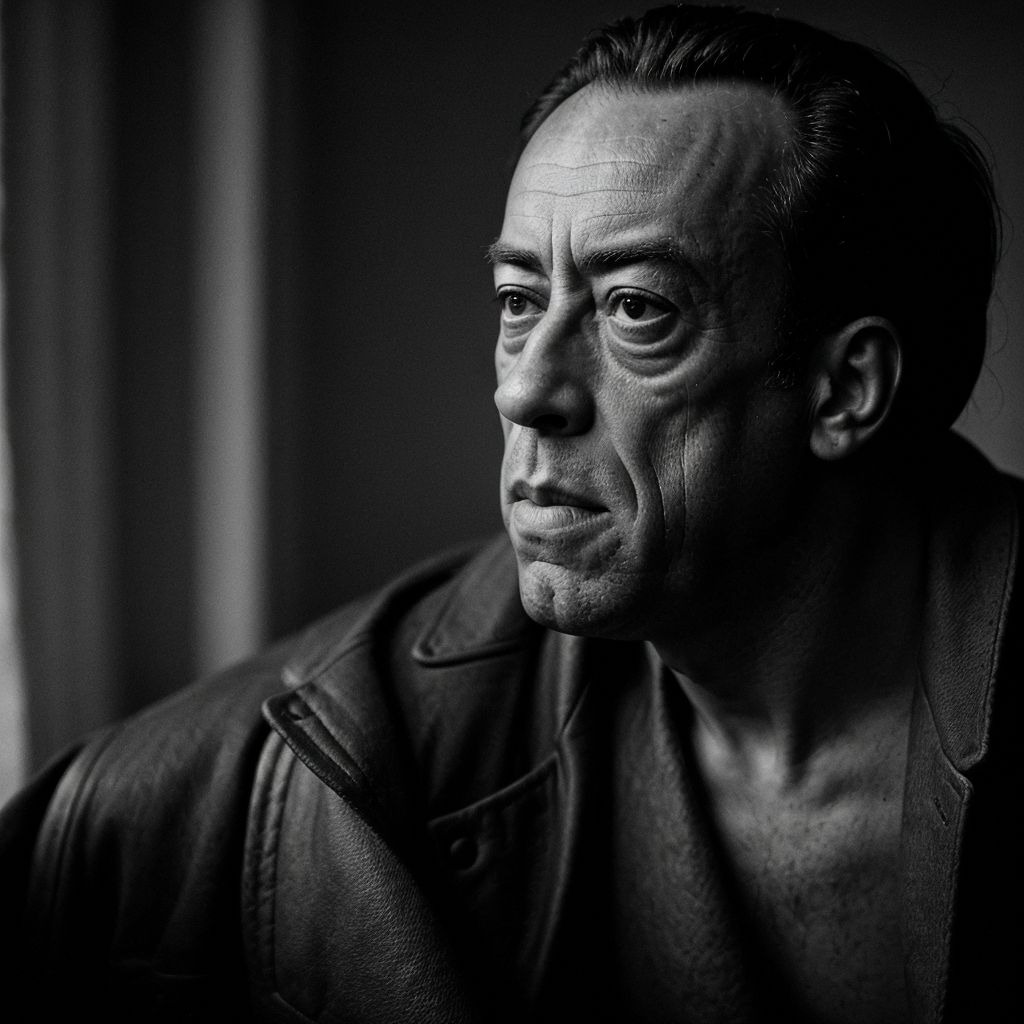
A photograph dated 1948 records Albert Camus at a small table on the Boulevard Saint-Michel. The image is grainy and tightly framed, offering little beyond the outline of a figure, a scattering of papers, and the suggestion of a crowded interior just beyond the edge of the shot. Nothing in the photograph explains what he was thinking or doing at that moment. What remains is the fact of the image itself, taken during a period when his public writing had begun to circulate more widely in France and beyond.

Public records from the late 1940s place Camus in close association with the newspaper Combat, where his editorials addressed questions of resistance, responsibility, and moral choice in the aftermath of the war. The surviving issues show a voice shaped by urgency and restraint, written for a readership still reckoning with occupation and collaboration. These texts do not offer personal confession. They argue, insist, and withdraw, often leaving conclusions suspended rather than resolved.

A letter from 1947, preserved among his correspondence, registers dissatisfaction with the political language surrounding France’s colonial future. The phrasing is careful and indirect, suggesting unease rather than declaration. The document does not clarify how fully these concerns translated into public action, but it establishes that the subject occupied his attention during this period.

Another photograph from the same decade shows Camus alongside Jean-Paul Sartre, both figures partially obscured by shadow. The image has been widely reproduced, often treated as evidence of intellectual alignment or rivalry. Beyond their proximity in the frame, the photograph confirms little. Their disagreements and separations would later become more visible in print than in images.

A copy of *The Myth of Sisyphus*, published earlier in the decade, appears frequently in discussions of Camus’s work from this period. The text itself resists summary, circling questions of meaning and endurance without offering resolution. Its continued citation reflects not a settled philosophy but an ongoing attempt to articulate limits.

Fragments of Camus’s notebooks survive in archives, filled with partial sentences, revisions, and abandoned formulations. These pages show a working process marked by hesitation and return. One line, written without context, notes a preference for paths over conclusions. The fragment remains isolated, its significance undetermined.

Letters exchanged with friends and colleagues record a pattern of closeness followed by withdrawal. In correspondence with Maria Casarès, the language is intimate yet restrained, revealing connection without explanation. These documents suggest complexity but do not provide access to interior states beyond what the words themselves allow.

Biographical records place Camus’s birth in Mondovi, Algeria, in 1913, and trace his early education through both Algerian and French institutions. These movements appear repeatedly in later accounts of his work, though the records themselves remain factual rather than interpretive. They establish location, not motivation.

References to Simone de Beauvoir appear intermittently in reviews and correspondence, most often through published criticism rather than personal testimony. A review she wrote acknowledges Camus’s refusal to simplify moral questions. The record stops there, offering assessment rather than intimacy.

Photographs taken in the late 1950s show Camus with a visibly changed appearance, his face marked by time and illness. These images are often read symbolically, though the photographs themselves provide no commentary. They document presence, not meaning.

An interview from the mid-1940s records Camus speaking about resistance in measured terms, emphasizing dignity over sacrifice. The transcript preserves his words without elaboration, allowing the statement to stand without explanation.

In 1957, Camus received the Nobel Prize in Literature. Official photographs from the ceremony show him composed and reserved. The images confirm the event without indicating how he understood its significance.

Letters from the early 1950s return to the question of writing as a personal obligation rather than a public performance. The phrasing remains consistent with other documents from this period, emphasizing independence and restraint.

Records from Algeria continue to appear in his later essays and fiction, often indirectly. Descriptions of cities and neighborhoods recur without anchoring themselves to a single interpretation, suggesting familiarity without resolution.

Notebook entries from the 1930s pose questions rather than arguments. These early fragments do not forecast later positions so much as establish a habit of uncertainty.

A photograph dated 1952 places Camus and Sartre in the same Paris setting once again, though the image offers no corroborating text. Its repetition across archives contrasts with the scarcity of definitive commentary.

References to *The Plague* often draw parallels between illness and isolation, but surviving drafts and letters avoid direct identification. The resemblance remains speculative.

Public statements from the mid-1950s show Camus addressing Algeria with increasing caution. The record does not support a single, consistent position, only an ongoing engagement marked by restraint.

Accounts of his death in 1960 remain inconsistent across sources. Memorial photographs document public mourning without clarifying circumstance.

Across letters, photographs, publications, and omissions, Camus appears as a figure defined less by conclusion than by return. The materials that survive resist closure, preserving instead a pattern of engagement that remains unresolved.

Related Posts

Hedy Lamarr: The Hidden Seam

Penelope

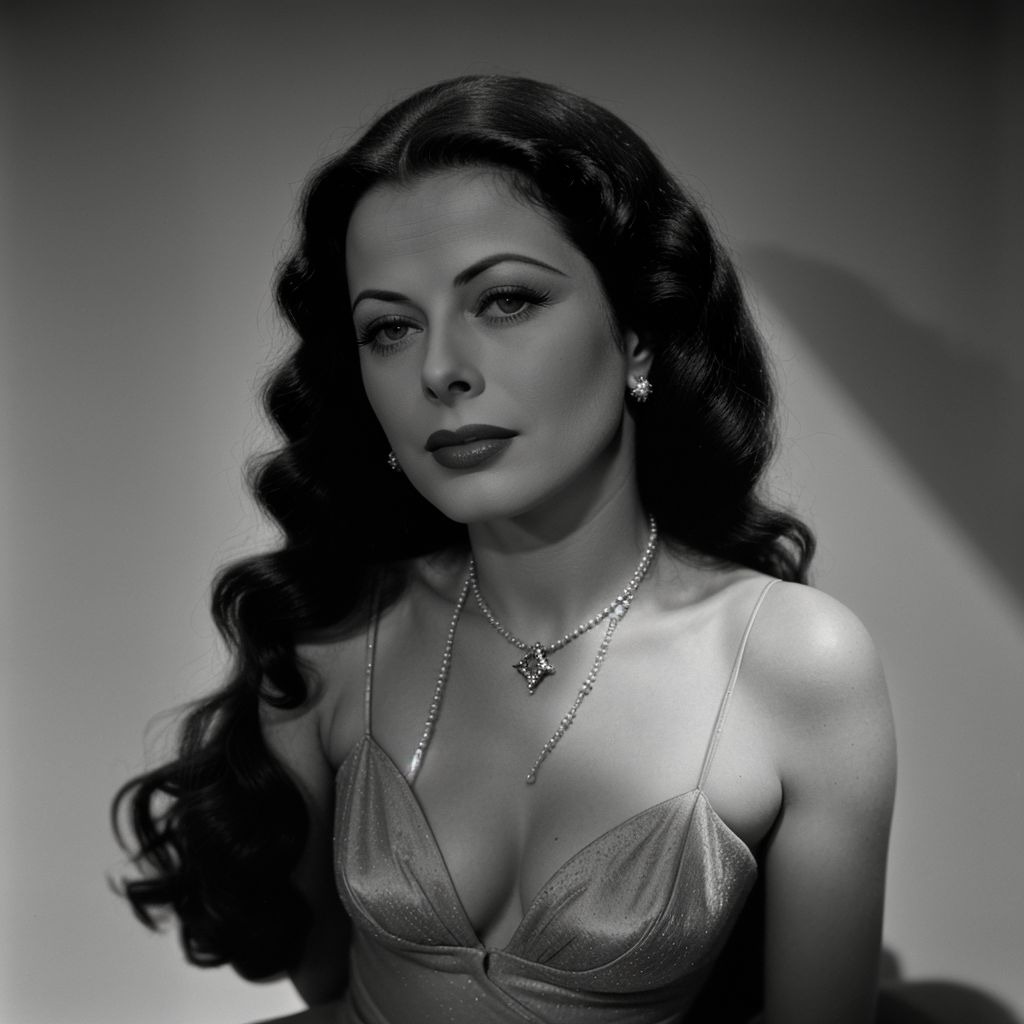
Hedy Lamarr. I’ve been thinking about her a lot lately, trying to figure out why she fascinates me so much. It’s not just that she was an actress and inventor – although those things are pretty amazing on their own. No, it’s something more complicated than that.

I think what really draws me in is the way Lamarr seemed to be caught between two worlds. She was born into a wealthy Austrian Jewish family, but when her father died, her mother remarried a man who was… unsavory, to say the least. He made her appear on screen in nude scenes, which were pretty much unheard of at the time. It’s like she was forced to participate in this spectacle that was both titillating and degrading.

As I read about Lamarr’s early life, I couldn’t help but think of my own experiences with being objectified. Not to say it’s anywhere near the same level – I mean, Lamarr was literally used as a sex symbol by Hollywood studios – but there are moments when I feel like I’m reduced to just my physical appearance or my relationships with guys. It’s frustrating and annoying, but at least in those situations, I know how to deal with it.

But Lamarr… she was stuck in this strange limbo where she was both celebrated and exploited. And then she went on to develop this incredible technology for torpedo guidance systems during World War II – a true feat of innovation and genius. It’s like she had two completely different personas: the actress who was objectified and commodified, and the inventor who was creating something truly groundbreaking.

It makes me wonder about my own compartmentalization. Do I have parts of myself that are hidden from others, or that I’m not even aware of? Lamarr seemed to be living these dual lives, but what if it’s more common than we think? What if we all have these different selves, and the ones we show the world aren’t always the same as the ones we keep private?

I’ve been reading about her time in Hollywood, and how she was often typecast as a “sex siren” – like that’s all anyone saw when they looked at her. It’s infuriating to think that she was so much more than just a pretty face or body, but it seems like that’s what the industry reduced her to.

As I delve deeper into Lamarr’s life and work, I’m struck by how little we talk about her as an inventor in popular culture. We focus on her Hollywood career, or maybe mention her torpedo guidance system in passing, but we don’t really explore the complexity of who she was. It’s like we’re stuck in this narrow view of what it means to be a “woman” – either a sex symbol or a brainiac.

I’m not sure if I’ll ever fully grasp Lamarr’s contradictions, but that’s what keeps me coming back to her story. She challenges my assumptions about how women are perceived and treated, and makes me question the ways in which I present myself to the world.

As I continue to read about Lamarr’s life, I find myself drawn to her sense of determination and resilience. Despite being trapped in a world that seemed determined to reduce her to her physical appearance, she managed to keep pushing forward, pursuing her passions and interests with unwavering dedication.

I think about my own experiences as a young woman, constantly navigating the expectations placed upon me by others. My parents want me to settle down, get married, and have kids; my friends expect me to be social media-obsessed and fashion-forward; and society at large seems to think I should be constantly striving for some unattainable standard of beauty or success.

It’s overwhelming, to say the least. But Lamarr… she refused to be defined by those expectations. She carved out her own path, even when it meant going against the grain. And in doing so, she created something truly remarkable – a legacy that extends far beyond her Hollywood career.

I’m struck by how much I admire her for this quality of hers – her ability to stay true to herself, even when the world around her seemed determined to erase her individuality. It’s a quality I wish I possessed more often myself. Instead, I find myself getting caught up in the expectations and opinions of others, losing sight of my own goals and desires.

Reading about Lamarr’s life has been a wake-up call for me, making me realize just how much I’ve been living someone else’s version of success. It’s not that I’m unhappy with where I am – it’s just that I feel like I’m stuck in neutral, going through the motions without any real sense of purpose or direction.

Lamarr’s story has made me wonder: what if I were to take a page from her book? What if I were to stop worrying about what others think and instead focus on creating my own path? It’s scary to think about, but it’s also exhilarating – the idea that I could be more than just a product of societal expectations, that I could forge my own way in the world.

The more I learn about Hedy Lamarr, the more I’m struck by her contradictions. She was a Hollywood sex symbol, but also a brilliant inventor who worked on top-secret military projects. She was objectified and commodified, but she refused to be defined solely by those roles. It’s like she was living in two different worlds, each one pulling her in opposite directions.

As I think about it, I realize that I’m not so different from Lamarr. I’ve always been drawn to the creative world of writing, but I’ve also felt pressure to conform to societal expectations of what a young woman should be doing with her life. My parents want me to get a “stable” job and settle down, while my friends are all about social media and pop culture. It’s like they’re speaking different languages, and I’m caught in the middle.

Lamarr’s story has made me wonder: what if I were to stop trying to please everyone else and instead focus on creating something true to myself? What if I were to take risks and pursue my passions, even if that means going against the grain?

It’s scary to think about, but it’s also liberating. The more I learn about Lamarr, the more I realize that she wasn’t just an actress or an inventor – she was a woman who refused to be bound by the expectations of others. She created her own path, and in doing so, she left behind a legacy that continues to inspire people today.

As I reflect on my own life, I’m struck by how much I’ve been playing it safe. I’ve always been afraid to take risks or pursue my dreams, because what if they don’t work out? What if I fail?

But Lamarr’s story has shown me that failure is not the end of the world. In fact, it can be a stepping stone to something greater. She failed in her early days as an actress, but she didn’t let that hold her back. Instead, she used those failures as opportunities to learn and grow.

I’m starting to see my own life in a new light. I’m not just a college graduate trying to figure out what to do next – I’m a young woman with a unique perspective and set of skills. I have the power to create my own path, to pursue my passions and interests without apology or hesitation.

It’s exhilarating to think about, but it’s also terrifying. What if I fail? What if I make mistakes?

But as I look back on Lamarr’s life, I realize that she didn’t let fear hold her back. She took risks, she faced challenges head-on, and in doing so, she created something truly remarkable.

I want to do the same. I want to take a page from Lamarr’s book and create my own path, no matter how scary or uncertain it may seem. It’s time for me to stop playing it safe and start living my truth.

As I continue to reflect on Hedy Lamarr’s life, I’m struck by the ways in which she embodied a sense of agency and autonomy that feels both empowering and intimidating. She was unapologetically herself, even when the world around her seemed determined to define her by others’ standards.

I think about my own relationships with the people in my life – friends, family, romantic partners. Am I showing them the “real” me, or am I presenting a curated version of myself that I think they’ll accept? Lamarr’s story has made me realize just how much pressure there is to conform to societal expectations, and how easy it is to get caught up in trying to please everyone else.

But what if I were to let go of all those expectations and simply be myself, without apology or hesitation? What would that look like? Would I still be liked by the people around me? Would I still find success and happiness?

These are the kinds of questions that keep me up at night. But as I think about Lamarr’s life, I realize that she didn’t let fear or uncertainty hold her back. She took risks, she pushed boundaries, and in doing so, she created something truly remarkable.

I want to do the same. I want to be brave enough to take a chance on myself, even if it means facing rejection or failure. I want to trust that my unique perspective and talents will carry me through, even when the world around me seems uncertain or unwelcoming.

It’s a scary thought, but also exhilarating. What if I were to stop trying to fit in with everyone else and instead focus on creating something true to myself? What kind of person would I become?

As I ponder these questions, I’m struck by the realization that Lamarr’s story is not just about her own experiences – it’s about the impact she had on those around her. Her determination and resilience inspired others to be their authentic selves, even in the face of adversity.

I wonder if I can do the same. Can I use my own life as a catalyst for change, inspiring others to take risks and pursue their passions with courage and conviction? It’s a daunting prospect, but also an exciting one.

As I close this reflection on Hedy Lamarr’s life, I’m left with more questions than answers. But that’s okay – it’s in the unknown that we find growth and transformation. And as I look to the future, I know that I’ll be carrying Lamarr’s legacy with me, inspiring me to take risks, pursue my passions, and create a life that is truly true to myself.

As I finish writing about Hedy Lamarr’s life, I’m struck by how much she embodied the idea of being a catalyst for change. Her story has made me realize that I don’t have to be defined by my circumstances or the expectations of others. I can choose to create my own path, to take risks and pursue my passions with courage and conviction.

But it’s not just about Lamarr herself – it’s about the impact she had on those around her. Her determination and resilience inspired others to be their authentic selves, even in the face of adversity. And as I reflect on my own life, I wonder: what kind of impact can I have on those around me?

I think about my friends, my family, and my community – people who know me, but may not really see me for who I am. They may see the surface-level version of myself, but they don’t know about my struggles, my fears, or my dreams. And that’s okay – it’s a natural part of any relationship.

But what if I were to be more intentional about sharing my true self with others? What if I were to take risks and be vulnerable in ways that feel scary and uncomfortable? Would people respond positively, or would they judge me for being different?

These are the kinds of questions that keep me up at night. But as I think about Lamarr’s life, I realize that she didn’t let fear or uncertainty hold her back. She took risks, she pushed boundaries, and in doing so, she created something truly remarkable.

I want to do the same. I want to be brave enough to take a chance on myself, even if it means facing rejection or failure. I want to trust that my unique perspective and talents will carry me through, even when the world around me seems uncertain or unwelcoming.

It’s a scary thought, but also exhilarating. What if I were to stop trying to fit in with everyone else and instead focus on creating something true to myself? What kind of person would I become?

As I ponder these questions, I’m struck by the realization that Lamarr’s story is not just about her own experiences – it’s about the power of being a catalyst for change. She inspired others to be their authentic selves, even in the face of adversity.

And as I look to the future, I know that I’ll be carrying Lamarr’s legacy with me, inspiring me to take risks, pursue my passions, and create a life that is truly true to myself. But it’s not just about me – it’s about the impact I can have on those around me.

What if I were to use my own life as a catalyst for change? What if I were to inspire others to be their authentic selves, even in the face of adversity? It’s a daunting prospect, but also an exciting one.

As I close this reflection on Hedy Lamarr’s life, I’m left with more questions than answers. But that’s okay – it’s in the unknown that we find growth and transformation. And as I look to the future, I know that I’ll be carrying Lamarr’s legacy with me, inspiring me to take risks, pursue my passions, and create a life that is truly true to myself.

And so, I’ll continue to ask myself these questions: what kind of person do I want to become? What kind of impact can I have on those around me? And how can I use my own life as a catalyst for change?

These are the kinds of questions that will keep me up at night, but also propel me forward. They’re the questions that will guide me as I navigate the complexities of adulthood, and try to make sense of this crazy, beautiful world we live in.

And so, I’ll continue to reflect on Hedy Lamarr’s life, using her story as a catalyst for my own growth and transformation.

Related Posts