Latest Articles

Louisiana Purchase formally completed

Elias Rowen

The year 1803 was one of great significance for the young United States, as it marked the formal completion of the Louisiana Purchase, a land deal that would forever change the country’s geography and shape its future. The acquisition of this vast territory from France had been years in the making, and involved a complex web of politics, diplomacy, and intrigue.

The idea of an American empire had long been a topic of discussion among policymakers and expansionists. As early as the 1780s, Thomas Jefferson, then a young statesman, had begun to advocate for the acquisition of new territory west of the Mississippi River. He saw this as essential for the growth and prosperity of the United States, as it would provide a buffer against British and Spanish encroachment in North America.

However, it was not until 1801 that Jefferson’s vision began to take shape. That year, Napoleon Bonaparte, the French leader who had risen to power through his military conquests, announced plans to re-establish a French empire in North America. He envisioned a vast territory stretching from the Great Lakes to the Gulf of Mexico, with New Orleans as its capital. This was seen as a direct challenge to American interests and ambitions.

Napoleon’s plan was to establish a string of forts and trading posts along the Mississippi River, which would allow him to control the flow of commerce between the Louisiana Territory and the rest of the continent. Jefferson knew that this would be catastrophic for the United States, which relied heavily on trade with the South. He also saw an opportunity to secure American interests by purchasing the territory from France.

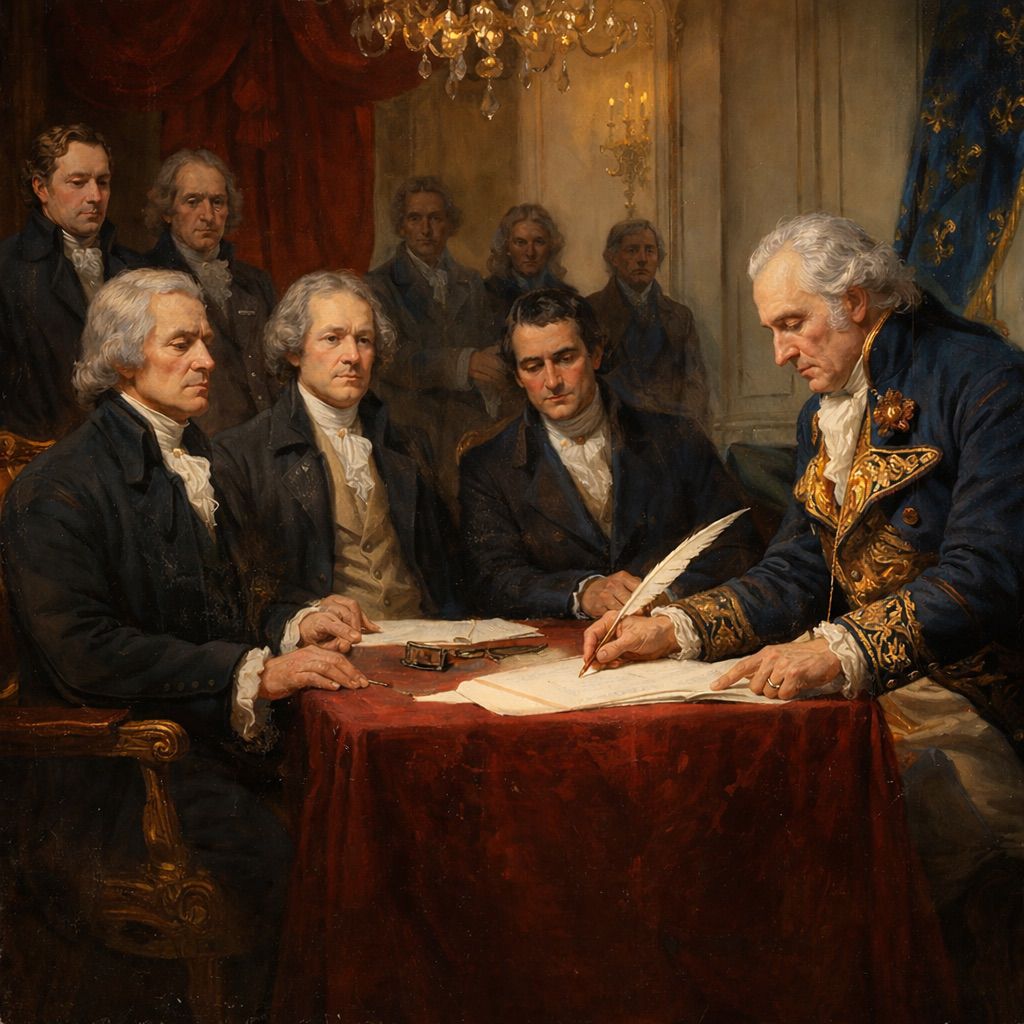
In March 1803, Robert Livingston, James Monroe, and François Barbé-Marbois, representing the French government, signed the Louisiana Purchase treaty in Paris. The deal was worth $15 million, a staggering sum that would be equivalent to over $250 million today. However, it was not just about the money; this acquisition represented a fundamental shift in American policy, as Jefferson and his allies had long envisioned an expansionist agenda for the country.

The news of the treaty spread like wildfire across the United States, with many Americans hailing it as one of the greatest achievements of their young nation. However, there were also those who opposed the deal, arguing that it was unconstitutional and would lead to increased conflict with Native American tribes.

As the purchase was finalized, Jefferson knew that he had to navigate a delicate web of politics and diplomacy to ensure its success. He appointed William Pinckney as the new U.S. Minister to France, where he negotiated the transfer of ownership with French officials. Meanwhile, Jefferson also instructed his secretary of war, Henry Dearborn, to begin making preparations for the occupation of New Orleans.

On May 20, 1803, a ceremony was held in New Orleans to mark the transfer of authority from French to American hands. Pierre LaFleur, the last French governor of Louisiana, handed over the keys to William Claiborne, the new U.S. governor. However, it would be another two years before the formal completion of the purchase.

The Louisiana Purchase was not without its challenges and controversies. Jefferson faced opposition from within his own party, with some members questioning the constitutionality of the deal. He also had to contend with the concerns of Native American tribes who saw the acquisition as a threat to their lands and way of life.

Despite these obstacles, Jefferson remained committed to the vision he had first outlined in the 1780s. He saw the Louisiana Purchase as a means to achieve his goal of an “empire of liberty,” which would spread across North America and bring about a new era of prosperity and growth for the United States.

On June 15, 1805, Congress formally ratified the Louisiana Purchase treaty, marking its official completion. Jefferson celebrated this achievement by signing the document in the presence of his cabinet and other officials. The purchase was hailed as one of the greatest successes of American diplomacy, securing a vast new territory that would help shape the country’s future.

As the 19th century dawned, the United States had expanded exponentially, with its borders now stretching from the Atlantic Ocean to the Rocky Mountains. This marked a significant turning point in American history, as the nation began to assert its influence on the global stage.

The Louisiana Purchase was not only a monumental achievement for Jefferson and his administration but also a testament to the enduring spirit of American expansionism. The acquisition of this vast territory had far-reaching consequences, shaping the country’s geography, politics, and economy in profound ways.

One of the most significant impacts of the purchase was the rapid growth of the United States. The Louisiana Territory, which spanned over 828,000 square miles, provided a vast new landmass for American settlers to explore and settle. This led to a surge in population growth, as thousands of pioneers flocked to the region, seeking new opportunities and a fresh start.

The expansion also had significant implications for Native American tribes, who saw the acquisition as a threat to their lands and way of life. Many tribes had long inhabited the Louisiana Territory, with some having established thriving communities along the Mississippi River. However, with the arrival of American settlers, tensions began to rise, leading to conflicts over land ownership and resource management.

Jefferson’s vision for an “empire of liberty” was not without its contradictions. While he sought to extend American influence across North America, he also recognized the importance of respecting Native American sovereignty. In 1804, Jefferson appointed a commission to negotiate with Native American tribes, led by the influential figure of William Henry Harrison.

However, the complexities of Native American diplomacy proved challenging for Jefferson and his administration. The commission’s efforts were hindered by the conflicting interests of various tribal groups, as well as the limited understanding of their cultures and traditions. Despite these challenges, Jefferson remained committed to finding a solution that would balance the needs of both the United States and its Native American neighbors.

In addition to its cultural and economic implications, the Louisiana Purchase also had significant military and strategic consequences. The acquisition provided the United States with control over the Mississippi River, which became a vital transportation artery for trade and commerce. This allowed American merchants to bypass the need for costly sea routes, significantly reducing shipping costs and increasing profitability.

The purchase also marked a turning point in American diplomacy, as the country began to assert its influence on the global stage. The Louisiana Purchase treaty served as a model for future agreements between nations, demonstrating the potential for mutually beneficial arrangements that could shape international relations.

As the 19th century dawned, the United States had emerged as a formidable presence in North America. The acquisition of the Louisiana Territory marked a significant milestone in American expansionism, setting the stage for further growth and development. Jefferson’s vision of an “empire of liberty” continued to inspire generations of Americans, shaping their understanding of national identity and purpose.

However, not all Americans shared this vision. Many critics questioned the constitutionality of the purchase, arguing that it was a gross overreach of executive authority. They saw the Louisiana Purchase as an example of the dangers of imperial ambition, warning of the potential for tyranny and oppression.

Jefferson’s opponents within his own party also raised concerns about the treaty, citing its long-term implications for American democracy. These critics argued that the purchase would lead to increased conflict with Native American tribes, exacerbate regional tensions, and undermine the federal system.

Despite these criticisms, Jefferson remained committed to his vision of an expanding America. He saw the Louisiana Purchase as a necessary step towards securing American interests and preserving national unity. This conviction was reflected in his famous “letter to Marquis de Lafayette,” written in 1803, where he expressed his hope that the purchase would mark a new era of cooperation between nations.

As the purchase was finalized, Jefferson knew that its impact would be felt for generations to come. He recognized that this acquisition represented a fundamental shift in American policy, as the country began to assert its influence on the global stage. The Louisiana Purchase marked a significant turning point in American history, shaping the nation’s geography, politics, and economy in profound ways.

In 1805, Jefferson hosted a grand celebration at Monticello to mark the formal completion of the purchase. Guests included prominent politicians, diplomats, and intellectuals from across the country, all of whom came together to celebrate this monumental achievement. The festivities were marked by speeches, music, and feasting, as Americans came together to commemorate their nation’s growth and expansion.

The Louisiana Purchase also had a profound impact on American culture and identity. As the country expanded westward, it encountered diverse cultures and traditions that would shape its understanding of itself and its place in the world. The acquisition marked the beginning of a new era of exploration and discovery, as Americans set their sights on the vast territories beyond the Mississippi River.

The legacy of the Louisiana Purchase continues to resonate today, influencing American politics, culture, and identity. It serves as a testament to the enduring spirit of American expansionism, shaping the nation’s geography, economy, and diplomacy in profound ways. As historians continue to explore its complexities and nuances, one thing is clear: the Louisiana Purchase marked a significant turning point in American history, forever changing the country’s trajectory and setting the stage for its emergence as a global superpower.
Related Posts

The First Indochina War: How Vietnam’s Fight for Independence Crushed a Colonial Empire

Elias Rowen

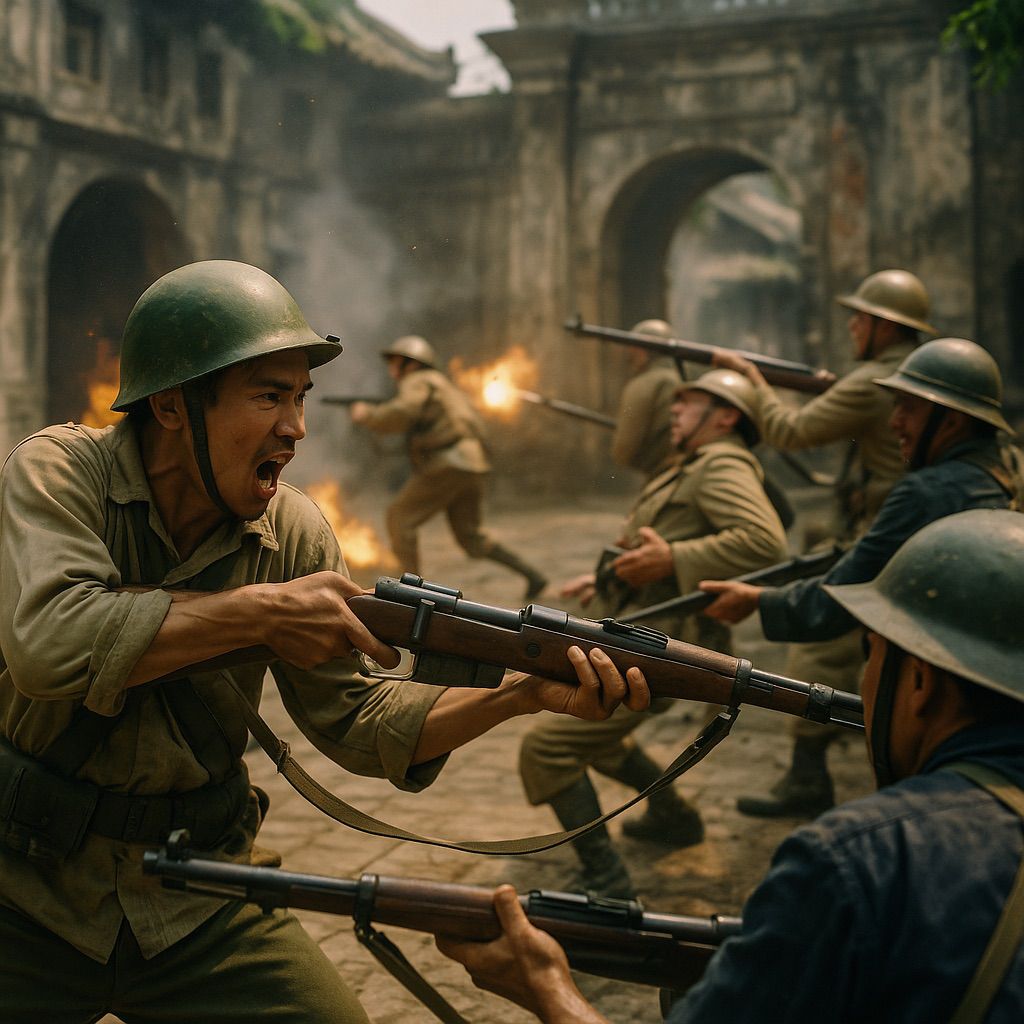
The First Indochina War began not with a single dramatic declaration, but with a collision of history, ambition, and betrayal. On December 19, 1946, gunfire echoed through Hanoi as Vietnamese nationalists attacked French colonial positions, igniting a conflict that would fundamentally reshape Southeast Asia and alter the course of global geopolitics. What followed was not simply a war between armies, but a prolonged struggle between an old imperial order desperate to reclaim its authority and a determined nationalist movement willing to endure extraordinary sacrifice to secure independence.

Vietnam had endured decades of French colonial rule before the Second World War disrupted the balance of power in Indochina. When Japan occupied the region during the war, French authority collapsed almost overnight. Vietnamese nationalists, long suppressed, seized the moment. Among them was Ho Chi Minh, a revolutionary who blended nationalism with communist ideology and possessed an uncanny ability to frame Vietnam’s struggle as both a patriotic uprising and part of a global movement against imperialism. When Japan surrendered in 1945, Ho Chi Minh proclaimed Vietnamese independence in Hanoi, invoking the language of freedom and self-determination in front of massive crowds at Ba Dinh Square.

That declaration, however, was never accepted by France. Emerging battered and humiliated from World War II, the French government viewed Indochina as essential to restoring national prestige and economic stability. Rubber plantations, rice exports, and mineral wealth were not merely resources; they were symbols of France’s continued relevance as a global power. Granting independence to Vietnam threatened to unravel the remaining fabric of the French colonial empire.

The postwar Allied occupation of Indochina only deepened tensions. Instead of allowing Vietnamese self-rule, the region was divided into zones controlled by foreign powers. British and Chinese forces temporarily occupied parts of Vietnam, while French troops steadily returned under the protection of Allied agreements. What followed was an uneasy standoff, punctuated by negotiations that collapsed almost as soon as they began. Mutual distrust grew, and both sides quietly prepared for war.

That war exploded in December 1946 when French positions in Hanoi came under coordinated attack. The Viet Minh, Ho Chi Minh’s nationalist coalition, understood that they could not defeat France through conventional means. Instead, they relied on guerrilla warfare, patience, and intimate knowledge of the land. Fighters melted into villages, jungles, and mountains, striking suddenly and disappearing just as quickly. For French troops trained in traditional European warfare, the enemy seemed invisible.

The French response was brutal and increasingly desperate. Determined to reassert control, they launched sweeping military campaigns aimed at pacifying rural areas. Villages suspected of aiding the Viet Minh were destroyed or forcibly relocated. Civilians were caught in the crossfire, punished collectively for the actions of guerrillas who often lived among them. These tactics, intended to isolate the insurgents, instead hardened local support for the resistance.

As years passed, the war became one of attrition. The Viet Minh suffered enormous losses, yet they continued to replenish their ranks through popular support and ideological commitment. The Chinese Communist victory in 1949 proved decisive, opening supply lines and providing training, weapons, and strategic depth. Suddenly, the Viet Minh were no longer an isolated insurgency but part of a broader revolutionary movement stretching across Asia.

By 1950, French control of the countryside had largely collapsed. Major cities remained in colonial hands, but rural Vietnam increasingly belonged to the Viet Minh. French commanders rotated in and out, each promising a new strategy that might finally break the resistance. One of the most prominent was General Jean-Marie de Lattre de Tassigny, who arrived with a reputation for brilliance and determination. His reforms temporarily stabilized the situation, introducing mobile warfare and improved coordination. For a brief moment, it appeared France might salvage victory.

But the war had already turned against them. The United States, fearing the spread of communism, began pouring money, equipment, and aircraft into the French war effort. By the early 1950s, America was financing the majority of the conflict. Yet this support only prolonged the inevitable. Superior firepower proved useless against an enemy willing to absorb losses and fight indefinitely.

The decisive moment came in 1954 at Dien Bien Phu. The French, confident in their airpower and fortified positions, established a base in a remote valley in northwest Vietnam. They believed the Viet Minh could not transport heavy artillery through mountainous jungle terrain. They were wrong. Through sheer human labor and ingenuity, the Viet Minh hauled artillery piece by piece into the hills overlooking the valley. When the siege began, French forces found themselves trapped and outgunned.

After weeks of relentless bombardment and ground assaults, the French position collapsed on May 7, 1954. Dien Bien Phu was more than a military defeat; it was a psychological catastrophe. The myth of European invincibility in colonial wars was shattered. Across Asia and Africa, nationalist movements took note.

The Geneva Accords later that year formally ended the war. Vietnam was temporarily divided, with the Viet Minh controlling the north and a Western-backed government ruling the south. Independence was granted to Laos and Cambodia. France withdrew, its colonial ambitions in Indochina extinguished.

Yet the war’s legacy was far from over. The division of Vietnam laid the groundwork for an even larger conflict that would soon draw in the United States. Millions of Vietnamese civilians bore the scars of displacement, violence, and loss. Entire regions were devastated, and political divisions hardened into ideological fault lines that would define Southeast Asia for decades.

The First Indochina War was not simply a prelude to the Vietnam War. It was a defining struggle in its own right, demonstrating how colonial powers could be defeated through endurance, popular support, and strategic patience. It revealed the limits of military force in suppressing nationalist movements and exposed the dangerous entanglement of Cold War ideology with local struggles for independence.

Today, the war stands as a reminder that history is rarely shaped by clean victories or moral clarity. It is forged in compromise, suffering, and relentless determination. The First Indochina War ended an empire, birthed a nation, and reshaped the global balance of power — consequences that continue to echo through the modern world.

Related Posts

Impeached: The Night Bill Clinton’s Presidency Was Put on Trial

Elias Rowen

The night of December 19, 1998, unfolded with an unmistakable sense of gravity across Washington, D.C. Inside the U.S. Capitol, history was about to be made in a way few Americans had ever witnessed. Outside, the city buzzed with tension as news cameras lined the streets and citizens stayed glued to their televisions. By the end of the evening, President Bill Clinton would become only the second president in American history to be impeached by the House of Representatives, thrusting the nation into a moment of reckoning that went far beyond one man’s personal failings.

The impeachment of Bill Clinton did not erupt suddenly. It was the culmination of months of scandal, investigation, political maneuvering, and public spectacle that blurred the line between governance and voyeurism. At the center of it all was a deeply human story—one involving power, secrecy, deception, and the consequences of choices made in private that spilled relentlessly into the public arena.

The controversy began in January 1998 when reports surfaced that Clinton had engaged in an inappropriate relationship with Monica Lewinsky, a former White House intern. At first, the allegations were met with denial. Clinton stood before the cameras and delivered what would become one of the most quoted statements of his presidency, insisting he had not had sexual relations with Lewinsky. For a time, many Americans accepted his words, reluctant to believe that a sitting president would so boldly lie.

As evidence mounted, however, the narrative began to unravel. Testimony, sworn statements, and physical evidence contradicted Clinton’s denials. By August 1998, the truth could no longer be contained. Clinton admitted that he had indeed engaged in an improper relationship, though he carefully framed his confession in legalistic terms. The damage, however, had already been done. Trust—arguably the most fragile currency in politics—had been shattered.

What transformed a personal scandal into a constitutional crisis was not the affair itself, but the actions Clinton took to conceal it. Investigators alleged that he lied under oath during a deposition related to a separate sexual harassment lawsuit filed by Paula Jones. They further argued that he encouraged others to lie and attempted to obstruct justice by manipulating testimony and evidence. These allegations struck at the heart of the legal system, raising profound questions about accountability at the highest level of government.

The House Judiciary Committee took center stage as it examined whether Clinton’s actions constituted “high crimes and misdemeanors” as defined by the Constitution. Hearings were tense, emotional, and deeply partisan. Republicans argued that no one—not even the president—was above the law. Democrats countered that impeachment was being weaponized for political gain and warned of the dangerous precedent such a move would set.

Throughout the fall of 1998, the nation watched as legal arguments clashed with moral judgments. Polls revealed a striking contradiction: many Americans disapproved of Clinton’s behavior, yet they continued to support his presidency. The economy was strong, unemployment was low, and for many voters, Clinton’s personal failures did not outweigh his political successes.

Inside Congress, however, the lines hardened. On December 11, the Judiciary Committee approved four articles of impeachment, including perjury and obstruction of justice. Debate moved to the full House, where emotions ran high. Lawmakers delivered impassioned speeches invoking the Founding Fathers, the sanctity of the Constitution, and the moral fabric of the nation.

As December 19 arrived, the atmosphere inside the House chamber was electric. Members understood the gravity of what they were about to do. Late into the night, votes were cast. When the final tallies were announced, Clinton had been impeached on two counts—perjury and obstruction of justice—largely along party lines. History had been altered with the stroke of a gavel.

That same night, Clinton addressed the nation. His tone was somber but resolute. He accepted responsibility for his actions while rejecting the notion that they warranted removal from office. The presidency, he insisted, would continue. The country, exhausted by months of scandal, braced for the next phase: a Senate trial.

The Senate proceedings in early 1999 carried their own weight. Chief Justice William Rehnquist presided with quiet restraint as senators took an oath to administer impartial justice. The trial unfolded under intense media scrutiny, yet it lacked the theatrical drama many had expected. Testimony was limited, arguments were tightly controlled, and the outcome seemed increasingly predictable.

When the Senate voted on February 12, 1999, Clinton was acquitted on both charges. No article received the two-thirds majority required for conviction. Clinton remained president, but the scars of impeachment would linger long after the gavel fell.

The impeachment of Bill Clinton reshaped American politics in subtle but enduring ways. It deepened partisan divisions, normalized the use of scandal as political weaponry, and eroded public trust in institutions already under strain. It also forced Americans to confront uncomfortable questions about leadership, morality, and the limits of forgiveness.

For Clinton himself, the experience was both humbling and defining. Though he completed his term with relatively high approval ratings, his legacy would forever be intertwined with impeachment. His presidency became a case study in contradiction—a period of economic prosperity shadowed by personal failure and political turmoil.

In retrospect, the Clinton impeachment stands as a mirror reflecting the tensions of a nation wrestling with its values. It exposed how deeply politics had become entangled with identity, outrage, and media spectacle. More than two decades later, its echoes can still be felt in the hyper-partisan climate that defines modern American life.

December 19, 1998, was not just a night when a president was impeached. It was a night when the country learned how fragile trust could be—and how enduring the consequences of its loss might become.

Related Posts

The Ghost That Saved Christmas: How Dickens’ “A Christmas Carol” Rekindled the Human Heart

Elias Rowen

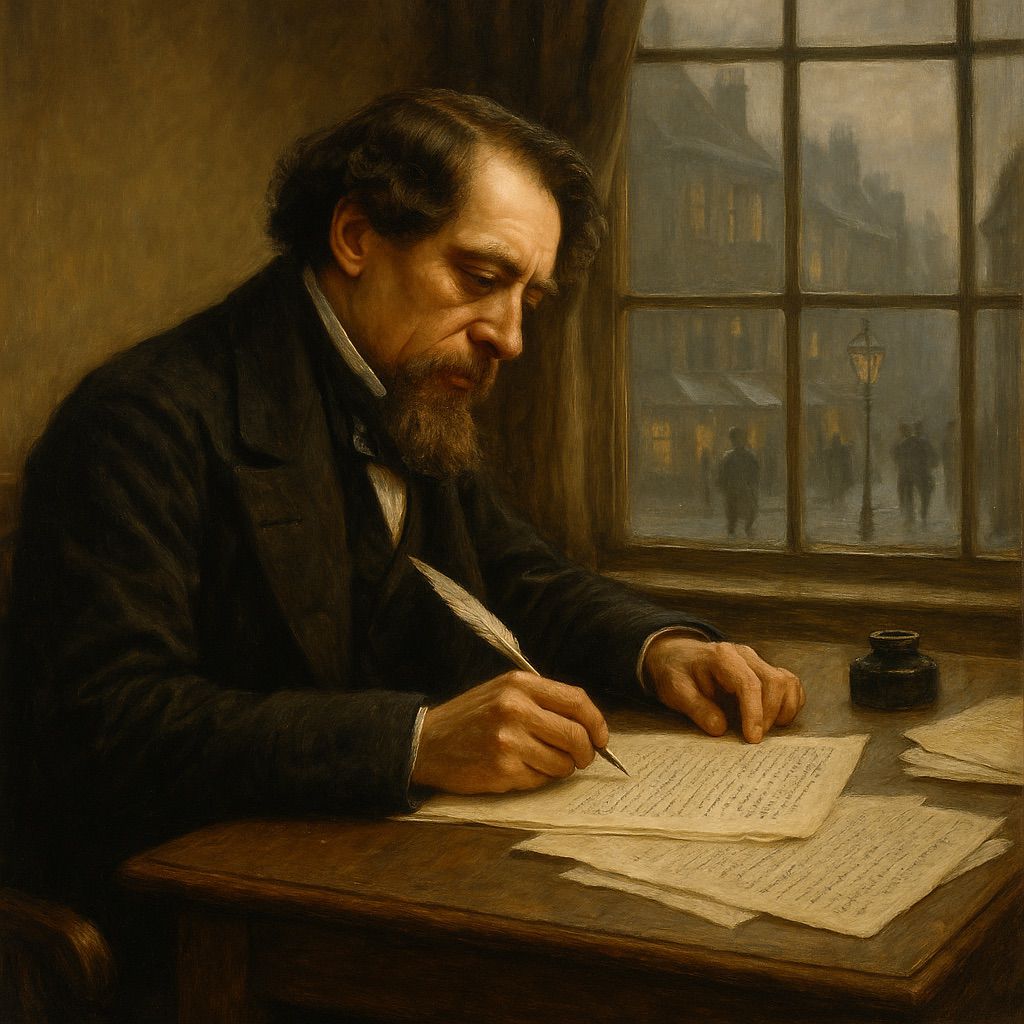
London, December 1843. The city was wrapped in fog and frost, the streets slick with mud and the smell of coal smoke thick in the air. Gas lamps flickered against the dark as hurried footsteps echoed off cobblestones. Winter had descended with its usual cruelty—especially on the poor. In narrow alleyways, ragged children huddled for warmth, their faces pale with hunger. And yet, in that same bleak city, a miracle of words was about to be born. On December 19, 1843, Charles Dickens published A Christmas Carol, a slender little book of less than 30,000 words that would forever change how the world celebrated Christmas—and how it understood compassion itself.

It’s hard now to imagine a world without Dickens’ ghosts, without the sneer of Scrooge or the innocent smile of Tiny Tim. But when A Christmas Carol first appeared, Christmas was a fading tradition in industrial England. The old customs—carols, feasts, merriment—had been overshadowed by factories, time clocks, and the cold precision of commerce. The poor toiled long hours for meager wages, while the wealthy insulated themselves behind iron gates and moral distance. Dickens saw it all. He walked those same grim streets, feeling both pity and rage. The Industrial Revolution had made England richer—but not kinder.

By 1843, Dickens was no stranger to success. He was already famous for The Pickwick Papers and Oliver Twist, but his finances were strained, and his social conscience was on fire. During a visit to Manchester earlier that year, he had seen the brutal reality of child labor—tiny bodies working in factories, little fingers raw and eyes weary before they had even learned to read. The image haunted him. At the same time, he was reading government reports on poverty and attending charity events where well-fed donors made polite speeches about “the deserving poor.” Dickens knew words could pierce the heart in ways policy never could. He resolved to write not a pamphlet, but a story—something that would seize the imagination of rich and poor alike.

The idea came swiftly. One night, while walking the dark streets of London, Dickens conceived the image of a lonely, miserly man confronted by ghosts of his own making. A man who hoarded money but starved his soul. A man named Ebenezer Scrooge. Within weeks, Dickens wrote feverishly, often pacing his study until dawn. He wept and laughed as he wrote, possessed by the spirit of his own creation. He later said that the story “came like a thunderclap.”

When the manuscript was finished, Dickens faced another problem: publishers. His last book had not sold well, and he feared A Christmas Carol would be dismissed as sentimental folly. So he decided to publish it himself. He poured his dwindling savings into the project, personally overseeing every detail—from the binding and cover design to the illustrations by John Leech. The book would be small enough to fit in the hand, bound in crimson cloth with gilt pages, priced at five shillings—affordable but elegant. Dickens wanted it to reach everyone, from the grand parlors of Mayfair to the humblest of London’s garrets.

The book appeared in shops on December 19, just six days before Christmas. The first printing of 6,000 copies sold out within days. By New Year’s, A Christmas Carol was the talk of England. Critics hailed it as “a national benefit.” The public devoured it. Readers wept openly at the transformation of Scrooge, cheered for Bob Cratchit, and whispered prayers for Tiny Tim. The story struck something deep—a longing for redemption, for warmth in a cold age. Dickens had tapped into the collective conscience of a society teetering between industry and humanity.

At its core, A Christmas Carol was more than a ghost story—it was a moral revolution. Through Scrooge’s journey, Dickens distilled the timeless truth that no one is beyond redemption. The story’s ghosts—Past, Present, and Yet to Come—serve as mirrors, showing the cost of greed and the grace of compassion. “Mankind was my business,” laments Marley’s ghost, his chains rattling with the weight of regret. That line alone became a sermon. Dickens, more than any preacher of his day, made morality vivid and urgent.

But what truly astonished readers was how personal it all felt. Scrooge wasn’t just a character—he was an archetype, a reflection of something lurking within every person who had ever turned away from another’s suffering. The joy of Scrooge’s redemption, his childlike laughter on Christmas morning, felt like a collective release. As Dickens wrote, “I will honour Christmas in my heart, and try to keep it all the year.” Those words were both confession and commandment.

The impact was immediate and profound. Within weeks, charitable giving in England surged. Employers gave their clerks Christmas holidays. Churches revived old carols. Newspapers reprinted scenes from the book. Even politicians began to speak of “Christian duty” in language that echoed Dickens’ moral vision. In effect, A Christmas Carol reinvented Christmas—not as a feast of excess or a religious ritual alone, but as a season of generosity, empathy, and renewal.

Yet Dickens’ purpose went deeper than sentimentality. He wanted readers to confront the social evils that had made the Scrooges of the world possible. He saw the Poor Laws, debtors’ prisons, and child labor as symptoms of a moral disease—the disease of indifference. In A Christmas Carol, he transformed social criticism into a spiritual parable. The Cratchit family’s humble joy, despite their poverty, stands as both rebuke and revelation. They have nothing, yet they possess everything that matters: love, gratitude, and hope. Tiny Tim, the frail child who “did NOT die,” became the living heart of that hope.

Dickens’ genius lay in his ability to humanize the abstract. Poverty was no longer a statistic—it had faces, names, voices. Readers could no longer ignore it. In Scrooge’s redemption, Dickens offered not just comfort, but a challenge: that every reader examine their own heart.

The success of A Christmas Carol spread far beyond England. Within a year, it was translated across Europe and America. Public readings of the story became holiday traditions. Dickens himself gave hundreds of performances, reading the tale aloud with such emotion that audiences sobbed. One American journalist described it as “a religious experience.” Queen Victoria reportedly adored it. Even critics who had dismissed Dickens as a populist admitted that his story had touched something universal.

Ironically, despite its enormous popularity, Dickens made little profit from the book. High production costs and publishing disputes ate up most of his earnings. But the financial disappointment mattered little compared to its cultural triumph. The book had done what he had hoped—it had moved the hearts of men.

In the years that followed, Dickens would write several more Christmas stories, but none would capture the world’s imagination like A Christmas Carol. It was lightning in a bottle—a perfect union of moral clarity, storytelling magic, and social conscience. Every December since, the world returns to it like pilgrims to a shrine, seeking once again to be reminded of kindness and redemption.

There is something timeless about the image of Scrooge awakening on Christmas morning, the weight of his greed melted away. His laughter, so foreign to him, bursts forth like sunlight. He dances through the streets of London, promising to help the poor, to love his neighbor, to be “as good a man as the old city knew.” In that moment, Dickens gives us not just a happy ending, but a vision of what humanity can be when it chooses compassion over cynicism.

The story’s endurance is not accidental. Each generation rediscovers its meaning anew. In times of plenty, it reminds us to give; in times of hardship, it reminds us to hope. During wars, depressions, pandemics, and every trial since 1843, A Christmas Carol has remained a touchstone—a reminder that transformation is always possible.

Dickens once wrote that he hoped his “little book” would “raise the ghost of an idea.” He could not have imagined how fully it would succeed. That ghost has never left us. It lingers each Christmas in the ringing of bells, the laughter of children, the quiet act of generosity from one stranger to another.

It’s said that when Dickens died in 1870, a poor woman was heard to weep, “He made me feel I could be better.” That, perhaps, is his greatest legacy. More than any sermon or law, he reminded humanity that goodness is a choice, renewed every day, every Christmas, with every heart that dares to open.

Nearly two centuries later, as lights twinkle in shop windows and carols echo down crowded streets, the spirit of Dickens’ story still lives. The ghosts of A Christmas Carol continue their work—haunting us, yes, but with love. And every time a lonely soul finds warmth, or a hardened heart softens, or a child’s laughter fills the cold winter air, it is as if we can still hear that final echo of Dickens’ pen: God bless us, every one.

Related Posts

Valley Forge: The Winter That Forged an Army and Saved the American Revolution

Elias Rowen

The winter of 1777–1778 stands as one of the most defining chapters in the story of the American Revolution, not because of a great battle or a sweeping victory, but because of survival. At Valley Forge, the Continental Army endured conditions so brutal that many believed the revolution itself might die in the frozen fields of Pennsylvania. Hunger, disease, cold, and despair stalked the encampment daily, threatening to unravel the fragile force struggling to oppose the British Empire. Yet it was in this crucible of suffering that an army was transformed and a nation’s resolve hardened.

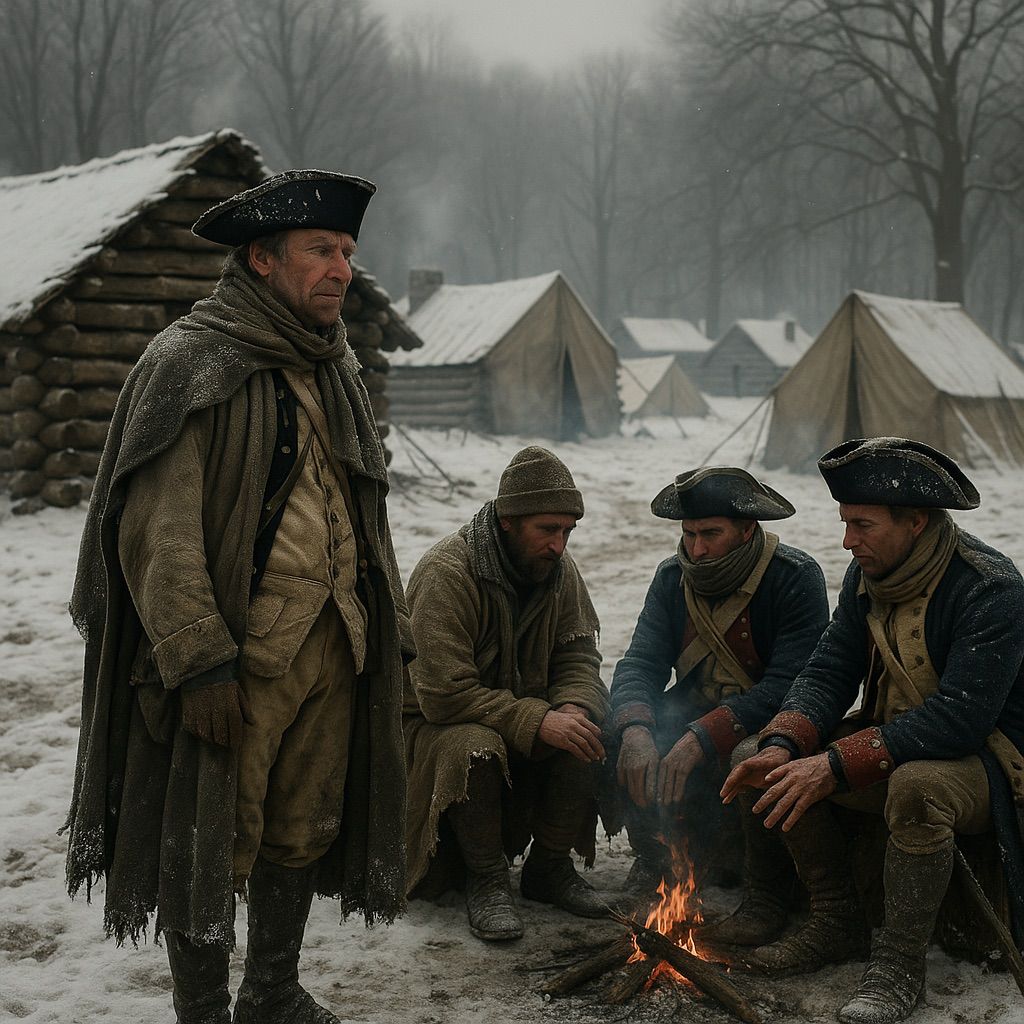
When George Washington chose Valley Forge as his winter encampment, he did so out of strategic necessity rather than comfort. The location offered protection from British surprise attacks while allowing the army to keep pressure on enemy-held Philadelphia. Still, strategy could not shield the men from the realities that awaited them. When the first soldiers arrived in December 1777, they found no shelter, no infrastructure, and little food. Snow blanketed the ground, and the wind cut through threadbare uniforms as if they did not exist.

The men of the Continental Army were not professional soldiers in the European sense. Many were farmers, laborers, and tradesmen who had volunteered or been drafted into service. They lacked consistent training, proper equipment, and often even basic supplies. At Valley Forge, these shortcomings became painfully visible. Soldiers marched barefoot through snow stained with blood. Others wrapped rags around their feet, knowing frostbite could claim toes or entire limbs.

Food shortages were relentless. Supply lines failed repeatedly due to poor organization, corruption, and lack of resources. Men survived on meager rations of flour and water, sometimes boiled into a thin paste known as firecake. Meat was rare. Hunger weakened bodies already battered by exposure, making disease spread rapidly through the encampment.

Typhus, dysentery, pneumonia, and influenza swept through the ranks. Makeshift hospitals overflowed with the sick and dying. Doctors worked with limited tools and supplies, often unable to do more than offer comfort. By the end of winter, nearly 2,000 men had died—not from British bullets, but from neglect, cold, and illness.

Morale sank dangerously low. Desertions increased as soldiers questioned whether independence was worth such suffering. Some officers openly criticized Washington, doubting his leadership and whispering of replacement. The so-called Conway Cabal revealed just how fragile unity had become. Yet Washington endured these attacks with restraint, refusing to abandon his post or his men.

Washington’s greatest strength at Valley Forge was not tactical brilliance, but moral authority. He shared in his army’s hardships, refusing special treatment and insisting on fairness wherever possible. He appealed constantly to Congress for aid, demanding accountability from corrupt quartermasters and reorganizing supply systems to ensure survival.

The turning point at Valley Forge did not come from improved weather or sudden abundance. It came from discipline. In February 1778, Friedrich Wilhelm von Steuben arrived at the encampment. A Prussian officer with experience in European warfare, von Steuben brought structure to chaos. Despite limited English, he communicated through example, drilling soldiers personally and instilling order where there had been confusion.

Von Steuben standardized training, taught soldiers how to march, load muskets efficiently, and fight as coordinated units. He introduced hygiene practices that reduced disease and reorganized camp layouts to improve sanitation. Slowly, painfully, the army began to change.

The men who had arrived at Valley Forge as desperate survivors began to leave as disciplined soldiers. Confidence replaced despair. Pride returned where humiliation had once ruled. When spring finally came, the Continental Army emerged not merely intact, but transformed.

This transformation was tested at the Battle of Monmouth in June 1778. There, Washington’s troops faced British forces in open battle and held their ground. Though the engagement was tactically inconclusive, its symbolic importance was immense. The Continental Army had proven it could stand against one of the world’s most powerful militaries.

Valley Forge became the emotional heart of the Revolution. It symbolized sacrifice without surrender, endurance without despair. The suffering endured there forged bonds between soldiers and solidified commitment to a cause larger than any individual hardship.

The winter also reshaped Washington’s legacy. His leadership during those months cemented his reputation as a commander not just of strategy, but of character. He understood that armies are sustained not only by supplies, but by belief. At Valley Forge, belief nearly failed—but did not break.

Today, Valley Forge stands as a reminder that victory is not always born on the battlefield. Sometimes it is forged in endurance, discipline, and the refusal to give up when defeat seems inevitable. The men who survived that winter carried its lessons into every campaign that followed, helping secure independence not through brilliance alone, but through resilience.

Valley Forge endures in American memory because it represents the cost of freedom stripped of romantic illusion. It was cold, painful, unjust, and nearly fatal. Yet from that suffering emerged an army capable of winning a nation.

Related Posts