Latest Articles

Spain Joins the Alliance: How NATO Membership Redefined a Nation’s Future

Elias Rowen

When Spain formally joined NATO on May 30, 1982, it marked far more than a diplomatic shift or a treaty signature. It was a moment when a country emerging from decades of dictatorship finally stepped onto the world stage ready to claim its place among modern democracies. For Spain, NATO membership symbolized legitimacy, stability, and a new identity—one rooted not in isolation but in cooperation, not in authoritarianism but in partnership, and not in fear but in collective security. It was the culmination of years of transformation, political courage, and public debate, and it reshaped the nation’s relationship with Europe, the United States, and its own future.

To understand the weight of Spain’s NATO entry, one must remember the Spain that existed before. For nearly forty years, the country had been under the rule of Francisco Franco, whose regime kept Spain politically isolated and ideologically distant from Western alliances. While much of Western Europe rebuilt through cooperation, trade blocs, and defense treaties after World War II, Spain stood apart—connected economically in some places, culturally in others, but strategically estranged. Franco’s Spain maintained a complex relationship with the United States, hosting American bases but remaining outside the defense structures of Europe. The North Atlantic Treaty Organization, founded in 1949 to defend the democratic West from Soviet expansion, represented a world that Spain could observe but not enter.

Everything changed after Franco’s death in 1975. The country embarked on what would become one of the most peaceful, ambitious democratic transitions in modern history. The political landscape was transformed by free elections, a new constitution, the restoration of civil liberties, and the birth of a multiparty parliamentary system. But democracy, fragile as it was in those early years, required international reinforcement. It needed external signals of legitimacy. And NATO membership offered exactly that.

Still, the idea of joining NATO sparked fierce debate across Spain. Many Spaniards were wary of entangling the country in Cold War alliances after so many years of authoritarian rule. Others feared that NATO membership would drag Spain into foreign conflicts or compromise its sovereignty. Left-wing parties, newly empowered after decades underground, campaigned against the idea. The center-right government, however, argued that joining NATO would anchor Spain within the Western democratic community and stabilize civil-military relations, which were still delicate after a failed coup attempt in 1981.

As political leaders argued, diplomats negotiated. The United States and Western European countries strongly supported Spanish membership. They saw Spain as strategically vital—a nation positioned at the gateway between the Atlantic and the Mediterranean, controlling maritime passages essential to NATO’s defensive posture. For the alliance, admitting Spain meant strengthening southern European security. For Spain, joining NATO meant stepping confidently into an international role that had been denied for generations.

When the announcement finally came in 1982, it reflected years of planning, persuasion, and perseverance. Spain would become the sixteenth member of NATO. The news sent ripples across Europe. Leaders in Brussels and Washington applauded. European newspapers debated the implications. Spanish citizens reacted with a mix of pride, concern, relief, and resistance. It was a decision that reshaped political alliances within the country and set the stage for a national referendum to reaffirm membership four years later.

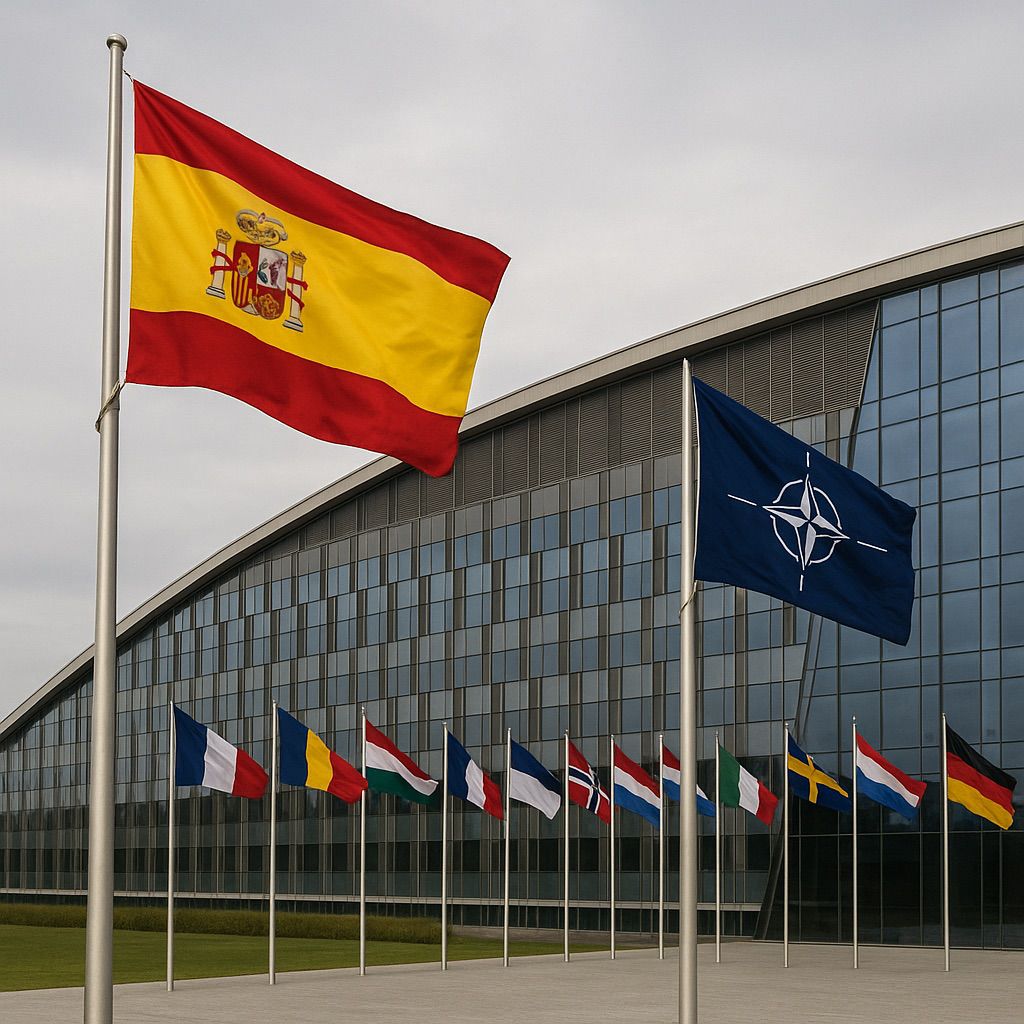
But on May 30, 1982, what mattered most was what the moment represented. After decades of isolation, Spain was no longer an outsider. It stood shoulder to shoulder with nations that valued democracy, defense cooperation, and shared responsibility for peace. Inside government buildings, diplomats celebrated quietly as Spain’s flag was raised alongside those of other NATO members. In military academies, officers studied new protocols and prepared for integration with allied forces. In households across the country, citizens debated what this would mean for their sons, their taxes, and their country’s future.

The path forward wasn’t smooth. NATO membership continued to spark passionate political arguments in Spain, culminating in the 1986 referendum in which the public narrowly voted to remain in the alliance under specific conditions. The decision, though close, confirmed that Spain viewed its future as part of Europe, not apart from it. Over the next decades, Spain would modernize its armed forces, participate in NATO missions, and eventually join the European Union in 1986. Each step reinforced the geopolitical shift that had begun the day Spain entered NATO.

The country found itself increasingly involved in missions that reflected evolving global challenges: peacekeeping in the Balkans, humanitarian operations, counterterrorism efforts, and cooperative defense planning. These engagements helped redefine Spain’s military identity, shifting from a defensive posture rooted in dictatorship to a professional, modern, internationally integrated force.

Spain’s NATO membership also helped reforge its diplomatic relationships. Ties with Portugal strengthened. Relations with France deepened. Cooperation with the United Kingdom and Germany expanded. The partnership with the United States, already strong due to existing military bases, took on new dimensions of joint training, intelligence sharing, and strategic planning. Spain became not a passive participant but an active contributor to collective defense.

Looking back, it’s remarkable how much of Spain’s modern identity can be traced to that pivotal moment in 1982. NATO membership accelerated Spain’s political stabilization after the transition to democracy. It provided external reassurance against instability. It showcased Spain’s commitment to international cooperation. And it offered a framework through which the country could reshape its role in Europe and the Atlantic world.

For a nation emerging from decades of authoritarian rule, joining NATO was not merely a defensive decision. It was a declaration: Spain chose democracy. Spain chose partnership. Spain chose the future.

Today, Spain remains a committed NATO member, contributing to alliance missions, hosting critical infrastructure, and participating in joint operations worldwide. The concerns of 1982 have not vanished, but they have evolved. Spaniards now debate global security, cyber defense, European strategic autonomy, and NATO’s future role—conversations unimaginable during Franco’s era.

When Spain joined NATO, it stepped out of the shadow of isolation and into the bright, complicated arena of international responsibility. It marked the beginning of a new chapter—one defined not by fear or inwardness, but by connection, cooperation, and a willingness to stand with democratic allies in defending shared values.

On that day in 1982, when Spain’s flag rose among the banners of democracies committed to collective defense, a nation that had endured suppression, transition, and uncertainty finally took its place in the world—not as an observer, but as a partner.

It was more than a signature.
It was a transformation.
Related Posts

How the BBC’s First Regular TV Service Transformed Home Life Forever

Elias Rowen

When the British Broadcasting Corporation officially launched the world’s first regular public television service on November 2, 1936, most people had no idea they were standing at the edge of a technological revolution. At the time, television wasn’t yet a household word. It sounded futuristic, almost whimsical—like something written into a science-fiction novel or imagined in the electric dreams of inventors tinkering in cluttered workshops. Radios filled homes with sound, newspapers delivered the news, and cinema provided the moving pictures. The idea that people would someday gather around a glowing box in their living room to watch live broadcasts felt, to many, closer to fantasy than reality.

But in a small studio in Alexandra Palace, perched on a hill overlooking London, a new age quietly switched on.

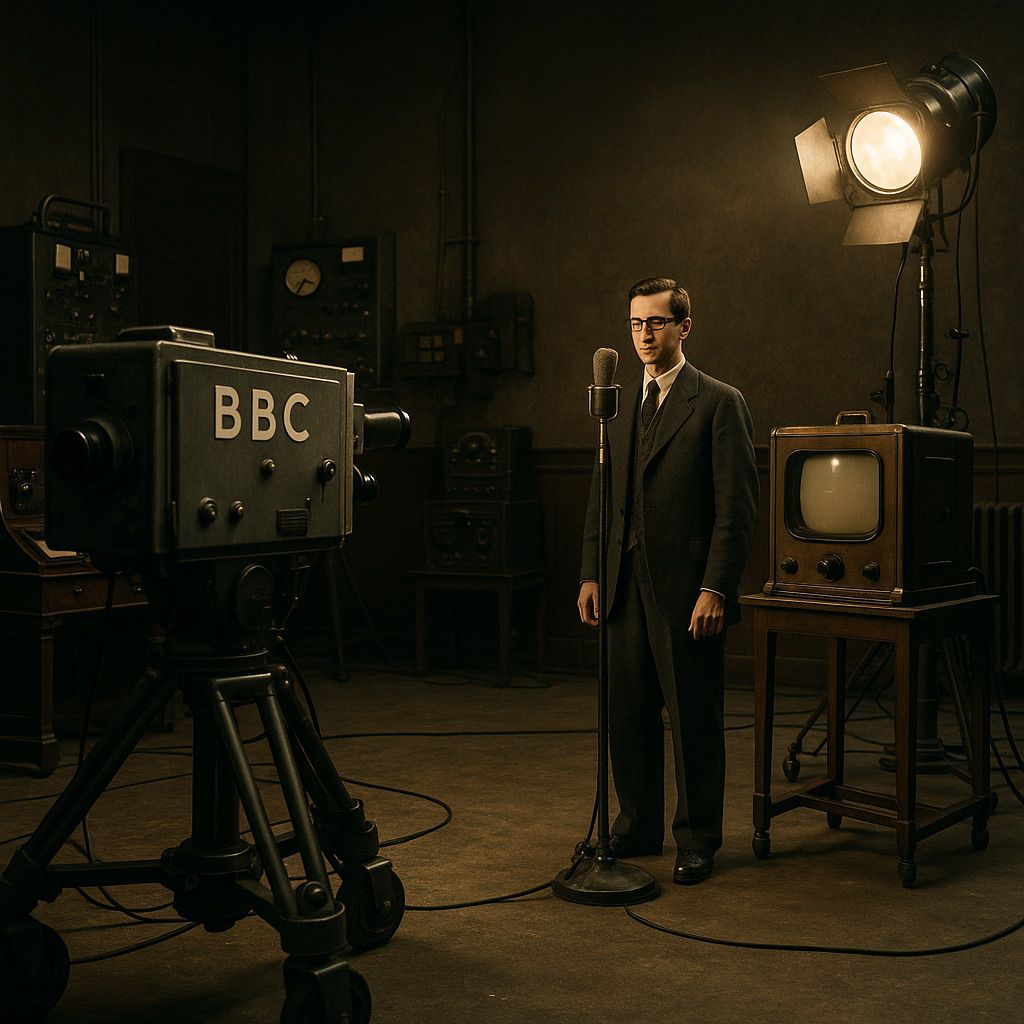
The BBC’s regular television service began humbly: no fanfare, no fireworks, no global countdown. Just engineers adjusting knobs, presenters trying not to blink too much under blinding lamps, and cameras the size of refrigerators wheezing as they warmed up. It wasn’t glamorous. It wasn’t polished. But like the first faint spark before a roaring fire, it held the unmistakable promise of something unstoppable.

For months leading up to the launch, the BBC had been experimenting with two competing technologies: the mechanically based Baird system and the fully electronic Marconi-EMI system. Engineers debated fiercely. Which one would define the future? Which one could deliver clearer, smoother images? Which one could withstand the scrutiny of a public that had never seen televised faces before? When the decision finally fell in favor of the Marconi-EMI system, the future of broadcasting changed forever. And on that November morning, as the familiar BBC chimes sounded, viewers with the extremely rare and expensive television sets tuned in to witness history: the start of scheduled, ongoing television programming available to the general public.

For most Britons, the event went unnoticed. In fact, fewer than 400 television sets existed at the time, nearly all concentrated around London. Those who owned one had either deep pockets or a deep fascination with cutting-edge technology. But those who tuned in found something mesmerizing: moving images entering their home not from a theater, not from a newsreel, but from a live broadcast produced just miles away. It must have felt like witnessing a kind of magic—fragile, flickering magic, but magic nonetheless.

Inside the Alexandra Palace studio, the atmosphere was a mix of nerves and quiet triumph. The cameras were monstrous, hot, and unforgiving. Presenters had to stand absolutely still, because any movement beyond a slow turn would produce blurs. The lights burned so brightly that performers sometimes fainted. Everything was experimental, uncertain, improvised on the fly. Yet there was a palpable electricity in the air—a sense that something important was happening, even if no one yet understood how important.

The very first broadcasts were modest. Announcers introduced the programs with crisp BBC diction. Variety acts performed brief songs or comedy routines. Newsreaders did their best to look natural while staring intensely into the camera lens. There were costume dramas, cooking demonstrations, small orchestras, and even short educational segments. Some productions barely lasted ten minutes. Others went off the rails in ways both charming and disastrous. Early television felt like theater squeezed into a box, unsure of its boundaries but eager to try everything.

And people watched. Not many at first, but enough to spark the curiosity of their neighbors, friends, and even passersby who glimpsed the strange blue glow through a window. Soon, television sets were placed in shop displays so crowds could gather outside and watch together—men in hats leaning over each other, women clutching shopping bags, children squeezing between grown-ups to catch a glimpse of the moving pictures. The sight of strangers standing in the cold to watch a small, flickering screen became a symbol of public fascination, the beginning of a social and cultural shift that the world could not yet comprehend.

But the BBC television service faced enormous challenges. The technology was expensive. The cameras were so bulky they could barely be moved. The studios were constantly overheating. Broadcast hours were short. And no one could predict whether the public would ever widely adopt this new invention. Yet the BBC pressed on, driven by the belief that television held tremendous potential—not just as a novelty, but as a platform for storytelling, education, journalism, and entertainment that could reach millions.

Then came World War II.

In 1939, just as television was beginning to find its footing, the BBC made the difficult decision to suspend television broadcasting. Engineers feared that the signals could be used by German bombers as navigational beacons. The screens went dark. Alexandra Palace fell silent. It was as if television had vanished before it could take root. And for years, Britons wondered if the experiment would return—or if television had been a brief technological curiosity swept away by global conflict.

But in 1946, when peace returned, the BBC switched the television service back on. It was symbolic—a signal that the world was ready to rebuild, reconnect, and reimagine daily life. And this time, Britain was ready. Television sets began appearing in more homes. Programming expanded. Sports events, royal ceremonies, dramatic productions, and news broadcasts filled the schedule. Families formed nightly rituals around the glowing screen. Television was no longer a luxury—it was becoming part of the fabric of life.

Yet even then, few fully understood how deeply television would shape the decades to come. It would become a witness to coronations, wars, scientific breakthroughs, cultural shifts, generational debates, and global tragedies. It would amplify voices, bridge distances, and create shared experiences unlike anything humanity had known. It would influence politics, fashion, entertainment, advertising, education, and the way people understood the world. It would become a mirror and a storyteller, a window and a stage, a source of comfort and information.

And all of it began with that first flicker of the BBC television service in 1936.

Looking back now, it’s easy to romanticize the moment. But the beauty of that beginning lies in its simplicity: a handful of engineers, a few brave performers, and a glowing dot on a tiny screen that captured the imagination of those lucky enough to see it. No one knew television would change the world. But that’s the way revolutions often begin—not with noise, but with quiet persistence, curiosity, and the courage to try something new.

When the BBC launched the world’s first regular TV service, it didn’t just introduce a new technology. It introduced a new way of living, of seeing, of connecting. It turned the home into a stage and the world into an audience. It laid the groundwork for a media landscape that would eventually span continents, satellites, cable networks, streaming platforms, and digital universes.

Television did not merely enter homes—it became a part of them.

And the world would never be the same again.

Related Posts

How the Mayflower Compact Became America’s First Self-Government Agreement

Elias Rowen

When forty-one men aboard the Mayflower dipped their quills into ink on November 11, 1620, they were not thinking about textbooks, future democracies, or the birth of a nation. They were thinking about survival. Cold winds whipped across the deck. The smell of damp wood, sickness, and exhaustion clung to the ship. Many passengers were weak, half-starved, or recovering from weeks of brutal storms that had tossed the Mayflower across the Atlantic like a toy in a bathtub. They had intended to land near the Hudson River, within the northern boundary of the Virginia Colony—a place that at least had English laws, structure, and a governing body. Instead, they found themselves anchored off the coast of Cape Cod, far outside any formal charter. No laws. No magistrates. No authority telling anyone what to do. And that is precisely why they wrote the Mayflower Compact.

The agreement they drafted—simple, brief, and direct—would become one of the most influential documents in American history. Not because of its length or its legal sophistication, but because of its spirit: a promise to govern themselves by their own consent. The men who signed it likely did not realize that their makeshift pact would one day be viewed as the seed from which American constitutional democracy would grow. They were simply trying to prevent chaos.

The Mayflower had not been a pleasant voyage. Passengers were crammed into tight, dark spaces below deck. Seasickness was constant. Food supplies spoiled. Freshwater turned brackish. The ship creaked and groaned as ferocious autumn storms battered the vessel. Waves crashed so hard that at one point the main beam cracked, and only the presence of a massive metal screw—brought by one of the colonists for house-building—kept the ship from breaking apart.

By the time they finally spotted land on November 9, spirits were ragged. Arguments had broken out. Some of the non-Separatists—often called “Strangers” by the Puritan Pilgrims—declared that since they were outside the Virginia Company’s jurisdiction, “none had power to command them.” In other words: we’re not bound by your rules anymore. That terrified the leaders of the expedition, especially William Bradford and William Brewster. Without some structured agreement, their new colony could easily collapse into disorder.

So, on that cold November morning, while the ship bobbed in the waters off Cape Cod, the men gathered. They unfurled a sheet of parchment and began writing words that would resonate far beyond their cramped cabin. The document was not long. It didn’t aim for poetry or grandeur. Instead, it emphasized loyalty to the English crown, the intention to form a “civil Body Politick,” and most importantly, the promise to create and obey laws chosen for the general good of the colony. This idea—government based on consent—would become foundational in American political philosophy.

There was something profoundly human about this moment. These colonists were not philosophers. They were farmers, tradesmen, carpenters, merchants, soldiers—ordinary people facing extraordinary circumstances. They were worried about their families, fearful of a harsh winter, uncertain if they would find enough food or suitable shelter once they disembarked. Yet even amid that fear, they recognized the necessity of order, cooperation, and fairness. It’s one thing to talk about democracy in a comfortable room centuries later; it’s another to craft its earliest form while huddled on a freezing ship surrounded by danger.

The Compact was signed by forty-one men—every adult male aboard the ship who was legally eligible to do so. Women and children were present, watching as each name was added, knowing their lives would be shaped by this agreement. These families had crossed the ocean together, prayed together, fought sickness together, and now they bound themselves to govern together. It was not perfect equality—only men signed, and English hierarchy still influenced attitudes—but it was a radical step toward the concept of shared power.

Once signed, the Compact immediately took effect. John Carver was chosen as the first governor. Decisions were made collectively. Rules were enforced. Disputes were resolved through deliberation rather than threats or intimidation. The document did not guarantee harmony, but it established a process—something incredibly valuable in a place where chaos would have meant death.

Over the next several weeks, small groups explored the surrounding land. They found abandoned Native villages, evidence of earlier epidemics that had devastated local populations. They searched for fresh water, safe harbors, and fertile ground. As winter set in, the colonists began building their settlement at Plymouth. It was grueling work. Exposure, malnutrition, and disease took a devastating toll—over half the settlers would die before spring. Yet the Compact held them together, providing a fragile but vital sense of shared responsibility.

When the Wampanoag people made contact in March of 1621, the colony still teetered on the edge. But the willingness of both groups to forge alliances—however complicated their motivations—created a year of relative stability. The Mayflower Compact continued to serve as the governing framework for more than two decades until Plymouth Colony was absorbed into the larger Massachusetts Bay Colony.

Looking back, what makes the Mayflower Compact enduring is not its legal strength but its symbolic power. It was one of the earliest written expressions of government by consent in the Western Hemisphere. It recognized that laws and leaders derive authority from the people who agree to live by them. That was groundbreaking in a world still dominated by monarchies and inherited privilege.

Modern historians often debate the Compact’s true significance. Some argue that Americans have romanticized it, assigning too much weight to a document created for practical purposes. Others highlight that it excluded large parts of the population and was never meant to spark a revolution. But even acknowledging its limitations, the Compact remains a remarkable moment in the story of American self-government. It was the first time a group of settlers in the New World collectively decided how they would rule themselves. And that idea—that power comes from the governed, not just from the top—would echo through the centuries.

The story of the Compact is also deeply personal. Imagine those men standing in the cramped quarters of the Mayflower, holding quills in trembling hands as the ship rocked beneath them. Imagine their wives and children standing nearby, wrapped in rough wool blankets, trying to stay warm. Imagine the fear of stepping into an unknown wilderness after months at sea. And then imagine the courage it took to declare that they would face that wilderness together, bound not by force or royal decree, but by a promise to one another.

In that moment, they were more than travelers. They were pioneers of an idea—the idea that community, cooperation, and consent can guide a people through uncertainty. They were planting the seeds of something that would grow, evolve, be challenged, and be expanded over centuries: representative self-government.

Over four hundred years later, the Mayflower Compact feels less like a relic and more like a reminder. A reminder that democracy is fragile, that unity must be chosen deliberately, and that even in the harshest conditions, people can decide to build something better together. It reminds us that great political transformations don’t always start with grand speeches or battlefield victories—they often start with ordinary people agreeing on how they want to live.

The Compact was only 199 words long, but its impact stretches across history. From school classrooms to constitutional debates, from political speeches to museum exhibits, its legacy endures because it captures the spirit of collective determination. It was written in a world very different from our own, yet it speaks to something timeless: the belief that communities thrive when they govern themselves with fairness, cooperation, and purpose.

Centuries later, we still look back at that moment aboard the Mayflower—a moment shaped not by kings or generals, but by families bracing against the cold, ready to begin a new life. Their compact was imperfect, limited, and born of desperation. But it was also visionary. It carved a path forward when none existed. And for a small band of colonists staring into the unknown, it turned uncertainty into resolve.

That is why the Mayflower Compact remains one of the most important documents in early American history—not because it created a nation, but because it created a way for people to imagine governing themselves at all.

Related Posts

The Historic Opening of the Nuremberg Trials

Elias Rowen

On November 20, 1945, as a cold Bavarian morning settled over the battered city of Nuremberg, something unprecedented in the history of human civilization began. In a courtroom carved out of the ruins of a recently defeated empire, the world gathered to hold individuals—not nations, not vague entities, not faceless regimes, but actual men—accountable for crimes so vast, so brutal, and so systematic that even seasoned soldiers struggled to describe them. The Nuremberg Trials were not just another legal proceeding; they were a turning point in moral and political history, a moment when humanity attempted to put words, laws, and consequences to atrocities that transcended existing legal frameworks. It was a reckoning born from ashes and anguish, designed to ensure that the horrors of the Second World War would be confronted with a measure of justice, however imperfect or incomplete it might be.

The Palace of Justice, chosen partly because it remained largely intact after Allied bombings, had an eerie, paradoxical calm about it that morning. Outside, Nuremberg was a landscape of ruins—broken stones, charred beams, collapsed roofs, and quiet streets that bore witness to the devastation Germany had brought upon the world and upon itself. Inside, rows of reporters, dignitaries, military officers, translators, and legal teams filled the courtroom, aware they were about to witness something without precedent. The great chandelier flickered overhead. Interpreters donned headphones at newly installed translation booths. Judges straightened their robes. And across from them, behind thick glass and guarded heavily by military police, sat twenty-one of the highest-ranking surviving members of the Nazi regime.

Their faces varied—some defiant, some exhausted, some eerily blank. Hermann Göring, once Hitler’s designated successor, carried himself with prideful arrogance; Joachim von Ribbentrop appeared nervous and erratic; Rudolf Hess stared into the distance as if floating somewhere between reality and delusion. These were the architects of terror, the men whose decisions had sent millions to their deaths, whose signatures appeared on orders, whose speeches mobilized hatred, whose policies transformed neighbors into enemies and nations into graves. For the first time in history, leaders of a defeated state were being held criminally responsible for actions committed under the cloak of sovereignty. It was, by every measure, a radical idea.

Before the trials, war crimes were often considered simply part of war—unfortunate but inevitable. The world had no universally recognized legal framework for prosecuting genocide, crimes against humanity, or aggressive war. There were no precedents for charging individuals with atrocities carried out by armies or under the authority of a government. The Allies had debated fiercely about what should happen to the Nazi leadership after Germany’s surrender. Some advocated for immediate execution without trial. Others insisted on public trials to expose the full scope of Nazi crimes. In the end, the latter prevailed, driven by a commitment—born from the horrors discovered in camps like Auschwitz, Treblinka, and Dachau—to reveal the truth in a courtroom so that the world could never claim ignorance.

The opening statements set the tone. Chief American prosecutor Robert H. Jackson, a U.S. Supreme Court Justice temporarily stepping away from the bench, delivered an address that would echo through history. His words were sharp, clear, and uncompromising. He declared that the trials represented “one of the most important tributes that Power has ever paid to Reason,” and warned that the tribunal’s legacy would serve as an eternal deterrent against tyranny if it succeeded—or a damning failure if it did not. Jackson’s statement laid bare the moral weight resting on everyone involved: the world was not only judging these twenty-one men; it was judging whether justice itself could be achieved after unprecedented evil.

The process was painstaking. Evidence was overwhelming but vast, varied, and often sickening. Prosecutors presented documents detailing mass executions, forced labor, medical experiments, starvation policies, deportations, and the creation of ghettos and extermination camps. They used film reels—shot by Allied forces upon liberating the camps—to show the horrors with undeniable clarity. Mountains of papers, orders, speeches, and photographs filled the courtroom, each piece revealing another layer of the machinery of death orchestrated by the Nazi regime. No one who sat in that courtroom during those early months emerged unchanged.

For the defendants, the chief strategy was denial—followed by deflection, followed by blaming Hitler, followed by claims of ignorance or helpless obedience to orders. Göring tried to dominate the courtroom with bluster and rhetorical skill. Others, like Hans Frank and Albert Speer, expressed varying degrees of remorse. Hess behaved erratically, feigning memory loss. Some defendants cried. Some sat stone-faced as their crimes were read aloud. But none could hide from the weight of the evidence. The courtroom became a crucible in which excuses dissolved and the truth, no matter how unbearable, remained.

The trials also represented a massive logistical challenge. Never before had simultaneous interpretation been used on this scale. Teams of linguists worked tirelessly to translate German, English, Russian, and French in real time, ensuring that the proceedings remained intelligible to everyone in the room. Judges from the United States, the Soviet Union, Britain, and France presided—a multinational effort that itself reflected the fragile postwar alliance already beginning to strain. Legal systems differed, ideologies clashed, and compromises were necessary. But the shared goal—accountability—kept the tribunal from splintering.

But perhaps the most enduring impact of Nuremberg was its articulation of crimes that had previously existed without names. The tribunal codified “crimes against humanity,” recognizing that mass murder, extermination, enslavement, and persecution were offenses so severe that they violated not only the rights of individuals but the conscience of humankind. It introduced the concept of “aggressive war” as a punishable act. It established that following orders did not absolve responsibility. And it confirmed that leaders could be held accountable for policies that resulted in mass atrocities—even if they never personally pulled a trigger or opened a gas valve.

Among the audience in the courtroom were Holocaust survivors, journalists, scholars, and soldiers who had been among the first to liberate the camps. Their presence was a quiet testimony to why the trials mattered—not for revenge, not for spectacle, but for truth. The world needed to hear, in meticulous detail, how genocide had been planned and executed. Survivors needed validation for the horrors they witnessed. Future generations needed a record that could withstand denial, distortion, and forgetfulness.

The trials dragged on for months. Testimonies alternated between chilling precision and emotional devastation. Witnesses described the starvation conditions in camps; the systematic extermination of Jews, Roma, disabled individuals, and political dissidents; the destruction of entire villages; and the cold calculus behind the Final Solution. Every word entered into the record would serve as a bulwark against the inevitable attempts to downplay or rewrite history.

When the verdicts were finally delivered on October 1, 1946, the world held its breath. Twelve defendants were sentenced to death, three to life imprisonment, four to terms ranging from ten to twenty years, and three were acquitted—not because they were innocent, but because the tribunal refused to allow the process to devolve into vengeance without evidence. The executions, carried out shortly thereafter, closed a chapter but did not erase the horrors. Justice—if that was even the right word—had been served as best as the circumstances allowed.

The legacy of the Nuremberg Trials would prove far more durable than anyone present could have imagined. They paved the way for the Geneva Conventions, the creation of the International Criminal Court, the prosecution of war crimes in Rwanda and the former Yugoslavia, and the ongoing global effort to hold leaders accountable for atrocities. They demonstrated that even in the aftermath of unimaginable cruelty, the world could attempt—however imperfectly—to anchor itself in principles of law and morality.

For the people of Nuremberg, the trials were a daily reminder of complicity and consequence. The city, once a symbol of Nazi rallies and propaganda, became instead a symbol of justice. The Palace of Justice, still in use today, stands as a quiet monument to that moment when humanity confronted its own capacity for evil and decided to respond not with another round of vengeance, but with a measured, public, legal reckoning.

The Nuremberg Trials did not heal the world. They did not bring back the millions who were murdered. They did not erase trauma or restore lost futures. But they established something essential: the idea that even in the darkest aftermath, accountability matters. Truth matters. Law matters. And humanity must not turn away from the responsibility to confront evil openly—even when doing so means staring directly into the worst chapters of our own history.

In that courtroom, justice did not roar. It did not cleanse all wounds. But it spoke. Calmly, firmly, and for the first time on such a scale, it declared that crimes committed under the banner of power would not be immune from judgment. And that declaration continues to echo today, reminding us that the rule of law—fragile as it is—remains one of humanity’s greatest achievements.

Related Posts

When the World Finally Breathed Again: The Day the Cuban Missile Crisis Ended

Elias Rowen

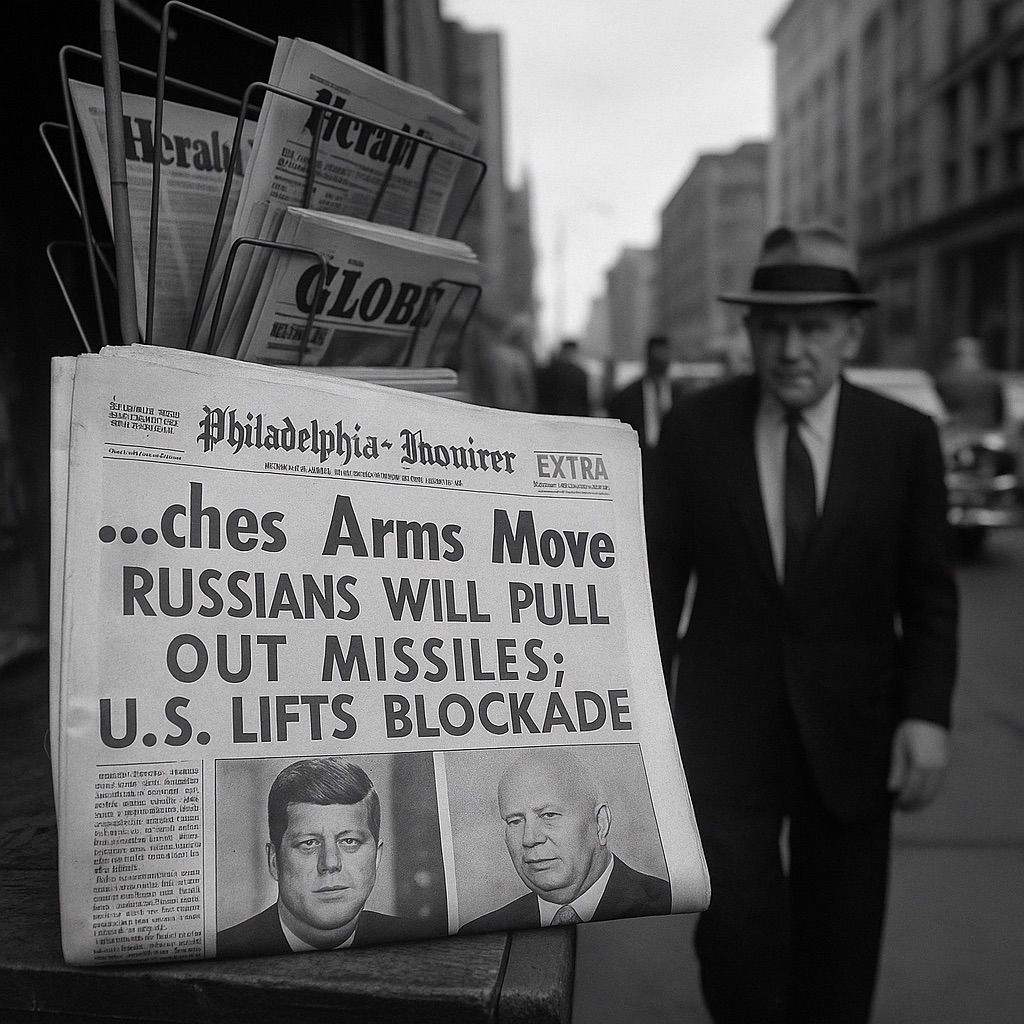
On October 28, 1962, after thirteen days of fear that wrapped around the world like a tightening wire, the Cuban Missile Crisis formally came to an end. It was a quiet ending—no parades, no applause, no triumphant speeches echoing from balconies or podiums. Just a few careful statements, diplomatic signals, and tense, weary exhalations from leaders who had spent nearly two weeks peering into the abyss of nuclear war. For most people alive at the time, the end came not as a shout but as a sigh. The crisis, which had pushed the United States and the Soviet Union to the edge of annihilation, had finally eased. The world had stepped back from the brink.

To understand the relief that swept across nations that day, one must imagine the haunting uncertainty of those thirteen preceding days. The crisis began when American reconnaissance flights revealed Soviet nuclear missiles being installed in Cuba—missiles capable of striking nearly every major American city with only minutes of warning. It was not just the existence of missiles that terrified the world, but their proximity and the suddenness with which they appeared. The U.S. had always feared an attack from afar, an ICBM streaking overhead in a dramatic arc. But missiles just ninety miles off the Florida coast felt like a noose tightening around the neck of an entire nation.

The days that followed were marked by a kind of surreal dread. In Washington, President John F. Kennedy weighed options that ranged from diplomatic pressure to a full-scale invasion of Cuba, each one carrying terrible risks. In Moscow, Premier Nikita Khrushchev wrestled with the realization that his bold gambit to protect Cuba and shift the nuclear balance had instead triggered a confrontation neither side could afford. And in Havana, Fidel Castro braced for an American attack he believed was imminent, preparing his people for a fight he was fully willing to die in.

Across the globe, ordinary people lived with the heavy awareness that their lives depended on men making decisions behind sealed doors. Schools in the United States quietly prepared evacuation procedures that everyone knew wouldn’t matter. Families argued about whether they should flee cities, build shelters, or simply pray. Newspaper headlines screamed of threats and ultimatums. Radio hosts speculated grimly about whether this was how civilization would end—not in decades, but in days.

But then, on that tense October morning, everything changed. The crisis dissolved not with bombs or battles but through a rare act of diplomatic clarity. Messages passed between Washington and Moscow—some formal, others desperate and emotionally raw—had begun carving a path out of conflict. Kennedy agreed to publicly vow not to invade Cuba and to secretly remove U.S. Jupiter missiles from Turkey. Khrushchev agreed to remove the Soviet missiles from Cuba. Castro, though angered by the Soviet negotiations that occurred without him, was forced to accept the terms.

When Khrushchev’s acceptance of the deal was broadcast over Radio Moscow, the world seemed to pause. People stopped in their kitchens, on sidewalks, in offices, listening to the crackling words that meant the threat had receded. Kennedy, informed of the message in the White House, felt the crushing weight of the past thirteen days lift. He did not celebrate; there was no victory to celebrate. But he did allow himself a rare sense of quiet relief. For the first time in nearly two weeks, both superpowers had chosen restraint over destruction.

But even as the crisis formally ended, its emotional and political effects lingered. In the United States, many officials felt uneasy about the secret missile trade, worrying it made the country look weak. In the Soviet Union, Khrushchev endured sharp criticism from hardliners who believed he had retreated too quickly. And in Cuba, Castro raged at being excluded from negotiations that determined the fate of his country’s defense. Peace had been restored, but not without bruises—some internal, some diplomatic, some carved deep within the psyches of the men who had narrowly avoided the worst war in human history.

Still, the world had survived. And in surviving, it learned lessons that would shape decades of policy. The fear sparked by those thirteen days led to the creation of the Moscow-Washington “hotline,” an effort to prevent future misunderstandings from spiraling out of control. It helped accelerate nuclear arms control agreements. It shifted the global balance of power and ushered in a new, complicated phase of Cold War diplomacy. The crisis became a painful reminder that nuclear weapons were not abstract symbols but very real threats capable of wiping out humanity in minutes.

But perhaps the most human part of the crisis’s end lies not in the geopolitical consequences but in the personal reflections of those who lived through it. Kennedy confided privately to advisors that he believed there had been a one-in-three chance of nuclear war. Khrushchev, years later, would say that the crisis convinced him that nuclear weapons must never be used under any circumstances. American families, who had spent nights gathered around their televisions in fear, allowed themselves to breathe again, to turn their thoughts back to everyday life. Soldiers stationed in Florida or Guantánamo Bay, who had spent days in combat readiness, wrote letters home explaining that they were safe after all. Across the Atlantic, Europeans—who lived closer to the nuclear frontlines than anyone—looked out over their cities and felt, for the first time in days, that the sky above them no longer carried an unspoken threat.

As the decades passed, the Cuban Missile Crisis came to represent a moment when the world truly understood the fragility of civilization. Politicians spoke about it, students studied it, military strategists pored over it, and survivors recounted the way it had reshaped their understanding of life, leadership, and peril. The crisis became an anchor point for discussions about risk, diplomacy, and global peace. Its resolution was hailed not as a triumph of power but as a triumph of restraint.

What makes the formal end of the crisis so remarkable—so hauntingly unique in the tapestry of twentieth-century events—is that it marked a moment when humanity collectively glimpsed its own extinction and consciously stepped back. This wasn’t a victory won through force. It wasn’t an inevitable result of historical momentum. It was a choice made by fallible leaders who, in their own ways, realized they could not allow pride or ideology to condemn millions to death.

When the last Soviet missile was removed from Cuba, and when the United States quietly dismantled its missiles in Turkey months later, the crisis fully resolved. But the emotional resolution—the deep breath humanity took—happened on October 28. That was the day parents hugged their children more tightly. The day soldiers loosened their grips on their rifles. The day the White House and the Kremlin allowed themselves to imagine a tomorrow. It was the day the world stepped off the edge of a cliff it had been staring at for thirteen days.

Even now, more than sixty years later, the end of the Cuban Missile Crisis stands as one of the most important moments in modern history. It is a reminder that even in times of great tension, dialogue can prevail over devastation. That caution can triumph over belligerence. That humans—flawed as we are—are sometimes capable of pulling back from disaster at the very last second.

The world breathed again on October 28, 1962. The breath was shaky, uncertain, and exhausted—but it was life. And life, especially after nearly being lost, is always worth remembering.

Related Posts