Latest Articles

The Health Benefits of Swimming in the Sea

Dave

There’s something about the sea that calls to people in a way no swimming pool ever could. It’s not just the expanse of water stretching endlessly toward the horizon or the rhythmic crash of waves against the shore—it’s the feeling you get the moment your toes touch the water, that gentle pull that beckons you deeper until you are surrounded by something so much bigger than yourself. It’s a sensation that is part thrill, part comfort, and part mystery, a reminder that we are not separate from nature but a part of it. Swimming in the sea has been a human ritual for as long as there have been humans near coastlines, and it’s not hard to see why. Beyond the beauty and joy of it, immersing yourself in the ocean offers an astonishing range of benefits for your body, mind, and soul—benefits that are as old as the tides themselves.

The first thing you notice when you wade into the sea is the temperature. Whether it’s the bracing chill of the North Atlantic or the bath-like warmth of a tropical lagoon, the water envelops you in a way that is completely different from stepping into a pool. Natural sea water feels alive, with currents and swells that respond to forces far beyond your control. That initial shock, especially if the water is cold, does more than make you gasp—it wakes up every nerve ending in your body. Cold water immersion has been shown to boost circulation, force your body to adapt to stress, and release a flood of endorphins that can leave you feeling euphoric long after you’ve dried off. This isn’t just anecdotal; studies have found that people who regularly swim in cold water often report better mood regulation, reduced symptoms of depression, and improved resilience to everyday stress. The sea becomes, in a very real sense, a form of therapy.

But not all benefits are about what the water does to your mind. The ocean is loaded with minerals—magnesium, potassium, iodine, and trace elements—that seep into your skin as you swim. These aren’t present in the sterile water of a chlorinated pool; they’re gifts from the Earth, carried in the waves. Magnesium, for example, can help reduce muscle cramps, improve skin hydration, and even promote better sleep. Potassium plays a role in balancing your body’s electrolytes, especially after physical exertion, while iodine is essential for healthy thyroid function. The salt content itself has mild antibacterial properties, which can help cleanse small cuts and abrasions, reducing the risk of infection. Anyone who’s accidentally tasted seawater knows it’s not for drinking, but in measured exposure through the skin, its mineral profile can have surprisingly restorative effects.

Swimming in the sea is also an incredible workout, though it rarely feels like one in the same way a treadmill does. The resistance of moving through saltwater is higher than in fresh water, so every stroke, kick, and movement requires more effort. This means your muscles are constantly engaged, not just the obvious ones like your arms, legs, and core, but also the smaller stabilizing muscles that help you balance and navigate the changing push and pull of the waves. Over time, this builds strength, endurance, and flexibility in a way that is both functional and holistic. Because the water supports your body weight, it’s also a low-impact exercise, making it accessible to people with joint issues, arthritis, or injuries that would make running or high-intensity workouts painful. In fact, swimming in the sea can be a lifeline for those looking to stay active without putting strain on their bodies.

Then there’s the cardiovascular benefit. Swimming elevates your heart rate, improves lung capacity, and boosts oxygen efficiency, but doing so in the sea adds an extra layer of challenge. The waves and currents create unpredictable resistance, forcing your body to adapt and adjust constantly. This engages your cardiovascular system in a way that is both demanding and deeply satisfying, improving heart health over time. The rhythmic breathing patterns required for swimming can also help train your diaphragm, increasing lung strength and efficiency. For those with respiratory conditions like asthma, regular swimming—particularly in the moist, salty air near the ocean—can help open airways and reduce inflammation.

Speaking of salty air, simply being by the sea can have its own health perks, even before you touch the water. The negative ions in ocean air are believed to increase serotonin levels, boost mood, and promote better sleep. Breathing in that fresh, clean scent of saltwater can feel like a full-body reset, a sharp contrast to the stale, recycled air most of us inhale indoors. Combine this with the meditative effect of watching waves roll in and out, and you have a recipe for lowering cortisol levels and reducing stress. The ocean is one of the few places where you can be both physically active and deeply relaxed at the same time, and swimming in it amplifies those effects.

From a mental health perspective, the sea offers something few other environments can: perspective. When you’re in the water, especially beyond the shallow surf, the world looks and feels different. The horizon stretches in all directions, the sounds of the shore fade into a muffled hum, and for a little while, your daily worries shrink in importance. It’s just you and the water, and the awareness that you’re part of something timeless. Psychologists refer to this as “blue space” therapy—the idea that proximity to natural bodies of water can significantly improve mental well-being. Studies have linked time spent in blue spaces with lower anxiety, improved mood, and even increased creativity. The ocean becomes both playground and sanctuary, a place to reconnect with yourself in ways that are increasingly rare in a hyper-connected world.

There’s also an ancient connection at play when we swim in the sea. Human life began in the ocean, and our bodies still carry echoes of that origin. Our skin, our blood, even the balance of minerals in our bodies mirror that of seawater. This might explain why so many people describe a sense of “coming home” when they’re in the ocean, even if they didn’t grow up near it. It’s as if some deep, primal memory is reawakened by the feel of saltwater on skin and the push of the tide against the body. The rhythmic motion of swimming, combined with the constant movement of the water, creates a natural meditation, each stroke pulling you deeper into a state of flow where time seems to disappear.

For those who live near the coast, regular sea swimming can become a way of life, shaping not just physical health but social connections as well. Many coastal communities have tight-knit groups of swimmers who meet daily or weekly, regardless of the weather, to plunge into the waves together. These gatherings are as much about companionship as they are about fitness, creating bonds over shared challenges and victories—like braving a winter swim or making it out to a distant buoy. The social aspect adds another layer to the health benefits, as research consistently shows that strong social ties are linked to longer life expectancy and lower rates of disease.

There are, of course, precautions to consider. The sea is powerful and unpredictable, and respect for its conditions is essential. Strong currents, rip tides, and changing weather can turn a peaceful swim into a dangerous situation. Understanding the tide charts, recognizing rip currents, and knowing your own limits are all part of swimming safely in the sea. And while the sun can be a welcome companion, prolonged exposure without protection can undo many of the health benefits you’ve gained, so sunscreen, rash guards, and hats are as much a part of sea swimming as the swim itself.

Still, the rewards far outweigh the risks when approached with awareness and preparation. Whether you’re diving into turquoise tropical waters, wading through brisk northern seas, or simply floating in the gentle swell of a sheltered bay, the experience offers a holistic blend of physical, mental, and emotional nourishment. It’s exercise and therapy, adventure and tranquility, solitude and community—all rolled into one. The sea doesn’t just strengthen your muscles or clear your mind; it invites you to live more fully, to embrace the ebb and flow of life with the same grace as the tide.

Perhaps the greatest gift of swimming in the sea is the way it reminds you to be present. In the water, you can’t multitask, check your phone, or worry about tomorrow’s deadlines. You’re fully in the moment—feeling the cool rush of water past your skin, the rise and fall of your breath, the distant cry of seabirds, the warmth of the sun on your face between strokes. In that space, stripped of distraction, you find a clarity that’s hard to come by on land. The sea gives you that gift freely, and all it asks in return is that you show up, open to whatever it has to offer.

In the end, swimming in the sea is about far more than health metrics or fitness goals. It’s about a relationship—between you and the ocean, between your body and the world it inhabits. It’s about surrendering to something bigger, letting it hold you up, carry you, challenge you, and restore you. And once you’ve felt that connection, it’s hard to imagine living without it.

Related Posts

Security and Sovereignty: Two Births That Changed the World

Elias Rowen

History often reminds us that the same day can hold multiple meanings depending on where you stand. August 14 is one such date, etched into the memory of two very different nations for two very different reasons. In the United States, it marks the signing of the Social Security Act in 1935—a cornerstone of the New Deal that redefined the relationship between government and citizen, promising a measure of dignity in old age and a safety net in times of hardship. Across the globe, it is the birthday of Pakistan, which emerged on August 14, 1947, from the tumult of the British Empire’s retreat from India. In one story, the focus is on social security for the individual; in the other, it is on political sovereignty for millions. Both, however, are about creating systems meant to protect, to empower, and to ensure survival in a world where survival is never guaranteed.

In the summer of 1935, the United States was still reeling from the Great Depression. Banks had collapsed, unemployment hovered around 20%, and the frail social fabric was stretched to breaking. In this climate, President Franklin Delano Roosevelt pushed forward a vision that many considered revolutionary: a federal program to provide retirement benefits, unemployment insurance, and aid to vulnerable populations. On August 14, with a flourish of his pen, FDR signed the Social Security Act into law.

The Act wasn’t perfect—many groups, including agricultural and domestic workers, were initially excluded. But it was a monumental shift in American governance. Until then, the federal government had played only a limited role in personal economic security; the prevailing idea was that individuals and their families bore sole responsibility for their welfare. The Social Security Act declared that the nation, through its government, would share that responsibility.

The program would be funded by payroll taxes, a concept that was both controversial and ingenious. Workers and employers would each contribute, ensuring the system had a steady flow of funds and tying its success to the nation’s collective effort. Over time, Social Security expanded to include disability benefits and survivors’ insurance, becoming one of the most enduring and popular elements of the New Deal.

For millions of Americans, Social Security has been more than a government program—it has been a lifeline. It has meant a grandmother could pay her rent, a widow could keep her home, a disabled worker could maintain independence. Critics have debated its sustainability, but few have challenged its core principle: that a wealthy, modern nation should protect its people from destitution in their later years.

While the ink was drying on FDR’s law in 1935, halfway across the world, another story was unfolding over the following decade—one of empire, identity, and the fight for self-determination. By the mid-1940s, British India was a nation on the brink of transformation. The independence movement had been gaining momentum for decades, fueled by leaders like Mahatma Gandhi, Jawaharlal Nehru, and Muhammad Ali Jinnah. But alongside the call for independence came deep divisions over what that independence should look like.

For Jinnah and the All-India Muslim League, the vision was clear: Muslims of the Indian subcontinent needed their own homeland, a place where their cultural, political, and religious rights would be safeguarded. Tensions between the Indian National Congress and the Muslim League grew, and as the British prepared to leave, the idea of partition—dividing India into two separate nations—took center stage.

On August 14, 1947, Pakistan was born. The moment was marked by jubilation and chaos. In Karachi, Jinnah delivered a speech as the new Governor-General, declaring Pakistan’s commitment to democracy, law, and order. Streets were filled with celebrations—flags waved, people sang, and prayers were offered for the nation’s future. But the joy was shadowed by the violence of Partition. As borders were drawn, millions of Hindus, Muslims, and Sikhs found themselves on the wrong side and began migrating to their respective new homelands. The migrations were massive, the largest in human history, and they were accompanied by horrifying communal violence that left hundreds of thousands dead.

Pakistan’s birth was thus a story of both triumph and tragedy. It was the realization of a political dream, the creation of a sovereign state, and a fresh start for millions. But it was also a reminder that independence often comes at a cost, and that the work of building a nation is only just beginning once the flag is raised.

It’s fascinating to place these two events—FDR’s Social Security Act and Pakistan’s independence—side by side. One is a domestic policy born from economic crisis; the other is a geopolitical transformation born from colonial history and political negotiation. Yet both are rooted in a common idea: that security, whether personal or national, is worth fighting for.

In the United States, August 14 became a symbol of the government’s willingness to take responsibility for its citizens’ well-being, to create systems that would outlast the crises of the moment. In Pakistan, August 14 became a symbol of the people’s determination to chart their own destiny, to claim the right to govern themselves and define their future.

Both legacies are complex. Social Security, though widely popular, faces ongoing challenges from demographic shifts, economic pressures, and political disagreements. Pakistan, now one of the world’s most populous nations, has faced its own trials—political instability, economic struggles, and tensions with its neighbors. Yet in both cases, the founding moment continues to hold deep symbolic power.

When Americans receive their first Social Security check, they are participating in a system born on that August day in 1935. When Pakistanis gather to watch fireworks on Independence Day, they are celebrating a moment that reshaped the map of the world in 1947. Both are acts of remembrance and renewal, tying the present to a day when the future seemed wide open, if uncertain.

August 14, then, is a reminder of how history can connect distant people and different struggles through the shared language of hope and resilience. Whether it’s a safety net for an aging worker or the birth of a new nation, the impulse is the same: to protect, to preserve, and to create something that will endure.

Related Posts

Natural Sunscreens That Actually Work

Dave

There’s a particular kind of betrayal that happens when you trust a bottle of sunscreen to protect you, only to end the day with skin that feels like it’s been slow-roasted over a campfire. You did everything the directions said—shook the bottle, applied generously, reapplied after swimming—and yet, by evening, your shoulders are radiating heat and your nose looks like a cherry tomato. It’s enough to make anyone suspicious of sunscreen altogether, but giving up on protection is like surrendering in a fight you can’t afford to lose. The truth is, the sun is relentless, and while a little sunlight can lift your mood and help your body produce vitamin D, too much can carve lines into your face, leave your skin mottled with dark spots, and, far worse, lead to skin cancer. That’s why finding a sunscreen that works is non-negotiable—and if you’re leaning toward natural sunscreens, the challenge is not just finding one that works, but one that works well enough to trust with your skin’s future.

Natural sunscreen has an almost mythical appeal. The idea that you can shield yourself from the sun using something derived from nature, without the complex chemical stew found in many conventional sunscreens, taps into a deeper longing for purity, for simplicity, for something that feels wholesome and untainted. It’s a little like wanting bread made from just flour, water, and yeast instead of a paragraph-long list of additives. But just because something is labeled “natural” doesn’t automatically make it good—or effective. In fact, the natural sunscreen world is riddled with products that sound amazing on paper but fail in the brutal reality of hours under summer sun. The key is to cut through the noise and find the ones that actually do their job, not just the ones that look pretty on a wellness blogger’s bathroom shelf.

At the core of natural sunscreens are minerals—usually zinc oxide, titanium dioxide, or both. These are not exotic, rare ingredients, but workhorses that have been used for decades to physically block the sun’s rays rather than chemically absorb them. Unlike chemical sunscreens that work like sponges soaking up UV light and transforming it into heat, mineral sunscreens work like tiny mirrors, reflecting and scattering UV radiation before it can do damage. They start working the instant you apply them, which is a huge plus for those of us who forget to slather up until we’re already on the beach. But not all mineral sunscreens are created equal, and this is where the heartbreak often happens. Some formulas are chalky, ghost-white, and impossible to blend. Others feel like you’re wearing a layer of cake frosting on your skin. And then there are those that wash off in the first wave, leaving you completely exposed before you’ve even dried off your hands.

The magic happens when form meets function—when a natural sunscreen manages to give you the solid, broad-spectrum protection you need against both UVA and UVB rays, while also feeling pleasant enough that you’ll actually use it. This might sound obvious, but sunscreen only works if you apply it in adequate amounts and reapply regularly, and you’re much less likely to do that with a product that makes you feel like you’ve dipped yourself in white paint. The best natural sunscreens today have cracked the code by using micronized or non-nano mineral particles that spread evenly without leaving a stark white mask. They’ve also learned how to balance protective power with moisturizers like jojoba oil, shea butter, or aloe vera, so the formula feels hydrating instead of suffocating.

One of the biggest misconceptions about natural sunscreen is that it’s only for those with sensitive skin. While it’s true that mineral sunscreens tend to be gentler because they don’t penetrate the skin the way chemical filters do, they’re not just for people prone to rashes or irritation. In fact, anyone can benefit from their immediate protection, photostability, and the fact that they’re less likely to degrade in the sun over time. Chemical sunscreens, for all their advantages, can break down faster, meaning their protection wanes unless reapplied with clockwork precision. And if you’re swimming in the ocean or a lake, mineral sunscreens are less harmful to aquatic life, particularly coral reefs, which have been shown to suffer damage from certain chemical sunscreen ingredients. In this way, choosing a good natural sunscreen isn’t just self-care—it’s environmental care.

But here’s where things get complicated: “natural” is not a regulated term in the sunscreen world. A product can market itself as natural while still containing synthetic preservatives, fragrances, or other additives that might not align with your expectations. This is why reading the ingredient list is non-negotiable. A true mineral sunscreen will list zinc oxide, titanium dioxide, or both as its active ingredients, ideally making up at least 20% of the formula for strong coverage. Anything less, and you might be getting more marketing than protection. Look for words like “non-nano,” which means the mineral particles are large enough to avoid potential inhalation risks and won’t penetrate the skin, yet still small enough to avoid that ghostly cast.

The texture of a natural sunscreen is often the make-or-break factor in whether people stick with it. The thick, pasty formulas of the past gave mineral sunscreens a bad reputation, especially among those with deeper skin tones, where a white cast can be particularly unflattering. Thankfully, brands have innovated with tinted versions that blend seamlessly into a wider range of skin shades. These tints aren’t about makeup coverage—they’re subtle, skin-mimicking hues that make the sunscreen look invisible once applied. Some even double as light foundation or BB cream, merging skincare and sun protection into one easy step. This not only improves the experience but increases the likelihood that you’ll wear it every day, which is really the point.

Water resistance is another crucial consideration, especially if you’re sweating through a summer hike or swimming in the ocean. The best natural sunscreens clearly state their water-resistant duration, typically 40 or 80 minutes. But here’s a truth that too many people forget: no sunscreen, natural or otherwise, is truly waterproof. The minute you towel off, you’ve likely removed most of the protective layer, so reapplication isn’t just a suggestion—it’s the whole game. And if you’re outdoors for hours, reapplying every two hours is the gold standard. This is where the portability and ease of application come into play. A bulky jar you have to scoop with your fingers might be fine for a morning at the pool, but for an all-day adventure, a stick or pump bottle makes life much easier.

Then there’s the matter of SPF. Many people misunderstand this number, thinking that an SPF 50 provides double the protection of SPF 25. In reality, SPF 30 blocks about 97% of UVB rays, while SPF 50 blocks about 98%. The difference is minimal, and the real factor is application quantity and frequency. A well-formulated SPF 30 mineral sunscreen, applied generously and reapplied diligently, will outperform a neglected SPF 50 every time. That said, for long days in intense sun—say, skiing at high altitude or lounging on a tropical beach—opting for SPF 50 can give you a slight edge.

It’s impossible to talk about natural sunscreen without addressing the environmental angle. In recent years, regions like Hawaii and parts of Mexico have banned sunscreens containing oxybenzone and octinoxate, two chemical UV filters linked to coral bleaching. This has pushed more travelers toward reef-safe mineral sunscreens, which rely on zinc oxide and titanium dioxide instead. But reef-safe is not a legally protected term either, so you have to verify that the sunscreen is free of those harmful chemicals, and that the minerals are non-nano to reduce potential harm to marine life. For anyone who loves snorkeling, diving, or just floating in the shallows, making this choice is a small but meaningful way to protect the very environments that draw us to the water in the first place.

In a perfect world, the conversation about sunscreen wouldn’t even be necessary—people would wear it daily without debate, just as they brush their teeth or wash their hands. But the reality is that sunscreen still feels optional to many, and natural sunscreen even more so. Part of the resistance comes from lingering myths: that it’s too thick, that it doesn’t work as well, that it’s only for people with allergies, or that it’s just a crunchy-granola indulgence for the wellness set. The truth is, the new generation of natural sunscreens have proven themselves in harsh conditions, from ultramarathons in desert heat to day-long surf sessions in pounding waves. They’re no longer a compromise—they’re a legitimate, sometimes superior option.

There’s also something satisfying about the ritual of applying natural sunscreen. Because it tends to be a little thicker than chemical formulas, you end up massaging it into your skin, taking a moment to connect with your body instead of rushing through it. The scent—often a faint trace of coconut, vanilla, or unscented altogether—feels cleaner, less artificial. On a hot day, that’s a gift in itself. And if you’ve ever tried applying chemical sunscreen after shaving, you know the stinging sensation that can follow. Mineral sunscreens skip that drama entirely.

At the end of the day, the best natural sunscreen is the one you will use consistently, in the right amount, and reapply as often as needed. It should feel like a friend you can count on—a reliable companion whether you’re out for a quick run or spending all day on the sand. It should disappear into your skin, leaving only the peace of mind that you’ve done something good for yourself and, if you’ve chosen well, for the planet too. It’s easy to be swayed by clever packaging and lofty promises, but the real test comes hours later, when you wash off the day and find your skin exactly as it was that morning: healthy, unburned, and grateful.

Natural sunscreen isn’t just a beauty choice—it’s a daily act of care, a way of respecting both your body and the world you inhabit. The sun is a constant; it doesn’t need to be feared, but it does need to be respected. With the right protection, you can step into its light with confidence, knowing you’ve given yourself the best of both worlds: the timeless joy of sunshine and the enduring gift of healthy skin.

Related Posts

Barbed Wire Sunday: The Day Berlin Changed Forever

Elias Rowen

It began in the stillness of the early morning, long before most Berliners awoke. The date was August 13, 1961, and a cool summer night was giving way to dawn. But something unusual was happening in the city—men in military uniforms, workers in overalls, and police officers in helmets were moving with calculated precision along the streets that divided East and West Berlin. Under the cold glare of floodlights and the hum of truck engines, they unspooled heavy coils of barbed wire, setting them across roads, alleys, and tramlines. They erected wooden barricades and placed armed guards at key crossings. By the time the sun rose, the heart of Berlin was being carved in two.

This was the day that came to be known as “Barbed Wire Sunday.” It was the day the Berlin Wall began—not as the concrete monolith of Cold War imagery we remember now, but as a ragged, improvised barrier of wire and fences. And it was the day the lives of millions of people changed in an instant.

For years before that morning, Berlin had been the fault line of the Cold War. At the end of World War II, Germany had been divided into four occupation zones controlled by the United States, the United Kingdom, France, and the Soviet Union. Berlin, deep within the Soviet zone, was also divided into four sectors. What began as a temporary arrangement became a long-term reality as tensions between the Soviet Union and the Western Allies hardened into ideological opposition. In 1949, West Germany (the Federal Republic of Germany) was established in the zones held by the Western powers, while East Germany (the German Democratic Republic) formed in the Soviet-controlled zone.

Berlin became the most visible—and dangerous—front of that division. The city was a loophole in the Iron Curtain: though the border between East and West Germany was heavily fortified, Berlin’s open boundaries allowed East Germans to escape into West Berlin, and from there into West Germany. By 1961, an estimated 2.7 million people had fled East Germany through Berlin, draining the communist state of skilled workers, professionals, and students.

For East German leader Walter Ulbricht and his Soviet backers, this “brain drain” threatened the survival of their regime. Ulbricht had famously declared in June 1961 that “no one has the intention of erecting a wall”—a statement that would soon become one of the most infamous lies in political history. Behind the scenes, plans were being drawn up for a massive operation to seal the border inside the city.

That operation—codenamed “Rose”—was executed in the early hours of August 13. Truckloads of soldiers, police, and construction crews moved into position across the city. Roads were torn up to prevent vehicles from crossing. Public transportation lines were severed. Families woke to find themselves cut off from relatives, lovers, and friends on the other side. Workers who had jobs in the West could no longer reach them; students who attended schools in the opposite sector were suddenly stranded. The overnight transformation was so complete that it felt almost unreal, like waking from one life into another without warning.

At first, the Western Allies were caught off guard. U.S., British, and French forces in West Berlin could only watch as East German troops rolled out the barbed wire. Under the postwar agreements, they had no authority to intervene in East Berlin, and any attempt to dismantle the barricades risked triggering a direct confrontation with the Soviet Union. The West’s inaction, while avoiding immediate war, meant that the division was cemented from day one.

The human impact of Barbed Wire Sunday was devastating. Stories quickly emerged of families torn apart. A mother on the East side who had gone to visit her sister in the West the day before could not return to her children. A young couple separated by the barricade called to each other across the wire, too far to touch, too close to turn away. Some tried to escape immediately—leaping from apartment windows into the West, sprinting across open streets despite the armed guards. A few succeeded; others were shot or arrested.

In the days that followed, the barbed wire was reinforced with more permanent barriers—concrete blocks, watchtowers, and eventually the infamous concrete wall that would stretch over 150 kilometers around West Berlin. Guard towers loomed every few hundred meters, manned by soldiers with orders to shoot anyone attempting to cross. The Wall became not just a physical barrier but a psychological one, a daily reminder of division and repression.

Yet even in those early days, the seeds of defiance were sown. West Berliners gathered near the wire to show support for those trapped in the East. Western leaders made high-profile visits, promising not to abandon the city. And in the years to come, countless East Berliners would risk—and sometimes lose—their lives trying to escape.

The Berlin Wall stood for 28 years, becoming one of the most potent symbols of the Cold War. It was the backdrop for some of history’s most famous speeches, from John F. Kennedy’s “Ich bin ein Berliner” in 1963 to Ronald Reagan’s “Mr. Gorbachev, tear down this wall!” in 1987. And when it finally fell on November 9, 1989, it did so not through a single dramatic act of force but through the cumulative weight of political change, popular protest, and a regime too weakened to hold back the tide.

Looking back at August 13, 1961, we see more than just the start of a wall. We see the moment when a city was turned into a stage for the world’s deepest ideological struggle. We see the costs of political division measured not only in diplomatic standoffs and military maneuvers but in missed weddings, broken friendships, and silent grief. We see how power can reshape geography in a single night, but also how human will—though delayed—can undo what seemed permanent.

Barbed Wire Sunday remains a stark reminder that freedom can be lost quickly and must be defended constantly. It’s also a testament to the resilience of those who endured it, who found ways to live, love, and dream even with a wall in their midst. For Berliners, August 13 is not just a date in the history books—it is a day when the ground under their feet literally changed, and the skyline they knew was suddenly divided by steel and stone.

Related Posts

Hidden Gem Beaches Worth Exploring: Escaping the Crowds, Finding the Magic

Dave

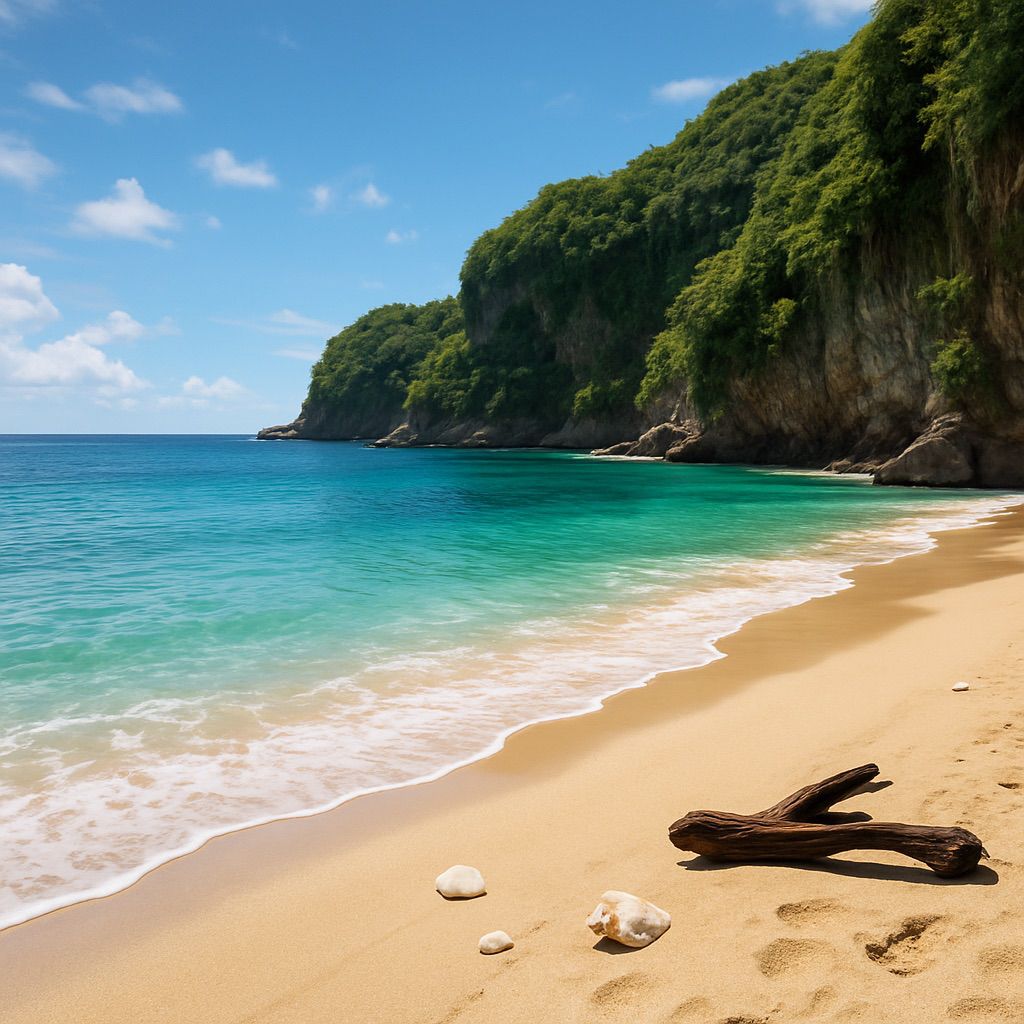
There’s something almost sacred about stumbling upon a beach you didn’t know existed, a place untouched by tourist swarms and left to the rhythm of the waves. These hidden gem beaches—some tucked behind rugged cliffs, others revealed only at low tide—are the antidote to the crowded boardwalk and the postcard-perfect but overrun resort. They offer a kind of intimacy with nature that’s hard to find in the age of social media check-ins and drone-shot travel videos. They are for those who are willing to wander off the beaten path, endure the dirt road, the steep hike, or the uncertain directions, in exchange for serenity and unspoiled beauty.

The first thing you notice about a hidden gem beach is the quiet. Not silence exactly—the ocean is rarely still—but the absence of human clamor. You hear the wind threading through coastal grasses, the soft hiss of waves on sand, the occasional cry of a gull. Without the buzz of jet skis or the thump of portable speakers, the beach feels alive in a different way, its soundtrack composed by wind, water, and wildlife. That quiet allows you to sink deeper into the moment.

The second thing is the feeling of discovery. Unlike well-known beaches, where you arrive knowing exactly what to expect from countless reviews and photographs, a hidden beach holds surprises. Maybe the sand is a shade darker than you’ve ever seen. Maybe the tide pools are rich with sea stars and anemones. Maybe a freshwater stream spills directly into the ocean, creating a mingling of currents you can feel at your ankles. These moments feel personal, as though the beach is showing you a secret it reserves only for those who come looking.

Finding these places often requires persistence. Some are known only to locals, shared in low voices over coffee or whispered directions. Others appear in obscure guidebooks, overshadowed by the “top ten” lists. Many demand a physical effort—trekking through jungle, clambering over boulders, or kayaking along a coastline until the perfect cove comes into view. But the journey is part of the magic. Every step or paddle is a declaration: you’re willing to work for this beauty, to earn it.

Hidden gem beaches are scattered across the globe, and each has its own personality. There’s Playa de Gulpiyuri in Spain, a landlocked beach connected to the sea through underground channels. There’s Whitehaven Beach in Australia’s Whitsundays, reachable only by boat or seaplane, with sand so pure it squeaks beneath your feet. In Hawaii, you might find yourself at Papakōlea, one of the rare green-sand beaches in the world, its olive hue born from volcanic minerals. In the Philippines, the secluded Nacpan Beach stretches for miles with barely a footprint. And along the coasts of lesser-traveled islands in Greece or Croatia, countless unnamed coves await the adventurous.

Beyond their beauty, these beaches carry an unspoken code: tread lightly. Their allure often lies in their relative untouched state, and it’s a responsibility to leave them as you found them. Pack out your trash, avoid trampling delicate dunes, resist the urge to take shells or stones. This respect ensures that future wanderers will feel the same wonder you did.

Many hidden beaches are more than just sand and sea—they’re ecosystems teeming with life. Coral reefs fringe some shorelines, offering snorkeling experiences richer than those at crowded tourist spots. Seabirds nest in rocky outcroppings, and if you’re lucky, you might catch sight of a pod of dolphins passing offshore or sea turtles hauling themselves onto the sand. Being there feels less like a vacation and more like being let into a private world where nature runs the show.

The best time to visit these beaches often defies the high-season calendar. Off-season trips mean fewer people, more dramatic weather, and in some places, migrating wildlife. Stormy skies can make turquoise waters glow even more vividly, and the occasional rain shower leaves the sand pristine, smoothing away any traces of the last visitor. The play of light at sunrise or sunset can transform even the simplest cove into something ethereal.

Traveling to these hidden spots changes the way you see beaches altogether. After a few experiences of sitting alone on a stretch of sand with no one else in sight, it’s hard to go back to fighting for a square of towel space between strangers. You begin to realize that beaches aren’t just backdrops for tanning and swimming—they’re living, shifting landscapes, each with its own story. And the ones you find yourself working to reach often leave the deepest imprint on your memory.

The joy of a hidden gem beach isn’t just in its beauty—it’s in the way it sharpens your senses. Without shops selling snacks or rental huts pushing parasols, you notice the salt in the air, the texture of the sand between your toes, the intricate lace of foam left by a receding wave. You taste your food more vividly when it’s the picnic you carried in your own backpack. You hear the faint rustle of crabs moving in tide pools, the low crash of a bigger wave beyond the reef.

Of course, the paradox is that the more we talk about these beaches, the less hidden they become. Sharing them is an act of generosity but also a risk. One extra set of footprints doesn’t seem like much, but multiply it by hundreds, and the fragile balance can tip. That’s why many travelers keep their favorite spots secret, or share them only with those who understand the importance of preservation. In an era when every discovery is documented and broadcast, protecting the mystery of a place can be an act of love.

Ultimately, hidden gem beaches remind us why we travel in the first place—not just to tick boxes on a list, but to connect with the world in a way that feels personal and rare. They invite you to slow down, to immerse yourself in a place without distraction, to let time stretch the way it does when you’re lying on the sand with no schedule. They strip away the extras and leave you with what matters: the meeting of land and sea, the feel of sun on your skin, the sense of being exactly where you should be, if only for a moment.

If you ever get the chance to wander down a barely marked path and find yourself stepping onto an empty shoreline, take it. Step onto that sand knowing that you are one of the few who have been there. Listen to the waves, breathe in the salt, and let the feeling sink deep. These beaches are worth more than any souvenir—they are memories you carry for a lifetime, treasures no one else can take from you.

Related Posts