Latest Articles

Youth, Loss, and Leadership: A Date Where Generations Collide

Elias Rowen

History is full of dates that feel like crossroads, moments where the themes of life, death, and the shifting of generations meet in unexpected ways. August 12 is one such day—a day where the United Nations celebrates International Youth Day, honoring the promise, potential, and resilience of young people around the world. Yet, in a striking counterpoint, it is also a date marked by tragedies from the early 19th century—stories of lost youth, of political turbulence in Britain, of leaders grappling with personal despair and public duty. Together, these threads form a tapestry that reminds us that the human story is one of both hope and heartbreak, often intertwined more closely than we’d like to admit.

To appreciate the emotional range of August 12, we have to start with the modern celebration. International Youth Day was established by the United Nations in 1999, with the first observance held in 2000. Its purpose is as ambitious as it is necessary: to spotlight the challenges facing young people worldwide, to promote their rights, and to encourage their active participation in shaping a better future. Each year brings a different theme—ranging from employment and civic engagement to environmental sustainability and mental health—because the world young people inherit is as complex as it is full of opportunity.

International Youth Day is not meant to be a single feel-good event. It is, in essence, a global conversation. Governments, NGOs, schools, and youth organizations host conferences, art exhibitions, community projects, and policy dialogues. In cities across the world, young activists stand on stages and speak into microphones, not simply as the leaders of tomorrow but as leaders today. Their voices carry stories of innovation—apps designed to tackle climate change, grassroots campaigns to combat inequality, movements to protect indigenous cultures. On this day, the future doesn’t just seem possible—it feels present and tangible.

And yet, to fully grasp the poignancy of celebrating youth on August 12, it’s worth reflecting on the other stories the date holds. The early 19th century in Britain was an era of profound political and social upheaval. The Napoleonic Wars had reshaped Europe, the Industrial Revolution was transforming economies and societies, and the British political system was under immense pressure to adapt to these changes. Within this turbulent context, the nation’s leadership faced crises not only in Parliament but also in their personal lives.

One of the tragedies that casts a shadow over August 12 is the untimely death of Robert Stewart, Viscount Castlereagh, Britain’s Foreign Secretary and a key architect of the post-Napoleonic European order. On August 12, 1822, Castlereagh took his own life at the age of 53. His death sent shockwaves through Britain and Europe, for he had been a towering figure in diplomacy, instrumental in shaping the Congress of Vienna in 1815 and in maintaining the delicate balance of power that followed.

Castlereagh’s suicide was not only a personal tragedy but also a political one. He had been under intense strain, dealing with the burden of maintaining peace in a Europe still recovering from decades of war, while also confronting domestic unrest and political opposition. His mental health, likely deteriorating for months if not years, was further pressured by rumors and political attacks. His death opened questions about the human cost of leadership, about how even the most powerful can be crushed under the weight of expectation and responsibility.

The 19th century had its share of youthful promise cut short, too. In an era where life expectancy was shorter and medical knowledge far more limited, many young people—both in public life and out of it—never had the chance to fulfill their potential. The Romantic poets of the time, such as John Keats, Lord Byron, and Percy Bysshe Shelley, embodied this phenomenon. Keats died at 25, Shelley at 29, Byron at 36—youthful deaths that became part of their mythos and, in a way, part of the Romantic ideal itself. Their works brimmed with passion and urgency, perhaps in part because they were written in the shadow of their own mortality.

When we place International Youth Day alongside these earlier losses, the contrast is sharp but illuminating. On one side, we have a modern world actively trying to create conditions in which young people can thrive—celebrating their energy, giving them platforms, seeking to address the structural inequalities that hold them back. On the other, we have a historical period where youth was often cut short by disease, war, or despair, and where even the most accomplished individuals could succumb to isolation and hopelessness.

This juxtaposition prompts reflection on what it means to truly value youth. It’s not just about celebrating birthdays or milestones—it’s about creating environments where young people can flourish, mentally, emotionally, and physically. It’s about recognizing that leaders, too, need support, that even those who seem unshakable can be in need of care. The tragedies of the 19th century remind us that ambition and achievement do not shield anyone from human vulnerability.

The story of Castlereagh in particular resonates in today’s conversations about mental health. In the 1820s, the stigma around mental illness was so great that few spoke of it openly, and effective treatment was virtually nonexistent. Leaders were expected to embody strength without falter, and any sign of weakness could be politically fatal. Castlereagh’s death was reported with a mix of shock and guarded language, reflecting a society uncomfortable with confronting the emotional realities of its heroes.

Today, by contrast, International Youth Day often includes discussions on mental health as a central theme. Young activists talk openly about anxiety, depression, burnout, and the pressures of social media. Organizations promote mental health literacy, advocate for accessible care, and challenge the stigma that still lingers. The message is clear: valuing youth means valuing their well-being, not just their productivity.

The thread connecting these stories—modern and historical—is the idea of potential, both realized and lost. The youth celebrated on August 12 each year are the embodiment of possibility. They are the artists who will shape our culture, the scientists who will push the boundaries of knowledge, the leaders who will inherit a world facing climate change, political division, and technological transformation. But the stories from the 19th century remind us that potential is fragile, that even the brightest flame can be extinguished if we do not protect it.

One could imagine what someone like Castlereagh, with his diplomatic skill and vision, might have contributed had he lived longer in a world more attuned to mental well-being. One could imagine what a Keats or a Shelley might have written had they been given decades more life. And perhaps that imagining is part of the work of International Youth Day—to ensure that today’s young people do not become tomorrow’s lost voices.

In the end, August 12 is a date that bridges centuries, reminding us of the weight of leadership, the fragility of youth, and the responsibility of the present to the future. It is a day to listen—to the joy and ambition in young voices, and to the echoes of those who are gone. It is a day to act—to create policies and communities that nurture potential rather than squander it. And it is a day to remember—that every celebration of life is also an acknowledgment of its precious brevity.

Related Posts

The Evolution of Lifeguards and Their Uniforms: From Quiet Sentinels to Cultural Icons

Dave

The lifeguard is one of those rare figures who seems to exist both in the periphery of our awareness and in the very heart of our sense of safety at the beach or pool. They’re there before the first towels hit the sand, scanning the horizon, and still there when the last stubborn swimmer reluctantly leaves the water. Over time, the image of the lifeguard—watchful, sun-kissed, and somehow a blend of casual relaxation and acute readiness—has evolved alongside the places they protect. But perhaps nothing tells the story of this transformation better than the changing uniforms they’ve worn through the decades.

The concept of a lifeguard dates back far earlier than many realize. In the 18th and early 19th centuries, there were no standardized uniforms, no organized forces patrolling the water’s edge. Early “lifeguards” were often local fishermen, sailors, or strong swimmers who happened to be nearby when trouble struck. Their “uniform” was whatever they wore that day—often heavy, impractical clothing that would make rescues even harder. Saving lives was a matter of instinct, courage, and proximity, not profession.

By the mid-to-late 1800s, the emergence of public bathing beaches and seaside resorts brought new challenges. Crowds of inexperienced swimmers needed watching, and communities began to formally hire beach patrols. In these early organized days, uniforms were minimal but symbolic—simple sashes, armbands, or caps to identify the lifeguard. The intention wasn’t fashion, but recognition: in an emergency, the rescuer needed to be immediately visible.

The early 20th century marked a significant turning point. Lifeguarding was becoming a profession, with training standards, rescue techniques, and official organizations. Uniforms shifted toward functionality—sleeveless wool swimwear for mobility in the water, with bright colors (often red or white) to stand out against the surf. Caps and tank-style swim shirts were common, both for sun protection and quick identification. The look was modest by modern standards, but it reflected the era’s swimwear trends and the need for practicality.

By the 1920s and 1930s, lifeguard uniforms were heavily influenced by competitive swimwear. One-piece tank suits for men, sometimes belted, and streamlined women’s suits replaced the heavy wool. Shorts became more common for male guards on shore duty, paired with sleeveless tops emblazoned with “LIFEGUARD” in bold lettering. This was also the period when lifeguard towers became more common fixtures, and uniforms needed to be comfortable for long shifts in the sun while remaining ready for sudden rescues.

The post-WWII era brought not only a boom in beach culture but also a shift toward the image of the lifeguard as an emblem of vitality and athleticism. Advances in fabric technology introduced lighter, quick-drying materials. Swim trunks for men grew shorter, and female lifeguards—still fewer in number—wore one-piece suits with brighter designs. The red-and-white color scheme began to dominate, thanks to its high visibility and the influence of rescue organizations worldwide.

In the 1960s and 1970s, surf culture began to shape the lifeguard aesthetic. In California, Australia, and Hawaii especially, lifeguards embodied the laid-back beach lifestyle, blending athleticism with an easy cool. Board shorts, sun-bleached hair, and reflective sunglasses became part of the unofficial “uniform” for many male guards, while female guards often adopted athletic bikinis or practical one-pieces paired with shorts. The rescue can (also known as the torpedo buoy) became a recognizable accessory—both a vital rescue tool and a symbol of authority on the sand.

The 1980s and early 1990s marked the explosion of lifeguard imagery into global pop culture. Television shows like Baywatch cemented the stereotype of the lifeguard as glamorous, perpetually tanned, and outfitted in form-fitting red swimwear. The slow-motion run down the beach became iconic, and the uniform—a high-cut red swimsuit for women, red shorts for men—was as much about branding as safety. While real lifeguards may have rolled their eyes at Hollywood dramatics, the impact was undeniable: the “lifeguard look” became a fashion trend in its own right, even away from the water.

But real lifeguards continued to adapt their uniforms with safety and practicality in mind. The late 1990s and 2000s brought lightweight rash guards for sun protection, moisture-wicking fabrics, and more standardized gear depending on region and climate. High-visibility colors remained key—red, yellow, and orange dominating in different parts of the world. Caps, visors, and polarized sunglasses became standard to reduce glare during long hours of scanning the water.

The modern lifeguard uniform is a careful balance between visibility, comfort, and utility. Many now include official logos, emergency whistle attachments, and quick-access pockets for small rescue gear. In some locations, guards switch between swimwear and more covered uniforms depending on weather and duty—board shorts and shirts for patrolling, streamlined suits for rescue swims. Technology has also crept in, with waterproof radios and even body cameras in some cases.

Importantly, the evolution of the lifeguard uniform mirrors the evolution of the profession itself. Once a loosely organized job for strong swimmers, it’s now a rigorous, highly trained role requiring certification in CPR, first aid, and specialized rescue techniques. The uniform signals authority, professionalism, and readiness. It also serves as a visible reminder to the public: someone is watching, prepared to act when seconds matter.

Yet, despite all the changes, the core image of the lifeguard hasn’t lost its timeless appeal. Whether it’s the stoic figure in a watchtower, the sprinter racing down the shore with a rescue can, or the calm rescuer guiding someone to safety, the lifeguard remains a reassuring presence. And their uniform—whether wool tank suit, red board shorts, or high-tech rash guard—tells a silent story about the era, the culture, and the shared human need to protect each other in the unpredictable meeting place between land and water.

From the beaches of Sydney to the shores of California, from lakeside camps to Olympic swimming venues, the lifeguard’s attire is more than fabric—it’s a flag of safety, an emblem of trust, and, in its own way, a piece of living history.

Related Posts

Alcatraz Receives Its First Federal Prisoners: The Rock, Capone, and the World at War

Elias Rowen

There are certain dates in history when events, separated by oceans and circumstances, become strangely intertwined. August 11 is one of those days. In 1934, the infamous Alcatraz Federal Penitentiary welcomed its first wave of inmates, among them some of the most dangerous and high-profile criminals in America—including the legendary gangster Al Capone. The Rock, as it became known, would soon grow into a symbol of both justice and isolation, a place where the law’s most notorious adversaries vanished into the fog.

But August 11 would also, years later, carry a different weight. In 1945, the date fell in the tense hours between Japan’s conditional surrender offer and the Allies’ official response. It was a day of waiting, of cautious communication, and of the silent turning of history’s gears toward the end of World War II. Two events—one set on a rocky island in San Francisco Bay, the other across a war-torn globe—would be bound forever by their place on the calendar.

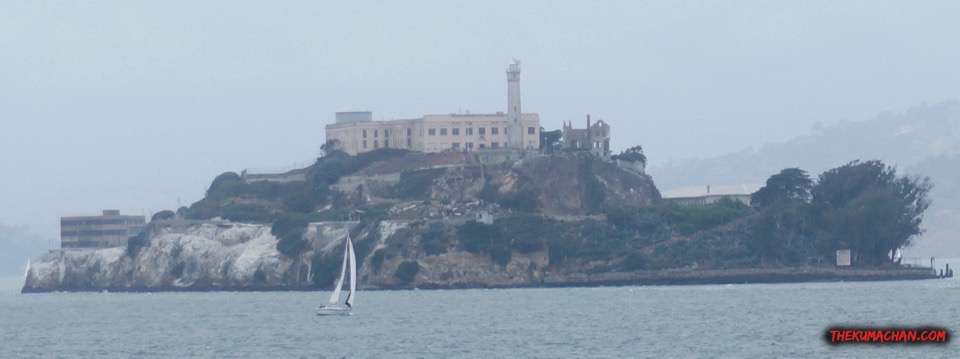
Let’s start with Alcatraz, and the vision behind it. The federal government, facing the challenge of housing prisoners who were either too violent, too escape-prone, or too influential to be contained in regular penitentiaries, turned to an isolated military prison on an island less than two miles from San Francisco. The location was perfect for its purpose: cold, shark-infested waters and swift currents made any escape attempt almost suicidal. The Army had already been using Alcatraz for military prisoners since the late 19th century, but by the early 1930s, the Department of Justice saw an opportunity to transform it into the nation’s most secure civilian prison.

On August 11, 1934, the first group of 137 federal inmates arrived from the U.S. Penitentiary in Leavenworth, Kansas, under heavy guard. The transfer was conducted with military precision. Prisoners were transported in specially designed railroad cars, guarded by dozens of armed federal agents. Upon arrival in San Francisco, they were ferried to the island under the watchful eyes of armed Coast Guard vessels.

Among the arrivals was Alphonse “Al” Capone, the most famous gangster of the Prohibition era. Capone had built his empire on bootlegging, bribery, and violence, and though the government could never pin murder on him, they had finally brought him down on charges of tax evasion. By the time he arrived at Alcatraz, Capone’s power had already diminished, but authorities feared he could still influence guards and prisoners alike in a standard penitentiary. The Rock’s strict rules, isolation, and relentless routines were designed to break such influence.

Life at Alcatraz was nothing like the relatively loose conditions in other prisons of the time. Inmates spent most of their days in solitary confinement or at silent work details. Communication was minimal, privileges rare. Even meals were conducted with rigid discipline. The prison’s rules promised “privilege through merit,” meaning good behavior was the only way to earn even the smallest comforts. For men like Capone—used to bending the world to their will—Alcatraz was a cold, unyielding wall.

Capone’s time on the island was marked by a surprising shift in demeanor. Stripped of his networks and under constant supervision, he became increasingly withdrawn. At one point, he was even allowed to play banjo in the prison band—proof that even on The Rock, routine could soften a man’s edges. But there was no escaping the reality that Alcatraz was meant to be a one-way street for America’s most feared criminals.

Meanwhile, the prison gained a reputation not only for its harshness but also for its seeming inescapability. While several inmates would attempt daring escapes over the years—some vanishing into the bay, their fates unknown—none were officially confirmed to have succeeded. Alcatraz became both a literal and symbolic fortress, a reminder that the arm of federal justice could reach even the most untouchable.

Fast forward to August 11, 1945. On the other side of the world, the United States and its Allies were grappling with Japan’s conditional surrender offer, which had arrived the day before. The war in Europe had ended in May, but the Pacific conflict still raged, fueled by years of bloody island battles and culminating in the atomic bombings of Hiroshima on August 6 and Nagasaki on August 9.

Japan’s surrender proposal—acceptance of the Allies’ terms so long as Emperor Hirohito’s sovereignty was preserved—was a pivotal moment. But it was not met with immediate acceptance. For the Allies, the question of the Emperor’s role was politically sensitive. Could they preserve his position without undermining the principle of unconditional surrender? The American public, still furious over Pearl Harbor, had little appetite for leniency, yet military leaders recognized that preserving the Emperor might speed the end of the war and avoid a costly invasion of the Japanese mainland.

August 11, 1945, thus became a day of tense diplomacy. Messages were exchanged through neutral intermediaries in Switzerland and Sweden, as leaders in Washington, London, and other capitals debated the exact wording of their reply. The eventual decision was to accept the surrender on the condition that the Emperor’s authority would be subject to the Supreme Commander for the Allied Powers—effectively making him a figurehead under Allied control. This response, though not yet formally delivered on the 11th, was already taking shape.

It’s fascinating to think of these two August 11s—1934 and 1945—side by side. On one, a fortress prison was receiving its first residents, designed to be a place where lawbreakers would find no escape. On the other, the largest war in human history was nearing its close, with the world’s leaders trying to craft a peace that would hold. Both were about control—whether of individuals who threatened civil order or of nations whose ambitions had set the world ablaze.

There’s also a certain irony in the juxtaposition. Alcatraz was about the impossibility of escape; Japan’s leaders, in those August days of 1945, were trying to negotiate a way out of a war they could no longer win. In both cases, the outcome would reshape the future. For the inmates of The Rock, it meant years of isolation, stripped of power and influence. For Japan, it meant the end of an imperial era and the beginning of a transformation into a peaceful democracy.

Alcatraz would go on to house not just gangsters like Capone, but also bank robbers like George “Machine Gun” Kelly and Robert Stroud, the “Birdman of Alcatraz.” Each inmate’s story became part of the prison’s mythology, but Capone remained its most famous resident. By the time he left the island in 1939, his health had deteriorated sharply due to syphilis, and he spent his remaining years in relative obscurity.

The prison itself closed in 1963, not because it had been breached, but because it was too expensive to maintain. The Rock’s isolation had been its greatest strength as a prison, but it also made supplying and staffing it costly. Today, it stands as a tourist destination and a relic of a different era in criminal justice—a place where the walls still echo with whispers of its most infamous residents.

Meanwhile, the events of August 1945 continue to be studied and debated. The surrender correspondence of those days was a delicate dance of language and power, setting the stage for the formal end of the war on September 2 aboard the USS Missouri. The compromise over the Emperor’s status was controversial at the time but ultimately helped ensure a smooth transition from war to peace.

Looking back, August 11 is a reminder that history is rarely neat. Some days hold more than one story worth telling, more than one thread that shapes the fabric of our world. In 1934, that thread was steel bars and cold water, a fortress in the bay meant to contain the uncontainable. In 1945, it was the fragile bridge between war and peace, built on diplomacy, pragmatism, and the hope that the worst was finally behind us.

And perhaps that’s the deeper connection between Alcatraz and the surrender talks: both were about endings, about the moment when resistance gives way to acceptance, and the world, for better or worse, changes forever.

Related Posts

Beach Volleyball for Fun & Fitness: Where Sand Meets Sweat and Smiles

Dave

There’s something irresistible about a volleyball net strung between two poles on a stretch of golden sand, the sun glittering on the horizon, and the sound of waves keeping time with the rhythm of the game. Beach volleyball is more than just a sport—it’s a joyful blend of competition, camaraderie, and physical challenge that has been capturing hearts for decades. Whether you’re a seasoned athlete diving for impossible saves or a casual weekend player laughing through a friendly match, this sport offers a unique combination of fun and fitness that few activities can match.

It’s easy to see why beach volleyball draws people in. The setting is part of the magic—playing on sand, barefoot, surrounded by ocean air, feels worlds apart from indoor courts or gyms. The surface forces every movement to be deliberate, every jump to be earned, and every sprint to be powered by real grit. It’s a workout in disguise: you’re so caught up in the game that you forget just how much you’re sweating and how many muscles are engaged until you wake up the next day with pleasantly sore legs and shoulders.

For many, the introduction to beach volleyball is as simple as a spontaneous game with friends. Someone brings a ball, someone else sets up a net, and before long, two teams are forming from whoever happens to be nearby. Tourists join locals, strangers become teammates, and the boundaries between serious play and playful competition blur. The laughter is as loud as the cheers, and “winning” often takes a backseat to just keeping the rally alive for as long as possible.

But don’t let the laid-back vibe fool you—beach volleyball can be as intense and strategic as any professional sport. In competitive formats, the game is played two-on-two, meaning there’s no room to hide. Each player has to serve, dig, set, block, and spike with equal skill. The smaller team size demands constant communication and a deep understanding of your partner’s strengths and tendencies. Matches often turn into chess games played at full speed, where anticipating your opponent’s next move can make the difference between scoring a point or eating sand after a desperate dive.

The physical benefits of beach volleyball are undeniable. Sand provides a natural resistance that makes every step more challenging, building strength in your legs, core, and stabilizing muscles. Jumping on sand also requires more explosive power, which translates into improved vertical leaps when playing on harder surfaces. Plus, all that movement under the sun boosts your cardiovascular fitness, coordination, and agility. And let’s not forget the mental side—games on the beach are almost always bathed in sunlight and fresh air, a natural mood enhancer that helps reduce stress and improve focus.

For those looking to get into the sport seriously, the pathway from casual play to competition is wide open. Many coastal towns and cities offer organized leagues, tournaments, and training programs for all skill levels. Beginners can focus on learning the fundamentals—how to pass cleanly, how to set without carrying the ball, and how to serve consistently—while more advanced players can refine their footwork, blocking technique, and tactical plays. The community is generally welcoming, with veterans happy to give pointers and invite newcomers into games.

Beach volleyball also has a glamorous side that can’t be ignored. It’s a mainstay of the Summer Olympics, where athletes from around the world compete under blazing suns and roaring crowds. The sport’s combination of athleticism, spectacle, and scenic backdrops makes it a favorite for both live audiences and television viewers. Watching elite players dive into the sand, recover, and smash a ball over the net in one fluid motion is pure artistry—proof of what’s possible when skill meets passion.

Yet, what truly sets beach volleyball apart is how adaptable it is to different moods and groups. One weekend, you might find yourself in a high-stakes tournament where every serve counts. The next, you could be at a sunset pickup game with music playing in the background and players rotating in and out without keeping score. It’s as much a social gathering as it is a sport, and that’s why so many people return to it season after season.

The game has roots that go back over a century, with its origins in early 20th-century California and Hawaii, where it grew organically alongside surfing culture. It was the perfect complement to a lifestyle that valued outdoor activity, community, and a healthy dose of competition. Over time, the sport spread to beaches around the globe, from Rio’s Copacabana to Australia’s Bondi, each location adding its own flavor to the game.

For beginners, the best advice is simple: start small. Don’t be intimidated by the pros you see on TV. Grab a ball, find a beach, and start passing it around with friends. Learn to move comfortably on the sand before focusing on big spikes or blocks. And most importantly, embrace the fact that you’re going to get sandy—really sandy. Diving for the ball is half the fun, and wearing your post-game sand as a badge of honor is part of the culture.

For those chasing fitness goals, beach volleyball is a goldmine. A single hour of casual play can burn hundreds of calories while toning your muscles and improving your balance. It’s a full-body workout wrapped in a game, which makes it easier to stick with compared to repetitive gym routines. Add in the benefits of vitamin D from sunlight (with proper sunscreen, of course), and you’ve got one of the most enjoyable ways to stay in shape.

The social benefits are just as strong as the physical ones. Beach volleyball tends to attract positive, energetic people, making it a great way to meet new friends or strengthen existing bonds. Whether you’re traveling and looking to join a game abroad or playing weekly with the same group, the sense of community is undeniable. Players cheer each other on, celebrate great saves, and share in the joy of long rallies that seem to defy gravity.

At the heart of it, beach volleyball is about connection—connection to the game, to the people you play with, and to the environment around you. The sound of waves, the feel of sand under your feet, and the sight of a ball arcing against the backdrop of a bright sky all combine to create something timeless. It’s a reminder that sport doesn’t always have to be confined to arenas and schedules. Sometimes, the best matches happen when the tide is just right, the sun is sinking low, and someone shouts, “One more game!”

So whether you’re in it for the competition, the workout, or the simple joy of chasing a ball across the sand, beach volleyball has a place for you. It’s a sport that celebrates athleticism and playfulness in equal measure, and one that proves fitness can be as fun as it is challenging. The next time you see a net on the beach, don’t just watch—jump in, get sandy, and find out why this game has captured the hearts of so many.

Related Posts

The Day Japan Offered Conditional Surrender: A Turning Point in World History

Elias Rowen

The world in August 1945 was exhausted, battered, and holding its breath. For six years, the most destructive war humanity had ever seen had consumed cities, toppled empires, and stolen tens of millions of lives. Europe lay in ruins, its cities scarred with craters and charred buildings, its people worn thin from years of rationing and fear. In the Pacific, the war had been raging relentlessly since the attack on Pearl Harbor in December 1941. By the summer of 1945, the United States and its allies had fought their way across the Pacific island by island, enduring brutal battles in places like Iwo Jima and Okinawa. But as August dawned, something was about to change forever.

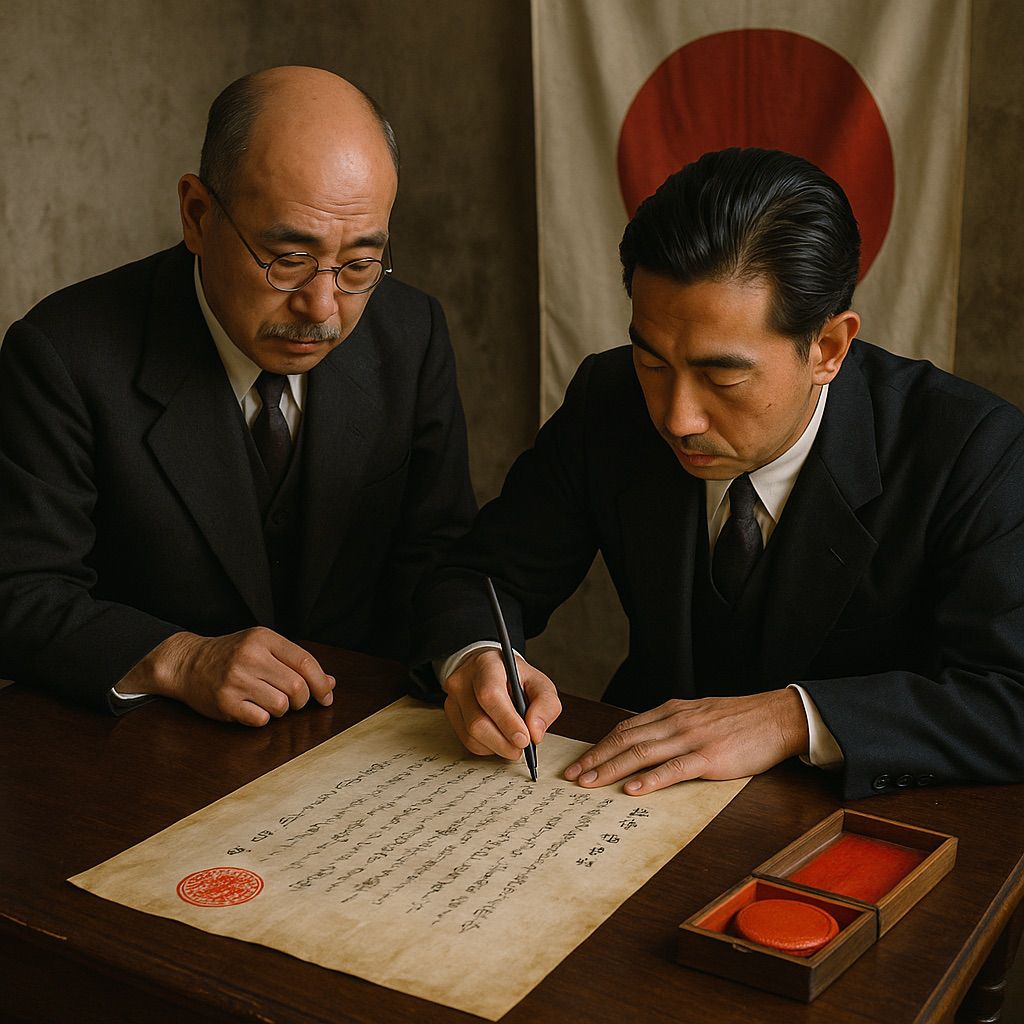
On August 10, 1945, the Japanese government made a historic move: it offered to surrender, but with one important condition—that the sovereignty of Emperor Hirohito be preserved. This proposal would become one of the most pivotal moments in modern history, a single day that crystallized the tension between military necessity, diplomatic maneuvering, and the dawning realization that the world had entered the nuclear age.

The Japanese offer did not come in a vacuum. Just two days earlier, on August 8, the Soviet Union had declared war on Japan and launched a massive invasion of Japanese-held Manchuria, sending shockwaves through Tokyo’s military leadership. And only the day before that, on August 6, an American B-29 bomber named the Enola Gay had dropped the world’s first atomic bomb on Hiroshima, obliterating the city and killing tens of thousands instantly. On August 9, Nagasaki suffered a similar fate. These unprecedented attacks, combined with the Soviet entry into the war, brought Japan’s leaders face-to-face with the reality that their nation could no longer continue the fight.

Yet surrender was not a simple matter for Japan. The country’s political and military leadership was sharply divided between moderates who recognized the inevitability of defeat and hardliners who clung to the hope of securing better terms—or even inflicting enough damage to force the Allies into a negotiated peace. Central to this division was the fate of Emperor Hirohito. To many Japanese, the Emperor was not just a political leader but a divine figure, the living embodiment of the nation’s spirit. Losing him—or seeing him tried and punished like other wartime leaders—was unthinkable.

When Japan’s surrender offer reached the Allies through diplomatic channels in Switzerland and Sweden, it was framed as acceptance of the Potsdam Declaration of July 26, 1945, with the single caveat that the “prerogatives” of the Emperor would be maintained. The Potsdam Declaration had demanded Japan’s unconditional surrender, warning of “prompt and utter destruction” if it refused. But it had not explicitly stated what would happen to the Emperor. This ambiguity now became the central question: could the Allies accept Japan’s condition without betraying the principle of unconditional surrender that had guided their war policy?

In Washington, the reaction was cautious but pragmatic. President Harry S. Truman and his advisers recognized that the Emperor’s role could be a critical lever in bringing the war to an immediate end. The American public, though weary of war, was still reeling from the attack on Pearl Harbor and years of brutal combat in the Pacific. Many in the U.S. military were already preparing for Operation Downfall, the planned invasion of Japan’s home islands—a campaign projected to cost hundreds of thousands of American lives and potentially millions of Japanese casualties. If sparing the Emperor could prevent such a catastrophe, it was a price some were willing to pay.

The Allies ultimately responded with a carefully worded statement. They reiterated the terms of the Potsdam Declaration but clarified that the Emperor would be subject to the authority of the Supreme Commander for the Allied Powers. In other words, Hirohito could remain as a figurehead, but his powers would be stripped, and Japan would have to undergo a complete transformation into a peaceful, democratic state. This compromise struck a delicate balance between principle and pragmatism, offering Japan a way to save face while ensuring the war would truly be over.

For the Japanese leadership, this response was enough. On August 14, Emperor Hirohito recorded a speech—the Gyokuon-hōsō—to be broadcast to the nation the next day. In it, he spoke in formal, archaic language, never explicitly using the word “surrender” but making clear that Japan would accept the Allied terms. When the recording was played on August 15, millions of Japanese heard their Emperor’s voice for the first time, delivering the sobering news that the war was ending. For many, it was a moment of grief, relief, and uncertainty all at once.

The events of August 10, 1945, reveal the human complexities that lie behind history’s turning points. This was not simply a matter of political declarations and military strategy—it was about identity, tradition, and the difficult process of letting go. The condition about the Emperor’s sovereignty was more than a bargaining chip; it was a reflection of a society grappling with the collapse of a worldview that had shaped it for centuries.

It’s tempting, in hindsight, to see Japan’s conditional surrender as an inevitable step, especially after the devastation of Hiroshima and Nagasaki. But in that moment, nothing was guaranteed. The war could have dragged on for months. The Soviet invasion of northern Japan might have turned the country into a divided, occupied state like Germany or Korea. A bloody invasion could have unfolded, leaving an even deeper scar on both nations. Instead, the conditional surrender opened a narrow but decisive path toward peace, one that would reshape Japan and the postwar world.

The legacy of that day still echoes. Japan’s postwar constitution, drafted under Allied supervision, renounced war entirely and transformed the Emperor into a symbolic figure. Hirohito himself would reign until 1989, his image shifting from that of a wartime leader to a reserved, almost ceremonial presence. The U.S.-Japan alliance that emerged from the occupation became one of the strongest partnerships of the 20th and 21st centuries.

Yet the moral and historical debates surrounding the end of the Pacific War remain. Was it right to drop the atomic bombs? Could the war have ended without them, perhaps through the Emperor’s mediation? Should the Allies have insisted on a trial for Hirohito, as they did for other Axis leaders? These questions still spark fierce discussion among historians, ethicists, and political thinkers.

In the end, August 10, 1945, was the day when the war’s end began to take its final shape. It was a day when diplomacy, culture, and the raw human desire to preserve life intersected in a fragile, historic agreement. And for millions of people around the world, it was the first real glimpse of a future without war—a future that had seemed almost unimaginable just days before.

Related Posts