Latest Articles

The Rise of Retro: How the High-Waisted Bikini Made a Stunning Comeback

Dave

There’s something unmistakably captivating about a revival. Be it vinyl records, vintage convertibles, or red lipstick, certain trends have a way of clawing back into the spotlight—often better than ever. Among these reclaimed icons is a staple of beachwear that has graced sun-drenched coastlines from the golden age of Hollywood to today’s Instagram feeds: the high-waisted bikini. Once dismissed as outdated or modest in an era of stringy swimwear and low-rise everything, this retro-inspired silhouette is enjoying a powerful resurgence. And it’s not just about nostalgia—it’s about confidence, body positivity, fashion, and the way women are reclaiming their relationship with swimwear on their own terms. The high-waisted bikini isn’t just a piece of fabric stitched into a flattering shape. It’s a statement. It’s an attitude. It’s a comeback that tells a story worth unraveling.

The origins of the bikini itself are relatively modern in the grand scheme of fashion history. Though ancient mosaics in Sicily depict women in what resemble two-piece swimsuits, the term “bikini” wasn’t coined until 1946. Louis Réard, a French engineer and designer, introduced the bikini to the world with a jaw-dropping debut: a model named Micheline Bernardini wore Réard’s scandalously skimpy two-piece at the Piscine Molitor in Paris. It was so tiny that no mainstream model would agree to wear it. Named after the Bikini Atoll, a nuclear test site in the Pacific, the design was intended to be explosive—and it was. The bikini shocked a conservative post-war society and took years to be fully accepted.

But even in those early years, bikinis didn’t look like the floss-thin triangles we associate with some modern versions. In the 1950s and early ’60s, modesty still reigned. Think high-waisted bottoms that hugged the waistline and cupped the hips, often paired with structured tops or even halter-style bralettes. Stars like Marilyn Monroe, Elizabeth Taylor, and Brigitte Bardot made the look iconic. These swimsuits highlighted curves while still leaving a little to the imagination. They were sexy without being overt, stylish without being loud. They evoked a certain elegance—like walking barefoot through a French Riviera resort, the sea breeze flirting with a silk headscarf and cat-eye sunglasses.

Then came the cultural revolutions of the late ’60s and ’70s, and swimwear followed suit. Hemlines climbed, tops shrunk, and low-rise bottoms became the defining trend for decades to come. By the 1990s and early 2000s, the high-waisted bikini was almost nowhere to be found. It was branded as matronly, prudish, or out of touch. Mainstream fashion favored as little fabric as possible. The “bikini body” myth reached a fever pitch—unrealistic beauty standards, diet culture, and Photoshopped perfection dominated magazines, ad campaigns, and pop culture. Swimwear became a source of anxiety for many, not empowerment.

But fashion, like the tide, always comes back around. In the 2010s, something shifted. Fueled by a growing movement of body positivity, inclusivity, and fashion nostalgia, the high-waisted bikini began its unexpected return. At first, it started quietly—seen in curated vintage shops, on style blogs, or in music videos channeling old Hollywood glam. But before long, it had hit the mainstream, showing up in collections from designers big and small. Celebrities, influencers, and everyday women alike embraced the style with open arms—and for good reason.

So what exactly is it about the high-waisted bikini that has women reaching for it again, decades after it disappeared from the frontlines of fashion? It’s a perfect storm of form and function. For starters, the cut is universally flattering. By sitting above the natural waistline, high-waisted bottoms emphasize the narrowest part of the torso and elongate the legs. They provide more coverage without sacrificing style, giving wearers a sense of comfort and security without feeling frumpy. That’s no small feat in a world where swimwear often feels more like a test of confidence than a form of self-expression.

Then there’s the versatility. High-waisted bikinis come in every imaginable color, pattern, and silhouette—from minimalist monochromes to bold florals, from cheeky cuts to full coverage. They can be sporty, feminine, vintage, or modern. Paired with a crop top, sarong, or denim shorts, they even work outside the beach. For women who want to express personal style while feeling empowered in their own skin, this resurgence offers endless opportunities.

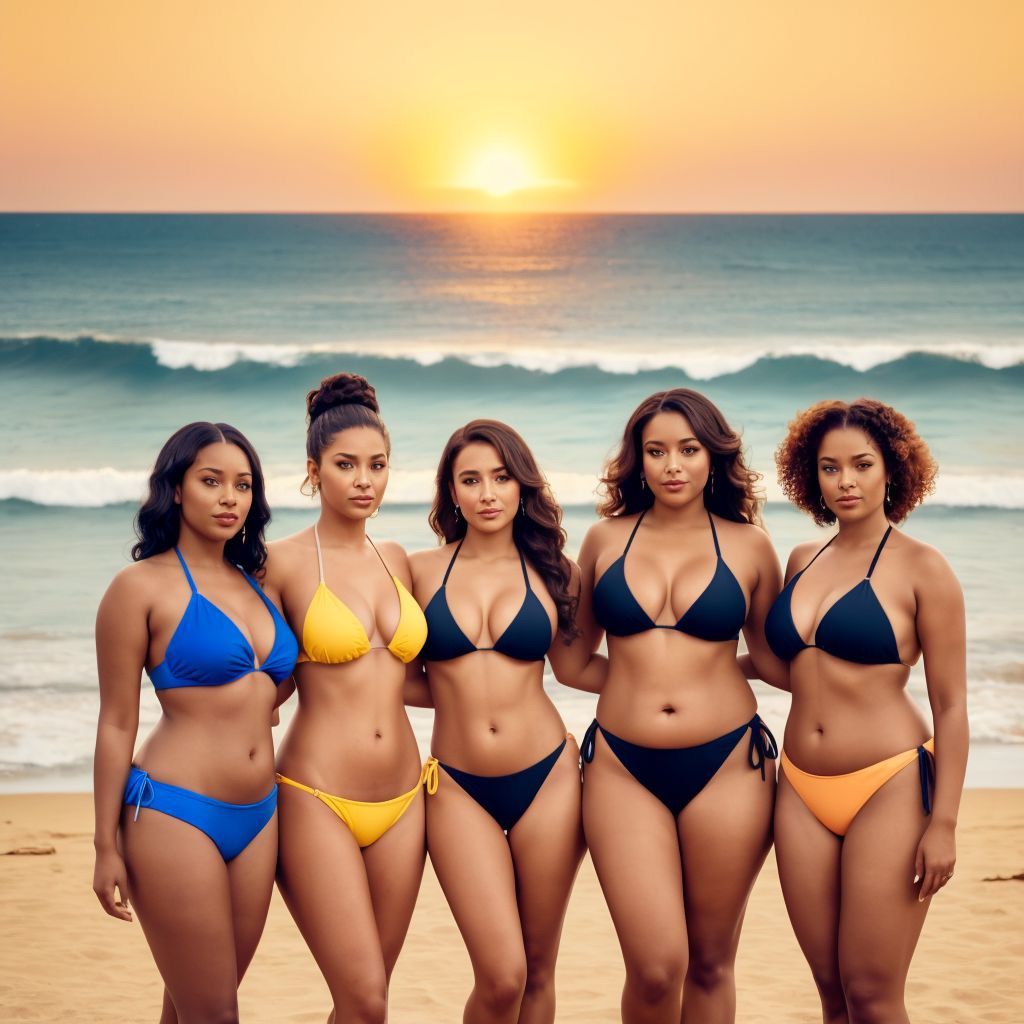
But more than anything, the high-waisted bikini’s comeback reflects a cultural shift in how we talk about beauty and bodies. For so long, women were taught that swimwear was a battleground: a place where flaws were exposed and comparisons were inevitable. Marketing campaigns showed one narrow version of attractiveness—thin, white, young, toned. If you didn’t fit that mold, you were often excluded from the narrative altogether. But today’s fashion culture, slowly but surely, is turning that idea on its head. Brands are featuring models of all sizes, skin tones, and body types. Campaigns are focusing on authenticity rather than airbrushed perfection. And the high-waisted bikini has emerged as a kind of emblem of this new wave: a celebration of the body as it is, not as it should be.

Social media, for all its pitfalls, has played a surprising role in this transformation. Platforms like Instagram, TikTok, and Pinterest have allowed women to showcase their style on their own terms. Instead of waiting for a fashion magazine to tell them what’s acceptable, they’ve become the tastemakers. Influencers and content creators from diverse backgrounds have helped redefine what beachwear confidence looks like. You’re just as likely to see a curvy mom rocking a gingham high-waisted two-piece as you are a model with washboard abs. This democratization of style has been nothing short of revolutionary.

And let’s not forget the comfort factor. The world is coming off a pandemic-era lifestyle that prioritized ease, practicality, and emotional wellness over rigid dress codes. Sweatpants became chic. Bra-free days were normalized. And when it came time to return to beaches, resorts, and pool parties, many women simply weren’t willing to go back to uncomfortable, restrictive clothing—especially not something as intimate as a swimsuit. The high-waisted bikini offered a compromise: stylish and chic, but also supportive, secure, and confidence-boosting. It’s fashion’s equivalent of a deep breath.

The beauty of the high-waisted bikini resurgence is that it doesn’t belong to any one generation. Gen Z wears it with fresh irony and vintage flair. Millennials embrace it for its balance of modern design and timeless appeal. Even Gen X and Baby Boomers are finding comfort in the style, appreciating how it bridges nostalgia and confidence. Unlike some trends that cater exclusively to youth culture, this one carries a sense of timelessness that transcends age.

Of course, some critics still scoff at the high-waisted style, branding it as old-fashioned or unsexy. But that criticism reveals more about the critic than the garment. For too long, sex appeal has been narrowly defined by exposure—shorter, tighter, skimpier. The comeback of the high-waisted bikini challenges that notion head-on. It redefines sexy as something more nuanced: confidence, comfort, elegance, and choice. There’s something undeniably powerful about a woman choosing what makes her feel beautiful—whether that’s a bold low-cut suit or a modest high-waisted number. The key word is “choosing.”

Retailers have certainly taken note. From luxury brands like Zimmermann and Solid & Striped to fast fashion giants like H&M and Target, everyone is cashing in on the demand. Even big box stores now feature high-waisted options in a variety of fits and sizes. There’s a growing awareness that swimwear isn’t one-size-fits-all, and the fashion world is finally beginning to accommodate that truth.

Designers, too, are getting creative. They’re blending vintage silhouettes with modern materials—like eco-friendly fabrics, mesh panels, or unexpected hardware. They’re experimenting with asymmetry, ruching, and bold prints. The result is a category of swimwear that feels both timeless and fresh. It’s not about replicating the past—it’s about honoring it while updating it for a new era.

More importantly, the rise of the high-waisted bikini has given way to important conversations around inclusivity, self-image, and autonomy. Every time a woman posts a picture of herself unapologetically wearing a style that once might have been deemed “unflattering” by rigid beauty norms, it chips away at decades of shame. It tells the next generation that there’s no such thing as a “bikini body”—just a body in a bikini.

The beach, once seen as a minefield of insecurities, is becoming more like a runway of self-love. And the high-waisted bikini, in all its retro glory, has become one of the brightest stars in this transformation. It’s not just fashion—it’s liberation stitched into a stylish silhouette. It’s proof that what we wear can be both personal and political. And it’s a reminder that sometimes, to move forward, we have to look back.

So the next time you see someone rocking a high-waisted bikini with effortless grace, know that it’s more than a nod to Marilyn or a Pinterest aesthetic. It’s a symbol of fashion’s full circle. Of empowerment. Of choice. And of the enduring truth that the most powerful style trend is—and always will be—confidence.

Related Posts

The Turning Tide: Courage, Sacrifice, and the Second Battle of the Marne

Elias Rowen

The sky over France in mid-July 1918 was heavy not just with summer heat but with the weight of years of brutal, grinding war. The First World War—once hailed by some as “the war to end all wars”—had ravaged Europe since 1914, transforming the verdant countryside into a muddy graveyard of youth and hope. Across trenches that spanned from the North Sea to the Swiss frontier, soldiers had endured years of bloodletting, poison gas, and despair. But on July 15, 1918, a different kind of moment began to unfold—a moment that would shift the balance of the war and ultimately set the stage for peace. The Second Battle of the Marne was more than just another engagement; it was the last great German offensive on the Western Front, and the first clear sign that the tide was turning in favor of the Allies.

Germany’s strategy in 1918 had been built on urgency. The Russian Revolution in 1917 had allowed Germany to transfer over 50 divisions from the Eastern Front to the West, a temporary advantage that they hoped to leverage before American forces could fully deploy in Europe. The German Spring Offensives of that year—starting with Operation Michael in March—had nearly broken the Allied lines. Paris came under threat. Allied morale teetered on collapse. But each offensive was met with staunch resistance, and German casualties mounted alarmingly. As the summer arrived, General Erich Ludendorff, the chief architect of Germany’s military operations, launched what he believed would be the decisive blow: a massive pincer attack on the Marne River aimed at drawing in and destroying Allied reserves. It was an ambitious gambit, timed precisely for July 15.

At first glance, the German plan was brilliant. Ludendorff hoped to strike the French Fourth Army east of Reims and simultaneously drive into the French Sixth Army to the west. The goal was not just to conquer ground but to entrap and annihilate. But this time, the French and their allies were ready. Allied Supreme Commander Ferdinand Foch had suspected Ludendorff’s intentions and allowed just enough space to bait the German assault. Meanwhile, the French had adopted a more flexible, defense-in-depth strategy—allowing Germans to penetrate lightly held front lines only to be met with devastating artillery fire and counterattacks in depth.

As German troops surged forward in the early morning hours of July 15, the French unleashed a punishing barrage of artillery fire. The air filled with thunder. Machine guns rattled from hidden positions. Gas shells seeped across no-man’s land. By noon, it was clear that the attack to the east had stalled almost entirely. On the western front of the offensive, progress was minimal. The Germans were encountering fierce resistance not just from the French but from British, Italian, and fresh American troops, who had by now begun arriving in strength.

The presence of the Americans was a crucial turning point. Though initially inexperienced, their sheer numbers and enthusiasm injected much-needed energy into the Allied cause. Among the most notable contributions was the heroic defense at Château-Thierry by the American 3rd Division, earning them the nickname “Rock of the Marne.” These young soldiers—many of them barely out of high school—held their ground against veteran German shock troops, proving that the United States was no longer a passive participant in the war.

On July 18, only three days after the German offensive began, the Allies counterattacked. The counteroffensive, led by General Charles Mangin and supported heavily by American forces under General John J. Pershing, was swift and brutal. Hundreds of Allied tanks—many for the first time being used en masse and effectively—rolled forward through the fog. French and American infantry followed, cutting through exhausted German ranks. The element of surprise was complete. Within days, the Germans were in retreat.

As the German lines buckled, it became clear that the myth of German invincibility had been shattered. For years, German morale had been sustained by victories on the Eastern Front and a belief in eventual triumph. Now, those hopes dimmed. The Allies had not only stopped a massive German assault—they had taken the initiative. The Second Battle of the Marne marked the beginning of what would become known as the Hundred Days Offensive, a relentless series of attacks that would continue until the armistice in November.

But none of this came without a cost. The battle claimed over 270,000 casualties—dead, wounded, and missing—on both sides. The French countryside, already battered by years of trench warfare, was left in ruins once again. Small villages disappeared from maps. Fields turned to cratered wastelands. Families were left grieving for sons who had only just arrived or who had never returned. The price of this turning point was staggering, but it was paid in full by those who believed the end was in sight.

There is something deeply human about the Second Battle of the Marne. It is a story of desperation and strategy, but also of resilience and renewal. On both sides, young men stared into the abyss, some for the final time, others to emerge forever changed. It is easy to become lost in the figures and tactics—the divisions moved, the kilometers gained or lost—but behind every trench was a human being longing for home. Letters from this period capture the contrast: soldiers wrote about fear and longing, about the scent of lavender wafting above the gunpowder, about the odd moments of silence between shellfire, and about the quiet dream of peacetime.

What makes the battle especially poignant is that it represented both an end and a beginning. For Germany, it was the end of ambition—a final roll of the dice that fell short. For the Allies, it was the first true moment of unity and forward momentum. For the world, it was a reminder that even the most grinding conflict could be turned, not by a single blow, but by collective courage and coordination. The Second Battle of the Marne did not end World War I, but it broke its inertia. It signaled that the path to peace, though bloodied, was finally open.

In the aftermath, as the guns fell silent and the bodies were buried, the world began to reckon with what it had become. The fields of the Marne would never be the same, but neither would the minds of those who had fought there. Nations would rise and fall, empires would collapse, and borders would be redrawn—but the memory of that July battle remained. It remained not because of the grandeur of strategy, but because of the endurance of spirit.

Each July 15, as we look back on that pivotal day, we honor not just the military outcome, but the human will that drove it. We remember the men in mud-soaked uniforms, the medics tending to the wounded under fire, the horses and tanks that charged through smoke, and the children who grew up in the shadow of that war. We remember the Americans who crossed the ocean not knowing what awaited them, and the French villagers who returned to rebuild homes brick by brick.

The Second Battle of the Marne is more than a chapter in a history book—it is a testament to what can happen when unity overcomes despair. It reminds us that wars are fought not in abstract, but in trenches, in hearts, and in hopes. The turning tide of July 1918 didn’t just wash away the illusions of German victory—it carried forward the belief that justice and peace were worth fighting for.

Related Posts

Beyond the Bikini: Must-Have Beach Cover-Ups That Transform Your Look

Dave

The beach has long been more than just a destination—it’s a mood, a mindset, a moment of escape. It’s where we go to unwind, reconnect with ourselves, feel the sun warm our skin, and let the sound of waves drown out the everyday buzz of life. But between dips in the ocean, sunbathing sessions, and breezy boardwalk strolls, there’s something else just as essential as the perfect bikini: the beach cover-up. These light, flowing, and versatile wardrobe staples do more than cover—they complete the entire beach look. They protect us from the sun, help us transition from sand to street, and give us that effortlessly chic vibe that says, “Yes, I’m on vacation—and I feel amazing.”

Once upon a time, cover-ups were considered mere afterthoughts—practical throw-ons to shield from the sun or walk back to the hotel. But today, they are statement pieces in their own right. Fashion has caught up with function, and cover-ups now speak as loudly as the swimsuits beneath them. In fact, a great cover-up can be the difference between a rushed scramble off the beach and a slow, confident strut to the nearest seaside café. The best part? There’s something for everyone, every mood, every body type, and every budget. Whether you lean toward boho elegance, urban edge, or classic glam, the world of beach cover-ups has opened wide its doors.

Let’s start with the timeless sarong, perhaps the most iconic and versatile cover-up of all time. Known around the world by different names—pareo in Tahiti, lungi in parts of South Asia, kikoy in East Africa—it’s a rectangular or square piece of fabric that can be tied in dozens of ways. As a skirt, dress, halter top, or even headwrap, the sarong is as much an expression of creativity as it is a functional piece of clothing. Toss it over your bikini bottoms for a quick walk or style it into a dress for a beachside dinner, and suddenly you’ve transformed a strip of cloth into fashion. Its lightweight nature means it dries quickly, folds easily into your beach bag, and looks good whether it’s solid-colored, tie-dyed, embroidered, or printed with tropical florals.

Next up is the kaftan, the queen of comfort and elegance. Flowing, breezy, and often made of cotton, silk, or chiffon, kaftans are ideal for those who want full coverage without sacrificing style. They float around the body, skimming rather than clinging, making them perfect for hot climates or for days when you just want to feel a little more relaxed. Kaftans can be simple or intricately detailed—think embroidered necklines, beaded hems, or bell sleeves. Some resemble gowns more than cover-ups, which makes them ideal not just for lounging but for transitioning directly into an evening look. You’ll often find kaftans gracing resort runways and luxury beach clubs, and for good reason—they’re the epitome of chic.

Shirt dresses are another favorite, especially among those who prefer something structured but still breathable. The best ones are oversized button-downs that can be worn open over your suit or belted to create shape. Linen, cotton poplin, or even denim versions can all serve different vibes—crisp and classic, casual and sporty, or artsy and undone. White shirt dresses are especially popular because they reflect the sun and give that effortless Hamptons feel. Pair them with a wide-brim hat and oversized sunglasses, and you’ve got yourself a timeless beach look. Their practicality can’t be ignored either; many shirt dresses have pockets (a rarity in women’s beachwear!) and easily move from beach blanket to beachfront brunch with zero awkwardness.

For those who love modern edge with a touch of glamour, the kimono-style cover-up is the holy grail. With their flowing sleeves, bold prints, and often sheer fabrics, kimonos feel like a cross between a robe and a runway piece. They come in varying lengths—cropped, mid-thigh, or floor-grazing—and bring drama in the best way possible. Throw one over a solid-color swimsuit, and suddenly you’re making a statement. Add some jewelry and sandals, and you’ve got a look that can go from the beach to an art gallery opening (yes, really). Kimonos can be especially flattering on all body types because they elongate the figure and create fluidity in movement.

Let’s not overlook the crochet cover-up, a bohemian dream that has made a huge comeback. Inspired by the 70s but refreshed with modern cuts and colors, crochet cover-ups are usually made from cotton yarns and offer peek-a-boo detailing that lets your swimsuit shine through. From mini dresses to tunics to full-length pieces, crochet styles are sexy without being too revealing. The texture alone makes them stand out on a beach full of smooth synthetics. They look particularly good paired with natural elements—wooden bangles, leather sandals, and straw hats. Crochet is more than just a trend; it’s a texture that gives depth and earthiness to your beach look.

For the athletic or on-the-go beachgoer, rompers and jumpsuits make a practical and stylish choice. These one-piece wonders are great for those who don’t want to fuss with coordinating separates. Lightweight materials like rayon or jersey knit allow for breathability and movement, while elastic waists or drawstrings help define your shape. You can find rompers with spaghetti straps, off-the-shoulder designs, or sporty racerbacks. They’re especially useful if you’re biking to the beach, chasing kids, or playing volleyball—whatever your day looks like. The ability to throw one on and go is part of their magic.

Maxi dresses round out the list of must-haves. These long, flowing dresses often come with spaghetti straps or halter necklines and are made of lightweight, breathable materials. The appeal here is comfort and elegance in equal measure. Maxi dresses can be printed or plain, stretchy or fitted, boho or sleek. They are the easiest way to feel “dressed” with zero effort. On cooler beach days, they also add a touch of warmth. And let’s be honest—there’s just something about a long dress fluttering in the ocean breeze that feels cinematic.

When selecting a cover-up, think beyond aesthetics—consider functionality too. Will it dry quickly after you toss it on over a wet suit? Does it provide enough sun protection for your shoulders? Is it easy to take off and put on in a beach restroom? These questions matter because the right cover-up should enhance your beach experience, not make it more complicated.

Cover-ups are also a chance to experiment with color, print, and texture in ways you might not in your everyday wardrobe. The beach is one of the few places where a neon tie-dye kimono or a see-through gold crochet tunic feels not just appropriate but fabulous. Don’t be afraid to step outside your usual style zone. After all, a vacation or beach day is about breaking routine. Maybe you’re usually all neutrals, but the beach brings out your bold side. Or maybe you prefer minimal silhouettes, but suddenly a floaty, floor-length kaftan calls to you. Let your instincts guide you—your cover-up should feel like an extension of your mood.

And speaking of mood, there’s an undeniable emotional element to cover-ups. There’s a comfort in wrapping yourself in a soft, oversized piece of fabric after a swim. There’s a confidence that comes from having something beautiful and easy to slip into, something that flatters your body, no matter how you feel that day. There’s security in having the option to show a little or a lot, to blend in or stand out. It’s why people end up loving their cover-ups just as much, if not more, than their swimsuits. Sometimes it’s the cover-up that gets the compliments, that makes the Instagram post pop, that gets borrowed by a friend “just for a minute” and never returned.

Ultimately, the best beach cover-up is the one that makes you feel like your best, most relaxed, and radiant self. Whether you’re lounging with a book, sipping something cool under an umbrella, walking barefoot along the shore, or dancing around a beach bonfire, your cover-up should move with you, breathe with you, and help you live fully in that moment. Because beach style isn’t about perfection—it’s about expression.

So as you pack your beach bag this season, don’t forget the essentials: sunscreen, a good playlist, snacks, and yes—a cover-up (or two or three). Give it the same thought and love you give your swimsuit. You’ll be surprised at how much more elevated, effortless, and empowering your beach days feel when you’re wrapped in something that feels as good as the sun on your skin.

Related Posts

Rising Dawn: The Heartbeat of Revolution at the Bastille

Elias Rowen

On a sweltering summer morning in Paris on July 14, 1789, the city stirred with restless energy. King Louis XVI’s monarchy was teetering on the brink of collapse. Bread had become unaffordable, debt hemmed in every household, and whispers of change threaded through the cafés and marketplaces. Yet no one could have predicted the seismic spark that would echo across centuries—the storming of the Bastille.

The Bastille—an imposing fortress with thick walls, narrow towers, and a dark reputation—loomed over Paris. It was a royal symbol of absolutist imprisonment, where torture and arbitrary detention thrived outside any legal framework. Though only seven prisoners remained in its gloomy cells that morning, the Bastille’s true power lay in what it represented: the crumbling authority of a monarchy that had failed to protect its people.

As tensions reached a fever pitch, Parisians banded together—commoners, tradesmen, artisans, women, and even a few soldiers sympathetic to their plight. They were armed not just with muskets and farming tools but with desperation, solidarity, and hope. The absence of trust in the royal troops, coupled with deepening fear, transformed ordinary Parisians into insurgents.

By mid‑morning, the crowd reached the fortress gates. A tense standoff ensued. Negotiations faltered. Rumors swirled of reinforcements being dispatched from the court to suppress the rebellion. Fear gave way to action. Shots rang out. The drawbridge rose. A firefight erupted. Townsfolk, with fierce determination, scaled the walls, toppled the drawbridge, and seized control of the armory and bastion.

Inside, the remaining guards surrendered their artillery. The seven prisoners—three forgers, two mentally ill individuals, and a forger’s wife—were freed. Their liberation was symbolic, but their tear­stained joy gave voice to all who suffered under tyranny. As the gates of the Bastille fell, so too did the invisible chains shackling the conscience of a nation awakening.

Word spread like wildfire across France. Parisians lit bonfires, imploring their neighbors to raise the tricolor flag. Nobles and clergy, shaken by the force of the uprising, rushed to join the National Guard. The Estates-General convened in earnest, recognizing the people’s call. By the end of July, the feudal system was dismantled, and the Declaration of the Rights of Man and of the Citizen was drafted in August.

In hushed kitchens and bustling streets alike, people spoke of one message: sovereignty no longer belonged to divine right or royal decree—it belonged to the people. Every shopkeeper, every seamstress, every laborer felt it: the power of an idea that whispered, “You matter.”

This moment of revolution was imperfect. Waves of violence followed, including the reign of terror. Yet the storming of the Bastille had ignited something more enduring than fear: it ignited belief in self-determination and public voice. Monuments were built; July 14 became Bastille Day—a national holiday, a carnival of liberty.

Today, on Bastille Day, fireworks burst over the Champ de Mars in Paris. Soldiers stand shoulder to shoulder. Crowds chant in celebration, united across generations. They don’t merely commemorate the storming of a fortress—they celebrate the ideals of revolutionary humanity: liberty, equality, fraternity.

At its heart, the storming of the Bastille is not just a tale of a building overtaken—it’s the story of a people who said, “Enough.” It’s the story of ordinary citizens who reclaimed dignity. It’s the story of how hope can topple walls and how unity can reshape history.

And so, as the sun sets on July 14 each year, Parisians and people far beyond its borders light candles, lift glasses, and remind themselves that freedom is not given—it’s claimed. They remind us that when voices unite, no fortress—literal or metaphorical—can withstand the tide.

Related Posts

The Best Bikini Styles for Every Body Type

Dave

Summer’s golden hour arrives with the kind of unapologetic heat that makes us crave the sea, the sun, and the joy of simply being. As beach towels unroll, sunblock is lathered, and flip-flops kick up grains of sand, the question that quietly echoes in the minds of many isn’t about the waves or the weather—it’s about what we’re wearing to meet the season. More specifically, which bikini best celebrates the body we’re in? It’s not just about fashion. It’s about feeling free, empowered, and seen—regardless of shape or size. In a world that still likes to market beauty in narrow templates, choosing the perfect bikini is less about trends and more about honoring individuality. The truth is, there isn’t one bikini body. There are billions.

We all know that uneasy dance with the mirror, trying on bikini after bikini, each one either clinging too tightly, slipping where it shouldn’t, or simply failing to speak to who we are. But here’s the liberating secret: there is no single perfect bikini. There is only the perfect bikini for you. The magic lies in understanding your body type—not to change it or conform, but to work with it, highlight it, love it. Bikinis are not about hiding flaws but showcasing confidence. Whether you’re petite, athletic, curvy, tall, pear-shaped, or somewhere beautifully in between, there’s a style that whispers (or shouts), “This is me, and I love how I look.”

For those with an hourglass figure—where hips and bust are nearly equal in width with a narrower waist—the key is balance. Your shape already turns heads, so opt for styles that don’t throw it off. A supportive underwire or halter top can accentuate your bust while offering needed lift, and classic high-cut or side-tie bottoms will play up those curves without overpowering your waist. Ruched sides and vintage-inspired cuts give a nostalgic nod while offering structure. Color blocking also does wonders here—breaking up the silhouette to emphasize your natural symmetry. What’s most important? Choosing pieces that keep up with your energy and let you move without fuss.

If you’re pear-shaped—wider hips, narrower shoulders, and a smaller bust—you’re in excellent company. This is one of the most common body types, and it’s ripe for contrast and creativity. Look for tops that add visual interest: ruffles, bold patterns, or push-up styles that draw the eye upward and create a sense of proportion. Halter necklines and bandeau styles can be super flattering. On the flip side, opt for solid-colored bottoms with clean lines. High-waisted briefs or skirted bikini bottoms can balance out your lower half while offering comfortable coverage. Don’t shy away from showing skin—own your shape with pieces that celebrate your curves instead of covering them.

Apple-shaped bodies—where weight is concentrated around the midsection, and the hips and shoulders are more aligned—benefit from pieces that draw the eye away from the torso and upward toward the face or downward toward the legs. A plunging neckline or V-neck top can elongate the torso, creating a more vertical line that feels lighter and leaner. Tankini-style tops with strategic ruching around the waist can add definition and comfort at the same time. Pair with high-rise bottoms that sit just above the belly button to gently sculpt and support. Monokinis with cutouts at the sides are a daring and gorgeous choice, hinting at skin while playing with form and structure.

For athletic or rectangular body types—think straight lines, fewer curves—the bikini becomes a canvas for play. Your shape can handle nearly every trend, from string bikinis to asymmetrical tops to cheeky bottoms. Ruffles, ties, prints, and textured fabrics are your best friends—they add dimension and softness. Triangle tops paired with Brazilian or tie-side bottoms can introduce curve where there’s less. Wrap tops or tops with embellishments can visually widen the bust, while high-leg cuts help give the illusion of longer legs and defined hips. The goal isn’t to “fake” curves—it’s to embrace the flexibility and fun your body allows you to have in style.

Petite bodies—shorter frames and smaller proportions—do best with bikinis that don’t overwhelm. Avoid large patterns or excessive fabric that can swallow your figure. Instead, reach for high-cut bottoms that elongate the legs and plunging necklines that stretch your torso visually. Minimalist styles, like bandeaus or tiny triangle tops, help your proportions shine. Don’t underestimate the power of fit—ill-fitting straps or too-loose bottoms can quickly shift from stylish to awkward. Petite doesn’t mean less; it means streamlined, powerful, and playful. Bonus tip: metallics and bright colors can give the illusion of more volume without adding bulk.

Tall women, on the other hand, have the height advantage and can often wear dramatic cuts that others might shy away from. Long torsos are perfect for high-waisted styles and longline bikini tops, which break up vertical space in flattering ways. You can rock bold prints, horizontal stripes, and statement pieces like wrap bikinis or one-shoulder tops. Consider bottoms with more coverage if you want to visually balance your height or draw focus. That said, if you want to lean into statuesque vibes with leggy, high-rise cuts and daringly minimal tops—go for it. Being tall is your beach superpower.

Let’s not forget about plus-size beauties—those with fuller figures often get cornered into choosing between style and support, but that’s a false choice. Brands are finally catching up with the reality that beauty isn’t one-size-fits-all. Underwire tops, thicker straps, and structured cups offer not just support but style, especially when paired with high-waisted bottoms that hug in all the right places. Wrap tops, balconette bikinis, and strategic mesh panels can be stunning and functional. Confidence radiates far more than fabric ever could, and choosing a bikini that fits like it was made for you can spark that inner glow.

But here’s something we don’t talk about enough: body type is only a small part of the story. You are not a fruit or a shape on a chart. You are a complex, dynamic human being whose relationship with your body shifts with time, mood, and season. That’s why personal style matters just as much as fit. Maybe you’re drawn to bold prints that reflect your adventurous side. Maybe you love retro cuts that tap into nostalgia. Or maybe, for you, the ultimate bikini is the one that lets you dive headfirst into the waves without a care in the world. Functionality and personality aren’t separate—they’re symbiotic.

Don’t be afraid to break “rules.” The best-dressed woman on the beach is never the one who followed a formula—it’s the one who feels completely herself. If you’re curvy and want to wear a string bikini, do it. If you’re flat-chested and love triangle tops, wear them. The only opinion that truly matters is yours. Social media and fashion magazines may sell an image, but confidence is the real brand. And when you find that one bikini that makes you walk taller, smile bigger, and move more freely, everything else melts away like ice cream in the sun.

We live in a world of increasing inclusivity, and the swimwear industry is finally beginning to catch up. Brands now offer extended sizes, adaptive swimwear, maternity options, and sustainable fabrics—all reflecting a shift toward diversity and responsibility. It’s no longer about changing ourselves to fit the clothes, but finding clothes that honor who we are. That evolution isn’t just welcome—it’s long overdue.

Shopping for bikinis doesn’t have to be a dreaded ritual. It can be an act of self-love. It can be the moment you say, “This body—right here, right now—is worthy of celebration.” It might take trying on ten different suits, but when you find the one, it’s like discovering your favorite song all over again. The melody fits, the lyrics feel like your own, and you can’t help but want to dance—or, in this case, dive into the ocean with abandon.

So, as the tide rolls in and the summer sun glistens on the waves, stand tall in whatever style speaks to you. Let the straps hug you like an old friend, the colors lift your spirits, and the silhouette remind you of your strength. There is no perfect body—only the perfect match between confidence and fabric. Every body is a bikini body. You just have to let it shine.

Related Posts