Latest Articles

The Day South African Youth Rose Up: The Soweto Uprising and the Fight Against Apartheid

Elias Rowen

June 16, 1976, was a day etched deeply into the history of South Africa and the global struggle for justice. On this day, thousands of Black students in the township of Soweto took to the streets to protest the oppressive apartheid government’s decision to enforce education in Afrikaans—a language many saw as the tongue of their oppressors. This peaceful march quickly turned into a brutal confrontation, sparking a nationwide movement that would shake the foundations of apartheid.

Apartheid was more than just segregation; it was a system designed to control every aspect of life for Black South Africans, enforcing racial inequality through laws and violence. Education was a key battleground in this war of oppression. The government’s Bantu Education policy aimed to prepare Black children for lives as laborers and servants rather than thinkers or leaders. This meant that education was being used as a tool to perpetuate the status quo, denying Black South Africans access to equal opportunities and stifling their potential.

The decree that Afrikaans be used alongside English in schools was seen as a direct attack on students’ identity and future. Afrikaans was not just a language; it was a symbol of oppression, associated with the ruling National Party and its policies of apartheid. For many Black South Africans, learning Afrikaans was tantamount to accepting and internalizing the racist ideology that underpinned apartheid.

Imagine being a young student in Soweto on that day—walking together with friends, hopeful for change, but facing the harsh reality of a regime determined to silence your voice. The peaceful protest quickly met police brutality; tear gas and live ammunition were unleashed on the crowd. Among those killed was 12-year-old Hector Pieterson, whose image, captured in a haunting photograph of a dying boy carried by a fellow student, became a symbol of resistance and sacrifice.

The Soweto Uprising ignited a fire across South Africa. Students, families, and activists joined in protests and strikes, refusing to accept an education system built on injustice. They demonstrated their determination to challenge the status quo and fight for their rights as human beings. The courage of those young protesters showed the world that the fight against oppression was not just political—it was deeply personal and urgent.

In the years that followed, the Soweto Uprising became a defining moment in the anti-apartheid movement, inspiring leaders like Nelson Mandela and fueling efforts that eventually led to apartheid’s downfall in the early 1990s. The uprising galvanized international awareness and condemnation of apartheid, highlighting its inherent cruelty and injustice.

It reminds us that sometimes, the voices of youth have the power to awaken a nation and change history. The Soweto Uprising was not just an isolated event; it was a catalyst for a broader movement for justice and equality in South Africa. It showed that ordinary people could make extraordinary sacrifices for a common goal and that even the most seemingly insurmountable obstacles could be overcome through collective action.

The impact of the Soweto Uprising cannot be overstated. It marked a turning point in the anti-apartheid movement, inspiring new waves of protests and demonstrations across South Africa. The international community began to take notice, with many countries condemning apartheid and imposing economic sanctions on South Africa.

In the face of such widespread opposition, the apartheid government was forced to make concessions. In 1983, the government announced that Afrikaans would no longer be a compulsory subject in schools, but this move came too late for many students who had already been killed or injured during the Soweto Uprising.

Today, June 16 is celebrated as Youth Day in South Africa—a tribute to the bravery and resilience of the students who dared to stand up for their rights. Their story teaches us that education is not just about books or classrooms; it’s about dignity, freedom, and the right to shape one’s own destiny. It reminds us that education should empower individuals and communities, providing them with the knowledge, skills, and critical thinking needed to navigate a rapidly changing world.

The Soweto Uprising has left an indelible mark on South Africa’s history, serving as a powerful reminder of the importance of standing up against oppression and fighting for justice. It highlights the significance of youth activism in driving change and challenging the status quo. As we commemorate this momentous occasion, let us remember the sacrifice and courage of those young students who dared to dream of a better future.

In many ways, the Soweto Uprising has become an international symbol of resistance against oppression, inspiring movements for justice around the world. It serves as a testament to the power of collective action and nonviolent resistance in challenging unjust systems and policies.

The story of the Soweto Uprising also underscores the importance of remembering our history and learning from it. As we move forward into an uncertain future, we must acknowledge the lessons of the past and strive to build a more just and equitable world for all.

Moreover, the legacy of the Soweto Uprising continues to inspire new generations of activists and change-makers around the world. It reminds us that even in the darkest moments, there is always hope for a better future. The courage and resilience of those young students who stood up against apartheid serve as a powerful reminder that ordinary people can make extraordinary differences when they work together towards a common goal.

In conclusion, the Soweto Uprising was a pivotal moment in South African history, marking a turning point in the anti-apartheid movement and inspiring new waves of protests and demonstrations across the country. It reminds us that education is not just about books or classrooms; it’s about dignity, freedom, and the right to shape one’s own destiny.

As we commemorate this day, let us remember the sacrifice and courage of those young students who dared to dream of a better future. Let us honor their memory by continuing to strive for justice, equality, and human rights around the world.

Related Posts

How a Medieval Document Changed the Course of Democracy Forever

Elias Rowen

Imagine England in 1215—a land ruled by a king with nearly unchecked power, where nobles and common folk alike faced heavy taxes, arbitrary justice, and the whims of royal authority. This was the reality for many people living under King John’s rule, but one group of brave individuals dared to challenge his authority, leading to the signing of the Magna Carta, a document that would echo through history as a cornerstone of democracy and the rule of law.

King John was not a popular monarch. His military failures, including losing vast territories in France, combined with harsh taxation and ruthless governance, angered many. He had been king since 1199, following the death of his brother Richard I (also known as Richard the Lionheart), who had gone to fight in the Third Crusade. John’s reign was marked by a series of costly wars, including the disastrous conflict against King Philip II of France, which led to the loss of Normandy and other territories.

King John’s domestic policies were equally unpopular. He imposed heavy taxes on his subjects, often without their consent or representation. This practice, known as “scutage,” allowed him to bypass Parliament and raise funds for his military campaigns through arbitrary means. The king also showed little regard for the rights of his nobles, often disregarding traditional laws and customs in favor of his own whims.

As tensions between King John and his subjects continued to rise, a group of powerful barons grew weary of the king’s abuses. Led by Stephen Langton, the Archbishop of Canterbury, and Robert Fitzwalter, one of the most influential nobles in England, the barons began to plot against their monarch. In 1214, they drew up a document known as the “Articles of the Barons,” which outlined their grievances against King John. They demanded that he agree to certain concessions, including the establishment of a new council to oversee the government and the limitation of his power to impose taxes without consent.

In June 1215, the barons gathered at Runnymede, a meadow in Surrey near Windsor Castle, where King John was forced to agree to their terms. This dramatic confrontation, which has become known as “the Battle of Runnymede,” resulted in the sealing of the Magna Carta (literally “Great Charter” in Latin). The original document consisted of 63 clauses, many of which dealt with feudal rights and property issues specific to the nobility.

However, several key provisions had far-reaching implications for English law and governance. For example, Clause 39 prohibited the king from imprisoning any freeman without a formal accusation and due process. Similarly, Clauses 40-42 guaranteed the right to a fair trial, including protection against unjust imprisonment and the right to appeal. Moreover, the document established the principle that even the king was not above the law.

Despite its significance, the Magna Carta was not without controversy. In fact, it was annulled by Pope Innocent III just a few months after being signed. King John’s supporters in the Church argued that the document undermined papal authority and challenged the divine right of kings. However, this setback did not deter the barons. They continued to promote the charter as a symbol of their resistance against an abusive monarch.

Over time, the principles enshrined in the Magna Carta endured, shaping English law and governance for centuries to come. Though it was initially a practical solution to a political crisis, the document planted seeds for the idea that no one, not even a king, is above the law. It introduced concepts such as due process, fair taxation, and the right to a lawful trial—ideas that would eventually shape modern democracy.

The influence of the Magna Carta can be seen in many subsequent documents, including the English Bill of Rights (1689), which established the principle that even the monarch was subject to the law. The American Founding Fathers also drew inspiration from the Magna Carta when drafting their own constitution. Furthermore, the Universal Declaration of Human Rights (1948) enshrines principles similar to those found in the Magna Carta.

What makes the Magna Carta truly remarkable is how it transformed the relationship between rulers and the ruled. It was one of the first times that power was questioned and accountability demanded—not just by nobles, but ultimately by all citizens. This shift laid the groundwork for representative government and civil liberties.

The legacy of the Magna Carta reminds us that democracy is not a gift handed down from above, but a hard-won right achieved through courage, resistance, and vision. Every time we hear about justice, fairness, or constitutional rights, we’re hearing echoes of that medieval document signed on a summer day over 800 years ago.

Even today, the Magna Carta is celebrated as a symbol of liberty and the ongoing struggle to balance authority with freedom. It’s a powerful reminder that laws exist not to serve the powerful but to protect the rights and dignity of every individual.

As we reflect on this remarkable document, we are reminded of the importance of standing up for our rights and demanding accountability from those in power. The Magna Carta serves as a beacon of hope for future generations, inspiring us to continue striving for justice, equality, and human rights.

The story of the Magna Carta is one of courage, resistance, and vision. From its origins in 13th-century England to its global impact on constitutional law, this document has become an icon of democracy and a testament to the enduring power of the human spirit.

As we commemorate this milestone in history, let us remember that the principles enshrined in the Magna Carta are not just relics of the past but continue to shape our world today. They remind us that, as citizens, we have a duty to stand up for our rights and demand accountability from those in power.

In a world where power can sometimes seem overwhelming, the Magna Carta stands as a powerful reminder that even the most seemingly insurmountable obstacles can be overcome through collective action and determination.

Related Posts

From Revolution to Nation: The Birth of the U.S. Army and the Fight for Freedom

Elias Rowen

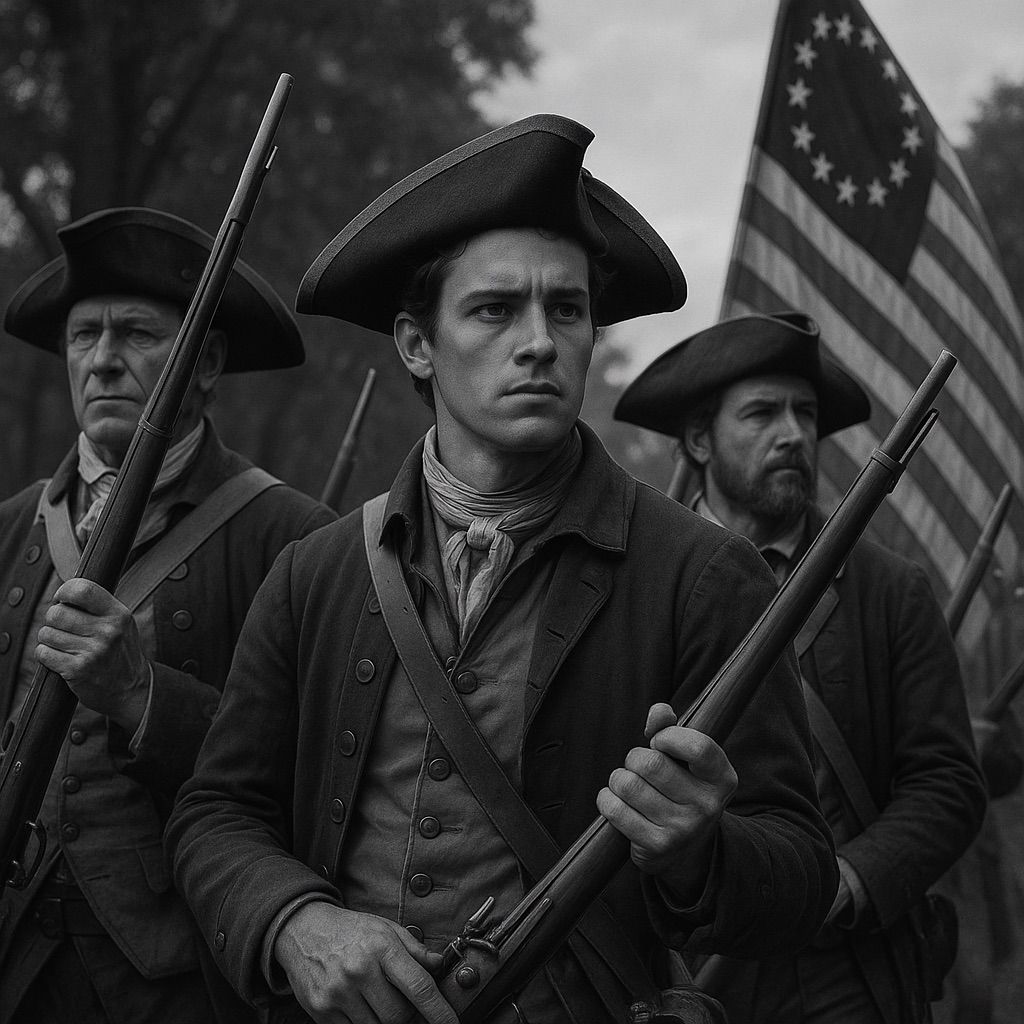
Picture the American colonies in the summer of 1775—tensions boiling over, hearts burning with the desire for freedom, and a fledgling group of patriots ready to stand against one of the world’s most powerful empires. It was on June 14 of that year that the Continental Congress took a bold, historic step: establishing the Continental Army, the very foundation of what would become the United States Army. This wasn’t just the creation of a military force; it was the birth of a symbol of American resilience, courage, and the enduring fight for independence.

Before the army was founded, the colonies were a patchwork of militias—local groups of volunteers who were more farmers, tradesmen, and townsfolk than professional soldiers. But as the British Crown tightened its grip and conflicts like the battles of Lexington and Concord erupted, it became clear that a more organized, unified fighting force was needed. The Continental Congress, meeting in Philadelphia, recognized this urgent need and responded by authorizing the creation of a continental army under a single command.

George Washington, a Virginia planter and experienced soldier from the French and Indian War, was appointed Commander-in-Chief. His leadership would become legendary, but in those early days, the future was uncertain. The army was a diverse mix of men from different colonies, backgrounds, and skills—many with little to no formal military training, but all bound by a common dream of liberty.

Imagine these early soldiers: farmers leaving their fields, shopkeepers closing their stores, and ordinary men stepping into the unknown with nothing but hope and determination. Supplies were scarce, uniforms were often homemade, and conditions were harsh. Yet, their spirit never wavered. They were fighting for more than land or titles—they were fighting for the very idea of freedom and self-governance.

The formation of the Continental Army was a turning point. It gave the revolutionary cause structure and strength. The army fought in crucial battles throughout the Revolutionary War, from the brutal winter at Valley Forge to the decisive victory at Yorktown. Washington’s leadership and the soldiers’ endurance would eventually secure American independence and lay the groundwork for the nation’s future.

Over the centuries, the U.S. Army evolved from those humble beginnings into one of the most powerful and respected military forces in the world. Yet, June 14 remains a day to remember the courage of those first soldiers who dared to dream of a new nation. It’s a reminder that every great institution starts with a bold step forward and a belief in something bigger than oneself.

Today, the U.S. Army celebrates June 14 as its official birthday, honoring the legacy of sacrifice, service, and dedication that continues to shape America’s story. From those early patriots to the soldiers of today, the Army stands as a testament to resilience and the enduring spirit of freedom.

Related Posts

The Day “You Have the Right to Remain Silent” Became a Shield for Justice

Elias Rowen

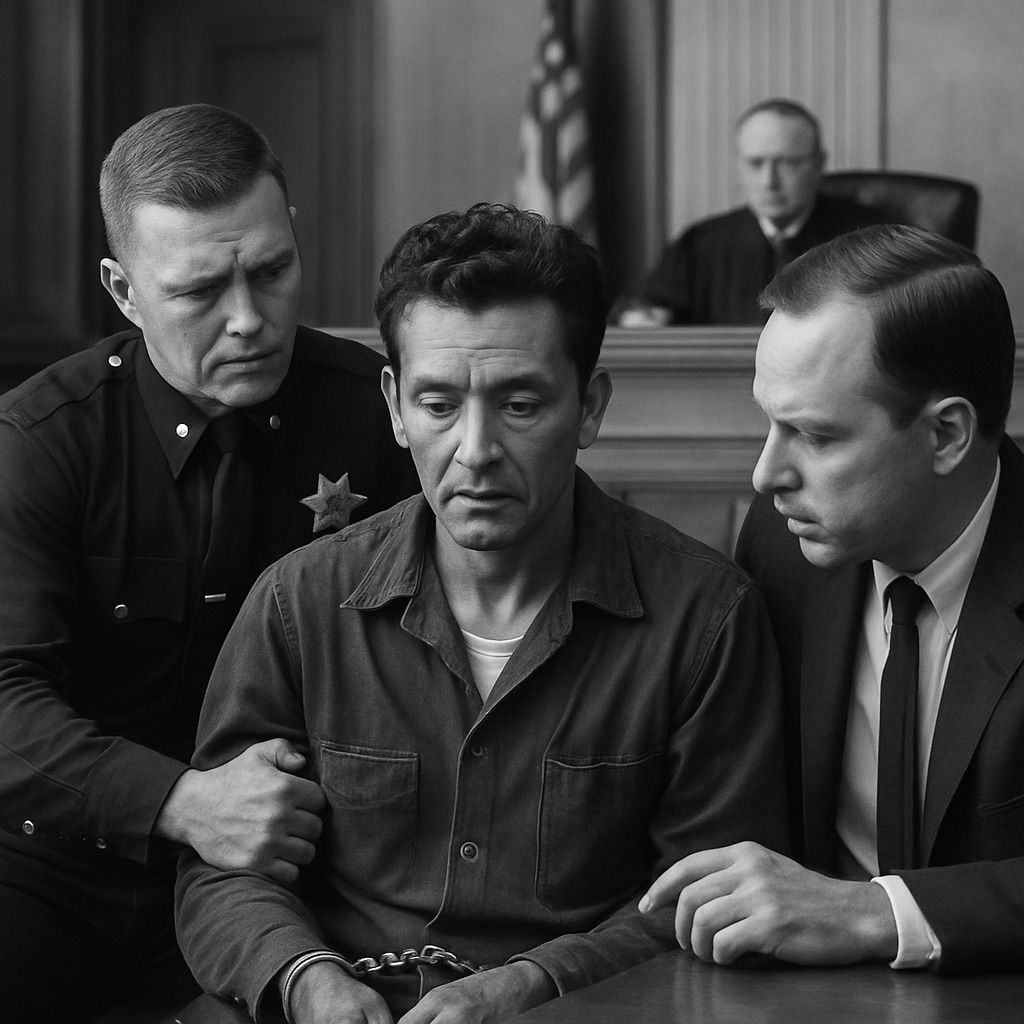
Have you ever watched a crime drama and heard the phrase, “You have the right to remain silent”? That line, so familiar now, didn’t always exist in American law. It became a fundamental part of police procedure thanks to a landmark Supreme Court ruling on June 13, 1966, in the case of Miranda v. Arizona. This ruling fundamentally transformed how law enforcement interacts with suspects, safeguarding individual rights and shaping the justice system we know today.

The story begins with Ernesto Miranda, a man arrested in Phoenix, Arizona, accused of kidnapping and rape. During police questioning, Miranda confessed to the crimes, but here’s the catch—he was never informed of his right to remain silent or to have a lawyer present. His confession became the primary evidence used against him at trial. Miranda was convicted, but his legal team appealed, arguing that his confession was obtained without informing him of his constitutional rights, thus violating the Fifth Amendment protection against self-incrimination.

Before this ruling, police interrogation techniques were often aggressive and sometimes coercive. Suspects could be pressured into confessing without understanding their rights, leading to wrongful convictions and injustices. The Supreme Court had to answer a crucial question: Should individuals be explicitly informed of their rights during police interrogations?

On June 13, 1966, the Court ruled in a 5-4 decision that suspects must be informed of their rights before custodial interrogation. This included the right to remain silent and the right to an attorney, whether appointed or privately retained. These warnings became known as “Miranda Rights,” and they created a clear, constitutional safeguard to protect suspects from self-incrimination and ensure fair police practices.

The impact was immediate and profound. Police departments across the country quickly adopted the requirement to read Miranda warnings, fundamentally changing law enforcement’s approach. The ruling acknowledged the power imbalance between police and suspects, recognizing that without proper warnings, confessions could be unreliable or coerced. It reinforced the principle that the justice system must protect individual freedoms, even when prosecuting serious crimes.

Miranda’s case also sparked widespread debate. Critics argued that the ruling tied law enforcement’s hands and made it harder to solve crimes, while supporters celebrated it as a crucial victory for civil liberties. Over time, Miranda Rights became an iconic symbol of the American justice system’s commitment to fairness and due process.

The phrase “You have the right to remain silent” has since entered the public consciousness, reminding everyone that the law respects individual dignity and protects against abuse of power. It highlights that the presumption of innocence is not just a legal concept but a lived reality that must be actively upheld.

Even today, the legacy of Miranda v. Arizona endures. It continues to influence police procedures, court rulings, and public understanding of justice. Knowing your rights has empowered countless individuals to navigate the legal system more fairly, ensuring that the path to justice respects both society’s safety and individual freedoms.

The establishment of Miranda Rights is a powerful reminder that laws evolve to protect people, especially those vulnerable to injustice. It underscores how one Supreme Court decision can ripple through generations, shaping not just legal practice but the very idea of justice itself.

Related Posts

Love Knows No Bounds: The Supreme Court’s Landmark Ruling on Interracial Marriage

Elias Rowen

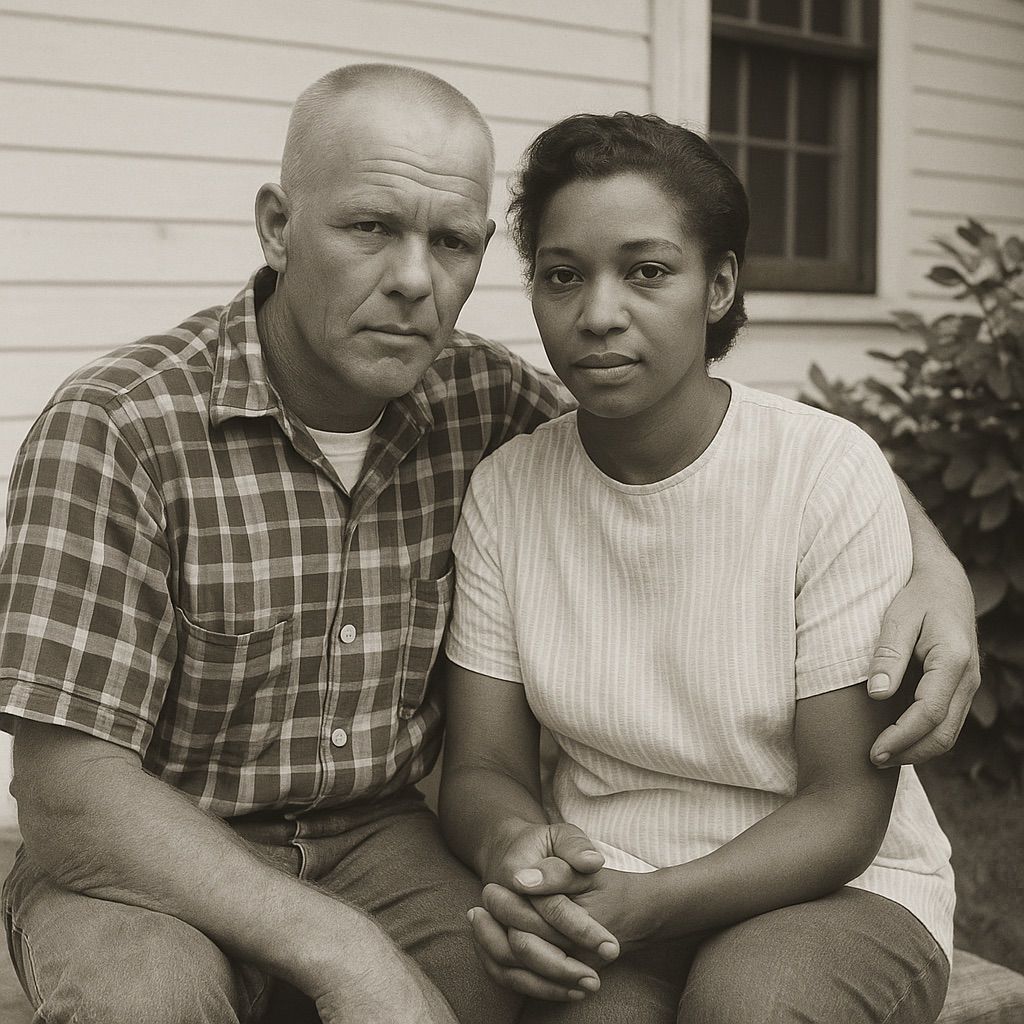
Imagine living in a time when the simple act of marrying the person you love could land you in jail—just because of the color of their skin. This was the harsh reality for Richard and Mildred Loving, a couple whose love story would ultimately challenge and change the laws of an entire nation. On June 12, 1967, the U.S. Supreme Court made a landmark ruling in Loving v. Virginia that legalized interracial marriage across America, breaking down one of the most entrenched barriers of racial discrimination.

Richard Loving was a white man from Virginia, and Mildred Jeter was a Black and Native American woman. In 1958, after they married in Washington, D.C.—where interracial marriage was legal—they returned to their home state of Virginia. There, their marriage was illegal under the state’s anti-miscegenation laws, which banned interracial couples from marrying. Just weeks after their wedding, the Lovings were arrested in the middle of the night. Their crime? Simply being married. The law forced them to plead guilty and face a year in prison. But a judge gave them an unusual sentence: if they left Virginia and stayed away for 25 years, they could avoid jail time.

Imagine the weight of that sentence—exiled from your home and community simply because of who you chose to love. This painful reality sparked a quiet determination in the Lovings to fight back, setting in motion a legal battle that would reach the highest court in the land. Their case might have remained a personal tragedy if not for the efforts of the American Civil Liberties Union (ACLU), which took up their cause in 1963. The Lovings challenged the Virginia law, arguing that it violated their constitutional rights under the 14th Amendment, which guarantees equal protection under the law and due process.

For nearly a decade, their case worked its way through the courts. The central question: Could states deny couples the right to marry based solely on race? When the Supreme Court finally heard the case, the nation was already in the midst of sweeping social change. The civil rights movement was challenging segregation and discrimination in schools, public spaces, and voting rights. The Lovings’ case was part of this larger fight for equality and justice. On June 12, 1967, the Supreme Court ruled unanimously in favor of the Lovings. Chief Justice Earl Warren wrote the opinion declaring Virginia’s anti-miscegenation law unconstitutional. He stated plainly, “There is no legitimate overriding purpose independent of invidious racial discrimination which justifies this classification.” The ruling struck down all laws banning interracial marriage in the 16 states where such bans still existed. It was a powerful affirmation that marriage is a fundamental right, and that the government has no place in dictating whom people can or cannot love.

The Loving v. Virginia decision was far more than a legal win—it was a seismic cultural moment. It challenged deeply ingrained prejudices and social norms that had long upheld racial segregation. The ruling sent a message that love transcends race, and that equality under the law is not negotiable. But the story didn’t end there. The Lovings returned to Virginia and quietly resumed their lives, but their case ignited a wave of social change that would continue to influence generations. Interracial couples across the country could now marry without fear of legal persecution, and slowly but surely, the idea of love crossing racial boundaries became more accepted.

This ruling has also had a lasting impact far beyond just marriage laws. It laid the groundwork for future civil rights battles and showed that the Supreme Court could be a powerful agent for justice and social progress. It reminds us that laws are not just words on paper—they shape lives, communities, and the very fabric of society. The Lovings’ courage to fight for their right to love freely remains an inspiring example of how ordinary people can drive extraordinary change.

Today, the Loving v. Virginia case is often referenced in discussions about civil rights and marriage equality, including debates around same-sex marriage. It stands as a beacon of hope and progress, reminding us all that love is a universal human right that should never be denied or diminished.

In a world still grappling with division and inequality, the story of Richard and Mildred Loving is a powerful testament to the resilience of love and the ongoing fight for justice. Their legacy continues to teach us that change is possible when we stand up for what is right—even when the odds seem overwhelming.

Related Posts