
Latest Articles

Apollo 13: The Successful Failure That Inspired the World

Elias Rowen

On April 11, 1970, Apollo 13 launched from Kennedy Space Center, carrying three astronauts on what was supposed to be NASA’s third moon landing. Commander Jim Lovell, Command Module Pilot Jack Swigert, and Lunar Module Pilot Fred Haise were ready to make history. However, just two days into the mission, an oxygen tank exploded, crippling the spacecraft and turning a routine mission into a harrowing fight for survival. What followed was one of the most incredible stories of human ingenuity, teamwork, and perseverance in the face of near-certain disaster.

“Houston, we’ve had a problem.” These words, spoken by Swigert and repeated by Lovell, signaled the beginning of a crisis that no one had anticipated. The explosion not only caused a critical loss of oxygen but also severely limited power, water, and the spacecraft’s ability to navigate. The crew’s original mission—to land on the Moon—was immediately abandoned. Now, the only objective was getting home alive.

Mission Control in Houston, along with the astronauts, worked tirelessly to overcome seemingly impossible obstacles. The crew had to move into the Lunar Module, which became their makeshift lifeboat, despite the fact that it was never designed to support three people for an extended period. Engineers on the ground scrambled to find ways to conserve power, create a new trajectory, and even construct a life-saving carbon dioxide filter using only the materials available onboard.

Against all odds, Apollo 13 slingshotted around the Moon and began its perilous journey back to Earth. The world held its breath as the damaged spacecraft re-entered Earth’s atmosphere, uncertain if the heat shield would hold. Then, after four minutes of terrifying radio silence, a crackling voice came through—Apollo 13 had survived. The astronauts splashed down safely in the Pacific Ocean, greeted as heroes not for landing on the Moon, but for defying disaster with resilience and innovation.

Apollo 13 became known as the “successful failure”—a mission that did not achieve its original goal but demonstrated the extraordinary power of human problem-solving. It remains one of NASA’s finest hours, a reminder that even in the face of overwhelming odds, determination, teamwork, and ingenuity can bring people safely home.

Related Posts

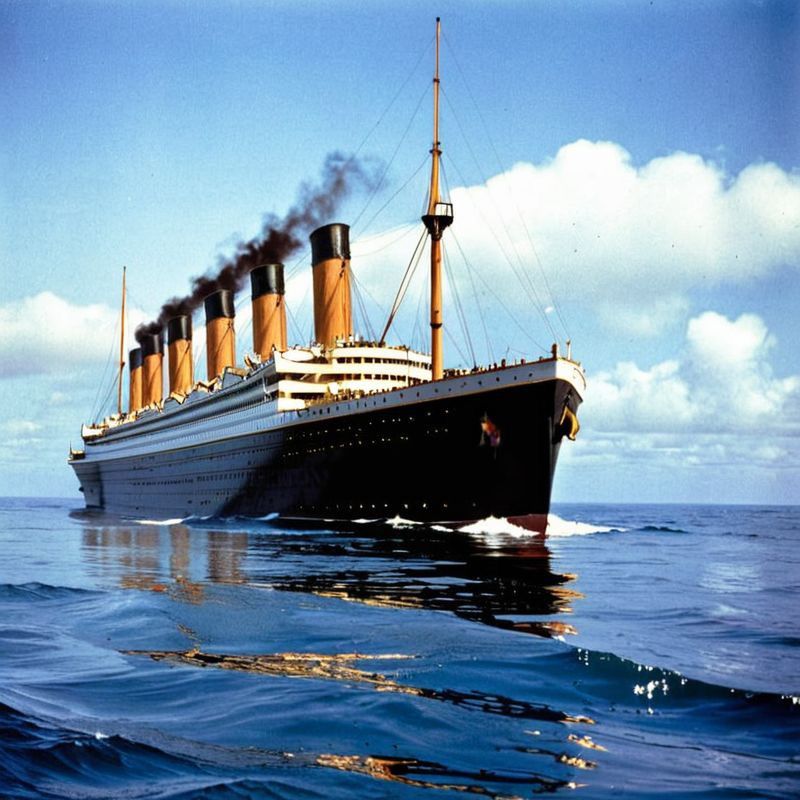
The Unsinkable Sets Sail: Titanic’s Fateful Journey

Elias Rowen

On April 10, 1912, the RMS Titanic, the largest and most luxurious ship of its time, set sail from Southampton, England, on its maiden voyage to New York City. Designed to be the pinnacle of modern engineering, Titanic was hailed as “unsinkable,” a triumph of human innovation and ambition. However, just days into its journey, the world’s grandest ocean liner would meet a tragic fate, sinking into the icy depths of the Atlantic and taking over 1,500 lives with it.

Excitement buzzed as passengers boarded the magnificent ship. From the lavish first-class suites to the modest third-class cabins, people from all walks of life embarked on what was meant to be a journey of hope and new beginnings. On board were some of the wealthiest individuals in the world, including business magnates and aristocrats, as well as immigrants seeking a better life in America. The Titanic, stretching over 882 feet and boasting grand staircases, fine dining halls, and even a swimming pool, was a floating palace—a symbol of human progress and prosperity.

As the Titanic sailed across the Atlantic, passengers enjoyed days of luxury and leisure. But beneath the elegance, a fatal flaw lurked: the ship did not carry enough lifeboats to accommodate everyone on board. This oversight, coupled with the belief that the Titanic was virtually indestructible, would have devastating consequences.

On the night of April 14, disaster struck. The ship collided with a massive iceberg, tearing a series of holes in its hull. Panic and disbelief spread as it became clear that the “unsinkable” Titanic was doomed. Chaos erupted as lifeboats were launched, prioritizing women and children, but there were not nearly enough. The ship’s band played on as passengers fought for survival in the freezing waters. In just over two hours, the mighty Titanic disappeared beneath the waves, leaving behind a legacy of sorrow, heroism, and caution.

More than a century later, the Titanic remains one of history’s most haunting tragedies. Its story continues to captivate the world, serving as a sobering reminder of human hubris, the fragility of life, and the need for better safety measures at sea. The Titanic set sail with dreams of grandeur, but it will always be remembered for the disaster that changed maritime history forever.

Related Posts

The Day the War Ended: Lee Surrenders at Appomattox

Elias Rowen

On April 9, 1865, the bloody and divisive American Civil War finally came to an end when Confederate General Robert E. Lee surrendered to Union General Ulysses S. Grant at Appomattox Court House in Virginia. After four years of brutal conflict that claimed over 600,000 lives, the nation stood at a turning point. The surrender marked not only the collapse of the Confederacy but also the beginning of a long and painful road to reunification and healing.

Lee’s Army of Northern Virginia was battered and exhausted. After a series of crushing defeats and dwindling supplies, he realized that continuing the fight would only lead to unnecessary loss of life. With Union forces closing in, Lee made the difficult decision to surrender. On that fateful afternoon, he rode to the home of Wilmer McLean, where Grant awaited him. The meeting was not one of bitter enemies but of weary soldiers who understood the weight of the moment. Grant, known for his tenacity on the battlefield, showed remarkable generosity in victory, offering Lee’s men the ability to return home with their horses and ensuring they would not be prosecuted for treason. His terms reflected President Abraham Lincoln’s vision for a peaceful reconciliation rather than harsh punishment.

The surrender at Appomattox did not immediately end all hostilities, but it signaled the inevitable conclusion of the war. Other Confederate forces soon followed Lee’s lead, and by the end of May, the rebellion was completely crushed. Though the fighting was over, the nation faced a new challenge—reconstruction. The scars of war ran deep, and the battle for civil rights and equality for formerly enslaved people was just beginning.

The meeting between Lee and Grant remains one of the most significant moments in American history. It was a scene of dignity, restraint, and the first step toward rebuilding a broken nation. Though the Civil War had ended, its impact would be felt for generations. The surrender at Appomattox was more than a military event—it was a defining moment in the American story, one that reshaped the nation and laid the foundation for the struggles and progress that would follow.

Related Posts

Hank Aaron: The Swing That Made History

Elias Rowen

On April 8, 1974, baseball history was rewritten as Hank Aaron stepped up to the plate and sent his 715th career home run soaring over the outfield wall. With that single swing, he surpassed Babe Ruth’s long-standing record, cementing his legacy as one of the greatest players the game had ever seen. But Aaron’s journey to this moment was about more than just baseball—it was a testament to perseverance, resilience, and grace under pressure.

Breaking Ruth’s record was no easy feat. For years, Aaron had been steadily climbing the home run ladder, but as he inched closer to 715, the pressure became unbearable. He faced relentless racism, hate mail, and even death threats from those who couldn’t accept a Black man surpassing a white baseball legend. Yet, Aaron refused to be intimidated. With quiet dignity and unwavering focus, he continued to do what he did best—play baseball.

The historic moment came during a game between the Atlanta Braves and the Los Angeles Dodgers. In the fourth inning, with thousands of fans on their feet and millions watching on television, Aaron connected with a pitch from Al Downing. The ball sailed deep into left-center field, clearing the fence and making history. As he rounded the bases, the weight of years of struggle seemed to lift. Two fans ran onto the field to celebrate with him, and as Aaron reached home plate, his teammates, family, and the baseball world erupted in celebration.

Hank Aaron’s record-breaking home run was more than just a number—it was a triumph over adversity and a defining moment in American sports history. He would go on to finish his career with 755 home runs, a record that stood for decades. But beyond the stats, Aaron’s legacy is one of courage, excellence, and breaking barriers. He opened doors for future generations of athletes and proved that talent and perseverance could overcome even the deepest-seated prejudice. Decades later, his name still resonates as a symbol of greatness, both on and off the field.

Related Posts

A Hundred Days of Horror: The Rwandan Genocide

Elias Rowen

On April 7, 1994, one of the darkest chapters in human history began—the Rwandan Genocide. Over the course of just 100 days, nearly one million people, mostly Tutsis, were brutally murdered by extremist Hutu militias. Fueled by deep-rooted ethnic tensions, propaganda, and decades of colonial influence that exacerbated divisions, the genocide unfolded with shocking speed and unimaginable brutality. Families were torn apart, entire communities were wiped out, and the world stood by as Rwanda descended into chaos.

The seeds of the genocide were sown long before 1994. Colonial powers had favored the Tutsi minority, creating resentment among the Hutu majority. Decades of political struggles and violence culminated in a growing movement of Hutu extremists who sought to eliminate the Tutsi population entirely. When Rwandan President Juvénal Habyarimana, a Hutu, was killed after his plane was shot down on April 6, 1994, it became the spark that ignited the massacre. Almost immediately, roadblocks were set up, and Hutu militias, known as the Interahamwe, began hunting down Tutsis and moderate Hutus, slaughtering them with machetes, guns, and crude weapons.

The international community largely failed Rwanda in its greatest time of need. Despite warnings from humanitarian organizations and UN peacekeepers on the ground, world leaders hesitated to intervene. The United Nations had troops stationed in Rwanda, but with limited authority and resources, they were powerless to stop the killings. Countries that had the power to help instead evacuated their own citizens and turned their backs on the crisis. The failure to act remains one of the greatest moral stains on modern history.

Amid the horror, there were stories of resilience and survival. Many brave individuals risked their lives to hide and protect those being hunted. The genocide finally came to an end in July 1994 when the Rwandan Patriotic Front (RPF), led by Paul Kagame, took control of the country and stopped the slaughter. The aftermath left Rwanda in ruins, with survivors traumatized and entire families lost. However, in the decades since, Rwanda has made remarkable strides in rebuilding, promoting reconciliation, and ensuring that such atrocities are never repeated. The Rwandan Genocide stands as a haunting reminder of the consequences of hatred, division, and international indifference.

Related Posts