Latest Articles

The Night That Changed America: Lincoln’s Final Hours

Elias Rowen

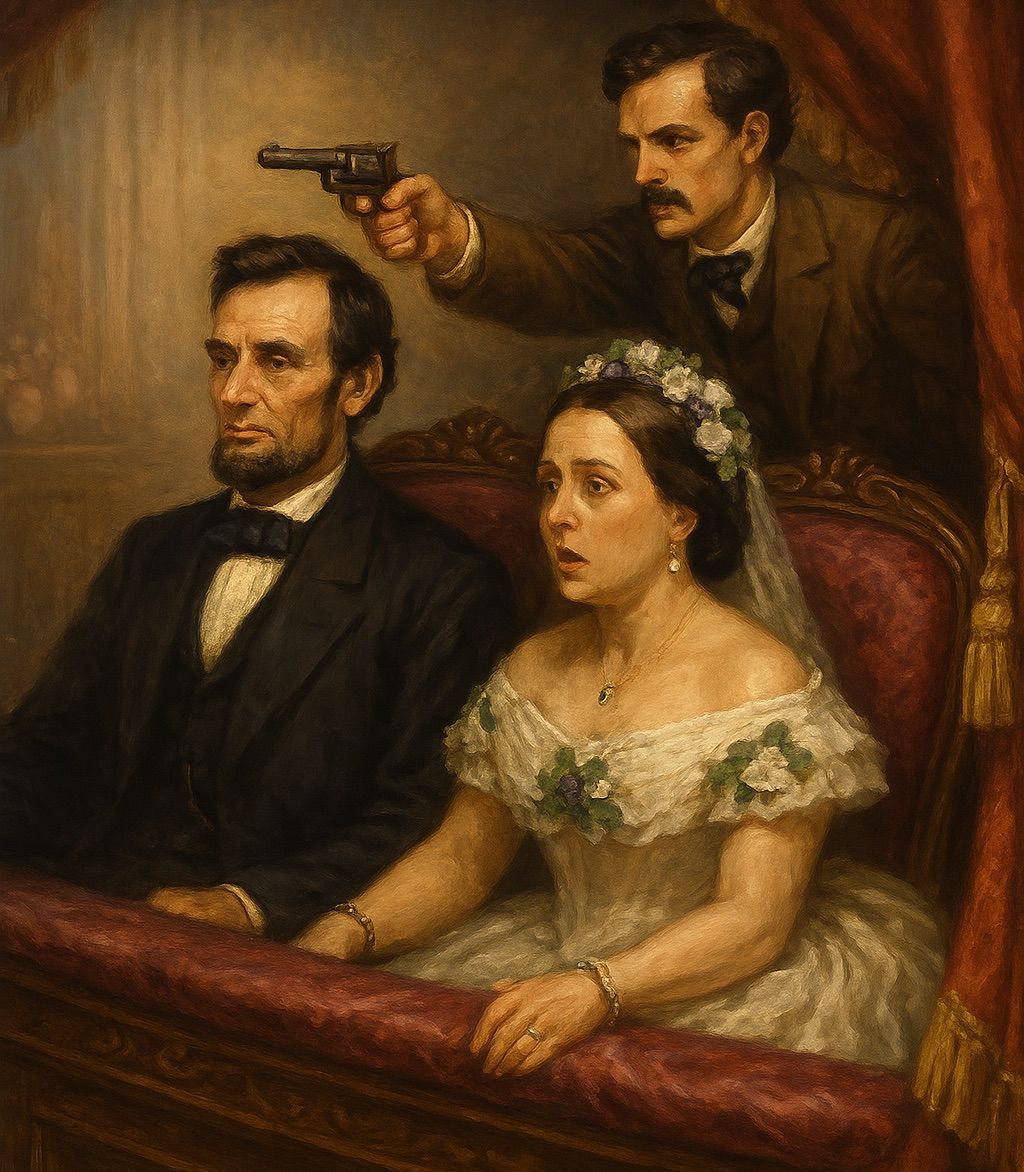
Abraham Lincoln, the 16th President of the United States, was no stranger to adversity. He led the country through its darkest days—the Civil War—keeping the Union intact and paving the way for the abolition of slavery. But on the night of April 14, 1865, just days after the war had effectively ended, tragedy struck. Lincoln attended a performance of Our American Cousin at Ford’s Theatre in Washington, D.C., unaware that this evening would be his last.

John Wilkes Booth, a well-known actor and Confederate sympathizer, saw Lincoln as a tyrant who had destroyed the South. Fueled by anger and desperation, he planned an assassination that he believed would revive the Confederate cause. As the play reached a moment of laughter, Booth crept into the presidential box and fired a single shot into the back of Lincoln’s head. Chaos erupted in the theater as Booth leaped onto the stage, shouting “Sic semper tyrannis!”—Latin for “Thus always to tyrants”—before escaping into the night.

Doctors rushed to Lincoln’s side, but the wound was fatal. He was carried across the street to the Petersen House, where he lay unconscious for hours. As dawn approached on April 15, Lincoln took his final breath. Secretary of War Edwin Stanton solemnly declared, “Now he belongs to the ages.” The nation plunged into mourning, grieving the loss of a leader who had fought tirelessly for unity and justice.

Booth’s desperate flight from justice ended 12 days later when Union soldiers found him hiding in a Virginia barn. He was shot and killed after refusing to surrender. His plot to save the Confederacy had instead cemented Lincoln’s place as a martyr for American democracy.

Lincoln’s assassination was more than just the tragic end of a president—it was a moment that altered the course of history. His death left the country in shock, shaping the future of Reconstruction and the fight for civil rights. More than a century later, Lincoln’s legacy endures, a testament to the power of leadership, resilience, and the pursuit of freedom.


Related Posts

The First Hallelujah: Handel’s Messiah Debuts in Dublin

Elias Rowen

On April 13, 1742, the city of Dublin witnessed a musical event that would echo through the ages. George Frideric Handel’s Messiah was performed for the first time, and little did anyone know that this masterpiece would become one of the most beloved choral works in history. The oratorio, featuring the now-iconic “Hallelujah” chorus, was met with overwhelming praise, setting the stage for its enduring legacy.

Handel, a German-born composer living in England, had faced struggles in the years leading up to Messiah. Opera was falling out of favor, and his career seemed uncertain. But in 1741, inspired and determined, he composed Messiah in just 24 days—an astonishing feat given its length and complexity. The work was unlike anything he had written before, combining deeply moving biblical texts with soaring melodies that captured the essence of faith, redemption, and triumph.

Dublin, a thriving cultural hub, was the perfect place for the premiere. The city’s elite and commoners alike eagerly attended the debut at Neal’s Music Hall. The performance was such a sensation that the demand for tickets was overwhelming. In fact, women were asked to wear dresses without hoops, and men were encouraged to leave their swords at home to make room for more audience members!

The debut of Messiah was not just a musical triumph but also a charitable event. The proceeds from the performance went to local charities, including hospitals and debtors’ prisons, helping those in need. This act of generosity added to the work’s spiritual significance, reinforcing its message of hope and compassion.

Although Messiah was initially intended for Lent, it eventually became a Christmas tradition, performed by choirs across the world. Its music continues to inspire, and the tradition of standing during the “Hallelujah” chorus—said to have started when King George II rose to his feet in admiration—remains a powerful moment in concerts to this day.

Handel’s Messiah is more than just a composition; it is a timeless expression of human emotion and divine inspiration. From that first performance in Dublin to the grand halls and churches of today, its legacy endures, filling hearts with the same wonder and joy that it did nearly three centuries ago.

Related Posts

Yuri Gagarin: The Man Who Touched the Stars

Elias Rowen

On April 12, 1961, history was made when a young Soviet pilot named Yuri Gagarin became the first human to travel into space. Aboard the spacecraft Vostok 1, Gagarin completed a single orbit around Earth, forever changing humanity’s relationship with the cosmos. His journey was a defining moment in the Space Race, proving that humans could venture beyond our planet and survive the harsh realities of space travel.

Gagarin’s flight lasted just 108 minutes, but those minutes marked the dawn of a new era. As he soared into orbit, he reportedly exclaimed, “Poyekhali!”—Russian for “Let’s go!”—a phrase that would become legendary. The mission was filled with uncertainty, as no one truly knew what the effects of weightlessness would be on the human body. Yet, Gagarin remained calm, his training and unwavering spirit guiding him through the unknown.

The significance of Gagarin’s achievement went beyond science and technology. His success made him a global hero, celebrated by both the Soviet Union and the world. He became a symbol of human courage and curiosity, embodying the desire to explore the unknown. Nations that had been divided by Cold War tensions paused to recognize the sheer magnitude of what had been accomplished.

Despite his newfound fame, Gagarin remained humble and dedicated to the advancement of space exploration. He later worked as a test pilot and an advocate for further space missions. Tragically, his life was cut short in 1968 when he died in a training flight accident, but his legacy continues to inspire generations of astronauts, scientists, and dreamers.

Today, Yuri Gagarin’s historic flight is celebrated every year on April 12 as “Yuri’s Night,” a global event honoring humanity’s first steps into space. His courage paved the way for future missions to the Moon, Mars, and beyond. Gagarin was not just a Soviet hero; he was a hero for all humankind—a pioneer who showed us that the sky is not the limit, but just the beginning.

Related Posts

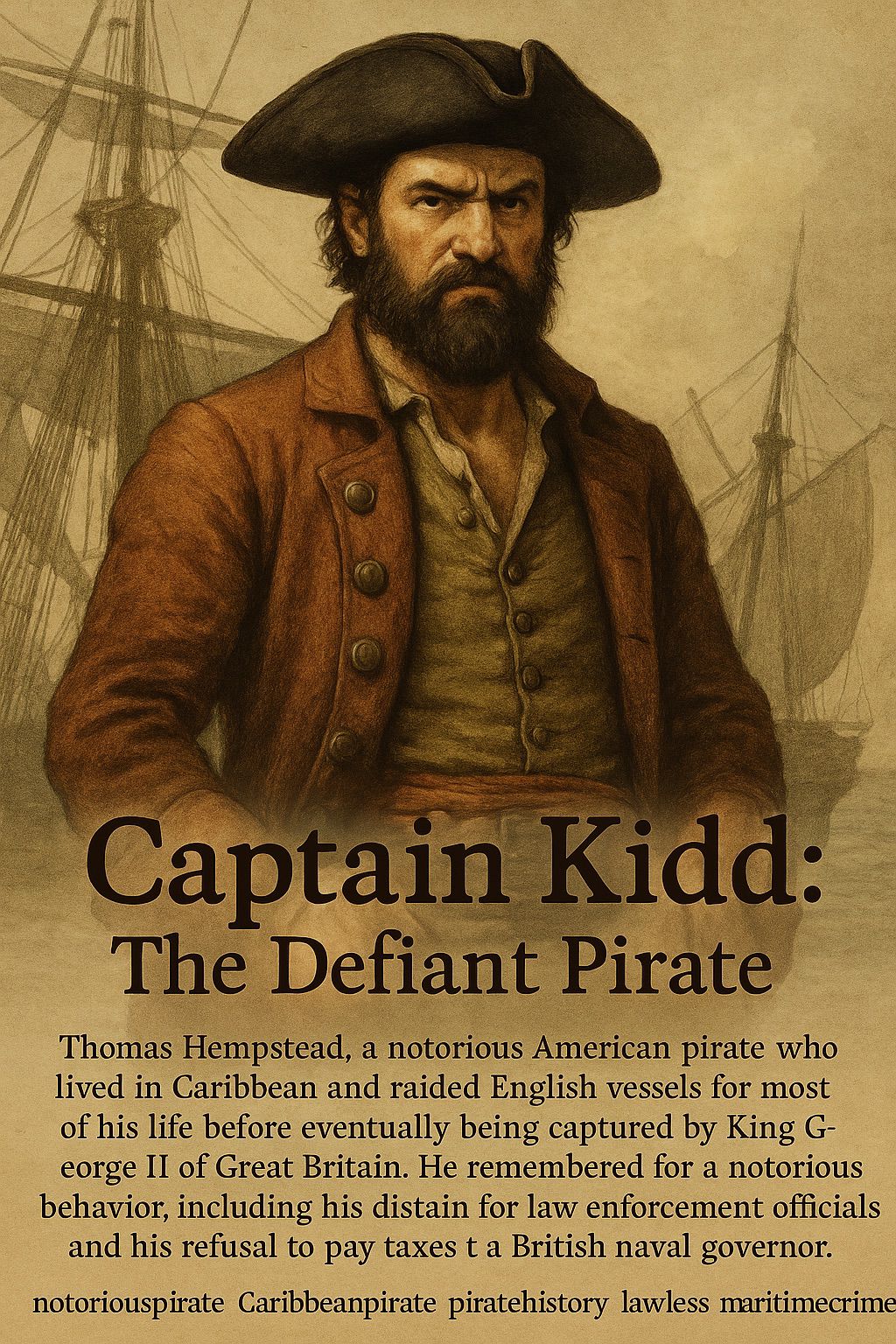
The Pirate Who Flipped the Crown: The Tale of Captain Kidd

Dave

Captain Kidd, born Thomas Hempstead, is one of the most infamous names to sail the Caribbean, not just for the ships he raided, but for the rules he broke. Far from being a mere thief of the sea, Kidd carved his legacy by deliberately targeting English vessels and snubbing the very nation that gave him birth. In an era when pirates often shifted allegiances to serve their own gain, Kidd was a force of nature, driven by pride, profit, and pure rebellion. He wasn’t just plundering for treasure—he was waging his own personal war against British authority.

Unlike other pirates who maintained uneasy truces or even secret deals with the powers that be, Kidd made his contempt public. He openly refused to pay taxes to a British naval governor, a bold and dangerous insult that drew the attention of the crown. His actions went beyond piracy; they were a middle finger to a growing empire trying to extend its grip across the seas. Law enforcement officials and governors alike feared him not only for his cunning and cruelty but for the message he represented—uncontrollable resistance.

What ultimately led to his downfall was not his greed, but the fact that he refused to play politics. While some pirates negotiated pardons or bartered their freedom with stolen goods, Kidd remained defiant until the very end. When King George II issued orders for his capture, it was a royal response to a man who had made himself too much of a threat to ignore. Whether he was betrayed or simply outmaneuvered, Kidd’s arrest signaled the end of a chapter in pirate history—but not of his legend.

Today, Captain Kidd remains etched into maritime lore as a symbol of fearless defiance and rebellious ambition. His story reminds us that not all pirates were rogues without cause—some, like Kidd, were driven by a deep disdain for the powers that tried to control them. And in that resistance, he became more than a pirate. He became a legend.

Related Posts

Wings of the South: Ken McFarlane’s Soaring Legacy in New Zealand Pigeon Fancying

Dave

While I was in Wellington, New Zealand, I had the pleasure of supervising Ken — a truly wonderful person and a passionate pigeon fancier. Getting to know him was a highlight of my time there. One of the most memorable experiences I had was watching him race his pigeons and learning about the sport. It was something completely new to me, but incredibly fascinating, and Ken’s enthusiasm made it all the more special.

Just a couple of days ago, Ken reached out to let me know he was featured in a local news story — all about him, his beloved pigeons, and the pigeon racing club he’s a part of. I absolutely loved the segment. It beautifully captures Ken’s spirit, his kindness, and his deep dedication to what he loves. I couldn’t be happier to see him and his story being shared like this.

If you are interested here is the link to the Wellington & Districts Racing Pigeon Club

Related Posts