Latest Articles

The Election of 1824: A House Divided and the Birth of Political Controversy

Elias Rowen

The election of 1824 was unlike any other in American history. It was messy, controversial, and full of political intrigue—the kind that still sparks debates today. With four major candidates battling for the presidency, the race was intense, but when the dust settled, no one had won a clear majority. For the first time, the decision went to the House of Representatives, where a backroom deal—what Andrew Jackson called a “corrupt bargain”—changed everything. The election not only exposed deep political divisions but also reshaped the future of American democracy.

The four candidates—Andrew Jackson, John Quincy Adams, William Crawford, and Henry Clay—each had strong support from different regions of the country. Jackson, the war hero, was wildly popular, especially in the South and West. Adams, the son of a former president, was the favorite of New England. Crawford, a seasoned politician, had backing from the South, while Clay, the “Great Compromiser,” was a strong voice for the West. When the votes were counted, Jackson had the most popular and electoral votes—but not enough to win outright. According to the Constitution, that meant the House of Representatives would decide the winner.

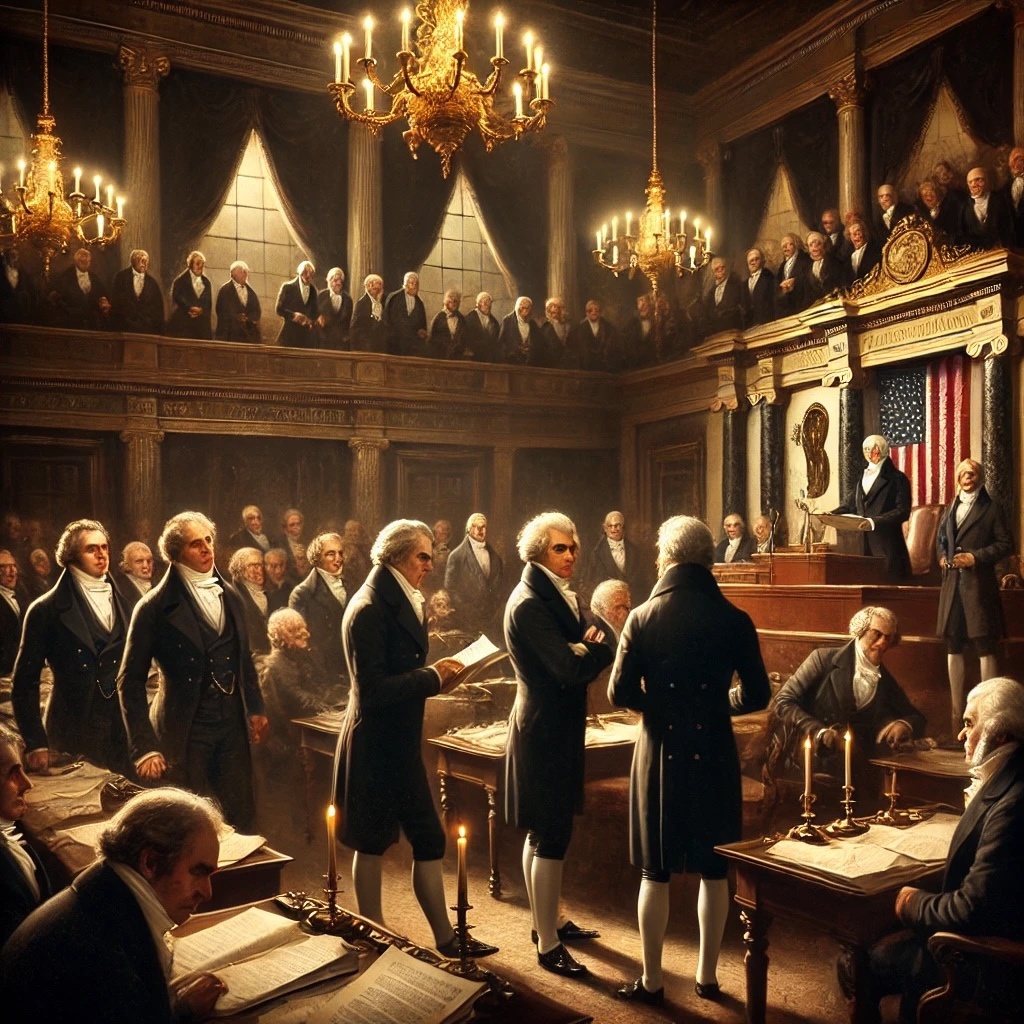
Here’s where things got interesting. Henry Clay, who had finished fourth and was eliminated from the race, happened to be Speaker of the House—the very body that would now determine the presidency. He threw his support behind Adams, and in a move that shocked many, Adams won the vote in the House and became the sixth president of the United States. Not long after, Adams appointed Clay as his Secretary of State, a position often seen as the stepping stone to the presidency. To Jackson and his supporters, this was proof of a corrupt deal between Adams and Clay, and they never let the country forget it.

The aftermath of the election was just as important as the election itself. Jackson, feeling robbed, spent the next four years rallying his supporters, painting himself as the true voice of the people and Adams as an out-of-touch elitist. The bitterness of the 1824 election directly led to the rise of the Democratic Party, with Jackson at its head. By the time the next election rolled around in 1828, Jackson had built a powerful political movement—and this time, he won in a landslide.

The election of 1824 was more than just a controversial outcome; it was a defining moment in American politics. It exposed flaws in the electoral process, deepened divisions between political factions, and set the stage for a more democratic (and often more combative) political system. The accusations of a “corrupt bargain” lingered for years, fueling a growing distrust of politicians that still echoes in modern elections. In many ways, it was the first real glimpse of the passionate, divided, and sometimes messy nature of American democracy.


Related Posts

The Night America Fell in Love with The Beatles

Elias Rowen

On February 9, 1964, something extraordinary happened—America fell head over heels for four lads from Liverpool. That night, The Beatles made their historic debut on The Ed Sullivan Show, and in just a matter of minutes, music and pop culture would never be the same. More than 73 million people—nearly 40% of the U.S. population at the time—gathered around their television sets to witness the phenomenon. The moment they hit the stage, with their sharp suits, mop-top haircuts, and infectious energy, Beatlemania officially took hold.

The Beatles had already been making waves in the UK, but in America, they were still a fresh sensation. Their single I Want to Hold Your Hand had just reached No. 1, and the hype was building. When they arrived at JFK Airport two days before the show, they were met by thousands of screaming fans, a chaotic and thrilling preview of what was to come. By the time they stepped onto the Ed Sullivan stage, the country was ready—but no one could have predicted just how massive their impact would be.

From the very first notes of All My Loving, the audience erupted. Teenage girls in the crowd screamed, cried, and clutched their faces in disbelief, while viewers at home sat mesmerized. The Beatles followed with Till There Was You and She Loves You, delivering a performance that was both polished and electrifying. Then, as they launched into I Want to Hold Your Hand, any remaining resistance was shattered—America was officially in love.

But that night wasn’t just about the music—it was about the energy, the joy, and the sense of something new on the horizon. Just months after the heartbreak of President John F. Kennedy’s assassination, America was in need of a spark of happiness, and The Beatles delivered. They weren’t just talented musicians; they were fun, confident, and had a charm that felt both rebellious and wholesome at the same time. They represented a new era, and people embraced it wholeheartedly.

The impact of that performance was immediate. Within weeks, The Beatles dominated the charts, and their music became the soundtrack of a generation. They opened the floodgates for the British Invasion, changing the music industry forever. More than just a band, they became a cultural movement, influencing fashion, language, and even social change. That night in February wasn’t just the beginning of Beatlemania—it was the moment when music, youth, and culture collided, creating a legacy that still lives on today.

Related Posts

The Birth of the Boy Scouts of America: A Legacy of Leadership and Service

Elias Rowen

On February 8, 1910, a movement was born that would shape generations of young men in America—the Boy Scouts of America (BSA). Founded on the principles of leadership, service, and outdoor adventure, the organization quickly became one of the most influential youth programs in the country. Rooted in the idea that young people should develop strong character, practical skills, and a commitment to helping others, the Boy Scouts grew into more than just a club—it became a way of life.

The inspiration for the BSA came from an unexpected moment. In the early 1900s, American businessman William D. Boyce found himself lost in the foggy streets of London. A young boy came to his aid, guiding him to his destination but refusing a tip, explaining that he was simply doing his duty as a Boy Scout. Intrigued, Boyce learned more about the scouting movement founded by British General Robert Baden-Powell in 1907. Realizing the potential for such a program in the United States, Boyce brought the idea home, and with the help of other youth organizations, the Boy Scouts of America was officially established.

From the start, the BSA emphasized core values like honesty, responsibility, and service. Scouts learned essential life skills, from first aid and camping to leadership and teamwork. The now-iconic Scout Oath and Law became guiding principles for millions of boys, shaping them into responsible citizens and future leaders. Whether hiking through the wilderness, earning merit badges, or assisting their communities, Scouts embraced a mission that was about more than just adventure—it was about making a difference.

The Boy Scouts quickly gained national recognition, attracting the support of educators, political leaders, and even U.S. presidents. Theodore Roosevelt, an avid outdoorsman himself, was one of the organization’s earliest champions, believing that scouting instilled the rugged individualism and moral character necessary for strong leadership. Over the decades, the BSA expanded its programs to include younger boys through the Cub Scouts and, later, opportunities for girls and families to participate in scouting activities.

More than a century after its founding, the Boy Scouts of America remains a symbol of service, skill-building, and personal growth. While the organization has evolved over time, its mission to prepare young people for life remains unchanged. Millions of Scouts have gone on to become community leaders, innovators, and role models, carrying the lessons they learned in scouting throughout their lives. The legacy of the Boy Scouts is not just in the badges earned or the campfires shared, but in the values instilled and the countless acts of kindness and leadership that continue to shape the world.

Related Posts

The Fall of a Queen: The Execution of Mary, Queen of Scots

Elias Rowen

1587 marked a dark and defining moment in British history—the execution of Mary, Queen of Scots. Once a reigning monarch of Scotland and a contender for the English throne, Mary’s life was a tangled web of political intrigue, religious conflict, and betrayal. Her demise was not merely a tragic personal fate but a decisive event that reinforced the power of England’s Queen Elizabeth I and reshaped the future of both nations.

Mary Stuart’s life had been fraught with turmoil from the moment she ascended the Scottish throne as an infant. Raised in France and married to the French Dauphin, her brief reign as Queen of France ended with her husband’s premature death. Upon returning to Scotland, she found herself at odds with Protestant reformers and a nobility eager to undermine her rule. Forced to abdicate in favor of her infant son, James VI, she fled to England, seeking refuge from her cousin, Queen Elizabeth. But Elizabeth, wary of Mary’s claim to the English throne, placed her under house arrest, where she remained a prisoner for nearly two decades.

The turning point in Mary’s fate came with the discovery of the Babington Plot, a Catholic conspiracy aimed at assassinating Elizabeth and placing Mary on the English throne. Though historians continue to debate the extent of Mary’s involvement, her intercepted correspondence proved damning. Accused of treason, she stood trial and was swiftly condemned to death. Despite Elizabeth’s hesitations—perhaps out of fear of executing an anointed monarch—pressure from her advisors ultimately sealed Mary’s fate.

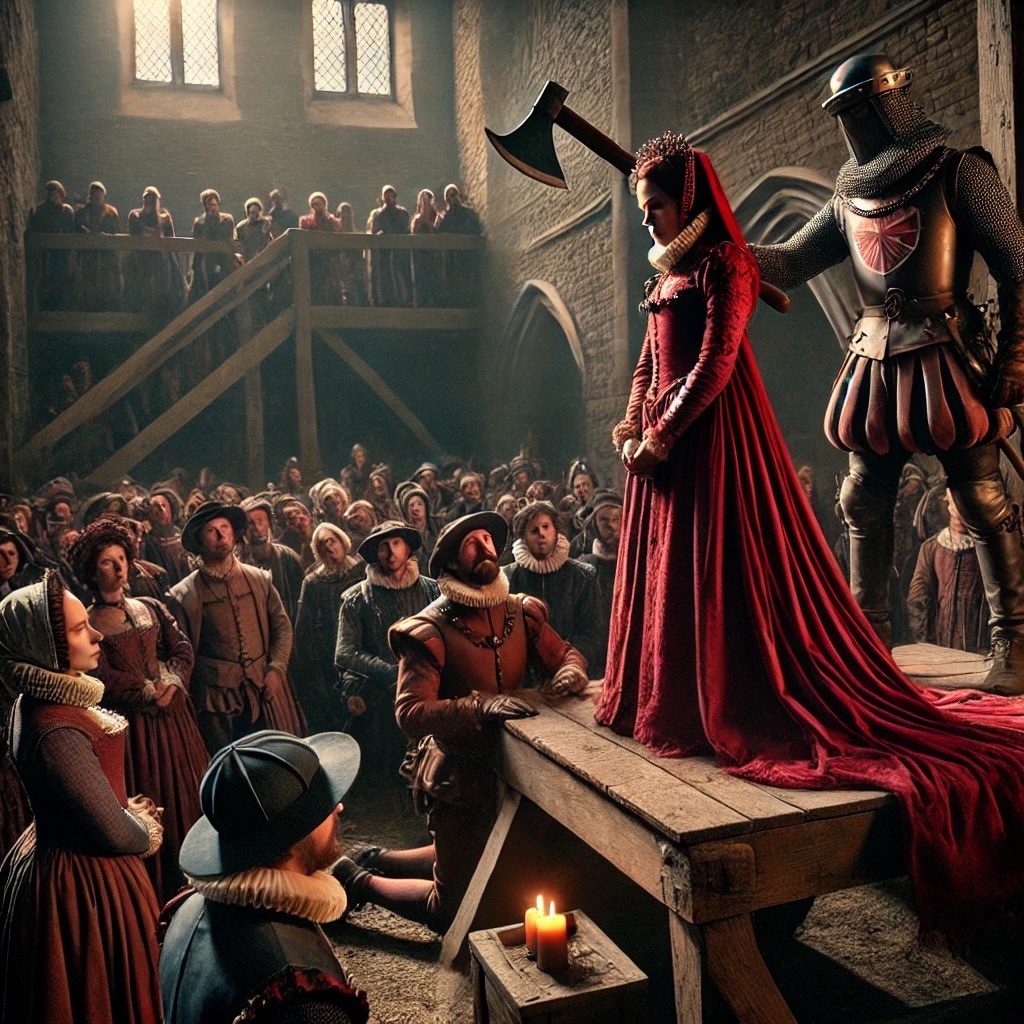
On the morning of February 8, 1587, Mary met her end with remarkable composure. Dressed in a crimson gown symbolizing martyrdom, she climbed the scaffold at Fotheringhay Castle. As she knelt for the executioner’s axe, she uttered prayers, demonstrating the unshakable faith that had both defined and doomed her. The execution was gruesome; it took multiple strikes to sever her head completely. As the executioner lifted her head to the crowd, Mary’s auburn locks detached from her scalp—revealing that she had been wearing a wig, a haunting reminder of the passage of time during her years in captivity.

Mary’s death was not just an execution; it was a message. With her rival gone, Elizabeth’s hold on England solidified, and the Catholic threat against her rule diminished. However, the execution also sowed the seeds of future conflict. Mary’s son, James VI of Scotland, would eventually inherit the English throne, uniting the crowns of Scotland and England. In the end, Mary may have lost her life, but her bloodline endured, shaping the course of British history for generations.

1587 remains a year of infamy, a testament to the ruthless nature of power and the price of political ambition. Mary, Queen of Scots, may have been silenced, but her legacy as a tragic yet formidable figure continues to captivate historians and storytellers alike.

Related Posts

A United Europe: The Birth of the European Union

Elias Rowen

On February 7, 1992, leaders from twelve European nations gathered in Maastricht, Netherlands, to sign a historic agreement that would forever change the political and economic landscape of Europe. The Maastricht Treaty formally established the European Union (EU), creating a framework for deeper integration among member states. This treaty was more than just a document—it was a bold step toward unity, cooperation, and a shared future for millions of Europeans.

The treaty laid the foundation for many of the EU’s defining features, including the introduction of a common currency, the euro, and the establishment of European citizenship. It also strengthened political and economic ties between nations, ensuring greater coordination in foreign policy, security, and trade. For decades, Europe had been a continent divided by wars and political rivalries, but Maastricht signaled a new era—one where countries would work together rather than against one another.

However, the path to unity was not without its challenges. The idea of surrendering national sovereignty to a larger European institution sparked debates and resistance in some countries. Despite these concerns, the Maastricht Treaty was ultimately ratified, and on November 1, 1993, the European Union officially came into existence. It was a defining moment in modern history, proving that even centuries-old rivalries could be set aside in the pursuit of peace and prosperity.

Today, the European Union stands as one of the most significant political and economic alliances in the world. What began as a vision for cooperation in 1992 has grown into a powerful union of over two dozen nations, shaping policies on trade, human rights, and global diplomacy. The Maastricht Treaty was the spark that ignited this transformation, reminding the world that unity is not just an ideal—it is a path to a stronger, more interconnected future.

Related Posts