Category: Entertainment

Forging a Fragile Union: The Day America Tried Its First Government

Dave

In the autumn of 1777, as the air grew colder and the Revolutionary War lumbered into yet another year of uncertainty, the Continental Congress found itself facing a problem that could no longer be postponed: the United States of America existed only as an idea—an inspiring one, a defiant one, but still a fragile and unformed concept. Thousands of men were fighting under a common banner, yet the political structure beneath them was a patchwork of loosely coordinated colonies, each still clinging to its own priorities, its own fears, and its own vision of the future. It was in this unsettled, anxious moment that the Articles of Confederation—America’s first national constitution—were finally adopted by Congress. The moment was monumental, not because the document was perfect, but because it marked the first attempt to bind thirteen fiercely independent states into a functioning political union. It was a bold step, daring for its time, and deeply reflective of the people who created it: wary of power, shaped by oppression, and determined never again to be ruled by a distant and unaccountable government.

The Articles of Confederation did not appear overnight. In fact, they grew out of years of effort, debate, hesitation, and profound mistrust—mistrust not only of Britain, but of centralized authority itself. When the Continental Congress first began discussing a potential national government in 1775 and 1776, many delegates felt torn. On one hand, they understood that defeating the British Empire would require cooperation on an unprecedented scale. On the other hand, they were each the product of colonial societies where self-rule, local autonomy, and resistance to outside interference were woven into the political DNA. The colonies had long functioned independently; some had been founded by religious dissidents fleeing tyranny, others by merchants seeking freedom from economic interference. In every one of them, the idea of forming a powerful centralized authority triggered uneasy memories of imperial overreach.

Yet as the Revolutionary War intensified, as the stakes grew higher, and as the fragile coalition of states struggled to unite around shared goals, the need for a continental framework became undeniable. Congress had soldiers to pay, debts to incur, foreign alliances to form, and territories to administer. A war could not be won through idealism alone. Delegates realized that the very cause of independence—ironically—required a level of coordination that bordered on the kind of authority they feared. The solution, as they imagined it, had to be something that united the states without controlling them, empowered a central body without enabling tyranny, and allowed Congress to coordinate the war without infringing on the sovereignty of the states. It was, in truth, a political tightrope.

Over the course of 1776 and 1777, debates raged on issues that would foreshadow the great constitutional battles to come. Should states be represented equally, or by population? Should Congress have the power to tax? Who would control western lands? Was a national executive necessary, or dangerous? How should disputes between states be resolved? These were not abstract questions—they were deeply emotional ones, tied to identity, pride, and fear. Small states did not want to be swallowed by large ones. Wealthy states feared subsidizing poorer ones. Frontier states eyed western territory as their economic inheritance. And all the states worried, to varying degrees, that Congress might morph into a new Parliament, issuing decrees from afar and stripping them of their hard-won freedoms.

In the end, the Articles of Confederation reflected a compromise that skewed heavily toward state sovereignty. The states would maintain their “sovereignty, freedom, and independence,” and Congress—such as it was—would hold only the powers the states explicitly chose to grant. There would be no independent executive, no national judiciary, and certainly no authority to levy taxes. Congress could request funds from the states, but not compel them. It could negotiate treaties, but not enforce them. It could coordinate war efforts, but rely on states to provide men and resources. It could act, in a sense, as a collective voice of the union, but it was a voice without teeth. In fact, under the Articles, Congress could barely function without state approval; most major actions required a supermajority of nine states, and amendments required unanimity—an impossible standard for a nation that could barely agree on the shape of its future.

And yet, despite its weaknesses—indeed, because of them—the Articles of Confederation were adopted by Congress on November 15, 1777, in what many delegates saw as an act of fragile but necessary unity. The war was ongoing. Morale was inconsistent. Supplies were dwindling. And the young nation desperately needed foreign support, especially from France. But no foreign government would invest its trust, resources, or blood in a cause whose political structure was undefined. The adoption of the Articles sent a message to the world: the United States was not merely a rebellion, but a nation—imperfect, new, and untested, but determined.

Adopting the Articles was, in some ways, an act of hope. Despite all their limitations, despite all the disagreements baked into their framework, the document at least provided an answer to the question of national legitimacy. It put something on paper. It created a Congress with defined responsibilities. It articulated the principles that the states believed would safeguard liberty, even if those principles would later prove unworkable. And perhaps most importantly, it allowed the revolution to move forward with a sense of identity rooted not only in resistance to Britain, but in a shared commitment—however tenuous—to a collective American future.

Life under the Articles was a study in contradictions. On the one hand, the system preserved the cherished autonomy of the states. There was no national authority capable of imposing unwanted policies. Local control remained supreme. State legislatures wielded enormous influence over their own affairs, and for many Americans, this felt right. It felt safe. It felt like the natural continuation of the political culture they had known even before the war. On the other hand, the weaknesses of the Articles became apparent almost immediately, especially as the war dragged on. Congress struggled to secure funding. Requests for troops and supplies went unanswered. Soldiers went unpaid. Inflation soared. Diplomats struggled to negotiate effectively because foreign powers doubted America’s stability. Interstate disputes simmered. There were even whispers, at times, that the union itself might fracture under the weight of its own contradictions.

Still, the Articles held the nation together long enough for the United States to survive the Revolutionary War. That alone was no small achievement. The system may have been flawed, but it was the best the delegates of 1777 believed they could safely create. They feared centralized power more than they feared dysfunction, and their caution was understandable. They had, after all, just risked everything to escape the grip of an empire that taxed them without representation, quartered troops among them, dissolved their assemblies, restricted their trade, and dismissed their petitions for redress. Their political imaginations were shaped by fresh wounds, and the Articles bore those scars.

Yet history has a way of revealing the limits of even the most well-intentioned ideas. The very fears that shaped the Articles soon became the obstacles that prevented the new nation from thriving. After the war, as trade declined and debt mounted, states turned inward, passing laws that favored their own citizens at the expense of interstate commerce. Some states issued their own currencies. Others imposed tariffs on their neighbors. Farmers, veterans, and laborers suffered under crushing debt and economic instability. Shays’ Rebellion in Massachusetts made clear how powerless Congress was to respond to domestic unrest. Internationally, Britain and Spain took advantage of America’s weakness—refusing to vacate forts, closing vital trade routes, and questioning the viability of the confederation.

In time, the limitations of the Articles of Confederation became too glaring to ignore. The document had served its purpose as a wartime framework, but the peace brought a new set of demands that the confederation simply could not meet. The war had been fought for liberty; now the challenge was to build a government strong enough to preserve that liberty without extinguishing it. The union needed a system that balanced power, not one that feared it. It needed cohesion, not fragmentation. It needed the ability to raise revenue, regulate commerce, negotiate effectively, and respond to crises. In short, it needed a constitution.

And yet, the Articles of Confederation deserve more credit than they often receive. It is easy, in hindsight, to view them merely as a failed experiment. But they were more than that—they were a bridge, a transition, a necessary first attempt at defining what America could be. They reflected the anxieties of their time, capturing the tension between unity and autonomy, cooperation and independence, liberty and authority. They preserved the states long enough for the idea of an American union to take root, grow, and ultimately flourish under a more balanced framework.

The Articles also created important precedents. Under the confederation, Congress passed the Land Ordinance of 1785 and the Northwest Ordinance of 1787—two landmark pieces of legislation that set standards for territorial expansion, public land surveying, education, and the admission of new states. These ordinances laid the groundwork for America’s methodical westward growth and ensured that the United States would expand not as an empire but as a union of equal states. This vision would shape the country for generations, guiding its transformation from a cluster of coastal settlements to a continental republic.

Perhaps most significantly, the Articles of Confederation forced Americans to confront fundamental questions about the nature of democracy, representation, and sovereignty. They revealed the difficulty of balancing freedom with responsibility, independence with cooperation. They taught valuable lessons about governance—lessons that would inform the Constitutional Convention in 1787, where delegates would craft a new system designed to correct the shortcomings of the confederation while preserving its core principle of representative government.

The adoption of the Articles on November 15, 1777, was not the end of a process but the beginning of one. It marked the moment when the United States first attempted to formalize its identity, to articulate its values, and to create a structure capable of supporting a nation built on revolutionary ideals. It was a step into the unknown, taken by men who disagreed with each other, feared power, and struggled to imagine a government that could protect freedom without threatening it.

But they took the step anyway.

And in doing so, they laid the imperfect but indispensable foundation upon which a stronger, more resilient union would eventually be built.

The Articles of Confederation may have been flawed, but they were also courageous. They were born in war, shaped by fear, and limited by caution, but they represented something profoundly American: a willingness to experiment, to compromise, to adapt, and ultimately to forge a better path forward. Without the Articles, there would have been no Constitution. Without the confederation, there would have been no union to preserve.

In the end, the Articles of Confederation stand as a testament not only to the challenges of nation-building but to the enduring spirit of a people determined to govern themselves. They remind us that democracy is not created in a moment, but in a journey—one marked by trial, error, disagreement, and, most importantly, the unshakable belief that a nation built on liberty is worth every imperfection along the way.

Related Posts

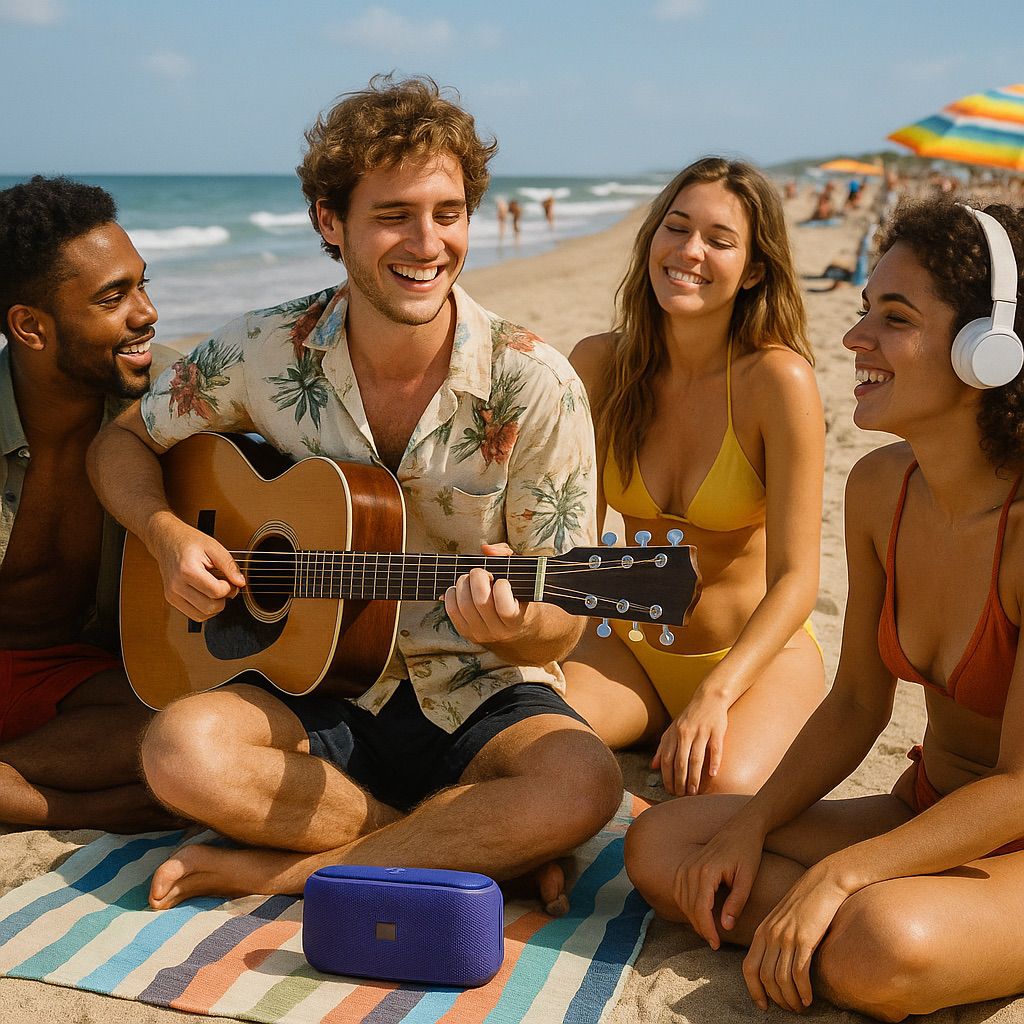
Soundtrack to the Shore: Curating the Perfect Beachy Summer Playlist

Dave

Every great summer memory has a soundtrack, whether you realize it or not. Music has a way of anchoring moments in time, stitching emotions to melodies so that years later, a single song can bring the smell of sunscreen and saltwater rushing back. A beach day without music feels incomplete, like a wave that never reaches the shore. Curating the ultimate beachy summer playlist isn’t just about picking random songs—it’s about building a mood, a vibe, a sonic atmosphere that matches the rhythm of the tide and the spirit of long, sun-soaked afternoons. It’s about creating the kind of playlist that makes you want to kick off your sandals, close your eyes, and let the sound waves mingle with the ocean waves until you can’t tell where one ends and the other begins.

The perfect beach playlist starts with energy, but not too much. Think of the early part of the day, when you’re just settling in, towels laid out, the cooler unpacked, sunscreen applied. The music should ease you into the vibe, like dipping your toes into the water before diving all the way in. Acoustic guitars, reggae rhythms, breezy indie tracks, and mellow pop tunes work beautifully here. Songs with a laid-back groove set the tone, reminding you that the day ahead is about relaxation and joy. These are the songs that say, “You made it to the beach, now breathe.”

But as the sun rises higher and the day hits its stride, the playlist should shift gears. Midday beach hours are all about movement, laughter, and energy. This is when the upbeat tracks shine—the danceable pop hits, the funky basslines, the throwback anthems that everyone knows the words to. A good playlist isn’t just background noise; it’s participatory. It makes people sing along, dance a little in the sand, or laugh at the nostalgia of a track they haven’t heard in years. Mixing modern hits with golden oldies creates a bridge between generations, making the playlist inclusive whether you’re lounging with friends, family, or strangers who inevitably start vibing nearby.

The secret weapon of any beach playlist is rhythm. The ocean itself has rhythm—steady, crashing, rolling—and the best songs mirror that. Calypso beats, bossa nova, reggae, surf rock, and tropical house all feel like they belong on the sand. There’s something about syncopation that makes your body sway without effort, something about steel drums or a shuffling groove that feels like the musical equivalent of a sunbeam. Throw in a few summer anthems that are less about genre and more about attitude—songs that scream freedom, warmth, and fun—and suddenly, the playlist is more than just a collection of tracks. It’s a soundtrack to the season.

Playlists, though, aren’t only about momentum. They’re about pacing. The heat of the afternoon often gives way to moments of calm, when you retreat under the umbrella, sip something cold, and watch the waves instead of diving into them. This is where the chill tracks return—dreamy pop, lo-fi beats, acoustic ballads that make you reflective. A good beach playlist has highs and lows, peaks and valleys, just like the day itself. It crescendos with energy when the group is dancing in the surf, then dips into mellow tones as everyone rests, sunburnt and sleepy, staring at the horizon.

And then there’s sunset—the crown jewel of a beach day. Music at sunset is sacred. It’s when songs stop being just entertainment and become memory markers. The sun sinking into the sea needs a soundtrack, whether it’s soulful ballads, nostalgic classics, or instrumental tracks that feel cinematic. This is when the playlist transitions into something emotional, pulling at the heart in ways that words alone can’t. A single song at sunset can brand itself into your soul forever, so curating this section of the playlist with care is crucial. These are the songs you’ll come back to in winter when you need to remember what summer felt like.

Technology has made beach playlists easier than ever, with streaming platforms offering endless choices, but curating one still requires an artful hand. Shuffle can’t replicate intention. Anyone can throw together a bunch of summer songs, but it takes thought to craft flow, to balance tempos, to create a journey that matches the natural progression of a beach day. The best playlists are living things—they evolve, they surprise, they carry inside jokes, they contain tracks that only your group of friends would understand. Adding those quirky picks alongside crowd-pleasers is what makes a playlist feel like yours.

There’s also the social aspect of playlist building. Making it collaborative allows everyone to contribute, weaving together diverse tastes into something unexpected. A friend who loves Latin beats might throw in a salsa track that gets everyone moving. Another who’s into indie bands adds a song no one’s heard before but immediately loves. Someone inevitably sneaks in a guilty pleasure track that becomes the unofficial anthem of the trip. These contributions transform the playlist from personal to communal, and suddenly, it’s not just about music anymore—it’s about collective memory.

Of course, the beach itself amplifies everything. Music hits differently when paired with the sound of waves and the warmth of the sun. Lyrics about freedom, love, or youth feel more poignant with your feet buried in sand. Beats feel more alive when they sync with the crash of surf. Even silence between tracks feels intentional, as if the ocean is taking its solo. The playlist is not just music—it’s a conversation with the environment, a duet between human creativity and natural rhythm.

The magic of a beachy summer playlist is that it doesn’t stay on the beach. Long after the trip is over, those songs carry the memory home. Driving to work, cleaning your apartment, cooking dinner—suddenly, you’re transported back to the sand, to that exact moment when the song played and the world felt infinite. The playlist becomes a time machine, a vessel of nostalgia, and each song is a seashell you carry back from the shore, small but full of story.

In the end, curating a beach playlist is about more than music. It’s about emotion. It’s about crafting a mood that complements the sun, the sea, the sand, and the souls who share it with you. It’s about choosing songs that don’t just sound good but feel good, songs that enhance the beauty of the beach rather than competing with it. A perfect playlist is invisible in the best way—it blends seamlessly into the experience, lifting it without drawing attention to itself, becoming part of the memory instead of just background noise.

So the next time you plan a beach day, don’t just grab sunscreen and snacks. Think about the sound. Take the time to build a playlist that carries you from morning to night, from energetic dance breaks to sunset serenity. Add songs that make you laugh, songs that make you move, songs that make you feel. Make it personal, make it communal, make it something you’ll want to press play on again and again, even when summer is gone. Because the waves will always come back, but the right soundtrack will bring them to you whenever you need them.

Related Posts

Sandy Toes, Salty Hair, Zero Worries: The Ultimate Girls’ Beach Weekend Checklist

Dave

There is something magical about planning a girls’ beach weekend, a kind of excitement that feels like being seventeen again, when the promise of salt air and laughter was enough to carry you through the week. A beach trip with your closest friends isn’t just a getaway—it’s an event, an escape from deadlines and drama, an excuse to pack the cutest outfits you own, and an opportunity to recharge together in the sunshine. Unlike a solo trip or a romantic vacation, a girls’ beach weekend is powered by collective energy, the anticipation of shared playlists, matching swimsuits, endless snacks, and conversations that drift from silly to soul-baring under umbrellas by the sea. But pulling it off seamlessly takes more than just tossing a bikini into a bag and calling it a day. The ultimate girls’ beach weekend checklist isn’t just about what to pack—it’s about how to create an atmosphere of joy, ease, and connection where every detail has been thought of and no one is left wishing they’d remembered something essential.

Let’s start with the obvious: swimwear. A girls’ beach weekend calls for options, because moods shift like tides. One day it’s the bold bikini moment for photos, the next it’s the comfortable one-piece for water volleyball, and maybe even a matching set you all agreed on just for fun. Add in cover-ups—flowy kaftans, sarongs, oversized shirts—and you’ve got instant versatility for beach-to-bar transitions. Sunglasses are non-negotiable, but the trick is having a pair that looks good in group selfies while actually protecting your eyes. And of course, wide-brimmed hats, bucket hats, or visors—whatever your vibe—because sun protection can absolutely be chic.

Now for the unsung heroes: skincare and sunscreen. Nothing kills the vibe faster than a sunburn, so this section of the checklist deserves reverence. Pack reef-safe sunscreen with SPF 30 or higher, but bring multiple kinds—spray for quick reapplication, lotion for thorough coverage, and tinted SPF moisturizers for the friend who refuses to go bare-faced. Aloe vera gel is a must for soothing, even if you’re careful, and hydrating face masks turn an evening wind-down into a mini spa night. Toss in lip balm with SPF, because chapped, sunburnt lips are an avoidable tragedy. The beauty of traveling with friends is that someone always has the product you forgot, but the checklist ensures that everything important makes it into at least one bag.

The snack and drink game is where true legends are made. Sure, you could rely on boardwalk food, but half the fun of a girls’ trip is the shared picnic spread. Think fruit that travels well—grapes, clementines, apple slices—plus crackers, cheese, hummus, and pretzels. Granola bars or protein bites keep energy steady between swims, while popcorn and trail mix satisfy those grazing cravings. Drinks should be equally thoughtful: plenty of water bottles (bonus points for cute reusable ones), sparkling water for the fizzy lovers, and pre-mixed cocktails or wine spritzers packed in a cooler for when the sun starts setting. Don’t forget a corkscrew—it sounds trivial until you’re trying to open a bottle with car keys.

Then there are the little luxuries that elevate a beach trip from fun to unforgettable. A waterproof Bluetooth speaker is practically a requirement, because no girls’ weekend is complete without a curated playlist blasting everything from nostalgic throwbacks to guilty-pleasure anthems. A big beach blanket or a set of matching towels not only looks great for group photos but also saves everyone from sand wars. Portable chargers keep phones alive for capturing every moment, and a disposable film camera or Polaroid instantly transforms memories into keepsakes. Games—cards, beach paddles, or even just a ball—bring laughter when the sun gets too hot and everyone needs a break from tanning.

Outfits for off-beach hours often get overlooked, but they matter. Nights out on a girls’ beach weekend are their own kind of magic—hair still salty from the ocean, skin glowing, laughter spilling out as you walk to dinner. Pack sundresses that slip on easily, sandals that work on sand and city streets, and one or two elevated pieces if the night calls for dancing. Lightweight sweaters or denim jackets are perfect for bonfire nights, when the air cools but no one wants to go inside.

Of course, a beach checklist wouldn’t be complete without practical items that seem boring until you need them: hair ties, bobby pins, and scrunchies for taming windblown hair. A mini first aid kit with band-aids for unexpected blisters or coral scrapes. Ziplock bags for wet swimsuits, and totes that double as both beach bags and shopping carriers. Even baby powder, a random but genius hack, makes brushing sand off legs effortless before heading back to the hotel. These little things are what make you feel smugly prepared while other groups are scrambling.

Perhaps the most important part of a girls’ beach weekend checklist isn’t even tangible—it’s the intention behind it. This trip isn’t about perfection; it’s about presence. It’s about showing up with your friends, letting the sun and sea dissolve the stress you’ve been carrying, and making space for laughter that feels like medicine. It’s about creating rituals—sunscreen circles where everyone helps each other, snack time that turns into storytelling, dance breaks that erupt out of nowhere. These are the details that make a beach weekend unforgettable.

The best part? The checklist is really a framework, not a rulebook. Each group customizes it—some lean into glam with coordinated outfits and styled beach hair, others lean into pure chaos with mismatched towels and snacks spilling out of grocery bags. Both are perfect, because the point is never about getting everything right. The point is making memories, ones that come back years later when you find sand in the pocket of a bag or scroll through photos of sunsets framed by your friends’ silhouettes.

The ultimate girls’ beach weekend checklist is not just about stuff—it’s about the moments those items unlock. The speaker blasting your anthem as you run into the waves. The snacks that fuel your endless conversations. The Polaroids that capture laughter in a way iPhones never quite do. The aloe vera that saves you from misery so you can laugh about the sunburn scare instead of crying through it. The tote bags overflowing with everything you thought you’d never use but ended up needing. Every item, every detail, every laugh—it all adds up to a trip that becomes part of your shared story.

At the end of the day, what makes a girls’ beach weekend magical isn’t the beach itself but the people on the towels beside you. The checklist is just your way of making sure nothing gets in the way of joy. Because when the sun sets, when the sky glows pink and the tide creeps closer, when you’re sitting in the sand with your best friends and the music still plays softly, what you’ll remember isn’t how perfect your packing list was. You’ll remember how free you felt, how close you were, how the ocean seemed to echo your laughter. That’s the magic of a girls’ beach weekend, and with the ultimate checklist, you make sure you have everything you need to let it unfold perfectly imperfect.

Related Posts

Paradise Found and Lost: The Story of Maya Bay, Thailand’s Most Famous Beach

Dave

There are beaches that people visit to escape their daily lives, and then there is Maya Bay, a stretch of sand so impossibly beautiful that it almost seems fictional. Nestled among the dramatic limestone cliffs of Koh Phi Phi Leh in southern Thailand, this crescent-shaped bay has been worshiped, destroyed, mourned, and resurrected in the eyes of the world. For centuries, it was a secret shared only by fishermen, passing travelers, and locals who believed that spirits inhabited the caves along its cliffs. The powder-white sand and turquoise waters remained untouched for generations, a natural masterpiece created not by human hands but by the slow artistry of time, tide, and tropical sun. But as fate would have it, Maya Bay’s destiny was rewritten by a film camera, a Hollywood script, and a young Leonardo DiCaprio searching for paradise in the year 2000.

When Danny Boyle’s cult film The Beach was released, audiences were captivated by the story of an adventurous backpacker chasing the dream of a hidden Eden. Maya Bay was cast as that Eden, and from the moment its image lit up cinema screens, the bay ceased to be a secret. For many, the film was not just entertainment but an invitation, a promise that there really existed a place on Earth untouched by modern chaos. Tourists flocked from every corner of the globe, their imaginations fired by the dream of walking the same sands where DiCaprio once stood. What they found was real enough—limestone cliffs rising like guardians around a lagoon of jade water, soft sand slipping beneath their feet—but their presence began to unravel the very paradise they had come to adore.

In the early 2000s, what began as a trickle of curious travelers became a flood. At the height of its fame, Maya Bay welcomed as many as 6,000 tourists a day. Longtail boats and speedboats crowded into the lagoon, dropping anchors that tore through coral reefs which had taken centuries to grow. Sunscreen from thousands of bodies seeped into the waters, poisoning marine life. Plastic bottles and trash began appearing along the tide line. The once-crystalline bay became a swimming pool of humanity. Coral bleaching, pollution, and physical destruction devastated the underwater ecosystem, and blacktip reef sharks, once common in the shallows, disappeared. What had once been paradise had become a cautionary tale, and environmentalists who had warned of this fate during the filming of The Beach now watched as their predictions came true.

By 2018, Maya Bay was a shadow of itself. Scientists estimated that over 80 percent of its coral reefs were destroyed, and the marine biodiversity that once thrived in the bay was on the brink of collapse. The Thai government faced a difficult choice: continue profiting from mass tourism or take radical steps to save the bay. In a bold and unprecedented move, they chose the latter. Maya Bay was closed to visitors indefinitely, an extraordinary decision in a country where tourism is a lifeline for the economy. The announcement shocked the world. Could one of the most famous beaches on Earth really be sealed off? For more than three years, that is exactly what happened.

During its closure, Maya Bay became a laboratory of hope. Conservationists and marine biologists worked tirelessly to restore what had been lost. Tens of thousands of new corals were planted by hand, nurtured like fragile seedlings in a garden of the sea. Strict protections were introduced, and speedboats were permanently banned from entering the bay. Slowly, nature responded. Waters cleared, corals began to grow again, and in a moment of triumph, blacktip reef sharks returned to the shallows, a living symbol that the ecosystem was healing. What was once paradise lost was now, against the odds, becoming paradise reborn.

When Maya Bay finally reopened in 2022, it did so under a very different set of rules. Gone were the days of endless boatloads of tourists pouring directly onto its sands. Now, access was tightly controlled. Only 375 visitors were allowed at a time, each permitted just one hour on the beach. Boats were forced to dock on the far side of the island, and tourists had to walk along a wooden boardwalk to reach the bay. Swimming in the bay’s waters was prohibited to protect marine life, and park rangers enforced the new regulations with vigilance. Some travelers grumbled at the restrictions, but many more understood that this was the price of preservation. Maya Bay had not been saved just for Instagram photos—it had been saved for the future.

Today, visiting Maya Bay feels different than it once did. The beauty remains, but it is layered with meaning. To walk its sands is to step into a story of rise, fall, and redemption. You feel the echo of the past when the beach was untouched, the rush of excitement from the film that catapulted it into fame, the chaos of mass tourism, and finally the hope of a world learning to care for the fragile places it loves. Tourists now speak in hushed tones, aware that they are guests in a place that almost vanished. For many, it is a transformative experience, not just because of what they see, but because of what the beach represents.

Maya Bay has become more than a beach. It is a parable about the human desire for paradise and the consequences of our collective hunger for beauty. It is a mirror that reflects our choices as travelers, our responsibilities as global citizens, and our capacity for both destruction and healing. In an era when viral fame can be both a blessing and a curse, Maya Bay stands as a reminder that sometimes the world’s most viral stories come with lessons we cannot afford to ignore.

To write about Maya Bay is to share more than photographs of turquoise waters and white sand. It is to tell a story that resonates across cultures and generations, a story of longing, excess, collapse, and ultimately redemption. It is to remind readers that paradise is not simply found; it must be protected, nurtured, and respected. And perhaps that is why Maya Bay continues to capture imaginations, even now. Because it speaks not just of a place, but of who we are, and what we might still become if we learn from its journey.

Related Posts

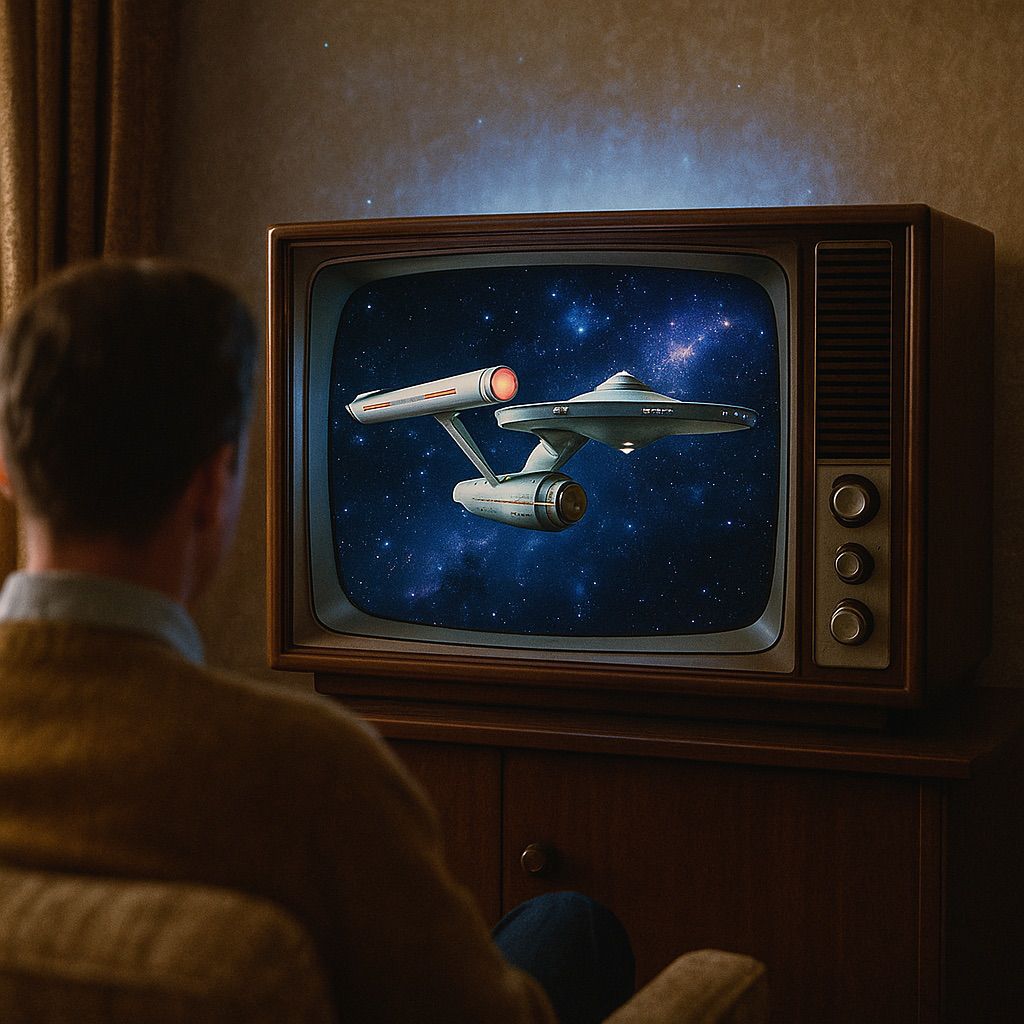
To Boldly Go: Star Trek Premieres on NBC

Elias Rowen

On the night of September 8, 1966, American television audiences tuned their sets to NBC and saw something they had never quite seen before. In a landscape dominated by westerns, family sitcoms, and police dramas, a new series opened with a starship streaking across the stars, accompanied by a voice intoning the now immortal words: “Space… the final frontier.” That series was Star Trek, and though its first run struggled with ratings and risked cancellation at every turn, its legacy would grow into something far larger than anyone watching that evening could have imagined. What began as a modest science fiction program became a cultural force, a global movement, and a philosophy of hope. Its launch in 1966 was not just the beginning of a TV show; it was the start of a journey that would boldly go where no series had gone before, shaping imagination, inspiring technology, and reminding audiences across decades that the human spirit is at its best when it dreams beyond the stars.

The context of Star Trek’s premiere is essential to understanding its resonance. America in 1966 was a nation grappling with profound tension and change. The Cold War was at its height, with fears of nuclear annihilation lingering beneath daily life. The Vietnam War divided families and campuses, sparking protests and outrage. The Civil Rights Movement demanded long overdue justice, with marches, legislation, and heartbreak filling the headlines. Meanwhile, the space race between the United States and the Soviet Union inspired awe and wonder as astronauts pushed further into orbit. Against this backdrop, Gene Roddenberry conceived a show not about cowboys or cops, but about a future where humanity had moved past its divisions, united in exploration, and sought understanding rather than conquest. Star Trek was not escapism; it was a vision of what we could become.

That first episode, “The Man Trap,” which actually aired as the premiere though it was not the intended pilot, told the story of a shape-shifting creature on a desolate planet feeding on human salt. On the surface, it was a monster-of-the-week tale. But woven into it were the themes that would define Star Trek: questions about identity, morality, and the fine line between survival and compassion. Audiences met Captain James T. Kirk, the commanding but deeply human leader of the USS Enterprise. They encountered Spock, the half-Vulcan science officer whose logic clashed with his hidden humanity. They were introduced to Dr. Leonard “Bones” McCoy, equal parts cranky and compassionate, and to a bridge crew that, though fictional, reflected an ideal of diversity rare on television at the time.

Nichelle Nichols as Lieutenant Uhura was a revelation—a Black woman not relegated to servitude or stereotypes, but a competent, respected communications officer on the bridge of humanity’s flagship. George Takei as Sulu, an Asian helmsman, and later Walter Koenig as Chekov, a Russian navigator introduced during the Cold War, further reinforced Roddenberry’s vision of a future beyond prejudice. Pavel Chekov at the helm was particularly bold; at a time when Americans feared nuclear war with the Soviet Union, Star Trek dared to show a world where a Russian and an American served together as allies. And, of course, Leonard Nimoy’s Spock would become an icon, a character whose struggle between reason and emotion mirrored humanity’s own quest for balance.

Yet Star Trek was not an easy sell. The first pilot, “The Cage,” was rejected by NBC executives as “too cerebral.” Instead of scrapping it, the network did something almost unheard of: it ordered a second pilot. That pilot, “Where No Man Has Gone Before,” introduced Kirk and set the tone for adventure and moral quandaries. Even with that greenlight, the show’s future was tenuous. Budgets were tight, special effects were ambitious, and ratings were mediocre. By today’s standards, Star Trek’s sets looked modest, even flimsy, but in 1966 they represented some of the best attempts at visualizing space travel on television. And the storytelling was ambitious, aiming not just for entertainment but for allegory.

Episodes tackled racism, war, authoritarianism, and the dangers of unchecked technology, all cloaked in the safe veil of science fiction. In “Let That Be Your Last Battlefield,” two aliens—each half black and half white, but on opposite sides—destroyed themselves because they could not see past their differences. In “A Taste of Armageddon,” two societies waged a computer-simulated war that required real citizens to be killed as if they had been bombed, raising questions about sanitized violence. In “The City on the Edge of Forever,” Kirk faced the agonizing choice of allowing a woman he loved to die to preserve history. Star Trek dared to ask moral questions most shows avoided.

Despite its innovation, Star Trek’s survival was precarious. Ratings were never strong, and NBC moved the show to a death-slot on Friday nights for its third season. It was nearly canceled after its second year, but an unprecedented letter-writing campaign by fans, led in part by activist Bjo Trimble, convinced the network to give it one more chance. Those fans, who saw in Star Trek not just entertainment but a vision of a better future, became the seed of something new: organized fandom. Star Trek may not have dominated the Nielsen charts, but it birthed a movement that would keep it alive long after 1969.

That movement grew into conventions, fan fiction, and a phenomenon that shocked Hollywood when reruns in syndication became more popular than the original broadcasts. By the 1970s, Star Trek was not dead but more alive than ever, setting the stage for Star Trek: The Motion Picture in 1979, a string of feature films in the 1980s, and new television series that would expand the universe far beyond Roddenberry’s initial three seasons. The Next Generation, Deep Space Nine, Voyager, Enterprise, Discovery, Picard, and Strange New Worlds would follow, each with its own take on the dream. What began on NBC in 1966 became a multigenerational story spanning more than half a century.

The cultural impact of that premiere cannot be overstated. Star Trek inspired countless scientists, engineers, and astronauts. NASA has credited the show with encouraging interest in space exploration. The communicator inspired the design of flip phones. Tablet computers, automatic doors, voice recognition, and even medical scanners all found echoes in Star Trek before becoming reality. Mae Jemison, the first Black woman in space, said Uhura inspired her. Stephen Hawking, a fan of the show, appeared in The Next Generation. The imagination sparked in 1966 continues to ripple outward into real-world innovation.

But beyond technology, Star Trek changed hearts. The sight of a diverse bridge crew working as equals was radical in the 1960s. The kiss between Captain Kirk and Lieutenant Uhura in 1968, often cited as the first interracial kiss on American television, challenged taboos. Spock’s calm logic provided a model for embracing difference. The show’s central message was that humanity could rise above prejudice, violence, and greed. It was not utopia handed on a silver platter but earned through struggle, through making better choices, through choosing to boldly go.

For audiences in 1966, the show was a curiosity, a risky experiment in a time slot dominated by familiar genres. For those who returned week after week, it became something deeper: a promise that the future did not have to be one of fear and division but of unity and wonder. That message, quietly radical at the time, has proven timeless.

Today, looking back at that night in 1966, one can see how unassuming its beginning was. The sets wobbled, the effects were primitive by today’s standards, and the network executives doubted its appeal. And yet, across decades, across languages, across cultures, Star Trek has endured. It has spawned movies, spinoffs, novels, video games, documentaries, and more merchandise than could fill a starship cargo bay. It has been parodied, referenced, and celebrated across every corner of popular culture. And most importantly, it has continued to inspire.

The premiere of Star Trek was more than a television debut. It was a cultural spark. It was the moment a simple science fiction adventure stepped into history and began shaping the dreams of millions. On September 8, 1966, few could have guessed that this modestly budgeted show, struggling for survival, would one day become a universe unto itself. But it did, because it dared to show us not what we were, but what we could become.

Star Trek did not just boldly go. It boldly dreamed. And in doing so, it gave us all permission to do the same.

Related Posts

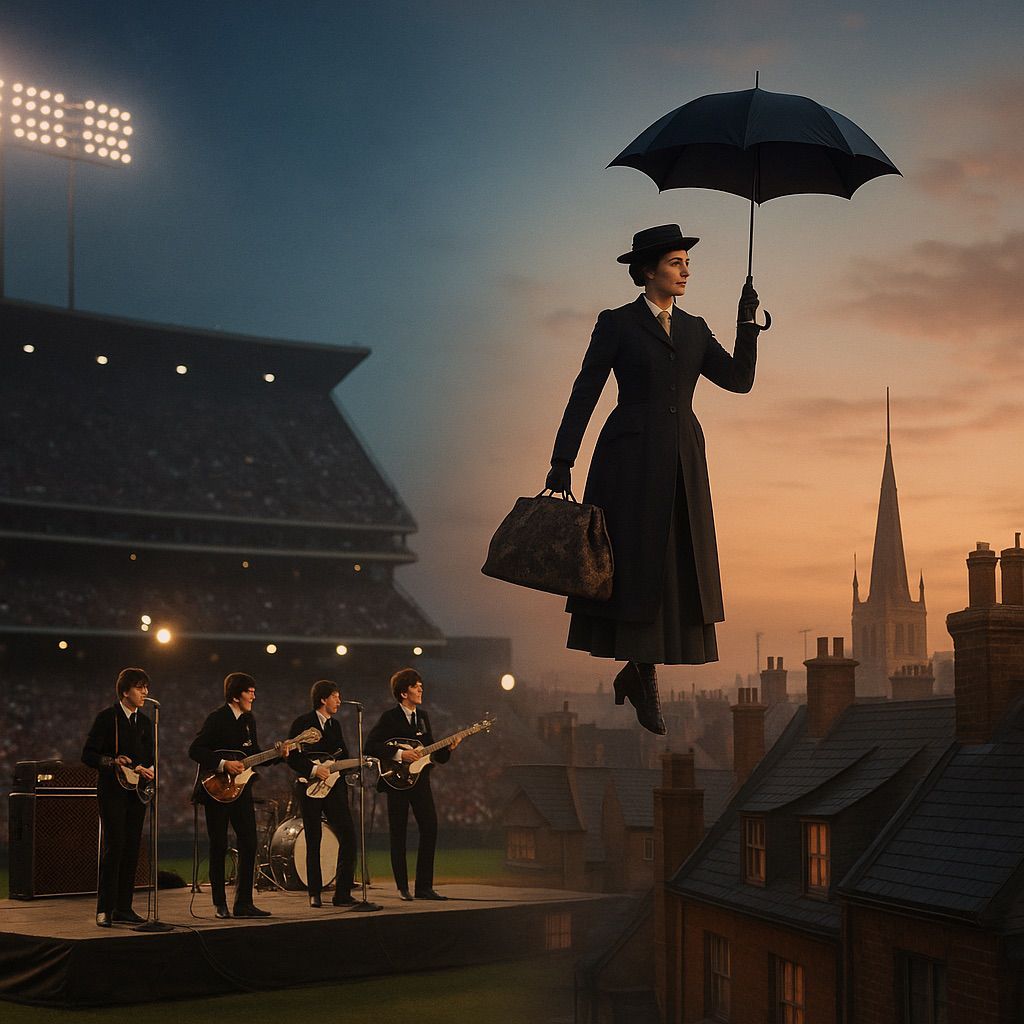
Umbrellas and Amplifiers

Elias Rowen

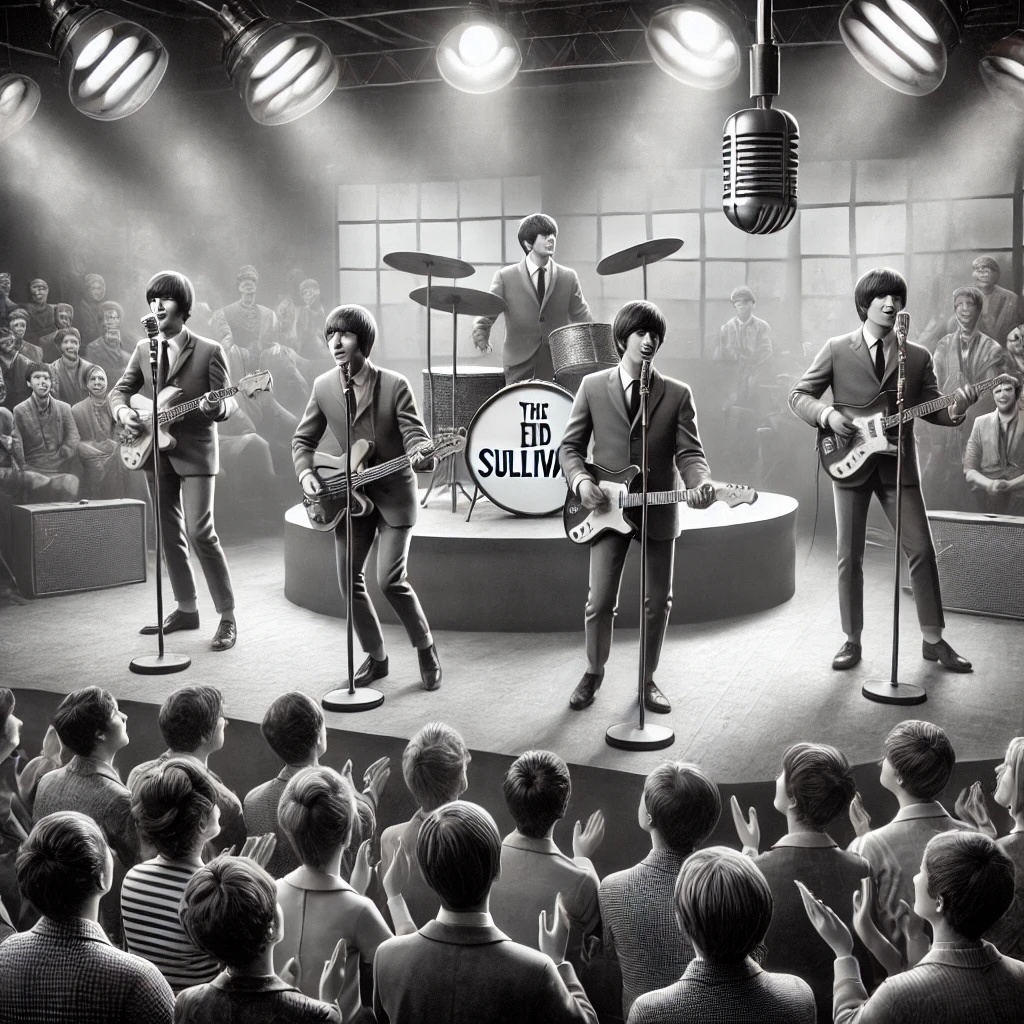
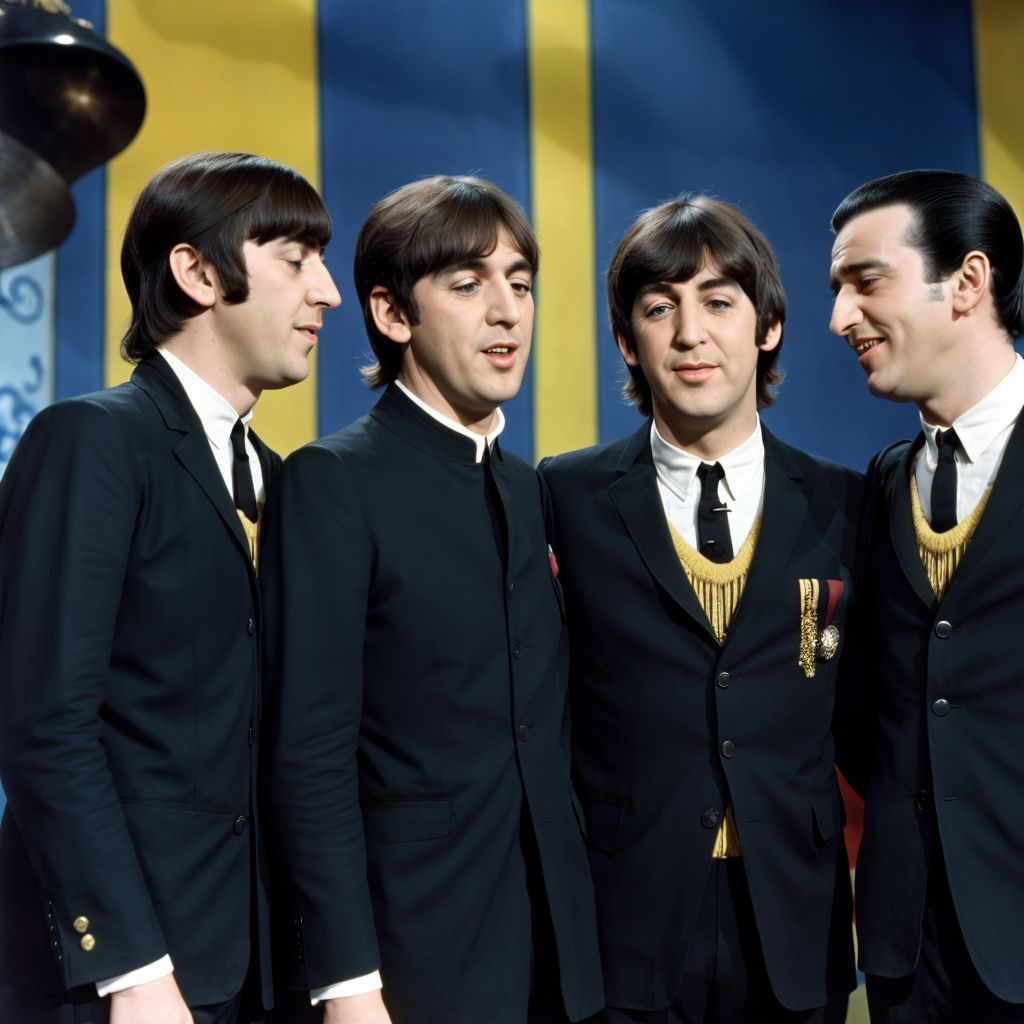
There are calendar days that feel like coin flips—two faces of the same metal, one side shine and one side grit, tossed into the air by history’s impatient hand. August 29 is one of those days. Look at it once and you see a ballpark thundering with a noise that would never be replicated quite the same way again: the Beatles, small as postage stamps at the far end of Candlestick Park, trying to throw their songs across a wind-bitten diamond while teenage awe and transistor squeals ricochet like meteors. Look again and you’re standing inside a movie palace in 1964 as a London nanny floats down from a slipping seam in the clouds and lands exactly where a family needs her, with a carpetbag’s worth of impossible solutions delivered in a voice that sounds like music smiling. One day, two tempos. One goodbye with amplifiers; one hello with a carpetbag. One crowd chanting themselves hoarse at a final concert; one crowd humbled by a film that dared to tell grown-ups to be kinder, braver, and, yes, a bit more playful. It would be easy to keep these stories in separate rooms—the rock show on the stadium’s grit, the Disney premiere in velvet shadows—but August 29 won’t let us. It insists on a single, long corridor where pop revolution and movie magic pass each other, nod, and share a secret: both of us changed how people feel about the future, and neither of us did it quietly.

Picture San Francisco first. Candlestick Park in late August, 1966. The air there never quite relaxes; it shivers even in summer, sea-salted and mischievous, taking a sweater off your shoulders just when you thought you’d warmed up. Out on the outfield grass a temporary stage stands in its own uncertainty, looking too slender to hold the decade’s heaviest fame. The Beatles arrive in a car that seems embarrassed by its cargo and step into a noise that is less cheering than weather, a jet stream of adoration pouring through every concourse and clipped by the stadium’s concrete geometry into something that wails. They have become the world’s loudest quiet men—funny, observant, sleepless, generous, overwhelmed—famous enough to be reduced to symbols and hunted by their own logistics. The Shea Stadium show a year earlier had proved a point about scale but also revealed a limit: you can’t hear a band when the band can’t hear itself. What happens on August 29 is both a concert and a decision. The setlist is a pocket of their catalog—“Rock and Roll Music,” “She’s a Woman,” “If I Needed Someone,” “Day Tripper,” “I Feel Fine,” “Yesterday,” “Nowhere Man,” “Paperback Writer,” “Long Tall Sally.” The amplification, by modern standards, is quaint: a few Vox amps, the park’s P.A., microphones befuddled by wind. Ringo’s snare sounds like a flag being flicked. The guitars skitter like dragonflies. You can hear as much crowd as band, and yet something essential makes it across—the joy of doing a thing you love in the very moment you decide to stop doing it this way.

Decisions like this do not arrive as press releases; they land in a musician’s bones as fatigue that no nap can fix, as a sense that the art is larger than the room it’s been placed in. The Beatles were tired of being décor for their own legend—tired of the shriek that swallowed chord changes, tired of death threats and segregation fights in the American South, tired of playing “I Want to Hold Your Hand” to the back wall of a baseball stadium where the usher two sections over was louder than any note they could push through the air. They were not tired of each other, not yet, not in the way that would later break their studio into corners; they were tired of a format that embarrassed the music. So they made a brave and technical choice: let the songs grow in the place where they could be carefully engineered. Touring had revealed the ceiling; the studio would open the roof. Think about what that requires—to walk off a stage you own, at the peak of a public love affair, and say, the next version of us will be invisible until it is impossible to ignore. It is not retreat. It is a tactic. It is an admission that the art you’re trying to make needs a different kind of attention than a stadium can give.

There’s a photograph from that night, one of the famous ones taken by their press officer Tony Barrow, showing the band huddled around a scrap of paper backstage, signing the date on a postcard as if notarizing their own decision. It looks almost casual—four men with pens, a bit of cardboard, jackets askew, faces half-smiling, a little sad and a little giddy. People who love the Beatles sometimes talk about their arc as if it were inevitable: start in Hamburg sweat and Cavern dust, explode into Beatlemania, then invent the modern studio album in a chain of miracles. But inevitability is what the story looks like afterward, when we’ve flattened the fear out of it. In the moment, on August 29, 1966, it looked like courage. Not the showy kind. The technical kind. The kind that says: we will trust the work and our ears; we will vanish from your applause so we can chase a sound that you don’t know you’re waiting for. Two months later, they would roll into Abbey Road and start turning the knobs toward Sgt. Pepper and everything that came with it—the orchestra swells, the varicolored tape loops, the “Being for the Benefit of Mr. Kite!” harmonium, the moaning mellotron, the bass as a lead instrument, the song as a movie in your head. People will tell you the Beatles stopped playing live because they were tired. Sure. But August 29 shows a deeper reason: they were not going to let the limits of the era become the limits of the music.

On another August 29—rewind the reel to 1964 and change coasts if you like—an entirely different kind of spectacle pulls its audience into a kind of civic charm school. The curtains open on London rooftops drawn by hand and painted by imagination. Chimneys stand like organ pipes, waiting to blow soot and melody. A wind shifts its mind. The city inhales. Down floats Mary Poppins, umbrella up like a moral compass, carpetbag in hand, hat slightly defiant, with a smile that seems to have already forgiven someone for something. “Practically perfect in every way,” she will say later, but that tidy line is only half the spell. The other half is sterner: you can be better, and it will be fun to learn. The world that welcomes her is a household in disrepair by a problem adults often fail to diagnose—Mr. Banks is very good at his job and very bad at his joy. The city around them is bright enough to hide soot and soot enough to hide tenderness. The film that unfolds from this premise is a feat of engineering disguised as whimsy: live action wed to animation without visible seams, songs that behave like lessons and lessons that behave like games, a nanny who seems to have stepped out of nineteenth-century literature and into twentieth-century cinema without losing a single ounce of agency. Disney’s “Mary Poppins,” anchored by Julie Andrews’ precision and warmth and by the Sherman Brothers’ dozen proofs that melody is the shortest distance between a stubborn adult and their inner child, offers a theme the Beatles would have recognized: there are better technologies for being human than the ones we have carelessly inherited.

Remember the songs, even if you haven’t watched in years. “A Spoonful of Sugar” is not about sweetening; it is about reframing—task becomes play when we are invited to meet it with imagination instead of dread. “Chim Chim Cher-ee” romanticizes soot at first and then quietly expands into solidarity: a sweep knows the rooftops are a commons, and a commons asks us to step lightly. “Feed the Birds” refuses spectacle and gives us a tempo of tenderness—the palace of a city-centered financial system sits across from a woman selling crumbs, and the film’s moral gravitational center tells you plainly where your heart should go. “Let’s Go Fly a Kite” is a final exam on joy shared and hierarchy softened: the father discovers that his place in the world is not a ledger but a circle made of his family’s outstretched arms. It would be easy to dismiss such narrative with grown-up cynicism, easier still to mock its sentiment as dated. But the record shows that the film’s kindness has stubborn half-life. It taught multitudes of children that the adults around them could change for the better—and taught the adults that change would require small embarrassments accepted with grace and songs stuck in their heads on purpose.

The timing matters. The mid-1960s were already humming with a kitchen’s worth of pots boiling over: civil rights demanded legal transformation, feminism began to step out of the kitchen where it had never consented to remain, the war machine was winding itself toward its ugliest efficiencies, and popular music was learning that it could be more than dancing and courtship—it could be argument and prophecy. In that climate, it might seem odd that a film about a nanny became one of the era’s cultural pillars. But look closer. What Mary Poppins proposes is not escape; it is training for a different citizenship. This is how you tidy a room and a life without throwing your neighbor into the dustbin. This is how you tell a story to a child that makes that child a partner in delight rather than a receptacle for orders. This is how you talk to a banker about value in a vocabulary that places the fragile at its center. The film’s technology—the painless stitch between live action and animation, the trick shot that makes a carpetbag’s bottom go wandering, the choreography that makes a city rooftop feel like a republic—was not showing off for its own sake. It was saying: we can build kinder illusions to teach truer truths.

Maybe that’s the link, then, between Candlestick Park and Cherry Tree Lane: both nights, August 29 taught its audiences to ask for a better technology. The Beatles asked for a better technology of listening to music together, which turned out, for a while, to be not “together” at all, but alone with headphones and liner notes, a long stare at the gatefold, a reverence toward the sequencing magic that would be drowned in a ballpark. Mary Poppins asked for better technology of listening to one another, which turned out not to be gadgets or gizmos but households practicing play like a language. One night pivoted toward four-track machines and tape loops; the other pivoted toward a kite string and a hand held at the right time. Both nights said: adjust the room if the song can’t breathe; adjust the heart if the house can’t.

The human stories inside these spectacles deserve their due. On the Candlestick stage, John wore his ironic armor a little tighter than usual; Paul kept his diplomat’s smile; George, still only twenty-three, glanced out past the cameras toward a horizon he would later chase in other ways; Ringo did what Ringo always did—keep the pocket steady and the spirits up. After the show they left in a white armored car, the kind of exit vehicle you use when you are both adored and in danger. In hotels not far away, they wrote about boredom and brilliance on hotel stationery and wondered if they were inventing or surviving. In Burbank, two years earlier, Julie Andrews had auditioned while pregnant, with a voice that could go from silver to velvet in a single syllable, and Walt Disney—part showman, part moralist, part wizard of manufacturing wonder—had bet on a film that could fail in a dozen visible ways if the tone went sour. Behind the scenes, the Sherman Brothers wrote songs that felt like they had always existed, each a little instruction manual for a life with fewer cruelties. Dick Van Dyke defied gravity with a grin; the animators learned new rules about eye-lines and shadows; the editors learned when to let a song keep the camera still. Everyone involved, both at the stadium and at the studio, knew the same professional secret: the trick is to make it look effortless when it absolutely was not.

The legacies of these August 29s are easy to trace and easy to underestimate. The Beatles, released from the physics of touring, discovered the moral of the laboratory: curiosity plus time equals breakthroughs that sound like they arrived whole. Revolver, Sgt. Pepper, Magical Mystery Tour, the White Album, Abbey Road—those projects were not only albums; they were proposals for what records could do to your sense of time. A song could be a day in a life, complete with alarm clocks and orchestral glissandos that sounded like falling through the sky. It could be a field recording from a dream. It could be a postcard from a place no one had been but everyone wanted to visit. And because they were no longer killing their ears in stadiums, they could protect those ears long enough to chase arrangements that made radio itself feel newly invented. Mary Poppins, released into a world accustomed to children’s films as confection, dared to be moral without scolding, technical without bragging, and truly intergenerational—grandparents laughed without pretending, parents cried without warning, children believed without apology. It showed a studio how to make magic look like empathy and taught the industry that spectacle earns its keep only when it is in service to a change of heart.

You can also measure these stories in the lives they quietly coached. Ask a musician what first told them that a song could be a universe and you will hear the names of Beatles albums like the catechism of a secular church. Ask a parent what taught them that routine could be a ceremony and they might hum “A Spoonful of Sugar” without noticing. Ask a school music teacher what keeps them insisting on beauty when budgets say otherwise and you will hear about a band that stopped touring so the work could get deeper. Ask a social worker what teaches a child empathy when lectures fail and you will hear about films that smuggled kindness into kids’ heads with melodies. August 29 moves through these testimonies like a ghost with good timing.

There is, inevitably, a shadow to everything we praise. The Beatles’ retreat from live performance is sometimes read as luxury—only the most famous band in the world could afford such a choice. But the point is not “do as they did” so much as “learn what they learned.” If the format betrays the work, you are allowed to choose a different room. Decades later, bands would reinvent live sound, arenas would become theaters of precision, and the Beatles themselves would reenter the world’s rooms in a different register—reissues, rooftop surprises, documentary clarity that finally let you eavesdrop properly. Mary Poppins’ primness, read unkindly, can scan as nostalgia for a Britain gentler on the surface than in policy; yet the film’s insistence on paying attention to the vulnerable remains stubbornly modern, and its belief that joy is a discipline rather than a luxury remains a counterculture all by itself. The shadows only make the lights truer. They force us to refine our praise—to say, not “perfect,” but “practically perfect in the way it moves us toward better.”

So what is August 29 asking of us now? Perhaps this: find your stadium you need to leave and your household you need to mend. If there is a room in which your best work cannot be heard, you are not required to remain because the crowd is large. Find the smaller room where the microphone is honest, the studio where collaborators hear each other, the laboratory where a failed take is an investment rather than an embarrassment. And if there is a room where the people you love have forgotten how to delight in each other, you are never ridiculous for showing up with a kite string and an invitation to the park. The Beatles teach the courage to withdraw strategically. Mary Poppins teaches the courage to engage specifically. Both teach that art is not content you consume to forget your life; it is instruction you practice to enlarge it.

In the end, a concert you couldn’t quite hear and a movie you cannot quite forget join hands across a single date on the calendar, and the handshake is firm. The boys in tailored suits walk off a stage and into a studio, and the nanny in a tailored coat steps off a cloud and into a home. One set of footsteps makes tapes hum; the other teaches feet to dance. One shows that intimacy can be engineered at scale with the right knobs and patience; the other shows that intimacy can be scaled down to a kitchen table and still alter a city. August 29 keeps whispering: make something that lasts longer than the applause. Make something that teaches the people who love it to love each other better. Make something that can be heard.

Related Posts

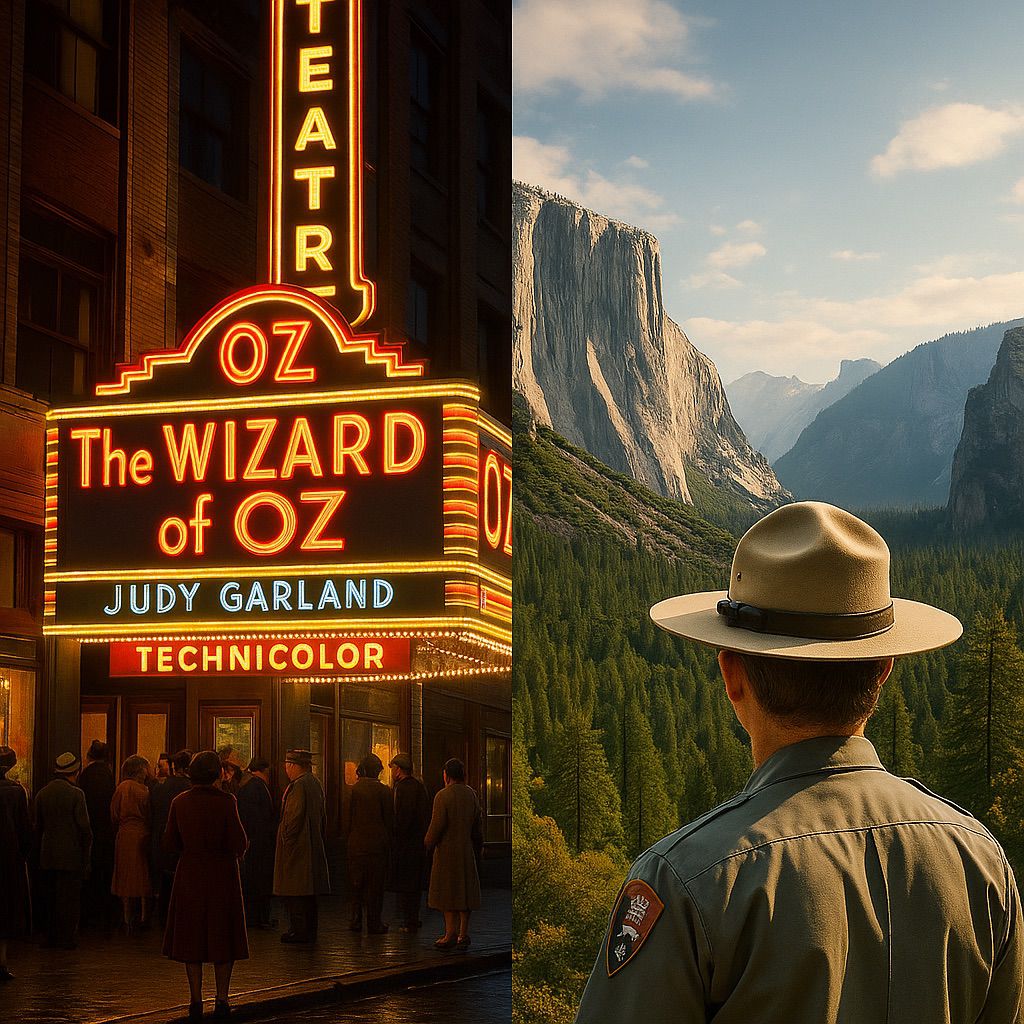
Emerald Lights, Endless Trails

Elias Rowen

On August 25, America learned two different ways to believe. In 1916, Congress created the National Park Service, a quiet sentence that would teach an entire country to treat mountains, canyons, coral reefs, and battlefields like family heirlooms: not for hoarding, but for sharing. Twenty-three years later, in 1939, a movie slipped from sepia into Technicolor, and audiences gasped as Dorothy Gale stepped over a threshold and into a world that insisted dreams could come true in shoes you already owned. One founding promised that the real Emerald Cities—valleys and geysers and long, breathing prairies—would be kept for the generations yet to lace their boots. One film promised that the courage, heart, and brains needed to cross any wilderness were already within reach. The date is a hinge between stewardship and story, a reminder that wonder needs both a place to live and a reason to matter.

Think first of the Park Service, born into an America that was busy becoming modern. Railroads had braided the coasts together; automobiles were re-sculpting weekends; billboards and skylines competed to tell you where to look. Yet in the background—older than any headline—stood the unpurchased astonishments: geysers that threw time into the air, stone arches like doorways that forgot their doors, redwoods with the patience to forgive our hurry. Before the Service, parks existed as a scattered promise—Yellowstone here, Yosemite there, a handful of monuments and reservations stitched unevenly into a quilt of good intentions. The Organic Act of August 25, 1916 threaded them, gave them a single caretaker with a paradoxical job: keep the wild wild, and still invite the world to visit. Preserve unimpaired; provide for enjoyment. Two imperatives that jostle like siblings and, on good days, hold hands.

For a century that paradox has been the Service’s craft. Rangers translate geology into sentences and silence into safety briefings; they teach toddlers to listen for ravens and hikers to see lichens as cities. Trails are built with a grace that feels inevitable, switchbacks tucked into slopes so that knees believe the mountain has grown kinder. Signage shows where to look but not how to feel. In the best parks, roads stop just short of domination; lodges tuck their shoulders so the landscape can keep its posture. The uniform’s flat hat is the opposite of a crown: a servant’s badge that says, “Ask me how to belong here.” Because belonging is what the parks are for—not the possession of scenery, but the practice of citizenship in a place that does not owe you a view and gives you one anyway.

Yet the Park Service has been learning, and must keep learning, that “unimpaired” never meant “unpeopled.” Long before Congress named these lands, Native nations named and tended them, stewarding meadows with fire and rules, reading river moods with a literacy that predates any ranger manual. “Conservation” that ignores sovereignty mistakes erasure for care. The parks’ future—indeed their present—depends on co-management that honors treaty rights, restores names, and listens to Indigenous science as equal partner, not garnish. It also depends on expanding what counts as a park: not only geysers and granite, but also history too tender to leave to rumor—sites where rights were demanded, where families were confined, where labor organized, where communities built joy that resisted the dark. The national memory is as wild as any canyon; the Service’s task is to keep its walls from being dynamited by forgetfulness.

Now let the lights dim and the curtain rise on 1939. A dust-brown farm in Kansas tightens like a throat; the dog knows before anyone that weather and worry are kin. Then the door opens and color arrives like mercy. The floor tiles wink, the poppies conspire, the Munchkins harmonize, and a road appears as if the future had sent back a blueprint. The Wizard of Oz is the simplest myth told with the most radical tools: a child leaves home, gathers a fellowship, confronts illusions, returns changed. But inside that simplicity lies a new cinematic literacy. The transition from sepia to Technicolor didn’t just decorate the screen; it taught audiences how a frame could crack open the ordinary to reveal the saturated dignity beneath. It announced that movies weren’t only mirrors; they were windows, and sometimes doors.

The film did more than dazzle. It domesticated archetypes without declawing them. The Scarecrow made intelligence a matter of curious attention, not diplomas; the Tin Man made love a matter of practice, not sentiment; the Lion reframed courage as action despite fear, not bravado’s costume. Dorothy, pure center, invited viewers to locate home not as a place on a map but as the place where loyalty and gratitude converge. The Wizard—booming voice, easy smoke—turned institutional spectacle into a cautionary tale that still applies whenever leaders prefer curtains to candor. Wickedness arrived in green and broomstick, yes, but goodness arrived in glitter and a pointed reminder: you already have what you need. Cinema rarely gives better advice.

Put the Park Service and Oz in the same room and you begin to see the shared thesis. Both are about frames. A park boundary says: inside this line, extraction will kneel to awe. A movie frame says: inside this rectangle, we will pause the ordinary so you can learn to see it again. Both are about access. Trails and roads and campgrounds democratize the sublime, insisting that a kid in borrowed boots deserves Half Dome just as much as someone in bespoke gear. Tickets and matinees democratize imagination, insisting that a factory worker deserves lions and emerald towers as much as any patron. Both are about stewardship: the ranger with a Pulaski digging water bars after a storm; the projectionist splicing a reel; the curator cleaning a lens; the volunteer hauling trash out of a creek; the usher sweeping popcorn after credits. Wonder isn’t free; it’s subsidized by care.

Both legacies face modern tests. The parks are warming. Glaciers sulk back up their valleys; permafrost cheats; storms arrive like strangers who refuse to knock. Trails wash out and must be rebuilt farther uphill; seaside forts stare at tides that grew bold while we were arguing. The Service’s mission now includes hosting grief and training resilience: leading “fire ecology” walks that smell of charcoal and courage; writing plaques that admit a lagoon is a meadow because the ocean decided so; closing areas so that foxes can raise kits and reopen them with a conversation about patience. Loving a place in 2025 means voting for its snowpack and sea grass, not just photographing them.

Cinema faces tests, too: attention atomized by infinite scroll; industry footprints that scorch while stories preach cool; gatekeepers who still forget that magic multiplies in more hands. Yet the Oz blueprint holds. Find companions: producers, grips, musicians, writers from faces and towns that used to be seated in the balcony. Walk forward when the market tells you to play it safe: fund a story that treats a river or a neighborhood like the protagonist it is. Pull back the curtain: be transparent about budgets, labor, and climate impacts so that the illusion we buy is honest about the costs it refuses to externalize. Remember that songs are maps: the right refrain can get a frightened audience all the way through a hard idea.

There’s a child threaded through both halves of this date. One Saturday, they climb into the family car before dawn, sleep through a highway’s worth of billboards, and wake up at a pullout where granite refuses to fit into any camera they own. A ranger kneels to show them how a tiny flower lifts a whole slab with its root and rain’s patience. Weeks later, the same child sits in a theater that smells like soft seats and sugar, the lights drop, and a song teaches them that storm cellars are not the only way to survive wind. These lessons touch each other: walk softly, sing loudly; carry water and carry mercy; keep to the trail and keep to your friends; ask for help from experts in green uniforms and from little dogs who can smell a lie.

A confession: the country has not always kept these promises equally. Some families were told that certain parks were “for others.” Some children grew up near beautiful places paved for pipelines rather than protected for picnics. Some audiences saw their faces only as punchlines. Repair is not a subplot; it is the main quest. A Park Service that centers Indigenous stewardship and invites communities of color to write themselves into the interpretive script is not doing outreach; it is doing accuracy. A film industry that funds storytellers beyond the usual zip codes is not doing charity; it is doing its job: enlarging the national dream until it finally fits the nation.

So what do we do with August 25 when it arrives each year like a lantern on a trail? We remember that imagination and inheritance are twins. We donate a Saturday to a trail crew or a “friends of” group because gratitude should leave calluses. We take a first-timer to a park, shoulder half their pack, and let them set the pace. We rewatch a scene that once saved us and pay attention to the craft—how the cut breathes, how the color carries feeling, how the costume tells a truth words can’t. We nag our leaders about budgets with the same devotion we nag a failing battery. We learn the names of birds along with the names of cinematographers. We practice being the person in the group who says, “Let’s pick up that trash,” and the person who says, “Let’s wait for the slowest hiker,” and the person who says, “Let’s fund the weird script; it’s going to matter.”

“Somewhere over the rainbow” is not only a melody; it’s a management philosophy. The rainbow is the spectrum of people and places we are sworn to keep safe: prairie and pueblo, glacier and greenroom, coral head and chorus line. Over it lies the work we haven’t done yet, the risks we haven’t taken yet, the apologies we still owe and the amends we can still make. The Yellow Brick Road is any path that says, “Forward, with friends.” The Emerald City is any community that admits its wizards are human and that power, to be worth keeping, must be accountable to kindness.

There are two exits from the theater: one leads back to streets that will need your courage; the other leads to a trailhead that will need your care. Pick both. Step into the afternoon with songs stuck to your ribs and a map folded into your pocket. Keep an eye out for poppies that look like rest but are really delay. Tie your shoes—ruby or otherwise. Check the weather. Thank the folks at the desk. Promise the desk that you’ll be back, and that you’ll bring someone new. Then walk, and when the road bends, walk some more. If you do it right, you’ll get home and discover you never left; you just learned how to belong more deeply to what was yours all along.

Related Posts

Beach Music Through the Decades: From Boardwalk Ballads to Surfside Beats

Dave

There’s something about the sound of music at the beach that feels like it’s been part of human DNA for centuries. Waves crash in perfect rhythm, gulls call out in random percussion, and somewhere—whether from a tinny transistor radio, a boombox propped on a towel, or Bluetooth speakers hidden under a sunhat—comes a melody that defines the moment. Beach music is more than just background noise; it’s the soundscape of summer, the heartbeat of sun-drenched afternoons, the invisible thread that ties strangers together under the same sky. Each decade has brought its own soundtrack to the shore, shaping not only what we danced to but how we remember our beach days. And like seashells collected along the waterline, each era’s sound carries its own distinct texture and shine.

The 1950s gave us the first taste of what would become “beach music” in the popular sense, though back then it wasn’t quite labeled that way. Post-war optimism was high, cars were shiny and big, and teenagers were suddenly a cultural force. Down in the Carolinas, a regional movement began to brew—smooth, soulful rhythm and blues, often from Black artists, that found its way into white beach towns via jukeboxes and AM radio. It was music you could shag to—a laid-back, swinging dance that matched the gentle sway of the tide. Songs like The Drifters’ “Under the Boardwalk” and The Clovers’ “Love Potion No. 9” became summer staples, echoing from open-air pavilions and seaside clubs. These weren’t songs about surfing or bikinis yet; they were about romance and mystery, the kind of stories that happened after the sun went down and the boardwalk lights flickered on.

Then came the 1960s, and with them, the West Coast claimed the beach as its stage. Surf music roared into being—electric guitars drenched in reverb, drumbeats like rolling breakers, and harmonies as bright as a lifeguard’s whistle. The Beach Boys became the undisputed kings of this era, spinning tales of surfing, cars, and endless summers that turned California into a dreamscape for kids thousands of miles from the nearest ocean. Songs like “Surfin’ Safari,” “California Girls,” and “Good Vibrations” weren’t just hits; they were passports to a sunlit world. Dick Dale’s rapid-fire guitar runs in “Misirlou” brought an instrumental ferocity to the scene, while Jan and Dean’s “Surf City” doubled down on the fun-loving imagery. The music was fast, carefree, and a little naive—perfect for a generation riding high on optimism and youth culture’s first big wave.

The 1970s slowed the tempo, shifting from surf rock’s pure adrenaline to something more mellow, reflective, and sun-soaked. Soft rock and yacht rock took over, carrying a breezy sophistication that paired perfectly with sunset beach bonfires and the gentle hiss of a cassette deck. Fleetwood Mac’s “Rhiannon” might not have been about the beach, but its ethereal quality fit the way the ocean feels at night. The Eagles’ “Hotel California” and America’s “Ventura Highway” carried the scent of salt and warm asphalt. Jimmy Buffett emerged as the poet laureate of tropical escapism with “Margaritaville,” turning beaches into a state of mind you could visit even in the dead of winter. Reggae, too, crossed oceans during this decade, bringing Bob Marley’s laid-back rhythms and political soul to beach playlists worldwide. His “Three Little Birds” became an unofficial seaside mantra—don’t worry, every little thing is gonna be all right.

By the 1980s, the beach had gone electric again. Synth-pop, glam, and dance tracks lit up coastal nightlife, while MTV ensured beach imagery was everywhere. Think Duran Duran’s “Rio,” with its yacht deck escapades, or the carefree vibes of Katrina and the Waves’ “Walking on Sunshine.” Pop icons like Madonna and Michael Jackson provided the kind of high-energy tracks that made beach volleyball games and neon swimwear feel like part of the same cultural wave. Meanwhile, the beach party movie saw a revival—films like “Back to the Beach” and “Weekend at Bernie’s” paired sandy hijinks with music that leaned heavily on punchy choruses and big, bold production. And then there was the rise of boombox culture, where you could literally carry your beach soundtrack on your shoulder, making your patch of sand feel like the center of the world.

The 1990s brought in a strange but delightful variety. On one hand, you had the grunge and alt-rock scene—Pearl Jam’s “Oceans” and Red Hot Chili Peppers’ “Scar Tissue” adding grit to the seaside air. On the other, hip-hop and R&B were shaping beach parties with beats as smooth as the boardwalk on a humid night. Will Smith’s “Summertime” was an instant classic, blending nostalgia with the fresh confidence of the era. Ska and punk-pop bands like Sublime and No Doubt fused surf culture with edgy street energy, giving us sunburned anthems that could just as easily play at a skate park as they could on the sand. The rise of portable CD players meant you could curate your own perfect beach mixtape—burned, labeled, and stored in a sandy backpack.

The early 2000s leaned hard into pop dominance, with artists like Shakira, Britney Spears, and Beyoncé providing the beats for endless summer afternoons. Shakira’s “Whenever, Wherever” had that irresistible Latin-infused rhythm that seemed to sync perfectly with waves lapping at your feet. Jack Johnson emerged as the era’s beachside troubadour—his acoustic guitar and mellow voice on tracks like “Banana Pancakes” and “Better Together” made you feel like the world could pause just for you. Reggaeton exploded onto global beach playlists, with Daddy Yankee’s “Gasolina” and Don Omar’s “Dile” shaking hips from Miami to Ibiza. By this point, Bluetooth speakers were replacing boomboxes, allowing smaller but more powerful sound to follow you wherever you laid your towel.

The 2010s brought streaming culture to the sand, and the concept of the “beach playlist” became a science. Spotify curated “Endless Summer” mixes; YouTube offered hours-long tropical house compilations; Apple Music let you pull up a mood-based beach set in seconds. The sound of the decade leaned heavily on EDM, tropical house, and festival-ready pop. Kygo’s remixes and original tracks like “Firestone” were practically engineered for sunsets on the water. Pop stars like Rihanna (“Cheers”), Calvin Harris (“Summer”), and Justin Timberlake (“Can’t Stop the Feeling”) ensured every beach gathering had its soundtrack dialed in before anyone arrived. And as social media grew, music became not just the soundtrack to the beach but part of the way we remembered and shared it—songs tied to drone footage of turquoise waves and perfectly timed slow-motion jumps into the surf.

Now, in the 2020s, beach music is as diverse as the people on the sand. Lo-fi beats hum from a group doing yoga under a palm tree, Latin trap thumps from a volleyball court, indie surf rock floats from a cooler-top speaker, and an older couple slow-dances barefoot to a playlist heavy on the 1960s classics. Technology has made the beach soundscape even more personal—you can have noise-canceling earbuds for a solo sunset soundtrack or waterproof speakers that turn your stretch of shore into a festival. Music discovery is instantaneous; a song playing from the next blanket over can be identified, saved, and added to your personal summer soundtrack in seconds. Yet, for all the tech, the essence hasn’t changed: beach music is still about setting a mood, about amplifying the joy of being exactly where you are, salty skin and all.

The beauty of beach music through the decades is that it’s never been just one genre or one scene—it’s a fluid, evolving conversation between place, people, and sound. Each era has added something to the shoreline’s permanent playlist: the soul of the 1950s, the energy of the 1960s surf craze, the reflective romance of the 1970s, the glam and groove of the 1980s, the eclectic boldness of the 1990s, the global fusion of the 2000s, the curated vibe of the 2010s, and the seamless personalization of today. Walk along any beach and you’ll hear echoes of them all—blended into a soundtrack that tells not just the history of music, but the history of summer itself.

In the end, beach music is less about what’s playing and more about what it makes you remember. A certain riff can transport you to the summer you fell in love. A chorus can bring back the smell of sunscreen and coconut oil, the heat of the sand on your feet, the sound of your friends laughing over the surf. That’s the real magic—songs come and go, trends fade, but the moments they score remain, polished smooth by the years like sea glass in the tide.

Related Posts

Recreating the Most Iconic Bikini Moments in Movie History

Dave

There’s something unforgettable about a perfectly timed entrance. The moment when sunlight hits the water just right, when music swells and the camera pans to reveal not just a character—but a statement. In cinema, the bikini has long transcended its humble roots as a piece of swimwear. It’s become a symbol, a plot device, a cultural lightning rod. From the sultry slow motion of Phoebe Cates rising from the pool in Fast Times at Ridgemont High to Halle Berry stepping from the sea in Die Another Day, certain bikini moments have branded themselves into film history. These scenes didn’t just showcase bodies—they captured the essence of a moment, a mood, a generation. Now, decades later, fans and cosplayers are bringing these memories back to life with stunning photo recreations that pay homage to the originals while breathing new energy into them. Welcome to a joyful, nostalgic, and empowering celebration of Iconic Movie Bikini Moments Recreated.

To understand why these moments stick with us, it helps to revisit how bikinis made their mark in cinema. In the early years of Hollywood, modesty ruled supreme. Swimsuits were one-piece, conservative, and often regulated by moral codes that kept things strictly family-friendly. But as social norms shifted through the 1960s and ’70s, so did fashion—and film followed suit. Suddenly, a bikini on-screen wasn’t just acceptable; it was a shorthand for cool, sexy, daring, or even comedic. It became the costume that could stop time—making the audience forget the plot and just look.

Take Dr. No (1962), the film that started the James Bond franchise. When Ursula Andress emerged from the Caribbean surf wearing a white bikini, a knife on her hip, and seashells in her hand, the world changed. That moment was raw yet polished, fierce yet feminine. It redefined what it meant to be a “Bond girl” and became the prototype for countless beach scenes that followed. Andress herself didn’t think the outfit was particularly special at the time, but the image became legendary. Today, her beachwalk is reimagined in fan art, Halloween costumes, and modern homages in everything from music videos to swimsuit collections.

Fast forward 40 years and Halle Berry steps onto the same cinematic beach in Die Another Day (2002), wearing an orange bikini that mirrored Andress’s look—but with a distinctly modern twist. The homage was intentional, but Berry made the moment her own. With her sculpted silhouette, confident gait, and effortless charisma, she wasn’t just playing a role—she was entering the cinematic lineage. It was sexy, yes, but also powerful. For Black women especially, seeing a woman of color in a scene that was once monopolized by Eurocentric beauty ideals meant something deeper than a simple fashion moment.

Then there’s Phoebe Cates in Fast Times at Ridgemont High (1982), a movie about teenage awkwardness, rebellion, and hormonal chaos. Her character’s poolside scene—wearing a red bikini, walking in slow motion to The Cars’ “Moving in Stereo”—became one of the most quoted, parodied, and referenced moments in teen movie history. For better or worse, it showcased the intersection of fantasy, adolescence, and the male gaze. Yet Cates herself carried the role with a sense of self-possession that kept the scene iconic rather than exploitative. It was cheeky, surreal, and unforgettable.

These legendary film moments inspired a wave of imitators and innovators. Denise Richards in Wild Things, Angelina Jolie in Tomb Raider: Cradle of Life, Bo Derek in 10, and even animated entries like Jessica Rabbit in her sultry red number—all became part of the cinematic swimsuit canon. And now, years later, a new generation is doing something beautiful: they’re stepping into these moments themselves. Through cosplay, themed photoshoots, Instagram editorials, and even fan-made short films, women (and men) are reimagining these iconic bikini scenes—not just mimicking them, but adding their own twist.

It’s cosplay with a twist of nostalgia and a splash of empowerment. The recreations don’t aim for exact duplication—they celebrate reinterpretation. A plus-size model recreates Halle Berry’s sea scene and looks stunning. A group of friends redoes the Baywatch run across the sand, giggling all the way. A drag queen channels Ursula Andress with pearls and sass. These are more than costumes. They’re declarations: “I belong in this narrative, too.”

What makes this movement especially exciting is the sheer diversity of who participates. In contrast to the often homogeneous casting of original Hollywood scenes, today’s recreations are inclusive, global, and wonderfully unpredictable. Skin tones, body types, ages, and genders are fluid in this world. That orange bikini? Worn by a curvy Latina mom on vacation. The red poolside number? Reimagined by a Korean influencer with a love for retro fashion. Even Bo Derek’s braided beach look has been recreated (and updated thoughtfully) by African models who reclaim the styling with cultural pride rather than appropriation.

These modern recreations also benefit from contemporary technology. High-resolution photography, cinematic filters, and smart styling give everyday creators the tools to rival major studio productions. A well-planned iPhone shoot with golden hour lighting and some post-editing magic can look like a magazine spread. Fashion brands and swimwear lines are catching on, too—releasing capsule collections inspired by these scenes. The nostalgia market is booming, and the bikini is riding that wave.

But it’s not just about likes, followers, or fashion. There’s an emotional core to these recreations that’s hard to ignore. For many, it’s a kind of healing—a playful way to reclaim the confidence that might’ve been lost in adolescence. Women who grew up feeling like they never had the “bikini body” advertised in movies now post recreations proudly, often accompanied by heartfelt captions about self-love and growth. The very scenes that once made them feel excluded have become opportunities for empowerment. What once was unreachable is now theirs to recreate, own, and share.

And it’s not just women. Men have joined the fun with gender-bent recreations and drag interpretations that both honor and parody the originals. Think of a burly guy in a flowing orange bikini striking Halle Berry’s pose, complete with sea spray and smirk. Or a drag artist in a red bikini channeling Phoebe Cates with exaggerated flair. The result is often humorous, but always celebratory. It’s about joy, creativity, and the sheer absurdity of how seriously we sometimes take beauty standards. These recreations are often more honest than the originals—because they’re rooted in fun, not pressure.

Another fascinating aspect of this trend is the locations. Some recreators go all-in, visiting the original film sets or beaches to take their shots. Diehard Bond fans trek to the Bahamas or Thailand to walk the same sand. Others get creative with pools, bathtubs, or Photoshop. What matters isn’t precision—it’s passion. Whether you’re striking a pose in your backyard kiddie pool or on the shores of Positano, what you’re really doing is connecting with cinema history in a deeply personal way.

The online community surrounding these recreations has also become a kind of support group. Comments sections are filled with encouragement: “You nailed it!” “Even better than the original!” “This gave me chills!” There’s something magical about strangers hyping each other up for simply stepping into a bikini and saying, “This is mine now.” It’s a far cry from the judgmental, Photoshopped world of early-2000s fashion magazines.

Of course, not every recreation is perfect. Some walk a thin line between homage and parody, and critics will always have their opinions. But the very existence of this trend challenges the old gatekeepers of style and sex appeal. It suggests that we don’t need permission from movie studios or beauty editors to see ourselves as glamorous, powerful, or cinematic. We just need a little inspiration, some stretchy lycra, and a camera.

This movement also intersects with broader cultural shifts. As we reexamine the impact of the male gaze in media, these recreations offer a subtle subversion. The original scenes were often filmed through a lens that objectified or reduced female characters to set pieces. But when someone willingly recreates the scene with agency, intention, and personality, the power dynamic flips. It’s not about being looked at—it’s about being seen.

And let’s be honest—part of the appeal is just plain fun. Who doesn’t want to channel their inner Bond girl or teenage dream once in a while? The act of posing in the surf, flipping your hair back, or walking in slo-mo to a killer soundtrack is playful and performative in the best way. It reminds us that fashion isn’t always about trend forecasting or elite runways. Sometimes, it’s about standing in your kitchen in a red bikini with sunglasses and pretending you’re in a blockbuster.

As we look to the future of fashion and film, it’s clear that the bikini isn’t going anywhere. It will continue to evolve, reappear, and surprise us in new ways. But what’s even more thrilling is that the control over its legacy has shifted. It’s no longer just about what movie studios choose to immortalize—it’s about what fans choose to reclaim. With every re-creation, we add new voices to the narrative, new stories to the scene.

So whether you’re donning a white belt-bikini with seashells, a hot orange halter, or a red number that screams “’80s dream girl,” know this: you’re stepping into a tradition. Not just of swimwear, but of cinema, memory, and self-expression. You’re making waves in your own way.

Related Posts

Tropical Vibes at Home: Hosting the Perfect Beach-Themed Backyard Party

Dave

There’s something about a beach party that awakens the carefree side of us all. Maybe it’s the association with salty breezes, the feel of sand between your toes, or the sound of laughter carried over crashing waves. But you don’t have to live on a coast or book a plane ticket to tap into those sun-drenched, ocean-inspired vibes. With a little creativity and planning, you can bring the spirit of the beach right into your own backyard. Whether you’re throwing a birthday bash, a summer soirée, or just a casual weekend get-together, hosting a beach-themed backyard party can turn any ordinary patch of grass into an unforgettable tropical escape.

The beauty of a backyard beach party lies in its versatility. It doesn’t matter if you have a small patio or a sprawling lawn—what matters is the atmosphere you create. The key is immersion. You want your guests to feel like they’ve stepped out of their day-to-day routines and into a breezy, coastal retreat the moment they arrive. Start with a vision: are you imagining a Hawaiian luau, a Caribbean cabana club, or a laid-back California surf party? Once you’ve got your theme locked in, every detail—from the décor to the drinks—can reflect that story.

Decor is where the magic begins. If you’re going for a full transformation, think about what the beach evokes: sand, sea, and sun. Start with color schemes rooted in turquoise, sandy beige, coral pink, and seafoam green. You can bring in textures too: raffia, bamboo, driftwood, seashells. Lay down a few outdoor rugs that mimic the look of a beach boardwalk, toss in some inflatable palm trees, and don’t be afraid to go big with tiki torches or string lights that sway gently in the evening breeze. It’s not just about what your guests see, but what they feel. Scatter beach balls around for a pop of playfulness. Create “zones” that mimic a real beachfront: a sunbathing area with loungers and towels, a “surf shack” drink station, and a shaded cabana-like space with throw pillows and low tables.

But the real star of any themed party is the food and drink. For a beach bash, the menu should be light, flavorful, and fun. Think grilled shrimp skewers, pineapple salsa, coconut-lime chicken, and tropical fruit platters overflowing with mango, watermelon, kiwi, and papaya. Bonus points if you can serve everything in hollowed-out pineapples or on palm leaves. And let’s not forget the drinks. A self-serve tiki bar with rum punch, frozen margaritas, and non-alcoholic options like pineapple mojitos or hibiscus iced tea will keep everyone cool and refreshed. Add a few paper umbrellas and novelty straws, and suddenly your backyard becomes a beachside café.

Entertainment is the heartbeat of any successful party, and a beach theme gives you endless possibilities. Music sets the tone, so curate a playlist with reggae, surf rock, steel drums, and summertime anthems that make you want to dance barefoot in the grass. If you have space, set up lawn games with a seaside twist: think beach volleyball, cornhole with nautical designs, limbo contests, and even a sandcastle-building competition if you bring in a kiddie pool filled with play sand. For a more relaxed vibe, have a projector ready for a twilight beach movie screening with classics like Moana, Blue Crush, or The Beach. Bring out the blankets, pop the popcorn, and let the stars be your ceiling.

No party is complete without attire, and your beach-themed bash gives guests the perfect excuse to dress up—or down, as the case may be. Encourage Hawaiian shirts, sundresses, board shorts, sarongs, floppy hats, and sunglasses. You can even provide leis or flower crowns at the entrance as a playful icebreaker. Don’t be surprised if someone shows up with a snorkel set or flippers for laughs—lean into the fun of it all. The idea is to let go of formality and step into vacation mode.

What truly elevates a backyard beach party, though, is the attention to the little things. Create signature touches that make the experience feel unique and memorable. Set up a photo booth with ocean-themed props and a backdrop that looks like a tropical shoreline. Provide small take-home gifts like mini bottles of sunscreen, seashell keychains, or DIY “message in a bottle” notes. Even your bathroom can play along—stock it with aloe vera gel, face mists, and a soundtrack of crashing waves on a Bluetooth speaker. These details, while small, collectively shape the mood of the evening and show your guests how much thought went into the celebration.

Of course, any party planner knows that weather can be unpredictable. If your party is entirely outdoors, be sure to have some backup options in place. Pop-up canopies, large umbrellas, or even a tented area can shield guests from too much sun or a sudden drizzle. Likewise, if you’re planning an evening affair, think about bug control—citronella candles or discreet bug zappers can save the day without disrupting the vibe.

Lighting plays a crucial role in creating ambiance once the sun goes down. Swap out harsh overheads for a warm, golden glow: fairy lights wrapped around tree trunks, lanterns hanging from patio umbrellas, and even solar-powered pathway lights that guide guests around the yard. Fire pits are a fantastic focal point, perfect for roasting marshmallows or simply gathering and chatting as the night cools. The soft flicker of flames under a starry sky brings an intimate, nostalgic feel that’s hard to replicate with anything else.

One of the most rewarding parts of hosting a backyard party is how it brings people together. In today’s fast-paced, screen-heavy world, creating a space where people can kick off their shoes, unplug, and just be is a gift. Beach-themed parties, by their very nature, invite laughter, movement, connection. Children dart between games while adults lounge with cocktails, conversations flow more easily in flip-flops, and even the most buttoned-up guest tends to loosen up with a steel drum beat in the background. That’s the beauty of a theme—it lowers barriers and invites play.

You also don’t need a Hollywood-level budget to pull this off. So much can be done with DIY touches, clever upcycling, and a little elbow grease. Reuse old crates as makeshift tiki bars. Paint old mason jars in tropical hues and stuff them with LED candles. Create homemade signs that point to places like “Lagoon Lounge,” “Surf Shack,” and “Snack Island.” Creativity often trumps cost, and the result feels more personal and charming because of it.

If you want to take things a step further, consider tying your party to a cause. Host a “Beach Bash for a Better Planet” where guests bring reusable dishware or contribute to a local ocean cleanup fund. Offer sustainable alternatives to single-use plastics, like bamboo cutlery or paper straws, and make recycling bins visible and labeled. This thoughtful layer adds depth to your event while still keeping it festive.

Ultimately, the goal of a beach-themed backyard party isn’t to perfectly replicate the beach—it’s to recreate the feeling we get when we’re there. That sense of ease, joy, spontaneity, and community. It’s about laughing till your cheeks hurt, dancing like nobody’s watching, and sipping something sweet while the breeze kisses your skin. It’s about watching kids run through sprinklers and adults toss around compliments like, “This is the best party I’ve been to all year.” And at the end of the night, when your feet are sore and your cheeks are flushed from smiling, you’ll know you created something magical—not because it was flawless, but because it was filled with heart.

As your guests trickle out, maybe carrying a piece of pineapple or a melted popsicle in hand, they’ll take with them more than just memories. They’ll carry the feeling of being seen, welcomed, celebrated. That’s the magic of hospitality—and the spirit of summer. So go ahead. Grab that beach umbrella, crank up the Jimmy Buffett, and transform your backyard into the tropical retreat everyone will be talking about until the leaves start to fall.

Related Posts

Splash Zone Spectacle: The Thrill and Controversy of SeaWorld’s Orca Show

Elmo

シーワルド・サンディエゴ
期待しないで行ったのですがとても良かったです。1日で周らないといけないので、乗り物を二の次で、ショーを中心に周ろうと決定。
ショーの時間は、パーキング入り口で貰った地図の紙に書いてありました。
各ショー開演30分前から会場入りなので、良い座席確保の為に早めに席取りが基本。でも待ってる客を飽きさせない工夫がされてるのがgood!
ポップコーンや食べ物を食べながら映画鑑賞のノリでみんな着席。

ORCA(シャチ)ショー
前へ行くほど水が掛かります。この席まで濡れますと表示されてます。ちょっとかかるぐらいじゃありません。全身ずぶ濡れです。
前席に座るなら、最初から水着を着るかレインコートを持っていくか着替えを持つか防御が必要です。会場でもポンチョやタオルを売り子が売り歩いています。
初めて生で見るシャチの大きさにど肝を抜かれ、ザッパザッパ高波を作り飛び跳ねる巨体。尾ひれで遠慮なく客に洗礼の如く水しぶきを掛けていきます。子供達は浴槽近くでスタンバイ。オオハシャギでそれを待ちかねます。
観客の中から選ばれた1人が特別席に座り、水しぶきを間近で思いっきり浴びると観客のボルテージはMAX!
シャチの種類や生体についてスクリーンで説明してくれるのが嬉しかったです。
前に事故があったせいで飼育員が浴槽に入ってのパフォーマンスは禁止されたそうで、浴槽外からの指示でしたがとてもよく連携が取れていて、技を決める度に、シャチの顔が笑っているように見え可愛かったです。

パークへの入場チケットと駐車場料金は公式ページで前もって購入するのがお得です。米軍関係者は特別料金があるので、お近くのMWR Ticket officeへ行くことをおススメします。

Sea World San Diego

Related Posts

The Night America Fell in Love with The Beatles

Elias Rowen

On February 9, 1964, something extraordinary happened—America fell head over heels for four lads from Liverpool. That night, The Beatles made their historic debut on The Ed Sullivan Show, and in just a matter of minutes, music and pop culture would never be the same. More than 73 million people—nearly 40% of the U.S. population at the time—gathered around their television sets to witness the phenomenon. The moment they hit the stage, with their sharp suits, mop-top haircuts, and infectious energy, Beatlemania officially took hold.

The Beatles had already been making waves in the UK, but in America, they were still a fresh sensation. Their single I Want to Hold Your Hand had just reached No. 1, and the hype was building. When they arrived at JFK Airport two days before the show, they were met by thousands of screaming fans, a chaotic and thrilling preview of what was to come. By the time they stepped onto the Ed Sullivan stage, the country was ready—but no one could have predicted just how massive their impact would be.

From the very first notes of All My Loving, the audience erupted. Teenage girls in the crowd screamed, cried, and clutched their faces in disbelief, while viewers at home sat mesmerized. The Beatles followed with Till There Was You and She Loves You, delivering a performance that was both polished and electrifying. Then, as they launched into I Want to Hold Your Hand, any remaining resistance was shattered—America was officially in love.

But that night wasn’t just about the music—it was about the energy, the joy, and the sense of something new on the horizon. Just months after the heartbreak of President John F. Kennedy’s assassination, America was in need of a spark of happiness, and The Beatles delivered. They weren’t just talented musicians; they were fun, confident, and had a charm that felt both rebellious and wholesome at the same time. They represented a new era, and people embraced it wholeheartedly.

The impact of that performance was immediate. Within weeks, The Beatles dominated the charts, and their music became the soundtrack of a generation. They opened the floodgates for the British Invasion, changing the music industry forever. More than just a band, they became a cultural movement, influencing fashion, language, and even social change. That night in February wasn’t just the beginning of Beatlemania—it was the moment when music, youth, and culture collided, creating a legacy that still lives on today.

Related Posts

The British Invasion Begins: The Beatles Arrive in America

Elias Rowen

On February 7, 1964, four young men from Liverpool stepped off a plane at John F. Kennedy Airport in New York, greeted by thousands of screaming fans. The Beatles had officially arrived in the United States, marking the beginning of a cultural phenomenon that would come to be known as “Beatlemania.” Their arrival wasn’t just a band landing in a new country—it was the start of a musical revolution that would forever change pop culture, music, and the very fabric of the 1960s.

At the time, America was still reeling from the tragic assassination of President John F. Kennedy just months earlier. The nation was in need of something uplifting, something exciting. Enter John Lennon, Paul McCartney, George Harrison, and Ringo Starr, four charismatic musicians whose fresh sound, boyish charm, and infectious energy captivated an entire generation. Their first press conference was electric—cheeky wit, quick humor, and undeniable chemistry endeared them to both fans and skeptical reporters alike.

Just two days later, on February 9, The Beatles made their legendary debut on The Ed Sullivan Show. Over 73 million Americans tuned in, making it one of the most-watched television broadcasts in history at the time. The performance, featuring hits like All My Loving and I Want to Hold Your Hand, sent shockwaves through American culture. The Beatles weren’t just another band; they were a movement, and their impact was immediate. Teenagers copied their hairstyles, radio stations played their music on repeat, and concert venues were overwhelmed by frenzied fans desperate for a glimpse of the Fab Four.

Their arrival in 1964 was just the beginning. Over the next few years, The Beatles would continue to dominate the charts, reinventing music with each album and leaving an indelible mark on the world. But it all started with that first step onto American soil, that first scream of an adoring fan, and that first chord strummed on The Ed Sullivan Show. The British Invasion had begun, and music would never be the same again.

Related Posts

Stick It: The Fun and Fascination of National Sticker Day

Dave

Every year on January 13, we celebrate National Sticker Day—a quirky, fun occasion that highlights the colorful and creative world of stickers. From childhood collections to marketing campaigns and even modern digital emojis, stickers have cemented their place in our lives as symbols of expression, creativity, and nostalgia. Originating as simple labels for practical purposes, stickers have evolved into a cultural phenomenon, representing everything from personal identity to political movements. This day honors their journey from utility to art, reminding us of the joy and connection they bring to our everyday lives.

The history of stickers can be traced back to the 1800s, with merchants using adhesive labels to price goods. R. Stanton Avery revolutionized the industry in 1935 by inventing the first self-adhesive label, making stickers accessible and easy to use. Over time, stickers grew beyond their practical roots to become canvases for creativity. From scratch-and-sniff stickers in the 1980s to today’s holographic designs, stickers have become a beloved way to personalize everything from laptops to water bottles. Social movements and political campaigns have also used stickers as tools to spread awareness, showcasing their ability to make powerful statements in small, adhesive form.

In the digital age, stickers have transcended the physical world, becoming essential in our online interactions. Messaging apps like WhatsApp and Instagram feature digital stickers that let us express emotions and ideas in playful and visually engaging ways. Whether physical or virtual, stickers offer a unique blend of fun and function, allowing us to communicate, decorate, and connect with others. National Sticker Day is a celebration of this versatility, encouraging us to embrace the charm of these little adhesive wonders that stick with us in so many ways.

Related Posts

Public Domain Day: Unlocking Creativity for All

Dave

Every year on January 1, we celebrate Public Domain Day, a momentous occasion when a treasure trove of creative works enters the public domain, becoming freely available for everyone to enjoy, share, and build upon. These works—ranging from literature and art to music and film—are no longer restricted by copyright laws, allowing them to inspire new generations of creators and enthusiasts alike. Public Domain Day is not just about accessing cultural heritage; it’s a celebration of creativity and collaboration, where the past fuels the future.

For 2025, works published in 1929 join the public domain in countries with a 95-year copyright term. This includes books like Ernest Hemingway’s A Farewell to Arms, Virginia Woolf’s A Room of One’s Own, and classic films like Buster Keaton’s Spite Marriage. Musical compositions from that year, such as Cole Porter’s songs, also become available for adaptation and reinterpretation. Public Domain Day is a reminder of how creativity thrives when barriers to access are removed. It allows these timeless works to be reimagined in new formats—whether in modern performances, fresh adaptations, or digital remixes—breathing new life into cultural history.

The public domain is a vital resource for educators, artists, and innovators, providing an open platform for learning and expression. By making these works available to all, it ensures that knowledge and creativity are not limited to the privileged few but shared across society. Public Domain Day highlights the importance of preserving and expanding this cultural commons, fostering a spirit of inclusivity and innovation. As we celebrate the works that enter the public domain, we’re reminded of the enduring power of art and knowledge to connect and inspire us across generations.

Related Posts

The Revolution of Sound: The Birth of the Electric Guitar

Dave

The electric guitar is one of the most iconic instruments in modern music, influencing countless genres and shaping the sound of the 20th and 21st centuries. The evolution of music has been deeply intertwined with technological advances, and the electric guitar played a central role in this transformation. Prior to its invention, guitars were strictly acoustic, relying on hollow bodies to amplify sound through the vibration of strings. However, the limitations of acoustic guitars in loud, amplified environments, particularly in large orchestras or big-band settings, led to the search for a solution that would allow the guitar to be heard above the din.

In the 1920s, engineers began experimenting with electronic pickups, which converted the vibrations of the guitar strings into electrical signals that could then be amplified. The first significant leap came in 1931 when George Beauchamp and Adolph Rickenbacker created the “frying pan,” the first commercially successful electric guitar. This marked a major turning point in the history of music, as it allowed guitarists to explore new sounds and techniques that were previously impossible on acoustic instruments. The electric guitar opened up a world of possibilities, from rock ‘n’ roll’s rebellious attitude to jazz’s intricate improvisations.

Throughout the 1940s and 1950s, the electric guitar continued to evolve. The introduction of solid-body designs by Fender and Gibson in the mid-20th century transformed the instrument’s stability and sound. These new models, such as the Fender Stratocaster and the Gibson Les Paul, became staples in rock, blues, and pop music, defining the sound of iconic artists like Jimi Hendrix, Chuck Berry, and B.B. King. As rock ‘n’ roll exploded onto the scene in the 1950s, the electric guitar became the driving force behind the genre’s powerful energy and raw emotion.

By the 1960s and 1970s, the electric guitar had firmly established itself as the voice of rebellion and creative freedom. With the rise of psychedelic rock, punk, and heavy metal, guitarists pushed the boundaries of sound with new effects and distortion techniques. Guitar solos became anthems of self-expression, with legendary players like Jimmy Page, Eric Clapton, and Eddie Van Halen creating some of the most memorable moments in rock history.

Today, the electric guitar continues to evolve. Modern advancements, including digital effects, multi-channel amplifiers, and wireless technology, have pushed the boundaries of what is possible. The electric guitar has adapted to fit the demands of contemporary music, whether it be in the hands of a classic rocker or a cutting-edge electronic producer. What began as a simple attempt to amplify a guitar has become one of the most versatile and influential instruments in history, shaping the sound of virtually every music genre.

The electric guitar’s journey from humble beginnings to its current state of innovation is a testament to the power of human creativity and the desire to break boundaries. Its place in music is secure, and it will continue to inspire future generations of musicians to push the limits of sound, expression, and art.

Related Posts

Holiday Movie Date Nights: Pairing Films with Flirty Fun

Dave

The holidays are the perfect time to curl up with someone special and enjoy a cozy movie date night. With the chill in the air and twinkling lights all around, there’s something magical about sharing your favorite holiday films while enjoying a night of flirty fun. The key to the perfect holiday movie date is finding films that set the mood, whether it’s a classic romantic comedy like Love Actually or a heartwarming favorite like The Holiday. These movies not only spark nostalgia but also offer plenty of opportunities for lighthearted banter, shared laughs, and sweet moments of connection. To make the evening even more special, pair the film with cozy blankets, warm drinks like spiked hot chocolate, and perhaps even a platter of holiday treats to snack on. Think gingerbread cookies, peppermint bark, or popcorn with a sprinkle of cinnamon—simple yet indulgent goodies that enhance the festive vibe. Between scenes, steal a kiss under the mistletoe or make playful commentary about the characters on-screen, adding your own unique twist to the evening. The key to a flirty movie night is not just about the films, but the moments you create together—the way you laugh, snuggle up, and share in the magic of the season. When you combine the joy of the holidays with the spark of romance, you’ve got the perfect recipe for a memorable movie night.

Related Posts

Jingle and Mingle: Crafting the Ultimate Holiday Party

Dave

The holiday season is the perfect time to gather your loved ones, friends, and neighbors for a celebration filled with laughter, joy, and festive cheer. Crafting the ultimate holiday party doesn’t have to be overwhelming—it’s all about creating an inviting atmosphere, offering delicious food and drinks, and adding personal touches that make the night unforgettable. Start with the ambiance: twinkling lights, candles, and a carefully curated playlist of holiday classics will set the mood. For decorations, mix traditional elements like wreaths and garlands with creative DIY pieces, such as mason jar snow globes or hand-painted ornaments, to add a unique charm.

When it comes to food, a mix of crowd-pleasers and festive treats is key. A hot cocoa bar with toppings like whipped cream, marshmallows, and peppermint sticks can be a hit, while bite-sized appetizers and a charcuterie board ensure there’s something for everyone. For dessert, themed cookies or a holiday cake can steal the show. To make the night interactive, include fun activities like a gingerbread house competition, a secret gift exchange, or karaoke featuring everyone’s favorite holiday songs.

The heart of any holiday party lies in the connections it fosters. Whether it’s old friends catching up or new acquaintances sharing a laugh, the moments of togetherness are what make the event truly magical. With a little planning and a lot of love, your holiday party can become a cherished tradition that leaves everyone counting down to next year’s gathering.

Related Posts