Latest Articles

Stacking the Bench: FDR’s Controversial Court-Packing Gambit

Elias Rowen

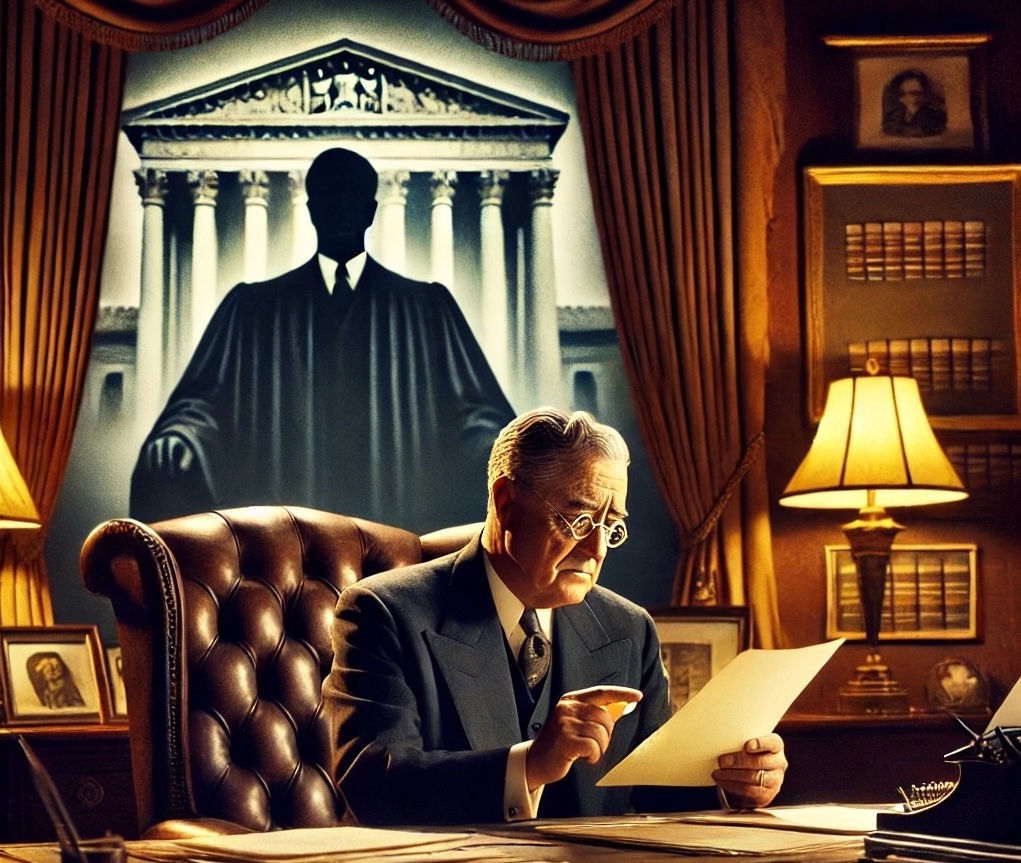
1937 was a defining year for President Franklin D. Roosevelt, who found himself at odds with the very institution meant to interpret the laws of the land—the U.S. Supreme Court. Frustrated by the Court’s repeated rulings against key elements of his New Deal policies, Roosevelt proposed a radical solution: expanding the number of justices to up to fifteen, allowing him to appoint new judges more sympathetic to his vision. This so-called “court-packing plan” sparked a fierce national debate over executive power, judicial independence, and the delicate balance of democracy.

At the heart of the controversy was Roosevelt’s desire to push forward economic recovery programs aimed at pulling the nation out of the Great Depression. However, the conservative-leaning Supreme Court had consistently struck down these efforts, ruling them unconstitutional. FDR framed his plan as a way to modernize the judiciary and reduce its workload, but critics saw it as a blatant power grab that threatened the foundation of American democracy. Even some of his staunchest allies in Congress balked at the proposal, fearing it set a dangerous precedent where future presidents could manipulate the Court for political gain.

The backlash was swift and severe. Many Americans, including members of FDR’s own party, accused him of undermining the separation of powers. The Senate ultimately rejected the plan, but the battle was not a complete loss for Roosevelt. The controversy pressured the Court to soften its opposition to New Deal legislation, and soon after, key rulings upheld programs like Social Security and labor protections. This shift, often referred to as “the switch in time that saved nine,” helped preserve the New Deal without altering the Court’s structure.

While Roosevelt’s court-packing plan failed, its impact rippled through American history. It underscored the limits of presidential power, reinforced the independence of the judiciary, and sparked conversations about constitutional reform that continue to this day. The episode remains a powerful reminder of the delicate checks and balances that define American governance and the political risks of pushing them too far.

Related Posts

The Year America Closed Its Doors

Elias Rowen

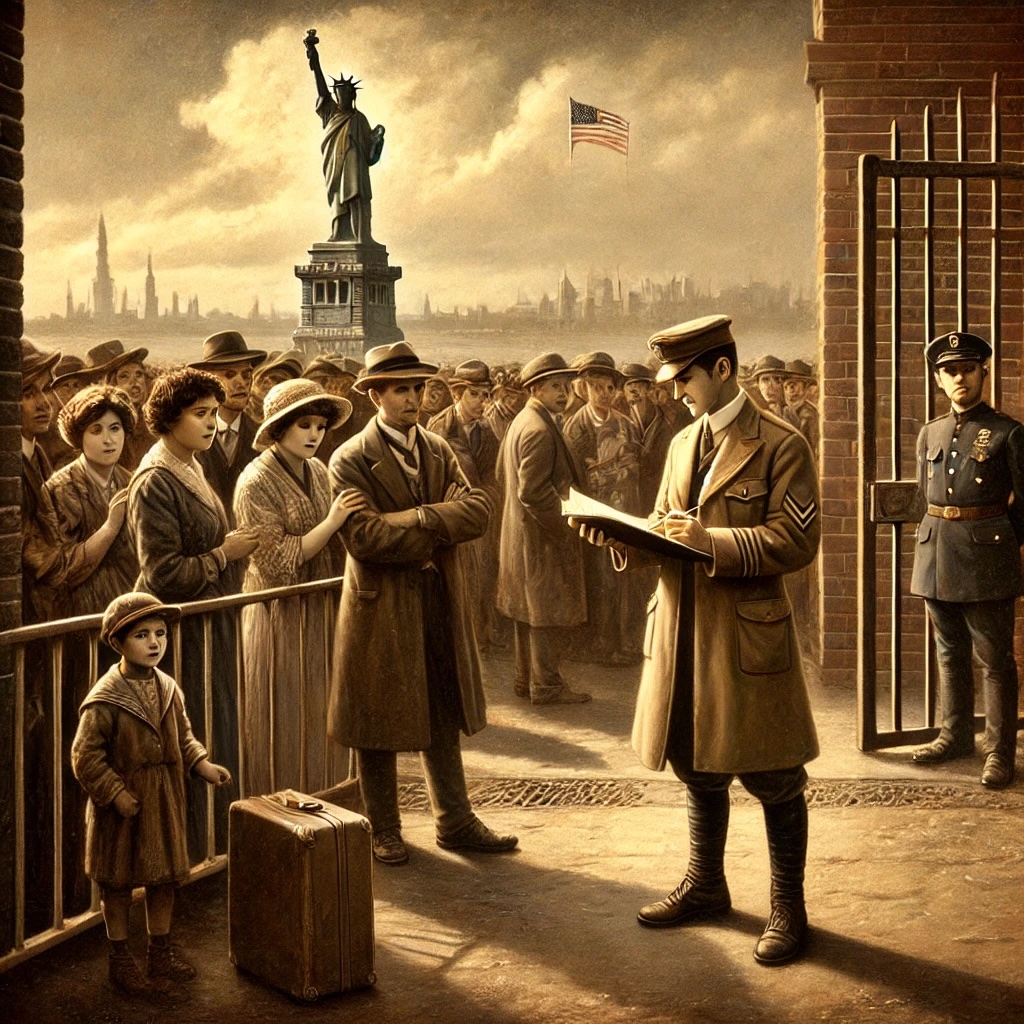
In 1917, the United States took a decisive step in shaping its immigration policies, one that would define its borders and the people allowed to cross them. The passage of the Immigration Act of 1917 marked one of the most sweeping restrictions on immigration in American history. It was a bold, controversial move that reflected growing fears, prejudices, and shifting national priorities in the early 20th century. For many, it was the moment the nation’s open-door policy slammed shut.

The law introduced several new restrictions that dramatically changed who could enter the United States. Most notably, it created the “Asiatic Barred Zone,” effectively banning immigrants from a vast region stretching from the Middle East to Southeast Asia. This was in addition to the long-standing Chinese Exclusion Act of 1882, reinforcing the idea that Asian immigrants were unwelcome. The act also imposed a literacy test, requiring immigrants over the age of 16 to prove they could read and write in their native language. While this test may seem like a simple requirement today, at the time, it was a calculated barrier designed to keep out those from poorer, less-educated backgrounds—primarily immigrants from Eastern and Southern Europe.

The passage of the Immigration Act of 1917 wasn’t just about border control; it was a reflection of the deep anxieties brewing in American society. World War I had intensified fears of foreign influence, and there was a growing belief that too many immigrants from “undesirable” regions threatened American culture and security. Labor unions, too, played a significant role in pushing for the law, arguing that an influx of cheap foreign labor would undermine American workers. The political climate was charged with xenophobia, eugenics-based thinking, and the desire to maintain what many saw as America’s racial and cultural identity.

For the immigrants affected, the law was devastating. Families were separated, dreams were shattered, and entire communities found themselves locked out of a country that had long been seen as a beacon of hope. Many who had planned to make the journey to America now had to look elsewhere—or give up entirely. The act set a precedent for even stricter immigration laws to come, paving the way for the restrictive quotas of the 1920s that would further reshape America’s demographics.

Looking back, the Immigration Act of 1917 serves as a reminder of how fear and prejudice can shape national policy. It also raises important questions that still resonate today: Who gets to be an American? How do we balance security with opportunity? And what happens when a nation turns its back on those seeking a better life? More than a century later, the debates over immigration are as heated as ever, proving that history doesn’t just repeat itself—it evolves.

Related Posts

The Silent Observer: How AI on Your Devices Could Be Watching, Listening, and Tracking You

Dave

In the age of rapidly advancing technology, artificial intelligence (AI) is becoming an ever-present feature in the devices we use daily. From smartphones to smart home systems, AI is designed to enhance user experiences by learning patterns, predicting needs, and offering personalized services. However, as AI becomes more integrated into our lives, a question arises: Is it capable of capturing everything you type, see with your camera, or hear through your microphone before any data is encrypted? The answer lies in understanding how these systems work and the level of access AI has to your personal data.

Devices with AI capabilities typically rely on sensors like cameras, microphones, and sensors embedded in the hardware. These systems are programmed to interpret data in real-time, allowing features like voice recognition, face unlocking, and smart assistance. While these sensors are often used for legitimate purposes, such as facilitating a voice command or facial recognition for security, it’s easy to imagine how this data could be accessed and stored by AI before encryption.

The key issue here is the role of encryption. For many services and devices, encryption ensures that the data you send or receive is protected from prying eyes. But the potential vulnerability lies in the time between data capture and encryption. In theory, if a device’s AI system has direct access to the microphone, camera, or keyboard input, it could technically record everything before that data is securely encrypted. The use of AI in real-time processing, however, doesn’t automatically mean data is being stored. Most reputable companies have strict guidelines about how data is handled, and some devices or apps even allow users to control privacy settings to limit what can be captured or monitored.

On the other hand, some less transparent applications or devices may bypass these safeguards. Users may unknowingly consent to monitoring capabilities, especially in cases where they do not read the fine print during setup or app installation. Additionally, with the increasing presence of cloud-based AI, the question of where data is processed and stored becomes more complex. Could it be that our devices, under the guise of helping us, are quietly listening, watching, and recording our every move?

It’s crucial for users to be informed and proactive about the permissions they grant to their devices and apps. Turning off unnecessary permissions, using trusted security software, and regularly reviewing privacy settings can go a long way in protecting personal data. As AI continues to evolve, so too must our understanding of its potential impact on our privacy.

Related Posts

The Unanimous Choice: George Washington, America’s First President

Elias Rowen

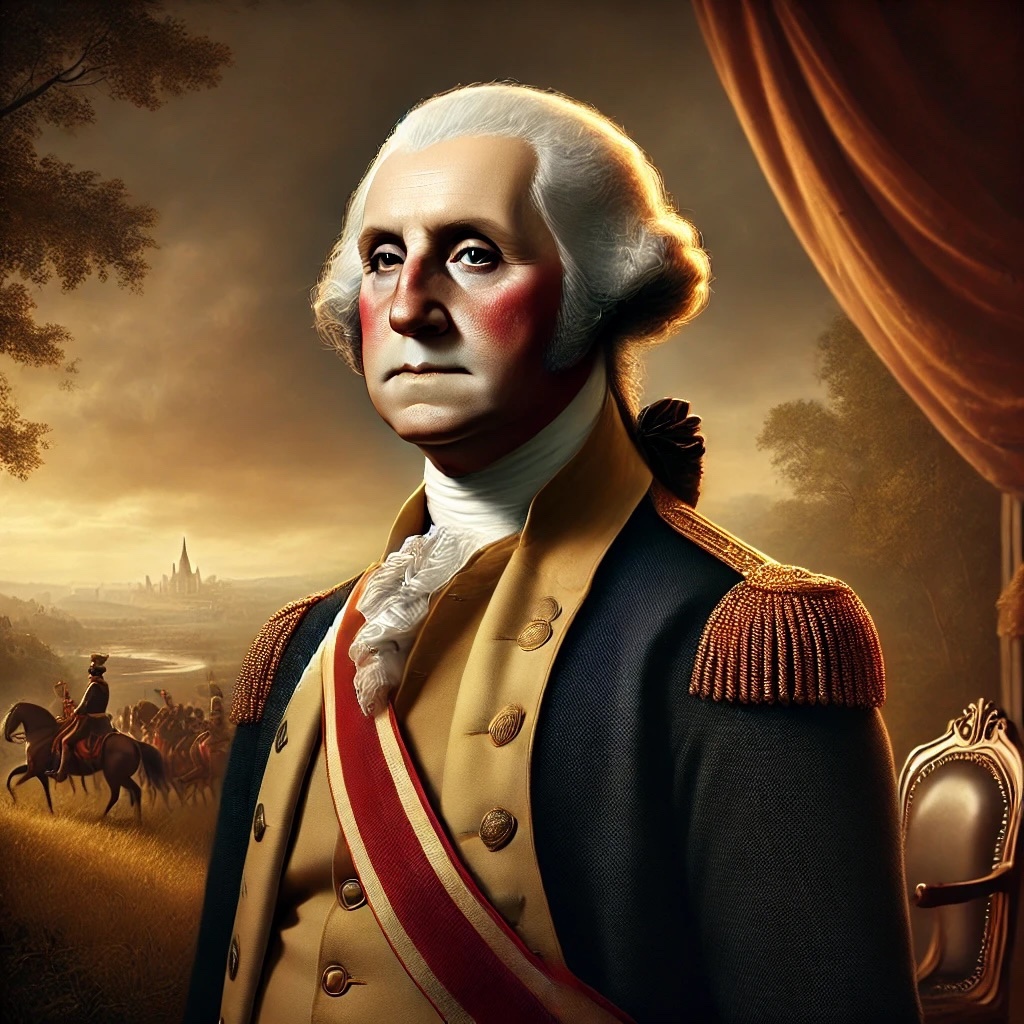
George Washington, revered as the “Father of His Country,” holds a distinctive place in American history not only for his leadership during the Revolutionary War but also for being the first president of the United States. Unanimously elected by the Electoral College in 1789, Washington’s election was a pivotal moment in the young nation’s journey. At a time when the country was still emerging from the turmoil of war and figuring out its identity, Washington’s leadership was seen as a stabilizing force. His election was a symbol of unity, transcending partisan divides that would later arise. Washington’s ability to inspire trust, his military experience, and his commitment to the values of liberty and democracy made him the perfect candidate to serve as the nation’s first leader. He would go on to serve two terms, setting precedents for the presidency and government that would shape the nation’s future.

Despite having no formal political experience, Washington’s leadership was born out of necessity. His election was a reflection of the confidence the country had in him to navigate the challenges of a fledgling democracy. Washington’s decision to step down after two terms established the tradition of limited presidential power, a cornerstone of American government. His presidency was marked by significant events, including the establishment of the U.S. financial system and the creation of the first political parties. His decision to avoid foreign entanglements, through the Proclamation of Neutrality, is still remembered as a defining moment in foreign policy. Through his actions, Washington set an example for future leaders, showing that power could be wielded responsibly and with respect for the principles of the republic.

Washington’s unanimous election is a testament to his character and leadership, but also to the vision of the founders who believed in his capacity to guide the nation. His legacy endures not only in the government he helped build but in the ideals of democracy and freedom that continue to inspire the world.

Related Posts

The 15th Amendment: A Hard-Fought Step Toward Equality

Elias Rowen

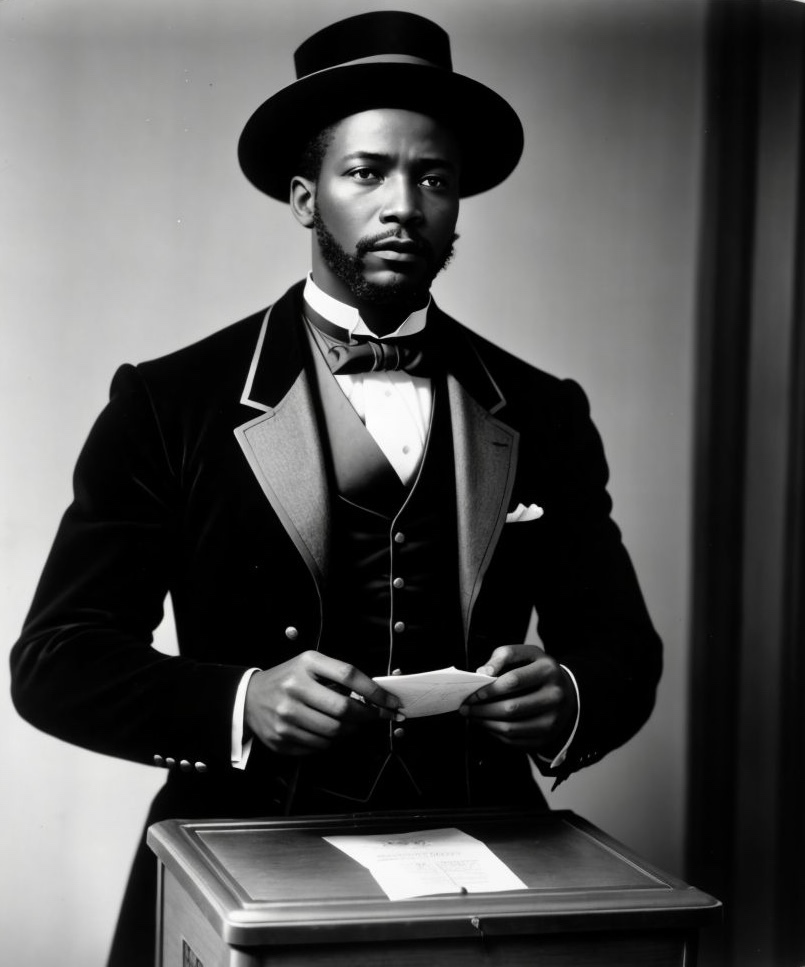
On February 3, 1870, the United States ratified the 15th Amendment, a landmark achievement in the struggle for civil rights. This amendment declared that the right to vote could not be denied based on “race, color, or previous condition of servitude,” effectively granting African American men the legal right to cast their ballots. Coming in the wake of the Civil War and the abolition of slavery, it was a bold step toward fulfilling the promise of democracy for all. However, while the amendment was a victory on paper, the reality of voting rights for Black Americans remained an uphill battle.

For newly freed men, the ability to vote symbolized more than just participation in elections—it represented dignity, citizenship, and a voice in shaping their own futures. During the Reconstruction era, African American voters helped elect Black politicians to local, state, and even national offices. This period saw remarkable progress, with leaders like Hiram Revels and Blanche K. Bruce becoming the first Black U.S. Senators. But as quickly as these gains were made, fierce opposition arose. Southern states, resistant to racial equality, devised ways to suppress Black voters through poll taxes, literacy tests, and outright violence, leading to the disenfranchisement of many African Americans for nearly a century.

It wasn’t until the Civil Rights Movement of the 20th century that the full promise of the 15th Amendment was realized. The Voting Rights Act of 1965, signed by President Lyndon B. Johnson, finally dismantled many of the barriers that had kept Black Americans from voting. Yet, even today, discussions around voter suppression and access to the ballot box show that the fight for true electoral equality is ongoing.

The 15th Amendment stands as both a milestone and a reminder of the continuous struggle for justice. It was a testament to the resilience of those who fought for their rights, and it remains a symbol of the ever-evolving journey toward a more inclusive democracy.

Related Posts