Latest Articles

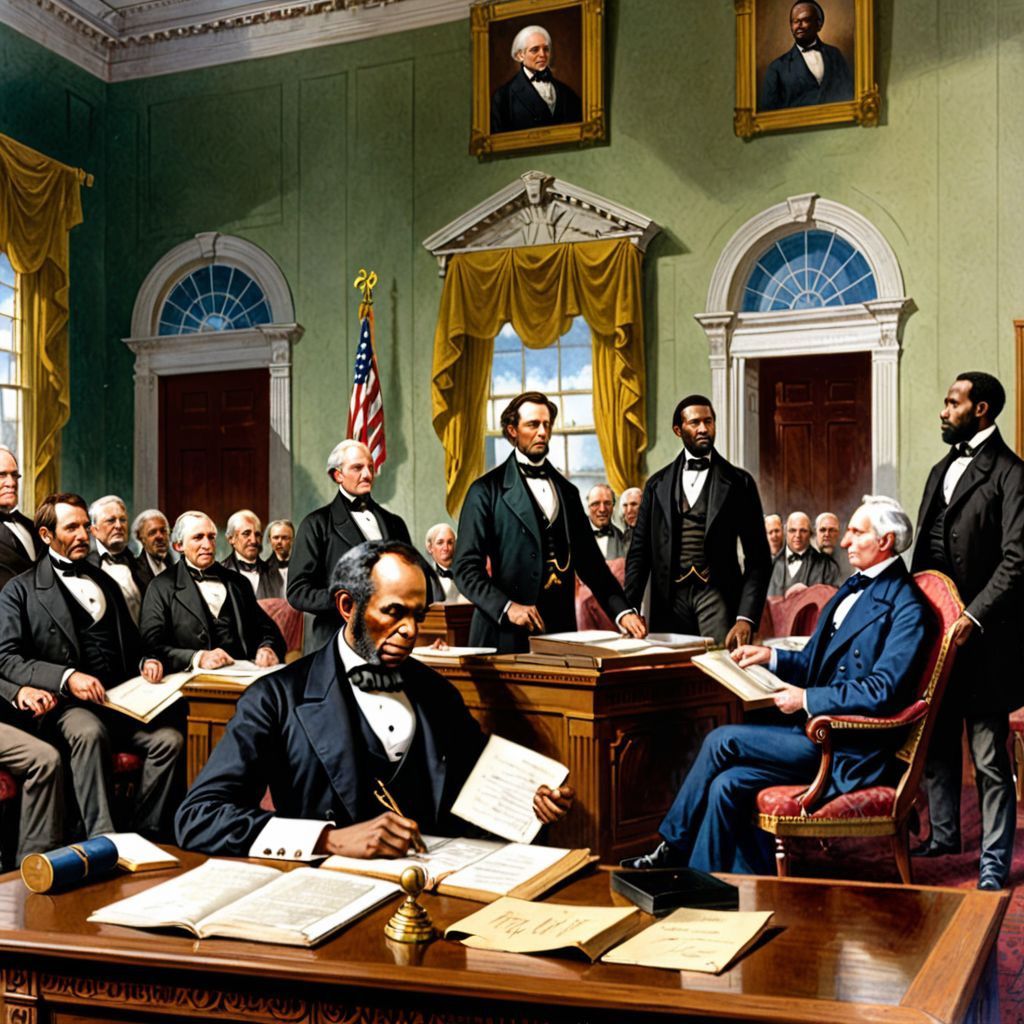
Freedom Secured: The Passage of the 13th Amendment

Elias Rowen

On January 31, 1865, a defining moment in American history unfolded as Congress passed the 13th Amendment to the United States Constitution. This amendment, which abolished slavery in all its forms, marked the beginning of a new chapter in the nation’s long and painful journey toward justice and equality. The passage was the culmination of decades of struggle, sacrifice, and activism by abolitionists, as well as the hard-fought victories of the Civil War. It symbolized the triumph of freedom over oppression and set the stage for a more inclusive America.

The road to the 13th Amendment was fraught with division and conflict. As the Civil War raged on, President Abraham Lincoln and his allies in Congress recognized that true reconciliation required addressing the root of the nation’s strife: slavery. The Emancipation Proclamation in 1863 had been a critical step, freeing enslaved people in Confederate-held territories, but it lacked the permanence of law. The 13th Amendment sought to change that, ensuring the abolition of slavery across the entire nation. After heated debates and intense political maneuvering, the amendment passed with a slim but decisive margin, sending a powerful message that the United States was ready to live up to its founding ideals.

The impact of the 13th Amendment was profound. It not only freed millions of enslaved individuals but also laid the groundwork for future civil rights advancements. However, its passage was not the end of the fight for equality. Systems of racial discrimination and segregation persisted, and the struggle for justice continues to this day. The 13th Amendment serves as a reminder that progress often requires persistence and courage, and that the fight for freedom must be vigilant and ongoing.

Today, the legacy of the 13th Amendment resonates as a cornerstone of America’s identity. It represents the enduring hope for a nation where liberty and justice truly belong to all. As we reflect on this historic milestone, we honor the countless individuals who fought for freedom and commit ourselves to the work still left undone.


Related Posts

The Internet is Dying: How We Lost the Web We Loved

Dave

Once upon a time, the internet felt like an endless frontier—a wild, unpredictable space where anyone could create, share, and explore without limits. Personal blogs flourished, niche forums thrived, and discovering a hidden gem of a website felt like striking gold. But that internet is fading fast. In its place, we have an increasingly sanitized, corporate-controlled web dominated by a handful of powerful platforms. If you’ve felt like the internet just isn’t as fun, free, or exciting as it used to be, you’re not alone. The internet is dying—and we need to talk about why.

The first major blow to the open web was the rise of walled gardens. Platforms like Facebook, Instagram, TikTok, and even AI-powered content generators have turned the web into a series of closed-off ecosystems, trapping users inside instead of encouraging them to explore. The average person no longer surfs the web; they scroll through endless feeds carefully curated by algorithms designed to maximize engagement. Instead of unique, independent websites, we get recycled viral trends, the same repurposed content, and a digital world where everything looks the same.

Then came the death of organic discovery. Once upon a time, search engines helped people find the best content based on relevance and creativity. Now, SEO tactics and AI-generated spam flood search results, burying independent voices under an avalanche of clickbait and corporate-approved content. Google’s front page is no longer a gateway to the best of the internet—it’s a billboard for whoever plays the algorithm best. The web’s original promise of free-flowing knowledge has been replaced by a pay-to-win system where only the biggest players get seen.

Monetization has also changed the way the internet works. In the early days, people built websites, blogs, and forums out of passion. Today, everything is about extracting value—whether through intrusive ads, subscription models, or paywalls. Social media giants push endless sponsored posts, tracking every click, while independent creators struggle to make a living. Even Wikipedia, one of the last vestiges of the old internet, constantly begs for donations just to stay alive. The web has transformed from a place of curiosity into a machine built for profit.

But the most alarming shift is the slow erosion of user control. The internet was meant to be a place where people could express themselves freely, but increasing censorship, platform bans, and content moderation policies have made it clear—your online presence exists at the mercy of a handful of tech companies. A single algorithm tweak can erase years of hard work. A policy change can wipe out an entire online community overnight. The open web is being suffocated, and most users don’t even realize it’s happening.

So, what can we do? The first step is to fight for the internet we want. Support independent websites. Visit personal blogs. Use alternative search engines. Self-host your content when possible. The open web isn’t dead yet, but it’s on life support. If we don’t start valuing digital freedom over convenience, we may wake up one day to find that the internet we once loved is gone for good.

Related Posts

The End of a Life, the Beginning of a Legacy: Gandhi’s Eternal Call for Nonviolence

Elias Rowen

On January 30, 1948, the world lost one of its greatest champions of peace and nonviolence, Mahatma Gandhi. As he walked to his daily prayer meeting in New Delhi, Gandhi was assassinated by Nathuram Godse, a man who opposed his vision of unity and tolerance. The tragic loss sent shockwaves across India and the globe, but it also cemented Gandhi’s legacy as a beacon of hope for generations to come. His life’s work, rooted in nonviolence and truth, continues to inspire movements for justice, freedom, and equality worldwide.

Gandhi’s philosophy of ahimsa, or nonviolence, was the cornerstone of his efforts to free India from British colonial rule. Rather than meet oppression with violence, he organized peaceful protests, boycotts, and marches, believing that love and understanding could overcome hatred and injustice. The Salt March of 1930 and the Quit India Movement of 1942 are just two examples of how Gandhi’s principles of nonviolent resistance galvanized millions and reshaped the course of history. His approach not only won India its independence in 1947 but also demonstrated the power of peaceful resistance in achieving profound societal change.

Even in death, Gandhi’s message endures. Leaders like Martin Luther King Jr., Nelson Mandela, and the Dalai Lama have drawn from his teachings to combat racial segregation, apartheid, and other forms of injustice. Gandhi’s vision extended beyond politics; it was a call for humanity to embrace compassion, tolerance, and the belief that the means must align with the ends. His assassination was a stark reminder of the challenges of living out such ideals in a fractured world, but it also highlighted the enduring relevance of his philosophy.

Today, Gandhi’s legacy lives on in movements that seek justice through peace. His life serves as a reminder that change is possible without violence and that the greatest victories are those that elevate humanity. Though he was silenced by an act of hatred, his voice remains louder than ever, urging us to choose love over fear and peace over conflict.

Related Posts

The Birth of Kansas: From Bleeding Territory to Proud Statehood

Elias Rowen

On January 29, 1861, Kansas emerged from a turbulent past to join the United States as the 34th state. Its journey to statehood was anything but smooth, as the Kansas Territory became a fierce battleground over the future of slavery in America. Dubbed “Bleeding Kansas,” the territory’s history is marked by violent clashes between pro-slavery and anti-slavery factions. These conflicts weren’t just about Kansas but symbolized the brewing tensions that would soon erupt into the Civil War. Kansas’s admission as a free state solidified its stance on freedom and set the stage for its significant role in shaping the nation’s future.

Kansas’s struggles highlighted the intense political and moral debates of the time. The Kansas-Nebraska Act of 1854 allowed settlers in these territories to decide the fate of slavery through popular sovereignty, leading to a rush of settlers with opposing views. Violence quickly broke out, with skirmishes like the infamous sack of Lawrence and John Brown’s raid further cementing the territory’s reputation as a flashpoint in the slavery debate. Yet amidst the chaos, Kansas became a rallying cry for abolitionists and a symbol of resilience in the fight for human rights.

Statehood brought a sense of stability and hope to Kansas. Its admission as a free state reflected the triumph of the abolitionist cause and underscored the resilience of its settlers, who had endured years of turmoil to secure their ideals. Kansas would go on to play a crucial role in the Union during the Civil War, providing troops and resources to the cause. Its hard-fought statehood became a testament to the enduring spirit of its people and their determination to build a future grounded in freedom and equality.

Today, Kansas celebrates its unique history and contributions to the nation. From its rolling prairies to its storied past, the Sunflower State remains a beacon of the strength and resilience that defined its path to statehood. Its story reminds us that the road to progress is often difficult, but the rewards are worth the struggle.

Related Posts

Rising From the Ashes: How the Challenger Disaster Reshaped Space Exploration

Elias Rowen

On January 28, 1986, the world watched in shock and disbelief as the Space Shuttle Challenger disintegrated just 73 seconds after liftoff. The disaster claimed the lives of all seven crew members, including Christa McAuliffe, a schoolteacher poised to become the first civilian in space. This tragic event not only marked a somber chapter in NASA’s history but also profoundly altered the course of space exploration. While the loss was devastating, it sparked a critical reexamination of safety protocols, engineering practices, and decision-making processes in space missions.

The Challenger disaster exposed significant flaws in NASA’s organizational culture and technical safeguards. Investigations revealed that the O-ring seals in the shuttle’s right solid rocket booster failed due to unusually cold temperatures on the morning of the launch. What stood out even more was the failure in communication and risk assessment, as engineers had voiced concerns about the O-rings but were overridden by the pressures of maintaining the shuttle program’s schedule. This stark revelation led to sweeping reforms in how NASA approached both engineering and leadership.

The impact of Challenger extended far beyond the boundaries of NASA. It prompted global conversations about the risks of human spaceflight and the responsibility of ensuring astronaut safety. Many questioned whether the pursuit of space exploration was worth such high stakes. However, the disaster ultimately became a catalyst for improvement. NASA’s redesigned shuttle program incorporated enhanced safety measures, more rigorous testing, and a culture that encouraged open communication and transparency.

In the decades following Challenger, space exploration regained its momentum, moving toward international collaborations and groundbreaking missions. From the construction of the International Space Station to Mars rover expeditions, humanity’s quest for the stars continues with a renewed commitment to safety and innovation. The legacy of the Challenger crew lives on, reminding us that even in the face of tragedy, we have the capacity to learn, adapt, and persevere.

The Challenger disaster was a turning point, not just for NASA but for humanity’s collective journey into the unknown. It underscored the importance of valuing lives over timelines and embracing the lessons of failure as stepping stones toward progress. As we continue to push the boundaries of space exploration, the courage and sacrifice of the Challenger crew remain a beacon of inspiration.

Related Posts