Latest Articles

Climbing the Success Ladder: Psychological Strategies for Career Goal Setting and Motivation

Dave

In the fast-paced world of career development, setting and achieving milestones can sometimes feel like climbing an endless staircase. However, understanding the psychology behind goal setting and motivation can transform that climb from a daunting task into an empowering journey. This paper explores effective psychological strategies to boost motivation, stay focused, and reach career goals, helping you achieve professional success.

A crucial aspect of achieving career milestones is setting clear, specific goals. Ambiguity can lead to frustration, but when goals are concrete, the path to success becomes more defined. Psychologists often recommend using the SMART framework: Specific, Measurable, Achievable, Relevant, and Time-bound. SMART goals not only clarify your direction but also provide a sense of purpose, enabling you to monitor progress and stay motivated.

Motivation can come from within (intrinsic) or from external rewards (extrinsic). While chasing a promotion or a raise is motivating, research shows that people who find intrinsic motivation—such as a passion for learning or personal growth—tend to achieve long-term career satisfaction. To stay on track, it’s important to find the inner spark that makes your career fulfilling and focus on those deeper rewards alongside external incentives.

The brain is wired to respond to visual cues, which is why visualization can be such a powerful motivational tool. Many successful individuals use this technique to imagine their future success, whether it’s landing a dream job or mastering new skills. Visualization helps create a mental map, making it easier to navigate the steps to achieve the goal. Additionally, positive thinking reinforces belief in your abilities, helping to overcome obstacles with confidence.

Large goals can feel overwhelming, but breaking them down into smaller, more manageable steps can keep you on track. Every mini-milestone you achieve releases dopamine, the brain’s “feel-good” chemical, reinforcing your motivation to continue. Celebrate small wins to sustain your momentum, and you’ll find that each step brings you closer to your ultimate career goals.

Human beings are social creatures, and having support from mentors, peers, or even career coaches can make a world of difference. Accountability systems can keep you motivated and help you overcome roadblocks. When you share your goals with others, you create a network of encouragement that propels you forward.

Success is rarely linear. Failure and setbacks are inevitable, but resilience is key. By cultivating a growth mindset—the belief that skills and intelligence can be developed—you become more adaptable and persistent in the face of challenges. Embrace mistakes as learning opportunities, and they will become stepping stones to your career milestones.

With these psychological strategies, you can sharpen your focus, boost motivation, and climb the ladder to success. Whether you’re eyeing a promotion, a new career path, or personal growth, applying these techniques will give you the mindset to not only achieve your goals but thrive while doing so.

Related Posts

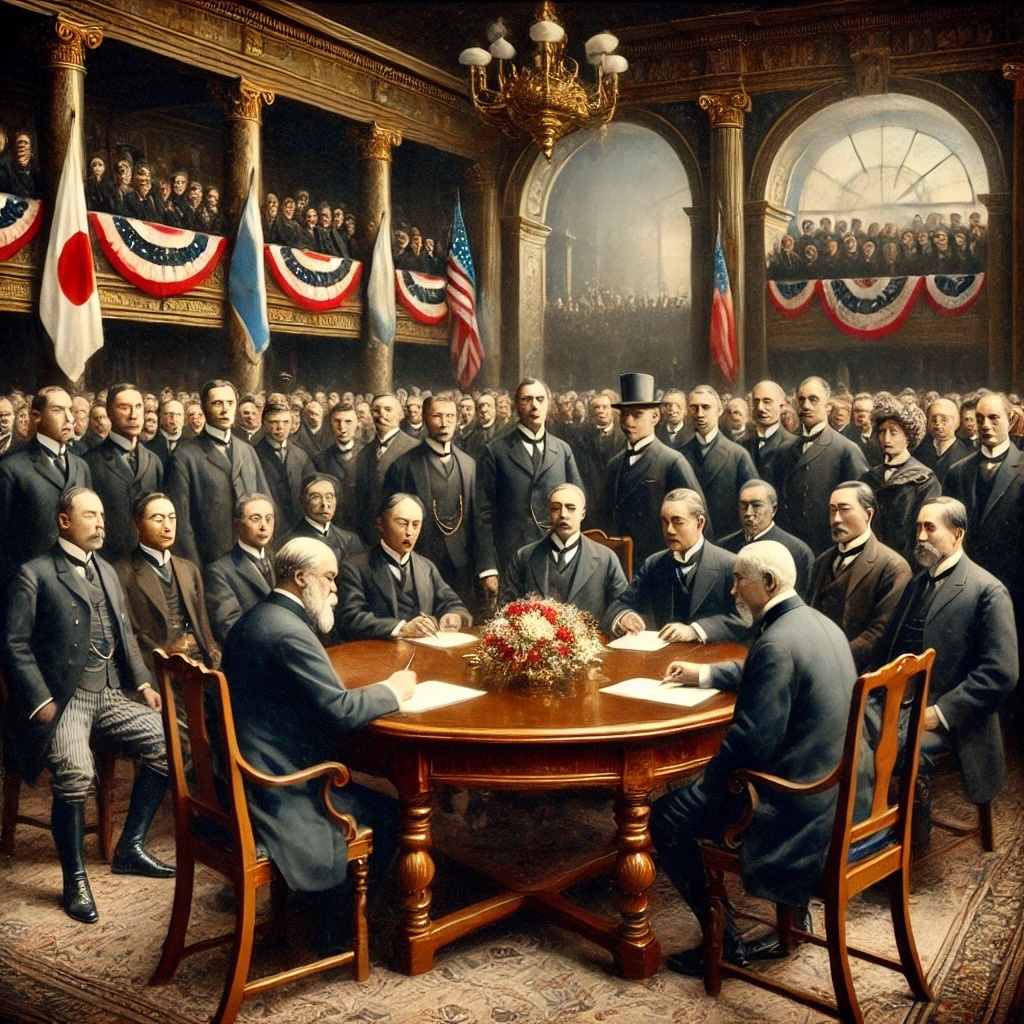
The Treaty That Shaped Empires: How the Portsmouth Agreement Redefined Global Power in 1905

Dave

In the early 20th century, the world witnessed a clash between two rising empires, Russia and Japan, in what became known as the Russo-Japanese War. This conflict, fought over control of Korea and Manchuria, signaled a power struggle that would change the balance of power in East Asia and the world. The war, fought from 1904 to 1905, was brought to an end not on the battlefield, but through diplomacy. The Treaty of Portsmouth, signed in September 1905, became the key to resolving this conflict, but its implications rippled far beyond the two warring nations.

The Rise of Japan and Decline of Russia
Japan, a nation that had rapidly modernized following the Meiji Restoration, had begun to assert itself as a major power in East Asia. It was eager to expand its influence, particularly in Korea and China, regions where Russia was also vying for control. The Russo-Japanese War erupted as the two nations clashed over territorial ambitions, with Japan launching a surprise attack on the Russian fleet in Port Arthur. To the surprise of many in the West, Japan proved a formidable opponent, winning decisive victories both at sea and on land.

Russia, meanwhile, struggled with internal unrest and logistical challenges, which hampered its ability to fight effectively. As the war dragged on, both sides grew weary, and the cost of the conflict became too great to bear. It was clear that the war could not continue indefinitely, and diplomacy was the only viable solution.

Diplomacy at Portsmouth
President Theodore Roosevelt of the United States, seeing an opportunity to mediate between the two powers, invited representatives from both nations to Portsmouth, New Hampshire. The negotiations were tense, with neither side willing to give up their ambitions easily. However, under Roosevelt’s guidance, a compromise was reached. Japan would gain control of Korea and parts of Manchuria, while Russia would retain influence in northern Manchuria but cede Port Arthur and the southern half of Sakhalin Island.

The Treaty of Portsmouth marked the end of the Russo-Japanese War and established Japan as a dominant force in East Asia, while Russia’s defeat weakened its influence in the region. More importantly, it was the first time an Asian power had defeated a European nation in modern warfare, a development that shocked the global community and shifted perceptions of racial and national hierarchies.

Global Impact and Legacy
The Treaty of Portsmouth had far-reaching consequences. Japan’s victory inspired nationalist movements across Asia, as colonized peoples saw that a non-Western nation could challenge and defeat a European power. It also laid the groundwork for Japan’s later expansionist policies, which would ultimately lead to its involvement in World War II.

For Russia, the defeat contributed to growing domestic unrest, which would culminate in the Russian Revolution of 1917. The Treaty of Portsmouth was a turning point in global geopolitics, symbolizing the rise of Japan as a world power and the beginning of the end for the old European-dominated world order.

Roosevelt’s role in mediating the treaty earned him the Nobel Peace Prize, marking the first time a U.S. president received the honor. The Portsmouth agreement thus not only ended a war but also showcased the growing influence of the United States in international diplomacy.

In retrospect, the Treaty of Portsmouth was not just a resolution to a regional conflict; it was a moment that reshaped global power dynamics and heralded the emergence of new players on the world stage. It remains a testament to the power of diplomacy in resolving even the most intense of conflicts.

Related Posts

Bahrain’s Economic Outlook for 2024: A Year of Strategic Growth

Dave

As we step into 2024, Bahrain stands at the crossroads of a promising economic future. With visionary fiscal policies and a focus on attracting international businesses, the nation is positioning itself as a key player in the Gulf region’s evolving economy.

Growth Sectors
In 2024, Bahrain is targeting key sectors like financial services, technology, and tourism. The nation is leveraging its strategic location and open business environment to nurture these industries, ensuring sustainable economic growth. The technology sector, in particular, is expected to see a major boost, driven by Bahrain’s emphasis on innovation, fintech, and digital transformation.

Fiscal Policies
Bahrain’s government is maintaining its commitment to fiscal reforms. The introduction of initiatives to reduce public debt and balance fiscal deficits will continue throughout 2024. At the same time, the focus will be on boosting revenue by enhancing non-oil sectors. This will be key to reducing the nation’s dependence on oil, while maintaining a stable financial environment for investors.

Attracting International Businesses
A significant pillar of Bahrain’s economic vision is attracting foreign direct investment (FDI). By offering tax incentives, simplifying regulatory frameworks, and enhancing infrastructure, the nation is becoming a hotspot for global enterprises. The creation of free trade zones and streamlined licensing procedures further demonstrate Bahrain’s intent to draw in international businesses.

In conclusion, 2024 looks promising for Bahrain as it strengthens its economy through innovation, sound fiscal management, and a commitment to being a regional hub for international trade and business.

Related Posts

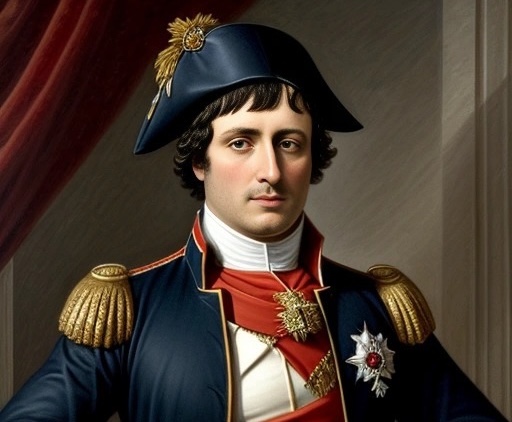
Napoleon: Military Genius and Architect of Modern France

Dave

Napoleon Bonaparte’s journey from general to French Emperor changed his life and French history. His rise showed his military skill and his vision for legal change. The Napoleonic Code was more than just war victories; it changed French civil life. It balanced strong government with people’s rights, a new idea that lasted. During a time of change, these reforms showed Napoleon’s lasting impact, proving he was more than just a military leader. His legal changes left a big mark on France and influenced modern law. This essay looks at how the Napoleonic Code was key to Napoleon’s plans, changing society and affecting laws beyond France. It changed authority and personal freedoms in ways that still matter today.

Napoleon’s Napoleonic Code showed he knew change wasn’t just about military victories. It was also about legal and social reform. Introduced in 1804, the Code moved away from France’s old feudal laws. It set up a fairer civil law system. This change balanced strong central authority with equality and individual rights. Unlike the old system, the Code protected private property and kept the state secular. It made laws the same everywhere in France and protected citizens from unfair power. The Code’s impact went beyond France. It influenced many legal systems in Europe and Latin America. So, while Napoleon is famous for his military campaigns, his approach to governance had a big impact too. By mixing authority with civil liberties, Napoleon changed societal norms and still influences legal thought today.

Building on his legislative success, Napoleon Bonaparte skillfully moved from a general to France’s first Emperor. Doyle (2016) notes that his rise wasn’t just about tactics; it was also about gaining and legitimizing power through reform. As First Consul, he had a lot of power, which helped him become Emperor. This event showed his ambition and the rebirth of the nation. The Napoleonic Wars weren’t just about getting more land; they showed his idea of a stable and united Europe. These wars made France a strong force, but it was his policies like the Napoleonic Code that changed society. His military skills and new laws strengthened authority and supported civil rights. Napoleon changed France by balancing conquest and lawmaking. His impact goes beyond battles, leaving lasting marks on society and government worldwide.

The Napoleonic Code set the stage for Napoleon Bonaparte becoming the first French Emperor. His military skill in the Napoleonic Wars matched his vision for a new France. Napoleon’s rise from revolutionary leader to emperor wasn’t just for personal gain. It was a smart political move, showing his deep understanding of governance. He used his military victories to gain power, taking advantage of the chaos of revolution and war. Napoleon’s battlefield successes and power consolidation made him seem unbeatable. His self-coronation was more than just a ceremony; it symbolized a national rebirth. He mixed autocratic rule with the egalitarian ideas of the Napoleonic Code. His government strengthened state authority but also advanced individual rights and equality. While his military wins were big, his legal reforms were just as important. Napoleon balanced centralized control with civil liberties, leaving a dual legacy. He was both a conqueror and a reformer. Napoleon reshaped France and its governance, impacting statecraft and legal systems worldwide.

To sum up, Napoleon Bonaparte’s legacy as the first Emperor of the French is more than just about his military skills. It’s also about his forward-thinking approach to law and government. The Napoleonic Code shows he knew real change needed more than battles; it needed changes in laws and society. He combined strong control with a focus on civil rights, changing how states were run. This wasn’t just about his own goals but reshaped national identity and international laws. His rule showed how military strategy and good governance could work together. Napoleon’s impact goes beyond just winning wars. He was a leader who balanced power and progress, leaving a lasting mark on modern governments. His life is an example for leaders wanting to mix power with progress, leaving a legacy that goes beyond his time.

Related Posts

The Future of Operating Systems: Shaping the Next Generation of Computing

Dave

As technology advances at an unprecedented pace, operating systems (OS) are evolving to meet the demands of the future. Gone are the days when an OS merely acted as the interface between hardware and user. Today’s trends show operating systems pushing boundaries with innovations like cloud integration, artificial intelligence (AI), and seamless connectivity, enabling a new era of computing.

Cloud-Based Operating Systems
One of the most exciting trends is the rise of cloud-based operating systems. Unlike traditional OS, these systems allow users to access their data and applications from any device with internet connectivity. This trend points to a future where OS functions less as a standalone installation on individual machines and more as a service across devices, creating endless possibilities for mobility and collaboration.

AI Integration
AI is playing a pivotal role in the evolution of operating systems. Modern OS are leveraging AI to optimize performance, manage resources, and enhance user experience. From predictive task management to voice-based commands, AI is reshaping how users interact with their devices. This transformation is making operating systems smarter, more efficient, and highly personalized.

Seamless Connectivity Across Devices
As we move towards a more connected world, operating systems are evolving to create seamless experiences across devices. Whether it’s your smartphone, smart home devices, or your laptop, modern OS are designed to integrate everything into one unified ecosystem. This level of connectivity empowers users to switch between devices effortlessly, creating a fluid computing experience.

In conclusion, the future of operating systems is dynamic and full of promise. With emerging trends like cloud integration, AI, and interconnected ecosystems, the next generation of OS will redefine the way we interact with technology.

Related Posts