
Latest Articles

A Bridge Across Oceans: The U.S. Embassy in Wellington, New Zealand

Dave

Nestled in the heart of New Zealand’s capital, the U.S. Embassy in Wellington serves as a vital link between two nations separated by thousands of miles but united by shared values and interests. This diplomatic mission is more than just a building; it’s a hub of cultural exchange, policy collaboration, and mutual support that strengthens the bond between the United States and New Zealand.

The U.S. Embassy in Wellington plays a multifaceted role in the bilateral relationship between these two countries. It’s where American and Kiwi officials work together on a range of issues, from trade and security to environmental conservation and education.

Beyond its official duties, the embassy is deeply engaged in fostering people-to-people connections. Through various programs and events, it promotes cultural exchange, bringing Americans and New Zealanders closer together. Whether it’s showcasing American films, hosting educational workshops, or supporting community projects, the embassy helps bridge the cultural gap and build lasting friendships across the Pacific.

The embassy also plays a crucial role in supporting U.S. businesses in New Zealand, helping to open doors for American companies and facilitating economic ties that benefit both nations. In an increasingly globalized world, these economic connections are more important than ever, contributing to prosperity on both sides of the ocean.

But the work of the U.S. Embassy in Wellington goes beyond diplomacy and commerce. It’s about building trust, understanding, and cooperation between two countries that, despite their geographical distance, share a commitment to democracy, human rights, and global peace. Through its efforts, the embassy ensures that the partnership between the United States and New Zealand remains strong and dynamic, paving the way for a future of continued collaboration and friendship.
Related Posts

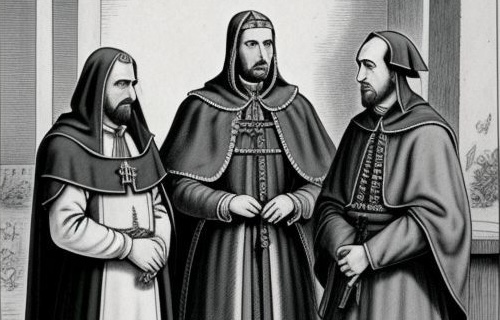
The Spanish Inquisition: A Dark Chapter in History

Dave

The Spanish Inquisition stands as one of the most infamous periods in history, a time when fear, persecution, and religious intolerance cast a long shadow over Spain and its territories. Established in 1478 by Catholic Monarchs Ferdinand II of Aragon and Isabella I of Castile, the Inquisition was originally intended to maintain Catholic orthodoxy in their kingdoms. However, it quickly evolved into a tool for controlling and suppressing dissent, leading to centuries of terror that left a lasting scar on the Spanish conscience.

The primary targets of the Spanish Inquisition were conversos—Jews and Muslims who had converted to Christianity, often under duress—as well as heretics, Protestants, and anyone suspected of harboring beliefs contrary to the Catholic Church’s teachings. Accusations of heresy could be based on the flimsiest of evidence, and the accused often faced brutal interrogations, imprisonment, and torture in the quest to extract confessions. The Inquisition’s trials were notoriously secretive, and those found guilty faced severe punishments, ranging from public penance to execution by burning at the stake.

The Inquisition’s reach extended beyond religious matters, influencing every aspect of Spanish society. It was a powerful tool for the monarchy to enforce political control, silence opposition, and promote conformity. Fear of the Inquisition stifled intellectual and cultural expression, leading to a climate of suspicion and repression. The arts, literature, and sciences were all impacted as the Inquisition sought to eliminate any ideas that threatened its authority.

Despite its horrors, the Spanish Inquisition persisted for centuries, finally coming to an end in 1834. By then, it had claimed the lives of thousands and left an indelible mark on Spanish history. Today, the Spanish Inquisition is remembered as a cautionary tale about the dangers of unchecked power and the persecution of those who dare to think differently.

This dark chapter serves as a reminder of the importance of tolerance, freedom of thought, and the protection of human rights. It is a stark example of how fear and fanaticism can lead to devastating consequences, and why it is crucial to safeguard the values of justice and compassion in any society.

Related Posts

The Treaty of Utrecht: The Peace Accord That Reshaped Europe

Dave

The Treaty of Utrecht, signed in 1713, marked the end of the War of the Spanish Succession—a conflict that had engulfed Europe for over a decade. This series of agreements, negotiated between multiple European powers, not only brought peace but also redrew the political map of the continent, leaving a lasting impact on European history.

At the heart of the conflict was the question of who would succeed to the Spanish throne. When the Spanish king, Charles II, died without an heir, a fierce struggle broke out among Europe’s major powers, each vying for influence and territory. The war, which began in 1701, saw alliances shift and battles rage across Europe, with the French and Spanish forces on one side and a coalition of European nations, including Britain, the Dutch Republic, and the Holy Roman Empire, on the other.

The Treaty of Utrecht was a complex and delicate balancing act, aimed at satisfying the various interests of the warring parties. One of the key outcomes was the recognition of Philip V, grandson of France’s Louis XIV, as the legitimate king of Spain. However, to prevent a union of the French and Spanish crowns—a prospect that had fueled much of the conflict—Philip was required to renounce any claim to the French throne. This compromise helped maintain the balance of power in Europe, a principle that would guide European diplomacy for years to come.

The treaty also had significant territorial implications. Britain emerged as a major beneficiary, gaining strategic territories such as Gibraltar and Minorca, as well as trade privileges in the Americas. The Dutch were granted a barrier of fortresses in the Spanish Netherlands, while the Austrian Habsburgs received the Spanish territories in Italy and the Low Countries. These shifts in territorial control laid the groundwork for the future political landscape of Europe.

The Treaty of Utrecht not only ended a brutal and costly war but also set the stage for a new era of European diplomacy. By establishing a framework for balancing power among Europe’s great nations, it helped to prevent future conflicts and contributed to a more stable and peaceful continent—at least for a time.

Related Posts

Finding the Sweet Spot: Harmonizing Creativity and Logic for Peak Performance

Dave

In a world that often feels divided between the imaginative and the analytical, finding a balance between creativity and logic can seem like a daunting task. Yet, the true magic happens when these two seemingly opposing forces come together in harmony, allowing us to think outside the box while staying grounded in reality.

Creativity is all about imagination—dreaming up new ideas, envisioning possibilities, and exploring the unknown. It’s the spark that drives innovation and the key to solving complex problems in unconventional ways. On the other hand, logic is the anchor that keeps our ideas practical and achievable. It involves analyzing data, applying reason, and making decisions based on facts and evidence.

The challenge lies in blending these two approaches. Too much creativity without logic can lead to ideas that are imaginative but impractical. Conversely, an overemphasis on logic can stifle creativity, leading to solutions that are efficient but lack originality. The goal is to find that sweet spot where artistic imagination and analytical thinking coexist, enhancing each other rather than competing.

To achieve this balance, it’s important to cultivate both skills. Encourage creative thinking by giving yourself space to brainstorm and experiment without immediate judgment. At the same time, sharpen your logical skills by practicing critical thinking and problem-solving. When faced with a challenge, start with a creative brainstorming session to generate ideas, and then apply logical analysis to refine and implement the best solutions.

By harmonizing creativity and logic, you can unlock a higher level of thinking that combines the best of both worlds. This balanced approach not only leads to more innovative solutions but also fosters personal growth and fulfillment as you learn to navigate the complexities of life with both your head and your heart.

Related Posts

OpenLiteSpeed vs. LiteSpeed: Decoding the Differences and Picking Your Perfect Match

Dave

When it comes to web servers, both OpenLiteSpeed and LiteSpeed are popular choices, but understanding the differences between them is crucial to making the right decision for your needs. These two servers, while similar in many respects, cater to different audiences and use cases.

OpenLiteSpeed is the open-source version of LiteSpeed, offering many of the same performance benefits but with fewer features and a more DIY approach. It’s ideal for users who appreciate the flexibility of open-source software and are comfortable with a bit more hands-on management. On the other hand, LiteSpeed is the premium, fully-featured counterpart that comes with paid licensing. It provides a more polished, user-friendly experience with additional features such as advanced caching, security enhancements, and technical support, making it a go-to choice for businesses that need a reliable, high-performance web server with robust support.

Choosing between the two often comes down to the specific requirements of your project. If you’re running a personal website or a small project where cost and customization are key, OpenLiteSpeed might be the perfect fit. However, for larger enterprises or mission-critical websites where uptime, security, and professional support are non-negotiable, investing in LiteSpeed could be well worth the price.

Ultimately, both OpenLiteSpeed and LiteSpeed offer powerful performance, but the right choice depends on your unique needs and resources. Whether you prefer the freedom of open-source or the comprehensive support of a licensed product, understanding the key differences will help you make an informed decision that best suits your web server needs.

Related Posts