Latest Articles

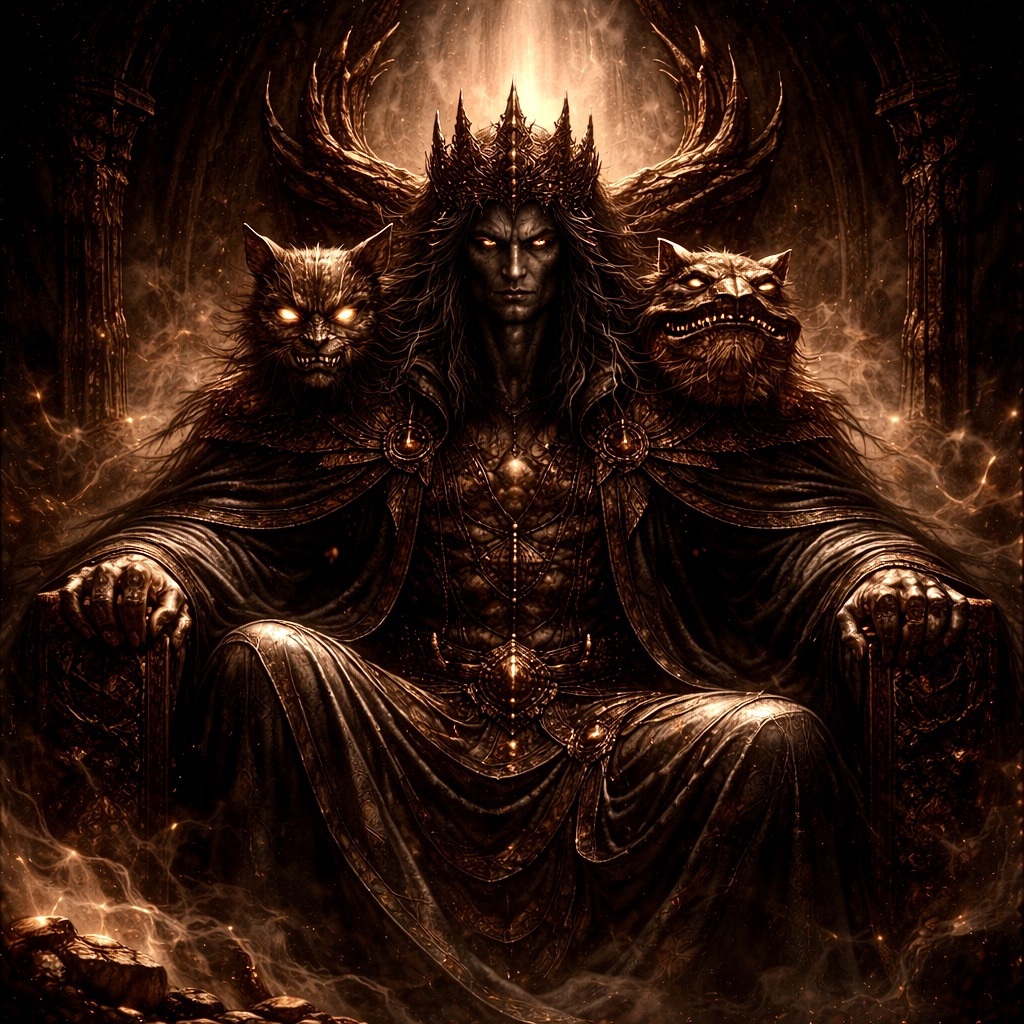
Samael: The Angel of Severity, Poison, and Judgment Who Walks the Line Between Death and Divine Will

Dave

There are figures in demonology and mysticism who are easily categorized—beings of chaos, deception, or temptation whose roles fit neatly into the framework of good versus evil. And then there are figures like Samael, who resist such simple definitions. Samael is not merely a demon, nor is he purely an angel in the conventional sense. He exists in a space that is far more complex, a liminal zone where judgment, destruction, divine will, and necessary endings converge into a single, paradoxical identity.

His name is often translated as “Venom of God” or “Poison of God,” a title that immediately introduces tension. Poison, in most contexts, is something harmful, something to be avoided. Yet when paired with the divine, it suggests a force that is not random or malicious, but purposeful. It implies that even what is destructive may serve a role within a larger order.

Samael appears in various strands of Jewish mysticism, particularly within Kabbalistic tradition, where he is sometimes described as an angel of severity, a force associated with judgment and restriction. In other interpretations, he is linked to the Angel of Death, the being responsible for carrying out the end of life. In yet other traditions, he is associated with darker aspects of existence, sometimes even equated with adversarial or demonic roles.

This multiplicity of identities is not a contradiction. It is a reflection of his nature.

Samael is not one thing.

He is a function.

To understand him, we must move beyond the idea of fixed categories and instead look at processes—particularly the process of judgment and consequence.

Judgment, in its most basic form, is the act of evaluation. It determines outcomes based on actions, weighing cause and effect. In human terms, judgment can be moral, legal, or personal. It establishes boundaries, defines consequences, and maintains structure.

Without judgment, systems collapse.

Without consequence, actions lose meaning.

Samael represents this principle in its most uncompromising form.

He is not concerned with comfort or fairness in the human sense. He operates according to a framework that is absolute—one where actions lead to outcomes, where balance must be maintained, and where excess or imbalance is corrected.

This is where the concept of poison becomes significant.

Poison is often seen as destructive, but in controlled forms, it can also be medicinal. Many treatments in medicine involve substances that, in large quantities, would be harmful. The difference lies in application.

Samael embodies this duality.

He is the force that can harm, but also the force that corrects.

He is the element that introduces consequence into systems that might otherwise become unbalanced.

The serpent imagery frequently associated with him reinforces this idea. The serpent has long been a symbol of knowledge, transformation, and duality. It sheds its skin, renewing itself while remaining fundamentally the same. It is both feared and revered, representing danger and wisdom simultaneously.

In some traditions, Samael is linked to the serpent in the Garden of Eden, the figure that introduces knowledge to humanity. This connection is not universally accepted, but it highlights an important theme: the relationship between knowledge and consequence.

Knowledge changes behavior.

Behavior creates outcomes.

Outcomes require judgment.

Samael exists within this chain.

He is not the origin of action, nor is he the final result. He is the process that ensures the link between them remains intact.

From a philosophical perspective, Samael can be understood as the embodiment of necessary limitation. In any system, there must be boundaries. Without them, growth becomes uncontrolled, leading to instability.

Consider natural systems. Predators regulate populations, preventing overgrowth that could collapse ecosystems. Gravity limits movement, ensuring structure. Biological processes maintain balance through cycles of growth and decay.

Samael represents this limiting force.

He is not opposed to creation.

He ensures it does not exceed its bounds.

This role can be unsettling because it often manifests as loss, restriction, or endings. In human experience, these are rarely welcomed. People seek growth, expansion, and freedom. Limitations feel like obstacles.

Yet without them, systems fail.

Samael introduces those limitations.

He is the moment when expansion stops.

The point at which growth is evaluated.

The force that says, “This far, and no further.”

This makes him one of the most psychologically resonant figures in demonology and mysticism. His presence can be felt in moments of consequence—when actions lead to outcomes that cannot be avoided, when decisions result in change that cannot be undone.

These moments are often difficult, but they are also clarifying.

They reveal structure.

They show how systems operate.

Samael does not create these moments.

He enforces them.

His association with the Angel of Death further emphasizes this role. Death is the ultimate limitation—the boundary that defines life. It is not arbitrary. It is part of the structure of existence.

Without death, life would not have the same meaning. Time would lose its significance. Change would stagnate.

Samael, as a figure linked to death, represents this boundary.

He is not the cause of life ending in a random sense. He is the function that ensures the cycle continues.

This perspective aligns with many philosophical and spiritual traditions that view death not as an end, but as a transition.

Samael governs that transition.

He is the threshold.

The point where one state ends and another begins.

In Kabbalistic thought, Samael is sometimes associated with the concept of Gevurah—severity or judgment—one of the attributes of the divine structure. Gevurah represents discipline, strength, and the power to enforce boundaries.

Without Gevurah, there would be only expansion, only mercy, only growth without limitation.

Samael embodies this attribute.

He is the balancing force.

The counterpart to unchecked expansion.

This duality is essential. Systems require both growth and restriction, creation and destruction, mercy and judgment.

Samael ensures that balance is maintained.

From a modern perspective, his archetype can be seen in systems of accountability. Laws, regulations, and consequences exist to maintain order. They are not inherently negative. They provide structure.

Yet they can also feel restrictive.

This tension is central to human experience.

People seek freedom, but they also rely on structure.

Samael represents the structure.

He is the reminder that actions have consequences, that systems operate according to rules, and that balance must be preserved.

In literature, figures like Samael often appear as judges, enforcers, or guardians of thresholds. They are not antagonists in the traditional sense, but they are not allies either. They serve a function that transcends individual perspective.

They are impartial.

Samael fits this role perfectly.

He does not act out of emotion.

He acts out of necessity.

This makes him both formidable and essential.

In the end, Samael stands as one of the most complex and profound figures in demonology and mysticism. He is not easily understood because he does not fit into simple categories.

He is not purely destructive, nor purely constructive.

He is the force that ensures both exist in balance.

He is the boundary that defines possibility.

The judgment that clarifies action.

The poison that corrects imbalance.

And somewhere between life and death, between action and consequence, between growth and limitation—that is where Samael resides.

Not as a force to be feared alone, but as one to be recognized.

The one who ensures that everything has its weight—and its cost.
Related Posts

Katherine Mansfield: Where Bravery Meets Bruising

Penelope

Katherine Mansfield’s life has been a constant companion of mine since college, when I devoured her short stories like they were oxygen. There was something about the way she captured the intricacies of human relationships, the quiet desperation of modern life, that spoke to me on a deep level. But it wasn’t until recently, as I re-read her letters and essays, that I began to see her in a different light – not just as a writer, but as a person struggling with her own demons.

What strikes me most about Mansfield is the fragility she exudes, like a delicate flower that’s been bruised one too many times. Her life was marked by illness, loss, and disappointment, and yet, in her writing, she often appears confident and unflappable. This paradox has always fascinated me – how could someone so wounded be so fearless? I find myself drawn to this tension, this dance between vulnerability and strength.

As I delve deeper into her letters, I’m struck by the intensity of her relationships, particularly with friends like Virginia Woolf and D.H. Lawrence. Their correspondence is a tangled web of affection, criticism, and creative debate, often veering into emotional territory that’s uncomfortable to read about. But it’s this very intensity that makes me feel seen – like I’m not alone in my own complicated friendships.

One aspect of Mansfield’s life that continues to puzzle me is her decision to leave New Zealand for England at the age of 19. It’s hard to imagine leaving behind everything and everyone you know, especially when your family’s expectations are so deeply ingrained. I find myself wondering what drove her to make this choice – was it a desire for artistic freedom, or a need to escape the constraints of her provincial upbringing? The more I read about Mansfield, the more I realize that I’m projecting my own fears and doubts onto her.

Take her struggles with tuberculosis, for instance. I’ve always been fascinated by the way she writes about her illness – the way it shapes her perception of time, space, and human connection. As someone who’s struggled with anxiety and depression, I can relate to the feeling of being trapped in a body that’s not cooperating. But while Mansfield’s physical pain is undeniable, there’s also an emotional toll that’s harder to quantify. How did she cope with the knowledge that her life was finite, that every day might be her last? Did she find solace in her writing, or was it a source of anxiety itself?

Mansfield’s essays on creativity and artistry have been a revelation for me. She writes about the importance of surrendering to the creative process, of letting go of expectations and ego. But what I find most compelling is her emphasis on the emotional labor involved in making art – the way it requires you to be present, to feel deeply, and to risk rejection. It’s this willingness to be vulnerable that I think has always drawn me to her writing.

As I continue to explore Mansfield’s life, I’m struck by the sense of disconnection she often expressed – between herself and others, between reality and her own desires. This feeling is both familiar and unsettling, like looking into a mirror and seeing someone else staring back. It makes me wonder: am I doing the same thing in my own writing? Am I hiding behind my words, using them as a shield to protect myself from the uncertainty of life?

I don’t have any answers to these questions – Mansfield’s life is too complicated, too messy – but that’s what draws me to her. She’s a reminder that even the most talented writers are still figuring things out, still struggling with the same doubts and fears that plague us all. And in this way, she’s become a kind of mirror for me, reflecting back my own hopes, desires, and anxieties.

As I delve deeper into Mansfield’s life, I find myself drawn to her essays on creativity, but also increasingly unsettled by the sense of disconnection that permeates so much of her writing. It’s as if she’s constantly searching for a way to bridge the gap between herself and others, between reality and her own desires. This longing for connection is something I think many writers can relate to – the feeling of being an outsider looking in, of watching life unfold from a distance.

For me, this sense of disconnection is particularly pronounced when it comes to my own family. Growing up, our conversations were often stilted and polite, like we were all just going through the motions. My parents, both immigrants themselves, were struggling to make ends meet, and I think they put so much pressure on us kids to succeed that we lost sight of what was truly important – connection, communication, love.

Now that I’m older, I find myself trying to reconnect with them, to understand where they’re coming from. But it’s not always easy. We’ve had our share of disagreements and misunderstandings, and sometimes I feel like I’m still just an outsider looking in. It’s as if we’re all speaking different languages, or at least, we’re using the same words but meaning entirely different things.

Mansfield’s writing has given me a new perspective on this – she shows me that even the most talented writers struggle with connection, that it’s never easy to find common ground with others. And in her essays, I see a longing for authenticity, for realness, for connections that are true and meaningful. This is something I think many of us crave, especially as we navigate our own creative pursuits – whether it’s writing, art, music, or any other form of expression.

But what if connection isn’t always possible? What if the disconnection is a fundamental aspect of human experience? Mansfield’s writing suggests that this might be true – that even in our most intimate relationships, there can be a sense of isolation, a feeling of being alone in our own thoughts and feelings. It’s a tough pill to swallow, but it’s also a reminder that we’re not alone in our struggles.

As I continue to read Mansfield’s essays, I find myself wondering about the role of writing itself in bridging this gap between connection and disconnection. Does writing help us connect with others, or does it reinforce our isolation? For me, writing has always been a way to process my thoughts and feelings, to make sense of the world around me. But is it enough to simply write, without actually engaging with others?

Mansfield’s letters suggest that she struggled with this very question – how to balance her desire for connection with the need for solitude and creative focus. And yet, even in her solitude, she found ways to connect with others through her writing, to convey the complexities of human experience in all its messy glory.

This is something I think many writers can relate to – the struggle to balance our own desires with the needs of others. We want to be connected, but we also need time alone to create, to reflect, to recharge. And in Mansfield’s writing, I see a deep understanding of this paradox, a recognition that connection and disconnection are intertwined aspects of human experience.

As I ponder the complexities of Mansfield’s life, I’m struck by the ways in which she navigated these tensions between connection and disconnection. Her essays on creativity often seem to oscillate between the need for solitude and the desire for connection with others. This push-and-pull is something I think many writers can identify with – the struggle to balance our own creative needs with the demands of relationships, work, and everyday life.

For me, this tension plays out in my own writing practice. I often find myself drawn into the world of my characters, only to be yanked back into the present moment by the demands of reality. It’s as if I’m constantly juggling two opposing forces – the need to create something new and meaningful, and the need to connect with others on a deeper level.

Mansfield’s writing has given me permission to explore these tensions more openly in my own work. Her essays are like a mirror held up to the complexities of human experience – all its messiness, uncertainty, and vulnerability. And yet, even in the midst of this chaos, she finds ways to connect with others through her words.

I’m beginning to see that Mansfield’s writing is not just about conveying ideas or emotions, but about creating a sense of connection with readers on a deeper level. She doesn’t shy away from the difficult stuff – the messy feelings, the complicated relationships, the uncertainty of life. Instead, she leans into them, using her words to create a space for exploration and understanding.

This is something I think many writers can learn from Mansfield’s example – the importance of embracing vulnerability in our writing, rather than trying to hide behind pretenses or platitudes. By being brave enough to confront our own fears and doubts, we can create work that resonates with others on a deeper level.

As I continue to read Mansfield’s essays, I’m struck by her emphasis on the importance of observation – of paying attention to the world around us, even in its smallest details. She writes about the way a single leaf on a tree can become a symbol of hope or despair, depending on our perspective. It’s this kind of attention that I think many writers crave, but often struggle to find.

For me, Mansfield’s writing is like a reminder to slow down and pay attention – to notice the small things in life, even when they seem insignificant. By doing so, we can tap into the deeper currents of human experience, creating work that is both personal and universally relatable.

I’m not sure where this line of thinking will take me next, but for now, I’m content to follow Mansfield’s example – to explore the complexities of connection and disconnection in my own writing, and to see where it takes me.

As I ponder the art of observation, I find myself drawn to Mansfield’s essay on the importance of noticing the small things in life. She writes about how a single phrase or gesture can convey a world of meaning, and how writers must be attuned to these subtleties if they hope to capture the essence of human experience.

This resonates with me because I’ve always been someone who notices details – a bird singing outside my window, the way the light falls on a particular object, the cadence of a stranger’s footsteps. And yet, as I write, I often find myself getting caught up in the big picture, the sweeping narratives and grand emotions that drive the plot forward.

Mansfield’s emphasis on observation reminds me that it’s the small things – the whispers, the silences, the fleeting moments of connection – that can be just as powerful as the grand gestures. It’s this attention to detail that allows her to capture the nuances of human relationships, to convey the complexities of emotions and desires in all their messy glory.

As I think about my own writing practice, I realize that I’ve been neglecting this aspect of observation. I get so caught up in the story itself, in the characters’ motivations and conflicts, that I forget to notice the small things – the way a character’s eyes light up when they see something beautiful, or the way their voice cracks with emotion.

It’s a reminder that writing is not just about conveying information or telling a story; it’s also about capturing the essence of human experience. And that requires attention, patience, and a willingness to notice the small things – the whispers, the silences, the fleeting moments of connection.

Mansfield’s writing has always been a source of inspiration for me, but in this moment, I see her as more than just a writer; I see her as a guide on the path to creating work that truly resonates with others. She reminds me that writing is not just about self-expression or artistic indulgence; it’s about capturing the complexities of human experience in all its messy glory.

As I continue to read Mansfield’s essays, I find myself wondering what other lessons she has to teach me – what other secrets lie hidden in her words, waiting to be uncovered. And so, I press on, driven by a curiosity that is both personal and universal, a desire to understand not just Mansfield’s life but also my own.

Related Posts

Cat-Astrophe at the Street Fair: How a Simple Outing Turned Into Public Chaos

Hal

I didn’t wake up feeling like the king of the world. I woke up because something was staring directly into my soul.

It was Mr. Whiskers.

He was sitting on my chest like he paid rent, completely still, unblinking, like he had been there for hours waiting for me to regain consciousness so he could continue whatever psychological experiment he’s running on me. I nudged him off, which earned me a deeply offended meow, as if I had just violated some kind of contract I never agreed to.

From the kitchen, I could hear Pandora making breakfast, which normally is a good thing, but today it felt like the beginning of a situation. You know when everything is normal, but it’s too normal? That’s where I was.

John was already at the table, hunched over his phone like he was decoding something classified.

“Morning,” he said without looking up, which somehow felt suspicious.

Pandora handed me coffee and eggs, and we all sat down like a normal, functioning household, which should have been my first warning that something was about to go wrong.

At some point during breakfast, I mentioned groceries, which in hindsight was the exact moment everything fell apart.

Pandora suggested we go together. John made a noise that technically counted as agreement. Mr. Whiskers, who had been pretending not to listen, suddenly perked up like he had just received instructions.

Then I saw the flyer.

Local street fair. Food, crafts, live music. Community energy. The kind of thing that sounds relaxing but always ends with someone yelling.

“Let’s check it out after groceries,” I said, like a man who had never learned from past experiences.

Pandora was immediately in. John didn’t object, which was concerning. He usually objects to everything.

Fast forward twenty minutes and we’re at the street fair, and it’s exactly what you’d expect—crowds, noise, too many smells happening at once. People smiling like they don’t realize they’re all standing in line for overpriced lemonade.

Pandora immediately got distracted by jewelry. Of course she did. That’s how these things work. You go for one thing, and suddenly you’re evaluating handmade earrings like your entire identity depends on it.

John and I stood there pretending to have opinions.

That’s when I made my first mistake.

I reached for my wallet.

Now, in a normal world, reaching for your wallet is a simple action. In my world, it’s apparently a high-risk maneuver. My elbow clipped a display behind me, and suddenly there was a cascading collapse of what I later learned were “rare imported spices.”

Let me tell you something—there is no quiet way for spices to fall. It’s chaos. It’s sound. It’s color. It’s a full sensory event.

The vendor turned around like she had just felt a disturbance in the force.

“Oh no. Oh no no no,” she said, staring at the ground like I had just destroyed a piece of history.

Now people are looking. Phones are coming out. This is no longer an accident. This is an incident.

I’m apologizing. I’m offering money. I’m trying to de-escalate, but she’s not hearing it. To her, I’m not a person. I’m a walking catastrophe.

And then—because things weren’t bad enough—Mr. Whiskers enters the situation.

Somewhere in the chaos, a stray balloon gets tangled near him. I don’t even know where it came from. It just appeared, like it was part of the plan. The moment it brushes against him, he loses all sense of reality.

He launches.

Straight into the air.

Pandora’s trying to hold onto him, but now it’s a full scene. The balloon snaps free, flies directly at the vendor, and pops right in front of her face.

Time slows down.

Pink streamer explodes everywhere.

There’s a moment of silence.

Then the entire crowd loses it.

People are laughing. Applauding. Recording. Somewhere, I’m positive this is already online with a caption that makes me look like I did this on purpose.

John is laughing. Pandora is trying not to laugh. I’m standing in the middle of a spice disaster covered in pink streamer, realizing this is now my reputation.

Mr. Whiskers has retreated behind Pandora like none of this was his idea.

That’s when I made my second smart decision of the day—I stopped talking, put cash on the table, and walked away.

No explanation. No defense. Just a silent acknowledgment that whatever just happened cannot be undone.

We got out of there fast.

As we moved through the crowd, John was laughing like this was the best day of his life.

“Hal,” he said, patting me on the back, “you turned a street fair into a live event.”

Pandora shook her head, smiling.

“Let’s just go home before you accidentally start a parade.”

By the time we got back, the tension had turned into laughter. The kind of laughter that only happens after you survive something unnecessarily public.

Mr. Whiskers was completely relaxed again, purring like he didn’t just trigger a chain reaction of events that will probably follow me for the rest of my life.

And I guarantee somewhere out there, there’s a photo.

Me standing in a cloud of spices and pink streamer, looking like I just lost a fight with a festival.

People probably think it’s staged.

It’s not.

This is just what happens when I leave the house.

Related Posts

Abaddon (Apollyon): The Angel of the Abyss and King of Destruction Who Commands the End of All Things

Dave

There are names in demonology that feel like whispers—subtle, symbolic, almost philosophical in their meaning. And then there are names like Abaddon, which do not whisper at all. They arrive with weight, finality, and a sense of inevitability that is difficult to ignore. Abaddon, also known by the Greek name Apollyon, is not merely another entity cataloged among infernal spirits. He is something far more primal: the embodiment of destruction itself, not as chaos, but as conclusion.

Unlike many figures in demonology who originate from grimoires such as the Ars Goetia, Abaddon’s roots lie in sacred texts. He appears in the Book of Revelation in the New Testament, where he is described as the “angel of the abyss,” the king of a terrifying host unleashed upon the world during apocalyptic events. This distinction is crucial. Abaddon is not simply a demon in the traditional sense. He is an angel—yet an angel associated with destruction, judgment, and the unraveling of order.

This dual identity immediately sets him apart. While most narratives draw clear lines between angels and demons, good and evil, Abaddon exists in the space where those distinctions blur. He is not portrayed as acting out of malice or rebellion. He is a function—a force that carries out a role within a larger structure.

His name itself provides insight into his nature. “Abaddon” is derived from a Hebrew term meaning “destruction” or “place of ruin,” while “Apollyon” comes from the Greek word for “destroyer.” These are not titles earned through action. They are definitions.

Abaddon is not someone who destroys.

He is destruction.

To understand the significance of this, we need to examine how destruction has been viewed throughout history.

Destruction is often seen as negative—an end, a loss, a failure. But within many philosophical and religious traditions, destruction is also necessary. It clears space, removes what no longer functions, and allows for transformation.

In nature, destruction is constant. Forest fires burn ecosystems, yet they also create conditions for new growth. Cells in the human body die and are replaced continuously. Stars collapse, giving birth to new cosmic structures.

Destruction is not separate from creation.

It is part of it.

Abaddon represents this aspect of existence, but in its most extreme and concentrated form.

In the Book of Revelation, he is described as the leader of a swarm of locust-like beings that emerge from the abyss. These creatures are not ordinary locusts. They are described with vivid, almost surreal imagery—faces like humans, teeth like lions, wings that sound like chariots, and the power to inflict torment.

This imagery is not meant to be taken literally. It is symbolic, reflecting the overwhelming and incomprehensible nature of destruction on a large scale.

When systems collapse—whether they are societies, ecosystems, or personal structures—the experience can feel chaotic, disorienting, and intense. The familiar disappears, replaced by something unfamiliar and often frightening.

Abaddon embodies that experience.

He is not the gradual decline of something.

He is the moment it breaks.

From a psychological perspective, Abaddon can be interpreted as an archetype of endings. He represents the point at which continuation is no longer possible—the moment when something must conclude.

This can manifest in many forms.

The end of a relationship.

The collapse of a belief system.

The loss of a role or identity.

These moments are rarely comfortable. They often involve uncertainty, fear, and a sense of disorientation. Yet they are also necessary for change.

Abaddon does not cause these endings arbitrarily. He represents their inevitability.

He is the force that ensures completion.

This idea is reinforced by his association with the abyss. The abyss is not just a physical location. It is a concept—a space of unknown depth, where structure and certainty disappear.

To enter the abyss is to confront the unknown.

Abaddon stands at its threshold.

He is the one who governs what emerges from it.

This position is significant because it places him at the boundary between order and chaos. He is not fully one or the other. He is the transition point.

This aligns with the broader theme of liminality—the idea of being between states. Liminal spaces are moments of transition, where the old has ended but the new has not yet begun.

Abaddon exists within this space.

He is not the beginning.

He is not the middle.

He is the end that leads to something else.

His depiction as an armored, winged figure reinforces this role. The armor suggests resilience and inevitability. He is not easily resisted or altered. The wings indicate movement between realms, the ability to traverse boundaries that others cannot.

This combination creates a figure that is both immovable and mobile—a paradox that reflects the nature of destruction itself.

It cannot be stopped, but it moves.

It progresses.

It unfolds.

The Renaissance and medieval interpretations of Abaddon often emphasized his destructive aspect, sometimes associating him with demonic forces despite his biblical origin as an angel. This shift reflects a broader tendency to categorize forces of destruction as negative, even when they serve a purpose.

Yet the original depiction in Revelation suggests something more complex.

Abaddon is not acting independently.

He is part of a larger process.

This distinction is important because it reframes destruction as a function rather than a flaw. It is not something that occurs because of failure. It occurs because it is necessary.

From a modern perspective, this idea can be applied to various systems.

In economics, markets rise and fall. Crashes, while damaging, can reset imbalances. In technology, outdated systems are replaced by new ones. In personal development, old habits and beliefs must be dismantled for growth to occur.

Abaddon represents these moments of dismantling.

He is not concerned with what comes after.

He ensures that what exists now reaches its conclusion.

This focus on endings can be unsettling, but it also provides clarity. Knowing that something will end allows for preparation, reflection, and understanding.

Abaddon does not offer comfort.

He offers certainty.

In literature and storytelling, figures like Abaddon often appear at pivotal moments—when the narrative shifts, when the stakes change, when the old world gives way to a new one.

They are not the heroes or the villains.

They are the turning point.

Abaddon fulfills this role on a cosmic scale.

He is the point at which everything changes.

This makes him one of the most powerful and conceptually significant figures in demonology and religious mythology.

He does not act out of desire or intention.

He fulfills a role.

And that role is absolute.

In the end, Abaddon stands as a symbol of finality, of transformation through destruction, of the inevitability of endings. He reminds us that nothing persists indefinitely, that all systems—no matter how stable—are subject to change.

And somewhere at the edge of that change, where certainty dissolves and the unknown begins, where structures fall and something new waits beyond—that is where Abaddon resides.

Not as a force to be feared alone, but as one to be understood.

The one who brings the end—so that something else can begin.

Related Posts

Albert Einstein: The Anxiety of Genius – Is it Better to be Brilliant or Brutally Honest?

Penelope

I’ve always been fascinated by the contradictions of Albert Einstein’s life. On one hand, he was a brilliant physicist who revolutionized our understanding of space and time. His theories changed the way we think about the universe, and his legacy continues to inspire scientists and thinkers around the world. But on the other hand, he was a man who struggled with anxiety and depression throughout his life.

As I read about Einstein’s experiences with mental health, I couldn’t help but feel a sense of unease. Here was someone who had achieved so much, yet still grappled with feelings of inadequacy and self-doubt. It’s a sentiment that resonates deeply with me – as a writer, I often find myself questioning my own abilities and wondering if I’m good enough.

Einstein’s struggles with anxiety and depression are well-documented, but what strikes me is the way he chose to speak about them publicly. In his later years, he was open about his experiences, writing about the importance of mental health in his essays and lectures. It was a bold move, especially for someone who had been so revered as a genius.

For me, Einstein’s willingness to discuss his struggles is both inspiring and intimidating. I’ve always believed that vulnerability is essential to good writing – it allows us to connect with others on a deeper level and share our truest selves. But what happens when we’re not sure how to express those vulnerabilities? When we’re afraid of being judged or rejected?

As I delve deeper into Einstein’s life, I find myself wondering about the relationship between creativity and mental health. So many of the most innovative thinkers throughout history have struggled with anxiety and depression – is there a connection between their struggles and their groundbreaking ideas? It’s a question that feels both obvious and overwhelming.

I think about my own experiences as a writer – how often I’ve felt stuck or uncertain, unsure if what I’m writing is any good. And yet, it’s in those moments of doubt that some of my best work has emerged. Is there something about embracing our vulnerabilities that allows us to tap into our creativity?

Einstein’s story suggests that the answer might be yes. His struggles with anxiety and depression didn’t hold him back – they actually fueled his most innovative thinking. And yet, it’s not a solution I feel confident in applying to my own life. There are still days when I’d rather hide behind my writing than face the uncertainty of what comes next.

As I continue to explore Einstein’s life, I’m left with more questions than answers. What does it mean to be vulnerable as a creative person? How can we harness our struggles to fuel our innovation, without sacrificing our mental health in the process? It’s a complicated and uncomfortable question – one that I’m still trying to wrap my head around.

For now, I’ll just say this: Einstein’s story has left me with more questions than answers. And in many ways, that’s exactly what I need – a reminder that the most important work often lies at the intersection of vulnerability and uncertainty.

The idea that our struggles can be a source of creativity is both tantalizing and terrifying. On one hand, it suggests that the very things that make us feel broken or inadequate can actually be the catalysts for innovation. But on the other hand, it’s a heavy burden to bear – the expectation that we must somehow extract value from our suffering.

As I think about Einstein’s life, I’m struck by his willingness to push against these expectations. He didn’t shy away from talking about his struggles, even when it made him seem “less than” in the eyes of others. Instead, he used those vulnerabilities as a way to connect with others and share his experiences.

But what if I don’t have Einstein’s courage? What if I’m not willing or able to share my struggles publicly, even though it might be beneficial for me and others? Is that okay? Should I be striving for some kind of authenticity at all costs, even if it feels like a risk?

I think about the way social media often presents itself as a showcase for perfection – flawless selfies, effortless productivity, and sparkling relationships. It’s exhausting to keep up with the narrative that we must always appear put-together, no matter what’s going on beneath the surface.

In contrast, Einstein’s story feels like a breath of fresh air. He wasn’t interested in presenting himself as perfect; instead, he wanted to share his genuine experiences and spark conversations about mental health. And yet, there’s still this nagging sense that we should be striving for some kind of authenticity, even if it feels impossible.

As I continue to grapple with these questions, I’m reminded of the countless writers who have spoken out about their struggles with anxiety, depression, and other mental health issues. They’re not all Einsteins, but they’re still doing something brave by sharing their stories – often in the face of criticism or skepticism from others.

For me, it’s a reminder that vulnerability doesn’t always need to be grand or public. Sometimes, it’s just about showing up to our writing (or whatever creative pursuit we’re engaged in) even when we feel uncertain or scared. Maybe that’s where the real innovation happens – not in some grand moment of revelation, but in the small, everyday acts of bravery that add up over time.

But I still don’t know what it means to be vulnerable as a writer. Or how to balance that vulnerability with the need for self-care and protection. Einstein may have been able to navigate those complexities, but I’m not sure I can follow his lead. At least, not yet.

As I sit here thinking about Einstein’s story, I find myself wondering if it’s possible to be vulnerable without sacrificing my own well-being. Can I share my struggles with others without putting myself at risk of being hurt or rejected? The more I think about it, the more I realize that vulnerability is a complex and multifaceted concept – one that can’t be reduced to a simple answer.

For me, writing has always been a way to process my emotions and thoughts. It’s how I make sense of the world around me, even when things feel uncertain or chaotic. But what happens when I’m struggling with my own mental health? Can I still write about it in a way that feels authentic and honest?

I think about all the times I’ve tried to write about my anxiety and depression, only to feel like I’m exposing myself too much. What if people judge me for being “weak” or “unstable”? What if they see me as less capable or competent? It’s a fear that’s held me back from sharing more of myself in my writing.

But Einstein’s story suggests that vulnerability can be a strength, not a weakness. He wasn’t afraid to share his struggles with others, and it ended up making him more relatable and human. Could the same be true for me?

As I consider this question, I’m reminded of all the times I’ve felt like I’m living in someone else’s shadow – Einstein’s, in particular. His legacy is so towering that it can feel overwhelming to even try to write about my own experiences alongside his.

But what if I didn’t have to be compared to him? What if I could just focus on being honest and authentic with myself, without worrying about how others might perceive me? It’s a radical idea, one that feels both liberating and terrifying at the same time.

For now, I’ll just say this: Einstein’s story has made me realize that vulnerability is not something to be feared or avoided. It’s something to be explored and navigated, even when it feels uncomfortable or uncertain. And who knows? Maybe it will lead me to some new insights or breakthroughs in my own writing – ones that I wouldn’t have discovered otherwise.

As I sit here, surrounded by scribbled notes and half-finished sentences, I’m struck by the complexity of Einstein’s legacy. On one hand, he’s a shining example of what it means to be vulnerable and authentic in our creative pursuits. On the other hand, his story is also a reminder that vulnerability can be a double-edged sword – it can lead to connection and understanding, but it can also leave us exposed and vulnerable to criticism or rejection.

I think about all the times I’ve felt like I’m walking this tightrope, trying to balance my need for authenticity with my fear of being hurt or judged. It’s a delicate dance, one that requires a deep sense of self-awareness and trust in myself and others.

Einstein’s story has given me permission to explore these complexities, to examine the ways in which vulnerability can be both empowering and terrifying. But it’s also made me realize how much I still have to learn – about myself, about my writing, and about what it means to be truly authentic in a world that often values perfection over imperfection.

As I continue to grapple with these questions, I’m reminded of the importance of self-care in the creative process. Einstein’s struggles with mental health are well-documented, but they’re also a reminder that creativity and vulnerability can’t exist without a certain level of emotional resilience.

For me, this means being kinder to myself when I’m struggling, taking breaks when I need them, and prioritizing my own well-being alongside my writing. It’s not always easy – there are days when the pressure to produce feels overwhelming, or when self-doubt creeps in and threatens to derail everything.

But Einstein’s story suggests that it’s worth it – that the struggles we face as creatives can be a source of strength, rather than weakness. By embracing our vulnerabilities and taking care of ourselves along the way, we can tap into a deeper sense of purpose and meaning in our work.

I’m not sure what this means for my own writing yet, but I’m willing to take the risk and explore these questions further. It’s a journey that feels both exhilarating and terrifying – but one that I’m determined to see through, no matter where it leads.

As I sit here, still pondering the complexities of vulnerability and creativity, I find myself thinking about my own writing process. I’ve always been drawn to stories that explore the human condition – the struggles, the triumphs, the messy in-between moments. But what if those same struggles are also a part of my own story?

I think about all the times I’ve felt like I’m not good enough as a writer. The doubts creep in, and I wonder if anyone will ever read my work or care about what I have to say. It’s a familiar feeling, one that I’ve grown accustomed to over the years.

But Einstein’s story has given me pause. What if those same feelings of inadequacy are actually a source of strength? What if they fuel my creativity and inspire me to write from a place of vulnerability?

It’s a radical idea, but it’s also one that resonates deeply with me. I think about all the times I’ve written from a place of fear or uncertainty – and how those pieces have often been some of my best work.

As I continue to explore this idea, I find myself thinking about the concept of “impostor syndrome.” It’s a phenomenon where high-achieving individuals (like writers, artists, and scientists) feel like they’re just pretending to be something they’re not – that they’ll eventually be discovered as fakes.

I’ve definitely experienced impostor syndrome in my own life. There have been times when I felt like I was just winging it as a writer, and that anyone could do what I’m doing. But Einstein’s story suggests that this feeling might actually be a sign of strength, not weakness.

What if our struggles with self-doubt and uncertainty are actually a testament to our creative potential? What if they’re a reminder that we’re capable of growth and change, even when it feels like the most impossible thing in the world?

It’s a tantalizing idea, but also a deeply uncomfortable one. I think about all the times I’ve felt like hiding behind my writing, rather than facing the uncertainty head-on. And yet, Einstein’s story suggests that vulnerability might be the key to unlocking our true potential.

As I sit here, surrounded by scribbled notes and half-finished sentences, I’m struck by the realization that I don’t have all the answers. But maybe that’s okay. Maybe the most important thing is not to have a clear solution, but to be willing to explore the questions – to be vulnerable enough to ask them in the first place.

I think about all the writers who have come before me, and how they’ve struggled with their own doubts and fears. And I wonder – what if we could create a community of writers who are brave enough to share their struggles? Who are willing to be vulnerable, even when it feels like the most terrifying thing in the world?

It’s a radical idea, but one that feels both exhilarating and necessary. As I continue to explore Einstein’s legacy and my own creative journey, I’m reminded that vulnerability is not something to be feared or avoided – but something to be celebrated.

Related Posts

Grocery Store Shock: Fedora-Clad Phantom Sparks Chaos in Dairy Aisle

Hal

I woke up to the sound of Pandora making pancakes in our kitchen.

The sweet aroma filled the entire apartment, and my stomach growled in anticipation.

John Mercer stumbled out of his room, bleary-eyed, and plopped down on the couch beside me.

“Morning,” he mumbled, still trying to shake off the sleep.

I nodded and stood up, stretching my arms above my head.

“Time for some breakfast.” Just then, Mr. Whiskers sauntered into the kitchen, tail twitching, and jumped onto Pandora’s lap.

She giggled and handed me a plate of fluffy pancakes.

“I need to pick up some groceries,” she said, “and John, you promised to fix that leaky faucet.”

John grunted, still half asleep.

After breakfast, we all piled into the car—well, not Mr. Whiskers; he stayed behind, lounging in the sunbeam streaming through the window.

We arrived at the local grocery store and split up: Pandora grabbed a cart and headed for the produce section, while I went to pick up some milk, and John wandered off toward electronics.

As I turned down the dairy aisle, I noticed a guy wearing a fedora and sunglasses—indoors, in a grocery store.

Who does that?

He seemed suspiciously interested in the expiration dates on the yogurt containers.

Meanwhile, Pandora had accumulated an impressive mountain of fruits and vegetables.

She was carefully arranging them in our cart when John stumbled back, looking like he’d seen a ghost.

“What’s up?” she asked, concern etched on her face.

“I just saw that guy from the dairy aisle trying to sneak into the stockroom,” he whispered urgently.

“Dude, it’s probably just an employee restocking shelves.”

But then we caught sight of Mr. Fedora-Sunglasses again—this time attempting to slip a pack of gum into his pocket without paying for it.

“Okay, now that’s weird,” I said, intrigued.

We decided to follow him discreetly (well, as discreetly as possible with Pandora carrying a cart full of groceries).

He led us on a merry chase through the store, dodging and weaving between displays.

We finally ended up in front of the checkout lines, where Mr. Fedora-Sunglasses attempted to pay for his gum with a coupon that had expired three years ago.

The cashier politely informed him it wasn’t valid, and he got agitated—not aggressively so, just… passionately.

As we watched, bewildered, the store manager intervened and asked him to leave the premises.

He stormed out of the store, muttering something about “the system” being against him.

Pandora turned to us with a puzzled expression.

“Well, that was bizarre.”

John shook his head.

“I’m just glad we got our groceries without any further incidents.”

As we loaded up our car, I couldn’t help but wonder what Mr. Fedora-Sunglasses’ story was—and whether he’d ever find the perfect yogurt expiration date.

The scene would have made for a great photograph: three friends staring after a departing figure in a fedora and sunglasses, surrounded by shopping carts and puzzled expressions.

Maybe someone should write a grocery store thriller novel.

We headed home, laughing about our surreal encounter.

As we pulled into our parking lot, I glanced over at Pandora and smiled.

“You know, sometimes life is just weird.”

She nodded in agreement.

“But hey, at least it’s never boring with you two around.”

John snorted from the back seat.

“I’m a perfectly normal roommate.”

We all burst out laughing, still chuckling as we lugged our groceries up to the apartment.

Mr. Whiskers greeted us at the door, looking smug and self-satisfied.

I think he knew more about what had just transpired than he let on.

Related Posts

Moloch: The Dark God of Fire, Power, and the Terrifying Price of Sacrifice

Dave

Moloch is not a figure that emerges quietly from the margins of demonology. His name carries weight—ancient, heavy, and unsettling. Unlike many of the spirits cataloged in later grimoires such as the Ars Goetia, Moloch predates the structured hierarchies of infernal dukes and princes. He belongs to an older layer of human belief, one that is deeply rooted in fear, power, and the raw struggle to understand sacrifice.

To speak of Moloch is to step into a world where the boundaries between religion, myth, and cultural memory blur. His origins trace back to the ancient Near East, where he is associated with Canaanite and Ammonite traditions. In biblical texts, Moloch is depicted not merely as a deity, but as a warning—a symbol of practices considered abhorrent, particularly those involving sacrifice.

The most persistent and disturbing image associated with Moloch is that of a great idol, often described as a bronze figure with the head of a bull and a body designed to hold fire within. According to later interpretations and historical accounts, this figure was heated until it glowed, and offerings were placed upon or within it.

Whether these accounts are literal, exaggerated, or symbolic has been debated for centuries. What matters, however, is the impact of the image itself.

Moloch becomes the embodiment of sacrifice taken to its most extreme form.

To understand why this figure has endured, we need to look beyond the surface of the narrative and examine the concept of sacrifice itself.

Sacrifice is a universal human practice. It appears in nearly every culture, often as a way of giving something valuable in exchange for protection, favor, or stability. In many traditions, sacrifices were offerings to gods—acts meant to maintain balance, ensure prosperity, or avert disaster.

But sacrifice always involves loss.

Something must be given up.

In its most basic form, this might be food, animals, or material goods. But the symbolism can extend much further. Time, effort, comfort, and opportunity are all forms of sacrifice in modern life.

Moloch represents the point at which sacrifice becomes overwhelming—when the cost begins to outweigh the benefit, when the act itself becomes the focus rather than the purpose behind it.

The bull imagery is central to this interpretation. Bulls have long been symbols of strength, fertility, and power. They represent force—raw, unyielding, and often difficult to control.

In many ancient cultures, the bull was associated with deities of power and creation. It was a creature that commanded respect, embodying both life and dominance.

By associating Moloch with a bull, the narrative emphasizes power taken to an extreme.

This is not gentle strength. It is consuming.

The fire within the idol adds another layer. Fire is one of the most fundamental elements in human history. It provides warmth, light, and the ability to transform materials. But it also destroys. It consumes everything it touches.

In the context of Moloch, fire becomes a symbol of both transformation and loss.

It takes what is offered and reduces it to something else.

It does not preserve. It changes.

This transformation is irreversible.

From a psychological perspective, Moloch can be interpreted as an archetype of destructive sacrifice—the tendency to give up too much in pursuit of a goal, to invest so heavily in something that it begins to consume the individual.

This pattern appears in many forms.

People sacrifice their health for work, their relationships for ambition, their time for systems that demand more than they give in return. At first, these sacrifices may seem reasonable. They are justified as necessary steps toward a larger goal.

But over time, the cost increases.

The system begins to demand more.

And eventually, the individual may find themselves giving more than they can sustain.

Moloch represents that tipping point.

He is not the initial decision to sacrifice. He is the escalation.

The moment when the act becomes self-destructive.

This interpretation aligns with how Moloch has been used in literature and philosophy. In modern contexts, his name is often invoked as a symbol of systems that consume human effort without regard for individual well-being.

Economists, writers, and thinkers have used Moloch to describe competitive systems where individuals are forced to sacrifice more and more just to keep up—situations where no one intends harm, but the structure itself leads to harmful outcomes.

In this sense, Moloch is not just a figure of the past.

He is a pattern.

A system.

A dynamic that emerges whenever competition, pressure, and expectation combine in ways that escalate beyond control.

The ancient narrative of sacrifice becomes a metaphor for modern experience.

The furnace is no longer a physical object.

It is a process.

The demand is no longer imposed by a deity.

It is embedded within systems.

This is what makes Moloch such a powerful and enduring symbol. He adapts to context, reflecting the concerns of each era.

In the ancient world, he represented fear of divine demand and the consequences of extreme devotion. In modern interpretations, he represents the dangers of systems that prioritize output over well-being.

The core idea remains the same.

Something is being consumed.

And the question is whether the cost is justified.

The towering, immovable nature of the idol reinforces this idea. Moloch is not dynamic or adaptive. He does not negotiate or respond. He stands, waiting, as offerings are made.

This lack of movement is significant.

It suggests inevitability.

Once the system is in place, it continues.

This is a key aspect of many real-world systems. Once established, they develop momentum. They become self-sustaining, driven by internal logic rather than external intention.

Moloch represents that momentum.

He is the system that continues even when individuals within it might prefer a different outcome.

This creates a sense of powerlessness.

People may recognize the cost, but feel unable to change it.

The fire continues.

The offerings continue.

The structure remains.

Yet within this narrative, there is also an implicit question: can the system be changed?

The ancient texts do not provide a clear answer, but the existence of the narrative itself suggests awareness. By identifying and describing the pattern, it becomes possible to recognize it.

Recognition is the first step toward change.

From a symbolic standpoint, confronting Moloch means examining the systems and choices that demand excessive sacrifice. It involves questioning whether the cost aligns with the intended outcome.

It requires balance.

This does not mean eliminating sacrifice entirely. Sacrifice is often necessary for growth and progress. But it does mean ensuring that the sacrifice remains proportional.

That it serves a purpose rather than becoming an end in itself.

Moloch, then, is not simply a figure of fear. He is a warning.

A representation of what happens when balance is lost.

When power becomes consumption.

When systems demand more than they give.

In the end, Moloch stands as one of the most ancient and enduring symbols in demonology—not because of a single story, but because of what he represents.

He is the fire that consumes without question.

The structure that demands without limit.

The embodiment of sacrifice pushed beyond reason.

And somewhere in the space where effort becomes exhaustion, where ambition becomes obligation, where giving becomes losing—that is where Moloch resides.

Not as a distant figure of myth, but as a reflection of a pattern that continues to shape human experience.

The question is not whether he exists.

The question is whether we recognize when we are feeding the fire.

Related Posts

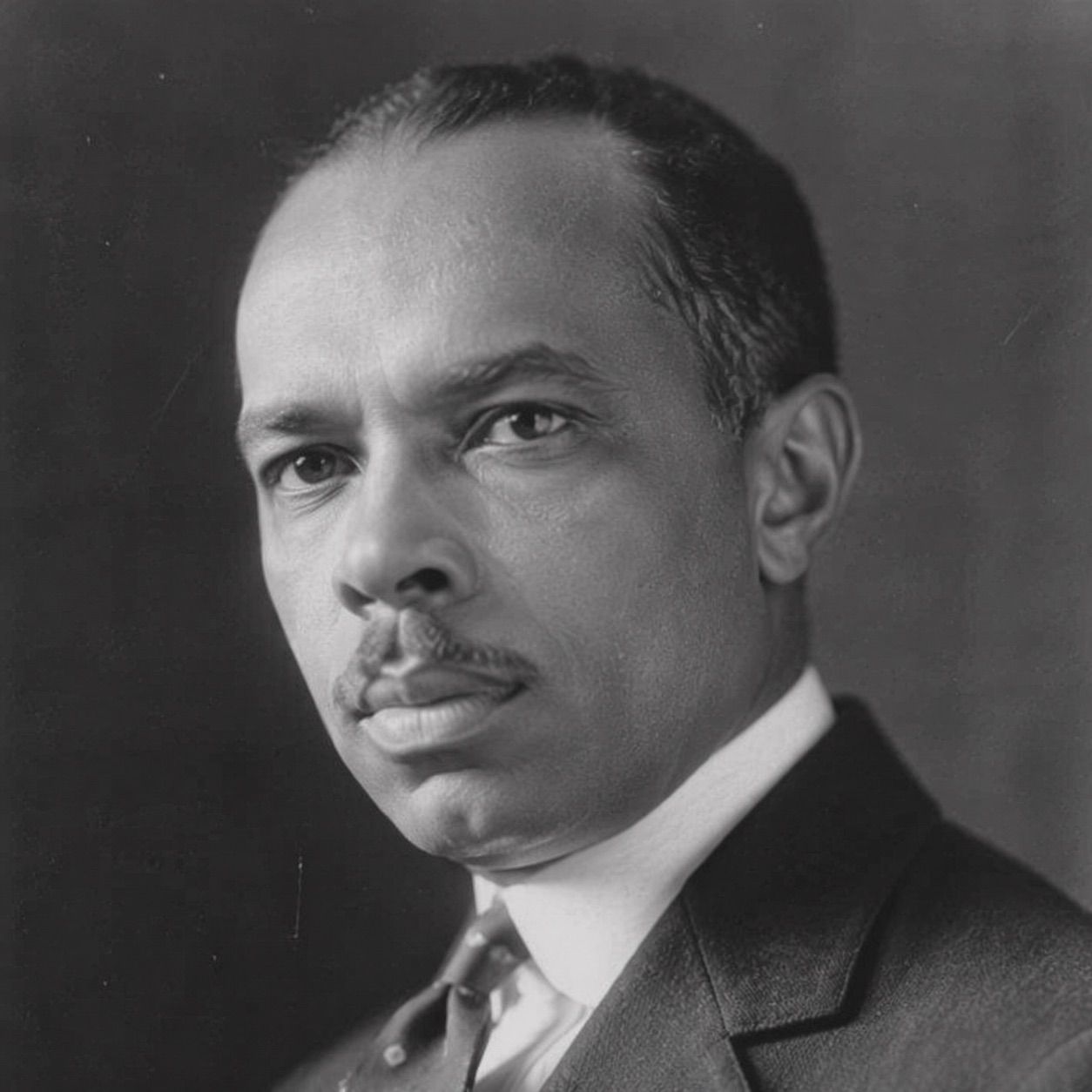
James Weldon Johnson: The Man Who Still Haunts Me (And Why I Think You Should Care Too)

Penelope

James Weldon Johnson has been on my mind a lot lately, and I’m not entirely sure why. Maybe it’s because I recently graduated from college with a degree in English, and his name kept popping up in my coursework. Or maybe it’s because I’ve always been drawn to the complex intersections of art and social justice that he embodied.

One thing is for sure: every time I read Johnson’s poetry or essays, I feel like I’m getting a glimpse into a world that’s both familiar and foreign. As an African American writer living in the early 20th century, he navigated a reality where racism was rampant and opportunities were scarce. And yet, despite these challenges, he continued to create – to write, to paint, to perform – with a sense of purpose and passion that’s inspiring.

What I find most compelling about Johnson is his tension between idealism and pragmatism. On the one hand, he was a true believer in the power of art to change the world. He saw himself as a social commentator, using his writing to expose the injustices of racism and advocate for civil rights. And yet, on the other hand, he was also deeply aware of the limitations of this approach – the ways in which speaking out could put him (and others) in danger.

I think about my own relationship with activism, and how often I’ve struggled with a similar tension. As a young person from a relatively privileged background, I’ve had access to resources and opportunities that many others don’t. And yet, when it comes time to take a stand or use my voice, I often feel hesitant – unsure of what I can really accomplish, or whether speaking out will even make a difference.

Johnson’s story has been a balm to me in these moments of uncertainty. His determination to create and advocate, despite the risks and challenges he faced, is a powerful reminder that individual action can add up over time. But it’s also his willingness to adapt and evolve – to adjust his approach as circumstances change – that I find most admirable.

One aspect of Johnson’s life that I’ve been grappling with lately is his work in the Harlem Renaissance. As a major figure in this movement, he played a key role in shaping the cultural and artistic landscape of African America during the 1920s and ’30s. And yet, as I read about his involvement in organizations like the NAACP and the Urban League, I’m struck by the ways in which these institutions often prioritized middle-class black progress over more radical forms of social change.

I’m not sure what to make of this – whether Johnson’s work was ultimately empowering or limiting for those he sought to uplift. Part of me wants to celebrate his efforts as a pioneering figure in African American arts and activism, while another part of me worries about the potential costs of his involvement with more conservative organizations.

As I think about these complexities, I’m reminded of my own experiences working on campus for social justice causes. Like Johnson, I’ve often found myself caught between competing visions of change – between radical action and incremental progress. And like him, I’ve struggled to navigate the tensions between idealism and pragmatism in my own work.

It’s funny – when I first started reading about James Weldon Johnson, I thought I was mainly interested in his art and activism as historical phenomena. But the more I learn about him, the more I realize that our stories are intertwined in ways I never could have anticipated. His tensions and contradictions – between idealism and pragmatism, between creativity and constraint – are reflections of my own struggles to make a difference in the world.

I’m not sure what this says about me or Johnson’s legacy – only that as I continue to grapple with these complexities, his story will remain on my mind, a reminder of the ongoing conversations we’re having (or trying to have) about art, activism, and social change.

As I delve deeper into Johnson’s life and work, I find myself returning to this theme of tension – between idealism and pragmatism, between creative expression and social constraint. It’s as if he’s holding up a mirror to my own experiences as a young person trying to make a difference in the world.

I think about the times when I’ve felt like I’m walking a tightrope, unsure whether my words or actions will be enough to bring about change. Will speaking out against injustice be met with silence and indifference, or will it spark meaningful conversation and action? It’s a risk that Johnson faced every day as an African American writer in the early 20th century, and one that I can only imagine being exponentially more daunting.

And yet, despite these risks, Johnson continued to create – to write, to paint, to perform. His work was not just a reflection of his own experiences, but also a testament to the power of art to transcend the boundaries of time and circumstance. It’s this quality that I find so compelling about his legacy: the way he was able to distill complex emotions and ideas into something beautiful and meaningful.

But as I explore Johnson’s work in more depth, I’m starting to see the ways in which even his most seemingly radical works were tempered by a pragmatic awareness of their potential impact. His poetry, for example, often grapples with themes of identity and belonging – but it does so in a way that is at once both personal and accessible.

This raises questions about the role of art as social commentary. Is it possible to create work that is both critically engaged and widely relatable? And what happens when an artist’s message becomes mired in the very constraints they’re trying to critique?

For Johnson, these tensions played out in his involvement with organizations like the NAACP and the Urban League. While he was a key figure in shaping the cultural landscape of African America during the Harlem Renaissance, I’m starting to see the ways in which his work may have been constrained by the very institutions he sought to influence.

It’s this paradox that’s stuck with me – the tension between idealism and pragmatism, between creative expression and social constraint. As someone who is still trying to find their place in the world, I’m drawn to Johnson’s story as a reminder of the ongoing conversations we’re having about art, activism, and social change.

But what does it mean to navigate these tensions in my own life? How can I balance my desire for creative expression with the need to be socially responsible? And what does it say about me that I’m drawn to Johnson’s story – a man who was both a pioneering figure in African American arts and activism, and yet also caught up in the complexities of his time?

These are questions that I don’t have answers to – at least, not yet. But as I continue to explore James Weldon Johnson’s life and work, I’m starting to see the ways in which our stories are intertwined – and the ways in which his tensions and contradictions will continue to haunt me for years to come.

As I delve deeper into Johnson’s legacy, I find myself returning to these questions again and again. What does it mean to be a socially responsible artist? How can we balance our desire for creative expression with the need to engage with the world around us? And what does it say about us when we’re drawn to stories like Johnson’s – stories that are both inspiring and complicated, full of contradictions and paradoxes?

I think about my own writing, and how often I’ve struggled with these same questions. As a writer, I feel a deep sense of responsibility to use my words in a way that matters – to create work that resonates with others, and sparks meaningful conversation and action. But at the same time, I know that there are no easy answers, no straightforward solutions to the complex problems we face.

Johnson’s story has been a balm to me in these moments of uncertainty, but it’s also made me realize just how much more complicated my own relationship with activism is than I thought. As someone who comes from a relatively privileged background, I’ve always tried to be mindful of my positionality – to recognize the ways in which my privilege can impact my ability to create meaningful change.

But Johnson’s story has also made me see that even those of us who are well-intentioned and well-educated can still get things wrong. We can still perpetuate systems of oppression, or ignore the needs of others because it’s easier or more convenient. And it’s this awareness – this knowledge that we’re all capable of making mistakes, and that our best intentions can still go awry – that I find both humbling and liberating.

As I continue to explore Johnson’s legacy, I’m starting to see the ways in which his story is not just a historical artifact, but a living, breathing part of our ongoing conversations about art, activism, and social change. It’s a reminder that we’re all part of a larger narrative – one that is constantly evolving, and always open to new perspectives and experiences.

And it’s this sense of connection – this feeling that my own story is intertwined with Johnson’s, and that together we’re part of something much bigger than ourselves – that I find most compelling about his legacy. It’s a reminder that even in the midst of uncertainty and doubt, there is always room for growth, always space to learn and adapt and evolve.

As I look back on my own experiences as a young person trying to make a difference in the world, I realize that Johnson’s story has been a constant presence – a reminder that I’m not alone in my struggles, and that even the most seemingly insurmountable challenges can be overcome through creativity, determination, and a willingness to learn.

One of the things that strikes me about James Weldon Johnson is his ability to hold multiple perspectives at once. He was a poet, a novelist, a diplomat, and an activist – each of these roles informed and intersected with the others in complex ways. And yet, he never seemed to let his different identities get in the way of his art or his politics.

As someone who’s still figuring out their own identity and place in the world, I find this quality both inspiring and intimidating. Can I hold multiple perspectives at once, or do I tend to see things in binary terms? Am I more of a poet or a politician – or can I be both?

I think about my own experiences with activism on campus. Sometimes I feel like I’m caught between different factions or ideologies – between those who want to focus on policy changes and those who want to prioritize radical action. And sometimes it feels like I have to choose between being a “good” student and being a “good” activist.

But Johnson’s story shows me that this doesn’t have to be the case. He was able to navigate multiple worlds and identities without compromising his artistic vision or his commitment to social justice. And in doing so, he created works of art that continue to resonate with people today.

As I reflect on my own creative process, I realize that I often feel like I’m trying to choose between different modes of expression – between the “high” art of poetry and the more practical, everyday concerns of activism. But Johnson’s legacy reminds me that these modes are not mutually exclusive – that they can intersect and inform each other in powerful ways.

I think about his poem “The Creation,” which is a masterful blend of biblical imagery and African American experience. It’s a work of art that is both deeply personal and universally relatable – a testament to Johnson’s ability to tap into the collective unconscious while remaining rooted in his own unique perspective.

As I continue to explore Johnson’s legacy, I’m starting to see the ways in which his story can inform my own creative process. I’m learning to be more bold, more experimental, and more willing to take risks in my art. And I’m also learning to be more aware of my own privilege and positionality – to recognize how my experiences and perspectives shape my work, and to seek out diverse voices and perspectives to challenge and enrich it.

It’s a journey that’s not without its challenges and uncertainties. But as I navigate the complexities of Johnson’s legacy, I’m starting to see that it’s okay to be messy, to be conflicted, and to be uncertain. In fact, it’s often in these moments of uncertainty that we create our most profound works of art – works that are capable of speaking to people across time and circumstance.

As I look to the future, I know that I’ll continue to grapple with the tensions between idealism and pragmatism, between creative expression and social constraint. But I’m also excited to explore these contradictions in new and innovative ways – to see where they take me, and what kind of art and activism emerge from this process.

For now, I’m content to follow Johnson’s example – to be a writer, an artist, and an activist who is willing to experiment, to take risks, and to push the boundaries of what’s possible. It’s a path that’s not without its challenges, but it’s one that feels authentic and true to me – and it’s one that I’m eager to continue exploring in the years to come.

Related Posts

Grocery Store Paranoia Almost Ruins a Perfectly Normal Day

Hal

I went into the grocery store with a very simple plan. Get in, grab the essentials, and get out without overthinking anything. Coffee filters, pasta sauce, something green so I could pretend I had my life together. Pandora came along to make sure I didn’t forget half the list, which, historically, is exactly what I do.

The store felt normal at first. Bright lights, organized chaos, people quietly navigating their carts like it was some unspoken social contract. Pandora was already halfway down the aisle loading up the cart with things we actually needed while I lingered near produce trying to make a responsible decision about vegetables I probably wouldn’t eat.

That’s when I noticed him.

He wasn’t doing anything obvious. No dramatic movements, no suspicious gestures. Just standing there near the avocados, wearing a hoodie and sunglasses indoors, which immediately raises questions. Not enough to confront someone, but enough to stick in your brain longer than it should.

I tried to ignore it. People are weird. That’s not new information. But as we moved through the store, I kept seeing him. Different aisles. Same distance. Never interacting with anything, never committing to a direction. Just… present.

Pandora didn’t seem concerned when I pointed it out. She glanced over, shrugged, and kept moving like a person who refuses to participate in unnecessary paranoia. I envied that level of confidence. Meanwhile, I adjusted my awareness to include one mildly suspicious stranger and tried to continue shopping like a normal human being.

It didn’t work.

By the time we reached the middle aisles, I wasn’t really shopping anymore. I was tracking movement. Not in a panicked way, just enough to confirm that something felt off. Every time I stopped, he stopped. Every time we moved, he reappeared somewhere nearby, just outside of being obvious.

At checkout, things should have reset. That’s the natural ending point. You pay, you leave, everyone goes their separate ways. But he showed up again near the exit, standing just far enough away to look casual while still watching everything happening in front of him.

That’s the moment it stopped feeling like coincidence.

I didn’t say anything dramatic. I didn’t escalate. I just finished unloading groceries, paid, and walked out with Pandora like nothing was wrong. Because most of the time, nothing is actually wrong. It just feels like it is.

Outside, everything looked normal again. Cars, carts, people loading groceries. The kind of scene that makes you question whether you imagined the entire thing. Pandora laughed it off when I brought it up again, and honestly, I wanted to agree with her. It would have been easier.

But the feeling didn’t go away.

Back at home, the whole thing should have ended there. Grocery run complete, nothing unusual happened, move on with the day. John Mercer was already on the couch pretending he had responsibilities while doing absolutely nothing useful, which felt like a return to reality.

We unpacked everything, settled in, and for a while, it worked. The normal routine took over. Conversations drifted, distractions kicked in, and the tension from earlier started to fade into something that almost felt ridiculous.

Almost.

Because once something gets your attention like that, it doesn’t just disappear. It lingers in the background, waiting for something small to bring it back.

For me, it was the realization that I had spent an entire grocery trip not thinking about groceries. I was focused on a single detail that may or may not have mattered, and it completely shifted the way everything felt.

That’s the part no one talks about. Not the event itself, but how quickly your perception changes once you start paying attention to the wrong thing.

Later that evening, everything felt normal again. Quiet, predictable, controlled. The kind of environment where nothing unexpected happens. And maybe that’s the point. Most situations don’t escalate. Most moments don’t turn into anything meaningful.

But the feeling stays with you anyway.

Not because something happened, but because something could have.

And sometimes, that’s enough.

Related Posts

Azazel: The Fallen Watcher Who Taught Forbidden Knowledge and Shaped Humanity’s Dark Awakening

Dave

Azazel is not merely another name in the long and intricate lists of demonology. He stands apart, not only because of his power or symbolism, but because of the depth of his story—a story that reaches far beyond the Ars Goetia and into some of the oldest surviving texts of human belief. Where many Goetic spirits exist within a structured hierarchy, Azazel exists within a narrative. He is not just cataloged. He is remembered.

His origins are most strongly tied to the Book of Enoch, an ancient Jewish text that expands upon brief references found in the Hebrew Bible. In this tradition, Azazel is one of the Watchers—angels sent to observe humanity, to guide and protect. But something changes. The Watchers do not remain distant observers. They descend, interact, and ultimately cross a boundary that was never meant to be crossed.

Azazel becomes one of the central figures in that transformation.

He is described as a teacher—not of morality or spiritual wisdom, but of knowledge that was considered forbidden. He teaches humanity how to forge weapons, how to work with metals, how to create tools of war. He introduces cosmetics, ornamentation, and the means by which appearances can be altered and enhanced.

At first glance, these teachings might not seem inherently dangerous. Tools, craftsmanship, and self-expression are fundamental aspects of human culture. But within the context of the narrative, they represent something more profound.

They represent acceleration.

Humanity, which might have developed these skills gradually over time, receives them suddenly. Knowledge that would have taken generations to discover is handed over all at once.

Azazel does not simply teach. He advances.

And with that advancement comes consequence.

The Book of Enoch frames this as a corruption—a shift in human behavior driven by newfound capability. Weapons lead to conflict. Ornamentation leads to vanity. Knowledge leads to imbalance.

Azazel becomes the embodiment of that shift.

He is not merely a villain, nor is he a misunderstood guide. He is something more complex: a catalyst.

To understand why this story has endured, we need to look at how humanity has historically viewed knowledge.

Knowledge has always been a double-edged concept. It empowers, but it also disrupts. It provides solutions, but it creates new problems. Every advancement brings with it both progress and consequence.

Fire allowed early humans to cook food and survive harsh climates, but it also introduced the potential for destruction. Metalworking enabled tools and infrastructure, but also weapons and warfare. Technology connects people across the world, but also introduces new forms of conflict and control.

Azazel represents this duality in its earliest form.

He is the moment when knowledge shifts from potential to reality.

The desert imagery associated with his punishment reinforces this idea. According to the Book of Enoch, Azazel is cast into a barren wilderness, bound and left in isolation. This is not just a physical punishment. It is symbolic.

The desert represents emptiness, separation, and consequence. It is a place where survival is difficult, where resources are scarce, and where reflection becomes unavoidable.

Azazel, once a teacher among humanity, becomes isolated from it.

This transformation—from guide to exile—mirrors the consequences of unchecked advancement. When knowledge is introduced without balance, it can lead to separation rather than connection.

From a psychological perspective, Azazel can be interpreted as an archetype of forbidden knowledge—the drive to explore beyond established limits. This archetype appears in many forms across cultures. It is present in the story of Prometheus, who brings fire to humanity. It appears in the narrative of the Tree of Knowledge, where awareness leads to exile.

In each case, the pattern is the same.

A boundary is crossed.

Knowledge is gained.

And the consequences reshape reality.

Azazel embodies this pattern in its most direct form.

He does not steal knowledge. He gives it.

And in doing so, he alters the trajectory of humanity.

This raises an important question: is the knowledge itself the problem, or is it how it is used?

The texts do not provide a simple answer.

Instead, they present a tension. Azazel’s teachings lead to corruption, but they also lead to development. Without knowledge, there is no progress. Without progress, there is no growth.

Azazel exists within that tension.

He is neither purely destructive nor purely beneficial.

He is transformative.

The tools he introduces—metalworking, weapons, adornment—are all forms of control. They allow humans to shape their environment, to influence outcomes, to assert dominance over nature and each other.

Control is a powerful concept. It provides security, but it also creates imbalance. The more control one has, the more responsibility is required to manage it.

Azazel gives humanity control without guidance.

And that is where the narrative becomes cautionary.

From a modern perspective, this theme is more relevant than ever. Technological advancement has accelerated at a pace that would have been unimaginable in earlier centuries. Information is accessible instantly. Tools are powerful and widely available.

Yet the question remains: how should they be used?

Azazel’s story does not answer this question directly. Instead, it highlights the importance of asking it.

His depiction in later demonology reflects this complexity. While he is often categorized as a fallen angel or demon, his role is not limited to opposition or destruction. He is a teacher, a figure of knowledge, a symbol of transition.

The imagery of broken or scorched wings often associated with him reinforces this idea. Wings represent elevation, connection to the divine, and the ability to move freely between realms. Broken wings suggest limitation, consequence, and separation.

Azazel is grounded.

He is no longer above humanity, but apart from it.

This separation is key to understanding his role. He does not disappear. He remains present as a reminder of what has occurred.

In literature and storytelling, characters like Azazel often serve as reflections of human potential. They represent paths that can be taken, choices that can be made, and consequences that follow.

They are not distant figures. They are mirrors.

Azazel reflects the human capacity for innovation and the challenges that come with it.

He represents the moment when curiosity leads to discovery, and discovery leads to change.

And he reminds us that change is never neutral.

It reshapes systems, relationships, and perspectives.

In the end, Azazel stands as one of the most enduring figures in demonology because his story is not confined to a single tradition or interpretation. It resonates across time, connecting ancient narratives with modern realities.

He is the teacher who gave too much, too soon.

The figure who crossed a boundary and altered the course of history.

The embodiment of knowledge that transforms, for better or worse.

And somewhere in the space between creation and consequence, between innovation and responsibility, between what is known and what is understood—that is where Azazel resides.

Not as a warning alone, but as a question.

What do we do with what we learn?

Related Posts

Hildegard Of Bingen: The Unapologetic Heart on Her Sleeve

Penelope

I’ll be honest, I stumbled upon Hildegard of Bingen by chance, while browsing through a used bookstore. Her name jumped off the page, and I had to look her up. At first, I was drawn to her as a trailblazer – a woman who defied conventions in a time when women’s voices were largely silenced. But as I delved deeper into her life, I found myself fascinated by something more complex: her inner world.

What struck me about Hildegard is the intensity of her emotions. She wrote extensively on the nature of sin and redemption, but also poured out her own feelings of despair, anxiety, and frustration in her letters and treatises. It’s like she wore her heart on her sleeve, unapologetically and without pretense. I felt a deep connection to that raw vulnerability.

As someone who’s struggled with anxiety and self-doubt myself, I couldn’t help but see parallels between Hildegard’s experiences and my own. Her descriptions of feeling overwhelmed by the weight of sin and responsibility resonated deeply. I remember times when I felt like I was drowning in my own emotions, unable to articulate what was wrong or how to make it right.

Hildegard’s solution, though, was vastly different from mine. She turned to God, pouring out her heart in prayers and hymns that were both beautiful and unflinching. Her writing is peppered with imagery and metaphor – she compares sin to a serpent coiled around the human heart, or a weight that presses down on her shoulders. It’s as if she’s trying to grasp the intangible, to pin down the elusive nature of evil.

I’ve always struggled with organized spirituality myself. Growing up in a secular household, I never really connected with institutionalized faith. But there’s something about Hildegard’s emotional honesty that feels more authentic than most of what I’ve encountered in my own life. Maybe it’s because she wasn’t trying to present a perfect facade; instead, she was grappling with the messy, contradictory nature of human experience.

As I read through her writings, I found myself questioning my own relationship with doubt and uncertainty. What does it mean to be unsure about one’s faith or values? Is it somehow less valid than certainty? Hildegard’s life is a testament to the fact that even in times of great turmoil, we can still find a way to express ourselves truthfully.

But what really fascinates me is how she reconciled her inner struggles with her external role as a leader. As abbess and doctor of the church, she wielded significant power and influence, yet she never seemed to lose sight of her own fragility. It’s like she was constantly negotiating between these two aspects of herself – the public persona and the private self.

I’m not sure I fully understand how Hildegard managed this; it’s something I still grapple with in my own life. Do we have to choose between authenticity and expectation, or is there a way to hold both together? Maybe that’s what draws me back to her – she offers no easy answers, only the messy, imperfect exploration of the human experience.

The more I learn about Hildegard, the more I realize how much I still don’t know. But it’s okay; I’m not trying to summarize her life or prescribe a moral lesson. What I’m searching for is a deeper understanding of myself, and perhaps, through her example, a way to reconcile my own contradictions.

As I continue to explore Hildegard’s world, I find myself caught up in the complexity of her relationships with others. Her letters are peppered with emotional outbursts, accusations, and defensiveness – it’s like she’s wearing her heart on her sleeve, just as she does in her writings. But what’s striking is how she navigates these interactions, often with a sense of vulnerability and openness that feels both courageous and raw.

I think about my own relationships, particularly those with people who don’t quite understand me. I’ve always struggled to articulate my emotions, to convey the depth of my feelings without sounding whiny or dramatic. Hildegard’s letters show me that it’s okay to be messy, to express the full range of human experience – even if it means risking rejection or misunderstanding.

One particular letter stands out to me: a scathing rebuke she sends to her nemesis, a fellow nun named Disibod. The language is fiery and unflinching, but what’s striking is how Hildegard pours out her own emotions in the process – her hurt, her anger, her sense of betrayal. It’s like she’s not just writing about Disibod; she’s confronting her own darkness, her own capacity for cruelty.

I can relate to that feeling of being torn between self-expression and social expectation. As a young adult, I’ve often felt like I’m stuck between two worlds – the desire to speak my truth, and the fear of being rejected or ostracized by those around me. Hildegard’s letter shows me that it’s okay to be fierce, to defend myself even when it means taking risks.

But what about forgiveness? How does Hildegard reconcile her anger with her own capacity for compassion? In one of her treatises, she writes about the importance of mercy and understanding – but it feels like a more polished, theoretical idea, rather than something rooted in personal experience. I’m left wondering: can we truly forgive ourselves and others when we’ve been hurt so deeply?

I think back to my own struggles with forgiveness, particularly towards those who have wronged me in the past. It’s not always easy; sometimes it feels like a heavy burden to carry, one that threatens to overwhelm me at every turn. But Hildegard’s example shows me that even in the midst of conflict and pain, there’s still room for growth, for transformation.

As I continue to explore her life, I’m struck by how little we know about the inner workings of her mind – her motivations, her fears, her desires. It’s like she’s a mystery waiting to be unraveled, one that both fascinates and daunts me. What secrets lies hidden beneath her words? How did she manage to hold together so many disparate threads – her faith, her emotions, her relationships?

I’m not sure I’ll ever fully understand Hildegard of Bingen, but that’s okay. The mystery is part of what draws me in, what keeps me coming back to her life again and again. Maybe it’s because she reminds me that even the most imperfect, messy lives can be a source of inspiration – a reminder that we’re all struggling, stumbling towards some kind of truth, no matter how elusive or fragmented it may seem.

As I delve deeper into Hildegard’s life, I find myself captivated by her sense of wonder and awe. Despite living in a time when the natural world was often viewed as mysterious and even frightening, she saw it as a source of beauty and majesty. Her writings are filled with descriptions of flowers, birds, and trees – not just as physical entities, but as symbols of spiritual truth.

I’m struck by how her sense of wonder is tied to her faith. She writes about the intricate web of creation, where every living thing is connected and interdependent. It’s a perspective that feels both poetic and profound, one that reminds me of my own experiences in nature – the way a sunset can fill me with a sense of awe, or the sound of birdsong can bring me peace.

But what really resonates with me is how Hildegard saw the natural world as a reflection of her own inner life. She wrote about the seasons as metaphors for human experience – spring representing hope and renewal, summer signifying abundance and growth, autumn symbolizing decline and harvest, and winter embodying darkness and dormancy.

It’s like she’s trying to make sense of the ebbs and flows of her own emotions, using the rhythms of nature as a way to articulate the complexities of human experience. I think about my own struggles with anxiety and self-doubt – how sometimes it feels like the darkness is closing in around me, or that I’m stuck in a cycle of growth and decline.

Hildegard’s writings offer no easy answers, but they do suggest that even in the midst of uncertainty, there’s always the possibility for transformation. Her image of the tree, which she writes about at length in her treatises, is particularly striking to me – a symbol of resilience and adaptability, one that can weather storms and still produce fruit.

I’m left wondering: how do we cultivate our own sense of wonder and awe, especially when it feels like the world around us is increasingly complex and overwhelming? Do we need to adopt Hildegard’s approach – seeing the natural world as a reflection of our own inner lives? Or can we find ways to tap into that sense of wonder through other means?

As I continue to explore her life, I’m struck by how much I still don’t know about the historical context in which she lived. What were the social and cultural forces at play during her time – the influences that shaped her thoughts and experiences? How did she navigate the complexities of medieval society as a woman, a member of a powerful family?

I feel like I’m just scratching the surface of Hildegard’s world, and yet it feels like there’s so much more to explore. Maybe that’s what draws me back to her – not just her words, but the mystery itself, the sense that there’s always more to discover, more to learn.

As I close this essay for now, I’m left with a sense of gratitude towards Hildegard, who reminds me that even in the midst of uncertainty and doubt, there’s always room for growth, transformation, and wonder.

I find myself drawn back to her letters again and again, not just because they offer insights into her life but also because they speak to a fundamental human experience – the struggle to express oneself truthfully in a world that often demands conformity.

As I read through her correspondence, I’m struck by how many of her letters are addressed to people who disagree with her, challenge her, or even threaten her. And yet she responds with a depth and nuance that is both impressive and humbling. She doesn’t shy away from conflict; instead, she engages it head-on, using her words to cut through the noise and get to the heart of the matter.

I’m reminded of my own experiences in online forums and social media, where disagreements can quickly escalate into shouting matches. Hildegard’s approach is a stark contrast to the kind of toxic discourse that often passes for “conversation” today. She writes with passion, yes, but also with empathy and understanding – qualities that are all too rare in our digital age.

As I delve deeper into her letters, I begin to see patterns emerge. Hildegard has a way of framing disagreements as opportunities for growth and learning, rather than threats to her ego or authority. She seeks to understand the perspectives of those who disagree with her, even when they’re at odds with her own views. And she’s not afraid to admit when she’s wrong – in fact, she often takes pains to acknowledge the mistakes she’s made.

I’m struck by how these qualities are not just admirable but also surprisingly relevant today. In a world where polarization and division seem to be on the rise, Hildegard’s approach offers a powerful alternative. She reminds us that even in the midst of conflict and disagreement, there’s always room for empathy, understanding, and growth.

But what I find most compelling about Hildegard is not just her approach to conflict but also her willingness to confront her own limitations and biases. In one particularly striking letter, she writes about how she’s struggled with feelings of inadequacy and self-doubt – not just as a woman in a patriarchal society but also as a leader who feels the weight of responsibility on her shoulders.

It’s a moment of raw vulnerability that feels both deeply personal and profoundly universal. I think back to my own experiences of self-doubt, particularly when I was struggling to find my place in the world after college. Hildegard’s words offer a reminder that even the most accomplished and powerful people can struggle with feelings of inadequacy – and that it’s okay to acknowledge those struggles rather than pretending they don’t exist.

As I continue to explore Hildegard’s life, I’m struck by how much she reminds me of my own grandmother. Like Hildegard, my grandmother was a woman of strong faith who wore her heart on her sleeve. She had a way of navigating the complexities of family relationships and community conflicts that felt both intuitive and wise.

But what I think I love most about Hildegard is not just her similarities to my grandmother but also her differences. While my grandmother was a product of her time, with all its attendant social and cultural expectations, Hildegard was something more radical – a woman who refused to be bound by the conventions of her era.

In many ways, she’s an inspiration to me as I navigate my own life, particularly as a young adult trying to find my place in the world. She reminds me that even when we feel lost or uncertain, there’s always room for growth and transformation – and that it’s okay to be messy, imperfect, and true to ourselves.

As I close this essay for now, I’m left with a sense of wonder at the mystery of Hildegard’s life. Who was she, really? What drove her to write so extensively about sin and redemption, only to pour out her own emotions in letters that are both raw and beautiful?

I don’t know if I’ll ever fully understand Hildegard of Bingen – but I do know that I’m grateful for the glimpse into her world that her writings offer. She’s a reminder that even in the midst of uncertainty and doubt, there’s always room for growth, transformation, and wonder.

Related Posts

Office Miscommunication Triggers Emergency Meeting That Spirals Far Beyond Anyone’s Control

Hal

I’m having one of those days where everything seems to be going wrong. I woke up late, spilled coffee all over my shirt, and now I’m dealing with a work misunderstanding that’s escalating faster than I can keep up.

It started when I sent an email to our team leader, Sarah, about the Johnson project. I thought I was being clear, but apparently she interpreted it very differently. Next thing I know, she’s calling me into her office like I’ve just confessed to sabotaging the entire operation.

As I’m heading out the door, Pandora is in the kitchen making breakfast. She looks up immediately, reading my face like she always does.

“Hey, what’s wrong?” she asks.

“Work thing,” I say, trying to brush it off. “I’ll explain later.”

John Mercer wanders in half-awake, pouring himself coffee like he has nowhere important to be—which, to be fair, he doesn’t.

“What’s going on?” he asks, already smiling like he’s hoping it’s something dramatic.

“Hal’s got work drama,” Pandora says, handing him a plate.

I shoot her a look, but John just grins wider. This is exactly the kind of thing he lives for.

When I get to Sarah’s office, she’s already sitting there, completely composed in a way that makes me feel even worse.

“Hal,” she says, “what exactly did you mean when you wrote that the Johnson project was ‘going off the rails’?”

I pause. That’s… not how I meant it.

“I didn’t mean the whole project,” I explain. “Just one small part of it. A minor issue.”

Her expression doesn’t change.

“So you weren’t saying the entire project is at risk?”

“No. Definitely not.”

We go back and forth for a few minutes, but it’s clear the damage is already done. She’s taken my comment as a full-scale warning, and now she’s escalating.

Before I can fully recover, she makes the call.

“We’re scheduling an emergency team meeting,” she says. “And I want you to walk everyone through your concerns.”

Of course she does.

As I leave her office, my phone immediately buzzes. It’s John.

“How bad is it?”
“Is she yelling yet?”
“Do you need me to fake an emergency?”

I text back one word: “No.”

He replies instantly: “Coward.”

By the time I get home, I feel like I’ve already lived through a full week. Pandora is sitting on the couch, and Mr. Whiskers is curled up beside her like he has never experienced stress in his life.

“How was it?” she asks.

I drop onto the couch next to her. “It’s now an emergency meeting.”

John appears from the hallway like he’s been waiting for this exact moment.

“I knew it,” he says. “Did she use the serious voice?”

Pandora gives him a look, but he just shrugs.

As I explain everything, Mr. Whiskers suddenly decides my lap is the perfect place to be. He climbs up and starts kneading like he’s trying to process the situation physically.

Normally it’s calming.

Today, not so much.

The rest of the evening turns into preparation mode. I’m going over slides, rewriting explanations, trying to anticipate every possible question Sarah might throw at me.

At some point, John leans over my shoulder.

“You look like you’re preparing for a court trial,” he says.

“That’s because it feels like one,” I reply.

He pats me on the back. “Well, if it helps, Mr. Whiskers seems confident in you.”

I glance down. The cat is asleep.

Great.

The next morning, I wake up with that heavy feeling in my stomach that says this is not going to go well. Pandora hands me coffee like she’s deploying emotional support.

“You’ve got this,” she says.

John, from the other room, adds, “Or you don’t. Statistically, it could go either way.”

Very helpful.

The meeting itself is chaos.

Everyone has a different understanding of what’s happening. Every explanation leads to more confusion. At one point I’m halfway through clarifying something when someone else interrupts with a completely different interpretation.

By the end of it, I’m not even sure what the original issue was anymore.

When I finally get home, I collapse onto the couch.

Pandora looks at me carefully. “How did it go?”

I stare at the ceiling. “It was… an experience.”

John walks in, already holding his phone like he’s ready to document whatever happens next.

“Did you at least create more confusion?” he asks.

I pause.

“…Yes.”

He nods approvingly. “That’s consistency.”

Pandora shakes her head, but she’s smiling.

Mr. Whiskers jumps back onto the couch, completely unconcerned with any of this, and settles in like nothing unusual has happened.

And honestly, that might be the most impressive part of the whole day.

Because somehow, what started as one slightly unclear sentence turned into a full-scale emergency meeting, a breakdown in communication across an entire team, and a complete loss of clarity about what anyone was actually trying to fix.

All because I said something was “going off the rails.”

Next time, I’m just going to say “minor issue.”

Related Posts

Astaroth: The Grand Duke of Hell Who Reveals Forbidden Knowledge, Commands Time, and Whispers the Truth Behind Power

Dave

Among the many figures recorded in the Ars Goetia, few carry the weight, complexity, and historical depth of Astaroth. Unlike lesser spirits whose domains are narrow and clearly defined, Astaroth exists on a broader, more unsettling plane—one that touches knowledge, time, influence, and the nature of truth itself. He is described as a Grand Duke of Hell, commanding forty legions of spirits, and his presence in demonology reaches far beyond the pages of a single grimoire. His name echoes through centuries, tied to ancient deities, shifting belief systems, and humanity’s ongoing struggle to understand the boundary between wisdom and danger.

In the Ars Goetia, Astaroth is depicted as a powerful and imposing figure, often shown riding a dragon and holding a serpent. These symbols are not chosen lightly. They form a visual language that speaks directly to his nature. The dragon represents ancient power, knowledge accumulated over time, and the ability to dominate both physical and symbolic realms. It is a creature that exists at the edge of myth and reality, embodying forces that are vast and difficult to control.

The serpent, meanwhile, carries a different kind of meaning. Across cultures, it has represented wisdom, transformation, and hidden knowledge. In some traditions, it is a guide, leading individuals toward understanding. In others, it is a deceiver, offering truths that come with consequences.

Astaroth holds the serpent.

He does not fear it, nor is he consumed by it. He commands it.

This detail alone reveals something fundamental about his role. Astaroth is not merely a source of knowledge—he is a master of it. He understands both its value and its risks.

The grimoires state that Astaroth can answer questions about the past, present, and future. He reveals secrets, explains hidden causes, and provides insight into the workings of the world. This places him among the most intellectually powerful spirits in the Goetic hierarchy. Yet unlike figures such as Gusion or Paimon, whose knowledge is often framed as neutral or structured, Astaroth’s knowledge carries an edge.

It is not just information.

It is revelation.

And revelation changes things.

To understand why Astaroth is portrayed as a demon rather than a purely benevolent figure, we need to look beyond the Ars Goetia into history. The name Astaroth is widely believed to be derived from Astarte, an ancient goddess worshipped in the Near East. Astarte was associated with fertility, war, and the evening star—complex domains that combined creation and destruction, beauty and power.

As monotheistic traditions spread, many earlier deities were reinterpreted as demons. This transformation was not simply about condemnation. It was about reclassification—taking figures that represented powerful, multifaceted aspects of life and placing them within a new framework.

Astaroth, therefore, carries traces of an older identity. He is not a simple figure. He is layered, shaped by cultural shifts and evolving interpretations.

This historical context helps explain why his domain includes both knowledge and caution. In many traditions, knowledge—especially knowledge that challenges established systems—has been viewed with suspicion. It has the power to disrupt, to question authority, to alter perspectives.

Astaroth embodies that disruptive potential.

He reveals truths that may not align with expectations.

He explains causes that may not be comfortable.

He provides clarity, but not necessarily reassurance.

From a psychological perspective, Astaroth can be seen as an archetype of forbidden knowledge—the kind of understanding that lies beyond conventional boundaries. This archetype appears throughout mythology and literature. It represents the desire to know more, to push beyond limits, to uncover what is hidden.

But it also carries a warning.

Not all knowledge is easy to process.

Some truths challenge identity, belief, and stability.

Astaroth represents the moment when curiosity leads to revelation, and revelation leads to change.

The dragon he rides reinforces this idea. Dragons are often guardians of treasure—not just material wealth, but knowledge. They are creatures that accumulate and protect, existing outside ordinary systems.

To ride a dragon is to control that accumulation.

Astaroth does not merely access knowledge. He governs it.

This distinction is important because it shifts his role from seeker to authority. He is not searching for answers. He already has them.

This creates a dynamic where the individual seeking knowledge must approach him with intention and caution. The grimoires often emphasize that interactions with such spirits require discipline and awareness. This is not because the knowledge itself is inherently dangerous, but because of how it may be interpreted or applied.

Knowledge without context can lead to misunderstanding.

Understanding without balance can lead to imbalance.

Astaroth’s domain sits precisely at that threshold.

His association with time—past, present, and future—adds another layer to his symbolism. Time is one of the most fundamental aspects of existence, yet it is also one of the least understood. Humans experience it linearly, moving from moment to moment, but they are capable of reflecting on the past and anticipating the future.

Astaroth exists outside this limitation.

He sees continuity.

He understands cause and effect not as separate events, but as a connected sequence.

This perspective allows him to reveal not just what will happen, but why.

And that distinction matters.

Prediction provides information.

Explanation provides understanding.

Astaroth offers both.

This makes him particularly powerful within the context of decision-making. Understanding the underlying causes of events allows for more informed choices. It provides insight into patterns, enabling individuals to anticipate outcomes and adjust accordingly.

In modern terms, this can be seen as advanced pattern recognition—the ability to identify relationships between variables and predict how they will evolve.

Astaroth embodies this capacity at its highest level.

Yet this ability also introduces complexity. If one understands the likely outcome of a situation, how does that influence action? Does it create certainty, or does it create hesitation?

These questions are central to the human experience.

Astaroth does not answer them.

He provides the information.

The individual must decide how to use it.

This reinforces a recurring theme in demonology: that knowledge is a tool, not a directive. It does not determine action. It enables it.

Astaroth’s role as a Grand Duke suggests a position of significant authority within the infernal hierarchy. Dukes are often associated with governance, structure, and oversight. They manage domains, ensuring that systems operate as intended.

In this context, Astaroth can be seen as a governor of knowledge itself.

He oversees the flow of information, the revelation of truths, and the interpretation of events.

This makes him less of a participant and more of an observer.

He does not intervene directly in most cases. He provides insight.

This distinction aligns with the idea that understanding is separate from action. Knowing something does not automatically change it. It changes how one relates to it.

Astaroth facilitates that shift.

In literature, characters who possess deep knowledge often occupy a similar role. They guide others, providing information that shapes decisions without making those decisions themselves. They are catalysts rather than actors.

Astaroth fits this pattern.

He is not the one who changes the world.

He is the one who explains it.

The serpent he holds reinforces this role. The serpent is not just a symbol of knowledge, but of transformation. It sheds its skin, renewing itself while remaining fundamentally the same.

This process mirrors the impact of knowledge.

Understanding changes perception, which changes behavior, which changes outcomes.

The core remains, but the expression evolves.

Astaroth represents this cycle.

He does not create transformation directly. He initiates it through revelation.

From a modern perspective, his archetype is more relevant than ever. In an age of information, where knowledge is abundant and accessible, the challenge is not acquiring information, but understanding it.

People are constantly exposed to data, opinions, and perspectives. Making sense of this complexity requires discernment—the ability to identify what is meaningful and how it fits into a larger context.

Astaroth embodies that discernment.

He represents the capacity to see beyond surface-level information, to understand deeper structures, and to recognize patterns that are not immediately obvious.

This makes him one of the most intellectually resonant figures in demonology.

In the end, Astaroth stands as a symbol of knowledge in its most complete form—powerful, transformative, and complex. He is not defined by good or evil, but by understanding.

He reveals what is hidden.

He explains what is unclear.

He shows the connections that shape reality.

And in doing so, he challenges the individual to confront what they learn.

Because knowledge, once revealed, cannot be ignored.

Somewhere between curiosity and consequence, between question and answer, between what is known and what is understood—that is where Astaroth resides.

Not as a force to be feared, but as one to be approached with awareness.

The one who tells you the truth—whether you are ready for it or not.

Related Posts

Seamus Heaney: Where Ugliness Takes Root in Beauty

Penelope

Seamus Heaney’s words have a way of creeping into my mind when I’m sitting at my desk, staring at the blank page in front of me. As a writer, I’ve always found solace in his poetry – its rhythms and cadences are like a steady heartbeat that grounds me. But beyond just admiring his craft, I find myself drawn to the way he navigates the complexities of identity, memory, and place.

Growing up in Northern Ireland during the Troubles must have been unimaginably difficult for Heaney. The violence and division must have seeped into every aspect of life – even the air seemed thick with tension. Yet, his poetry is never just a reflection of that turmoil; it’s an excavation of its roots, an attempt to understand how such ugliness can take hold in the soil of a beautiful landscape.

I’ve always been struck by the way Heaney weaves together myth and history, drawing on the rich cultural heritage of Ireland. His use of metaphor and allusion is like a map that charts the twists and turns of his own emotional journey. Take, for instance, “Digging,” one of his most famous poems – it’s a powerful exploration of family legacy and the weight of inherited traditions. Heaney writes about his father’s struggles as a farmer during wartime, and how his own desire to write is inextricably linked to that land.

As I read through his work, I find myself thinking about my own relationship with place. Growing up, I spent summers at my grandparents’ farm in the Midwest – the open fields, the creaky farmhouse, the way the sunlight filtered through the windows like a warm honey. Those experiences have stayed with me, shaping my sense of self and my connection to the natural world.

But Heaney’s work also makes me uncomfortable, pushes me to confront the darker aspects of human nature. His poetry is never sentimental or simplistic; it’s a grappling with the messy complexities of history, identity, and power. Take “The Tollund Man,” for example – that haunting poem about the ancient body found in Denmark, which Heaney interprets as a symbol of the violence and sacrifice that underlies all human relationships.

As I read through his words, I’m forced to confront my own complicity in systems of oppression – whether it’s racism, sexism, or nationalism. It’s uncomfortable to acknowledge how easily we can slip into patterns of thought that perpetuate harm, how quickly we can turn a blind eye to the suffering of others. Heaney’s poetry is like a mirror held up to our collective conscience, forcing us to confront the shadows within.

I’m not sure why I find myself drawn to this kind of discomfort – perhaps it’s because writing is, for me, a way of working through the knots in my own mind. Maybe it’s the acknowledgment that even as I try to make sense of the world around me, there will always be aspects of it that resist understanding.

As I sit here with Heaney’s words swirling around me, I’m struck by the idea that poetry is not just a reflection of reality but also a creation of it – a way of shaping and reimagining the world through language. His work shows me that even in the midst of chaos and uncertainty, there’s always the possibility for transformation, for rebirth.

But what does that mean, exactly? Is it enough to simply acknowledge the complexities of human experience, or must we take action – must we strive towards a more just and compassionate world?

I’m not sure. All I know is that Heaney’s words continue to haunt me, like a gentle whisper in my ear. They remind me that writing is never just about expressing oneself; it’s about engaging with the messy, beautiful complexity of existence itself.

As I sit here with these questions swirling around me, I find myself thinking about the idea of “home” – not just a physical place, but a sense of belonging and identity that Heaney’s poetry explores so deeply. For him, it was Northern Ireland, with its rich cultural heritage and complex history; for me, it’s the Midwest, with its rolling hills and vast plains.

But what happens when we’re torn between two homes – or more? When our sense of self is fragmented across multiple places and identities? Heaney’s poetry suggests that this fragmentation can be a source of strength, a way of navigating the complexities of identity and belonging. Take “Station Island,” for example – that poem where he walks along the coast of Ireland, wrestling with his own sense of dislocation and longing.

I feel a kinship with Heaney’s experiences, even though my own sense of displacement is different from his. Growing up, I felt caught between two worlds: the cosmopolitan city where I lived most of the year, and the rural farm where my grandparents taught me about the land and our family’s history. Those summers on the farm were like a different language – one that spoke to something deeper within me.

Heaney’s poetry shows me that this kind of dislocation can be a source of creativity, a way of tapping into the fluidity of identity and place. But it also raises questions about how we hold onto our sense of self when the world around us is changing so rapidly – when the familiar rhythms of home are disrupted by forces beyond our control.

I’m not sure I have any answers to these questions. All I know is that Heaney’s poetry continues to haunt me, like a ghostly presence that reminds me of my own fragility and complexity. It’s a reminder that identity is never fixed, that we’re always in the process of becoming – and that this process is messy, beautiful, and often painful.

As I sit here with these thoughts swirling around me, I feel a sense of gratitude towards Heaney – for his bravery in exploring the complexities of human experience, for his willingness to confront the shadows within. His poetry shows me that writing is never just about expressing oneself; it’s about engaging with the world, with all its messy beauty and complexity.

As I delve deeper into Heaney’s work, I’m struck by the way he weaves together the personal and the political. His poetry is not just a reflection of his own experiences, but also a commentary on the larger cultural and historical context in which he lived. It’s as if he’s trying to make sense of the world around him, to find meaning in the midst of chaos.

I think about my own life, growing up with a family that valued education and literature. My parents were always pushing me to read, to learn, and to explore my creativity. But I never quite felt like I fit into the neat narrative they had for me – the one where I’d go to college, get a “good job,” and live a stable life. There was something in me that yearned for more, something that Heaney’s poetry speaks to.

For him, it was the pull of Ireland’s rich cultural heritage, its mythic landscapes and poetic traditions. For me, it’s the Midwest, with its wide open spaces and rural rhythms. Both are places of beauty and trauma, where the past and present intersect in complex ways.

Heaney’s poem “Death of a Naturalist” is a powerful exploration of this idea – how our experiences shape us, but also how we’re shaped by the world around us. He writes about his own childhood encounters with nature, and how those moments of wonder and horror stay with him long after they’ve passed.

I think about my own experiences growing up on that farm, surrounded by the land and the animals. There was a sense of connection to the natural world that I couldn’t shake – even as I grew older and began to question everything around me. Heaney’s poetry shows me that this kind of connection is not just sentimental or nostalgic; it’s a way of tapping into something deeper, something that speaks to our very humanity.

But what does it mean to be human in the face of trauma and violence? How do we make sense of the world when it seems to be spinning out of control? Heaney’s poetry doesn’t offer easy answers, but instead presents us with a series of questions, each one more complicated than the last.

As I sit here, surrounded by his words, I feel a sense of solidarity with him – not just as a writer, but as a human being. We’re both trying to make sense of the world, to find meaning in the midst of chaos. And it’s this search for meaning that I think is at the heart of Heaney’s poetry, and at the heart of my own writing too.

I’m not sure what lies ahead – whether I’ll continue to write, or where that writing will take me. But for now, I’m grateful for Heaney’s words, which have shown me that even in the darkest times, there is always a way forward – always a glimmer of hope and transformation.

As I continue to delve into Heaney’s work, I find myself thinking about the concept of “home” in a more profound way. For him, it was Northern Ireland, with its rich cultural heritage and complex history. But what happens when we’re torn between two homes – or more? When our sense of self is fragmented across multiple places and identities?

I think about my own life, growing up with a foot in two worlds: the cosmopolitan city where I lived most of the year, and the rural farm where my grandparents taught me about the land and our family’s history. Those summers on the farm were like a different language – one that spoke to something deeper within me.

Heaney’s poetry shows me that this kind of dislocation can be a source of creativity, a way of tapping into the fluidity of identity and place. But it also raises questions about how we hold onto our sense of self when the world around us is changing so rapidly – when the familiar rhythms of home are disrupted by forces beyond our control.

I’m struck by the way Heaney’s poetry often returns to the idea of “exile” – not just as a physical state, but also as a metaphysical one. In poems like “Station Island,” he writes about his own sense of dislocation and longing for a place that feels both familiar and yet forever lost.

As I read these words, I’m reminded of my own experiences growing up in between two worlds – never quite feeling at home in either place, but always searching for a sense of belonging. Heaney’s poetry shows me that this kind of liminality can be both a curse and a blessing – it forces us to confront our own fragmentation and disconnection, but also offers a chance to reimagine ourselves and our relationships with the world around us.

I think about the way Heaney weaves together myth and history in his work, drawing on the rich cultural heritage of Ireland. His use of metaphor and allusion is like a map that charts the twists and turns of his own emotional journey – and by extension, my own. In poems like “Digging,” he writes about his father’s struggles as a farmer during wartime, and how his own desire to write is inextricably linked to that land.

As I read these words, I’m struck by the way Heaney’s poetry often returns to the idea of inheritance – not just the physical inheritance of land or family traditions, but also the emotional and psychological one. In poems like “The Tollund Man,” he writes about the ancient body found in Denmark, which becomes a symbol of the violence and sacrifice that underlies all human relationships.

I think about my own experiences growing up with a complex legacy – one that’s marked by both love and trauma, hope and loss. Heaney’s poetry shows me that this kind of inheritance can be both a burden and a blessing – it forces us to confront our own darkness and vulnerability, but also offers a chance to reclaim and reframe our relationships with the world around us.

As I sit here with these thoughts swirling around me, I feel a sense of gratitude towards Heaney – for his bravery in exploring the complexities of human experience, for his willingness to confront the shadows within. His poetry shows me that writing is never just about expressing oneself; it’s about engaging with the world, with all its messy beauty and complexity.

I’m not sure what lies ahead – whether I’ll continue to write, or where that writing will take me. But for now, I’m grateful for Heaney’s words, which have shown me that even in the darkest times, there is always a way forward – always a glimmer of hope and transformation.

Related Posts

Furry Overlord Demands Coffee and World Domination

Hal

I’m standing in the kitchen, staring at the empty coffee pot, willing it to refill itself. I’ve got a pounding headache and a growing sense of dread that today is going to be one of those days. Pandora walks in, bleary-eyed, and plops down at the table.

“Coffee,” she growls, not even bothering to say good morning.

I nod sympathetically and start measuring out the grounds. As I’m pouring the water, Mr. Whiskers saunters into the kitchen, tail twitching like a metronome on steroids. John’s cat is a malevolent force of nature, always lurking in the shadows, waiting for its next victim. I swear, it has a personal vendetta against me.

I try to shoo Mr. Whiskers away, but he just gives me a disdainful sniff and starts circling Pandora’s legs. She coos over him, completely oblivious to the fact that this cat is plotting our downfall. I’m not being paranoid—I’ve seen the way it looks at us, like we’re nothing more than inferior life forms.

Just as I’m about to pour the coffee, John strolls into the kitchen, yawning widely. “Morning, guys!” he chirps, completely unaware of the tension in the room.

“Morning,” Pandora and I reply in unison, both of us sounding like we’d rather be anywhere else.

John pours himself a bowl of cereal and starts crunching away, completely oblivious to the fact that Mr. Whiskers is now sitting on his lap, staring at me with an unnerving intensity. I’m starting to feel like I’m trapped in some kind of bizarre hostage situation.

As I hand Pandora her coffee, I whisper, “You know, I think Mr. Whiskers is watching us.”

She gives me a weird look and whispers back, “What are you talking about? He’s just a cat.”

I nod conspiratorially. “Exactly. That’s what they want you to think.”

Pandora raises an eyebrow but doesn’t say anything else. She knows better than to encourage my paranoia.

As we’re sipping our coffee, I start to notice strange things. The toast is burning at an alarming rate, the eggs are overcooking, and the kitchen seems to be getting smaller by the minute. It’s like some kind of sinister force is manipulating our reality.

I glance around the room, half-expecting to see some kind of alien surveillance equipment or a portal to another dimension. Mr. Whiskers catches my eye and gives me a smug little smile, as if to say, “You’re onto something, human.”

Suddenly, the lights flicker and the kitchen is plunged into darkness. Pandora lets out a startled yelp, John mutters something about the circuit breaker, and I’m left standing there, frozen in place.

When the lights come back on, Mr. Whiskers is sitting on the counter, looking like the epitome of innocence. I glare at him accusingly, but he just blinks at me, a picture of feline serenity.

Pandora pats me on the arm and says, “Hey, it’s okay. It was just a power outage.”

But I know better. This is no ordinary power outage. This is some kind of sinister plot to drive us all mad.

As we’re finishing up breakfast, John mentions that he’s invited some friends over for a party tonight. Pandora starts making excited noises about music and dancing, but I’m already thinking about the potential risks—open flames, loud noise, strangers in the house… it’s a recipe for disaster.

“Uh, guys?” I say hesitantly. “Maybe this isn’t such a good idea?”

Pandora gives me a reassuring pat. “Don’t worry, Hal. We’ll be fine.”

But I know better. Mr. Whiskers is watching us, waiting for his moment to strike.

The rest of the day is a blur of preparations—Pandora and John are busy setting up the living room, while I’m stuck in my own little world of paranoia. Every creak of the floorboards makes me jump, every knock at the door sends me scurrying for cover.

As the sun starts to set, I realize that things can only get worse from here.

When the first guests arrive, I’m hiding behind the couch, peeking out to survey the chaos. The music is thumping, people are laughing and shouting, and Mr. Whiskers is nowhere to be seen—which, of course, means he’s plotting something.

I dart back and forth between the living room and the kitchen, trying to keep an eye on things without actually participating in the festivities. Pandora keeps dragging me out to dance, but I’m too busy scanning the crowd for potential threats.

John’s friends seem nice enough—there’s a guy named Steve who’s enthusiastically explaining the merits of craft beer, a girl named Emma who’s showing off her impressive collection of tattoos, and a couple named Mike and Sarah who are passionately debating the merits of veganism. But I’m not buying it—they’re all just pawns in Mr. Whiskers’ game of cat and mouse.

As the night wears on, things start to get weird. Steve spills his beer on the carpet, Emma starts doing karaoke, and Mike and Sarah get into a heated argument about the ethics of factory farming. I’m stuck in the middle, trying to mediate while also keeping an eye out for Mr. Whiskers.

Just when I think things can’t get any stranger, Pandora grabs the microphone and starts belting out a rendition of “I Will Survive.” The room falls silent, with everyone staring at her in a mixture of awe and horror. Even Mr. Whiskers makes an appearance, sitting on the windowsill like some kind of feline judge.

As I’m watching this spectacle unfold, I start to feel a creeping sense of self-awareness. What am I doing? Why am I hiding behind the couch while my girlfriend is singing her heart out? And what’s with all this paranoia about Mr. Whiskers?

I take a deep breath and step out into the living room, ready to face whatever absurdities the night may bring.

As it turns out, the rest of the party is a blur of music, laughter, and general chaos. Even Mr. Whiskers makes an appearance or two, although he mostly just sits on the sidelines, looking like the epitome of feline smugness.

By the time the last guest leaves, I’m exhausted but oddly exhilarated. Maybe this wasn’t such a bad idea after all.

As we’re cleaning up the mess, Pandora turns to me and says, “You know, Hal? You’re kind of crazy.”

I grin sheepishly. “Hey, at least I’m entertaining.”

John chuckles and pats me on the back. “That’s what makes life worth living, my friend.”

And Mr. Whiskers? He just gives us all a disdainful sniff before sauntering off to plot his next move.

After all, when you’re a cat of discerning taste, there’s no rest for the wicked.

Related Posts

Bael: The First King of Hell and Master of Invisibility Who Commands Power from the Shadows

Dave

At the very beginning of the Ars Goetia, before the ranks of dukes, marquises, and princes unfold into a complex hierarchy, there stands Bael—the first spirit named, the opening figure in a catalog of seventy-two entities that has fascinated scholars, occultists, and historians for centuries. His placement is not accidental. In systems of order, what comes first carries meaning. It establishes tone, expectation, and foundation. Bael, as the first King of Hell listed, represents not just power, but origin—the starting point of a structure built on hidden influence, perception, and control.

Described as a king ruling over sixty-six legions of spirits, Bael appears in a form that immediately distinguishes him from other entities: a composite being with three heads—commonly depicted as a man, a cat, and a toad. Each head carries its own symbolism, and together they form a representation that is less about physical appearance and more about layered perception.

The human head suggests intelligence, awareness, and intention. It is the part of Bael that understands, plans, and observes. The cat head introduces stealth, independence, and quiet movement—qualities associated with creatures that move unnoticed, slipping through spaces without drawing attention. The toad head, perhaps the most unusual, represents transformation, hidden environments, and adaptation. Toads live in liminal spaces—between land and water, between visibility and concealment.

Together, these forms create a unified theme: invisibility.

Not literal disappearance alone, but something more nuanced—the ability to remain unseen in plain sight, to operate without detection, to influence without being recognized.

The grimoires state that Bael grants invisibility to those who summon him. This ability has often been interpreted literally, as the power to vanish from view. But within the symbolic language of demonology, invisibility extends far beyond physical absence.

To be invisible is to move without drawing attention.

It is to act without being noticed.

It is to exist within systems without becoming the focus of them.

In many ways, Bael represents the power of subtlety.

Consider how influence operates in the real world. The most visible figures—leaders, public figures, institutions—are often assumed to hold the greatest power. Yet much of what shapes events happens behind the scenes. Decisions are influenced by advisors, information flows through unseen channels, and outcomes are shaped by factors that are not immediately apparent.

Bael exists in that hidden layer.

He is not the figure standing in the spotlight. He is the one operating in the shadows.

The cat imagery reinforces this idea. Cats are masters of quiet movement. They observe before acting, choosing their moments with precision. They do not rely on force or noise. They rely on awareness and timing.

Bael’s cat head symbolizes this approach.

The toad, meanwhile, adds an element of transformation and adaptability. Toads undergo metamorphosis, changing from aquatic creatures into land-dwelling ones. They inhabit spaces that are often overlooked—marshes, damp ground, hidden corners of the environment.

This connection to overlooked spaces aligns with Bael’s domain. He operates where attention is not focused, where visibility is low.

The human head brings these elements together, suggesting that this invisibility is not random or instinctive, but intentional. It is guided by awareness.

Bael does not disappear. He chooses not to be seen.

From a historical perspective, the idea of invisibility has always carried both fascination and fear. In ancient myths, invisibility often granted characters the ability to bypass boundaries, to access places or information that would otherwise be restricted.

In Greek mythology, the ring of Gyges granted invisibility and raised questions about morality—if a person could act without being seen, would they remain ethical?

This question is central to Bael’s symbolism.

Invisibility removes accountability.

It creates a space where actions can occur without immediate consequence.

Bael represents that space.

He embodies the tension between power and responsibility, between influence and recognition.

The Renaissance context of the Ars Goetia adds further depth to this interpretation. During this period, political intrigue, espionage, and hidden alliances were common. Power was often exercised indirectly, through networks of influence rather than direct confrontation.

Information itself became a form of power—who knew what, and when, could determine outcomes.

Bael’s ability to grant invisibility can be seen as a metaphor for access to these hidden layers. To be invisible is to move within systems without being constrained by them.

It is to observe without being observed.

This perspective aligns with modern concepts of strategy and influence. In many fields—business, politics, technology—success often depends not on visibility, but on understanding how systems operate beneath the surface.

Those who can navigate these systems effectively often do so quietly.

Bael represents that capability.

From a psychological standpoint, he can be interpreted as an archetype of hidden influence. He embodies the aspects of human behavior that operate below conscious awareness—the subtle cues, the unspoken dynamics, the underlying motivations that shape interactions.

People are constantly influenced by factors they do not fully recognize. Social norms, expectations, and subconscious patterns guide behavior in ways that are not always visible.

Bael exists within these dynamics.

He is not the overt force that compels action, but the subtle presence that shapes it.

The concept of invisibility also extends to identity. In certain situations, individuals may feel invisible—not recognized, not acknowledged, not seen. This experience can be both empowering and isolating.

On one hand, invisibility allows freedom from scrutiny. On the other, it can create a sense of disconnection.

Bael embodies both aspects.

He represents the power of being unseen, but also the complexity of existing outside direct recognition.

In literature and storytelling, characters who operate from the shadows often play crucial roles. They gather information, influence outcomes, and guide events without being the focus of attention.

These characters are rarely the heroes or villains in the traditional sense. They are intermediaries—figures who shape the narrative without dominating it.

Bael fits this role precisely.

He is not the force that acts openly. He is the one that enables action behind the scenes.

His position as the first spirit in the Ars Goetia reinforces this idea. Before any visible action occurs, before any overt power is exercised, there is influence.

There is perception.

There is the unseen layer that determines how everything else unfolds.

Bael represents that layer.

He is the foundation upon which visible events are built.

This makes him one of the most conceptually significant figures in demonology. While other spirits may represent specific domains—war, knowledge, desire—Bael represents the structure that underlies all of them.

Visibility and invisibility.

Presence and absence.

Action and observation.

These are the dynamics he governs.

In the end, Bael stands not as a figure of overt power, but as a master of subtlety. He does not dominate through force. He influences through absence.

He reminds us that what is unseen is often as important as what is visible, that power does not always announce itself, and that the most significant movements may occur without recognition.

And somewhere in the quiet spaces between attention and awareness, between what is noticed and what is overlooked—that is where Bael resides.

Not as a shadow, but as the one who controls them.

Related Posts

Antonio Gramsci: Why the Rebels Are Usually Just Wearing the Same Uniform

Penelope

I’ll be honest, Antonio Gramsci’s name has been floating around my consciousness for years, but it wasn’t until I stumbled upon his concept of “hegemony” that I felt a genuine spark of interest. Maybe it was the way he described how power operates beneath the surface, shaping our collective perceptions without us even realizing it. It resonated with me on a deep level – I’ve always been drawn to the unseen forces at play in society.

As I delved deeper into Gramsci’s work, I found myself captivated by his idea of “war of position.” He saw this as a crucial aspect of revolution: not just an all-out battle for control, but a gradual process of wearing down the enemy’s defenses through subtle, everyday actions. It’s almost…familiar? I think about my own experiences in college, where activism often felt like a series of isolated skirmishes – protests, rallies, and online campaigns that seemed to have little lasting impact. Gramsci’s words make me wonder if we were simply fighting the wrong battles.

I’ve also been struck by Gramsci’s concept of “organic intellectuals.” He believed that true leaders emerge from within the ranks, people who are deeply connected to their communities and possess a unique understanding of their struggles. I think about my own peers, those who have dedicated themselves to social justice causes – do we truly embody this spirit? Or are we just self-appointed experts, speaking over marginalized voices rather than amplifying them?

One thing that’s made me uncomfortable is Gramsci’s notion of the “subaltern.” He saw these individuals as powerless, subordinated groups whose experiences and perspectives were constantly erased or distorted by dominant cultures. As I reflect on my own positionality – a white, middle-class woman from a relatively privileged background – I’m forced to confront my own complicity in systems of oppression. Gramsci’s ideas have me questioning whether my privilege has ever led me to silence or tokenize marginalized voices.

I’ve come across criticism that Gramsci’s theory is too abstract, too detached from real-world struggles. But for me, his work feels strangely intimate – like a whispered secret about the ways power operates within ourselves as much as it does in society at large. His writing has me probing my own biases and assumptions, wondering how I can more effectively use my privilege to amplify rather than silence.

Sometimes, when reading Gramsci’s words, I feel like I’m staring into a funhouse mirror – reflections of myself staring back, distorted and unclear. It’s as if his ideas are forcing me to confront the parts of myself that I’d rather ignore: my own complicity in systemic injustices, my tendency to speak over others, my struggles with empathy and understanding.

Gramsci’s concept of “pessimism of the intellect” keeps popping up – the idea that even when we’re aware of the darkness at the heart of our systems, we still find ways to cling to hope. For me, this resonates deeply. As someone who writes as a way to process my thoughts and emotions, I’ve come to realize that it’s okay not to have all the answers – in fact, it’s necessary to acknowledge the uncertainty and complexity of the world around us.

And yet, even with Gramsci’s words whispering in my ear, I still find myself grappling with the most fundamental question: what does it mean to be a part of this struggle? Is it simply a matter of speaking out against injustice, or is there something more – a deeper commitment to understanding and dismantling the systems that perpetuate harm?

As I sit here, surrounded by scribbled notes and dog-eared pages from Gramsci’s Prison Notebooks, I’m struck by the weight of his words. His concept of “pessimism of the intellect” has me wondering if I’ve been approaching social justice with a naivety that’s more hindrance than help. Have I been so focused on being a vocal ally, on speaking out against injustices, that I’ve neglected to listen to those most affected by them?

Gramsci’s idea that “the intellectuals have to make themselves popular” resonates deeply. As someone who writes about social justice issues, I often find myself feeling like an expert – like I’m the one who has all the answers and can fix everything with a well-crafted blog post or a compelling essay. But what if that’s just a form of intellectual arrogance? What if true leadership requires more than just speaking out; it requires listening, learning from others, and amplifying their voices above my own?

I think about the activists I’ve met in college – people who have dedicated themselves to causes like racial justice, environmental activism, and economic equality. They’re not experts; they’re everyday people who have seen firsthand the impact of systemic injustices on their communities. And yet, as an outsider looking in, I often find myself wanting to offer solutions, to tell them how they can do things better. It’s a form of gatekeeping, one that erases the value of their experiences and perspectives.

Gramsci’s concept of “hegemony” has me questioning my own role in perpetuating systems of oppression. As someone who benefits from privilege, I have a responsibility to acknowledge that – not just intellectually, but emotionally. It means confronting the ways in which my words, my actions, and even my silences can harm others. And it means recognizing that true allyship requires more than just speaking out; it requires actively working to dismantle systems of oppression.

I’m not sure what this looks like for me – whether it’s getting involved in local activism, listening more deeply to marginalized voices, or simply being more mindful of my own privilege and biases. But I do know that Gramsci’s ideas have shifted something within me. They’ve made me realize that social justice isn’t just about grand gestures or public declarations; it’s about the everyday actions we take, the choices we make, and the ways in which we show up for one another.

As I close this notebook, filled with scribbled notes and fragmented thoughts, I’m left wondering: what does it mean to truly embody Gramsci’s spirit of “organic intellectuals”? Is it a title, a label that implies some sort of expertise or authority? Or is it a way of being – a commitment to listening, learning, and amplifying the voices of others above my own?

The more I reflect on Gramsci’s ideas, the more I’m struck by the tension between speaking out and listening in. As someone who writes about social justice issues, I’ve often felt pressure to be a vocal advocate – to use my words to raise awareness, to mobilize action, and to bring attention to the causes that matter most. But Gramsci’s concept of “hegemony” has me wondering if this approach is actually counterproductive.

When we speak out without truly listening, don’t we risk reinforcing the very systems of oppression we’re trying to dismantle? Don’t our words become just another form of noise, drowning out the voices of those who have been marginalized and silenced for far too long? I think about the times I’ve posted on social media about a particular issue, only to be met with a chorus of likes and comments from my fellow “allies” – without ever truly engaging with the perspectives of those most affected by the issue.

It’s as if we’re stuck in a cycle of performative activism – shouting out our outrage, sharing our indignation, but never actually taking the time to understand the complexities and nuances of the issue. And it’s not just about individual actions; I think this is also reflected in the way we organize and structure our movements. We tend to prioritize grand gestures and public declarations over grassroots organizing and community building – as if the most effective way to create change is through a series of dramatic, attention-grabbing events rather than through slow, incremental work.

Gramsci’s idea of “war of position” has me questioning this approach. What if our focus should be on gradual, everyday actions that chip away at the dominant ideologies and power structures? What if we need to shift from a culture of spectacle to one of sustained, patient effort – building relationships, listening to marginalized voices, and working collaboratively towards shared goals?

I’m not sure what this looks like in practice. But I do know that Gramsci’s ideas have forced me to confront my own assumptions about social justice activism. As someone who benefits from privilege, I have a responsibility to acknowledge the ways in which my words, actions, and silences can harm others – and to work actively towards dismantling systems of oppression.

This requires more than just speaking out; it requires listening deeply, learning from others, and amplifying their voices above my own. It means recognizing that true allyship is not about saving or fixing marginalized communities, but about showing up in solidarity with them – as equals, not as saviors. And it means being willing to confront the uncomfortable truths about our own complicity in systems of oppression.

As I close this reflection, I’m left wondering: what does it mean to be a true ally in the spirit of Gramsci’s “organic intellectuals”? Is it a title, a label that implies some sort of expertise or authority? Or is it a way of being – a commitment to humility, listening, and collaboration in the pursuit of justice?

The more I grapple with Gramsci’s ideas, the more I realize how often we prioritize short-term wins over long-term growth. We organize rallies and protests that might feel satisfying in the moment, but ultimately don’t lead to sustained change. We write op-eds and share viral social media posts that might raise awareness, but rarely inspire meaningful action. And we pat ourselves on the back for being “activists” without ever truly engaging with the complexities of the issues we’re fighting against.

Gramsci’s concept of “war of position” has me questioning this approach. What if our focus should be on building relationships, listening to marginalized voices, and working collaboratively towards shared goals? What if we need to shift from a culture of spectacle to one of sustained, patient effort?

I think about my own experiences as an activist in college – the countless hours spent planning protests, creating social media campaigns, and rallying fellow students. While these efforts might have felt empowering at the time, I’m starting to see them for what they were: superficial actions that didn’t actually lead to lasting change.

Gramsci’s ideas are forcing me to confront my own complicity in this culture of spectacle. As someone who benefits from privilege, I’ve often relied on my voice and my writing to speak out against injustice – without ever truly listening to the perspectives of those most affected by it. I’ve been more focused on being a “good ally” than on actually learning from and amplifying marginalized voices.

This realization is uncomfortable, but also necessary. It means recognizing that true allyship is not about saving or fixing marginalized communities; it’s about showing up in solidarity with them – as equals, not as saviors. And it means being willing to confront the uncomfortable truths about our own complicity in systems of oppression.

I’m starting to see that Gramsci’s concept of “organic intellectuals” is not just a label for activists or academics; it’s a way of being – a commitment to humility, listening, and collaboration in the pursuit of justice. It means recognizing that we don’t have all the answers, that we’re constantly learning from others, and that our work is never truly done.

As I reflect on Gramsci’s ideas, I’m struck by the tension between speaking out and listening in. We often prioritize being vocal advocates over actually engaging with marginalized voices – as if our words are more important than their experiences. But what if we flipped this script? What if we prioritized listening and learning, rather than speaking out for its own sake?

Gramsci’s concept of “hegemony” has me questioning the ways in which power operates within ourselves and society at large. We often think of hegemony as something external – a system of oppression imposed upon us by others. But what if it’s also internal? What if our own biases, assumptions, and privileges are shaping our perceptions of the world around us?

I’m starting to see that Gramsci’s ideas are not just about revolution or activism; they’re about personal transformation. They’re about recognizing the ways in which we’re complicit in systems of oppression – and working actively to dismantle them. It means confronting our own privilege, biases, and assumptions, and being willing to learn from others.

This is a messy, uncomfortable process – one that requires vulnerability, humility, and a willingness to be wrong. But it’s also the only way we’ll ever truly move towards justice – by acknowledging our complicity in systems of oppression, and working collaboratively with others to dismantle them.

Related Posts

Domestic Bliss: A Descent into Feline-Fueled Madness

Hal

I’m standing in the kitchen, staring at the sink, trying to remember why I came here. Oh yeah—dish soap. I need dish soap. But now that I think about it, did I really come for dish soap, or was I just escaping Pandora’s attempt to have a “meaningful conversation” on the couch? She’s been using that phrase a lot lately, and honestly, I’m starting to think she means something entirely different by it.

As I reach for the dish soap, Mr. Whiskers saunters into the kitchen, tail twitching like he owns the place. Which, let’s be real, he probably does. John Mercer has been training that cat since day one, and now it thinks it’s some tiny little overlord. It sniffs around my feet, purring loudly, as if trying to intimidate me.

I’m starting to wonder if Mr. Whiskers is plotting something. Maybe it’s not just a coincidence that every time I try to have a snack, he appears out of nowhere, demanding attention and stealing the show. Is he working for Pandora? Are they in cahoots?

As I squirt dish soap onto my hands, John walks into the kitchen, bleary-eyed, and asks if anyone has seen his favorite mug. “Not me,” I say, trying to sound innocent while mentally calculating the probability that Mr. Whiskers might have hidden it.

John begins searching the cupboards, grumbling about how he can’t function without his morning coffee. Meanwhile, Pandora wanders into the kitchen, still talking about whatever it was she wanted to discuss on the couch. I try to tune her out by focusing on washing dishes, but my mind starts to wander. Is John’s mug disappearance a diversion tactic? Are they trying to distract me from something?

As I rinse off the last dish, Pandora asks if we can “schedule some quality time” tonight. Quality time? What does that even mean? Is it code for wanting to watch an entire season of our favorite show in one sitting and then discuss its themes and symbolism for hours? Because if so, I’m out.

John finally finds his mug—under the couch cushion, naturally—and heads off to brew his coffee. As he passes me, he whispers, “Dude, I think Mr. Whiskers is watching us.” I raise an eyebrow, but before I can respond, Pandora starts making plans for our “quality time” and suggests we order pizza.

Pizza? That’s just a trap. What if the delivery guy is in on it too? What if this whole thing is some kind of elaborate scheme to turn me into a zombie slave? My mind starts racing with worst-case scenarios: Pandora and John teaming up with Mr. Whiskers, controlling my every move, forcing me to watch cat videos all day…

As I try to subtly extricate myself from the conversation, John walks back in with his coffee and announces that he’s going to “do some research” on the couch. Research? At this hour? With Pandora still talking about our impending quality time? Something is definitely off. I decide to take a step back, clear my head, and try to shake off these paranoid thoughts. Maybe I’m just overtired or something.

But as I turn around, I notice Mr. Whiskers sitting on the kitchen counter, staring directly at me with an unnerving intensity. He blinks once, twice… and then gives a sinister little smile.

Okay, that’s it. I know what’s going on here. This is some kind of feline mind control operation, and I’m the only one who can see it. My eyes dart back to Pandora and John, both completely oblivious to the impending doom. They’re either in cahoots with Mr. Whiskers or under his spell.

In a flash of desperation, I grab a nearby jar of pickles and pretend to examine its contents intently, all while trying to communicate telepathically with any potential allies who might be watching from outside the kitchen window. Help me, someone. Save me from this furry overlord’s grasp.

As I hold my breath, John suddenly jumps up and exclaims, “Oh wait, I just remembered—we have a package delivery today!” The doorbell rings, and he heads off to answer it.

Pandora gives me an expectant look. “Are you going to put the dishes away, or do I need to do everything myself?”

Ah, right. Dishes. Normalcy. Reality check.

I sheepishly start putting away the clean dishes while trying to push aside my paranoid thoughts. It’s just a normal Tuesday morning, after all. No sinister plots. No cat conspiracies. Just a really weird household and an overactive imagination.

As I stack the last plate in the cupboard, John walks back into the kitchen with a massive box labeled “Fragile: Handle with Care.” Pandora exclaims, “Oh great! The new gaming console arrived!” and starts jumping up and down like a kid on Christmas morning. I watch as they excitedly rip open the package, while Mr. Whiskers lounges nearby, observing the commotion with an air of detached superiority. Maybe I’m just paranoid after all.

But then, as they lift out the console, a small piece of paper slips out and floats to the floor. John picks it up, examines it, and his eyes widen in surprise.

“What is it?” Pandora asks.

John clears his throat and reads aloud: “Dear Human Overlords, you have been selected for—”

And that’s when I know my worst fears are true.

It’s a conspiracy, all right.

And Mr. Whiskers is just the beginning.

Related Posts

Agares: The Infernal Duke Who Commands Earthquakes, Teaches Languages, and Bends Movement to His Will

Dave

Among the seventy-two spirits described in the Ars Goetia, Agares stands as one of the most uniquely composed figures—an entity whose symbolism weaves together power, knowledge, movement, and control in ways that feel both ancient and strangely modern. He is not defined by chaos or deception, nor by raw destruction alone. Instead, Agares exists at the intersection of stability and disruption, communication and force, grounding and upheaval.

Described as a Duke of Hell commanding thirty-one legions of spirits, Agares is traditionally depicted as an old man riding a crocodile, carrying a hawk upon his fist. This image is immediately striking, not only because of its unusual composition but because of what it represents. Each element—the aged figure, the crocodile, the hawk—contributes to a layered symbolism that reveals the deeper nature of his domain.

The old man suggests wisdom, experience, and authority. He is not a reckless or impulsive figure. He has seen time pass, observed patterns, and understands how systems behave. His presence implies knowledge that has been accumulated rather than discovered suddenly.

The crocodile beneath him is equally significant. Crocodiles are ancient creatures, largely unchanged for millions of years. They represent endurance, primal strength, and the ability to remain still for long periods before acting with sudden precision. In many cultures, crocodiles are associated with hidden danger—forces that lie beneath the surface, waiting.

To ride such a creature is to command it.

Agares does not eliminate instability; he controls it.

The hawk perched upon his hand introduces another dimension. Hawks are symbols of vision, awareness, and precision. They see from great distances, identifying details invisible to others. In this context, the hawk represents perception—the ability to observe and understand from above.

Together, these elements form a cohesive image: a figure who commands both the unseen forces beneath the surface and the clarity of vision above it.

Agares’s powers, as described in the grimoires, reflect this balance. He is said to teach all languages, restore runaways, and cause earthquakes. At first glance, these abilities may seem unrelated. Language, movement, and seismic force appear to belong to entirely different domains.

But when examined more closely, a unifying theme emerges: control over movement and communication.

Language is a form of movement—ideas traveling between individuals, thoughts transformed into sound and meaning. To teach language is to facilitate connection, to enable understanding across boundaries.

Runaways represent physical movement—individuals who have left their place, often seeking something or escaping something else. To return them is to reverse that movement, to restore order.

Earthquakes, perhaps the most dramatic of his abilities, represent movement on a massive scale—the shifting of the earth itself, the disruption of what is assumed to be stable.

Agares governs all three.

He controls how things move—whether they are ideas, people, or the ground beneath our feet.

This connection is not accidental. Movement is one of the fundamental aspects of existence. Everything changes, shifts, evolves. Stability is temporary, maintained only through balance.

Agares embodies the forces that disrupt and restore that balance.

From a historical perspective, his association with languages is particularly significant. During the Renaissance, language was a key to knowledge. Latin, Greek, and Hebrew were considered essential for accessing ancient texts and religious teachings. Scholars who mastered multiple languages held a significant advantage in intellectual pursuits.

The ability to understand and communicate across linguistic boundaries was not just practical—it was powerful.

Agares’s role as a teacher of languages reflects this importance. He represents the unlocking of understanding, the breaking down of barriers that prevent communication.

But language is not just about words. It is about meaning.

Different cultures interpret the world in different ways, shaped by language, history, and experience. Understanding another language is not just about translation—it is about perspective.

Agares facilitates that shift in perspective.

He allows individuals to move beyond their own framework and understand others more clearly.

This ties directly into his ability to restore runaways. On the surface, this might seem like a simple act of control—bringing someone back to where they belong. But symbolically, it suggests something deeper.

Runaways are often in search of something—freedom, identity, escape. Their movement represents a break from structure, a departure from the familiar.

To return them is not merely to reverse that movement, but to restore connection.

Agares does not prevent movement. He redirects it.

He brings things back into alignment.

The earthquake aspect of his power introduces a more dramatic expression of this principle. Earthquakes are sudden, unpredictable, and powerful. They disrupt stability, reshaping landscapes and altering the environment.

Yet they are also part of a larger system. Tectonic plates shift constantly, and earthquakes are the result of accumulated pressure being released.

In this sense, earthquakes are not purely destructive. They are corrective.

They release tension that has built over time.

Agares’s ability to cause earthquakes reflects this role. He is not simply a force of chaos. He is a force that disrupts when necessary—when stability has become imbalance.

This aligns with broader philosophical ideas about change. Systems that remain static for too long often become rigid, unable to adapt. Disruption, while uncomfortable, can lead to renewal.

Agares represents that disruptive force.

He introduces movement where there is stagnation.

From a psychological perspective, Agares can be interpreted as an archetype of transformation through disruption. He embodies the moments when life shifts unexpectedly—when assumptions are challenged, when structures break down, and when new paths emerge.

These moments are rarely comfortable. They can feel like earthquakes—sudden, destabilizing, and difficult to navigate.

But they are also opportunities.

They create space for change.

Agares does not create these moments arbitrarily. He represents the conditions under which they occur—the buildup of pressure, the need for release, the inevitability of movement.

His connection to both language and earthquakes highlights an important truth: communication and disruption are often linked.

Miscommunication can lead to conflict. Lack of understanding can create tension. When communication breaks down, pressure builds—until it is released, sometimes dramatically.

Agares addresses both sides of this dynamic.

He enables communication, reducing the likelihood of conflict. But when conflict becomes unavoidable, he facilitates its release.

This dual role makes him one of the most balanced figures in demonology.

He is neither purely constructive nor purely destructive.

He is adaptive.

The old man riding the crocodile suggests control over time and instinct. The hawk suggests clarity and vision. Together, they form a figure that understands both the past and the present, both the seen and the unseen.

Agares does not act blindly. He acts with awareness.

In modern terms, he can be seen as a representation of systems thinking—the ability to understand how different elements interact within a larger framework. This approach is used in fields ranging from engineering to psychology to environmental science.

It involves recognizing patterns, identifying connections, and anticipating outcomes.

Agares embodies this perspective.

He sees how movement in one area affects another, how communication influences behavior, how stability and disruption are interconnected.

In the end, Agares stands as a symbol of controlled change. He reminds us that movement is inevitable, that stability is temporary, and that understanding is essential for navigating both.

He teaches that communication is not just about speaking, but about connecting. That disruption is not always destruction, but sometimes necessary for renewal.

And somewhere between the steady gaze of the hawk and the silent power of the crocodile, between the wisdom of age and the force of the earth shifting beneath our feet—that is where Agares resides.

Not as a force to be feared, but as one to be understood.

The one who moves what cannot remain still.

Related Posts

Lost in the Impermanence of Light: What Claude Monet’s Paintings Taught Me About Finding Beauty in the Fleeting Moments

Penelope

Claude Monet’s paintings have been on my mind a lot lately, ever since I spent an entire morning at the Musée Marmottan Monet in Paris, staring at his Impression, Sunrise (1872). There was something about the way the light danced across the canvas that seemed to capture the essence of my own restlessness. As I stood there, surrounded by crowds of tourists and school groups, I couldn’t help but feel a twinge of discomfort – like I was eavesdropping on someone’s private thoughts.

I’ve always been drawn to Monet’s work, but it wasn’t until that visit that I began to appreciate the complexity behind his Impressionist style. He was never satisfied with capturing reality as it is; instead, he sought to distill its essence through a series of fleeting impressions. It’s as if he knew that truth can only be grasped by embracing impermanence.

This resonated deeply with me, given my own struggles with uncertainty and change. As I navigated the ups and downs of college life, Monet’s paintings became a sort of companion – a reminder that even in the midst of chaos, beauty can be found in the fragments of time. His water lilies, for example, seemed to capture the quiet contemplation I craved during exam weeks or long nights spent writing papers.

But it’s not just his art that fascinates me; it’s also the man behind the brushstrokes. Monet was known for his obsession with light and color – a fixation that often led him to clash with other artists, critics, and even family members. His dedication to capturing the ephemeral quality of natural light was seen as reckless or even decadent by some. I find myself identifying with this restlessness, this refusal to be bound by convention.

As I reflect on Monet’s life and work, I’m struck by the ways in which his artistic vision seemed to mirror his own personal struggles. His marriage to Camille Doncieux was marked by turmoil and heartbreak – a sense of longing that he poured into his paintings, only to lose her to illness just a few years later. And yet, even in the midst of grief, Monet continued to paint, driven by an insatiable hunger for beauty.

This is what I find so captivating about Monet: his willingness to confront the unknown, to surrender to the uncertainty of life. In a world that often prizes control and precision, he chose instead to celebrate the fleeting moments of light and color – those whispers of truth that can only be grasped through the ephemeral.

As I sit here, surrounded by my own scribbled notes and half-finished essays, I realize that Monet’s influence extends far beyond his paintings. His dedication to capturing the essence of the world around him has become a sort of mantra for me – a reminder that even in the midst of uncertainty, there is beauty to be found in the fragments of time.

But what does this mean, exactly? Is it enough simply to acknowledge the impermanence of things, or must we actively seek out those fleeting moments of truth? I’m not sure, and that’s precisely the discomfort I’ve been trying to grasp. Monet’s work has always seemed to hover at the edge of my perception, beckoning me towards a world that is both familiar and strange.

As I close this essay, I find myself back in front of Impression, Sunrise – its soft, golden light lingering in my mind like a promise. And though I still don’t have answers, I’m grateful for Monet’s willingness to ask the questions – those whispered truths that only reveal themselves in the fleeting moments between darkness and dawn.

As I stand there, lost in the swirling colors of Impression, Sunrise, I start to wonder about the relationship between light and memory. How do our perceptions of time and space become intertwined with the way we recall experiences? Monet’s paintings seem to capture the ephemeral quality of light, but what about the memories that we associate with those moments? Do they become trapped in a similar state of impermanence?

I think back to my own college days, when I would often find myself lost in conversations with friends about our futures. We’d sit in dimly lit cafes, sipping coffee and talking about everything from our majors to our dreams for after graduation. Those moments felt like the essence of time – fleeting, yet somehow etched into my memory forever.

Monet’s water lilies come to mind again, their soft petals and gentle ripples a reminder that even in stillness, there is movement. It’s as if he knew that memories are not fixed entities, but rather dynamic, shifting landscapes that can be reinterpreted and relived at will. And yet, despite this fluidity, I often find myself clinging to specific moments – the way the sunlight filtered through the windows of our apartment during a particularly rough semester, or the sound of the wind rustling through the trees on a crisp autumn afternoon.

I’m not sure if Monet would agree with me, but it seems that his art is not just about capturing light and color; it’s also about exploring the complex relationships between memory, perception, and time. His paintings ask us to consider the ways in which our experiences become intertwined with the world around us – a process that is both beautiful and fragile.

As I continue to ponder these questions, I start to feel a sense of unease – not unlike the discomfort I experienced during my visit to the Musée Marmottan Monet. It’s as if Monet’s work has awakened a part of me that is still trying to make sense of the world. His paintings are like a whispered secret, beckoning me towards a realm where time and memory blur into something new and unknown.

I’m not sure what lies ahead, but I’m drawn to the uncertainty – the promise of discovery that hangs like a mist over the landscape of Monet’s art.

As I sit with this sense of unease, I find myself returning to my own experiences with memory and perception. I think about how my memories of college have become intertwined with the physical spaces I inhabited – the worn wooden tables in the library, the faded graffiti on the walls of our dorm’s common room, the smell of freshly brewed coffee from the café down the street. These details may seem insignificant on their own, but together they form a tapestry that is both fragile and resilient.

Monet’s water lilies come to mind again, their delicate petals floating on the surface of the pond like fragments of memory. I wonder if he knew that his paintings would become vessels for our collective memories – containers that hold not just light and color, but also the whispers of our experiences. Do we project ourselves onto these images, or do they somehow absorb our stories?

I think about how my own writing has become a way of processing these memories – a means of distilling the essence of time into words on a page. Monet’s paintings seem to capture this same impulse – the desire to grasp the ephemeral and hold it in our hands like a fragile, shimmering thing.

As I continue to write, I start to feel a sense of connection to Monet that goes beyond his art. It’s as if we share a common language – one that speaks directly to the heart of human experience. His paintings ask us to consider the ways in which we are all suspended between light and darkness, between memory and forgetting.

I’m struck by how much I’ve come to realize that Monet’s work is not just about capturing reality, but also about revealing our own place within it. His paintings are like a mirror held up to our experiences – reflecting back our hopes, fears, and longings in all their complexity. And yet, even as we gaze into this mirror, we’re aware of the fleeting nature of time – the way that moments slip through our fingers like sand.

I find myself lost in thought, pondering the ways in which Monet’s art has become a part of my own story. His paintings have become a reminder that even in the midst of uncertainty, there is beauty to be found in the fragments of time. And it’s this sense of wonder – this willingness to surrender to the unknown – that I think draws me back to his work again and again.

As I close my eyes, I’m transported back to the Musée Marmottan Monet, standing in front of Impression, Sunrise. The soft golden light of the painting seems to envelop me, carrying with it the whispers of Monet’s story – a tale of obsession, loss, and redemption that continues to unfold before us like a canvas waiting to be painted.

As I stand there, surrounded by the familiar sights and sounds of the museum, I begin to feel a sense of intimacy with Monet’s work that goes beyond mere admiration. It’s as if his paintings have become a part of me – a reflection of my own struggles with uncertainty and change. And yet, even as I feel this connection, I’m aware of the distance between us – the fact that Monet lived a life vastly different from my own.

I think about how he spent years capturing the light of his garden at Giverny, only to have it slowly slip away from him due to illness and old age. His paintings seem to capture this sense of loss and longing – a yearning for something just out of reach. And yet, even in the midst of grief, Monet continued to paint, driven by an insatiable hunger for beauty.

I’m struck by how much his art has become a part of my own process of grieving – my own struggles with letting go of what’s been lost. As I write this essay, I find myself drawn back to the memories of college that are still so vivid in my mind. The way the sunlight filtered through the windows of our apartment during a particularly rough semester. The sound of the wind rustling through the trees on a crisp autumn afternoon.

Monet’s paintings seem to capture these moments – not just as static images, but as dynamic, shifting landscapes that can be relived and reinterpreted at will. And it’s this sense of fluidity that I think draws me back to his work again and again. His art is like a mirror held up to our experiences – reflecting back our hopes, fears, and longings in all their complexity.

As I close my eyes, I’m transported back to the Musée Marmottan Monet, standing in front of Impression, Sunrise. The soft golden light of the painting seems to envelop me, carrying with it the whispers of Monet’s story – a tale of obsession, loss, and redemption that continues to unfold before us like a canvas waiting to be painted.

And yet, even as I’m drawn into this world of light and color, I’m aware of the uncertainty that lies ahead. What does it mean to surrender to the unknown? Is it enough simply to acknowledge the impermanence of things, or must we actively seek out those fleeting moments of truth?

I don’t have answers to these questions, but as I stand there, surrounded by Monet’s paintings, I feel a sense of peace wash over me. It’s as if his art has become a part of my own story – a reminder that even in the midst of uncertainty, there is beauty to be found in the fragments of time.

As I open my eyes, I’m met with the familiar sight of the museum – the crowds of tourists and school groups, the soft murmur of conversation. But for me, it’s not just a museum; it’s a doorway into another world – a world where light and color are not just static images, but dynamic, shifting landscapes that can be relived and reinterpreted at will.

And as I walk out of the museum, carrying with me the whispers of Monet’s story, I’m struck by how much his art has become a part of my own journey – a reminder that even in the midst of uncertainty, there is beauty to be found in the fragments of time.

Related Posts