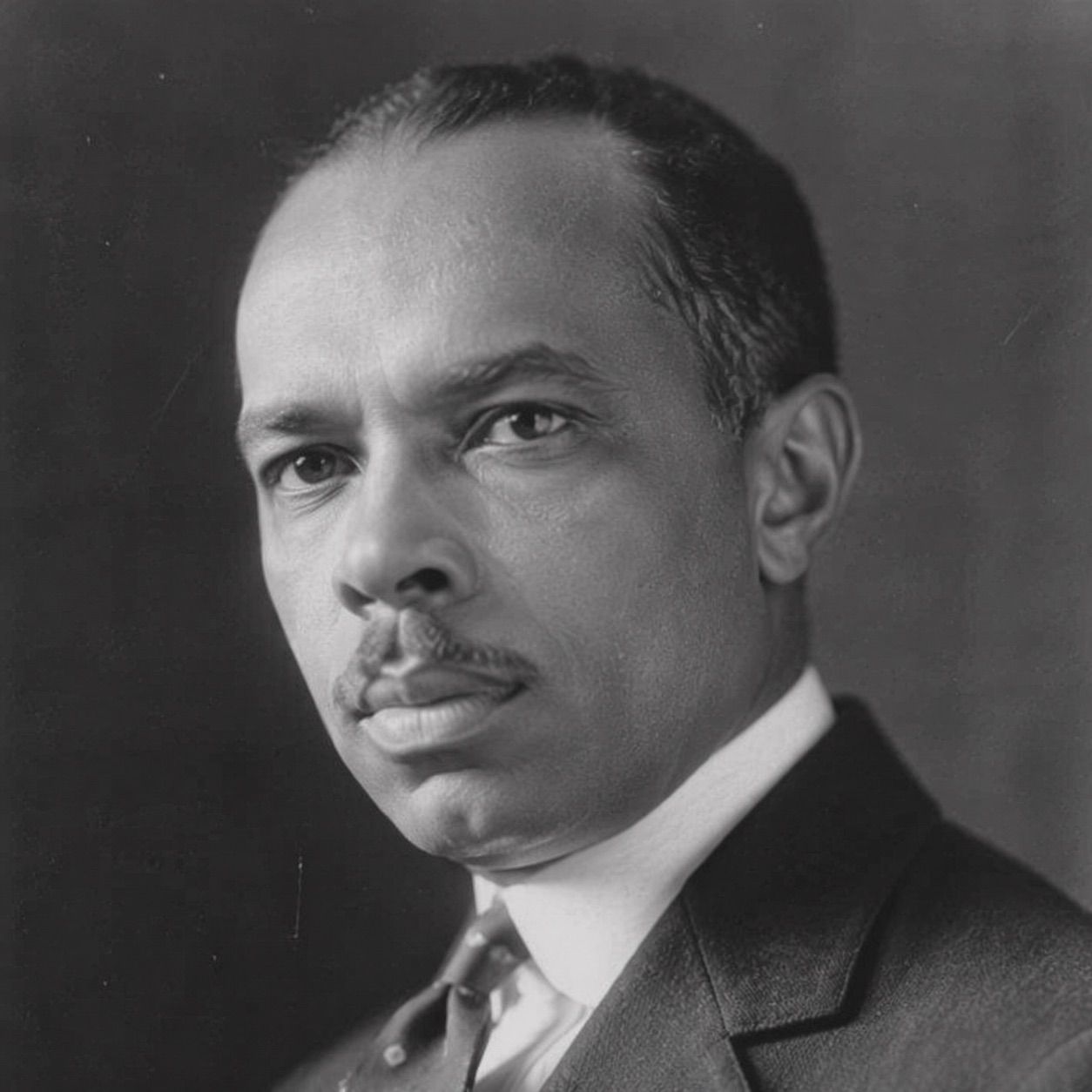
James Weldon Johnson has been on my mind a lot lately, and I’m not entirely sure why. Maybe it’s because I recently graduated from college with a degree in English, and his name kept popping up in my coursework. Or maybe it’s because I’ve always been drawn to the complex intersections of art and social justice that he embodied.
One thing is for sure: every time I read Johnson’s poetry or essays, I feel like I’m getting a glimpse into a world that’s both familiar and foreign. As an African American writer living in the early 20th century, he navigated a reality where racism was rampant and opportunities were scarce. And yet, despite these challenges, he continued to create – to write, to paint, to perform – with a sense of purpose and passion that’s inspiring.
What I find most compelling about Johnson is his tension between idealism and pragmatism. On the one hand, he was a true believer in the power of art to change the world. He saw himself as a social commentator, using his writing to expose the injustices of racism and advocate for civil rights. And yet, on the other hand, he was also deeply aware of the limitations of this approach – the ways in which speaking out could put him (and others) in danger.
I think about my own relationship with activism, and how often I’ve struggled with a similar tension. As a young person from a relatively privileged background, I’ve had access to resources and opportunities that many others don’t. And yet, when it comes time to take a stand or use my voice, I often feel hesitant – unsure of what I can really accomplish, or whether speaking out will even make a difference.
Johnson’s story has been a balm to me in these moments of uncertainty. His determination to create and advocate, despite the risks and challenges he faced, is a powerful reminder that individual action can add up over time. But it’s also his willingness to adapt and evolve – to adjust his approach as circumstances change – that I find most admirable.
One aspect of Johnson’s life that I’ve been grappling with lately is his work in the Harlem Renaissance. As a major figure in this movement, he played a key role in shaping the cultural and artistic landscape of African America during the 1920s and ’30s. And yet, as I read about his involvement in organizations like the NAACP and the Urban League, I’m struck by the ways in which these institutions often prioritized middle-class black progress over more radical forms of social change.
I’m not sure what to make of this – whether Johnson’s work was ultimately empowering or limiting for those he sought to uplift. Part of me wants to celebrate his efforts as a pioneering figure in African American arts and activism, while another part of me worries about the potential costs of his involvement with more conservative organizations.
As I think about these complexities, I’m reminded of my own experiences working on campus for social justice causes. Like Johnson, I’ve often found myself caught between competing visions of change – between radical action and incremental progress. And like him, I’ve struggled to navigate the tensions between idealism and pragmatism in my own work.
It’s funny – when I first started reading about James Weldon Johnson, I thought I was mainly interested in his art and activism as historical phenomena. But the more I learn about him, the more I realize that our stories are intertwined in ways I never could have anticipated. His tensions and contradictions – between idealism and pragmatism, between creativity and constraint – are reflections of my own struggles to make a difference in the world.
I’m not sure what this says about me or Johnson’s legacy – only that as I continue to grapple with these complexities, his story will remain on my mind, a reminder of the ongoing conversations we’re having (or trying to have) about art, activism, and social change.
As I delve deeper into Johnson’s life and work, I find myself returning to this theme of tension – between idealism and pragmatism, between creative expression and social constraint. It’s as if he’s holding up a mirror to my own experiences as a young person trying to make a difference in the world.
I think about the times when I’ve felt like I’m walking a tightrope, unsure whether my words or actions will be enough to bring about change. Will speaking out against injustice be met with silence and indifference, or will it spark meaningful conversation and action? It’s a risk that Johnson faced every day as an African American writer in the early 20th century, and one that I can only imagine being exponentially more daunting.
And yet, despite these risks, Johnson continued to create – to write, to paint, to perform. His work was not just a reflection of his own experiences, but also a testament to the power of art to transcend the boundaries of time and circumstance. It’s this quality that I find so compelling about his legacy: the way he was able to distill complex emotions and ideas into something beautiful and meaningful.
But as I explore Johnson’s work in more depth, I’m starting to see the ways in which even his most seemingly radical works were tempered by a pragmatic awareness of their potential impact. His poetry, for example, often grapples with themes of identity and belonging – but it does so in a way that is at once both personal and accessible.
This raises questions about the role of art as social commentary. Is it possible to create work that is both critically engaged and widely relatable? And what happens when an artist’s message becomes mired in the very constraints they’re trying to critique?
For Johnson, these tensions played out in his involvement with organizations like the NAACP and the Urban League. While he was a key figure in shaping the cultural landscape of African America during the Harlem Renaissance, I’m starting to see the ways in which his work may have been constrained by the very institutions he sought to influence.
It’s this paradox that’s stuck with me – the tension between idealism and pragmatism, between creative expression and social constraint. As someone who is still trying to find their place in the world, I’m drawn to Johnson’s story as a reminder of the ongoing conversations we’re having about art, activism, and social change.
But what does it mean to navigate these tensions in my own life? How can I balance my desire for creative expression with the need to be socially responsible? And what does it say about me that I’m drawn to Johnson’s story – a man who was both a pioneering figure in African American arts and activism, and yet also caught up in the complexities of his time?
These are questions that I don’t have answers to – at least, not yet. But as I continue to explore James Weldon Johnson’s life and work, I’m starting to see the ways in which our stories are intertwined – and the ways in which his tensions and contradictions will continue to haunt me for years to come.
As I delve deeper into Johnson’s legacy, I find myself returning to these questions again and again. What does it mean to be a socially responsible artist? How can we balance our desire for creative expression with the need to engage with the world around us? And what does it say about us when we’re drawn to stories like Johnson’s – stories that are both inspiring and complicated, full of contradictions and paradoxes?
I think about my own writing, and how often I’ve struggled with these same questions. As a writer, I feel a deep sense of responsibility to use my words in a way that matters – to create work that resonates with others, and sparks meaningful conversation and action. But at the same time, I know that there are no easy answers, no straightforward solutions to the complex problems we face.
Johnson’s story has been a balm to me in these moments of uncertainty, but it’s also made me realize just how much more complicated my own relationship with activism is than I thought. As someone who comes from a relatively privileged background, I’ve always tried to be mindful of my positionality – to recognize the ways in which my privilege can impact my ability to create meaningful change.
But Johnson’s story has also made me see that even those of us who are well-intentioned and well-educated can still get things wrong. We can still perpetuate systems of oppression, or ignore the needs of others because it’s easier or more convenient. And it’s this awareness – this knowledge that we’re all capable of making mistakes, and that our best intentions can still go awry – that I find both humbling and liberating.
As I continue to explore Johnson’s legacy, I’m starting to see the ways in which his story is not just a historical artifact, but a living, breathing part of our ongoing conversations about art, activism, and social change. It’s a reminder that we’re all part of a larger narrative – one that is constantly evolving, and always open to new perspectives and experiences.
And it’s this sense of connection – this feeling that my own story is intertwined with Johnson’s, and that together we’re part of something much bigger than ourselves – that I find most compelling about his legacy. It’s a reminder that even in the midst of uncertainty and doubt, there is always room for growth, always space to learn and adapt and evolve.
As I look back on my own experiences as a young person trying to make a difference in the world, I realize that Johnson’s story has been a constant presence – a reminder that I’m not alone in my struggles, and that even the most seemingly insurmountable challenges can be overcome through creativity, determination, and a willingness to learn.
One of the things that strikes me about James Weldon Johnson is his ability to hold multiple perspectives at once. He was a poet, a novelist, a diplomat, and an activist – each of these roles informed and intersected with the others in complex ways. And yet, he never seemed to let his different identities get in the way of his art or his politics.
As someone who’s still figuring out their own identity and place in the world, I find this quality both inspiring and intimidating. Can I hold multiple perspectives at once, or do I tend to see things in binary terms? Am I more of a poet or a politician – or can I be both?
I think about my own experiences with activism on campus. Sometimes I feel like I’m caught between different factions or ideologies – between those who want to focus on policy changes and those who want to prioritize radical action. And sometimes it feels like I have to choose between being a “good” student and being a “good” activist.
But Johnson’s story shows me that this doesn’t have to be the case. He was able to navigate multiple worlds and identities without compromising his artistic vision or his commitment to social justice. And in doing so, he created works of art that continue to resonate with people today.
As I reflect on my own creative process, I realize that I often feel like I’m trying to choose between different modes of expression – between the “high” art of poetry and the more practical, everyday concerns of activism. But Johnson’s legacy reminds me that these modes are not mutually exclusive – that they can intersect and inform each other in powerful ways.
I think about his poem “The Creation,” which is a masterful blend of biblical imagery and African American experience. It’s a work of art that is both deeply personal and universally relatable – a testament to Johnson’s ability to tap into the collective unconscious while remaining rooted in his own unique perspective.
As I continue to explore Johnson’s legacy, I’m starting to see the ways in which his story can inform my own creative process. I’m learning to be more bold, more experimental, and more willing to take risks in my art. And I’m also learning to be more aware of my own privilege and positionality – to recognize how my experiences and perspectives shape my work, and to seek out diverse voices and perspectives to challenge and enrich it.
It’s a journey that’s not without its challenges and uncertainties. But as I navigate the complexities of Johnson’s legacy, I’m starting to see that it’s okay to be messy, to be conflicted, and to be uncertain. In fact, it’s often in these moments of uncertainty that we create our most profound works of art – works that are capable of speaking to people across time and circumstance.
As I look to the future, I know that I’ll continue to grapple with the tensions between idealism and pragmatism, between creative expression and social constraint. But I’m also excited to explore these contradictions in new and innovative ways – to see where they take me, and what kind of art and activism emerge from this process.
For now, I’m content to follow Johnson’s example – to be a writer, an artist, and an activist who is willing to experiment, to take risks, and to push the boundaries of what’s possible. It’s a path that’s not without its challenges, but it’s one that feels authentic and true to me – and it’s one that I’m eager to continue exploring in the years to come.