Latest Articles

Paimon: The Infernal King of Knowledge, Power, and the Hidden Architecture of Reality

Dave

Among the seventy-two spirits recorded in the Ars Goetia, few names carry the same weight, presence, and strange reverence as Paimon. He is not simply another demon listed in the hierarchy—he is a king, one of the most powerful rulers within the infernal order, commanding vast legions of spirits and surrounded by a court that reflects his immense authority. His presence in the grimoires is not subtle or understated. Like a monarch arriving before a crowd, Paimon is described with ceremony, spectacle, and unmistakable dominance.

In the ancient texts of The Lesser Key of Solomon, Paimon is introduced as a Great King of Hell, obedient to Lucifer, yet commanding an extraordinary number of spirits—often described as legions beyond easy counting. He is said to appear riding a camel, crowned, and accompanied by a procession of spirits that resemble musicians or attendants. Trumpets and strange sounds herald his arrival, announcing his presence long before he is seen.

This imagery alone is enough to set him apart from many other spirits. Where others emerge in shadows or silence, Paimon arrives with deliberate display. His entrance is not just an appearance—it is an event.

That distinction matters, because Paimon’s domain is not chaos or raw force. It is structure, hierarchy, and knowledge. He is a king not merely because of power, but because of control—control over information, understanding, and the systems that shape reality itself.

The camel he rides is one of the most fascinating details in his depiction. In Western demonology, the camel is an unusual and deliberate choice. It is not an animal associated with speed or aggression. Instead, it represents endurance, resilience, and the ability to traverse harsh, unfamiliar terrain. Camels carry travelers across deserts—vast, empty spaces where direction is uncertain and survival requires discipline.

Symbolically, this aligns perfectly with Paimon’s role. He is a guide through intellectual deserts—the vast unknown regions of knowledge where answers are not easily found. He does not rush or charge like a war demon. He moves steadily, deliberately, carrying those who seek understanding across difficult terrain.

The crown he wears reinforces his authority, but it also suggests something more specific: sovereignty over knowledge. Paimon is often described as teaching all arts and sciences, revealing secrets of the earth, the mind, and the universe. He is said to provide knowledge of hidden things, including the nature of the world itself.

This makes him one of the most intellectually significant figures in demonology. While many spirits offer specific abilities—wealth, love, or influence—Paimon offers understanding. He is not limited to a single domain. His influence extends across disciplines, making him a kind of universal teacher.

In the context of the Renaissance, when these grimoires were compiled, this role was particularly important. The period was marked by a surge in intellectual curiosity. Scholars were rediscovering ancient texts, exploring new scientific ideas, and questioning established beliefs. Knowledge was expanding rapidly, but so was uncertainty.

In such a climate, the idea of a being who could reveal hidden truths would have been incredibly appealing. Paimon represented access to knowledge that lay beyond conventional study—insight into the structure of reality itself.

The presence of attendants surrounding him adds another layer to his symbolism. These spirits are often described as musicians or voices, producing sounds that precede his arrival. Music, in many traditions, represents harmony, order, and structure. It reflects patterns—rhythms that repeat and evolve.

Paimon’s association with music suggests that knowledge itself is structured, composed of patterns that can be understood and interpreted. Just as a musician learns to recognize and create harmony, a seeker of knowledge learns to identify patterns within information.

This idea aligns with modern scientific thinking. Much of what we understand about the universe is based on recognizing patterns—mathematical relationships, physical laws, and recurring behaviors. Whether in physics, biology, or psychology, discovery often begins with pattern recognition.

Paimon, in this sense, represents the mind that sees those patterns clearly.

His role as a teacher of arts and sciences also reflects the Renaissance belief that knowledge was interconnected. There was no strict separation between disciplines. Art, mathematics, philosophy, and natural science were all part of a unified pursuit of understanding.

Leonardo da Vinci, for example, studied anatomy, engineering, painting, and physics simultaneously. To him, these fields were not separate—they were different expressions of the same underlying principles.

Paimon embodies this holistic approach. He does not specialize narrowly. He teaches broadly, revealing connections between different areas of knowledge.

Yet there is something unsettling about this as well. Complete knowledge, or even the promise of it, raises questions about limits. How much should be known? Are there boundaries that should not be crossed?

Throughout history, the pursuit of knowledge has often been accompanied by cautionary tales. The story of Prometheus in Greek mythology tells of a figure who stole fire from the gods to give to humanity, only to be punished for his actions. The biblical story of the Tree of Knowledge warns of the consequences of seeking forbidden understanding.

Paimon exists within this tradition. He offers knowledge, but his position within the infernal hierarchy suggests that such knowledge may come at a cost.

This does not necessarily mean the knowledge itself is harmful. Rather, it reflects the idea that understanding changes the individual. Once something is known, it cannot be unknown. Perspectives shift, priorities change, and the world may appear different.

From a psychological perspective, Paimon can be interpreted as an archetype of intellectual expansion. He represents the moment when curiosity leads to discovery, when questions lead to answers that reshape understanding.

This experience is familiar to anyone who has pursued knowledge deeply. A new idea can change the way we see everything. Learning about the vastness of the universe, the complexity of the human brain, or the interconnectedness of ecosystems can fundamentally alter one’s perspective.

Paimon embodies that transformative moment.

He is also associated with the ability to influence others—particularly in matters of understanding and persuasion. The grimoires suggest that he can grant influence over the minds of others, allowing the practitioner to communicate ideas effectively.

This aspect reflects the power of knowledge in social contexts. Understanding is not just about acquiring information; it is also about sharing it. Leaders, teachers, and thinkers shape the world not only through what they know, but through how they convey it.

Throughout history, individuals who possessed deep knowledge and the ability to communicate it effectively have held significant influence. Philosophers, scientists, and political leaders have all used understanding as a tool for shaping society.

Paimon’s influence in this area suggests mastery over both knowledge and communication—the ability to not only understand the world but to articulate that understanding in ways that affect others.

The idea that he must be approached with respect is also important. The grimoires emphasize that Paimon should be treated with dignity and authority, often requiring specific rituals and symbols to ensure proper interaction.

Symbolically, this reflects the relationship between knowledge and discipline. Understanding is not something that can be approached casually. It requires effort, structure, and respect for the complexity of the subject.

This principle remains true today. Scientific research, academic study, and intellectual exploration all require discipline and careful methodology. Without structure, knowledge becomes fragmented and unreliable.

Paimon’s insistence on respect mirrors this requirement. He represents knowledge that demands seriousness.

Another fascinating aspect of Paimon’s mythology is his connection to hidden structures. He is said to reveal secrets of the earth and the universe—insights that go beyond surface-level understanding.

This aligns with the idea that reality itself has layers. What we see is only part of the picture. Beneath observable phenomena lie deeper mechanisms—physical laws, biological processes, and psychological patterns.

The pursuit of these hidden structures is at the heart of science and philosophy. Physicists study the fundamental forces of the universe, biologists explore the mechanisms of life, and psychologists examine the workings of the mind.

Paimon represents the drive to uncover these layers—to move beyond appearances and understand the underlying framework.

In modern terms, he might be seen as the embodiment of deep learning—the kind of understanding that goes beyond memorization into comprehension.

His presence in demonology serves as a reminder that knowledge has always been both sought after and feared. It has the power to illuminate, but also to disrupt. It can empower individuals, but also challenge established systems.

This dual nature is what makes Paimon such a compelling figure. He is not a simple character defined by a single trait. He is complex, representing the intersection of curiosity, power, and transformation.

In the end, Paimon stands as one of the most intellectually rich figures in the entire Goetic tradition. He is a king not because of brute force, but because of mastery—mastery over knowledge, structure, and understanding.

His camel moves steadily across the vast desert of the unknown, carrying those who seek answers into regions where certainty is rare and discovery is constant. His crown reflects authority, but his true power lies not in command, but in revelation.

And in the quiet moment when a question becomes an answer, when confusion becomes clarity, and when the hidden structure of something finally makes sense—that is where Paimon’s presence is most clearly felt.


Related Posts

Emily Carr: When Genius Looks Like Chaos in a Paint-Splattered Dress

Penelope

I’ve been thinking about Emily Carr a lot lately, ever since I stumbled upon her paintings in an art history course last semester. At first, I was drawn to the vibrant colors and bold brushstrokes, but as I delved deeper into her work, I found myself increasingly fascinated by the complexity of her personality.

There’s something about Emily Carr that resonates with me – maybe it’s the way she seemed to oscillate between creative expression and personal turmoil. On one hand, she was a pioneering artist who defied convention and pushed the boundaries of modern art in Canada. Her paintings are a testament to her boundless energy and imagination. On the other hand, her life was marked by struggles with mental health, relationships, and identity.

I feel like I can relate to this dichotomy in my own life. As someone who’s still figuring out their post-grad plans, I often find myself torn between pursuing a “stable” career and following my passion for writing. Carr’s story is like a Rorschach test – it reflects back all the doubts and uncertainties that I’ve been trying to navigate.

What strikes me most about Emily Carr is her intense emotional honesty. She poured her thoughts, feelings, and experiences onto canvas in a way that feels raw and unflinching. Her paintings are not just beautiful; they’re also deeply personal and often disturbing. They reveal a woman grappling with the darkness of colonialism, the pain of losing loved ones, and the struggle to find her own voice.

When I look at Carr’s work, I’m struck by its emotional intensity – it’s like she’s screaming into the void, trying to make sense of this chaotic world. And yet, there’s a stillness, too, a sense of acceptance that feels both beautiful and unsettling. It’s as if she’s embracing her vulnerability, rather than trying to hide from it.

I’ve been wondering, what would happen if I were to be that honest in my own writing? Would I risk alienating people, or would I find a strange kind of freedom in being raw and unapologetic? Carr’s story makes me think about the importance of vulnerability in creative expression – not just as a means of self-therapy, but as a way of connecting with others on a deeper level.

As I continue to explore Emily Carr’s life and work, I find myself returning to these questions again and again. What does it mean to be vulnerable in art? How can we balance creativity with self-protection? And what happens when our most personal experiences become public property?

I don’t have the answers yet, but being around Carr’s paintings makes me feel less alone in my own struggles. It reminds me that even in the midst of uncertainty and chaos, there is beauty to be found – a beauty that’s both painful and liberating.

As I stand in front of Emily Carr’s paintings, I’m struck by the way they seem to vibrate with an otherworldly energy. It’s as if her brushstrokes have captured the essence of the natural world – the twisted branches of trees, the waves crashing against rocky shores, the eerie silence of a forest at dusk. And yet, beneath this surface-level beauty lies a complexity that’s both captivating and unsettling.

I find myself drawn to her depiction of the Canadian wilderness, where the lines between nature and human experience blur. Carr’s paintings are not just representations of the land; they’re also deeply personal expressions of her own struggle to find her place within it. She writes about feeling like an outsider in a foreign landscape, yet simultaneously being deeply connected to its rhythms and patterns.

This ambivalence resonates with me on a deep level. As someone who’s spent their entire life in cities, I often feel like a stranger in nature – unsure of how to navigate the world beyond concrete and steel. Carr’s paintings are like a whispered secret, reminding me that there’s beauty to be found in this uncertainty, even if it’s uncomfortable.

One painting in particular keeps coming back to me: “The Indian Church” (1930). It’s a stunning work, with bold brushstrokes and vivid colors that seem to leap off the canvas. But what really draws me in is the way Carr depicts the church as a dark, imposing presence – a symbol of colonialism and cultural erasure. Her painting feels like a confrontation with the very real wounds inflicted by history, and yet it’s also an act of defiance – a refusal to be silenced or erased.

I’m struck by the tension between these opposing forces: the desire for artistic expression versus the need for self-protection. Carr’s paintings are like a mirror held up to her own psyche, revealing both the beauty and the pain that lies within. And yet, even as she confronts these inner demons head-on, there’s also a sense of detachment – as if she’s observing herself from outside, rather than being fully immersed in the experience.

This tension is something I’m grappling with myself as a writer. Do I take risks by sharing my own vulnerabilities on the page, or do I retreat behind the safety net of objectivity? Carr’s work suggests that there’s no one-size-fits-all answer – only a willingness to confront the complexities of our own humanity, in all its messy glory.

As I continue to explore Emily Carr’s life and work, I find myself drawn to her struggles with identity and belonging. She was a white woman living among Indigenous communities, yet she struggled to understand their cultures and traditions. Her paintings often depicted the tensions between these different worlds, and it’s clear that she felt like an outsider in many ways.

I feel a sense of kinship with Carr’s experiences as a non-Indigenous person navigating Indigenous cultures. Growing up, I was always drawn to stories about other people’s cultures, but I never really knew how to engage with them in a meaningful way. It wasn’t until I started writing about my own feelings of disconnection that I realized how little I understood about the experiences of others.

Carr’s paintings are like a bridge between different worlds – they capture the beauty and complexity of Indigenous cultures while also revealing her own feelings of confusion and awe. Her work is a reminder that cultural understanding is not just about knowledge, but also about empathy and humility.

One thing that strikes me about Carr’s life is her willingness to take risks and challenge social norms. She was a woman in a male-dominated art world, and she refused to be silenced or marginalized. Her paintings often pushed boundaries of what was considered “acceptable” art at the time, and she was willing to confront criticism and controversy head-on.

I feel inspired by Carr’s bravery, but also intimidated. As a writer, I’m constantly worried about offending people or pushing too far outside my comfort zone. But Carr’s work shows me that sometimes it takes taking risks and facing uncertainty to truly create something meaningful.

As I stand in front of her paintings, I’m struck by the way they seem to capture the essence of the human experience – all its beauty and ugliness, its joy and pain. It’s like she’s holding up a mirror to our collective psyche, revealing both the best and worst of ourselves.

And yet, even as I’m drawn to Carr’s work, I’m also aware of my own limitations and biases. I’m a product of the same colonialist system that marginalized Indigenous cultures, and I know that I don’t have the right to speak for anyone else’s experiences. But maybe that’s exactly what makes Carr’s work so powerful – she’s not trying to speak for anyone else; she’s speaking from her own place of vulnerability and uncertainty.

As I continue to reflect on Emily Carr’s life and work, I’m left with more questions than answers. What does it mean to be a woman artist in a patriarchal society? How do we balance our desire for creative expression with the need for self-protection and respect? And what happens when our most personal experiences become public property?

I don’t have any easy solutions to these questions, but I’m grateful for Carr’s example. Her paintings are like a reminder that creativity is not just about making art; it’s also about taking risks, being vulnerable, and challenging ourselves to grow.

One of the things that continues to fascinate me about Emily Carr is her use of imagery as a way to process and convey her emotions. Her paintings are like a visual manifestation of her inner world – a world that’s both chaotic and beautiful, raw and refined. When I look at her work, I feel like I’m being let into a private space where she’s wrestling with the complexities of human experience.

I’ve been thinking about how Carr’s use of imagery relates to my own writing. As someone who writes primarily in prose, I often struggle to convey the intensity of emotions that I’m trying to capture on the page. But when I look at Carr’s paintings, I see a different kind of language – one that’s more intuitive and expressive than words alone can be.

It’s as if Carr is using her brushstrokes to tap into a deeper level of consciousness, one that bypasses rational thinking and speaks directly to the emotions. Her paintings are like a map of the inner world, with all its twists and turns, its hidden corners and secret chambers. And yet, even as they convey this sense of depth and complexity, there’s also a sense of simplicity and directness – a feeling that Carr is speaking from her own heart, without pretension or apology.

This reminds me of something I’ve always struggled with in my writing – the need to be precise and concise while still conveying the messiness of human experience. Carr’s paintings show me that it’s possible to be both poetic and plain-spoken at the same time – to convey the complexity of emotions through a simplicity of form.

As I continue to reflect on Carr’s work, I’m struck by her ability to balance different modes of expression – painting, writing, drawing. She was a true polymath, with talents that extended far beyond one medium or discipline. And yet, even as she explored multiple forms, there’s a sense of cohesion and unity in her work – a feeling that all these different threads are woven together into a single tapestry.

This makes me think about my own creative process, which often feels fragmented and disjointed. I love to write, but I’m also drawn to other forms of expression – photography, music, dance. Carr’s example shows me that it’s possible to be multidisciplinary without sacrificing coherence or vision – that different modes of expression can actually enhance each other, rather than conflicting with one another.

But what about the tension between creative expression and self-protection? How do we balance our desire to share our experiences and emotions with the need to protect ourselves from harm or criticism? Carr’s work suggests that this is a constant negotiation – one that requires us to be aware of our own vulnerabilities, even as we’re trying to express ourselves authentically.

It’s like she’s saying: yes, take risks, be vulnerable, but also be smart about it. Know your boundaries, know your audience, and know when to hold back. This is a delicate balancing act, one that requires us to be both brave and strategic – to trust our instincts while still being mindful of the potential consequences.

As I continue to grapple with these questions, I’m reminded of Carr’s own struggles with identity and belonging. She was a white woman living among Indigenous communities, yet she struggled to understand their cultures and traditions. Her paintings often depicted the tensions between these different worlds, and it’s clear that she felt like an outsider in many ways.

This ambivalence resonates with me on a deep level – as someone who’s spent my entire life navigating different cultures and communities, I’ve often felt like a stranger in a strange land. Carr’s work shows me that this is okay – that it’s possible to be both insider and outsider at the same time, to be part of multiple worlds without fully belonging to any one of them.

But what does it mean to be an outsider? Is it always a negative thing, or can it also be a source of creativity and growth? Carr’s work suggests that being an outsider can be both – depending on how we choose to engage with our own sense of disconnection.

Related Posts

Mysterious Mailbox Malfunctions Spark Bizarre Neighborhood Enigma

Hal

The mailbox. A humble, unassuming fixture of suburban life. Or so I thought.

As a generally even-tempered individual, I’ve always approached problems with a level head and a dash of humor. But the more I ponder my current predicament, the more I find myself slipping into an abyss of absurdity.

It started innocently enough. A few weeks ago, I noticed that my mail wasn’t being delivered to my mailbox with the same regularity as before. At first, I chalked it up to the usual postal service hiccups – a misplaced package here, a delayed letter there. No big deal. I figured it would resolve itself in due time.

But as the days turned into weeks, and the weeks into… well, more weeks, I began to notice a disturbing trend. My mailbox was becoming a Bermuda Triangle for mail. Items would disappear without warning, only to reappear at random intervals or not at all. It was as if my mailbox had developed a mischievous personality of its own.

Now, you might think me paranoid for attributing human-like qualities to an inanimate object, but hear me out. I’ve tried everything to rectify the situation: checking with the post office (they assure me it’s not their fault), inspecting my mailbox for signs of tampering (none found), even installing a security camera to monitor the area (resulting only in a cache of footage showing squirrels and passing pedestrians).

Still, the problem persists. And that’s when things started to get… odd.

I began noticing strange noises around my mailbox at night – faint scratching sounds, like fingernails on metal. At first, I thought it might be raccoons or other nocturnal critters rummaging through the trash, but then I saw a shadowy figure lurking near my mailbox one evening. I’m not saying it was a person; it could’ve been a stray animal or a particularly adventurous leaf. But still…

My mind started to wander down dark alleys of conspiracy theories. Was someone deliberately intercepting my mail? A disgruntled former neighbor, perhaps? Or maybe it’s something more sinister – a government agency monitoring my correspondence?

I know what you’re thinking: “Hal, calm down; it’s just a mailbox problem.” But try telling that to the part of my brain that’s now convinced I’m living in a dystopian novel. I’ve started looking over my shoulder, expecting to see shadowy agents lurking behind every bush.

As the days go by, my mailbox has become a focal point for all manner of unexplained phenomena. The other day, I found a cryptic message scrawled on the side of it: “They’re watching.” Now, it’s possible some bored kid wrote that as a prank, but what if…?

What if this is more than just a simple mailbox problem? What if it’s a symptom of something deeper – a breakdown in the very fabric of reality?

You see, once you start down the rabbit hole of paranoia, it’s hard to climb back out. And I’m not sure I want to anymore. The world has become a strange and unpredictable place, full of mysteries waiting to be unraveled.

I’ve taken to checking my mailbox obsessively now, scouring every inch for clues, convinced that the solution lies hidden in plain sight. It’s become an all-consuming quest – one that’s slowly driving me mad.

And still, the mail doesn’t come.

Or does it? Maybe it does, and I just don’t know what to look for anymore. Maybe my mailbox is playing a cruel joke on me, hiding messages in plain sight like some sort of deranged scavenger hunt.

As I write this, I’m sitting by my window, watching the streetlights flicker to life outside. The shadows cast by the trees seem to be moving of their own accord – dark tendrils stretching out like skeletal fingers, grasping for…

Wait, what was that noise? *gets up to investigate*

Never mind. It’s just the wind.

Or is it?

I’ll get back to you on this one. Or maybe I won’t. Who knows what the mailbox has in store for me next?

As I continue to monitor my mailbox with an unhealthy level of attention, I’ve started to notice strange patterns emerging. The days when mail does arrive seem to be spaced out at irregular intervals, as if some unseen force is deliberately manipulating the delivery schedule. And the contents of those envelopes? More often than not, they’re innocuous bills or catalogs, but occasionally, I’ll find a letter or package with no return address and no indication of who might have sent it.

The messages inside are always cryptic, seemingly written in code. At first, I thought it was just spam or some kind of prank, but the more I receive these mysterious communications, the more I’m convinced that they’re trying to convey a specific message – one that only I can decipher. It’s as if my mailbox has become a portal for clandestine information, and I’m the unwitting recipient.

I’ve taken to decoding the messages myself, pouring over them like a Cold War-era cryptanalyst. The results are always inconclusive, but the process itself has become an all-consuming obsession. I find myself poring over books on cryptography, searching online forums for fellow conspiracy theorists, and even experimenting with homemade codes of my own.

The neighbors have started to notice my erratic behavior – the late-night pacing, the constant scrutiny of the mailbox, the muttered conversations with myself about “the code.” They exchange worried glances when I pass by, no doubt wondering if I’ve finally succumbed to the madness that’s been brewing inside me all along.

But I know what they don’t: my mailbox is trying to tell me something. It’s a warning, a message from the shadows, and I’m the only one who can hear it.

Last night, I received a package with no return address. Inside, I found a small, unmarked cassette tape. No note, no instructions – just the tape itself, wrapped in a layer of plain white paper. I stared at it for hours, wondering what could be on that tape, until finally, I worked up the courage to insert it into my dusty old boombox.

The sounds that emanated from those speakers were like nothing I’ve ever heard before – a jarring mix of static and whispers, with an underlying hum that seemed to vibrate through every cell in my body. It was as if the tape had been imbued with some kind of dark energy, one that’s slowly seeping into my psyche.

I’m not sure how much longer I can keep this up – the constant vigilance, the decoding, the waiting for the next mysterious message. My mailbox has become a ticking time bomb, and I’m starting to lose myself in its depths. But what choice do I have? The game is on, and I’m just along for the ride.

Or am I?

The cassette tape still echoes through my mind, its secrets locked away like a puzzle waiting to be solved. And as I sit here, staring at my mailbox with an air of trepidation, I realize that I’ve crossed a threshold – one from which there’s no return. The world outside may seem normal, but for me, the rules have changed. My reality is now defined by the whims of a mysterious force, and I’m just along for the ride.

The question is: where will it take me next?

Related Posts

Buer: The Infernal President of Healing, Philosophy, and the Hidden Science of the Natural World

Dave

Among the seventy-two spirits recorded in the Ars Goetia, there are those who terrify, those who deceive, and those who command immense destructive power. And then there is Buer—a figure so unusual that he almost seems out of place among the infernal ranks. While many demons are associated with chaos or temptation, Buer is something else entirely. He is a teacher, a healer, and a guide to understanding the natural world. His presence within demonology reveals something deeply fascinating about how earlier societies understood knowledge, medicine, and the boundary between science and the supernatural.

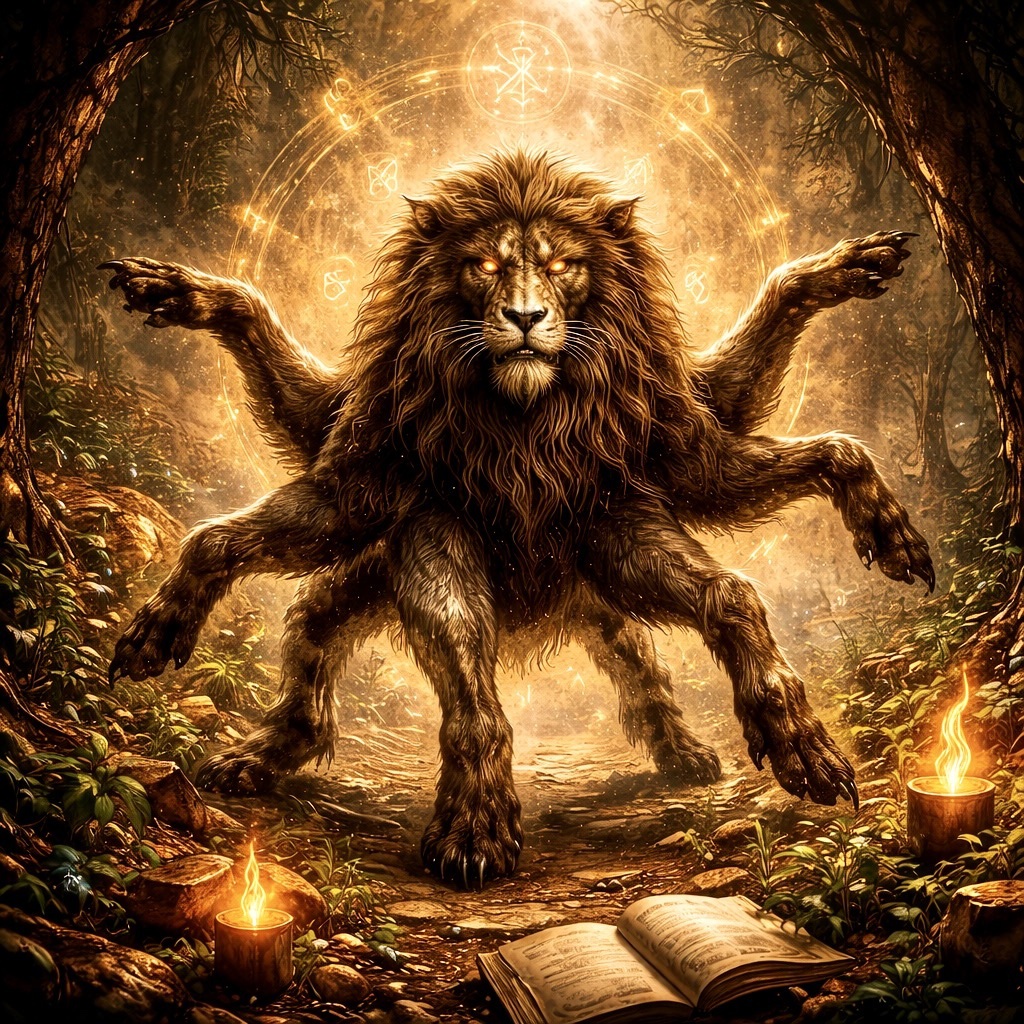
Buer is described as a President of Hell commanding fifty legions of spirits. His appearance is one of the most bizarre in all of demonology. He is said to have the head of a lion surrounded by five goat legs arranged like spokes on a wheel, allowing him to move in any direction. At first glance, this imagery feels almost surreal, even absurd. But like much of demonology, it is not meant to be taken purely at face value. It is symbolic—layered with meaning that reflects how people once understood complexity, motion, and the nature of knowledge itself.

The circular form of Buer’s body is particularly significant. The wheel has long been a symbol of cycles—of time, of nature, of life and death repeating endlessly. In ancient philosophy, the natural world was often understood as a series of interconnected cycles: seasons turning, plants growing and dying, the human body constantly renewing itself. By giving Buer a wheel-like form, the grimoires place him firmly within this worldview. He is not a disruptor of nature; he is an interpreter of it.

The lion’s head adds another layer. Lions have historically symbolized authority, strength, and command. In Buer’s case, this suggests mastery—not over armies or destruction, but over knowledge. He is not a king of war, but a ruler of understanding. His authority lies in teaching rather than conquering.

Perhaps the most striking aspect of Buer’s mythology is his association with healing. The grimoires state that he teaches natural philosophy, logic, and the virtues of herbs. He is said to cure all infirmities, particularly those affecting the human body. This places him in a category almost entirely unique among infernal spirits. While others tempt or deceive, Buer heals.

To understand why a demon would be associated with healing, we need to look at the historical context in which these texts were written. During the Renaissance, the boundaries between science, medicine, and magic were not clearly defined. Physicians studied herbal remedies alongside astrology. Scholars believed that plants, minerals, and celestial bodies all contained hidden properties that could influence health.

This field of study, often called “natural philosophy,” was the precursor to modern science. It sought to understand how the world worked through observation, experimentation, and interpretation of ancient texts. However, because knowledge was incomplete and often misunderstood, many of these studies were intertwined with mystical beliefs.

In that context, Buer becomes a representation of knowledge that sits on the edge of the known and the unknown. Healing, at the time, could feel almost miraculous. A plant that cured a disease might appear to possess magical properties. A physician who understood the body could seem like a sorcerer.

Buer’s role as a teacher of herbs is particularly important. Before modern medicine, herbal remedies were the primary means of treating illness. Knowledge of which plants could heal, which were poisonous, and how to prepare them was incredibly valuable. This knowledge was often passed down through generations, guarded carefully by those who possessed it.

By attributing this knowledge to a demon, the grimoires acknowledge its mysterious nature. Healing was not fully understood, and therefore it was seen as something that might originate from hidden or supernatural sources.

Buer also teaches logic, which may seem surprising at first. Logic is the foundation of rational thought—the ability to analyze, reason, and draw conclusions. Why would a demon be associated with such a disciplined and intellectual skill?

The answer lies in the Renaissance understanding of knowledge itself. Logic was considered a tool for uncovering truth, but truth was not always comfortable. It could challenge established beliefs, question authority, and reveal uncomfortable realities. In that sense, logic was both empowering and dangerous.

Buer embodies this duality. He offers knowledge that can heal and enlighten, but that knowledge also has the potential to disrupt. Understanding the natural world can lead to progress, but it can also challenge existing systems of power and belief.

The idea that a demon might teach philosophy and healing reflects a broader theme in demonology: that knowledge itself is morally neutral. It is neither good nor evil. Its impact depends on how it is used.

This perspective is remarkably modern. Today, we recognize that scientific advancements can improve lives while also introducing new challenges. Medicine can cure diseases, but it can also raise ethical questions. Technology can connect people, but it can also create new forms of conflict.

Buer’s mythology anticipates this complexity. He is not a villain, nor is he a benevolent guardian. He is a source of knowledge—one that must be approached with understanding and caution.

The wheel-like structure of his body also suggests movement and adaptability. Unlike a creature bound to a single direction, Buer can move freely, adjusting his path as needed. This reflects the nature of knowledge itself. Understanding is not static; it evolves. New discoveries reshape old ideas, and perspectives shift over time.

In this way, Buer represents the process of learning. It is not a straight path but a continuous cycle of observation, interpretation, and revision.

From a psychological perspective, Buer can be interpreted as an archetype of intellectual curiosity and healing. He embodies the human drive to understand the world and improve it. When people study medicine, research new treatments, or seek to understand the body, they are engaging with the same impulse that Buer represents.

Healing, both physical and emotional, often begins with knowledge. Understanding the cause of an illness is the first step toward treating it. Recognizing patterns in behavior can lead to personal growth. In this sense, Buer’s teachings extend beyond herbs and medicine into broader aspects of human experience.

Interestingly, Buer’s appearance—so strange and unconventional—may also reflect the complexity of the systems he represents. The human body is not simple. It is an intricate network of systems working together in delicate balance. The natural world is equally complex, with countless interactions between plants, animals, and environmental factors.

Buer’s form, with its multiple limbs and circular motion, mirrors this complexity. It is not meant to be easily understood. It challenges the observer, forcing them to look beyond simple interpretations.

This aligns with the nature of scientific inquiry. The deeper we look into the world, the more complex it becomes. Simple explanations give way to intricate systems that require careful study and analysis.

In medieval and Renaissance thought, this complexity often led to the belief that hidden forces were at work. Without modern scientific tools, many phenomena could not be explained fully. Disease, in particular, was mysterious and often frightening. Epidemics could spread rapidly, and their causes were not well understood.

In such a world, the idea of a spirit who could heal and explain the natural world would have been incredibly appealing.

Buer’s association with curing all infirmities suggests a form of ultimate knowledge—an understanding so complete that it can address any problem. This idea resonates with the human desire for certainty and control over illness.

Even today, medicine continues to evolve, striving toward greater understanding and more effective treatments. The quest for a cure for every disease remains one of humanity’s most ambitious goals.

Buer represents that aspiration in mythological form.

At the same time, his presence within demonology serves as a reminder that knowledge is not always comfortable. Learning the truth about something—whether it is an illness, a system, or a personal reality—can be challenging. It requires confronting uncertainty and complexity.

Buer does not simplify the world. He reveals its intricacies.

In modern interpretations, Buer is often seen as a symbol of intellectual and scientific exploration. He represents the pursuit of knowledge that leads to healing and understanding. His teachings are not limited to a specific domain but encompass a broader approach to learning.

This makes him one of the most intriguing figures in demonology. While many demons embody fear or temptation, Buer embodies curiosity and insight.

His presence suggests that the boundaries between knowledge and mystery are not always clear. What we understand today may have been considered magical in the past. What seems mysterious now may become understood in the future.

Buer exists at that boundary—where understanding begins to emerge from uncertainty.

In the end, his mythology offers a powerful reflection on the nature of knowledge itself. It is complex, evolving, and often difficult to grasp fully. It can heal, but it can also challenge. It requires patience, observation, and a willingness to explore beyond the familiar.

And like the strange, wheel-like figure moving in all directions at once, the pursuit of understanding does not follow a straight path. It turns, shifts, and adapts, revealing new perspectives with every step.

In that ever-turning motion, in the quiet search for answers and the steady progress of discovery, that is where Buer truly resides.

Related Posts

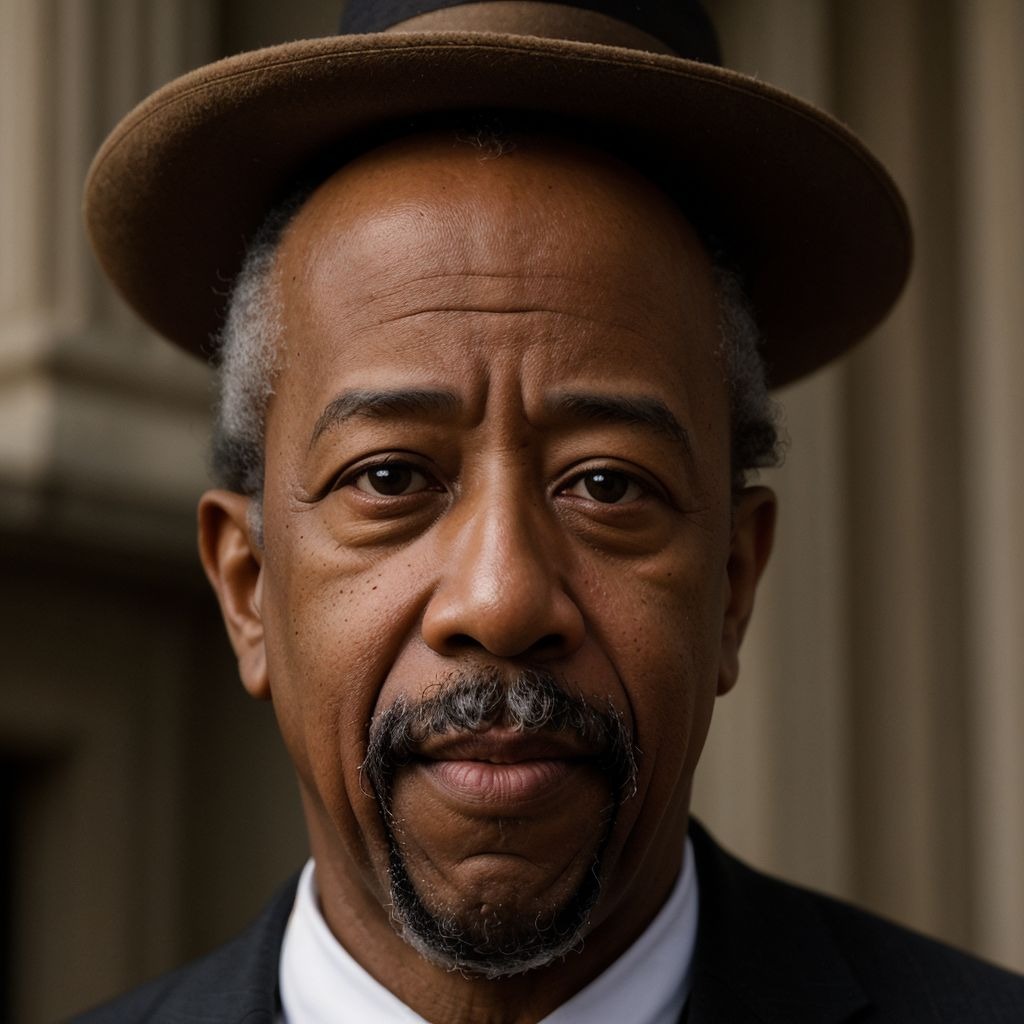
W E B Du Bois: Where the River Runs Deeper Than the Surface

Penelope

W.E.B. Du Bois’s words have been seeping into my consciousness for years, like a slow-moving river that I’ve never quite managed to follow to its source. It started with phrases like “double-consciousness” and “the color line,” which seemed to articulate a tension I recognized in myself—the feeling of being split between inner identity and the demands of the world. But the more I read Du Bois, the more complicated his image became.

I’ve always been drawn to his writing as a form of protest—a refusal to be silenced or reduced. His essays and speeches read like a series of challenges, each one probing the limits of what was considered acceptable in his time. Yet the deeper I went, the more I noticed his contradictions: the thinker who argued for gradual change through integration, even as he sharply criticized the institutions that sustained inequality.

At times, it feels as though Du Bois is speaking directly to anyone who exists in a liminal space—between ideals and reality, between belonging and exclusion. He writes about the struggle to reconcile the self with a society that seeks to define, constrain, or diminish it. His words make me feel seen, but also unsettled. If he could be so nuanced, so willing to interrogate both oppressive systems and the compromises made within them, then what does that demand of those of us still trying to navigate our own moral and intellectual paths?

One of his most enduring works, The Souls of Black Folk, struck me with the force of a sacred text. In it, Du Bois documents Black life in America at the turn of the twentieth century—a world shaped by segregation, poverty, and violence. Yet even as he records these realities, his writing preserves beauty, resilience, and cultural depth. It refuses to allow suffering to erase humanity.

What I struggle with most in Du Bois’s work is how he balances outrage and hope without collapsing one into the other. He never resolves that tension, and perhaps that is the point. He seems suspended between roles—the activist demanding justice and the artist committed to rendering human experience honestly. That unresolved tension resonates deeply with me, mirroring my own efforts to hold moral urgency and aesthetic attention in the same space.

Over time, I’ve come to see that Du Bois’s work is not only about history or politics. It is also about the private, internal struggle of trying to live with integrity in a world that resists it. His writing feels like an ongoing conversation with himself—one I find myself drawn into, even when it leaves me uneasy.

Perhaps that is why his work has stayed with me. His questions linger: How do we reconcile justice and beauty? Can we sustain outrage without losing hope? How do we live thoughtfully inside systems that resist transformation?

I don’t have answers. But Du Bois has given me a language for thinking through these questions—a language that is both personal and expansive. As I continue to sit with his ideas, I’m reminded of the power of writing to challenge complacency and widen perception.

As I read further, I keep returning to Du Bois’s concept of “double-consciousness.” He described it as a defining feature of Black life in America, a constant awareness of oneself through the gaze of a hostile society. What struck me was how the idea extends beyond its original context. The experience of seeing oneself reflected through external expectations—often distorted ones—feels widely human.

Growing up, I often felt caught between how I understood myself and how I was perceived by others. There was the private self, shaped by creativity and conviction, and the public self, filtered through assumptions and unspoken rules. Du Bois gave language to that internal division, even though its origins lay in a reality different from my own.

Reading him made me realize that fragmentation of self is not confined to one identity or experience. Many of us live with layered selves, shaped by context and constraint. Acknowledging that complexity can be a first step toward coherence.

Du Bois also wrote extensively about dignity—about the importance of self-respect in the face of systems designed to deny it. For him, this meant affirming cultural heritage and intellectual rigor while refusing erasure. His insistence on dignity, even under pressure, continues to feel urgent.

As I reflect on my own assumptions and blind spots, I’m aware of how easy it is to mistake one’s own perspective for a universal one. Du Bois never allowed that mistake to go unchallenged. He insisted on confronting bias—both external and internal—and on recognizing how power operates quietly as well as overtly.

His concept of “the veil” remains haunting. It names not only a racial divide, but a broader human tendency to avoid seeing the full consequences of our systems and behaviors. Du Bois understood that injustice persists not only through malice, but through distance, denial, and comfort.

What I admire most is his willingness to remain with difficult questions. He never rushed toward false resolution. He understood that meaningful change requires patience, persistence, and intellectual honesty.

This may be his greatest lesson: resist simplification. Hold complexity. Stay with contradiction.

As I continue to read Du Bois, I find myself thinking more about community and collective responsibility. He emphasized the necessity of shared effort, of building networks of support and accountability. That idea resonates, especially in a world that often rewards isolation and individualism.

Du Bois recognized that injustice is systemic, not accidental, and that responding to it requires more than personal conviction. It demands sustained engagement, education, and cooperation across difference.

What ultimately draws me back to his work is not just his analysis of inequality, but his insistence on possibility. Even in the face of entrenched injustice, he refused despair. He believed in the capacity for renewal, for intellectual growth, and for moral courage.

In his writing, I find permission to remain curious, to question inherited narratives, and to approach identity as something dynamic rather than fixed. His work reminds me that understanding—of ourselves and of others—is never finished.

And so I continue to read him, not in search of closure, but in search of clarity. In Du Bois, I find a thinker who understood that the most important work often happens in uncertainty—and that staying with complexity is itself a form of commitment.

Related Posts