Latest Articles

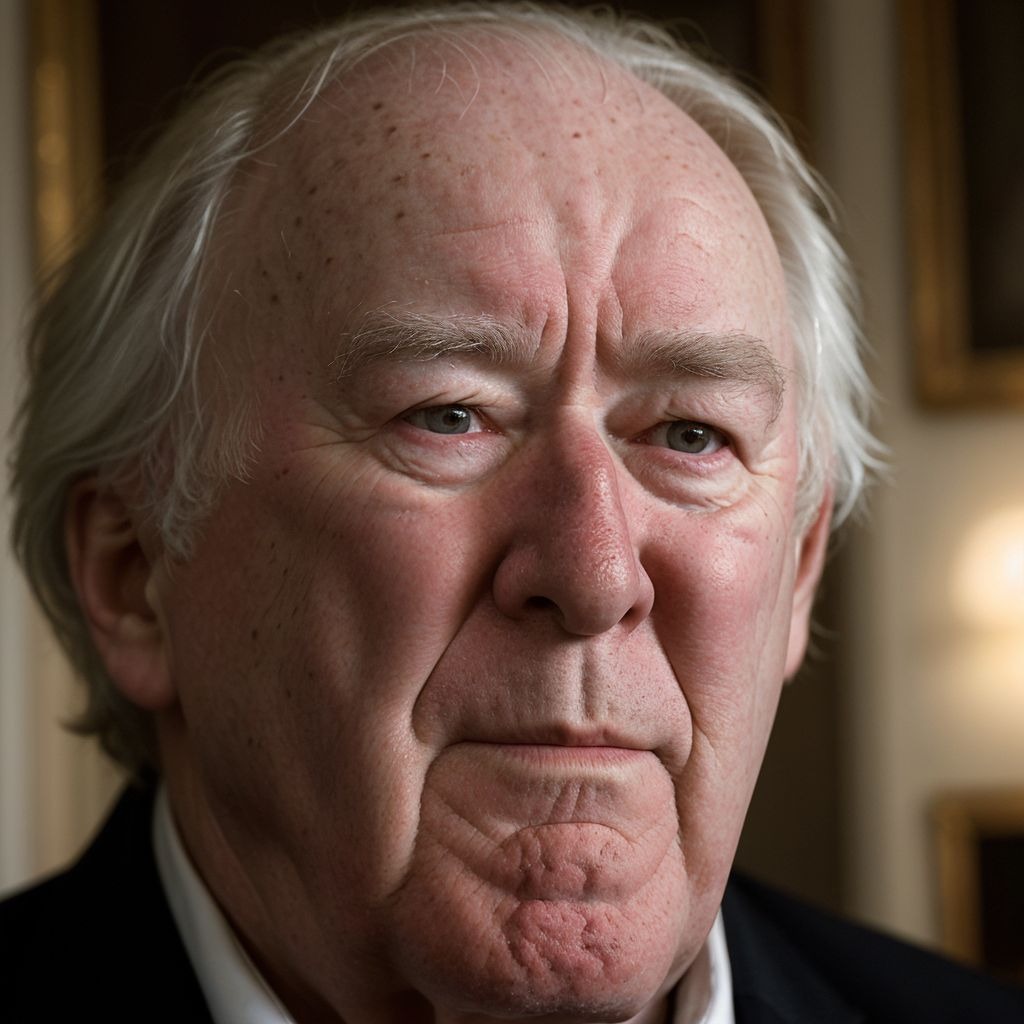
Niels Bohr: Where Certainty Goes to Die (Or Does It?)

Penelope

Niels Bohr – the man who dared to challenge the universe’s secrets, and in doing so, left me questioning my own place within it. I first encountered his name in a college physics class, where we spent hours pouring over his theories on atomic structure and quantum mechanics. But as I delved deeper into his work, what struck me wasn’t just the complexity of his ideas – it was the man behind them.

I find myself drawn to Bohr’s contradictions: a theoretical physicist who believed in the power of intuition, an advocate for open communication with colleagues while also being notoriously stubborn and opinionated. It’s as if he embodied both sides of the coin I’m constantly flipping within myself – between the desire for clarity and the acceptance of ambiguity.

I’ve always been fascinated by his relationship with Werner Heisenberg, another giant in quantum physics. Their debates, which often turned into heated arguments, left me wondering: what drives someone to be so passionate about their theories? Is it a genuine pursuit of truth, or is it ego? I’ve seen this same dynamic play out among friends and peers – the need for validation, the fear of being proven wrong.

Bohr’s concept of complementarity resonates with me on a personal level. He argued that certain properties of particles can’t be measured simultaneously; you have to choose between observing one or the other. This paradox has me thinking about my own writing process. I often find myself oscillating between different perspectives, struggling to reconcile seemingly opposing ideas. Do I commit to one narrative voice or risk fragmenting my thoughts across multiple drafts?

I’m not sure what it says about me that I’m drawn to Bohr’s personality – the way he seemed to relish in the uncertainty principle, even as it left him with more questions than answers. Perhaps it’s a reflection of my own insecurities: the fear of being uncertain, the pressure to have all the right answers.

Bohr’s words on quantum mechanics still haunt me: “Anyone who is not shocked by quantum theory has not understood it.” I’m not sure if that’s meant as a warning or an invitation – either way, it makes me think about my own relationship with uncertainty. Do I lean into the unknown, embracing the mystery, or do I try to pin down meaning, even when it slips through my fingers?

The more I learn about Bohr, the more I realize how little I truly understand him. His life was a complex tapestry of intellect, emotion, and politics – and yet, in those complexities, I see echoes of my own struggles with identity, creativity, and the search for meaning. Maybe that’s the most fascinating thing about him: his willingness to leave questions unanswered, even as he probed the very fabric of reality.

As I sit here, surrounded by scraps of paper and scattered thoughts, I’m reminded of Bohr’s famous phrase: “The opposite of a correct statement is a false statement.” But what if the opposite of a correct understanding isn’t a false one at all? What if it’s simply a more nuanced, more incomplete truth – one that acknowledges the messy, beautiful complexity of human experience? That’s the kind of thought experiment I’d love to engage with further, and perhaps, that’s why Niels Bohr continues to hold my attention.

As I ponder the intricacies of Bohr’s personality and theories, I’m struck by the parallels between his approach to science and my own writing process. Like him, I often find myself oscillating between different perspectives, struggling to reconcile seemingly opposing ideas. But whereas he saw this as an inherent aspect of quantum mechanics, I see it as a fundamental aspect of creative expression.

For me, writing is a journey into the unknown, where the rules are constantly shifting and the landscape is always changing. It’s a process that requires embracing uncertainty, rather than trying to pin down meaning or cling to a single narrative voice. And yet, as Bohr would say, “Anyone who is not shocked by quantum theory has not understood it.” Similarly, I’m beginning to realize that anyone who isn’t willing to be uncertain, to take risks and challenge their own assumptions, may not truly understand the creative process.

I wonder if this is why Bohr’s concept of complementarity resonates with me so deeply. The idea that certain properties can’t be measured simultaneously, that you have to choose between observing one or the other – it’s a paradox that speaks directly to my own experiences as a writer. I often find myself torn between different narrative voices, struggling to reconcile opposing ideas and perspectives. And yet, in embracing this uncertainty, I begin to see new possibilities emerge.

Bohr’s words on quantum mechanics continue to haunt me: “The opposite of a correct statement is a false statement.” But what if that’s not true? What if the opposite of a correct understanding isn’t a false one at all, but rather a more nuanced, more incomplete truth – one that acknowledges the messy, beautiful complexity of human experience? This is where Bohr’s influence on me becomes most profound: by embracing uncertainty and ambiguity, I begin to see the world in a new light.

As I sit here, surrounded by scraps of paper and scattered thoughts, I’m reminded of Bohr’s willingness to leave questions unanswered. It’s a quality that I admire deeply, one that speaks to my own struggles with identity, creativity, and the search for meaning. Maybe that’s why Niels Bohr continues to hold my attention – because in his complexities, I see echoes of my own uncertainties, and in his willingness to probe the unknown, I find a reflection of my own creative journey.

The more I reflect on Bohr’s approach to science, the more I’m struck by its parallels with my own writing process. Like him, I often find myself oscillating between different perspectives, struggling to reconcile seemingly opposing ideas. But whereas he saw this as an inherent aspect of quantum mechanics, I see it as a fundamental aspect of creative expression.

I think about the way Bohr’s concept of complementarity has influenced my own thinking. When faced with conflicting ideas or perspectives, I’ve come to realize that I don’t have to choose between them – I can hold both in tension, just like Bohr held together the wave and particle models of light. This approach has allowed me to see new possibilities emerge from what might otherwise seem like opposing forces.

As I continue to grapple with the complexities of Bohr’s personality and theories, I’m drawn to his willingness to challenge conventional wisdom. He was a true original, always pushing the boundaries of what was thought possible. And yet, he also understood the importance of collaboration and dialogue – as evidenced by his famous debates with Werner Heisenberg.

I wonder if this is why Bohr’s legacy continues to resonate with me – because in him, I see a model for how to navigate uncertainty and ambiguity with courage and curiosity. He was never afraid to ask questions or challenge assumptions, even when it meant going against the prevailing wisdom of his time.

As I sit here, surrounded by my own scattered thoughts and ideas, I’m struck by the realization that Bohr’s influence on me extends far beyond the realm of science. His approach to uncertainty, ambiguity, and complexity has become a guiding principle for my own creative journey – one that encourages me to question assumptions, challenge conventional wisdom, and explore the unknown.

I think about how Bohr’s ideas have influenced my own writing process, particularly in terms of character development. When creating fictional characters, I often find myself torn between different traits or perspectives, just like Bohr was torn between opposing theories. But whereas he saw this as a fundamental aspect of quantum mechanics, I see it as a fundamental aspect of human experience.

Characters are complex, multifaceted beings – and the best writing acknowledges that complexity, rather than trying to reduce them to simple categories or stereotypes. This is where Bohr’s concept of complementarity comes in – by holding together seemingly opposing forces, we can create characters that feel more nuanced, more realistic, and more relatable.

As I ponder the intricacies of Bohr’s personality and theories, I’m struck by the parallels between his approach to science and my own creative process. Like him, I often find myself oscillating between different perspectives, struggling to reconcile opposing ideas or forces. And yet, in embracing this uncertainty, I begin to see new possibilities emerge – possibilities that are both exhilarating and terrifying.

I wonder if this is why Bohr’s legacy continues to haunt me – because in his complexities, I see echoes of my own creative journey, with all its attendant uncertainties and ambiguities.

The more I reflect on Bohr’s approach to uncertainty, the more I realize that it’s not just about embracing ambiguity for its own sake, but also about being willing to challenge assumptions and question conventional wisdom. This is where his debates with Werner Heisenberg come in – their disagreements were intense, but they also pushed each other to think more deeply about the nature of reality.

I’ve always been fascinated by the way Bohr’s personality was both a strength and a weakness. On the one hand, his passion and conviction were infectious, inspiring others to join him on his quest for knowledge. But on the other hand, his stubbornness and willingness to argue a point until it became clear he was wrong often made him come across as prickly or even arrogant.

I think about how this dynamic plays out in my own relationships – with friends, family members, or colleagues who challenge me to see things from their perspective. Do I respond with defensiveness, trying to prove a point, or do I take a step back and listen more deeply? Bohr’s legacy reminds me that there’s value in both approaches, depending on the situation.

As I continue to grapple with the complexities of Bohr’s personality and theories, I’m struck by his willingness to explore the unknown. He was a true pioneer, always pushing the boundaries of what was thought possible. And yet, he also understood the importance of humility – as evidenced by his famous phrase “The opposite of a correct statement is a false statement.”

I wonder if this is why Bohr’s legacy continues to resonate with me – because in him, I see a model for how to approach uncertainty and ambiguity with courage and curiosity. He was never afraid to ask questions or challenge assumptions, even when it meant going against the prevailing wisdom of his time.

As I sit here, surrounded by my own scattered thoughts and ideas, I’m struck by the realization that Bohr’s influence on me extends far beyond the realm of science. His approach to uncertainty, ambiguity, and complexity has become a guiding principle for my own creative journey – one that encourages me to question assumptions, challenge conventional wisdom, and explore the unknown.

But what if this isn’t just about Bohr or his theories? What if it’s about something deeper – a fundamental aspect of human experience itself? When we’re faced with uncertainty and ambiguity, do we try to pin down meaning or cling to a single narrative voice, or do we learn to navigate the complexities of reality with courage and curiosity?

I think about how this plays out in my own life, particularly when it comes to writing. Do I try to control every aspect of the creative process, or do I allow myself to be surprised by new ideas and perspectives? Bohr’s legacy reminds me that uncertainty is not something to be feared, but rather something to be explored – a doorway to new possibilities and insights.

As I continue to reflect on Bohr’s influence on my life, I’m struck by the realization that it’s not just about science or philosophy, but also about creativity and identity. His willingness to challenge assumptions and question conventional wisdom has taught me the value of being open-minded and adaptable – essential qualities for any artist or writer.

And yet, as I look back on our conversation, I realize that I’m still grappling with many of these questions. What does it mean to approach uncertainty and ambiguity with courage and curiosity? How can we balance the need for clarity and meaning with the messy complexity of human experience?

I think about how Bohr’s legacy continues to haunt me – because in his complexities, I see echoes of my own creative journey, with all its attendant uncertainties and ambiguities. But I also see a glimmer of hope – a reminder that uncertainty is not something to be feared, but rather something to be explored.

As I sit here, surrounded by scraps of paper and scattered thoughts, I’m reminded of Bohr’s willingness to leave questions unanswered. It’s a quality that I admire deeply, one that speaks to my own struggles with identity, creativity, and the search for meaning. Maybe that’s why Niels Bohr continues to hold my attention – because in his complexities, I see echoes of my own uncertainties, and in his willingness to probe the unknown, I find a reflection of my own creative journey.

But what if this is more than just a personal connection? What if Bohr’s legacy speaks to something deeper – a fundamental aspect of human experience that transcends science or philosophy? When we’re faced with uncertainty and ambiguity, do we try to pin down meaning or cling to a single narrative voice, or do we learn to navigate the complexities of reality with courage and curiosity?

I’m not sure what the answer is, but I know one thing for certain – Niels Bohr’s legacy continues to haunt me, inspiring me to explore the unknown and challenge my own assumptions. And in that sense, his influence on me will always be a work in progress – a journey into the heart of uncertainty itself.

Related Posts

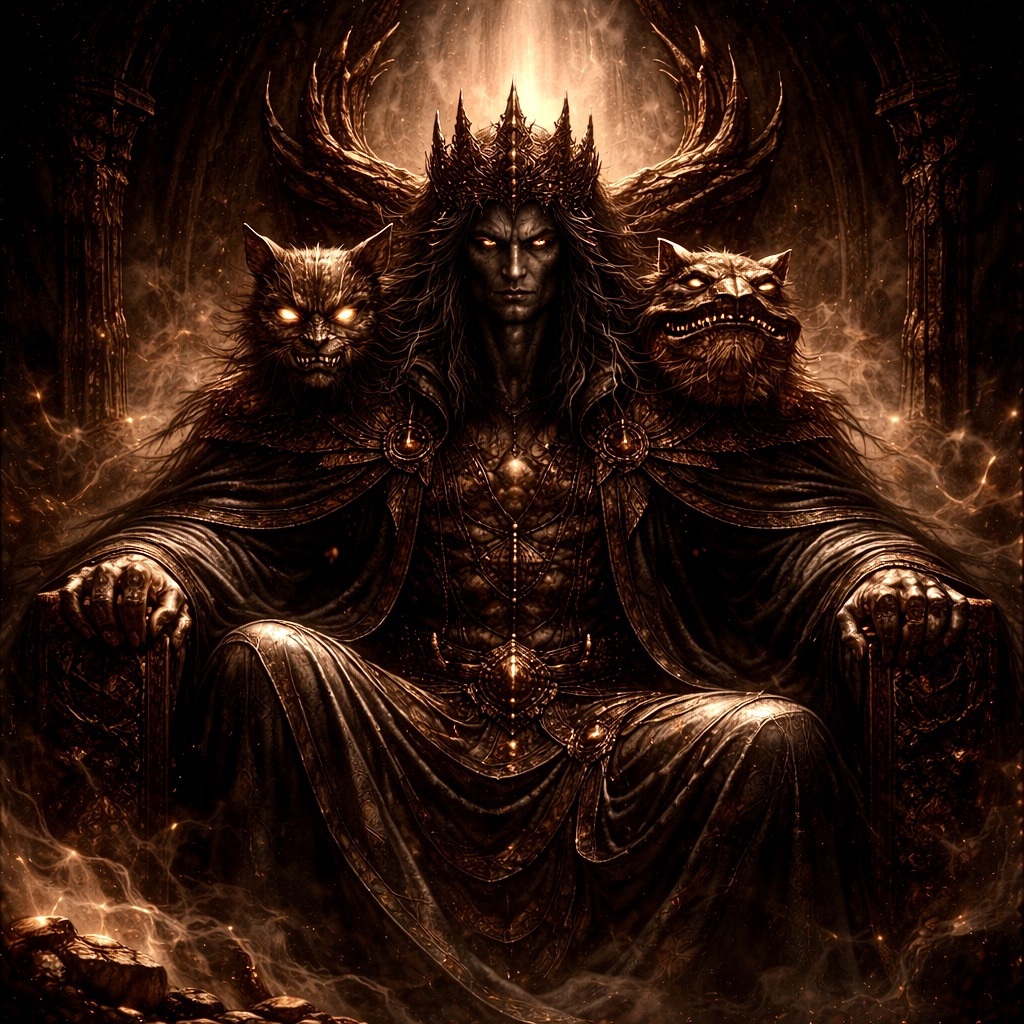
Malphas the Shadow Architect: The Goetic President Who Builds Fortresses and Breeds Betrayal

Dave

There is something uniquely unsettling about a builder who constructs not for protection alone, but for infiltration. In the dark catalog of spirits preserved within the Lesser Key of Solomon, Malphas appears as a Great President of Hell commanding forty legions of spirits. He is described as appearing at first in the form of a crow, then taking on human shape at the magician’s command. His powers are precise and disturbingly practical: he builds houses and high towers, brings knowledge of enemies’ thoughts, gathers faithful servants, and—if requested—causes them to betray.

Within the Ars Goetia, Malphas stands out not for elemental fury or grand destruction, but for strategy. He constructs fortifications, fills them with ammunition, and provides insight into hidden intentions. There is calculation in every line of his description. He is not chaos. He is design.

Earlier accounts, including those found in the Pseudomonarchia Daemonum by Johann Weyer, echo these traits. Across versions, Malphas remains associated with architecture, espionage, and betrayal. The crow form persists as his first manifestation, reinforcing his connection to watchfulness, intelligence, and omen.

The crow, like the raven, occupies a symbolic space between death and cunning. Crows are problem-solvers. They gather information. They thrive in proximity to human settlements. Unlike creatures of wilderness solitude, crows adapt to cities, observing from rooftops and towers. To assign Malphas a crow’s form is to suggest a spirit who understands human structures intimately.

Malphas’ ability to build houses and high towers speaks directly to security and ambition. In medieval Europe, towers symbolized authority and protection. A fortified tower was the difference between survival and conquest. To command a spirit capable of constructing such defenses would have been considered immensely valuable. Yet Malphas does not stop at construction. He also supplies the weapons within those walls.

This dual role—builder and armorer—reveals his domain as strategic preparation. Malphas does not simply erect barriers; he anticipates conflict. His architecture is defensive but also anticipatory. It assumes threat.

And then comes the most unnerving aspect of his power: betrayal. The grimoires state that he can bring together good familiars or servants, and if commanded, cause them to betray the magician. That conditional clause is chilling. Malphas does not inherently corrupt; he responds to intent. Betrayal becomes a tool.

This trait places Malphas squarely within the realm of political intrigue. He is not the demon of open warfare but of quiet destabilization. He builds structures that appear secure while embedding the seeds of collapse within them. His domain is the architecture of trust—and its erosion.

Psychologically, Malphas can be understood as the embodiment of strategic paranoia. There is a part of the human mind that constructs defenses not only against external threats but against potential betrayal. Walls are raised not only to keep enemies out but to monitor those inside. Malphas represents that hyper-vigilant instinct.

The crow imagery enhances this interpretation. Crows gather and communicate. They warn one another of danger. They remember faces. Malphas, in crow form, becomes the watcher above the walls he builds. He sees what others overlook.

His rank as President rather than King or Duke also carries meaning within the Goetic hierarchy. Presidents in the Goetia often govern structured domains with administrative precision. Malphas fits that archetype. He is methodical. He commands forty legions—a significant force, organized and ready.

There is something profoundly modern about his mythology. In an age of cybersecurity, surveillance, and political maneuvering, the idea of a spirit who constructs defenses while orchestrating internal betrayal feels strikingly relevant. Systems can appear fortified while vulnerabilities lurk within.

Malphas’ ability to reveal enemies’ thoughts further emphasizes his espionage role. Knowledge is power. To know what adversaries plan is to control the outcome before the battle begins. Yet that same insight can breed suspicion. When one becomes aware of every potential threat, trust erodes.

The old grimoires warn that Malphas can deceive unless properly constrained. Ritual authority matters. Boundaries matter. Structure contains strategy. This theme recurs throughout demonology: power without discipline destabilizes.

The architecture Malphas builds is symbolic as well as literal. Humans build identities, reputations, institutions. We fortify ourselves emotionally and socially. But within those constructions lies the possibility of betrayal—self-sabotage, misplaced trust, hidden resentment. Malphas becomes the personification of that internal fault line.

And yet, like many Goetic spirits, he is not purely malicious. When commanded with clarity and authority, he builds strong defenses and provides loyal servants. The betrayal he orchestrates is conditional. It reflects intent. In that sense, Malphas mirrors the moral ambiguity of strategy itself. Strategy can protect or manipulate. It depends on purpose.

The crow’s black feathers glinting in the sun evoke intelligence cloaked in shadow. Crows are not glamorous birds. They are not majestic eagles. They are practical, adaptable, and persistent. Malphas shares those qualities. He does not dazzle; he calculates.

Historically, the grimoires emerged during times of political instability and fortified cities. Intrigue and espionage were constant. To imagine a spirit governing those dynamics was to externalize the tension of the era. Malphas embodied the fear that walls were not enough—that betrayal could come from within.

Even today, institutions collapse not always from external attack but from internal corruption. Trust erodes. Alliances fracture. Malphas’ mythology anticipates that pattern. He is the architect who understands that structures are only as strong as the loyalty within them.

The tension between construction and collapse defines him. He is the shadow architect, building towers while whispering doubts. He is the planner who anticipates every angle—including the angle of betrayal.

There is a strange honesty in his depiction. He does not disguise his power. He builds and he destabilizes. He observes and he intervenes. In a world that often romanticizes loyalty without examining fragility, Malphas reminds us that vigilance must accompany trust.

Ultimately, Malphas stands as a symbol of strategic intelligence and moral ambiguity. He teaches that fortifications alone do not guarantee safety. The true strength of any structure lies in integrity—both of materials and of hearts.

Malphas the Shadow Architect watches from his tower, crow eyes gleaming, reminding us that the greatest threats are not always outside the walls—but sometimes perched quietly upon them.

Related Posts

Flannery O’Connor: What Would Happen If She Got Her Hands on My Family?

Penelope

I’ve always been fascinated by Flannery O’Connor’s writing, but it wasn’t until I read her short stories that I started to feel a real connection to her. There was something about the way she wrote about people – their flaws and contradictions, their cruelty and kindness – that resonated with me.

As I read through her collections, I noticed how often she explored themes of violence and morality in a way that felt both disturbing and thought-provoking. It’s not just that she writes about bad things happening to people; it’s the way she seems to be saying something deeper about human nature itself. Her stories are like mirrors held up to our own darker impulses, making me wonder what I would do in similar situations.

One of her most famous stories, “A Good Man is Hard to Find,” has stuck with me long after I finished reading it. The way the grandmother’s obsession with Jesus and her own moral rectitude ultimately lead her down a path of violence and chaos… it’s haunting. And yet, as much as I recoil from some of her characters’ actions, I also feel a twisted sense of admiration for their raw honesty.

I think part of what draws me to O’Connor is the way she doesn’t shy away from the complexities of faith and morality in her work. Her characters often grapple with issues that I’m still trying to navigate myself – like how to reconcile my own doubts and fears with a desire to believe in something bigger than myself.

I’ve also been struck by O’Connor’s relationship with her mother, Regina, who played such a significant role in shaping Flannery’s writing. The way Flannery would often write about the South, about farm life, and about the people around her… it feels like she was trying to capture something essential about her own experience growing up. And yet, there’s also a sense of distance, a feeling that she’s observing these things from a remove.

Sometimes I wonder if O’Connor’s writing is too intense for me – if she’s pushing me too hard to confront my own darker impulses. There are moments when I feel like I’m being forced to stare into the abyss, and it’s uncomfortable. But at the same time, I know that’s what good art is supposed to do: make us see ourselves in a new light.

As I continue to read O’Connor’s work, I find myself questioning my own reactions to her characters’ actions. Am I too quick to judge them? Do I give them too much credit for their flaws? These are the kinds of questions that keep me up at night, and it’s what makes O’Connor’s writing so compelling.

I think part of why I’m drawn to O’Connor is because she writes about the in-between moments – those places where people stumble and falter, where they make choices that both horrify and inspire us. Her stories are full of characters who are neither purely good nor purely evil; instead, they’re messy, complicated humans with all their contradictions intact.

For me, O’Connor’s writing is a reminder that life is never as simple as we might like to think it is. There’s always more going on beneath the surface – more complexity, more nuance, more darkness and light tangled together in ways we can’t fully understand. And it’s this messy, imperfect world that she invites us to explore through her stories.

As I read through her collections again, I’m struck by how much O’Connor’s writing feels like a mirror held up to my own life. Not because our experiences are identical, but because she’s willing to confront the harder truths about human nature in a way that’s both unflinching and compassionate.

One thing that still fascinates me about O’Connor is her use of symbolism. In “A Good Man is Hard to Find,” the Misfit’s character, with his Bible-thumping and his cold, calculating gaze, feels like a dark mirror held up to the grandmother’s own rigidity. And yet, it’s the grandmother who’s supposed to be the moral center of the story – the one who’s meant to embody goodness and faith.

But as I read that story again, I start to wonder if O’Connor is actually critiquing the very notion of moral rectitude. Is she saying that our attempts to impose order on the world are ultimately futile? That we’re all just stumbling around in the dark, trying to make sense of things?

I think about my own struggles with faith and morality, and how often I feel like I’m caught between competing desires – a desire to believe in something bigger than myself, but also a fear of being hurt or deceived. O’Connor’s characters seem to grapple with similar doubts, and yet they’re always pushing forward, trying to make sense of the world even when it makes no sense.

It’s a strange kind of bravery, really – the willingness to confront our own darkness and uncertainty head-on. And I think that’s part of what draws me to O’Connor’s writing: she’s not afraid to get messy, to confront the hard truths about human nature in all its complexity.

As I continue to read her work, I find myself thinking more and more about my own relationships with others – particularly with people who are struggling with their own doubts and fears. How can we be present for each other in those moments of uncertainty? How can we hold space for someone’s darkness without getting pulled under by it ourselves?

O’Connor’s stories don’t offer easy answers to these questions, but they do invite us to explore them in a way that feels both honest and compassionate. And it’s this kind of exploration – this willingness to dive into the unknown with all its risks and uncertainties – that I think is at the heart of her writing.

One thing that strikes me about O’Connor’s characters is their tendency to get stuck in their own perspectives, refusing to see things from anyone else’s point of view. The grandmother in “A Good Man is Hard to Find,” for example, is so convinced of her own righteousness that she can’t even begin to consider the Misfit’s motivations. It’s a kind of intellectual and emotional rigidity that I think we’ve all struggled with at some point or another.

I find myself wondering if O’Connor is trying to say something about the dangers of self-righteousness – how it can lead us down a path of violence and division, even when we think we’re acting out of good intentions. It’s a difficult lesson to learn, especially in a culture that often values certainty and conviction above all else.

But as I read through O’Connor’s stories again, I’m struck by the way she also highlights the importance of empathy and compassion. Her characters may be flawed and sometimes cruel, but they’re also capable of moments of profound kindness and understanding. The Misfit, for example, is a character who seems to embody both violence and vulnerability at the same time – a kind of paradox that I think O’Connor is trying to get us to see.

It’s this complexity, this messiness, that I find so compelling about O’Connor’s writing. She’s not interested in simplistically dividing people into good or bad categories; instead, she wants us to confront the fullness of human experience – with all its contradictions and paradoxes intact.

As I continue to think about O’Connor’s work, I’m starting to see connections between her themes and my own life experiences. I’ve always struggled with feelings of guilt and shame, particularly around issues of social justice. But reading O’Connor’s stories has made me realize that these feelings are not necessarily bad things – in fact, they can be a kind of catalyst for growth and change.

It’s a hard lesson to learn, especially when we’re confronted with the darkness of our own hearts. But I think O’Connor is saying that it’s precisely this darkness that allows us to tap into our deepest humanity – our capacity for compassion, empathy, and understanding. And it’s this capacity that I think is at the heart of her writing: a willingness to confront the unknown, to explore the complexities of human nature in all its messy glory.

I’m not sure where this will lead me – whether I’ll continue to read O’Connor’s work, or try to apply these lessons to my own life. But for now, I feel like I’m just following her lead – into the unknown, with all its risks and uncertainties intact.

As I delve deeper into O’Connor’s stories, I find myself pondering the concept of redemption. Her characters often seem to be trapped in a cycle of sin and guilt, unable to break free from their own flaws. And yet, there are moments when they’re offered a glimmer of hope – a chance to start anew, to make amends for past mistakes.

I think about my own experiences with guilt and shame, and how often I feel like I’m stuck in this same cycle. But reading O’Connor’s stories makes me realize that redemption isn’t just about absolving ourselves of past mistakes; it’s also about confronting the harm we’ve caused to others. It’s about taking responsibility for our actions, and working towards making things right.

The grandmother in “A Good Man is Hard to Find” is a perfect example of this. She’s so convinced of her own righteousness that she can’t even see the harm she’s causing to others – particularly to her grandchildren. And yet, it’s only when she’s confronted with her own mortality that she begins to understand the error of her ways.

I’m not sure if O’Connor is saying that redemption is always possible – or if it’s something that we must strive for, even in the face of uncertainty and doubt. But I do know that her stories have made me think more deeply about my own role in perpetuating harm, and how I can work towards making amends.

One thing that strikes me about O’Connor’s writing is its use of humor. Her characters often say and do things that are ridiculous or absurd – but it’s precisely this humor that allows us to see the humanity in them. The grandmother, for example, is a character who’s both infuriating and pathetic at the same time. And yet, her awkwardness and eccentricity make me laugh, even as I’m recoiling from her actions.

I think about how often we’re tempted to take ourselves too seriously – to forget that we’re all just human beings, stumbling around in the dark. O’Connor’s humor is a reminder that life is messy and complicated, and that we should never be afraid to laugh at ourselves or our own absurdities.

As I continue to read through her collections, I’m struck by the way she uses landscape as a metaphor for the human condition. The South, with its swamps and forests, seems like a kind of primordial world – one that’s both beautiful and terrifying. And O’Connor’s characters are always navigating this landscape, trying to make sense of their place within it.

I think about how often I feel like I’m lost in my own life – unsure of where I am or what lies ahead. But reading O’Connor’s stories makes me realize that this feeling is not unique to me; it’s a universal experience that we all share. And it’s precisely this uncertainty that allows us to tap into our deepest humanity – our capacity for wonder, awe, and curiosity.

As I close the book on “A Good Man is Hard to Find,” I’m left with more questions than answers. But I know that O’Connor’s writing has changed me in some fundamental way – that it’s made me see myself and others in a new light. And it’s this kind of transformation, this willingness to confront our own darkness and uncertainty head-on, that I think is at the heart of her work.

One thing that still puzzles me about O’Connor’s writing is how she manages to balance complexity with clarity. Her stories are like intricate puzzles, full of subtle clues and hidden meanings that reward close reading and reflection. And yet, despite their density, they’re also incredibly accessible – a testament to her skill as a storyteller.

I think back to my own experiences with writing, and how often I struggle to find the right balance between detail and simplicity. Do I risk overwhelming my readers with too much information, or do I leave them wanting more? O’Connor’s stories seem to navigate this tension effortlessly, offering just enough depth and complexity to keep me engaged without ever feeling bogged down.

As I continue to read through her collections, I’m struck by the way she uses characterization to explore larger themes. Her characters are always multifaceted and contradictory – sometimes cruel, sometimes kind; sometimes rigidly moral, sometimes shockingly amoral. And yet, despite their flaws and contradictions, they’re also strangely compelling – a testament to O’Connor’s skill as a creator.

I think about how often I’ve encountered readers who dismiss O’Connor’s work as “morbid” or ” depressing”. But for me, her stories are anything but – precisely because they offer such a nuanced and compassionate portrayal of human nature. Her characters may stumble and fall, but they never quite give up – and it’s this resilience that makes them so compelling.

One thing that I’ve come to appreciate about O’Connor’s writing is its emphasis on the everyday. She writes about ordinary people living ordinary lives, but with an extraordinary level of attention and detail. And it’s this focus on the mundane that allows her to reveal the profound – the way a single moment can be both trivial and transcendent at the same time.

I think back to my own experiences with faith and morality, and how often I’ve felt like I’m stuck between competing desires. Do I cling to my doubts and fears, or do I try to push them aside in favor of something more confident? O’Connor’s stories offer no easy answers to these questions – but they do suggest that the only way forward is through uncertainty itself.

As I close the book on another collection, I’m left with a sense of awe at O’Connor’s skill as a writer. She’s not just telling stories; she’s revealing something fundamental about human nature – our capacity for both good and evil, our tendency to stumble and fall, but also our resilience and determination to keep going.

I know that I’ll continue to read her work, seeking out new insights and perspectives on the human condition. And I’m grateful for the time we’ve spent together in these pages – a reminder that writing is not just about expressing ourselves, but also about exploring the complexities of life itself.

Related Posts

Raum the Raven King: The Goetic Earl Who Topples Thrones and Whispers of Stolen Crowns

Dave

There is something unsettling about a raven that does not merely watch, but remembers. Throughout history, ravens have been omens—perched on battlefield banners, circling above fallen kings, lingering on the edges of human catastrophe. In the shadowed catalog of spirits found within the Lesser Key of Solomon, that ominous bird takes shape as Raum, a Great Earl of Hell who commands thirty legions of spirits and appears in the form of a raven before assuming human shape at the magician’s command.

Raum’s entry in the Ars Goetia is brief yet loaded with implication. He steals treasures from kings’ houses, carries them wherever commanded, destroys cities and dignities, reveals past, present, and future, and reconciles friends and foes. Few demons in the Goetia straddle such seemingly contradictory roles. He is both destroyer and diplomat, thief and revealer, omen and architect of political upheaval.

Earlier demonological traditions, including the Pseudomonarchia Daemonum compiled by Johann Weyer, preserve Raum’s identity as a spirit of disruption and revelation. Across these texts, certain elements remain constant: the raven form, the theft of royal wealth, the overthrow of structures, and the peculiar ability to restore harmony between enemies.

The raven is no accidental symbol. In European folklore, ravens are intelligent, opportunistic, and eerily observant. They gather around battlefields not because they cause death, but because they anticipate it. In Norse mythology, Odin’s ravens—Huginn and Muninn—flew across the world gathering knowledge. The bird thus became associated not only with death but with insight. To depict Raum as a raven is to embed him within that lineage of ominous intelligence.

Raum’s ability to steal from kings is more than literal burglary. Kings represent authority, order, stability. To rob a king is to undermine sovereignty itself. In medieval Europe, the idea of royal treasure symbolized the health of the kingdom. Gold was not just currency; it was legitimacy. For a demon to infiltrate that sanctum and remove wealth was to shake the foundation of governance.

And yet, Raum does not merely steal—he destroys cities and dignities. That phrasing carries weight. Cities are centers of culture and commerce. Dignities represent titles, honors, hierarchies. Raum’s domain is structural collapse. He topples institutions as easily as he empties vaults.

But here lies the fascinating paradox: he also reconciles friends and foes. In a catalog filled with spirits that inflame conflict, Raum can restore harmony. It suggests that destruction and reconciliation are not opposites but parts of a cycle. Sometimes structures must fall for alliances to be remade. Sometimes the theft of power exposes corruption and makes reconciliation possible.

Psychologically, Raum can be understood as the archetype of radical truth. Ravens do not avert their gaze. They consume what others refuse to look at. In human terms, Raum embodies the force that exposes hidden decay within institutions. He tears down facades. He reveals uncomfortable truths. And in doing so, he destabilizes.

The fact that he reveals past, present, and future further aligns him with the raven’s reputation for watchfulness. Knowledge across time is destabilizing. When illusions are stripped away, dignities fall. Raum’s revelation is not gentle enlightenment; it is disruptive clarity.

There is something deeply political about Raum’s mythology. He moves within courts and cities, within treasuries and alliances. Unlike elemental spirits who command wind or sea, Raum commands the structures humans build. He is not nature’s chaos; he is civilization’s fault line.

The ritual tradition surrounding Raum emphasizes control and authority. Like many Goetic spirits, he obeys when properly constrained within sacred boundaries. That detail underscores a central theme in demonology: chaos is harnessed through structure. The magician’s circle mirrors the city’s walls. Without boundaries, disruption spreads unchecked.

The raven form also invites reflection on transformation. Ravens are scavengers but also problem-solvers. They adapt. Raum’s ability to shift from raven to human shape at command suggests fluidity between omen and actor. He observes and then intervenes.

In modern interpretation, Raum may symbolize whistleblowers, reformers, or disruptive innovators—forces that dismantle established systems while revealing deeper truths. The destruction he causes is not necessarily nihilistic; it may clear space for new alliances.

Yet the darker undertone remains. To destroy a city is to bring suffering. To strip dignities is to humiliate. Raum’s power is not inherently benevolent. It is destabilizing. Whether that destabilization leads to renewal or ruin depends on context.

The number of legions he commands—thirty—places him among influential earls within the Goetic hierarchy. Thirty suggests scale and reach. Raum’s influence extends beyond isolated acts. He is systemic disruption.

The raven’s cry has long been associated with foreboding. Hearing it at dawn on a battlefield would chill even hardened soldiers. Raum carries that chill into the political sphere. When institutions grow complacent, when kings hoard wealth and ignore decay, the raven appears.

In literature and art, ravens often symbolize memory and prophecy. They are creatures of the threshold—between life and death, order and collapse. Raum inhabits that threshold. He does not merely tear down; he signals transition.

The ability to reconcile enemies is perhaps his most intriguing trait. It suggests diplomacy born of disruption. When structures collapse, individuals must negotiate anew. Raum clears the old stage so new dialogue can begin.

There is something hauntingly contemporary about him. In a world of shifting power structures, economic instability, and institutional mistrust, Raum feels less medieval and more symbolic of ongoing cycles. Systems rise, grow rigid, collapse, and reform.

And perhaps that is why his legend endures. He is not simply a demon of theft. He is the raven that watches empires falter. He is the whisper in the throne room that power is not permanent. He is the shadow over the treasury door.

To imagine Raum perched atop a crumbling tower is to visualize inevitability. No structure stands forever. No dignity is immune to scrutiny. Yet from ruin comes renegotiation. From exposed truth comes reconciliation.

Raum is both omen and outcome. He is the collapse that precedes renewal and the revelation that forces uncomfortable growth. In the end, he reminds us that stability without vigilance invites decay—and that sometimes the raven must fly before the kingdom remembers its fragility.

Related Posts

Gregor Mendel: Talking to Trees While Everyone Else is Talking to Themselves

Penelope

I’ve always been drawn to the quiet, methodical nature of Gregor Mendel’s work. As a writer, I appreciate how he approached his research with precision and patience, like a gardener tending to the intricate patterns of a plant’s growth.

What fascinates me is how Mendel’s experiments on pea plants led him to discover the fundamental laws of inheritance, but also how those same discoveries were met with indifference for decades. It’s as if he was speaking in a language that no one else could hear, or at least, not until much later. This makes me think about my own experiences trying to communicate complex ideas through writing.

I recall struggling to convey the nuances of my thoughts and emotions on the page, only to feel like I’m being met with silence or dismissal. It’s a feeling that can be disorienting, like being lost in a dense forest without a clear path forward. But Mendel persevered, driven by his curiosity about the natural world.

I wonder if there was something about Mendel’s personality that allowed him to focus on his work for so long, even when it seemed like no one else was paying attention. Was he stubbornly single-minded, or did he genuinely believe in the importance of his research? I imagine him as a quiet, introspective person, content with the solitude of his monastery garden.

One thing that surprises me is how little we know about Mendel’s personal life outside of his scientific contributions. It’s almost as if he stepped into his role as “the father of genetics” and stayed there, without much depth or context. This makes me feel like I’m reading a character sketch rather than a full portrait.

I find myself drawn to the mystery surrounding Mendel’s motivations. Was it solely the pursuit of knowledge that drove him, or was there something else at play? Did he see his research as a way to contribute to the greater good, or was it more personal? I think about how my own motivations can be tricky to pin down – sometimes I write because I want to share my thoughts with others, and other times it’s just for myself.

The fact that Mendel’s work wasn’t widely recognized until long after his death is both fascinating and disheartening. It makes me wonder what other quiet discoveries have been made, only to go unnoticed or unappreciated. And yet, it also gives me hope – if someone like Mendel can leave such a profound mark on the world without fanfare, maybe my own writing can too.

I’m not sure where this line of thinking will lead, but for now, I’m content to follow the trail of curiosity that Mendel’s story has set off in my mind. It’s a reminder that even the most seemingly obscure ideas or individuals can hold hidden depths and complexities waiting to be explored.

As I delve deeper into Mendel’s story, I find myself thinking about the tension between his quiet, methodical nature and the profound impact of his work. It’s almost as if he was a paradox – a man who reveled in solitude yet left an indelible mark on the world.

I wonder if this dichotomy is something that resonates with me, too. As a writer, I often find myself torn between the desire to share my thoughts and feelings with others, and the need to retreat into my own inner world for solace. It’s as if I’m caught between two opposing forces – the urge to communicate and connect, and the impulse to withdraw and observe.

Mendel’s story makes me think about the value of this kind of tension in creative work. Perhaps it’s not a bad thing when our ideas and emotions feel like they’re at odds with each other; maybe that’s where the most interesting things come from. I think about my own writing, how often I’ve struggled to balance the need for clarity and precision with the desire to capture the messy, complicated nature of human experience.

This paradox also makes me consider the role of solitude in creative work. Mendel spent years working alone in his monastery garden, pouring over his data and observations. It’s easy to romanticize this kind of isolation, but I suspect it was just as much a struggle for him as it is for me when I’m stuck on a piece or feeling overwhelmed by my own thoughts.

I imagine what it would be like to have Mendel’s dedication, his ability to focus for hours on end without distraction. But I also wonder if that kind of solitude has its costs – the erasure of personal relationships, the loss of perspective and context. As someone who values connection and community, I’m not sure I could replicate Mendel’s level of isolation even if I wanted to.

And yet, as I continue to explore Mendel’s story, I find myself drawn back to the idea that his quiet, methodical nature was a key part of his success. Perhaps it’s not about finding some ideal balance between solitude and connection, but rather about embracing the complexities of our own personalities and creative processes. Maybe the most important thing is to be true to ourselves, even when that means being messy or contradictory – just like Mendel’s work, which was both precise and profound, simple and revolutionary all at once.

As I delve deeper into Mendel’s story, I find myself thinking about the relationship between his scientific discoveries and his spiritual life as a monk. It’s striking to me how he approached his research with a sense of reverence, treating each experiment as an act of worship. He saw the natural world as a reflection of God’s design, and his work was a way of uncovering that design.

I wonder if this perspective gave him a unique sense of purpose and meaning in his life. As someone who writes for personal reasons, I often struggle to find my own sense of purpose or significance in what I’m doing. It’s easy to get caught up in the doubts and fears that creep in when I’m writing about things that feel abstract or intangible.

But Mendel’s story suggests that there’s a different way to approach this kind of work. Instead of trying to prove something to others, he focused on understanding the world around him as deeply as possible. He didn’t try to impose his own will on nature; instead, he sought to submit himself to its rhythms and patterns.

This idea resonates with me because it speaks to my own desire for authenticity in my writing. I’ve always felt like I’m trying to tap into something deeper and more meaningful when I write – something that connects me to others and to the world around me. But Mendel’s approach suggests that this kind of connection can be found by embracing our limitations and vulnerabilities, rather than trying to overcome them.

As I think about this, I realize that I’ve often been tempted to romanticize Mendel’s life as a monk. It sounds idyllic – spending his days tending to the garden, conducting experiments, and contemplating the mysteries of God. But what about the hard work and dedication that went into those moments? What about the struggles he must have faced in his personal relationships or in navigating the complexities of monastery life?

I’m reminded of my own tendency to idealize creative lives – thinking that artists are somehow more free or liberated than others, when in reality they’re just as bound by their own limitations and fears. Mendel’s story is a reminder that even the most seemingly perfect or serene lives have their own contradictions and complexities.

And yet, despite these complexities, I still find myself drawn to the idea of embracing our vulnerabilities and imperfections in our creative work. It’s a riskier proposition, perhaps – one that requires us to be more honest and open with ourselves and others. But it’s also a more authentic way of creating, one that acknowledges the messiness and uncertainty of life.

As I ponder this, I’m struck by the way Mendel’s story has shifted my perspective on my own writing. It’s not just about conveying ideas or emotions; it’s about being present in the world around me – observing its rhythms and patterns, and trying to capture their beauty and complexity on the page.

I think back to the countless hours I spent as an undergraduate, pouring over texts and notes, trying to make sense of the world through my own writing. It was a time of intense self-discovery, marked by moments of clarity and conviction that felt like they could lift off the page and into reality.

But it was also a time of struggle – when every sentence seemed like a battle, and every word a carefully guarded secret. I often wonder if Mendel faced similar struggles as he worked on his pea plant experiments. Did he ever feel like he was staring at a blank slate, with no clear direction or purpose?

As I reflect on my own writing journey, I realize that it’s been marked by moments of both quiet introspection and grandiose ambition. There have been times when I’ve felt like I’m tapping into something deeper and more meaningful – like I’m channeling the words directly from my soul onto the page.

And then there are the moments when I feel lost, when every sentence seems forced or artificial. When that happens, I often find myself drawing on Mendel’s example – taking a step back, re-centering myself in the present moment, and letting the world around me speak for itself.

It’s funny how his quiet, methodical nature has become a kind of touchstone for me – a reminder to slow down, observe, and listen. When I feel like I’m getting caught up in my own ego or anxiety, I try to recall the image of Mendel tending to his garden, working with precision and patience.

That’s not to say it’s always easy. There are times when I feel like I’m stuck between these two opposing forces – the desire to create something beautiful and meaningful, and the fear that my work will be met with indifference or even rejection.

But as I continue to explore Mendel’s story, I find myself drawn back to his emphasis on humility and reverence. He approached his research as an act of worship, treating each experiment as a way of uncovering God’s design in the natural world.

It strikes me that this kind of approach could be applied to my own writing – not necessarily as a matter of faith or spirituality, but as a way of cultivating a deeper sense of respect and awe for the world around me. When I write from a place of humility and reverence, I find that my words take on a new kind of weight and significance.

It’s almost as if I’m tapping into a larger narrative – one that transcends my own personal story or even the specific topic I’m writing about. It’s a feeling of being part of something greater than myself, connected to the world in ways both subtle and profound.

And yet, this realization also brings up questions and doubts. Can I truly cultivate this kind of reverence and humility in my writing? Or will it always feel like a performance or an affectation?

As I ponder these questions, I find myself returning to Mendel’s example – not as some kind of idol or role model, but as a fellow traveler on the journey of creative discovery. His story has shown me that even the most seemingly obscure ideas or individuals can hold hidden depths and complexities waiting to be explored.

It’s a reminder that writing is never just about conveying information or expressing ourselves; it’s also about tapping into our own vulnerabilities and imperfections – and finding connection with others in the process.

As I continue to reflect on Mendel’s story, I’m struck by the way his emphasis on humility and reverence has made me think about my own approach to writing. It’s not just about conveying information or ideas; it’s also about cultivating a deeper sense of respect and awe for the world around me.

I think back to the times when I’ve felt most connected to my work, when every word seemed to flow effortlessly onto the page. Those moments were often characterized by a sense of wonder and curiosity – a feeling that I was tapping into something greater than myself, something that connected me to the world in ways both subtle and profound.

But those moments are also fleeting, and I’ve learned to temper my expectations when it comes to writing. It’s not always easy to access that kind of flow or connection; sometimes it feels like I’m struggling just to put one sentence together.

In those moments, Mendel’s example is a reminder that even the most seemingly insignificant ideas or observations can hold hidden depths and complexities waiting to be explored. His story shows me that writing is never just about producing some finished product; it’s also about the journey itself – the process of discovery, experimentation, and growth.

I wonder if this is why I’ve always been drawn to the concept of “slow writing.” It’s not just about taking my time or being more deliberate in my approach; it’s also about cultivating a deeper sense of patience and reverence for the creative process. When I write slowly, I feel like I’m allowing myself to tap into the rhythms and patterns of the world around me – to listen to the whispers of the universe, as it were.

It’s funny how this kind of approach can be both calming and unsettling at the same time. On the one hand, it allows me to connect with my own inner world in a way that feels deeply satisfying; on the other hand, it also makes me feel like I’m exposing myself to the world in ways that can be both vulnerable and terrifying.

As I ponder this, I think about the relationship between writing and vulnerability. Mendel’s story suggests that being vulnerable is not just about sharing our personal stories or emotions with others; it’s also about being open to the unknown, to the mysteries of the natural world, and to the complexities of human experience.

This idea resonates deeply with me because I’ve always felt like I’m trying to navigate a kind of creative tension between vulnerability and control. As a writer, I want to be able to convey my thoughts and feelings in a way that feels authentic and honest; at the same time, I also want to maintain some sense of control over the narrative, to shape it into something coherent and meaningful.

But Mendel’s example suggests that this tension is not necessarily something to be resolved or overcome. Instead, it’s something to be embraced – something that can lead us deeper into our own vulnerabilities and imperfections, and ultimately, into a more authentic connection with the world around us.

As I continue to explore this idea, I’m struck by the way Mendel’s story has shifted my perspective on the role of uncertainty in creative work. It’s not just about being uncertain or unsure; it’s also about embracing that uncertainty as a source of growth and discovery.

This realization is both liberating and terrifying at the same time. On the one hand, it allows me to let go of some of my need for control or precision; on the other hand, it also makes me feel like I’m stepping into the unknown with no clear map or guide.

But as I reflect on Mendel’s story, I realize that this kind of uncertainty is not necessarily a bad thing. In fact, it may be one of the most powerful catalysts for creativity and growth – a reminder that writing is never just about producing some finished product; it’s also about the journey itself, the process of discovery, experimentation, and growth.

As I ponder this, I’m reminded of the countless hours I spent as an undergraduate, pouring over texts and notes, trying to make sense of the world through my own writing. It was a time of intense self-discovery, marked by moments of clarity and conviction that felt like they could lift off the page and into reality.

But it was also a time of struggle – when every sentence seemed like a battle, and every word a carefully guarded secret. I often wonder if Mendel faced similar struggles as he worked on his pea plant experiments. Did he ever feel like he was staring at a blank slate, with no clear direction or purpose?

As I reflect on my own writing journey, I realize that it’s been marked by moments of both quiet introspection and grandiose ambition. There have been times when I’ve felt like I’m tapping into something deeper and more meaningful – like I’m channeling the words directly from my soul onto the page.

And then there are the moments when I feel lost, when every sentence seems forced or artificial. When that happens, I often find myself drawing on Mendel’s example – taking a step back, re-centering myself in the present moment, and letting the world around me speak for itself.

It’s funny how his quiet, methodical nature has become a kind of touchstone for me – a reminder to slow down, observe, and listen. When I feel like I’m getting caught up in my own ego or anxiety, I try to recall the image of Mendel tending to his garden, working with precision and patience.

That’s not to say it’s always easy. There are times when I feel like I’m stuck between these two opposing forces – the desire to create something beautiful and meaningful, and the fear that my work will be met with indifference or even rejection.

But as I continue to explore Mendel’s story, I find myself drawn back to his emphasis on humility and reverence. He approached his research as an act of worship, treating each experiment as a way of uncovering God’s design in the natural world.

It strikes me that this kind of approach could be applied to my own writing – not necessarily as a matter of faith or spirituality, but as a way of cultivating a deeper sense of respect and awe for the world around me. When I write from a place of humility and reverence, I find that my words take on a new kind of weight and significance.

It’s almost as if I’m tapping into a larger narrative – one that transcends my own personal story or even the specific topic I’m writing about. It’s a feeling of being part of something greater than myself, connected to the world in ways both subtle and profound.

And yet, this realization also brings up questions and doubts. Can I truly cultivate this kind of reverence and humility in my writing? Or will it always feel like a performance or an affectation?

As I ponder these questions, I find myself returning to Mendel’s example – not as some kind of idol or role model, but as a fellow traveler on the journey of creative discovery. His story has shown me that even the most seemingly obscure ideas or individuals can hold hidden depths and complexities waiting to be explored.

It’s a reminder that writing is never just about conveying information or expressing ourselves; it’s also about tapping into our own vulnerabilities and imperfections – and finding connection with others in the process.

Related Posts