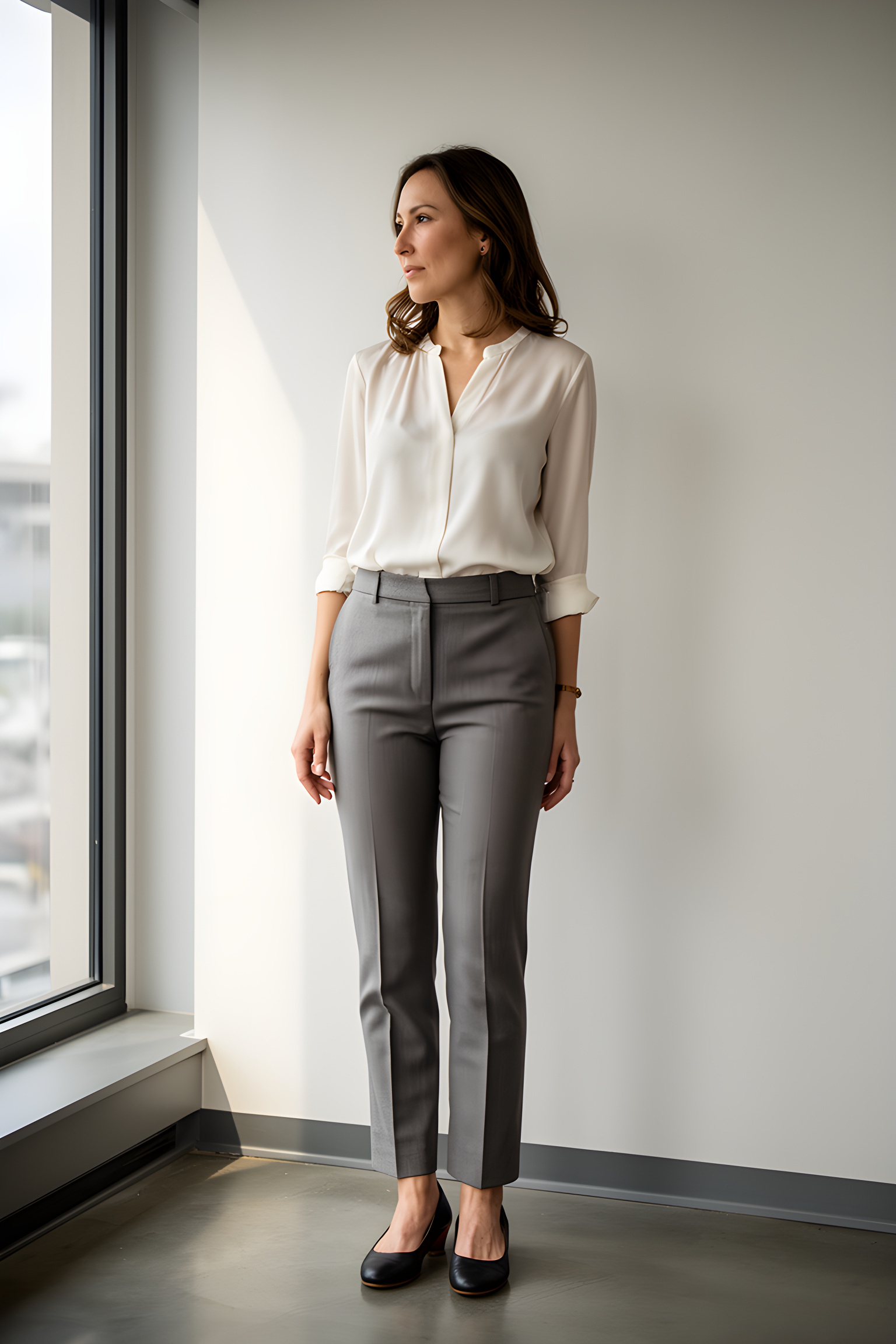
Walking into an office where some colleagues are clearly dressed for a night out while others look like they just rolled out of bed, it’s evident that there’s confusion around what casual really means in a professional setting. This judgment replaces the inadequate standard that polish can only be achieved through strict adherence to formal attire or that casual means a lack of professionalism. The misconception that dressing casually for work necessarily entails sacrificing professionalism or that being overly polished is required to be taken seriously has led many to lean towards extremes – either overdressing or underdressing.
This extreme approach often stems from uncertainty about what constitutes appropriate casual attire in a professional setting, as readers assume that dressing down means losing the polish that commands respect. However, genuine polish is not about adhering to traditional formal attire standards but rather about finding a balance between comfort and attention to detail within the specific context of the workplace. This nuanced understanding allows individuals to navigate the complexities of casual workday dressing with confidence, recognizing that true professionalism is not solely determined by the formality of one’s attire but by an astute grasp of what works in a given setting.
To understand why a thoughtful approach to casual workday dressing is essential, it’s crucial to delve into the specifics of what makes an outfit polished yet understated. Fabric quality, for instance, plays a significant role in achieving this balance. Natural fibers like cotton and wool offer breathability and durability, which are vital for garments that need to perform well over time. In contrast, synthetic fibers may lack the same level of comfort and can sometimes appear less refined. The construction details of a garment are also pivotal; well-made seams, precise stitching, and thoughtful lining all contribute to an overall appearance of quality.
A high-quality cotton shirt that is properly cared for can maintain its crispness and color over many wearings, presenting a polished appearance even in a casual setting. This level of consideration for the materials and construction of clothing highlights the importance of attention to detail in casual workday dressing. By focusing on these tangible aspects of clothing, individuals can better navigate the complexities of dressing for casual workdays without sacrificing professionalism, ultimately finding a balance that works within their specific workplace context. The upkeep and maintenance of clothing further underscore this importance, as how garments are washed, ironed, and stored can significantly affect their longevity and performance.
In discerning genuine quality from its nearest convincing imitation, it’s essential to examine the nuances of fabric selection, garment construction, and attention to detail. For instance, a well-crafted cotton blouse with a subtle texture and understated pattern can exude effortless polish, whereas a similarly styled synthetic top may lack the same level of sophistication due to its inherent sheen and less refined drape. The distinction lies not only in the material itself but also in how it is worked into the garment. A thoughtful approach to casual workday dressing recognizes that true quality is not solely determined by the price tag or brand name but by the tangible properties of the clothing, such as the weave, weight, and finish of the fabric.
This discernment is particularly crucial when navigating the complexities of office culture and specific tasks at hand. For example, a high-quality wool sweater in a muted color can be a versatile and polished choice for a casual workday, as it offers both warmth and a level of sophistication that can easily transition from a meeting to a collaborative work session. In contrast, a trendy but poorly constructed knit top may initially appear stylish but soon reveal its lack of quality through pilling, fading, or an unflattering fit. By focusing on the inherent qualities of the materials and construction rather than relying on fleeting fashion trends or prestige, individuals can cultivate a keen sense of discernment that serves them well in selecting attire that is both comfortable and polished for their specific workplace context.
To apply a better standard of evaluating polish based on how well an outfit balances comfort, practicality, and attention to detail within the specific context of the workplace, consider the impact of layering on achieving this balance. Layering can add depth and visual interest to an outfit while also providing flexibility in terms of adjusting to different temperatures or formalities throughout the day. For instance, a lightweight, high-quality blouse made from a natural fiber like silk or cotton can serve as a versatile base layer. Over this, a tailored cardigan or blazer can be added to elevate the outfit for meetings or presentations, and then easily removed to transition back to a more casual setting.
The key to successful layering lies in selecting pieces that not only complement each other in terms of color and texture but also contribute to an overall polished appearance. This might involve choosing a bottom layer with a subtle pattern or texture that adds visual interest without overpowering the rest of the outfit, paired with a smoother, possibly solid-colored top layer that provides a clean backdrop for accessories or statement pieces. Furthermore, the construction of these layers is crucial; well-made seams, precise stitching, and thoughtful details such as buttonholes or zippers can significantly enhance the polish of an outfit by conveying a sense of quality and attention to detail. By thoughtfully applying this approach to layering, individuals can create outfits that are not only comfortable and practical for their specific workplace context but also polished and professional.
Evaluating polish in the context of casual workday dressing also involves considering the interplay between garment proportions and the overall silhouette they create. A well-balanced outfit is one where each piece complements the others in terms of scale, ensuring that no single item overwhelms the rest. For instance, a flowing, wide-legged pant can be effectively paired with a more fitted top to maintain visual equilibrium, while a loose-fitting blouse might be better matched with a slim-cut skirt or tailored trousers to prevent the outfit from appearing overly voluminous. The polish of an outfit is thus enhanced when its constituent parts work in harmony to create a cohesive, considered whole, reflecting an emphasis on attention to detail and practicality within the specific workplace context. By paying heed to these subtleties of proportion and silhouette, individuals can cultivate a keen sense of what constitutes a polished yet understated appearance, one that prioritizes comfort, functionality, and awareness of the work environment.
Ultimately, achieving polish in casual workday dressing is about striking a balance between form and function, where every element of an outfit contributes to a cohesive whole that exudes professionalism without sacrificing comfort. It’s a standard that values attention to detail, quality materials, and thoughtful construction, recognizing that these elements are essential to creating attire that not only looks polished but also performs well over time. By adopting this nuanced approach, individuals can navigate the complexities of casual workday dressing with confidence, presenting themselves in a manner that commands respect without compromising on comfort or practicality.