Category: Government

Truth on the Line: Battling Misinformation to Protect Our Elections

Dave

Elections are the cornerstone of democracy, a time when citizens decide the direction of their communities and countries. But in recent years, the rise of misinformation has put this vital process at risk, creating confusion, sowing doubt, and even changing how people vote. From wild conspiracy theories to fabricated news stories, misinformation has evolved into a serious threat to electoral integrity, and understanding how to combat it is more urgent than ever.

Misinformation spreads fast, often faster than the truth. In our age of instant communication, a simple tweet or post with misleading content can go viral in minutes, reaching thousands or even millions before the facts catch up. Social media platforms like Facebook, Twitter, and YouTube have become central to this issue, acting as both catalysts and battlegrounds for misinformation during election seasons.

Conspiracy theories, for instance, are designed to stir suspicion and often thrive in echo chambers where people seek information that confirms their beliefs. This type of misinformation plays directly on human psychology: we are more likely to share things that evoke strong emotions, like anger or fear, than dry facts. This dynamic has opened the door to bad actors who deliberately create false content to manipulate voters or disrupt the democratic process.

Misinformation doesn’t just exist in the digital sphere; it has real-life consequences. When voters are misled, their decisions at the polls are impacted, sometimes irreversibly. False information about voting locations or eligibility requirements can discourage people from voting or prevent them from casting a ballot altogether. Additionally, when people lose trust in the fairness of elections due to misinformation, it can undermine confidence in the entire democratic process.

In some cases, misinformation has even led to real-world confrontations, where people act on false beliefs. From protesting election results based on baseless claims to mistrusting election officials, the spread of misinformation is having a profound and potentially long-lasting effect on the way we experience and value democracy.

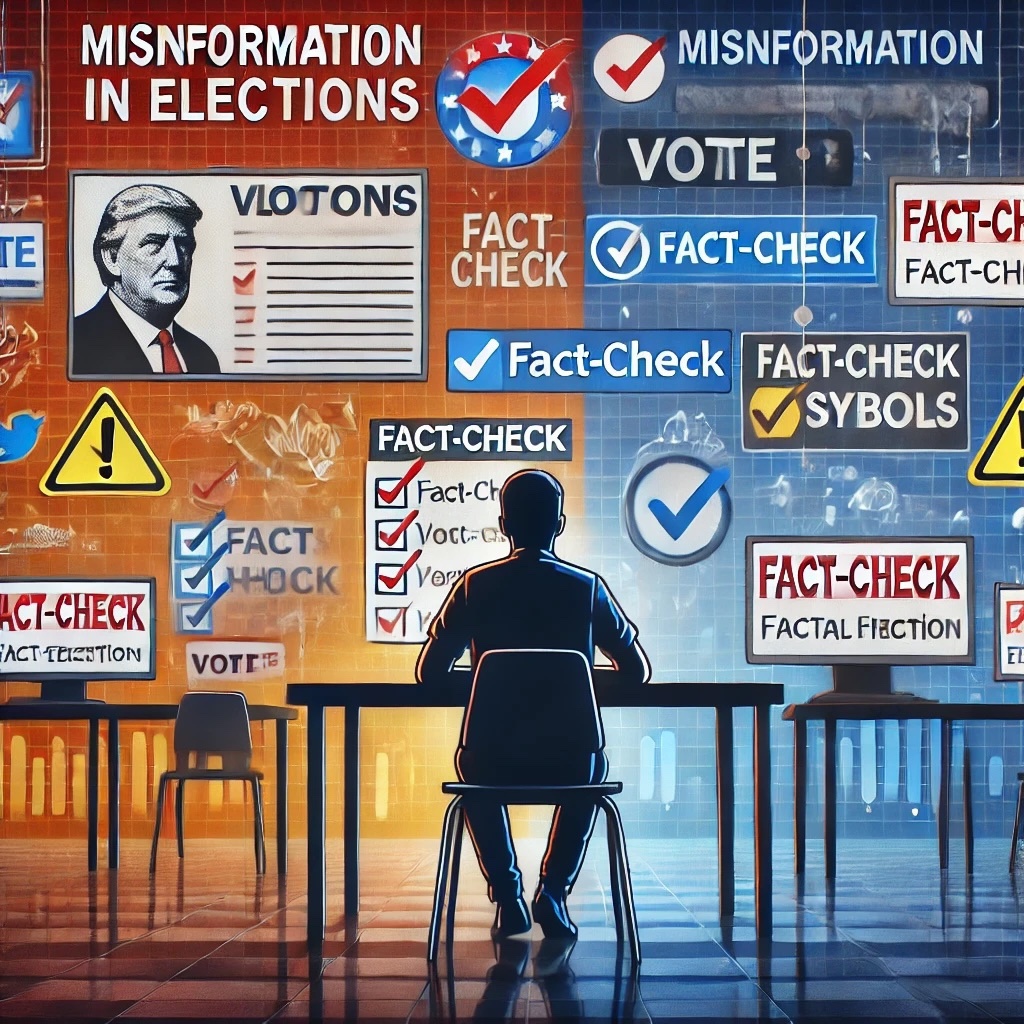
The fight against misinformation requires a multi-layered approach. Fact-checking initiatives have grown tremendously, with news organizations and independent groups verifying claims and sharing corrected information. But fact-checking alone is often not enough, as corrections rarely spread as quickly as the original misinformation.

Tech companies have stepped up with new tools to flag false content, though finding a balance between open expression and responsible moderation is challenging. For instance, some platforms now add warning labels to potentially misleading content, reducing its spread. However, the rapid pace of technology means that misinformation tactics are always evolving, pushing tech firms to remain vigilant and adaptive.

Educating the public is another vital solution. When people are equipped with critical thinking skills and know how to spot unreliable sources, they’re less likely to fall for misleading content. Schools, governments, and media organizations can work together to promote media literacy, helping citizens navigate information more wisely and make informed voting decisions.

Maintaining electoral integrity in an era of misinformation is a daunting task, but it’s one that must be pursued to protect the foundations of democracy. Each election cycle offers a chance to refine our approaches, whether through improved technology, broader education, or stronger collaboration across sectors. As misinformation continues to evolve, so too must our strategies for combating it, ensuring that when we vote, we are guided by facts, not fabrications.

The stakes are high, but the effort is worth it. When voters can trust that they’re participating in a fair and informed election, democracy becomes stronger, and society benefits as a whole. By working together to push back against misinformation, we can ensure that truth remains at the heart of our democratic process.

Related Posts

Honoring Our Heroes: The Legacy and Meaning of Veterans Day

Dave

Every November 11th, Americans come together to honor and celebrate the bravery and sacrifices of those who served in the United States Armed Forces. Veterans Day isn’t just a holiday; it’s a heartfelt tribute to millions of Americans who answered the call to serve their country. Originally celebrated as Armistice Day to mark the end of World War I, the day has evolved into a recognition of all veterans, past and present, who have contributed to the nation’s peace and freedom. Let’s take a look at the rich history, traditions, and the deeper meaning of Veterans Day and explore the ways we can all show our appreciation.

Veterans Day was originally known as Armistice Day, marking the anniversary of the end of World War I on November 11, 1918. In 1919, President Woodrow Wilson commemorated the day as a national holiday to honor those who had fought in what was, at the time, known as “the war to end all wars.” However, after the end of World War II and the Korean War, Americans felt the need for a holiday that would honor all U.S. veterans, not only those who had fought in WWI. In 1954, President Dwight D. Eisenhower signed legislation officially renaming the holiday to Veterans Day.

The spirit of Armistice Day—honoring peace and those who sacrificed for it—remains a central part of Veterans Day, but the holiday now recognizes the broader legacy of all service members. Each branch of the military—Army, Navy, Air Force, Marine Corps, Space Force, and Coast Guard—is honored, and Americans come together to pay tribute to those who dedicated themselves to protect their country and uphold democratic values.

Veterans Day is observed with a variety of ceremonies, parades, and gatherings that bring communities together. One of the most iconic traditions is the wreath-laying ceremony at the Tomb of the Unknown Soldier in Arlington National Cemetery. This solemn event honors the unidentified service members who died in defense of the country, serving as a powerful symbol of respect for the unknown but never forgotten.

Across the nation, parades fill the streets, schools hold assemblies, and veterans are often given the chance to share their stories. Many communities organize events where veterans and civilians can come together, allowing younger generations to hear firsthand about the experiences and sacrifices of those who served. Schools may also invite veterans to speak, helping children understand the value of service and the importance of honoring those who contribute to the nation’s security and values.

While honoring veterans on November 11th is meaningful, many people want to find ways to support veterans year-round. Veterans often face unique challenges as they transition to civilian life, including finding employment, accessing healthcare, and coping with mental health concerns. Volunteering at organizations that provide job placement assistance, therapy, housing, and social support can be a powerful way to give back to those who have given so much.

Many also choose to support businesses owned by veterans or to donate to charities like the Wounded Warrior Project, Veterans of Foreign Wars (VFW), and Fisher House Foundation. These organizations provide critical support, from medical assistance to scholarships and career resources. Every gesture, whether large or small, is a way of saying “thank you” to those who sacrificed so much for the nation’s freedom.

Veterans Day is more than a day on the calendar; it’s a reminder of the courage, dedication, and resilience that shape the nation’s character. As Americans, taking time to reflect on and appreciate the sacrifices made by veterans is an opportunity to recognize the liberties we sometimes take for granted. Their bravery, endurance, and willingness to serve inspire us to do our part in creating a society that values freedom, justice, and unity.

This Veterans Day, let’s honor not only the service members of the past but also those who continue to serve today. Let us remember that their sacrifices are not merely history—they are the foundation of our present and future freedoms. With every gesture of gratitude, we can show veterans and their families that we will always honor their service and cherish their commitment to the ideals of our nation.

Related Posts

Tweets, Trends, and Tactics: How Social Media Shapes Today’s Campaigns

Dave

Gone are the days when political campaigns relied solely on TV ads and public speeches. Today, social media platforms like Twitter, Facebook, and TikTok are where much of the political action happens. Campaigns have turned to these platforms not just as tools for connecting with voters but as powerful forces capable of swaying public opinion, driving engagement, and even changing the course of elections. But how exactly do these platforms shape the electoral landscape? Let’s take a closer look at the dynamic role of social media in modern political campaigns.

Social media allows politicians to connect with voters instantly, bypassing traditional media filters. Whether it’s a tweet from a candidate or a Facebook post from a campaign manager, information reaches voters in real time, giving candidates unprecedented control over their messaging. This immediate access means campaigns can quickly respond to events, issue clarifications, or reinforce their positions. However, the 24/7 nature of social media also makes campaigns vulnerable to missteps, where a single tweet or post can spark controversy.

One of the biggest advantages of social media is its ability to target specific audiences through ads. Platforms like Facebook and Instagram collect extensive data on users, allowing campaigns to segment voters based on demographics, interests, and even previous voting behavior. This data-driven approach lets campaigns tailor messages to resonate with specific groups, whether young voters on TikTok or suburban parents on Facebook. While effective, this level of targeting has raised questions about privacy and transparency, as well as concerns about echo chambers where voters see only content that aligns with their views.

TikTok dances, memes, and viral challenges might seem trivial, but they have become powerful tools for campaigns to engage young voters. Social media trends can rapidly amplify campaign messages, making politics more accessible and relatable to audiences who may not engage with traditional news. Memes, in particular, allow campaigns to express complex issues in simple, often humorous ways that are easy to share. However, these trends can be unpredictable, and what works for one candidate may backfire on another, as younger audiences are often quick to detect and reject inauthenticity.

Social media has also become a home for grassroots movements, where everyday people can organize, advocate, and fundraise for causes they care about. Platforms like Twitter and Instagram have helped drive movements around social justice, climate action, and healthcare reform. These movements can boost campaign visibility and even pressure candidates to address specific issues. For example, hashtags like #BlackLivesMatter and #MeToo started as grassroots campaigns on social media but grew into national conversations that have influenced political agendas and candidate platforms.

While social media offers new ways to reach voters, it also poses challenges, especially around misinformation. Fake news stories, manipulated images, and deepfake videos can quickly spread, influencing voter perceptions before fact-checkers can intervene. Campaigns must not only navigate these risks but also work to build trust and counter misinformation. In response, platforms have introduced fact-checking features, but the sheer volume of content makes it difficult to monitor everything effectively.

As social media continues to evolve, so will its role in elections. The platforms we rely on today may look completely different in the next election cycle, but one thing is clear: digital engagement is here to stay. Candidates who understand and harness the power of social media will continue to have an edge, as they can reach voters where they already are—scrolling, posting, and sharing online.

In the world of modern campaigns, social media is not just a tool; it’s a battleground, a megaphone, and a digital handshake. For better or worse, it has forever changed the way we experience politics.

Related Posts

Electoral Systems Around the Globe: How Different Methods Shape Democracies

Dave

The way votes are counted can drastically change the outcome of an election, but how much do we really understand about these methods? Around the world, countries use various electoral systems to select leaders, each with its own set of strengths and weaknesses. Let’s dive into three major systems—proportional representation, first-past-the-post, and ranked-choice voting—and explore how they influence political landscapes, voter satisfaction, and even social cohesion.

In a proportional representation (PR) system, the number of seats a party wins is directly proportional to the number of votes it receives. This system is popular in many European countries, such as Germany and Sweden. PR is known for producing diverse, multi-party legislatures because it encourages smaller parties to compete. Voters here feel their voices are more accurately represented since even a minority of votes can lead to a party gaining seats. However, PR systems sometimes lead to coalition governments, which can make decision-making a more collaborative but potentially slower process.

The first-past-the-post (FPTP) system, used in countries like the United States, United Kingdom, and India, is known for its simplicity. In each electoral district, the candidate who receives the most votes wins, regardless of whether they achieve an absolute majority. While this method is straightforward and often leads to stable, majority governments, it tends to favor larger parties, making it difficult for smaller parties to gain traction. Critics argue that FPTP can lead to “wasted” votes, where many people feel their voices aren’t heard if they vote for a losing candidate.

Ranked-choice voting (RCV) allows voters to rank candidates in order of preference. If no candidate receives an outright majority, the candidate with the fewest votes is eliminated, and their votes are redistributed according to voters’ next preferences. This process repeats until a candidate reaches a majority. RCV, used in places like Australia and certain U.S. cities, promotes greater voter satisfaction by ensuring that winners have broader support. It also encourages candidates to appeal to a wider audience, potentially reducing divisive campaigning. However, RCV is complex to administer, which can sometimes confuse voters.

These different systems are more than just methods of counting votes; they shape the entire political culture of a country. Proportional representation tends to foster multi-party systems and encourage compromise, while first-past-the-post often creates a two-party landscape with clearer, though sometimes polarized, policy positions. Ranked-choice voting offers a middle ground by allowing voters to express more nuanced preferences, which can reduce polarization and lead to candidates with broader appeal.

Ultimately, the choice of electoral system reflects the values and priorities of each society. As more people become aware of these differences, discussions about reform and the adaptability of these systems to their own communities grow. Each method carries the potential to reflect democracy in unique ways.

Related Posts

The People’s Voice: How Voting Rights Have Evolved to Reflect a True Democracy

Dave

From exclusion to empowerment, the story of voting rights in the United States is one of resilience, courage, and a continuous push toward fairness. At the heart of this journey is a fundamental principle: everyone deserves a voice in the decisions that shape their lives. But the road to universal suffrage has been long and winding, marked by key milestones and fierce battles for equality. Let’s take a look at how voting rights have evolved over the years, focusing on landmark moments like the 19th Amendment, the Voting Rights Act, and recent efforts to ensure all voices are heard.

When the United States was founded, voting was far from universal. In the late 18th century, the right to vote was largely restricted to white, land-owning men. This limited concept of who “deserved” to vote left out entire populations—women, people of color, and individuals who didn’t meet property qualifications. As the nation grew, so did the belief that more citizens should have a say in governance. However, it would take well over a century for substantial changes to emerge.

The fight for women’s suffrage was a turning point in American history, marked by the passionate activism of women like Susan B. Anthony, Elizabeth Cady Stanton, and countless others. For decades, women organized, marched, and protested for the right to vote. Their efforts culminated in the ratification of the 19th Amendment in 1920, a landmark achievement that granted women the right to vote. This amendment was monumental, not just because it expanded the electorate but because it empowered half of the population to have a say in laws that affected them.

While the 19th Amendment was a significant step, racial discrimination continued to disenfranchise Black voters and other minority groups, especially in the South. Practices like literacy tests, poll taxes, and outright intimidation were used to prevent people of color from voting. The Civil Rights Movement, led by figures like Dr. Martin Luther King Jr., highlighted these injustices, bringing national attention to the need for change. The result was the Voting Rights Act of 1965, a sweeping piece of legislation that aimed to eliminate racial discrimination in voting. By banning literacy tests and authorizing federal oversight in areas with a history of discrimination, the act opened the door for millions of Americans to exercise their rights freely.

Today, voting rights remain a dynamic issue, as activists work to expand access in the face of new challenges. Recent years have seen an increase in state-level voter ID laws and restrictions on mail-in voting, which some argue create barriers to voting. However, technology and advocacy groups have stepped up to bridge these gaps. Initiatives like early voting, same-day registration, and online voter registration aim to make voting easier and more inclusive, especially for young people, low-income individuals, and communities of color.

The fight for voting rights is ongoing. Every generation faces new challenges to ensuring that democracy truly reflects the will of the people. Through continued efforts to secure fair and equal access, America can move closer to fulfilling its promise of a government by and for all.

This journey reminds us that voting is not just a right; it’s a symbol of equality, power, and freedom.

Related Posts

Challenging the Count: How a Presidential Candidate Can Legally Contest an Election Outcome

Dave

In the United States, the electoral process is designed to reflect the voice of the people, ensuring that each vote matters in determining who will lead the country. But in an election as high-stakes as the presidential race, there can be instances where the losing candidate believes the result does not accurately reflect the votes. In these cases, candidates have legal avenues to challenge the outcome, ensuring fairness and transparency in the democratic process. This process is crucial not only for determining a clear winner but for reinforcing public trust in the election system.

Before a candidate can contest the outcome, there must be legitimate grounds for the challenge. Generally, these grounds include allegations of fraud, counting errors, voter suppression, or other irregularities that could have affected the result. Each claim must be substantiated with evidence, as baseless claims are not enough to launch a formal contest. State and federal courts require a clear reason to re-evaluate the results of a race as significant as the presidency, meaning the candidate must show that alleged errors or issues could have influenced the election’s outcome.

One of the primary ways to contest a presidential election is through a recount. Many states have rules for automatic recounts if the margin between candidates is exceptionally narrow, often less than 1% of the total votes. However, a candidate can request a recount if they believe errors occurred in the vote-counting process, even if the margin doesn’t automatically trigger one. Recounts involve re-tallying all votes, sometimes by hand, to ensure that each vote is counted accurately. Though time-consuming, recounts provide a transparent way to verify the results without drastic legal action.

If recounts don’t resolve the concerns, the next step involves filing lawsuits in state or federal courts. These lawsuits typically claim that voting irregularities, issues with ballot access, or procedural errors impacted the election outcome. For instance, a candidate may argue that specific ballots were improperly rejected or that certain voters faced barriers to casting their ballots. Once filed, these lawsuits are handled by judges who examine the evidence, hear testimonies, and ultimately determine whether the claims hold enough merit to affect the outcome. However, the legal burden of proof is high, requiring strong evidence to justify any change in results.

If challenges persist even after recounts and lawsuits, the U.S. Constitution provides an additional avenue through the Electoral College and Congress. After voters cast ballots, the Electoral College meets to formalize the election by voting on behalf of the states. Congress then meets to count these votes, and if there are objections to the certified results, members of Congress may challenge specific electoral votes. This process requires both a House representative and a Senate member to formally object to any state’s results, prompting debate and a vote on the issue. While it’s rare, this mechanism allows for additional scrutiny of the election.

In extraordinary cases, the contest may escalate to the U.S. Supreme Court. This level of intervention is highly uncommon but was famously seen in the 2000 Bush v. Gore election, where the Court ultimately decided on the recount process in Florida. For the Supreme Court to get involved, the case must present substantial constitutional questions or demonstrate that lower courts failed to address significant issues. If the Supreme Court rules on an election issue, its decision is binding, providing a definitive answer to the contest.

The process of contesting an election isn’t just about deciding who wins. It’s about ensuring the integrity of the system itself. When candidates have the option to challenge results legally, it reassures the public that elections are fair, accurate, and transparent. This right to contest is a fundamental part of American democracy, ensuring that the electoral process remains accountable and robust. Although challenging an election outcome is a lengthy and sometimes contentious process, it serves as a vital check within the democratic system, reinforcing the legitimacy of the final result.

Contesting a presidential election is a rare and often complex process, guided by legal standards and detailed procedures. Through recounts, lawsuits, and, in some cases, congressional or judicial intervention, the United States ensures that candidates have every opportunity to verify election outcomes. By navigating this careful legal process, the country demonstrates its commitment to a fair and transparent democracy, where the voice of the people is paramount.

Related Posts

Democracy in the Details: Understanding the U.S. Election Process and How Recounts Ensure Every Vote Counts

Dave

The United States election process is a cornerstone of American democracy, where citizens come together to select leaders at all levels of government. From local offices to the presidency, elections serve as the pulse of public opinion and the mechanism by which the people shape their government. But while casting a ballot might seem simple, the process of counting, verifying, and, if necessary, recounting those votes is a meticulous affair designed to ensure fairness and accuracy.

U.S. elections follow a step-by-step process that aims to ensure that the voices of American citizens are heard. The journey starts with voter registration, where eligible citizens sign up to vote. On Election Day or during the early voting period, voters cast their ballots, often using a combination of paper ballots, optical scan systems, or electronic voting machines. Once voting ends, officials begin the complex task of counting each vote, carefully recording results and verifying accuracy.

The process may appear uniform, but each state has its own unique approach, including different voting systems and rules for what counts as a valid ballot. This variation extends to recount procedures, which are triggered under certain conditions if results are extremely close or if an error or irregularity is suspected. These procedures help maintain the integrity of elections by allowing votes to be re-examined.

When an election is exceptionally close, the results are often reviewed through a recount to verify accuracy. While recount laws vary, they generally fall into two categories: automatic recounts and requested recounts. An automatic recount occurs when the margin of victory is within a certain threshold set by state law, often as narrow as a fraction of a percentage point. In contrast, a requested recount allows a candidate, political party, or group of voters to request a recount, usually covering the cost if the margin does not meet the state’s automatic threshold.

Once a recount is approved, officials review the ballots using one of three primary methods: manual recounts, machine recounts, or a mix of both. In a manual recount, officials visually inspect each ballot to determine voter intent, especially in cases where machines may have misread markings. Machine recounts involve running ballots through a counting machine again to catch potential counting errors. A hybrid approach combines both, offering a robust check for accuracy.

Recounts play a crucial role in upholding public confidence in the election process, particularly when results are razor-thin or contested. By allowing for recounts, the U.S. ensures that even the tightest races reflect the true will of the voters. Election officials follow strict protocols to preserve ballot integrity, limit access, and maintain transparency throughout the recount process. This transparency fosters trust, ensuring that all participants—candidates, supporters, and citizens—know that the election was fair and accurate.

In a democracy, the significance of each vote cannot be overstated. Recounts, while sometimes costly and time-consuming, honor the principle that every vote matters. They also highlight the importance of a transparent, error-averse election system, reassuring the public that the final result truly reflects their collective voice. Through recounts, the democratic process shines, showing that the U.S. is committed to electoral fairness and ensuring that every vote, down to the last one, is counted correctly.

The U.S. election process and recount procedures are designed to protect the foundation of American democracy. They ensure that elections are more than just numbers on a screen—they are a true representation of the people’s choice. Through recounts, every vote is validated, and the accuracy of each election is confirmed, reinforcing trust in the electoral system and in democracy itself.

Related Posts

Decoding the Electoral College: Why Every Vote Counts Twice

Dave

Every four years, millions of Americans head to the polls to cast their vote for the next President of the United States. On the surface, it seems like a straightforward process: vote for the candidate of your choice, and whoever gets the most votes wins. But as most people eventually discover—usually after their first or second presidential election—that’s not exactly how it works. What actually determines the winner of the presidency isn’t the nationwide popular vote. Instead, it’s something called the Electoral College, a uniquely American system that is as controversial as it is complex. It’s a concept that many people learn about in high school civics class, then promptly forget or misunderstand. Yet every time there’s a presidential election, especially a close or contentious one, the Electoral College comes roaring back into the public conversation, sometimes leaving citizens confused, frustrated, or downright furious.

So, what exactly is the Electoral College, and why does it exist? The short answer is that it’s a process established in the U.S. Constitution as a compromise between those who wanted Congress to select the President and those who preferred a direct vote of the people. The Founding Fathers, grappling with how to structure a new and fragile democracy, feared giving too much power to either the masses or a centralized body. They were wary of mob rule, concerned about uninformed voters, and also deeply influenced by the tensions between large and small states. They needed a system that would balance those competing interests while trying to maintain a sense of fairness. The Electoral College was born out of that compromise—not perfect, but functional, and crafted to serve a fledgling republic still experimenting with self-governance.

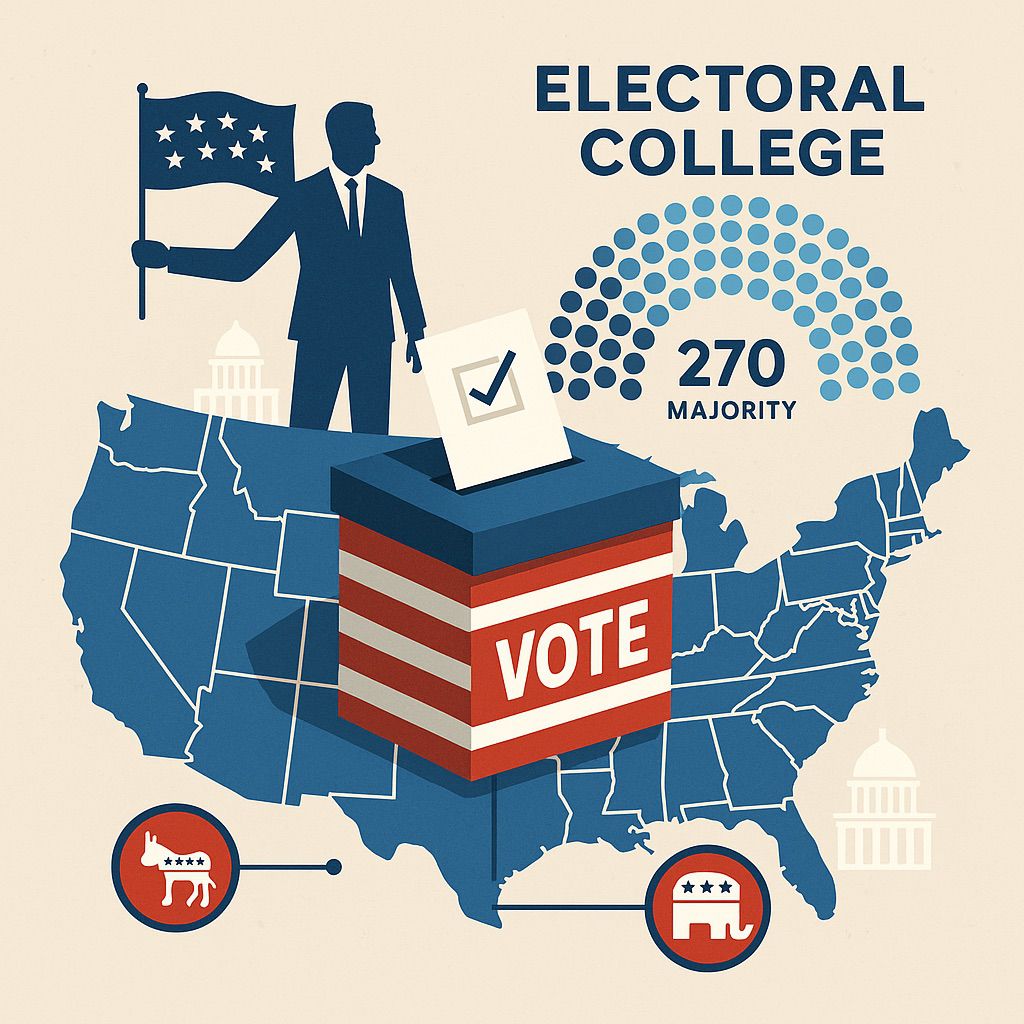
Here’s how it works in practice. Every state is allocated a number of electoral votes equal to the total number of its Senators and Representatives in Congress. Since every state has two Senators and at least one Representative, even the least populous states have a minimum of three electoral votes. In total, there are 538 electoral votes distributed across the 50 states and the District of Columbia, which, through the 23rd Amendment, gets three votes despite having no voting representation in Congress. To win the presidency, a candidate must secure a majority of those electoral votes—270 or more. If no candidate reaches that number, the decision goes to the House of Representatives, where each state delegation gets one vote to choose among the top three electoral vote-getters. That scenario is rare, but it has happened—most notably in 1800 and again in 1824.

Most states use a winner-take-all system to allocate their electoral votes. That means whichever candidate gets the most popular votes in that state gets all of its electoral votes. For example, if Candidate A wins 50.1% of the vote in Florida and Candidate B gets 49.9%, Candidate A gets all 29 of Florida’s electoral votes. It doesn’t matter if the margin is a single vote or a million. Only two states—Maine and Nebraska—break from this model. They use a proportional system based on congressional districts, awarding one electoral vote to the winner of each district and two additional votes to the statewide winner. This small variation has, on occasion, led to a split in those states’ electoral votes, but it rarely affects the national outcome.

Because of the winner-take-all approach, presidential campaigns tend to focus heavily on so-called “swing states”—states where the outcome is uncertain and either party has a chance of winning. These include places like Pennsylvania, Michigan, Wisconsin, Arizona, and Florida, among others. The reasoning is simple: there’s no point spending precious time and money in states that are firmly in one camp. California, for instance, reliably votes Democrat in presidential elections, while states like Alabama typically go Republican. As a result, voters in these “safe” states often feel overlooked, knowing their votes are unlikely to sway the outcome. Meanwhile, people in battleground states can find themselves inundated with campaign ads, rallies, and get-out-the-vote efforts. This uneven attention contributes to the feeling that some votes count more than others—not literally, but in terms of influence and impact.

The Electoral College also introduces the possibility that a candidate can win the presidency without winning the popular vote. This has happened five times in American history, most recently in 2016, when Donald Trump secured the presidency despite receiving nearly three million fewer votes nationwide than Hillary Clinton. It also happened in 2000, when George W. Bush won the Electoral College but lost the popular vote to Al Gore by more than half a million votes. These outcomes tend to spark intense debate, as they seem to contradict the democratic principle of “one person, one vote.” Critics argue that the system distorts representation and gives outsized influence to smaller states. For example, a voter in Wyoming has significantly more electoral power than a voter in California, simply because of the way the votes are distributed relative to population.

Supporters of the Electoral College, however, argue that it serves important functions. They point out that it forces candidates to build a broad, geographically diverse coalition to win—not just rack up votes in major urban centers. Without the Electoral College, they contend, candidates might only campaign in big cities like New York, Los Angeles, or Chicago and ignore rural areas entirely. They also argue that the system preserves the federal character of the United States, where states retain a certain degree of sovereignty and influence. The idea is that America is not a single unified nation, but a union of states, each with its own identity and interests. The Electoral College reflects that reality, giving each state a voice in the selection of the nation’s leader.

Still, the criticisms are not without merit. The disparity in electoral weight among states can feel jarring. Consider this: in 2020, there were roughly 193,000 people per electoral vote in Wyoming, but nearly 719,000 per vote in California. That means an individual vote in Wyoming carried almost four times the weight of a vote in California. While the Senate is also structured in a way that overrepresents small states, the impact is more acute in the presidency because it’s a single, national office. And unlike the Senate, where state populations were deliberately equalized by the Founders, the Electoral College is not based solely on a principle of balance—it mixes population-based and equal-state representation, often to perplexing effect.

Efforts to reform or abolish the Electoral College have been around almost as long as the system itself. Over the centuries, dozens of constitutional amendments have been proposed to eliminate it. The most significant push came after the 1968 election, when Richard Nixon won with just 43% of the popular vote in a highly fractured race. A bipartisan proposal to move to a direct popular vote passed the House but died in the Senate due to a filibuster. Since then, momentum for reform has come and gone, often gaining steam after controversial elections and then fading from public discourse. One of the most promising modern alternatives is the National Popular Vote Interstate Compact—a coalition of states pledging to award their electoral votes to the candidate who wins the national popular vote, regardless of their state’s individual outcome. The compact won’t take effect until enough states sign on to reach the 270-vote threshold. As of now, it’s about two-thirds of the way there.

For all its flaws, the Electoral College is deeply embedded in the U.S. political system. Changing it would require a constitutional amendment or a massive shift in public opinion and political will—both difficult prospects in a polarized era. Yet understanding how it works is essential to understanding American democracy. It’s not enough to say the system is broken or outdated without knowing how and why it came to be, and what purpose it’s meant to serve. Democracy is not just about casting a vote—it’s about knowing how that vote fits into the larger machinery of governance. The Electoral College is one of the gears in that machinery. It’s not perfect. It wasn’t designed to be. It was designed to function in a complex republic with competing interests and regional differences.

And here’s the human truth behind all the rules, numbers, and constitutional jargon: the Electoral College affects real people. It affects how campaigns are run, how voters feel represented, and how trust in the democratic process is built—or eroded. When a voter casts a ballot in a state where the outcome feels preordained, they might ask themselves, “Does my vote even matter?” That question doesn’t just reflect confusion; it reflects a sense of disconnection from the process, a sense that the system doesn’t see them. When the results of an election don’t align with the popular vote, some feel robbed, others feel vindicated, and still others feel something worse: apathy. That’s the danger of any system that feels too abstract, too mathematical, too removed from the people it’s meant to serve.

But the solution isn’t simple. Every reform idea brings its own complications. A direct popular vote sounds fairer in theory, but it also raises concerns about logistics, fraud, recounts, and regional dominance. Should the cities rule the countryside, or vice versa? Should every vote be weighed exactly the same, regardless of where it’s cast, or should geography and federalism play a role? These aren’t easy questions, and there’s no consensus answer. What there is, however, is a need for honest discussion—a willingness to look at the Electoral College not as a relic or a sacred cow, but as a tool. And like any tool, it should be judged by how well it performs the job we ask it to do.

In the end, the Electoral College is a reflection of America itself: complicated, contradictory, and always evolving. It forces us to wrestle with what kind of democracy we really want. Is it one where the majority always rules, or one where the structure tempers the passions of the moment? Is it one where every vote counts the same, or one where states have distinct voices in choosing national leaders? These aren’t theoretical debates—they’re conversations with consequences, ones that shape who leads the country, how they lead, and how legitimacy is conferred. Understanding the Electoral College means understanding a fundamental part of what it means to live in the United States, to participate in its grand, imperfect experiment.

For better or worse, every election is a reminder that this system is still very much in motion. Each vote cast, each state counted, each winner declared—all of it travels through a process designed in the 18th century and still unfolding in the 21st. Maybe that’s what makes the Electoral College so frustrating, and so fascinating. It’s not just about math. It’s about identity. It’s about trust. It’s about how 330 million people, scattered across an enormous and diverse nation, choose one person to represent them all.

Related Posts

Peace Across the Pond: How the Treaty of Ghent Ended the War of 1812

Dave

The Treaty of Ghent, signed on December 24, 1814, brought an official end to the War of 1812, a conflict that had deeply strained relations between the United States and Britain. The war itself was fueled by longstanding tensions, including British restrictions on American trade and forced recruitment of American sailors into the British Navy. The United States viewed these actions as provocations, while Britain, still entrenched in its battles against Napoleon in Europe, saw them as necessary.

The road to peace began when both countries realized the prolonged war was damaging to their economies and stability. The Treaty of Ghent negotiations took place in the quiet European city of Ghent, now part of Belgium, where American and British representatives met to reach common ground. Remarkably, the treaty largely restored the borders and relations between the two nations to pre-war conditions. This “status quo ante bellum” approach—returning things to how they were before the war—was unusual, as treaties often led to territorial changes or shifts in power. Instead, the treaty aimed for a broader peace and enduring stability.

The treaty’s impacts rippled far beyond the battlefield. In the United States, the end of the war spurred a sense of national unity and paved the way for economic growth and expansion. For Britain, it allowed a renewed focus on European conflicts and the eventual downfall of Napoleon. The War of 1812 and the Treaty of Ghent served as the last armed conflict between the United States and Britain, who later became close allies. The treaty, in effect, set the stage for the “Special Relationship” the two nations would develop in the 20th century, shifting from rivals to partners on the world stage.

The Treaty of Ghent reminds us that diplomacy, though complex, can bring lasting peace even when conflicts seem intractable. In 1814, across the Atlantic, leaders set aside their swords and signed a document that changed the course of history, showing that peace, often more enduring than war, can come from mutual respect and shared interests.

Related Posts

The Rise of Exhibition World Bahrain: A Game-Changer for the MICE Industry

Dave

In the heart of the Gulf, Bahrain is making waves in a region renowned for its impressive infrastructure and business acumen. With the grand opening of Exhibition World Bahrain, the nation is stepping up its game to establish itself as a global hub for the MICE (Meetings, Incentives, Conferences, and Exhibitions) industry. This development is poised to not only strengthen Bahrain’s position in the Middle East but also bring substantial economic growth, increase tourism, and foster new opportunities for both businesses and professionals across the world.

Bahrain has long been an important financial and trade center in the Gulf, but now, with the construction of one of the largest conference centers in the Middle East, it is positioning itself as a prime location for international events. The Exhibition World Bahrain, located in the city of Sakhir, stands out with its 10,000 square meters of exhibition space, making it one of the largest venues in the region. Its advanced facilities and state-of-the-art technology are designed to accommodate a diverse range of events, from large-scale exhibitions to intimate business conferences.

The vision behind this monumental project is to elevate Bahrain’s role in the global MICE sector and contribute to the economic diversification strategy outlined in its Economic Vision 2030. This includes creating more jobs, encouraging foreign investment, and boosting the tourism industry.

The launch of Exhibition World Bahrain is expected to have a ripple effect on both the local economy and the region’s global standing. The influx of international visitors, industry professionals, and corporations will drive demand for local hotels, restaurants, and transport services. Additionally, Bahrain’s status as a MICE hub is likely to strengthen its relationships with key international players across industries like finance, technology, and education.

Moreover, the development is aligned with Bahrain’s wider vision to become a leader in sustainable event management. Exhibition World Bahrain incorporates cutting-edge green technologies and environmentally friendly practices, making it an attractive destination for eco-conscious businesses and organizations. This commitment to sustainability further enhances its appeal to the global community.

Bahrain’s new venue stands as a testament to the country’s dedication to expanding its role in the MICE industry. As a smaller Gulf state, it benefits from its unique position—offering a more intimate, accessible setting compared to the larger neighboring cities of Dubai and Riyadh. Yet, the country’s global vision remains expansive. Exhibition World Bahrain promises to be a prime destination for major international events, supporting Bahrain’s broader ambition to be a leader in not just business, but also in regional tourism and hospitality.

The center is also expected to encourage innovation and cross-border collaborations, which are essential in an increasingly interconnected world. With the ability to host large-scale conferences, expos, and corporate gatherings, Bahrain is set to become an attractive venue for companies to engage with new markets, ideas, and partners.

The opening of Exhibition World Bahrain is more than just an architectural feat—it is a signal of Bahrain’s commitment to shaping the future of the MICE industry in the Middle East. As global businesses continue to seek opportunities for networking, collaboration, and growth, Bahrain is positioning itself as a forward-thinking, dynamic hub that offers world-class facilities, unique cultural experiences, and an unmatched level of accessibility.

With sustainability at its core and innovation driving its future, Bahrain is set to be at the forefront of the MICE sector for years to come. The vision is clear: Bahrain is ready to host the world.

Related Posts

The Treaty That Shaped Empires: How the Portsmouth Agreement Redefined Global Power in 1905

Dave

In the early 20th century, the world witnessed a clash between two rising empires, Russia and Japan, in what became known as the Russo-Japanese War. This conflict, fought over control of Korea and Manchuria, signaled a power struggle that would change the balance of power in East Asia and the world. The war, fought from 1904 to 1905, was brought to an end not on the battlefield, but through diplomacy. The Treaty of Portsmouth, signed in September 1905, became the key to resolving this conflict, but its implications rippled far beyond the two warring nations.

The Rise of Japan and Decline of Russia
Japan, a nation that had rapidly modernized following the Meiji Restoration, had begun to assert itself as a major power in East Asia. It was eager to expand its influence, particularly in Korea and China, regions where Russia was also vying for control. The Russo-Japanese War erupted as the two nations clashed over territorial ambitions, with Japan launching a surprise attack on the Russian fleet in Port Arthur. To the surprise of many in the West, Japan proved a formidable opponent, winning decisive victories both at sea and on land.

Russia, meanwhile, struggled with internal unrest and logistical challenges, which hampered its ability to fight effectively. As the war dragged on, both sides grew weary, and the cost of the conflict became too great to bear. It was clear that the war could not continue indefinitely, and diplomacy was the only viable solution.

Diplomacy at Portsmouth
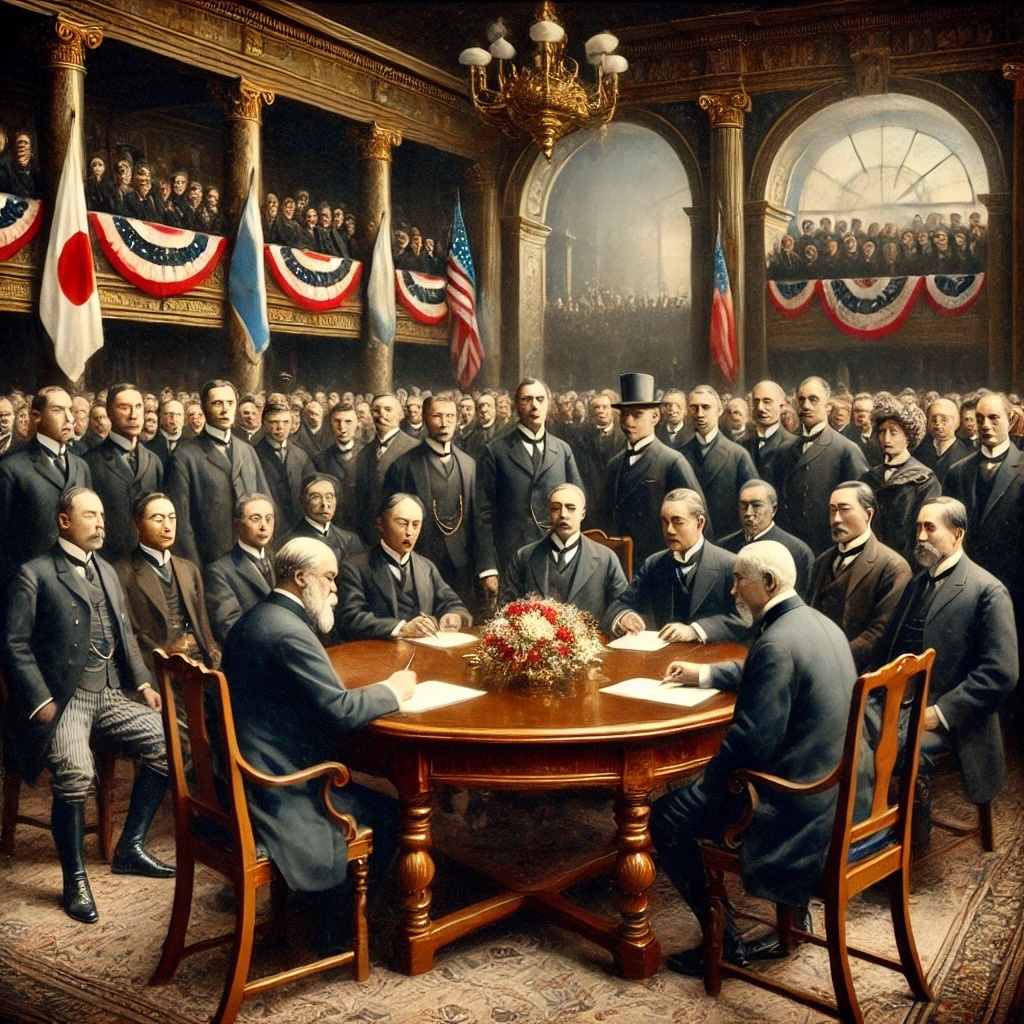
President Theodore Roosevelt of the United States, seeing an opportunity to mediate between the two powers, invited representatives from both nations to Portsmouth, New Hampshire. The negotiations were tense, with neither side willing to give up their ambitions easily. However, under Roosevelt’s guidance, a compromise was reached. Japan would gain control of Korea and parts of Manchuria, while Russia would retain influence in northern Manchuria but cede Port Arthur and the southern half of Sakhalin Island.

The Treaty of Portsmouth marked the end of the Russo-Japanese War and established Japan as a dominant force in East Asia, while Russia’s defeat weakened its influence in the region. More importantly, it was the first time an Asian power had defeated a European nation in modern warfare, a development that shocked the global community and shifted perceptions of racial and national hierarchies.

Global Impact and Legacy
The Treaty of Portsmouth had far-reaching consequences. Japan’s victory inspired nationalist movements across Asia, as colonized peoples saw that a non-Western nation could challenge and defeat a European power. It also laid the groundwork for Japan’s later expansionist policies, which would ultimately lead to its involvement in World War II.

For Russia, the defeat contributed to growing domestic unrest, which would culminate in the Russian Revolution of 1917. The Treaty of Portsmouth was a turning point in global geopolitics, symbolizing the rise of Japan as a world power and the beginning of the end for the old European-dominated world order.

Roosevelt’s role in mediating the treaty earned him the Nobel Peace Prize, marking the first time a U.S. president received the honor. The Portsmouth agreement thus not only ended a war but also showcased the growing influence of the United States in international diplomacy.

In retrospect, the Treaty of Portsmouth was not just a resolution to a regional conflict; it was a moment that reshaped global power dynamics and heralded the emergence of new players on the world stage. It remains a testament to the power of diplomacy in resolving even the most intense of conflicts.

Related Posts

Safeguarding Democracy: How the U.S. Keeps Election Fraud in Check

Dave

Election fraud has long been a topic of debate and concern, especially in a country as large and diverse as the United States. Ensuring that every vote is counted fairly and accurately is vital for maintaining trust in the democratic process. But how exactly does the U.S. prevent election fraud? Let’s break down the layers of protection and transparency that help keep the nation’s elections secure.

Voter Registration: The First Line of Defense
The first step in preventing election fraud begins with voter registration. Across the U.S., citizens are required to register before they can vote. This ensures that only eligible voters—those who meet residency, age, and citizenship requirements—are able to cast ballots. Many states have implemented online registration systems and automatic registration through driver’s license renewals, helping to create a robust, up-to-date voter list while making it harder for ineligible individuals to vote.

Voter ID Laws
One of the more debated tools in preventing election fraud is the implementation of voter ID laws. While these laws vary from state to state, they generally require voters to present a form of identification before casting their ballot. Proponents argue that this measure helps confirm a person’s identity and prevent instances of impersonation or double voting. Opponents, however, raise concerns that voter ID laws can be a barrier for certain groups, including minorities and low-income individuals. Nevertheless, in states where voter ID laws are enforced, they serve as a critical tool for protecting the integrity of elections.

Absentee and Mail-In Voting Protections
Absentee and mail-in voting have been essential parts of the U.S. election process, especially during the COVID-19 pandemic. To prevent fraud in mail-in voting, several safeguards are in place. Ballots are tracked from the moment they are requested to ensure that each voter only submits one ballot. Voter signatures are often required on both the ballot and the outer envelope, and these signatures are compared to those on file before the vote is counted. Additionally, many states use barcode systems to track the status of a mailed ballot, providing voters and election officials alike with a transparent view of the process.

Secure Voting Technology
The U.S. takes election security seriously when it comes to the technology used in the voting process. While some states still use paper ballots, others have shifted to electronic voting machines. To prevent tampering or hacking, these machines are required to meet stringent federal security standards. Many states also mandate that voting machines produce a paper trail that can be audited to ensure the accuracy of the results. Regular testing and certification of voting equipment, as well as cybersecurity measures, help reduce the risk of external interference.

Post-Election Audits and Investigations
Once an election is complete, many states conduct audits of the results to ensure that no discrepancies have occurred. These post-election audits compare the electronic vote count to paper records (if available) to verify the accuracy of the results. In cases where fraud is suspected, law enforcement agencies can launch investigations, often in coordination with federal entities like the FBI. Such thorough checks and balances ensure that the system remains fair and transparent.

Bipartisan Oversight and Public Transparency
One of the most critical factors in preventing election fraud is the involvement of both major political parties in overseeing elections. Election workers, observers, and officials from both parties are often present at polling places and during the vote counting process, ensuring that no single party has undue influence over the results. Additionally, public transparency, such as the ability to view live streams of ballot counting, adds another layer of accountability.

The Bottom Line: A Secure Process
While no system is perfect, the U.S. has put in place a wide range of safeguards to prevent election fraud. From voter registration and ID requirements to post-election audits and bipartisan oversight, these protections ensure that elections are as fair and secure as possible, preserving the trust that Americans place in their democratic process.

Related Posts

Communism vs. Democracy: Who’s Really Winning the 100-Year Race?

Dave

Over the past century, the ideological tug-of-war between communism and democracy has played out on a global stage, shaping governments, economies, and societies. Both have undergone transformations, but which system has advanced further in the last 100 years? Let’s dive into this question by examining key areas like political freedoms, economic growth, and societal progress.

The Evolution of Democracy
Democracy, at its core, is about giving power to the people, and this idea has continued to evolve. In the early 20th century, democratic nations were largely limited to Europe and the Americas. Fast forward 100 years, and democracy has expanded across the globe, albeit unevenly. Today, over half of the world’s countries claim some form of democracy. In this time, democratic societies have seen enormous technological advancements, substantial economic growth, and a general increase in civil liberties and human rights. The rise of social movements, women’s suffrage, and the fight for equality are all hallmarks of democracy’s progress.

However, democracy hasn’t been without its challenges. In recent years, issues like political polarization, corruption, and disinformation have tested the resilience of democratic systems. But the adaptability of democratic institutions has allowed them to evolve and address new problems, making democracy a system that, while imperfect, continues to offer opportunities for growth and reform.

The Path of Communism
Communism, on the other hand, started with grand promises of equality, classlessness, and shared wealth. After the Russian Revolution in 1917, communism spread to multiple regions, most notably China, Cuba, and parts of Eastern Europe. In the mid-20th century, communism seemed poised for massive global influence. But as the 20th century progressed, many communist regimes faltered. The Soviet Union collapsed, and various Eastern European countries shifted towards democracy and capitalism. China, while still governed by the Communist Party, has embraced market reforms that blur the lines between capitalism and communism.

That said, communism’s lasting legacy has been its focus on collective welfare and attempts at reducing extreme economic inequality. However, these gains often came at the cost of personal freedoms, innovation, and efficiency. In the past 100 years, while communism has made strides in lifting certain populations out of poverty (as seen in China’s economic rise), the broader communist movement has faced stagnation. The inherent centralization of power in communist regimes has stifled individual freedoms and creativity, making it less adaptable in a rapidly changing world.

Who’s Leading the Race?
When measuring progress over the last 100 years, democracy seems to have made the greater strides. While flawed, democracy has shown remarkable resilience and adaptability, creating societies where human rights, innovation, and individual freedoms can flourish. The success of democratic nations in fostering economic prosperity and technological innovation is a testament to this.

Communism, while offering important lessons on economic inequality and collective welfare, has struggled to evolve without suppressing individual freedoms. With its restrictive governance model, it hasn’t kept pace with the economic and social advancements seen in democratic nations.

In short, democracy has surged ahead in the race, but it’s not an uncontested victory. Both ideologies have shaped the world in significant ways, and the future will continue to test the adaptability and resilience of each system.

Related Posts

Qatar: The Pearl of the Arabian Peninsula

Dave

Qatar, a small yet strikingly influential nation on the Arabian Peninsula, has rapidly emerged as a global powerhouse. Known for its vast natural gas reserves, cutting-edge architecture, and rich cultural heritage, this country offers a unique blend of tradition and modernity. Despite its size, Qatar has managed to make a name for itself on the world stage, particularly through its bold vision for the future and its role as a host for international events like the 2022 FIFA World Cup.

Qatar’s transformation over the past few decades is nothing short of remarkable. Once a pearl-diving center, it is now one of the wealthiest nations in the world, thanks to its vast oil and gas resources. But Qatar’s ambitions extend far beyond its natural riches. The skyline of Doha, the capital, stands as a testament to the nation’s rapid development. Modern skyscrapers with innovative designs rise from the desert, while museums like the Museum of Islamic Art blend contemporary architecture with a deep respect for tradition, housing priceless artifacts that showcase the region’s rich history.

Yet, despite its modernization, Qatar remains deeply connected to its cultural roots. The Souq Waqif, a traditional marketplace in the heart of Doha, is a living symbol of this connection. Visitors can wander through narrow alleyways, discovering spices, textiles, and local handicrafts while absorbing the sounds of traders bargaining and the aromas of freshly cooked Middle Eastern dishes. It’s a sensory experience that speaks to Qatar’s commitment to preserving its heritage amidst the rapid changes.

Qatar’s influence stretches far beyond its borders. It has invested heavily in education, research, and cultural exchange, creating hubs like Education City, which houses branch campuses of some of the world’s leading universities. This focus on intellectual and cultural growth is part of Qatar’s long-term vision, encapsulated in its National Vision 2030, which aims to diversify the economy and establish the country as a leader in sustainability and knowledge-based industries.

For travelers, Qatar offers an array of experiences. Whether it’s taking a dhow boat ride along the Corniche, marveling at the sand dunes of the desert, or visiting world-class museums, there is something for everyone. Its blend of tradition, luxury, and innovation makes it a unique destination in the Gulf.

Qatar may be small, but it has big dreams. From its futuristic cities to its commitment to preserving its culture, the country stands out as a beacon of progress and ambition in the Arabian Peninsula.

Related Posts

Bahrain: A Hidden Gem of the Arabian Gulf

Dave

Nestled in the heart of the Arabian Gulf, Bahrain is a small island nation that packs a big punch when it comes to culture, history, and modernity. Often overlooked in favor of its larger neighbors, Bahrain boasts a unique blend of ancient traditions and cutting-edge innovation. From its historic pearls to its towering skyscrapers, the kingdom has long been a crossroads for trade, ideas, and people. Its name, which translates to “Two Seas,” hints at Bahrain’s deep connection to the waters that surround it and the cultural richness that has flowed through its shores for centuries.

Historically, Bahrain has been a center of commerce and diplomacy in the region, known for its once-thriving pearl industry and its status as a meeting point for traders from India, Africa, and the Middle East. Today, you can still see traces of this history in the UNESCO-listed Qal’at al-Bahrain, an ancient harbor and fortress that stands as a testament to Bahrain’s importance throughout the ages. The Bahrain National Museum also offers a fascinating glimpse into the island’s past, with artifacts dating back millennia.

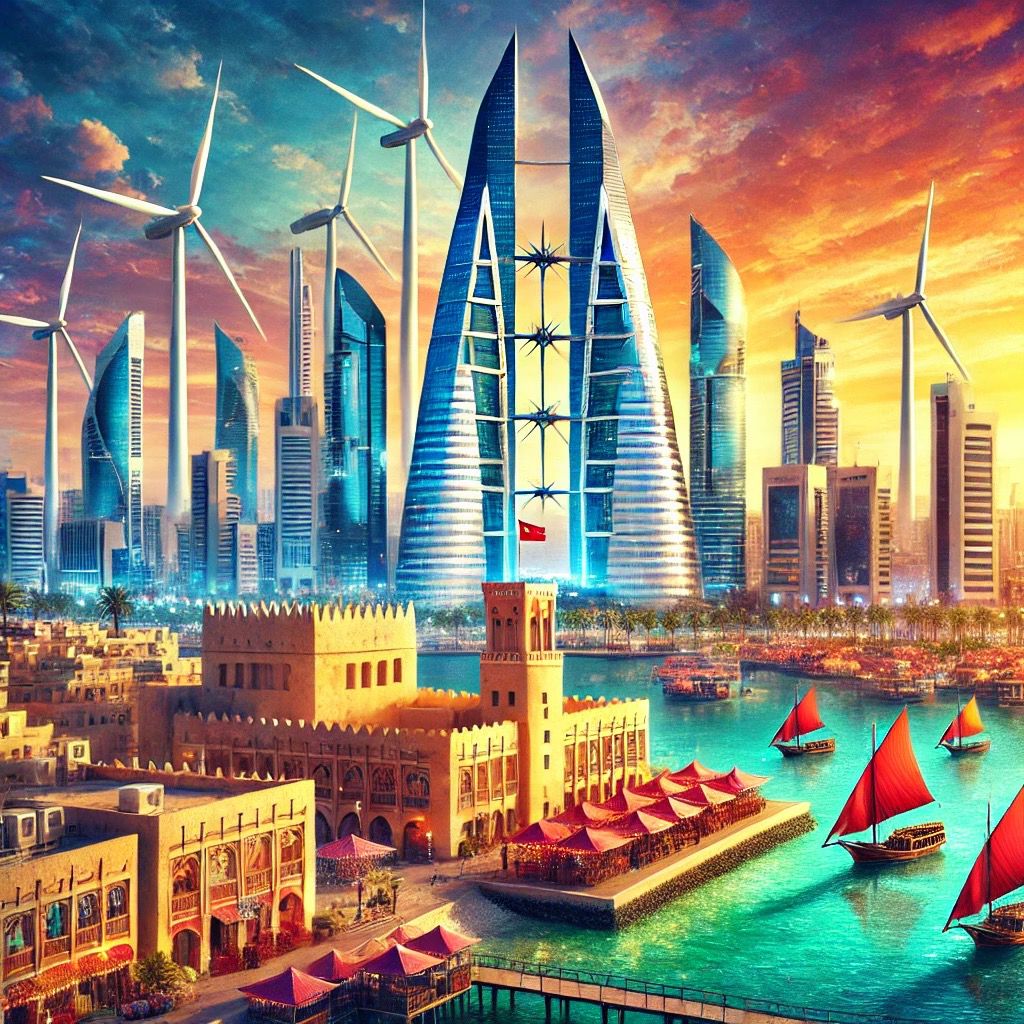
However, Bahrain is not just about looking back. Its capital, Manama, is a modern metropolis that pulses with energy and innovation. The country has embraced rapid modernization while maintaining its cultural roots. The Bahrain World Trade Center, with its iconic wind turbines, symbolizes the nation’s drive toward sustainability and forward-thinking development. The annual Formula One Grand Prix also puts Bahrain on the global map, attracting visitors from around the world to experience its unique mix of luxury and tradition.

Bahrain’s welcoming nature extends beyond its borders, as it is one of the most open and tolerant countries in the Gulf. The kingdom is known for its diversity, with a population comprising various nationalities, religions, and cultures. It has long been a hub for expats and travelers seeking a more relaxed, multicultural environment in the Middle East. Whether you’re wandering through the bustling Manama Souq in search of spices, perfumes, or gold, or relaxing at one of the island’s luxurious beach resorts, Bahrain offers something for everyone.

From the sparkling blue waters of the Arabian Gulf to the modern marvels of its skyline, Bahrain is a hidden gem that blends old and new in a way that few other places can. For those looking to explore the Middle East’s rich history while experiencing its bright future, Bahrain should be at the top of your travel list.

Related Posts

The Treaty of Westphalia: A Peace That Reshaped Europe

Dave

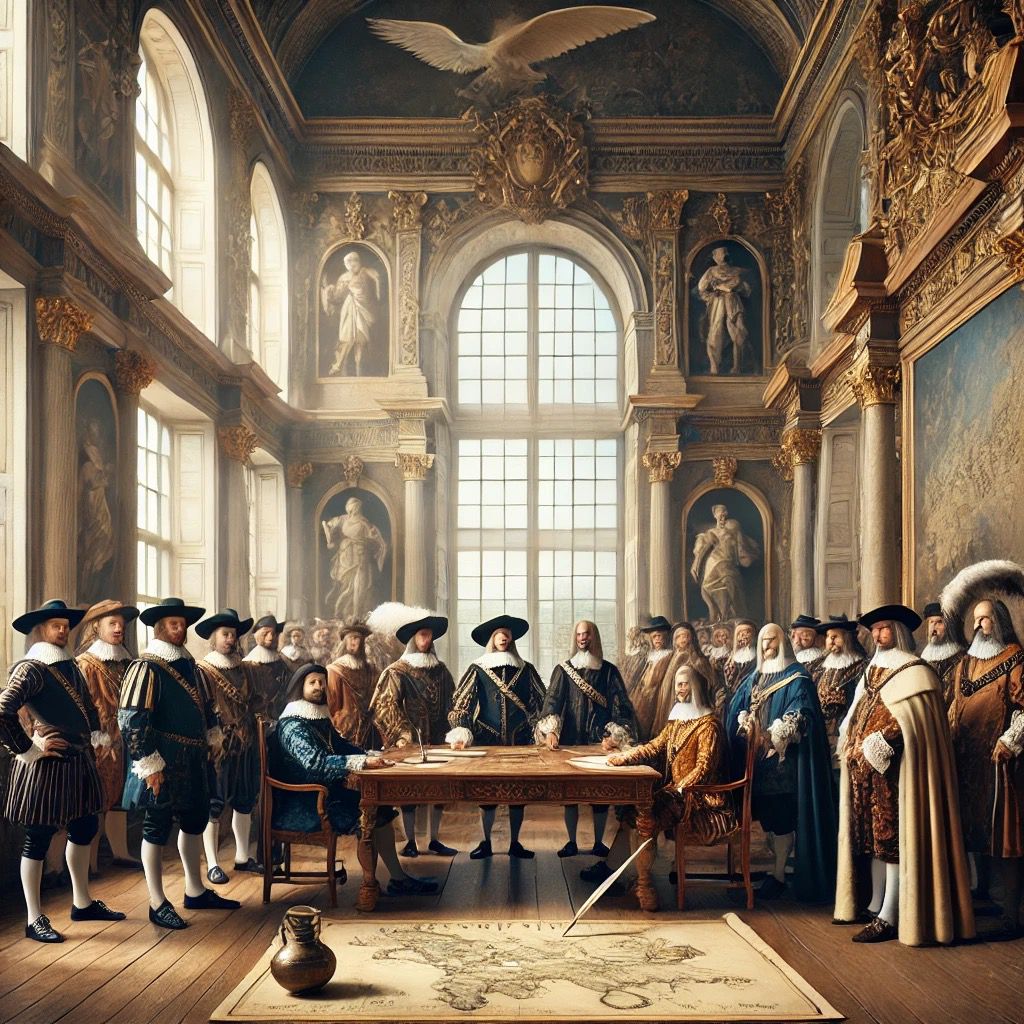
The Treaty of Westphalia, signed in 1648, stands as a pivotal moment in European history. It not only ended two devastating wars—the Thirty Years’ War within the Holy Roman Empire and the Eighty Years’ War between Spain and the Dutch Republic—but also laid the groundwork for the modern concept of state sovereignty. At a time when Europe was ravaged by conflict, religious tensions, and political fragmentation, the treaty brought about a much-needed end to widespread bloodshed, offering a glimpse of stability after decades of turmoil.

The Thirty Years’ War, which began in 1618, was initially a struggle over religious control within the fragmented Holy Roman Empire, pitting Catholic and Protestant forces against one another. However, it soon spiraled into a broader European conflict, with major powers like France, Sweden, and Spain becoming involved, each pursuing their own political agendas. The sheer scale of destruction, particularly in German territories, devastated entire regions, leading to countless deaths, famine, and economic collapse.

At the same time, the Eighty Years’ War had been raging between Spain and the Dutch Republic. What started as a rebellion by the Dutch against Spanish rule had evolved into a long and costly war for independence. By the time negotiations for peace began, both conflicts were leaving Europe drained and desperate for resolution.

The Treaty of Westphalia, a series of agreements rather than a single treaty, marked a new era. It not only granted independence to the Dutch Republic but also recognized the sovereignty of the many German principalities within the Holy Roman Empire, allowing them to determine their own religious affiliations. This principle of sovereignty—states governing themselves without outside interference—became a cornerstone of international law, shaping how nations interact to this day.

Moreover, the treaty introduced a more balanced power dynamic in Europe, reducing the influence of the Holy Roman Emperor and Spain while elevating the roles of France and Sweden. It also helped stabilize the religious landscape by reaffirming the Peace of Augsburg’s principle of “cuius regio, eius religio,” allowing rulers to choose the religion of their territory, thus tempering the intense sectarian violence that had plagued the continent.

The Treaty of Westphalia’s legacy is still felt today. By establishing the framework for modern diplomacy and the concept of national sovereignty, it ended not only two brutal wars but also set the stage for a more cooperative international order. In many ways, this treaty laid the foundations for the nation-state system we recognize today, proving that even the darkest periods of conflict can lead to lasting peace.

Related Posts

USS Bowfin: The Silent Hunter of Pearl Harbor

Dave

The USS Bowfin is more than just a submarine; it’s a powerful symbol of resilience, bravery, and the silent strength that prowled beneath the waves during World War II. Nicknamed the “Pearl Harbor Avenger,” this submarine was launched exactly one year after the attack on Pearl Harbor, on December 7, 1942. With 9 successful war patrols to its name, the Bowfin earned its reputation as a deadly force, sinking dozens of enemy vessels and showcasing the importance of stealth in naval warfare. Today, the USS Bowfin serves as a floating museum in Pearl Harbor, offering visitors a chance to step aboard and experience life in the cramped, intense quarters where brave sailors navigated the dangers of the deep. Walking through its narrow passageways, visitors can feel the weight of history and get a glimpse into the silent warfare that shaped the Pacific theater. For history buffs and adventurers alike, the Bowfin isn’t just a relic; it’s a tribute to the quiet courage of those who served beneath the surface.

Related Posts

Fort DeRussy: Where History Meets Paradise

Dave

Fort DeRussy, nestled along the vibrant coastline of Waikiki, is more than just a patch of lush greenery—it’s a site that blends Hawaii’s deep-rooted military past with the present-day allure of paradise. Originally established as a coastal defense fort in 1908, Fort DeRussy played a crucial role in Hawaii’s military history, especially during World War II. Today, this former stronghold has transformed into a serene public park that still holds remnants of its past, including the U.S. Army Museum of Hawaii. Walking through the shaded pathways, you’re reminded of the island’s resilience while the nearby golden sands and turquoise waters provide the perfect backdrop for reflection. Fort DeRussy isn’t just a park; it’s a bridge between Hawaii’s rich history and its modern-day tropical allure. Whether you’re a history buff or someone just seeking a peaceful escape amidst Waikiki’s bustling scene, Fort DeRussy offers the best of both worlds.

Related Posts

A Bridge Across Oceans: The U.S. Embassy in Wellington, New Zealand

Dave

Nestled in the heart of New Zealand’s capital, the U.S. Embassy in Wellington serves as a vital link between two nations separated by thousands of miles but united by shared values and interests. This diplomatic mission is more than just a building; it’s a hub of cultural exchange, policy collaboration, and mutual support that strengthens the bond between the United States and New Zealand.

The U.S. Embassy in Wellington plays a multifaceted role in the bilateral relationship between these two countries. It’s where American and Kiwi officials work together on a range of issues, from trade and security to environmental conservation and education.

Beyond its official duties, the embassy is deeply engaged in fostering people-to-people connections. Through various programs and events, it promotes cultural exchange, bringing Americans and New Zealanders closer together. Whether it’s showcasing American films, hosting educational workshops, or supporting community projects, the embassy helps bridge the cultural gap and build lasting friendships across the Pacific.

The embassy also plays a crucial role in supporting U.S. businesses in New Zealand, helping to open doors for American companies and facilitating economic ties that benefit both nations. In an increasingly globalized world, these economic connections are more important than ever, contributing to prosperity on both sides of the ocean.

But the work of the U.S. Embassy in Wellington goes beyond diplomacy and commerce. It’s about building trust, understanding, and cooperation between two countries that, despite their geographical distance, share a commitment to democracy, human rights, and global peace. Through its efforts, the embassy ensures that the partnership between the United States and New Zealand remains strong and dynamic, paving the way for a future of continued collaboration and friendship.

Related Posts

The Spanish Inquisition: A Dark Chapter in History

Dave

The Spanish Inquisition stands as one of the most infamous periods in history, a time when fear, persecution, and religious intolerance cast a long shadow over Spain and its territories. Established in 1478 by Catholic Monarchs Ferdinand II of Aragon and Isabella I of Castile, the Inquisition was originally intended to maintain Catholic orthodoxy in their kingdoms. However, it quickly evolved into a tool for controlling and suppressing dissent, leading to centuries of terror that left a lasting scar on the Spanish conscience.

The primary targets of the Spanish Inquisition were conversos—Jews and Muslims who had converted to Christianity, often under duress—as well as heretics, Protestants, and anyone suspected of harboring beliefs contrary to the Catholic Church’s teachings. Accusations of heresy could be based on the flimsiest of evidence, and the accused often faced brutal interrogations, imprisonment, and torture in the quest to extract confessions. The Inquisition’s trials were notoriously secretive, and those found guilty faced severe punishments, ranging from public penance to execution by burning at the stake.

The Inquisition’s reach extended beyond religious matters, influencing every aspect of Spanish society. It was a powerful tool for the monarchy to enforce political control, silence opposition, and promote conformity. Fear of the Inquisition stifled intellectual and cultural expression, leading to a climate of suspicion and repression. The arts, literature, and sciences were all impacted as the Inquisition sought to eliminate any ideas that threatened its authority.

Despite its horrors, the Spanish Inquisition persisted for centuries, finally coming to an end in 1834. By then, it had claimed the lives of thousands and left an indelible mark on Spanish history. Today, the Spanish Inquisition is remembered as a cautionary tale about the dangers of unchecked power and the persecution of those who dare to think differently.

This dark chapter serves as a reminder of the importance of tolerance, freedom of thought, and the protection of human rights. It is a stark example of how fear and fanaticism can lead to devastating consequences, and why it is crucial to safeguard the values of justice and compassion in any society.

Related Posts