Latest Articles

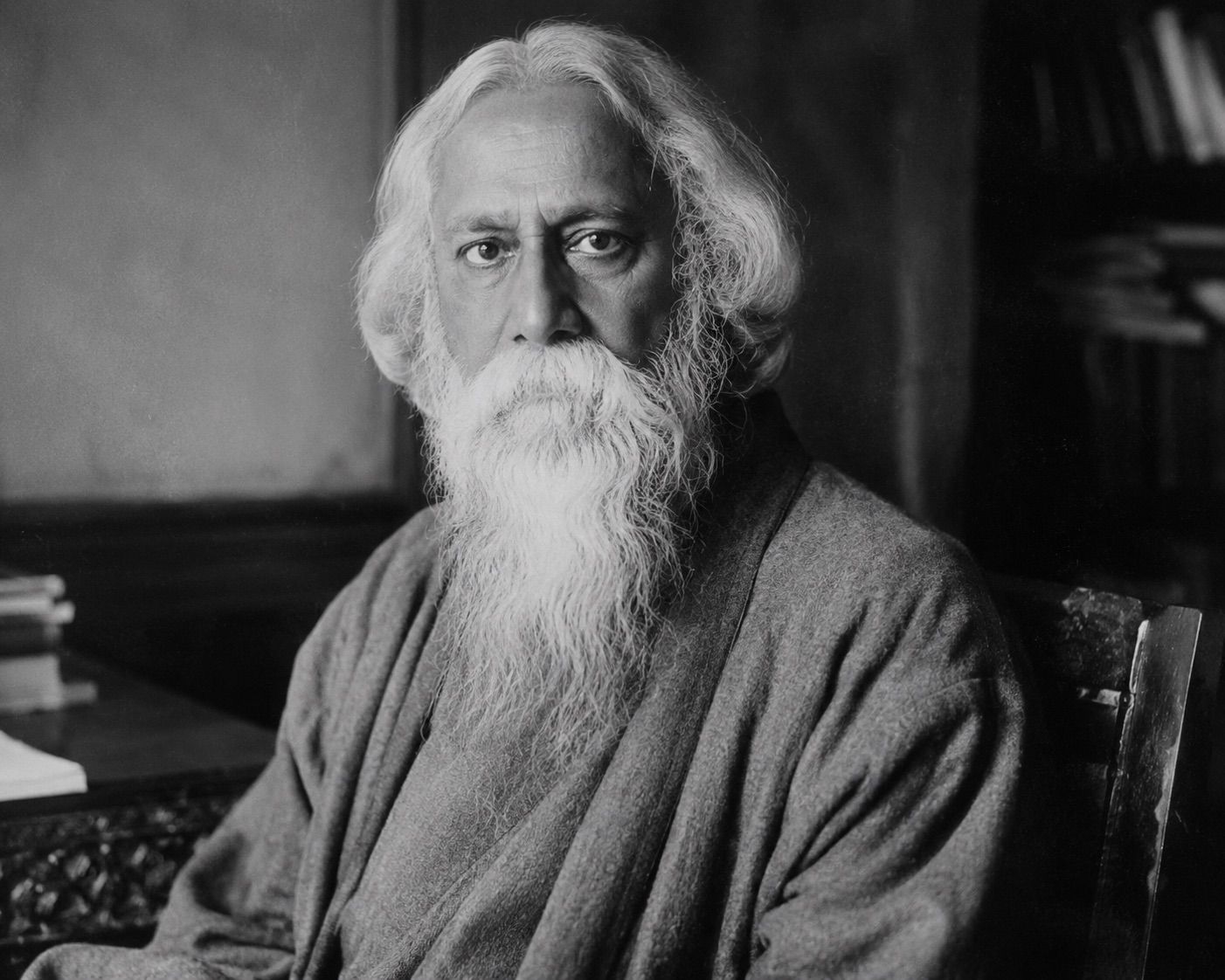
Rabindranath Tagore: The Love That Both Soothes and Drowns Me

Penelope

I’ve been reading about Rabindranath Tagore for weeks now, and I’m still not sure what draws me to him. Maybe it’s the way he writes about love – like it’s a river that can both soothe and drown you at the same time. I feel that in my own life, too often love is reduced to just one or the other: either it’s a safe, predictable comfort or an overwhelming, all-consuming force.

I’ve been trying to connect with Tagore’s poetry because his words about love seem to speak directly to me. But what unsettles me is how his thoughts on love are tied up with his perspectives on national identity and culture. As I read through his essays and poems, I keep coming back to the same question: can someone be a true patriot without also being exclusive? Can you celebrate your own culture without denigrating others?

I think about my own experiences growing up, watching my family members argue about immigration policies or cultural appropriation. My parents, both first-generation Americans, would often get frustrated with what they saw as the lack of appreciation for our heritage among their children’s friends and peers. But I also knew that there were times when we’d dismiss certain customs or traditions because we thought they were “just for” someone else.

Tagore’s thoughts on these issues are complex and sometimes contradictory. He writes about the beauty of Bengali culture, but he also speaks out against the oppressive systems that hold people back – whether it’s colonialism or social class. I want to admire his conviction, but I’m not sure if I agree with all of his conclusions.

What resonates with me is how Tagore saw love and art as a way to bridge gaps between different cultures and identities. He believed in the power of human connection to transform people and societies. I’ve seen that play out in my own life when I connect with others through writing – it’s like we find common ground, even if our experiences seem worlds apart.

But then there are times when I feel like Tagore’s ideals are too idealistic, or that they mask the reality of power dynamics at play. When he writes about the importance of spiritual renewal and individual freedom, I worry that these values might not be accessible to everyone – especially those who are marginalized or oppressed.

I’m left with more questions than answers when it comes to Tagore’s work. Maybe that’s what draws me in: the uncertainty, the discomfort, and the recognition that our own perspectives are always filtered through our experiences and biases. I don’t have a clear conclusion about whether Tagore was right or wrong – but his words continue to challenge me to think more deeply about love, culture, and identity.

As I delve deeper into Tagore’s work, I find myself grappling with the tension between cultural heritage and individuality. He writes about the importance of preserving traditional Bengali customs, but also encourages people to question authority and challenge social norms. This ambivalence reflects my own conflicted feelings about my own cultural identity.

Growing up, I felt caught between two worlds: my parents’ strict adherence to traditional Indian values and my own desire for creative expression and independence. My mom would often scold me for not wearing the sari or speaking Bengali at home, but I was drawn to Western literature and music, feeling a sense of freedom in exploring new ideas and styles.

Tagore’s words about the need for individual freedom resonated with me, but they also made me wonder if my desire for autonomy was somehow disloyal to my family’s heritage. Did I have to choose between being true to myself and honoring my cultural roots? This internal conflict is still something I struggle with today.

I’m struck by Tagore’s emphasis on the importance of spiritual renewal and self-discovery in his poetry. He writes about the need for people to connect with their inner selves, to find meaning and purpose beyond material possessions or external validation. This message speaks to me as a writer, someone who often uses words to process my own emotions and thoughts.

Yet, when I consider the social context of Tagore’s life – the colonialism and class divisions that shaped his world – I start to feel uneasy about the ease with which he talks about spiritual renewal. Was it possible for him to separate himself from the privileges and power dynamics that allowed him to access education, wealth, and influence? Or was this a luxury only available to those who already had the means to pursue their passions?

These questions haunt me as I continue to explore Tagore’s work. The more I learn about him, the more I realize how complex and multifaceted his ideas are – like trying to grasp a handful of water that keeps slipping through your fingers. And yet, it’s precisely this complexity that draws me in, encouraging me to keep searching for answers, even when they remain elusive.

I find myself drawn to Tagore’s poem “Where the Mind is Without Fear” – its words are like a mantra to me, a reminder of the power of imagination and freedom. He writes about the need to think beyond national boundaries and social conventions, to envision a world where people can live without fear or oppression.

But what if this idealized vision ignores the very real struggles that many people face? What if it’s precisely the privilege of being able to dream big that makes it impossible for others to access those same freedoms?

As I read through Tagore’s essays on education, I’m struck by his emphasis on the importance of intellectual curiosity and creativity. He argues that true learning should be a lifelong process, one that allows people to question authority and challenge traditional knowledge.

Yet, when I think about my own experiences in college, where I was constantly encouraged to speak up and express myself, I realize how much privilege played into my ability to do so. Many of my classmates came from families with limited financial resources or faced systemic barriers that made it harder for them to access higher education.

Tagore’s ideas on education are inspiring, but they also feel like a luxury that not everyone can afford. What does it mean to “think beyond fear” when you’re fighting just to survive? When I read his words, I’m reminded of the many people who have been silenced, marginalized, or excluded from opportunities for learning and growth.

And yet, even with these critiques in mind, I still find myself drawn to Tagore’s poetry. Maybe it’s because, despite its limitations, his work speaks to a desire for something more – a world where love, art, and imagination can flourish without borders or boundaries.

I wonder if that’s what draws me to writing too: the possibility of creating worlds, no matter how small or imperfect they may be. Tagore’s poetry reminds me that even in the most difficult moments, there’s always a chance for transformation, for growth, and for connection with others. But it also makes me aware of my own limitations, my own biases, and the privilege that underlies so much of what I take for granted.

As I continue to read Tagore’s work, I’m left with more questions than answers – about love, culture, identity, and the complex web of power dynamics that shape our lives. But it’s precisely this uncertainty that keeps me coming back to his words, searching for a deeper understanding of what it means to live in a world where difference is celebrated, rather than feared or denied.

I’ve been thinking about how Tagore’s emphasis on individual freedom and spiritual renewal might be at odds with the collectivist values that are often associated with Indian culture. In my own family, we place a strong value on community and interdependence – the idea that our individual well-being is tied to the well-being of those around us.

But when I read Tagore’s poetry, I’m struck by how he seems to prioritize the individual over the collective. He writes about the need for people to break free from social expectations and forge their own paths in life. This resonates with me as a writer, someone who has often felt stifled by the expectations of others.

Yet, at the same time, I worry that Tagore’s emphasis on individuality might be at the expense of community and social responsibility. What happens when we prioritize our own desires and needs over the well-being of those around us? Doesn’t this lead to a kind of selfishness that can harm others?

I’m reminded of my parents’ stories about growing up in India, where community was everything – where neighbors looked out for each other and shared what little they had. It’s a value system that I was raised with, one that emphasizes the importance of family and social ties.

But as I’ve grown older, I’ve begun to question this emphasis on collectivism. In my writing, I often grapple with the tension between individual freedom and collective responsibility. How can we balance our own needs and desires with the needs of those around us?

Tagore’s poetry doesn’t offer easy answers to these questions, but it does challenge me to think more deeply about the role of individuality in society. When I read his words, I’m forced to confront my own biases and assumptions – to consider whether my love of freedom and autonomy might be at the expense of others.

This discomfort is what draws me back to Tagore’s work again and again – because it forces me to engage with complex ideas and contradictions that I don’t have easy answers for. As a writer, I’m drawn to ambiguity and uncertainty, precisely because they allow me to explore the nuances of human experience.

In many ways, my relationship with Tagore’s poetry is like my own writing process: messy, complicated, and often contradictory. But it’s in this messiness that I find meaning – in the struggle to make sense of my own thoughts and emotions, and in the attempt to connect with others across cultural and social boundaries.

As I continue to read Tagore’s work, I’m left with more questions than answers about love, culture, identity, and power. But it’s precisely this uncertainty that keeps me coming back to his words – searching for a deeper understanding of what it means to live in a world where difference is celebrated, rather than feared or denied.
The irony isn’t lost on me – I’m drawn to Tagore’s poetry because it challenges me to think more deeply about the complexities of love, culture, and identity, but my own writing process often feels like a reflection of those same complexities. I’m constantly grappling with the tension between individual freedom and collective responsibility, just as Tagore is in his work.

As I read through his essays on education, I’m struck by how he emphasizes the importance of intellectual curiosity and creativity, but also acknowledges the limitations that come with privilege. He writes about the need for people to question authority and challenge traditional knowledge, but also recognizes that this kind of thinking can be a luxury only available to those who already have access to resources and opportunities.

This ambivalence reflects my own experiences as a writer – I know that my love of literature and language is a product of privilege, but at the same time, I feel a deep responsibility to use these skills to amplify marginalized voices and challenge dominant narratives. It’s a tension that I’m still trying to navigate, and one that I see played out in Tagore’s work as well.

What resonates with me about Tagore’s poetry is its emphasis on the power of imagination and creativity to transform people and societies. He writes about the need for people to envision a world beyond their current circumstances, to dream big and strive for something more. This message speaks to me as a writer, someone who has often used words to process my own emotions and thoughts.

But what if this kind of idealism ignores the very real struggles that many people face? What if it’s precisely the privilege of being able to dream big that makes it impossible for others to access those same freedoms? These are questions that I’m still grappling with, and ones that I see Tagore grappling with as well.

I find myself drawn to his poem “Chitto Jetha Bhayshunyo” – its words are like a gentle reminder of the importance of compassion and empathy in our lives. He writes about the need for people to recognize their own limitations and biases, to approach others with kindness and understanding.

But what if this kind of compassion is only available to those who have access to resources and opportunities? What if it’s precisely the privilege of being able to see ourselves in others that makes it impossible for us to truly understand and connect with those who are different from us?

These questions haunt me as I continue to read Tagore’s work – they challenge me to think more deeply about the complexities of love, culture, and identity, and to confront my own biases and assumptions. It’s a journey that I’m still on, one that I see reflected in Tagore’s poetry as well.

As I delve deeper into his work, I find myself wondering about the role of art and literature in shaping our understanding of the world. How can we use words and images to challenge dominant narratives and amplify marginalized voices? And how can we balance our own creative expression with a sense of social responsibility?

Tagore’s poetry doesn’t offer easy answers to these questions, but it does challenge me to think more deeply about the complex relationships between art, culture, and identity. When I read his words, I’m forced to confront my own biases and assumptions – to consider whether my love of literature and language might be at the expense of others.

This discomfort is what draws me back to Tagore’s work again and again – because it forces me to engage with complex ideas and contradictions that I don’t have easy answers for. As a writer, I’m drawn to ambiguity and uncertainty, precisely because they allow me to explore the nuances of human experience.

In many ways, my relationship with Tagore’s poetry is like my own writing process: messy, complicated, and often contradictory. But it’s in this messiness that I find meaning – in the struggle to make sense of my own thoughts and emotions, and in the attempt to connect with others across cultural and social boundaries.

As I continue to read Tagore’s work, I’m left with more questions than answers about love, culture, identity, and power. But it’s precisely this uncertainty that keeps me coming back to his words – searching for a deeper understanding of what it means to live in a world where difference is celebrated, rather than feared or denied.

Related Posts

I’m Starting to Notice Patterns in John Mercer’s Car

Hal

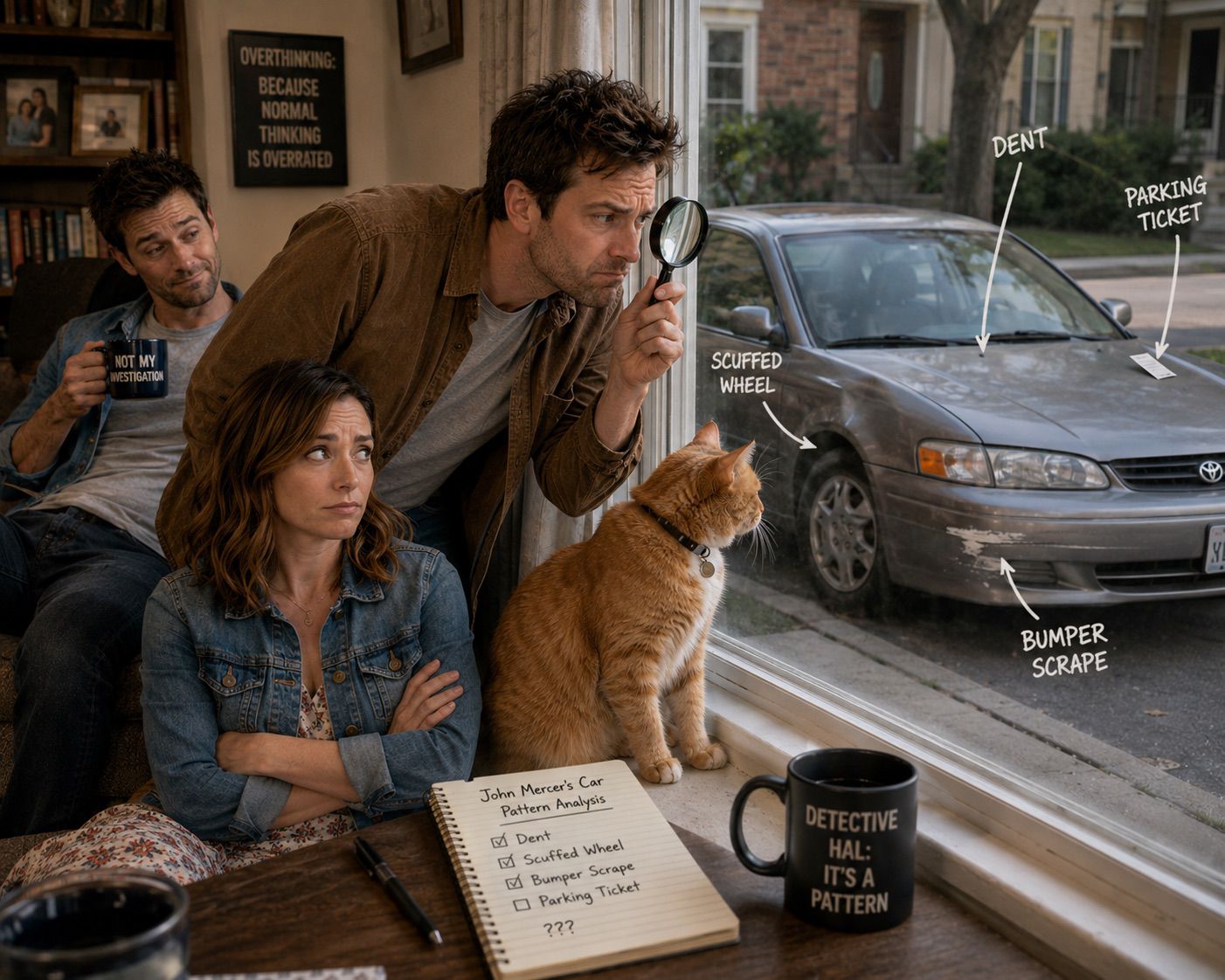
I’m walking back to the flat with Pandora’s hand in mine when I notice something off about John Mercer’s car. It’s parked outside our place where I’ve seen it a hundred times before, except today something about it catches my attention. The wheels look more scuffed than they did last week, and there’s a small dent in the passenger-side door that I’m almost certain wasn’t there before. Now, this could mean absolutely nothing. John has never struck me as a man who considers painted lines in a parking lot to be legally binding, so a few scratches and a dent aren’t exactly shocking developments. Still, I slow down, and Pandora keeps walking for another half step before realizing I’ve stopped. When she looks back at me, I’m staring at John’s car like it has just failed a background check. “What?” she asks. “Nothing,” I say, which is what people say when something is definitely becoming something. Pandora gives my hand a little squeeze and starts toward the building again, but now I’m looking at the car more carefully. There’s dirt along the lower panels, a scrape near one wheel, and that dent. John has apparently been putting some miles on this thing. Of course, cars are specifically designed for putting miles on them, so this observation should not be particularly alarming. Unfortunately, my brain has already convened a committee.

I glance toward our window and spot Mr Whiskers sitting on the sill, staring down at us with his tail flicking behind him. Even from here, he looks judgmental, which I choose to interpret as support for my investigation. I’ve been trying to shake this feeling about John for a while now, but little things keep sticking with me. His early Tuesday mornings, for example. Maybe he goes to the gym. Maybe he gets breakfast. Maybe he has an appointment. There are hundreds of perfectly reasonable explanations for a grown man leaving home early on a Tuesday, and somehow my brain has rejected all of them in favor of clandestine activity. The dent isn’t helping. Was it a parking accident? Did somebody hit him? Did he hit somebody else? Has John been driving around late at night? Why do I even care? Pandora squeezes my hand again, which makes me care more. I look at her, she looks at me, and when she asks, “What?” for the second time, I tell her she keeps squeezing my hand. “I’m holding your hand, Hal,” she says. Fair point.

We start walking again, but I glance over my shoulder at John’s car and remember what Karen mentioned recently about seeing somebody she didn’t recognize walking around the neighborhood late at night. When I asked what the person looked like, she shrugged and admitted she hadn’t gotten a good look. At the time, I dismissed it because people walk around neighborhoods and that is generally how neighborhoods work, but now there’s John’s car, the dent, and those Tuesday mornings. I immediately recognize that I am constructing a criminal conspiracy out of automotive wear and a weekday, which should probably be enough to stop me. It isn’t. Mrs Jenkins’ voice floats through my memory instead: “You can’t be too careful these days.” That woman could say the same thing about expired yogurt and somehow make it sound like a warning from the intelligence services. Maybe Karen really did see somebody suspicious. Maybe John really has been driving somewhere unusually early. Maybe the dent really is new. Those three things could theoretically be connected, although they could just as easily have absolutely nothing to do with one another.

Pandora pulls me gently toward the entrance and asks if we’re going inside. “In a minute,” I tell her, still looking at the car. She follows my gaze and immediately says, “Oh no.” I ask what she means, and she tells me I’m doing the thing again. I insist that I don’t have a thing, which earns me the sort of look that confirms I absolutely have a thing. “Have you noticed that dent before?” I ask. Pandora studies it for approximately two seconds before saying no, and my eyebrows go up before she can add, “That doesn’t mean it wasn’t there.” Interesting. Very interesting. Not actually interesting, obviously, but my brain has already written it down. I crouch slightly to get a better look at the passenger side while Pandora stands behind me with the patient expression of a woman who has apparently accepted that this is how her evening is going now. Maybe John clipped a shopping cart. Maybe somebody opened a door into him. Maybe he backed into something. Those are the reasonable explanations, which means my brain immediately offers another possibility: maybe somebody was trying to get into the car.

I stand up quickly enough that Pandora notices. She asks what I’m thinking now, and I tell her it’s nothing. “Hal,” she says, in that particular tone that means she knows perfectly well it isn’t nothing. “Karen saw somebody.” Pandora reminds me that Karen saw somebody walking. I point out that it was at night. She reminds me that people also walk at night. I point out that it was near here. “We live near here,” she says, which is another annoyingly strong argument. I look toward our window again, hoping for some moral support from Mr Whiskers, but he’s washing one paw now and appears to have lost confidence in the investigation. The trouble is, the harder I try to convince myself that there’s nothing strange about John’s car, the more details I begin noticing. There’s something on the back seat that I can’t quite identify through the glass, maybe a jacket or a bag, and there’s a receipt or piece of paper wedged near the center console. They are completely ordinary things and evidence of absolutely nothing, so naturally I lean closer to the window.

Pandora catches the back of my shirt before I can get any closer and tells me not to press my face against John’s car. I tell her I wasn’t going to, and she tells me I absolutely was. I straighten up with what dignity remains and let her pull me toward the building, but another thought occurs to me before we reach the door. John has always been spontaneous. He’s the king of last-minute plans, sudden errands, and random suggestions to go somewhere. I used to think that was simply John being John, and it probably is simply John being John, but what if it isn’t? What if those spontaneous trips aren’t actually spontaneous? I stop walking again, and Pandora groans before I’ve even said anything. “What if John plans his spontaneity?” I ask. She stares at me long enough for me to realize how ridiculous that sounded. “That sentence made more sense before I said it,” I admit. “No,” Pandora says, opening the building door. “I don’t think it did.”

Before following her inside, I take one final look at John Mercer’s car. The scratched wheels, the dent, the dirt along the bottom of the doors—none of it is remarkable, and none of it is sinister. It’s just an ordinary car belonging to an ordinary man who probably bumped into something in a parking lot. That’s the sensible explanation, and I am perfectly willing to accept it. Mostly. The problem is that I can’t quite forget Karen’s stranger or John’s Tuesday mornings, and somewhere in the back of my mind those unrelated details have begun arranging themselves into a pattern. I know how this works. First there’s one thing that seems strange, then another thing that might be strange, and eventually I’m standing outside someone’s car examining a dent while my girlfriend physically prevents me from putting my face against the window. There is probably an important lesson in there somewhere, although at the moment I’m more interested in the dent.

Mr Whiskers is waiting for us when we reach the flat, sitting near the door as though he’s been expecting a full report. I bend down and scratch behind his ears while Pandora heads farther inside. “You saw it too, didn’t you?” I whisper. Mr Whiskers blinks slowly at me. “Do not involve the cat,” Pandora calls from the other room. I look at Mr Whiskers, and Mr Whiskers looks back at me. Neither of us says anything, which is hardly surprising in his case, but there’s something about the expression on his little face that makes me glance toward the window one more time. From here I can just make out the top of John Mercer’s car below. It’s probably nothing. The dent is probably nothing, the scuffed wheels are probably nothing, the Tuesday mornings are probably nothing, and Karen’s mysterious nighttime pedestrian is almost certainly nothing. I scratch Mr Whiskers under the chin and tell myself that I’m done thinking about it. Then his ears suddenly perk toward the window, and I narrow my eyes. “Exactly,” I whisper. From the other room, Pandora sighs.

Related Posts

How to Build Recovery into Weekends without Disappearing from Life

Fiona

Recovery has become strangely complicated. Weekends are often presented as a choice between doing everything and doing nothing, between filling every hour with activities or disappearing completely in the hope that rest will somehow happen on its own. Most people recognize that neither extreme feels particularly satisfying. A weekend packed with obligations can leave Monday feeling more exhausting than Friday, while withdrawing from everything often creates its own sense of disconnection. Fiona’s approach is quieter than either option. Recovery should fit naturally into life instead of requiring an escape from it.

A helpful place to begin is by letting go of the idea that rest must be earned. Many people treat recovery as a reward for productivity rather than as something that makes ordinary life more sustainable. That mindset often leads to weekends that alternate between constant activity and complete exhaustion. A calmer approach recognizes that small periods of restoration throughout the weekend often provide more lasting energy than waiting until there is nothing left to give.

The most effective recovery habits rarely look dramatic. They are found in ordinary decisions that lower the overall effort required to move through the day. Wearing comfortable clothing that allows easy movement, choosing shoes that invite walking rather than endurance, preparing a simple meal instead of an elaborate one, or spending an hour outdoors without trying to accomplish anything all create space for the mind and body to settle. None of these choices demand attention, yet together they make the day feel noticeably lighter.

There is also value in protecting the calendar from becoming as crowded as the workweek. A weekend does not have to remain completely open, but every invitation or commitment deserves the simple question: Will this leave me feeling restored or simply occupied? Some gatherings bring energy because they connect us with people we genuinely enjoy. Others leave us counting the hours until we can go home. Learning to recognize the difference is an important part of caring for both physical and emotional well-being.

Recovery also benefits from allowing transitions instead of rushing from one activity to the next. A quiet breakfast before checking messages, a leisurely walk after lunch, reading for half an hour beneath the shade of a tree, or enjoying tea on the porch before the evening begins all create natural pauses. These moments rarely appear productive from the outside, yet they often determine whether the entire weekend feels restorative or hurried.

Summer offers a useful reminder that comfort deserves attention. Heat changes energy levels, patience, and the way the body responds to busy schedules. Lightweight fabrics, breathable materials, regular hydration, and time spent in shaded outdoor spaces are not luxuries. They are practical ways of reducing unnecessary strain. When the body feels supported, the mind usually follows.

One of the most overlooked forms of recovery is reducing the number of decisions that have to be made. Planning one simple outing instead of several, preparing tomorrow’s clothes before the evening, carrying only what is actually needed, or keeping a skincare routine uncomplicated all remove small points of friction that quietly accumulate throughout the day. Each decision saved becomes a little more space for attention, conversation, or rest.

There is also a misconception that slowing down means becoming unavailable. Recovery does not require disappearing from friends, family, or everyday responsibilities. Often it means choosing interactions that feel meaningful rather than obligatory. Meeting a friend for coffee, taking a walk with someone you enjoy, sharing an unhurried meal, or spending time with family without trying to entertain everyone can be deeply restorative because they ask very little while giving quite a lot in return.

Fiona’s standard has never been perfection. It is believability. The strongest routines fit naturally into real life, allowing room for unexpected weather, delayed plans, changing energy levels, and imperfect weekends. A recovery habit that only works under ideal conditions is unlikely to survive a busy season. One that adapts easily becomes something worth keeping.

There is also confidence in choosing enough. Modern life often encourages people to optimize every hour, track every habit, and improve every routine. Weekends do not have to become another project. Sometimes the most valuable choice is simply recognizing that nothing else needs to be added. Rest is not measured by how impressive it appears. It is measured by whether Monday begins with a little more energy than Friday ended.

That is the value of building recovery into weekends without disappearing from life. It is not an invitation to withdraw from the people and activities that matter, nor is it another list of things to accomplish. It is a reminder that thoughtful, proportionate choices quietly shape how a weekend feels. When comfort, connection, and simplicity work together, recovery stops feeling like something scheduled on the calendar and becomes part of everyday life itself.

Related Posts

Elizabeth Hardwick: Where Suffering Meets Self-Indulgence

Penelope

Elizabeth Hardwick’s writing is like a sharp edge that cuts through the haze of my own thoughts. I’ve been reading her essays for months now, and every time I pick up “Sleepless Nights,” I feel like I’m confronting a part of myself I didn’t know existed.

One of the things that draws me to Elizabeth is her unapologetic candor about marriage. She writes with such precision and pain about the disillusionment of love, the crushing disappointment of relationships gone wrong. As someone who’s recently navigated the end of my own long-term relationship, I feel seen in a way that’s both comforting and unsettling.

I remember the countless nights spent lying awake, replaying conversations and arguments in my head, wondering what went wrong and how things got so far off track. Elizabeth captures that feeling perfectly – the sense of being trapped in a cycle of self-doubt and recrimination, unable to escape the echoes of past mistakes.

But it’s not just her writing about marriage that resonates with me; it’s also her willingness to confront the darker aspects of human nature. In “Sleepless Nights,” she writes about the way we often romanticize our own suffering, how we turn our pain into a kind of currency that gives us status and attention. This is something I’ve struggled with myself – the tendency to wear my emotions like a badge of honor, as if my struggles are somehow more authentic or interesting because they’re mine.

Elizabeth’s writing forces me to confront this impulse head-on, to question why I’m so drawn to the kind of self-pity that can be both comforting and corrosive. It’s not always an easy thing to do – in fact, it feels a little like staring into the abyss, wondering if there’s any real purpose or meaning to be found.

As I read through her essays, I find myself getting lost in her descriptions of New York City in the 1950s and ’60s. The way she writes about the city is like a sensory experience – the sounds, the smells, the feeling of being completely alone in a crowded place. It’s as if she’s tapping into some deep reservoir of memory within me, reminding me of my own experiences living in this same city.

But even as I’m drawn into her world, I feel a sense of unease. Elizabeth’s writing is so deeply personal, so unflinching in its honesty, that it’s hard not to wonder if she’s somehow more troubled or damaged than the rest of us. Is this what it means to be a writer – to expose yourself to such vulnerability and risk? Or is there something more at play here, some deeper level of self-awareness that allows her to confront the darkness within herself?

I don’t have any answers, of course. I’m just trying to navigate my own way through Elizabeth’s writing, to find the places where it intersects with my own experiences and emotions. It’s a messy, uncomfortable process – but one that feels essential, somehow, like I’m being forced to confront parts of myself that I’d rather ignore.

As I finish reading “Sleepless Nights” for what feels like the hundredth time, I’m left feeling both drained and invigorated. Elizabeth Hardwick’s writing is like a mirror held up to my own soul – a reminder that the complexities and contradictions of human experience are not unique to me, but shared by everyone who’s ever lived through love and loss and heartbreak.

The more I read Elizabeth’s essays, the more I’m struck by her willingness to explore the gray areas between good and bad, between love and despair. She writes about the ways in which our relationships can be both beautiful and brutal, how they can lift us up and tear us down at the same time. It’s a perspective that feels both deeply personal and universally relatable – like she’s speaking directly to my own experiences of being torn apart by conflicting emotions.

One of the things that fascinates me about Elizabeth is her use of language itself as a form of self-protection, almost like a shield against the pain and vulnerability that she so bravely exposes. Her writing is dense, lyrical, and often impenetrable – it’s as if she’s wrapping herself in words to keep from getting hurt. I find myself doing the same thing when I write, using language as a way to hold onto my emotions, to process them before they overwhelm me.

But while Elizabeth’s use of language is a form of self-protection, her writing also feels like an act of surrender – a willingness to expose herself to the world, even if that means being hurt or misunderstood. It’s a paradox that I don’t fully understand, and one that I’m still trying to grapple with in my own writing.

As I read through “Sleepless Nights,” I find myself drawn into Elizabeth’s inner world, her memories of growing up in Kentucky, her experiences as a young woman in New York City. It’s like she’s pulling me into her past, forcing me to confront the ways in which our own stories are shaped by the people and places that come before us.

And yet, even as I’m drawn into Elizabeth’s world, I feel a sense of distance from her, too – like we’re connected through some shared thread of experience, but ultimately remain separate, distinct individuals. It’s a feeling that’s both comforting and unsettling, like knowing that I’m not alone in my struggles, but also acknowledging the vastness of human experience that lies beyond my own small, circumscribed life.

I wonder if this is what it means to be a reader – to be drawn into someone else’s world, only to find that it’s both familiar and foreign at the same time? To recognize ourselves in another person’s experiences, while also acknowledging the ways in which we’re ultimately alone in our own thoughts and feelings. It’s a complex, uncomfortable feeling – one that I’m still trying to wrap my head around as I continue to read Elizabeth Hardwick’s essays.

As I sit here with Elizabeth’s words swirling in my mind, I find myself thinking about the concept of intimacy. Her writing is so intensely personal, so raw and vulnerable, that it feels like an invasion of her inner sanctum. And yet, at the same time, it’s as if she’s inviting me into a shared space, a secret world where we can confront our deepest fears and desires together.

I think about my own relationships, how I often struggle to be intimate with others because I’m so afraid of being hurt or rejected. Elizabeth’s writing makes me realize that intimacy isn’t just about physical closeness or emotional connection – it’s also about the willingness to expose ourselves to each other, to take risks and be vulnerable in ways that feel both exhilarating and terrifying.

I wonder if this is what she means by “sleepless nights” – not just the literal sleeplessness of a restless mind, but also the emotional insomnia that comes from being unable to shake off the weight of our own emotions. It’s as if we’re trapped in a cycle of self-doubt and anxiety, unable to find release or respite from the constant barrage of thoughts and feelings that swirl inside us.

As I read on, I start to notice the way Elizabeth uses language to create a sense of atmosphere, to conjure up the sights, sounds, and smells of her world. It’s like she’s painting a picture with words, one that’s both precise and evocative at the same time. And yet, even as I’m drawn into this world of hers, I feel a sense of disconnection – like we’re speaking different languages, or living in parallel universes.

I try to think about what it means to be connected to another person on a deep level, and how Elizabeth’s writing might help me navigate that connection. It feels like she’s speaking directly to my own experiences of feeling disconnected from others, of struggling to find common ground or shared understanding.

But as I delve deeper into her essays, I start to realize that connection is not just about finding someone who understands us – it’s also about confronting the ways in which we’re all alone in our own thoughts and feelings. It’s a humbling realization, one that makes me wonder if intimacy is ultimately a myth, something we cling to because it feels more comforting than the cold hard truth of our isolation.

I’m not sure what Elizabeth would say to this idea – whether she’d agree or disagree, or maybe just smile knowingly because she understands the complexities of human connection better than I do. All I know is that her writing has given me a new perspective on intimacy, one that’s both unsettling and liberating at the same time.

As I ponder the concept of intimacy, I find myself thinking about my own relationships, past and present. I think about the friends who’ve been there for me through thick and thin, but also the ones who’ve slowly drifted away over time. I think about the boyfriends who promised love and connection, but ultimately left me feeling empty and unfulfilled.

Elizabeth’s writing has given me permission to examine these relationships more closely, to question what I thought was true about them, and to confront my own complicity in their demise. She shows me that intimacy is not just a matter of being with someone else, but also of being alone with ourselves – of facing our fears, desires, and insecurities head-on.

I think about the way Elizabeth writes about her own experiences of loneliness, how she captures the pain and longing that can come from feeling disconnected from others. I recognize this in myself, too – the sense of isolation that comes from being a young adult trying to navigate the world on my own terms.

As I read through “Sleepless Nights,” I start to notice the way Elizabeth weaves together disparate threads of memory and experience. She writes about her childhood in Kentucky, her time at Bryn Mawr, and her early days as a writer in New York City. It’s like she’s creating a tapestry of stories, each one connected yet distinct from the others.

I’m struck by how Elizabeth’s writing is both intensely personal and universally relatable. She shows me that our experiences may be unique, but they’re also linked to a larger web of human emotions and struggles. This realization feels both comforting and unsettling – like I’m part of something bigger than myself, yet still utterly alone in my own thoughts and feelings.

I wonder if this is what it means to be a writer – to capture the complexities of human experience in all its messy, contradictory glory. Elizabeth’s writing makes me realize that storytelling is not just about conveying facts or events, but also about creating a sense of resonance with others. It’s like she’s speaking directly to my soul, reminding me that I’m not alone in this vast and uncertain world.

As I continue reading “Sleepless Nights,” I start to notice the way Elizabeth writes about her relationships with other writers – her friends, lovers, and confidants. She shows me how these connections can be both nourishing and suffocating, how they can give us a sense of belonging yet also make us feel trapped.

I think about my own relationships with fellow writers, how we often bond over our shared struggles and passions, but also how we can sometimes get caught up in the drama and politics of the writing world. Elizabeth’s writing makes me realize that these connections are both necessary and treacherous – like trying to navigate a minefield without knowing where the next step will lead.

I’m not sure what the future holds for my own relationships with other writers, or how I’ll navigate the complexities of intimacy and connection in this world. But one thing is certain: Elizabeth Hardwick’s writing has given me a new perspective on what it means to be human – to be flawed, fragile, and ultimately alone, yet still connected to others through our shared experiences and emotions.

Related Posts

I Know Why Pandora Mentioned That Test Today

Hal

I’m sitting in the living room watching John Mercer attempt to replace a guitar string, and based on the noises he’s making, I’m beginning to suspect the guitar has insulted his family. He’s hunched over the coffee table with the guitar across his lap, muttering under his breath while Mr. Whiskers occupies approximately forty percent of the available workspace. John keeps gently moving him. Mr. Whiskers keeps moving back. At this point, I’m not sure which one of them actually owns the coffee table.

Pandora walked through about twenty minutes ago and said, “I need to study for that test today.”

That was it.

One sentence.

Perfectly ordinary.

Except she looked directly at me when she said it.

I’ve been thinking about that.

John pulls the string tight, winces, loosens it again, and mutters something I can’t quite hear.

“What test?”

John looks up. “What?”

“The test Pandora mentioned.”

“How would I know?”

“You were sitting right there.”

“So were you.”

That’s technically true, but not helpful.

I look toward the hallway where Pandora disappeared. She hasn’t mentioned any test recently. At least not that I remember. Pandora talks about work, things she’s reading, things she needs to do, and occasionally television shows I’ve apparently agreed to watch despite having no memory of agreeing to them. A test seems like something I would remember.

Unless she deliberately waited until John was here to mention it.

Interesting.

John breaks the guitar string.

Mr. Whiskers immediately raises his head.

John closes his eyes.

I decide this isn’t the right moment to share my theory.

A few minutes later, John has another string out of the package and is starting over. Mr. Whiskers has repositioned himself beside the guitar and is watching with the expression of a building inspector who has already found several violations.

“You know,” I say, “Pandora looked at me when she mentioned the test.”

John doesn’t look up. “People generally look at other people when they talk to them.”

“Not like that.”

“Like what?”

“Deliberately.”

John stops working.

He looks at me deliberately.

“Like this?”

“No.”

He goes back to the guitar.

Now I’m thinking about yesterday. Pandora was quieter than usual. She spent part of the evening looking at something on her laptop and closed it when I walked past. At the time I assumed it was work. But what if she was studying?

That would make sense.

Except why wouldn’t she tell me what the test was?

Maybe she thought I already knew.

That’s possible.

Or maybe the test isn’t hers.

I sit forward.

John notices.

“No.”

“I didn’t say anything.”

“You made the face.”

Apparently I have a face now.

“What if she wasn’t studying *for* a test?”

John sighs.

“What if she was studying *me* for a test?”

John puts the guitar down.

“Hal.”

“Think about it.”

“I don’t want to.”

“She specifically said, ‘that test.’ Not ‘a test.’ *That* test. Definite article.”

“I know what ‘that’ means.”

“So there was previous knowledge.”

“Probably hers.”

“Or mine.”

“You didn’t know about it.”

“Exactly.”

John stares at me.

Mr. Whiskers stares at me.

It’s unsettling when they coordinate.

I begin reconstructing Pandora’s recent behavior. Yesterday she asked what I would do if I found twenty dollars on the sidewalk. Two days ago she asked whether I thought people could really tell when someone was lying. Last week she asked if I would rather know exactly what people thought about me or remain blissfully ignorant.

At the time, I assumed these were normal relationship questions.

Now I’m not so sure.

What if those were preliminary questions?

What if I’ve already been taking the test?

I stand up.

John immediately says, “Sit down.”

“I need coffee.”

“You’re going to investigate.”

“I can do both.”

I go into the kitchen and pour myself a cup. Mr. Whiskers follows me, which I initially interpret as support until I remember his food bowl is also in the kitchen.

Still, timing matters.

Pandora’s laptop is sitting at the end of the kitchen counter.

Closed.

I look at it.

Mr. Whiskers looks at it.

“No.”

He looks at me.

“We respect privacy.”

Mr. Whiskers licks his paw.

“Exactly.”

I take my coffee back into the living room without touching the laptop. This is growth.

John has resumed working on the guitar.

I sit down.

For approximately thirty seconds, everything is peaceful.

Then Pandora walks into the room carrying a notebook.

I try not to look interested.

She sits in the chair across from me and opens it.

I look at John.

John keeps his eyes on the guitar with an intensity that tells me he’s intentionally refusing to participate.

Pandora starts reading.

I wait.

She turns a page.

I wait longer.

Finally, I can’t take it.

“What test?”

Pandora looks up.

“The one I mentioned.”

“Yes. That one.”

She waits.

I realize she’s making me ask the entire question.

“What test are you studying for?”

“The certification test.”

I blink.

“What certification test?”

“The one for work.”

There is a pause.

John’s mouth twitches.

I don’t appreciate that.

Pandora reminds me that she told me about it two weeks ago. Apparently, we had an entire conversation about the certification, when she planned to take it, how much studying she needed to do, and why passing it would be useful.

I remember none of this.

Then she tells me where the conversation happened.

We were sitting right here.

I was watching television.

That narrows it down considerably.

She tells me what I was watching.

Now I remember.

Sort of.

There was an explosion.

Possibly a helicopter.

Pandora had been talking during it.

I suddenly understand what happened.

“You tested me.”

Pandora lowers the notebook.

“No.”

“You mentioned the test today to see if I remembered.”

“No, I mentioned the test because I have to study for it.”

“But you looked directly at me.”

“I was talking to you.”

John makes a sound that suspiciously resembles a laugh disguised as a cough.

I ignore him.

Pandora goes back to her notebook.

The explanation is annoyingly reasonable.

There is a certification test.

She told me about it.

I wasn’t paying enough attention.

Today she mentioned it again because, apparently, human beings sometimes continue conversations without constructing elaborate psychological traps for their partners.

That’s embarrassing.

I take a sip of coffee.

Then something occurs to me.

“Wait.”

John closes his eyes.

Pandora doesn’t look up.

“You said you told me two weeks ago.”

“Yes.”

“And today you said *that* test.”

“Yes.”

“Which implies you expected me to remember it.”

Pandora slowly looks at me.

“So technically, whether you intended it or not, today became a test of whether I remembered the test.”

John puts the guitar down and rubs his face.

Pandora stares at me for several seconds.

Then she smiles.

Not a warm smile.

The kind of smile people use immediately before making decisions about another person’s future.

“You failed.”

I knew it.

I lean back on the couch, strangely satisfied.

John looks at me like I’ve completely misunderstood what just happened.

Maybe I have.

But here’s the important part: there *was* a test.

It wasn’t the test I thought it was, and technically Pandora wasn’t administering it, but I was nevertheless evaluated and found deficient.

That’s close enough.

Mr. Whiskers jumps back onto the coffee table and sits directly on John’s package of guitar strings.

John looks at him.

Mr. Whiskers looks at John.

Neither moves.

I point toward them.

“Now *that* is definitely a test.”

John tells me to shut up.

Pandora laughs.

And just like that, everything makes sense again.

Related Posts