Latest Articles

A Happy Accident: How Fleming’s Messy Petri Dish Gave the World Penicillin

Elias Rowen

On the morning of September 28, 1928, in a modest laboratory at St. Mary’s Hospital in London, a man returned from vacation to find a small miracle growing in one of his forgotten petri dishes. Alexander Fleming, a Scottish bacteriologist with a keen eye for the unusual, noticed that colonies of staphylococcus bacteria he had been studying were behaving strangely. On one dish, where a bit of mold had taken root, the bacteria had not just weakened — they had vanished. Around the mold’s edge was a clear halo, a zone of inhibition where the staphylococci had been destroyed. Fleming leaned closer, peered through the glass, and realized he was staring at something extraordinary. The mold, later identified as Penicillium notatum, had released a substance that killed bacteria. It was the birth of penicillin, the first true antibiotic, and one of the greatest breakthroughs in the history of medicine.

To appreciate the magnitude of that moment, imagine a world without antibiotics. For most of human history, even minor infections could be fatal. A cut on the hand, a scratch from a rusty nail, a sore throat — any could spiral into blood poisoning or pneumonia. Childbirth was perilous, surgeries were gambling with death, and battlefields reeked with the untreatable wounds of soldiers. Diseases like tuberculosis, scarlet fever, and syphilis ravaged populations unchecked. Doctors had few tools beyond antiseptics, salves, and hope. Medicine could ease, but it could rarely cure. Death from infection was so common it was accepted as inevitable.

And then came Fleming’s mold. At first, it was just an oddity, one of countless quirks a scientist might dismiss. But Fleming was no ordinary observer. He had spent his career probing the borderland between life and death, between microbes and their destruction. He understood that this small accident might be more than coincidence. He carefully isolated the substance the mold produced and tested it against various bacteria. Again and again, it destroyed them. Penicillin, as he named it, seemed to be a natural enemy of infection. “When I woke up just after dawn on September 28, 1928,” Fleming later recalled, “I certainly didn’t plan to revolutionize all medicine by discovering the world’s first antibiotic, but I suppose that was exactly what I did.”

Yet the story of penicillin is not just one of discovery. It is also one of struggle, delay, and rediscovery. Fleming published his findings in 1929, but at the time, he could not purify penicillin or produce it in significant quantities. His colleagues admired the curiosity of the result, but few saw its practical potential. For a decade, penicillin remained an intriguing laboratory note, a promise waiting to be realized. It might have ended there, a footnote in scientific literature, if not for the persistence of others. In the late 1930s and early 1940s, a team at Oxford University — Howard Florey, Ernst Boris Chain, and their colleagues — took up Fleming’s forgotten discovery. Through meticulous research, they succeeded in extracting, purifying, and testing penicillin on animals and humans. The results were staggering. Infections that had once killed with certainty now yielded to treatment. Wounds healed, lungs cleared, lives were saved.

World War II turned penicillin from a laboratory curiosity into a global necessity. On the battlefields of North Africa, Europe, and the Pacific, penicillin became a miracle drug. Soldiers wounded in combat who would once have succumbed to gangrene or sepsis now lived. Civilians suffering from pneumonia or blood poisoning recovered. Factories in the United States churned out penicillin in massive quantities, guided by a secretive collaboration between government, universities, and pharmaceutical companies. By the end of the war, penicillin had saved tens of thousands of lives. By the decades that followed, it had saved hundreds of millions.

Penicillin was not merely a drug. It was a revolution. It ushered in the antibiotic era, transforming medicine from a practice that could only comfort into a science that could cure. It made surgeries safe, childbirth survivable, epidemics controllable. It allowed humanity to imagine a future where infections were no longer constant specters. It spurred the discovery of other antibiotics, broadening the arsenal against disease. It extended life expectancy, reshaped populations, and altered the very balance of human history. Few discoveries have had such sweeping, global impact.

And yet, the story carries an irony that Fleming himself foresaw. Even as he was celebrated — knighted, awarded the Nobel Prize — Fleming warned of the dangers of misuse. He cautioned that overuse of penicillin could lead bacteria to develop resistance. He feared that the miracle of antibiotics could be squandered by carelessness. Decades later, his warnings echo louder than ever. Antibiotic resistance has become a global crisis, threatening to unravel the triumphs of the 20th century. Bacteria evolve faster than we discover new drugs, and the specter of a post-antibiotic world looms. The happy accident of 1928 gave us a miracle, but it also gave us a responsibility.

Looking back on that September day in 1928, one sees the beauty of science at its most human. Fleming was not searching for penicillin. He was not even at his bench when it first appeared. He was simply curious enough, observant enough, and determined enough to see meaning in what others might have discarded. His messy petri dish, his unplanned contamination, became a catalyst for a revolution. It is a reminder that discovery is not always a matter of grand design. Sometimes, it is a matter of noticing what is right in front of us — and daring to follow where it leads.

On September 28, 1928, Alexander Fleming walked into his laboratory and found a mold that had killed his bacteria. The world he lived in was a world where infections killed without mercy. The world he left us is one where millions live because of that mold. It was, in his words, an accident. But it was an accident that reshaped human destiny.

Related Posts

Own the Shoreline: How to Pose Confidently in a Swimsuit

Dave

There’s a moment everyone knows but few talk about—the instant you step out onto the beach or poolside in your swimsuit, adjust your towel, and someone suggests, “Let’s take a picture.” The waves sparkle, the sun kisses your skin, and suddenly your mind is racing, wondering how to stand, where to put your arms, or whether you look as awkward as you feel. But here’s the truth: confidence in a swimsuit isn’t about having the “perfect” body—it’s about owning the one you already have and learning how to showcase it with grace, ease, and a little playful flair. Posing confidently in a swimsuit is part art, part mindset, and part letting go of the inner critic that whispers louder than the sound of the sea. Once you learn how to quiet that voice and lean into authenticity, you’ll find that confidence photographs far better than any muscle line or contour ever could.

The first secret to posing in a swimsuit is remembering that your body is not the problem—the hesitation is. Confidence radiates through photos, and it begins before you even strike a pose. Think of how you feel when you catch yourself in a mirror on a day you’re feeling good; you stand taller, you smile naturally, and the energy you project is effortless. That’s what makes a swimsuit photo magnetic. It’s not about sucking in or forcing an angle that hurts your back—it’s about capturing that sense of ease you feel when you’re laughing with friends, when the sun warms your shoulders, when you forget you’re being watched at all. If you want to look good in a swimsuit photo, start by feeling good in your own skin.

Body posture is the foundation of any great pose. The beach isn’t a fashion runway, but posture transforms everything. Stand tall, shoulders relaxed, spine lengthened. Imagine a string gently pulling your head toward the sky—not stiff, but lifted. This simple adjustment elongates your body, opens your chest, and instantly makes you look more self-assured. When sitting or kneeling, avoid slouching into yourself; instead, keep your back engaged, lean slightly forward, and let the posture communicate confidence. Posture doesn’t just make you look better; it makes you feel more powerful, and that inner strength shines in every frame.

Angles are your friend. No one looks their best standing flat to the camera with arms glued to their sides. Turning slightly, shifting your weight to one hip, or creating subtle bends in your body introduces natural curves and dynamism to the photo. Think of your body like lines in a painting—angles and movement create interest. Place one foot slightly forward, cross your ankles when sitting, or lean into the camera just a bit. Small adjustments make a big difference, softening the frame while adding personality. Swimsuit photos thrive on motion, even if it’s just the suggestion of it. Instead of rigid stillness, create shapes that feel alive.

Arms and hands are often the most awkward part of posing, but they don’t have to be. The trick is to give them something to do. Run your hand through your hair, rest it lightly on your hip, adjust your sunglasses, or playfully brush sand from your leg. When arms have a purpose, the whole photo feels more natural. Avoid pressing them flat against your body, which can look stiff. Instead, create space by bending an elbow or lifting an arm slightly away from your torso. These small gestures not only highlight your swimsuit but also emphasize confidence and ease.

Expression seals the deal. Confidence in a swimsuit doesn’t require a sultry pout or exaggerated laugh—though those can work, too. The most magnetic expressions are the ones that feel authentic. Think about how the beach makes you feel—carefree, happy, energized. Let that energy rise to the surface. A soft smile, a playful glance over your shoulder, a wide grin caught mid-laugh—all of these read beautifully on camera. The camera doesn’t need perfection; it needs emotion. That’s what people connect with, and that’s what will make you look confident without trying too hard.

Props and environment are your secret allies. Sunglasses, hats, beach bags, towels, or even a coconut drink can give you something to interact with, making poses feel less forced. Leaning against a surfboard, walking along the waterline, or splashing in the waves adds movement and narrative to the image. When you’re engaged with your environment, you forget the camera is there—and that’s when the most captivating, natural shots happen. Confidence is never louder than when it looks like you’re genuinely having fun.

Lighting, too, plays a role. Early morning or golden hour—the time just before sunset—offers soft, flattering light that smooths skin and adds a warm glow. Harsh midday sun can be tricky, but positioning yourself with the light behind you or using reflective surfaces like sand or water can turn it into an advantage. Good lighting doesn’t just flatter features; it enhances the overall vibe, making you appear more radiant and confident. Knowing how to position yourself in relation to light is like knowing your best angles—it’s a skill that amplifies everything you already have.

Mindset, though, remains the ultimate tool. Confidence isn’t about faking it until you make it—it’s about shifting your focus. Instead of obsessing over how you look, think about what the photo represents: a memory of joy, a celebration of summer, a moment of freedom. When you stop worrying about flaws and start leaning into the feeling of the moment, the pose comes alive. Remember that everyone, no matter how confident they appear, has insecurities. What sets apart those who photograph well isn’t a flawless body—it’s the decision to own their presence regardless. Confidence isn’t about absence of doubt; it’s about showing up anyway.

Practice helps, too. You don’t have to wait until you’re standing on the sand with the waves crashing to experiment. Stand in front of a mirror, try out poses, tilt your chin, shift your hips, find what feels natural. The more familiar you become with your own body’s lines, the easier it will be to slip into a confident stance when the moment arises. This isn’t vanity—it’s self-awareness. Athletes practice before a game, dancers rehearse before a performance. Why shouldn’t you practice the art of confidence in your own skin?

Finally, remember that imperfection is part of the charm. Sometimes the best swimsuit photos aren’t posed at all—they’re the candid ones, where you’re mid-laugh, chasing a wave, or shaking out your hair. Those moments radiate realness. They show not just how you look but how you feel. Confidence isn’t about striking the “perfect” pose; it’s about embracing your imperfect, joyful, authentic self in the moment. When you can do that, every pose, whether polished or playful, becomes an expression of confidence.

So how do you pose confidently in a swimsuit? You start with mindset—accepting and celebrating yourself. You focus on posture, angles, and expression, letting them communicate ease. You use your environment and props to tell a story. You let the light work in your favor, you practice until it feels natural, and above all, you let go of perfection. Because confidence isn’t about having the “ideal” body; it’s about realizing you don’t need one to deserve space in the frame. You only need to show up, breathe, and let the ocean remind you that beauty is not a standard to meet but a state of being to embrace.

At the end of the day, the beach doesn’t care if your abs are sculpted or your swimsuit is from a designer label. The waves don’t care about cellulite, scars, or stretch marks. The ocean has always welcomed every body, and the sun shines equally on everyone who dares to step into the light. Confidence in a swimsuit is not about being flawless—it’s about belonging to yourself, in that moment, fully and unapologetically. And that kind of confidence? It’s contagious, unforgettable, and worth capturing every single time.

Related Posts

Steam and Speed: The Day the World First Rode the Iron Horse

Elias Rowen

On September 27, 1825, the world changed forever, though few who were there that day could have grasped the full magnitude of what they were witnessing. In the north of England, on a stretch of track between the coal fields near Shildon and the port town of Stockton-on-Tees, a steam-powered locomotive hissed, rattled, and roared its way into history. It was the inaugural run of the Stockton & Darlington Railway — the first public railway to use steam locomotives to haul both freight and passengers. At its head was George Stephenson’s machine, a black-iron beast belching smoke and fire, pulling not only wagons of coal but also carriages filled with astonished passengers. The world had seen steam engines before, hauling coal and iron in mines and quarries, but never had such a spectacle been unveiled on a public railway. It was the moment when the Industrial Revolution found its defining symbol: the iron horse.

The scene must have seemed otherworldly. Crowds gathered along the tracks, farmers and miners, merchants and children, their faces lit by curiosity and the glow of burning coal. Horses, the age-old masters of transport, startled at the shrieking whistle of the locomotive, their dominance suddenly challenged by a machine of steel and steam. The locomotive, christened “Locomotion No. 1,” pulled a line of wagons that stretched into the distance — some piled with coal, others outfitted with seats for human riders. As the train began to move, a cheer rose from the crowd. Faster and faster it went, reaching speeds of up to 15 miles per hour, an astonishing velocity in an age when the swiftest stagecoaches rarely topped 8 or 9. People gasped, laughed, clutched their hats. Some swore no human body could withstand such speed. Yet here it was, a rattling, roaring testament to human ingenuity, carrying men and women into the future.

The Stockton & Darlington Railway was born of necessity. England’s Industrial Revolution had turned coal into the lifeblood of factories, steamships, and households. In County Durham, rich coal seams fueled local industry, but transporting the black gold from pit to port was slow, expensive, and inefficient. Horse-drawn wagons plodded along rough tracks, bottlenecking production. Entrepreneurs dreamed of a faster, more powerful system. Among them was Edward Pease, a Quaker businessman who envisioned a railway linking the mines at Shildon with the River Tees at Stockton. Pease, pragmatic but ambitious, brought in George Stephenson, a self-taught engineer with a gift for building steam engines. Together, they crafted not just a new line of track but a new vision for transport itself.

The opening day was more than a local curiosity. It was a declaration that steam had moved beyond the factory floor and into the heart of society. The train’s success silenced skeptics who mocked the idea of steam travel, who insisted that engines would never replace horses. It thrilled investors and engineers, who saw in those puffing pistons the promise of vast new fortunes and possibilities. And it terrified traditionalists, who sensed that an old world was giving way to a new one, that the pace of life itself was about to accelerate beyond recognition.

In the years that followed, the railway’s impact spread like wildfire. Stephenson refined his locomotives, laying the groundwork for faster, stronger, more reliable machines. Railways expanded across Britain, then Europe, then the world. Coal and iron gave way to textiles and goods, food and mail, armies and emigrants. Villages turned into towns, towns into cities, cities into industrial giants, all connected by iron rails. Journeys that once took days could be completed in hours. Ideas, people, and commerce flowed with a speed and scale that had been unimaginable. The world grew smaller, faster, more interconnected.

The Stockton & Darlington Railway may have been just 25 miles long, but it was infinite in its consequences. It marked the dawn of the railway age, the true birth of modern mass transportation. The steam locomotive became the beating heart of the 19th century, as iconic as the smartphone is to the 21st. It shaped economies, redefined geography, and altered the very rhythm of human existence. The iron horse galloped not just across England, but across the globe, carrying with it both progress and peril — prosperity for some, displacement for others, the march of industry with all its wonders and all its costs.

Looking back, September 27, 1825, was not merely the launch of a railway. It was the moment humanity climbed aboard its first machine-driven revolution in movement. It was the day we learned that distance could be conquered not by horse or sail, but by the raw power of human invention. And in that first shriek of steam, that first clatter of wheels on iron, one could almost hear the future calling — a future of speed, connection, and change without end.

Related Posts

Waves and Words: How to Meet a Woman and Start a Conversation at the Beach

Dave

There’s something about the beach that makes the air lighter, the mood easier, and the whole world feel more open. Maybe it’s the sun pouring warmth across the sand, or the ocean’s steady rhythm that makes people let their guard down. Whatever it is, beaches have always been natural social spaces—places where strangers cross paths and, sometimes, connections begin. Meeting a woman and striking up a conversation at the beach might sound intimidating at first, but the truth is it doesn’t have to be. With the right mindset, a touch of confidence, and respect as your compass, starting a conversation can be as natural as the tide rolling in. What follows isn’t about cheesy pick-up lines or trying to impress—it’s about authenticity, presence, and seizing the moment when the setting is already doing half the work for you.

The first step is mindset. Too often, people think of meeting someone at the beach as an elaborate performance: looking a certain way, saying something clever, playing some kind of game. That energy never works. The beach, after all, is a place of relaxation. It’s where people go to unwind, not to be bombarded. So, before you even think about approaching someone, take a breath and remember that you are there to enjoy yourself first. Whether or not you meet someone, your time at the beach should still be fulfilling. Confidence is magnetic, but real confidence comes from being comfortable in your own skin, not from forcing yourself into situations out of desperation.

Observation is the next key. Beaches are full of natural opportunities for conversation if you pay attention. Maybe a group nearby is tossing a frisbee and one lands close to you. Maybe someone is setting up a beach umbrella that keeps collapsing, and you can offer a hand. Maybe she’s walking a dog that comes over to sniff your towel. These aren’t contrived “openers”—they’re real, organic chances to interact. The best conversations happen when they grow naturally out of what’s already happening. So keep your eyes open, not in a predatory way, but in an aware way, tuned into the flow of the moment.

When the moment comes, keep it simple. A smile, eye contact, and a casual “Hey, how’s your day going?” can work wonders. Too many people get stuck trying to come up with something dazzling, when in reality the most effective icebreaker is one that feels genuine and low-pressure. At the beach, lighthearted comments work best. Pointing out how hot the sand is, laughing about the seagulls being relentless, or asking if they know a good spot to grab food nearby—these are all ways to open a door without making it feel forced. Keep your body language relaxed, your tone casual, and your smile easy. The goal is not to impress but to create comfort.

What comes after the opening line matters even more. Conversation at the beach should feel like the breeze—easy, natural, flowing. Asking open-ended questions helps. Instead of yes-or-no questions, ask things like, “Do you come to this beach often?” or “What’s your favorite part of spending time here?” These invite more than one-word answers and give her the space to share a bit of herself. Listening is just as important. When she talks, really listen, respond thoughtfully, and let the conversation unfold rather than rushing to fill every silence. If she mentions she loves snorkeling, ask about her favorite spots. If she says she’s just in town visiting, ask where she’s from and what she thinks of the area. People remember not the most charming talkers, but the best listeners.

Of course, respect is non-negotiable. Beaches are social spaces, but they’re also personal spaces. Not every woman you see is looking to be approached, and part of being confident is being able to read cues and accept them gracefully. If she’s reading a book with headphones in and giving short answers, that’s your sign to smile, wish her a good day, and move on. If she engages, smiles back, and asks you questions too, then you know you’ve found a rhythm. Rejection isn’t failure; it’s just the reality of social dynamics, and handling it with grace not only keeps the moment positive but also builds your own confidence.

Humor can go a long way at the beach. The setting lends itself to lightness. Joking about seagulls trying to steal your chips or how the waves seem to know the exact moment to knock you over can create easy laughs. Laughter disarms tension and makes interactions memorable. Just make sure your humor is inclusive, not at anyone’s expense. Shared laughter is like a shortcut to connection, especially when paired with genuine curiosity.

Timing matters too. There’s a big difference between approaching someone who’s mid-swim and someone who’s lounging on a towel with time to chat. Look for natural pauses—when she’s drying off, walking her dog, or simply sitting and watching the waves. Respect her space, approach casually, and keep your tone friendly rather than intrusive. The best encounters often feel less like an “approach” and more like two people casually bumping into each other.

Once you’ve started a conversation and it’s flowing, you can take things one step further by creating shared experiences. Maybe you invite her to join your group for a beach volleyball game. Maybe you suggest walking to the pier together for ice cream. Maybe you’re both fascinated by a tide pool and end up exploring it side by side. These little moments transform a conversation into a memory, and memories are what spark real connections. Don’t overthink it—just look for natural ways to extend the interaction beyond small talk.

One of the most underrated tools in beach conversation is vulnerability. Not oversharing, but being real. Saying something like, “I always feel like a kid again when I’m at the beach,” or “I come here to clear my head after a long week” invites connection because it’s genuine. People resonate with honesty, and at the beach, where everyone’s already stripped down to swimsuits and sunscreen, a little openness feels natural. Pairing authenticity with lightness makes the conversation more than just words—it makes it a shared moment of humanity.

If the energy is right, exchanging contact information is the next step. Keep it casual, not pressured. Something like, “Hey, this was fun—want to grab coffee sometime?” or “You mentioned you love paddleboarding—maybe we should meet up and go together next weekend.” If she says yes, great. If not, you still leave with a positive interaction and the confidence that comes from having tried. The truth is, not every beach conversation will lead to romance, but every one of them can teach you something about connection, confidence, and kindness.

At its core, meeting a woman and starting a conversation at the beach isn’t about “getting” something—it’s about giving. Giving a smile, giving attention, giving respect, giving space for someone else to share a piece of themselves. It’s about showing up authentically, embracing the moment, and seeing where it leads. And when it works, when you find yourself laughing with someone you just met as the waves lap at your feet, it feels less like effort and more like magic—the kind of magic the beach has been inspiring for centuries.

So if you’re wondering how to meet a woman and start a conversation at the beach, here’s the truth: don’t overcomplicate it. Be confident but kind. Be observant but respectful. Be lighthearted, genuine, and willing to listen. Let the beach do the heavy lifting—the sun, the waves, the sand—they’re already setting the perfect stage. All you have to do is show up, say hello, and see where the conversation flows. The rest is written in the rhythm of the tide.

Related Posts

Lights, Camera, Politics: The Night Kennedy Outshone Nixon on Live Television

Elias Rowen

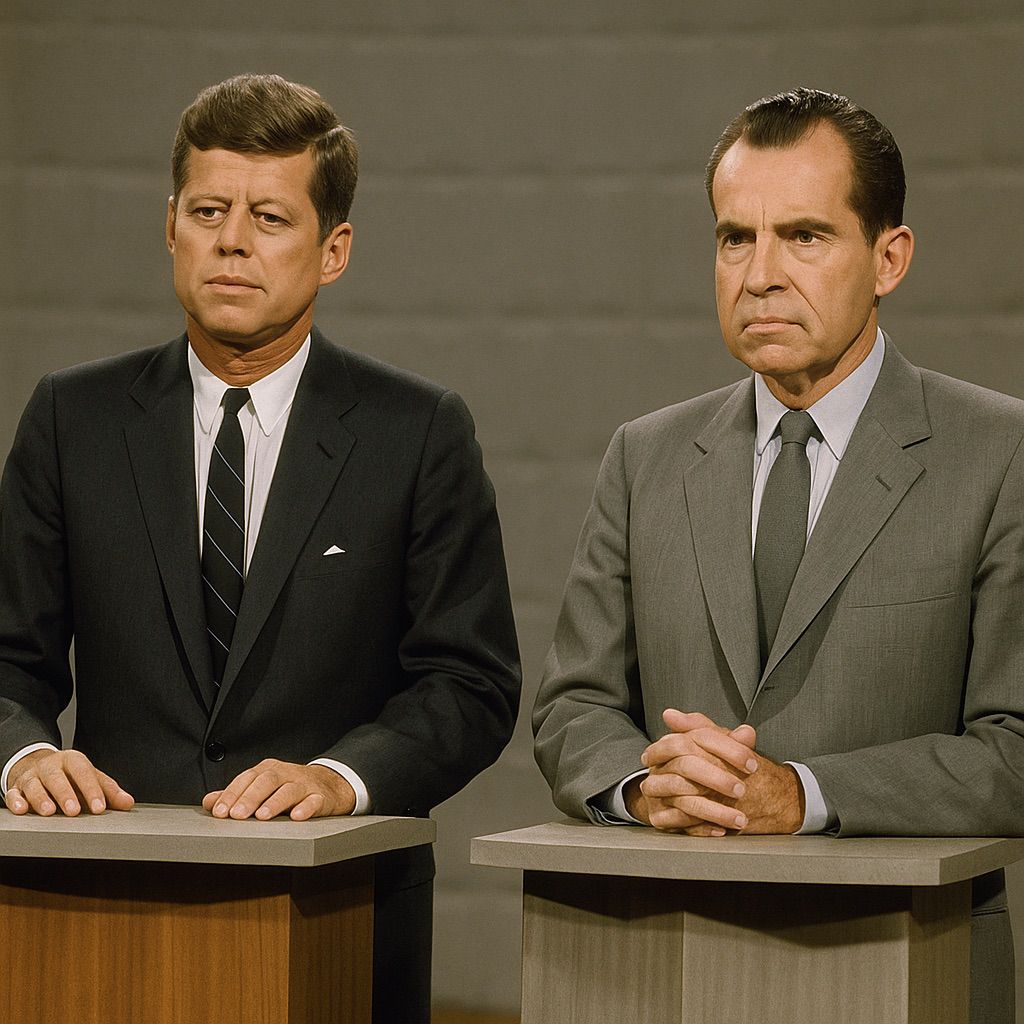
On September 26, 1960, America tuned in to something it had never seen before — politics as performance, democracy played out not on a podium or in print, but in the glow of television screens. It was the first-ever televised presidential debate, pitting a young senator from Massachusetts, John F. Kennedy, against the sitting vice president, Richard Nixon. Tens of millions of Americans — more than had ever watched a political event — sat in living rooms, eyes fixed on the screen, waiting to see their would-be presidents not only heard, but seen. And what they saw changed politics forever.

Kennedy and Nixon had met before. They were both veterans, both ambitious, both shaped by the storm of the Cold War. But on that September night, their differences crystallized under the glare of television lights. Kennedy came prepared not just with facts, but with presence. Tanned, rested, his dark suit contrasting sharply against the studio backdrop, he looked like a leader carved for the medium. Nixon, on the other hand, was recovering from illness and a recent hospital stay. He looked pale, thin, and tired. His light-colored suit blended into the background, making him seem almost ghostly. He refused makeup. His five o’clock shadow clung to his face. His eyes darted nervously. To radio listeners, Nixon held his own. To television viewers, Kennedy owned the stage.

It was a clash of eras. For decades, politics had belonged to newspapers, campaign rallies, and speeches in smoky halls. Words mattered more than images. But television was a new force, one that could magnify charisma and expose weakness in equal measure. On September 26, the United States learned that in the age of television, how you looked could matter as much as what you said.

The debate itself was focused on weighty issues: the Cold War, the Soviet threat, domestic policy. Kennedy spoke with crisp confidence, presenting himself as energetic, optimistic, ready to lead a new generation. Nixon, ever experienced, defended his record and attacked Kennedy’s youth. Yet viewers could not shake what they were seeing. Kennedy’s poise, his steady gaze, his calm demeanor contrasted with Nixon’s perspiration, his shifting stance, his awkwardness under the lights. The contrast was not merely in arguments, but in aura.

Polls revealed the split: those who listened on radio believed Nixon had edged the debate. Those who watched on television overwhelmingly thought Kennedy had triumphed. The message was unmistakable: in a televised democracy, perception is power. Kennedy, who just weeks earlier had been seen as too young, too inexperienced, too Catholic, suddenly looked presidential. Nixon, for all his experience, looked diminished.

The aftermath was seismic. Kennedy surged in the polls. His performance on television became a model for modern politics: the candidate as performer, the campaign as production, the presidency as spectacle. From that night forward, no politician could ignore the camera. Debates were no longer about ideas alone, but about image, style, presence. Television had entered the bloodstream of democracy, and it would never leave.

The Kennedy–Nixon debate is remembered not because of a single line or a groundbreaking policy, but because it revealed something fundamental about politics in the modern age. Leaders are not just chosen for what they say, but for how they appear saying it. The medium shapes the message. In 1960, Kennedy understood it, Nixon did not, and the difference may well have won an election.

Looking back, the night of September 26 was not just the first televised debate. It was the beginning of a new political era. It set the stage for Ronald Reagan’s Hollywood polish, for Bill Clinton’s charm, for Barack Obama’s mastery of the screen. It also paved the way for the cynicism of spin rooms, soundbites, and image-driven politics that too often reduce substance to spectacle. But for better or worse, it was a turning point — the night television became the kingmaker of American politics.

In living rooms across the country, families huddled together, watching their leaders as if they were actors in a play. And perhaps that is the lasting lesson of that night. Politics is not only governance. It is theater. It is performance. It is story. And on September 26, 1960, John F. Kennedy told his story better.

Related Posts