Latest Articles

Saltwater Solitude: How to Plan the Perfect Solo Beach Getaway

Dave

There’s a particular kind of freedom that comes with standing at the edge of the ocean completely on your own. No itinerary dictated by friends, no compromises over where to eat, no distractions except for the waves curling against the sand and the sound of your own breath syncing with the tide. A solo beach getaway is more than just a vacation—it’s a conversation with yourself, a rare chance to step outside the noise of daily life and rediscover the rhythm of your own thoughts. While traveling alone can feel intimidating at first, especially when you imagine stepping into wide-open spaces where couples stroll hand in hand or families set up umbrellas, the truth is that a beach is one of the best places in the world to experience solitude in comfort. And planning that kind of escape doesn’t have to be complicated—it just requires intention, a little creativity, and the courage to give yourself the gift of your own company.

The first step is choosing the right destination. Not all beaches are created equal, and not all are suited to the kind of solo retreat you’re envisioning. Do you want a lively coastal town where you can alternate between quiet mornings and bustling nightlife, or do you crave an isolated stretch of sand where your only company will be seabirds and the occasional wandering crab? Popular resort beaches are great for safety and amenities, offering restaurants, lifeguards, and plenty of people-watching. But for some, the magic of a solo getaway is found on quieter shores, where you can walk for miles without seeing another footprint. Deciding on your vibe—social or solitary—guides the entire planning process. If it’s your first solo trip, consider a destination that offers a balance: enough activity that you won’t feel out of place, but enough serenity that you can truly unwind.

Once you’ve chosen where to go, the next task is planning how to get there. Solo travel means you’re responsible for every detail, and while that can feel overwhelming, it’s also liberating. You don’t have to negotiate departure times, layovers, or road trip playlists with anyone. You can drive with the windows down, blasting your favorite music without judgment, or take a train and watch the landscape roll by while you lose yourself in thought. Flying solo? Book a window seat and let yourself feel like an adventurer staring down at coastlines from above, knowing that every choice from here on out is yours alone. Transportation becomes part of the experience; instead of rushing through it, you can savor the independence that comes with not having to answer to anyone else’s schedule.

Packing for a solo beach getaway is an art form in itself. Without the need to consider anyone else, your suitcase becomes a reflection of pure self-care. Think lightweight, breathable clothes, a couple of swimsuits that make you feel confident, a sunhat, sandals, and a good beach bag. Essentials like sunscreen, a reusable water bottle, and a quick-dry towel are non-negotiable, but beyond that, pack for pleasure. Bring that novel you’ve been meaning to read, a journal for capturing fleeting thoughts, or a camera to document the adventure from your own perspective. Don’t forget snacks that you love, whether it’s tropical fruit, granola bars, or indulgent chocolate. One of the quiet joys of solo travel is that you get to pack without compromise; everything in your bag is for you, and you alone.

Safety, of course, is part of planning, but it doesn’t have to overshadow the fun. Choosing well-populated beaches, letting someone back home know your itinerary, and keeping valuables secure are all simple steps that ensure peace of mind. Traveling alone doesn’t mean traveling recklessly. On the contrary, it means listening closely to your intuition, trusting your instincts, and setting boundaries that keep you comfortable. The reward for this mindfulness is freedom—the freedom to sit wherever you want, eat whenever you want, swim when the mood strikes, and leave without waiting on anyone else.

The real beauty of a solo beach getaway is the pace. Without the needs of companions, the day unfolds like a tide: natural, fluid, and unrushed. Maybe you rise early to watch the sun climb over the horizon, sipping coffee as the sky shifts through pink, orange, and gold. Maybe you nap under your umbrella at midday, lulled by the hypnotic crash of waves. Maybe you take long walks with headphones, curating a personal soundtrack that makes each step feel cinematic. And maybe, just maybe, you find yourself laughing out loud at nothing in particular, realizing how rare it is to be truly alone yet truly content.

Food takes on a new dimension when you’re solo by the sea. Instead of compromising over restaurants, you can follow your cravings without hesitation. Maybe you grab a simple fish taco from a beachside shack, sit at a table with sand beneath your feet, and savor the spice and crunch. Maybe you splurge on a seafood platter at sunset, ordering a cocktail without needing to toast anyone but yourself. Or maybe you keep it simple with groceries from a local market, picnicking on the sand with fruit, cheese, and bread, feeling more satisfied than any five-star meal could provide. Eating alone isn’t lonely; it’s liberating. It’s a declaration that your own company is enough, and that flavors taste different when savored without distraction.

Connection still finds its way into solo trips, though often in unexpected ways. Strangers become companions for a moment: the local vendor who recommends the best beach at sunrise, the fellow traveler who offers to snap your photo, the child who proudly shows you a seashell before running back to their family. These interactions remind you that solitude doesn’t mean isolation; it means choosing when and how to engage. And when you do, the conversations often feel richer because they aren’t born from obligation but curiosity.

Journaling or documenting your solo trip becomes an extension of the experience. Writing down what you see, hear, and feel sharpens your awareness, turning fleeting sensations into lasting memories. The glint of light on wet sand, the cool shock of a wave on sun-warmed skin, the distant laughter of strangers—these details become the fabric of your story. If you’re more visual, photography turns the beach into a canvas, and every shot is a reflection of your unique perspective. No two people see the same shore the same way, and solo travel allows you to embrace that fully, framing the world exactly as you want it to be remembered.

Perhaps the most important part of planning a solo beach getaway is embracing spontaneity. Build in room for surprises. Maybe you stumble upon a hidden cove while wandering. Maybe you spend hours talking to a local fisherman who teaches you about tides. Maybe you decide to rent a kayak on a whim and discover mangroves you didn’t know existed. Solo travel allows these detours to become the highlights of the trip, precisely because there’s no agenda but your own. The freedom to pivot, to chase curiosity wherever it leads, is the true luxury of traveling alone.

And when the day winds down, when the sky turns lavender and the horizon swallows the sun, you may find the solitude takes on a different kind of beauty. Sitting alone on the sand at dusk, you realize that the ocean isn’t just a backdrop but a companion. Its vastness mirrors your own inner landscape—sometimes calm, sometimes restless, always deep. In its rhythm, you find reassurance that being alone is not the same as being lonely. A solo beach getaway teaches you this truth better than any self-help book could: your own presence can be enough, and sometimes, it’s exactly what you need.

So how do you plan a solo beach getaway? You choose a destination that calls to your spirit. You pack with intention and pleasure. You set safety in place so your mind can rest. You open yourself to the rhythm of the tide, the joy of self-directed days, and the possibility of spontaneous discovery. Most of all, you give yourself permission to revel in your own company. The reward is not just a vacation but a transformation—a chance to meet yourself again in the mirror of the sea, unfiltered, unhurried, and entirely free.


Related Posts

The Little Rock Nine: Walking Into the Storm of History

Elias Rowen

On September 25, 1957, nine African American teenagers walked through the front doors of Little Rock Central High School in Arkansas under the protection of U.S. Army paratroopers. Their names were Ernest Green, Elizabeth Eckford, Jefferson Thomas, Minnijean Brown, Terrence Roberts, Carlotta Walls, Gloria Ray, Thelma Mothershed, and Melba Pattillo. They were young, ordinary students who became extraordinary symbols, thrust onto the frontline of America’s civil rights struggle. Their steps across that threshold were not just a walk to class. They were a march into history, into the teeth of hatred, into the heart of a nation torn between its ideals and its prejudices.

The story began three years earlier, when the Supreme Court handed down its landmark decision in Brown v. Board of Education (1954). The Court declared that “separate but equal” schools for Black and white students were inherently unequal, striking down segregation in public education. It was a ruling with the force of law, but laws alone cannot erase centuries of prejudice. Across the South, resistance rose like a wall. Arkansas, like many states, dragged its feet. Integration was ordered, but integration was defied.

In 1957, Little Rock became the battleground. Central High School was the largest and most prestigious public high school in the city, a gleaming symbol of white supremacy in education. When the school board announced that nine Black students would enroll, the reaction was immediate and ferocious. White citizens organized protests. Politicians fumed. Governor Orval Faubus, seeking to appease segregationists and solidify his political base, called out the Arkansas National Guard — not to protect the students, but to block them. On September 4, 1957, Elizabeth Eckford arrived alone at Central High, dressed neatly, carrying her books. She was met not by classmates but by an angry white mob screaming insults, spitting, threatening violence. Photographs of her walking stoically past the jeering crowd, face set with quiet dignity, seared themselves into America’s conscience.

The crisis escalated. For weeks, the Little Rock Nine were prevented from entering. The Governor defied federal authority, and the standoff became a national embarrassment. Newspapers across the world carried images of American citizens screaming at children, of democracy cracking under the weight of racism. President Dwight D. Eisenhower, reluctant at first to intervene, realized the stakes were larger than Little Rock. The authority of the federal government, the credibility of the Constitution, and the moral soul of the nation were on trial.

On September 24, Eisenhower acted. He federalized the Arkansas National Guard and ordered elements of the 101st Airborne Division — the same soldiers who had stormed Normandy — to Little Rock. The next morning, September 25, soldiers with rifles and bayonets escorted the nine students into Central High. The streets were lined with troops. The mobs still screamed, but the children walked through them, flanked by paratroopers, into a school that did not want them.

Inside, the battle was not over. For the rest of the year, the Little Rock Nine endured harassment, threats, and violence. They were tripped in hallways, cursed in classrooms, pelted with food in the cafeteria. Minnijean Brown was suspended after fighting back against tormentors. The others pressed on, sustained by faith, family, and sheer determination. Their presence forced Central High, and by extension the nation, to confront its hypocrisy. The United States could not claim to be a land of freedom while denying freedom to children because of skin color.

The impact of that day and that year was profound. The Little Rock Nine became icons of courage, their names etched into the history of civil rights. They inspired others to push for integration across the South. Their story demonstrated that federal authority would — at least sometimes — enforce desegregation, giving hope to millions. Yet their experience also revealed the depth of resistance, the cruelty of racism, and the costs of progress. They were teenagers who wanted an education, but they became warriors in a battle they did not choose.

Looking back, September 25, 1957, stands as a day when children carried the burden of a nation. Their walk into Central High was a victory, but it was also a reminder that justice is never automatic. It must be demanded, defended, and endured. The Little Rock Nine remind us that progress often comes not from presidents or generals, but from ordinary people who refuse to bow to injustice. They were young, but they were brave, and their courage continues to echo in every struggle for equality.

Related Posts

Beneath the Blue: The Magic of Snorkeling and Underwater Discovery

Elias Rowen

There is a certain moment when you first dip your face into the water, the world above instantly muted, the horizon erased, and suddenly everything changes. The chaos of the surface falls away, replaced by silence punctuated only by the sound of your own breath echoing through the snorkel. And then, as your eyes adjust to the clarity below, an entirely different universe reveals itself. This is the magic of snorkeling, the bridge between everyday life and a hidden world teeming with color, life, and wonder. Unlike scuba diving, with its heavy gear and complex certification, snorkeling feels accessible to anyone with curiosity and a mask. It is the simplest invitation to adventure, an open door to an underwater kingdom that has existed long before us and will continue long after, its mysteries waiting patiently to be seen.

The first time you float above a reef, you understand why people fall in love with snorkeling. Schools of fish move like choreographed dancers, shimmering silver, yellow, and blue as they dart through coral towers. Sea turtles glide by with effortless grace, their ancient eyes calm and curious as if they’ve seen everything and are amused by your clumsy kicks. Rays ripple along the sand below like shadows alive with intention, their wings moving in slow, mesmerizing waves. Every rock, every crevice, every patch of coral seems alive, and you realize the sea is not an empty space but a bustling city hidden in plain sight.

Snorkeling is, at its core, about discovery. Each dip into the ocean is like flipping through the pages of a book you’ve never read before, each chapter revealing something new. One day you might find yourself floating above a shallow lagoon where parrotfish nibble noisily on coral, their beaks scraping audibly in the quiet. Another day it might be a shipwreck resting silently on the seafloor, its rusting frame now claimed by coral and home to a kaleidoscope of fish. Sometimes it’s as simple as following a single hermit crab across the sand, or as extraordinary as glimpsing a dolphin darting just beyond the reef. The ocean doesn’t guarantee what you’ll see—it only promises that whatever you do will be unforgettable.

Part of the thrill of snorkeling lies in its simplicity. The gear is minimal: a mask, a snorkel, fins if you like, maybe a rash guard or wetsuit depending on the temperature. The learning curve is almost nonexistent—just float, breathe, and look. And yet within that simplicity lies endless depth. Learning to control your breathing makes your movements smoother, less startling to wildlife. Adjusting your body so you hover effortlessly on the surface rather than thrashing like a tourist opens the door to more encounters. Practicing calmness and presence turns snorkeling into something almost meditative, a form of mindfulness where the entire world is reduced to the water in front of your mask.

What’s astonishing about snorkeling is how democratic it is. You don’t need to be an expert swimmer to enjoy it; shallow reefs, protected lagoons, and calm bays exist everywhere, welcoming beginners and experts alike. Families with children can snorkel side by side with seasoned adventurers, each finding their own sense of awe. It’s the rare activity where generations blend seamlessly, where a child pointing excitedly at a clownfish can bring the same joy as an adult marveling at a manta ray. Snorkeling doesn’t ask for strength or skill—it only asks for curiosity.

But curiosity also demands respect. The underwater world is fragile, its beauty balanced on ecosystems that can be disrupted with a single careless touch. Coral reefs, in particular, are living organisms, easily damaged by fins or hands. Snorkeling responsibly means floating above without disturbing, watching without taking, being a guest in someone else’s home. Sunscreen must be reef-safe, free from chemicals that harm marine life. Trash has no place in the sea, and neither do souvenirs ripped from their natural setting. The real treasure of snorkeling is not what you can take with you but what you can witness in the moment.

Technology has added a new layer to snorkeling adventures. Waterproof cameras capture not just memories but stories worth sharing, bringing the hidden world to those who may never see it firsthand. A photo of a clownfish nestled in anemone or a video of sunlight streaming through kelp forests has the power to inspire conservation, reminding people that what lies beneath the waves is worth protecting. Social media, for all its flaws, has helped spread awareness of how extraordinary our oceans are and how urgently they need care. Snorkelers, whether amateurs or professionals, become ambassadors for the sea every time they share their discoveries.

Still, the most profound part of snorkeling is deeply personal. It’s the way time slows when you watch a turtle rise gracefully for air, the way your heart skips when you notice a school of fish surround you, the way you feel small yet connected in the vastness of the blue. Snorkeling reminds us of our place in the world, not as rulers but as participants in a much larger, older story. The sea humbles, heals, and teaches. It whispers truths that are impossible to hear on land, truths about fragility, resilience, and beauty that doesn’t ask for recognition yet offers it freely to anyone who looks.

For some, snorkeling becomes a once-in-a-lifetime vacation activity. For others, it becomes a lifelong passion, a reason to travel, a practice that deepens their relationship with nature. No matter how often you do it, it never loses its magic. Each new reef, each new tide pool, each new glance into the underwater realm feels like opening a gift. The ocean never shows the same face twice, and that is perhaps its greatest charm.

So pack your mask, clear your snorkel, and step into the sea. Float gently, breathe slowly, and let the world below reveal itself. The ocean doesn’t ask for much—just your attention. And in return, it offers you an experience that feels infinite, unforgettable, and profoundly alive. That is the essence of snorkeling and underwater discovery. It is not just seeing fish and coral—it is discovering yourself in the process, realizing how vast the world is, and how lucky we are to glimpse even a fraction of it.

Related Posts

Black Friday: The Day Greed Crashed the Gold Market and Shook America

Elias Rowen

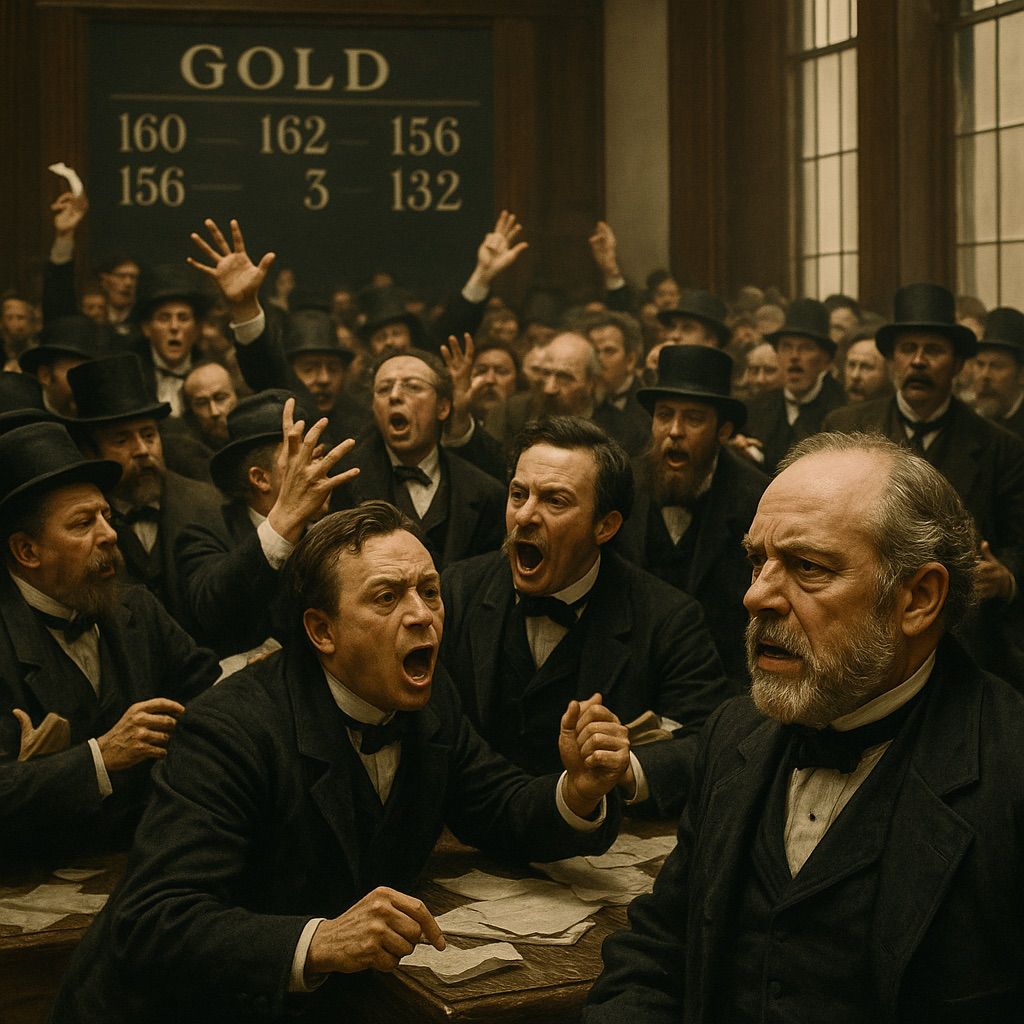
On September 24, 1869, Wall Street descended into madness. It was a Friday morning like no other, a day when fortunes evaporated, when brokers screamed themselves hoarse on the trading floor, when the very foundation of America’s post–Civil War economy seemed to crack under the weight of raw speculation. The newspapers would forever call it “Black Friday” — not for shopping deals or holiday cheer, but for panic, ruin, and the audacity of two men who believed they could corner the nation’s gold supply. Their names were Jay Gould and James Fisk, and together they hatched a plot so brazen that it nearly broke the country.

To understand the chaos of Black Friday, one must understand the times. The Civil War had ended just four years earlier, but the scars ran deep. The Union had financed much of its war effort by issuing “greenbacks,” paper currency not backed by gold or silver. These greenbacks fluctuated wildly in value, and the question of whether they should be redeemed in hard gold was hotly debated. At the center of it all stood President Ulysses S. Grant, a hero of war turned steward of peace, trying to stabilize the currency and restore economic confidence. Gold was the keystone of this fragile system. Whoever controlled gold controlled the economy.

Enter Jay Gould and James Fisk, two of the most infamous schemers of the Gilded Age. Gould was the brains — brilliant, cold, calculating, a man whose mind ticked like a watch wound too tight. Fisk was the showman — flamboyant, loud, a master of charm and distraction. Together, they controlled the Erie Railroad and dreamed of greater conquests. Gold, they realized, was the ultimate prize. If they could corner the gold market, drive up prices, and sell at the peak, they could amass wealth on a scale beyond imagination. But to pull it off, they needed more than money. They needed influence.

Their scheme unfolded like a novel of corruption. Gould and Fisk began buying gold in secret, steadily pushing the price higher. At the same time, they sought to ensure the federal government would not interfere. If the Treasury flooded the market with gold, their plan would collapse. So they set about cultivating allies in high places. Their most important target was Abel Corbin, a minor speculator who just happened to be married to President Grant’s sister. Through Corbin, Gould and Fisk gained access to the President himself. They whispered their arguments about keeping gold scarce, dressing their self-interest in the language of national prosperity. Grant, cautious but trusting, listened. For a time, it seemed the plan might actually succeed.

By late September, the gold market was in frenzy. Prices soared from $130 to $160 an ounce, unprecedented heights. Gould and Fisk, their pockets heavy with contracts, seemed unstoppable. On the trading floor of the Gold Room in New York, pandemonium reigned. Brokers jostled and shouted, their fortunes rising and falling with every tick of the board. Outside, speculators and onlookers crowded the streets, sensing history in the making. Newspapers buzzed with rumors. Was gold being cornered? Were Gould and Fisk really pulling the strings of the market?

But schemes built on manipulation are castles built on sand. President Grant, wary of the rumors swirling around him and increasingly alarmed by the economic chaos, acted. On the morning of September 24, the Treasury, under Grant’s direct orders, released $4 million in government gold into the market. It was like a thunderclap. The price of gold, inflated by greed and speculation, collapsed in an instant. From $160 it plunged to $133 in minutes. Fortunes evaporated. Men who had been rich at breakfast were ruined by lunch. Panic swept the floor of the Gold Room, brokers screaming, collapsing, tearing at their hair as their world imploded.

The ripple effects were devastating. Stock prices crashed, credit tightened, businesses failed. Farmers across the Midwest, who relied on stable markets for their crops, saw their livelihoods threatened. Banks wobbled, merchants despaired. The panic of Black Friday revealed how deeply the nation’s economy could be shaken by the schemes of a few men. Gould and Fisk walked away tarnished but not destroyed — Gould, ever slippery, managed to sell much of his gold before the collapse, insulating himself from total ruin. Fisk, the showman, blustered his way through the fallout, his reputation bruised but his fortune intact. Others were not so lucky. Small speculators were bankrupted, families impoverished, trust in the markets shattered.

Black Friday was more than a financial scandal. It was a parable of the Gilded Age, an era when unbridled ambition and corruption danced hand in hand. It revealed the fragility of America’s financial system and the dangerous power of speculators who believed they could bend the economy to their will. It showed how political influence and private greed could entwine, threatening the stability of the nation itself. And it marked Ulysses S. Grant, unfairly to some degree, with the stain of suspicion, as critics charged that he had been duped or compromised by the schemers who courted his circle.

In the aftermath, reforms were demanded, though the age of Goulds and Fisks was far from over. The Gilded Age would see railroads manipulated, stocks watered, and fortunes made and lost in waves of speculation. But Black Friday remained a warning — a day when America learned, painfully, that unchecked greed could rattle the pillars of prosperity.

Looking back, September 24, 1869, stands as one of the most infamous days in Wall Street history. It was the day two men nearly hijacked an economy, the day ordinary people paid the price for extraordinary ambition, the day gold itself became a weapon of manipulation. In its frenzy and its fallout, Black Friday told a story that still echoes today: markets are not just numbers on a board, but reflections of human desire, fear, and folly. And when those forces run wild, collapse is never far behind.

Related Posts

Saltwater in the Feed: Mastering the Perfect Beach-Themed Instagram Aesthetic

Dave

The ocean has always been a muse for dreamers, artists, and wanderers, but in the age of Instagram, it has become something else too: the ultimate backdrop for a life that looks as effortlessly beautiful online as it feels in person. A beach-themed Instagram aesthetic is more than a collection of photos; it’s a curated vibe, a storytelling thread that pulls people in with every post. It whispers of sun-kissed mornings, golden afternoons, salty hair, sandy feet, and a carefree spirit that feels both aspirational and attainable. When you open a profile with a cohesive beach aesthetic, it’s like opening a window into a lifestyle drenched in light and ease, one that invites followers to step into your world of endless summer. But creating that aesthetic takes more than snapping a photo of the sea. It requires intention, cohesion, and a balance between authenticity and artistry, a dance that transforms everyday moments at the beach into a feed that feels like a destination in itself.

It begins with color. The palette of a beach aesthetic is one of its most defining elements. Blues, of course, dominate—from the turquoise shimmer of shallow waters to the deep indigo of horizon lines. Pair those with the warm tones of sand, the glowing gold of sunlight, and the crisp whites of seashells, linen, and foamy waves, and you already have a foundation that feels natural and refreshing. Consistency is key here. Editing tools like Lightroom or VSCO help bring harmony to shots, softening harsh contrasts or amplifying warm highlights so that even different beaches and times of day look like they belong in the same narrative. Some accounts lean into dreamy, washed-out tones that mimic film photography, while others prefer bold saturation that makes every umbrella, bikini, and cocktail pop against the sky. The trick is choosing a mood and sticking to it—deciding whether your beach is soft and serene or bold and vibrant, and letting that choice guide your editing.

Angles and composition matter just as much as color. A feed that feels alive rarely leans on the same type of shot over and over. Wide horizons give the feeling of freedom and scale, while close-ups of seashells, footprints, or melting popsicles bring intimacy and texture. Overhead flat lays of beach towels, woven bags, sunscreen bottles, and sunglasses tell a lifestyle story, while candid shots of laughter in the waves show emotion. Variety keeps followers engaged, but cohesion keeps them loyal. Each post should feel like a new piece of the puzzle, fresh yet familiar, like walking along the same beach and discovering a different treasure each time.

Props and styling are underrated tools for shaping a beach-themed aesthetic. The right towel, a straw hat, a woven bag, a pair of chic sunglasses, or even a coconut drink can elevate a simple snapshot into a piece of art. These details don’t just decorate the image; they set the tone, telling followers whether your vibe is luxury resort chic, bohemian wanderlust, or minimalist escape. Fashion plays into this as well. Neutral swimsuits, breezy cover-ups, and sun-faded fabrics create one kind of look, while bold prints, neon bikinis, and oversized shades create another. Think of your props and outfits as part of your visual toolkit, the accents that help tie your feed together.

Of course, no Instagram aesthetic thrives on stillness alone. Reels and stories now carry as much weight as grid posts, and they offer a chance to expand the beach aesthetic beyond static images. Short clips of waves rolling, friends dancing barefoot on the sand, or a slow pan across a glowing sunset add movement and atmosphere. Stories, with their behind-the-scenes feel, allow for more spontaneity: the sunscreen reapplication, the sandcastle attempt, the snack spread in between swims. Together, they round out the aesthetic, making it feel real and approachable rather than just curated perfection.

Captions, too, are part of the aesthetic. A beach-themed feed isn’t only about visuals—it’s about voice. Playful puns, laid-back musings, and poetic reflections on the sea all add depth to the images. A photo of footprints in the sand paired with a caption about leaving worries behind creates resonance. A shot of friends laughing with a simple “salty but sweet” makes people smile. The words don’t have to be long, but they should echo the mood of the image, offering a glimpse of personality that connects followers to the person behind the photos.

Engagement also grows when your aesthetic feels like a story people want to join. Hashtags connect your posts to wider communities, drawing in others who love the beach life. Tagging locations not only boosts reach but also turns your feed into a guidebook of sorts, a collection of places worth visiting. Collaborative posts, featuring friends, fellow creators, or even small beach-town businesses, broaden your aesthetic while adding dimension. The more your feed feels like part of a living, breathing coastal community, the more followers see it as something more than just pretty pictures—they see it as a lifestyle they want to experience too.

The human side of a beach aesthetic is what keeps it from becoming stale. Perfection has its place, but authenticity is magnetic. The wind-tousled hair, the slightly melted ice cream cone, the photo that catches laughter mid-squint instead of perfectly posed—all of these moments are what make your aesthetic feel alive. The beach is messy: sand clings, waves splash unpredictably, and tans rarely develop evenly. Embracing those quirks keeps your content from feeling artificial and instead captures the real spirit of summer.

And that’s the ultimate point of curating a beachy Instagram aesthetic—it’s not just about impressing strangers with polished images. It’s about documenting the feeling of summer, the essence of freedom and play. It’s about building a digital scrapbook that you and others can revisit in the dead of winter, when you need to remember the warmth of the sun and the endless possibility of days spent by the sea. It’s about creating not just an account, but a mood board for life, one that celebrates the beauty of the ocean and the joy it brings to everyone who stands on its shore.

So when you’re ready to curate your beach-themed aesthetic, don’t overthink it. Focus on light, color, variety, and intention. Mix beauty with authenticity. Make your feed a place people want to linger, like a boardwalk stroll at golden hour. And remember: the sea doesn’t demand perfection, it just asks that you show up and let yourself be part of its rhythm. Do the same with your feed, and soon your Instagram will feel less like a collection of posts and more like a window into endless summer.

Related Posts