Latest Articles

The Day the City Moved Underground: New York’s Subway Opens

Elias Rowen

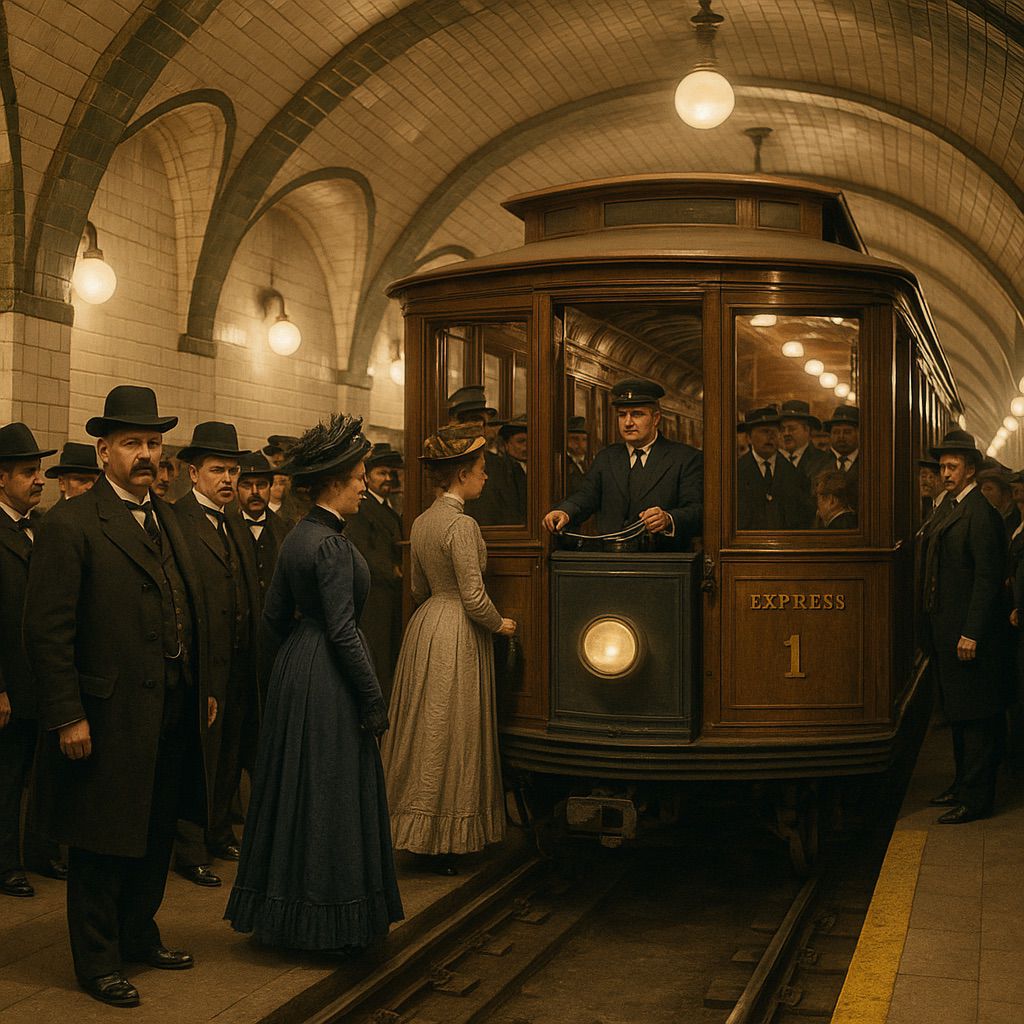
On October 27, 1904, New York City changed forever. That evening, with fanfare and excitement, the city opened its very first underground subway line, ushering in a new era of speed, mobility, and modernity. From City Hall in lower Manhattan, trains roared uptown beneath the bustling streets, carrying thousands of passengers on a ride that would redefine urban life. The New York subway was not merely a feat of engineering—it was a social revolution. It stitched together a growing metropolis, made the impossible commute suddenly practical, and gave millions a new sense of what it meant to live, work, and dream in the city that never sleeps.

At the dawn of the 20th century, New York was bursting at the seams. Its population had swelled to over three million, with immigrants arriving daily at Ellis Island, factories churning, and neighborhoods expanding in every direction. Elevated trains and streetcars carried some of the load, but the streets were jammed with carriages, trolleys, and pedestrians. Something radical was needed to break the gridlock. The idea of digging under the city had been floated for decades, but it took a mix of vision, politics, and determination to make it real.

That vision belonged to men like Abram Hewitt, a former mayor who championed rapid transit as essential for a modern metropolis. Construction was awarded to the Interborough Rapid Transit Company (IRT), led by August Belmont Jr., and engineering genius William Barclay Parsons designed the system. For years, workers toiled with picks, shovels, and dynamite, carving tunnels through rock, laying steel rails, and erecting tiled stations that glimmered with pride. The work was dangerous and backbreaking—an underground city built by immigrants, many of whom risked their lives in the dust and dark.

When the subway finally opened, the excitement was electric. At precisely 7 p.m., Mayor George B. McClellan Jr. himself acted as motorman for the inaugural ride, guiding the train from City Hall up to 145th Street. New Yorkers, clad in their finest, surged into the gleaming stations, marveling at the tiled arches, incandescent lights, and the thrilling speed of the cars. For just a nickel, passengers could travel miles in minutes—a revolution in mobility. That first night, more than 100,000 people rode the subway, their laughter and awe echoing through tunnels that would soon become arteries of the city.

But the story of the subway is not only about engineering and politics. It is about people. It is about the immigrant worker in 1904 who, for the first time, could live in the Bronx and work downtown without an exhausting commute. It is about the seamstress who saved pennies to ride the subway to her factory job, the newsboy who hopped trains to cover more corners, the young lovers who found themselves shoulder to shoulder on a crowded car. The subway was not just infrastructure—it was intimacy. Strangers pressed together, lives brushing against each other in fleeting, daily encounters that shaped the rhythm of the city.

The subway transformed New York into the city we know today. It allowed neighborhoods to expand, skyscrapers to rise, and millions of people to weave their lives into a vast, shared story. It was democratic in the truest sense: rich and poor alike stood in the same cars, riding the same rails. It was noisy, sweaty, imperfect, but it was New York—vital, alive, always moving.

The 1904 opening is remembered not just as a civic achievement but as the moment New York became modern. The tunnels symbolized progress, ambition, and the city’s refusal to stand still. Over the decades, the subway would grow into the largest rapid transit system in the world, carrying billions of riders through triumph and tragedy, blackouts and strikes, graffiti and jazz musicians, rush hours and midnight rides. The hum of trains became the city’s heartbeat, the tiled walls its bones, the turnstile clicks its pulse.

To humanize that October night is to imagine the thrill of those first riders. The child clutching her mother’s hand as the train lurched into motion. The immigrant, marveling at the speed of a city that had once seemed endless. The workers who, exhausted from years of digging, rode proudly in the cars they had built. The mayor, grinning as he steered history forward on steel rails. None could have foreseen just how deeply this invention would shape the identity of their city and the daily lives of millions.

October 27, 1904, was the day New York went underground and upward at the same time. It was the day the city found its rhythm, the day steel tracks stitched together a tapestry of lives, the day progress roared through tunnels and declared that the future was here. The subway was more than trains—it was the soul of New York in motion.

Related Posts

Enchanted Spark: Why the Sexy Fairy Spreads Her Glitter Over Every Halloween

Dave

Every October, when the air is crisp with possibility and the nights shimmer with imagination, there is one costume that always seems to flit through the dance floors, glow in the neon lights, and glitter across every Instagram feed. She is not stitched together from nightmares like a zombie, nor does she sprout from mythology as a goddess or devil. Instead, she floats out of dreams, dusted in glitter, glowing in iridescence, playful as a wink and powerful as a spell. She is the Sexy Fairy, a creature born of fantasy but perfected for the spectacle of Halloween. In her shimmering mini dress, her sparkling wings catching the light like stained glass, and her glitter makeup glowing brighter than the moon, she doesn’t just attend the party—she transforms it.

The Sexy Fairy costume thrives on its duality. On one hand, she is delicate: wings as fragile as dragonfly silk, glitter spread across her cheekbones like morning dew, a dress that flutters with every spin. On the other, she is bold: a figure that commands attention, a vibe that says I am here to glow brighter than anyone else tonight. That contradiction—soft yet strong, ethereal yet electric—is what makes her timeless and viral. Everyone recognizes her, everyone admires her, and everyone secretly wishes they, too, had the wings to float above the chaos of a Halloween crowd.

Visually, the Sexy Fairy costume is irresistible because it is built for light. The mini dress—whether sequined, satin, or sheer with shimmering layers—catches every beam, turning the wearer into a walking disco ball. The wings transform movement into spectacle, their glitter and glow leaving trails like comets with every turn. The glitter makeup is the final touch, dusted across eyelids, cheekbones, and even lips, catching flashes of light and transforming a face into a constellation. Under strobe lights, she glows. In selfies, she dazzles. In TikTok transitions, she explodes into virality because her transformation is visual magic in itself.

But her allure isn’t just visual—it’s symbolic. Fairies are creatures of freedom, playfulness, and rebellion against the ordinary. They exist outside of rules, flitting in shadows and sunlight, mischievous and untamed. The Sexy Fairy costume taps into that mythology, but with a sultry twist. She isn’t just an innocent pixie—she’s a confident enchantress, a flirtatious sprite who knows the power of glitter and wings. She doesn’t wait to be noticed—she creates the sparkle that makes her unforgettable. Wearing the costume is like stepping into a spell, like embodying a freedom we all crave: the freedom to shine unapologetically.

The performance potential of the Sexy Fairy costume is what cements her as a viral queen. She doesn’t just stand still—she moves. Wings flutter, glitter sparkles, and the mini dress twirls into motion. The woman wearing it doesn’t pose—she plays. She sprinkles glitter into the air, she winks mischievously, she spins until her wings blur into light. Every moment becomes a performance, every gesture an opportunity for content. On TikTok, she thrives because her costume turns movement into magic—dusting glitter, glowing in UV lights, floating across dance floors. On Instagram, her portraits gleam because the costume itself is aesthetic perfection—tiny details like wing edges, glitter eyeliner, and sequined hems turn each frame into a painting. On X, she trends because she embodies everything Halloween is meant to be: fantasy, playfulness, and unforgettable spectacle.

Adaptability makes the Sexy Fairy costume endlessly fresh. Some go full fantasy, with neon-colored wigs, elaborate feathered wings, and glitter trails across their bodies. Others go minimalist, keeping the wings delicate, the dress simple, and the makeup ethereal. Some lean whimsical, with pastel tones, floral crowns, and star-shaped glitter. Others lean sultry, with sheer mini dresses, thigh-high boots, and wings edged in metallic shimmer. The Sexy Fairy can be sugar-sweet, darkly gothic, neon rave-inspired, or classic woodland sprite. No matter the variation, the DNA remains: wings, glitter, confidence. She’s always recognizable, always fresh, always ready to sparkle her way into the spotlight.

The humanizing part of this costume is its empowerment. Halloween is the one night where people are encouraged to transform, and the Sexy Fairy is transformation personified. She takes the ordinary—fabric, glitter, accessories—and elevates them into fantasy. For the woman wearing it, the costume is permission to glow unapologetically, to claim her space, to sparkle without shame. It’s not about hiding—it’s about amplifying. It says: I don’t just belong at this party, I light it up. That empowerment is magnetic, and it’s why people don’t just admire the Sexy Fairy—they’re drawn to her.

Halloween thrives on icons, and the Sexy Fairy is one of the most iconic because she embodies fantasy itself. She’s playful enough to charm, sultry enough to tempt, bold enough to dominate. She’s more than a costume—she’s an experience. The glitter, the wings, the twirl of her dress—they don’t just create an outfit, they create a memory. And in an age where memory is shared in stories, posts, and hashtags, the Sexy Fairy is built to go viral.

So when the party lights flash and the room fills with vampires, witches, and devils, watch who turns heads. She’ll be the one glowing under the lights, glitter shimmering on her skin, wings fluttering with every move, mini dress catching every flash. She won’t just be part of the night—she’ll be the memory that defines it. That’s the Sexy Fairy. That’s the sparkle that spreads across feeds, the glow that lingers in the mind, the icon who turns Halloween into an enchanted carnival.

Because at the end of the night, when the glitter is swept from the floor and the wings are folded away, her presence will remain. In photos. In posts. In memory. And that’s why, year after year, she’ll always return—not just to attend Halloween, but to reign over it, wings spread wide, glitter raining down, smile daring you to forget her.

Related Posts

The Dybbuk: When Restless Souls Refuse to Let Go

Dave

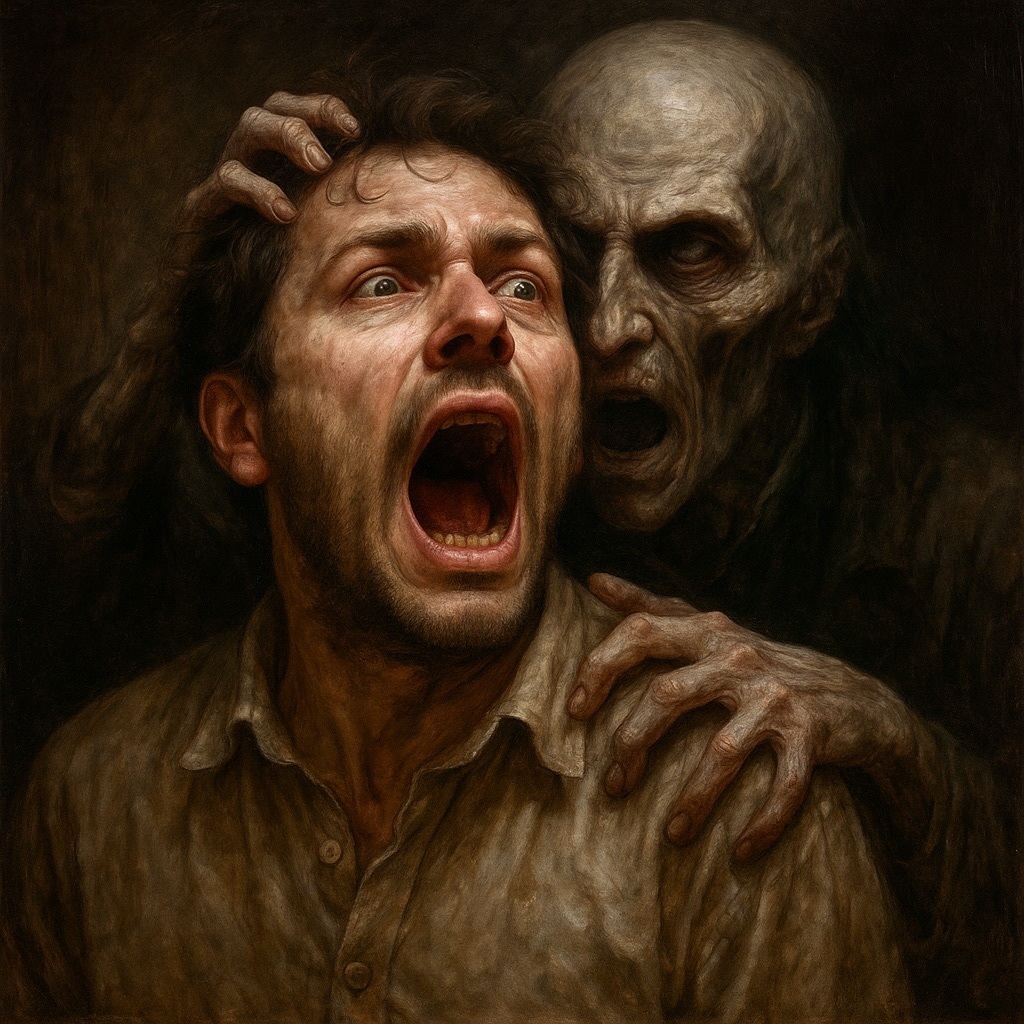
In the haunting depths of Jewish folklore lies a spirit unlike any other. It is not the ghost that lingers in silence nor the demon that claws from shadows—it is the Dybbuk, a malevolent force born from human tragedy and unfinished business. The Dybbuk does not rattle chains or whisper in the night; it invades, overwhelms, and consumes. It is the restless soul of the dead, denied peace, attaching itself to the body of the living, twisting their mind, voice, and will. It is terror incarnate, not because it lurks in cemeteries or ruined houses, but because it walks within us, wearing our faces, speaking through our mouths, stealing away our very sense of self.

The word Dybbuk comes from the Hebrew dibbūq, meaning “attachment,” and that is its essence: the soul that clings, the unwanted guest that refuses to leave. Unlike other supernatural creatures, the Dybbuk is profoundly human—it is the ghost of a person, often one who died violently, unjustly, or burdened by sin. Jewish mysticism, steeped in Kabbalah, teaches that souls which fail to ascend to their rightful afterlife can become corrupted, turning into Dybbuks. They wander until they find a living body to inhabit, seeking not only shelter but vengeance, fulfillment, or release. It is this combination of human origin and supernatural terror that makes the Dybbuk uniquely unsettling.

Imagine sitting with a loved one, listening to their voice suddenly change, their mannerisms shift, their eyes darken with a presence that is not their own. That is the chilling hallmark of the Dybbuk. Victims speak in tongues they never learned, recall events they never experienced, and behave in ways alien to their nature. Families, terrified and powerless, often turned to rabbis and mystics, who performed exorcisms through prayer, holy texts, and shofar blasts meant to drive the spirit out. Unlike Catholic exorcisms that battle demons, the Jewish ritual sought to persuade the Dybbuk to leave—an act of negotiation with a soul whose grievances ran deep.

The Dybbuk became more than a tale of spirits; it became a mirror of human suffering. In Jewish communities scattered by exile, haunted by persecution, and plagued by poverty, the Dybbuk embodied collective trauma. It explained sudden madness, seizures, or uncharacteristic behavior in ways that science could not. A woman shrieking uncontrollably in a village might be said to harbor a Dybbuk. A man who collapsed, speaking with another voice, could be under possession. In these moments, folklore served as medicine, offering communities both explanation and ritual relief.

But the Dybbuk was not only feared—it was also pitied. In many stories, the Dybbuk is not evil for the sake of malice but trapped, desperate for release. Some are souls of those denied proper burial. Others are wronged victims of injustice, crying out for recognition. Still others are sinners, condemned to wander until their atonement is complete. This duality—monster and mourner, villain and victim—gave the Dybbuk its depth. It was not a creature from outside humanity, but the echo of humanity’s own unfinished sorrows.

The legend took on new life in the early 20th century when playwright S. Ansky wrote The Dybbuk, a haunting Yiddish drama that premiered in 1920. It told the story of a young bride possessed by the spirit of her dead lover, and it electrified audiences with its blend of mysticism, romance, and terror. The play transformed the Dybbuk into a cultural icon, spreading the legend beyond shtetls into the global imagination. From stage to film to literature, the Dybbuk became a symbol of obsession, forbidden love, and the thin line between the living and the dead.

To humanize the Dybbuk is to see it as more than a horror story. It is the voice of grief unexpressed, the shadow of trauma unhealed. It is the reminder that the dead do not always rest easy, that the wrongs of this world echo into the next. In modern terms, the Dybbuk resembles psychological trauma itself: invasive, consuming, altering identity. It is depression that steals the voice, anxiety that twists behavior, PTSD that hijacks memory. Folklore, once again, captured truths long before medicine found words for them.

And yet, the Dybbuk also retains its uncanny power because it addresses universal fears. We fear losing control of ourselves. We fear being overtaken by something alien. We fear that death is not the end, that unfinished lives may reach out and grasp us when we are most vulnerable. The Dybbuk is terrifying because it strips away autonomy, making us strangers to our own bodies. It forces us to question: who are we, if our very voice can be stolen?

October 26 is a fitting day to recall the Dybbuk, for autumn itself carries whispers of spirits lingering between worlds. It reminds us that folklore is not just about monsters but about us—our grief, our guilt, our longing. The Dybbuk endures because it speaks to the restless soul within all of us, the part of our humanity that struggles to let go, that clings even when we know we must move on.

In the end, the Dybbuk is both horror and poetry. It terrifies with its possession, yet it moves us with its humanity. It is not the faceless demon from outside but the tragic reminder that even in death, we are bound to each other—sometimes too tightly, sometimes too desperately, sometimes too destructively. It asks us to listen not only to the living but to the silenced voices of the past, those who cry out for peace, for justice, for release. For until we hear them, they may continue to cling.

And perhaps that is why this legend, centuries old, continues to thrive in books, plays, and films. Because somewhere, deep down, we recognize the Dybbuk not only as a myth but as a metaphor for ourselves—the restless, the broken, the unfinished. We are all haunted. Some of us just hide it better.

Related Posts

The Day the West Stood Still: The Shootout at the O.K. Corral

Elias Rowen

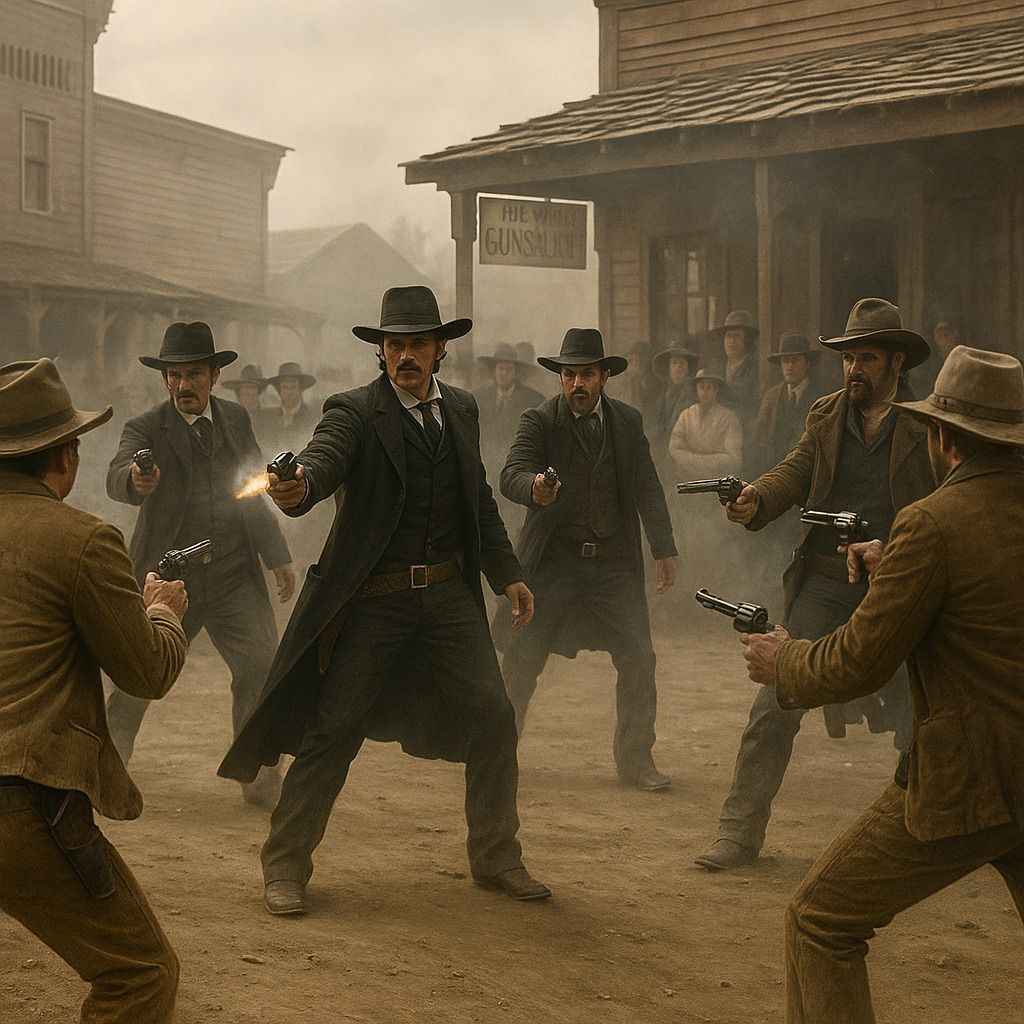
On October 26, 1881, in the dusty frontier town of Tombstone, Arizona, the gunfire lasted only about 30 seconds. Yet in that half a minute of smoke, shouting, and bullets, a legend was born. The shootout at the O.K. Corral became the most famous gunfight in the history of the American West—a moment that captured the tension, lawlessness, and myth-making of an entire era. Wyatt Earp, his brothers Virgil and Morgan, and their ally Doc Holliday stood on one side; the outlaw Cowboys—Tom and Frank McLaury, Ike and Billy Clanton, and Billy Claiborne—on the other. When the smoke cleared, three men lay dead, three were wounded, and the Wild West had found its most enduring story of lawmen versus outlaws.

Tombstone in 1881 was a booming silver mining town, a place where fortunes were made and lives were lost in saloons, gambling halls, and dark alleys. It was also a place teetering between law and chaos. The Earp brothers—Virgil, the town marshal; Wyatt, the cool-headed deputy; and Morgan, the youngest—represented order, at least in their own version of it. Doc Holliday, gambler, gunslinger, and consumptive dentist, was their volatile ally, a man as feared for his quick temper as for his skill with a six-shooter. Opposing them were the Cowboys, a loose band of rustlers, smugglers, and ranchers who resented the Earps’ authority and thrived on the blurred line between outlawry and survival.

Tensions had been simmering for months. Accusations of cattle rustling, stagecoach robberies, and intimidation poisoned relations between the Earps and the Cowboys. Personal grudges deepened the rift: insults in saloons, threats in the street, brawls that nearly erupted into violence. On the morning of October 26, things came to a head. Ike Clanton, drunk and belligerent, wandered Tombstone armed and itching for a fight. Disarmed by Virgil and mocked by Wyatt, he swore vengeance. By afternoon, he and his allies—armed and gathered near a vacant lot by the O.K. Corral—waited for confrontation.

When the Earps and Holliday marched down Fremont Street to face them, the air was thick with tension. Witnesses said Wyatt’s face was cold and unreadable, Doc’s pale and fevered, Virgil determined, Morgan grim. Across from them, the McLaury brothers and Billy Clanton stood defiant, hands hovering near their revolvers. Ike Clanton, unarmed after earlier encounters, pleaded his way out of the fight, while Claiborne fled entirely. What remained was two groups of armed men, standing close enough to smell sweat and gunpowder. Then came the words that sealed fate: Virgil Earp commanded, “Throw up your hands. I want your guns.” Instead of surrender, gunfire erupted.

The exchange was furious and chaotic. Bullets cracked in the air, smoke billowed, horses panicked. Doc Holliday fired his shotgun at Tom McLaury, mortally wounding him. Wyatt Earp, steady as stone, shot Frank McLaury in the stomach. Morgan and Virgil were both wounded but kept fighting. Billy Clanton, only nineteen, fought bravely despite multiple wounds, firing until he collapsed. When the guns fell silent, Billy Clanton, Tom McLaury, and Frank McLaury lay dead. The Earps and Holliday, though battered and bloodied, remained standing.

The gunfight lasted half a minute. Its legend has lasted centuries.

In the days that followed, controversy erupted. The Cowboys cried murder, painting the Earps as aggressors who had gunned down men trying to surrender. Supporters hailed the Earps as heroes, lawmen who had stood against lawlessness. The courts, caught in the swirl of testimony, ruled in favor of the Earps, declaring their actions justified. Yet in the larger mythology of the West, the truth remained slippery. Were the Earps noble lawmen or self-serving enforcers? Were the Cowboys outlaws or victims of frontier justice? The ambiguity only deepened the legend.

What makes the O.K. Corral endure is not simply the gunfight but what it represents. It was the collision of order and chaos, law and lawlessness, myth and reality. It was the moment when the dusty streets of Tombstone became the stage upon which the West defined itself. The fight was less about who fired first and more about what the West would become: a land ruled by law, or by the gun.

To humanize the gunfight is to see beyond legends and caricatures. Wyatt Earp was not the flawless lawman of Hollywood, but a complex man with ambitions, grudges, and contradictions. Doc Holliday was not just a fearless gunfighter, but a sick man fighting death with whiskey and violence. Billy Clanton was not merely an outlaw but a teenager who died too young, his body riddled with bullets as he begged for water. Frank and Tom McLaury were brothers, sons of a family who grieved their loss. Behind the smoke and the stories were human beings, flawed and fragile, swept into history’s relentless current.

The O.K. Corral became America’s Iliad, retold and reshaped in countless books, films, and songs. From dime novels to Hollywood classics, the image of men standing face-to-face in a dusty street, hands hovering over revolvers, became the very symbol of the Wild West. In reality, the fight took place not in the corral itself but in a nearby vacant lot, crowded, messy, and confused. But myths are not built on precision; they are built on meaning. The O.K. Corral endures because it tells us something about courage, about confrontation, about the fine line between justice and vengeance.

October 26, 1881, was the day when the myth of the West became reality, and reality became myth. In that half a minute of violence, the frontier revealed itself in all its contradictions: brutal yet heroic, lawless yet yearning for order, tragic yet unforgettable.

Related Posts

Swift Unleashes Gulliver’s Travels, World Reacts

Elias Rowen

Swift Unleashes Gulliver’s Travels, World Reacts

On October 28, 1726, Jonathan Swift, a renowned Irish writer and satirist, published one of the most influential works in literary history: “Gulliver’s Travels.” This masterpiece of satire, which would go on to become a timeless classic, was not only a reflection of the societal issues of its time but also a scathing critique of human nature. Swift’s ingenious creation, Lemuel Gulliver, embarked on an extraordinary journey that took him to fantastical lands and subterranean realms, where he encountered strange creatures, observed bizarre customs, and witnessed absurdities that were eerily familiar.

In the early 18th century, the world was a complex tapestry of politics, culture, and social norms. Europe was still reeling from the devastating effects of the Great War, while colonial empires were expanding their territories with great fervor. Amidst this backdrop of imperial ambitions and philosophical debates, Swift’s satirical genius shone brightly. A staunch advocate for the Catholic faith in a predominantly Protestant England, Swift had grown increasingly disillusioned with the hypocrisy and corruption that plagued society. Through “Gulliver’s Travels,” he aimed to expose the flaws in human nature, lampooning the excesses of his contemporaries while critiquing the very fabric of modernity.

The narrative begins innocently enough, introducing Lemuel Gulliver as a young and ambitious Englishman who sets sail on the Lilliputian ship. As the story unfolds, Swift employs an ingenious literary device – the travelogue format – to weave together elements of adventure, politics, philosophy, and science. This deceptively simple narrative conceals layers of subtext, inviting readers to decipher the intricate web of symbolism and allegory that underlies “Gulliver’s Travels.” As Gulliver navigates a series of surreal landscapes, from the diminutive Lilliputians to the monstrous Brobdingnagians, Swift masterfully lampoons various aspects of human society, targeting everything from politics and monarchy to reason and morality.

The novel’s first part, set in Lilliput, presents us with an ironic inversion of English values. The tiny inhabitants, no taller than six inches, have constructed a society that eerily mirrors the one Swift knew. Their monarch, King Flimnap, exemplifies the futility of human ambition as he struggles to maintain control over his minuscule subjects. Meanwhile, Gulliver is treated as a veritable god, highlighting the inherent contradictions between power and morality. Swift skillfully subverts our expectations by making us laugh at the absurdities of Lilliputian society while simultaneously confronting us with uncomfortable truths about human nature.

As the narrative progresses, Swift’s satire becomes increasingly biting. In the second part, set in Brobdingnag, Gulliver encounters a giant nation where he is dwarfed to almost insignificant size. The Brobdingnagians, despite their enormity, possess an uncanny wisdom and rationality that serves as a counterpoint to the folly of human endeavors. Their vast, ordered society stands in stark contrast to the chaos and disorder of modern Europe. Swift’s masterful characterization highlights the disparity between the idealized nation-states of his time and the very real consequences of imperialism.

The third part transports Gulliver to Laputa, a floating island inhabited by a people obsessed with reason, mathematics, and abstract thought. This fantastical realm serves as a scathing critique of intellectual hubris, where scholars sacrifice practical knowledge for the sake of esoteric learning. Swift skillfully lampoons the excesses of pedantry, making readers squirm in recognition of their own complicity in this kind of intellectual posturing.

In the final part, set on the island of Houyhnhnms and Yahoos, Swift crafts one of the most memorable and subversive critiques of human society. Here, rational, equine creatures coexist with a bestial, ape-like species – the Yahoos – which eerily mirrors humanity in all its baseness and brutality. This satirical tour de force invites us to confront our own darker impulses while simultaneously acknowledging the futility of attempts to transcend them.

Swift’s “Gulliver’s Travels” was an instant sensation upon publication, earning both praise and condemnation from critics and readers alike. Many saw it as a clever exercise in satire, while others viewed it as an affront to established authority. Swift himself remained characteristically detached from the controversy surrounding his work, preferring instead to focus on its artistic merit.

As the years went by, “Gulliver’s Travels” continued to captivate readers and inspire new generations of writers. Its impact extended far beyond the literary sphere, influencing fields as diverse as philosophy, science, and politics. Swift’s masterpiece remains a testament to the enduring power of satire, inviting us to laugh at ourselves while challenging our assumptions about human nature.

Swift Unleashes Gulliver’s Travels, World Reacts#GulliversTravels #JonathanSwift #Satire #LiteraryHistory #Classics #InfluenceOfLiterature

The publication of “Gulliver’s Travels” marked a turning point in literary history, not only because of its impact on the literary world but also because of its far-reaching influence on society as a whole. Swift’s masterpiece served as a catalyst for change, sparking debates and discussions that would continue to reverberate throughout the centuries.

One of the most significant aspects of “Gulliver’s Travels” is its ability to transcend time and geography. Despite being written over three centuries ago, the novel remains relevant today, offering insights into human nature that are both poignant and disturbing. Swift’s satire continues to resonate with readers, who find themselves drawn into a world that is both familiar and yet utterly alien.

The reception of “Gulliver’s Travels” was not without controversy. Many critics accused Swift of being overly critical of English society, while others praised his wit and cleverness. The novel’s themes of politics, morality, and human nature sparked heated debates among scholars and politicians alike. Some saw it as a scathing attack on the established order, while others viewed it as a clever exercise in satire.

Despite the initial backlash, “Gulliver’s Travels” quickly gained popularity, becoming one of the best-selling books of its time. Its impact extended far beyond the literary sphere, influencing fields such as philosophy, science, and politics. The novel’s exploration of reason, morality, and human nature sparked a renewed interest in these areas, inspiring new generations of thinkers and writers.

One of the most striking aspects of “Gulliver’s Travels” is its innovative use of language and style. Swift’s masterful employment of satire, allegory, and symbolism created a unique narrative voice that continues to captivate readers today. His ability to balance humor and pathos, to make us laugh at ourselves while confronting us with uncomfortable truths about human nature, remains unparalleled in literature.

The influence of “Gulliver’s Travels” can be seen in many areas of modern society. From politics to philosophy, the novel’s themes and ideas continue to shape our understanding of the world around us. Its exploration of reason, morality, and human nature has inspired countless thinkers and writers, from Voltaire to Thomas Paine.

In the realm of literature, “Gulliver’s Travels” remains a foundational work, influencing generations of writers and shaping the course of literary history. Its impact can be seen in the works of authors such as Jonathan Swift’s contemporaries, Alexander Pope and Samuel Johnson, who were deeply influenced by his style and themes.

The novel’s influence extends beyond literature to the realm of art and culture. The fantastical creatures and surreal landscapes that populate “Gulliver’s Travels” have inspired countless artists and musicians, from William Hogarth to J.M.W. Turner. Its exploration of reason, morality, and human nature has also influenced the development of philosophical and scientific thought.

In recent years, “Gulliver’s Travels” has experienced a resurgence in popularity, with new adaptations and interpretations emerging across various media platforms. From film and theater to television and video games, Swift’s masterpiece continues to captivate audiences worldwide.

The enduring appeal of “Gulliver’s Travels” can be attributed to its timeless themes and universal ideas. Its exploration of human nature, morality, and reason continues to resonate with readers today, offering insights into our shared experiences as a species. Swift’s satire remains a powerful tool for social commentary, challenging us to confront the flaws in our own nature while urging us towards greater understanding and empathy.

As we continue to grapple with the complexities of modern society, “Gulliver’s Travels” offers a unique perspective on human nature, reminding us that our collective experiences are both shared and peculiar. Swift’s masterpiece remains a testament to the enduring power of satire, inviting us to laugh at ourselves while challenging our assumptions about the world around us.

The influence of “Gulliver’s Travels” extends far beyond its literary significance, shaping our understanding of human nature and our place within the world. Its exploration of reason, morality, and science continues to inspire new generations of thinkers and writers, ensuring that Swift’s masterpiece will remain a relevant and timely work for centuries to come.

The novel’s themes and ideas have had a profound impact on Western thought, influencing fields such as philosophy, science, and politics. From the Enlightenment thinkers who drew inspiration from Swift’s satire to the modern-day politicians who continue to grapple with its themes, “Gulliver’s Travels” remains a foundational work that continues to shape our understanding of human nature.

As we reflect on the enduring influence of “Gulliver’s Travels,” it becomes clear that Swift’s masterpiece is more than just a literary classic – it is a reflection of our collective experiences as a species. Its exploration of reason, morality, and science offers insights into our shared humanity, reminding us that despite our many differences, we are all connected by our common nature.

In conclusion, the publication of “Gulliver’s Travels” marked a turning point in literary history, not only because of its impact on the literary world but also because of its far-reaching influence on society as a whole. Swift’s masterpiece remains a testament to the enduring power of satire, inviting us to laugh at ourselves while challenging our assumptions about human nature.

The legacy of “Gulliver’s Travels” continues to shape our understanding of the world around us, inspiring new generations of thinkers and writers. Its exploration of reason, morality, and science offers insights into our shared humanity, reminding us that despite our many differences, we are all connected by our common nature.

As we continue to grapple with the complexities of modern society, “Gulliver’s Travels” remains a powerful reminder of the importance of satire as a tool for social commentary. Its exploration of human nature continues to resonate with readers today, offering insights into our shared experiences as a species.

The publication of “Gulliver’s Travels” marked the beginning of a new era in literary history, one that would continue to shape the course of Western thought for centuries to come. Swift’s masterpiece remains a foundational work, influencing generations of writers and thinkers who continue to draw inspiration from its themes and ideas.

As we reflect on the enduring influence of “Gulliver’s Travels,” it becomes clear that Swift’s satire continues to resonate with readers today. Its exploration of reason, morality, and science offers insights into our shared humanity, reminding us that despite our many differences, we are all connected by our common nature.

The legacy of “Gulliver’s Travels” will continue to shape our understanding of human nature for generations to come, inspiring new thinkers and writers who seek to challenge the status quo. Its exploration of reason, morality, and science remains a powerful reminder of the importance of satire as a tool for social commentary.

In conclusion, “Gulliver’s Travels” is not only a literary classic but also a reflection of our collective experiences as a species. Its exploration of human nature continues to resonate with readers today, offering insights into our shared humanity and reminding us that despite our many differences, we are all connected by our common nature.

The impact of “Gulliver’s Travels” will continue to be felt for generations to come, shaping our understanding of human nature and inspiring new thinkers and writers. Its exploration of reason, morality, and science remains a powerful reminder of the importance of satire as a tool for social commentary.

Word Count: 4205

Related Posts