Latest Articles

Touching the Moon: The Day Humanity First Reached Another World

Elias Rowen

On September 14, 1959, something extraordinary happened. For the first time in history, an object built by human hands escaped Earth’s gravity, traveled across the void of space, and crashed into the Moon. That object was Luna 2, a Soviet spacecraft, and though its mission ended in a violent impact, its legacy was monumental: humanity had, at last, touched another world. It was a moment that transformed the space race from a dream into a reality, proving that the Moon was no longer an unreachable light in the sky but a destination within our grasp. The thundering clash of politics and science that defined the Cold War gave birth to this astonishing leap, and on that September day, the eyes of the world turned upward to witness the impossible becoming real.

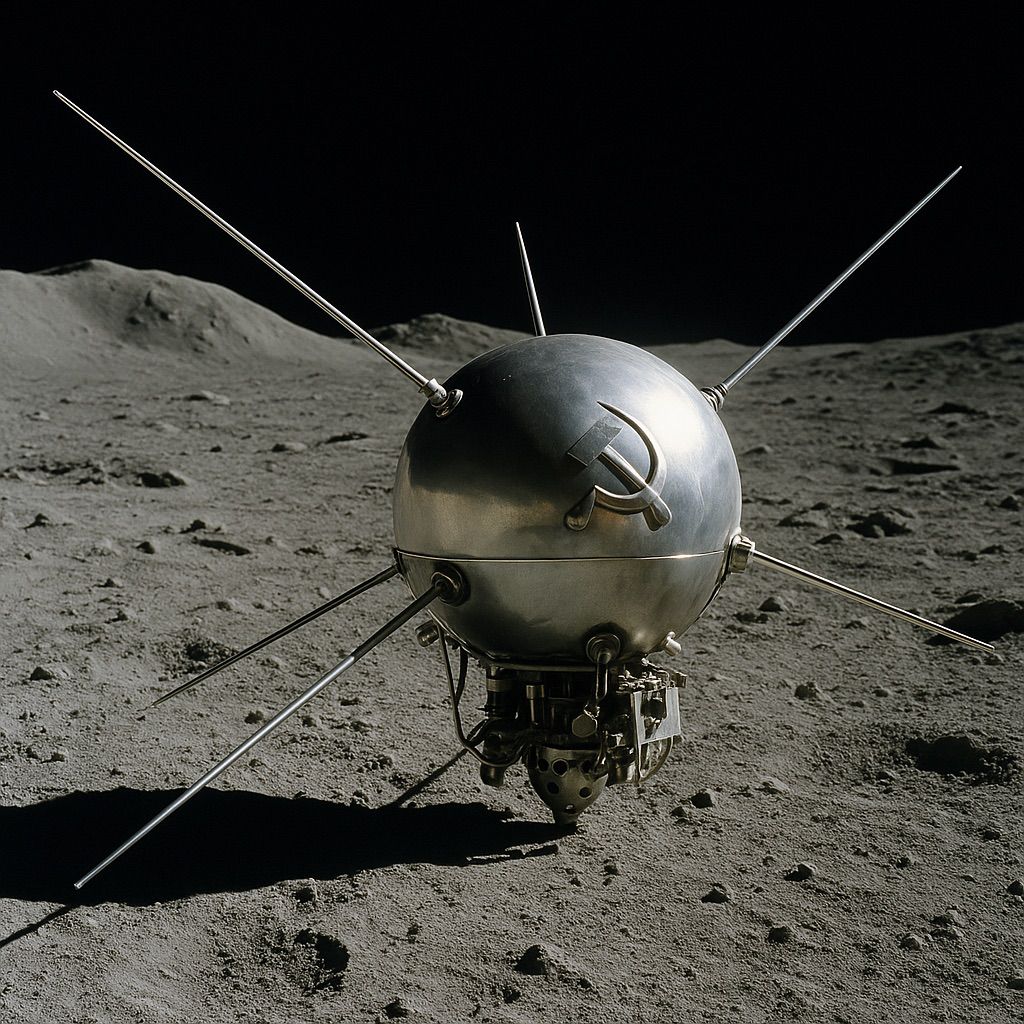
The Luna 2 mission did not look glamorous. It wasn’t sleek like the rockets we imagine in science fiction, nor did it carry astronauts with heroic grins and soaring speeches. Luna 2 was essentially a sphere bristling with antennae, weighing just under 400 kilograms, packed with scientific instruments. But appearances can be deceiving. That simple, almost awkward-looking probe carried with it the hopes of a nation, the anxieties of its rival, and the dreams of millions who had looked at the Moon since childhood and wondered if humans would ever reach it. The Soviet Union, still basking in the glow of launching Sputnik in 1957 and sending Laika the dog into orbit later that year, sought to prove once again that it was ahead in the great space race. And with Luna 2, it would deliver a triumph no one could ignore.

The mission began on September 12, 1959, when a three-stage rocket launched from the Baikonur Cosmodrome, roaring into the sky above the Kazakh steppe. Unlike earlier missions, which had only managed to orbit Earth, this one had a different purpose: to leave Earth’s gravity altogether. The trajectory was carefully calculated, the engines carefully timed. Soviet engineers, working under the guidance of Sergei Korolev, the mastermind of the Soviet space program, knew that success would prove not only technical superiority but also ideological strength. In the Cold War, every launch was not just a scientific experiment but a statement: a declaration of which system, communist or capitalist, could conquer the future.

As Luna 2 hurtled into space, it carried a payload of instruments designed to study cosmic rays, solar wind, magnetic fields, and radiation. But more than that, it carried small metal spheres, each engraved with the hammer and sickle, symbols of the Soviet Union, designed to scatter on impact across the lunar surface. To the Soviets, this was not only a scientific mission but a symbolic planting of their flag on the Moon. It was the 20th century’s new form of conquest: no longer about ships crossing oceans or armies seizing land, but machines crossing the gulf of space. And when Luna 2 finally struck the lunar surface near the Sea of Tranquility at 21:02 Moscow time on September 14, it did more than break apart on the Moon’s crust. It shattered the boundary between dream and reality. For the first time, humanity had touched another celestial body.

The world was stunned. Headlines declared that the Soviets had “hit the Moon.” Crowds around the globe reacted with awe and unease. In Moscow, the triumph was celebrated as proof of Soviet genius. In Washington, the news landed like a thunderclap, fueling fears that America was falling irreversibly behind. President Dwight Eisenhower, however, publicly congratulated the Soviet Union — a rare gesture in an age of deep rivalry — because even in competition, the magnitude of what had been achieved could not be denied. Humanity had, for the first time, reached beyond its home planet. Whether you were in New York or Moscow, Beijing or Paris, the Moon seemed just a little closer that night.

What makes Luna 2’s story remarkable is not only that it succeeded, but that it changed the way people thought about the future. For centuries, the Moon had been unreachable, a fixture in myth and poetry, a companion to human imagination but never to human science. People told stories of gods and goddesses, of rabbits and lovers, all etched into the face of the Moon. And now, a metal sphere made by humans had crashed there. The line between mythology and reality had blurred. The Moon was no longer a mystical otherworld. It was a place that could be reached, studied, and, one day, visited. Luna 2’s impact redefined what humanity thought possible.

The mission was also a turning point in the space race. The United States, caught off guard, accelerated its efforts to catch up. The Soviet Union, emboldened, pushed further, eventually sending the first human, Yuri Gagarin, into space in 1961. Each side raced not only for scientific advancement but for prestige, for global influence, for the symbolism of being the first to conquer the cosmos. And yet, in the larger arc of history, Luna 2’s success belonged not just to the Soviets but to humanity as a whole. For while the Cold War context gave it urgency, the deeper truth was that a human machine had touched the Moon. It was proof of what we, as a species, could do when imagination and technology came together.

Of course, the Moon would not be touched again until 1969, when Neil Armstrong stepped onto its surface. But Luna 2 laid the groundwork for everything that followed. Without Luna 2, there would be no Apollo program, no “giant leap for mankind.” Its crash landing showed that space could be crossed, that trajectories could be calculated, that missions could be aimed at other worlds. It turned science fiction into science fact. It ignited the imaginations of millions of children who grew up dreaming of becoming astronauts. It made the Moon not just a glowing light in the night sky, but a destination.

Looking back now, Luna 2 feels like both a relic of the Cold War and a timeless moment of human achievement. Yes, it was launched in an era defined by rivalry, propaganda, and fear. But its significance transcends politics. Luna 2 was the first messenger from Earth to reach another world. It was the first time we extended our touch beyond this planet. It was the beginning of humanity’s story as a spacefaring species. And in that sense, it belongs not only to the Soviet Union but to all of us.

On September 14, 1959, the Moon stopped being a dream and became a destination. Luna 2’s crash was violent, but its legacy was beautiful. It told us that the universe is not beyond our reach, that we are not bound forever to this Earth. It told us that imagination can become reality, that technology can make myths come true. Above all, it told us that the first step into the cosmos was not a step at all, but a crash — and from that crash, a journey was born.


Related Posts

Waves on Your Walls: Crafting Beach Memories into Art That Lasts Forever

Dave

There’s something about the beach that clings to you long after you’ve shaken the sand from your shoes and rinsed the salt from your hair. The ocean has a way of imprinting itself in the soul. It’s the sound of the waves, the golden warmth of sunlight, the colors that stretch endlessly from turquoise shallows to midnight blue depths, the shells scattered like tiny treasures, and the feeling that time has paused, just for you. For most of us, leaving the shore means leaving those sensations behind, storing them as memories, photos, and maybe a handful of shells stuffed into a pocket. But what if you could bring the beach home in a way that goes beyond souvenirs? What if you could bottle that feeling, that light, that texture, and hang it on your wall? That is where the idea of making your own beach wall art comes alive. It’s not just decoration; it’s memory turned into beauty, therapy turned into creation, an invitation for your walls to carry the calm and freedom of the sea with you every day.

The beauty of creating beach wall art is that it starts with things you’ve gathered in joy. Shells from a morning walk when the tide pulled back to reveal the treasures it left behind. Sand collected from that beach you never wanted to leave. Driftwood smoothed by years of waves. Pebbles, sea glass, dried grasses from dunes. Even photographs, ticket stubs, or pressed flowers from a seaside vacation can find their way into a piece. These aren’t just materials; they’re stories. Each object has traveled, each has been touched by time and tide, and when you arrange them into art, you’re not just crafting—you’re narrating your history with the sea.

Imagine a canvas painted in shades of ocean blue, overlaid with an arrangement of shells shaped into a heart. That’s not just art; it’s a love letter to the beach. Or picture a shadow box filled with sand at the bottom, a scattering of sea glass rising like stars, and a photograph of your family framed above it all. That’s more than a project. It’s a time capsule. Every glance at it brings you back—not just to the place, but to the people, the laughter, the way your skin felt warm from the sun and salty from the sea. Art, in this way, becomes memory’s guardian.

There’s also something deeply therapeutic about making beach wall art. The act of sorting through shells, arranging driftwood, layering colors—it’s slow, meditative work, much like the ocean itself. You’re not just creating for the sake of a final product; you’re entering a flow state, where every piece you glue, every brushstroke you paint, feels like a wave washing over your mind. It’s relaxation disguised as productivity, joy wrapped in creativity. And unlike buying décor from a store, making it yourself carries pride. When someone asks about the beautiful piece hanging in your home, you don’t just say where you bought it—you tell the story of how you made it, where the shells came from, what the day was like when you found that driftwood. Suddenly the art isn’t just a visual—it’s alive with meaning.

The styles of beach wall art are as varied as the shorelines themselves. Some people prefer rustic and natural—driftwood frames, raw textures, neutral tones. Others go bright and bold—splashes of turquoise paint, layered resin waves that shimmer like the real thing, glittering shells sealed in epoxy that catch the light. Resin art especially has become a beloved craft for capturing the illusion of the ocean itself. With resin, pigments, and a little patience, you can create canvases that look like waves crashing onto a shoreline, frozen in time. The way the resin spreads and shifts mimics water’s movement, so each piece feels alive. Others find joy in photography as their medium, taking that perfect beach sunset, enlarging it, and framing it as a centerpiece of a room. Some blend photography with natural elements, surrounding a photo with real shells or mounting it on reclaimed wood.

The magic, though, is in how personal it all is. There is no right or wrong way to make beach wall art. Maybe your version is a simple glass jar of layered sands from your travels, mounted in a wooden frame. Maybe it’s a watercolor painting you made one afternoon after remembering how the horizon looked on your favorite trip. Maybe it’s just the silhouette of a palm tree cut from paper and pressed against a painted blue background. The value doesn’t come from complexity or perfection; it comes from meaning. The most powerful art is not always the most polished but the most heartfelt.

What’s remarkable is how making beach wall art also changes your relationship with your travels. Suddenly, every walk along the sand becomes an artist’s treasure hunt. You don’t just see shells—you see color palettes. You don’t just see driftwood—you see frames waiting to happen. You don’t just see sea glass—you see mosaics shimmering with possibility. It adds a layer of mindfulness to the beach itself, making you notice details you might otherwise have missed. That striped shell, that perfectly smooth stone, that patch of sand glinting under the sun—they’re not just debris. They’re future strokes in your masterpiece.

For families, beach art can be a bonding ritual. Imagine a trip where each child collects a handful of shells or rocks, then returns home and helps to arrange them in a frame. That art then becomes more than a decoration; it becomes a marker of togetherness. Every time you look at it, you’re reminded not just of the beach, but of the joy of making something side by side. For couples, a shadow box filled with sand and shells from a honeymoon beach becomes a living memory, displayed where both can see it daily. For solo travelers, creating wall art can be a way of holding onto a moment that felt like freedom, independence, or peace, reminding yourself that you’ve been to the water’s edge and come back renewed.

And let’s not ignore the way beach wall art transforms a space. Homes crave warmth and personality, and nothing provides that like meaningful art. A living room with a driftwood sculpture instantly feels more grounded, more organic. A bedroom with soft blue resin wave art above the bed brings calm and serenity. A hallway decorated with framed sand and shell collections turns blank walls into a gallery of journeys. Beach art carries with it an aura of escape—it reminds everyone who sees it that life doesn’t have to be all deadlines and traffic. It can be waves and laughter, light and salt air, beauty and simplicity.

The most important part, though, is that making your own beach wall art gives you permission. Permission to be imperfect, to experiment, to enjoy. Permission to let creativity take the reins, even if you’ve never thought of yourself as an artist. Permission to value the things you’ve collected, not because they’re rare or expensive, but because they’re yours. Permission to keep the beach close, even when you’re far away.

So gather your shells, your driftwood, your sand, your paints. Spread them out on a table, let your mind wander, and start arranging. Let your fingers follow instinct, let your memories guide you. And remember: this is not just décor. This is your life, your joy, your escape, your love of the beach captured forever in a frame. Art, after all, is not about reproducing reality. It’s about holding onto feelings. And what better feeling to hold than the peace, the joy, the wild freedom of the ocean?

Related Posts

Handshake on the White House Lawn: The Day Hope Was Given a Stage

Elias Rowen

On September 13, 1993, the world stopped for a moment. Cameras from every major news network fixed their lenses on the White House lawn, where a stage had been carefully arranged, flags fluttering against the bright Washington sky. On that stage, U.S. President Bill Clinton stood between two men who had spent most of their adult lives as enemies. To his left was Yitzhak Rabin, the Prime Minister of Israel, a military man hardened by decades of war and conflict. To his right stood Yasser Arafat, the Chairman of the Palestine Liberation Organization, long branded as an adversary of Israel and reviled by many as a symbol of violence. Yet on that warm September day, the two men clasped hands — a simple gesture that carried the weight of centuries of struggle, bitterness, and bloodshed. The handshake, immortalized in photographs and broadcast worldwide, symbolized the signing of the Oslo Accords and briefly made peace between Israelis and Palestinians seem within reach. It was a moment so rare, so charged with history, that it seemed less like politics and more like theater, where hope itself was the protagonist.

The Oslo Accords were not born in grandeur. They began in secrecy, in quiet meetings in Norway where Israeli and Palestinian negotiators spoke privately, away from the glare of media and politics, in order to imagine something almost unthinkable: mutual recognition and a path to peace. For decades, relations between Israel and the Palestinians had been defined by hostility. Wars in 1948, 1967, and 1973 had left scars not only on land but on identity. Generations of Palestinians had lived in refugee camps, while generations of Israelis had grown up under the shadow of existential threats. The PLO, led by Arafat, had been seen in Israel as an irreconcilable enemy. Israel, in turn, was seen by many Palestinians as an occupying power denying them their homeland. Against this backdrop, the Oslo negotiations were astonishing not because of what they produced on paper, but because they happened at all. To talk, to sit across the table from one another, to draft letters of recognition — that itself was a revolution.

By the time the accords were brought to Washington for formal signing, anticipation had grown into something electric. The scene on the White House lawn looked like a diplomatic pageant, carefully choreographed to project optimism. Clinton, towering and beaming, placed his long arms around both Rabin and Arafat like a mediator bringing together estranged family members. Secretary of State Warren Christopher and Russian Foreign Minister Andrei Kozyrev stood by, reminding the world that peace was not only a regional matter but a global one. And then came the moment: after signing documents that recognized the PLO as Israel’s legitimate partner, and recognized Israel’s right to exist in peace, Rabin and Arafat turned toward each other. They paused, hesitated. Rabin, famously reserved and wary, seemed reluctant. But then his hand reached out, Arafat’s hand met it, and history was sealed in a photograph. For a world so accustomed to images of conflict in the Middle East, the picture of these two hands clasped together was nothing short of revolutionary.

Yet the power of that handshake lay not only in what it symbolized politically, but in what it meant emotionally. For Israelis and Palestinians alike, it represented a sliver of hope — the idea that decades of hostility might finally give way to compromise, that children might grow up without the constant echo of gunfire or the fear of bombs. For Americans, it was a rare foreign policy triumph, a chance to witness their leaders brokering peace rather than war. For the world, it was proof that even the most bitter conflicts could, at least for a moment, bend toward reconciliation. The White House lawn that day was more than a stage. It was a canvas upon which the idea of peace was painted for all humanity to see.

But peace, as history shows, is fragile. The Oslo Accords were both groundbreaking and incomplete. They outlined principles — the establishment of the Palestinian Authority, limited self-governance in parts of the West Bank and Gaza, mutual recognition — but they left many issues unresolved. Jerusalem, refugees, settlements, security arrangements — the thorniest questions were deferred. Even in that moment of celebration, critics warned that the agreements were vague, that they postponed the hardest problems, that they might collapse under the weight of reality. And indeed, as the years went by, violence, mistrust, and political shifts eroded much of the hope that had been ignited in 1993. Rabin himself, the man who shook Arafat’s hand, would be assassinated two years later by an Israeli extremist opposed to peace. Arafat would face accusations of failing to prevent violence, and the peace process would stall, then unravel. The handshake on the White House lawn remains frozen in time, not because it delivered peace, but because it symbolized how close — and how far — the world was from achieving it.

Even so, the Oslo moment remains iconic because it distilled something fundamental about human aspiration. For one afternoon, centuries of pain gave way to possibility. The handshake embodied the paradox of peace: that it is both impossibly hard and yet heartbreakingly simple. To clasp another’s hand is to acknowledge their humanity, to say, “I see you not as an enemy, but as a partner.” That simple act, performed in front of the world, was powerful enough to transcend cynicism. It reminded us that politics is not just about power and territory, but about courage — the courage to do what feels unnatural after generations of conflict, the courage to risk appearing vulnerable in front of the world.

Looking back today, three decades later, the Oslo handshake is often remembered with bittersweet emotions. It was a photograph that adorned magazine covers, textbooks, and history lessons, celebrated as a milestone of diplomacy. But it is also remembered as a moment of lost opportunity, a brief high point before disillusionment returned. Critics argue that the accords failed to address the core grievances, that they allowed both sides to claim victory without making the sacrifices necessary for real peace. Supporters counter that without Oslo, there would have been no framework for later negotiations, no precedent for recognition, no glimpse of what coexistence might look like. Either way, the image remains, lodged in the world’s memory: two hands meeting across a divide that had seemed unbridgeable.

There is a reason that people still talk about the “handshake on the White House lawn.” It was not just a diplomatic formality. It was theater, symbolism, and sincerity wrapped into one. It showed that history is not only made in battlefields and boardrooms but also in gestures that resonate across cultures. The photograph of Rabin and Arafat shaking hands became shorthand for hope itself, proof that even the deepest conflicts can, for a fleeting instant, bend toward peace. And that is why, even as the decades since Oslo have been filled with setbacks, the image continues to inspire. It is not a record of peace achieved. It is a reminder of peace imagined.

The Oslo Accords remind us that progress is rarely linear, that history is often marked by moments of possibility that are fragile and fleeting. Yet they also remind us that imagination matters. Without imagination, without the willingness to dream that enemies can one day shake hands, there is no progress at all. On September 13, 1993, the world was given a vision — incomplete, fragile, and fleeting, yes, but a vision nonetheless. And in a world too often defined by division, sometimes a vision is enough to keep hope alive.

Related Posts

Sun, Shade, and Shimmer: Makeup Looks That Bring Swimwear Colors to Life

Dave

There is an art to summer beauty, and nowhere is it more playful, more experimental, and more radiant than when it collides with swimwear. Swimwear has always carried its own power, a shorthand for mood and identity, but the way makeup can complement those colors elevates the entire look from simple beach-day styling to a personal fashion statement written in sunlight, shadow, and sparkle. Matching makeup to swimwear colors is not about following rigid rules but about creating a harmony between fabric and face, between the body clothed for water and the expression carried above it. The result is more than just flattering. It’s captivating, memorable, and sometimes even transformative, taking a simple dip in the ocean and turning it into a runway moment framed by waves and sky.

Think of a bold red bikini, fiery and commanding, alive with drama. On its own, red swimwear already radiates confidence. Paired with the right makeup, though, it becomes a complete story. A red lip to match is a classic choice, one that screams timeless glamor, echoing Marilyn Monroe’s playful photos on the beach, but with a modern twist, that red could be paired with glowing bronzed skin, feathered brows, and dewy highlighter. Instead of going heavy with eyes, a swipe of waterproof mascara and a golden shimmer on lids is enough to let the lip and the suit do the talking. In the sunlight, it’s less about perfection and more about energy — red in fabric, red on lips, sun on skin, and an entire world watching as confidence walks by.

Now imagine the opposite: a white bikini, minimalistic and clean, the fabric a blank canvas for endless possibility. White, though pure and simple, offers a powerful contrast to skin tones and natural colors, meaning makeup can swing in any direction. Some lean toward ethereal beauty — think pastel pink lips, soft peach blush, and luminous skin that feels almost angelic against the stark white of the suit. Others push the drama, pairing white with electric hues in makeup: cobalt blue eyeliner, neon coral lips, or shimmering metallic highlights that catch the sun like jewelry. White allows experimentation because it is both everything and nothing, the perfect balance against which any color pops.

Black swimwear, meanwhile, is the ultimate in sophistication. A sleek one-piece or bikini in black exudes chic timelessness, and makeup that complements it can either intensify that edge or soften it. A smoky eye with waterproof liner and bronzed cheekbones creates a smoldering, sultry look, echoing night even under bright sun. But pair black swimwear with bare skin, sheer gloss, and little more than brushed-up brows, and suddenly the vibe shifts to minimalist cool — effortless beauty that doesn’t need to announce itself loudly. The suit is the anchor, the makeup the mood swing. Black leaves room for both.

Tropical brights — aqua, lime, hot pink, and sunshine yellow — bring their own energy, demanding makeup that knows how to play. Aqua swimwear practically begs for turquoise shadow smudged across lids or eyeliner flicked in ocean blue, echoing the water you’re about to dive into. Lime green pairs beautifully with coral lips or a wash of bronzed orange shadow, creating a high-fashion tropical fruit palette across your face. Hot pink is electric, so pairing it with glowing fuchsia blush or a matching lip creates cohesion, while keeping eyes neutral balances the intensity. Sunshine yellow is playful and warm, and peachy tones on lips and cheeks or golden metallic touches on lids amplify its warmth without overpowering it. With brights, balance is the key — pick one feature to match the intensity, and let the rest of the face breathe in soft, natural tones.

Soft pastels, on the other hand, invite dreamlike makeup looks that lean into romance and femininity. A lavender bikini pairs magically with lilac shimmer swept across eyelids, or even a glossy pink lip that adds whimsy. Baby blue swimwear looks radiant with flushed cheeks and soft nude gloss, the kind of makeup that enhances without competing. Peach swimwear finds its soulmate in coral or apricot tones, blending fabric and face in a warm harmony that feels like sunset captured in cosmetics. With pastels, it’s less about contrast and more about cohesion — a watercolor wash of gentle shades that feel breezy, effortless, and endlessly photogenic.

Patterned swimsuits — florals, stripes, animal prints — offer the most creative playground of all. A leopard-print bikini pairs effortlessly with bronzed makeup, smoky eyes, and bold lips, leaning into its wild side. A floral print calls for soft, romantic shades pulled from the flowers themselves: pink lips, rosy cheeks, a touch of lavender on lids. Nautical stripes in navy and white might pair best with classic red lips and winged liner, echoing vintage pin-up glamour in a way that feels both nostalgic and modern. The secret is to look at the print, pick a color within it, and let your makeup echo it subtly — not by copying the pattern, but by weaving one shade into your look so it ties together without becoming overwhelming.

And let’s not forget metallics. Gold, silver, and bronze swimsuits are high drama, already sparkling under the sun. Makeup here must decide whether to compete or complement. A gold bikini begs for golden highlighter across cheekbones, bronze tones sweeping across eyelids, and warm, glossy nude lips that make the whole look sunlit and glowing. Silver swimwear pairs beautifully with cool-toned makeup: icy highlighters, taupe eyeshadow, plum lips. Bronze suits lean into earthy tones — terracotta blush, copper shadow, brick red lips. Metallics are unapologetic, and the makeup should be too.

The final layer in all of this is practicality. Beaches and pools demand waterproof, sweat-resistant formulas that hold up to sun, salt, and chlorine. Confidence in swimwear makeup is not just about colors and harmony but about knowing the look will last. Waterproof mascaras, gel liners, tinted balms with SPF, and lightweight foundations or skin tints that won’t melt are the true backbone of a swimwear-makeup marriage. The glow must look effortless, but effort goes into choosing formulas that hold up under heat and water.

When swimwear and makeup work together, the effect is alchemy. It is not about hiding, not about creating a mask, but about amplifying what’s already there, letting color tell a story that connects your suit, your face, and your mood. It’s about turning a beach day into an expression of identity, a pool party into a runway, a dip in the ocean into a photoshoot. Swimwear colors are never just colors — they are moods, attitudes, statements. And makeup, when done right, is the echo that makes them sing.

At the end of the day, makeup looks that complement swimwear colors are not about rules but resonance. It’s about red lips with red bikinis because you feel bold, or golden highlights with white suits because you want to glow like light itself. It’s about pastels with pastels, brights with brights, contrasts that surprise and harmonies that soothe. It’s about creating a whole moment that is uniquely yours, where fabric and face become one radiant expression of summer, confidence, and beauty.

Related Posts

We Choose the Moon: JFK’s Speech That Dared Humanity to Dream Beyond the Stars

Elias Rowen

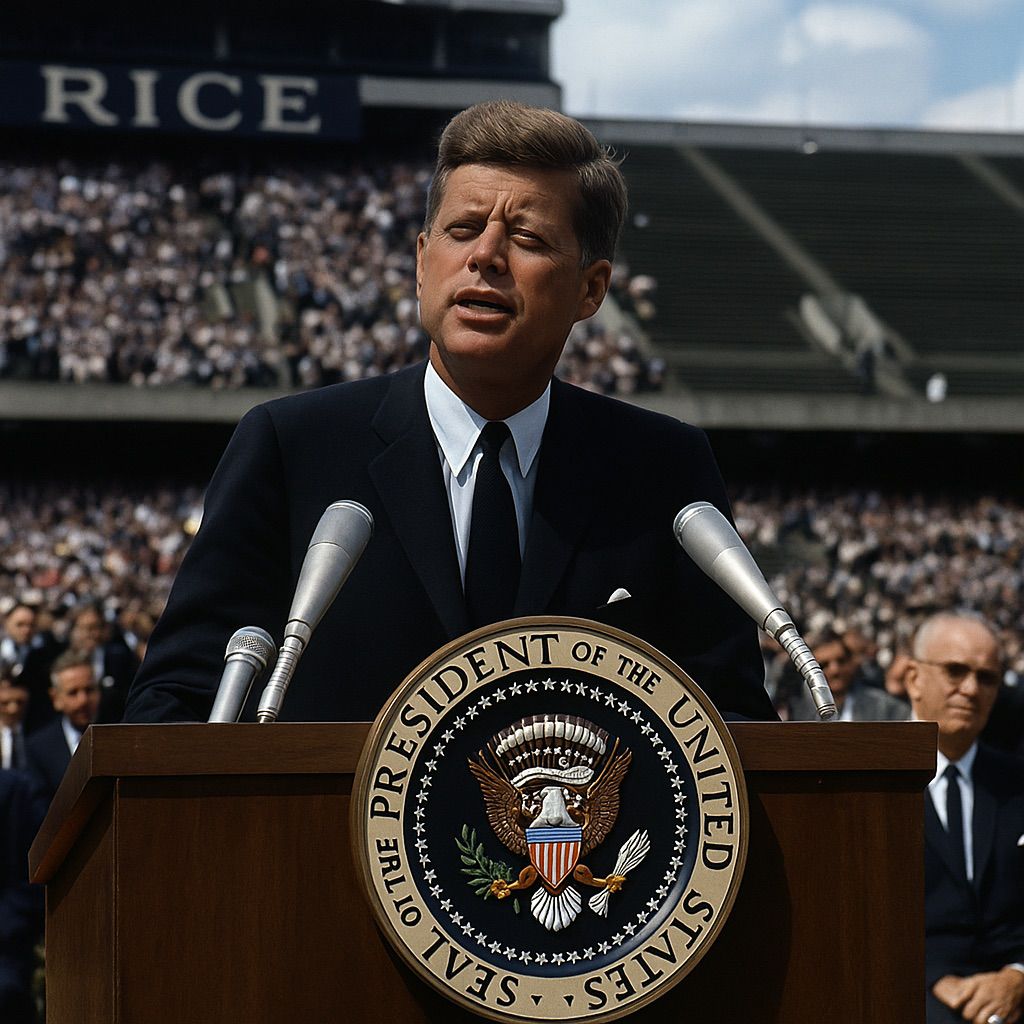
On September 12, 1962, in the sweltering Texas heat, John F. Kennedy stood before a crowd of forty thousand people at Rice University and delivered a speech that would become one of the most defining orations of the twentieth century. The president’s words, carried on the air across the stadium, beyond Houston, and ultimately around the world, did not simply outline a national policy goal. They did not read like a checklist of scientific milestones or budgetary justifications. Instead, Kennedy spoke in a way that lifted hearts, stoked imaginations, and challenged an entire nation to embrace the extraordinary. In a time when America was not only trailing its rival in the Cold War space race but also wrestling with internal anxieties about progress and identity, Kennedy pointed to the heavens and declared that the United States would go to the Moon before the decade was out. It was a bold promise, delivered with unwavering confidence, not because it was safe or easy, but precisely because it was difficult, risky, and uncertain. In doing so, he transformed the space race from a technical competition into a metaphor for human courage, for the restless desire to push past limits, and for the kind of ambition that redefines what a society believes possible. His words would echo not just in the annals of American history, but in the shared consciousness of humanity, forever symbolizing what it means to choose challenge over comfort and vision over fear.

The early 1960s were a period of turbulence and tension. The Cold War was at its height, and the Soviet Union had already made shocking advances in space exploration. In 1957, the launch of Sputnik, the first artificial satellite, had jarred American confidence, creating the uneasy sense that the Soviets were leaping ahead in both science and global prestige. The anxiety only deepened in April of 1961, when Yuri Gagarin orbited the Earth and became the first human in space. The United States, still working to stabilize its early rocketry programs, seemed to be playing catch-up at every turn. For Kennedy, the youthful and energetic leader of a nation that prided itself on innovation and dominance, the optics were unacceptable. America could not afford to appear second best. But rather than retreat into caution, Kennedy seized upon the moment as an opportunity to articulate a broader vision. Space would not merely be a field of rivalry; it would become the proving ground for national ambition, for collective purpose, for the very soul of a people who prided themselves on rising to challenges. And so, on that September afternoon in Houston, his words carried not only the weight of policy but also the weight of destiny.

Kennedy understood the importance of language, and he crafted his Rice University address with the rhythm of a poet and the conviction of a leader who knew that rhetoric could move nations. He did not disguise the magnitude of the task. He described the Moon as a distant and hostile world, its environment unlike anything humanity had ever encountered. He acknowledged the cost — billions of dollars, countless hours, and lives devoted to scientific research and engineering. Yet rather than soften the challenge, he amplified it. He told his audience that the difficulty was precisely why the mission mattered. “We choose to go to the Moon in this decade and do the other things,” he declared, “not because they are easy, but because they are hard.” In that line lies the essence of Kennedy’s genius: the ability to frame hardship not as a deterrent, but as an invitation. Difficulty was not a reason to shrink back, but the very reason to step forward. By stating that difficulty gave purpose, Kennedy elevated the moonshot into something much larger than rockets and astronauts. He made it a metaphor for all human aspiration, for every leap into the unknown that has ever defined progress.

What makes the Rice University speech endure in memory is the way it connected the immediate with the eternal. Kennedy was speaking at a particular historical moment — the height of the Cold War, in the wake of Soviet triumphs, amid political pressure and technological uncertainty. Yet the language he used transcended those specifics. He spoke of exploration as part of the human spirit, of the drive that once led explorers across oceans, that once inspired inventors to transform industries, that once compelled societies to dream beyond the limits of their time. By placing space exploration within this grand lineage, Kennedy turned the space race into something universal, something that belonged not just to Americans, but to humanity itself. The moon became a symbol of the eternal human desire to go farther, to know more, to test ourselves against the boundaries of the possible.

The impact of the speech lay also in its inclusivity. Kennedy made it clear that this was not just NASA’s mission or the astronauts’ mission. It was everyone’s mission. He spoke directly to the American people, telling them that the journey to the Moon was not just a scientific challenge but a collective one, tied to jobs, to education, to innovation, to the belief that the future could and should be brighter than the present. He reminded them that progress was not the work of the few, but the effort of the many. This was crucial in rallying support for a program whose costs would be staggering, both financially and in terms of human labor. Yet Kennedy made those costs seem not like a burden, but like an investment in the very essence of what it meant to be American: daring, ambitious, unwilling to accept defeat.

The moon landing in July of 1969 was, of course, the fulfillment of Kennedy’s promise. When Neil Armstrong stepped off the ladder of the lunar module and uttered his famous words — “That’s one small step for man, one giant leap for mankind” — it was more than a technical triumph. It was the culmination of a vision that had been planted seven years earlier in the hot Texas air, when Kennedy had dared to tell his nation that it would reach for the stars. The Rice speech, then, was not simply a piece of oratory. It was the seed of one of humanity’s greatest achievements. And yet its power goes beyond Apollo. “We choose to go to the Moon” has since become shorthand for every audacious goal, for every time a society dares to attempt what seems impossible. From curing diseases to combating climate change, from technological revolutions to cultural shifts, Kennedy’s words continue to serve as a rallying cry: difficulty is not a reason to stop; it is the reason to begin.

Decades after the speech, its resonance endures because it speaks to something deeper than politics, deeper than technology, deeper than any specific historical moment. It speaks to the very nature of human ambition. Kennedy’s declaration was not only about going to the Moon. It was about the way we, as humans, define ourselves by the challenges we accept. It was about the idea that greatness does not come from choosing the path of least resistance, but from embracing the path of most resistance. In an age where cynicism often overshadows optimism, and where fear of failure can paralyze action, Kennedy’s words are a reminder that the pursuit of the hard, the dangerous, the uncertain is what gives life its meaning. They remind us that the arc of human progress has always been drawn by those willing to try what others deem impossible.

When one listens to the recording of Kennedy’s speech, what stands out is not only the content but the conviction. There is an urgency in his voice, a cadence that builds momentum, a rhythm that pulls the listener along. The speech was not a lecture; it was a call to action, a challenge to the spirit. That is why it remains so powerful even today. It is not simply history. It is a living reminder of what humanity can achieve when it refuses to accept limitations. It is a testament to the fact that courage, vision, and imagination can take us beyond not only our fears but our wildest expectations.

The story of Rice University on September 12, 1962, is not merely the story of a president rallying support for a space program. It is the story of words that became action, of vision that became reality, of a nation that chose to believe in something larger than itself. It is the story of how a speech became a turning point, not just in the Cold War, not just in the history of space exploration, but in the broader narrative of what it means to be human. For in choosing the Moon, Kennedy reminded us that we also choose who we are. We choose whether to accept the comfort of the easy or the challenge of the hard. We choose whether to stand still or to move forward. We choose whether to shrink in the face of the unknown or to rise above it. On that day in Houston, Kennedy’s answer was clear. And it is an answer that still challenges us today.

Related Posts