Latest Articles

Sun, Sand, and Safety: Keeping Every Beach Day Worry-Free

Dave

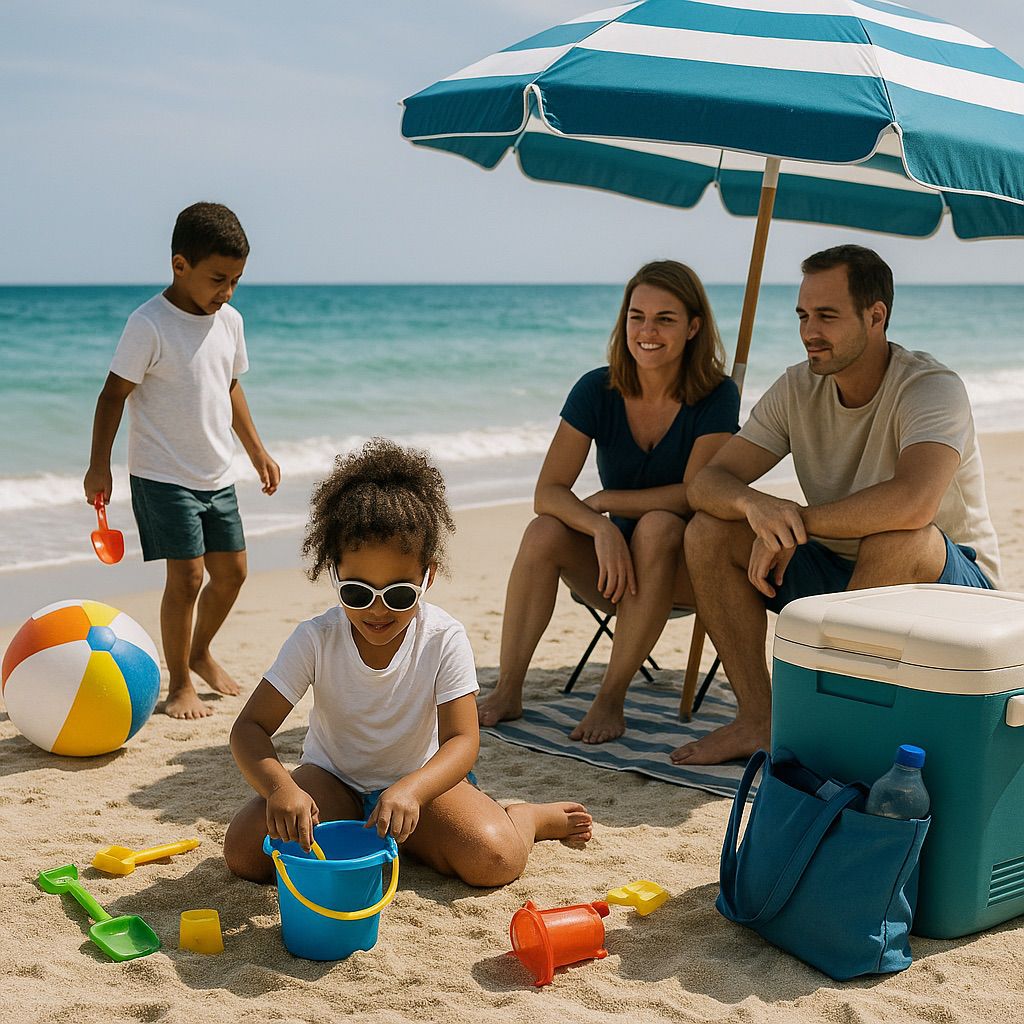
There is nothing quite like a beach day. The anticipation begins before you even get there — the smell of sunscreen in the air, the cooler packed with drinks and snacks, the towels rolled tightly in a bag, the excitement of kids who can’t wait to run into the waves. The beach is freedom, a place where time slows down, worries fade, and everything is reduced to sun, sand, and sea. But for all its joy, the beach is also a place where safety matters more than we often think. Beneath the carefree laughter and golden skies, there are risks that can turn a perfect day into a nightmare if we don’t pay attention. That’s why keeping everyone safe on a beach day is not about being paranoid — it’s about being prepared, about creating the conditions where relaxation can actually flourish because the essentials are covered. Safety is not a burden; it’s the foundation of a day everyone will remember for the right reasons.

The first and most important factor of beach safety is the ocean itself. The water is magnetic — it calls to children and adults alike, shimmering under the sun, whispering promises of cool relief. But the ocean is also powerful, unpredictable, and deserving of respect. Rip currents are among the greatest hidden dangers. They are fast-moving channels of water that can sweep even strong swimmers away from shore in seconds. Many people panic when caught, exhausting themselves by fighting directly against the current. The safer strategy is to stay calm, conserve energy, and swim parallel to the shore until you are free from the current’s grip, then make your way back in at an angle. Teaching children — and even reminding adults — about rip currents before anyone enters the water can make the difference between life and tragedy. The rule is simple: the ocean is beautiful, but never underestimate it.

Supervision is another non-negotiable. A beach is not like a backyard pool where the water is contained and controlled. At the beach, waves crash unpredictably, sandbars shift under your feet, and the sheer expanse makes it easy to lose sight of people, especially kids. Having a designated “water watcher” in your group ensures that someone is always paying attention when children or weaker swimmers are in the surf. Rotating this responsibility keeps it fair, but the key is that the job is focused — no phones, no distractions, just eyes on the water. This simple system has saved countless lives. It doesn’t matter how good a swimmer someone is; all it takes is one strong wave, one sudden cramp, one slip beneath the surface. The ocean demands vigilance.

Of course, not all dangers come from the sea. The sun itself can be merciless, and while a sunburn may not seem like a life-threatening issue, the truth is that overexposure to UV rays can cause heatstroke, dehydration, and long-term damage to skin. Sunscreen is the obvious defense, but too many people treat it like an afterthought, applying a quick layer once and forgetting about it. The truth is sunscreen should be applied generously, thirty minutes before sun exposure, and reapplied every two hours, or immediately after swimming or sweating. Wide-brimmed hats, sunglasses, and UV-protective clothing add extra layers of defense. Shade is not optional — whether from an umbrella, a tent, or a natural spot, having a retreat from direct sun can mean the difference between a joyful afternoon and a miserable evening spent with chills and blisters.

Hydration ties directly into sun safety. The combination of heat, activity, and salt air can dehydrate the body faster than we realize. Sodas and cocktails may be fun, but nothing replaces water. Bringing a cooler stocked with cold water bottles and encouraging everyone — especially kids — to drink regularly keeps energy up and prevents dizziness, fatigue, or worse. Pairing hydration with snacks like fresh fruit provides not only relief but also fuel for all the running, swimming, and building of sandcastles that a beach day demands.

Then there are the hazards we don’t think about until they happen — stepping on a sharp shell or piece of glass hidden in the sand, jellyfish stings, or scraped knees from playing near rocks. A small first aid kit can be a quiet hero on a beach trip. Bandages, antiseptic wipes, tweezers, and even vinegar or baking soda (depending on the type of jellyfish common in the area) can turn a crisis into a minor inconvenience. It’s not about anticipating disaster; it’s about giving yourself the power to respond quickly and confidently if something arises.

Swimming zones and lifeguards exist for a reason, and choosing a beach with lifeguards on duty is always the safer option. Lifeguards are trained to spot trouble before it becomes obvious — they can see a struggling swimmer long before a casual observer would notice. Respecting their warnings, flags, and instructions is non-negotiable. If a flag indicates dangerous conditions, trust it. No photo, no thrill, no swim is worth risking your life or the lives of those you love.

One of the most overlooked safety aspects of a beach day is the buddy system. It seems simple, almost childish, but it works. Nobody, no matter how confident, should swim alone. Having someone with you means that if something goes wrong — a cramp, sudden fatigue, or getting caught in a current — there is someone right there to help or call for help. Even experienced swimmers, even athletes, can be humbled by the power of the sea. Pairing up is one of the easiest, most effective ways to add a layer of security.

Parents, especially, face the challenge of balancing freedom with safety. Children see the beach as an endless playground, and in many ways it is, but they also need boundaries. Setting clear rules before arriving — where they can and cannot go, how far into the water they are allowed, and who they must stay near — provides structure without dampening fun. Bright swimsuits for kids make them easier to spot in crowds, and teaching them simple hand signals or whistles for attention can bridge the gap when voices get lost in the roar of the surf.

And then there is the social aspect of safety. Beaches are public spaces, and as such, awareness of your surroundings matters. Keeping an eye on belongings, choosing a well-populated but not overcrowded area, and respecting the space of others contributes to an atmosphere where everyone feels secure. A little courtesy goes a long way — picking up trash, avoiding reckless games near other beachgoers, and being mindful of noise or smoke helps maintain a safe and welcoming environment for all.

But the most powerful aspect of keeping everyone safe on a beach day is mindset. It is about recognizing that safety is not the opposite of fun, but the foundation of it. The child who knows someone is watching can play more freely. The swimmer who understands rip currents can enjoy the waves with confidence rather than fear. The adult who reapplies sunscreen and drinks water will have the energy to make memories well into the evening rather than retreating with sunstroke. Safety is the unseen lifeguard in every joyful photograph, the quiet force that makes the laughter possible.

What people remember about a beach day is not the sunscreen routine, the rotation of water-watchers, or the bag of bandages tucked discreetly in a tote. What they remember is the way the water felt as they dove under a wave, the taste of watermelon on a towel, the warmth of the sun as they dozed under an umbrella, the sandcastle that somehow survived until sunset, the bonfire laughter that stretched into the night. Safety doesn’t erase spontaneity. It protects it. It ensures that when the day is done, and everyone is packing up salty towels and sandy feet, the memories are golden, not scarred by regret.

The truth is that beaches have always been places of both beauty and danger. Sailors feared them, poets worshiped them, families flock to them. To love the beach is to love both its serenity and its wildness. And to honor that love is to approach it with respect. When we take the steps to keep everyone safe — to watch, to prepare, to hydrate, to shade, to listen to the sea and to each other — we are not limiting the magic of the beach. We are amplifying it. Because nothing is more magical than freedom without fear, laughter without worry, joy without interruption.

So the next time you pack the car, load up the cooler, shake out the towels, and head to the shore, remember that safety is the most essential thing you bring. It is what allows you to run barefoot across the sand without hesitation, to float in the surf without fear, to let children play with abandon, to close your eyes under the sun and truly relax. Safety is not a list of rules — it is the invisible gift you give to everyone you love, the one that says, “Go ahead. Dive in. The day is yours.”

Related Posts

The Blitz Begins: London Under Fire

Elias Rowen

On the evening of September 7, 1940, the people of London looked to the sky and saw their city’s fate written in the darkening clouds. At first it was only a hum, a vibration just on the edge of hearing, but soon the sound swelled into a roar as hundreds of German aircraft advanced across the Channel. What began that night was more than an air raid; it was the opening act of a relentless campaign of terror that would stretch across months, reduce entire neighborhoods to rubble, and forever sear itself into the collective memory of a nation. It was the Blitz, and it would test London not only with bombs and fire but with the question of whether its people could endure the unbearable. They did, and in doing so, they created a story of defiance that still resonates eight decades later.

The Blitz was not born suddenly; it was the result of a shift in Hitler’s strategy. During the summer of 1940, the Luftwaffe had sought to crush the Royal Air Force, targeting airfields, radar stations, and aircraft production. Operation Sea Lion, the planned invasion of Britain, depended on clearing the skies. Yet the RAF refused to yield, aided by radar, home advantage, and the courage of young pilots who fought at staggering odds. In frustration, and in response to a British bombing raid on Berlin that wounded his pride, Hitler turned his fury on London itself. The theory was simple: bomb the capital, terrify the population, cripple industry, and force Britain to the negotiating table. What he underestimated was the resilience of ordinary people, who would rather endure hell than submit to tyranny.

On that first night, the Luftwaffe sent nearly 350 bombers escorted by 600 fighters against East London. The docks along the Thames, warehouses stacked with food, timber, and oil, became a cauldron of flame. Witnesses described a wall of fire so high it looked like the horizon itself was burning. Explosions tore through streets, flames leapt from building to building, and smoke choked the air. Entire families clutched one another in shelters, listening to the whistle of falling bombs, praying not to be among the unlucky. When the dawn finally came, the docks were devastated, hundreds lay dead, thousands were injured, and Londoners knew their lives had changed forever. What none of them realized was that this was just the beginning: the city would be bombed every night for 57 consecutive nights.

From that moment forward, the Underground became a refuge. At first the government resisted the idea, worried about panic, disease, and disruption, but as the raids grew in intensity, Londoners forced their way in. The Tube stations transformed into subterranean villages, filled with families who brought blankets, food, and children’s toys. It was not comfortable. The air was heavy, the noise of trains continued overhead, and the toilets were few. Yet people made lives down there. Children played hopscotch between the rails, musicians entertained the crowds, and impromptu dances and church services were held in the gloom. The Underground became more than a shelter; it became a symbol of how ordinary people adapted to extraordinary circumstances, turning hardship into community.

Above ground, firefighters became some of the great unsung heroes of the Blitz. Night after night they climbed ladders into infernos, battling flames that spread from incendiary bombs designed not merely to destroy but to ignite. With buckets of water and hoses that sometimes ran dry, they fought to contain the blazes even as bombs continued to fall around them. Many never returned home. Civilians too became fire watchers, standing on rooftops with sand and stirrup pumps, ready to douse small fires before they could consume entire blocks. The city’s survival was a collective effort, one fought not just by soldiers and airmen but by ordinary men and women who refused to let their homes burn without a fight.

Children grew up with war as their backdrop. Many had already been evacuated to the countryside, sent away on trains clutching name tags and small suitcases. But thousands remained. For them, the siren’s wail became as familiar as a school bell. They slept in bunk beds underground, carried gas masks everywhere they went, and tried to learn arithmetic while wondering if their homes would still be standing when they returned. Some grew numb to it all, playing in the rubble of their own neighborhoods. Others carried the scars for life. Yet even in their innocence, they embodied the resilience that came to define the Blitz: small figures clutching teddy bears in the flicker of candlelight, surviving a nightmare with remarkable courage.

Winston Churchill became the voice of defiance. Touring bombed-out neighborhoods, he clasped hands, offered words of encouragement, and most importantly, gave speeches that turned suffering into a kind of moral victory. “We can take it,” he told them. His voice carried across radios into homes and shelters, reminding people that their endurance was not meaningless but part of a larger battle for freedom. Churchill understood that morale was the real target of the Luftwaffe. Hitler wanted to break the British spirit. Churchill made certain that every shattered window and every crater in the street became not a symbol of weakness but of determination.

As the months wore on, London was hit again and again. On December 29, 1940, one of the worst nights came. Tens of thousands of incendiary bombs rained down, setting the City of London ablaze in what became known as the Second Great Fire of London. Ancient guildhalls, libraries, and historic churches vanished in the flames. Yet when the smoke cleared, St. Paul’s Cathedral still stood, blackened but unbroken. The image of its dome rising above the inferno became one of the most iconic photographs of the war. For Londoners, it was proof that their city, like their spirit, could not be destroyed.

The psychological toll of the Blitz was immense. Families lived with constant uncertainty. Any night could be their last. Children woke screaming from nightmares indistinguishable from reality. Parents tried to keep a sense of normalcy—sending kids to school, shopping in markets, holding church services—even as shops collapsed and churches crumbled. Yet from this chaos emerged what became known as the Blitz Spirit: a mixture of stoicism, humor, and collective solidarity. People cracked jokes in shelters, painted defiant slogans on walls, and carried on with daily life as best they could. Milkmen delivered bottles among the rubble. Bus drivers rerouted around bomb craters and kept their routes. Couples still married, children still played, and London kept living, even as bombs fell.

By the time the Blitz eased in May 1941, more than 43,000 civilians across Britain had been killed, with London suffering the heaviest toll. Hundreds of thousands of homes were destroyed, entire neighborhoods erased, and lives forever changed. Yet the campaign failed in its ultimate aim. The British government did not sue for peace. Morale, though battered, remained intact. The RAF was never destroyed. Operation Sea Lion was abandoned. Hitler’s gamble had failed.

What emerged instead was a story of resilience that shaped Britain’s identity for generations. The Blitz became more than history; it became legend. It was recounted in diaries, memorialized in photographs, and passed down in family stories. Survivors spoke of the terror, yes, but also of the camaraderie, the small acts of kindness, the laughter in the darkness. The Blitz Spirit was not a myth; it was lived reality, created by ordinary people who refused to let fear define them.

The legacy of the Blitz is complicated. It was a period of immense suffering, of children buried under rubble, of families torn apart, of centuries-old architecture reduced to dust. But it was also a period that revealed the depths of human resilience. It showed that bombs could destroy buildings but not hope, that terror could create fear but also forge unity, and that even in the darkest nights, light could endure. For Londoners of 1940, survival was itself an act of defiance. For the world watching, it was proof that Britain would not fall.

September 7, 1940, will always be remembered as the night the Blitz began. It was the night London entered fire and emerged, scarred but unbroken. It was the night Hitler discovered that cities can burn, but courage cannot.

Related Posts

Waves of Confidence: Finding Yourself in Swimwear

Dave

For as long as fashion has existed, few items of clothing have carried as much weight — emotional, cultural, even historical — as swimwear. The bikini, the one-piece, the tankini, the high-waisted retro set, even the humble cover-up, all come with layers of meaning far beyond fabric and thread. Swimwear is not just about the beach or the pool; it is about exposure, about vulnerability, about standing in front of the world without the usual armor of jeans and jackets and sweaters. And because of that, it is also one of the most powerful pieces of clothing when it comes to confidence. To wear swimwear is to stand in the light of sun and self-acceptance, to say, “This is me, exactly as I am.” But for many, that road to confidence is a winding one, filled with doubts, comparisons, and quiet battles. Yet the beauty of it is this: confidence in swimwear is not about the body at all. It’s about how you choose to see yourself.

Most of us have a memory of that awkward moment, maybe in adolescence, maybe later, when stepping out in a swimsuit felt like stepping onto a stage under a spotlight. The water glimmered invitingly, friends laughed easily, but inside, there was hesitation. Too pale, too curvy, too skinny, too tall, too short — the list of “too much” and “not enough” seemed endless. These thoughts weren’t born within us but pressed upon us by decades of glossy magazine covers, advertising campaigns, and social scripts that dictated what a “beach body” was supposed to look like. The myth of the perfect body in the perfect bikini became a cage that kept countless people from ever feeling the sand between their toes without self-consciousness.

But here’s the truth: every body is a beach body. The phrase “beach body” is nothing more than a marketing invention designed to sell diets, gym memberships, and swimsuits themselves. The beach itself does not care. The waves don’t crash differently depending on the size of your hips, the tide doesn’t pause to measure the flatness of your stomach. Confidence in swimwear begins when you realize that nature does not judge you, and neither should you. The ocean accepts every single body that dares to dive in.

What’s more, swimwear has always been about rebellion and liberation. In 1946, when the bikini first appeared, it was considered scandalous, a challenge to modesty and tradition. But women wore it anyway, claiming their right to dress as they pleased. That spirit of defiance still lingers in every bikini strap and one-piece silhouette. To put on swimwear is to participate in a long tradition of saying, “I will not hide.” Confidence, then, is not about how you look but about embracing your freedom.

Finding confidence in swimwear is also about fit, not size. There is magic in the right swimsuit — one that hugs you in all the right places, that flatters without constraining, that makes you want to move rather than hide. For some, that’s a bold bikini in neon or animal print. For others, it’s a sleek one-piece with clean lines. High-waisted retro styles give some a sense of vintage glamor, while sporty two-pieces empower others with strength and ease. The point is not the category of swimsuit but the way it makes you feel. When you slip into swimwear that feels like an extension of yourself, confidence follows naturally.

Accessories play a role too. A breezy sarong tied around the waist, a wide-brimmed straw hat, oversized sunglasses, or a sheer kaftan can add flair and comfort. They create not just an outfit but an experience, a vibe. These layers are not about hiding; they’re about style, about creating a look that feels intentional rather than fearful. Confidence often comes when we feel we are presenting ourselves in a way that matches who we are. Swimwear is no different.

Of course, confidence in swimwear is not just about the fabric but about mindset. The critical voice that whispers in your head is not truth — it’s noise. It’s the echo of years of cultural conditioning that told you to shrink, to compare, to cover up. One of the most radical acts of self-love you can perform is to drown out that voice with your own: “I belong here. I deserve this sunlight. My body is mine, and it is enough.” The people who shine the brightest on the beach are never the ones with so-called “perfect” proportions. They are the ones laughing freely, splashing in the waves, eating ice cream with sticky hands, living fully in the moment. That is what confidence looks like.

The journey to swimwear confidence also means redefining beauty. Media images have long celebrated narrow standards, but the reality is that beauty lives in diversity. Stretch marks are stories written on skin. Cellulite is as natural as freckles. Scars are reminders of survival. Freckles, curves, angular frames, softness, strength — all are forms of beauty when seen without comparison. Swimwear lays the body bare, yes, but in doing so, it reveals truths that are far richer than airbrushed perfection. Confidence means allowing those truths to exist unapologetically.

There’s also a practical element: practice makes powerful. Confidence is a muscle, and like any muscle, it strengthens with use. The first time you wear a swimsuit after months or years of avoidance, it may feel uncomfortable. But each time you step onto the sand, each time you slip into the pool, each time you let yourself be photographed without covering up, you build resilience. Confidence doesn’t arrive all at once. It grows in moments — when you choose to say yes to joy rather than no out of fear. When you choose to join the beach volleyball game instead of sitting out. When you let yourself float in the water without worrying what you look like from the shore. These choices accumulate, and slowly, they form a new reality where swimwear becomes second nature rather than a battlefield.

Confidence in swimwear also comes from community. There is something transformative about surrounding yourself with people who uplift rather than judge. Go to the beach with friends who celebrate you, who cheer you on, who remind you that life is too short to sit in the shade wrapped in insecurity. Social media, too, has become a surprising ally in this journey. The rise of body-positive influencers showing unedited, joyful photos in all kinds of swimwear has given millions the courage to reimagine what is possible. Representation matters. To see someone who looks like you thriving in swimwear is to realize that you can thrive too.

And then there is the deeper truth: swimwear confidence is about joy. It’s about reclaiming the simple pleasures of life without self-consciousness. It’s about running into the ocean without tugging at your straps, lying on a towel without worrying about rolls or angles, dancing at a beach party without checking yourself every five seconds. Joy is the fuel of confidence. When you allow yourself to feel joy, confidence follows naturally. Swimwear becomes not a test, but a ticket to freedom.

The ultimate irony is that nobody is looking at you as closely as you think. Most people at the beach are too wrapped up in their own moments — their children building sandcastles, their partners napping in the sun, their own insecurities whispering in their ears — to scrutinize you. The only gaze that truly matters is your own, and when you soften it, when you treat yourself with the same compassion you would give to a friend, you unlock the freedom to live fully.

So finding confidence in swimwear is not about transforming your body. It is about transforming your perspective. It is about shifting from “how do I look?” to “how do I feel?” It is about remembering that the ocean doesn’t care about size tags or cellulite, that the sun shines on every body equally, that joy is infinitely more attractive than perfection. Confidence is not about the bikini. It’s about you, standing tall, smiling freely, and allowing yourself to be seen.

The next time you put on swimwear, think of it not as exposure but as liberation. You are not displaying yourself for judgment. You are claiming your right to experience the world fully — the warmth of the sun, the coolness of the waves, the laughter of friends, the taste of salt on your lips. Swimwear is simply the costume of that freedom, and confidence is the performance you give not to others, but to yourself. You don’t need to wait until you’ve changed anything about your body. The time to step into confidence is now, exactly as you are, because the beach is waiting, the waves are calling, and life is too short to sit out of the water.

Related Posts

A Handshake and a Hidden Gun: Shots in Buffalo

Elias Rowen

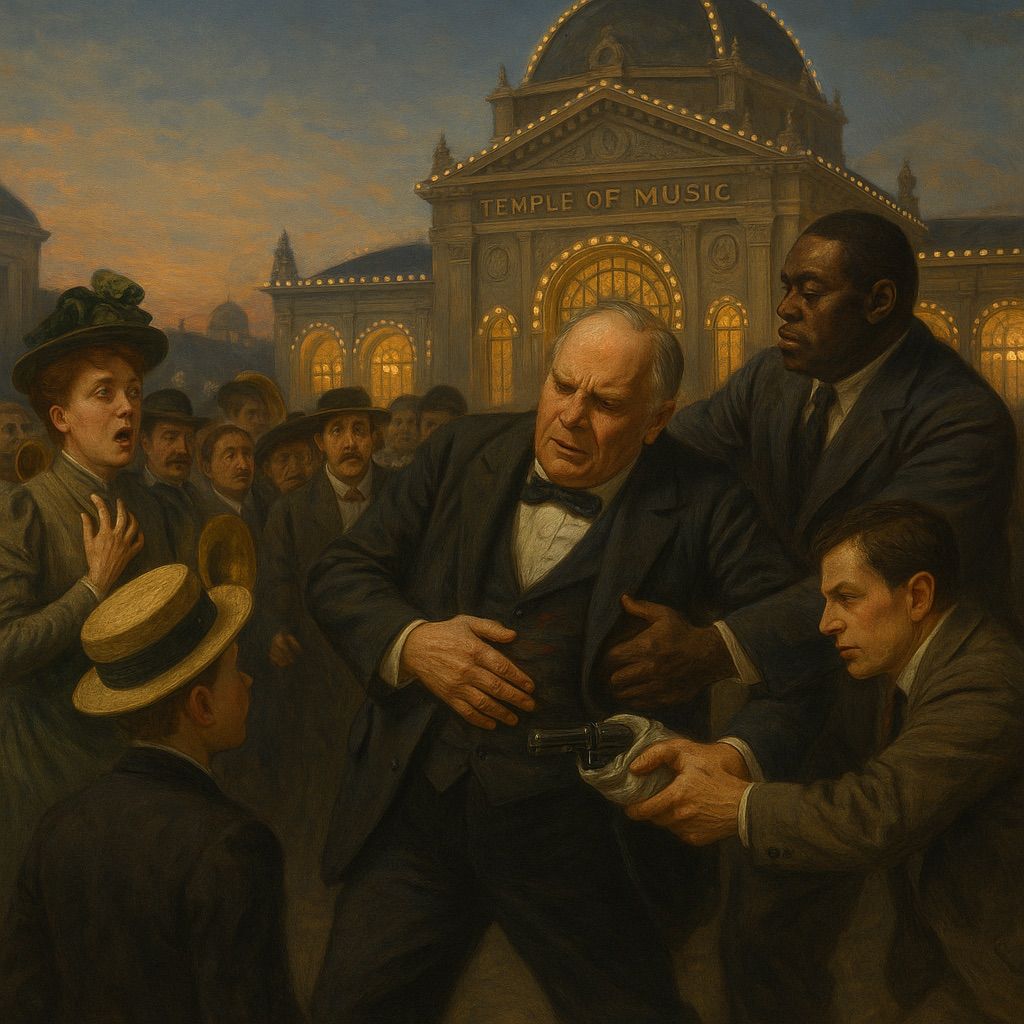
It was meant to be a day for handshakes, not headlines. Buffalo wore its Pan-American Exposition like a crown—electric lights strung along fairgrounds that looked like a city invented by hope, gondolas sliding across a man-made lake, pavilions named for progress and promise. On September 6, 1901, President William McKinley, a veteran with a calm smile and a habit of leaning in to hear people better, scheduled the kind of public meet-and-greet that turned politicians into neighbors. The venue, the Temple of Music, might as well have been a cathedral to the idea that modern life, bathed in current and convenience, could be conducted in the key of civility. A line formed: workers in their Sunday coats, mothers with children boosted to see better, merchants who had traveled by rail just to say “Mr. President.” The band played. The air held the comfortable noise of a nation that believed its future was a solved equation. Then a man with a bandaged hand stepped forward, and the answer changed.

Leon Czolgosz did not look like a hinge on which history would swing. He was small, pale, a factory hand who drifted through the loose archipelago of American anarchism and came away with a single sentence lodged like shrapnel: the state is a cruelty disguised as order. He wrapped a revolver in a handkerchief and then wrapped the handkerchief in another, so necessity could pose as injury. McKinley, who had greeted thousands that afternoon, saw what everyone else saw—an ordinary citizen with an ordinary wound—and made the generous mistake at the heart of democracy: he offered trust. The first shot grazed, the second entered the President’s abdomen under the right ribs, tore through stomach, and vanished into the body—a trajectory surgeons would hunt for later in a rush of sweat and poor light. In the second between sound and comprehension, the crowd swayed between astonishment and rage. An African-American bystander named James Parker lunged and drove the gunman down; others joined; McKinley, bleeding, did the most Presidential thing a man can do when pain becomes a room that fills with noise: he told the people to stop. “Don’t let them hurt him,” he reportedly said. That sentence is the thread we should never cut when we tell this story.

The President was carried to a small exposition hospital whose white sheets and well-meaning staff could not hide its lack of preparation for the most serious surgery in the land. The new century promised medical miracles; the building promised good intentions. Dr. Matthew Mann led the team, a gynecologist drafted by urgency into abdominal trauma. Ether. Knife. Hands in the body of a nation. They found one perforation in the stomach and sutured it; they could not find the bullet; they cleaned the wound as best they could without the antiseptic rigor that would be standard later. There was an X-ray apparatus on the fairgrounds—novel, temperamental—but it wasn’t effectively used that night; electricity’s marvels hummed just out of reach while infection silently plotted its slow arithmetic. McKinley was then moved to the home of John Milburn, president of the Exposition, where curtains were drawn and the bedside manners of a republic were practiced: Cabinet secretaries standing in corridors; Vice President Theodore Roosevelt hurrying in and out of telegrams; a wife, Ida, gently ushered to calm by aides who knew that managing grief can be a form of service.

For a handful of days, the country learned a new way to read the weather. Newspapers ran hourly bulletins; editors discovered a modern register for breaking news—anxious, factual, repetitive, hopeful. “The President is resting comfortably,” Americans were told so often that the phrase turned into a spell. Outside the Milburn house, a crowd developed the rituals humans invent when they have no agency left: craning for a glimpse, passing rumors like canteens, offering soft prayers that assumed a God who keeps office hours. In Buffalo parlors and Georgia farm kitchens and San Francisco boardinghouses, people argued about the meaning of a bandage and a handshake, about whether too much openness is a virtue that tempts its own undoing, about whether this young century, not quite one year old, had already revealed its character.

McKinley himself did not traffic in drama. From bed, his thoughts drifted to Ida—frail, prone to seizures, the axis on which his private world had always balanced—and then to policy: the tariff, the currency, the war just won, the empire inherited by accident. He was not a man of thunderous sentences. His power came from steadiness: a veteran of Antietam who had learned in one afternoon that the best thing you can do for frightened men is to be ordinary and calm. He rallied, briefly. Temperature stabilized. A nation exhaled. Then, deep in tissues no surgeon could see, infection spoke its quiet, devastating grammar. Gangrene. Toxins. The slide from “resting comfortably” to “grave” is always two inches long and a mile deep. On September 14, he died, and an oath placed a Rough Rider in the White House.

The assassination traveled through the culture like a shock that decides to stay. Czolgosz would be tried quickly, convicted, and executed within weeks; the speed says more about early-century America than any philosophy seminar could. The larger response was institutional. The Secret Service, which had guarded Presidents in a patchwork way, became indispensable. The handshake—symbol and habit—was reevaluated in a nation built on the idea that you can walk up to power and introduce yourself. Public life would remain public, but its choreography changed: more space between stage and audience, more eyes trained on the gap. The Pan-American Exposition’s incandescent dream dimmed; the Temple of Music, once built for applause, became a landmark mapped by grief. Buffalo would keep its civic pride, but always with a shadow that afternoon had cast.

To understand why the day still unsettles, you have to see it at human scale. The band in the rotunda had rehearsed “The Star-Spangled Banner” with a tempo chosen for joy; in an instant, the song became connective tissue for strangers who felt something break inside them at the same time. The woman in a hat with a complicated ribbon, who had waited two hours in line, never made it to the front; for the rest of her life, when anyone mentioned presidents, she shook her head and said she had seen one smile and then stop. A boy on his father’s shoulders, who had practiced saying “Good afternoon, sir,” learned that the future can exit the room in a single sound; he would later work in a factory and tell his own children that he once saw history change its mind. James Parker, whose sudden courage prevented a third shot, went home with bruised ribs and a new understanding of how quickly a body can become a wall.

It is tempting to frame the story as a parable about ideology. Czolgosz read speeches and decided that killing a representative of the state would cause the state to wobble, perhaps fall. But assassinations rarely produce the change their authors fantasize about; they produce the opposite—consolidation, reform, the invention of new rituals that make the attacked office more resilient. If McKinley’s death shifted policy, it did so by the force of personality that replaced him: Theodore Roosevelt’s impatience with lethargy, his appetite for action. The economy did not shudder because one man fell; the Progressive Era found a bolder stride because a younger man moved into the center of the room. Czolgosz had wanted to puncture a system; in practice he strengthened it by reminding citizens that institutions must be guarded not only by laws but by habits of care.

Yet we should be careful not to let political analysis evacuate the people who loved William McKinley. Ida McKinley survived him by less than six years, inhabiting widowhood with the manners of a woman who believed grief should be folded and put away after use. The soldiers who had marched with Captain McKinley at Antietam cried in private, because the Civil War had taught them to perform stoicism in public. His Cabinet moved on because that is what Cabinets do; his friends tried to remember his laugh and not the way the room smelled on the last day. In Canton, Ohio, the town that fitted the life to the man and then the man to the town, children learned to lower their voices when they passed the house where the curtains stayed closed.

We call the moment the “McKinley assassination,” which is a concise label that hides the rectangle of life behind it. Think instead of a single handshake line as a poem. Each person carries to the front of that line their own America: a dirt under the nails kind, a patent in the pocket kind, a long train ride kind, a letter for a son in the Navy kind. The President’s job in that ritual is not to fix all lives in three seconds; it is to honor them by looking as if he might. A republic is a series of brief, sincere transactions between a person with disproportionate power and many people with ordinary power. For such a system to work, trust must be the default setting. On September 6, trust met its natural predator—bad faith with a prop—and lost. The response cannot be to exile trust. The response must be to make its practice smarter and safer.

Consider how technologies kept appearing at the edges of the story, like stagehands who want a line. Electric light turned the Exposition into a dream of the future. The Roosevelt-era security state would generate paperwork as a new kind of armor. The X-ray machine, a marvel only six years old, sat nearby while doctors performed work with nineteenth-century tools; it is as if the twentieth century knocked politely on the door and was told to try again later. Today we would wheel in a CT, flood the wound with antibiotics, and monitor every chemical whisper a body makes. That is not a criticism of 1901 so much as a reminder that progress is a race against old ways of dying. McKinley lost that race by inches.

The funeral, with its slow horses and drumbeats, was the choreography of a nation teaching itself to grieve efficiently. The black crepe, the orations, the lines of men who adjusted their hats on the exact beat to signal respect—these are the habits a republic keeps on a shelf for the worst days. They dignify loss; they also convert shock into narrative, which is one way to prevent damage from spilling into the weeks ahead. When Theodore Roosevelt took the oath at the Ansley Wilcox House in Buffalo, he asked to borrow the steadiness of the man he replaced. Even Roosevelt—quick, loud, allergic to smallness—chose a quiet room for the transfer. It is good to remember that the United States, which performs most things at stadium volume, does its continuity work with indoor voices.

Why does the story still want to be told? Because it is one of the few episodes that let us watch the American promise in x-ray: openness and risk on the same frame, optimism and its shadow, technology and the stubborn limits of luck. It also holds a personal lesson that travels well beyond politics: every day we line up for our own Temple of Music moments—places where we assume the best and extend a hand. We cannot stop doing so without becoming a country unworthy of itself. What we can do is build railings where there were none, ask better questions about entrances and exits, invite guardianship that is alert without becoming paranoid, and keep teaching the sentence McKinley said as he bled: do not harm him. The nation he addressed in that moment was not just the crowd; it was the nation we might become if fury gets to steer.

If we could open a window over that afternoon and look again: the band’s conductor will drop his hands mid-measure and look to the door; a woman will grab a stranger’s wrist and squeeze hard enough to leave thumbprint moons; a boy will forget to breathe for three full seconds and then take a breath that contains, in miniature, the whole twentieth century; James Parker will do something brave that will not erase the harm but will keep it from multiplying; a doctor will choose; a knife will enter; stitches will hold because hands willed them to; a machine will hum on a nearby table and not be invited to speak; a letter will start to form in a man’s mind to a woman he has always loved first; a nation will learn that trust is priceless precisely because it can be broken by cloth wrapped around a lie. That is not a reason to stop trusting. It is a reason to carry trust more carefully, like a bowl filled to the brim.

Related Posts

Sailing Through Paradise: The Ultimate Journey of Island-Hopping in the Caribbean

Dave

There are trips you plan, trips you dream about, and trips that end up etching themselves into the fabric of your memory so deeply that no amount of time can erase them. Island-hopping in the Caribbean belongs firmly in the third category. It is not just a vacation; it is a pilgrimage to turquoise waters and golden sands, to cultures layered with history and alive with rhythm, to food that dances on the tongue and sunsets that set the sky aflame. The Caribbean is not a single destination. It is a mosaic of islands, each with its own soul, its own stories, its own flavor of paradise. To hop from one to the next is to move through a kaleidoscope of experiences, each island offering a new revelation, a new note in a song that never seems to end.

The journey begins long before your feet ever touch the sand. It begins in the imagination, in the way the word “Caribbean” conjures visions of palm-fringed beaches and hammocks swinging lazily in the shade. But the reality is richer, more vivid, more complex than the postcard clichés. Step onto a ferry, a catamaran, or a small plane, and you are transported not only across waters but across histories. Colonization, piracy, slavery, resilience, and independence have all left their imprints here, shaping the islands into a tapestry where no two are alike. Island-hopping is not simply about beaches — though the beaches will take your breath away. It is about discovery, about peeling back layers, about surrendering to the rhythm of the islands and letting each one tell you its story.

In the Bahamas, the gateway to many Caribbean dreams, the water is so clear it seems unreal, like floating glass beneath your boat. Hop over to Nassau, with its pastel-colored colonial buildings and bustling straw markets, and then sail to the Exumas, where pigs actually swim in the sea and sandbars stretch endlessly beneath a sun so bright it feels like a spotlight. Already, you are intoxicated. Already, the spell is taking hold. But the Bahamas are just the beginning, the first note in a symphony of islands.

Head south to Jamaica, and the energy shifts. The island throbs with rhythm, reggae pouring from every doorway, jerk spices filling the air with smoke and fire. The beaches here are wide and golden, but what truly captivates is the spirit of the people — warm, vibrant, alive with a resilience born of struggle and pride. Climb Dunn’s River Falls, raft down the Martha Brae, dance in Kingston, sip overproof rum while listening to Bob Marley’s voice drifting from a local bar. Jamaica is not just an island; it is a pulse, a beat that lodges itself in your chest and stays with you long after you’ve left.

Then comes Cuba, an island frozen and yet timeless, where vintage cars roll past crumbling colonial facades and music spills into the streets at all hours. Havana feels like stepping into another world, one where history lingers in every cobblestone and every cigar. Walk the Malecón at sunset, the waves crashing against the seawall as couples stroll arm in arm, and you understand why poets and revolutionaries alike have been drawn to this island for centuries. To hop from Cuba to Puerto Rico is to feel the shift again, from the revolutionary to the celebratory. San Juan dazzles with its colorful Old Town, its forts standing guard against centuries of storms and sieges, its plazas alive with dancing, laughter, and the irresistible pull of salsa. Puerto Rico feels like a celebration that never ends, a place where history and joy dance together under the Caribbean sun.

Further along the chain, the Virgin Islands beckon. St. Thomas with its bustling harbor, St. John with its pristine national park beaches, St. Croix with its Danish history and rum distilleries. Then the British Virgin Islands, where sailors find nirvana among scattered isles like Tortola, Virgin Gorda, and Jost Van Dyke. Here, island-hopping is literal — hopping from one stretch of paradise to the next in the span of an afternoon sail. White Bay on Jost Van Dyke is famous for its beach bars, where rum punch flows like water and strangers become friends as easily as the tide rolls in. There is no hurry here, no schedule, only the sun overhead and the sand between your toes.

As you move further south, the Lesser Antilles unfurl like jewels scattered across the sea. Antigua boasts 365 beaches — one for every day of the year, they like to say. St. Lucia rises in dramatic splendor, its twin Pitons piercing the sky, waterfalls tumbling down emerald slopes, volcanic sand black beneath your feet. Barbados, with its British charm and calypso heart, offers cricket matches under swaying palms and waves that lure surfers from across the globe. Each island brings contrast, each island adds a verse to the story.

Then there is Dominica, the Nature Island, where rainforests cloak the land and boiling lakes steam from volcanic depths. This is a place less touched by mass tourism, where waterfalls crash into hidden pools and parrots flash their colors through the canopy. Grenada, the Spice Island, greets you with the scent of nutmeg and cinnamon the moment you step ashore. Its markets burst with color, its hillsides glow with flowers, its beaches invite without pretense. To wander here is to let your senses guide you — taste, smell, sight, all heightened by the island’s lush generosity.

And if you continue, you reach the ABC islands — Aruba, Bonaire, and Curaçao — each unique, each kissed by constant trade winds and boasting waters so clear they seem lit from within. Aruba dazzles with its luxury resorts and white sands, Curaçao charms with its Dutch architecture and vibrant culture, while Bonaire remains a diver’s paradise, its reefs protected, its waters alive with fish and coral. Here, the Caribbean feels both familiar and exotic, European and Caribbean, wild and refined.

What makes island-hopping so addictive is the contrast. You wake up one morning eating callaloo for breakfast, and by evening you’re sipping piña coladas on another shore. One day you’re hiking to a volcanic crater, the next you’re snorkeling above a coral reef or dancing in a street parade. Every island is a new world, and yet they are all tied together by the sea — that constant expanse of turquoise and indigo that carries you forward.

But island-hopping in the Caribbean is not just about the destinations. It’s about the people. The fisherman who offers you a fresh catch from his boat. The bartender who insists you try the local rum punch — “stronger here than anywhere else,” he swears. The musician whose steel drum melody makes you stop mid-step because for a moment, you feel you are hearing the heartbeat of the islands themselves. The Caribbean is not just seen. It is felt, lived, embraced through the warmth of the people who call it home.

Of course, no journey is without its challenges. Ferries can be unpredictable, flights delayed, weather capricious. A sudden storm can wash out plans, and the laid-back pace that makes the Caribbean so charming can frustrate those who crave punctuality. But island-hopping here teaches you something vital: to let go. To surrender control. To realize that paradise is not about sticking to a schedule but about embracing the unexpected. It is in those unscripted moments — the rain shower that forces you into a beachside shack where you discover the best conch fritters of your life, or the missed ferry that leaves you watching a sunset you would otherwise have rushed past — that the Caribbean reveals its true gifts.

By the time you have skipped from island to island, danced to different rhythms, tasted countless flavors, and dipped your feet in waters that change shade with every horizon, you come to understand why people call the Caribbean a paradise. It isn’t perfect — no paradise ever is. It is layered with histories of struggle, colonization, and resilience. But it is alive. It is joyful. It is generous. It is a place where the sea ties together a thousand differences into one shared identity.

Island-hopping in the Caribbean is not about checking boxes or collecting stamps. It is about immersion. It is about the way the light hits the water differently on each shore, the way the music changes beat from island to island, the way food tells a story that history books cannot. It is about the feeling of constant discovery, of waking up each day knowing you will step into something new, something unforgettable. And when you leave, when the plane takes off and the turquoise waters fall away beneath you, you carry more than memories. You carry the rhythm of the islands inside you.

The Caribbean is not a place you simply visit. It is a place you return to, again and again, in your dreams, in your heart, in the way a certain smell or song can transport you back instantly. To hop across its islands is to collect pieces of paradise, and those pieces never fade. They stay with you, salt-kissed and sun-warmed, forever.

Related Posts