Latest Articles

Five Rings, Black Morning: Munich’s Day of Terror and the Shattered Promise of 1972

Elias Rowen

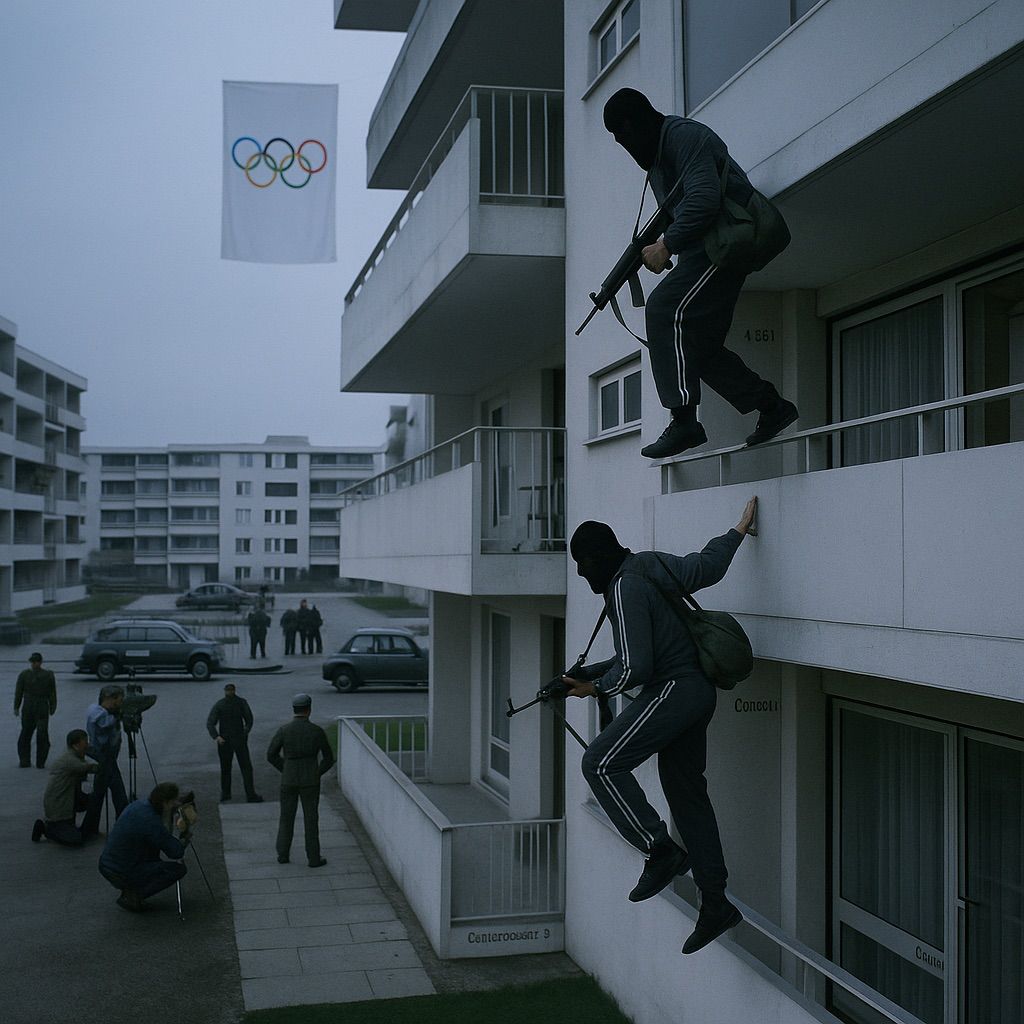
It was supposed to be the party where the world remembered how to breathe. The 1972 Summer Games in Munich were designed as a rebuttal to history’s darkest echoes—sunlit architecture, pastel uniforms, smiling volunteers, and a host city determined to prove that “the cheerful Games” could rinse the century’s taste of iron from the mouth. On the evening of September 4, athletes wandered a village of white balconies and tidy courtyards, swapping pins and recipes, learning national anthems they’d never heard before from roommates who’d been strangers 48 hours earlier. The night air smelled like cigarettes and victory and hairspray. A few hours later, just before dawn on September 5, eight men in tracksuits and balaclavas climbed the fence at 31 Connollystraße, and the party became a prayer. The five rings that had promised the world would meet as equals turned, in an instant, into a target no one could miss.

Inside Apartment 1, Israeli wrestlers and weightlifters were asleep when the door splintered. The first sounds were confused—boots on linoleum, shouted commands in a language most of them did not speak, a scuffle in the hallway that could have been a nightmare until the muzzle of a gun made it credible. Moshe Weinberg, a coach whose job was to teach men how to fall and rise again, tried to block the intruders and was shot. Yossef Romano, a weightlifter with a body meant to solve problems by lifting them, lunged to disarm a gunman and was killed. Nine others were bound and beaten and held as currency for a demand printed in rage: release prisoners in Israel and two jailed German radicals, or watch the clock do its cruel work. The attackers called themselves Black September. They did not need to explain the symbolism to an audience that had learned too much of it in the last 30 years.

As the sun climbed, the Olympic Village filled with the wrong kind of spectators. Cameras perched like curious birds on balconies across the courtyard. Reporters traded rumors the way athletes trade pins. The world’s most public event had become the world’s most televised hostage crisis, played out in grotesque daylight. West German police in soft caps and 1970s green uniforms tried to draw a cordon around a building designed for leisure, not siege. Negotiators talked through translators and thin walls to men who had trained to put the world on edge. The Israelis held inside—wrestlers who knew leverage, weightlifters who understood the physics of strength, coaches who had built entire careers from other people’s determination—were ordered to keep still and quiet. One of them, a fencing coach, whispered to another the names of his children so they wouldn’t be forgotten if he didn’t return. You do not need to see a single frame of film to feel the hour-by-hour erosion of hope; it lives in the ribs.

In homes and cafes and factory break rooms around the world, people watched the nightmare unfold with the helpless intimacy television can impose. In America, sportscaster Jim McKay—a voice we knew for covering routines, not tragedies—became the unlikely narrator of a day that refused to end. He alternated updates with silence, a rhythm that felt like breathing during a panic attack. The Olympics had always been a cathedral of exceptional bodies; now the camera pointed at faces—tired, tear-streaked, clenched. Munich wanted to be the un-Berlin, an unburdened city where the future could jog in sunshine. The camera made it smaller and more honest: a place where grief arrives like a bad athlete, awkward and unstoppable.

The negotiations stretched. Taxis, used as decoys, were brushed aside by new demands. A bus to an air base materialized. The plan, if it deserved the word, was to move the hostages and their captors to Fürstenfeldbruck, a military airfield northwest of Munich, and resolve the crisis there with an ambush improvised by a country that had not yet learned the grammar of counterterrorism. Police volunteers, some in tracksuits to mimic pilots and crew, crouched inside a Lufthansa jet, unspecialized courage forced into a specialized role. On the rooftop at Connollystraße 31, camera lenses found silhouettes of gunmen framed cleanly against the morning haze; those same images, broadcast to the world, were available to the apartment across the courtyard. It was a day that taught television something it has never forgotten: you can illuminate and endanger in the same beam.

Hours earlier, athletes had woken to a public-address announcement that told them to stay in their rooms and await instructions. Some did. Others wandered toward the cordon because curiosity is human and the Olympic Village had a reputation for turning strangers into friends, and friends share bad news up close. A Belgian runner described the scene like a nightmare filmed in slow motion: a balcony door, a gloved hand, the unmistakable shape of a weapon held at an angle that did not belong to the Olympics. An American swimmer who had believed the worst thing about the Games was a disappointing heat met a journalist who had run out of questions and became one himself: “Do you think they’ll be okay?” Behind the fences, athletes whispered a single sentence in a hundred languages: that could be us. The point of the Olympics is to erase borders for a fortnight; the terror that morning redrew them with ink that would not fade.

On the bus, the hostages were counted, eyes above gags above hands bound behind backs. On the tarmac, the ambush came apart like a chair with missing screws. The police marksmen lacked radios to coordinate fire; the floodlights, when finally switched on, helped the gunmen more than their targets; the assumption about the number of attackers was wrong. In the frantic minutes just before midnight, shots and explosions stitched a deadly pattern across the airfield. A German police officer fell. The gunmen sprayed the helicopters where the hostages were confined; a grenade turned one into a furnace; bullets ended hope in the other. Later, the phrase that the world would remember—“They’re all gone”—arrived like a door slamming hard enough to crack plaster. Eleven Israeli athletes and coaches dead. A West German police officer dead. Five of the attackers dead. Three captured alive. A century older by morning.

What do you do the next day after a day like that? In Munich, organizers debated whether the Games should continue. Some argued that closing would gift the killers a victory they could not claim on their own; others insisted that flags at half-staff cannot become a design choice. The decision—pause, memorialize, resume—created a fault line that historians still walk carefully. A memorial service in the Olympic Stadium filled the mouths of tens of thousands with silence; the wind moved flags; the world felt simultaneously too big and too small. The athletes marched again, this time to a drumbeat with no rhythm. Some nations withdrew. Others competed with eyes rimmed raw. The scoreboard, trained to render victory legible, found itself blinking beneath a sky that had no numbers for grief.

For Israel, the names were not abstract. They were fathers, husbands, brothers, friends: David Berger, Ze’ev Friedman, Yossef Gutfreund, Eliezer Halfin, Yossef Romano, Amitzur Shapira, Kehat Shorr, Mark Slavin, Andre Spitzer, Yakov Springer, and Moshe Weinberg. Photographs taken before Munich show smiles that knew joy as a sport—weddings, baby’s first haircut, the kind of laughter a coach reserves for a student who finally gets it. Their families flew to Germany to bring them home, and the word “home” became heavier. The modern world prides itself on being a machine for naming; suddenly the machine felt pitifully small beside the work a name is asked to do.

The massacre at Munich did not end on the tarmac. Every decision made afterward—by governments, by security services, by the International Olympic Committee—grew from a seed planted in the early hours of that morning. West Germany, confronted with the scale of the failure, rewired its approach to terrorism, creating units and doctrines that would spread through Europe and define the late twentieth century’s urban security. Israel made its own choices, some covert, some public, that would braid justice, deterrence, and politics into a rope strong enough to pull a small nation through geopolitical storms—and rough enough to fray hands that gripped it too hard. The Olympics wrapped itself in fences and protocols that made the summer of 1972 feel like a postcard from a lost country. Every bag search outside a stadium, every snaking line of spectators, every metal detector beeping a modern lullaby—trace them back and you will hear the echo of a boot on a balcony rail in Munich.

To humanize the day is to remember not just the heroism and horror but the ordinary acts that kept meaning alive. A German nurse sat beside a survivor, poured water into a paper cup, and learned the Hebrew word for “enough” long before the linguists did. A volunteer who had handed out maps the day before handed out tissues and directions to a quiet room and found, to her surprise, that “right this way” can be a kind of prayer. A broadcaster whose job was to name sports turned out to be brave enough to name the unspeakable, and his voice, unfamiliar with tragedy, did not try to dramatize what drama had already over-supplied. A carpenter mended a door frame because buildings require repair even when hearts cannot accept it. A teammate—his own future bent out of its old shape—sat alone and decided he would spend the rest of his life telling the story until it could be heard without flinching and never, ever, without feeling.

It is too easy to turn Munich into a thesis. Terrorism seeks attention; attention is oxygen. But refusing to think about it is not the same as starving it. The honest response is to look closely and draw lines that guard human dignity. Those lines are difficult. They snake through courthouse hallways and travel across borders on the backs of secret memos. They pass through living rooms where families ache for a justice that doesn’t come late and a vengeance that doesn’t come dressed as justice. They run through stadium checkpoints and across the internet where cameras never sleep, asking the same questions again and again: How do we safeguard openness without inviting harm? How do we remember without reducing lives to cautionary tales? How do we honor sorrow without trapping ourselves inside it?

The answer, if there is one, is not a single policy or a particular poem. It is a discipline made of many small decisions. We say the names. We teach the history in classrooms where students are old enough to understand that the world holds both wonder and malice, and young enough to still believe they can bias it toward the former. We design security that is competent without becoming petty, that uses intelligence like a scalpel, not fear like a floodlight. We resist the lazy narratives that collapse complex movements into caricatures. We listen to victims’ families and accept the ways they disagree, because grief is a country with many dialects. We learn from failures without building museums for them in the heart.

There’s another choice, too: the choice to keep playing. Not out of denial, but out of defiance. The opening ceremony of any Games since 1972 carries silent traffic from that morning in Munich. Behind the fireworks and choreography, you can sense a checklist that whispers: the fences are high, the radios are tuned, the maps have been walked by people who know exactly how far a minute is in fear. You can also sense something stubborn: the belief that meeting for sport is still a good idea in a world that too often answers difference with violence. Every medal won under those conditions is a small victory over the idea that terror gets the last word.

The paradox of Munich is that its moral is both particular and universal. It is particular because the dead were individuals and the perpetrators held specific grievances twisted into a shape that could only break things. It is universal because the structure of the day—joy punctured by cruelty, competence tangled with confusion, cameras magnifying everything good and bad—belongs to the modern age. We live with that structure still. Our screens deliver adrenaline and empathy faster than our institutions can metabolize either. We want to be open and safe, transparent and subtle, proud and cautious. Those pairs do not divide neatly; our lives are a constant negotiation among them.

When you stand in a modern stadium’s security line and shuffle forward, bored and mildly annoyed, consider it a tiny memorial. When you teach a child to say “Munich” and then to say the names that Munich demands, consider it an act of repair. When you disagree about what should have been done or what should be done now, argue in good faith and remember that the people who faced the choices at 3 a.m. on September 5 did not have the luxury of our hindsight. When you light a candle on September 5, if you do, place it where it can be seen from a window. Someone walking past in the evening might look up and remember that the world, though noisy, still recognizes the simple grammar of light.

What would the dead have wanted? We cannot know. But we can guess: that their names would not be reduced to bullets points; that their families would be held, not merely cited; that the Games would continue in a way that honors the promise Munich betrayed and then, stubbornly, tried to reclaim. Perhaps they would want us to memorize an ordinary photograph of them laughing, not because ordinary is better than heroic, but because ordinary is the point. Terror puts a spotlight on violence and calls it meaning. The rest of us must put a spotlight on ordinary life and call that meaning. The kitchen table. The team bus. The hotel hallway where a joke becomes an inside joke. The practice mat where a coach claps his hands and a student gets back up, again.

Fifty-plus years later, we live with legacies that are both visible and invisible. The security protocols are concrete, the memorial plaques literal. The invisible legacy is stranger: a heightened awareness that even the most joyous arenas are porous, that the human heart must be guarded and yet cannot grow inside a fortress. The most generous thing we can do in the shadow of Munich is to refuse to let fear negotiate for us. We build systems that are sober and smart. And then we cheer. Loudly. Loud enough to honor those who never got to hear their names echo under a roof built for applause.

One day, the last eyewitness will tell their last version of the story. When that happens, the story will not be over. It will be ours in the way all great stories are: a test we can fail or pass, daily, without a single camera pointed our way. We will pass when we give our neighbors the benefit of our care, when we design cities that welcome without naiveté, when we choose words that de-escalate rather than perform. We will pass when we refuse the grim thrill of spectacle in favor of the steady work of solidarity. We will pass when we remember that the Olympic idea is not childish optimism but adult stubbornness—the insistence that competition without hatred is not a fantasy but a discipline.

On September 5, 1972, sport met terror and learned that even the purest games are played on Earth. The lesson was brutal. The responsibility it left us is simple: keep Earth hospitable. Keep doors open with locks that make sense. Keep stadiums full of people who know each other’s songs. Keep telling the truth about what happened and keep refusing to let that truth shrink what is possible. The five rings are not flawless; neither are we. But they are a shape we can hold up to the light and promise, again and again, that we will do better under them than outside them.

Related Posts

Waves at Home: How to Bring Coastal Style to Your Bedroom

Dave

There is something about the coast that feels eternal, something that seeps into your bones the moment you breathe in the salty air, something that quiets the chaos of everyday life and replaces it with rhythm. The pull of the ocean is more than just visual; it’s emotional, spiritual, and deeply human. That’s why so many people who cannot live by the beach choose to bring the beach to them, infusing their homes with the kind of tranquility that only waves and wide skies can inspire. And nowhere does that influence matter more than the bedroom, the most personal space you inhabit. A coastal bedroom isn’t just about decorating with shells or painting the walls blue. It’s about creating a retreat that makes you feel as though you are waking up every morning with the sea just outside your window, even if you live a thousand miles from the shoreline.

The secret to coastal style is light. Natural light pouring through large, sheer curtains. Light-colored walls that reflect the glow of day and soften into warmth by night. White becomes the anchor here, not stark but alive, layered with sandy beiges, gentle taupes, seafoam greens, or sky blues. This palette is not meant to overwhelm but to soothe, like the horizon at dawn or the muted tones of shells scattered along a tide pool. The colors in a coastal bedroom don’t shout; they whisper. They bring calmness without sterility, balance without boredom.

Furniture in a coastal bedroom should never feel heavy or brooding. It should be easygoing, almost as though it drifted in on the tide. Light woods, whitewashed finishes, wicker, and rattan all echo the natural textures of a beachside cottage. A bed draped in crisp white sheets layered with linen throws or soft quilts in pale hues feels inviting without being cluttered. The key is effortlessness, that sense that the room is dressed just enough but not weighed down. A cane dresser, a wicker trunk at the foot of the bed, or simple wooden nightstands all keep the space grounded yet airy. The furniture isn’t there to dominate the room but to blend seamlessly into the environment you’re creating, just like the shoreline blends into the water.

Texture is where the room comes alive. Coastal style is tactile. It’s the weave of linen curtains that flutter when the window is open, the rough touch of a jute rug beneath your feet, the soft embrace of cotton sheets at the end of the day. Woven baskets, rattan lampshades, and raw-edge driftwood frames echo nature, while airy textiles remind you of wind and water. A space like this doesn’t just invite your eyes to wander but your hands to feel. It wants to be touched, lived in, and embraced, just like the beach itself.

Décor in coastal bedrooms is subtle, never themed. It isn’t about plastering starfish and anchors on every wall. Instead, it’s about restraint, about evoking the feeling of the coast without overwhelming it. A framed seascape, a ceramic vase in an ocean hue, a single jar of sand collected from a beloved shoreline — these touches matter more than dozens of trinkets. A large, airy woven light fixture that casts warm shadows at night can evoke the lantern glow of a seaside cottage. A piece of reclaimed driftwood set as a headboard or a woven rug in muted blues can carry more power than cluttered accessories. Every piece should feel intentional, not forced, like treasures you brought home rather than souvenirs bought at a shop.

Light itself becomes the most important accessory. In the daytime, your room should flood with sunlight filtered through gauzy curtains, creating a sense of openness and endless air. At night, lighting should be layered and gentle. Think table lamps with linen shades, rattan pendants that mimic the texture of nets, or candles flickering softly as if echoing the glow of a beach bonfire. Lighting in a coastal bedroom doesn’t just illuminate; it creates atmosphere, shifting with the hours like the sea itself.

No coastal-inspired space is complete without a touch of nature. Plants bring vitality to the room, but the choices matter. Palms in woven baskets, snake plants in clay pots, or eucalyptus branches in a glass vase all tie in seamlessly with the theme. They provide freshness without clutter, color without chaos. Even one well-chosen plant in the corner can evoke the wildness of dune grasses swaying in the wind. They connect your bedroom not only to the idea of the beach but to life itself, rooting you in something organic and alive.

The magic of coastal design is not in following rules but in creating feeling. Every detail should invite you to breathe deeper, to let stress roll away like the tide, to feel as though your bedroom is a sanctuary away from the noise of the world. Personal touches are what transform it from simply styled into authentically yours. A jar of shells you picked up on a trip, a framed photograph of your favorite shoreline, books about the ocean stacked by your bed — these are what give the room its soul. Your coastal bedroom should remind you not just of the coast in general, but of the coast as you know it, tied to your memories, your dreams, your longing.

What makes coastal style so enduring is that it speaks to something we all crave: peace. It doesn’t matter if your window looks out at crashing waves or a busy street — the coastal bedroom gives you the illusion of waking up at the water’s edge. It gives you space to breathe, to rest, to recharge. It proves that you don’t need to live near the shore to live with the sea in your heart.

So strip away the heavy, the dark, the unnecessary. Embrace lightness, simplicity, and nature. Let the textures tell their story. Let the colors calm you. Let the design transport you. Because at the end of the day, a coastal bedroom is not just about design. It’s about creating a sanctuary that feels as eternal and as free as the ocean itself. It’s your retreat, your safe harbor, your little corner of coastline, no matter how far from the shore you may be.

Related Posts

The Day the Internet Found Its Compass: How a Scrappy Garage Became Google, Inc.

Elias Rowen

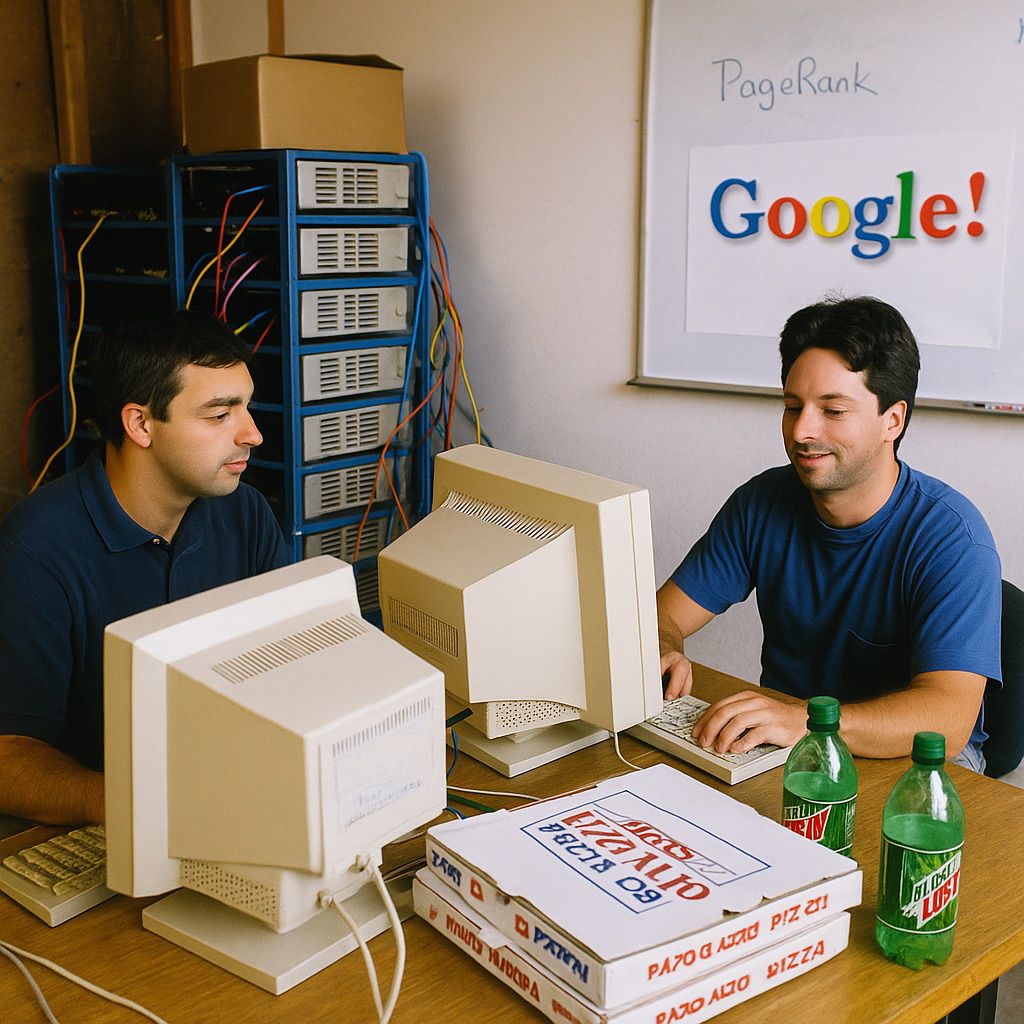
There are birthdays that pass with cake and candles, and there are birthdays that rearrange the furniture of the world. September 4, 1998, belongs to the second kind. On paper, it was a simple act: two Stanford graduate students filed documents in California and turned their side project into a company with a proper name and a bank account. In the messy, humming reality of a Menlo Park garage filled with beige monitors, tangles of rainbow cables, humming home-built servers, pizza boxes, and a whiteboard with “PageRank” scrawled across it in quick nerd handwriting, that signature was a fuse. It set off a chain reaction that would change how humans answer almost every question they ask, from “What’s the best ramen near me?” to “How do I tell my father I forgive him?” It is hard to remember now, when “google” is lowercase and verb-shaped in most dictionaries, how bumpy the road looked that morning. But if you listen closely enough, you can still hear what the internet sounded like before the compass snapped into place.

In 1998, “finding stuff online” was an activity you did the way you rummage the junk drawer: with hope, with resignation, with an awareness you might get a paper cut. Portals were neon billboards crowded with horoscopes, stocks, weather, and three banner ads elbowing each other for your attention. Directories felt like phone books reheated for the web era. Search results were often a popularity contest rigged by whoever could shove the most keywords and invisible text into a page. We took wrong turns; we memorized favorite waypoints like AltaVista and Yahoo!; we leaned on a friend’s cousin who “knew the good sites.” Then came the idea that a page should be judged by the quality of who was pointing to it, the way scholars have always understood citations: links as votes, weighted by the authority of the voter. PageRank is an equation, sure, but it’s also a philosophy: relevance is not what a page calls itself; it’s what the rest of the web calls it, collectively. That shift—from shouting to listening—was the germ of everything that followed.

The incorporation day story is not glamorous; that’s part of why it matters. Two twentysomethings, Larry Page and Sergey Brin, had already spent nights on floors and days in labs, writing and rewriting the crawler that would relentlessly map the web, designing racks out of cheap parts because capital was the kind of word you used in economics class, not at the computer store. An early investor had written a check to a company that did not technically exist yet—a human vote of confidence so loud it echoed through the garage—and you cannot deposit a check like that without paperwork. So they did the paperwork. They signed; a file clerk stamped; somewhere, an inkpad gained a little more history. Then they walked back into a room that smelled like hot electronics and cold pizza and kept building.

If we want to humanize the moment, start with the small truths. The garage was a rental. The server cases rattled if you bumped the table. Dust made arrogant goals humble. The whiteboard marker would not fully erase, so yesterday’s scribble haunted today’s plan like a ghost of a half-solved problem. An empty bottle of Surge guarded the corner where a monitor’s degauss button made the screen shiver with color whenever you pressed it for fun. A paper taped to the wall declared “Don’t bring the site down today” in bubble letters that tried to be a joke and failed, because everyone knew it was also a prayer. The printer jammed at the worst possible time. The code crashed at the worst possible time. And yet: every hour bought a tiny improvement, a bug slain, a response time shaved, a relevance test won. The day they filed the incorporation papers, the product didn’t suddenly become perfect. What changed was the intent. A project that could be abandoned after finals became a promise to the world that this would be carried further than office hours.

Part of what made that promise believable was the interface. It is fashionable to underplay this now, in an age that treats minimalism like a universal solvent, but in 1998 a clean, mostly empty page felt subversive. It was as if someone pulled the velvet curtain aside and said, “The stage is for you, not for us.” The logo—quirky colors licensed from childlike joy rather than corporate solemnity—was more than a brand. It was a shrug that said, “Let’s not pretend the internet isn’t fun.” There was a box in the middle. You typed. Results arrived. The machine got out of your way. That small kindness changed behavior. We started to ask the web questions we would otherwise have asked a friend, or our mothers, or a librarian. And because the answers were better, we kept doing it until reflex calcified into ritual.

Strip the myth away and what remains is even better than the myth. No single genius moment turned a garage into a global utility. It was a chain of unglamorous decisions—write the crawler in a language that compiles clean; rent the cheaper place and spend the difference on RAM; build servers with commodity drives because the budget spreadsheet is not a work of fan fiction; test everything, then test it again; disagree in the morning and reconcile at lunch because the code needs both of you. It was also a chain of audacious ones: index more of the web than anyone else; believe you can make relevance objective enough to feel like magic; take a check when legacy companies say “No thanks”; imagine that the future might actually prefer substance to spectacle.

The work changed the world partly because it changed the workers first. When you’re surrounded by machines that never sleep, your own sense of hours shifts. Night becomes a collaborator, a quiet co-founder that buys you silence to think and a little bit of delirium to imagine features you’re not scared enough to try in daylight. You learn that leadership isn’t a podium; it’s the person who cleans up after the pizza because the ants don’t care that you invented PageRank. You discover that the fun part of being smart isn’t being right; it’s changing your mind fast when a better idea appears. You realize that your best sentences have commas named for six other people who made you think straighter.

And then the thing happens that happens to every great product: the users start telling you what it is. They teach you how they ask. They teach you that “near me” means “where I actually am,” not “the center of a zip code.” They show you that a search engine is less a directory than a prosthetic for human curiosity. They write emails that begin “I searched for my father’s name” and then proceed to rewrite your roadmap without asking permission. They ask questions at 3:12 a.m. that make your server graphs look like heartbeats. You look up one day and realize that what you built is not just a tool; it is part of how humans think now.

From that incorporation day, the story accelerates: a domain name that looked like a misspelling at first glance; a round of funding cobbled together from believers who didn’t mind being called foolish; the slow, relentless swapping of “toy” for “infrastructure” as racks grew from six boxes to six rooms; the first time someone from a big company cornered you at a conference and said “acquire” like it was a friendly verb; the first time you said “no” and meant it. The garage gives way to a Palo Alto office that smells like carpet glue and ambition; then to a campus so full of bicycles it looks like recess for grownups; then to a world where your logo is a holiday in dozens of countries and your servers live in buildings that have their own weather.

But let’s stay in 1998 a little longer, because virality—the machine that will later spin out from this company in every direction—starts small. It starts with a friend forwarding a link to “this new search thing that actually works.” It starts with five grad students postponing dinner because they lost track of time reading result pages that felt like an encyclopedia that learns. It starts with a journalist muttering, “Well, this is different,” and changing a bookmark. Viral is just a fancy word for useful plus delightful on a network. The garage day created both halves. The math delivered usefulness; the interface delivered delight.

Humanize it more. Picture the exact moment a stranger in Iowa types a question about a rash and receives a result that helps them sleep. Picture a teacher in Bangalore copy-pasting an explanation that will click for a kid who has been lost in algebra for six weeks. Picture a grandparent in São Paulo typing the name of a village they left fifty years ago and seeing a photo of a streetlight that looks exactly like the one that used to buzz outside their bedroom window. None of those moments were on the incorporation paperwork. All of them were the point.

Of course, every revolution creates counter-revolutions. A better way to find things makes it easier to find bad things, too. The signal attracts the noise, which trains the signal to be sharper, which inspires new noise. The company that began with a moral instinct—relevance first—will later find itself refereeing the messy, emotional brawls of a planet’s information diet. That burden doesn’t exist on September 4, 1998; that burden is born with the success that follows. The origin story is cleaner than the adulthood. That is true for companies; that is true for people.

Still, the garage day tells us something durable about building great things. It says: start with a problem that real humans feel at least once a day. Make the solution a habit disguised as a toy. Demote ego in the interface. Spend more time on speed than on sizzle. Be allergic to friction. When everyone else is turning the homepage into Times Square, build a blank page that whispers. When everyone else sells attention to the highest bidder, constrain the ads to the margins and insist they be useful too. When everyone else treats the web as a brochure, treat it as a conversation and teach the computer to listen.

There is also the cultural choice embedded in that signature: choose learning velocity over credential velocity. The people in that garage were not asking for permission; they were asking better questions. Permission followed because the answers worked. When you build like that, the world’s gatekeepers stop looking like walls and start looking like speed bumps. The garage ceiling is low, but the sky you’re aiming at isn’t inside the garage anyway.

It is easy to mythologize, but the best way to honor a myth is to give it weight. That means remembering the compromises, the dumb arguments about the color of a button, the functional chaos of filing cabinets repurposed as server stands, the moment a founder’s confidence cracked because a demo failed in front of someone they wanted to impress. It means remembering the people whose names you don’t see in headlines: the first office manager who knew the serial numbers, the shy engineer who noticed a memory leak at 2:00 a.m. and spared millions of users a slow morning, the friend who brought burritos and changed the team’s mood when the build broke for the third time. If a company is a story, incorporation day is simply the day the story gets a cover. The chapters are written by everyone who shows up.

What did September 4, 1998, feel like to the wider world? Honestly: it didn’t. The world was occupied with other stuff—CD burners, Y2K, a favorite browser war, the dot-com boom humming like a power line. The day did not trend. Nobody put a candle emoji next to the company name. And that’s the stealth beauty of origin days: they are quiet thunderstorms. The lighting happens in a sentence on a form. The thunder rolls for twenty-plus years, teaching us new definitions for words like “search,” “map,” “mail,” “translate,” and “video,” all of which will one day be smaller on the page than the word “Google” that sits above them like an umbrella.

If you strip away the corporate arcs and the product lines and the M&As and the stock tickers, you’re left with the human engine that made the whole thing go: curiosity. That is what gets incorporated on September 4—human curiosity, formalized into a cap table and a set of bylaws. The point wasn’t to build a company that knew everything; it was to build one stubborn tool that helped everyone else know a little more, a little faster, with a little less pain. We love technologies that make us more ourselves. The garage company did that. It made us louder when we needed to be heard and quieter when we needed to listen. It made us more patient with our own questions because answers felt closer. It made learning feel like flipping a light switch instead of hunting for a match.

You can adore or critique what came later—the scale, the power, the consequences, the gifts. But the incorporation day earns its own celebration because it captures a pure alignment of problem, talent, timing, and courage. It tells every future founder a simple, terrifying, liberating truth: the nearest distance between “That’s impossible” and “Everyone uses it” is the length of a garage and the stubbornness to keep the door open.

Somewhere tonight, a student is staring at a whiteboard with a dumb, brilliant idea that will sound like a joke to everyone but their best friend. Somewhere, a team is wiring together used parts and a hope that runs on caffeine and obsession. Somewhere, a check is being written to a not-yet-company because belief is sometimes faster than paperwork. They won’t know it yet, but they’re hunting for the north star of a problem that the rest of us have learned to navigate by. They are looking for the line between good and indispensable. On September 4, 1998, two people crossed that line because they built a map that could draw itself.

That’s the story you can tell in one breath at a party, and it’s the one you can stretch across a semester in a business school, and it’s the one you can whisper to yourself on the worst day of a new project when the servers are hot and the pizza is cold and the whiteboard won’t erase. File the papers. Ship the build. Be kind to the interface. Don’t spend attention you haven’t earned. Make the ads, if you must, useful. And when you’re scared, ask a better question. The internet is full of them. The rest of us are waiting to type.

Related Posts

Forever in the Sand: A Complete Guide to Beach Wedding Style & Inspiration

Dave

There is something timeless about the sound of waves meeting the shore, the salty air catching in your hair, the horizon stretching endlessly, blurring the line between sea and sky. For centuries, people have looked to the ocean as a place of renewal, healing, and connection. So it’s no surprise that couples everywhere are drawn to the shore when it comes time to say their vows. A beach wedding is more than just a ceremony in a beautiful location — it’s a statement, a declaration of love set against nature’s most breathtaking backdrop. It’s barefoot elegance. It’s champagne under the stars. It’s vows carried on the wind. And most of all, it’s unforgettable.

Planning a beach wedding, however, is an art form. It requires balancing the dreamy with the practical, weaving together style and inspiration with logistics and preparation. What makes beach weddings so magnetic is the unique blend of romance and freedom they offer. The ocean doesn’t care for formality, but it rewards authenticity. You don’t need marble arches or chandeliers when you already have sand, surf, and sky. What you need is to understand how to let the environment do the heavy lifting while you add personal touches that make the day yours.

Every beach tells a different story. Some are wild and rugged, with crashing waves and dramatic cliffs. Others are calm and serene, the water lapping gently at powdery white sand. Before planning a single detail, couples need to choose the beach that matches their vision. Do you want the drama of the Pacific coast, where the sunsets burn the horizon orange and crimson? Or the calm turquoise waters of the Caribbean, where every photo looks like a postcard? Perhaps you prefer a rustic East Coast vibe, with sea grass swaying in the dunes, or even a hidden Mediterranean cove with centuries of history whispering through the stones.

Each beach offers its own mood, its own palette. When choosing, think beyond the scenery — consider accessibility, weather patterns, and legal requirements for ceremonies. A secluded, private beach may sound perfect, but how easy is it for guests to reach? A tropical setting may seem idyllic, but what about hurricane season? Choosing the right beach is like choosing the stage for your play — it sets the tone for everything else.

Nothing transforms a wedding quite like what you wear. Beach weddings call for a style that feels natural yet elevated. Brides often lean toward lighter fabrics: chiffon, organza, silk, lace. Dresses that move with the wind, that catch the light, that don’t feel heavy under the sun. Long cathedral trains are beautiful in ballrooms, but on the beach, a flowing gown that grazes the sand whispers a more effortless kind of elegance. Some brides even choose shorter dresses, bohemian silhouettes, or gowns with daring open backs to match the casual but stunning atmosphere.

Grooms, too, get to break free from tradition. A full black tuxedo can feel out of place on the sand. Instead, linen suits, light colors, or even just crisp shirts and tailored trousers capture the relaxed yet refined spirit of the ocean. Barefoot vows? Absolutely. Loafers or espadrilles? Perfectly acceptable. The key is comfort blended with confidence — clothes that let you feel present in the moment, rather than trapped in fabric that doesn’t belong to the setting.

Bridesmaids and groomsmen often mirror the vibe — flowing pastel dresses, neutral tones, coral, turquoise, or even mismatched beach-inspired palettes. The result is a wedding party that looks like they were styled by the ocean itself.

And of course, accessories matter. Think flower crowns, seashell jewelry, woven hairpieces, soft curls tossed by the wind, or minimalist gold accents that shimmer in the sunlight. For grooms, simple boutonnières with tropical flowers or driftwood accents tie in perfectly. The beach itself provides inspiration; you just have to echo it.

The most magical thing about a beach wedding is that you don’t need to over-decorate. The ocean provides the soundtrack, the sky provides the canopy, and the sand provides the aisle. But thoughtful touches can enhance the natural beauty.

Many couples choose simple arches draped with linen or adorned with local flowers — orchids, hibiscus, bougainvillea. Others create aisles lined with shells, lanterns, or bamboo torches. Seating can be rustic wooden benches, white folding chairs, or even blankets and pillows for a casual bohemian vibe. The altar is often minimalist — a small platform or rug where vows are exchanged with waves crashing just beyond.

Lighting is another key element. Sunset weddings are among the most romantic, painting the sky in hues of pink, orange, and violet. As dusk falls, string lights, candles, or tiki torches create a warm glow that feels intimate and magical. Nature provides the stage; décor provides the accents.

After vows are said, the reception becomes the true canvas for personalization. Beach receptions can be barefoot feasts under the stars, elegant dinners under open tents, or even casual bonfires with acoustic guitars and s’mores. Caterers often lean into coastal menus: fresh seafood, tropical fruits, grilled specialties. Signature cocktails with names like “Ocean Breeze” or “Sunset Kiss” flow from the bar, their colors echoing the water and sky.

Tablescapes can include driftwood centerpieces, candles in glass vases filled with sand, starfish accents, or soft linens in seafoam green and sandy beige. The goal is to blur the line between natural and curated, so that guests feel the celebration belongs to the place itself.

Music, too, often reflects the setting. A steel drum band, a violinist, or a DJ mixing tropical beats can all capture the carefree spirit of the beach. And of course, dancing under the open sky — with sand beneath your toes — is an experience no ballroom can ever replicate.

Few backdrops rival the ocean for wedding photography. The interplay of natural light, wide horizons, and reflective water makes for breathtaking images. Photographers often work with the “golden hour,” just before sunset, when the light is soft and warm. Couples are silhouetted against fiery skies, or captured hand in hand as waves brush their feet.

But candid shots matter too: guests laughing with wind in their hair, flower girls chasing seagulls, a veil caught dramatically in the breeze. Beach weddings lend themselves to movement and spontaneity. No one expects rigid perfection. The beauty is in the flow.

Of course, beach weddings are not without challenges. Wind, sand, unpredictable tides, and weather all play roles. Sound systems can struggle against crashing waves. Dresses can gather salt and grit. Guests may squint in the sun or sweat in the humidity.

The key is preparation. Always have a plan B — a covered area nearby in case of rain. Choose microphones for officiants and readers. Advise guests to bring sunglasses, sunscreen, and comfortable shoes. Provide shade and hydration. The unpredictability of the beach can either ruin or enrich your day — depending on how well you plan.

What makes a beach wedding unforgettable is not just the setting but the personal touches. Some couples incorporate rituals like sand ceremonies, where two colors of sand are poured together as a symbol of union. Others release lanterns into the night sky or toss flower petals into the waves. Some embrace local culture — Hawaiian hula dancers, Caribbean drummers, or Mediterranean feasts.

Every detail should echo your story. Do you both love travel? Incorporate a map of beaches you’ve visited into your décor. Did you meet surfing? Add surfboards as props or signage. Do you want intimacy? Keep it to a small circle of family and friends. Do you want grandeur? Invite hundreds, with a stage set against the sea.

The beach is a canvas — your story is the paint.

There is a reason the idea of a beach wedding continues to capture hearts. It’s not just about style. It’s about symbolism. The ocean represents eternity, its tides constant yet ever-changing. The horizon represents hope, the idea that love stretches farther than we can see. The sand represents grounding — two people standing steady even as waves lap at their feet.

A beach wedding feels ancient and modern all at once, primal yet sophisticated. It’s a reminder that love, like the sea, is both vast and intimate, wild and enduring. Couples return to the beach to marry not because it is fashionable, but because it feels elemental — as if love belongs to the sea itself.

So when you picture your vows against the backdrop of the ocean, you’re not just planning a wedding. You’re writing yourself into a story that is as old as the tide and as new as tomorrow’s sunrise. A story of love, promise, and forever in the sand.

Related Posts

Eleven O’Clock in London, Five in Paris: The Morning Europe Chose War

Elias Rowen

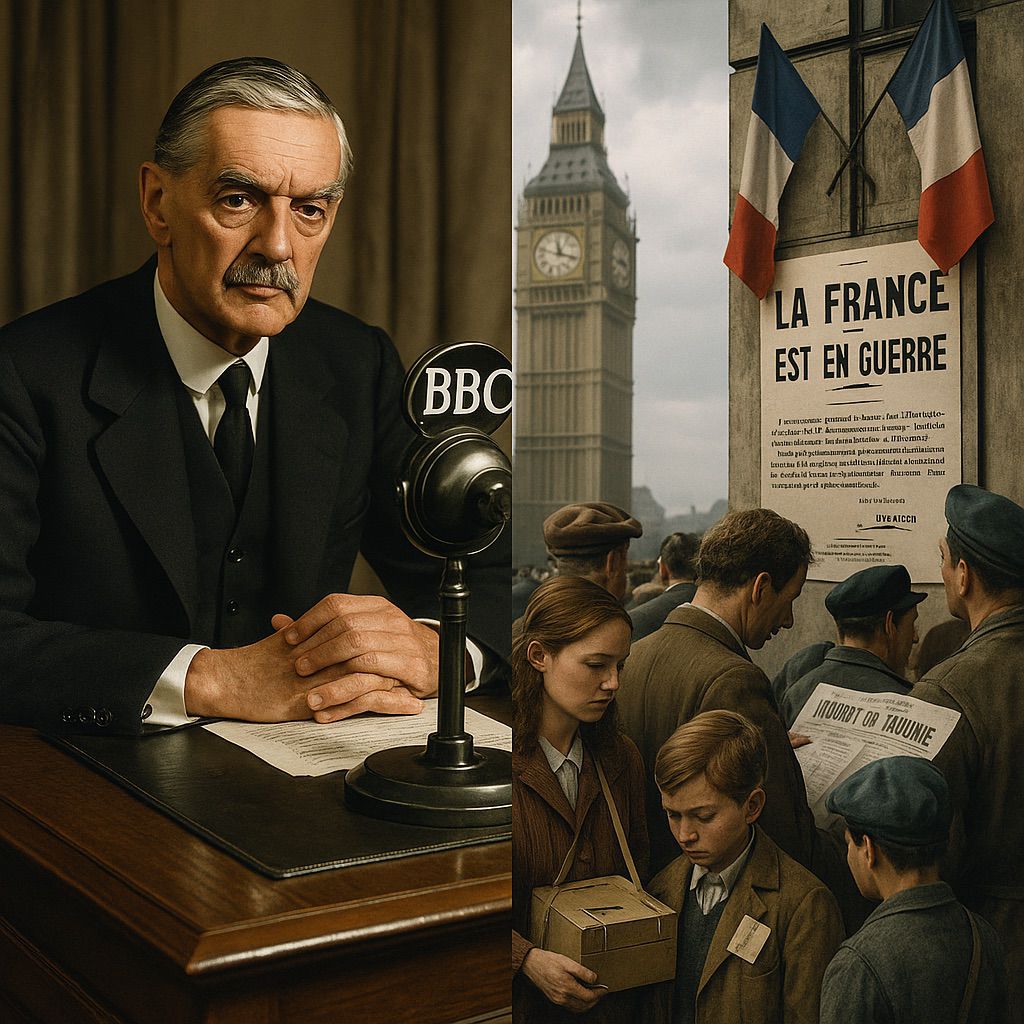
At 11:00 a.m. in London, the ultimatum expired like a clock running out of mercy. Eleven is a polite hour—late enough for tea, early enough for errands—but on Sunday, September 3, 1939, it became a hinge on which a century swung. The British government had told Berlin: withdraw from Poland, or war follows. The hour came and went; the Wehrmacht did not reverse time; the wireless rooms kept their tense hum. Fifteen minutes later, in the Cabinet Room at 10 Downing Street, Neville Chamberlain leaned toward a BBC microphone and spoke the clearest sentence of his premiership: “This country is at war with Germany.” The words left his mouth and crossed a nation already bracing for air-raid sirens that might arrive before the echo faded. Across the Channel, the day stretched toward late afternoon; at 5:00 p.m. in Paris, Premier Édouard Daladier’s government, after its own loop of meetings and hesitations, joined Britain in a declaration the world had dreaded and, perhaps, expected. Two announcements, separated by water and five hours of clock time, fused into a single event: Europe had decided to answer invasion with war.

This is a story about radios and doorways, about the space between a government’s sentence and a neighbor’s knock. Two days earlier, the thunderclap in the east—Germany’s September 1st assault on Poland—had turned headlines into sirens. The news arrived in Britain and France on children’s luggage labels and schoolteachers’ tearful roll calls; Operation Pied Piper had begun, and columns of small evacuees trailed out of cities like hopeful, shuffling commas. The Saturday was a marathon of assembling: gas masks issued, blackout curtains pinned, tin helmets stacked in ARP posts. Yet Sunday possessed its own electricity. Because declarations, unlike rumors, hit the human nervous system like a verdict.

Picture a London kitchen: a wireless set on the counter, bakelite dials, the smell of toast grudgingly private in a nation preparing to turn its most intimate routines into public duty. A mother tells her son to be still. A father checks his watch, though everyone knows the time by the way the house itself seems to lean. Chamberlain speaks in that careful, almost apologetic cadence that had convinced many to hope for peace too long; now the voice is a pivot. For months he had sounded like a hesitant schoolmaster; today he sounds like a ledger balanced at last. The moment he finishes, the wireless dies into a silence so loud you can feel it. Then, seconds later, the rising, wavering note of an air-raid siren cuts the air—London’s first big cry. People move toward doorways, a practiced chaos, hearts thudding, only to learn minutes later that it’s a false alarm. Yet the sound has already done its work; it has tuned the city to the key of vigilance.

In Paris the theater is different but the plot the same. The boulevards carry news the old-fashioned way: posters, criers, clusters of men smoking in tight circles. The famous caption might as well be printed beneath every face: “La France est en guerre.” A girl named Hélène clutches a cardboard box that holds her gas mask and a chocolate that has melted to a shape like a fingerprint. Her father, a railway clerk, doesn’t smoke but keeps a cigarette between his fingers because everyone else does and he’s trying to keep his hands from shaking. Daladier, a man whose politics had been battered by Munich’s compromise the year before, faces a radio audience with a sentence that tastes like iron in the mouth: France has honored its pledge. In cafés, men nod into their cups. No one is surprised. Relief does not visit a day like this; only recognition does.

If you zoom out—if you step from the kitchen and the café into a room high enough to hold continents—you can see the logic that made those sentences inevitable. Poland on September 1st did not call merely for sympathy; it triggered treaties, promises Britain and France had made to convince themselves that deterrence can be written down like a spell. But it wasn’t only paper. It was conscience drawing a line across the past summer’s evenings, when too many people convinced themselves that angry speeches are a kind of weather that passes. Now the storm had chosen its path, and the declarations were not lightning but the decision to stop pretending that thunder is harmless.

The declarations were also, frankly, theater—and theater is not trivial. States must perform resolve to make resolve real. The Cabinet table with its pens set just so; the BBC microphone with its polished black orb; the French tricolor draped behind an office desk; the solemn reading of phrases that have to be spoken exactly because law will hang from them—these images planted poles in the soft ground of human fear. People remember pictures more than documents. History obliged by composing compelling ones.

Meanwhile, ships were already moving. Hours after the declarations, the ocean made its own announcement. The British passenger liner SS Athenia, outbound from Liverpool, met a torpedo from U-30 off the Hebrides. The first night of Britain’s war produced the first sea graves—dozens lost in cold water under a sky that couldn’t possibly know what it had been recruited for. News of the sinking pinballed through pubs and parlors; the war that had sounded like policy at lunchtime felt like physics by sunset. On the same day that a false siren rattled London with a ghostly enemy, the real enemy sent steel through the hull of a ship with women and children aboard. That contrast—performative alarm in the city, fatal silence at sea—gave the day an almost novelistic symmetry. The world didn’t need the symmetry. It already had enough plot.

The human brain, anxious animal that it is, tried to make lists as a talisman. What to take to a shelter: torch, blanket, thermos, identification card. Which neighbor needs a knock. Which friend must be phoned now in case, later, telephone lines become another front. In Manchester, a teacher named Ruth looked at a classroom she would not see tomorrow; the students, evacuated two days earlier, had left drawings in desks: houses with improbable chimneys, dogs with heroic names, two Spitfires drawn like hawks in a sky the color of chalk. In Brest, a French stevedore marked crates “AF” for Armée Française with a flourish, as if neat letters could travel faster than a train. On Whitehall, a junior civil servant polished the brass plate on his ministry’s door because polishing something felt like exercising control.

Declarations ignite memory as much as they ignite plans. Veterans of 1914 felt bones stiffen, an ache in the air you can feel with your ears. The last war had begun on a bank holiday too, with August light slanting through blinds, with crowds outside Downing Street cheering a thing they didn’t understand. In 1939 there was less cheering. There were nods, tight-lipped acknowledgments, jokes that weren’t funny but made breath move. “Here we are then,” said a woman at a bus stop to no one in particular. The bus arrived full; no one minded the crush. The driver took the long way because there were rumors of roadblocks—even though there weren’t, not yet. People have always rehearsed disasters before the stagehands set the props.

Power changed shape instantly. Winston Churchill, exiled from government and busy with his own war against quiet retirement, crossed Downing Street again that day to become First Lord of the Admiralty. Lamps lit in the Admiralty windows late into the evening produced a rumor that would harden into lore: “Winston is back.” The Navy had kept its rituals across the centuries; now it received a man who was himself a ritual of British defiance. In Paris, Army orders rolled outward from headquarters to provincial stations, dispatch riders scratching their names into daylight. André, a baker’s son in Lyon, stood amid men reciting their dates of birth to a clerk who had no patience left for handwriting. “You will be sent north,” the corporal said, as if north were a unit you could march with.

The declarations did not move armies instantly, and they were never meant to. They moved hearts, bureaucracy, steel, and coal. On Monday the British Expeditionary Force would begin to assemble, a careful chess piece in a game most of its players still imagined as trench and attrition. The Maginot Line, a fortress you could photograph and therefore love, seemed to promise that France had thought ahead hard enough to deserve safety. But fortresses, like declarations, only do what they are asked to do; they cannot reimagine strategy on their own. For now, it was enough that the border had a gate with a lock and that the key lived in Paris.

In working-class streets of Birmingham and Rouen, human logistics replaced military ones. Women inventoried larders the way quartermasters inventory crates. A British ARP warden knocked on doors to test blackout curtains, praising a neat seam here, offering a pin there. A French concierge taped a crosshatch on her building’s windows, the paste drying to a milky translucence, strong enough—someone told her—to keep splinters from becoming shrapnel. She did not fully believe it, but the tape gave her hands a script.

Children, who always read adult faces like weather reports, produced their own meteorology. Evacuated British schoolboys compared gas mask boxes and swapped rumors about country haircuts; French boys in berets, watching fathers queue at mairie doors, decided that queuing must be a form of courage. A little girl on the Île de la Cité insisted on wearing her best shoes because her mother was crying and best shoes are how you answer tears. In a terraced house in Leeds, a boy named Alfie placed his tin soldier battalion on the mantelpiece facing east and told them to hold the line until he returned from Grandma’s.

Hesitation existed alongside resolve; it always does. Among the British, some who had cheered appeasement stared at the wireless willing the words back into Chamberlain’s throat. Among the French, men who had bled in the Argonne felt dread masquerading as wisdom; they knew what artillery did to hills, to knees, to marriage. But the declarations converted private ambivalence into public coherence. The state’s job on such days is to make millions of individual pulses beat to a rhythm that can build ships and feed armies. If a nation is an orchestra, then September 3 was the conductor’s downbeat.

There is something almost rude about how ordinary the weather remained. Clouds in London, variable sun in Paris, a thin wind off the Channel as if the water wanted to eavesdrop. In such weather a man can carry a loaf home wrapped in paper and simultaneously imagine loading a Bren gun; a woman can sweep her stoop and review evacuation routes in the same movement. The mind learns to double-track. Perhaps that is the truest definition of “home front”: living two lives at once and insisting both are real.

You could draw a straight line from those declarations to the long strange months that followed, the period newspapers would baptize with nicknames—Sitzkrieg, drôle de guerre, the Phoney War—as if sarcasm could inoculate against catastrophe. On that first Sunday, no one yet knew they would spend winter measuring courage by the quality of tea in a shelter. They only knew that the alternatives to war had been exhausted by an enemy who treated treaties as paper and paper as kindling. So they put on their coats and went out into a world that looked almost the same as it had at breakfast and was, in fact, entirely different.

What makes September 3 feel contemporary is the way the day asked private people to do public things. Every great event does that, but war does it with a ruthless intimacy. Mrs. Patel in Southall (whose husband’s shop sells tins of condensed milk that become comfort food in any language) checks on the widow three doors down and adds her to a list for deliveries. Monsieur Bernard in Reims, who has never spoken to the communist across the hall, borrows his step ladder to affix blackout cloth to a lingering pane. People change their pronouns: “I” slips toward “we,” sometimes awkwardly, sometimes like a homecoming.

There are a thousand little scenes that belong to this day and are almost never commemorated because they do not fit neatly on plaques. A London typist spends her lunch break drawing a map of Europe on the back of a blotter to understand what her brother means when he says “Pripet Marshes.” A French postman, a veteran of the last war with a stiff knee, offers a half-smile to a young recruit and says nothing because he remembers how useless grown men’s advice sounded to him at nineteen. In a seaside town in Kent, a boy kicks a football so hard it bounces into the sea, and his father makes a show of wading after it because absurdity—save the ball while the world burns—is a medicine all its own.

It is easy, in hindsight, to grade these declarations as the unavoidable beginning of a larger tragedy that would include fall of the Low Countries, Dunkirk, the fall of France, the Blitz, and years of rationing and fear. But that grading misses what a declaration is for: to draw a clear moral line at the cost of comfort. The line is worth drawing even if the chalk washes away in the first rain. When Britain and France declared war, they told the future that aggression would not be normalized. They told small nations that the promises of great ones still carried weight—too little, too late for some, just enough for others—and they told their own citizens that sacrifice would be shared out loud.

The story is easier to hold when you humanize the architects. Chamberlain, so often reduced to an umbrella and a caricature, knew the weight of the words; his voice carries that knowledge, an undertone like a cello. Daladier, derided as a political survivor, also survived grief, and grief hardens a jaw as surely as ideology does. Their staffs—tired, ink-stained, hungry for lunch they would eat cold—wanted the documents exactly right because exactness is a secular prayer. Across both capitals, translators double-checked adjectives because adjectives can start arguments or end them.

And then there were the people who shouldered the first new burdens. A nurse in Hampstead practiced applying a bandage in the dark; an apprentice electrician in Lille checked a shelter’s wiring and whistled because whistling calms nerves; a dock worker in Portsmouth wrote his name inside his coat because he had learned from a father’s story that names get lost when things go wrong. A boy in Glasgow asked his mother if the Germans knew his name. “No,” she said, meaning to comfort him. “Only your friends do.” But the boy’s face lit with the deeper comfort: I have friends who know my name.

By nightfall, the declarations had settled into the city like a mist that thickens in alleys and brightens around streetlamps. Londoners discovered how quiet a blackout makes a metropolis. Paris listened to the river talk to its bridges. On the North Atlantic, the Athenia’s survivors counted waves and watched stars more carefully than they ever had. Somewhere in Poland, a young man named Jan—whose village had never heard the words “ultimatum expires” said in English or French—held his breath in a ditch and wondered whether anyone west of the Oder knew his name. He did not know that on that day two governments had said, effectively, “We know the principle that carries your name. We will not abandon it.” That matters. It doesn’t fix everything. Sometimes it fixes enough.

After the declarations, life did not magically sprout captions telling people what to do next. That is the work of Monday mornings, of committees and porters and the miraculous logistics of ordinary people. Yet even on Sunday night, certain patterns were already visible: neighbors forming circles of care; strangers becoming familiar in a single glance; stolid British humor and wry French fatalism performing their old duet in a new key. In a London pub, a sign appeared: “During Air Raids, No Singing Except by the Proprietor.” In a Paris bistro, the chalkboard read: “Menu: Courage, served daily.” You don’t defeat an aggressor with jokes and chalkboards. But you do remind yourself who you are, and identity is an armor that catches shrapnel the way curtains catch light.

It is fashionable, sometimes, to call days like September 3 “inevitable,” as if history were a river that could only ever choose one path. Inevitable is a word that pardons bystanderhood. Better to say: the day was chosen, and the choosing required courage, calculation, and a willingness to be unpopular with those who prefer quiet to justice. The options were not good. Good options rarely survive long in the presence of tyranny. But the two sentences—one beginning at 11:15 in London, the other at 5:00 in Paris—said something important about who gets to decide the future of the continent. Not the loudest liar in Berlin. Not the last man left in a conference chamber after midnight. Not yet, not this time.

The next months would test those sentences brutally. But leave the later chapters for later. Let September 3 keep its own integrity: the felt pads under the radio in the Cabinet Room, the black hat worn by a French bureaucrat who never saw sunlight all day, the civilian who knocked on a neighbor’s door and said only, “Have you got what you need?” and meant it broadly: candles and courage, blankets and company. The hour hand made its rounds, and midnight arrived, and then the calendar turned to a Monday that would be ordinary in name only. Even sleep felt different, as if pillows had learned the new weight of heads.

History will always remember the declarations for their public language. People will remember them for their private aftermaths. A woman in Hackney fell asleep with her shoes on. A farmer outside Tours kissed his ox on the forehead because hard times make rituals strange and tender. A telephone operator in the GPO exchange stared at the switchboard and decided that connecting voices might be as noble as any uniform. A choir in a village church in Sussex sang a hymn off-key and proud and learned that harmony is something you build, not something you find.

The thing about declarations is that they ask you to declare in return—not in law but in life. Who are you, now that your government has chosen? Are you the kind of person who stands in a doorway for a neighbor while the siren moans? Who writes a postcard to a stranger’s child because the mother on the platform did not have a pencil? Who tells jokes in a shelter until the echo of fear shrinks enough to share? On September 3, the British and the French declared war on Germany. Millions of citizens, without microphones or signatures, declared something more ambitious: that they would try to be worthy of the sacrifices they were about to ask of one another.

Related Posts